







 Chat with AI

Deck 13: Crisis and Renaissance, 1340-1492
Full screen (f)

Question

Question
Question
Question
Question
Question
Question
Question
Question
Question
Question
Question
Question
Question
Question
Question
Question
Question
According to this map, the plague only reached England by the
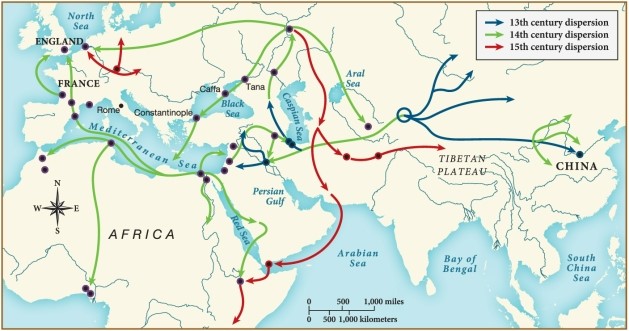
A) twelfth century.
B) thirteenth century.
C) fourteenth century.
D) fifteenth century.
A) twelfth century.
B) thirteenth century.
C) fourteenth century.
D) fifteenth century.
Question
Question
Question
Question
Question
Question
Question
Which of the following statements is supported by this series of maps?
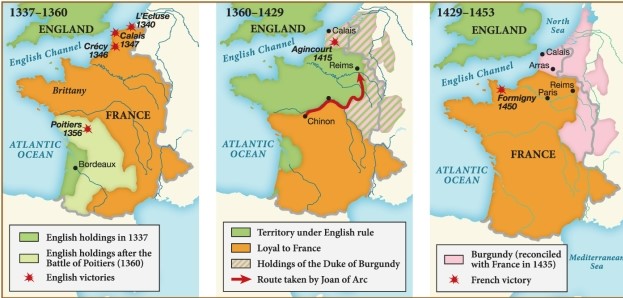
A) Over the course of the Hundred Years' War, England lost its holdings in mainland Europe to France.
B) During the Hundred Years' War, France lost a considerable amount of territory to England.
C) The French won far more battles during the Hundred Years' War than England.
D) Joan of Arc led forces north through English territory, across the English channel, and into England.
A) Over the course of the Hundred Years' War, England lost its holdings in mainland Europe to France.
B) During the Hundred Years' War, France lost a considerable amount of territory to England.
C) The French won far more battles during the Hundred Years' War than England.
D) Joan of Arc led forces north through English territory, across the English channel, and into England.
Question
Question
Question
Question
Question
Question
Question
Question
Question
Question
This map shows that during the fourteenth and fifteenth centuries, the Ottoman Empire
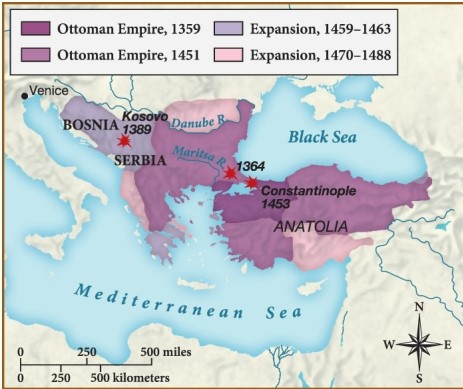
A) engaged in trade by way of the Black Sea.
B) succumbed to the Byzantines and lost territory.
C) expanded to the east and west.
D) overtook significant amounts of Islamic territory.
A) engaged in trade by way of the Black Sea.
B) succumbed to the Byzantines and lost territory.
C) expanded to the east and west.
D) overtook significant amounts of Islamic territory.
Question
Question
Question
Question
Question
Question
Question
Question
Question
Question
Question
Question
Question
Question
Question
Question
Question
Question
Question
Question
Question
Question
Question
Question
Question
Question
Question
Question
Question
Which of the following was part of the Holy Roman Empire by about 1492?
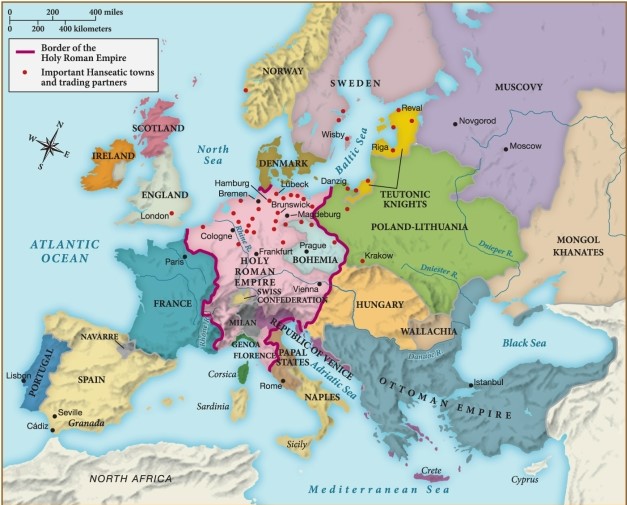
A) France
B) England
C) Bohemia
D) Hungary
A) France
B) England
C) Bohemia
D) Hungary
Question
According to this map, most of the important Hanseatic towns and trading partners were
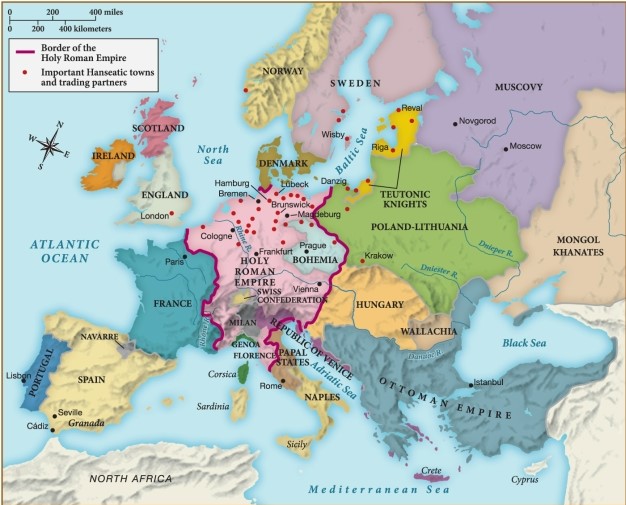
A) controlled by French rulers.
B) run by Jewish people.
C) along the Mediterranean coast.
D) within the Holy Roman Empire.
A) controlled by French rulers.
B) run by Jewish people.
C) along the Mediterranean coast.
D) within the Holy Roman Empire.

Unlock Deck
Sign up to unlock the cards in this deck!
Unlock Deck
Unlock Deck
1/65

Play

Full screen (f)
Deck 13: Crisis and Renaissance, 1340-1492
1
Where did the plague originate? How did it spread throughout Europe?
Answer would ideally include the following. The plague, a bacterial infection of Yersinia pestis, started in central Asia and traveled westward with trade. It is likely that the immediate cause of the strain that entered Europe was contaminated grain, which came from the port city of Tara and crossed the Black Sea into Constantinople. The disease was then spread along trade routes into southern Europe and the Islamic world and eventually into Russia.
2
What was the Dance of Death, and why was it performed in Europe in the mid-fourteenth century?
Answer would ideally include the following. The Dance of Death was a response to the plague, which broke out in Europe in 1347. It featured a procession of men, women, and children who made their way to cemeteries. In artistic representations, ghastly skeletal figures laughed as they made off with their victims. Most obviously, the emergence of this dance reflected the preoccupation with the high death rates, which may have been as high as 60 percent in some regions of Europe.
3
How did the plague ironically lead to an expansion of colleges and universities?
Answer would ideally include the following. The plague did not discriminate in its choice of victims, killing clergy as well as laity. Since so many monks had perished, the survivors realized that they needed to train a new generation for the priesthood. Many local princes who had survived had become wealthier, having received the wealth left behind by the dead. Wishing to be known as patrons of education, they helped found new colleges and universities.
4
What were the two major phases of the Hundred Years' War? What were the key events in the final phase?
Unlock Deck
Unlock for access to all 65 flashcards in this deck.
Unlock Deck
k this deck
5
Who was Joan of Arc, and how did she influence the outcome of the Hundred Years' War?
Unlock Deck
Unlock for access to all 65 flashcards in this deck.
Unlock Deck
k this deck
6
What was the Jacquerie of 1358? Explain both its causes and results.
Unlock Deck
Unlock for access to all 65 flashcards in this deck.
Unlock Deck
k this deck
7
Describe how the Ottoman Turks were finally able to conquer Constantinople in 1453. What significance did this event have for Europe?
Unlock Deck
Unlock for access to all 65 flashcards in this deck.
Unlock Deck
k this deck
8
What were the beliefs held by John Wycliffe (c. 1330-1384)? Did these beliefs survive his death?
Unlock Deck
Unlock for access to all 65 flashcards in this deck.
Unlock Deck
k this deck
9
Who was Giovanni Pico della Mirandola, and how did his Oration on the Dignity of Man embody the optimism of Renaissance philosophy?
Unlock Deck
Unlock for access to all 65 flashcards in this deck.
Unlock Deck
k this deck
10
How and why did the centralizing Spanish monarchy become an agent of intolerance with regard to its religious minorities?
Unlock Deck
Unlock for access to all 65 flashcards in this deck.
Unlock Deck
k this deck
11
Explain the impact that the plague had on the European population demographically, religiously, and economically.
Unlock Deck
Unlock for access to all 65 flashcards in this deck.
Unlock Deck
k this deck
12
Describe the causes and the political, military, and social impact of the Hundred Years' War in western Europe.
Unlock Deck
Unlock for access to all 65 flashcards in this deck.
Unlock Deck
k this deck
13
Describe the origins of the Great Schism and its political and religious impact in Europe.
Unlock Deck
Unlock for access to all 65 flashcards in this deck.
Unlock Deck
k this deck
14
What factors allowed Renaissance culture to emerge? How can the Renaissance be characterized? How did literature change during this time? How did architecture change?
Unlock Deck
Unlock for access to all 65 flashcards in this deck.
Unlock Deck
k this deck
15
In the fifteenth century, the English, French, and Spanish monarchies underwent a process of centralization and expanded their territorial holdings and authority. Discuss the factors that contributed to the success of their efforts.
Unlock Deck
Unlock for access to all 65 flashcards in this deck.
Unlock Deck
k this deck
16
Which group of invaders marked the end of the Byzantine Empire with their conquest of Constantinople in 1453?
A) The Mongols
B) The Ottomans
C) The Russians
D) The Germans
A) The Mongols
B) The Ottomans
C) The Russians
D) The Germans
Unlock Deck
Unlock for access to all 65 flashcards in this deck.
Unlock Deck
k this deck
17
Why is the mid-fourteenth century regarded as an era of crisis in the West?
A) Europe was threatened by renewed invasions from the Magyars, Saracens, and Vikings.
B) Global warming led to devastating droughts and the introduction of tropical diseases.
C) Ottoman invasions threatened to topple the pope from his throne in Rome.
D) Europe was ravaged by devastating outbreaks of the plague as well as by destructive wars.
A) Europe was threatened by renewed invasions from the Magyars, Saracens, and Vikings.
B) Global warming led to devastating droughts and the introduction of tropical diseases.
C) Ottoman invasions threatened to topple the pope from his throne in Rome.
D) Europe was ravaged by devastating outbreaks of the plague as well as by destructive wars.
Unlock Deck
Unlock for access to all 65 flashcards in this deck.
Unlock Deck
k this deck
18
According to this map, the plague only reached England by the
A) twelfth century.
B) thirteenth century.
C) fourteenth century.
D) fifteenth century.
A) twelfth century.
B) thirteenth century.
C) fourteenth century.
D) fifteenth century.
Unlock Deck
Unlock for access to all 65 flashcards in this deck.
Unlock Deck
k this deck
19
Why did the plague spread so rapidly on the European continent in the mid-fourteenth century?
A) The bacterium that likely caused the disease, Yersinia pestis, followed major trade routes to and across the continent.
B) Invading Ottoman troops spread the disease to Europe during their siege of Constantinople and their attacks on the Balkans.
C) The fighting during the Hundred Years' War allowed the disease to erupt among wounded and exhausted soldiers.
D) Europeans had yet to learn about quarantines or other measures that could effectively halt the spread of disease.
A) The bacterium that likely caused the disease, Yersinia pestis, followed major trade routes to and across the continent.
B) Invading Ottoman troops spread the disease to Europe during their siege of Constantinople and their attacks on the Balkans.
C) The fighting during the Hundred Years' War allowed the disease to erupt among wounded and exhausted soldiers.
D) Europeans had yet to learn about quarantines or other measures that could effectively halt the spread of disease.
Unlock Deck
Unlock for access to all 65 flashcards in this deck.
Unlock Deck
k this deck
20
What is historians' highest estimate for the percentage of the European population that perished from the plague between 1348 and 1400?
A) 10 percent
B) 30 percent
C) 60 percent
D) 80 percent
A) 10 percent
B) 30 percent
C) 60 percent
D) 80 percent
Unlock Deck
Unlock for access to all 65 flashcards in this deck.
Unlock Deck
k this deck
21
Individuals who sought to appease God by traveling from city to city and scourging themselves with whips were known as
A) mendicants.
B) Franciscans.
C) flagellants.
D) Mongols.
A) mendicants.
B) Franciscans.
C) flagellants.
D) Mongols.
Unlock Deck
Unlock for access to all 65 flashcards in this deck.
Unlock Deck
k this deck
22
How did outbreaks of the plague lead to the founding of new universities in Europe?
A) Local princes received money and property from those who had perished, and they used this income to become patrons of education.
B) Mass death led many wealthy noblemen to lose faith in the church, and they opted to will their resources to secular institutions rather than to the church.
C) The plague forced more than 80 percent of existing universities to close their doors, necessitating the creation of new institutions.
D) Searching for the causes of the plague led to major scientific discoveries and the creation of new universities to train future scientists.
A) Local princes received money and property from those who had perished, and they used this income to become patrons of education.
B) Mass death led many wealthy noblemen to lose faith in the church, and they opted to will their resources to secular institutions rather than to the church.
C) The plague forced more than 80 percent of existing universities to close their doors, necessitating the creation of new institutions.
D) Searching for the causes of the plague led to major scientific discoveries and the creation of new universities to train future scientists.
Unlock Deck
Unlock for access to all 65 flashcards in this deck.
Unlock Deck
k this deck
23
Which of the following initially precipitated the Hundred Years' War (1337-1453)?
A) The English king Edward III decided to march from Guyenne into Languedoc, which enraged the French king Philip VI.
B) The duke of Burgundy attempted to seize English lands in Normandy.
C) King Edward III of England invaded France at Calais and laid claim to the French crown.
D) The French king Philip VI laid claim to Guyenne, a fief of the English king Edward III.
A) The English king Edward III decided to march from Guyenne into Languedoc, which enraged the French king Philip VI.
B) The duke of Burgundy attempted to seize English lands in Normandy.
C) King Edward III of England invaded France at Calais and laid claim to the French crown.
D) The French king Philip VI laid claim to Guyenne, a fief of the English king Edward III.
Unlock Deck
Unlock for access to all 65 flashcards in this deck.
Unlock Deck
k this deck
24
Why did Joan of Arc, an unknown peasant girl, succeed in helping the French to turn the tide against the English in the Hundred Years' War?
A) She inspired French soldiers to rally round the dauphin.
B) She single-handedly defeated an English army at the battle of Orléans and personally crowned Philip VI as king.
C) She convinced the Burgundians to switch sides from the English to the French in 1435.
D) Because of her religious visions, she drew the support of Pope Martin V, who took the side of the French.
A) She inspired French soldiers to rally round the dauphin.
B) She single-handedly defeated an English army at the battle of Orléans and personally crowned Philip VI as king.
C) She convinced the Burgundians to switch sides from the English to the French in 1435.
D) Because of her religious visions, she drew the support of Pope Martin V, who took the side of the French.
Unlock Deck
Unlock for access to all 65 flashcards in this deck.
Unlock Deck
k this deck
25
Which of the following statements is supported by this series of maps?
A) Over the course of the Hundred Years' War, England lost its holdings in mainland Europe to France.
B) During the Hundred Years' War, France lost a considerable amount of territory to England.
C) The French won far more battles during the Hundred Years' War than England.
D) Joan of Arc led forces north through English territory, across the English channel, and into England.
A) Over the course of the Hundred Years' War, England lost its holdings in mainland Europe to France.
B) During the Hundred Years' War, France lost a considerable amount of territory to England.
C) The French won far more battles during the Hundred Years' War than England.
D) Joan of Arc led forces north through English territory, across the English channel, and into England.
Unlock Deck
Unlock for access to all 65 flashcards in this deck.
Unlock Deck
k this deck
26
Toward the end of the Hundred Years' War, which of the following shifted support from England to France?
A) Bavaria
B) Aragon
C) The duchy of Burgundy
D) The Papal States
A) Bavaria
B) Aragon
C) The duchy of Burgundy
D) The Papal States
Unlock Deck
Unlock for access to all 65 flashcards in this deck.
Unlock Deck
k this deck
27
In what way may the Hundred Years' War be seen as a world war?
A) It was fought on multiple continents.
B) Its outcome had global significance.
C) Both the English and the French hired mercenaries from other countries.
D) It lasted for more than a century.
A) It was fought on multiple continents.
B) Its outcome had global significance.
C) Both the English and the French hired mercenaries from other countries.
D) It lasted for more than a century.
Unlock Deck
Unlock for access to all 65 flashcards in this deck.
Unlock Deck
k this deck
28
How did warfare change during the Hundred Years' War?
A) It became increasingly chivalrous.
B) Armies relied on conscripts.
C) Knights on horseback played a decisive role.
D) Armies became more professional and centralized.
A) It became increasingly chivalrous.
B) Armies relied on conscripts.
C) Knights on horseback played a decisive role.
D) Armies became more professional and centralized.
Unlock Deck
Unlock for access to all 65 flashcards in this deck.
Unlock Deck
k this deck
29
The uprising of French peasants against the nobility in 1358 was known as
A) the indulgence.
B) the Great Schism.
C) Wat Tyler's Rebellion.
D) the Jacquerie.
A) the indulgence.
B) the Great Schism.
C) Wat Tyler's Rebellion.
D) the Jacquerie.
Unlock Deck
Unlock for access to all 65 flashcards in this deck.
Unlock Deck
k this deck
30
What triggered Wat Tyler's Rebellion in 1381?
A) King Richard II's imposition of military conscription
B) The teachings of John Wycliffe, who held that the people, not the king, owned the land
C) The imposition of a poll tax to raise revenue for the Hundred Years' War
D) Widespread famine and rumors that barons were hoarding grain
A) King Richard II's imposition of military conscription
B) The teachings of John Wycliffe, who held that the people, not the king, owned the land
C) The imposition of a poll tax to raise revenue for the Hundred Years' War
D) Widespread famine and rumors that barons were hoarding grain
Unlock Deck
Unlock for access to all 65 flashcards in this deck.
Unlock Deck
k this deck
31
Why did Constantinople finally succumb to invasion in 1453 when it had withstood so many invasions in the past?
A) Traitors from within betrayed the city to the enemy.
B) Its European trading partners failed to assist in its defense.
C) The invading Arab armies vastly outnumbered the Greek defenders.
D) The use of cannons allowed its walls to be breached.
A) Traitors from within betrayed the city to the enemy.
B) Its European trading partners failed to assist in its defense.
C) The invading Arab armies vastly outnumbered the Greek defenders.
D) The use of cannons allowed its walls to be breached.
Unlock Deck
Unlock for access to all 65 flashcards in this deck.
Unlock Deck
k this deck
32
What term was used for the European Christian boys who were forced to convert to Islam and made up the core of the Ottoman army?
A) Janissaries
B) Sultans
C) Cardinals
D) Indulgences
A) Janissaries
B) Sultans
C) Cardinals
D) Indulgences
Unlock Deck
Unlock for access to all 65 flashcards in this deck.
Unlock Deck
k this deck
33
Who succeeded in conquering the city of Constantinople in 1453, thus administering the deathblow to the Byzantine Empire?
A) Gregory XI
B) Urban
C) Mehmed I
D) Mehmed II
A) Gregory XI
B) Urban
C) Mehmed I
D) Mehmed II
Unlock Deck
Unlock for access to all 65 flashcards in this deck.
Unlock Deck
k this deck
34
How did the Ottomans conquer the Balkans and Anatolia?
A) Through negotiations and war
B) Through a series of marriages
C) By inheritance of kings
D) By adoption of Christianity
A) Through negotiations and war
B) Through a series of marriages
C) By inheritance of kings
D) By adoption of Christianity
Unlock Deck
Unlock for access to all 65 flashcards in this deck.
Unlock Deck
k this deck
35
This map shows that during the fourteenth and fifteenth centuries, the Ottoman Empire
A) engaged in trade by way of the Black Sea.
B) succumbed to the Byzantines and lost territory.
C) expanded to the east and west.
D) overtook significant amounts of Islamic territory.
A) engaged in trade by way of the Black Sea.
B) succumbed to the Byzantines and lost territory.
C) expanded to the east and west.
D) overtook significant amounts of Islamic territory.
Unlock Deck
Unlock for access to all 65 flashcards in this deck.
Unlock Deck
k this deck
36
What triggered the Great Schism in 1378?
A) Disputes over how severely to treat those whose ideas were deemed heretical
B) The election of Urban VI, an Italian, as pope
C) The refusal of the patriarch of Constantinople to obey the Roman pontiff
D) Challenges to Christianity by scholastic philosophers
A) Disputes over how severely to treat those whose ideas were deemed heretical
B) The election of Urban VI, an Italian, as pope
C) The refusal of the patriarch of Constantinople to obey the Roman pontiff
D) Challenges to Christianity by scholastic philosophers
Unlock Deck
Unlock for access to all 65 flashcards in this deck.
Unlock Deck
k this deck
37
Who did the French select as pope upon the realization that the selection of Urban was a mistake?
A) Avignon
B) Gregory XI
C) Clement VII
D) Mehmed II
A) Avignon
B) Gregory XI
C) Clement VII
D) Mehmed II
Unlock Deck
Unlock for access to all 65 flashcards in this deck.
Unlock Deck
k this deck
38
Under pressure from Holy Roman Emperor Sigismund to resolve the Great Schism, Pope John XXIII convened a church council at Constance in 1414, which elected who as a new pope?
A) Alexander V
B) Clement VII
C) Martin V
D) Gregory XII
A) Alexander V
B) Clement VII
C) Martin V
D) Gregory XII
Unlock Deck
Unlock for access to all 65 flashcards in this deck.
Unlock Deck
k this deck
39
An indulgence was a certificate offered by the church to
A) vouch that proper baptismal practices had been followed.
B) ensure that one would bypass purgatory altogether and enter heaven directly.
C) reduce the time one spent in purgatory.
D) grant entry to the sites where sacred relics were held.
A) vouch that proper baptismal practices had been followed.
B) ensure that one would bypass purgatory altogether and enter heaven directly.
C) reduce the time one spent in purgatory.
D) grant entry to the sites where sacred relics were held.
Unlock Deck
Unlock for access to all 65 flashcards in this deck.
Unlock Deck
k this deck
40
The Book of Hours contained which of the following?
A) Astronomic tables
B) Information on tides
C) Prayers and calendars
D) Military tactics
A) Astronomic tables
B) Information on tides
C) Prayers and calendars
D) Military tactics
Unlock Deck
Unlock for access to all 65 flashcards in this deck.
Unlock Deck
k this deck
41
What did the Oxford scholar John Wycliffe argue?
A) That the true church was a community of believers, not an ecclesiastical hierarchy
B) That the Greek Orthodox church and not the Roman Catholic church was the rightful heir to the keys of St. Peter
C) That pious monks needed to oust corrupt and materialistic churchmen from their high positions in the church hierarchy
D) That the papacy had lost its moral authority for not having settled the Hundred Years' War
A) That the true church was a community of believers, not an ecclesiastical hierarchy
B) That the Greek Orthodox church and not the Roman Catholic church was the rightful heir to the keys of St. Peter
C) That pious monks needed to oust corrupt and materialistic churchmen from their high positions in the church hierarchy
D) That the papacy had lost its moral authority for not having settled the Hundred Years' War
Unlock Deck
Unlock for access to all 65 flashcards in this deck.
Unlock Deck
k this deck
42
Why did Jan Hus's ideas gain such a large number of followers in Bohemia?
A) His ideas tapped into the resentments of the Czech majority against the dominant and largely urban German-speaking minority.
B) His doctrine of justification by faith minimized the ecclesiastical power of the unpopular Bohemian church hierarchy.
C) John Wycliffe's ideas had spread throughout Bohemia several decades earlier, thus providing fertile soil for Hus's ideas to grow in.
D) Church leaders tolerated the spread of Hus's ideas.
A) His ideas tapped into the resentments of the Czech majority against the dominant and largely urban German-speaking minority.
B) His doctrine of justification by faith minimized the ecclesiastical power of the unpopular Bohemian church hierarchy.
C) John Wycliffe's ideas had spread throughout Bohemia several decades earlier, thus providing fertile soil for Hus's ideas to grow in.
D) Church leaders tolerated the spread of Hus's ideas.
Unlock Deck
Unlock for access to all 65 flashcards in this deck.
Unlock Deck
k this deck
43
What was the central desire of Jan Hus's followers?
A) To receive both the bread and the wine at Mass
B) To hear the liturgy in their own language
C) To have German bishops removed from office and replaced by Czechs
D) To prohibit immoral priests from conducting Mass
A) To receive both the bread and the wine at Mass
B) To hear the liturgy in their own language
C) To have German bishops removed from office and replaced by Czechs
D) To prohibit immoral priests from conducting Mass
Unlock Deck
Unlock for access to all 65 flashcards in this deck.
Unlock Deck
k this deck
44
The period from about 1350 through 1600 in which artists and philosophers revived elements of the classical past is known as the
A) scholastic movement.
B) Renaissance.
C) disillusionment.
D) Revolution.
A) scholastic movement.
B) Renaissance.
C) disillusionment.
D) Revolution.
Unlock Deck
Unlock for access to all 65 flashcards in this deck.
Unlock Deck
k this deck
45
During the late medieval period, there was both a flowering of vernacular literature and a
A) rejection of previously popular luxury goods in favor of an austere and simple lifestyle.
B) revival of classical learning that led to a new intellectual movement called humanism.
C) decline in the study of the Latin language and literature.
D) return to the religious traditions of the established church paired with a renewed interest in monasticism.
A) rejection of previously popular luxury goods in favor of an austere and simple lifestyle.
B) revival of classical learning that led to a new intellectual movement called humanism.
C) decline in the study of the Latin language and literature.
D) return to the religious traditions of the established church paired with a renewed interest in monasticism.
Unlock Deck
Unlock for access to all 65 flashcards in this deck.
Unlock Deck
k this deck
46
Where did humanism originate?
A) Italian city-states
B) Rural France
C) Urban England
D) German city-states
A) Italian city-states
B) Rural France
C) Urban England
D) German city-states
Unlock Deck
Unlock for access to all 65 flashcards in this deck.
Unlock Deck
k this deck
47
What is Francis Petrarch best known as?
A) The husband of Laura, to whom he dedicated many romantic poems
B) The lover of Beatrice, about whom he wrote extensively
C) A victim of the Babylonian captivity
D) The first humanist
A) The husband of Laura, to whom he dedicated many romantic poems
B) The lover of Beatrice, about whom he wrote extensively
C) A victim of the Babylonian captivity
D) The first humanist
Unlock Deck
Unlock for access to all 65 flashcards in this deck.
Unlock Deck
k this deck
48
Which Renaissance humanist is known for the work Oration on the Dignity of Man?
A) Francis Petrarch
B) Christine de Pisan
C) Giovanni Pico della Mirandola
D) Lauro Quirini
A) Francis Petrarch
B) Christine de Pisan
C) Giovanni Pico della Mirandola
D) Lauro Quirini
Unlock Deck
Unlock for access to all 65 flashcards in this deck.
Unlock Deck
k this deck
49
Sandro Botticelli and other Renaissance painters mined the ancient world for new subjects, such as
A) Julius Caesar.
B) Cicero.
C) Jupiter.
D) Venus.
A) Julius Caesar.
B) Cicero.
C) Jupiter.
D) Venus.
Unlock Deck
Unlock for access to all 65 flashcards in this deck.
Unlock Deck
k this deck
50
Which of the following is regarded as a significant innovation in Renaissance art?
A) The use of oil on canvas
B) The depiction of mythical figures
C) The use of linear perspective
D) The introduction of pointillism
A) The use of oil on canvas
B) The depiction of mythical figures
C) The use of linear perspective
D) The introduction of pointillism
Unlock Deck
Unlock for access to all 65 flashcards in this deck.
Unlock Deck
k this deck
51
How did the leading Renaissance musicians and composers support themselves in their artistic endeavors?
A) They were forced to compose and perform on the side while pursuing better-paying occupations.
B) They found wealthy patrons in the ranks of the church, secular rulers, and local governments.
C) They worked solely for the glory of God and received no compensation for their efforts.
D) They entered into formal partnerships with painters, sculptors, and architects.
A) They were forced to compose and perform on the side while pursuing better-paying occupations.
B) They found wealthy patrons in the ranks of the church, secular rulers, and local governments.
C) They worked solely for the glory of God and received no compensation for their efforts.
D) They entered into formal partnerships with painters, sculptors, and architects.
Unlock Deck
Unlock for access to all 65 flashcards in this deck.
Unlock Deck
k this deck
52
By the end of the fourteenth century, Lithuania, whose rulers were the last in Europe to remain unconverted to Christianity, had
A) been conquered and converted by the Teutonic knights.
B) invaded the Holy Roman Empire.
C) been weakened by nearly constant war with neighboring Russia.
D) entered into a union with Poland.
A) been conquered and converted by the Teutonic knights.
B) invaded the Holy Roman Empire.
C) been weakened by nearly constant war with neighboring Russia.
D) entered into a union with Poland.
Unlock Deck
Unlock for access to all 65 flashcards in this deck.
Unlock Deck
k this deck
53
What alliance brought together many cities in northern Germany and the Baltic for the purposes of trade and defense?
A) The Delian League
B) The Holy Roman Empire
C) The Burgundian League
D) The Hanseatic League
A) The Delian League
B) The Holy Roman Empire
C) The Burgundian League
D) The Hanseatic League
Unlock Deck
Unlock for access to all 65 flashcards in this deck.
Unlock Deck
k this deck
54
What state filled the territorial gap between France and Germany but was, unlike most other European states, an artificial creation whose existence depended entirely on skillful rulers?
A) Venice
B) Genoa
C) Burgundy
D) Guyenne
A) Venice
B) Genoa
C) Burgundy
D) Guyenne
Unlock Deck
Unlock for access to all 65 flashcards in this deck.
Unlock Deck
k this deck
55
In the year 1492, Ferdinand and Isabella succeeded in reunifying Spain by conquering what kingdom on the Iberian peninsula?
A) The Jewish kingdom of al-Andalus
B) The Christian kingdom of Portugal
C) The Muslim kingdom of Granada
D) The British outpost on Gibraltar
A) The Jewish kingdom of al-Andalus
B) The Christian kingdom of Portugal
C) The Muslim kingdom of Granada
D) The British outpost on Gibraltar
Unlock Deck
Unlock for access to all 65 flashcards in this deck.
Unlock Deck
k this deck
56
One important element of the French king's campaign to consolidate and strengthen the monarchy was Gallicanism, which was characterized by which of the following?
A) Royal control over ecclesiastical revenues and the appointment of all French bishops
B) The establishment of a centralized bureaucracy, with its seat in Paris, that was in charge of all provincial tax, administrative, and military responsibilities
C) The rejection of further territorial expansion in favor of securing and developing the territories within current state borders
D) A state-sponsored propaganda effort linking the current French monarchy with the legacy and glory of the ancient Roman Empire
A) Royal control over ecclesiastical revenues and the appointment of all French bishops
B) The establishment of a centralized bureaucracy, with its seat in Paris, that was in charge of all provincial tax, administrative, and military responsibilities
C) The rejection of further territorial expansion in favor of securing and developing the territories within current state borders
D) A state-sponsored propaganda effort linking the current French monarchy with the legacy and glory of the ancient Roman Empire
Unlock Deck
Unlock for access to all 65 flashcards in this deck.
Unlock Deck
k this deck
57
Which of the following contributed to rising prosperity in England during the fifteenth century?
A) The expansion of the cloth industry
B) The growing role of the peasantry in politics
C) Increased trade with eastern Europe
D) The absence of warfare on English soil
A) The expansion of the cloth industry
B) The growing role of the peasantry in politics
C) Increased trade with eastern Europe
D) The absence of warfare on English soil
Unlock Deck
Unlock for access to all 65 flashcards in this deck.
Unlock Deck
k this deck
58
Which of the following statements about the Swiss Confederation is true?
A) It was formed to facilitate the hiring out of mercenaries to the rulers of Europe.
B) It was dominated by the landed nobility.
C) It was the most egalitarian of the political entities of the fifteenth century.
D) It was conquered by the duke of Burgundy.
A) It was formed to facilitate the hiring out of mercenaries to the rulers of Europe.
B) It was dominated by the landed nobility.
C) It was the most egalitarian of the political entities of the fifteenth century.
D) It was conquered by the duke of Burgundy.
Unlock Deck
Unlock for access to all 65 flashcards in this deck.
Unlock Deck
k this deck
59
Which of the following did the Peace of Lodi (1454) accomplish?
A) It established a truce between the kingdoms of Naples and Aragon and allied them against the Ottoman Turks.
B) It put an end to the conflict between Venice and Milan that had been raging since 1450.
C) It established permanent boundaries between the Papal States and the northern Italian city-states.
D) It led to a truce between Venice and the Ottoman Empire and the division of the Adriatic Sea into separate zones for Venetian and Ottoman commercial traffic.
A) It established a truce between the kingdoms of Naples and Aragon and allied them against the Ottoman Turks.
B) It put an end to the conflict between Venice and Milan that had been raging since 1450.
C) It established permanent boundaries between the Papal States and the northern Italian city-states.
D) It led to a truce between Venice and the Ottoman Empire and the division of the Adriatic Sea into separate zones for Venetian and Ottoman commercial traffic.
Unlock Deck
Unlock for access to all 65 flashcards in this deck.
Unlock Deck
k this deck
60
The political power of the Medici family of Florence stemmed from
A) the wealth of the Medici bank and its involvement in papal finances.
B) the support given to the family by the Ottoman Turks.
C) the family's significant investments in the textile and wool industries of England, North Africa, and France.
D) the Medicis' role in finding overseas routes to Asia that bypassed the Ottoman base in the Middle East.
A) the wealth of the Medici bank and its involvement in papal finances.
B) the support given to the family by the Ottoman Turks.
C) the family's significant investments in the textile and wool industries of England, North Africa, and France.
D) the Medicis' role in finding overseas routes to Asia that bypassed the Ottoman base in the Middle East.
Unlock Deck
Unlock for access to all 65 flashcards in this deck.
Unlock Deck
k this deck
61
The catasto was an attempt by Florentine rulers to
A) develop new musical forms.
B) reform their republican forms of government.
C) survey the population and surrounding territories for the purposes of taxation.
D) establish new diplomatic institutions to preserve the Peace of Lodi.
A) develop new musical forms.
B) reform their republican forms of government.
C) survey the population and surrounding territories for the purposes of taxation.
D) establish new diplomatic institutions to preserve the Peace of Lodi.
Unlock Deck
Unlock for access to all 65 flashcards in this deck.
Unlock Deck
k this deck
62
Where did large numbers of Jews convert to Christianity at the end of the fourteenth century in an effort to save their lives in the face of vast persecution?
A) France
B) England
C) Spain
D) Byzantium
A) France
B) England
C) Spain
D) Byzantium
Unlock Deck
Unlock for access to all 65 flashcards in this deck.
Unlock Deck
k this deck
63
Why did Ferdinand and Isabella establish inquisitions in Spain in 1478?
A) The papacy had put pressure on them to establish religious homogeneity on the Iberian peninsula.
B) The Ottoman Empire had forged an alliance with the king of Granada to regain territories lost in previous centuries as part of the Christian reconquista.
C) Resentment was growing at the success of those Jews who had converted to Christianity.
D) The Cathar heresy had not been completely eliminated in the Spanish Pyrenees.
A) The papacy had put pressure on them to establish religious homogeneity on the Iberian peninsula.
B) The Ottoman Empire had forged an alliance with the king of Granada to regain territories lost in previous centuries as part of the Christian reconquista.
C) Resentment was growing at the success of those Jews who had converted to Christianity.
D) The Cathar heresy had not been completely eliminated in the Spanish Pyrenees.
Unlock Deck
Unlock for access to all 65 flashcards in this deck.
Unlock Deck
k this deck
64
Which of the following was part of the Holy Roman Empire by about 1492?
A) France
B) England
C) Bohemia
D) Hungary
A) France
B) England
C) Bohemia
D) Hungary
Unlock Deck
Unlock for access to all 65 flashcards in this deck.
Unlock Deck
k this deck
65
According to this map, most of the important Hanseatic towns and trading partners were
A) controlled by French rulers.
B) run by Jewish people.
C) along the Mediterranean coast.
D) within the Holy Roman Empire.
A) controlled by French rulers.
B) run by Jewish people.
C) along the Mediterranean coast.
D) within the Holy Roman Empire.
Unlock Deck
Unlock for access to all 65 flashcards in this deck.
Unlock Deck
k this deck
Unlock Deck
Unlock for access to all 65 flashcards in this deck.






