







 Chat with AI

Deck 9: Development Geography: Transforming Landscapes of Well-Being
Full screen (f)

Question

Question
Question
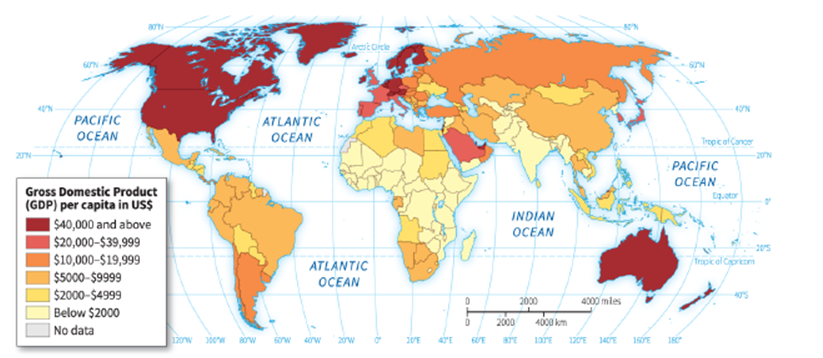
-In terms of GDP per capita, which region on the map is similar to the United States and Canada?
A) Australia
B) Africa
C) South America
D) Southeast Asia
Question
-According to the map, all of the following have GDP per capita over $40,000 per year EXCEPT:
A) Australia
B) Canada
C) western Scandinavia
D) western Europe
Question
-According to the map, which of these countries has the lowest GDP per capita?
A) Brazil
B) India
C) Mexico
D) Saudi Arabia
Question
-The map shows all of the following trends EXCEPT:
A) very high GDP per capita in much of North America
B) high GDP per capita in western Europe
C) fairly low levels of GDP per capita in much of sub-Saharan Africa
D) high levels of GDP in India, Pakistan, and Bangladesh
Question
Question
Question
Question
Question
Question
Question
Question
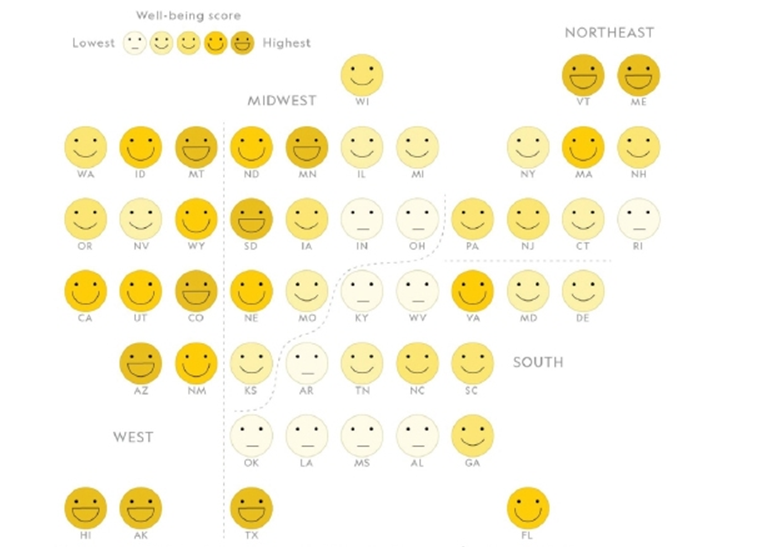
-According to the map, in which section of the United States are people likely to be happiest and healthiest?
A) the Middle Atlantic states
B) the Upper Midwest
C) the South
D) the West Coast
Question
-The map shows that overall well-being is lowest in all of the following states EXCEPT:
A) New Mexico
B) Mississippi
C) Kentucky
D) West Virginia
Question
Question
Question
Question
Question
Question
Question
Question
Question
Question
Question
Question
Question
Question
Question
Question
Question
Question
Question
Question
Question
Question
Question
Question
Question
Question
Question
Question
Question
Question
Question
Question
Question
Question
Question
Question
Question
Question
Question
Question
Question
Question
Question
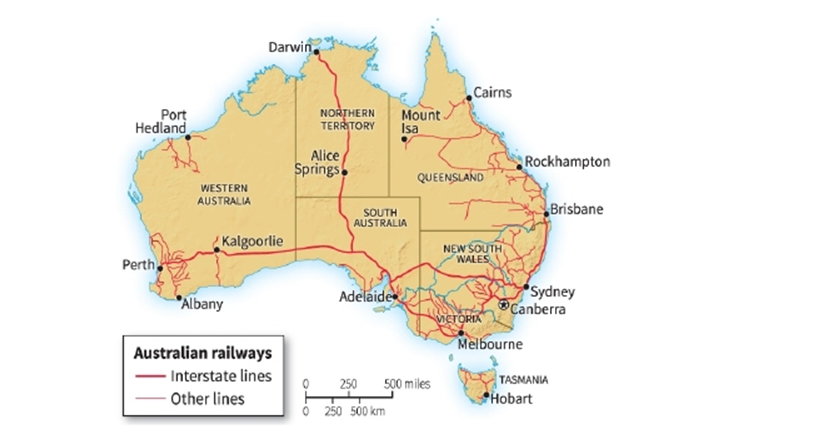
-Which statement concerning the map is NOT true?
A) The road network developed by the nation that colonized Australia emphasized transportation to port cities.
B) The transportation network shown here is representative of a general pattern followed by colonial powers as they extracted resources from their colonies.
C) Australia's railway network has allowed for national standardization of railway components and gauges, thus permitting easy transport of goods among different parts of the country.
D) Like most colonial powers, England chose to develop the port cities of its colonies.
Question
Question
Question
Question
Question
Question
Question
Question
Question
Question
Question
Question
Question
Question
Question
Question
Question
Question
Question
Question
Question
Question

Unlock Deck
Sign up to unlock the cards in this deck!
Unlock Deck
Unlock Deck
1/184

Play

Full screen (f)
Deck 9: Development Geography: Transforming Landscapes of Well-Being
1
The terms developed and underdeveloped are commonly understood to refer to:
A) population size
B) economic performance
C) maturity of democratic institutions
D) levels of happiness
A) population size
B) economic performance
C) maturity of democratic institutions
D) levels of happiness
B
2
After World War II, the term development came into use as:
A) the United States sought to expand its colonial empire
B) policy officials were concerned at disparities of living standards around the world
C) decolonization led to competition for political power
D) Communist leaders repressed industrialization in their own countries
A) the United States sought to expand its colonial empire
B) policy officials were concerned at disparities of living standards around the world
C) decolonization led to competition for political power
D) Communist leaders repressed industrialization in their own countries
B
3
-In terms of GDP per capita, which region on the map is similar to the United States and Canada?
A) Australia
B) Africa
C) South America
D) Southeast Asia
A
4
-According to the map, all of the following have GDP per capita over $40,000 per year EXCEPT:
A) Australia
B) Canada
C) western Scandinavia
D) western Europe
Unlock Deck
Unlock for access to all 184 flashcards in this deck.
Unlock Deck
k this deck
5
-According to the map, which of these countries has the lowest GDP per capita?
A) Brazil
B) India
C) Mexico
D) Saudi Arabia
Unlock Deck
Unlock for access to all 184 flashcards in this deck.
Unlock Deck
k this deck
6
-The map shows all of the following trends EXCEPT:
A) very high GDP per capita in much of North America
B) high GDP per capita in western Europe
C) fairly low levels of GDP per capita in much of sub-Saharan Africa
D) high levels of GDP in India, Pakistan, and Bangladesh
Unlock Deck
Unlock for access to all 184 flashcards in this deck.
Unlock Deck
k this deck
7
The HDI (human development index) shows:
A) the total dollar value of all goods and services produced within a country
B) the total amount of government aid provided to the national population
C) how well people's basic needs are being met within a country
D) the country's trade balance with the world's other nations
A) the total dollar value of all goods and services produced within a country
B) the total amount of government aid provided to the national population
C) how well people's basic needs are being met within a country
D) the country's trade balance with the world's other nations
Unlock Deck
Unlock for access to all 184 flashcards in this deck.
Unlock Deck
k this deck
8
Which group is NOT a major allocator of resources within any given country?
A) governments
B) corporations
C) NGOs such as churches and foundations
D) wealthy individual families
A) governments
B) corporations
C) NGOs such as churches and foundations
D) wealthy individual families
Unlock Deck
Unlock for access to all 184 flashcards in this deck.
Unlock Deck
k this deck
9
The Gini coefficient measures:
A) human well-being
B) income inequality
C) government expenditures
D) health care costs
A) human well-being
B) income inequality
C) government expenditures
D) health care costs
Unlock Deck
Unlock for access to all 184 flashcards in this deck.
Unlock Deck
k this deck
10
The Millennium Development Goals were established by:
A) a loose coalition of NGOs
B) the United Nations
C) the G7
D) NATO
A) a loose coalition of NGOs
B) the United Nations
C) the G7
D) NATO
Unlock Deck
Unlock for access to all 184 flashcards in this deck.
Unlock Deck
k this deck
11
According to Amartya Sen, what lies at the heart of development?
A) freedom
B) trade
C) money
D) capitalism
A) freedom
B) trade
C) money
D) capitalism
Unlock Deck
Unlock for access to all 184 flashcards in this deck.
Unlock Deck
k this deck
12
The region that scores lowest on the HDI (human development index) is:
A) North America
B) South America
C) Europe
D) Africa
A) North America
B) South America
C) Europe
D) Africa
Unlock Deck
Unlock for access to all 184 flashcards in this deck.
Unlock Deck
k this deck
13
The term gross national happiness was coined in which country?
A) Mongolia
B) Bhutan
C) Nepal
D) Brunei
A) Mongolia
B) Bhutan
C) Nepal
D) Brunei
Unlock Deck
Unlock for access to all 184 flashcards in this deck.
Unlock Deck
k this deck
14
-According to the map, in which section of the United States are people likely to be happiest and healthiest?
A) the Middle Atlantic states
B) the Upper Midwest
C) the South
D) the West Coast
Unlock Deck
Unlock for access to all 184 flashcards in this deck.
Unlock Deck
k this deck
15
-The map shows that overall well-being is lowest in all of the following states EXCEPT:
A) New Mexico
B) Mississippi
C) Kentucky
D) West Virginia
Unlock Deck
Unlock for access to all 184 flashcards in this deck.
Unlock Deck
k this deck
16
Which concept is NOT measured by the concept of gross national happiness?
A) agricultural production
B) psychological well-being
C) good governance
D) ecological and cultural diversity
A) agricultural production
B) psychological well-being
C) good governance
D) ecological and cultural diversity
Unlock Deck
Unlock for access to all 184 flashcards in this deck.
Unlock Deck
k this deck
17
Which is NOT one of the 2015 Millennium Development Goals?
A) promote gender equality and empower women
B) improve maternal health
C) develop a global partnership for development
D) increase organic food production
A) promote gender equality and empower women
B) improve maternal health
C) develop a global partnership for development
D) increase organic food production
Unlock Deck
Unlock for access to all 184 flashcards in this deck.
Unlock Deck
k this deck
18
Which is NOT one of the 2015 Millennium Development Goals?
A) achieve universal secondary education
B) eradicate extreme hunger and poverty
C) combat HIV/AIDS, malaria, and other diseases
D) ensure environmental sustainability
A) achieve universal secondary education
B) eradicate extreme hunger and poverty
C) combat HIV/AIDS, malaria, and other diseases
D) ensure environmental sustainability
Unlock Deck
Unlock for access to all 184 flashcards in this deck.
Unlock Deck
k this deck
19
According to post-World War II ways of thinking about development, which was seen as key to improving standards of living?
A) more leisure time
B) the movement toward a service economy
C) industrialization
D) international trade
A) more leisure time
B) the movement toward a service economy
C) industrialization
D) international trade
Unlock Deck
Unlock for access to all 184 flashcards in this deck.
Unlock Deck
k this deck
20
According to early theories of development, low standards of living were MOST often associated with:
A) rural life
B) subsistence agriculture
C) lack of elected representatives
D) trade and barter
A) rural life
B) subsistence agriculture
C) lack of elected representatives
D) trade and barter
Unlock Deck
Unlock for access to all 184 flashcards in this deck.
Unlock Deck
k this deck
21
Which statement is NOT true of Rostow's "age of high mass consumption"?
A) It is the last stage in his theory of development.
B) The United States and western Europe are at this stage of development.
C) Countries at this stage of development don't need to worry about subsistence needs.
D) This stage of development is achievable only in nations with democratic political systems.
A) It is the last stage in his theory of development.
B) The United States and western Europe are at this stage of development.
C) Countries at this stage of development don't need to worry about subsistence needs.
D) This stage of development is achievable only in nations with democratic political systems.
Unlock Deck
Unlock for access to all 184 flashcards in this deck.
Unlock Deck
k this deck
22
Which is NOT a valid criticism of Rostow's model of economic development?
A) It assumes that countries proceed along this path in isolation from one another.
B) It assumes that countries on the path of development do not experience barriers to growth erected by other countries.
C) It overstates the role of colonialism in Europe's economic development.
D) It does not take cultural factors into account in defining what "high levels of development" consist of.
A) It assumes that countries proceed along this path in isolation from one another.
B) It assumes that countries on the path of development do not experience barriers to growth erected by other countries.
C) It overstates the role of colonialism in Europe's economic development.
D) It does not take cultural factors into account in defining what "high levels of development" consist of.
Unlock Deck
Unlock for access to all 184 flashcards in this deck.
Unlock Deck
k this deck
23
In the twentieth century, which group consisted of the world's wealthy, democratic, capitalist nations?
A) First World
B) Second World
C) Third World
D) Fourth World
A) First World
B) Second World
C) Third World
D) Fourth World
Unlock Deck
Unlock for access to all 184 flashcards in this deck.
Unlock Deck
k this deck
24
In the twentieth century, which group consisted of those countries ruled by communist or socialist governments with central or command economies?
A) First World
B) Second World
C) Third World
D) Fourth World
A) First World
B) Second World
C) Third World
D) Fourth World
Unlock Deck
Unlock for access to all 184 flashcards in this deck.
Unlock Deck
k this deck
25
In the twentieth century, which group consisted of countries so poor that they were considered beyond the reach of contemporary society?
A) First World
B) Second World
C) Third World
D) Fourth World
A) First World
B) Second World
C) Third World
D) Fourth World
Unlock Deck
Unlock for access to all 184 flashcards in this deck.
Unlock Deck
k this deck
26
In terms of the thinking of the twentieth century, Third World nations were generally:
A) poor
B) industrialized
C) happy
D) isolationist
A) poor
B) industrialized
C) happy
D) isolationist
Unlock Deck
Unlock for access to all 184 flashcards in this deck.
Unlock Deck
k this deck
27
The Brandt Line divided the world into which two regions?
A) the Christian East and the Muslim West
B) the rich North and the poor South
C) the humid East and the dry South
D) the English-speaking world and the non-English-speaking world
A) the Christian East and the Muslim West
B) the rich North and the poor South
C) the humid East and the dry South
D) the English-speaking world and the non-English-speaking world
Unlock Deck
Unlock for access to all 184 flashcards in this deck.
Unlock Deck
k this deck
28
The industries that extract resources from Earth comprise the:
A) service sector
B) primary sector
C) secondary sector
D) tertiary sector
A) service sector
B) primary sector
C) secondary sector
D) tertiary sector
Unlock Deck
Unlock for access to all 184 flashcards in this deck.
Unlock Deck
k this deck
29
Mining, fishing, and oil extraction are all a part of the:
A) service sector
B) primary sector
C) secondary sector
D) tertiary sector
A) service sector
B) primary sector
C) secondary sector
D) tertiary sector
Unlock Deck
Unlock for access to all 184 flashcards in this deck.
Unlock Deck
k this deck
30
Which is NOT an example of an industry in the primary sector?
A) timbering
B) hunting
C) fishing
D) milling
A) timbering
B) hunting
C) fishing
D) milling
Unlock Deck
Unlock for access to all 184 flashcards in this deck.
Unlock Deck
k this deck
31
The economic sector that processes raw materials and transforms them into usable form is the:
A) quaternary sector
B) primary sector
C) secondary sector
D) tertiary sector
A) quaternary sector
B) primary sector
C) secondary sector
D) tertiary sector
Unlock Deck
Unlock for access to all 184 flashcards in this deck.
Unlock Deck
k this deck
32
Milling, ore smelting, and manufacturing are all examples of industries in the:
A) quaternary sector
B) primary sector
C) secondary sector
D) tertiary sector
A) quaternary sector
B) primary sector
C) secondary sector
D) tertiary sector
Unlock Deck
Unlock for access to all 184 flashcards in this deck.
Unlock Deck
k this deck
33
Which is NOT an example of an industry in the secondary sector?
A) manufacturing
B) oil extraction
C) oil refining
D) milling
A) manufacturing
B) oil extraction
C) oil refining
D) milling
Unlock Deck
Unlock for access to all 184 flashcards in this deck.
Unlock Deck
k this deck
34
Which is NOT a subset of the service industry?
A) consumer services
B) producer services
C) transportation/communication services
D) personal services
A) consumer services
B) producer services
C) transportation/communication services
D) personal services
Unlock Deck
Unlock for access to all 184 flashcards in this deck.
Unlock Deck
k this deck
35
The set of economic activities that refers to all the different types of work necessary to move goods and resources around the world and deliver them to people (in other words, the service activities) comprise the:
A) primary sector
B) secondary sector
C) tertiary sector
D) quaternary sector
A) primary sector
B) secondary sector
C) tertiary sector
D) quaternary sector
Unlock Deck
Unlock for access to all 184 flashcards in this deck.
Unlock Deck
k this deck
36
The main emphasis of the tertiary sector of the economy is:
A) extracting raw materials
B) manufacturing
C) information
D) services
A) extracting raw materials
B) manufacturing
C) information
D) services
Unlock Deck
Unlock for access to all 184 flashcards in this deck.
Unlock Deck
k this deck
37
The main emphasis of the quaternary sector of the economy is:
A) information
B) manufacturing
C) services
D) transportation
A) information
B) manufacturing
C) services
D) transportation
Unlock Deck
Unlock for access to all 184 flashcards in this deck.
Unlock Deck
k this deck
38
The main emphasis of the primary sector of the economy is:
A) manufacturing
B) raw materials
C) the provision of services
D) the provision of information and intellectual property
A) manufacturing
B) raw materials
C) the provision of services
D) the provision of information and intellectual property
Unlock Deck
Unlock for access to all 184 flashcards in this deck.
Unlock Deck
k this deck
39
The main emphasis of the secondary sector of the economy is:
A) manufacturing
B) the extraction of raw materials
C) the provision of services
D) the provision of information and intellectual property
A) manufacturing
B) the extraction of raw materials
C) the provision of services
D) the provision of information and intellectual property
Unlock Deck
Unlock for access to all 184 flashcards in this deck.
Unlock Deck
k this deck
40
Which organization does NOT seek to spur economic development?
A) World Bank
B) Oxfam
C) International Monetary Fund
D) UN Development Programme
A) World Bank
B) Oxfam
C) International Monetary Fund
D) UN Development Programme
Unlock Deck
Unlock for access to all 184 flashcards in this deck.
Unlock Deck
k this deck
41
_____ targets disease eradication, while _____ provides hunger relief.
A) The WHO; Oxfam
B) The World Bank; the Grameen Bank
C) Microcredit; the Peace Corps
D) The G8; the OECD
A) The WHO; Oxfam
B) The World Bank; the Grameen Bank
C) Microcredit; the Peace Corps
D) The G8; the OECD
Unlock Deck
Unlock for access to all 184 flashcards in this deck.
Unlock Deck
k this deck
42
Both the OECD and the G8 focus on which aspect of development?
A) food provision
B) loans to farmers
C) international trade
D) provision of running water
A) food provision
B) loans to farmers
C) international trade
D) provision of running water
Unlock Deck
Unlock for access to all 184 flashcards in this deck.
Unlock Deck
k this deck
43
In terms of foreign aid provided, _____ provides the highest amount in total dollars, but _____ provides the highest percent of their national income.
A) northern Europe; Canada
B) Canada; the United States
C) Bhutan; Brazil
D) the United States; Sweden
A) northern Europe; Canada
B) Canada; the United States
C) Bhutan; Brazil
D) the United States; Sweden
Unlock Deck
Unlock for access to all 184 flashcards in this deck.
Unlock Deck
k this deck
44
Two generous philanthropists in the United States, who established the Giving Pledge in 2010, are:
A) Bill Clinton and Hillary Rodham Clinton
B) Bill Gates and Warren Buffett
C) Angelina Jolie and Brad Pitt
D) George Soros and Sam Walton
A) Bill Clinton and Hillary Rodham Clinton
B) Bill Gates and Warren Buffett
C) Angelina Jolie and Brad Pitt
D) George Soros and Sam Walton
Unlock Deck
Unlock for access to all 184 flashcards in this deck.
Unlock Deck
k this deck
45
If Walmart were a country, its economic value would be greater than all of the following countries except:
A) Switzerland
B) India
C) Australia
D) China
A) Switzerland
B) India
C) Australia
D) China
Unlock Deck
Unlock for access to all 184 flashcards in this deck.
Unlock Deck
k this deck
46
Which is NOT true of the Sinaloa drug cartel?
A) It uses Mexican religious imagery as part of its operations.
B) It provides local schools in poor Mexican states that have been ignored by the country's central government.
C) It has painted itself as a type of "Robin Hood" organization that takes from the wealthy and gives to the poor.
D) It is primarily a philanthropic organization that seeks to serve poor Mexicans.
A) It uses Mexican religious imagery as part of its operations.
B) It provides local schools in poor Mexican states that have been ignored by the country's central government.
C) It has painted itself as a type of "Robin Hood" organization that takes from the wealthy and gives to the poor.
D) It is primarily a philanthropic organization that seeks to serve poor Mexicans.
Unlock Deck
Unlock for access to all 184 flashcards in this deck.
Unlock Deck
k this deck
47
The shift from a reliance on primary to secondary sector activities on a large scale occurred as a result of:
A) democratization
B) the green revolution
C) the Industrial Revolution
D) decolonization
A) democratization
B) the green revolution
C) the Industrial Revolution
D) decolonization
Unlock Deck
Unlock for access to all 184 flashcards in this deck.
Unlock Deck
k this deck
48
The initial breakthrough of the Industrial Revolution occurred in which industry?
A) soap and candle
B) weaponry
C) metallurgy
D) textile
A) soap and candle
B) weaponry
C) metallurgy
D) textile
Unlock Deck
Unlock for access to all 184 flashcards in this deck.
Unlock Deck
k this deck
49
The development of what technology both enabled, and was driven by, the Industrial Revolution?
A) democratization
B) agriculture
C) mechanization
D) transportation
A) democratization
B) agriculture
C) mechanization
D) transportation
Unlock Deck
Unlock for access to all 184 flashcards in this deck.
Unlock Deck
k this deck
50
The key factor in the diffusion of the Industrial Revolution was:
A) increased investment in machinery
B) innovation in the development of tools and machinery
C) the improvement of sewer and sanitation systems
D) the development of transportation networks
A) increased investment in machinery
B) innovation in the development of tools and machinery
C) the improvement of sewer and sanitation systems
D) the development of transportation networks
Unlock Deck
Unlock for access to all 184 flashcards in this deck.
Unlock Deck
k this deck
51
What technology facilitated the spread of industrialization and marked the adoption of industrial innovations?
A) steam engines
B) telephones
C) wagons
D) railways
A) steam engines
B) telephones
C) wagons
D) railways
Unlock Deck
Unlock for access to all 184 flashcards in this deck.
Unlock Deck
k this deck
52
The first non-Western nation to undergo full industrialization was:
A) China
B) Japan
C) India
D) Malaysia
A) China
B) Japan
C) India
D) Malaysia
Unlock Deck
Unlock for access to all 184 flashcards in this deck.
Unlock Deck
k this deck
53
The government takeover of the transportation infrastructure and fuel sources from private ownership is an example of:
A) industrialization
B) nationalization
C) Manichaeism
D) developmentalism
A) industrialization
B) nationalization
C) Manichaeism
D) developmentalism
Unlock Deck
Unlock for access to all 184 flashcards in this deck.
Unlock Deck
k this deck
54
Which example of nationalization is NOT correct?
A) Mexico-petroleum
B) United States-banking
C) Egypt-Suez Canal
D) Japan-railways
A) Mexico-petroleum
B) United States-banking
C) Egypt-Suez Canal
D) Japan-railways
Unlock Deck
Unlock for access to all 184 flashcards in this deck.
Unlock Deck
k this deck
55
Which is NOT a result of the colonial influence on transportation within colonies (or former colonies)?
A) Colonizers typically focused on the development of seaports that would allow them to export raw materials across the globe.
B) Many former colonies lack transport systems within the country, making it difficult to move from the seacoast to the interior.
C) In the aftermath of colonization, airline routes within countries, especially in Africa, have been greatly developed.
D) In some nations, it is easier to fly out of the country and back into it via another country, than it is to fly directly between points within the country.
A) Colonizers typically focused on the development of seaports that would allow them to export raw materials across the globe.
B) Many former colonies lack transport systems within the country, making it difficult to move from the seacoast to the interior.
C) In the aftermath of colonization, airline routes within countries, especially in Africa, have been greatly developed.
D) In some nations, it is easier to fly out of the country and back into it via another country, than it is to fly directly between points within the country.
Unlock Deck
Unlock for access to all 184 flashcards in this deck.
Unlock Deck
k this deck
56
If you are flying between Lagos, Nigeria, and Nairobi, Kenya, the cheapest flight option most likely:
A) is on an unsafe airline
B) includes a layover in South Africa
C) is a direct flight
D) includes a layover in Europe
A) is on an unsafe airline
B) includes a layover in South Africa
C) is a direct flight
D) includes a layover in Europe
Unlock Deck
Unlock for access to all 184 flashcards in this deck.
Unlock Deck
k this deck
57
A country that maintains three different standards of railroad track as a result of European colonial efforts is:
A) Spain
B) Algeria
C) Australia
D) Russia
A) Spain
B) Algeria
C) Australia
D) Russia
Unlock Deck
Unlock for access to all 184 flashcards in this deck.
Unlock Deck
k this deck
58
-Which statement concerning the map is NOT true?
A) The road network developed by the nation that colonized Australia emphasized transportation to port cities.
B) The transportation network shown here is representative of a general pattern followed by colonial powers as they extracted resources from their colonies.
C) Australia's railway network has allowed for national standardization of railway components and gauges, thus permitting easy transport of goods among different parts of the country.
D) Like most colonial powers, England chose to develop the port cities of its colonies.
Unlock Deck
Unlock for access to all 184 flashcards in this deck.
Unlock Deck
k this deck
59
The port city through which half of the world's crude oil shipments pass, is:
A) Abu Dhabi
B) Singapore
C) Hong Kong
D) Pyongyang
A) Abu Dhabi
B) Singapore
C) Hong Kong
D) Pyongyang
Unlock Deck
Unlock for access to all 184 flashcards in this deck.
Unlock Deck
k this deck
60
The world region that is leading the way in terms of developing its transportation infrastructure is:
A) western Europe
B) eastern Europe
C) sub-Saharan Africa
D) east Asia
A) western Europe
B) eastern Europe
C) sub-Saharan Africa
D) east Asia
Unlock Deck
Unlock for access to all 184 flashcards in this deck.
Unlock Deck
k this deck
61
Which BEST describes the transportation infrastructure of the United States?
A) modern and high-tech
B) outdated and inadequately maintained
C) under-capacity
D) efficient and fast-moving
A) modern and high-tech
B) outdated and inadequately maintained
C) under-capacity
D) efficient and fast-moving
Unlock Deck
Unlock for access to all 184 flashcards in this deck.
Unlock Deck
k this deck
62
The city in which elite residents avoid the dangers and unpleasantries of venturing out among the poor or dangerous city neighborhoods by "going up" in interconnected residential, office, and shopping towers is:
A) Montevideo, Uruguay
B) Managua, Nicaragua
C) Puntarenas, Costa Rica
D) Singapore
A) Montevideo, Uruguay
B) Managua, Nicaragua
C) Puntarenas, Costa Rica
D) Singapore
Unlock Deck
Unlock for access to all 184 flashcards in this deck.
Unlock Deck
k this deck
63
The arc of _____ influence runs from Rabat in northern Africa to Manila in the Philippines, and was the heart of economic activity while Europe was in the Dark Ages.
A) Islamic
B) Christian
C) First World
D) animist-based
A) Islamic
B) Christian
C) First World
D) animist-based
Unlock Deck
Unlock for access to all 184 flashcards in this deck.
Unlock Deck
k this deck
64
Which troubled U.S. city was the largest to declare bankruptcy and has lost over half its population since 1950?
A) Camden, New Jersey
B) Detroit, Michigan
C) East St. Louis, Missouri
D) Oakland, California
A) Camden, New Jersey
B) Detroit, Michigan
C) East St. Louis, Missouri
D) Oakland, California
Unlock Deck
Unlock for access to all 184 flashcards in this deck.
Unlock Deck
k this deck
65
The concept of postdevelopment implies that:
A) most world regions have now achieved a high ranking in terms of per capita GDP and the HDI
B) cultural factors have become more important than economic factors in assessing development
C) early forms of economic development were actually forms of imperialist activity
D) the planet's decreasing resource base has led to diminished expectations regarding development
A) most world regions have now achieved a high ranking in terms of per capita GDP and the HDI
B) cultural factors have become more important than economic factors in assessing development
C) early forms of economic development were actually forms of imperialist activity
D) the planet's decreasing resource base has led to diminished expectations regarding development
Unlock Deck
Unlock for access to all 184 flashcards in this deck.
Unlock Deck
k this deck
66
A term now used to replace the idea of "Third World" with regard to the countries of Latin America, Asia, and Africa is:
A) developing nations
B) Global South
C) Fourth World
D) nationalized economies
A) developing nations
B) Global South
C) Fourth World
D) nationalized economies
Unlock Deck
Unlock for access to all 184 flashcards in this deck.
Unlock Deck
k this deck
67
Which would NOT be considered a part of the Global South?
A) sub-Saharan Africa
B) Australia
C) Mexico
D) Cambodia, Burma, and Laos
A) sub-Saharan Africa
B) Australia
C) Mexico
D) Cambodia, Burma, and Laos
Unlock Deck
Unlock for access to all 184 flashcards in this deck.
Unlock Deck
k this deck
68
Which is a component of South-South cooperation?
A) The states of North Carolina and South Carolina have worked together to implement a guest worker program.
B) Trade, technological innovation, and other forms of exchange are now occurring regularly among the nations of the Global South.
C) Australia has cut all ties with its former colonizer (England).
D) South Africa has forged economic partnerships with the wealthy nations of western Europe.
A) The states of North Carolina and South Carolina have worked together to implement a guest worker program.
B) Trade, technological innovation, and other forms of exchange are now occurring regularly among the nations of the Global South.
C) Australia has cut all ties with its former colonizer (England).
D) South Africa has forged economic partnerships with the wealthy nations of western Europe.
Unlock Deck
Unlock for access to all 184 flashcards in this deck.
Unlock Deck
k this deck
69
The Global South has surpassed the Global North in the adoption of what technology?
A) Laptops
B) cell phones
C) Televisions
D) Automobiles
A) Laptops
B) cell phones
C) Televisions
D) Automobiles
Unlock Deck
Unlock for access to all 184 flashcards in this deck.
Unlock Deck
k this deck
70
What percentage of the world's people now have access to a cell phone?
A) 25 percent
B) 50 percent
C) 75 percent
D) 90 percent
A) 25 percent
B) 50 percent
C) 75 percent
D) 90 percent
Unlock Deck
Unlock for access to all 184 flashcards in this deck.
Unlock Deck
k this deck
71
Farmers who cannot instantly access market prices that their neighbor can, which decreases their ability to sell their crops at the best price, are being disadvantaged by:
A) racism
B) the digital divide
C) a lack of democracy
D) stigmas against farming
A) racism
B) the digital divide
C) a lack of democracy
D) stigmas against farming
Unlock Deck
Unlock for access to all 184 flashcards in this deck.
Unlock Deck
k this deck
72
What percentage of the world uses the Internet?
A) 34 percent
B) 20 percent
C) 48 percent
D) 76 percent
A) 34 percent
B) 20 percent
C) 48 percent
D) 76 percent
Unlock Deck
Unlock for access to all 184 flashcards in this deck.
Unlock Deck
k this deck
73
A person using the Internet is LEAST likely to be:
A) young
B) healthy
C) disabled
D) wealthy
A) young
B) healthy
C) disabled
D) wealthy
Unlock Deck
Unlock for access to all 184 flashcards in this deck.
Unlock Deck
k this deck
74
The residents of the wealthy side of a town have almost unlimited access to wireless Internet connections. Meanwhile, the people on the poor side of town do not own computers and have almost no access to the Internet. This is an example of:
A) the digital divide
B) uneven development
C) the secondary sector
D) South-South cooperation
A) the digital divide
B) uneven development
C) the secondary sector
D) South-South cooperation
Unlock Deck
Unlock for access to all 184 flashcards in this deck.
Unlock Deck
k this deck
75
Since 2000, the most active region for growth in Internet usage has been:
A) North America
B) South America
C) Southeast Asia
D) the Middle East
A) North America
B) South America
C) Southeast Asia
D) the Middle East
Unlock Deck
Unlock for access to all 184 flashcards in this deck.
Unlock Deck
k this deck
76
Which statement regarding women is NOT true?
A) Female workers earn less than their male counterparts.
B) Women tend to hold more government jobs than men do.
C) Women tend to have fewer employment choices than men do.
D) Men are more likely to hold on to their jobs during economic downturns than women are.
A) Female workers earn less than their male counterparts.
B) Women tend to hold more government jobs than men do.
C) Women tend to have fewer employment choices than men do.
D) Men are more likely to hold on to their jobs during economic downturns than women are.
Unlock Deck
Unlock for access to all 184 flashcards in this deck.
Unlock Deck
k this deck
77
According to Marilyn Waring, the largest sector of any economy is:
A) the black market (or underground economy)
B) the provision of services
C) primary resource extraction
D) unpaid labor
A) the black market (or underground economy)
B) the provision of services
C) primary resource extraction
D) unpaid labor
Unlock Deck
Unlock for access to all 184 flashcards in this deck.
Unlock Deck
k this deck
78
If nonmarket household production were included in calculations of economic output in the United States, the result would be:
A) an increase of about 25 percent in GDP
B) a decrease of about 10 percent in per capita GDP
C) an increase in the HDI
D) a decrease in the digital divide
A) an increase of about 25 percent in GDP
B) a decrease of about 10 percent in per capita GDP
C) an increase in the HDI
D) a decrease in the digital divide
Unlock Deck
Unlock for access to all 184 flashcards in this deck.
Unlock Deck
k this deck
79
The purpose of the Grameen Bank is to:
A) finance large-scale agribusiness
B) provide credit to poor people
C) increase biodiversity among staple crops
D) help countries structurally adjust their taxation and expenditure policies
A) finance large-scale agribusiness
B) provide credit to poor people
C) increase biodiversity among staple crops
D) help countries structurally adjust their taxation and expenditure policies
Unlock Deck
Unlock for access to all 184 flashcards in this deck.
Unlock Deck
k this deck
80
In which nation was the Grameen Bank established?
A) Afghanistan
B) Iraq
C) Bangladesh
D) Pakistan
A) Afghanistan
B) Iraq
C) Bangladesh
D) Pakistan
Unlock Deck
Unlock for access to all 184 flashcards in this deck.
Unlock Deck
k this deck
Unlock Deck
Unlock for access to all 184 flashcards in this deck.






