







 Chat with AI

Deck 4: The Geography of Language: Locating the Spoken Word
Full screen (f)

Question

Question
Question
Question
Question
Question
Question
Question
Question
Question
Question
Question
Question
Question
Question
Question
Question
Question
Question
Question
Question
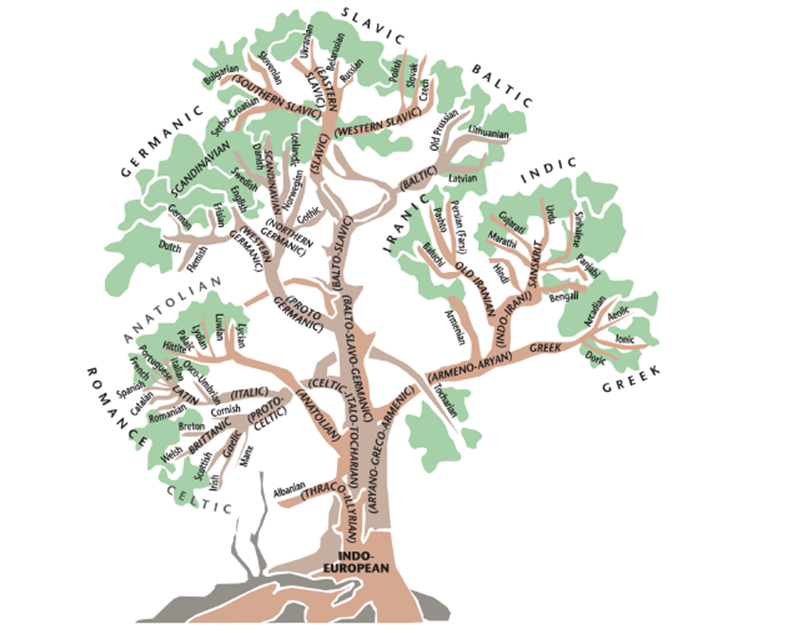
-Based on the illustration, which language is NOT a Romance language?
A) French
B) Spanish
C) Romanian
D) German
Question
-Based on the linguistic family tree, which statement is NOT accurate?
A) Danish and Swedish are Germanic languages.
B) Italian is a Romance language.
C) Scottish and Welsh are Celtic languages.
D) Ionic and Doric are Indic languages.
Question
-What do all of the languages shown in the family tree have in common?
A) All are in danger of extinction when the current generation of speakers dies out.
B) All are members of the Indo-European family of languages.
C) All dispersed as a result of the Austronesian diffusion.
D) All fall into the category of pidgin or creole languages.
Question
-Which two languages shown on the family tree do NOT share a common ancestor?
A) Irish and Romanian
B) Dutch and Ionic
C) Lithuanian and Bulgarian
D) Danish and Gothic
Question
-According to the illustration, which is NOT a Greek language?
A) Ionic
B) Aeolic
C) Lydian
D) Arcadian
Question
-According to the illustration, which is NOT a subfamily of Indo-European?
A) Romance languages
B) Celtic languages
C) Germanic languages
D) Mandarin languages
Question
-The majority of the top 10 most-spoken languages in the world come from which language family?
A) Afro-Asiatic
B) Indo-European
C) Semitic
D) Sino-Tibetan
Question
-Into what language family does English fall?
A) Afro-Asiatic
B) Indo-European
C) Semitic
D) Sino-Tibetan
Question
-Comparing the _____ of various Indo-European tongues reveals their kinship.
A) Grammar
B) Vocabularies
C) Isoglosses
D) tomonymns
Question
-Following Indo-European, which language family is spoken by the MOST people?
A) Sino-Tibetan
B) Uralic
C) Afro-Asiatic
D) Dravidian
Question
-In French the word for three is trois, in Romanian it is trei, in Sanskrit it is travas, and in Welsh it is tri. This indicates that these languages are:
A) derived from a common ancestor
B) dialectically the same
C) related, but in different language families
D) completely unrelated
Question
-Which language family is second only to Indo-European in number of native speakers?
A) Niger Congo
B) Altaic
C) Afro-Asiatic languages
D) Sino-Tibetan languages
Question
-The origin of the Sino-Tibetan language family is thought to be:
A) the Ural Mountains
B) the Himalayan Plateau
C) African Congo
D) the Appalachians
Question
-Into what language family does Han Chinese fall?
A) Sino-Tibetan
B) Uralic
C) Afro-Asiatic
D) Dravidian
Question
-The official language of China is:
A) Han
B) Manchurian
C) Pinyin
D) Mongolian
Question
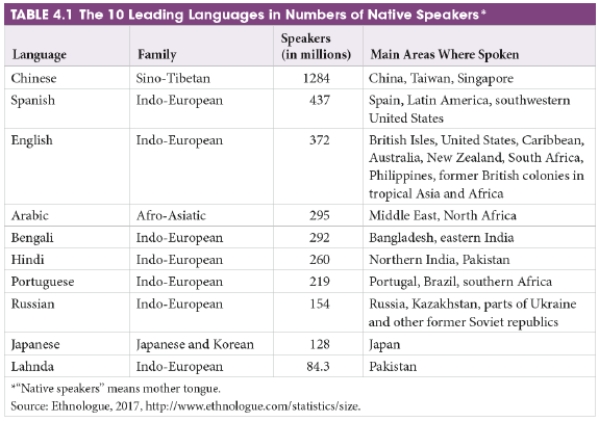
-Based on the table, which statement is NOT accurate?
A) The world's second-most-spoken language is spoken exclusively in the Northern Hemisphere.
B) The world's most-spoken language is centered in the Eastern Hemisphere.
C) The world's second-most-spoken language is centered in the Western Hemisphere.
D) It is likely that the world's second-most-spoken language diffused as a result of European colonialism.
Question
-Based on the table, which statement is accurate?
A) All of the world's top 10 most-spoken languages, except one, are Indo-European.
B) The world's most-spoken language is centered in Africa.
C) The world has almost the same number of speakers of Hindi as it does of Arabic.
D) Most Arabic languages are spoken in sub-Saharan Africa.
Question
-Note the table's "Main Areas Where Spoken" column. Spanish diffused to South America, English diffused to South Africa, and Portuguese diffused to Brazil primarily as a result of:
A) voluntary migration
B) traveling scholars
C) colonial expansion
D) the International Language Center
Question
-According to the table, the Sino-Tibetan language family is dominated numerically by speakers of:
A) Korean
B) Chinese
C) Japanese
D) Burmese
Question
-After Chinese, the world's most widely spoken language, according to the table, is:
A) Spanish
B) Hebrew
C) Arabic
D) English
Question
-According to the table, which association is NOT correct?
A) English-South Africa
B) Arabic-North Africa
C) Hindi-Middle East
D) Chinese-Singapore
Question
Question
Question
Question
Question
Question
Question
Question
Question
Question
Question
Question
Question
Question
Question
Question
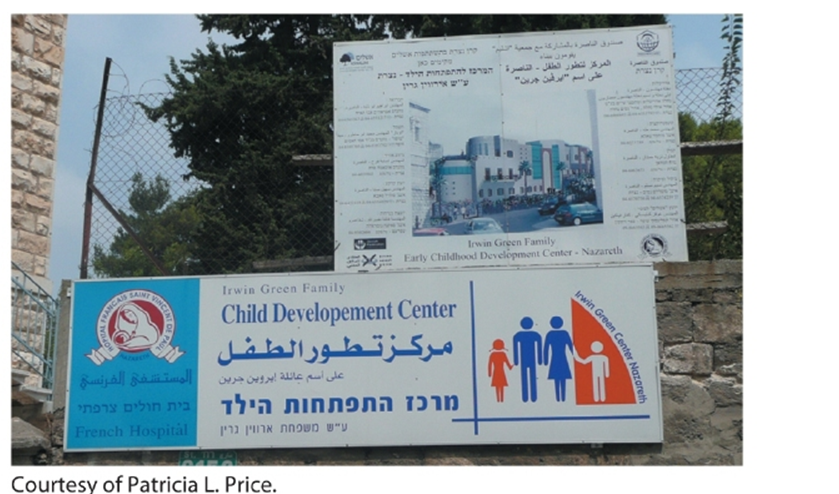
-Which language is NOT written on the sign shown here?
A) Arabic
B) Hebrew
C) English
D) Chinese
Question
-Based on this sign, it is fair to assume that the local population:
A) is a polyglot
B) is English-speaking
C) is illiterate
D) speaks one language
Question
Question
Question
Question
Question
Question
Question
Question
Question
Question
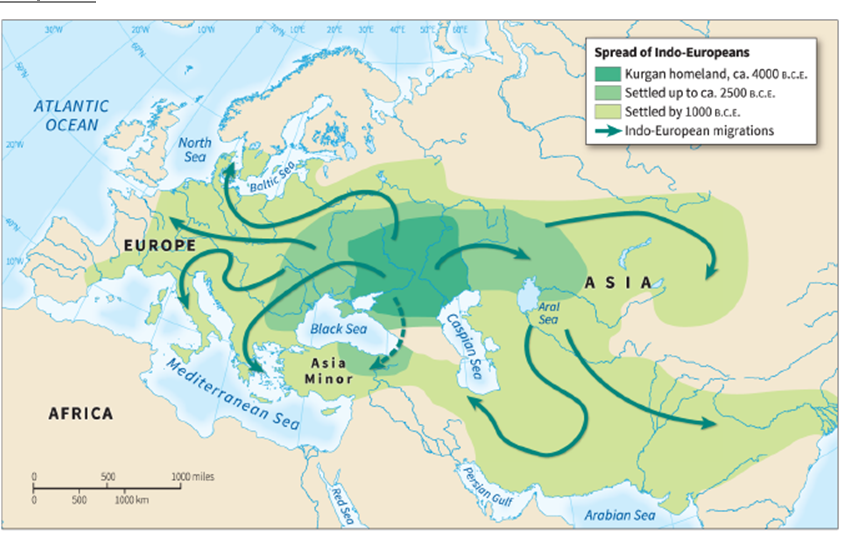
-According to the map shown here, which statement is NOT true?
A) The Kurgan homeland bordered the Black and Caspian seas.
B) Indo-European migrations extended as far as Italy and Spain by 1000
C) By 1000 B.c. E., Indo-European languages had diffused as far as the northern borders of the Persian Gulf and the Arabian Sea.
D) Indo-European languages gained a foothold in Northern Africa by 1000 B.C.E.
Question
Question
Question
Question
Question
Question
Question
Question
Question
Question
Question
Question
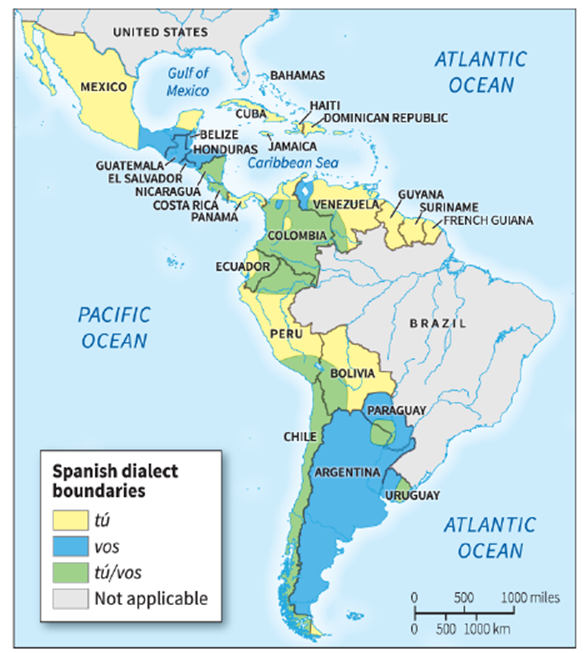
-This map illustrates which geographic concept?
A) toponyms
B) pidgin
C) isoglosses
D) language hotspots

Unlock Deck
Sign up to unlock the cards in this deck!
Unlock Deck
Unlock Deck
1/211

Play

Full screen (f)
Deck 4: The Geography of Language: Locating the Spoken Word
1
The single most common variable by which different cultural groups are identified and by which they assert their unique identity is:
A) Religion
B) Demography
C) Language
D) Race
A) Religion
B) Demography
C) Language
D) Race
C
2
The main means by which learned belief systems, customs, and skills pass from one generation to the next is:
A) religion
B) ethnicity
C) language
D) race
A) religion
B) ethnicity
C) language
D) race
C
3
Which statement is NOT true of language?
A) Primates and other higher-order species have language systems as complicated and expressive as human language.
B) It is the most common variable by which different cultural groups assert their unique identity.
C) It is the main means by which learned belief systems and customs pass from one generation to the next.
D) Language facilitates cultural diffusion and shapes the way people think about, perceive, and talk about the environment.
A) Primates and other higher-order species have language systems as complicated and expressive as human language.
B) It is the most common variable by which different cultural groups assert their unique identity.
C) It is the main means by which learned belief systems and customs pass from one generation to the next.
D) Language facilitates cultural diffusion and shapes the way people think about, perceive, and talk about the environment.
A
4
English speakers from places such as London, Houston, and Melbourne all use the same language but speak different:
A) memes
B) morphemes
C) dialects
D) lingua franca
A) memes
B) morphemes
C) dialects
D) lingua franca
Unlock Deck
Unlock for access to all 211 flashcards in this deck.
Unlock Deck
k this deck
5
In many former colonial countries, the language of the colonial power has combined with indigenous languages to form:
A) pidgins
B) lingua francas
C) dialects
D) language families
A) pidgins
B) lingua francas
C) dialects
D) language families
Unlock Deck
Unlock for access to all 211 flashcards in this deck.
Unlock Deck
k this deck
6
Which statement regarding language is NOT correct?
A) Separate languages are mutually unintelligible.
B) Dialects are variant forms of languages.
C) Dialects are mutually unintelligible.
D) Culture groups often have their own languages of dialects.
A) Separate languages are mutually unintelligible.
B) Dialects are variant forms of languages.
C) Dialects are mutually unintelligible.
D) Culture groups often have their own languages of dialects.
Unlock Deck
Unlock for access to all 211 flashcards in this deck.
Unlock Deck
k this deck
7
About how many languages and dialects are spoken in the world today?
A) 500
B) 1500
C) 3000
D) 7000
A) 500
B) 1500
C) 3000
D) 7000
Unlock Deck
Unlock for access to all 211 flashcards in this deck.
Unlock Deck
k this deck
8
Suppose that speakers of languages A, B, and C live close to one another and come into contact fairly regularly. A fourth language, D, takes elements from A, B, and C to facilitate communication among the groups. D might be considered a:
A) creole language
B) lingua franca
C) Dialect
D) pidgin language
A) creole language
B) lingua franca
C) Dialect
D) pidgin language
Unlock Deck
Unlock for access to all 211 flashcards in this deck.
Unlock Deck
k this deck
9
_____ are the new product of different linguistic groups that come into contact with one another, and are characterized by having a small vocabulary derived from the blending of diverse tongues that converge spatially.
A) pidgin languages
B) lingua franca
C) dialects
D) isoglosses
A) pidgin languages
B) lingua franca
C) dialects
D) isoglosses
Unlock Deck
Unlock for access to all 211 flashcards in this deck.
Unlock Deck
k this deck
10
Into what type of language can a pidgin language evolve as it acquires more words and speakers?
A) creole language
B) lingua franca
C) Dialect
D) Neologism
A) creole language
B) lingua franca
C) Dialect
D) Neologism
Unlock Deck
Unlock for access to all 211 flashcards in this deck.
Unlock Deck
k this deck
11
When pidgin languages acquire fuller vocabularies and become the native languages of their speakers, they become:
A) pidgins
B) lingua francas
C) creole languages
D) isoglosses
A) pidgins
B) lingua francas
C) creole languages
D) isoglosses
Unlock Deck
Unlock for access to all 211 flashcards in this deck.
Unlock Deck
k this deck
12
A language of communication and commerce spoken across a wide area, where it is not the mother tongue, is known as:
A) pidgin
B) lingua franca
C) creole language
D) language family
A) pidgin
B) lingua franca
C) creole language
D) language family
Unlock Deck
Unlock for access to all 211 flashcards in this deck.
Unlock Deck
k this deck
13
Which is NOT true of lingua francas?
A) They exist to facilitate commerce.
B) They are derived from French.
C) They serve a similar purpose as a pidgin language.
D) They are one agreed-upon language used for communication purposes among different peoples.
A) They exist to facilitate commerce.
B) They are derived from French.
C) They serve a similar purpose as a pidgin language.
D) They are one agreed-upon language used for communication purposes among different peoples.
Unlock Deck
Unlock for access to all 211 flashcards in this deck.
Unlock Deck
k this deck
14
Along the U.S.-Mexico border, where many people speak both English and Spanish, there is no need for:
A) cultural understanding
B) religious institutions
C) a lingua franca
D) language preservation societies
A) cultural understanding
B) religious institutions
C) a lingua franca
D) language preservation societies
Unlock Deck
Unlock for access to all 211 flashcards in this deck.
Unlock Deck
k this deck
15
Which association is NOT correct?
A) Spanish-language
B) Tok Pisin-dialect
C) Swahili-lingua franca
D) Quebec, Canada-bilingualism
A) Spanish-language
B) Tok Pisin-dialect
C) Swahili-lingua franca
D) Quebec, Canada-bilingualism
Unlock Deck
Unlock for access to all 211 flashcards in this deck.
Unlock Deck
k this deck
16
Throughout East Africa, Swahili is used as a:
A) pidgin language
B) lingua franca
C) dialect
D) subdialect
A) pidgin language
B) lingua franca
C) dialect
D) subdialect
Unlock Deck
Unlock for access to all 211 flashcards in this deck.
Unlock Deck
k this deck
17
A language family is:
A) a group of languages that spring from a common ancestor
B) used by the members of a large extended family
C) synonymous with a creole language
D) often used as a lingua franca
A) a group of languages that spring from a common ancestor
B) used by the members of a large extended family
C) synonymous with a creole language
D) often used as a lingua franca
Unlock Deck
Unlock for access to all 211 flashcards in this deck.
Unlock Deck
k this deck
18
Languages that are related and share a common ancestor are said to be part of:
A) lingua francas
B) creole languages
C) language families
D) Isoglosses
A) lingua francas
B) creole languages
C) language families
D) Isoglosses
Unlock Deck
Unlock for access to all 211 flashcards in this deck.
Unlock Deck
k this deck
19
What is the largest and most widely spoken language family?
A) Uralic
B) Indo-European
C) Semitic
D) Sino-Tibetan
A) Uralic
B) Indo-European
C) Semitic
D) Sino-Tibetan
Unlock Deck
Unlock for access to all 211 flashcards in this deck.
Unlock Deck
k this deck
20
Which language family is dominant in North and South America?
A) Afro-Asiatic
B) Indo-European
C) Semitic
D) Sino-Tibetan
A) Afro-Asiatic
B) Indo-European
C) Semitic
D) Sino-Tibetan
Unlock Deck
Unlock for access to all 211 flashcards in this deck.
Unlock Deck
k this deck
21
-Based on the illustration, which language is NOT a Romance language?
A) French
B) Spanish
C) Romanian
D) German
Unlock Deck
Unlock for access to all 211 flashcards in this deck.
Unlock Deck
k this deck
22
-Based on the linguistic family tree, which statement is NOT accurate?
A) Danish and Swedish are Germanic languages.
B) Italian is a Romance language.
C) Scottish and Welsh are Celtic languages.
D) Ionic and Doric are Indic languages.
Unlock Deck
Unlock for access to all 211 flashcards in this deck.
Unlock Deck
k this deck
23
-What do all of the languages shown in the family tree have in common?
A) All are in danger of extinction when the current generation of speakers dies out.
B) All are members of the Indo-European family of languages.
C) All dispersed as a result of the Austronesian diffusion.
D) All fall into the category of pidgin or creole languages.
Unlock Deck
Unlock for access to all 211 flashcards in this deck.
Unlock Deck
k this deck
24
-Which two languages shown on the family tree do NOT share a common ancestor?
A) Irish and Romanian
B) Dutch and Ionic
C) Lithuanian and Bulgarian
D) Danish and Gothic
Unlock Deck
Unlock for access to all 211 flashcards in this deck.
Unlock Deck
k this deck
25
-According to the illustration, which is NOT a Greek language?
A) Ionic
B) Aeolic
C) Lydian
D) Arcadian
Unlock Deck
Unlock for access to all 211 flashcards in this deck.
Unlock Deck
k this deck
26
-According to the illustration, which is NOT a subfamily of Indo-European?
A) Romance languages
B) Celtic languages
C) Germanic languages
D) Mandarin languages
Unlock Deck
Unlock for access to all 211 flashcards in this deck.
Unlock Deck
k this deck
27
-The majority of the top 10 most-spoken languages in the world come from which language family?
A) Afro-Asiatic
B) Indo-European
C) Semitic
D) Sino-Tibetan
Unlock Deck
Unlock for access to all 211 flashcards in this deck.
Unlock Deck
k this deck
28
-Into what language family does English fall?
A) Afro-Asiatic
B) Indo-European
C) Semitic
D) Sino-Tibetan
Unlock Deck
Unlock for access to all 211 flashcards in this deck.
Unlock Deck
k this deck
29
-Comparing the _____ of various Indo-European tongues reveals their kinship.
A) Grammar
B) Vocabularies
C) Isoglosses
D) tomonymns
Unlock Deck
Unlock for access to all 211 flashcards in this deck.
Unlock Deck
k this deck
30
-Following Indo-European, which language family is spoken by the MOST people?
A) Sino-Tibetan
B) Uralic
C) Afro-Asiatic
D) Dravidian
Unlock Deck
Unlock for access to all 211 flashcards in this deck.
Unlock Deck
k this deck
31
-In French the word for three is trois, in Romanian it is trei, in Sanskrit it is travas, and in Welsh it is tri. This indicates that these languages are:
A) derived from a common ancestor
B) dialectically the same
C) related, but in different language families
D) completely unrelated
Unlock Deck
Unlock for access to all 211 flashcards in this deck.
Unlock Deck
k this deck
32
-Which language family is second only to Indo-European in number of native speakers?
A) Niger Congo
B) Altaic
C) Afro-Asiatic languages
D) Sino-Tibetan languages
Unlock Deck
Unlock for access to all 211 flashcards in this deck.
Unlock Deck
k this deck
33
-The origin of the Sino-Tibetan language family is thought to be:
A) the Ural Mountains
B) the Himalayan Plateau
C) African Congo
D) the Appalachians
Unlock Deck
Unlock for access to all 211 flashcards in this deck.
Unlock Deck
k this deck
34
-Into what language family does Han Chinese fall?
A) Sino-Tibetan
B) Uralic
C) Afro-Asiatic
D) Dravidian
Unlock Deck
Unlock for access to all 211 flashcards in this deck.
Unlock Deck
k this deck
35
-The official language of China is:
A) Han
B) Manchurian
C) Pinyin
D) Mongolian
Unlock Deck
Unlock for access to all 211 flashcards in this deck.
Unlock Deck
k this deck
36
-Based on the table, which statement is NOT accurate?
A) The world's second-most-spoken language is spoken exclusively in the Northern Hemisphere.
B) The world's most-spoken language is centered in the Eastern Hemisphere.
C) The world's second-most-spoken language is centered in the Western Hemisphere.
D) It is likely that the world's second-most-spoken language diffused as a result of European colonialism.
Unlock Deck
Unlock for access to all 211 flashcards in this deck.
Unlock Deck
k this deck
37
-Based on the table, which statement is accurate?
A) All of the world's top 10 most-spoken languages, except one, are Indo-European.
B) The world's most-spoken language is centered in Africa.
C) The world has almost the same number of speakers of Hindi as it does of Arabic.
D) Most Arabic languages are spoken in sub-Saharan Africa.
Unlock Deck
Unlock for access to all 211 flashcards in this deck.
Unlock Deck
k this deck
38
-Note the table's "Main Areas Where Spoken" column. Spanish diffused to South America, English diffused to South Africa, and Portuguese diffused to Brazil primarily as a result of:
A) voluntary migration
B) traveling scholars
C) colonial expansion
D) the International Language Center
Unlock Deck
Unlock for access to all 211 flashcards in this deck.
Unlock Deck
k this deck
39
-According to the table, the Sino-Tibetan language family is dominated numerically by speakers of:
A) Korean
B) Chinese
C) Japanese
D) Burmese
Unlock Deck
Unlock for access to all 211 flashcards in this deck.
Unlock Deck
k this deck
40
-After Chinese, the world's most widely spoken language, according to the table, is:
A) Spanish
B) Hebrew
C) Arabic
D) English
Unlock Deck
Unlock for access to all 211 flashcards in this deck.
Unlock Deck
k this deck
41
-According to the table, which association is NOT correct?
A) English-South Africa
B) Arabic-North Africa
C) Hindi-Middle East
D) Chinese-Singapore
Unlock Deck
Unlock for access to all 211 flashcards in this deck.
Unlock Deck
k this deck
42
Into what language family do Semitic languages like Hebrew fall?
A) Sino-Tibetan
B) Uralic
C) Afro-Asiatic
D) Indo-European
A) Sino-Tibetan
B) Uralic
C) Afro-Asiatic
D) Indo-European
Unlock Deck
Unlock for access to all 211 flashcards in this deck.
Unlock Deck
k this deck
43
The most widely spoken Afro-Asiatic language is:
A) Swahili
B) Hebrew
C) Amheric
D) Arabic
A) Swahili
B) Hebrew
C) Amheric
D) Arabic
Unlock Deck
Unlock for access to all 211 flashcards in this deck.
Unlock Deck
k this deck
44
Which family consists of two major divisions, Hamitic and Semitic?
A) Niger-Congo languages
B) Afro-Asiatic languages
C) Sino-Tibetan languages
D) Indo-European languages
A) Niger-Congo languages
B) Afro-Asiatic languages
C) Sino-Tibetan languages
D) Indo-European languages
Unlock Deck
Unlock for access to all 211 flashcards in this deck.
Unlock Deck
k this deck
45
The Semitic languages are spoken mostly in:
A) sub-Saharan Africa
B) Europe
C) eastern Asia
D) the Middle East
A) sub-Saharan Africa
B) Europe
C) eastern Asia
D) the Middle East
Unlock Deck
Unlock for access to all 211 flashcards in this deck.
Unlock Deck
k this deck
46
The most widespread Semitic language with the greatest number of speakers is:
A) Semantic
B) Hamitic
C) Arabic
D) Urdu
A) Semantic
B) Hamitic
C) Arabic
D) Urdu
Unlock Deck
Unlock for access to all 211 flashcards in this deck.
Unlock Deck
k this deck
47
With the creation of the state of Israel in 1948, a common language was needed to unite the Jewish immigrants. _____ was revived as the official national language of the new country.
A) Amharic
B) Arabic
C) Hebrew
D) Sephardic
A) Amharic
B) Arabic
C) Hebrew
D) Sephardic
Unlock Deck
Unlock for access to all 211 flashcards in this deck.
Unlock Deck
k this deck
48
Hebrew and Arabic are:
A) Koranic languages
B) Hamitic languages
C) Semitic languages
D) dead languages
A) Koranic languages
B) Hamitic languages
C) Semitic languages
D) dead languages
Unlock Deck
Unlock for access to all 211 flashcards in this deck.
Unlock Deck
k this deck
49
An example of a formerly "dead" language revised for use in the twentieth century is:
A) Hamitic
B) Tuareg
C) Latin
D) Hebrew
A) Hamitic
B) Tuareg
C) Latin
D) Hebrew
Unlock Deck
Unlock for access to all 211 flashcards in this deck.
Unlock Deck
k this deck
50
What word is used to describe a state, such as Switzerland, where several languages are spoken?
A) bilingual
B) international
C) polyglot
D) dialect
A) bilingual
B) international
C) polyglot
D) dialect
Unlock Deck
Unlock for access to all 211 flashcards in this deck.
Unlock Deck
k this deck
51
In which countries are Hamitic languages spoken today?
A) Nigeria and Ethiopia
B) Iran and Iraq
C) Saudi Arabia and Oman
D) Morocco and Algeria
A) Nigeria and Ethiopia
B) Iran and Iraq
C) Saudi Arabia and Oman
D) Morocco and Algeria
Unlock Deck
Unlock for access to all 211 flashcards in this deck.
Unlock Deck
k this deck
52
Which language family is dominant south of the Sahara Desert?
A) Uralic
B) Afro-Asiatic
C) Niger-Congo
D) Dravidian
A) Uralic
B) Afro-Asiatic
C) Niger-Congo
D) Dravidian
Unlock Deck
Unlock for access to all 211 flashcards in this deck.
Unlock Deck
k this deck
53
Bantu and its related languages began spreading about 4000 years ago from the country that is today known as:
A) Botswana
B) Sudan
C) the Democratic Republic of Congo
D) Nigeria
A) Botswana
B) Sudan
C) the Democratic Republic of Congo
D) Nigeria
Unlock Deck
Unlock for access to all 211 flashcards in this deck.
Unlock Deck
k this deck
54
The inhospitable deserts, tundra, and coniferous forests of northern and central Asia are the landscape of the:
A) Sino-Tibetan homeland
B) Finn homeland
C) Altaic homeland
D) Basque homeland
A) Sino-Tibetan homeland
B) Finn homeland
C) Altaic homeland
D) Basque homeland
Unlock Deck
Unlock for access to all 211 flashcards in this deck.
Unlock Deck
k this deck
55
Which is a Uralic tongue?
A) English
B) Finnish
C) German
D) Swahili
A) English
B) Finnish
C) German
D) Swahili
Unlock Deck
Unlock for access to all 211 flashcards in this deck.
Unlock Deck
k this deck
56
Which language family is dispersed among the tropical islands stretching east from Madagascar?
A) Uralic
B) Altaic
C) Austronesian
D) Sino-Tibetan
A) Uralic
B) Altaic
C) Austronesian
D) Sino-Tibetan
Unlock Deck
Unlock for access to all 211 flashcards in this deck.
Unlock Deck
k this deck
57
-Which language is NOT written on the sign shown here?
A) Arabic
B) Hebrew
C) English
D) Chinese
Unlock Deck
Unlock for access to all 211 flashcards in this deck.
Unlock Deck
k this deck
58
-Based on this sign, it is fair to assume that the local population:
A) is a polyglot
B) is English-speaking
C) is illiterate
D) speaks one language
Unlock Deck
Unlock for access to all 211 flashcards in this deck.
Unlock Deck
k this deck
59
Which language family spreads from Madagascar to Hawaii?
A) Indic
B) Anatolian
C) Austronesian
D) Altaic
A) Indic
B) Anatolian
C) Austronesian
D) Altaic
Unlock Deck
Unlock for access to all 211 flashcards in this deck.
Unlock Deck
k this deck
60
The most geographically widespread language in the Austronesian family is:
A) Korean
B) Japanese
C) Javanese
D) Polynesia
A) Korean
B) Japanese
C) Javanese
D) Polynesia
Unlock Deck
Unlock for access to all 211 flashcards in this deck.
Unlock Deck
k this deck
61
Vietnamese and Thai are:
A) Uralic languages
B) Austronesian languages
C) Khoisan-related languages
D) Austro-Asiatic languages
A) Uralic languages
B) Austronesian languages
C) Khoisan-related languages
D) Austro-Asiatic languages
Unlock Deck
Unlock for access to all 211 flashcards in this deck.
Unlock Deck
k this deck
62
According to the Anatolian hypothesis, where did the earliest speakers of the Indo-European languages live?
A) Great Britain
B) Turkey
C) Nigeria
D) India
A) Great Britain
B) Turkey
C) Nigeria
D) India
Unlock Deck
Unlock for access to all 211 flashcards in this deck.
Unlock Deck
k this deck
63
According to the Anatolian hypothesis, which factor was responsible for the diffusion of Indo-European languages?
A) plant domestication
B) animal husbandry
C) river travel
D) nomadic herding
A) plant domestication
B) animal husbandry
C) river travel
D) nomadic herding
Unlock Deck
Unlock for access to all 211 flashcards in this deck.
Unlock Deck
k this deck
64
According to the Kurgan hypothesis, Indo-European languages diffused from:
A) central Europe
B) central Asia
C) southern Africa
D) Iceland
A) central Europe
B) central Asia
C) southern Africa
D) Iceland
Unlock Deck
Unlock for access to all 211 flashcards in this deck.
Unlock Deck
k this deck
65
Following the first waves of diffusion of the Indo-European languages, which factor was important in the continued diffusion of the language family?
A) exploration
B) disease
C) military conquest
D) self-segregation by religious groups
A) exploration
B) disease
C) military conquest
D) self-segregation by religious groups
Unlock Deck
Unlock for access to all 211 flashcards in this deck.
Unlock Deck
k this deck
66
The world's most linguistically diverse city is:
A) London
B) New York
C) Beijing
D) Tokyo
A) London
B) New York
C) Beijing
D) Tokyo
Unlock Deck
Unlock for access to all 211 flashcards in this deck.
Unlock Deck
k this deck
67
Approximately how many languages are spoken in New York City?
A) 455
B) 630
C) 770
D) 800
A) 455
B) 630
C) 770
D) 800
Unlock Deck
Unlock for access to all 211 flashcards in this deck.
Unlock Deck
k this deck
68
-According to the map shown here, which statement is NOT true?
A) The Kurgan homeland bordered the Black and Caspian seas.
B) Indo-European migrations extended as far as Italy and Spain by 1000
C) By 1000 B.c. E., Indo-European languages had diffused as far as the northern borders of the Persian Gulf and the Arabian Sea.
D) Indo-European languages gained a foothold in Northern Africa by 1000 B.C.E.
Unlock Deck
Unlock for access to all 211 flashcards in this deck.
Unlock Deck
k this deck
69
The expansion of Islam as a religion and the evangelical success of the Muslims in Southwest Asia and North Africa facilitated the diffusion of:
A) Hebrew
B) Turkish
C) Arabic
D) Kurdish
A) Hebrew
B) Turkish
C) Arabic
D) Kurdish
Unlock Deck
Unlock for access to all 211 flashcards in this deck.
Unlock Deck
k this deck
70
Which association is NOT correct?
A) Spanish-Protestant
B) Hebrew-Jewish
C) Amharic-Coptic Christianity
D) Arabic-Muslim
A) Spanish-Protestant
B) Hebrew-Jewish
C) Amharic-Coptic Christianity
D) Arabic-Muslim
Unlock Deck
Unlock for access to all 211 flashcards in this deck.
Unlock Deck
k this deck
71
Which language survived mainly as the ceremonial language of the Roman Catholic Church and Vatican City?
A) Hebrew
B) Italian
C) Latin
D) Coptic
A) Hebrew
B) Italian
C) Latin
D) Coptic
Unlock Deck
Unlock for access to all 211 flashcards in this deck.
Unlock Deck
k this deck
72
Martin Luther's translation of the Bible led to the standardization of which language?
A) English
B) Russian
C) German
D) Hungarian
A) English
B) Russian
C) German
D) Hungarian
Unlock Deck
Unlock for access to all 211 flashcards in this deck.
Unlock Deck
k this deck
73
Which holy book is the model for written Arabic?
A) the King James Bible
B) the Torah
C) the Welsh Bible
D) the Qur'an
A) the King James Bible
B) the Torah
C) the Welsh Bible
D) the Qur'an
Unlock Deck
Unlock for access to all 211 flashcards in this deck.
Unlock Deck
k this deck
74
How can a holy book make one language more powerful than another?
A) The language is used in ceremonies.
B) The language is only used by religious leaders.
C) The language is standardized.
D) The language is fluid.
A) The language is used in ceremonies.
B) The language is only used by religious leaders.
C) The language is standardized.
D) The language is fluid.
Unlock Deck
Unlock for access to all 211 flashcards in this deck.
Unlock Deck
k this deck
75
Which mapping technique do geographers use to indicate spatial borders of individual words or pronunciations?
A) latitude and longitude
B) Mercator projection
C) Isoglosses
D) Toponyms
A) latitude and longitude
B) Mercator projection
C) Isoglosses
D) Toponyms
Unlock Deck
Unlock for access to all 211 flashcards in this deck.
Unlock Deck
k this deck
76
In North America, the words porch, stoop, balcony, and veranda are used in different regions. If you were to map where each word is said, you would be drawing:
A) linguistic islands
B) language families
C) linguistic bundles
D) isoglosses
A) linguistic islands
B) language families
C) linguistic bundles
D) isoglosses
Unlock Deck
Unlock for access to all 211 flashcards in this deck.
Unlock Deck
k this deck
77
Geolinguists map dialects by using _____, which indicate the spatial borders of individual words.
A) isophones
B) isoglosses
C) isotherms
D) isolines
A) isophones
B) isoglosses
C) isotherms
D) isolines
Unlock Deck
Unlock for access to all 211 flashcards in this deck.
Unlock Deck
k this deck
78
Which dialect of American English was NOT yet well established by the time of the American Revolution?
A) Western
B) Northern
C) Southern
D) Midland
A) Western
B) Northern
C) Southern
D) Midland
Unlock Deck
Unlock for access to all 211 flashcards in this deck.
Unlock Deck
k this deck
79
A person who says she is going to "pak the cah" (for "park the car") MOST likely hails from what part of the United States?
A) Colorado
B) California
C) Illinois
D) Maine
A) Colorado
B) California
C) Illinois
D) Maine
Unlock Deck
Unlock for access to all 211 flashcards in this deck.
Unlock Deck
k this deck
80
-This map illustrates which geographic concept?
A) toponyms
B) pidgin
C) isoglosses
D) language hotspots
Unlock Deck
Unlock for access to all 211 flashcards in this deck.
Unlock Deck
k this deck
Unlock Deck
Unlock for access to all 211 flashcards in this deck.






