







 Chat with AI

Deck 21: Animal Nutrition and Digestion
Full screen (f)

Question

Question
Question
Question
Question
Question
Question
Question
Question
Question
Question
Question
Question
Question
Question
Question
Question
Question
Question
Question
The figure below shows four types of nutrients that are absorbable by animal cells. 
Which of the above molecules could be absorbed by the digestive tract without further digestion by enzymes?
A) polysaccharide
B) disaccharide
C) protein
D) monoglyceride
Which of the above molecules could be absorbed by the digestive tract without further digestion by enzymes?
A) polysaccharide
B) disaccharide
C) protein
D) monoglyceride
Question
Question
Question
Question
Question
Question
Question
Question
Question
Question
Question
Question
Question
Question
Question
Question
Question
Question
Question
Question
Question
Question
Question
Question
Question
Question
Question
Question
Question
Question
Question
Examine the illustration below of an animal skull.
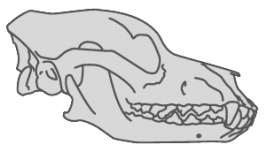
The characteristics of this skull suggest that it belongs to a _____________, the type of animal that consumes only ____________.
The characteristics of this skull suggest that it belongs to a _____________, the type of animal that consumes only ____________.
Question
Question
Question
Question
Question
Question
Question
Question
Question
Question
Question
Question
Question
Question
Question
Question
Chemical digestion occurs inside of the organ indicated by the arrow in the figure below.
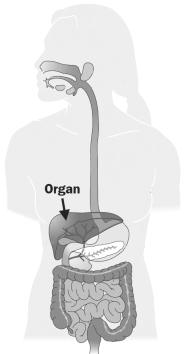
Question

Unlock Deck
Sign up to unlock the cards in this deck!
Unlock Deck
Unlock Deck
1/68

Play

Full screen (f)
Deck 21: Animal Nutrition and Digestion
1
Minerals are
A) organic compounds.
B) required in small amounts.
C) not harmful to humans when ingested in large amounts.
D) created by chemical reactions within cells.
A) organic compounds.
B) required in small amounts.
C) not harmful to humans when ingested in large amounts.
D) created by chemical reactions within cells.
B
2
Which pair of elements would make up more of your body weight than any of the other pairs below?
A) sodium and chlorine
B) carbon and oxygen
C) phosphorus and magnesium
D) potassium and iodine
A) sodium and chlorine
B) carbon and oxygen
C) phosphorus and magnesium
D) potassium and iodine
B
3
If you were a bird about to embark on a long migratory journey, which of the following would you want to have stored in large quantities?
A) sugars
B) proteins
C) fats
D) vitamins
A) sugars
B) proteins
C) fats
D) vitamins
C
4
The first enzymes that food encounters in our body are in
A) our mouth.
B) our esophagus.
C) our pancreas.
D) our small intestine.
A) our mouth.
B) our esophagus.
C) our pancreas.
D) our small intestine.
Unlock Deck
Unlock for access to all 68 flashcards in this deck.
Unlock Deck
k this deck
5
The function of the esophagus is to
A) break down food physically.
B) break down food chemically.
C) carry food to the stomach.
D) prepare undigested material and waste for disposal.
A) break down food physically.
B) break down food chemically.
C) carry food to the stomach.
D) prepare undigested material and waste for disposal.
Unlock Deck
Unlock for access to all 68 flashcards in this deck.
Unlock Deck
k this deck
6
Which of the following packs the most calories per gram?
A) carbohydrates
B) proteins
C) fats
D) amino acids
A) carbohydrates
B) proteins
C) fats
D) amino acids
Unlock Deck
Unlock for access to all 68 flashcards in this deck.
Unlock Deck
k this deck
7
Which one of the following food sources would be eaten by carnivores?
A) apples
B) Girl Scout cookies
C) mushrooms
D) deer
A) apples
B) Girl Scout cookies
C) mushrooms
D) deer
Unlock Deck
Unlock for access to all 68 flashcards in this deck.
Unlock Deck
k this deck
8
The journey of a potato chip through our digestive tract would be
A) mouth to esophagus to stomach to liver to small intestine to large intestine to anus.
B) mouth to esophagus to stomach to small intestine to large intestine to anus.
C) mouth to stomach to esophagus to pancreas to small intestine to large intestine to anus.
D) mouth to esophagus to stomach to large intestine to small intestine to anus.
A) mouth to esophagus to stomach to liver to small intestine to large intestine to anus.
B) mouth to esophagus to stomach to small intestine to large intestine to anus.
C) mouth to stomach to esophagus to pancreas to small intestine to large intestine to anus.
D) mouth to esophagus to stomach to large intestine to small intestine to anus.
Unlock Deck
Unlock for access to all 68 flashcards in this deck.
Unlock Deck
k this deck
9
Organisms need energy to carry out life processes, but they also must use energy simply to gather nutrients. Which of the following statements must be true in order for an organism to live?
A) The amount of energy ingested in proteins must equal the amount of energy ingested in carbohydrates.
B) If the amount of energy used for life processes is low, the organism must ingest extra nutrients in order to produce body heat.
C) The amount of energy used to gather nutrients must be more than the amount of energy used to carry out life processes.
D) The amount of energy used for life processes, including nutrient gathering, must be less than the amount of energy captured from the environment.
A) The amount of energy ingested in proteins must equal the amount of energy ingested in carbohydrates.
B) If the amount of energy used for life processes is low, the organism must ingest extra nutrients in order to produce body heat.
C) The amount of energy used to gather nutrients must be more than the amount of energy used to carry out life processes.
D) The amount of energy used for life processes, including nutrient gathering, must be less than the amount of energy captured from the environment.
Unlock Deck
Unlock for access to all 68 flashcards in this deck.
Unlock Deck
k this deck
10
Which of the following reasons best explains why starch molecules must be broken down before they can be absorbed by the small intestine?
A) They are toxic to the cells of the small intestine.
B) They are too large to pass through the plasma membrane of the intestinal cells.
C) They must be broken down in order to extract the essential amino acids they contain.
D) The cells of the small intestine are much too small to contain them.
A) They are toxic to the cells of the small intestine.
B) They are too large to pass through the plasma membrane of the intestinal cells.
C) They must be broken down in order to extract the essential amino acids they contain.
D) The cells of the small intestine are much too small to contain them.
Unlock Deck
Unlock for access to all 68 flashcards in this deck.
Unlock Deck
k this deck
11
Consider the parts of the digestive system, particularly the place where water is removed before feces are excreted. Which organ is the mostly likely to be responsible for a bout of diarrhea?
A) colon
B) anus
C) stomach
D) esophagus
A) colon
B) anus
C) stomach
D) esophagus
Unlock Deck
Unlock for access to all 68 flashcards in this deck.
Unlock Deck
k this deck
12
Lipases help to digest
A) proteins.
B) glucose.
C) amino acids.
D) fats.
A) proteins.
B) glucose.
C) amino acids.
D) fats.
Unlock Deck
Unlock for access to all 68 flashcards in this deck.
Unlock Deck
k this deck
13
Which of the following statements about human digestion is true?
A) We are able to directly absorb most large nutrient molecules such as starch.
B) We must process nutrients in order to absorb them.
C) The absorptive surface of our gut lets all materials pass through it into the bloodstream.
D) The human gut is able to absorb complex proteins easily.
A) We are able to directly absorb most large nutrient molecules such as starch.
B) We must process nutrients in order to absorb them.
C) The absorptive surface of our gut lets all materials pass through it into the bloodstream.
D) The human gut is able to absorb complex proteins easily.
Unlock Deck
Unlock for access to all 68 flashcards in this deck.
Unlock Deck
k this deck
14
The most likely potential problem faced by a person who is following a low-protein diet is the failure to
A) take in enough organic compounds to produce the energy necessary for life functions.
B) take in enough essential amino acids.
C) take in enough calories to survive.
D) make the mineral nutrients necessary to live.
A) take in enough organic compounds to produce the energy necessary for life functions.
B) take in enough essential amino acids.
C) take in enough calories to survive.
D) make the mineral nutrients necessary to live.
Unlock Deck
Unlock for access to all 68 flashcards in this deck.
Unlock Deck
k this deck
15
Which of the following statements about fat digestion is false?
A) Fat molecules are too large to cross the gut wall.
B) Fats dissolve poorly in the watery mass of food moving through the gut.
C) Fats are difficult to absorb.
D) Fats cannot be broken down into smaller molecules.
A) Fat molecules are too large to cross the gut wall.
B) Fats dissolve poorly in the watery mass of food moving through the gut.
C) Fats are difficult to absorb.
D) Fats cannot be broken down into smaller molecules.
Unlock Deck
Unlock for access to all 68 flashcards in this deck.
Unlock Deck
k this deck
16
The enzyme that works well in the acidic environment of the stomach is
A) trypsin.
B) pepsin.
C) amylase.
D) rennin.
A) trypsin.
B) pepsin.
C) amylase.
D) rennin.
Unlock Deck
Unlock for access to all 68 flashcards in this deck.
Unlock Deck
k this deck
17
Which amino acids are humans unable to synthesize?
A) all amino acids
B) most of the essential amino acids
C) the unnecessary amino acids
D) essential amino acids
A) all amino acids
B) most of the essential amino acids
C) the unnecessary amino acids
D) essential amino acids
Unlock Deck
Unlock for access to all 68 flashcards in this deck.
Unlock Deck
k this deck
18
Which of the following is not one of the three elements that provide the framework for the complex organic compounds that characterize life?
A) carbon
B) iron
C) hydrogen
D) oxygen
A) carbon
B) iron
C) hydrogen
D) oxygen
Unlock Deck
Unlock for access to all 68 flashcards in this deck.
Unlock Deck
k this deck
19
Omnivores eat
A) carnivores.
B) herbivores.
C) plants.
D) all of the above
A) carnivores.
B) herbivores.
C) plants.
D) all of the above
Unlock Deck
Unlock for access to all 68 flashcards in this deck.
Unlock Deck
k this deck
20
The figure below shows four types of nutrients that are absorbable by animal cells.
Which of the above molecules could be absorbed by the digestive tract without further digestion by enzymes?
A) polysaccharide
B) disaccharide
C) protein
D) monoglyceride
Which of the above molecules could be absorbed by the digestive tract without further digestion by enzymes?
A) polysaccharide
B) disaccharide
C) protein
D) monoglyceride
Unlock Deck
Unlock for access to all 68 flashcards in this deck.
Unlock Deck
k this deck
21
The main function of enzymes in the human digestive tract is to
A) create the chemical bonds that form complex carbohydrates.
B) ensure that fats remain grouped together in large droplets.
C) catalyze chemical reactions that break specific chemical bonds in food molecules.
D) neutralize the acids produced by the stomach.
A) create the chemical bonds that form complex carbohydrates.
B) ensure that fats remain grouped together in large droplets.
C) catalyze chemical reactions that break specific chemical bonds in food molecules.
D) neutralize the acids produced by the stomach.
Unlock Deck
Unlock for access to all 68 flashcards in this deck.
Unlock Deck
k this deck
22
Which of the following steps of digestion does not occur in the mouth?
A) chemical breakdown by enzymes
B) mechanical breakdown
C) ingestion
D) absorption
A) chemical breakdown by enzymes
B) mechanical breakdown
C) ingestion
D) absorption
Unlock Deck
Unlock for access to all 68 flashcards in this deck.
Unlock Deck
k this deck
23
Which of the following is not secreted by the mammalian pancreas?
A) pepsin
B) bicarbonate
C) trypsin
D) chymotrypsin
A) pepsin
B) bicarbonate
C) trypsin
D) chymotrypsin
Unlock Deck
Unlock for access to all 68 flashcards in this deck.
Unlock Deck
k this deck
24
In which of the following animals would you expect to find the longest small intestine relative to its total body size?
A) a lion
B) a horse
C) a human
D) a wolf
A) a lion
B) a horse
C) a human
D) a wolf
Unlock Deck
Unlock for access to all 68 flashcards in this deck.
Unlock Deck
k this deck
25
When humans who lack a particular enzyme consume products made from cow's milk they suffer digestive problems. The enzyme is
A) pepsin.
B) lactase.
C) chymotrypsin.
D) amylase.
A) pepsin.
B) lactase.
C) chymotrypsin.
D) amylase.
Unlock Deck
Unlock for access to all 68 flashcards in this deck.
Unlock Deck
k this deck
26
Which of the following would not be found in the lower small intestine?
A) a brush border
B) villi
C) a large surface area
D) a low pH
A) a brush border
B) villi
C) a large surface area
D) a low pH
Unlock Deck
Unlock for access to all 68 flashcards in this deck.
Unlock Deck
k this deck
27
Low levels of vitamin D have been linked to seasonal affective disorder, a condition that leads to depression in the winter. Would you expect dark-skinned people to be more or less prone to seasonal affective disorder?
A) Dark-skinned people are probably less likely to have this disorder because they tend to eat foods that are higher in vitamin D.
B) Dark-skinned people are probably less likely to have this disorder because they have evolved enzymes that are more efficient at producing vitamin D.
C) Dark-skinned people are probably more likely to have this disorder as the pigments in their skin block out the sunlight needed to make vitamin D.
D) Dark-skinned people are probably more likely to have this disorder because the pigments in their skin allow sunlight to pass and destroy vitamin D that has been obtained through diet.
A) Dark-skinned people are probably less likely to have this disorder because they tend to eat foods that are higher in vitamin D.
B) Dark-skinned people are probably less likely to have this disorder because they have evolved enzymes that are more efficient at producing vitamin D.
C) Dark-skinned people are probably more likely to have this disorder as the pigments in their skin block out the sunlight needed to make vitamin D.
D) Dark-skinned people are probably more likely to have this disorder because the pigments in their skin allow sunlight to pass and destroy vitamin D that has been obtained through diet.
Unlock Deck
Unlock for access to all 68 flashcards in this deck.
Unlock Deck
k this deck
28
Some animals have part of their guts modified into a muscular area that grinds food against small pebbles or sand grains collected from the environment. Which of the following statements about this area is false?
A) It is the area where the chemical breakdown of food takes place.
B) It is known as a gizzard.
C) It helps large food items become small enough to enter the digestive system of the animal.
D) It helps speed digestion by increasing the surface area of the food particles, which speeds their breakdown.
A) It is the area where the chemical breakdown of food takes place.
B) It is known as a gizzard.
C) It helps large food items become small enough to enter the digestive system of the animal.
D) It helps speed digestion by increasing the surface area of the food particles, which speeds their breakdown.
Unlock Deck
Unlock for access to all 68 flashcards in this deck.
Unlock Deck
k this deck
29
The eight essential amino acids required by adult humans
A) are produced by the human body.
B) can be obtained by eating any one type of vegetable.
C) are not found in meat products.
D) are used as building blocks for human proteins.
A) are produced by the human body.
B) can be obtained by eating any one type of vegetable.
C) are not found in meat products.
D) are used as building blocks for human proteins.
Unlock Deck
Unlock for access to all 68 flashcards in this deck.
Unlock Deck
k this deck
30
As nutrients move across an intestinal villus, capillaries absorb
A) amino acids and sugars.
B) fats.
C) lymph vessels.
D) monoglycerides.
A) amino acids and sugars.
B) fats.
C) lymph vessels.
D) monoglycerides.
Unlock Deck
Unlock for access to all 68 flashcards in this deck.
Unlock Deck
k this deck
31
The gallbladder
A) stores bile.
B) secretes digestive enzymes.
C) breaks down fats.
D) absorbs fats.
A) stores bile.
B) secretes digestive enzymes.
C) breaks down fats.
D) absorbs fats.
Unlock Deck
Unlock for access to all 68 flashcards in this deck.
Unlock Deck
k this deck
32
Not all parts of the food that humans ingest are used by our bodies. Fiber consisting mostly of cellulose, for instance, is excreted without providing nutrition. Which of the following statements explains why fiber is not used as a nutrient in humans?
A) The human gut is unable to break it down; thus it cannot be absorbed across the intestinal cells' membranes.
B) Fiber is an amino acid but not one of the essential amino acids, so we do not need to absorb it as a nutrient.
C) The fiber content of human foods is so low that it is not worthwhile for our bodies to expend energy to extract its nutrients.
D) The fiber is digested into such small molecules that they become nutritionally insignificant.
A) The human gut is unable to break it down; thus it cannot be absorbed across the intestinal cells' membranes.
B) Fiber is an amino acid but not one of the essential amino acids, so we do not need to absorb it as a nutrient.
C) The fiber content of human foods is so low that it is not worthwhile for our bodies to expend energy to extract its nutrients.
D) The fiber is digested into such small molecules that they become nutritionally insignificant.
Unlock Deck
Unlock for access to all 68 flashcards in this deck.
Unlock Deck
k this deck
33
Food passing though our digestive tract would contain the fewest nutrients in the
A) small intestine.
B) stomach.
C) colon.
D) esophagus.
A) small intestine.
B) stomach.
C) colon.
D) esophagus.
Unlock Deck
Unlock for access to all 68 flashcards in this deck.
Unlock Deck
k this deck
34
Which of the following might be true of an omnivore?
A) An omnivore probably has both spiked teeth for tearing and flat teeth for grinding.
B) An omnivore probably has a very complex stomach with many different chambers for housing microorganisms that break down cellulose.
C) An omnivore probably has a very short intestine since all the foods it consumes are easily absorbed.
D) An omnivore probably produces both the enzyme that breaks down cellulose and pepsin.
A) An omnivore probably has both spiked teeth for tearing and flat teeth for grinding.
B) An omnivore probably has a very complex stomach with many different chambers for housing microorganisms that break down cellulose.
C) An omnivore probably has a very short intestine since all the foods it consumes are easily absorbed.
D) An omnivore probably produces both the enzyme that breaks down cellulose and pepsin.
Unlock Deck
Unlock for access to all 68 flashcards in this deck.
Unlock Deck
k this deck
35
The lower region of the small intestine is structured to create large amounts of surface area so that it can more efficiently
A) produce enzymes to break food down into smaller molecules.
B) grind food down into smaller molecules.
C) absorb the chemical building blocks produced by digestion.
D) eliminate waste products.
A) produce enzymes to break food down into smaller molecules.
B) grind food down into smaller molecules.
C) absorb the chemical building blocks produced by digestion.
D) eliminate waste products.
Unlock Deck
Unlock for access to all 68 flashcards in this deck.
Unlock Deck
k this deck
36
How rapidly an organism can absorb nutrients generally depends on
A) the surface area available for absorption.
B) how quickly the nutrient can diffuse into the stomach.
C) the passive mechanisms that carry the nutrient into the organism.
D) the volume of the organism taking up the nutrients.
A) the surface area available for absorption.
B) how quickly the nutrient can diffuse into the stomach.
C) the passive mechanisms that carry the nutrient into the organism.
D) the volume of the organism taking up the nutrients.
Unlock Deck
Unlock for access to all 68 flashcards in this deck.
Unlock Deck
k this deck
37
Which of the following does not occur in the colon?
A) absorption of minerals
B) breakdown of fats and carbohydrates
C) absorption of water
D) vitamin production by prokaryotic organisms
A) absorption of minerals
B) breakdown of fats and carbohydrates
C) absorption of water
D) vitamin production by prokaryotic organisms
Unlock Deck
Unlock for access to all 68 flashcards in this deck.
Unlock Deck
k this deck
38
Why do sheep have a much longer small intestine relative to their size than dogs do?
A) Sheep are generally larger than dogs, and the larger the animal, the larger the relative size of their small intestine.
B) Dogs have sharper teeth than sheep, so they do not need to absorb food only through their small intestines.
C) Sheep eat relatively nutrient-poor food, and a long intestine allows more complete absorption of the available nutrients.
D) Dogs have a simple stomach, whereas the sheep stomach is fairly complex.
A) Sheep are generally larger than dogs, and the larger the animal, the larger the relative size of their small intestine.
B) Dogs have sharper teeth than sheep, so they do not need to absorb food only through their small intestines.
C) Sheep eat relatively nutrient-poor food, and a long intestine allows more complete absorption of the available nutrients.
D) Dogs have a simple stomach, whereas the sheep stomach is fairly complex.
Unlock Deck
Unlock for access to all 68 flashcards in this deck.
Unlock Deck
k this deck
39
The human liver produces bile, a substance that
A) aids in the absorption of vitamin K.
B) allows fats to dissolve more easily in the watery contents of the gut.
C) neutralizes the acids produced by pepsin.
D) breaks the bonds between amino acids.
A) aids in the absorption of vitamin K.
B) allows fats to dissolve more easily in the watery contents of the gut.
C) neutralizes the acids produced by pepsin.
D) breaks the bonds between amino acids.
Unlock Deck
Unlock for access to all 68 flashcards in this deck.
Unlock Deck
k this deck
40
The liver secretes bile to
A) the pancreas.
B) the small intestine.
C) the gallbladder.
D) the large intestine.
A) the pancreas.
B) the small intestine.
C) the gallbladder.
D) the large intestine.
Unlock Deck
Unlock for access to all 68 flashcards in this deck.
Unlock Deck
k this deck
41
Although cows are herbivores that specialize in consuming grass, they do not produce the enzyme needed to breakdown the long-chain plant carbohydrate ____________. However, cows do house microorganisms in their guts that can make the enzyme for them.
Unlock Deck
Unlock for access to all 68 flashcards in this deck.
Unlock Deck
k this deck
42
The main reason that proteins are an important part of your diet is that they are a source of _________________, the building blocks of the enzymes that run your cells.
Unlock Deck
Unlock for access to all 68 flashcards in this deck.
Unlock Deck
k this deck
43
The colon contains bacteria that produce _____________, a small organic compound that is involved in blood clotting.
Unlock Deck
Unlock for access to all 68 flashcards in this deck.
Unlock Deck
k this deck
44
Vegetarians should be careful to consume a variety of plants to ensure that they obtain all of their essential amino acids.
Unlock Deck
Unlock for access to all 68 flashcards in this deck.
Unlock Deck
k this deck
45
In animals the mechanical breakdown of food involves teeth. In birds the mechanical breakdown is accomplished by a _______.
Unlock Deck
Unlock for access to all 68 flashcards in this deck.
Unlock Deck
k this deck
46
Out of the four classes of organic compounds found in organisms, _________ are capable of storing the largest amount of energy.
Unlock Deck
Unlock for access to all 68 flashcards in this deck.
Unlock Deck
k this deck
47
Food must be broken down chemically, before nutrients in it can be absorbed.
Unlock Deck
Unlock for access to all 68 flashcards in this deck.
Unlock Deck
k this deck
48
The _______ is the organ that contracts to mix food particles with acid and enzymes, and also holds food until it can pass farther along for continued digestion.
Unlock Deck
Unlock for access to all 68 flashcards in this deck.
Unlock Deck
k this deck
49
Digestive _______, such as amylase, break specific chemical bonds to help organisms process their food.
Unlock Deck
Unlock for access to all 68 flashcards in this deck.
Unlock Deck
k this deck
50
________ are not nutrients, do not provide us with energy, and are required only in small quantities; however, they help to regulate metabolic processes.
Unlock Deck
Unlock for access to all 68 flashcards in this deck.
Unlock Deck
k this deck
51
Examine the illustration below of an animal skull.
The characteristics of this skull suggest that it belongs to a _____________, the type of animal that consumes only ____________.
The characteristics of this skull suggest that it belongs to a _____________, the type of animal that consumes only ____________.
Unlock Deck
Unlock for access to all 68 flashcards in this deck.
Unlock Deck
k this deck
52
Since vitamins are so important to metabolism, it is important to ingest large amounts of them in the form of vitamin supplements.
Unlock Deck
Unlock for access to all 68 flashcards in this deck.
Unlock Deck
k this deck
53
What is the best way to control your weight and live longer?
A) Eat only foods high in protein.
B) Become a vegetarian.
C) Eat only foods high in carbohydrates.
D) Get plenty of exercise.
A) Eat only foods high in protein.
B) Become a vegetarian.
C) Eat only foods high in carbohydrates.
D) Get plenty of exercise.
Unlock Deck
Unlock for access to all 68 flashcards in this deck.
Unlock Deck
k this deck
54
Which of the following is false?
A) A sheep has a small intestine about six times longer than that of a wolf.
B) A wolf has a single-chambered stomach, but a sheep's stomach has four chambers.
C) A wolf's teeth are made for tearing and some chewing, and a sheep's teeth are made mostly for grinding.
D) A wolf's colon contains bacteria that digest cellulose, and a sheep's stomach produces enzymes that digest cellulose.
A) A sheep has a small intestine about six times longer than that of a wolf.
B) A wolf has a single-chambered stomach, but a sheep's stomach has four chambers.
C) A wolf's teeth are made for tearing and some chewing, and a sheep's teeth are made mostly for grinding.
D) A wolf's colon contains bacteria that digest cellulose, and a sheep's stomach produces enzymes that digest cellulose.
Unlock Deck
Unlock for access to all 68 flashcards in this deck.
Unlock Deck
k this deck
55
Many ___________, small inorganic compounds that are needed in trace amounts, are essential to the proper function of proteins.
Unlock Deck
Unlock for access to all 68 flashcards in this deck.
Unlock Deck
k this deck
56
The nutrients in food enter our body by crossing through the epithelial cells lining the _____ intestine.
Unlock Deck
Unlock for access to all 68 flashcards in this deck.
Unlock Deck
k this deck
57
Vitamins are either water-soluble or ___-soluble.
Unlock Deck
Unlock for access to all 68 flashcards in this deck.
Unlock Deck
k this deck
58
The major organ that supplies digestive enzymes and bicarbonate to the small intestine is the ________.
Unlock Deck
Unlock for access to all 68 flashcards in this deck.
Unlock Deck
k this deck
59
Vitamins are an essential source of energy.
Unlock Deck
Unlock for access to all 68 flashcards in this deck.
Unlock Deck
k this deck
60
Humans can synthesize some of the amino acids we need. The ones we must obtain from our food are known as _______ amino acids.
Unlock Deck
Unlock for access to all 68 flashcards in this deck.
Unlock Deck
k this deck
61
Only guinea pigs, bats, the great apes, and humans must get vitamin C from their diets rather than synthesizing it themselves.
Unlock Deck
Unlock for access to all 68 flashcards in this deck.
Unlock Deck
k this deck
62
The large surface area of a sheep's small intestine allows the sheep to more efficiently absorb amino acids from the food they consume.
Unlock Deck
Unlock for access to all 68 flashcards in this deck.
Unlock Deck
k this deck
63
The brush border in the small intestine decreases the amount of surface area available for absorption of nutrients.
Unlock Deck
Unlock for access to all 68 flashcards in this deck.
Unlock Deck
k this deck
64
The natural production and absorption of many vitamins is regulated by negative feedback loops.
Unlock Deck
Unlock for access to all 68 flashcards in this deck.
Unlock Deck
k this deck
65
The enzyme lactase is found only in populations of people who suffer from lactose intolerance.
Unlock Deck
Unlock for access to all 68 flashcards in this deck.
Unlock Deck
k this deck
66
Because they are not soluble in water, fats are digested in a different way than proteins and carbohydrates.
Unlock Deck
Unlock for access to all 68 flashcards in this deck.
Unlock Deck
k this deck
67
Chemical digestion occurs inside of the organ indicated by the arrow in the figure below.
Unlock Deck
Unlock for access to all 68 flashcards in this deck.
Unlock Deck
k this deck
68
Describe how the structure of the small intestine aids in its role in nutrient absorption.
Unlock Deck
Unlock for access to all 68 flashcards in this deck.
Unlock Deck
k this deck
Unlock Deck
Unlock for access to all 68 flashcards in this deck.






