







 Chat with AI

Deck 31: Plant Structure, Nutrition, and Transport
Full screen (f)

Question
Examine the plant in the figure below. 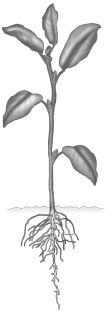
The plant shown is most likely a dicot because of the presence of
A) a taproot.
B) veins within the leaves.
C) five leaves.
D) both root and shoot systems.
The plant shown is most likely a dicot because of the presence of
A) a taproot.
B) veins within the leaves.
C) five leaves.
D) both root and shoot systems.

Question
Question
Question
Question
Question
Question
Question
Question
Question
Question
Question
Question
Question
Question
Question
Question
Question
Question
Question
Question
Question
Question
Question
Question
Question
Question
Question
Question
Question
Question
Question
Question
Question
Question
Question
Question
Question
Question
Question
In the figure below, the line with the arrowheads indicates the cell-wall pathway for an absorbed nutrient. 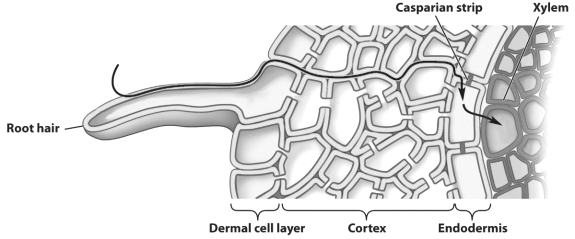
What structure actually regulates the entry of nutrients into the plant's interior?
A) the root cap
B) the plasma membrane of root hair
C) the plasma membrane of endodermal call
D) the cell wall of root hair
What structure actually regulates the entry of nutrients into the plant's interior?
A) the root cap
B) the plasma membrane of root hair
C) the plasma membrane of endodermal call
D) the cell wall of root hair
Question
Question
Question
Question
Question
Question
Question
Question
Question
Question
The figure below illustrates how food is transported in phloem tissue. 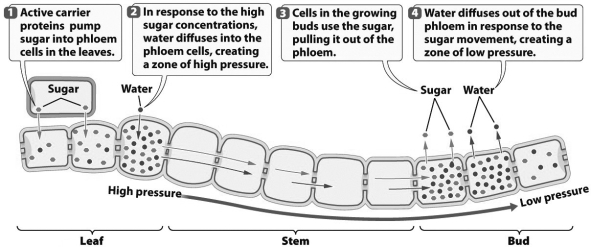
At what step(s) during the movement of sugar is metabolic energy provided by the plant?
A) Steps 2 and 4, when water enters and leaves phloem
B) Step 1, when high concentrations of sugar are created in the phloem
C) Step 3, when growing cells in buds pump in sugar from the phloem
D) All of the steps require the expenditure of metabolic energy.
At what step(s) during the movement of sugar is metabolic energy provided by the plant?
A) Steps 2 and 4, when water enters and leaves phloem
B) Step 1, when high concentrations of sugar are created in the phloem
C) Step 3, when growing cells in buds pump in sugar from the phloem
D) All of the steps require the expenditure of metabolic energy.
Question
Question
Question
Question
Question
Question
Question
Question
Question
Question
Question
Question
Question

Unlock Deck
Sign up to unlock the cards in this deck!
Unlock Deck
Unlock Deck
1/63

Play

Full screen (f)
Deck 31: Plant Structure, Nutrition, and Transport
1
Examine the plant in the figure below.
The plant shown is most likely a dicot because of the presence of
A) a taproot.
B) veins within the leaves.
C) five leaves.
D) both root and shoot systems.
The plant shown is most likely a dicot because of the presence of
A) a taproot.
B) veins within the leaves.
C) five leaves.
D) both root and shoot systems.
A
2
Roots perform all of the following functions except
A) the transport of water.
B) photosynthesis.
C) the transport of nutrients.
D) the storage of food.
A) the transport of water.
B) photosynthesis.
C) the transport of nutrients.
D) the storage of food.
B
3
Conifers, such as spruce and fir trees, belong to the
A) seedless vascular plant group.
B) gymnosperm group.
C) angiosperm group.
D) bryophyte group.
A) seedless vascular plant group.
B) gymnosperm group.
C) angiosperm group.
D) bryophyte group.
B
4
Water and nutrients are taken up from soil by
A) guard cells.
B) root hairs.
C) root caps.
D) xylem in tap roots.
A) guard cells.
B) root hairs.
C) root caps.
D) xylem in tap roots.
Unlock Deck
Unlock for access to all 63 flashcards in this deck.
Unlock Deck
k this deck
5
Peanuts and potatoes are from plants that belong to the
A) gymnosperm group.
B) bryophyte group.
C) angiosperm group.
D) seedless vascular plant group.
A) gymnosperm group.
B) bryophyte group.
C) angiosperm group.
D) seedless vascular plant group.
Unlock Deck
Unlock for access to all 63 flashcards in this deck.
Unlock Deck
k this deck
6
Which of the following is an example of a plant tissue?
A) root
B) stem
C) leaves
D) vascular
A) root
B) stem
C) leaves
D) vascular
Unlock Deck
Unlock for access to all 63 flashcards in this deck.
Unlock Deck
k this deck
7
Companion cells
A) are found next to guard cells.
B) are found in phloem.
C) lie next to tracheids in xylem.
D) are the basic components of tracheids.
A) are found next to guard cells.
B) are found in phloem.
C) lie next to tracheids in xylem.
D) are the basic components of tracheids.
Unlock Deck
Unlock for access to all 63 flashcards in this deck.
Unlock Deck
k this deck
8
Mosses would be placed in which group of plants?
A) gymnosperms
B) bryophytes
C) angiosperms
D) ferns
A) gymnosperms
B) bryophytes
C) angiosperms
D) ferns
Unlock Deck
Unlock for access to all 63 flashcards in this deck.
Unlock Deck
k this deck
9
The outer waxy covering on plants is called
A) dermal tissue.
B) the trichome layer.
C) the guard cell layer.
D) the cuticle.
A) dermal tissue.
B) the trichome layer.
C) the guard cell layer.
D) the cuticle.
Unlock Deck
Unlock for access to all 63 flashcards in this deck.
Unlock Deck
k this deck
10
In terms of their energy needs, solar energy is converted to chemical energy primarily within the plant's
A) stems.
B) leaves.
C) roots.
D) flowers.
A) stems.
B) leaves.
C) roots.
D) flowers.
Unlock Deck
Unlock for access to all 63 flashcards in this deck.
Unlock Deck
k this deck
11
Approximately 90 percent of all plants are angiosperms. What unique feature(s) could account for their tremendous success?
A) flowers and fruit
B) the ability to produce seeds
C) vascular tissue
D) the ability to withstand cold
A) flowers and fruit
B) the ability to produce seeds
C) vascular tissue
D) the ability to withstand cold
Unlock Deck
Unlock for access to all 63 flashcards in this deck.
Unlock Deck
k this deck
12
Which of the following is an angiosperm?
A) fern
B) moss
C) rose
D) pine tree
A) fern
B) moss
C) rose
D) pine tree
Unlock Deck
Unlock for access to all 63 flashcards in this deck.
Unlock Deck
k this deck
13
Pine cones are produced by plants that are classified as
A) bryophytes.
B) angiosperms
C) gymnosperms.
D) seedless vascular plants.
A) bryophytes.
B) angiosperms
C) gymnosperms.
D) seedless vascular plants.
Unlock Deck
Unlock for access to all 63 flashcards in this deck.
Unlock Deck
k this deck
14
A tendril on a grape vine is a modified
A) leaf.
B) bud.
C) root.
D) stem.
A) leaf.
B) bud.
C) root.
D) stem.
Unlock Deck
Unlock for access to all 63 flashcards in this deck.
Unlock Deck
k this deck
15
What observation indicates that the thorns on a rose bush are modified stem?
A) the presence of stomata
B) vascular bundles arranged in a ring
C) a centrally located vascular bundle
D) the presence of a cuticle
A) the presence of stomata
B) vascular bundles arranged in a ring
C) a centrally located vascular bundle
D) the presence of a cuticle
Unlock Deck
Unlock for access to all 63 flashcards in this deck.
Unlock Deck
k this deck
16
Worldwide, humans obtain more than 80 percent of their calories from
A) seedless vascular plants.
B) angiosperms.
C) bryophytes.
D) gymnosperms.
A) seedless vascular plants.
B) angiosperms.
C) bryophytes.
D) gymnosperms.
Unlock Deck
Unlock for access to all 63 flashcards in this deck.
Unlock Deck
k this deck
17
Onions are composed of modified
A) roots.
B) stems.
C) shoots.
D) leaves.
A) roots.
B) stems.
C) shoots.
D) leaves.
Unlock Deck
Unlock for access to all 63 flashcards in this deck.
Unlock Deck
k this deck
18
Of the following which is not composed of dermal tissue?
A) root hairs
B) phloem
C) trichomes
D) guard cells
A) root hairs
B) phloem
C) trichomes
D) guard cells
Unlock Deck
Unlock for access to all 63 flashcards in this deck.
Unlock Deck
k this deck
19
Within its vascular tissue, sieve tube elements and companion cells are connected by the
A) guard cells.
B) central vacuoles.
C) plasmodesmata.
D) Casparian strip.
A) guard cells.
B) central vacuoles.
C) plasmodesmata.
D) Casparian strip.
Unlock Deck
Unlock for access to all 63 flashcards in this deck.
Unlock Deck
k this deck
20
Tracheids are found in
A) phloem.
B) xylem.
C) root caps.
D) guard cells.
A) phloem.
B) xylem.
C) root caps.
D) guard cells.
Unlock Deck
Unlock for access to all 63 flashcards in this deck.
Unlock Deck
k this deck
21
Which combination of conditions will cause a plant's stomata to open?
A) high moisture and daylight
B) high moisture and darkness
C) dehydration and darkness
D) dehydration and daylight
A) high moisture and daylight
B) high moisture and darkness
C) dehydration and darkness
D) dehydration and daylight
Unlock Deck
Unlock for access to all 63 flashcards in this deck.
Unlock Deck
k this deck
22
Dermal hairs are more common on plants living at high elevations because at higher elevations
A) fewer herbivores are present.
B) water evaporates quickly.
C) competition for space is more intense.
D) ultraviolet radiation is more intense.
A) fewer herbivores are present.
B) water evaporates quickly.
C) competition for space is more intense.
D) ultraviolet radiation is more intense.
Unlock Deck
Unlock for access to all 63 flashcards in this deck.
Unlock Deck
k this deck
23
Like other organisms, plants are composed of proteins, lipids, carbohydrates, and nucleic acids. Based on this, which of the following would be a macronutrient?
A) zinc
B) copper
C) iron
D) carbon
A) zinc
B) copper
C) iron
D) carbon
Unlock Deck
Unlock for access to all 63 flashcards in this deck.
Unlock Deck
k this deck
24
In a plant leaf, photosynthesis occurs in the
A) collenchymal cells.
B) parenchymal cells.
C) sclerenchymal cells.
D) all of the above
A) collenchymal cells.
B) parenchymal cells.
C) sclerenchymal cells.
D) all of the above
Unlock Deck
Unlock for access to all 63 flashcards in this deck.
Unlock Deck
k this deck
25
Vessel elements are found in
A) guard cells.
B) root caps.
C) phloem.
D) xylem.
A) guard cells.
B) root caps.
C) phloem.
D) xylem.
Unlock Deck
Unlock for access to all 63 flashcards in this deck.
Unlock Deck
k this deck
26
Organic fertilizers
A) supply energy to plant roots.
B) provide large quantities of potassium.
C) help soil hold water.
D) help rid soil of harmful minerals.
A) supply energy to plant roots.
B) provide large quantities of potassium.
C) help soil hold water.
D) help rid soil of harmful minerals.
Unlock Deck
Unlock for access to all 63 flashcards in this deck.
Unlock Deck
k this deck
27
Chemicals that dissolve away a plant's cuticle typically result in the death of the plant as it loses its ability to
A) photosynthesize.
B) resist herbivore grazing.
C) retain water.
D) repair wounds.
A) photosynthesize.
B) resist herbivore grazing.
C) retain water.
D) repair wounds.
Unlock Deck
Unlock for access to all 63 flashcards in this deck.
Unlock Deck
k this deck
28
In xylem water is transported
A) in "cables" of a sugary water solution.
B) by evaporation from leaves and water "cables."
C) by evaporation of "cables" of water from root hairs.
D) through concentrated sugar solutions in phloem.
A) in "cables" of a sugary water solution.
B) by evaporation from leaves and water "cables."
C) by evaporation of "cables" of water from root hairs.
D) through concentrated sugar solutions in phloem.
Unlock Deck
Unlock for access to all 63 flashcards in this deck.
Unlock Deck
k this deck
29
Dermal tissues typically
A) regulate what enters and leaves the plant.
B) participate in wound healing.
C) transport food and water.
D) carry out photosynthesis.
A) regulate what enters and leaves the plant.
B) participate in wound healing.
C) transport food and water.
D) carry out photosynthesis.
Unlock Deck
Unlock for access to all 63 flashcards in this deck.
Unlock Deck
k this deck
30
Sieve pores are a modification seen in vascular tissue that facilitate the movement of
A) water.
B) salts.
C) sugar and organic compounds.
D) dissolved minerals.
A) water.
B) salts.
C) sugar and organic compounds.
D) dissolved minerals.
Unlock Deck
Unlock for access to all 63 flashcards in this deck.
Unlock Deck
k this deck
31
From root hair to xylem which of the following describes the journey of water entering a plant?
A) cortex to endodermis to dermal cell layer
B) endodermis to dermal cell layer to cortex
C) cortex to dermal cell layer to endodermis
D) dermal cell layer to cortex to endodermis
A) cortex to endodermis to dermal cell layer
B) endodermis to dermal cell layer to cortex
C) cortex to dermal cell layer to endodermis
D) dermal cell layer to cortex to endodermis
Unlock Deck
Unlock for access to all 63 flashcards in this deck.
Unlock Deck
k this deck
32
Which of the following "carnivorous" plants has (have) moving parts that help them capture prey?
A) Venus flytrap
B) the bladderworts in the genus Utricularia
C) pitcher plants
D) a and b above
A) Venus flytrap
B) the bladderworts in the genus Utricularia
C) pitcher plants
D) a and b above
Unlock Deck
Unlock for access to all 63 flashcards in this deck.
Unlock Deck
k this deck
33
Like other organisms, plants are composed of proteins, lipids, carbohydrates, and nucleic acids. Based on this, which of the following would be a micronutrient?
A) carbon
B) zinc
C) oxygen
D) nitrogen
A) carbon
B) zinc
C) oxygen
D) nitrogen
Unlock Deck
Unlock for access to all 63 flashcards in this deck.
Unlock Deck
k this deck
34
A typical fertilizer contains no carbon because
A) carbon is not a plant nutrient.
B) carbon is obtained from the atmosphere as carbon dioxide.
C) carbon is produced when the plant metabolizes nitrogen.
D) carbon is plentiful in all soils.
A) carbon is not a plant nutrient.
B) carbon is obtained from the atmosphere as carbon dioxide.
C) carbon is produced when the plant metabolizes nitrogen.
D) carbon is plentiful in all soils.
Unlock Deck
Unlock for access to all 63 flashcards in this deck.
Unlock Deck
k this deck
35
Vascular tissue in plants is found in
A) stems.
B) roots.
C) leaves.
D) all of the above
A) stems.
B) roots.
C) leaves.
D) all of the above
Unlock Deck
Unlock for access to all 63 flashcards in this deck.
Unlock Deck
k this deck
36
The uptake of nutrients by roots requires energy, because
A) the concentrations of nutrients in the soil are greater than the concentrations in root cells.
B) the concentrations of nutrients in the soil are much more dilute than the concentrations in root cells.
C) the concentrations of nutrients in the soil and in root cells are equal.
D) the root hairs are covered by a waxy layer.
A) the concentrations of nutrients in the soil are greater than the concentrations in root cells.
B) the concentrations of nutrients in the soil are much more dilute than the concentrations in root cells.
C) the concentrations of nutrients in the soil and in root cells are equal.
D) the root hairs are covered by a waxy layer.
Unlock Deck
Unlock for access to all 63 flashcards in this deck.
Unlock Deck
k this deck
37
Which of the following statements is true?
A) Plants rely on exoskeletons for support.
B) Plants rely on cell walls for support.
C) Plants rely on endoskeletons for support.
D) Plants do not require a support system.
A) Plants rely on exoskeletons for support.
B) Plants rely on cell walls for support.
C) Plants rely on endoskeletons for support.
D) Plants do not require a support system.
Unlock Deck
Unlock for access to all 63 flashcards in this deck.
Unlock Deck
k this deck
38
A plant's root cap would be found
A) where the soil meets the air.
B) between the active growing area of the root and the soil.
C) within and just behind the active growing area of the root.
D) at the base of each root hair, near the main root.
A) where the soil meets the air.
B) between the active growing area of the root and the soil.
C) within and just behind the active growing area of the root.
D) at the base of each root hair, near the main root.
Unlock Deck
Unlock for access to all 63 flashcards in this deck.
Unlock Deck
k this deck
39
Mycorrhizae are composed of
A) xylem and root hairs.
B) phloem and root hairs.
C) guard cells and fungal hyphae.
D) plant roots and fungal hyphae.
A) xylem and root hairs.
B) phloem and root hairs.
C) guard cells and fungal hyphae.
D) plant roots and fungal hyphae.
Unlock Deck
Unlock for access to all 63 flashcards in this deck.
Unlock Deck
k this deck
40
In the figure below, the line with the arrowheads indicates the cell-wall pathway for an absorbed nutrient.
What structure actually regulates the entry of nutrients into the plant's interior?
A) the root cap
B) the plasma membrane of root hair
C) the plasma membrane of endodermal call
D) the cell wall of root hair
What structure actually regulates the entry of nutrients into the plant's interior?
A) the root cap
B) the plasma membrane of root hair
C) the plasma membrane of endodermal call
D) the cell wall of root hair
Unlock Deck
Unlock for access to all 63 flashcards in this deck.
Unlock Deck
k this deck
41
Most carnivorous plants obtain energy through photosynthesis; they consume insects to obtain _______ .
Unlock Deck
Unlock for access to all 63 flashcards in this deck.
Unlock Deck
k this deck
42
The most abundant plant cell type in ground tissue is ______ .
Unlock Deck
Unlock for access to all 63 flashcards in this deck.
Unlock Deck
k this deck
43
Flowers, rather than leaves, develop when a small number of genes are turned on.
Unlock Deck
Unlock for access to all 63 flashcards in this deck.
Unlock Deck
k this deck
44
Aristotle showed that plants get most of what they need to grow from the air.
Unlock Deck
Unlock for access to all 63 flashcards in this deck.
Unlock Deck
k this deck
45
Aphids are insects that feed on plant sap, which they obtain by puncturing xylem cells in the plant's leaves.
Unlock Deck
Unlock for access to all 63 flashcards in this deck.
Unlock Deck
k this deck
46
Plants can generate the pressures needed to transport sugars produced by photosynthesis great distances by
A) manipulating concentration of amino acids in phloem.
B) active transport of water.
C) actively transporting sugars in phloem and cells.
D) building up high water pressures in root hairs.
A) manipulating concentration of amino acids in phloem.
B) active transport of water.
C) actively transporting sugars in phloem and cells.
D) building up high water pressures in root hairs.
Unlock Deck
Unlock for access to all 63 flashcards in this deck.
Unlock Deck
k this deck
47
The simplest plants, lacking even vascular tissues, are the _____ .
Unlock Deck
Unlock for access to all 63 flashcards in this deck.
Unlock Deck
k this deck
48
Most above-ground plant growth occurs with the repeated addition of ______ units.
Unlock Deck
Unlock for access to all 63 flashcards in this deck.
Unlock Deck
k this deck
49
Fibrous root systems have one predominant root and many smaller roots near the top of the main root.
Unlock Deck
Unlock for access to all 63 flashcards in this deck.
Unlock Deck
k this deck
50
The figure below illustrates how food is transported in phloem tissue.
At what step(s) during the movement of sugar is metabolic energy provided by the plant?
A) Steps 2 and 4, when water enters and leaves phloem
B) Step 1, when high concentrations of sugar are created in the phloem
C) Step 3, when growing cells in buds pump in sugar from the phloem
D) All of the steps require the expenditure of metabolic energy.
At what step(s) during the movement of sugar is metabolic energy provided by the plant?
A) Steps 2 and 4, when water enters and leaves phloem
B) Step 1, when high concentrations of sugar are created in the phloem
C) Step 3, when growing cells in buds pump in sugar from the phloem
D) All of the steps require the expenditure of metabolic energy.
Unlock Deck
Unlock for access to all 63 flashcards in this deck.
Unlock Deck
k this deck
51
Flowers are one of the organs of angiosperms.
Unlock Deck
Unlock for access to all 63 flashcards in this deck.
Unlock Deck
k this deck
52
The tension produced during transpiration _________ a column of water extending all the way to the roots through the xyxlem.
Unlock Deck
Unlock for access to all 63 flashcards in this deck.
Unlock Deck
k this deck
53
The basic plant body consists of a root system and a _____ system.
Unlock Deck
Unlock for access to all 63 flashcards in this deck.
Unlock Deck
k this deck
54
Most of the dry biomass of a plant comes _____ absorbed from the air by its leaves.
Unlock Deck
Unlock for access to all 63 flashcards in this deck.
Unlock Deck
k this deck
55
To conserve water desert plants may have leaves that are reduced or entirely absent, in which case the plant's stems can perform photosynthesis.
Unlock Deck
Unlock for access to all 63 flashcards in this deck.
Unlock Deck
k this deck
56
A carrot is an example of a tap root system.
Unlock Deck
Unlock for access to all 63 flashcards in this deck.
Unlock Deck
k this deck
57
Although plants require nine macronutrients, plants fertilizers typically provide just nitrogen, phosphorus, and ________.
Unlock Deck
Unlock for access to all 63 flashcards in this deck.
Unlock Deck
k this deck
58
Plants have two types of vascular tissue, xylem, which transports ______, and phloem, which transports sugars.
Unlock Deck
Unlock for access to all 63 flashcards in this deck.
Unlock Deck
k this deck
59
Plants are protected from herbivores by ______ tissue, which also controls gas exchange.
Unlock Deck
Unlock for access to all 63 flashcards in this deck.
Unlock Deck
k this deck
60
What best explains why sugar maple trees are tapped on the sun-warmed south side of the trunk?
A) Sap on the north side of the tree is still frozen in early spring.
B) During the summer most photosynthesis occurred on the south side of the tree.
C) The reaction rate for the enzymes that convert starch to sucrose is temperature dependent.
D) The sap expands as it is warmed and flows upward through the trunk.
A) Sap on the north side of the tree is still frozen in early spring.
B) During the summer most photosynthesis occurred on the south side of the tree.
C) The reaction rate for the enzymes that convert starch to sucrose is temperature dependent.
D) The sap expands as it is warmed and flows upward through the trunk.
Unlock Deck
Unlock for access to all 63 flashcards in this deck.
Unlock Deck
k this deck
61
Many plants and animals move water and nutrients within internal vessels; animals used the energy of muscle contraction, however no metabolic energy is expended when water and minerals move within a plant's xylex.
Unlock Deck
Unlock for access to all 63 flashcards in this deck.
Unlock Deck
k this deck
62
Carnivorous plants are often found in habitats deficient in nitrogen and phosphorus.
Unlock Deck
Unlock for access to all 63 flashcards in this deck.
Unlock Deck
k this deck
63
A high-quality soil provides everything needed for plant growth.
Unlock Deck
Unlock for access to all 63 flashcards in this deck.
Unlock Deck
k this deck
Unlock Deck
Unlock for access to all 63 flashcards in this deck.






