







 Chat with AI

Deck 10: Toddler and Preschooler Nutrition
Full screen (f)

Question

Question
Question
Question
Question
Question
Question
Question
Question
Question
Question
Question
Question
Question
Question
Question
Question
Question
Question
Question
Question
Question
Question
Question
Question
Question
Question
Question
Question
Question
Use the following information
A 5-year-old boy is brought in for a nutrition assessment and health check.He weighs 50 lb (22.7 kg),and is 45 in (114 cm)tall.
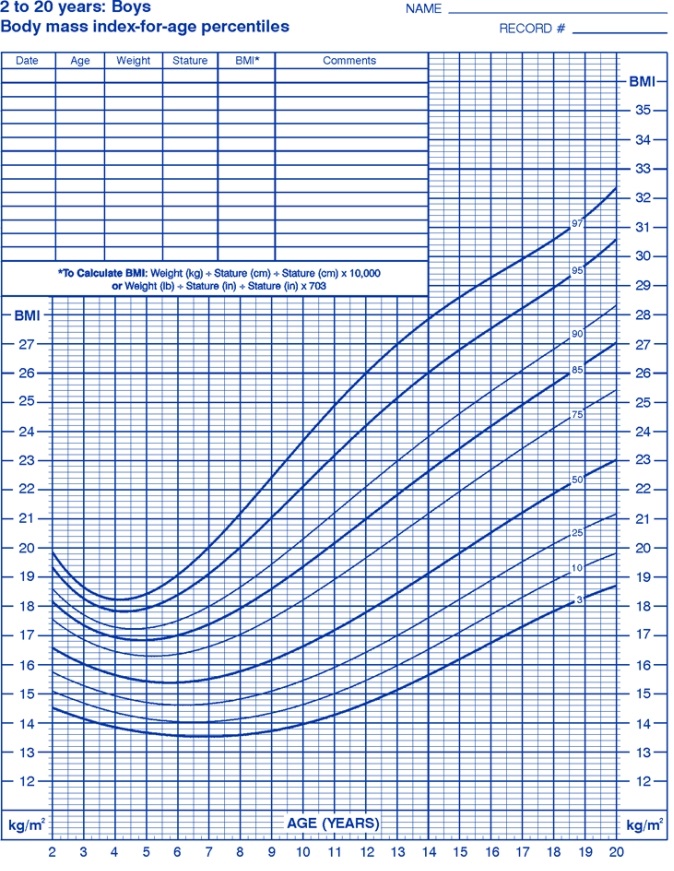
-After plotting his BMI,you see this puts him in the _____ %tile.
A)50th
B)75th
C)85th
D)90th
E)95th
A 5-year-old boy is brought in for a nutrition assessment and health check.He weighs 50 lb (22.7 kg),and is 45 in (114 cm)tall.
-After plotting his BMI,you see this puts him in the _____ %tile.
A)50th
B)75th
C)85th
D)90th
E)95th
Question
Question
Question
Use the following information
A 5-year-old boy is brought in for a nutrition assessment and health check.He weighs 50 lb (22.7 kg),and is 45 in (114 cm)tall.
-Based on the above information,this boy has a BMI of:
A)13.1.
B)15.2.
C)17.4.
D)19.6.
E)21.8.
A 5-year-old boy is brought in for a nutrition assessment and health check.He weighs 50 lb (22.7 kg),and is 45 in (114 cm)tall.
-Based on the above information,this boy has a BMI of:
A)13.1.
B)15.2.
C)17.4.
D)19.6.
E)21.8.
Question
Question
Question
Question
Question
Use the following information
A 5-year-old boy is brought in for a nutrition assessment and health check.He weighs 50 lb (22.7 kg),and is 45 in (114 cm)tall.
-What does this boy's BMI mean?
A)He is underweight.
B)He is normal weight.
C)He is at risk of overweight.
D)He is overweight.
E)He is obese.
A 5-year-old boy is brought in for a nutrition assessment and health check.He weighs 50 lb (22.7 kg),and is 45 in (114 cm)tall.
-What does this boy's BMI mean?
A)He is underweight.
B)He is normal weight.
C)He is at risk of overweight.
D)He is overweight.
E)He is obese.
Question
Question
Question
Question
Question
Question
Question
Question
Question
Question
Question
Question
Question
Question
Question
Question
Question
Question
Question
Match between columns

Unlock Deck
Sign up to unlock the cards in this deck!
Unlock Deck
Unlock Deck
1/57

Play

Full screen (f)
Deck 10: Toddler and Preschooler Nutrition
1
At what age range do babies begin to wean from the bottle to the cup?
A)6-9 months
B)9-10 months
C)12-14 months
D)>14 months
A)6-9 months
B)9-10 months
C)12-14 months
D)>14 months
B
2
There is overlap between the two sets of growth charts health care professionals use for children between the ages of 24 and 36 months.If a child's recumbent length is measured,than the _____ is the appropriate chart to use.If the child is over 2 years old and measured standing,the _____ is the correct choice.
A)2 to 10 year old growth chart;birth to 36 month growth chart
B)birth to 36 month growth chart;2 to 20 year old growth chart
C)You would use a body mass index (BMI)chart for both.
D)Neither;you only track weight,height,and head circumference.
E)None of the above is correct.
A)2 to 10 year old growth chart;birth to 36 month growth chart
B)birth to 36 month growth chart;2 to 20 year old growth chart
C)You would use a body mass index (BMI)chart for both.
D)Neither;you only track weight,height,and head circumference.
E)None of the above is correct.
B
3
Measurements that are used to track a child's growth over time include:
A)BMI.
B)weight.
C)head circumference.
D)height.
E)All of the above
A)BMI.
B)weight.
C)head circumference.
D)height.
E)All of the above
E
4
One "rule of thumb" regarding portion sizes for toddlers is:
A)Serve them as you would serve yourself and let them decide how much they would like to eat.
B)1 tablespoon of food per year of age.
C)Allow toddlers to self serve and graze throughout the day as there are no actual portion sizes for this age group.
D)¹/₄ cup of protein-type foods and ½ cup of all others.
E)None of the above is correct.
A)Serve them as you would serve yourself and let them decide how much they would like to eat.
B)1 tablespoon of food per year of age.
C)Allow toddlers to self serve and graze throughout the day as there are no actual portion sizes for this age group.
D)¹/₄ cup of protein-type foods and ½ cup of all others.
E)None of the above is correct.
Unlock Deck
Unlock for access to all 57 flashcards in this deck.
Unlock Deck
k this deck
5
All of the following are food preferences of toddlers EXCEPT _____.
A)sweet foods
B)salty foods
C)sour foods
D)energy-dense foods
A)sweet foods
B)salty foods
C)sour foods
D)energy-dense foods
Unlock Deck
Unlock for access to all 57 flashcards in this deck.
Unlock Deck
k this deck
6
Foods that should not be served to children less than two years of age because of their potential as choking hazards include:
A)whole grapes.
B)hot dogs.
C)peanuts or popcorn.
D)hard candy.
E)All of the above
A)whole grapes.
B)hot dogs.
C)peanuts or popcorn.
D)hard candy.
E)All of the above
Unlock Deck
Unlock for access to all 57 flashcards in this deck.
Unlock Deck
k this deck
7
When an infant reaches toddler age (1 year),her weight is _____ from her birth weight.
A)doubled
B)tripled
C)increased by 5%
D)varied but has a minimum of 30 lbs gain
A)doubled
B)tripled
C)increased by 5%
D)varied but has a minimum of 30 lbs gain
Unlock Deck
Unlock for access to all 57 flashcards in this deck.
Unlock Deck
k this deck
8
Preschool age is a good time to teach children about foods,food selection,and preparation because:
A)they are able to help prepare meals.
B)they want to be helpful and please parents and caregivers.
C)it helps them learn about colors and shapes.
D)it helps them prepare for kindergarten.
E)it encourages families to eat together.
A)they are able to help prepare meals.
B)they want to be helpful and please parents and caregivers.
C)it helps them learn about colors and shapes.
D)it helps them prepare for kindergarten.
E)it encourages families to eat together.
Unlock Deck
Unlock for access to all 57 flashcards in this deck.
Unlock Deck
k this deck
9
Investigators have defined three temperamental clusters of children's behavior.They include:
A)the "easy," "picky," and "fussy" child.
B)the "picky," "messy," and "fussy" child.
C)the "easy," "difficult," and "slow-to-warm-up" child.
D)the "picky," "difficult," and "slow-to-warm-up" child.
E)the "good," the "bad," and the "really bad" child.
A)the "easy," "picky," and "fussy" child.
B)the "picky," "messy," and "fussy" child.
C)the "easy," "difficult," and "slow-to-warm-up" child.
D)the "picky," "difficult," and "slow-to-warm-up" child.
E)the "good," the "bad," and the "really bad" child.
Unlock Deck
Unlock for access to all 57 flashcards in this deck.
Unlock Deck
k this deck
10
Using the standard rule of thumb,a toddler who is 3 years old would require what serving size of food?
A)3 teaspoons
B)3 tablespoons
C)¹/₈ cup (4 tablespoons)
D)Dependent on the amount of fruit juices served
A)3 teaspoons
B)3 tablespoons
C)¹/₈ cup (4 tablespoons)
D)Dependent on the amount of fruit juices served
Unlock Deck
Unlock for access to all 57 flashcards in this deck.
Unlock Deck
k this deck
11
On average,toddlers gain 8 oz/month and preschoolers gain _____ lb/year.
A)4.4
B)6.2
C)8.3
D)10.5
A)4.4
B)6.2
C)8.3
D)10.5
Unlock Deck
Unlock for access to all 57 flashcards in this deck.
Unlock Deck
k this deck
12
Temper tantrums generally peak between _____.
A)1 and 3 years of age
B)2 and 4 years of age
C)3 and 5 years of age
D)4 and 6 years of age
E)5 and 7 years of age
A)1 and 3 years of age
B)2 and 4 years of age
C)3 and 5 years of age
D)4 and 6 years of age
E)5 and 7 years of age
Unlock Deck
Unlock for access to all 57 flashcards in this deck.
Unlock Deck
k this deck
13
A body mass index (BMI)in the 90th percentile would indicate that a 3 year old was:
A)under weight.
B)normal weight.
C)overweight.
D)at risk of overweight.
E)obese.
A)under weight.
B)normal weight.
C)overweight.
D)at risk of overweight.
E)obese.
Unlock Deck
Unlock for access to all 57 flashcards in this deck.
Unlock Deck
k this deck
14
Studies have shown that restricting a young child's access to palatable food may:
A)promote desirability of that particular food.
B)increase disinterest in new foods.
C)encourage them to overeat these foods and have negative feelings.
D)All of the above
E)a and c only
A)promote desirability of that particular food.
B)increase disinterest in new foods.
C)encourage them to overeat these foods and have negative feelings.
D)All of the above
E)a and c only
Unlock Deck
Unlock for access to all 57 flashcards in this deck.
Unlock Deck
k this deck
15
Approximately what proportion of children have an "easy" temperament?
A)10%
B)15%
C)30%
D)40%
E)75%
A)10%
B)15%
C)30%
D)40%
E)75%
Unlock Deck
Unlock for access to all 57 flashcards in this deck.
Unlock Deck
k this deck
16
At a daycare center,a small chocolate candy bar was given to only the three year olds who ate everything at mealtime.Choose the best description of the feeding relationship problem between the daycare center staff and three year olds.
A)The daycare center staff has served inappropriate portion sizes for toddlers.
B)The daycare center staff has severely restricted "junk foods."
C)The daycare center staff has inappropriately used coercion to control food intake.
D)The daycare center staff has taught the children to like sweets.
A)The daycare center staff has served inappropriate portion sizes for toddlers.
B)The daycare center staff has severely restricted "junk foods."
C)The daycare center staff has inappropriately used coercion to control food intake.
D)The daycare center staff has taught the children to like sweets.
Unlock Deck
Unlock for access to all 57 flashcards in this deck.
Unlock Deck
k this deck
17
Characteristics of preschool age children include:
A)increasing language skills.
B)expanding ability to control behavior.
C)increasing autonomy.
D)experiencing broader social circumstances.
E)All of the above
A)increasing language skills.
B)expanding ability to control behavior.
C)increasing autonomy.
D)experiencing broader social circumstances.
E)All of the above
Unlock Deck
Unlock for access to all 57 flashcards in this deck.
Unlock Deck
k this deck
18
Which of the following would be considered a cue of readiness for weaning?
A)Disinterest in breast or bottle feeding
B)The ability to use fine motor skills
C)The ability to use utensils
D)Putting hands or toys in the mouth
E)Moving the tongue from side to side
A)Disinterest in breast or bottle feeding
B)The ability to use fine motor skills
C)The ability to use utensils
D)Putting hands or toys in the mouth
E)Moving the tongue from side to side
Unlock Deck
Unlock for access to all 57 flashcards in this deck.
Unlock Deck
k this deck
19
Stature means _____.
A)weight in proportion to height
B)standing height
C)weight considering amount of fat storage
D)None of the above
A)weight in proportion to height
B)standing height
C)weight considering amount of fat storage
D)None of the above
Unlock Deck
Unlock for access to all 57 flashcards in this deck.
Unlock Deck
k this deck
20
Which of the following federally funded programs may benefit young children?
A)WIC
B)Head Start
C)SNAP
D)WIC's Farmers' Market Nutrition Program
E)All of the above
A)WIC
B)Head Start
C)SNAP
D)WIC's Farmers' Market Nutrition Program
E)All of the above
Unlock Deck
Unlock for access to all 57 flashcards in this deck.
Unlock Deck
k this deck
21
The Acceptable Macronutrient Distribution Ranges (AMDRs)for fat are _____ for children 1 to 3 years and _____ for children 4 to 18 years old.
A)20-30%,<30%
B)20-30%,25-35%
C)30-40%,<30%
D)30-40%,25-35%
E)It is the same for both age groups at <30%.
A)20-30%,<30%
B)20-30%,25-35%
C)30-40%,<30%
D)30-40%,25-35%
E)It is the same for both age groups at <30%.
Unlock Deck
Unlock for access to all 57 flashcards in this deck.
Unlock Deck
k this deck
22
Estimate the energy needs of a four-year-old,female toddler weighing 35 lb (16 kg)who is physically active.
A)~1200 kcalories
B)~1500 kcalories
C)~1700 kcalories
D)>1800 kcalories
A)~1200 kcalories
B)~1500 kcalories
C)~1700 kcalories
D)>1800 kcalories
Unlock Deck
Unlock for access to all 57 flashcards in this deck.
Unlock Deck
k this deck
23
The prevalence of iron deficiency is highest in what two groups of children?
A)African American and Mexican American
B)African American and white
C)White and Mexican American
D)White and African American
E)Mexican American and white
A)African American and Mexican American
B)African American and white
C)White and Mexican American
D)White and African American
E)Mexican American and white
Unlock Deck
Unlock for access to all 57 flashcards in this deck.
Unlock Deck
k this deck
24
Which of the following is NOT appropriate for toddlers/preschoolers?
A)1 cup per day of fruit juice
B)2 cups per day of milk
C)>9 oz per day of soft drinks
D)Water as a "thirst quencher"
A)1 cup per day of fruit juice
B)2 cups per day of milk
C)>9 oz per day of soft drinks
D)Water as a "thirst quencher"
Unlock Deck
Unlock for access to all 57 flashcards in this deck.
Unlock Deck
k this deck
25
Recommendations for toddlers whose parents are vegetarian include all of the following EXCEPT:
A)Encourage toddlers to eat bran muffins when serving fruits and vegetables.
B)Include cheese or avocados in toddlers' diets.
C)Encourage toddlers to eat two to three snacks.
D)Include good sources of vitamin B₁₂ in toddler's diets or supplement,if required.
A)Encourage toddlers to eat bran muffins when serving fruits and vegetables.
B)Include cheese or avocados in toddlers' diets.
C)Encourage toddlers to eat two to three snacks.
D)Include good sources of vitamin B₁₂ in toddler's diets or supplement,if required.
Unlock Deck
Unlock for access to all 57 flashcards in this deck.
Unlock Deck
k this deck
26
Which of the following nutrition problems is the LEAST common among young children?
A)Iron-deficiency anemia
B)Dental caries
C)Constipation
D)Lead poisoning
A)Iron-deficiency anemia
B)Dental caries
C)Constipation
D)Lead poisoning
Unlock Deck
Unlock for access to all 57 flashcards in this deck.
Unlock Deck
k this deck
27
The general fiber recommendation for 5-year-old children is _____/day.
A)5 g
B)7 g
C)10 g
D)25 g
E)35-50 g
A)5 g
B)7 g
C)10 g
D)25 g
E)35-50 g
Unlock Deck
Unlock for access to all 57 flashcards in this deck.
Unlock Deck
k this deck
28
Meal preparation activities appropriate for a two year old would include all of the following EXCEPT:
A)wiping tabletops.
B)rinsing vegetables.
C)using an eggbeater.
D)breaking cauliflower.
E)tearing lettuce leaves.
A)wiping tabletops.
B)rinsing vegetables.
C)using an eggbeater.
D)breaking cauliflower.
E)tearing lettuce leaves.
Unlock Deck
Unlock for access to all 57 flashcards in this deck.
Unlock Deck
k this deck
29
Approximately _____ of children between the ages of two and five years old consume soft drinks.
A)10%
B)25%
C)50%
D)75%
E)90%
A)10%
B)25%
C)50%
D)75%
E)90%
Unlock Deck
Unlock for access to all 57 flashcards in this deck.
Unlock Deck
k this deck
30
Use the following information
A 5-year-old boy is brought in for a nutrition assessment and health check.He weighs 50 lb (22.7 kg),and is 45 in (114 cm)tall.
-After plotting his BMI,you see this puts him in the _____ %tile.
A)50th
B)75th
C)85th
D)90th
E)95th
A 5-year-old boy is brought in for a nutrition assessment and health check.He weighs 50 lb (22.7 kg),and is 45 in (114 cm)tall.
-After plotting his BMI,you see this puts him in the _____ %tile.
A)50th
B)75th
C)85th
D)90th
E)95th
Unlock Deck
Unlock for access to all 57 flashcards in this deck.
Unlock Deck
k this deck
31
Treatment of iron-deficiency anemia in the United States includes which of the following?
A)Counseling of parents about diets to include lean meats,fortified cereals,and fruit juices with vitamin C
B)Administration of iron drops per the recommended dose
C)Dietary counseling to have children ages 1-5 drink no more than 24 oz milk/day
D)Discussion of the genetic origin of iron-deficiency anemia
E)a and c
A)Counseling of parents about diets to include lean meats,fortified cereals,and fruit juices with vitamin C
B)Administration of iron drops per the recommended dose
C)Dietary counseling to have children ages 1-5 drink no more than 24 oz milk/day
D)Discussion of the genetic origin of iron-deficiency anemia
E)a and c
Unlock Deck
Unlock for access to all 57 flashcards in this deck.
Unlock Deck
k this deck
32
The major contributors to the increase in childhood weight problems are thought to include:
A)high-energy,high-fat diets.
B)sedentary lifestyles.
C)lack of time to eat regular meals.
D)a and b
E)b and c
A)high-energy,high-fat diets.
B)sedentary lifestyles.
C)lack of time to eat regular meals.
D)a and b
E)b and c
Unlock Deck
Unlock for access to all 57 flashcards in this deck.
Unlock Deck
k this deck
33
Use the following information
A 5-year-old boy is brought in for a nutrition assessment and health check.He weighs 50 lb (22.7 kg),and is 45 in (114 cm)tall.
-Based on the above information,this boy has a BMI of:
A)13.1.
B)15.2.
C)17.4.
D)19.6.
E)21.8.
A 5-year-old boy is brought in for a nutrition assessment and health check.He weighs 50 lb (22.7 kg),and is 45 in (114 cm)tall.
-Based on the above information,this boy has a BMI of:
A)13.1.
B)15.2.
C)17.4.
D)19.6.
E)21.8.
Unlock Deck
Unlock for access to all 57 flashcards in this deck.
Unlock Deck
k this deck
34
Parents can influence the eating behaviors of toddlers in which of the following ways?
A)What they bring into the house and have available to eat
B)How they prepare food and when they serve it
C)Their attitudes and behaviors around food
D)All of the above
E)a and b only
A)What they bring into the house and have available to eat
B)How they prepare food and when they serve it
C)Their attitudes and behaviors around food
D)All of the above
E)a and b only
Unlock Deck
Unlock for access to all 57 flashcards in this deck.
Unlock Deck
k this deck
35
Which of the following children would NOT be at risk for a nutrient deficiency?
A)Children suffering from abuse or neglect
B)Children who consume a vegetarian diet without dairy products
C)Children with failure to thrive
D)Children who participate in a dietary program for managing obesity
E)Children who consume a variety of basic foods
A)Children suffering from abuse or neglect
B)Children who consume a vegetarian diet without dairy products
C)Children with failure to thrive
D)Children who participate in a dietary program for managing obesity
E)Children who consume a variety of basic foods
Unlock Deck
Unlock for access to all 57 flashcards in this deck.
Unlock Deck
k this deck
36
The RDA for iron for children ages 4-8 years is _____.
A)<5 mg/day
B)8 mg/day
C)10 mg/day
D)18 mg/day
E)29 mg/day
A)<5 mg/day
B)8 mg/day
C)10 mg/day
D)18 mg/day
E)29 mg/day
Unlock Deck
Unlock for access to all 57 flashcards in this deck.
Unlock Deck
k this deck
37
MyPlate tips for an active preschooler include all the following EXCEPT:
A)Eat at least half of all grains as whole grains.
B)Use fruit as snacks or desserts.
C)Drink whole milk.
D)Eat a variety of protein foods every day.
E)Include vegetables in meals and snacks.
A)Eat at least half of all grains as whole grains.
B)Use fruit as snacks or desserts.
C)Drink whole milk.
D)Eat a variety of protein foods every day.
E)Include vegetables in meals and snacks.
Unlock Deck
Unlock for access to all 57 flashcards in this deck.
Unlock Deck
k this deck
38
Use the following information
A 5-year-old boy is brought in for a nutrition assessment and health check.He weighs 50 lb (22.7 kg),and is 45 in (114 cm)tall.
-What does this boy's BMI mean?
A)He is underweight.
B)He is normal weight.
C)He is at risk of overweight.
D)He is overweight.
E)He is obese.
A 5-year-old boy is brought in for a nutrition assessment and health check.He weighs 50 lb (22.7 kg),and is 45 in (114 cm)tall.
-What does this boy's BMI mean?
A)He is underweight.
B)He is normal weight.
C)He is at risk of overweight.
D)He is overweight.
E)He is obese.
Unlock Deck
Unlock for access to all 57 flashcards in this deck.
Unlock Deck
k this deck
39
Beginning at age 3,the DRI equations for estimating a child's energy requirements are based on a child's:
A)age,height,weight,activity level,and gender.
B)age,height,weight,and BMI.
C)age,weight,height,BMI,and activity level.
D)activity level,age,height,and gender.
E)activity level and BMI.
A)age,height,weight,activity level,and gender.
B)age,height,weight,and BMI.
C)age,weight,height,BMI,and activity level.
D)activity level,age,height,and gender.
E)activity level and BMI.
Unlock Deck
Unlock for access to all 57 flashcards in this deck.
Unlock Deck
k this deck
40
Approximately how many exposures to a new food might it take for a toddler to accept the flavor or taste?
A)1-2
B)5-7
C)8-10
D)>15
A)1-2
B)5-7
C)8-10
D)>15
Unlock Deck
Unlock for access to all 57 flashcards in this deck.
Unlock Deck
k this deck
41
In pediatrics,the goal is to strive for a BMI-for-age percentile in the normal range and not a specific BMI range as in adults.
Unlock Deck
Unlock for access to all 57 flashcards in this deck.
Unlock Deck
k this deck
42
Children between the ages of 3 and 5 given a high-energy preload beverage before having lunch consumed fewer calories at lunch.
Unlock Deck
Unlock for access to all 57 flashcards in this deck.
Unlock Deck
k this deck
43
Snacks provide important nutrients in toddlers' and preschool children's diets.
Unlock Deck
Unlock for access to all 57 flashcards in this deck.
Unlock Deck
k this deck
44
The preschool-age child should eat the same amount at breakfast each day.
Unlock Deck
Unlock for access to all 57 flashcards in this deck.
Unlock Deck
k this deck
45
According to Ellyn Satter,which of the following would be considered a common mistake that a parent might make when feeding a toddler?
A)Parents don't allow the child to determine how much or whether they want to eat.
B)Parents allow the child to determine what food to eat and where the food is eaten.
C)Parents don't provide appropriate eating environments at home and elsewhere.
D)All of the above are common mistakes that parents make when feeding toddlers.
E)b and c only
A)Parents don't allow the child to determine how much or whether they want to eat.
B)Parents allow the child to determine what food to eat and where the food is eaten.
C)Parents don't provide appropriate eating environments at home and elsewhere.
D)All of the above are common mistakes that parents make when feeding toddlers.
E)b and c only
Unlock Deck
Unlock for access to all 57 flashcards in this deck.
Unlock Deck
k this deck
46
In general,children ages 1-5 tend to consume more than enough of most nutrients in their diets EXCEPT _____.
A)calcium and zinc
B)fat and carbohydrate
C)vitamin C and iron
D)vitamin A and fluoride
E)iron and vitamin D
A)calcium and zinc
B)fat and carbohydrate
C)vitamin C and iron
D)vitamin A and fluoride
E)iron and vitamin D
Unlock Deck
Unlock for access to all 57 flashcards in this deck.
Unlock Deck
k this deck
47
Undernutrition does not influence cognitive development over time because cognition is 100% genetically programmed.
Unlock Deck
Unlock for access to all 57 flashcards in this deck.
Unlock Deck
k this deck
48
A decrease in appetite is a normal part of growth and development for toddlers and preschool age children.
Unlock Deck
Unlock for access to all 57 flashcards in this deck.
Unlock Deck
k this deck
49
A 4-year-old,male toddler weighing 35 lb (16 kg)ate one egg (7 g protein)at breakfast and drank 4 oz milk (4 g protein);at lunch he ate a 1-oz slice of cheese (7 g protein),applesauce,and 8 oz milk (8 g protein).This toddler has NOT met the current RDAs for protein.
Unlock Deck
Unlock for access to all 57 flashcards in this deck.
Unlock Deck
k this deck
50
Children can self regulate caloric intake as well as select and consume a balanced diet because they have an inborn mechanism to guide them.
Unlock Deck
Unlock for access to all 57 flashcards in this deck.
Unlock Deck
k this deck
51
After observing several family meals,you notice that the parents continually praise their children for cleaning their plates.They are:
A)unconsciously rewarding the children for eating.
B)altering the children's ability to self regulate food intake.
C)encouraging their children to be good eaters by offering praise.
D)All of the above
E)a and b
A)unconsciously rewarding the children for eating.
B)altering the children's ability to self regulate food intake.
C)encouraging their children to be good eaters by offering praise.
D)All of the above
E)a and b
Unlock Deck
Unlock for access to all 57 flashcards in this deck.
Unlock Deck
k this deck
52
One of the most positive influences a parent can have on their child's eating habits would be:
A)acting as a role model.
B)putting them in daycare so they can learn eating habits from others.
C)controlling their food intake.
D)serving children the same size portions they eat.
E)All of the above
A)acting as a role model.
B)putting them in daycare so they can learn eating habits from others.
C)controlling their food intake.
D)serving children the same size portions they eat.
E)All of the above
Unlock Deck
Unlock for access to all 57 flashcards in this deck.
Unlock Deck
k this deck
53
Because of the normal food jags experienced by toddlers,all toddlers need to take vitamin and mineral supplements.
Unlock Deck
Unlock for access to all 57 flashcards in this deck.
Unlock Deck
k this deck
54
Data from a national survey indicate that the toddlers who receive vitamin and mineral supplements are those who benefit the most.
Unlock Deck
Unlock for access to all 57 flashcards in this deck.
Unlock Deck
k this deck
55
Three-year-old children have an innate ability to control calorie intake.
Unlock Deck
Unlock for access to all 57 flashcards in this deck.
Unlock Deck
k this deck
56
Target behaviors in the prevention of overweight or obesity from birth would include all of the following EXCEPT:
A)limiting sugary beverages.
B)encouraging consumption of fruits and vegetables.
C)skipping breakfast every day.
D)limiting portion sizes.
E)eating a fiber-rich diet.
A)limiting sugary beverages.
B)encouraging consumption of fruits and vegetables.
C)skipping breakfast every day.
D)limiting portion sizes.
E)eating a fiber-rich diet.
Unlock Deck
Unlock for access to all 57 flashcards in this deck.
Unlock Deck
k this deck
57
Match between columns
Unlock Deck
Unlock for access to all 57 flashcards in this deck.
Unlock Deck
k this deck
Unlock Deck
Unlock for access to all 57 flashcards in this deck.






