







 Chat with AI

Deck 29: Blood and Breath
Full screen (f)

Question

Question
Question
Question
Question
Question
Question
Question
Question
Question
Question
Question
Question
Question
Question
Question
Question
Question
Question
Question
Question
Question
Question
Question
Question
Question
Question
Question
Question
Question
Question
Question
Question
Question
Question
Question
Question
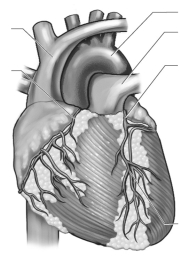
Label the critical blood vessels of the heart.
Question
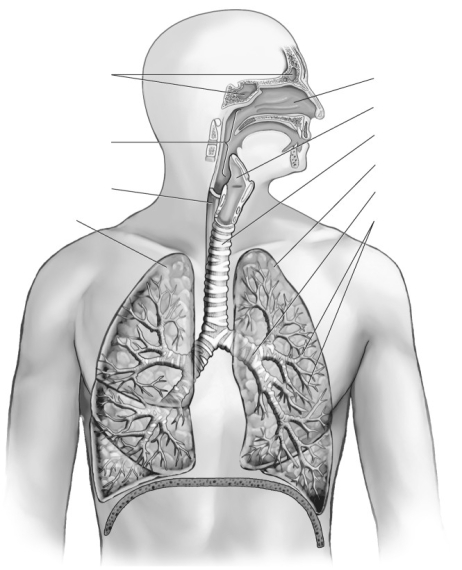
Label the parts of the human respiratory system.
Question
Question
Question
Question
Question
Question
Question
Question
Question
Question
Question

Unlock Deck
Sign up to unlock the cards in this deck!
Unlock Deck
Unlock Deck
1/49

Play

Full screen (f)
Deck 29: Blood and Breath
1
Erythropoietin is a hormone that increases production of red blood cells. As such, its target is:
A) the spleen.
B) the blood vessels.
C) the bone marrow.
D) the heart.
A) the spleen.
B) the blood vessels.
C) the bone marrow.
D) the heart.
the bone marrow.
2
Which of the following may be found in blood plasma?
A) sodium
B) water
C) glucose
D) all of the above
A) sodium
B) water
C) glucose
D) all of the above
all of the above
3
Why is the term white blood cell somewhat misleading?
A) White blood cells are a light red in color.
B) Most white blood cells are found in the tissues, not in the blood.
C) White blood cells are cell fragments, not complete cells.
D) White blood cells lack a cell nucleus.
A) White blood cells are a light red in color.
B) Most white blood cells are found in the tissues, not in the blood.
C) White blood cells are cell fragments, not complete cells.
D) White blood cells lack a cell nucleus.
Most white blood cells are found in the tissues, not in the blood.
4
A very high level of cholesterol in the liver this suggests that a person has:
A) a high level of HDLs in the blood.
B) too many red blood cells.
C) a high level of LDLs in their blood.
D) an excess of iron in their diet.
A) a high level of HDLs in the blood.
B) too many red blood cells.
C) a high level of LDLs in their blood.
D) an excess of iron in their diet.
Unlock Deck
Unlock for access to all 49 flashcards in this deck.
Unlock Deck
k this deck
5
Much of the blood plasma can depart from the circulatory system and be exchanged with the interstitial fluid in which part of the circulatory system?
A) arterioles
B) veins
C) arteries
D) capillaries
A) arterioles
B) veins
C) arteries
D) capillaries
Unlock Deck
Unlock for access to all 49 flashcards in this deck.
Unlock Deck
k this deck
6
If the diameter of an artery decreases, the pressure inside will:
A) increase.
B) be unaffected.
C) decrease.
D) fluctuate at random.
A) increase.
B) be unaffected.
C) decrease.
D) fluctuate at random.
Unlock Deck
Unlock for access to all 49 flashcards in this deck.
Unlock Deck
k this deck
7
Which of the following would have the same oxygen content?
A) blood entering the right side of the heart and blood leaving the right side of the heart
B) blood entering the right side of the heart and blood entering the left side of the heart
C) blood entering the tissue capillary beds and blood leaving the tissue capillary beds
D) blood entering the lungs and blood leaving the lungs
A) blood entering the right side of the heart and blood leaving the right side of the heart
B) blood entering the right side of the heart and blood entering the left side of the heart
C) blood entering the tissue capillary beds and blood leaving the tissue capillary beds
D) blood entering the lungs and blood leaving the lungs
Unlock Deck
Unlock for access to all 49 flashcards in this deck.
Unlock Deck
k this deck
8
"Hot or quasi-warm-blooded fish, such as bluefin tuna, keep a higher temperature difference between their body and surrounding water than cold fish because:
A) they use a countercurrent heat exchanger system of veins and arteries.
B) they use shivering to create more heat.
C) they have large dorsal aorta, which keeps them warmer.
D) they have many brown fat tissues.
A) they use a countercurrent heat exchanger system of veins and arteries.
B) they use shivering to create more heat.
C) they have large dorsal aorta, which keeps them warmer.
D) they have many brown fat tissues.
Unlock Deck
Unlock for access to all 49 flashcards in this deck.
Unlock Deck
k this deck
9
A person has been in a car accident and is hemorrhaging (bleeding internally). Although the person is losing blood volume, the blood pressure remains within normal limits for a few minutes. Which of the following explains this?
A) Antidiuretic hormone (ADH) retained water from the urine.
B) Aldosterone was released.
C) Vasoconstriction occurred to constrict vessels.
D) The blood is producing additional platelets.
A) Antidiuretic hormone (ADH) retained water from the urine.
B) Aldosterone was released.
C) Vasoconstriction occurred to constrict vessels.
D) The blood is producing additional platelets.
Unlock Deck
Unlock for access to all 49 flashcards in this deck.
Unlock Deck
k this deck
10
If your pulse is "racing or very fast, what is happening in the ventricles?
A) The left ventricle is contracting slower than normal.
B) The right ventricle is contracting slower than normal.
C) The left ventricle is contracting faster than normal.
D) The right ventricle is contracting faster than normal.
A) The left ventricle is contracting slower than normal.
B) The right ventricle is contracting slower than normal.
C) The left ventricle is contracting faster than normal.
D) The right ventricle is contracting faster than normal.
Unlock Deck
Unlock for access to all 49 flashcards in this deck.
Unlock Deck
k this deck
11
Which artery in the body carries deoxygenated blood?
A) coronary artery
B) aorta
C) vena cava
D) pulmonary artery
A) coronary artery
B) aorta
C) vena cava
D) pulmonary artery
Unlock Deck
Unlock for access to all 49 flashcards in this deck.
Unlock Deck
k this deck
12
Why is the left side of the heart stronger than the right side of the heart?
A) The left side pumps blood to the right side of the body, which is usually stronger.
B) The left side receives more oxygen from the lungs.
C) The right side pumps only to the heart, and the left side pumps blood around the whole body.
D) The right side pumps blood only to the brain.
A) The left side pumps blood to the right side of the body, which is usually stronger.
B) The left side receives more oxygen from the lungs.
C) The right side pumps only to the heart, and the left side pumps blood around the whole body.
D) The right side pumps blood only to the brain.
Unlock Deck
Unlock for access to all 49 flashcards in this deck.
Unlock Deck
k this deck
13
To which part of an artery do LDLs attach ?
A) connective tissue
B) smooth muscle
C) epithelium
D) skeletal muscle
A) connective tissue
B) smooth muscle
C) epithelium
D) skeletal muscle
Unlock Deck
Unlock for access to all 49 flashcards in this deck.
Unlock Deck
k this deck
14
The hormone ADH (antidiuretic hormone) causes the body to retain water and also increases blood pressure. As a result of this, which of the following would be correct?
A) More red blood cells should leave the capillaries at the arterial end.
B) Less water should leave the capillaries at the arterial end.
C) More water should enter the capillaries at the arterial end.
D) More water should leave the capillaries at the arterial end.
A) More red blood cells should leave the capillaries at the arterial end.
B) Less water should leave the capillaries at the arterial end.
C) More water should enter the capillaries at the arterial end.
D) More water should leave the capillaries at the arterial end.
Unlock Deck
Unlock for access to all 49 flashcards in this deck.
Unlock Deck
k this deck
15
The function of the respiratory system is:
A) to put carbon dioxide into the blood.
B) to breathe.
C) to allow gas exchange between the environment and our bodies.
D) to take oxygen out of the blood.
A) to put carbon dioxide into the blood.
B) to breathe.
C) to allow gas exchange between the environment and our bodies.
D) to take oxygen out of the blood.
Unlock Deck
Unlock for access to all 49 flashcards in this deck.
Unlock Deck
k this deck
16
Earthworms need a source of oxygen to perform cellular respiration. The problem is that they lack lungs, so the oxygen they need is obtained by diffusion through their skin. Why do earthworms need to keep their skin moist?
A) The skin has a good blood supply, and water diffuses out of the blood.
B) To conserve water.
C) Oxygen must dissolve in water before it diffuses into the blood.
D) The moisture on the skin increases the surface area and allows sufficient diffusion.
A) The skin has a good blood supply, and water diffuses out of the blood.
B) To conserve water.
C) Oxygen must dissolve in water before it diffuses into the blood.
D) The moisture on the skin increases the surface area and allows sufficient diffusion.
Unlock Deck
Unlock for access to all 49 flashcards in this deck.
Unlock Deck
k this deck
17
In the respiratory system, the larynx is also called the:
A) voice box.
B) lower throat.
C) tonsils.
D) bronchus.
A) voice box.
B) lower throat.
C) tonsils.
D) bronchus.
Unlock Deck
Unlock for access to all 49 flashcards in this deck.
Unlock Deck
k this deck
18
Why do people breathe into paper bags when they are hyperventilating?
A) to increase their oxygen levels
B) to prevent their pH from dropping
C) to increase CO2 levels
D) to slow down their breathing rate
A) to increase their oxygen levels
B) to prevent their pH from dropping
C) to increase CO2 levels
D) to slow down their breathing rate
Unlock Deck
Unlock for access to all 49 flashcards in this deck.
Unlock Deck
k this deck
19
Major Tom is involved in building the international space station. During his spacewalk, a piece of debris strikes his faceplate and cracks it. Because there is no air pressure in space;
A) the air in his lungs will move out of his body.
B) the air in his lungs will be held in place by the zero pressure.
C) the air in space will move into his body.
A) the air in his lungs will move out of his body.
B) the air in his lungs will be held in place by the zero pressure.
C) the air in space will move into his body.
Unlock Deck
Unlock for access to all 49 flashcards in this deck.
Unlock Deck
k this deck
20
The movement of gases between the alveoli and the blood is:
A) pulmonary ventilation.
B) cellular respiration.
C) active transport.
D) diffusion.
A) pulmonary ventilation.
B) cellular respiration.
C) active transport.
D) diffusion.
Unlock Deck
Unlock for access to all 49 flashcards in this deck.
Unlock Deck
k this deck
21
Most of the carbon dioxide is carried in the blood:
A) in the plasma as bicarbonate.
B) on the white blood cells.
C) on the hemoglobin.
D) by platelets.
A) in the plasma as bicarbonate.
B) on the white blood cells.
C) on the hemoglobin.
D) by platelets.
Unlock Deck
Unlock for access to all 49 flashcards in this deck.
Unlock Deck
k this deck
22
All of the following are places where O2 and CO2 are exchanged in humans except:
A) the skin.
B) red blood cells.
C) cell membranes.
D) capillary walls.
E) alveoli.
A) the skin.
B) red blood cells.
C) cell membranes.
D) capillary walls.
E) alveoli.
Unlock Deck
Unlock for access to all 49 flashcards in this deck.
Unlock Deck
k this deck
23
An artery is an artery because it is red.
Unlock Deck
Unlock for access to all 49 flashcards in this deck.
Unlock Deck
k this deck
24
Blood vessels are organs.
Unlock Deck
Unlock for access to all 49 flashcards in this deck.
Unlock Deck
k this deck
25
Blood in the pulmonary arteries is oxygenated.
Unlock Deck
Unlock for access to all 49 flashcards in this deck.
Unlock Deck
k this deck
26
The human circulatory system is really three circulatory systems, all powered by one heart.
Unlock Deck
Unlock for access to all 49 flashcards in this deck.
Unlock Deck
k this deck
27
The type of muscle found in the heart is smooth muscle.
Unlock Deck
Unlock for access to all 49 flashcards in this deck.
Unlock Deck
k this deck
28
All the work of pumping blood in humans is done by the heart.
Unlock Deck
Unlock for access to all 49 flashcards in this deck.
Unlock Deck
k this deck
29
Water and materials from the blood tend to move out of the capillary (and into the tissues) at the arterial end, and back into the capillary at the venous end.
Unlock Deck
Unlock for access to all 49 flashcards in this deck.
Unlock Deck
k this deck
30
When you hold your breath, less carbon dioxide diffuses into the alveoli from the pulmonary capillaries.
Unlock Deck
Unlock for access to all 49 flashcards in this deck.
Unlock Deck
k this deck
31
After you hold your breath for more than a minute, less carbon dioxide diffuses from your cells and into capillaries.
Unlock Deck
Unlock for access to all 49 flashcards in this deck.
Unlock Deck
k this deck
32
When you hold your breath for more than a minute, more oxygen diffuses into the blood from the alveoli.
Unlock Deck
Unlock for access to all 49 flashcards in this deck.
Unlock Deck
k this deck
33
If you were to destroy a person's bone marrow, what effect would it have on the blood cells?
Unlock Deck
Unlock for access to all 49 flashcards in this deck.
Unlock Deck
k this deck
34
Some athletes illegally use the hormone EPO to boost the number of red blood cells. What medical problem can this cause?
Unlock Deck
Unlock for access to all 49 flashcards in this deck.
Unlock Deck
k this deck
35
List the pathway a drop of blood in the superior vena cava follows to get to the lungs.
Unlock Deck
Unlock for access to all 49 flashcards in this deck.
Unlock Deck
k this deck
36
For a drop of blood to start at the superior vena cava and get back to the same point, how many times does it go through the heart?
Unlock Deck
Unlock for access to all 49 flashcards in this deck.
Unlock Deck
k this deck
37
Label the critical blood vessels of the heart.
Unlock Deck
Unlock for access to all 49 flashcards in this deck.
Unlock Deck
k this deck
38
Label the parts of the human respiratory system.
Unlock Deck
Unlock for access to all 49 flashcards in this deck.
Unlock Deck
k this deck
39
Match the example parts of the heart with the correct information.
-Right atrium
A) Chamber that receives blood from the lungs
B) Chamber that pumps blood to the lungs
C) Blood vessel that carries blood to the lungs
D) Chamber that receives blood from the body
E) Blood vessel that carries blood from the heart to the body
F) Blood vessel that brings blood into the right atrium
G) Chamber that pumps blood into the aorta
-Right atrium
A) Chamber that receives blood from the lungs
B) Chamber that pumps blood to the lungs
C) Blood vessel that carries blood to the lungs
D) Chamber that receives blood from the body
E) Blood vessel that carries blood from the heart to the body
F) Blood vessel that brings blood into the right atrium
G) Chamber that pumps blood into the aorta
Unlock Deck
Unlock for access to all 49 flashcards in this deck.
Unlock Deck
k this deck
40
Match the example parts of the heart with the correct information.
-Aorta
A) Chamber that receives blood from the lungs
B) Chamber that pumps blood to the lungs
C) Blood vessel that carries blood to the lungs
D) Chamber that receives blood from the body
E) Blood vessel that carries blood from the heart to the body
F) Blood vessel that brings blood into the right atrium
G) Chamber that pumps blood into the aorta
-Aorta
A) Chamber that receives blood from the lungs
B) Chamber that pumps blood to the lungs
C) Blood vessel that carries blood to the lungs
D) Chamber that receives blood from the body
E) Blood vessel that carries blood from the heart to the body
F) Blood vessel that brings blood into the right atrium
G) Chamber that pumps blood into the aorta
Unlock Deck
Unlock for access to all 49 flashcards in this deck.
Unlock Deck
k this deck
41
Match the example parts of the heart with the correct information.
-Left atrium
A) Chamber that receives blood from the lungs
B) Chamber that pumps blood to the lungs
C) Blood vessel that carries blood to the lungs
D) Chamber that receives blood from the body
E) Blood vessel that carries blood from the heart to the body
F) Blood vessel that brings blood into the right atrium
G) Chamber that pumps blood into the aorta
-Left atrium
A) Chamber that receives blood from the lungs
B) Chamber that pumps blood to the lungs
C) Blood vessel that carries blood to the lungs
D) Chamber that receives blood from the body
E) Blood vessel that carries blood from the heart to the body
F) Blood vessel that brings blood into the right atrium
G) Chamber that pumps blood into the aorta
Unlock Deck
Unlock for access to all 49 flashcards in this deck.
Unlock Deck
k this deck
42
Match the example parts of the heart with the correct information.
-Left ventricle
A) Chamber that receives blood from the lungs
B) Chamber that pumps blood to the lungs
C) Blood vessel that carries blood to the lungs
D) Chamber that receives blood from the body
E) Blood vessel that carries blood from the heart to the body
F) Blood vessel that brings blood into the right atrium
G) Chamber that pumps blood into the aorta
-Left ventricle
A) Chamber that receives blood from the lungs
B) Chamber that pumps blood to the lungs
C) Blood vessel that carries blood to the lungs
D) Chamber that receives blood from the body
E) Blood vessel that carries blood from the heart to the body
F) Blood vessel that brings blood into the right atrium
G) Chamber that pumps blood into the aorta
Unlock Deck
Unlock for access to all 49 flashcards in this deck.
Unlock Deck
k this deck
43
Match the example parts of the heart with the correct information.
-Pulmonary artery
A) Chamber that receives blood from the lungs
B) Chamber that pumps blood to the lungs
C) Blood vessel that carries blood to the lungs
D) Chamber that receives blood from the body
E) Blood vessel that carries blood from the heart to the body
F) Blood vessel that brings blood into the right atrium
G) Chamber that pumps blood into the aorta
-Pulmonary artery
A) Chamber that receives blood from the lungs
B) Chamber that pumps blood to the lungs
C) Blood vessel that carries blood to the lungs
D) Chamber that receives blood from the body
E) Blood vessel that carries blood from the heart to the body
F) Blood vessel that brings blood into the right atrium
G) Chamber that pumps blood into the aorta
Unlock Deck
Unlock for access to all 49 flashcards in this deck.
Unlock Deck
k this deck
44
Match the example parts of the heart with the correct information.
-Vena cava
A) Chamber that receives blood from the lungs
B) Chamber that pumps blood to the lungs
C) Blood vessel that carries blood to the lungs
D) Chamber that receives blood from the body
E) Blood vessel that carries blood from the heart to the body
F) Blood vessel that brings blood into the right atrium
G) Chamber that pumps blood into the aorta
-Vena cava
A) Chamber that receives blood from the lungs
B) Chamber that pumps blood to the lungs
C) Blood vessel that carries blood to the lungs
D) Chamber that receives blood from the body
E) Blood vessel that carries blood from the heart to the body
F) Blood vessel that brings blood into the right atrium
G) Chamber that pumps blood into the aorta
Unlock Deck
Unlock for access to all 49 flashcards in this deck.
Unlock Deck
k this deck
45
Match the example parts of the heart with the correct information.
-Right ventricle
A) Chamber that receives blood from the lungs
B) Chamber that pumps blood to the lungs
C) Blood vessel that carries blood to the lungs
D) Chamber that receives blood from the body
E) Blood vessel that carries blood from the heart to the body
F) Blood vessel that brings blood into the right atrium
G) Chamber that pumps blood into the aorta
-Right ventricle
A) Chamber that receives blood from the lungs
B) Chamber that pumps blood to the lungs
C) Blood vessel that carries blood to the lungs
D) Chamber that receives blood from the body
E) Blood vessel that carries blood from the heart to the body
F) Blood vessel that brings blood into the right atrium
G) Chamber that pumps blood into the aorta
Unlock Deck
Unlock for access to all 49 flashcards in this deck.
Unlock Deck
k this deck
46
What might be the effect of mitral valve prolapse, a disease in which the valve between the left ventricle and left atrium doesn't close completely?
Unlock Deck
Unlock for access to all 49 flashcards in this deck.
Unlock Deck
k this deck
47
Beta blockers are a type of drug that slows down heart rate. What role might they have during, or even after, a myocardial infarction (heart attack)?
Unlock Deck
Unlock for access to all 49 flashcards in this deck.
Unlock Deck
k this deck
48
Cardiac glycosides, such as digitalis, increase the force of myocardial contraction. How might this help congestive heart failure?
Unlock Deck
Unlock for access to all 49 flashcards in this deck.
Unlock Deck
k this deck
49
Why do we need to breathe, but flatworms don't?
Unlock Deck
Unlock for access to all 49 flashcards in this deck.
Unlock Deck
k this deck
Unlock Deck
Unlock for access to all 49 flashcards in this deck.






