







 Chat with AI

Deck 40: Environmental Trauma
Full screen (f)

Question

Question
Question
Question
Question
What is the best type of treatment for this condition? 
A) Keep the affected areas uncovered while they slowly warm.
B) Use a dry heat source to warm the affected areas.
C) Gently massage the affected areas for brief time periods.
D) Cover the affected areas with dry sterile dressings.
A) Keep the affected areas uncovered while they slowly warm.
B) Use a dry heat source to warm the affected areas.
C) Gently massage the affected areas for brief time periods.
D) Cover the affected areas with dry sterile dressings.
Question
Question
Question
Question
Question
Question
Question
Question
Question
Question
Question
Question
Question
Question
Question
Which of the following statements is correct regarding this patient's condition? 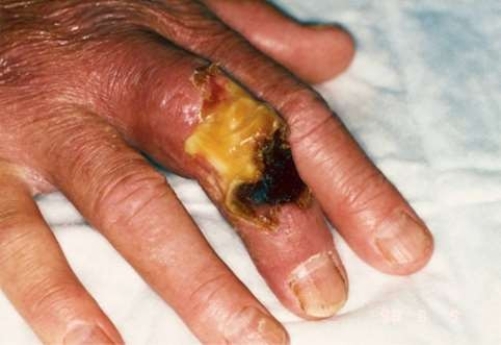
A) Initial signs and symptoms of this type of snake bite usually appear within 12 hours after the bite.
B) The signs and symptoms the patient may have experienced from this bite include vomiting and shock.
C) This type of snake bite most commonly occurs between the months of May and September.
D) The type of snake that bit this person has a tendency to inject its venom through chewing movements.
A) Initial signs and symptoms of this type of snake bite usually appear within 12 hours after the bite.
B) The signs and symptoms the patient may have experienced from this bite include vomiting and shock.
C) This type of snake bite most commonly occurs between the months of May and September.
D) The type of snake that bit this person has a tendency to inject its venom through chewing movements.
Question
Question
Question
Question
Question
Question
Question
Question
Question
Question
Question
Question
Question
Question
Question
Question
Question
Question
Question
Question
Question
What type of snake bite should be treated with this immobilization technique? 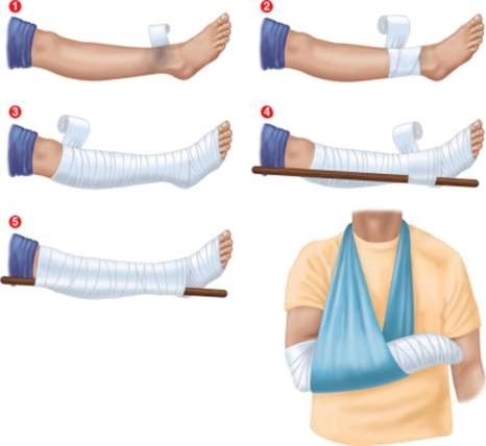
A) Copperhead bite
B) Water moccasin bite
C) Rattlesnake bite
D) Coral snake bite
A) Copperhead bite
B) Water moccasin bite
C) Rattlesnake bite
D) Coral snake bite
Question
Question
Question
Question
Question
Question

Unlock Deck
Sign up to unlock the cards in this deck!
Unlock Deck
Unlock Deck
1/47

Play

Full screen (f)
Deck 40: Environmental Trauma
1
Which statement regarding body temperature is correct?
A) As blood vessels constrict in response to a change in temperature, sweating increases.
B) The body's core usually experiences temperature fluctuations in response to outside temperature.
C) Blood vessels dilate and constrict in response to messages sent from the hypothalamus.
D) Body heat is produced through slight, unnoticeable muscular twitches which release energy.
A) As blood vessels constrict in response to a change in temperature, sweating increases.
B) The body's core usually experiences temperature fluctuations in response to outside temperature.
C) Blood vessels dilate and constrict in response to messages sent from the hypothalamus.
D) Body heat is produced through slight, unnoticeable muscular twitches which release energy.
Blood vessels dilate and constrict in response to messages sent from the hypothalamus.
2
The wind-chill factor may cause a loss of body heat through
A) convection.
B) conduction.
C) bareation.
D) evaporation.
A) convection.
B) conduction.
C) bareation.
D) evaporation.
convection.
3
A patient with a body temperature below ________ degrees Fahrenheit is unable to generate enough heat to restore normal body temperature.
A) 93
B) 95
C) 94
D) 96
A) 93
B) 95
C) 94
D) 96
95
4
Your 37 year old male patient was found, confused and shivering slightly, outside on a bench on a cold rainy night. What should you do first?
A) Remove all of the patient's wet clothing.
B) Remove the patient from the environment.
C) Apply heat packs to the patient's core areas.
D) Cover the patient with dry, warm blankets.
A) Remove all of the patient's wet clothing.
B) Remove the patient from the environment.
C) Apply heat packs to the patient's core areas.
D) Cover the patient with dry, warm blankets.
Unlock Deck
Unlock for access to all 47 flashcards in this deck.
Unlock Deck
k this deck
5
What is the best type of treatment for this condition?
A) Keep the affected areas uncovered while they slowly warm.
B) Use a dry heat source to warm the affected areas.
C) Gently massage the affected areas for brief time periods.
D) Cover the affected areas with dry sterile dressings.
A) Keep the affected areas uncovered while they slowly warm.
B) Use a dry heat source to warm the affected areas.
C) Gently massage the affected areas for brief time periods.
D) Cover the affected areas with dry sterile dressings.
Unlock Deck
Unlock for access to all 47 flashcards in this deck.
Unlock Deck
k this deck
6
You are at a scene of a skiing accident where your 36 year old male patient is shivering, confused, has an irregular heart rate and dilated pupils. He is most likely suffering from what level of hypothermia?
A) Moderate
B) Core
C) Severe
D) Peripheral
A) Moderate
B) Core
C) Severe
D) Peripheral
Unlock Deck
Unlock for access to all 47 flashcards in this deck.
Unlock Deck
k this deck
7
Your 53 year old male patient, who is disoriented, was lost in a blizzard. He has rigid muscles, mottled skin and an irregular pulse. How should you increase his body temperature?
A) Place heat packs to his groin and armpits.
B) Cover him in warm blankets.
C) Use hot water bottles on his torso.
D) Let him drink small amounts of hot tea.
A) Place heat packs to his groin and armpits.
B) Cover him in warm blankets.
C) Use hot water bottles on his torso.
D) Let him drink small amounts of hot tea.
Unlock Deck
Unlock for access to all 47 flashcards in this deck.
Unlock Deck
k this deck
8
Your 33 year old male patient is suffering from a local cold injury on his hand. You should
A) place his hand in a bucket of hot water.
B) gently rub and massage the hand.
C) apply a heat pack to his hand.
D) place the man's hand under his armpit.
A) place his hand in a bucket of hot water.
B) gently rub and massage the hand.
C) apply a heat pack to his hand.
D) place the man's hand under his armpit.
Unlock Deck
Unlock for access to all 47 flashcards in this deck.
Unlock Deck
k this deck
9
What is the first step of emergency care for a patient suffering from a heat-related illness?
A) Spritz the patient with cool water.
B) Loosen or remove the patient's clothing.
C) Use fanning motions to cool the patient.
D) Remove the patient from the environment.
A) Spritz the patient with cool water.
B) Loosen or remove the patient's clothing.
C) Use fanning motions to cool the patient.
D) Remove the patient from the environment.
Unlock Deck
Unlock for access to all 47 flashcards in this deck.
Unlock Deck
k this deck
10
You are on scene with a 42 year old male jogger who is overheated. He has an altered mental status, moist skin, nausea, vision disturbances and his temperature is 103.2 degrees Fahrenheit. What type of heat condition is he suffering from?
A) Heat exhaustion
B) Heat dehydration
C) Heat stroke
D) Heat imbalance
A) Heat exhaustion
B) Heat dehydration
C) Heat stroke
D) Heat imbalance
Unlock Deck
Unlock for access to all 47 flashcards in this deck.
Unlock Deck
k this deck
11
You are at a scene where a 33 year old female hiker is overheated. She has muscle cramps, an increased heart rate, dizziness, nausea and cool moist skin. You should
A) give her small sips of cool water.
B) place her in a supine or recovery position.
C) fan the patient until she shivers.
D) provide oxygen with a nasal cannula.
A) give her small sips of cool water.
B) place her in a supine or recovery position.
C) fan the patient until she shivers.
D) provide oxygen with a nasal cannula.
Unlock Deck
Unlock for access to all 47 flashcards in this deck.
Unlock Deck
k this deck
12
Which of the following statements regarding drowning risk factors is correct?
A) The highest drowning rate is reported in children less than 1 year of age.
B) Drowning is the leading cause of death in children 1 month to 14 years of age.
C) Female drowning rates are slighter higher than male drowning rates.
D) Children less than 1 year of age most often drown from submersion accidents.
A) The highest drowning rate is reported in children less than 1 year of age.
B) Drowning is the leading cause of death in children 1 month to 14 years of age.
C) Female drowning rates are slighter higher than male drowning rates.
D) Children less than 1 year of age most often drown from submersion accidents.
Unlock Deck
Unlock for access to all 47 flashcards in this deck.
Unlock Deck
k this deck
13
The mammalian diving reflex
A) is strongest in young adults.
B) raises the victim's risk of drowning.
C) sends blood to the body's core.
D) causes an increase in heart rate.
A) is strongest in young adults.
B) raises the victim's risk of drowning.
C) sends blood to the body's core.
D) causes an increase in heart rate.
Unlock Deck
Unlock for access to all 47 flashcards in this deck.
Unlock Deck
k this deck
14
One of the most important factors which influence a drowning victim's chance for survival is:
A) Age of the victim
B) Victim's ability to swim
C) Duration of hypothermia
D) Severity of hypoxia
A) Age of the victim
B) Victim's ability to swim
C) Duration of hypothermia
D) Severity of hypoxia
Unlock Deck
Unlock for access to all 47 flashcards in this deck.
Unlock Deck
k this deck
15
What is a common reaction that you should expect from a drowning patient who is receiving rescue breathing or chest compressions?
A) Seizures
B) Hysteria
C) Vomiting
D) Resistance
A) Seizures
B) Hysteria
C) Vomiting
D) Resistance
Unlock Deck
Unlock for access to all 47 flashcards in this deck.
Unlock Deck
k this deck
16
What is the most important initial care you can provide a drowning victim?
A) Automated defibrillation
B) Oxygen administration
C) Abdominal thrusts
D) Rescue breathing
A) Automated defibrillation
B) Oxygen administration
C) Abdominal thrusts
D) Rescue breathing
Unlock Deck
Unlock for access to all 47 flashcards in this deck.
Unlock Deck
k this deck
17
You are at the scene of a diving accident involving a 32 year old female. Her friends tell you she ascended too fast. The patient is suffering from dizziness, shortness of breath, visual disturbances and pink and frothy sputum is present around her mouth. What type of condition is she most likely suffering from?
A) Air embolism
B) Decompression sickness
C) Burst lung
D) Lung squeeze
A) Air embolism
B) Decompression sickness
C) Burst lung
D) Lung squeeze
Unlock Deck
Unlock for access to all 47 flashcards in this deck.
Unlock Deck
k this deck
18
You are at a scene where a 43 year old male diver has a headache, skin rash, weakness, shortness of breath and sore joints. What condition is he most likely suffering from?
A) Air embolism
B) Decompression sickness
C) Lung squeeze
D) Burst lung
A) Air embolism
B) Decompression sickness
C) Lung squeeze
D) Burst lung
Unlock Deck
Unlock for access to all 47 flashcards in this deck.
Unlock Deck
k this deck
19
You are at a scene where a 19 year old man has been bitten by a snake. He has difficulty swallowing, dilated pupils and small puncture marks on his arm. What type of snake bite is this man most likely suffering from?
A) Copperhead bite
B) Water moccasin bite
C) Rattlesnake bite
D) Coral snake bite
A) Copperhead bite
B) Water moccasin bite
C) Rattlesnake bite
D) Coral snake bite
Unlock Deck
Unlock for access to all 47 flashcards in this deck.
Unlock Deck
k this deck
20
Which of the following statements is correct regarding this patient's condition?
A) Initial signs and symptoms of this type of snake bite usually appear within 12 hours after the bite.
B) The signs and symptoms the patient may have experienced from this bite include vomiting and shock.
C) This type of snake bite most commonly occurs between the months of May and September.
D) The type of snake that bit this person has a tendency to inject its venom through chewing movements.
A) Initial signs and symptoms of this type of snake bite usually appear within 12 hours after the bite.
B) The signs and symptoms the patient may have experienced from this bite include vomiting and shock.
C) This type of snake bite most commonly occurs between the months of May and September.
D) The type of snake that bit this person has a tendency to inject its venom through chewing movements.
Unlock Deck
Unlock for access to all 47 flashcards in this deck.
Unlock Deck
k this deck
21
You are at a scene where a 42 year old man has difficulty breathing and pain in his chest and shoulders. He recalls feeling a sharp pinprick on his arm while cleaning out his attic. What type of bite is this man most likely suffering from?
A) Brown recluse spider bite
B) Bristly Millipede bite
C) Black Widow spider bite
D) Bark scorpion bite
A) Brown recluse spider bite
B) Bristly Millipede bite
C) Black Widow spider bite
D) Bark scorpion bite
Unlock Deck
Unlock for access to all 47 flashcards in this deck.
Unlock Deck
k this deck
22
Your patient was stung on the foot when he stepped on a stingray in the ocean. After flushing the wound, you should:
A) apply a pressure immobilization wrap.
B) pour ammonia on the wound.
C) keep the injured foot below heart level.
D) immerse the foot in hot water.
A) apply a pressure immobilization wrap.
B) pour ammonia on the wound.
C) keep the injured foot below heart level.
D) immerse the foot in hot water.
Unlock Deck
Unlock for access to all 47 flashcards in this deck.
Unlock Deck
k this deck
23
Which of the following statements regarding dog bites is correct?
A) Deaths from dog bites for infants less than 30 days of age occur most often to sleeping infants.
B) Dog bites in children less than 4 years of age most commonly occur on the face and neck.
C) In the United States, most dog bites occur when a dog is outside of its home territory.
D) immerse the foot in hot water.
A) Deaths from dog bites for infants less than 30 days of age occur most often to sleeping infants.
B) Dog bites in children less than 4 years of age most commonly occur on the face and neck.
C) In the United States, most dog bites occur when a dog is outside of its home territory.
D) immerse the foot in hot water.
Unlock Deck
Unlock for access to all 47 flashcards in this deck.
Unlock Deck
k this deck
24
Your patient has a small avulsion and localized swelling on his hand that he says occurred when he hit another man in the face. You should
A) administer oxygen at 6L/min and leave the wound uncovered.
B) mark the swelling with a pen and arrange for patient transport.
C) apply pressure to the wound and then immobilize his hand.
D) wash and cover the wound and advise the patient to see a doctor.
A) administer oxygen at 6L/min and leave the wound uncovered.
B) mark the swelling with a pen and arrange for patient transport.
C) apply pressure to the wound and then immobilize his hand.
D) wash and cover the wound and advise the patient to see a doctor.
Unlock Deck
Unlock for access to all 47 flashcards in this deck.
Unlock Deck
k this deck
25
Which of the following statements regarding temperature is correct?
A) Peripheral temperature is a critical type of body temperature.
B) Oral temperature is a measure of the body's core temperature.
C) Armpit temperature is typically 1 degree lower than core temperature.
D) Rectal temperature is known as a type of axillary temperature.
A) Peripheral temperature is a critical type of body temperature.
B) Oral temperature is a measure of the body's core temperature.
C) Armpit temperature is typically 1 degree lower than core temperature.
D) Rectal temperature is known as a type of axillary temperature.
Unlock Deck
Unlock for access to all 47 flashcards in this deck.
Unlock Deck
k this deck
26
The body's "thermostat" is the
A) brain.
B) pituitary gland.
C) hypothalamus.
D) epidermis.
A) brain.
B) pituitary gland.
C) hypothalamus.
D) epidermis.
Unlock Deck
Unlock for access to all 47 flashcards in this deck.
Unlock Deck
k this deck
27
More than half of the heat lost from the body occurs from what type of process?
A) Evaporation
B) Convection
C) Conduction
D) Radiation
A) Evaporation
B) Convection
C) Conduction
D) Radiation
Unlock Deck
Unlock for access to all 47 flashcards in this deck.
Unlock Deck
k this deck
28
The transfer of heat due to moving air currents is
A) conduction.
B) radiation.
C) convection.
D) evaporation.
A) conduction.
B) radiation.
C) convection.
D) evaporation.
Unlock Deck
Unlock for access to all 47 flashcards in this deck.
Unlock Deck
k this deck
29
A 26 year old man is lying in the snow. He is confused and having difficulty moving. You should
A) use his symptoms to estimate his level of hypothermia without taking his rectal temperature.
B) move the man into a warm transport unit and then take his axillary temperature.
C) call the receiving facility to ask if they want the man's axillary temperature before he arrives.
D) gently tilt the man on his side to measure his rectal temperature.
A) use his symptoms to estimate his level of hypothermia without taking his rectal temperature.
B) move the man into a warm transport unit and then take his axillary temperature.
C) call the receiving facility to ask if they want the man's axillary temperature before he arrives.
D) gently tilt the man on his side to measure his rectal temperature.
Unlock Deck
Unlock for access to all 47 flashcards in this deck.
Unlock Deck
k this deck
30
What type of vital signs would appear in a patient who has worsening hypothermia?
A) Breathing rate increases then decreases.
B) Pupil size increases then decreases.
C) Heart rate decreases then increases.
D) Blood pressure increases then decreases.
A) Breathing rate increases then decreases.
B) Pupil size increases then decreases.
C) Heart rate decreases then increases.
D) Blood pressure increases then decreases.
Unlock Deck
Unlock for access to all 47 flashcards in this deck.
Unlock Deck
k this deck
31
You arrive at a scene where a 32 year old woman has been outside for a prolonged time in 50F degree weather. She has an irregular heart rate, pale skin and a reduced breathing rate, and is unable to answer questions regarding her condition. You suspect
A) primary hypothermia.
B) moderate hypothermia.
C) secondary hypothermia.
D) mild hypothermia.
A) primary hypothermia.
B) moderate hypothermia.
C) secondary hypothermia.
D) mild hypothermia.
Unlock Deck
Unlock for access to all 47 flashcards in this deck.
Unlock Deck
k this deck
32
Your 47 year old male patient was submerged in freezing water and has rigidity in addition to blue skin. He responds to your voice, but you are having difficulty feeling his pulse. You should cover him in a warm blanket and
A) apply heat packs to his groin and armpits.
B) notify the receiving facility of his condition.
C) apply heat packs to his extremities.
D) vigorously rub his arms and legs.
A) apply heat packs to his groin and armpits.
B) notify the receiving facility of his condition.
C) apply heat packs to his extremities.
D) vigorously rub his arms and legs.
Unlock Deck
Unlock for access to all 47 flashcards in this deck.
Unlock Deck
k this deck
33
Which of the following statements regarding local cold injury is correct?
A) Alcohol can reduce a patient's risk for local cold injury.
B) Frost nip is also known as a type of late local cold injury.
C) Blood vessels in a region of local cold injury will expand.
D) Local cold injury may occur when ice crystals form inside cells.
A) Alcohol can reduce a patient's risk for local cold injury.
B) Frost nip is also known as a type of late local cold injury.
C) Blood vessels in a region of local cold injury will expand.
D) Local cold injury may occur when ice crystals form inside cells.
Unlock Deck
Unlock for access to all 47 flashcards in this deck.
Unlock Deck
k this deck
34
You are at a scene where a 33 year old female jogger is suffering from hyperthermia. She is awake and alert and her skin is pale and moist. You should
A) administer nasal cannula oxygen at 6 L/min and loosen her clothing.
B) stabilize her in a supine position and give her small amounts of water.
C) remove her outer clothing and apply cool packs directly to her skin.
D) cool her through fanning and apply wet towels until she begins to shiver.
A) administer nasal cannula oxygen at 6 L/min and loosen her clothing.
B) stabilize her in a supine position and give her small amounts of water.
C) remove her outer clothing and apply cool packs directly to her skin.
D) cool her through fanning and apply wet towels until she begins to shiver.
Unlock Deck
Unlock for access to all 47 flashcards in this deck.
Unlock Deck
k this deck
35
You are at a scene where an 18 year old male was found unconscious at the bottom of a swimming pool. What type of drowning occurred in this instance?
A) Secondary drowning
B) Immersion drowning
C) Delayed drowning
D) Submersion drowning
A) Secondary drowning
B) Immersion drowning
C) Delayed drowning
D) Submersion drowning
Unlock Deck
Unlock for access to all 47 flashcards in this deck.
Unlock Deck
k this deck
36
A dry drowning occurs when
A) the victim has water in the trachea.
B) the victim drowns in a small amount of water.
C) the victim's nasal passages collapse.
D) the victim's vocal cords spasm and close.
A) the victim has water in the trachea.
B) the victim drowns in a small amount of water.
C) the victim's nasal passages collapse.
D) the victim's vocal cords spasm and close.
Unlock Deck
Unlock for access to all 47 flashcards in this deck.
Unlock Deck
k this deck
37
Which of the following statements regarding drowning factors is correct?
A) Drowning in saltwater has a lower survival rate than freshwater.
B) Immersion in water has a higher survival rate than submersion in water.
C) Drowning in clean water has a higher survival rate than dirty water.
D) Wet drowning has a lower survival rate than dry drowning.
A) Drowning in saltwater has a lower survival rate than freshwater.
B) Immersion in water has a higher survival rate than submersion in water.
C) Drowning in clean water has a higher survival rate than dirty water.
D) Wet drowning has a lower survival rate than dry drowning.
Unlock Deck
Unlock for access to all 47 flashcards in this deck.
Unlock Deck
k this deck
38
A drowning victim is in the water but still has a pulse. Proper emergency care in this instance MAY include:
A) clearing an inadequate breathing patient's airway and administering oxygen at 15 L/min through a non-rebreather mask.
B) removing the patient from the water and using abdominal thrusts to clear water from the patient's airway.
C) stabilizing the patient on a long backboard and beginning rescue breathing while the patient is in shallow water.
D) initiating CPR while the patient is still in the water and then using an AED once the patient is out of the water.
A) clearing an inadequate breathing patient's airway and administering oxygen at 15 L/min through a non-rebreather mask.
B) removing the patient from the water and using abdominal thrusts to clear water from the patient's airway.
C) stabilizing the patient on a long backboard and beginning rescue breathing while the patient is in shallow water.
D) initiating CPR while the patient is still in the water and then using an AED once the patient is out of the water.
Unlock Deck
Unlock for access to all 47 flashcards in this deck.
Unlock Deck
k this deck
39
You are at the scene of a diving accident. Your 37 year old male has mild abdominal pain, nose bleed, chest pain, dizziness and bloody drainage from his ear. His friends tell you that he ascended from the water too quickly. You should suspect
A) decompression sickness.
B) lung squeeze.
C) air embolism.
D) burst lung.
A) decompression sickness.
B) lung squeeze.
C) air embolism.
D) burst lung.
Unlock Deck
Unlock for access to all 47 flashcards in this deck.
Unlock Deck
k this deck
40
The most common heat-related illness is
A) heat exhaustion.
B) heat stroke.
C) heat cramps.
D) heat dehydration.
A) heat exhaustion.
B) heat stroke.
C) heat cramps.
D) heat dehydration.
Unlock Deck
Unlock for access to all 47 flashcards in this deck.
Unlock Deck
k this deck
41
What type of snake bite should be treated with this immobilization technique?
A) Copperhead bite
B) Water moccasin bite
C) Rattlesnake bite
D) Coral snake bite
A) Copperhead bite
B) Water moccasin bite
C) Rattlesnake bite
D) Coral snake bite
Unlock Deck
Unlock for access to all 47 flashcards in this deck.
Unlock Deck
k this deck
42
Your 35 year old male patient was bitten by a snake on the ankle. His friend wrapped a tight belt around his calf before your arrival and the patient's pulse is absent below the tourniquet. You should
A) keep the belt on and consult with medical direction before you take any action regarding the belt.
B) keep the belt on and then remove the belt just before the patient arrives at a treating facility.
C) immediately remove the belt and do not reapply the belt even if the patient's symptoms worsen.
D) immediately remove the belt and put the belt back on if the patient's symptoms worsen.
A) keep the belt on and consult with medical direction before you take any action regarding the belt.
B) keep the belt on and then remove the belt just before the patient arrives at a treating facility.
C) immediately remove the belt and do not reapply the belt even if the patient's symptoms worsen.
D) immediately remove the belt and put the belt back on if the patient's symptoms worsen.
Unlock Deck
Unlock for access to all 47 flashcards in this deck.
Unlock Deck
k this deck
43
Your 67 year old female patient has an aching, violet colored halo with a black blister on her forearm. You suspect a(n)
A) brown recluse bite.
B) ant bite.
C) scorpion bite.
D) black window bite.
A) brown recluse bite.
B) ant bite.
C) scorpion bite.
D) black window bite.
Unlock Deck
Unlock for access to all 47 flashcards in this deck.
Unlock Deck
k this deck
44
Which type of insect has a barbed stinger?
A) Honeybee
B) Bumblebee
C) Hornet
D) Wasp
A) Honeybee
B) Bumblebee
C) Hornet
D) Wasp
Unlock Deck
Unlock for access to all 47 flashcards in this deck.
Unlock Deck
k this deck
45
How should a hymenoptera sting be treated?
A) Cover the sting with a dressing.
B) Remove stingers with a tweezer.
C) Put a cold compress on the sting.
D) Gently wash the sting area.
A) Cover the sting with a dressing.
B) Remove stingers with a tweezer.
C) Put a cold compress on the sting.
D) Gently wash the sting area.
Unlock Deck
Unlock for access to all 47 flashcards in this deck.
Unlock Deck
k this deck
46
Signs and symptoms of stingray envenomation include
A) increased blood pressure.
B) gradually increasing pain.
C) increased respiratory rate.
D) abnormal heart rhythm.
A) increased blood pressure.
B) gradually increasing pain.
C) increased respiratory rate.
D) abnormal heart rhythm.
Unlock Deck
Unlock for access to all 47 flashcards in this deck.
Unlock Deck
k this deck
47
Which statement regarding bites from an adult human is TRUE?
A) Adult bite victims do not normally require transport for physician evaluation.
B) The clenched-fist injury bite is a dangerous type of adult human bite.
C) Adult human bites do not cause extended damage to tissues under the skin.
D) A bite from a child has a higher risk of infection than a bite from an adult.
A) Adult bite victims do not normally require transport for physician evaluation.
B) The clenched-fist injury bite is a dangerous type of adult human bite.
C) Adult human bites do not cause extended damage to tissues under the skin.
D) A bite from a child has a higher risk of infection than a bite from an adult.
Unlock Deck
Unlock for access to all 47 flashcards in this deck.
Unlock Deck
k this deck
Unlock Deck
Unlock for access to all 47 flashcards in this deck.






