Deck 9: Acidûbase Equilibria

Full screen (f)
exit full mode
Question
Ka = 6.6´10-4 for the reaction:
HF + H2O<strong>K<sub>a</sub> = 6.6´10<sup>-</sup><sup>4</sup> for the reaction: HF + H<sub>2</sub>O  H<sub>3</sub>O<sup>+</sup> + F<sup>-</sup> What is K<sub>b</sub> for the reaction? F<sup>-</sup> + H<sub>2</sub>O   HF + OH<sup>-</sup></strong> A) 6.6´10<sup>-</sup><sup>4</sup> B) 1.6´10<sup>4</sup> C) 6.6´10<sup>-</sup><sup>18</sup> D) 1.5´10<sup>-</sup><sup>11</sup> <div style=padding-top: 35px> H3O+ + F-
What is Kb for the reaction?
F- + H2O <strong>K<sub>a</sub> = 6.6´10<sup>-</sup><sup>4</sup> for the reaction: HF + H<sub>2</sub>O  H<sub>3</sub>O<sup>+</sup> + F<sup>-</sup> What is K<sub>b</sub> for the reaction? F<sup>-</sup> + H<sub>2</sub>O   HF + OH<sup>-</sup></strong> A) 6.6´10<sup>-</sup><sup>4</sup> B) 1.6´10<sup>4</sup> C) 6.6´10<sup>-</sup><sup>18</sup> D) 1.5´10<sup>-</sup><sup>11</sup> <div style=padding-top: 35px> HF + OH-

A) 6.6´10-4
B) 1.6´104
C) 6.6´10-18
D) 1.5´10-11
Use Space or
up arrow
down arrow
to flip the card.
Question
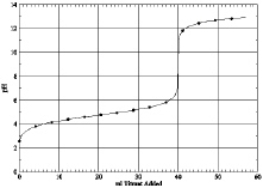
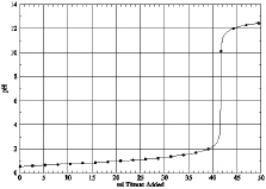
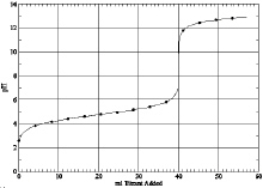
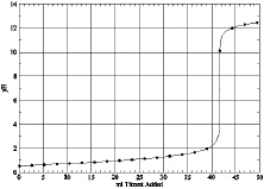
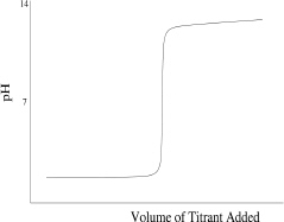
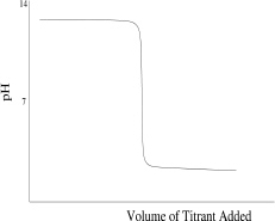
Which of the following is the titration curve of strong acid being titrated by a strong base

A)
<strong>Which of the following is the titration curve of strong acid being titrated by a strong base</strong> A)   B)   C)   D)   <div style=padding-top: 35px>
B)
<strong>Which of the following is the titration curve of strong acid being titrated by a strong base</strong> A)   B)   C)   D)   <div style=padding-top: 35px>
C)
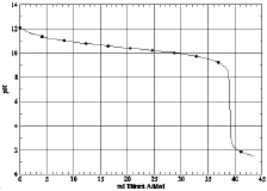
<strong>Which of the following is the titration curve of strong acid being titrated by a strong base</strong> A)   B)   C)   D)   <div style=padding-top: 35px>
D)
<strong>Which of the following is the titration curve of strong acid being titrated by a strong base</strong> A)   B)   C)   D)   <div style=padding-top: 35px>
Question
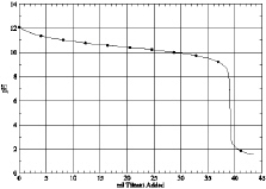
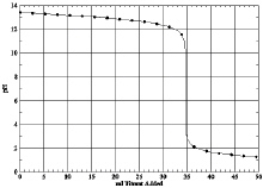
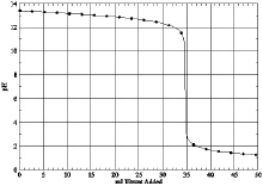
Which of the following is the titration curve of weak base being titrated by a strong acid

A)
<strong>Which of the following is the titration curve of weak base being titrated by a strong acid</strong> A)   B)   C)   D)   <div style=padding-top: 35px>
B)
<strong>Which of the following is the titration curve of weak base being titrated by a strong acid</strong> A)   B)   C)   D)   <div style=padding-top: 35px>
C)
<strong>Which of the following is the titration curve of weak base being titrated by a strong acid</strong> A)   B)   C)   D)   <div style=padding-top: 35px>
D)
<strong>Which of the following is the titration curve of weak base being titrated by a strong acid</strong> A)   B)   C)   D)   <div style=padding-top: 35px>
Question
A student has 100.0 ml of 0.65 M HCl. What is the pH of this solution?

A) 1.39
B) 0.187
C) 6.50
D) 13.8
E) None of the above
Question
A student has 50.0 ml of 0.30 M NaOH. What is the pH of this solution?

A) 1.82
B) 11.00
C) 0.523
D) 2.0
E) None of the above
Question
Based on the plot below, estimate the value of Ka for the weak acid. <strong>Based on the plot below, estimate the value of K<sub>a</sub> for the weak acid.  </strong> A) 4.7 B) 2.0´10<sup>-</sup><sup>5</sup> C) 2.6 D) 2.5´10<sup>-</sup><sup>3</sup> E) None of the above <div style=padding-top: 35px>
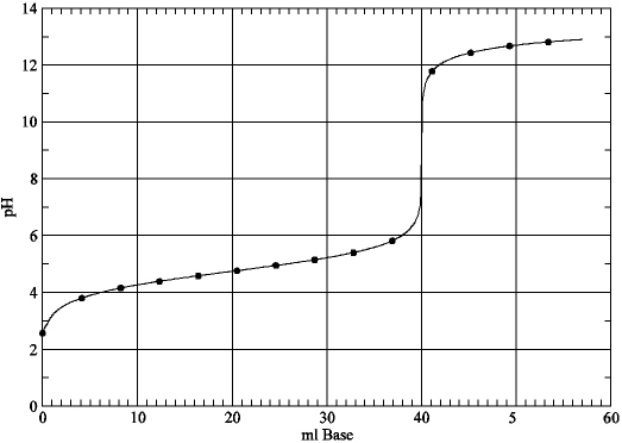
A) 4.7
B) 2.0´10-5
C) 2.6
D) 2.5´10-3
E) None of the above
Question
A student dissolves 30.00 grams of sodium acetate in exactly one liter of water. What will be the pH of the resulting solution?

A) 9.68
B) 9.24
C) 9.16
D) 4.84
Question
pertain to a solution made by combining benzoic acid and sodium benzoate. The final volume of the solution is 1.00 L and the initial concentrations of benzoic acid and sodium benzoate are 0.50 and 0.70 respectively.


-Refer to Exhibit 15-3. When adding strong acid to this solution:

A) the benzoic acid concentration should rise and the benzoate concentration should fall
B) the benzoic acid concentration should fall and the benzoate concentration should rise
C) both benzoic acid and sodium benzoate concentrations should fall
D) the concentration of all ions should remain roughly constant
E) None of the above
Question
pertain to a solution made by combining benzoic acid and sodium benzoate. The final volume of the solution is 1.00 L and the initial concentrations of benzoic acid and sodium benzoate are 0.50 and 0.70 respectively.


-Refer to Exhibit 15-3. Calculate the pH after the addition of an additional 250 ml of 1.00 M HCl.

A) 0.339
B) 1.54
C) 2.98
D) 5.38
E) None of the above
Question
pertain to a solution prepared by combining 1.0 mole of ammonia and 50.0 grams of ammonium nitrate in enough water to give a final volume of 2.00 liters.


-Refer to Exhibit 15-4. When adding strong acid to this solution:

A) the ammonia concentration should rise
B) the ammonium ion concentration should fall
C) both a and b
D) None of the above
Question
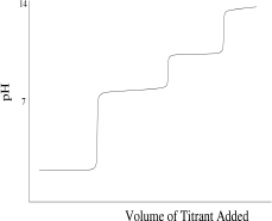
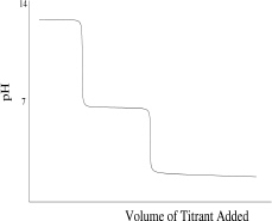
Which of the following titration curves schematically represents a diprotic acid being titrated by a strong base?

A)
<strong>Which of the following titration curves schematically represents a diprotic acid being titrated by a strong base?</strong> A)   B)   C)   D)   E) None of the above <div style=padding-top: 35px>
B)
<strong>Which of the following titration curves schematically represents a diprotic acid being titrated by a strong base?</strong> A)   B)   C)   D)   E) None of the above <div style=padding-top: 35px>
C)
<strong>Which of the following titration curves schematically represents a diprotic acid being titrated by a strong base?</strong> A)   B)   C)   D)   E) None of the above <div style=padding-top: 35px>
D) <strong>Which of the following titration curves schematically represents a diprotic acid being titrated by a strong base?</strong> A)   B)   C)   D)   E) None of the above <div style=padding-top: 35px>
E) None of the above
Unlock Deck
Sign up to unlock the cards in this deck!
Unlock Deck
Unlock Deck
1/11
auto play flashcards
Play
simple tutorial
Full screen (f)
exit full mode
Deck 9: Acidûbase Equilibria
1
Ka = 6.6´10-4 for the reaction:
HF + H2O<strong>K<sub>a</sub> = 6.6´10<sup>-</sup><sup>4</sup> for the reaction: HF + H<sub>2</sub>O  H<sub>3</sub>O<sup>+</sup> + F<sup>-</sup> What is K<sub>b</sub> for the reaction? F<sup>-</sup> + H<sub>2</sub>O   HF + OH<sup>-</sup></strong> A) 6.6´10<sup>-</sup><sup>4</sup> B) 1.6´10<sup>4</sup> C) 6.6´10<sup>-</sup><sup>18</sup> D) 1.5´10<sup>-</sup><sup>11</sup> H3O+ + F-
What is Kb for the reaction?
F- + H2O <strong>K<sub>a</sub> = 6.6´10<sup>-</sup><sup>4</sup> for the reaction: HF + H<sub>2</sub>O  H<sub>3</sub>O<sup>+</sup> + F<sup>-</sup> What is K<sub>b</sub> for the reaction? F<sup>-</sup> + H<sub>2</sub>O   HF + OH<sup>-</sup></strong> A) 6.6´10<sup>-</sup><sup>4</sup> B) 1.6´10<sup>4</sup> C) 6.6´10<sup>-</sup><sup>18</sup> D) 1.5´10<sup>-</sup><sup>11</sup> HF + OH-

A) 6.6´10-4
B) 1.6´104
C) 6.6´10-18
D) 1.5´10-11
1.6´104
2
Which of the following is the titration curve of strong acid being titrated by a strong base

A)
<strong>Which of the following is the titration curve of strong acid being titrated by a strong base</strong> A)   B)   C)   D)
B)
<strong>Which of the following is the titration curve of strong acid being titrated by a strong base</strong> A)   B)   C)   D)
C)
<strong>Which of the following is the titration curve of strong acid being titrated by a strong base</strong> A)   B)   C)   D)
D)
<strong>Which of the following is the titration curve of strong acid being titrated by a strong base</strong> A)   B)   C)   D)

3
Which of the following is the titration curve of weak base being titrated by a strong acid

A)
<strong>Which of the following is the titration curve of weak base being titrated by a strong acid</strong> A)   B)   C)   D)
B)
<strong>Which of the following is the titration curve of weak base being titrated by a strong acid</strong> A)   B)   C)   D)
C)
<strong>Which of the following is the titration curve of weak base being titrated by a strong acid</strong> A)   B)   C)   D)
D)
<strong>Which of the following is the titration curve of weak base being titrated by a strong acid</strong> A)   B)   C)   D)

4
A student has 100.0 ml of 0.65 M HCl. What is the pH of this solution?

A) 1.39
B) 0.187
C) 6.50
D) 13.8
E) None of the above
Unlock Deck
Unlock for access to all 11 flashcards in this deck.
Unlock Deck
k this deck
5
A student has 50.0 ml of 0.30 M NaOH. What is the pH of this solution?

A) 1.82
B) 11.00
C) 0.523
D) 2.0
E) None of the above
Unlock Deck
Unlock for access to all 11 flashcards in this deck.
Unlock Deck
k this deck
6
Based on the plot below, estimate the value of Ka for the weak acid. <strong>Based on the plot below, estimate the value of K<sub>a</sub> for the weak acid.  </strong> A) 4.7 B) 2.0´10<sup>-</sup><sup>5</sup> C) 2.6 D) 2.5´10<sup>-</sup><sup>3</sup> E) None of the above

A) 4.7
B) 2.0´10-5
C) 2.6
D) 2.5´10-3
E) None of the above
Unlock Deck
Unlock for access to all 11 flashcards in this deck.
Unlock Deck
k this deck
7
A student dissolves 30.00 grams of sodium acetate in exactly one liter of water. What will be the pH of the resulting solution?

A) 9.68
B) 9.24
C) 9.16
D) 4.84
Unlock Deck
Unlock for access to all 11 flashcards in this deck.

Unlock Deck
k this deck
8
pertain to a solution made by combining benzoic acid and sodium benzoate. The final volume of the solution is 1.00 L and the initial concentrations of benzoic acid and sodium benzoate are 0.50 and 0.70 respectively.


-Refer to Exhibit 15-3. When adding strong acid to this solution:

A) the benzoic acid concentration should rise and the benzoate concentration should fall
B) the benzoic acid concentration should fall and the benzoate concentration should rise
C) both benzoic acid and sodium benzoate concentrations should fall
D) the concentration of all ions should remain roughly constant
E) None of the above
Unlock Deck
Unlock for access to all 11 flashcards in this deck.

Unlock Deck
k this deck
9
pertain to a solution made by combining benzoic acid and sodium benzoate. The final volume of the solution is 1.00 L and the initial concentrations of benzoic acid and sodium benzoate are 0.50 and 0.70 respectively.


-Refer to Exhibit 15-3. Calculate the pH after the addition of an additional 250 ml of 1.00 M HCl.

A) 0.339
B) 1.54
C) 2.98
D) 5.38
E) None of the above
Unlock Deck
Unlock for access to all 11 flashcards in this deck.
Unlock Deck
k this deck
10
pertain to a solution prepared by combining 1.0 mole of ammonia and 50.0 grams of ammonium nitrate in enough water to give a final volume of 2.00 liters.


-Refer to Exhibit 15-4. When adding strong acid to this solution:

A) the ammonia concentration should rise
B) the ammonium ion concentration should fall
C) both a and b
D) None of the above
Unlock Deck
Unlock for access to all 11 flashcards in this deck.
Unlock Deck
k this deck
11
Which of the following titration curves schematically represents a diprotic acid being titrated by a strong base?

A)
<strong>Which of the following titration curves schematically represents a diprotic acid being titrated by a strong base?</strong> A)   B)   C)   D)   E) None of the above
B)
<strong>Which of the following titration curves schematically represents a diprotic acid being titrated by a strong base?</strong> A)   B)   C)   D)   E) None of the above
C)
<strong>Which of the following titration curves schematically represents a diprotic acid being titrated by a strong base?</strong> A)   B)   C)   D)   E) None of the above
D) <strong>Which of the following titration curves schematically represents a diprotic acid being titrated by a strong base?</strong> A)   B)   C)   D)   E) None of the above
E) None of the above
Unlock Deck
Unlock for access to all 11 flashcards in this deck.
Unlock Deck
k this deck
locked card icon
Unlock Deck
Unlock for access to all 11 flashcards in this deck.