







 Chat with AI

Deck 38: Nursing Management: Vascular Disorders
Full screen (f)

Question

Question
Question
Question
Question
Question
Question
Question
Question
Question
Question
Question
Question
Question
Question
Question
Question
Question
Question
Question
Question
Question
Question
Question
Question
Question
Question
Question
Question
Question
Question
The nurse reviews the admission orders shown in the accompanying figure for a patient newly diagnosed with peripheral artery disease.Which admission order should the nurse question?
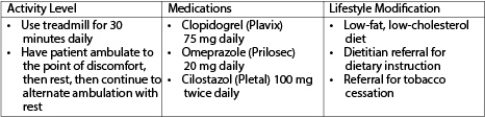
A) Use of treadmill for exercise
B) Referral for dietary instruction
C) Exercising to the point of discomfort
D) Combined clopidogrel and omeprazole therapy
A) Use of treadmill for exercise
B) Referral for dietary instruction
C) Exercising to the point of discomfort
D) Combined clopidogrel and omeprazole therapy
Question
Question
Question
Question
Question

Unlock Deck
Sign up to unlock the cards in this deck!
Unlock Deck
Unlock Deck
1/36

Play

Full screen (f)
Deck 38: Nursing Management: Vascular Disorders
1
A patient at the clinic says,"I have always taken a walk after dinner,but lately my leg cramps and hurts after just a few minutes of starting.The pain goes away after I stop walking,though." The nurse should
A) check for the presence of tortuous veins bilaterally on the legs.
B) ask about any skin color changes that occur in response to cold.
C) assess for unilateral swelling, redness, and tenderness of either leg.
D) assess for the presence of the dorsalis pedis and posterior tibial pulses.
A) check for the presence of tortuous veins bilaterally on the legs.
B) ask about any skin color changes that occur in response to cold.
C) assess for unilateral swelling, redness, and tenderness of either leg.
D) assess for the presence of the dorsalis pedis and posterior tibial pulses.
assess for the presence of the dorsalis pedis and posterior tibial pulses.
2
The nurse performing an assessment with a patient who has chronic peripheral artery disease (PAD)of the legs and an ulcer on the right second toe would expect to find
A) dilated superficial veins.
B) swollen, dry, scaly ankles.
C) prolonged capillary refill in all the toes.
D) a serosanguineous drainage from the ulcer.
A) dilated superficial veins.
B) swollen, dry, scaly ankles.
C) prolonged capillary refill in all the toes.
D) a serosanguineous drainage from the ulcer.
prolonged capillary refill in all the toes.
3
After teaching a patient with newly diagnosed Raynaud's phenomenon about how to manage the condition,which action by the patient demonstrates that the teaching has been effective?
A) The patient exercises indoors during the winter months.
B) The patient places the hands in hot water when they turn pale.
C) The patient takes pseudoephedrine (Sudafed) for cold symptoms.
D) The patient avoids taking nonsteroidal antiinflammatory drugs (NSAIDs).
A) The patient exercises indoors during the winter months.
B) The patient places the hands in hot water when they turn pale.
C) The patient takes pseudoephedrine (Sudafed) for cold symptoms.
D) The patient avoids taking nonsteroidal antiinflammatory drugs (NSAIDs).
The patient exercises indoors during the winter months.
4
A patient has a 6-cm thoracic aortic aneurysm that was discovered during a routine chest x-ray.When obtaining an admission history from the patient,it will be most important for the nurse to ask about
A) low back pain.
B) trouble swallowing.
C) abdominal tenderness.
D) changes in bowel habits.
A) low back pain.
B) trouble swallowing.
C) abdominal tenderness.
D) changes in bowel habits.
Unlock Deck
Unlock for access to all 36 flashcards in this deck.
Unlock Deck
k this deck
5
When discussing risk factor modification for a 63-year-old patient who has a 5-cm abdominal aortic aneurysm,the nurse will focus discharge teaching on which patient risk factor?
A) Male gender
B) Turner syndrome
C) Abdominal trauma history
D) Uncontrolled hypertension
A) Male gender
B) Turner syndrome
C) Abdominal trauma history
D) Uncontrolled hypertension
Unlock Deck
Unlock for access to all 36 flashcards in this deck.
Unlock Deck
k this deck
6
While working in the outpatient clinic,the nurse notes that a patient has a history of intermittent claudication.Which statement by the patient would support this information?
A) "When I stand too long, my feet start to swell."
B) "I get short of breath when I climb a lot of stairs."
C) "My fingers hurt when I go outside in cold weather."
D) "My legs cramp whenever I walk more than a block."
A) "When I stand too long, my feet start to swell."
B) "I get short of breath when I climb a lot of stairs."
C) "My fingers hurt when I go outside in cold weather."
D) "My legs cramp whenever I walk more than a block."
Unlock Deck
Unlock for access to all 36 flashcards in this deck.
Unlock Deck
k this deck
7
The health care provider has prescribed bed rest with the feet elevated for a patient admitted to the hospital with venous thromboembolism.Which action by the nurse to elevate the patient's feet is best?
A) The patient is placed in the Trendelenburg position.
B) Two pillows are positioned under the affected leg.
C) The bed is elevated at the knee and pillows are placed under the feet.
D) One pillow is placed under the thighs and two pillows are placed under the lower legs.
A) The patient is placed in the Trendelenburg position.
B) Two pillows are positioned under the affected leg.
C) The bed is elevated at the knee and pillows are placed under the feet.
D) One pillow is placed under the thighs and two pillows are placed under the lower legs.
Unlock Deck
Unlock for access to all 36 flashcards in this deck.
Unlock Deck
k this deck
8
A 23-year-old patient tells the health care provider about experiencing cold,numb fingers when running during the winter and Raynaud's phenomenon is suspected.The nurse will anticipate teaching the patient about tests for
A) hyperglycemia.
B) hyperlipidemia.
C) autoimmune disorders.
D) coronary artery disease.
A) hyperglycemia.
B) hyperlipidemia.
C) autoimmune disorders.
D) coronary artery disease.
Unlock Deck
Unlock for access to all 36 flashcards in this deck.
Unlock Deck
k this deck
9
Which topic should the nurse include in patient teaching for a patient with a venous stasis ulcer on the left lower leg?
A) Need to increase carbohydrate intake
B) Methods of keeping the wound area dry
C) Purpose of prophylactic antibiotic therapy
D) Application of elastic compression stockings
A) Need to increase carbohydrate intake
B) Methods of keeping the wound area dry
C) Purpose of prophylactic antibiotic therapy
D) Application of elastic compression stockings
Unlock Deck
Unlock for access to all 36 flashcards in this deck.
Unlock Deck
k this deck
10
Which action by a nurse who is giving fondaparinux (Arixtra)to a patient with a lower leg venous thromboembolism (VTE)indicates that more education about the drug is needed?
A) The nurse avoids rubbing the injection site after giving the drug.
B) The nurse injects the drug into the abdominal subcutaneous tissue.
C) The nurse ejects the air bubble in the syringe before giving the drug.
D) The nurse fails to assess the partial thromboplastin time (PTT) before giving the drug.
A) The nurse avoids rubbing the injection site after giving the drug.
B) The nurse injects the drug into the abdominal subcutaneous tissue.
C) The nurse ejects the air bubble in the syringe before giving the drug.
D) The nurse fails to assess the partial thromboplastin time (PTT) before giving the drug.
Unlock Deck
Unlock for access to all 36 flashcards in this deck.
Unlock Deck
k this deck
11
A 67-year-old patient is admitted to the hospital with a diagnosis of venous insufficiency.Which patient statement is most supportive of the diagnosis?
A) "I can't get my shoes on at the end of the day."
B) "I can't seem to ever get my feet warm enough."
C) "I have burning leg pains after I walk two blocks."
D) "I wake up during the night because my legs hurt."
A) "I can't get my shoes on at the end of the day."
B) "I can't seem to ever get my feet warm enough."
C) "I have burning leg pains after I walk two blocks."
D) "I wake up during the night because my legs hurt."
Unlock Deck
Unlock for access to all 36 flashcards in this deck.
Unlock Deck
k this deck
12
A patient with a venous thromboembolism (VTE)is started on enoxaparin (Lovenox)and warfarin (Coumadin).The patient asks the nurse why two medications are necessary.Which response by the nurse is most appropriate?
A) "Taking two blood thinners reduces the risk for another clot to form."
B) "Lovenox will start to dissolve the clot, and Coumadin will prevent any more clots from forming."
C) "Lovenox will work right away, but Coumadin takes several days to have an effect on preventing clots."
D) "Because of the risk for a blood clot in the lungs, it is important for you to take more than one blood thinner."
A) "Taking two blood thinners reduces the risk for another clot to form."
B) "Lovenox will start to dissolve the clot, and Coumadin will prevent any more clots from forming."
C) "Lovenox will work right away, but Coumadin takes several days to have an effect on preventing clots."
D) "Because of the risk for a blood clot in the lungs, it is important for you to take more than one blood thinner."
Unlock Deck
Unlock for access to all 36 flashcards in this deck.
Unlock Deck
k this deck
13
A 73-year-old patient with chronic atrial fibrillation develops sudden severe pain,pulselessness,pallor,and coolness in the right leg.The nurse should notify the health care provider and immediately
A) apply a compression stocking to the leg.
B) elevate the leg above the level of the heart.
C) assist the patient in gently exercising the leg.
D) keep the patient in bed in the supine position.
A) apply a compression stocking to the leg.
B) elevate the leg above the level of the heart.
C) assist the patient in gently exercising the leg.
D) keep the patient in bed in the supine position.
Unlock Deck
Unlock for access to all 36 flashcards in this deck.
Unlock Deck
k this deck
14
Several hours after an open surgical repair of an abdominal aortic aneurysm,the UAP reports to the nurse that urinary output for the past 2 hours has been 40 mL.The nurse notifies the health care provider and anticipates an order for a(n)
A) hemoglobin count.
B) additional antibiotic.
C) decrease in IV infusion rate.
D) blood urea nitrogen (BUN) level.
A) hemoglobin count.
B) additional antibiotic.
C) decrease in IV infusion rate.
D) blood urea nitrogen (BUN) level.
Unlock Deck
Unlock for access to all 36 flashcards in this deck.
Unlock Deck
k this deck
15
A patient in the outpatient clinic has a new diagnosis of peripheral artery disease (PAD).Which group of medications will the nurse plan to include when providing patient teaching about PAD management?
A) Statins
B) Antibiotics
C) Thrombolytics
D) Anticoagulants
A) Statins
B) Antibiotics
C) Thrombolytics
D) Anticoagulants
Unlock Deck
Unlock for access to all 36 flashcards in this deck.
Unlock Deck
k this deck
16
When evaluating the discharge teaching for a patient with chronic peripheral artery disease (PAD),the nurse determines a need for further instruction when the patient says,"I will
A) have to buy some loose clothes that do not bind across my legs or waist."
B) use a heating pad on my feet at night to increase the circulation and warmth in my feet."
C) change my position every hour and avoid long periods of sitting with my legs crossed."
D) walk to the point of pain, rest, and walk again until the pain returns for at least 30 minutes 3 times a week."
A) have to buy some loose clothes that do not bind across my legs or waist."
B) use a heating pad on my feet at night to increase the circulation and warmth in my feet."
C) change my position every hour and avoid long periods of sitting with my legs crossed."
D) walk to the point of pain, rest, and walk again until the pain returns for at least 30 minutes 3 times a week."
Unlock Deck
Unlock for access to all 36 flashcards in this deck.
Unlock Deck
k this deck
17
The health care provider prescribes an infusion of heparin (Hep-Lock)and daily partial thromboplastin time (PTT)testing for a patient with venous thromboembolism (VTE).The nurse will plan to
A) decrease the infusion when the PTT value is 65 seconds.
B) avoid giving any IM medications to prevent localized bleeding.
C) monitor posterior tibial and dorsalis pedis pulses with the Doppler.
D) have vitamin K available in case reversal of the heparin is needed.
A) decrease the infusion when the PTT value is 65 seconds.
B) avoid giving any IM medications to prevent localized bleeding.
C) monitor posterior tibial and dorsalis pedis pulses with the Doppler.
D) have vitamin K available in case reversal of the heparin is needed.
Unlock Deck
Unlock for access to all 36 flashcards in this deck.
Unlock Deck
k this deck
18
A 46-year-old service-counter worker undergoes sclerotherapy for treatment of superficial varicose veins at an outpatient center.Which instructions should the nurse provide to the patient before discharge?
A) Sitting at the work counter, rather than standing, is recommended.
B) Exercise, such as walking or jogging, can cause recurrence of varicosities.
C) Elastic compression stockings should be applied before getting out of bed.
D) Taking an aspirin daily will help prevent clots from forming around venous valves.
A) Sitting at the work counter, rather than standing, is recommended.
B) Exercise, such as walking or jogging, can cause recurrence of varicosities.
C) Elastic compression stockings should be applied before getting out of bed.
D) Taking an aspirin daily will help prevent clots from forming around venous valves.
Unlock Deck
Unlock for access to all 36 flashcards in this deck.
Unlock Deck
k this deck
19
Which nursing action should be included in the plan of care after endovascular repair of an abdominal aortic aneurysm?
A) Record hourly chest tube drainage.
B) Monitor fluid intake and urine output.
C) Check the abdominal incision for any redness.
D) Teach the reason for a prolonged recovery period.
A) Record hourly chest tube drainage.
B) Monitor fluid intake and urine output.
C) Check the abdominal incision for any redness.
D) Teach the reason for a prolonged recovery period.
Unlock Deck
Unlock for access to all 36 flashcards in this deck.
Unlock Deck
k this deck
20
The nurse has started discharge teaching for a patient who is to continue warfarin (Coumadin)following hospitalization for venous thromboembolism (VTE).The nurse determines that additional teaching is needed when the patient says which of the following?
A) "I should get a Medic Alert device stating that I take Coumadin."
B) "I should reduce the amount of green, leafy vegetables that I eat."
C) "I will need routine blood tests to monitor the effects of the Coumadin."
D) "I will check with my health care provider before I begin any new medications."
A) "I should get a Medic Alert device stating that I take Coumadin."
B) "I should reduce the amount of green, leafy vegetables that I eat."
C) "I will need routine blood tests to monitor the effects of the Coumadin."
D) "I will check with my health care provider before I begin any new medications."
Unlock Deck
Unlock for access to all 36 flashcards in this deck.
Unlock Deck
k this deck
21
After receiving report,which patient admitted to the emergency department should the nurse assess first?
A) 67-year-old who has a gangrenous left foot ulcer with a weak pedal pulse
B) 58-year-old who is taking anticoagulants for atrial fibrillation and has black stools
C) 50-year-old who is complaining of sudden "sharp" and "worst ever" upper back pain
D) 39-year-old who has right calf tenderness, redness, and swelling after a long plane ride
A) 67-year-old who has a gangrenous left foot ulcer with a weak pedal pulse
B) 58-year-old who is taking anticoagulants for atrial fibrillation and has black stools
C) 50-year-old who is complaining of sudden "sharp" and "worst ever" upper back pain
D) 39-year-old who has right calf tenderness, redness, and swelling after a long plane ride
Unlock Deck
Unlock for access to all 36 flashcards in this deck.
Unlock Deck
k this deck
22
An 80-year-old patient with a history of an abdominal aortic aneurysm arrives at the emergency department (ED)with severe back pain and absent pedal pulses.Which actions should the nurse take first?
A) Obtain the blood pressure.
B) Obtain blood for laboratory testing.
C) Assess for the presence of an abdominal bruit.
D) Determine any family history of kidney disease.
A) Obtain the blood pressure.
B) Obtain blood for laboratory testing.
C) Assess for the presence of an abdominal bruit.
D) Determine any family history of kidney disease.
Unlock Deck
Unlock for access to all 36 flashcards in this deck.
Unlock Deck
k this deck
23
When developing a teaching plan for a 76-year-old patient newly diagnosed with peripheral artery disease (PAD),which instructions should the nurse include?
A) "Exercise only if you do not experience any pain."
B) "It is very important that you stop smoking cigarettes."
C) "Try to keep your legs elevated whenever you are sitting."
D) "Put elastic compression stockings on early in the morning."
A) "Exercise only if you do not experience any pain."
B) "It is very important that you stop smoking cigarettes."
C) "Try to keep your legs elevated whenever you are sitting."
D) "Put elastic compression stockings on early in the morning."
Unlock Deck
Unlock for access to all 36 flashcards in this deck.
Unlock Deck
k this deck
24
The nurse is caring for a patient with critical limb ischemia who has just arrived on the nursing unit after having percutaneous transluminal balloon angioplasty.Which action should the nurse perform first?
A) Begin oral intake.
B) Obtain vital signs.
C) Assess pedal pulses.
D) Start discharge teaching.
A) Begin oral intake.
B) Obtain vital signs.
C) Assess pedal pulses.
D) Start discharge teaching.
Unlock Deck
Unlock for access to all 36 flashcards in this deck.
Unlock Deck
k this deck
25
The nurse is caring for a patient immediately after repair of an abdominal aortic aneurysm.On assessment,the patient has absent popliteal,posterior tibial,and dorsalis pedis pulses.The legs are cool and mottled.Which action should the nurse take first?
A) Notify the surgeon and anesthesiologist.
B) Wrap both the legs in a warming blanket.
C) Document the findings and recheck in 15 minutes.
D) Compare findings to the preoperative assessment of the pulses.
A) Notify the surgeon and anesthesiologist.
B) Wrap both the legs in a warming blanket.
C) Document the findings and recheck in 15 minutes.
D) Compare findings to the preoperative assessment of the pulses.
Unlock Deck
Unlock for access to all 36 flashcards in this deck.
Unlock Deck
k this deck
26
The nurse is caring for a patient with a descending aortic dissection.Which assessment finding is most important to report to the health care provider?
A) Weak pedal pulses
B) Absent bowel sounds
C) Blood pressure 137/88 mm Hg
D) 25 mL urine output over last hour
A) Weak pedal pulses
B) Absent bowel sounds
C) Blood pressure 137/88 mm Hg
D) 25 mL urine output over last hour
Unlock Deck
Unlock for access to all 36 flashcards in this deck.
Unlock Deck
k this deck
27
A patient is being evaluated for post-thrombotic syndrome.Which assessment will the nurse perform?
A) Ask about leg pain with exercise.
B) Determine the ankle-brachial index.
C) Assess capillary refill in the patient's toes.
D) Check for presence of lipodermatosclerosis.
A) Ask about leg pain with exercise.
B) Determine the ankle-brachial index.
C) Assess capillary refill in the patient's toes.
D) Check for presence of lipodermatosclerosis.
Unlock Deck
Unlock for access to all 36 flashcards in this deck.
Unlock Deck
k this deck
28
Which actions could the nurse delegate to unlicensed assistive personnel (UAP)who are providing care for a patient who is at risk for venous thromboembolism?
A) Monitor for any bleeding after anticoagulation therapy is started.
B) Apply sequential compression device whenever the patient is in bed.
C) Ask the patient about use of herbal medicines or dietary supplements.
D) Instruct the patient to call immediately if any shortness of breath occurs.
A) Monitor for any bleeding after anticoagulation therapy is started.
B) Apply sequential compression device whenever the patient is in bed.
C) Ask the patient about use of herbal medicines or dietary supplements.
D) Instruct the patient to call immediately if any shortness of breath occurs.
Unlock Deck
Unlock for access to all 36 flashcards in this deck.
Unlock Deck
k this deck
29
When assessing a patient with possible peripheral artery disease (PAD),the nurse obtains a brachial BP of 147/82 and an ankle pressure of 112/74.The nurse calculates the patient's ankle-brachial index (ABI)as ________ (round up to the nearest hundredth).
Unlock Deck
Unlock for access to all 36 flashcards in this deck.
Unlock Deck
k this deck
30
A patient who is 2 days post-femoral-popliteal bypass graft to the right leg is being cared for on the vascular unit.Which action by a licensed practical/vocational nurse (LPN/LVN)caring for the patient requires the registered nurse (RN)to intervene?
A) The LPN/LVN has the patient sit in a chair for 90 minutes.
B) The LPN/LVN assists the patient to walk 40 feet in the hallway.
C) The LPN/LVN gives the ordered aspirin 160 mg after breakfast.
D) The LPN/LVN places the patient in a Fowler's position for meals.
A) The LPN/LVN has the patient sit in a chair for 90 minutes.
B) The LPN/LVN assists the patient to walk 40 feet in the hallway.
C) The LPN/LVN gives the ordered aspirin 160 mg after breakfast.
D) The LPN/LVN places the patient in a Fowler's position for meals.
Unlock Deck
Unlock for access to all 36 flashcards in this deck.
Unlock Deck
k this deck
31
The nurse reviews the admission orders shown in the accompanying figure for a patient newly diagnosed with peripheral artery disease.Which admission order should the nurse question?
A) Use of treadmill for exercise
B) Referral for dietary instruction
C) Exercising to the point of discomfort
D) Combined clopidogrel and omeprazole therapy
A) Use of treadmill for exercise
B) Referral for dietary instruction
C) Exercising to the point of discomfort
D) Combined clopidogrel and omeprazole therapy
Unlock Deck
Unlock for access to all 36 flashcards in this deck.
Unlock Deck
k this deck
32
When caring for a patient on the first postoperative day after an abdominal aortic aneurysm repair,which assessment finding is most important for the nurse to communicate to the health care provider?
A) Presence of flatus
B) Loose, bloody stools
C) Hypoactive bowel sounds
D) Abdominal pain with palpation
A) Presence of flatus
B) Loose, bloody stools
C) Hypoactive bowel sounds
D) Abdominal pain with palpation
Unlock Deck
Unlock for access to all 36 flashcards in this deck.
Unlock Deck
k this deck
33
A 46-year-old is diagnosed with thromboangiitis obliterans (Buerger's disease).When the nurse is developing a discharge teaching plan for the patient,which outcome has the highest priority for this patient?
A) Cessation of all tobacco use
B) Control of serum lipid levels
C) Maintenance of appropriate weight
D) Demonstration of meticulous foot care
A) Cessation of all tobacco use
B) Control of serum lipid levels
C) Maintenance of appropriate weight
D) Demonstration of meticulous foot care
Unlock Deck
Unlock for access to all 36 flashcards in this deck.
Unlock Deck
k this deck
34
Which assessment finding for a patient who has been admitted with a right calf venous thromboembolism (VTE)requires immediate action by the nurse?
A) Erythema of right lower leg
B) Complaint of right calf pain
C) New onset shortness of breath
D) Temperature of 100.4° F (38° C)
A) Erythema of right lower leg
B) Complaint of right calf pain
C) New onset shortness of breath
D) Temperature of 100.4° F (38° C)
Unlock Deck
Unlock for access to all 36 flashcards in this deck.
Unlock Deck
k this deck
35
Which nursing intervention for a patient who had an open repair of an abdominal aortic aneurysm 2 days previously is appropriate for the nurse to delegate to unlicensed assistive personnel (UAP)?
A) Monitor the quality and presence of the pedal pulses.
B) Teach the patient the signs of possible wound infection.
C) Check the lower extremities for strength and movement.
D) Help the patient to use a pillow to splint while coughing.
A) Monitor the quality and presence of the pedal pulses.
B) Teach the patient the signs of possible wound infection.
C) Check the lower extremities for strength and movement.
D) Help the patient to use a pillow to splint while coughing.
Unlock Deck
Unlock for access to all 36 flashcards in this deck.
Unlock Deck
k this deck
36
The nurse who works in the vascular clinic has several patients with venous insufficiency scheduled today.Which patient should the nurse assign to an experienced licensed practical/vocational nurse (LPN/LVN)?
A) Patient who has been complaining of increased edema and skin changes in the legs
B) Patient who needs wound care for a chronic venous stasis ulcer on the right lower leg
C) Patient who has a history of venous thromboembolism and is complaining of some dyspnea
D) Patient who needs teaching about the use of elastic compression stockings for venous insufficiency
A) Patient who has been complaining of increased edema and skin changes in the legs
B) Patient who needs wound care for a chronic venous stasis ulcer on the right lower leg
C) Patient who has a history of venous thromboembolism and is complaining of some dyspnea
D) Patient who needs teaching about the use of elastic compression stockings for venous insufficiency
Unlock Deck
Unlock for access to all 36 flashcards in this deck.
Unlock Deck
k this deck
Unlock Deck
Unlock for access to all 36 flashcards in this deck.






