







 Chat with AI

Deck 21: Family-Centered Care of the Child During Illness and Hospitalization
Full screen (f)

Question

Question
Question
Question
Question
Question
Question
Question
Question
Question
Question
Question
Question
Question
Question
Question
Question
Question
Question
Question
Question
Question
Question
A nurse is admitting a toddler to the hospital.The parent needs to leave for a brief period.Which figure depicts the reaction the nurse expects from the child?
A)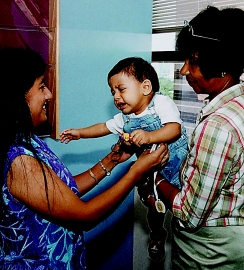
B)
C)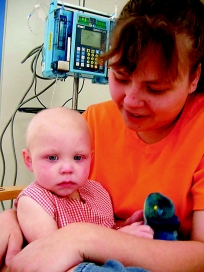
D)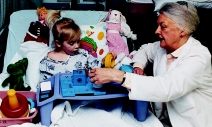
A)
B)
C)
D)
Question
Question
Question

Unlock Deck
Sign up to unlock the cards in this deck!
Unlock Deck
Unlock Deck
1/26

Play

Full screen (f)
Deck 21: Family-Centered Care of the Child During Illness and Hospitalization
1
The most common initial reaction of parents to illness or injury and hospitalization in their child is:
A)anger.
B)fear.
C)depression.
D)disbelief.
A)anger.
B)fear.
C)depression.
D)disbelief.
disbelief.
2
A school-age child,admitted for intravenous antibiotic therapy for osteomyelitis,reports difficulty in going to sleep at night.Which intervention should the nurse implement to assist the child in going to sleep at bedtime?
A)Request a prescription for a sleeping pill.
B)Allow the child to stay up late and sleep late in the morning.
C)Create a schedule similar to the one the child follows at home.
D)Plan passive activities in the morning and interactive activities right before bedtime.
A)Request a prescription for a sleeping pill.
B)Allow the child to stay up late and sleep late in the morning.
C)Create a schedule similar to the one the child follows at home.
D)Plan passive activities in the morning and interactive activities right before bedtime.
Create a schedule similar to the one the child follows at home.
3
The nurse is caring for an adolescent who had an external fixator placed after suffering a fracture of the wrist during a bicycle accident.Which statement by the adolescent should be expected about separation anxiety?
A)"I wish my parents could spend the night with me while I am in the hospital."
B)"I think I would like for my siblings to visit me but not my friends."
C)"I hope my friends don't forget about visiting me."
D)"I will be embarrassed if my friends come to the hospital to visit."
A)"I wish my parents could spend the night with me while I am in the hospital."
B)"I think I would like for my siblings to visit me but not my friends."
C)"I hope my friends don't forget about visiting me."
D)"I will be embarrassed if my friends come to the hospital to visit."
"I hope my friends don't forget about visiting me."
4
An appropriate nursing intervention to minimize separation anxiety in a hospitalized toddler would be to:
A)provide for privacy.
B)encourage parents to room in.
C)explain procedures and routines.
D)encourage contact with children the same age.
A)provide for privacy.
B)encourage parents to room in.
C)explain procedures and routines.
D)encourage contact with children the same age.
Unlock Deck
Unlock for access to all 26 flashcards in this deck.
Unlock Deck
k this deck
5
During the first 4 days of hospitalization,Eric,age 18 months,cried inconsolably when his parents left him,and he refused the staff's attention.Now the nurse observes that Eric appears to be "settled in" and unconcerned about seeing his parents.The nurse should interpret this as which statement?
A)He has successfully adjusted to the hospital environment.
B)He has transferred his trust to the nursing staff.
C)He may be experiencing detachment, which is the third stage of separation anxiety.
D)Because he is "at home" in the hospital now, seeing his mother frequently will only start the cycle again.
A)He has successfully adjusted to the hospital environment.
B)He has transferred his trust to the nursing staff.
C)He may be experiencing detachment, which is the third stage of separation anxiety.
D)Because he is "at home" in the hospital now, seeing his mother frequently will only start the cycle again.
Unlock Deck
Unlock for access to all 26 flashcards in this deck.
Unlock Deck
k this deck
6
A nurse in the emergency department is assessing a 5-year-old child with symptoms of pneumonia and a fever of 102° F.Which intervention can the nurse implement to promote a sense of control for the child?
A)None, this is an emergency and the child should not participate in care.
B)Allow the child to hold the digital thermometer while taking the child's blood pressure.
C)Ask the child if it is OK to take a temperature in the ear.
D)Have parents wait in the waiting room.
A)None, this is an emergency and the child should not participate in care.
B)Allow the child to hold the digital thermometer while taking the child's blood pressure.
C)Ask the child if it is OK to take a temperature in the ear.
D)Have parents wait in the waiting room.
Unlock Deck
Unlock for access to all 26 flashcards in this deck.
Unlock Deck
k this deck
7
Samantha,age 5 years,tells the nurse that she "needs a Band-Aid" where she had an injection.Which is the best nursing action?
A)Apply a Band-Aid.
B)Ask her why she wants a Band-Aid.
C)Explain why a Band-Aid is not needed.
D)Show her that the bleeding has already stopped.
A)Apply a Band-Aid.
B)Ask her why she wants a Band-Aid.
C)Explain why a Band-Aid is not needed.
D)Show her that the bleeding has already stopped.
Unlock Deck
Unlock for access to all 26 flashcards in this deck.
Unlock Deck
k this deck
8
A 10-year-old girl needs to have another intravenous (IV)line started.She keeps telling the nurse,"Wait a minute" and "I'm not ready." The nurse should recognize this as which description?
A)This is normal behavior for a school-age child.
B)The behavior is not seen past the preschool years.
C)The child thinks the nurse is punishing her.
D)The child has successfully manipulated the nurse in the past.
A)This is normal behavior for a school-age child.
B)The behavior is not seen past the preschool years.
C)The child thinks the nurse is punishing her.
D)The child has successfully manipulated the nurse in the past.
Unlock Deck
Unlock for access to all 26 flashcards in this deck.
Unlock Deck
k this deck
9
A nurse is preparing to complete an admission assessment on a 2-year-old child.The child is sitting on the parent's lap.Which technique should the nurse implement to complete the physical exam?
A)Ask the parent to place the child in the hospital crib.
B)Take the child and parent to the exam room.
C)Perform the exam while the child is on the parent's lap.
D)Ask the child to stand by the parent while completing the exam.
A)Ask the parent to place the child in the hospital crib.
B)Take the child and parent to the exam room.
C)Perform the exam while the child is on the parent's lap.
D)Ask the child to stand by the parent while completing the exam.
Unlock Deck
Unlock for access to all 26 flashcards in this deck.
Unlock Deck
k this deck
10
Kimberly,age 3 years,is being admitted for about 1 week of hospitalization.Her parents tell the nurse that they are going to buy her "a lot of new toys,because she will be in the hospital." The nurse's reply should be based on an understanding of which concept?
A)New toys make hospitalization easier.
B)New toys are usually better than older ones for children of this age.
C)At this age, children often need the comfort and reassurance of familiar toys from home.
D)Buying new toys for a hospitalized child is a maladaptive way to cope with parental guilt.
A)New toys make hospitalization easier.
B)New toys are usually better than older ones for children of this age.
C)At this age, children often need the comfort and reassurance of familiar toys from home.
D)Buying new toys for a hospitalized child is a maladaptive way to cope with parental guilt.
Unlock Deck
Unlock for access to all 26 flashcards in this deck.
Unlock Deck
k this deck
11
A previously "potty-trained" 30-month-old child has reverted to wearing diapers while hospitalized.The nurse should reassure the parents that this is normal because of which reason?
A)Regression is seen during hospitalization.
B)Developmental delays occur because of the hospitalization.
C)The child is experiencing urinary urgency because of hospitalization.
D)The child was too young to be "potty-trained."
A)Regression is seen during hospitalization.
B)Developmental delays occur because of the hospitalization.
C)The child is experiencing urinary urgency because of hospitalization.
D)The child was too young to be "potty-trained."
Unlock Deck
Unlock for access to all 26 flashcards in this deck.
Unlock Deck
k this deck
12
Which age group should the pediatric nurse recognize as being vulnerable to events that lessen their feeling of control and power?
A)Infants
B)Toddlers
C)Preschoolers
D)School-age children
A)Infants
B)Toddlers
C)Preschoolers
D)School-age children
Unlock Deck
Unlock for access to all 26 flashcards in this deck.
Unlock Deck
k this deck
13
Matthew,age 18 months,has just been admitted with croup.His parent is tearful and tells the nurse,"This is all my fault.I should have taken him to the doctor sooner so he wouldn't have to be here." Which is appropriate in the care plan for this parent who is experiencing guilt?
A)Clarify misconception about the illness.
B)Explain to parent that the illness is not serious.
C)Encourage parent to maintain a sense of control.
D)Assess further why parent has excessive guilt feelings.
A)Clarify misconception about the illness.
B)Explain to parent that the illness is not serious.
C)Encourage parent to maintain a sense of control.
D)Assess further why parent has excessive guilt feelings.
Unlock Deck
Unlock for access to all 26 flashcards in this deck.
Unlock Deck
k this deck
14
Latasha,age 8 years,is being admitted to the hospital from the emergency department with an injury from falling off her bicycle.Which will help her most in her adjustment to the hospital?
A)Explain hospital schedules to her, such as mealtimes.
B)Use terms such as "honey" and "dear" to show a caring attitude.
C)Explain when parents can visit and why siblings cannot come to see her.
D)Orient her parents, because she is young, to her room and hospital facility.
A)Explain hospital schedules to her, such as mealtimes.
B)Use terms such as "honey" and "dear" to show a caring attitude.
C)Explain when parents can visit and why siblings cannot come to see her.
D)Orient her parents, because she is young, to her room and hospital facility.
Unlock Deck
Unlock for access to all 26 flashcards in this deck.
Unlock Deck
k this deck
15
When a preschool child is hospitalized without adequate preparation,the nurse should recognize that the child may likely see hospitalization as:
A)punishment.
B)threat to child's self-image.
C)an opportunity for regression.
D)loss of companionship with friends.
A)punishment.
B)threat to child's self-image.
C)an opportunity for regression.
D)loss of companionship with friends.
Unlock Deck
Unlock for access to all 26 flashcards in this deck.
Unlock Deck
k this deck
16
A 14-year-old boy is being admitted to the hospital for an appendectomy.Which roommate should the nurse assign with this patient?
A)A 4-year-old boy with first day post-appendectomy surgery
B)A 6-year-old boy with pneumonia
C)A 15-year-old boy admitted with a vasoocclusive sickle cell crisis
D)A 12-year-old boy with cellulitis
A)A 4-year-old boy with first day post-appendectomy surgery
B)A 6-year-old boy with pneumonia
C)A 15-year-old boy admitted with a vasoocclusive sickle cell crisis
D)A 12-year-old boy with cellulitis
Unlock Deck
Unlock for access to all 26 flashcards in this deck.
Unlock Deck
k this deck
17
A child is playing in the playroom.The nurse needs to do a blood pressure on the child.Which is the appropriate procedure for obtaining the blood pressure?
A)Take the blood pressure in the playroom.
B)Ask the child to come to the exam room to obtain the blood pressure.
C)Ask the child to return to his or her room for the blood pressure, then escort the child back to the playroom.
D)Document that the blood pressure was not obtained because the child was in the playroom.
A)Take the blood pressure in the playroom.
B)Ask the child to come to the exam room to obtain the blood pressure.
C)Ask the child to return to his or her room for the blood pressure, then escort the child back to the playroom.
D)Document that the blood pressure was not obtained because the child was in the playroom.
Unlock Deck
Unlock for access to all 26 flashcards in this deck.
Unlock Deck
k this deck
18
Amy,age 6 years,needs to be hospitalized again because of a chronic illness.The clinic nurse overhears her school-age siblings tell her,"We are sick of Mom always sitting with you in the hospital and playing with you.It isn't fair that you get everything and we have to stay with the neighbors." Which is the nurse's best assessment of this situation?
A)The siblings are immature and probably spoiled.
B)Jealousy and resentment are common reactions to the illness or hospitalization of a sibling.
C)Family has ineffective coping mechanisms to deal with chronic illness.
D)The siblings need to better understand their sister's illness and needs.
A)The siblings are immature and probably spoiled.
B)Jealousy and resentment are common reactions to the illness or hospitalization of a sibling.
C)Family has ineffective coping mechanisms to deal with chronic illness.
D)The siblings need to better understand their sister's illness and needs.
Unlock Deck
Unlock for access to all 26 flashcards in this deck.
Unlock Deck
k this deck
19
A nurse is caring for four patients; three are toddlers and one is a preschooler.Which represents the major stressor of hospitalization for these four patients?
A)Separation anxiety
B)Loss of control
C)Fear of bodily injury
D)Fear of pain
A)Separation anxiety
B)Loss of control
C)Fear of bodily injury
D)Fear of pain
Unlock Deck
Unlock for access to all 26 flashcards in this deck.
Unlock Deck
k this deck
20
Four-year-old Brian appears to be upset by hospitalization.Which is an appropriate intervention?
A)Let him know it is all right to cry.
B)Give him time to gain control of himself.
C)Show him how other children are cooperating.
D)Tell him what a big boy he is to be so quiet.
A)Let him know it is all right to cry.
B)Give him time to gain control of himself.
C)Show him how other children are cooperating.
D)Tell him what a big boy he is to be so quiet.
Unlock Deck
Unlock for access to all 26 flashcards in this deck.
Unlock Deck
k this deck
21
A nurse plans therapeutic play time for a hospitalized child.Which are the benefits of therapeutic play? (Select all that apply.)
A)Serves as method to assist disturbed children
B)Allows the child to express feelings
C)The nurse can gain insight into the child's feelings.
D)The child can deal with concerns and feelings.
E)Gives the child a structured play environment
A)Serves as method to assist disturbed children
B)Allows the child to express feelings
C)The nurse can gain insight into the child's feelings.
D)The child can deal with concerns and feelings.
E)Gives the child a structured play environment
Unlock Deck
Unlock for access to all 26 flashcards in this deck.
Unlock Deck
k this deck
22
A child is being discharged from an ambulatory care center after an inguinal hernia repair.Which discharge interventions should the nurse implement? (Select all that apply.)
A)Discuss dietary restrictions.
B)Hold any analgesic medications until the child is home.
C)Send a pain scale home with the family.
D)Suggest the parents fill the prescriptions on the way home.
E)Discuss complications that may occur.
A)Discuss dietary restrictions.
B)Hold any analgesic medications until the child is home.
C)Send a pain scale home with the family.
D)Suggest the parents fill the prescriptions on the way home.
E)Discuss complications that may occur.
Unlock Deck
Unlock for access to all 26 flashcards in this deck.
Unlock Deck
k this deck
23
A nurse is admitting a toddler to the hospital.The parent needs to leave for a brief period.Which figure depicts the reaction the nurse expects from the child?
A)
B)
C)
D)
A)
B)
C)
D)
Unlock Deck
Unlock for access to all 26 flashcards in this deck.
Unlock Deck
k this deck
24
A child has just been unexpectedly admitted to the intensive care unit after abdominal surgery.The nursing staff has completed the admission process,and the child's condition is beginning to stabilize.When speaking with the parents,the nurses should expect which stressors to be evident? (Select all that apply.)
A)Unfamiliar environment
B)Usual day-night routine
C)Strange smells
D)Provision of privacy
E)Inadequate knowledge of condition and routine
A)Unfamiliar environment
B)Usual day-night routine
C)Strange smells
D)Provision of privacy
E)Inadequate knowledge of condition and routine
Unlock Deck
Unlock for access to all 26 flashcards in this deck.
Unlock Deck
k this deck
25
A child is being admitted to the intensive care unit (ICU)and the parents are with the child.Which creates stressors for children and parents in ICUs? (Select all that apply.)
A)Equipment noise
B)Privacy
C)Caring behavior by the nurse
D)Unfamiliar smells
E)Sleep deprivation
A)Equipment noise
B)Privacy
C)Caring behavior by the nurse
D)Unfamiliar smells
E)Sleep deprivation
Unlock Deck
Unlock for access to all 26 flashcards in this deck.
Unlock Deck
k this deck
26
A nurse is interviewing the parents of a toddler about use of complementary or alternative medical practices.The parents share several practices they use in their household.Which should the nurse document as complementary or alternative medical practices? (Select all that apply.)
A)Use of acetaminophen (Tylenol) for fever
B)Administration of chamomile tea at bedtime
C)Hypnotherapy for relief of pain
D)Acupressure to relieve headaches
E)Cool mist vaporizer at the bedside for "stuffiness"
A)Use of acetaminophen (Tylenol) for fever
B)Administration of chamomile tea at bedtime
C)Hypnotherapy for relief of pain
D)Acupressure to relieve headaches
E)Cool mist vaporizer at the bedside for "stuffiness"
Unlock Deck
Unlock for access to all 26 flashcards in this deck.
Unlock Deck
k this deck
Unlock Deck
Unlock for access to all 26 flashcards in this deck.






