







 Chat with AI

Deck 24: The Body's Defenses
Full screen (f)

Question

Question
Question
Question
Question
Question
Question
Question
Question
Question
Question
Question
Question
Question
Question
Question
Question
Question
Question
Question
Question
Question
Question
Question
Question
Question
Question
Question
Question
Question
Question
Question
Question
Three B cells are shown in the figure.Which of these B cells will begin to grow,divide,and differentiate further? 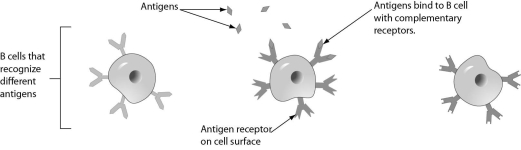
A) only the B cell on the left
B) only the B cell in the middle
C) only the B cell on the right
D) all three B cells
A) only the B cell on the left
B) only the B cell in the middle
C) only the B cell on the right
D) all three B cells
Question
Question
Question
Question
The figure below shows a Y-shaped antibody molecule.How many antigens can a single antibody molecule bind? 
A) 1
B) 2
C) 3
D) 4
A) 1
B) 2
C) 3
D) 4
Question
Question
Question
Examine the numerous long structures extending from the surface of some of the cells in the following figure.Cells with these long structures could be found lining ______. 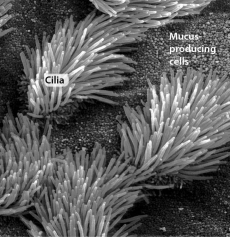
A) the digestive tract
B) arteries
C) veins
D) the trachea
A) the digestive tract
B) arteries
C) veins
D) the trachea
Question
Examine the photograph of the hand in the following figure.The person's joints are severely damaged because ______. 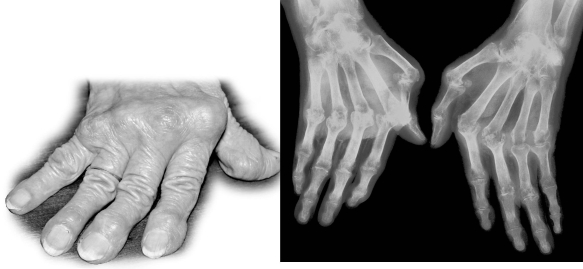
A) the immune system has damaged the cartilage and bone of the joints
B) a viral infection has attacked the cartilage of the fingers
C) cytotoxic T cells have destroyed the bone in the fingers
D) T cells have reacted against the myelin in the hand
A) the immune system has damaged the cartilage and bone of the joints
B) a viral infection has attacked the cartilage of the fingers
C) cytotoxic T cells have destroyed the bone in the fingers
D) T cells have reacted against the myelin in the hand
Question
Question
Question

Unlock Deck
Sign up to unlock the cards in this deck!
Unlock Deck
Unlock Deck
1/44

Play

Full screen (f)
Deck 24: The Body's Defenses
1
When you cut yourself,the damaged cells immediately release which of the following chemical alarm signals?
A) interferon
B) complement
C) histamine
D) antihistamines
A) interferon
B) complement
C) histamine
D) antihistamines
C
2
The functions of antibodies include ______.
A) the deactivation of complement proteins
B) stimulating the production of antigens
C) the phagocytosis of invading bacteria
D) the clumping of invader cells
A) the deactivation of complement proteins
B) stimulating the production of antigens
C) the phagocytosis of invading bacteria
D) the clumping of invader cells
D
3
The major result of the inflammatory response is to ______.
A) initiate the production of antibodies
B) disinfect and clean damaged tissues
C) initiate the release of interferons
D) initiate the production of natural killer cells
A) initiate the production of antibodies
B) disinfect and clean damaged tissues
C) initiate the release of interferons
D) initiate the production of natural killer cells
B
4
Which of the following is one of the body's first lines of defense against infection?
A) several antibodies
B) obstacles such as skin and mucous membranes
C) increased production of certain hormones and changes in the blood circulation
D) none of the above
A) several antibodies
B) obstacles such as skin and mucous membranes
C) increased production of certain hormones and changes in the blood circulation
D) none of the above
Unlock Deck
Unlock for access to all 44 flashcards in this deck.
Unlock Deck
k this deck
5
Which of the following cell types are specifically responsible for humoral immunity?
A) T cells
B) B cells
C) phagocytic cells
D) natural killer cells
A) T cells
B) B cells
C) phagocytic cells
D) natural killer cells
Unlock Deck
Unlock for access to all 44 flashcards in this deck.
Unlock Deck
k this deck
6
Which of the following is a response of our innate defense system?
A) active immunity
B) inflammation
C) cell-mediated immunity
D) movement of red blood cells to the affected site
A) active immunity
B) inflammation
C) cell-mediated immunity
D) movement of red blood cells to the affected site
Unlock Deck
Unlock for access to all 44 flashcards in this deck.
Unlock Deck
k this deck
7
What kinds of cells engulf whatever foreign cells and molecules they encounter and recognize?
A) natural killer cells
B) platelets
C) phagocytic cells
D) interferons
A) natural killer cells
B) platelets
C) phagocytic cells
D) interferons
Unlock Deck
Unlock for access to all 44 flashcards in this deck.
Unlock Deck
k this deck
8
Histamine ______.
A) causes local blood vessels to constrict
B) attracts natural killer cells
C) stimulates the release of complement proteins
D) attracts phagocytic cells
A) causes local blood vessels to constrict
B) attracts natural killer cells
C) stimulates the release of complement proteins
D) attracts phagocytic cells
Unlock Deck
Unlock for access to all 44 flashcards in this deck.
Unlock Deck
k this deck
9
The immune system is capable of mounting specific responses to particular microorganisms because ______.
A) lymphocytes are able to change their antigen specificity as required to fight infection
B) the body is able to determine which type of B and T cells to make
C) the body contains an enormous diversity of lymphocytes, each with a specific kind of antigen receptor
D) the body is able to make different antigen receptors depending on the invading microorganism
A) lymphocytes are able to change their antigen specificity as required to fight infection
B) the body is able to determine which type of B and T cells to make
C) the body contains an enormous diversity of lymphocytes, each with a specific kind of antigen receptor
D) the body is able to make different antigen receptors depending on the invading microorganism
Unlock Deck
Unlock for access to all 44 flashcards in this deck.
Unlock Deck
k this deck
10
Which of the following cell types are specifically responsible for cell-mediated immunity?
A) T cells
B) B cells
C) natural killer cells
D) phagocytic cells
A) T cells
B) B cells
C) natural killer cells
D) phagocytic cells
Unlock Deck
Unlock for access to all 44 flashcards in this deck.
Unlock Deck
k this deck
11
A major function of natural killer cells is to ______.
A) attack and kill pathogenic microorganisms
B) attack virus-infected cells
C) tag pathogenic microorganisms with antibodies
D) phagocytize microorganisms that have been tagged with antibodies
A) attack and kill pathogenic microorganisms
B) attack virus-infected cells
C) tag pathogenic microorganisms with antibodies
D) phagocytize microorganisms that have been tagged with antibodies
Unlock Deck
Unlock for access to all 44 flashcards in this deck.
Unlock Deck
k this deck
12
A researcher detects interferon in a laboratory rat and concludes that ______.
A) the rat has, or recently had, a viral infection
B) cancerous cells are present in the rat
C) the complement system has been activated by exposure to an antigen
D) none of the above
A) the rat has, or recently had, a viral infection
B) cancerous cells are present in the rat
C) the complement system has been activated by exposure to an antigen
D) none of the above
Unlock Deck
Unlock for access to all 44 flashcards in this deck.
Unlock Deck
k this deck
13
Why do diseases involving widespread infection often result in a fever?
A) The inflammatory and immune responses result in extra heat production.
B) The microorganisms trick the brain's temperature control center into creating a hot environment that favors their growth.
C) The brain's temperature control center responds to inflammation by creating a hot environment unfavorable to the growth of microorganisms.
D) None of the choices is correct.
A) The inflammatory and immune responses result in extra heat production.
B) The microorganisms trick the brain's temperature control center into creating a hot environment that favors their growth.
C) The brain's temperature control center responds to inflammation by creating a hot environment unfavorable to the growth of microorganisms.
D) None of the choices is correct.
Unlock Deck
Unlock for access to all 44 flashcards in this deck.
Unlock Deck
k this deck
14
A role of the lymphatic system is to ______.
A) transport histamine
B) produce hormones related to fighting infections
C) produce white blood cells
D) return tissue fluid to the circulatory system
A) transport histamine
B) produce hormones related to fighting infections
C) produce white blood cells
D) return tissue fluid to the circulatory system
Unlock Deck
Unlock for access to all 44 flashcards in this deck.
Unlock Deck
k this deck
15
Which of the following kinds of protein circulates in the blood and coats the surfaces of microbes to make them more susceptible to engulfment by phagocytic cells?
A) complement
B) interferon
C) prostaglandin
D) antigen
A) complement
B) interferon
C) prostaglandin
D) antigen
Unlock Deck
Unlock for access to all 44 flashcards in this deck.
Unlock Deck
k this deck
16
Complement proteins assist the immune response by ______.
A) enhancing the effects of antibiotics
B) coating the surface of microbes, making it easier for other defense cells to phagocytize them
C) reducing inflammation
D) all of the above
A) enhancing the effects of antibiotics
B) coating the surface of microbes, making it easier for other defense cells to phagocytize them
C) reducing inflammation
D) all of the above
Unlock Deck
Unlock for access to all 44 flashcards in this deck.
Unlock Deck
k this deck
17
A substance that can elicit an immune response from a lymphocyte is called a(n)______.
A) interferon
B) pathogen
C) antibody
D) antigen
A) interferon
B) pathogen
C) antibody
D) antigen
Unlock Deck
Unlock for access to all 44 flashcards in this deck.
Unlock Deck
k this deck
18
Antibodies ______.
A) are shaped like the letter B
B) are generalists in that any antibody can bind to any antigen
C) assist in destroying particular antigens
D) all of the above
A) are shaped like the letter B
B) are generalists in that any antibody can bind to any antigen
C) assist in destroying particular antigens
D) all of the above
Unlock Deck
Unlock for access to all 44 flashcards in this deck.
Unlock Deck
k this deck
19
One kind of vaccine consists of a solution containing ______.
A) antibodies
B) horse serum
C) B cells
D) a harmless variant of a disease-causing microbe
A) antibodies
B) horse serum
C) B cells
D) a harmless variant of a disease-causing microbe
Unlock Deck
Unlock for access to all 44 flashcards in this deck.
Unlock Deck
k this deck
20
Antibodies are ______.
A) composed of four fatty acid chains
B) a type of lymphocyte
C) proteins with short carbohydrates attached
D) proteins consisting of four polypeptide chains
A) composed of four fatty acid chains
B) a type of lymphocyte
C) proteins with short carbohydrates attached
D) proteins consisting of four polypeptide chains
Unlock Deck
Unlock for access to all 44 flashcards in this deck.
Unlock Deck
k this deck
21
When in its life cycle does a B cell first exhibit its particular surface antibody?
A) after the memory cell giving rise to it divides
B) before it ever encounters an antigen
C) after it encounters several antigens
D) after it encounters a single antigen
A) after the memory cell giving rise to it divides
B) before it ever encounters an antigen
C) after it encounters several antigens
D) after it encounters a single antigen
Unlock Deck
Unlock for access to all 44 flashcards in this deck.
Unlock Deck
k this deck
22
The secondary response in humoral immunity occurs when memory cells bind to ______.
A) antibodies
B) antigens
C) plasma cells
D) complement proteins
A) antibodies
B) antigens
C) plasma cells
D) complement proteins
Unlock Deck
Unlock for access to all 44 flashcards in this deck.
Unlock Deck
k this deck
23
______ may destroy infected cells.
A) Phagocytic cells
B) Helper T cells
C) Natural killer T cells
D) Cytotoxic T cells
A) Phagocytic cells
B) Helper T cells
C) Natural killer T cells
D) Cytotoxic T cells
Unlock Deck
Unlock for access to all 44 flashcards in this deck.
Unlock Deck
k this deck
24
Which of the following types of cells does HIV preferentially infect?
A) cytotoxic T cells
B) natural killer cells
C) helper T cells
D) phagocytic cells
A) cytotoxic T cells
B) natural killer cells
C) helper T cells
D) phagocytic cells
Unlock Deck
Unlock for access to all 44 flashcards in this deck.
Unlock Deck
k this deck
25
Which of the following statements best explains why people with Hodgkin's disease often show signs of immunodeficiency?
A) The Hodgkin's disease virus infects and destroys B cells.
B) Hodgkin's disease involves the deposition of immune complexes in the kidneys.
C) Hodgkin's disease is a type of cancer that affects lymphocytes.
D) Hodgkin's disease occurs when an immune response elicited by streptococcal bacteria kills normal heart cells as well.
A) The Hodgkin's disease virus infects and destroys B cells.
B) Hodgkin's disease involves the deposition of immune complexes in the kidneys.
C) Hodgkin's disease is a type of cancer that affects lymphocytes.
D) Hodgkin's disease occurs when an immune response elicited by streptococcal bacteria kills normal heart cells as well.
Unlock Deck
Unlock for access to all 44 flashcards in this deck.
Unlock Deck
k this deck
26
The primary immune response ______.
A) results in the production of short-lived effector cells via clonal selection
B) results in the production of short-lived memory cells via clonal selection
C) peaks about two days after first exposure
D) triggers the secondary immune response
A) results in the production of short-lived effector cells via clonal selection
B) results in the production of short-lived memory cells via clonal selection
C) peaks about two days after first exposure
D) triggers the secondary immune response
Unlock Deck
Unlock for access to all 44 flashcards in this deck.
Unlock Deck
k this deck
27
Which of the following cell types initiates a secondary immune response?
A) natural killer cells
B) memory cells
C) effector cells
D) plasma cells
A) natural killer cells
B) memory cells
C) effector cells
D) plasma cells
Unlock Deck
Unlock for access to all 44 flashcards in this deck.
Unlock Deck
k this deck
28
A primary immune response is the ______.
A) production of primary-type antibodies in the first day of exposure to a microorganism
B) immune response elicited by the primary antigen of a disease-causing microorganism
C) immune response elicited by the first exposure of lymphocytes to a particular antigen
D) immune response elicited by the first exposure of memory cells to a particular antigen
A) production of primary-type antibodies in the first day of exposure to a microorganism
B) immune response elicited by the primary antigen of a disease-causing microorganism
C) immune response elicited by the first exposure of lymphocytes to a particular antigen
D) immune response elicited by the first exposure of memory cells to a particular antigen
Unlock Deck
Unlock for access to all 44 flashcards in this deck.
Unlock Deck
k this deck
29
When the immune system improperly turns again the body's own molecules,the result is _____.
A) an allergy
B) lupus
C) an autoimmune disease
D) progressive paralysis
A) an allergy
B) lupus
C) an autoimmune disease
D) progressive paralysis
Unlock Deck
Unlock for access to all 44 flashcards in this deck.
Unlock Deck
k this deck
30
The basic function of T cells is to identify and destroy invaders in our ______.
A) blood or lymph
B) interstitial fluid
C) cells
D) immune system
A) blood or lymph
B) interstitial fluid
C) cells
D) immune system
Unlock Deck
Unlock for access to all 44 flashcards in this deck.
Unlock Deck
k this deck
31
Which of the following substances does a cytotoxic T cell secrete to destroy a target cell?
A) interferon
B) complement
C) antibodies
D) perforin
A) interferon
B) complement
C) antibodies
D) perforin
Unlock Deck
Unlock for access to all 44 flashcards in this deck.
Unlock Deck
k this deck
32
What has caused the evolution of drug-resistant strains of HIV?
A) genetic engineering of the virus in research laboratories
B) the merger of different AIDS viruses into one new virus
C) the joining of antibodies to HIV
D) anti-AIDS drugs
A) genetic engineering of the virus in research laboratories
B) the merger of different AIDS viruses into one new virus
C) the joining of antibodies to HIV
D) anti-AIDS drugs
Unlock Deck
Unlock for access to all 44 flashcards in this deck.
Unlock Deck
k this deck
33
Three B cells are shown in the figure.Which of these B cells will begin to grow,divide,and differentiate further?
A) only the B cell on the left
B) only the B cell in the middle
C) only the B cell on the right
D) all three B cells
A) only the B cell on the left
B) only the B cell in the middle
C) only the B cell on the right
D) all three B cells
Unlock Deck
Unlock for access to all 44 flashcards in this deck.
Unlock Deck
k this deck
34
Anaphylactic shock ______.
A) occurs when blood vessels constrict abruptly
B) is a symptom of an immunodeficiency disease
C) causes blood pressure to drop dangerously
D) has no treatment
A) occurs when blood vessels constrict abruptly
B) is a symptom of an immunodeficiency disease
C) causes blood pressure to drop dangerously
D) has no treatment
Unlock Deck
Unlock for access to all 44 flashcards in this deck.
Unlock Deck
k this deck
35
It is best to receive an organ transplant from a donor who ______.
A) looks like you
B) rarely consumes alcohol
C) does not have any allergies
D) best matches your self proteins
A) looks like you
B) rarely consumes alcohol
C) does not have any allergies
D) best matches your self proteins
Unlock Deck
Unlock for access to all 44 flashcards in this deck.
Unlock Deck
k this deck
36
A humoral-type secondary immune response differs from the corresponding primary immune response in that the secondary response ______.
A) is slower
B) results in fewer antibodies in the blood
C) is able to target microorganisms even if they have altered their surface antigens
D) none of the above
A) is slower
B) results in fewer antibodies in the blood
C) is able to target microorganisms even if they have altered their surface antigens
D) none of the above
Unlock Deck
Unlock for access to all 44 flashcards in this deck.
Unlock Deck
k this deck
37
The figure below shows a Y-shaped antibody molecule.How many antigens can a single antibody molecule bind?
A) 1
B) 2
C) 3
D) 4
A) 1
B) 2
C) 3
D) 4
Unlock Deck
Unlock for access to all 44 flashcards in this deck.
Unlock Deck
k this deck
38
When a B or T cell is primed by an interaction with its particular antigen,the cell ______.
A) dies, killing the antigen
B) engulfs the antigen and destroys it
C) grows, divides, and differentiates further
D) sticks to other cells with attached antigens to form a large clot
A) dies, killing the antigen
B) engulfs the antigen and destroys it
C) grows, divides, and differentiates further
D) sticks to other cells with attached antigens to form a large clot
Unlock Deck
Unlock for access to all 44 flashcards in this deck.
Unlock Deck
k this deck
39
Which of the following compounds do mast cells produce?
A) interferon
B) allergens
C) histamine
D) perforin
A) interferon
B) allergens
C) histamine
D) perforin
Unlock Deck
Unlock for access to all 44 flashcards in this deck.
Unlock Deck
k this deck
40
Examine the numerous long structures extending from the surface of some of the cells in the following figure.Cells with these long structures could be found lining ______.
A) the digestive tract
B) arteries
C) veins
D) the trachea
A) the digestive tract
B) arteries
C) veins
D) the trachea
Unlock Deck
Unlock for access to all 44 flashcards in this deck.
Unlock Deck
k this deck
41
Examine the photograph of the hand in the following figure.The person's joints are severely damaged because ______.
A) the immune system has damaged the cartilage and bone of the joints
B) a viral infection has attacked the cartilage of the fingers
C) cytotoxic T cells have destroyed the bone in the fingers
D) T cells have reacted against the myelin in the hand
A) the immune system has damaged the cartilage and bone of the joints
B) a viral infection has attacked the cartilage of the fingers
C) cytotoxic T cells have destroyed the bone in the fingers
D) T cells have reacted against the myelin in the hand
Unlock Deck
Unlock for access to all 44 flashcards in this deck.
Unlock Deck
k this deck
42
Read the following scenario to answer the following question(s).
Avian influenza is a viral infection that naturally occurs in wild birds with few damaging effects. However, avian influenza is highly contagious and can quickly kill domesticated birds. Some human influenza viruses are similar to the avian influenza. People infected with avian influenza develop typical flu symptoms (fever, cough, muscle aches). However, symptoms may become more severe and life-threatening. If avian influenza evolves into a form that is easily transmissible from person to person, a global pandemic of widespread human death might occur.
One way to prevent a global pandemic of avian influenza would be to ______.
A) keep large doses of histamine available to treat anyone who shows signs of infection
B) treat any infected birds with large doses of antibiotics
C) develop a vaccine against the avian influenza virus
D) develop drugs that could effectively block anaphylactic shock
Avian influenza is a viral infection that naturally occurs in wild birds with few damaging effects. However, avian influenza is highly contagious and can quickly kill domesticated birds. Some human influenza viruses are similar to the avian influenza. People infected with avian influenza develop typical flu symptoms (fever, cough, muscle aches). However, symptoms may become more severe and life-threatening. If avian influenza evolves into a form that is easily transmissible from person to person, a global pandemic of widespread human death might occur.
One way to prevent a global pandemic of avian influenza would be to ______.
A) keep large doses of histamine available to treat anyone who shows signs of infection
B) treat any infected birds with large doses of antibiotics
C) develop a vaccine against the avian influenza virus
D) develop drugs that could effectively block anaphylactic shock
Unlock Deck
Unlock for access to all 44 flashcards in this deck.
Unlock Deck
k this deck
43
Read the following scenario to answer the following question(s).
Avian influenza is a viral infection that naturally occurs in wild birds with few damaging effects. However, avian influenza is highly contagious and can quickly kill domesticated birds. Some human influenza viruses are similar to the avian influenza. People infected with avian influenza develop typical flu symptoms (fever, cough, muscle aches). However, symptoms may become more severe and life-threatening. If avian influenza evolves into a form that is easily transmissible from person to person, a global pandemic of widespread human death might occur.
Which of the following cells would be active during an immune response to a viral infection?
A) natural killer cells
B) phagocytic cells
C) T cells
D) all of the above
Avian influenza is a viral infection that naturally occurs in wild birds with few damaging effects. However, avian influenza is highly contagious and can quickly kill domesticated birds. Some human influenza viruses are similar to the avian influenza. People infected with avian influenza develop typical flu symptoms (fever, cough, muscle aches). However, symptoms may become more severe and life-threatening. If avian influenza evolves into a form that is easily transmissible from person to person, a global pandemic of widespread human death might occur.
Which of the following cells would be active during an immune response to a viral infection?
A) natural killer cells
B) phagocytic cells
C) T cells
D) all of the above
Unlock Deck
Unlock for access to all 44 flashcards in this deck.
Unlock Deck
k this deck
44
Read the following scenario to answer the following question(s).
Avian influenza is a viral infection that naturally occurs in wild birds with few damaging effects. However, avian influenza is highly contagious and can quickly kill domesticated birds. Some human influenza viruses are similar to the avian influenza. People infected with avian influenza develop typical flu symptoms (fever, cough, muscle aches). However, symptoms may become more severe and life-threatening. If avian influenza evolves into a form that is easily transmissible from person to person, a global pandemic of widespread human death might occur.
Humans that are infected with avian influenza are likely to have elevated levels of ______.
A) interferons
B) histamine
C) pyrogens
D) allergens
Avian influenza is a viral infection that naturally occurs in wild birds with few damaging effects. However, avian influenza is highly contagious and can quickly kill domesticated birds. Some human influenza viruses are similar to the avian influenza. People infected with avian influenza develop typical flu symptoms (fever, cough, muscle aches). However, symptoms may become more severe and life-threatening. If avian influenza evolves into a form that is easily transmissible from person to person, a global pandemic of widespread human death might occur.
Humans that are infected with avian influenza are likely to have elevated levels of ______.
A) interferons
B) histamine
C) pyrogens
D) allergens
Unlock Deck
Unlock for access to all 44 flashcards in this deck.
Unlock Deck
k this deck
Unlock Deck
Unlock for access to all 44 flashcards in this deck.






