







 Chat with AI

Deck 14: Mouth and Salivary Glands
Full screen (f)

Question

Question
Question
Question
Question
Question
Question
Which gland is identified in the figure below?
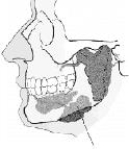
A) Parotid
B) Submandibular
C) Sublingual
D) Thymus
A) Parotid
B) Submandibular
C) Sublingual
D) Thymus
Question
Question
Question

Unlock Deck
Sign up to unlock the cards in this deck!
Unlock Deck
Unlock Deck
1/10

Play

Full screen (f)
Deck 14: Mouth and Salivary Glands
1
Where does the parotid duct open into the oral cavity?
A) In the floor of the mouth next to the frenulum
B) In the floor of the mouth along the crest of the sublingual fold
C) Opposite the second upper molar
D) Opposite the second lower molar
A) In the floor of the mouth next to the frenulum
B) In the floor of the mouth along the crest of the sublingual fold
C) Opposite the second upper molar
D) Opposite the second lower molar
Opposite the second upper molar
2
The hard palate is formed by the:
A) ethmoid and vomer.
B) ethmoid and palatine bone.
C) maxillae and vomer.
D) maxillae and palatine bone.
A) ethmoid and vomer.
B) ethmoid and palatine bone.
C) maxillae and vomer.
D) maxillae and palatine bone.
maxillae and palatine bone.
3
Which salivary gland is located on the floor of the mouth?
A) Parotid
B) Submandibular
C) Sublingual
D) Submandibular and sublingual
A) Parotid
B) Submandibular
C) Sublingual
D) Submandibular and sublingual
Sublingual
4
Where does the submandibular duct open into the oral cavity?
A) In the floor of the mouth next to the frenulum
B) In the floor of the mouth along the crest of the sublingual fold
C) Opposite the second upper molar
D) Opposite the second lower molar
A) In the floor of the mouth next to the frenulum
B) In the floor of the mouth along the crest of the sublingual fold
C) Opposite the second upper molar
D) Opposite the second lower molar
Unlock Deck
Unlock for access to all 10 flashcards in this deck.
Unlock Deck
k this deck
5
Which salivary glands are the largest?
A) Parotid
B) Submandibular
C) Sublingual
D) Submandibular and sublingual are equal in size.
A) Parotid
B) Submandibular
C) Sublingual
D) Submandibular and sublingual are equal in size.
Unlock Deck
Unlock for access to all 10 flashcards in this deck.
Unlock Deck
k this deck
6
Which of the following is not one of the salivary glands?
A) Tonsil
B) Parotid
C) Sublingual
D) Submandibular
A) Tonsil
B) Parotid
C) Sublingual
D) Submandibular
Unlock Deck
Unlock for access to all 10 flashcards in this deck.
Unlock Deck
k this deck
7
Which gland is identified in the figure below?
A) Parotid
B) Submandibular
C) Sublingual
D) Thymus
A) Parotid
B) Submandibular
C) Sublingual
D) Thymus
Unlock Deck
Unlock for access to all 10 flashcards in this deck.
Unlock Deck
k this deck
8
The salivary glands produce how much saliva each day?
A) 0.25 L
B) 0.50 L
C) 1 L
D) 1.5 L
A) 0.25 L
B) 0.50 L
C) 1 L
D) 1.5 L
Unlock Deck
Unlock for access to all 10 flashcards in this deck.
Unlock Deck
k this deck
9
Radiographic examination of the salivary glands using contrast medium is called:
A) parotitis.
B) angiography.
C) sialography.
D) sialostenosis.
A) parotitis.
B) angiography.
C) sialography.
D) sialostenosis.
Unlock Deck
Unlock for access to all 10 flashcards in this deck.
Unlock Deck
k this deck
10
How many pairs of salivary glands are in the mouth?
A) Two
B) Three
C) Four
D) Five
A) Two
B) Three
C) Four
D) Five
Unlock Deck
Unlock for access to all 10 flashcards in this deck.
Unlock Deck
k this deck
Unlock Deck
Unlock for access to all 10 flashcards in this deck.






