







 Chat with AI

Deck 32: Plant Nutrition and Transport
Full screen (f)

Question

Question
Question
Question
Question
Question
Question
Question
Question
Question
Question
Question
Question
Question
Question
Question
Question
Question
Question
Question
Question
Question
Question
Question
Question
Question
Question
Question
Question
Question
Question
Question
Question
Question
Question
Question
Question
Question
Question
Question
Question
Plants are sometimes used for phytoremediation in areas where the soil has been contaminated with heavy metals. Suppose the Acme Remediation Company is proposing to remediate a contaminated area that you wish to restore. Acme presents you with the following data as evidence of their company's ability to remediate soil.
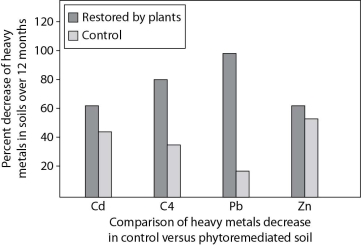
What likely caused the loss of metals in the control soil?
A)being washed away by water draining through the soil
B)evaporation of the metal molecules into the air
C)absorption of the metal molecules by clay particles
D)buildup of humus
What likely caused the loss of metals in the control soil?
A)being washed away by water draining through the soil
B)evaporation of the metal molecules into the air
C)absorption of the metal molecules by clay particles
D)buildup of humus
Question
Question
Plants are sometimes used for phytoremediation in areas where the soil has been contaminated with heavy metals. Suppose the Acme Remediation Company is proposing to remediate a contaminated area that you wish to restore. Acme presents you with the following data as evidence of their company's ability to remediate soil.
According to the data, this remediation plan is most effective with which element?
A)cadmium (Cd)
B)copper (Cu)
C)lead (Pb)
D)zinc (Zn)
According to the data, this remediation plan is most effective with which element?
A)cadmium (Cd)
B)copper (Cu)
C)lead (Pb)
D)zinc (Zn)
Question
Question
Question
Plants are sometimes used for phytoremediation in areas where the soil has been contaminated with heavy metals. Suppose the Acme Remediation Company is proposing to remediate a contaminated area that you wish to restore. Acme presents you with the following data as evidence of their company's ability to remediate soil.
Which of the following is a question you should ask Acme about conclusions to be drawn from these data?
A)What unit of measurement was used to determine how much metal was in the soil?
B)What species of plants did you use for your remediation?
C)Since even the control plots lost metals, do I really need to remediate?
D)Since lead (Pb)is not a micronutrient for plants, how do the plants remove it?
Which of the following is a question you should ask Acme about conclusions to be drawn from these data?
A)What unit of measurement was used to determine how much metal was in the soil?
B)What species of plants did you use for your remediation?
C)Since even the control plots lost metals, do I really need to remediate?
D)Since lead (Pb)is not a micronutrient for plants, how do the plants remove it?
Question
Question
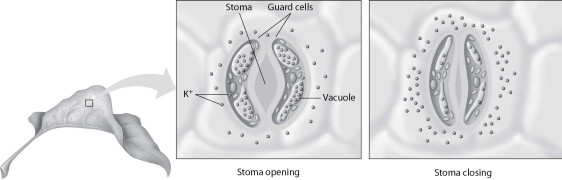
What is true of the guard cells shown in the right-hand panel of this figure?
A)Their turgor pressure is increasing.
B)Potassium (K)is entering these cells.
C)These cells are hypertonic to their immediate surroundings.
D)These cells are hypotonic to their immediate surroundings.
Question
Question
Question
According to this figure, which of the following can directly use atmospheric N₂
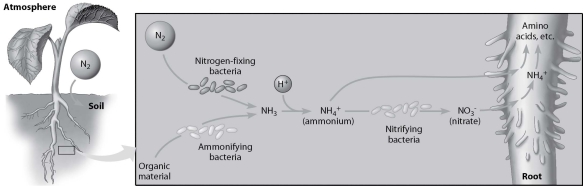
A)plant roots
B)nitrogen-fixing bacteria
C)ammonifying bacteria
D)nitrifying bacteria
Question
Question
Question
Question
Question
What is implied by this figure?
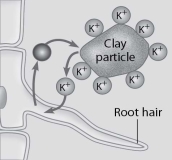
A)The clay particle has a negative charge at its surface.
B)The clay particle has a positive charge at its surface.
C)The root hair has a negative charge at its surface.
D)The plant does not need K⁺.
Question
Under what circumstances would guard cells look like those in the right panel?
A)a cool rainy day
B)a hot humid day
C)at elevated levels of CO₂
D)a hot dry day
Question
Question
Question
Question
Question
Plants are sometimes used for phytoremediation in areas where the soil has been contaminated with heavy metals. Suppose the Acme Remediation Company is proposing to remediate a contaminated area that you wish to restore. Acme presents you with the following data as evidence of their company's ability to remediate soil.
The CEO of Acme Remediation Company is always trying to improve the company's effectiveness by keeping up with current research. Which of the following research topics should have the highest priority for that research?
A)comparison of plant species' tolerance of clay versus sandy soils
B)comparison of plant species' ability to live in dry versus moist soils
C)comparison of plant species' tolerance of heavy metals in soils
D)comparison of plant species' bioaccumulation of metal ions
The CEO of Acme Remediation Company is always trying to improve the company's effectiveness by keeping up with current research. Which of the following research topics should have the highest priority for that research?
A)comparison of plant species' tolerance of clay versus sandy soils
B)comparison of plant species' ability to live in dry versus moist soils
C)comparison of plant species' tolerance of heavy metals in soils
D)comparison of plant species' bioaccumulation of metal ions
Question
Plants are sometimes used for phytoremediation in areas where the soil has been contaminated with heavy metals. Suppose the Acme Remediation Company is proposing to remediate a contaminated area that you wish to restore. Acme presents you with the following data as evidence of their company's ability to remediate soil.
Which would provide the best evidence that Acme's phytoremediation really works?
A)data on heavy metal content of plants grown in normal soil versus soil contaminated with heavy metals
B)testimonials from former Acme customers
C)a list of plant species that tolerate heavy metals
D)a list of publications of the scientists that work at Acme
Which would provide the best evidence that Acme's phytoremediation really works?
A)data on heavy metal content of plants grown in normal soil versus soil contaminated with heavy metals
B)testimonials from former Acme customers
C)a list of plant species that tolerate heavy metals
D)a list of publications of the scientists that work at Acme
Question
Plants are sometimes used for phytoremediation in areas where the soil has been contaminated with heavy metals. Suppose the Acme Remediation Company is proposing to remediate a contaminated area that you wish to restore. Acme presents you with the following data as evidence of their company's ability to remediate soil.
The data provide evidence for which of the following?
A)The copper removal percentage was approximately doubled by the presence of the plants used to remediate the soil.
B)Before restoration efforts, there was twice as much lead in the soil as cadmium.
C)Phytoremediation is especially effective at removing zinc from the soil.
D)The most toxic product in the soil is lead.
The data provide evidence for which of the following?
A)The copper removal percentage was approximately doubled by the presence of the plants used to remediate the soil.
B)Before restoration efforts, there was twice as much lead in the soil as cadmium.
C)Phytoremediation is especially effective at removing zinc from the soil.
D)The most toxic product in the soil is lead.
Question

Unlock Deck
Sign up to unlock the cards in this deck!
Unlock Deck
Unlock Deck
1/65

Play

Full screen (f)
Deck 32: Plant Nutrition and Transport
1
A hot, dry summer will reduce crop yields in part because
A)the stomata of the plants stay open to help cool the leaves.
B)carbon dioxide uptake is reduced by the stomata closing to prevent excessive water loss.
C)oxygen uptake is reduced by the stomata closing to prevent excessive water loss.
D)carbon dioxide release is reduced by the stomata closing to prevent excessive water loss.
A)the stomata of the plants stay open to help cool the leaves.
B)carbon dioxide uptake is reduced by the stomata closing to prevent excessive water loss.
C)oxygen uptake is reduced by the stomata closing to prevent excessive water loss.
D)carbon dioxide release is reduced by the stomata closing to prevent excessive water loss.
B
2
The pores that facilitate gas exchange in plant leaves are called
A)stomata.
B)guard cells.
C)lenticels.
D)plasmodesmata.
A)stomata.
B)guard cells.
C)lenticels.
D)plasmodesmata.
A
3
The loss of water from the leaves of plants is
A)adhesion.
B)cohesion.
C)transpiration.
D)osmosis.
A)adhesion.
B)cohesion.
C)transpiration.
D)osmosis.
C
4
The existence of a hydrostatic pressure gradient in phloem tubes can be accounted for by
A)the fact that the leaves are higher than the roots, which means that gravity creates pressure.
B)the diffusion of water from one sieve-tube cell to the next.
C)the loading of sugars into phloem at sources and removal of sugars at sinks.
D)the active transport of water from sugar sources to sugar sinks.
A)the fact that the leaves are higher than the roots, which means that gravity creates pressure.
B)the diffusion of water from one sieve-tube cell to the next.
C)the loading of sugars into phloem at sources and removal of sugars at sinks.
D)the active transport of water from sugar sources to sugar sinks.
Unlock Deck
Unlock for access to all 65 flashcards in this deck.
Unlock Deck
k this deck
5
What force is responsible for the cohesiveness of water?
A)osmosis
B)hydrogen bonding between water molecules
C)negative pressure created by evaporation
D)ionic bonding
A)osmosis
B)hydrogen bonding between water molecules
C)negative pressure created by evaporation
D)ionic bonding
Unlock Deck
Unlock for access to all 65 flashcards in this deck.
Unlock Deck
k this deck
6
In the water relations of vascular plants, the cohesive property of water is most important in the
A)epidermis.
B)xylem.
C)internal air spaces.
D)stomata.
A)epidermis.
B)xylem.
C)internal air spaces.
D)stomata.
Unlock Deck
Unlock for access to all 65 flashcards in this deck.
Unlock Deck
k this deck
7
Generally speaking, fluids in plants are
A)pushed through phloem and pulled through xylem.
B)pushed through xylem and pulled through phloem.
C)pulled through both xylem and phloem.
D)actively pumped throughout the plant.
A)pushed through phloem and pulled through xylem.
B)pushed through xylem and pulled through phloem.
C)pulled through both xylem and phloem.
D)actively pumped throughout the plant.
Unlock Deck
Unlock for access to all 65 flashcards in this deck.
Unlock Deck
k this deck
8
How do mineral ions get into the xylem cells of a plant root by way of the intracellular route?
A)They percolate between root cells to the xylem and then enter a xylem vessel.
B)They are actively taken in to the xylem of root hairs.
C)They are taken up by root hair cells and transferred from cell to cell via plasmodesmata.
D)They move in solution through cell walls of the endodermis.
A)They percolate between root cells to the xylem and then enter a xylem vessel.
B)They are actively taken in to the xylem of root hairs.
C)They are taken up by root hair cells and transferred from cell to cell via plasmodesmata.
D)They move in solution through cell walls of the endodermis.
Unlock Deck
Unlock for access to all 65 flashcards in this deck.
Unlock Deck
k this deck
9
Where do plants get most of their mass?
A)from nitrogen in the atmosphere
B)from carbon dioxide in the atmosphere
C)from water, as van Helmont predicted
D)from organic molecules taken up from the soil
A)from nitrogen in the atmosphere
B)from carbon dioxide in the atmosphere
C)from water, as van Helmont predicted
D)from organic molecules taken up from the soil
Unlock Deck
Unlock for access to all 65 flashcards in this deck.
Unlock Deck
k this deck
10
Which of the following would be the best way to determine if aphids must actively draw phloem sap into their digestive tract or if hydrostatic pressure in the phloem tube could force the sap into them?
A)Cut a phloem tube off an aphid and see if it can still feed.
B)Cut a phloem tube from a plant and see if an aphid can still take up sap from it.
C)Measure relative rates of sugar manufacture in leaves with and without aphids.
D)Insert mouth parts removed from an aphid, without including the digestive tract, into phloem sap and see if sap keeps flowing through them.
A)Cut a phloem tube off an aphid and see if it can still feed.
B)Cut a phloem tube from a plant and see if an aphid can still take up sap from it.
C)Measure relative rates of sugar manufacture in leaves with and without aphids.
D)Insert mouth parts removed from an aphid, without including the digestive tract, into phloem sap and see if sap keeps flowing through them.
Unlock Deck
Unlock for access to all 65 flashcards in this deck.
Unlock Deck
k this deck
11
Under which of the following weather conditions would transpiration be most rapid?
A)hot, humid weather
B)cold, humid weather
C)hot, dry weather
D)windy, wet weather
A)hot, humid weather
B)cold, humid weather
C)hot, dry weather
D)windy, wet weather
Unlock Deck
Unlock for access to all 65 flashcards in this deck.
Unlock Deck
k this deck
12
What is the physical barrier in the root that regulates the flow of water to xylem via cell walls?
A)phloem
B)epidermis
C)Casparian strip
D)cortex
A)phloem
B)epidermis
C)Casparian strip
D)cortex
Unlock Deck
Unlock for access to all 65 flashcards in this deck.
Unlock Deck
k this deck
13
Which of the following correctly lists the sequence of structures through which water passes into a root?
A)guard cell, endodermis, cortex, xylem
B)root hair, cortex, xylem, endodermis
C)epidermis, cortex, endodermis, xylem
D)root hair, xylem, endodermis, phloem
A)guard cell, endodermis, cortex, xylem
B)root hair, cortex, xylem, endodermis
C)epidermis, cortex, endodermis, xylem
D)root hair, xylem, endodermis, phloem
Unlock Deck
Unlock for access to all 65 flashcards in this deck.
Unlock Deck
k this deck
14
Which of the following options best describes the mechanism that causes a stoma to open?
A)K⁺ enters the guard cells and water follows passively, making the cells turgid.
B)K⁺ activates water pumps in the guard cell membrane that make them turgid.
C)K⁺ leaves the guard cells and water follows passively, making the cells flaccid.
D)Loss of K⁺ from guard cells creates positive pressure and expands the guard cells.
A)K⁺ enters the guard cells and water follows passively, making the cells turgid.
B)K⁺ activates water pumps in the guard cell membrane that make them turgid.
C)K⁺ leaves the guard cells and water follows passively, making the cells flaccid.
D)Loss of K⁺ from guard cells creates positive pressure and expands the guard cells.
Unlock Deck
Unlock for access to all 65 flashcards in this deck.
Unlock Deck
k this deck
15
A main force that moves water through a plant is
A)transpiration.
B)photosynthesis.
C)pressure flow.
D)adhesion.
A)transpiration.
B)photosynthesis.
C)pressure flow.
D)adhesion.
Unlock Deck
Unlock for access to all 65 flashcards in this deck.
Unlock Deck
k this deck
16
The sugar "sink" in roots is the result of
A)active transport of mineral ions into xylem cells.
B)absorption of water from the soil through epidermal cells.
C)active transport of sugars from phloem to root cells.
D)the pull of gravity on sugar molecules.
A)active transport of mineral ions into xylem cells.
B)absorption of water from the soil through epidermal cells.
C)active transport of sugars from phloem to root cells.
D)the pull of gravity on sugar molecules.
Unlock Deck
Unlock for access to all 65 flashcards in this deck.
Unlock Deck
k this deck
17
________ increase the surface area of roots.
A)Plasmodesmata
B)Cell walls and endoplasmic reticulum
C)Casparian strips
D)Root hairs
A)Plasmodesmata
B)Cell walls and endoplasmic reticulum
C)Casparian strips
D)Root hairs
Unlock Deck
Unlock for access to all 65 flashcards in this deck.
Unlock Deck
k this deck
18
Which of the following conditions would be most likely to cause stomata to open?
A)water molecules entering the stomatal pore
B)hot, dry weather and strong winds
C)sunrise on a clear morning
D)a cool night setting in
A)water molecules entering the stomatal pore
B)hot, dry weather and strong winds
C)sunrise on a clear morning
D)a cool night setting in
Unlock Deck
Unlock for access to all 65 flashcards in this deck.
Unlock Deck
k this deck
19
In an attempt to determine the source of a growing plant's mass, van Helmont planted a willow seedling in a pot of soil. After five years, the willow weighed 76.8 kg, and the soil had lost 0.06 kg of weight. Only water had been added to the pot. Which of the following conclusions should van Helmont have drawn?
A)Plants get their mass from water.
B)Plants get their mass from water and air.
C)Plants get their mass from water and atmospheric CO₂.
D)Plants get all or almost all of their mass from a source other than soil.
A)Plants get their mass from water.
B)Plants get their mass from water and air.
C)Plants get their mass from water and atmospheric CO₂.
D)Plants get all or almost all of their mass from a source other than soil.
Unlock Deck
Unlock for access to all 65 flashcards in this deck.
Unlock Deck
k this deck
20
If a plant is kept in the dark,
A)the stomata continue their daily rhythm of opening and closing.
B)the stomata will remain closed the entire time that the plant is in the dark.
C)the stomata will remain open the entire time that the plant is in the dark.
D)the guard cells will open as water is added.
A)the stomata continue their daily rhythm of opening and closing.
B)the stomata will remain closed the entire time that the plant is in the dark.
C)the stomata will remain open the entire time that the plant is in the dark.
D)the guard cells will open as water is added.
Unlock Deck
Unlock for access to all 65 flashcards in this deck.
Unlock Deck
k this deck
21
Commercial inorganic fertilizers have greatly increased agricultural productivity. Which of the following is an advantage of using inorganic rather than organic fertilizers?
A)It is easier for plants to absorb nutrients in an inorganic form.
B)Nutrients are released faster from inorganic fertilizers.
C)Inorganic nutrients bind more tightly to soil particles.
D)Inorganic fertilizers increase the water-holding capacity of the soil.
A)It is easier for plants to absorb nutrients in an inorganic form.
B)Nutrients are released faster from inorganic fertilizers.
C)Inorganic nutrients bind more tightly to soil particles.
D)Inorganic fertilizers increase the water-holding capacity of the soil.
Unlock Deck
Unlock for access to all 65 flashcards in this deck.
Unlock Deck
k this deck
22
On a trip to the Southwest, you and a friend collect some seeds from a piñon, which is a type of pine tree. Your friend also gathers a small bagful of soil from under the piñon tree. Back home, both of you plant your seeds in commercial sterilized potting soil, but your friend adds a spoonful of the collected dirt to each of her pots. Her seedlings do better than yours. Which of the following is the likeliest explanation?
A)Pine seedlings are better adapted to the sandy soil of the Southwest than to commercial potting mix.
B)The soil from the Southwest probably contained macronutrients missing from the potting mix.
C)The soil from the Southwest probably contained nitrogen-fixing bacteria that colonized the seedlings' root nodules.
D)The soil from the Southwest probably contained fungi able to establish a mycorrhizal association with the seedlings' roots.
A)Pine seedlings are better adapted to the sandy soil of the Southwest than to commercial potting mix.
B)The soil from the Southwest probably contained macronutrients missing from the potting mix.
C)The soil from the Southwest probably contained nitrogen-fixing bacteria that colonized the seedlings' root nodules.
D)The soil from the Southwest probably contained fungi able to establish a mycorrhizal association with the seedlings' roots.
Unlock Deck
Unlock for access to all 65 flashcards in this deck.
Unlock Deck
k this deck
23
How do sugars move from one sieve-tube cell to the next?
A)by osmotic diffusion through the sieve plate
B)by flowing along with water through perforations in the sieve plate
C)by active transport across cell membranes at the sieve plate
D)by diffusion through a companion cell that spans the sieve plate
A)by osmotic diffusion through the sieve plate
B)by flowing along with water through perforations in the sieve plate
C)by active transport across cell membranes at the sieve plate
D)by diffusion through a companion cell that spans the sieve plate
Unlock Deck
Unlock for access to all 65 flashcards in this deck.
Unlock Deck
k this deck
24
Most plants can absorb and use which of the following forms of nitrogen directly?
A)nitrite and nitrate
B)nitrate only
C)ammonium and nitrogen gas
D)nitrate and ammonium
A)nitrite and nitrate
B)nitrate only
C)ammonium and nitrogen gas
D)nitrate and ammonium
Unlock Deck
Unlock for access to all 65 flashcards in this deck.
Unlock Deck
k this deck
25
Why don't the countries that most need high-protein crops grow them?
A)High-protein crops usually require fertilizers, which may not be affordable to these countries.
B)High-protein crops require extensive irrigation, which may not be affordable to these countries.
C)High-protein crops are more difficult to process, making the foods they produce too expensive.
D)High-protein crops are typically low in most other vital nutrients.
A)High-protein crops usually require fertilizers, which may not be affordable to these countries.
B)High-protein crops require extensive irrigation, which may not be affordable to these countries.
C)High-protein crops are more difficult to process, making the foods they produce too expensive.
D)High-protein crops are typically low in most other vital nutrients.
Unlock Deck
Unlock for access to all 65 flashcards in this deck.
Unlock Deck
k this deck
26
Which of the following essential macronutrients for plants is obtained directly from the air?
A)nitrogen
B)magnesium
C)hydrogen
D)carbon
A)nitrogen
B)magnesium
C)hydrogen
D)carbon
Unlock Deck
Unlock for access to all 65 flashcards in this deck.
Unlock Deck
k this deck
27
The relationship between a plant and mycorrhizal fungi is best described as
A)parasitic.
B)competitive.
C)mutualistic.
D)commensal.
A)parasitic.
B)competitive.
C)mutualistic.
D)commensal.
Unlock Deck
Unlock for access to all 65 flashcards in this deck.
Unlock Deck
k this deck
28
A fertilizer with which of the following nitrogen-phosphorous-potassium ratios would most likely solve the problem of yellowed leaves and stunted growth?
A)20:0:0
B)0:20:0
C)0:0:20
D)0:20:20
A)20:0:0
B)0:20:0
C)0:0:20
D)0:20:20
Unlock Deck
Unlock for access to all 65 flashcards in this deck.
Unlock Deck
k this deck
29
What are the macronutrients present in most commercial fertilizers?
A)C, H, and N
B)N, P, and K
C)C, N, and P
D)N, C, and K
A)C, H, and N
B)N, P, and K
C)C, N, and P
D)N, C, and K
Unlock Deck
Unlock for access to all 65 flashcards in this deck.
Unlock Deck
k this deck
30
What is the role of the fungus in a mycorrhizal association?
A)contributes to photosynthesis
B)absorption of water, phosphate, and other minerals
C)secretion of growth factors
D)release of water
A)contributes to photosynthesis
B)absorption of water, phosphate, and other minerals
C)secretion of growth factors
D)release of water
Unlock Deck
Unlock for access to all 65 flashcards in this deck.
Unlock Deck
k this deck
31
Which of the following are important in breaking down organic material in fertile topsoil?
A)abrasive granite particles
B)humus and cations
C)bacteria and fungi
D)plant roots
A)abrasive granite particles
B)humus and cations
C)bacteria and fungi
D)plant roots
Unlock Deck
Unlock for access to all 65 flashcards in this deck.
Unlock Deck
k this deck
32
"Smart" plants can reduce overuse of fertilizers by
A)using photosynthesis and fungal relationships to generate their own fertilizer.
B)informing the grower of a nutrient deficiency before damage occurs.
C)slowing the process of minerals washing out of the soils.
D)binding specifically to certain fertilizers before they are needed and storing them in their root systems.
A)using photosynthesis and fungal relationships to generate their own fertilizer.
B)informing the grower of a nutrient deficiency before damage occurs.
C)slowing the process of minerals washing out of the soils.
D)binding specifically to certain fertilizers before they are needed and storing them in their root systems.
Unlock Deck
Unlock for access to all 65 flashcards in this deck.
Unlock Deck
k this deck
33
Which of the following lists the set of plant macronutrients that make up about 98% of a plant's dry weight?
A)carbon, oxygen, hydrogen, potassium, zinc, and copper
B)carbon, nitrogen, potassium, manganese, sulfur, and phosphorus
C)nitrogen, potassium, manganese, sulfur, copper, and phosphorus
D)carbon, oxygen, hydrogen, nitrogen, sulfur, and phosphorus
A)carbon, oxygen, hydrogen, potassium, zinc, and copper
B)carbon, nitrogen, potassium, manganese, sulfur, and phosphorus
C)nitrogen, potassium, manganese, sulfur, copper, and phosphorus
D)carbon, oxygen, hydrogen, nitrogen, sulfur, and phosphorus
Unlock Deck
Unlock for access to all 65 flashcards in this deck.
Unlock Deck
k this deck
34
Which of the following is a potential problem with the use of transgenic varieties of plants that contain Bt toxin?
A)Bt toxin may be harmful to humans.
B)Bt toxin may be harmful to some beneficial insects.
C)Transgenic crop varieties with Bt toxin are not very hardy and require a lot of care.
D)Transgenic crop varieties with Bt toxin require large amounts of fertilizers and chemical insecticides to grow.
A)Bt toxin may be harmful to humans.
B)Bt toxin may be harmful to some beneficial insects.
C)Transgenic crop varieties with Bt toxin are not very hardy and require a lot of care.
D)Transgenic crop varieties with Bt toxin require large amounts of fertilizers and chemical insecticides to grow.
Unlock Deck
Unlock for access to all 65 flashcards in this deck.
Unlock Deck
k this deck
35
If you examine the soil profile revealed by a fresh road cut through a grassy rise, which of the following features will you probably find in the B horizon?
A)an abundance of worms and burrowing insects
B)an abundance of decomposing organic material
C)an abundance of fine clay but not much organic material
D)a predominance of slightly weathered rock and gravel
A)an abundance of worms and burrowing insects
B)an abundance of decomposing organic material
C)an abundance of fine clay but not much organic material
D)a predominance of slightly weathered rock and gravel
Unlock Deck
Unlock for access to all 65 flashcards in this deck.
Unlock Deck
k this deck
36
Nitrogen fixation consists of
A)the conversion of ammonia to nitrate.
B)the production of ammonium from decomposing organic matter.
C)the conversion of N₂ to ammonia.
D)the conversion of N₂ to ammonia or nitrate.
A)the conversion of ammonia to nitrate.
B)the production of ammonium from decomposing organic matter.
C)the conversion of N₂ to ammonia.
D)the conversion of N₂ to ammonia or nitrate.
Unlock Deck
Unlock for access to all 65 flashcards in this deck.
Unlock Deck
k this deck
37
Why was drip irrigation developed?
A)Drip irrigation uses less water than traditional methods.
B)Drip irrigation increases soil erosion.
C)Drip irrigation increases soil salinity.
D)Drip irrigation increases evaporation and drainage.
A)Drip irrigation uses less water than traditional methods.
B)Drip irrigation increases soil erosion.
C)Drip irrigation increases soil salinity.
D)Drip irrigation increases evaporation and drainage.
Unlock Deck
Unlock for access to all 65 flashcards in this deck.
Unlock Deck
k this deck
38
Micronutrients function in plants mainly as
A)joining elements in organic molecule carbon skeletons.
B)regulators of membrane transport.
C)cofactors in chemical reactions.
D)food reserves for pollen grains.
A)joining elements in organic molecule carbon skeletons.
B)regulators of membrane transport.
C)cofactors in chemical reactions.
D)food reserves for pollen grains.
Unlock Deck
Unlock for access to all 65 flashcards in this deck.
Unlock Deck
k this deck
39
Compared to conventional agriculture, organic farming
A)uses fewer synthetic pesticides.
B)increases crop yields.
C)guarantees the safety and extra health benefits of food.
D)requires much less hands-on work.
A)uses fewer synthetic pesticides.
B)increases crop yields.
C)guarantees the safety and extra health benefits of food.
D)requires much less hands-on work.
Unlock Deck
Unlock for access to all 65 flashcards in this deck.
Unlock Deck
k this deck
40
Which of the following essential nutrients is most likely to leach from the soil?
A)Ca²⁺
B)Mg²⁺
C)K⁺
D)NO₃⁻
A)Ca²⁺
B)Mg²⁺
C)K⁺
D)NO₃⁻
Unlock Deck
Unlock for access to all 65 flashcards in this deck.
Unlock Deck
k this deck
41
Plants are sometimes used for phytoremediation in areas where the soil has been contaminated with heavy metals. Suppose the Acme Remediation Company is proposing to remediate a contaminated area that you wish to restore. Acme presents you with the following data as evidence of their company's ability to remediate soil.
What likely caused the loss of metals in the control soil?
A)being washed away by water draining through the soil
B)evaporation of the metal molecules into the air
C)absorption of the metal molecules by clay particles
D)buildup of humus
What likely caused the loss of metals in the control soil?
A)being washed away by water draining through the soil
B)evaporation of the metal molecules into the air
C)absorption of the metal molecules by clay particles
D)buildup of humus
Unlock Deck
Unlock for access to all 65 flashcards in this deck.
Unlock Deck
k this deck
42
Which of the following studies is a meta-analysis?
A)a study that examined a link between nitrogen in the soil and yellowing of leaves
B)a study that summarized research reports from many laboratories around the world indicating a relationship between a diet high in plants and colon cancer
C)a study that reported on seed germination rates at many different temperatures
D)a study that related transpiration rates in a number of different plants to weather conditions over many areas in North America.
A)a study that examined a link between nitrogen in the soil and yellowing of leaves
B)a study that summarized research reports from many laboratories around the world indicating a relationship between a diet high in plants and colon cancer
C)a study that reported on seed germination rates at many different temperatures
D)a study that related transpiration rates in a number of different plants to weather conditions over many areas in North America.
Unlock Deck
Unlock for access to all 65 flashcards in this deck.
Unlock Deck
k this deck
43
Plants are sometimes used for phytoremediation in areas where the soil has been contaminated with heavy metals. Suppose the Acme Remediation Company is proposing to remediate a contaminated area that you wish to restore. Acme presents you with the following data as evidence of their company's ability to remediate soil.
According to the data, this remediation plan is most effective with which element?
A)cadmium (Cd)
B)copper (Cu)
C)lead (Pb)
D)zinc (Zn)
According to the data, this remediation plan is most effective with which element?
A)cadmium (Cd)
B)copper (Cu)
C)lead (Pb)
D)zinc (Zn)
Unlock Deck
Unlock for access to all 65 flashcards in this deck.
Unlock Deck
k this deck
44
Which of the following is most likely to be an epiphyte?
A)a plant growing on the branches of another plant
B)a plant that captures insects
C)a plant with a very deep root system
D)a plant that parasitizes another plant
A)a plant growing on the branches of another plant
B)a plant that captures insects
C)a plant with a very deep root system
D)a plant that parasitizes another plant
Unlock Deck
Unlock for access to all 65 flashcards in this deck.
Unlock Deck
k this deck
45
The term "carnivorous" as applied to carnivorous plants is not considered accurate by some biologists because
A)carnivorous plants do not use insects for food (which must be a source of energy and matter).
B)carnivorous plants only use insects as pollinators and do not gain any nutrients from them.
C)carnivorous plants do not actually take in and digest whole insects.
D)carnivorous plants do not move around; an organism must be able to locomote to be considered a carnivore.
A)carnivorous plants do not use insects for food (which must be a source of energy and matter).
B)carnivorous plants only use insects as pollinators and do not gain any nutrients from them.
C)carnivorous plants do not actually take in and digest whole insects.
D)carnivorous plants do not move around; an organism must be able to locomote to be considered a carnivore.
Unlock Deck
Unlock for access to all 65 flashcards in this deck.
Unlock Deck
k this deck
46
Plants are sometimes used for phytoremediation in areas where the soil has been contaminated with heavy metals. Suppose the Acme Remediation Company is proposing to remediate a contaminated area that you wish to restore. Acme presents you with the following data as evidence of their company's ability to remediate soil.
Which of the following is a question you should ask Acme about conclusions to be drawn from these data?
A)What unit of measurement was used to determine how much metal was in the soil?
B)What species of plants did you use for your remediation?
C)Since even the control plots lost metals, do I really need to remediate?
D)Since lead (Pb)is not a micronutrient for plants, how do the plants remove it?
Which of the following is a question you should ask Acme about conclusions to be drawn from these data?
A)What unit of measurement was used to determine how much metal was in the soil?
B)What species of plants did you use for your remediation?
C)Since even the control plots lost metals, do I really need to remediate?
D)Since lead (Pb)is not a micronutrient for plants, how do the plants remove it?
Unlock Deck
Unlock for access to all 65 flashcards in this deck.
Unlock Deck
k this deck
47
A gardener planted large, healthy flower bulbs in her garden. When spring arrived, green shoots emerged from the bulbs, and some of them, but not all, produced flowers. She decided to dig up a few bulbs that flowered and a few that didn't to see if she could see what the difference was. She was stunned to find that none of the bulbs looked healthy; they all appeared much smaller. What had happened?
A)The bulbs were a sugar source; sugars from them traveled up the phloem to the aboveground sugar sink.
B)The bulbs gave off water as they produced shoots; their smaller size was due to dehydration.
C)All of the molecules in the bulb were transferred to the aboveground shoots.
D)The bulbs were a sugar sink, so water flowed into them and out the roots, washing material from the bulb into the soil.
A)The bulbs were a sugar source; sugars from them traveled up the phloem to the aboveground sugar sink.
B)The bulbs gave off water as they produced shoots; their smaller size was due to dehydration.
C)All of the molecules in the bulb were transferred to the aboveground shoots.
D)The bulbs were a sugar sink, so water flowed into them and out the roots, washing material from the bulb into the soil.
Unlock Deck
Unlock for access to all 65 flashcards in this deck.
Unlock Deck
k this deck
48
What is true of the guard cells shown in the right-hand panel of this figure?
A)Their turgor pressure is increasing.
B)Potassium (K)is entering these cells.
C)These cells are hypertonic to their immediate surroundings.
D)These cells are hypotonic to their immediate surroundings.
Unlock Deck
Unlock for access to all 65 flashcards in this deck.
Unlock Deck
k this deck
49
An example of an organism that parasitizes a host plant is
A)a mycorrhizal fungus.
B)nitrogen-fixing bacteria in root nodules.
C)a Venus flytrap.
D)mistletoe.
A)a mycorrhizal fungus.
B)nitrogen-fixing bacteria in root nodules.
C)a Venus flytrap.
D)mistletoe.
Unlock Deck
Unlock for access to all 65 flashcards in this deck.
Unlock Deck
k this deck
50
Much research is being done to increase the nitrogen-fixing ability of plants with root nodules. Why is this an important goal for agricultural researchers?
A)Decreasing the size of nodules will allow plants to fix more nitrogen into their own molecules.
B)Nitrogen is an essential component of the amino acids used to form protein.
C)Increasing the nitrogen-fixing ability of plants will allow them to make better use of nitrogen fertilizers.
D)Removing the bacteria from the root nodules will allow more fixed nitrogen to be available to the plants.
A)Decreasing the size of nodules will allow plants to fix more nitrogen into their own molecules.
B)Nitrogen is an essential component of the amino acids used to form protein.
C)Increasing the nitrogen-fixing ability of plants will allow them to make better use of nitrogen fertilizers.
D)Removing the bacteria from the root nodules will allow more fixed nitrogen to be available to the plants.
Unlock Deck
Unlock for access to all 65 flashcards in this deck.
Unlock Deck
k this deck
51
According to this figure, which of the following can directly use atmospheric N₂
A)plant roots
B)nitrogen-fixing bacteria
C)ammonifying bacteria
D)nitrifying bacteria
Unlock Deck
Unlock for access to all 65 flashcards in this deck.
Unlock Deck
k this deck
52
Carnivorousness in plants is primarily an adaptation for
A)growing in soil poor in organic material.
B)growing in soil poor in usable nitrogen.
C)obtaining supplemental carbon for photosynthesis.
D)discouraging herbivorous insects.
A)growing in soil poor in organic material.
B)growing in soil poor in usable nitrogen.
C)obtaining supplemental carbon for photosynthesis.
D)discouraging herbivorous insects.
Unlock Deck
Unlock for access to all 65 flashcards in this deck.
Unlock Deck
k this deck
53
A small seed may grow into a very large tree. As the tree grows, it adds a great deal of mass. Where does most of this mass come from?
A)something in the air
B)something in the soil
C)something in the water
D)sunlight
A)something in the air
B)something in the soil
C)something in the water
D)sunlight
Unlock Deck
Unlock for access to all 65 flashcards in this deck.
Unlock Deck
k this deck
54
A peanut farmer decides that she can make more money growing cotton and so plants her fields with cotton. The terrific yield of her fields is so encouraging that she continues to plant cotton for several more years, but each year her cotton yield decreases. What advice could you give her to increase her yield?
A)Use a little less fertilizer each year since the soil is becoming overfertilized.
B)Plant peanuts in alternate years since this crop rotation will provide extra nitrogen to the soil.
C)Leave the fields unplanted in alternate years so the soil can recover.
D)Plant a different crop every year since different crops deplete different soil nutrients.
A)Use a little less fertilizer each year since the soil is becoming overfertilized.
B)Plant peanuts in alternate years since this crop rotation will provide extra nitrogen to the soil.
C)Leave the fields unplanted in alternate years so the soil can recover.
D)Plant a different crop every year since different crops deplete different soil nutrients.
Unlock Deck
Unlock for access to all 65 flashcards in this deck.
Unlock Deck
k this deck
55
Legumes are frequently grown in rotation with primary field crops. What is the benefit of this practice?
A)A greater amount of the primary crop can be harvested each year.
B)Nitrogen is added to the soil because of the legumes' symbiotic nitrogen-fixing bacteria.
C)Soil erosion is reduced by frequent plowing.
D)Legumes decrease the amount of organic material in the soil.
A)A greater amount of the primary crop can be harvested each year.
B)Nitrogen is added to the soil because of the legumes' symbiotic nitrogen-fixing bacteria.
C)Soil erosion is reduced by frequent plowing.
D)Legumes decrease the amount of organic material in the soil.
Unlock Deck
Unlock for access to all 65 flashcards in this deck.
Unlock Deck
k this deck
56
What is implied by this figure?
A)The clay particle has a negative charge at its surface.
B)The clay particle has a positive charge at its surface.
C)The root hair has a negative charge at its surface.
D)The plant does not need K⁺.
Unlock Deck
Unlock for access to all 65 flashcards in this deck.
Unlock Deck
k this deck
57
Under what circumstances would guard cells look like those in the right panel?
A)a cool rainy day
B)a hot humid day
C)at elevated levels of CO₂
D)a hot dry day
Unlock Deck
Unlock for access to all 65 flashcards in this deck.
Unlock Deck
k this deck
58
In evaluating the economic feasibility of genetically modified crops, which of the following is least likely to be a concern?
A)resistance of the crop to disease
B)amount of fertilizer needed for the crop
C)amount of land available for the crop
D)harm to humans caused by eating the crop
A)resistance of the crop to disease
B)amount of fertilizer needed for the crop
C)amount of land available for the crop
D)harm to humans caused by eating the crop
Unlock Deck
Unlock for access to all 65 flashcards in this deck.
Unlock Deck
k this deck
59
Legumes, such as beans or peas,
A)form mutualistic associations with nitrogen-fixing bacteria.
B)form mycorrhizal associations to increase nitrogen fixation in the soil.
C)form parasitic relationships with other photosynthetic plants.
D)fix N₂ from the atmosphere in their leaves.
A)form mutualistic associations with nitrogen-fixing bacteria.
B)form mycorrhizal associations to increase nitrogen fixation in the soil.
C)form parasitic relationships with other photosynthetic plants.
D)fix N₂ from the atmosphere in their leaves.
Unlock Deck
Unlock for access to all 65 flashcards in this deck.
Unlock Deck
k this deck
60
Carnivorous plants are more likely to grow in acid bogs because
A)organic matter decays so slowly there.
B)acid soil inhibits growth of plant roots.
C)acid rain damages leaves and stems.
D)mycorrhizal growth is inhibited.
A)organic matter decays so slowly there.
B)acid soil inhibits growth of plant roots.
C)acid rain damages leaves and stems.
D)mycorrhizal growth is inhibited.
Unlock Deck
Unlock for access to all 65 flashcards in this deck.
Unlock Deck
k this deck
61
After reading the paragraphs below, answer the questions that follow.
Over the next several decades, world population growth will necessitate as much as a 60% increase in food production, primarily in developing countries. These countries are often the most seriously affected by drought and salinity. Even if irrigation water is available, flooding fields with irrigation water leads to the gradual accumulation of sodium ions and other salts in the soil.
To respond to this growing problem, scientists at the University of Connecticut have genetically engineered a plant that can survive in salty soil and withstand extended drought conditions. The new transgenic plant contains a gene for an ion pump. Salt ions are transported from the soil and stored in vacuoles in the cytoplasm. The enhanced uptake of ions into their vacuoles in turn improves water retention in the transgenic plants and their resistance to drought. The concentration of solutes inside and outside plant cells affects the direction of water movement through osmosis.
The researchers found that the salt concentration in the cells of the new transgenic plants was significantly higher than in wild plants used as a control. In addition, the transgenic plants survived longer when deprived of water.
The experimental plants were more drought resistant because
A)their vacuoles pumped water directly into the cytoplasm.
B)salt stored in their vacuoles enabled the cytoplasm to retain water better.
C)salt stored in their vacuoles was equal in amount to the salt in the soil.
D)water was stored in their vacuoles until the next rainfall.
Over the next several decades, world population growth will necessitate as much as a 60% increase in food production, primarily in developing countries. These countries are often the most seriously affected by drought and salinity. Even if irrigation water is available, flooding fields with irrigation water leads to the gradual accumulation of sodium ions and other salts in the soil.
To respond to this growing problem, scientists at the University of Connecticut have genetically engineered a plant that can survive in salty soil and withstand extended drought conditions. The new transgenic plant contains a gene for an ion pump. Salt ions are transported from the soil and stored in vacuoles in the cytoplasm. The enhanced uptake of ions into their vacuoles in turn improves water retention in the transgenic plants and their resistance to drought. The concentration of solutes inside and outside plant cells affects the direction of water movement through osmosis.
The researchers found that the salt concentration in the cells of the new transgenic plants was significantly higher than in wild plants used as a control. In addition, the transgenic plants survived longer when deprived of water.
The experimental plants were more drought resistant because
A)their vacuoles pumped water directly into the cytoplasm.
B)salt stored in their vacuoles enabled the cytoplasm to retain water better.
C)salt stored in their vacuoles was equal in amount to the salt in the soil.
D)water was stored in their vacuoles until the next rainfall.
Unlock Deck
Unlock for access to all 65 flashcards in this deck.
Unlock Deck
k this deck
62
Plants are sometimes used for phytoremediation in areas where the soil has been contaminated with heavy metals. Suppose the Acme Remediation Company is proposing to remediate a contaminated area that you wish to restore. Acme presents you with the following data as evidence of their company's ability to remediate soil.
The CEO of Acme Remediation Company is always trying to improve the company's effectiveness by keeping up with current research. Which of the following research topics should have the highest priority for that research?
A)comparison of plant species' tolerance of clay versus sandy soils
B)comparison of plant species' ability to live in dry versus moist soils
C)comparison of plant species' tolerance of heavy metals in soils
D)comparison of plant species' bioaccumulation of metal ions
The CEO of Acme Remediation Company is always trying to improve the company's effectiveness by keeping up with current research. Which of the following research topics should have the highest priority for that research?
A)comparison of plant species' tolerance of clay versus sandy soils
B)comparison of plant species' ability to live in dry versus moist soils
C)comparison of plant species' tolerance of heavy metals in soils
D)comparison of plant species' bioaccumulation of metal ions
Unlock Deck
Unlock for access to all 65 flashcards in this deck.
Unlock Deck
k this deck
63
Plants are sometimes used for phytoremediation in areas where the soil has been contaminated with heavy metals. Suppose the Acme Remediation Company is proposing to remediate a contaminated area that you wish to restore. Acme presents you with the following data as evidence of their company's ability to remediate soil.
Which would provide the best evidence that Acme's phytoremediation really works?
A)data on heavy metal content of plants grown in normal soil versus soil contaminated with heavy metals
B)testimonials from former Acme customers
C)a list of plant species that tolerate heavy metals
D)a list of publications of the scientists that work at Acme
Which would provide the best evidence that Acme's phytoremediation really works?
A)data on heavy metal content of plants grown in normal soil versus soil contaminated with heavy metals
B)testimonials from former Acme customers
C)a list of plant species that tolerate heavy metals
D)a list of publications of the scientists that work at Acme
Unlock Deck
Unlock for access to all 65 flashcards in this deck.
Unlock Deck
k this deck
64
Plants are sometimes used for phytoremediation in areas where the soil has been contaminated with heavy metals. Suppose the Acme Remediation Company is proposing to remediate a contaminated area that you wish to restore. Acme presents you with the following data as evidence of their company's ability to remediate soil.
The data provide evidence for which of the following?
A)The copper removal percentage was approximately doubled by the presence of the plants used to remediate the soil.
B)Before restoration efforts, there was twice as much lead in the soil as cadmium.
C)Phytoremediation is especially effective at removing zinc from the soil.
D)The most toxic product in the soil is lead.
The data provide evidence for which of the following?
A)The copper removal percentage was approximately doubled by the presence of the plants used to remediate the soil.
B)Before restoration efforts, there was twice as much lead in the soil as cadmium.
C)Phytoremediation is especially effective at removing zinc from the soil.
D)The most toxic product in the soil is lead.
Unlock Deck
Unlock for access to all 65 flashcards in this deck.
Unlock Deck
k this deck
65
After reading the paragraphs below, answer the questions that follow.
Over the next several decades, world population growth will necessitate as much as a 60% increase in food production, primarily in developing countries. These countries are often the most seriously affected by drought and salinity. Even if irrigation water is available, flooding fields with irrigation water leads to the gradual accumulation of sodium ions and other salts in the soil.
To respond to this growing problem, scientists at the University of Connecticut have genetically engineered a plant that can survive in salty soil and withstand extended drought conditions. The new transgenic plant contains a gene for an ion pump. Salt ions are transported from the soil and stored in vacuoles in the cytoplasm. The enhanced uptake of ions into their vacuoles in turn improves water retention in the transgenic plants and their resistance to drought. The concentration of solutes inside and outside plant cells affects the direction of water movement through osmosis.
The researchers found that the salt concentration in the cells of the new transgenic plants was significantly higher than in wild plants used as a control. In addition, the transgenic plants survived longer when deprived of water.
Planting these transgenic crops periodically would be beneficial to the environment because
A)the plants would help clean accumulated salts deposited in the soil by irrigation.
B)the transgenic plants would fix nitrogen and improve soil fertility.
C)the plants would remove carbon dioxide and decrease global warming.
D)the plants would resist diseases and decrease herbicide use.
Over the next several decades, world population growth will necessitate as much as a 60% increase in food production, primarily in developing countries. These countries are often the most seriously affected by drought and salinity. Even if irrigation water is available, flooding fields with irrigation water leads to the gradual accumulation of sodium ions and other salts in the soil.
To respond to this growing problem, scientists at the University of Connecticut have genetically engineered a plant that can survive in salty soil and withstand extended drought conditions. The new transgenic plant contains a gene for an ion pump. Salt ions are transported from the soil and stored in vacuoles in the cytoplasm. The enhanced uptake of ions into their vacuoles in turn improves water retention in the transgenic plants and their resistance to drought. The concentration of solutes inside and outside plant cells affects the direction of water movement through osmosis.
The researchers found that the salt concentration in the cells of the new transgenic plants was significantly higher than in wild plants used as a control. In addition, the transgenic plants survived longer when deprived of water.
Planting these transgenic crops periodically would be beneficial to the environment because
A)the plants would help clean accumulated salts deposited in the soil by irrigation.
B)the transgenic plants would fix nitrogen and improve soil fertility.
C)the plants would remove carbon dioxide and decrease global warming.
D)the plants would resist diseases and decrease herbicide use.
Unlock Deck
Unlock for access to all 65 flashcards in this deck.
Unlock Deck
k this deck
Unlock Deck
Unlock for access to all 65 flashcards in this deck.






