







 Chat with AI

Deck 11: Gross Domestic Product
Full screen (f)

Question

Question
Question
Question
Question
Question
Question
Question
Question
Question
Question
Question
Question
Question
Question
Question
Question
Question
Question
Question
Question
Question
Question
Question
Question
Question
Question
Question
Question
Question
Question
Question
Question
Question
Question
Question
Question
Question
Question
Question
Question
Question
Question
Question
Question
Question
Question
Question
Question
Question
Question
Question
Question
Question
Question
Question
Question
Question
Question
Question
Question
Question
Question
Question
Question
Question
Question
Question
Question
Question
Question
Question
Question
Question
Exhibit 11-1
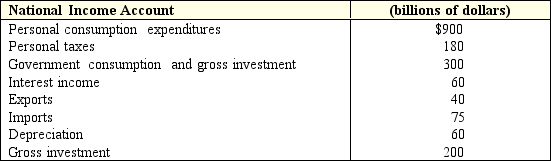
Refer to Exhibit 11-1.What is this country's net exports?
A) $35.
B) $-35.
C) $379.
D) $-379.
Refer to Exhibit 11-1.What is this country's net exports?
A) $35.
B) $-35.
C) $379.
D) $-379.
Question
Question
Question
Question
Question
Exhibit 11-1
Refer to Exhibit 11-1.What is this country's gross domestic product?
A) $1,225.
B) $1,305.
C) $1,365.
D) $1,440.
Refer to Exhibit 11-1.What is this country's gross domestic product?
A) $1,225.
B) $1,305.
C) $1,365.
D) $1,440.
Question

Unlock Deck
Sign up to unlock the cards in this deck!
Unlock Deck
Unlock Deck
1/202

Play

Full screen (f)
Deck 11: Gross Domestic Product
1
Gross domestic product is officially measured by adding together the:
A) quantity of each good and service produced by U.S. residents.
B) market value of all final goods and services produced within the borders of a nation.
C) quantity of goods and services produced by companies owned by U.S. citizens.
D) none of the above.
A) quantity of each good and service produced by U.S. residents.
B) market value of all final goods and services produced within the borders of a nation.
C) quantity of goods and services produced by companies owned by U.S. citizens.
D) none of the above.
B
2
Which of the following expenditures would be included in GDP for this year?
A) The purchase of a new car.
B) The purchase of a new tire by General Motors for a new car.
C) The purchase of a used car.
D) All of the above would be included.
A) The purchase of a new car.
B) The purchase of a new tire by General Motors for a new car.
C) The purchase of a used car.
D) All of the above would be included.
A
3
Which of the following best describes gross domestic product (GDP)?
A) The market value of all inputs used to produce all final goods and services in a nation during a period of time.
B) The market value of all final goods and services produced in a nation during a period of time.
C) The quantity of all goods and services produced in a nation during a period of time.
D) The average price of all goods and serviced produced in a nation during a period of time.
A) The market value of all inputs used to produce all final goods and services in a nation during a period of time.
B) The market value of all final goods and services produced in a nation during a period of time.
C) The quantity of all goods and services produced in a nation during a period of time.
D) The average price of all goods and serviced produced in a nation during a period of time.
B
4
Which of the following is true?
A) GDP is a "flow" concept.
B) The purchase prices of both intermediate goods and final goods are included in GDP.
C) GDP measures economic welfare.
D) GDP is a measure of changes in the general level of prices.
A) GDP is a "flow" concept.
B) The purchase prices of both intermediate goods and final goods are included in GDP.
C) GDP measures economic welfare.
D) GDP is a measure of changes in the general level of prices.
Unlock Deck
Unlock for access to all 202 flashcards in this deck.
Unlock Deck
k this deck
5
Payments to households not in exchange for goods and services currently produced are:
A) transfer payments.
B) government purchases.
C) consumption expenditures.
D) investment expenditures.
A) transfer payments.
B) government purchases.
C) consumption expenditures.
D) investment expenditures.
Unlock Deck
Unlock for access to all 202 flashcards in this deck.
Unlock Deck
k this deck
6
Which one of the following transactions would be included in GDP?
A) Ms. Kim pays $50 for a used picture frame at a neighborhood garage sale.
B) Mr. Doe donates $500 to his town's junior college scholarship fund.
C) Ms. Bartolini pays $500 to fix the front end of her car damaged in a recent accident.
D) Ms. Smith pays $5,000 to purchase 100 shares of Microsoft stock.
A) Ms. Kim pays $50 for a used picture frame at a neighborhood garage sale.
B) Mr. Doe donates $500 to his town's junior college scholarship fund.
C) Ms. Bartolini pays $500 to fix the front end of her car damaged in a recent accident.
D) Ms. Smith pays $5,000 to purchase 100 shares of Microsoft stock.
Unlock Deck
Unlock for access to all 202 flashcards in this deck.
Unlock Deck
k this deck
7
Which of the following would be counted as a final good for inclusion in GDP?
A) A piece of glass bought this year by a consumer to fix a broken window.
B) A sheet of glass produced this year by Ford for windows in a new car.
C) A tire produced this year and sold to a car maker for a new car sold this year.
D) None of the above would be counted in GDP.
A) A piece of glass bought this year by a consumer to fix a broken window.
B) A sheet of glass produced this year by Ford for windows in a new car.
C) A tire produced this year and sold to a car maker for a new car sold this year.
D) None of the above would be counted in GDP.
Unlock Deck
Unlock for access to all 202 flashcards in this deck.
Unlock Deck
k this deck
8
Which of the following purchases would be counted as a final good in the GDP calculation?
A) A family's purchase of a used car.
B) A speculator's purchase of 100 shares of Apple Computer stock.
C) A deli's purchase of bread for making its sandwiches.
D) A business's purchase of new office equipment.
A) A family's purchase of a used car.
B) A speculator's purchase of 100 shares of Apple Computer stock.
C) A deli's purchase of bread for making its sandwiches.
D) A business's purchase of new office equipment.
Unlock Deck
Unlock for access to all 202 flashcards in this deck.
Unlock Deck
k this deck
9
GDP measures the economy's production of:
A) final goods and services.
B) intermediate goods.
C) consumer goods and services.
D) capital goods.
A) final goods and services.
B) intermediate goods.
C) consumer goods and services.
D) capital goods.
Unlock Deck
Unlock for access to all 202 flashcards in this deck.
Unlock Deck
k this deck
10
Intermediate goods are goods and services used:
A) by the ultimate user.
B) by state and local governments.
C) as inputs.
D) both as inputs and final goods.
A) by the ultimate user.
B) by state and local governments.
C) as inputs.
D) both as inputs and final goods.
Unlock Deck
Unlock for access to all 202 flashcards in this deck.
Unlock Deck
k this deck
11
Which of the following spending is larger for U.S.GDP?
A) State and local government.
B) Federal government.
C) Net exports.
D) Change in business inventories.
A) State and local government.
B) Federal government.
C) Net exports.
D) Change in business inventories.
Unlock Deck
Unlock for access to all 202 flashcards in this deck.
Unlock Deck
k this deck
12
Which of the following items is included in the calculation of GDP?
A) Purchase of 100 shares of General Motors stock.
B) Purchase of a used car.
C) The value of a homemaker's services.
D) Sale of Gulf War military surplus.
E) None of the above would be included.
A) Purchase of 100 shares of General Motors stock.
B) Purchase of a used car.
C) The value of a homemaker's services.
D) Sale of Gulf War military surplus.
E) None of the above would be included.
Unlock Deck
Unlock for access to all 202 flashcards in this deck.
Unlock Deck
k this deck
13
Gross domestic product (GDP)includes:
A) intermediate as well as final goods.
B) foreign goods as well as domestically produced goods.
C) used goods sold in the current time period.
D) only final goods and services.
A) intermediate as well as final goods.
B) foreign goods as well as domestically produced goods.
C) used goods sold in the current time period.
D) only final goods and services.
Unlock Deck
Unlock for access to all 202 flashcards in this deck.
Unlock Deck
k this deck
14
GDP is a measure of:
A) domestic production.
B) changes in the general level of prices.
C) material well-being.
D) social welfare.
A) domestic production.
B) changes in the general level of prices.
C) material well-being.
D) social welfare.
Unlock Deck
Unlock for access to all 202 flashcards in this deck.
Unlock Deck
k this deck
15
Which of the following is included in GDP?
A) The value of "free" household services provided by at-home spouses rather than a paid cook, maid, and baby sitter.
B) The value of unpaid-for volunteer time.
C) The unpaid-for services provided by the natural environment, such as breathable air.
D) Net exports: (value of exports - value of imports).
A) The value of "free" household services provided by at-home spouses rather than a paid cook, maid, and baby sitter.
B) The value of unpaid-for volunteer time.
C) The unpaid-for services provided by the natural environment, such as breathable air.
D) Net exports: (value of exports - value of imports).
Unlock Deck
Unlock for access to all 202 flashcards in this deck.
Unlock Deck
k this deck
16
Gross domestic product is the sum of the purchase price multiplied by the quantity of:
A) goods and services exchanged during the period.
B) final goods and services produced domestically during the period.
C) goods and services produced domestically during the period minus the depreciation of productive assets.
D) final goods and services plus intermediate goods produced domestically during the period.
A) goods and services exchanged during the period.
B) final goods and services produced domestically during the period.
C) goods and services produced domestically during the period minus the depreciation of productive assets.
D) final goods and services plus intermediate goods produced domestically during the period.
Unlock Deck
Unlock for access to all 202 flashcards in this deck.
Unlock Deck
k this deck
17
Gross domestic product is equal to the market value of all final goods and services:
A) exchanged during a period.
B) produced domestically during a period.
C) produced by the citizens of a nation during a period.
D) produced domestically during a period minus the depreciation of productive assets.
A) exchanged during a period.
B) produced domestically during a period.
C) produced by the citizens of a nation during a period.
D) produced domestically during a period minus the depreciation of productive assets.
Unlock Deck
Unlock for access to all 202 flashcards in this deck.
Unlock Deck
k this deck
18
The GDP of a country can be derived by summing the:
A) expenditures on final goods and services produced domestically during the year.
B) payments to employees and owners of capital resources and then subtracting depreciation and indirect business taxes.
C) market value of all goods and services produced domestically during the period and then subtracting net exports from that figure.
D) income payments to the resource suppliers and net exports.
A) expenditures on final goods and services produced domestically during the year.
B) payments to employees and owners of capital resources and then subtracting depreciation and indirect business taxes.
C) market value of all goods and services produced domestically during the period and then subtracting net exports from that figure.
D) income payments to the resource suppliers and net exports.
Unlock Deck
Unlock for access to all 202 flashcards in this deck.
Unlock Deck
k this deck
19
GDP:
A) is the dollar value of all the final goods and services produced within the borders of a nation.
B) includes intermediate and final goods and services.
C) minus an allowance for depreciation of fixed capital equals GNP.
D) is a less-than-perfect measure of social well-being because it does not include exports and imports.
E) all of the above.
A) is the dollar value of all the final goods and services produced within the borders of a nation.
B) includes intermediate and final goods and services.
C) minus an allowance for depreciation of fixed capital equals GNP.
D) is a less-than-perfect measure of social well-being because it does not include exports and imports.
E) all of the above.
Unlock Deck
Unlock for access to all 202 flashcards in this deck.
Unlock Deck
k this deck
20
Which of the following expenditures would not be included in GDP?
A) Purchase of a new lawnmower.
B) Purchase of a silver cup previously sold new in 1950.
C) Purchase of a ticket to the latest movie.
D) All of the above would be counted in GDP.
A) Purchase of a new lawnmower.
B) Purchase of a silver cup previously sold new in 1950.
C) Purchase of a ticket to the latest movie.
D) All of the above would be counted in GDP.
Unlock Deck
Unlock for access to all 202 flashcards in this deck.
Unlock Deck
k this deck
21
When net exports are negative,
A) exports are greater than investment.
B) depreciation is greater than net investment.
C) imports are greater than investment.
D) exports are greater than imports.
E) imports are greater than exports.
A) exports are greater than investment.
B) depreciation is greater than net investment.
C) imports are greater than investment.
D) exports are greater than imports.
E) imports are greater than exports.
Unlock Deck
Unlock for access to all 202 flashcards in this deck.
Unlock Deck
k this deck
22
Gross domestic product (GDP)does not include:
A) used goods sold in the current time period.
B) foreign produced goods.
C) intermediate as well as final goods.
D) None of the above would be included.
A) used goods sold in the current time period.
B) foreign produced goods.
C) intermediate as well as final goods.
D) None of the above would be included.
Unlock Deck
Unlock for access to all 202 flashcards in this deck.
Unlock Deck
k this deck
23
The largest component of GDP is:
A) personal consumption expenditures.
B) government spending.
C) durable goods.
D) net exports.
E) gross private domestic investment.
A) personal consumption expenditures.
B) government spending.
C) durable goods.
D) net exports.
E) gross private domestic investment.
Unlock Deck
Unlock for access to all 202 flashcards in this deck.
Unlock Deck
k this deck
24
The unreported or illegal production of goods and services in the economy that is not counted in GDP is termed:
A) money laundering.
B) the underground economy.
C) disposable personal income.
D) indirect national income.
E) unreported capital
A) money laundering.
B) the underground economy.
C) disposable personal income.
D) indirect national income.
E) unreported capital
Unlock Deck
Unlock for access to all 202 flashcards in this deck.
Unlock Deck
k this deck
25
The market value of all final goods and services in an economy produced by resources owned by people of that economy:
A) personal income.
B) national income.
C) capital income.
D) gross national product.
E) gross domestic product.
A) personal income.
B) national income.
C) capital income.
D) gross national product.
E) gross domestic product.
Unlock Deck
Unlock for access to all 202 flashcards in this deck.
Unlock Deck
k this deck
26
Which of the following activities would be calculated as part of GDP accounts?
A) Drug trafficking.
B) Money laundry.
C) Prostitution.
D) Purchasing plastic surgery.
E) Burglary.
A) Drug trafficking.
B) Money laundry.
C) Prostitution.
D) Purchasing plastic surgery.
E) Burglary.
Unlock Deck
Unlock for access to all 202 flashcards in this deck.
Unlock Deck
k this deck
27
Which of the following would be classified as a personal consumption expenditure?
A) All of the following.
B) Your purchase of a newly constructed house
C) Your purchase of a preowned house.
D) Your purchase of one share of Microsoft stock.
E) Your purchase of this economics course.
A) All of the following.
B) Your purchase of a newly constructed house
C) Your purchase of a preowned house.
D) Your purchase of one share of Microsoft stock.
E) Your purchase of this economics course.
Unlock Deck
Unlock for access to all 202 flashcards in this deck.
Unlock Deck
k this deck
28
Depreciation or consumption of fixed capital depreciation measures:
A) net investment less gross investment.
B) the loss of productive ability due to capital intensive production.
C) capital that is wasted in the production process.
D) the value of existing capital stock used up in the production process.
E) the decline in the value of inventories caused by inflation.
A) net investment less gross investment.
B) the loss of productive ability due to capital intensive production.
C) capital that is wasted in the production process.
D) the value of existing capital stock used up in the production process.
E) the decline in the value of inventories caused by inflation.
Unlock Deck
Unlock for access to all 202 flashcards in this deck.
Unlock Deck
k this deck
29
Gross domestic product (GDP)is defined as:
A) the market value of all final goods and services produced within the borders of a nation.
B) incomes received by all a nation's households.
C) the quantity of each good and service produced by U.S. residents.
D) none of the above.
A) the market value of all final goods and services produced within the borders of a nation.
B) incomes received by all a nation's households.
C) the quantity of each good and service produced by U.S. residents.
D) none of the above.
Unlock Deck
Unlock for access to all 202 flashcards in this deck.
Unlock Deck
k this deck
30
Gross private domestic investment or simply business investment spending (I):
A) excludes all investment in the United States by foreign firms.
B) includes all capital in the United States.
C) includes net additions to the capital stock plus all new corporate stocks and bonds.
D) includes business expenditures on new factories, tools, and machinery.
A) excludes all investment in the United States by foreign firms.
B) includes all capital in the United States.
C) includes net additions to the capital stock plus all new corporate stocks and bonds.
D) includes business expenditures on new factories, tools, and machinery.
Unlock Deck
Unlock for access to all 202 flashcards in this deck.
Unlock Deck
k this deck
31
Personal consumption expenditures include:
A) all commodities that business firms buy.
B) the purchase prices paid for stocks and bonds by individual households.
C) the construction of residential housing.
D) all goods and services bought by households.
E) the corrected value of housewives' services.
A) all commodities that business firms buy.
B) the purchase prices paid for stocks and bonds by individual households.
C) the construction of residential housing.
D) all goods and services bought by households.
E) the corrected value of housewives' services.
Unlock Deck
Unlock for access to all 202 flashcards in this deck.
Unlock Deck
k this deck
32
Gross private domestic investment includes business:
A) purchases of capital goods, all new construction, and purchases of consumer durable goods.
B) purchases of capital goods, all new construction, and inventory investment.
C) purchases of capital goods, all new commercial construction, and inventory investment.
D) purchases of capital goods, all new residential construction, and inventory investment.
E) purchases of all types of durable goods, all new construction, and inventory investment.
A) purchases of capital goods, all new construction, and purchases of consumer durable goods.
B) purchases of capital goods, all new construction, and inventory investment.
C) purchases of capital goods, all new commercial construction, and inventory investment.
D) purchases of capital goods, all new residential construction, and inventory investment.
E) purchases of all types of durable goods, all new construction, and inventory investment.
Unlock Deck
Unlock for access to all 202 flashcards in this deck.
Unlock Deck
k this deck
33
The largest component of household consumption spending is expenditures on:
A) services.
B) durable goods.
C) nondurable goods.
D) food.
E) transportation.
A) services.
B) durable goods.
C) nondurable goods.
D) food.
E) transportation.
Unlock Deck
Unlock for access to all 202 flashcards in this deck.
Unlock Deck
k this deck
34
Consumption spending includes:
A) durable goods, nondurable goods, and housing.
B) durable goods, nondurable goods, and imports.
C) durable goods, services, and housing.
D) durable goods, nondurable goods, and services.
E) nondurable goods, services, and housing.
A) durable goods, nondurable goods, and housing.
B) durable goods, nondurable goods, and imports.
C) durable goods, services, and housing.
D) durable goods, nondurable goods, and services.
E) nondurable goods, services, and housing.
Unlock Deck
Unlock for access to all 202 flashcards in this deck.
Unlock Deck
k this deck
35
Payments to households not in exchange for goods and services currently produced are:
A) transfer payments.
B) government purchases.
C) consumption expenditures.
D) investment expenditures.
A) transfer payments.
B) government purchases.
C) consumption expenditures.
D) investment expenditures.
Unlock Deck
Unlock for access to all 202 flashcards in this deck.
Unlock Deck
k this deck
36
Net exports:
A) will increase if exports of goods decline.
B) will increase if imports of goods rise.
C) in our GDP accounts permit estimation of foreign ownership of American businesses.
D) include budgetary outlays of the federal government.
E) is the net effect of the foreign trade sector on GDP.
A) will increase if exports of goods decline.
B) will increase if imports of goods rise.
C) in our GDP accounts permit estimation of foreign ownership of American businesses.
D) include budgetary outlays of the federal government.
E) is the net effect of the foreign trade sector on GDP.
Unlock Deck
Unlock for access to all 202 flashcards in this deck.
Unlock Deck
k this deck
37
GDP includes:
A) the negative attributes from erosion and deforested landscape.
B) all quality improvements resulting from higher quality goods replacing inferior goods.
C) the cleaning-up expenses associated with pollution.
D) the value of leisure time.
E) the illegal activities related to the underground economy.
A) the negative attributes from erosion and deforested landscape.
B) all quality improvements resulting from higher quality goods replacing inferior goods.
C) the cleaning-up expenses associated with pollution.
D) the value of leisure time.
E) the illegal activities related to the underground economy.
Unlock Deck
Unlock for access to all 202 flashcards in this deck.
Unlock Deck
k this deck
38
Activities that are directly included in GDP accounts include:
A) the value of housework done by householders.
B) the selling of illegal drugs.
C) unreported labor in sweatshops.
D) buying a ticket to a Dodgers-Expos game on your day off.
A) the value of housework done by householders.
B) the selling of illegal drugs.
C) unreported labor in sweatshops.
D) buying a ticket to a Dodgers-Expos game on your day off.
Unlock Deck
Unlock for access to all 202 flashcards in this deck.
Unlock Deck
k this deck
39
Personal consumption expenditures:
A) represent close to two-thirds of GDP.
B) are equal to personal income minus individual taxes.
C) include durable good purchases but not nondurable good purchases.
D) do not include any intangible consumption items.
E) include all goods and services bought by the government.
A) represent close to two-thirds of GDP.
B) are equal to personal income minus individual taxes.
C) include durable good purchases but not nondurable good purchases.
D) do not include any intangible consumption items.
E) include all goods and services bought by the government.
Unlock Deck
Unlock for access to all 202 flashcards in this deck.
Unlock Deck
k this deck
40
The three components of personal consumption expenditures are:
A) durable goods, nondurable goods, and services.
B) durable goods, food, and housing.
C) durable goods, nondurable goods, and housing.
D) durable goods, services, and food.
E) durable goods, services, and transportation.
A) durable goods, nondurable goods, and services.
B) durable goods, food, and housing.
C) durable goods, nondurable goods, and housing.
D) durable goods, services, and food.
E) durable goods, services, and transportation.
Unlock Deck
Unlock for access to all 202 flashcards in this deck.
Unlock Deck
k this deck
41
The circular flow of economic activity is a model of the:
A) flow of goods, resources, payments, and expenditures between the sectors of the economy.
B) influence of government on business behavior.
C) influence of business on consumers.
D) role of unions and government in the economy.
A) flow of goods, resources, payments, and expenditures between the sectors of the economy.
B) influence of government on business behavior.
C) influence of business on consumers.
D) role of unions and government in the economy.
Unlock Deck
Unlock for access to all 202 flashcards in this deck.
Unlock Deck
k this deck
42
Economic values that are measured in units per period of time are referred to as:
A) stocks.
B) flows.
C) unit values.
D) dollars.
A) stocks.
B) flows.
C) unit values.
D) dollars.
Unlock Deck
Unlock for access to all 202 flashcards in this deck.
Unlock Deck
k this deck
43
In the circular flow model,money flows from the business sector to the household sector through the:
A) product market.
B) capital market.
C) goods market.
D) services market.
E) resource market.
A) product market.
B) capital market.
C) goods market.
D) services market.
E) resource market.
Unlock Deck
Unlock for access to all 202 flashcards in this deck.
Unlock Deck
k this deck
44
In the circular flow model,who is a seller in the factor markets and a buyer in the product markets?
A) Businesses.
B) Transnational corporations.
C) Foreign producers who export final goods and services into the U.S.
D) Households.
A) Businesses.
B) Transnational corporations.
C) Foreign producers who export final goods and services into the U.S.
D) Households.
Unlock Deck
Unlock for access to all 202 flashcards in this deck.
Unlock Deck
k this deck
45
In the circular flow model,which of the following is true?
A) Household spending flows into the factor markets.
B) Household spending flows back to households.
C) Household spending flows into product markets.
D) Dollar payments for factors of production flow into households.
A) Household spending flows into the factor markets.
B) Household spending flows back to households.
C) Household spending flows into product markets.
D) Dollar payments for factors of production flow into households.
Unlock Deck
Unlock for access to all 202 flashcards in this deck.
Unlock Deck
k this deck
46
Resources that flow through the circular flow model include all of the following except:
A) land.
B) labor.
C) capital.
D) final goods.
A) land.
B) labor.
C) capital.
D) final goods.
Unlock Deck
Unlock for access to all 202 flashcards in this deck.
Unlock Deck
k this deck
47
Gross domestic product is a measure of both the:
A) market value of a nation's capital assets (physical capital).
B) expenditures on and sales revenues derived from all goods and services exchanged during a period.
C) market value of the output produced during a period.
D) asset holdings of people and the happiness that they derived from the ownership of those assets.
A) market value of a nation's capital assets (physical capital).
B) expenditures on and sales revenues derived from all goods and services exchanged during a period.
C) market value of the output produced during a period.
D) asset holdings of people and the happiness that they derived from the ownership of those assets.
Unlock Deck
Unlock for access to all 202 flashcards in this deck.
Unlock Deck
k this deck
48
The lower portion of the circular flow model contains factor markets in which households provide:
A) labor, money, and machines.
B) savings, spending, and investment.
C) natural resources, labor, and capital.
D) output of all final goods and services produced.
A) labor, money, and machines.
B) savings, spending, and investment.
C) natural resources, labor, and capital.
D) output of all final goods and services produced.
Unlock Deck
Unlock for access to all 202 flashcards in this deck.
Unlock Deck
k this deck
49
The portion of the four-sector circular flow model which shows the flow of funds from savers to borrowers is the:
A) product market.
B) factor market.
C) savings market.
D) financial market.
A) product market.
B) factor market.
C) savings market.
D) financial market.
Unlock Deck
Unlock for access to all 202 flashcards in this deck.
Unlock Deck
k this deck
50
Which one of the following is an example of the circular flow model and shows the interdependence of households and firms?
A) Households demand their resources from the firms in the factor markets and, in turn, supply in the product market the goods and services produced by firms.
B) The firms go to the resource market to supply resources that households demand and, in turn, provide households with the goods and services produced for the product markets.
C) Households supply their resources to the firms in the factor markets and, in turn, demand in the product market the goods and services produced by the firms.
D) The firms in the factor markets pay to households in the form of wages, interest, rent and profit-for resources demanded.
E) The circuit is completed when the payments flow from households, through the product markets, and to the firms for the goods and services they demand.
A) Households demand their resources from the firms in the factor markets and, in turn, supply in the product market the goods and services produced by firms.
B) The firms go to the resource market to supply resources that households demand and, in turn, provide households with the goods and services produced for the product markets.
C) Households supply their resources to the firms in the factor markets and, in turn, demand in the product market the goods and services produced by the firms.
D) The firms in the factor markets pay to households in the form of wages, interest, rent and profit-for resources demanded.
E) The circuit is completed when the payments flow from households, through the product markets, and to the firms for the goods and services they demand.
Unlock Deck
Unlock for access to all 202 flashcards in this deck.
Unlock Deck
k this deck
51
The circular flow model represents the establishment of market value for:
A) goods and services.
B) wages and salaries.
C) profits and rents.
D) all of the above.
A) goods and services.
B) wages and salaries.
C) profits and rents.
D) all of the above.
Unlock Deck
Unlock for access to all 202 flashcards in this deck.
Unlock Deck
k this deck
52
Which one of the following statements is true?
A) Money flows from households to firms for resources.
B) Money flows from households to foreign economies for exports.
C) Money flows from government to firms for resources.
D) Money flows from foreign economies to firms for imports.
E) Money flows from firms to households for resources.
A) Money flows from households to firms for resources.
B) Money flows from households to foreign economies for exports.
C) Money flows from government to firms for resources.
D) Money flows from foreign economies to firms for imports.
E) Money flows from firms to households for resources.
Unlock Deck
Unlock for access to all 202 flashcards in this deck.
Unlock Deck
k this deck
53
If Lacy buys a smoothie at the corner store,which of the following best relates this transaction to the circular flow model?
A) Goods flow from firms and money flows from households through the product markets.
B) Resources (land, labor, or capital) flows from households, and money flows from business in the product markets.
C) Income flows from the factor markets, and goods flow into the factor markets.
D) Resources flow into households, and back into the goods and services markets.
A) Goods flow from firms and money flows from households through the product markets.
B) Resources (land, labor, or capital) flows from households, and money flows from business in the product markets.
C) Income flows from the factor markets, and goods flow into the factor markets.
D) Resources flow into households, and back into the goods and services markets.
Unlock Deck
Unlock for access to all 202 flashcards in this deck.
Unlock Deck
k this deck
54
In the circular flow model,
A) money flows from the firms to the households through the product market.
B) money flows from the households to the firms through the product market.
C) money flows from the households to the firms through the resource market.
D) money flows from the households to the firms through both the product market and the resource market.
E) resources flow to the households from the firms through the product market.
A) money flows from the firms to the households through the product market.
B) money flows from the households to the firms through the product market.
C) money flows from the households to the firms through the resource market.
D) money flows from the households to the firms through both the product market and the resource market.
E) resources flow to the households from the firms through the product market.
Unlock Deck
Unlock for access to all 202 flashcards in this deck.
Unlock Deck
k this deck
55
Which one of the following statements is true in the four-sector circular model?
A) Money flows from government to households for taxes.
B) Money flows from foreign economies to households for exports.
C) Money flows from government to firms for goods and services.
D) Money flows from firms to foreign economies for exports.
E) Money flows from households to foreign economies for resources.
A) Money flows from government to households for taxes.
B) Money flows from foreign economies to households for exports.
C) Money flows from government to firms for goods and services.
D) Money flows from firms to foreign economies for exports.
E) Money flows from households to foreign economies for resources.
Unlock Deck
Unlock for access to all 202 flashcards in this deck.
Unlock Deck
k this deck
56
Based on the circular flow model,money flows from households to businesses in:
A) factor markets.
B) product markets.
C) neither factor nor product markets.
D) both factor and product markets.
A) factor markets.
B) product markets.
C) neither factor nor product markets.
D) both factor and product markets.
Unlock Deck
Unlock for access to all 202 flashcards in this deck.
Unlock Deck
k this deck
57
Which one of the following statements is true?
A) Resources flow from the government to households.
B) Resources flow from firms to households.
C) Taxes flow from firms to the government.
D) Resource payments flow from firms to households
E) Imports flow from firms to foreign economies.
A) Resources flow from the government to households.
B) Resources flow from firms to households.
C) Taxes flow from firms to the government.
D) Resource payments flow from firms to households
E) Imports flow from firms to foreign economies.
Unlock Deck
Unlock for access to all 202 flashcards in this deck.
Unlock Deck
k this deck
58
The circular flow model assumes:
A) businesses and households own the factors of production.
B) businesses own the factors of production.
C) government owns the factors of production.
D) households own the factors of production.
E) firms, households, and the government own the factors of production.
A) businesses and households own the factors of production.
B) businesses own the factors of production.
C) government owns the factors of production.
D) households own the factors of production.
E) firms, households, and the government own the factors of production.
Unlock Deck
Unlock for access to all 202 flashcards in this deck.
Unlock Deck
k this deck
59
The lower portion of the circular flow model contains factor markets in which households provide:
A) output of all final goods and services produced.
B) savings, spending, and investment.
C) labor, money, and machines.
D) none of the above.
A) output of all final goods and services produced.
B) savings, spending, and investment.
C) labor, money, and machines.
D) none of the above.
Unlock Deck
Unlock for access to all 202 flashcards in this deck.
Unlock Deck
k this deck
60
Based on the circular flow model,goods and services flow from:
A) households to businesses in product markets.
B) businesses to households in product markets.
C) households to businesses in factor markets.
D) businesses to households in factor markets.
A) households to businesses in product markets.
B) businesses to households in product markets.
C) households to businesses in factor markets.
D) businesses to households in factor markets.
Unlock Deck
Unlock for access to all 202 flashcards in this deck.
Unlock Deck
k this deck
61
The expenditure approach to GDP accounting includes:
A) wages and salaries.
B) net exports.
C) net interest.
D) corporate profit.
E) proprietors' income.
A) wages and salaries.
B) net exports.
C) net interest.
D) corporate profit.
E) proprietors' income.
Unlock Deck
Unlock for access to all 202 flashcards in this deck.
Unlock Deck
k this deck
62
Which one of the following would count as investment in the GDP accounts?
A) Purchase of a new airplane by an airline.
B) Purchase of a U.S. government bond.
C) Purchase of 100 shares of Wal-Mart stock.
D) Purchase of an existing house.
A) Purchase of a new airplane by an airline.
B) Purchase of a U.S. government bond.
C) Purchase of 100 shares of Wal-Mart stock.
D) Purchase of an existing house.
Unlock Deck
Unlock for access to all 202 flashcards in this deck.
Unlock Deck
k this deck
63
Which one of the following statements is true?
A) Resources flow from the government to firms.
B) Taxes flow from foreign economies to the government.
C) Goods and services flow from households to foreign economies.
D) Resources flow from households to firms.
E) Resource payments flow from households to the government.
A) Resources flow from the government to firms.
B) Taxes flow from foreign economies to the government.
C) Goods and services flow from households to foreign economies.
D) Resources flow from households to firms.
E) Resource payments flow from households to the government.
Unlock Deck
Unlock for access to all 202 flashcards in this deck.
Unlock Deck
k this deck
64
Using the expenditure approach,"gross private domestic investment" is the sum of:
A) newly produced capital goods.
B) fixed investment.
C) changes in business inventories.
D) all of the above.
A) newly produced capital goods.
B) fixed investment.
C) changes in business inventories.
D) all of the above.
Unlock Deck
Unlock for access to all 202 flashcards in this deck.
Unlock Deck
k this deck
65
The expenditure approach for the calculation of GDP includes spending on:
A) consumption, investment, durable goods and exports.
B) consumption, gross private domestic investment, government spending for goods and services, and exports.
C) consumption, gross private domestic investment, government spending for goods and services, and net exports.
D) consumption, net private domestic investment, government spending for goods and services, and net exports.
E) consumption, gross private domestic investment, all government spending including transfer payments, and net exports.
A) consumption, investment, durable goods and exports.
B) consumption, gross private domestic investment, government spending for goods and services, and exports.
C) consumption, gross private domestic investment, government spending for goods and services, and net exports.
D) consumption, net private domestic investment, government spending for goods and services, and net exports.
E) consumption, gross private domestic investment, all government spending including transfer payments, and net exports.
Unlock Deck
Unlock for access to all 202 flashcards in this deck.
Unlock Deck
k this deck
66
All final goods and services that make up GDP can be expressed in the form:
A) GDP = C + I - G + (X + M).
B) GDP = C + I + G + (X + M).
C) GDP = C + I + G + (X - M).
D) GDP = C + I + (X - M).
E) GDP = C + I + G.
A) GDP = C + I - G + (X + M).
B) GDP = C + I + G + (X + M).
C) GDP = C + I + G + (X - M).
D) GDP = C + I + (X - M).
E) GDP = C + I + G.
Unlock Deck
Unlock for access to all 202 flashcards in this deck.
Unlock Deck
k this deck
67
Using the expenditure approach,total spending by households for durable goods,nondurable goods,and services is a category called:
A) gross private domestic investment.
B) capital consumption allowance.
C) personal consumption expenditures.
D) household investment.
A) gross private domestic investment.
B) capital consumption allowance.
C) personal consumption expenditures.
D) household investment.
Unlock Deck
Unlock for access to all 202 flashcards in this deck.
Unlock Deck
k this deck
68
The largest component of GDP as measured by the expenditure approach is:
A) wages and salary earnings.
B) personal consumption.
C) net profits of corporations.
D) gross private investment.
A) wages and salary earnings.
B) personal consumption.
C) net profits of corporations.
D) gross private investment.
Unlock Deck
Unlock for access to all 202 flashcards in this deck.
Unlock Deck
k this deck
69
Your purchase of a Gucci purse made in Italy would be classified as:
A) both c and d
B) an investment good.
C) a durable good.
D) an import.
E) an export.
A) both c and d
B) an investment good.
C) a durable good.
D) an import.
E) an export.
Unlock Deck
Unlock for access to all 202 flashcards in this deck.
Unlock Deck
k this deck
70
Which of the following would count as an investment expenditure in the GDP expenditures approach?
A) General Motors hires 10 electrical engineers.
B) Boeing purchases a new metal stretching machine used to produce airplane wings.
C) Ms. Quantum buys 100 shares of Microsoft stock.
D) A large corporation spends $10,000 per month on long-distance phone charges.
A) General Motors hires 10 electrical engineers.
B) Boeing purchases a new metal stretching machine used to produce airplane wings.
C) Ms. Quantum buys 100 shares of Microsoft stock.
D) A large corporation spends $10,000 per month on long-distance phone charges.
Unlock Deck
Unlock for access to all 202 flashcards in this deck.
Unlock Deck
k this deck
71
If net exports are a negative number,then:
A) we are not buying enough exports.
B) we are buying too many exports.
C) GDP will underestimated when measured using the expenditure approach.
D) we are exporting more than we are importing.
E) we are exporting less than we are importing.
A) we are not buying enough exports.
B) we are buying too many exports.
C) GDP will underestimated when measured using the expenditure approach.
D) we are exporting more than we are importing.
E) we are exporting less than we are importing.
Unlock Deck
Unlock for access to all 202 flashcards in this deck.
Unlock Deck
k this deck
72
Gross private domestic investment does not include:
A) spending for new houses.
B) spending to build up inventories.
C) unintentional inventory investment.
D) spending on employee salaries.
E) spending for office supplies.
A) spending for new houses.
B) spending to build up inventories.
C) unintentional inventory investment.
D) spending on employee salaries.
E) spending for office supplies.
Unlock Deck
Unlock for access to all 202 flashcards in this deck.
Unlock Deck
k this deck
73
Which of the following would be included in the government expenditures component of GDP?
A) The export of 100 fighter jets to Japan
B) Construction costs of a new public school building
C) Food stamps used by the Smith family
D) A $1,000 check issued by the federal government as part of the Pell Grant program to help college students pay for school
A) The export of 100 fighter jets to Japan
B) Construction costs of a new public school building
C) Food stamps used by the Smith family
D) A $1,000 check issued by the federal government as part of the Pell Grant program to help college students pay for school
Unlock Deck
Unlock for access to all 202 flashcards in this deck.
Unlock Deck
k this deck
74
Exhibit 11-1
Refer to Exhibit 11-1.What is this country's net exports?
A) $35.
B) $-35.
C) $379.
D) $-379.
Refer to Exhibit 11-1.What is this country's net exports?
A) $35.
B) $-35.
C) $379.
D) $-379.
Unlock Deck
Unlock for access to all 202 flashcards in this deck.
Unlock Deck
k this deck
75
In the four-sector circular flow model,households will use their incomes to do all but which one of the following?
A) Save.
B) Pay taxes.
C) Buy domestic goods and services.
D) Buy imported goods and services.
E) Invest.
A) Save.
B) Pay taxes.
C) Buy domestic goods and services.
D) Buy imported goods and services.
E) Invest.
Unlock Deck
Unlock for access to all 202 flashcards in this deck.
Unlock Deck
k this deck
76
Which one of the following is not a component of GDP,as measured using the expenditure approach?
A) Personal consumption.
B) Exports.
C) Durable goods.
D) Government spending.
E) Interest.
A) Personal consumption.
B) Exports.
C) Durable goods.
D) Government spending.
E) Interest.
Unlock Deck
Unlock for access to all 202 flashcards in this deck.
Unlock Deck
k this deck
77
GDP does count:
A) state and local government purchases.
B) spending for new homes.
C) changes in inventories.
D) none of the above.
E) all of the above.
A) state and local government purchases.
B) spending for new homes.
C) changes in inventories.
D) none of the above.
E) all of the above.
Unlock Deck
Unlock for access to all 202 flashcards in this deck.
Unlock Deck
k this deck
78
To construct GDP,exports:
A) and imports must be subtracted.
B) and imports must be included.
C) must be included and imports must be ignored.
D) must be included and imports must be subtracted.
A) and imports must be subtracted.
B) and imports must be included.
C) must be included and imports must be ignored.
D) must be included and imports must be subtracted.
Unlock Deck
Unlock for access to all 202 flashcards in this deck.
Unlock Deck
k this deck
79
Exhibit 11-1
Refer to Exhibit 11-1.What is this country's gross domestic product?
A) $1,225.
B) $1,305.
C) $1,365.
D) $1,440.
Refer to Exhibit 11-1.What is this country's gross domestic product?
A) $1,225.
B) $1,305.
C) $1,365.
D) $1,440.
Unlock Deck
Unlock for access to all 202 flashcards in this deck.
Unlock Deck
k this deck
80
Durable and nondurable goods and services lumped together in the expenditure approach to measuring GDP are called:
A) Personal consumption.
B) Gross private domestic investment.
C) Government spending.
D) Inventory.
E) Employee compensation.
A) Personal consumption.
B) Gross private domestic investment.
C) Government spending.
D) Inventory.
E) Employee compensation.
Unlock Deck
Unlock for access to all 202 flashcards in this deck.
Unlock Deck
k this deck
Unlock Deck
Unlock for access to all 202 flashcards in this deck.






