







 Chat with AI

Deck 10: Bacterial Diversity
Full screen (f)

Question

Question
Question
Question
Question
Question
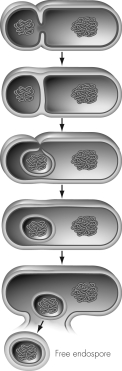
Which of the following most likely preceded the division shown?
A) Nutrients became depleted.
B) Environmental temperature decreased to 10oC.
C) Nutrient availability increased.
D) Environmental moisture increased.
A) Nutrients became depleted.
B) Environmental temperature decreased to 10oC.
C) Nutrient availability increased.
D) Environmental moisture increased.
Question
Question
Question
Question
Question
Question
Question
Question
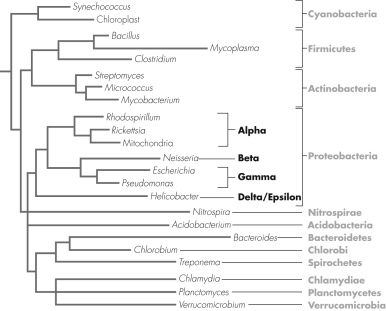
Using the figure shown,which genus is most closely related to Chlamydia?
A) Treponema
B) Verrucomicrobium
C) Clostridium
D) Pseudomonas
A) Treponema
B) Verrucomicrobium
C) Clostridium
D) Pseudomonas
Question
Question
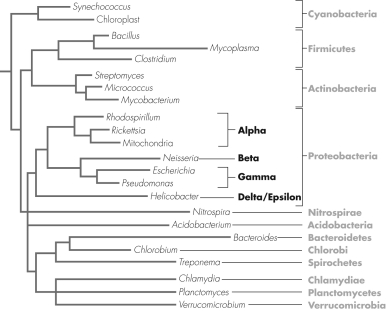
The evolutionary relationships in this figure were determined by
A) using fossil records of bacteria.
B) sequencing and comparing ribosomal RNA.
C) comparing phenotypic differences between cells.
D) determining which bacteria are able to interbreed.
A) using fossil records of bacteria.
B) sequencing and comparing ribosomal RNA.
C) comparing phenotypic differences between cells.
D) determining which bacteria are able to interbreed.
Question
Question
Question
Question
Question
What internal structure is indicated by arrows on this figure?

A) cilia
B) flagella
C) mitochondria
D) nucleus
A) cilia
B) flagella
C) mitochondria
D) nucleus
Question
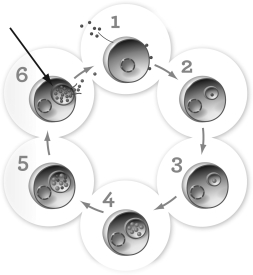
The structure highlighted with an arrow in step 6 of this figure is best described as a
A) nucleus.
B) lysosome.
C) vacuole.
D) mitochondrion.
A) nucleus.
B) lysosome.
C) vacuole.
D) mitochondrion.
Question
This figure shows two distinctive life stages associated with a bacteria that
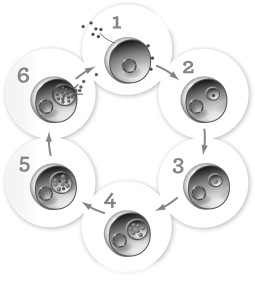
A) has absent or diminished cell walls.
B) forms filamentous strands in marine environments.
C) causes syphilis.
D) produces oxygen.
A) has absent or diminished cell walls.
B) forms filamentous strands in marine environments.
C) causes syphilis.
D) produces oxygen.
Question
Question
Question
Question
Question
Question
Question
Question
Question
Question
Question
Question
Question
Question
Question
Question
Question
Question
Question
Question
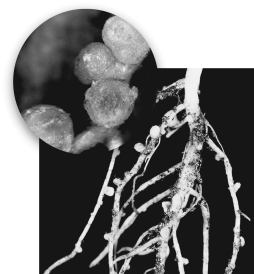
The figure of legume roots shown indicates a relationship between legumes and bacteria.Describe this relationship and how both partners benefit from the relationship.
Question
Question
The bacterial cell type shown is an example of a(n)________.

Question
Question
Question
Question
Question
Question
Question
Question
Question

Unlock Deck
Sign up to unlock the cards in this deck!
Unlock Deck
Unlock Deck
1/54

Play

Full screen (f)
Deck 10: Bacterial Diversity
1
A soil sample taken shortly after a large chemical spill has occurred reveals only a few living bacteria.Six months later,a second sample from the same site reveals only a single bacterial species,which is present in high numbers.What may have caused this change?
A) This bacterial species was most likely left at the site by the original sampling equipment.
B) Animals passing through the area most likely deposited fecal matter full of microbiota.
C) The bacterial species found in high numbers contains at least one gene that provides a competitive advantage.
D) The single bacterial species must have been within the gut of a shelter species.
A) This bacterial species was most likely left at the site by the original sampling equipment.
B) Animals passing through the area most likely deposited fecal matter full of microbiota.
C) The bacterial species found in high numbers contains at least one gene that provides a competitive advantage.
D) The single bacterial species must have been within the gut of a shelter species.
C
2
Which of the following statements most accurately describes Actinobacteria?
A) Most have an acid-fast property associated with unusual cell wall lipids that also protect them from host defenses and antibiotics.
B) All Actinobacteria are considered to be pathogens in humans or other animals.
C) Most Actinobacteria are nonpathogenic in humans, but cause serious diseases in other animals.
D) Many Actinobacteria produce endospores that allow them to survive for thousands of years.
A) Most have an acid-fast property associated with unusual cell wall lipids that also protect them from host defenses and antibiotics.
B) All Actinobacteria are considered to be pathogens in humans or other animals.
C) Most Actinobacteria are nonpathogenic in humans, but cause serious diseases in other animals.
D) Many Actinobacteria produce endospores that allow them to survive for thousands of years.
A
3
Your friend,Miguel,discovers a new bacterium and uses this bacterium to develop a popular new cheese with a taste similar to Swiss cheese.He is not willing to share his secret to success,but you suspect the bacteria he is using is a(n)
A) Firmicutes.
B) Actinobacteria.
C) cyanobacteria.
D) spirochete.
A) Firmicutes.
B) Actinobacteria.
C) cyanobacteria.
D) spirochete.
B
4
Which one of the following diseases is NOT caused by Actinobacteria?
A) tuberculosis
B) leprosy
C) diphtheria
D) botulism
A) tuberculosis
B) leprosy
C) diphtheria
D) botulism
Unlock Deck
Unlock for access to all 54 flashcards in this deck.
Unlock Deck
k this deck
5
How can some Firmicutes persist in the environment for centuries?
A) Their unique cell shapes reduce surface area to prevent desiccation.
B) They form dormant endospores that remain viable for long periods of time.
C) They are able to slow their metabolism in vegetative cells when nutrients are depleted.
D) They produce a thick waxy coating when the environment becomes dry.
A) Their unique cell shapes reduce surface area to prevent desiccation.
B) They form dormant endospores that remain viable for long periods of time.
C) They are able to slow their metabolism in vegetative cells when nutrients are depleted.
D) They produce a thick waxy coating when the environment becomes dry.
Unlock Deck
Unlock for access to all 54 flashcards in this deck.
Unlock Deck
k this deck
6
Which of the following most likely preceded the division shown?
A) Nutrients became depleted.
B) Environmental temperature decreased to 10oC.
C) Nutrient availability increased.
D) Environmental moisture increased.
A) Nutrients became depleted.
B) Environmental temperature decreased to 10oC.
C) Nutrient availability increased.
D) Environmental moisture increased.
Unlock Deck
Unlock for access to all 54 flashcards in this deck.
Unlock Deck
k this deck
7
An environmental sample from the ocean contains phototrophic bacteria that produce oxygen.How would you classify these bacteria?
A) Information about the cell wall would be required to determine whether these bacteria are Gram positive or Gram negative.
B) These bacteria must be cyanobacteria based on their production of oxygen.
C) It is highly probable that these bacteria are Gram-negative bacteria based on their presence in a marine environment.
D) These bacteria must be chlamydia found within unicellular organisms.
A) Information about the cell wall would be required to determine whether these bacteria are Gram positive or Gram negative.
B) These bacteria must be cyanobacteria based on their production of oxygen.
C) It is highly probable that these bacteria are Gram-negative bacteria based on their presence in a marine environment.
D) These bacteria must be chlamydia found within unicellular organisms.
Unlock Deck
Unlock for access to all 54 flashcards in this deck.
Unlock Deck
k this deck
8
Which of the following pathogens would most likely thrive in a growth media with an extremely low pH?
A) Haemophilus influenzae
B) Neisseria gonorrhoeae
C) Moraxella catarrhalis
D) Helicobacter pylori
A) Haemophilus influenzae
B) Neisseria gonorrhoeae
C) Moraxella catarrhalis
D) Helicobacter pylori
Unlock Deck
Unlock for access to all 54 flashcards in this deck.
Unlock Deck
k this deck
9
Which of the following is NOT an example of a positive role that bacteria play in an ecosystem?
A) fixation of carbon dioxide into biomass
B) oxygen production
C) breakdown of pollutants
D) pathogenic relationship with humans
A) fixation of carbon dioxide into biomass
B) oxygen production
C) breakdown of pollutants
D) pathogenic relationship with humans
Unlock Deck
Unlock for access to all 54 flashcards in this deck.
Unlock Deck
k this deck
10
Which of the following characteristics is associated with bacteria in the phylum Firmicutes and most likely helps them survive dryness?
A) a thick waxy coat that excludes Gram stain
B) horizontal gene transfer between two cells
C) thick cell walls with multiple layers of peptidoglycan
D) an ability to ferment sugars to lactic acid
A) a thick waxy coat that excludes Gram stain
B) horizontal gene transfer between two cells
C) thick cell walls with multiple layers of peptidoglycan
D) an ability to ferment sugars to lactic acid
Unlock Deck
Unlock for access to all 54 flashcards in this deck.
Unlock Deck
k this deck
11
Which of the following does NOT accurately describe Pseudomonas aeruginosa?
A) causes opportunist infections in human surgical wounds
B) may form biofilms on pulmonary lining of cystic fibrosis patients
C) commonly grows in soil as a decomposer
D) may infect fleas, which transmit P. aeruginosa to humans
A) causes opportunist infections in human surgical wounds
B) may form biofilms on pulmonary lining of cystic fibrosis patients
C) commonly grows in soil as a decomposer
D) may infect fleas, which transmit P. aeruginosa to humans
Unlock Deck
Unlock for access to all 54 flashcards in this deck.
Unlock Deck
k this deck
12
Which of the following is a characteristic found in all Enterobacteria?
A) a cell wall that stains Gram positive
B) facultative anaerobic rods
C) motility provided by flagella
D) obligate aerobes
A) a cell wall that stains Gram positive
B) facultative anaerobic rods
C) motility provided by flagella
D) obligate aerobes
Unlock Deck
Unlock for access to all 54 flashcards in this deck.
Unlock Deck
k this deck
13
How is it possible for humans to use some Proteobacteria,such as Geobacter species,to generate electricity?
A) Geobacter species use lipopolysaccharide, or LPS, within their outer membrane to store energy that can be harnessed.
B) Geobacter species transfer electrons to electrodes in fuel cells because they transfer electrons to iron or magnesium.
C) Geobacter species are heavily flagellated and display swarming behavior that generates electricity.
D) Geobacter species produce gases during fermentation of carbohydrates, and these gases are used in fuel cells.
A) Geobacter species use lipopolysaccharide, or LPS, within their outer membrane to store energy that can be harnessed.
B) Geobacter species transfer electrons to electrodes in fuel cells because they transfer electrons to iron or magnesium.
C) Geobacter species are heavily flagellated and display swarming behavior that generates electricity.
D) Geobacter species produce gases during fermentation of carbohydrates, and these gases are used in fuel cells.
Unlock Deck
Unlock for access to all 54 flashcards in this deck.
Unlock Deck
k this deck
14
Using the figure shown,which genus is most closely related to Chlamydia?
A) Treponema
B) Verrucomicrobium
C) Clostridium
D) Pseudomonas
A) Treponema
B) Verrucomicrobium
C) Clostridium
D) Pseudomonas
Unlock Deck
Unlock for access to all 54 flashcards in this deck.
Unlock Deck
k this deck
15
A bacterial disease previously known to only infect dogs begins to cause respiratory infections in humans who are in close contact with infected dogs.Which of the following explanations most likely explains the emergence of this new human pathogen?
A) The genome of the bacterium changed through horizontal gene transfer within the microbiota of the dog.
B) There was a mutation in the human genome that allowed the bacterium to attack human cells more vigorously.
C) The bacterium became infected by a mutation-inducing virus transmitted through flea bites on the dog.
D) The bacterium forms dormant endospores that remain in the environment even after the infected dogs are removed.
A) The genome of the bacterium changed through horizontal gene transfer within the microbiota of the dog.
B) There was a mutation in the human genome that allowed the bacterium to attack human cells more vigorously.
C) The bacterium became infected by a mutation-inducing virus transmitted through flea bites on the dog.
D) The bacterium forms dormant endospores that remain in the environment even after the infected dogs are removed.
Unlock Deck
Unlock for access to all 54 flashcards in this deck.
Unlock Deck
k this deck
16
The evolutionary relationships in this figure were determined by
A) using fossil records of bacteria.
B) sequencing and comparing ribosomal RNA.
C) comparing phenotypic differences between cells.
D) determining which bacteria are able to interbreed.
A) using fossil records of bacteria.
B) sequencing and comparing ribosomal RNA.
C) comparing phenotypic differences between cells.
D) determining which bacteria are able to interbreed.
Unlock Deck
Unlock for access to all 54 flashcards in this deck.
Unlock Deck
k this deck
17
Which of the following statements would most likely indicate an isolate is a Gram-positive bacterium and excludes other bacteria?
A) The isolate was found in a soil sample.
B) The isolate forms dormant endospores.
C) The isolate is an intracellular pathogen.
D) The isolate produces oxygen.
A) The isolate was found in a soil sample.
B) The isolate forms dormant endospores.
C) The isolate is an intracellular pathogen.
D) The isolate produces oxygen.
Unlock Deck
Unlock for access to all 54 flashcards in this deck.
Unlock Deck
k this deck
18
There are multiple causative agents of pneumonia.Which of the following pairs below include two bacterial species known to cause pneumonia?
A) Haemophilus influenzae and Moraxella catarrhalis
B) Neisseria gonorrhoeae and Vibrio cholera
C) Vibrio parahaemolyticus and Bordetella pertussis
D) Helicobacter pylori and Francisella tularensis
A) Haemophilus influenzae and Moraxella catarrhalis
B) Neisseria gonorrhoeae and Vibrio cholera
C) Vibrio parahaemolyticus and Bordetella pertussis
D) Helicobacter pylori and Francisella tularensis
Unlock Deck
Unlock for access to all 54 flashcards in this deck.
Unlock Deck
k this deck
19
The mycelia of Streptomyces and other actinomycetes are known to produce
A) lactic acid.
B) endospores.
C) antibiotics.
D) statins.
A) lactic acid.
B) endospores.
C) antibiotics.
D) statins.
Unlock Deck
Unlock for access to all 54 flashcards in this deck.
Unlock Deck
k this deck
20
Which of the following species causes an illness that can be prevented by immunization?
A) Bordetella pertussis
B) Neisseria gonorrhoeae
C) Vibrio cholera
D) Helicobacter pylori
A) Bordetella pertussis
B) Neisseria gonorrhoeae
C) Vibrio cholera
D) Helicobacter pylori
Unlock Deck
Unlock for access to all 54 flashcards in this deck.
Unlock Deck
k this deck
21
What internal structure is indicated by arrows on this figure?
A) cilia
B) flagella
C) mitochondria
D) nucleus
A) cilia
B) flagella
C) mitochondria
D) nucleus
Unlock Deck
Unlock for access to all 54 flashcards in this deck.
Unlock Deck
k this deck
22
The structure highlighted with an arrow in step 6 of this figure is best described as a
A) nucleus.
B) lysosome.
C) vacuole.
D) mitochondrion.
A) nucleus.
B) lysosome.
C) vacuole.
D) mitochondrion.
Unlock Deck
Unlock for access to all 54 flashcards in this deck.
Unlock Deck
k this deck
23
This figure shows two distinctive life stages associated with a bacteria that
A) has absent or diminished cell walls.
B) forms filamentous strands in marine environments.
C) causes syphilis.
D) produces oxygen.
A) has absent or diminished cell walls.
B) forms filamentous strands in marine environments.
C) causes syphilis.
D) produces oxygen.
Unlock Deck
Unlock for access to all 54 flashcards in this deck.
Unlock Deck
k this deck
24
A long,tight,spiral-shaped bacteria is found in the gut of termites.This bacteria is most likely a(n)
A) enterobacteria and a pathogen.
B) chlamydia and an intracellular parasite.
C) spirochete and a symbiont.
D) cyanobacteria and a pathogen.
A) enterobacteria and a pathogen.
B) chlamydia and an intracellular parasite.
C) spirochete and a symbiont.
D) cyanobacteria and a pathogen.
Unlock Deck
Unlock for access to all 54 flashcards in this deck.
Unlock Deck
k this deck
25
Trachoma,an ancient eye disease,is caused by
A) Borrelia burgdorferi.
B) Yersinia pestis.
C) Moraxella catarrhalis.
D) Chlamydia trachomatis.
A) Borrelia burgdorferi.
B) Yersinia pestis.
C) Moraxella catarrhalis.
D) Chlamydia trachomatis.
Unlock Deck
Unlock for access to all 54 flashcards in this deck.
Unlock Deck
k this deck
26
The most abundant phototrophs in the ocean are single-celled and include the genera
A) Treponema and Chlamydia.
B) Synechococcus and Prochlorococcus.
C) Merismopedia and Nostoc.
D) Oscillatoria and Campylobacter.
A) Treponema and Chlamydia.
B) Synechococcus and Prochlorococcus.
C) Merismopedia and Nostoc.
D) Oscillatoria and Campylobacter.
Unlock Deck
Unlock for access to all 54 flashcards in this deck.
Unlock Deck
k this deck
27
CASE HISTORY
Michael,45 years old,is a cook at a fast-food restaurant in Rome,Georgia.He went to see his physician because he was feeling fatigued,was unable to sleep,had lost his appetite,and had been coughing for several weeks.His sputum (material coughed from deep in the lung)contained acid-fast bacilli,and a chest X-ray revealed scattered,small (1-5 mm)granulomas (nodules of inflammation)throughout both lobes of the lung.The physician diagnosed Michael with secondary tuberculosis.Secondary tuberculosis is caused by bacteria reactivated from old lesions in which bacteria have persisted in a dormant state.The causative bacterium is Mycobacterium tuberculosis,a facultative intracellular pathogen that infects only humans and is transmitted through respiratory droplets.Michael was placed in isolation and started on a long-term,four-drug treatment regimen consisting of isoniazid (fatty acid synthesis inhibitor),rifampin (transcription inhibitor),pyrazinamide (fatty acid synthesis inhibitor),and streptomycin (protein synthesis inhibitor).The four-drug therapy continued for two months,followed by four months with isoniazid and rifampin only.Michael responded well to treatment.Luckily,he was not infected with one of the highly dangerous multidrug-resistant strains (MDr-tB).
Mycobacterium tuberculosis is a member of the Actinobacterium,which causes disease in humans,though other members of this group are environmental microorganisms and some produce useful antibiotics.Which other Actinobacterium is a pathogen of humans?
A) Corynebacterium diphtheria
B) Propionibacterium freudenreichii
C) Streptomyces coelicolor
D) Actinomyces israelii
Michael,45 years old,is a cook at a fast-food restaurant in Rome,Georgia.He went to see his physician because he was feeling fatigued,was unable to sleep,had lost his appetite,and had been coughing for several weeks.His sputum (material coughed from deep in the lung)contained acid-fast bacilli,and a chest X-ray revealed scattered,small (1-5 mm)granulomas (nodules of inflammation)throughout both lobes of the lung.The physician diagnosed Michael with secondary tuberculosis.Secondary tuberculosis is caused by bacteria reactivated from old lesions in which bacteria have persisted in a dormant state.The causative bacterium is Mycobacterium tuberculosis,a facultative intracellular pathogen that infects only humans and is transmitted through respiratory droplets.Michael was placed in isolation and started on a long-term,four-drug treatment regimen consisting of isoniazid (fatty acid synthesis inhibitor),rifampin (transcription inhibitor),pyrazinamide (fatty acid synthesis inhibitor),and streptomycin (protein synthesis inhibitor).The four-drug therapy continued for two months,followed by four months with isoniazid and rifampin only.Michael responded well to treatment.Luckily,he was not infected with one of the highly dangerous multidrug-resistant strains (MDr-tB).
Mycobacterium tuberculosis is a member of the Actinobacterium,which causes disease in humans,though other members of this group are environmental microorganisms and some produce useful antibiotics.Which other Actinobacterium is a pathogen of humans?
A) Corynebacterium diphtheria
B) Propionibacterium freudenreichii
C) Streptomyces coelicolor
D) Actinomyces israelii
Unlock Deck
Unlock for access to all 54 flashcards in this deck.
Unlock Deck
k this deck
28
A blue-green bloom of cyanobacteria leads to an ocean beach closure.What is the primary concern?
A) Cyanobacteria indicate the presence of fecal matter in the water, which could lead to intestinal illnesses.
B) Cyanobacteria are frequently pathogenic and could infect swimming humans.
C) Liver-damaging toxins produced by cyanobacteria could affect humans who come in contact with the water.
D) Cyanobacteria consume oxygen in the water, and fish begin accumulating toxins as oxygen levels drop.
A) Cyanobacteria indicate the presence of fecal matter in the water, which could lead to intestinal illnesses.
B) Cyanobacteria are frequently pathogenic and could infect swimming humans.
C) Liver-damaging toxins produced by cyanobacteria could affect humans who come in contact with the water.
D) Cyanobacteria consume oxygen in the water, and fish begin accumulating toxins as oxygen levels drop.
Unlock Deck
Unlock for access to all 54 flashcards in this deck.
Unlock Deck
k this deck
29
A tissue sample from a woman's reproductive tract reveals human cells that contain growing and dividing reticulate bodies with netlike chromosomes.Which of the following bacterial species has most likely infected the human cells?
A) Treponema pallidum
B) Helicobacter pylori
C) Chlamydia trachomatis
D) Coxiella burnetii
A) Treponema pallidum
B) Helicobacter pylori
C) Chlamydia trachomatis
D) Coxiella burnetii
Unlock Deck
Unlock for access to all 54 flashcards in this deck.
Unlock Deck
k this deck
30
Cyanobacteria and the bacterial genus Rhizobium are both known to contribute to the environment by
A) producing oxygen.
B) fixing nitrogen.
C) decomposing dead matter.
D) producing antibiotics.
A) producing oxygen.
B) fixing nitrogen.
C) decomposing dead matter.
D) producing antibiotics.
Unlock Deck
Unlock for access to all 54 flashcards in this deck.
Unlock Deck
k this deck
31
During infertility testing,a young woman is found to have pelvic inflammatory disease,or PID,from persistent inflammation of her fallopian tubes.Although she has never been treated for any sexually transmitted disease,her physician suspects she has an untreated bacterial infection,which is relatively common in the United States.Which bacteria is most likely causing her infection?
A) Borrelia burgdorferi
B) Chlamydia trachomatis
C) Borrelia recurrentis
D) Haemophilus influenza
A) Borrelia burgdorferi
B) Chlamydia trachomatis
C) Borrelia recurrentis
D) Haemophilus influenza
Unlock Deck
Unlock for access to all 54 flashcards in this deck.
Unlock Deck
k this deck
32
A black Labrador puppy goes swimming in a nutrient-rich pond one summer afternoon.Within hours the puppy begins vomiting and showing signs of damage to his nervous system.The puppy's owner takes him to a local veterinarian and is told the puppy also has liver damage.Upon questioning,the owner recalls the pond water the puppy went swimming in was green and cloudy.The veterinarian suspects the puppy was exposed to
A) elementary bodies produced by a Chlamydia species.
B) toxins produced by a spirochete.
C) reticulate bodies produced by a Chlamydia species.
D) toxins produced by a cyanobacteria.
A) elementary bodies produced by a Chlamydia species.
B) toxins produced by a spirochete.
C) reticulate bodies produced by a Chlamydia species.
D) toxins produced by a cyanobacteria.
Unlock Deck
Unlock for access to all 54 flashcards in this deck.
Unlock Deck
k this deck
33
Which of the following statements accurately describes the transmission of one Chlamydia species in human populations?
A) Reticulate bodies in secretions from one individual attach to membranes in his or her sexual partner.
B) Reticulate bodies remain dormant in the environment for years and attach to host cells when humans come in contact with them.
C) Elementary bodies undergo replication within the gut of fleas and infect human cells when fleas bite humans.
D) Reticulate bodies replicate inside host cells and develop into elementary bodies that are released when cells lyse.
A) Reticulate bodies in secretions from one individual attach to membranes in his or her sexual partner.
B) Reticulate bodies remain dormant in the environment for years and attach to host cells when humans come in contact with them.
C) Elementary bodies undergo replication within the gut of fleas and infect human cells when fleas bite humans.
D) Reticulate bodies replicate inside host cells and develop into elementary bodies that are released when cells lyse.
Unlock Deck
Unlock for access to all 54 flashcards in this deck.
Unlock Deck
k this deck
34
How is the specialized shape of a spirochete advantageous?
A) The shape of a spirochete allows it to rotate and move in a corkscrew motion through viscous environments.
B) The shape of a spirochete allows spirochetes to divide more rapidly than cells of other shapes.
C) The shape of a spirochete prevents osmotic shock, which is experienced by cocci and rods only.
D) The shape of a spirochete provides protection from phagocytosis and antibiotics.
A) The shape of a spirochete allows it to rotate and move in a corkscrew motion through viscous environments.
B) The shape of a spirochete allows spirochetes to divide more rapidly than cells of other shapes.
C) The shape of a spirochete prevents osmotic shock, which is experienced by cocci and rods only.
D) The shape of a spirochete provides protection from phagocytosis and antibiotics.
Unlock Deck
Unlock for access to all 54 flashcards in this deck.
Unlock Deck
k this deck
35
Which of the following is considered metabolically INACTIVE?
A) an elementary body of Chlamydia trachomatis
B) a reticulate body of Chlamydophila pneumonia
C) a vegetative Bacillus anthracis cell
D) a biofilm containing Bacteroides
A) an elementary body of Chlamydia trachomatis
B) a reticulate body of Chlamydophila pneumonia
C) a vegetative Bacillus anthracis cell
D) a biofilm containing Bacteroides
Unlock Deck
Unlock for access to all 54 flashcards in this deck.
Unlock Deck
k this deck
36
Which of the following causative agents and diseases are correctly paired?
A) Borrelia burgdorferi; Lyme disease
B) Treponema pallidum; yaws
C) Treponema pallidum pertenue; relapsing fever
D) Borrelia recurrentis; syphilis
A) Borrelia burgdorferi; Lyme disease
B) Treponema pallidum; yaws
C) Treponema pallidum pertenue; relapsing fever
D) Borrelia recurrentis; syphilis
Unlock Deck
Unlock for access to all 54 flashcards in this deck.
Unlock Deck
k this deck
37
What is the relationship between plants and cyanobacteria?
A) Plants produce chlorophylls a and b and pass these pigments on to cyanobacteria.
B) Cyanobacteria use oxygen produced by plants and, in return, produce carbon dioxide for use in plants.
C) Some cyanobacteria form mutualistic relationships with plants, called lichens.
D) Cyanobacteria that were internalized and not broken down by plant cells formed chloroplasts.
A) Plants produce chlorophylls a and b and pass these pigments on to cyanobacteria.
B) Cyanobacteria use oxygen produced by plants and, in return, produce carbon dioxide for use in plants.
C) Some cyanobacteria form mutualistic relationships with plants, called lichens.
D) Cyanobacteria that were internalized and not broken down by plant cells formed chloroplasts.
Unlock Deck
Unlock for access to all 54 flashcards in this deck.
Unlock Deck
k this deck
38
Spirochete cells are unique because they possess
A) periplasmic flagella.
B) multiple nuclei.
C) a thick outer sheath of lipopolysaccharides.
D) two distinctive life stages.
A) periplasmic flagella.
B) multiple nuclei.
C) a thick outer sheath of lipopolysaccharides.
D) two distinctive life stages.
Unlock Deck
Unlock for access to all 54 flashcards in this deck.
Unlock Deck
k this deck
39
A 23-year-old man visited a community clinic after receiving notification from the health department that a previous sexual partner was diagnosed with a sexually transmitted disease.Although he does not recall having any ulcers,he currently has a macular rash on his trunk,arms,hands,and feet.He is tested for evidence of
A) Treponema pallidum pallidum.
B) Treponema pallidum pertenue.
C) Chlamydia trachomatis.
D) Neisseria gonorrhoeae.
A) Treponema pallidum pallidum.
B) Treponema pallidum pertenue.
C) Chlamydia trachomatis.
D) Neisseria gonorrhoeae.
Unlock Deck
Unlock for access to all 54 flashcards in this deck.
Unlock Deck
k this deck
40
Which of the following statements correctly describes a lichen?
A) a mutualistic relationship in which spirochetes provide a scaffold for fungal growth
B) a mutualistic relationship in which cyanobacteria provide nitrogen to fungi
C) a parasitic relationship in which proteobacteria ferment sugars produced by fungi
D) a commensal relationship between Firmicutes and fungi that provides no benefits for either organism
A) a mutualistic relationship in which spirochetes provide a scaffold for fungal growth
B) a mutualistic relationship in which cyanobacteria provide nitrogen to fungi
C) a parasitic relationship in which proteobacteria ferment sugars produced by fungi
D) a commensal relationship between Firmicutes and fungi that provides no benefits for either organism
Unlock Deck
Unlock for access to all 54 flashcards in this deck.
Unlock Deck
k this deck
41
Describe the two developmental stages of the Chlamydias.
Unlock Deck
Unlock for access to all 54 flashcards in this deck.
Unlock Deck
k this deck
42
The form of a Chlamydia species outside of a host cell is referred to as a(n)________ body.
Unlock Deck
Unlock for access to all 54 flashcards in this deck.
Unlock Deck
k this deck
43
The figure of legume roots shown indicates a relationship between legumes and bacteria.Describe this relationship and how both partners benefit from the relationship.
Unlock Deck
Unlock for access to all 54 flashcards in this deck.
Unlock Deck
k this deck
44
If all cyanobacteria were suddenly removed from our environment,how would you expect the biosphere to be affected?
Unlock Deck
Unlock for access to all 54 flashcards in this deck.
Unlock Deck
k this deck
45
The bacterial cell type shown is an example of a(n)________.
Unlock Deck
Unlock for access to all 54 flashcards in this deck.
Unlock Deck
k this deck
46
Explain how changes in a bacterial genome could cause a nonpathogenic bacterium to develop into a pathogen.
Unlock Deck
Unlock for access to all 54 flashcards in this deck.
Unlock Deck
k this deck
47
CASE HISTORY
Kimiko,a six-year-old girl from Shodo Island,in Japan,had a four-day history of fever,severe abdominal pain,and loose stools.She was diagnosed with appendicitis,but an exploratory laparotomy found a healthy appendix.She responded well to tetracycline antibiotic therapy.The doctors finally concluded she had enteritis (intestinal inflammation).Bacteriological examination of her stool eventually recovered Yersinia pseudotuberculosis,an occasional cause of enteritis.The organism,which is transmitted by ingesting contaminated food or water,was found in the family's well water and in the stool of animals found on their property.
Is Y.pseudotuberculosis the only member of the Enterobacteriaceae that could have caused Kimiko's symptoms? If not,describe another organism that also causes enteritis.
Kimiko,a six-year-old girl from Shodo Island,in Japan,had a four-day history of fever,severe abdominal pain,and loose stools.She was diagnosed with appendicitis,but an exploratory laparotomy found a healthy appendix.She responded well to tetracycline antibiotic therapy.The doctors finally concluded she had enteritis (intestinal inflammation).Bacteriological examination of her stool eventually recovered Yersinia pseudotuberculosis,an occasional cause of enteritis.The organism,which is transmitted by ingesting contaminated food or water,was found in the family's well water and in the stool of animals found on their property.
Is Y.pseudotuberculosis the only member of the Enterobacteriaceae that could have caused Kimiko's symptoms? If not,describe another organism that also causes enteritis.
Unlock Deck
Unlock for access to all 54 flashcards in this deck.
Unlock Deck
k this deck
48
Autoclaves use high temperatures and steam to sterilize surgical instruments.When instruments are sterilized they do not contain any bacteria.Explain how Bacillus stearothermophilus,a bacterium within the phylum Firmicutes,can be used to test sterilization within autoclaves.
Unlock Deck
Unlock for access to all 54 flashcards in this deck.
Unlock Deck
k this deck
49
Describe at least one similarity and one difference between the causative agents of syphilis and yaws.
Unlock Deck
Unlock for access to all 54 flashcards in this deck.
Unlock Deck
k this deck
50
Cyanobacteria are the only bacteria that produce ________.
Unlock Deck
Unlock for access to all 54 flashcards in this deck.
Unlock Deck
k this deck
51
Many Proteobacteria are referred to as ________ because they oxidize minerals for energy.
Unlock Deck
Unlock for access to all 54 flashcards in this deck.
Unlock Deck
k this deck
52
CASE HISTORY
Case 1: Diane,a 20-year-old accountant from Cedar City,Utah,came to the Valley View Medical Center urgent-care clinic with a low-grade fever,malaise,and headache.She was sent home with a diagnosis of influenza but again sought treatment seven days later with a macular rash (small,flat,red spots)on her trunk,arms,hands,and feet.Further questioning revealed that one month earlier,Diane had a painless ulcer on her vagina that healed spontaneously.Serology results indicated that Diane had contracted syphilis,caused by Treponema pallidum subspecies pallidum.Because this disease is sexually transmitted,Diane provided a list of her sexual partners over the previous months so the health department could contact them for testing and,if necessary,treatment.
Case 2: Fabrice,an 11-year-old boy from the village of Ngbongbo tokonzi in the Democratic Republic of Congo (Africa),was seen at a nearby clinic.He had a cluster of raised,papular lesions on his arm.When the doctor asked Fabrice whether he had ever seen lesions like these before,Fabrice remembered having a single lesion about two months earlier,which spontaneously healed.Serology revealed that the boy had secondary yaws disease caused by the spirochete Treponema pallidum subspecies pertenue,which is a spirochete closely related to the strain that causes syphilis.However,T.pallidum pertenue is transmitted by direct contact with a cut or wound.
The organism that caused Fabrice's illness is closely related to the organism that causes the sexually transmitted disease syphilis.However,transmission routes for the two are completely different.What phenotypic differences are known to exist between the Treponema subspecies,which causes syphilis,and that which causes yaws? Are major changes in genotype (i.e. ,greater than 1%)required to alter the infection pattern of an organism?
Case 1: Diane,a 20-year-old accountant from Cedar City,Utah,came to the Valley View Medical Center urgent-care clinic with a low-grade fever,malaise,and headache.She was sent home with a diagnosis of influenza but again sought treatment seven days later with a macular rash (small,flat,red spots)on her trunk,arms,hands,and feet.Further questioning revealed that one month earlier,Diane had a painless ulcer on her vagina that healed spontaneously.Serology results indicated that Diane had contracted syphilis,caused by Treponema pallidum subspecies pallidum.Because this disease is sexually transmitted,Diane provided a list of her sexual partners over the previous months so the health department could contact them for testing and,if necessary,treatment.
Case 2: Fabrice,an 11-year-old boy from the village of Ngbongbo tokonzi in the Democratic Republic of Congo (Africa),was seen at a nearby clinic.He had a cluster of raised,papular lesions on his arm.When the doctor asked Fabrice whether he had ever seen lesions like these before,Fabrice remembered having a single lesion about two months earlier,which spontaneously healed.Serology revealed that the boy had secondary yaws disease caused by the spirochete Treponema pallidum subspecies pertenue,which is a spirochete closely related to the strain that causes syphilis.However,T.pallidum pertenue is transmitted by direct contact with a cut or wound.
The organism that caused Fabrice's illness is closely related to the organism that causes the sexually transmitted disease syphilis.However,transmission routes for the two are completely different.What phenotypic differences are known to exist between the Treponema subspecies,which causes syphilis,and that which causes yaws? Are major changes in genotype (i.e. ,greater than 1%)required to alter the infection pattern of an organism?
Unlock Deck
Unlock for access to all 54 flashcards in this deck.
Unlock Deck
k this deck
53
The major group of bacteria that causes sexually transmitted infections and the eye disease trachoma and are obligate intracellular pathogens is ________.
Unlock Deck
Unlock for access to all 54 flashcards in this deck.
Unlock Deck
k this deck
54
Structures found in some Gram-positive bacteria that resist desiccation,radiation,freezing,and chemical disinfectants are ________.
Unlock Deck
Unlock for access to all 54 flashcards in this deck.
Unlock Deck
k this deck
Unlock Deck
Unlock for access to all 54 flashcards in this deck.






