







 Chat with AI

Deck 14: Normal Human Microbiota: a Delicate Balance of Power
Full screen (f)

Question

Question
Question
Question
Question
Question
Question
Question
Question
Question
Question
Question
Question
Question
Question
Question
Question
Question
Question
Question
Question
Question
Question
Question
Question
Question
Question
Examine the figure shown.Which Toll-like receptor is activated specifically by viruses?
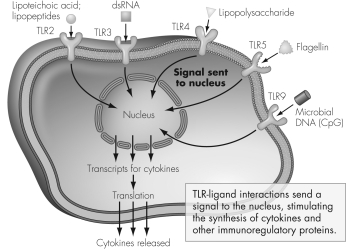
A) TLR 9
B) TLR 5
C) TLR 4
D) TLR 3
A) TLR 9
B) TLR 5
C) TLR 4
D) TLR 3
Question
Question
Question
Question
Question
Question
Question
Question
Question
Examine the figure shown.Which Toll-like receptor is activated specifically by Gram-positive organisms?
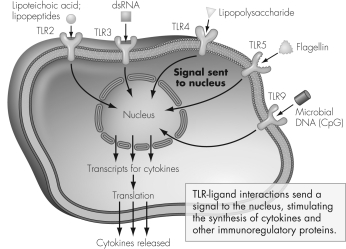
A) TLR 4
B) TLR 3
C) TLR 2
D) TLR 1
A) TLR 4
B) TLR 3
C) TLR 2
D) TLR 1
Question
Observe the figure shown.Based on what you see,what can you conclude?
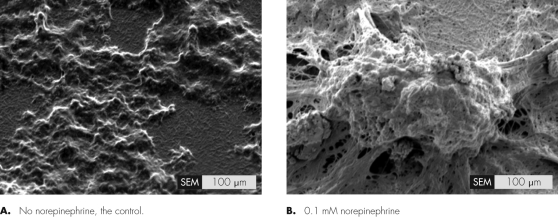
A) Norepinephrine stimulates biofilm formation of Staphylococcus epidermidis.
B) Norepinephrine is inhibited by Staphylococcus epidermidis.
C) Staphylococcus epidermidis is able to use norepinephrine as a carbon source.
D) Norepinephrine has no effect on Staphylococcus epidermidis.
A) Norepinephrine stimulates biofilm formation of Staphylococcus epidermidis.
B) Norepinephrine is inhibited by Staphylococcus epidermidis.
C) Staphylococcus epidermidis is able to use norepinephrine as a carbon source.
D) Norepinephrine has no effect on Staphylococcus epidermidis.
Question
Question
Question
Question
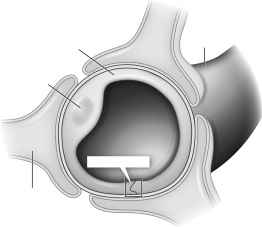
Label the figure shown.
Question
Question
Question
Question
Question
Question
Question
Question
Question
Question
Question
Question
Question
Question
Question
Question
Question
Question
Question
Question

Unlock Deck
Sign up to unlock the cards in this deck!
Unlock Deck
Unlock Deck
1/61

Play

Full screen (f)
Deck 14: Normal Human Microbiota: a Delicate Balance of Power
1
Why do individuals take probiotics?
A) to directly kill intestinal pathogens
B) to secrete hormones that lead to weight loss
C) to provide a more fermentative environment
D) to restore balance to the microbial community
A) to directly kill intestinal pathogens
B) to secrete hormones that lead to weight loss
C) to provide a more fermentative environment
D) to restore balance to the microbial community
D
2
________ is consistently sampling normal bacteria of the host to maintain a low-level immune response.
A) A tight junction
B) Lymphoid tissue
C) An epithelial cell
D) An endothelial cell
A) A tight junction
B) Lymphoid tissue
C) An epithelial cell
D) An endothelial cell
B
3
The presence of ________ is essential for preventing respiratory infections.
A) bacteremia
B) epidermis
C) vegetations
D) the mucociliary escalator
A) bacteremia
B) epidermis
C) vegetations
D) the mucociliary escalator
D
4
Why do the residents of our normal microbiota not regularly invade other tissues of the body?
A) They are inhibited by pathogens.
B) They have not evolved the ability.
C) They are not able to survive in other tissues.
D) Our normal microbiota does regularly invade other tissues of the body.
A) They are inhibited by pathogens.
B) They have not evolved the ability.
C) They are not able to survive in other tissues.
D) Our normal microbiota does regularly invade other tissues of the body.
Unlock Deck
Unlock for access to all 61 flashcards in this deck.
Unlock Deck
k this deck
5
Which of the following is NOT an accurate description for epithelial cells?
A) interconnected
B) symmetrical
C) held together by tight junctions
D) glycoprotein-covered
A) interconnected
B) symmetrical
C) held together by tight junctions
D) glycoprotein-covered
Unlock Deck
Unlock for access to all 61 flashcards in this deck.
Unlock Deck
k this deck
6
Which microbial reservoir has the largest anaerobe to aerobe ratio?
A) intestine
B) genitourinary tract
C) mouth
D) skin
A) intestine
B) genitourinary tract
C) mouth
D) skin
Unlock Deck
Unlock for access to all 61 flashcards in this deck.
Unlock Deck
k this deck
7
Which of the following can act as an immunomodulin?
A) cytokines
B) enterotoxins
C) catalase
D) hydrogen peroxide
A) cytokines
B) enterotoxins
C) catalase
D) hydrogen peroxide
Unlock Deck
Unlock for access to all 61 flashcards in this deck.
Unlock Deck
k this deck
8
A noninfectious disease that can be linked to changes in the microbiota is
A) yeast infection.
B) C. difficile infection.
C) irritable bowel syndrome.
D) stomach flu.
A) yeast infection.
B) C. difficile infection.
C) irritable bowel syndrome.
D) stomach flu.
Unlock Deck
Unlock for access to all 61 flashcards in this deck.
Unlock Deck
k this deck
9
Which of the following would NOT be a good organism choice for a vaccine delivery system?
A) Streptococcus salivarius
B) Lactobacillus acidophilus
C) Staphylococcus epidermidis
D) Staphylococcus aureus
A) Streptococcus salivarius
B) Lactobacillus acidophilus
C) Staphylococcus epidermidis
D) Staphylococcus aureus
Unlock Deck
Unlock for access to all 61 flashcards in this deck.
Unlock Deck
k this deck
10
Which of the following is an optimal pH for the growth of Helicobacter pylori,a common inhabitant of the human stomach?
A) pH 1
B) pH 3
C) pH 5
D) pH 7
A) pH 1
B) pH 3
C) pH 5
D) pH 7
Unlock Deck
Unlock for access to all 61 flashcards in this deck.
Unlock Deck
k this deck
11
________ is capable of passing through the placental membrane and endothelial cells to infect the developing fetus.
A) Influenza virus
B) Listeria monocytogenes
C) Staphylococcus aureus
D) Hepatitis B
A) Influenza virus
B) Listeria monocytogenes
C) Staphylococcus aureus
D) Hepatitis B
Unlock Deck
Unlock for access to all 61 flashcards in this deck.
Unlock Deck
k this deck
12
________ is/are used to study host-microbiota relationships in the laboratory.
A) Tight junctions
B) Metagenomics
C) Gnotobiotic animals
D) Quorum sensing
A) Tight junctions
B) Metagenomics
C) Gnotobiotic animals
D) Quorum sensing
Unlock Deck
Unlock for access to all 61 flashcards in this deck.
Unlock Deck
k this deck
13
Which of the following is evidenced by the health of gnotobiotic mice?
A) Antibiotic resistance is an ever-growing threat.
B) The presence of normal microbiota challenges the immune system.
C) Epithelial barriers prevent the spread of opportunistic infections.
D) Nothing has been learned from gnotobiotic mice.
A) Antibiotic resistance is an ever-growing threat.
B) The presence of normal microbiota challenges the immune system.
C) Epithelial barriers prevent the spread of opportunistic infections.
D) Nothing has been learned from gnotobiotic mice.
Unlock Deck
Unlock for access to all 61 flashcards in this deck.
Unlock Deck
k this deck
14
________ can completely change the intestinal mix of microbes.
A) Rashes
B) Sun exposure
C) Antibiotic treatments
D) Gnotobiotic delivery
A) Rashes
B) Sun exposure
C) Antibiotic treatments
D) Gnotobiotic delivery
Unlock Deck
Unlock for access to all 61 flashcards in this deck.
Unlock Deck
k this deck
15
Which of the following situations demonstrates the risk of a microbiome?
A) Mary suffers from colon cancer. While being treated, she develops an opportunistic Bacteroides fragilis infection.
B) Andy is lactose intolerant. His body does not break down lactose, so the microorganisms in the gut do it for him.
C) Jenna is prone to yeast infections, so she routinely eats yogurt and takes a probiotic supplement to increase the amount of lactic acid bacteria in her vagina.
D) Anthony suffers from debilitating diarrhea after a lengthy course of antibiotics to treat his MRSA infection.
A) Mary suffers from colon cancer. While being treated, she develops an opportunistic Bacteroides fragilis infection.
B) Andy is lactose intolerant. His body does not break down lactose, so the microorganisms in the gut do it for him.
C) Jenna is prone to yeast infections, so she routinely eats yogurt and takes a probiotic supplement to increase the amount of lactic acid bacteria in her vagina.
D) Anthony suffers from debilitating diarrhea after a lengthy course of antibiotics to treat his MRSA infection.
Unlock Deck
Unlock for access to all 61 flashcards in this deck.
Unlock Deck
k this deck
16
Which of the following is NOT a useful function of the gut microflora?
A) fermenting unused energy substrates
B) training the immune system
C) supporting the growth of pathogenic bacteria
D) regulating the development of the gut
A) fermenting unused energy substrates
B) training the immune system
C) supporting the growth of pathogenic bacteria
D) regulating the development of the gut
Unlock Deck
Unlock for access to all 61 flashcards in this deck.
Unlock Deck
k this deck
17
The blood-brain barrier is composed of
A) arteries.
B) glycoproteins.
C) tight junctions.
D) very tight junctions.
A) arteries.
B) glycoproteins.
C) tight junctions.
D) very tight junctions.
Unlock Deck
Unlock for access to all 61 flashcards in this deck.
Unlock Deck
k this deck
18
When do anaerobes begin to colonize the human oral cavity?
A) when teeth emerge
B) in the womb
C) during birth
D) during the first feeding
A) when teeth emerge
B) in the womb
C) during birth
D) during the first feeding
Unlock Deck
Unlock for access to all 61 flashcards in this deck.
Unlock Deck
k this deck
19
In addition to digested food,where do carbohydrates come from in the large intestine?
A) mucus secretions
B) dead cells
C) saccharolytic fungi
D) arteries
A) mucus secretions
B) dead cells
C) saccharolytic fungi
D) arteries
Unlock Deck
Unlock for access to all 61 flashcards in this deck.
Unlock Deck
k this deck
20
What would be the expected aerobe to anaerobe ratio of the belly button?
A) 10:1
B) 1:10
C) 1:100
D) 1:1000
A) 10:1
B) 1:10
C) 1:100
D) 1:1000
Unlock Deck
Unlock for access to all 61 flashcards in this deck.
Unlock Deck
k this deck
21
Which of the following forms of treatment do(es)NOT evolve as pathogens evolve?
A) phage therapy
B) fecal transplant
C) probiotics
D) antibiotics
A) phage therapy
B) fecal transplant
C) probiotics
D) antibiotics
Unlock Deck
Unlock for access to all 61 flashcards in this deck.
Unlock Deck
k this deck
22
Which was developed first?
A) fecal transplants
B) probiotics
C) antibiotics
D) phage therapy
A) fecal transplants
B) probiotics
C) antibiotics
D) phage therapy
Unlock Deck
Unlock for access to all 61 flashcards in this deck.
Unlock Deck
k this deck
23
Lipopolysaccharides,flagellin,and double-stranded DNA are microbe-associated molecular patterns recognized by
A) tight junctions.
B) ribosomes.
C) tumor necrosis factors.
D) pattern recognition receptors.
A) tight junctions.
B) ribosomes.
C) tumor necrosis factors.
D) pattern recognition receptors.
Unlock Deck
Unlock for access to all 61 flashcards in this deck.
Unlock Deck
k this deck
24
Which of the following is NOT an argument for the consideration of the microbiome as a separate organ system?
A) There are ten times more microbial cells than human cells in the body.
B) Microbiomes are contained in defined and relatively independent parts of the body.
C) Defects in microbiome composition can have dire effects on human health.
D) A human microbiome is inherited from the mother and father.
A) There are ten times more microbial cells than human cells in the body.
B) Microbiomes are contained in defined and relatively independent parts of the body.
C) Defects in microbiome composition can have dire effects on human health.
D) A human microbiome is inherited from the mother and father.
Unlock Deck
Unlock for access to all 61 flashcards in this deck.
Unlock Deck
k this deck
25
Endothelial cells are known for using ________ to carry cell components from one side of the cell to the other.
A) protein secretion
B) active vesicle transport
C) cytokine production
D) ATP synthesis
A) protein secretion
B) active vesicle transport
C) cytokine production
D) ATP synthesis
Unlock Deck
Unlock for access to all 61 flashcards in this deck.
Unlock Deck
k this deck
26
Which of the following statements regarding quorum sensing is true?
A) Gene expression is altered when the population of a specific microorganism is low.
B) Gene expression is altered when the population of a specific microorganism is high.
C) There is no relationship between quorum sensing and gene expression.
D) Quorum sensing is a phenomenon very few organisms are capable of accomplishing.
A) Gene expression is altered when the population of a specific microorganism is low.
B) Gene expression is altered when the population of a specific microorganism is high.
C) There is no relationship between quorum sensing and gene expression.
D) Quorum sensing is a phenomenon very few organisms are capable of accomplishing.
Unlock Deck
Unlock for access to all 61 flashcards in this deck.
Unlock Deck
k this deck
27
Examine the figure shown.Which Toll-like receptor is activated specifically by viruses?
A) TLR 9
B) TLR 5
C) TLR 4
D) TLR 3
A) TLR 9
B) TLR 5
C) TLR 4
D) TLR 3
Unlock Deck
Unlock for access to all 61 flashcards in this deck.
Unlock Deck
k this deck
28
How has the development of clean water NEGATIVELY affected modern civilization?
A) reduced fecal transmission of bacteria resulting in missing microbiota
B) altered immunological environment
C) increased transmission of hormone-activating compounds
D) decreased amounts of important trace minerals
A) reduced fecal transmission of bacteria resulting in missing microbiota
B) altered immunological environment
C) increased transmission of hormone-activating compounds
D) decreased amounts of important trace minerals
Unlock Deck
Unlock for access to all 61 flashcards in this deck.
Unlock Deck
k this deck
29
Where are microbial metabolic end-products found in the body?
A) in the blood
B) in the urine
C) everywhere
D) nowhere
A) in the blood
B) in the urine
C) everywhere
D) nowhere
Unlock Deck
Unlock for access to all 61 flashcards in this deck.
Unlock Deck
k this deck
30
Which of the following pathologies can develop when the gut microbiome organ is deficient?
A) pneumonia
B) yeast infection
C) inflammatory bowel disease
D) ulcers
A) pneumonia
B) yeast infection
C) inflammatory bowel disease
D) ulcers
Unlock Deck
Unlock for access to all 61 flashcards in this deck.
Unlock Deck
k this deck
31
________ once colonized 80% of individuals in the United States and now only colonizes 10%.
A) Helicobacter pylori
B) Staphylococcus aureus
C) Salmonella typhimurium
D) Lactobacillus acidophilus
A) Helicobacter pylori
B) Staphylococcus aureus
C) Salmonella typhimurium
D) Lactobacillus acidophilus
Unlock Deck
Unlock for access to all 61 flashcards in this deck.
Unlock Deck
k this deck
32
What is problematic about treating bacterial infections that have spread to the brain?
A) You have to be careful not to harm the good bacteria of the brain.
B) Neurons in the brain will degrade antibiotics.
C) Many antibiotics are not capable of penetrating the blood-brain barrier.
D) Bacterial infections do not spread to the brain.
A) You have to be careful not to harm the good bacteria of the brain.
B) Neurons in the brain will degrade antibiotics.
C) Many antibiotics are not capable of penetrating the blood-brain barrier.
D) Bacterial infections do not spread to the brain.
Unlock Deck
Unlock for access to all 61 flashcards in this deck.
Unlock Deck
k this deck
33
How do naturally occurring Staphylococcus strains inhibit the growth of pathogenic strains?
A) producing antibiotics
B) producing short-chain fatty acids
C) outcompeting for nutrients
D) They do not inhibit pathogenic strains.
A) producing antibiotics
B) producing short-chain fatty acids
C) outcompeting for nutrients
D) They do not inhibit pathogenic strains.
Unlock Deck
Unlock for access to all 61 flashcards in this deck.
Unlock Deck
k this deck
34
Which of the following is NOT a current or possible future fecal transplant method?
A) colonoscopy
B) endoscopy
C) blood infusion
D) capsule ingestion
A) colonoscopy
B) endoscopy
C) blood infusion
D) capsule ingestion
Unlock Deck
Unlock for access to all 61 flashcards in this deck.
Unlock Deck
k this deck
35
________ is the preferred carbon source for epithelial cells.
A) Glucose
B) L-DOPA
C) Norepinephrine
D) Butyrate
A) Glucose
B) L-DOPA
C) Norepinephrine
D) Butyrate
Unlock Deck
Unlock for access to all 61 flashcards in this deck.
Unlock Deck
k this deck
36
Examine the figure shown.Which Toll-like receptor is activated specifically by Gram-positive organisms?
A) TLR 4
B) TLR 3
C) TLR 2
D) TLR 1
A) TLR 4
B) TLR 3
C) TLR 2
D) TLR 1
Unlock Deck
Unlock for access to all 61 flashcards in this deck.
Unlock Deck
k this deck
37
Observe the figure shown.Based on what you see,what can you conclude?
A) Norepinephrine stimulates biofilm formation of Staphylococcus epidermidis.
B) Norepinephrine is inhibited by Staphylococcus epidermidis.
C) Staphylococcus epidermidis is able to use norepinephrine as a carbon source.
D) Norepinephrine has no effect on Staphylococcus epidermidis.
A) Norepinephrine stimulates biofilm formation of Staphylococcus epidermidis.
B) Norepinephrine is inhibited by Staphylococcus epidermidis.
C) Staphylococcus epidermidis is able to use norepinephrine as a carbon source.
D) Norepinephrine has no effect on Staphylococcus epidermidis.
Unlock Deck
Unlock for access to all 61 flashcards in this deck.
Unlock Deck
k this deck
38
Many of the genes affected by colonization with Eubacteria rectale and Bacteroides thetaiotamicron are involved with
A) the blood-brain barrier.
B) energy production.
C) colonic turnover.
D) pro-inflammation.
A) the blood-brain barrier.
B) energy production.
C) colonic turnover.
D) pro-inflammation.
Unlock Deck
Unlock for access to all 61 flashcards in this deck.
Unlock Deck
k this deck
39
Which of the following changes in human behavior has NOT altered the composition of the microbiota?
A) decreased antibiotic usage
B) increased cesarean deliveries
C) living in smaller families
D) use of antibacterial soaps
A) decreased antibiotic usage
B) increased cesarean deliveries
C) living in smaller families
D) use of antibacterial soaps
Unlock Deck
Unlock for access to all 61 flashcards in this deck.
Unlock Deck
k this deck
40
Use of preterm antibiotics during labor and delivery has led to
A) reduced fecal transmission of bacteria.
B) an altered immunological environment.
C) reduced vaginal transmission.
D) accelerated change of skin microbiome.
A) reduced fecal transmission of bacteria.
B) an altered immunological environment.
C) reduced vaginal transmission.
D) accelerated change of skin microbiome.
Unlock Deck
Unlock for access to all 61 flashcards in this deck.
Unlock Deck
k this deck
41
Label the figure shown.
Unlock Deck
Unlock for access to all 61 flashcards in this deck.
Unlock Deck
k this deck
42
The blood-brain barrier is comprised of ________ between the endothelial cells of capillaries feeding the brain.
Unlock Deck
Unlock for access to all 61 flashcards in this deck.
Unlock Deck
k this deck
43
Give three reasons for why the microbiome should be considered an independent organ system.
Unlock Deck
Unlock for access to all 61 flashcards in this deck.
Unlock Deck
k this deck
44
Fecal transplants can be used to treat ulcerative colitis caused by ________.
Unlock Deck
Unlock for access to all 61 flashcards in this deck.
Unlock Deck
k this deck
45
CASE HISTORY
Hiroshi,a 19-year-old college student,arrived at the emergency department complaining of a fever and lethargy that started the previous evening.He originally suspected that the symptoms were due to a hangover from a fraternity party held two days earlier.However,Hiroshi became alarmed when turning his head became painful and when tiny red blotches suddenly appeared on his skin.The physician recognized this as a petechial rash (red spots on the skin that do not blanch,or turn white,when pressed).Blood cultures were obtained,and Hiroshi underwent a lumbar puncture to obtain cerebrospinal fluid (CSF)for culture.He was immediately admitted to the hospital and treated with intravenous antibiotics.The next day,blood and CSF cultures grew a deadly Gram-negative diplococcus-Neisseria meningitidis.Hiroshi had bacterial meningitis.
Explain the natural barrier Neisseria meningitidis must have crossed in order to result in Hiroshi's meningitis.Briefly,how does this barrier serve as an immune defense so effective some people can be asymptomatic carriers of this bacterium?
Hiroshi,a 19-year-old college student,arrived at the emergency department complaining of a fever and lethargy that started the previous evening.He originally suspected that the symptoms were due to a hangover from a fraternity party held two days earlier.However,Hiroshi became alarmed when turning his head became painful and when tiny red blotches suddenly appeared on his skin.The physician recognized this as a petechial rash (red spots on the skin that do not blanch,or turn white,when pressed).Blood cultures were obtained,and Hiroshi underwent a lumbar puncture to obtain cerebrospinal fluid (CSF)for culture.He was immediately admitted to the hospital and treated with intravenous antibiotics.The next day,blood and CSF cultures grew a deadly Gram-negative diplococcus-Neisseria meningitidis.Hiroshi had bacterial meningitis.
Explain the natural barrier Neisseria meningitidis must have crossed in order to result in Hiroshi's meningitis.Briefly,how does this barrier serve as an immune defense so effective some people can be asymptomatic carriers of this bacterium?
Unlock Deck
Unlock for access to all 61 flashcards in this deck.
Unlock Deck
k this deck
46
Probiotics have been used in baby chicks to prevent colonization by ________.
Unlock Deck
Unlock for access to all 61 flashcards in this deck.
Unlock Deck
k this deck
47
Explain how a nonpathogenic organism like Staphylococcus epidermidis present in the lungs of an individual with cystic fibrosis can still cause problems.
Unlock Deck
Unlock for access to all 61 flashcards in this deck.
Unlock Deck
k this deck
48
Colonization of the stomach requires the ability to withstand ________ conditions.
Unlock Deck
Unlock for access to all 61 flashcards in this deck.
Unlock Deck
k this deck
49
The presence of a core ________ is most important for a healthy microbiome.
Unlock Deck
Unlock for access to all 61 flashcards in this deck.
Unlock Deck
k this deck
50
What is wrong with the situation described below?
After vaginal delivery,a gnotobiotic mouse was moved to an axenic environment.
After vaginal delivery,a gnotobiotic mouse was moved to an axenic environment.
Unlock Deck
Unlock for access to all 61 flashcards in this deck.
Unlock Deck
k this deck
51
Describe the positive and negative side of enterotoxins.
Unlock Deck
Unlock for access to all 61 flashcards in this deck.
Unlock Deck
k this deck
52
Sequestered body sites tend to be ________.
Unlock Deck
Unlock for access to all 61 flashcards in this deck.
Unlock Deck
k this deck
53
Explain the disappearing microbiota hypothesis and how it can explain why individuals who attended day care as adolescents tend to suffer fewer allergies than individuals who did not.
Unlock Deck
Unlock for access to all 61 flashcards in this deck.
Unlock Deck
k this deck
54
CASE HISTORY
Renita,a 67-year-old woman,complained to her physician of having persistent diarrhea with weight loss,bloating,and excess flatulence (passing gas).Renita also said her stools looked greasy,which the physician knew as a sign that ingested fat was not being absorbed.A blood test revealed that the woman's vitamin B₁₂ level was abnormally low.Cultures of fecal specimens failed to find any typical bacterial pathogens that could cause diarrhea.However,the decreased vitamin B₁₂ level and excess fat in the stool suggested that the woman had a malabsorption disease.The physician,initially perplexed,suddenly realized that the cause could be small intestine bacterial overgrowth disease,a diagnosis confirmed by aspirating fluid from the jejunum (small intestine).The laboratory discovered abnormally high numbers of facultative and anaerobic bacteria in the fluid,including Streptococcus,Escherichia coli,Lactobacillus,and Bacteroides.Fermentation by these organisms produced the bloating and flatulence.Antibiotic treatment corrected the syndrome.
Which best describes the relationship between Renita and her microbiome in this case study?
A) Pathogens were present in Renita's jejunum in addition to normal microbiota.
B) Previous antibiotic use disrupted Renita's normal flora, allowing overgrowth of resistant species.
C) Renita's immune system was unable to reduce the growth of bacteria in her GI tract, leading to overgrowth of all the bacteria in her microbiome.
D) A physiological change such as reduction of bile production allowed microbiota from one portion of Renita's GI tract to thrive in another, inappropriate area.
Renita,a 67-year-old woman,complained to her physician of having persistent diarrhea with weight loss,bloating,and excess flatulence (passing gas).Renita also said her stools looked greasy,which the physician knew as a sign that ingested fat was not being absorbed.A blood test revealed that the woman's vitamin B₁₂ level was abnormally low.Cultures of fecal specimens failed to find any typical bacterial pathogens that could cause diarrhea.However,the decreased vitamin B₁₂ level and excess fat in the stool suggested that the woman had a malabsorption disease.The physician,initially perplexed,suddenly realized that the cause could be small intestine bacterial overgrowth disease,a diagnosis confirmed by aspirating fluid from the jejunum (small intestine).The laboratory discovered abnormally high numbers of facultative and anaerobic bacteria in the fluid,including Streptococcus,Escherichia coli,Lactobacillus,and Bacteroides.Fermentation by these organisms produced the bloating and flatulence.Antibiotic treatment corrected the syndrome.
Which best describes the relationship between Renita and her microbiome in this case study?
A) Pathogens were present in Renita's jejunum in addition to normal microbiota.
B) Previous antibiotic use disrupted Renita's normal flora, allowing overgrowth of resistant species.
C) Renita's immune system was unable to reduce the growth of bacteria in her GI tract, leading to overgrowth of all the bacteria in her microbiome.
D) A physiological change such as reduction of bile production allowed microbiota from one portion of Renita's GI tract to thrive in another, inappropriate area.
Unlock Deck
Unlock for access to all 61 flashcards in this deck.
Unlock Deck
k this deck
55
Explain two potential negative effects of using phage therapy to treat bacterial infections.
Unlock Deck
Unlock for access to all 61 flashcards in this deck.
Unlock Deck
k this deck
56
________ are organisms that cause disease in an immunocompromised host only.
Unlock Deck
Unlock for access to all 61 flashcards in this deck.
Unlock Deck
k this deck
57
A nonmotile Gram-negative organism has breached a tight junction barrier.How will this organism be detected and what will happen immediately inside the host to protect it from infection?
Unlock Deck
Unlock for access to all 61 flashcards in this deck.
Unlock Deck
k this deck
58
Production of indole by E.coli tells host intestinal epithelial cells to tighten tight junctions and increase production of ________.
Unlock Deck
Unlock for access to all 61 flashcards in this deck.
Unlock Deck
k this deck
59
The presence of Eubacteria recale and Beta thetaiotamicron affect ________ of the host.
Unlock Deck
Unlock for access to all 61 flashcards in this deck.
Unlock Deck
k this deck
60
Give an example of how our cells communicate with the microbiome.
Unlock Deck
Unlock for access to all 61 flashcards in this deck.
Unlock Deck
k this deck
61
CASE HISTORY
A tiny 1-kg (2.2-pound)female neonate (newborn)was born two months premature.The baby had extreme difficulty breathing and had to be intubated (a breathing tube inserted).The mother,at the time of admission,had complained of mild diarrhea and abnormal abdominal pain unrelated to her pregnancy.The infectious disease doctor who was called in to consult on the case immediately recognized the likely problem and ordered blood cultures be performed on the infant.The infant was also started on intravenous antibiotics.Two days later,the lab reported finding a Gram-positive bacillus-Listeria monocytogenes-in the infant's blood.This same organism was the cause of the mother's diarrhea.The mother had unwittingly ingested some unpasteurized cheese contaminated with this pathogen and developed listeriosis.The organism entered the mother's bloodstream and was transmitted across the placenta to the fetus prior to birth.
The maternofetal or placental barrier is a mechanism that helps to protect the fetus from infection during its development.The adult human has several regions with similar levels of innate resistance to pathogen transfer.Compare and contrast at least one additional barrier that separates the natural microbiome from its host to the maternofetal barrier.
A tiny 1-kg (2.2-pound)female neonate (newborn)was born two months premature.The baby had extreme difficulty breathing and had to be intubated (a breathing tube inserted).The mother,at the time of admission,had complained of mild diarrhea and abnormal abdominal pain unrelated to her pregnancy.The infectious disease doctor who was called in to consult on the case immediately recognized the likely problem and ordered blood cultures be performed on the infant.The infant was also started on intravenous antibiotics.Two days later,the lab reported finding a Gram-positive bacillus-Listeria monocytogenes-in the infant's blood.This same organism was the cause of the mother's diarrhea.The mother had unwittingly ingested some unpasteurized cheese contaminated with this pathogen and developed listeriosis.The organism entered the mother's bloodstream and was transmitted across the placenta to the fetus prior to birth.
The maternofetal or placental barrier is a mechanism that helps to protect the fetus from infection during its development.The adult human has several regions with similar levels of innate resistance to pathogen transfer.Compare and contrast at least one additional barrier that separates the natural microbiome from its host to the maternofetal barrier.
Unlock Deck
Unlock for access to all 61 flashcards in this deck.
Unlock Deck
k this deck
Unlock Deck
Unlock for access to all 61 flashcards in this deck.






