







 Chat with AI

Deck 4: Living Chemistry: From Atoms to Cells
Full screen (f)

Question

Question
Question
What kind of cellular molecule is shown here?
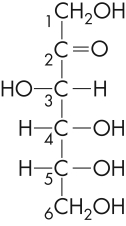
A) an amino acid
B) glycerol
C) a lipid
D) a sugar
A) an amino acid
B) glycerol
C) a lipid
D) a sugar
Question
The molecule shown here is a(n)
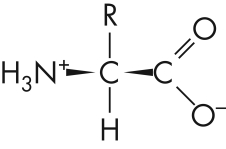
A) amino acid.
B) monosaccharide.
C) deoxyribonucleotide.
D) ribonucleotide.
A) amino acid.
B) monosaccharide.
C) deoxyribonucleotide.
D) ribonucleotide.
Question
Question
In this model of a cellular macromolecule,spirals represent alpha helices and arrows represent beta sheets.What does the model represent?
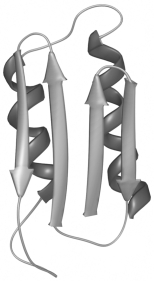
A) an amino acid
B) a protein
C) a ribonucleic acid
D) a polysaccharide
A) an amino acid
B) a protein
C) a ribonucleic acid
D) a polysaccharide
Question
Question
Question
Which arrow is drawn to a hydrogen that can form a hydrogen bond with water?
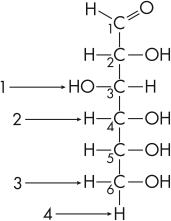
A) 1
B) 2
C) 3
D) 4
A) 1
B) 2
C) 3
D) 4
Question
Question
Question
Question
What organic molecule is shown here?
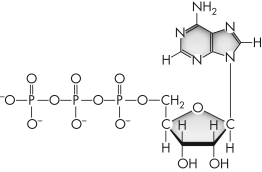
A) a sugar
B) an amino acid
C) a nucleotide
D) a nucleic acid
A) a sugar
B) an amino acid
C) a nucleotide
D) a nucleic acid
Question
Question
Question
Question
Question
What type of cellular molecule is shown here?
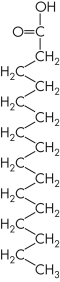
A) a lipid
B) an amino acid
C) a ribonucleic acid
D) a protein
A) a lipid
B) an amino acid
C) a ribonucleic acid
D) a protein
Question
Question
Question
Question
This image shows the effects of cholera toxin on intestinal cells.Which numbered arrow indicates the step of the toxin entering a cell via endocytosis?
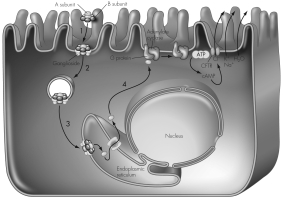
A) 1
B) 2
C) 3
D) 4
A) 1
B) 2
C) 3
D) 4
Question
Question
Question
Question
Question
Question
Question
Question
Question
Question
Question
Question
Question
Question
Question
Question
Question
Question
Question
Question
Shown is the outer electron shell of nitrogen.Nitrogen will form ________ bonds with other atoms.

Question
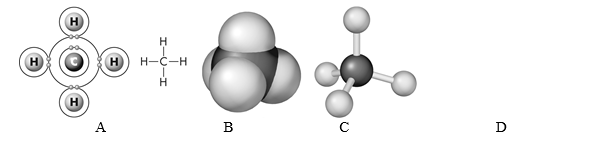
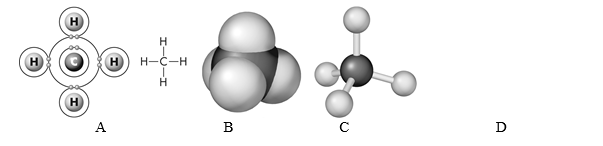
Shown are four different representations of methane.Letter ________ shows a space-filling model.
Question
Question
Question
Question
Question
Shown are four different representations of methane.Letter ________ shows a structural formula.
Question
Question
Question
Question
Question
Question
Question

Unlock Deck
Sign up to unlock the cards in this deck!
Unlock Deck
Unlock Deck
1/55

Play

Full screen (f)
Deck 4: Living Chemistry: From Atoms to Cells
1
The enzyme commonly used in PCR,Taq polymerase,synthesizes what macromolecule?
A) DNA
B) RNA
C) proteins
D) polysaccharides
A) DNA
B) RNA
C) proteins
D) polysaccharides
A
2
Polysaccharides are a polymer of what kind of monomer?
A) amino acids
B) deoxyribonucleotides
C) lipids
D) sugars
A) amino acids
B) deoxyribonucleotides
C) lipids
D) sugars
D
3
What kind of cellular molecule is shown here?
A) an amino acid
B) glycerol
C) a lipid
D) a sugar
A) an amino acid
B) glycerol
C) a lipid
D) a sugar
D
4
The molecule shown here is a(n)
A) amino acid.
B) monosaccharide.
C) deoxyribonucleotide.
D) ribonucleotide.
A) amino acid.
B) monosaccharide.
C) deoxyribonucleotide.
D) ribonucleotide.
Unlock Deck
Unlock for access to all 55 flashcards in this deck.
Unlock Deck
k this deck
5
Which of the following molecular formulas might be of an organic molecule?
A) H₂ O
B) C₂ H₄O
C) CH₄
D) NH₃
A) H₂ O
B) C₂ H₄O
C) CH₄
D) NH₃
Unlock Deck
Unlock for access to all 55 flashcards in this deck.
Unlock Deck
k this deck
6
In this model of a cellular macromolecule,spirals represent alpha helices and arrows represent beta sheets.What does the model represent?
A) an amino acid
B) a protein
C) a ribonucleic acid
D) a polysaccharide
A) an amino acid
B) a protein
C) a ribonucleic acid
D) a polysaccharide
Unlock Deck
Unlock for access to all 55 flashcards in this deck.
Unlock Deck
k this deck
7
Regular,repeating patterns over short regions of a protein are known as the protein's ________ structure.
A) primary
B) secondary
C) tertiary
D) quaternary
A) primary
B) secondary
C) tertiary
D) quaternary
Unlock Deck
Unlock for access to all 55 flashcards in this deck.
Unlock Deck
k this deck
8
Which of the following is true of glycerol?
A) It is hydrophobic.
B) It is a component of proteins.
C) It contains three amino groups.
D) It contains three hydroxyl groups.
A) It is hydrophobic.
B) It is a component of proteins.
C) It contains three amino groups.
D) It contains three hydroxyl groups.
Unlock Deck
Unlock for access to all 55 flashcards in this deck.
Unlock Deck
k this deck
9
Which arrow is drawn to a hydrogen that can form a hydrogen bond with water?
A) 1
B) 2
C) 3
D) 4
A) 1
B) 2
C) 3
D) 4
Unlock Deck
Unlock for access to all 55 flashcards in this deck.
Unlock Deck
k this deck
10
A cell's genome consists of 20% thymine.What is the percentage of cytosine?
A) 20%
B) 30%
C) 60%
D) 80%
A) 20%
B) 30%
C) 60%
D) 80%
Unlock Deck
Unlock for access to all 55 flashcards in this deck.
Unlock Deck
k this deck
11
Which of the following is true of glucose?
A) It is a component of DNA and RNA.
B) It can form a ring structure.
C) It contains numerous amino groups.
D) It is a five-carbon sugar.
A) It is a component of DNA and RNA.
B) It can form a ring structure.
C) It contains numerous amino groups.
D) It is a five-carbon sugar.
Unlock Deck
Unlock for access to all 55 flashcards in this deck.
Unlock Deck
k this deck
12
An infectious agent remains infectious after treatment with an enzyme that destroys DNA.What might the infectious agent be?
A) an archaeal cell
B) a bacteria
C) a eukaryote
D) a virus
A) an archaeal cell
B) a bacteria
C) a eukaryote
D) a virus
Unlock Deck
Unlock for access to all 55 flashcards in this deck.
Unlock Deck
k this deck
13
What organic molecule is shown here?
A) a sugar
B) an amino acid
C) a nucleotide
D) a nucleic acid
A) a sugar
B) an amino acid
C) a nucleotide
D) a nucleic acid
Unlock Deck
Unlock for access to all 55 flashcards in this deck.
Unlock Deck
k this deck
14
DNA is synthesized by enzymes that use which of the following as substrates?
A) NTPs
B) dNTPs
C) NDPs
D) dNDPs
A) NTPs
B) dNTPs
C) NDPs
D) dNDPs
Unlock Deck
Unlock for access to all 55 flashcards in this deck.
Unlock Deck
k this deck
15
Molecules with which kinds of bonds are hydrophobic?
A) hydrogen
B) ionic
C) nonpolar covalent
D) polar covalent
A) hydrogen
B) ionic
C) nonpolar covalent
D) polar covalent
Unlock Deck
Unlock for access to all 55 flashcards in this deck.
Unlock Deck
k this deck
16
Molecules that are soluble in water are ________ and molecules that are insoluble in water are ________.
A) endergonic;exergonic
B) nonpolar;polar
C) hydrophobic;hydrophilic
D) hydrophilic;hydrophobic
A) endergonic;exergonic
B) nonpolar;polar
C) hydrophobic;hydrophilic
D) hydrophilic;hydrophobic
Unlock Deck
Unlock for access to all 55 flashcards in this deck.
Unlock Deck
k this deck
17
Which of the following is true of both lipids and sugars?
A) They both store energy.
B) They are both hydrophobic.
C) They are both hydrophilic.
D) They both contain nitrogen.
A) They both store energy.
B) They are both hydrophobic.
C) They are both hydrophilic.
D) They both contain nitrogen.
Unlock Deck
Unlock for access to all 55 flashcards in this deck.
Unlock Deck
k this deck
18
What type of cellular molecule is shown here?
A) a lipid
B) an amino acid
C) a ribonucleic acid
D) a protein
A) a lipid
B) an amino acid
C) a ribonucleic acid
D) a protein
Unlock Deck
Unlock for access to all 55 flashcards in this deck.
Unlock Deck
k this deck
19
Which bond type is the strongest in the aqueous cytoplasm of a cell?
A) covalent
B) hydrogen
C) hydrophobic
D) ionic
A) covalent
B) hydrogen
C) hydrophobic
D) ionic
Unlock Deck
Unlock for access to all 55 flashcards in this deck.
Unlock Deck
k this deck
20
Which of the following is a cellular function of lipids?
A) catalysis
B) information storage
C) compartmentalization
D) sugar production
A) catalysis
B) information storage
C) compartmentalization
D) sugar production
Unlock Deck
Unlock for access to all 55 flashcards in this deck.
Unlock Deck
k this deck
21
The most typical way for a cell to increase the rate of a reaction is by
A) increasing the cell's temperature.
B) increasing the cell's pH.
C) decreasing the cell's pH.
D) using an enzyme.
A) increasing the cell's temperature.
B) increasing the cell's pH.
C) decreasing the cell's pH.
D) using an enzyme.
Unlock Deck
Unlock for access to all 55 flashcards in this deck.
Unlock Deck
k this deck
22
This image shows the effects of cholera toxin on intestinal cells.Which numbered arrow indicates the step of the toxin entering a cell via endocytosis?
A) 1
B) 2
C) 3
D) 4
A) 1
B) 2
C) 3
D) 4
Unlock Deck
Unlock for access to all 55 flashcards in this deck.
Unlock Deck
k this deck
23
Fill in the blanks with the pair of words below that make the sentence correct.
________ takes up small extracellular particles via membrane invaginations while ________ takes up larger particles.
A) Endocytosis;phagocytosis
B) Phagocytosis;endocytosis
C) A pseudopod;endocytosis
D) A pseudopod;a lysosome
________ takes up small extracellular particles via membrane invaginations while ________ takes up larger particles.
A) Endocytosis;phagocytosis
B) Phagocytosis;endocytosis
C) A pseudopod;endocytosis
D) A pseudopod;a lysosome
Unlock Deck
Unlock for access to all 55 flashcards in this deck.
Unlock Deck
k this deck
24
Weak acids can
A) never cross cell membranes.
B) cross cell membranes in their uncharged form.
C) cross cell membranes in their charged form.
D) only cross cell membranes with the aid of a transmembrane protein.
A) never cross cell membranes.
B) cross cell membranes in their uncharged form.
C) cross cell membranes in their charged form.
D) only cross cell membranes with the aid of a transmembrane protein.
Unlock Deck
Unlock for access to all 55 flashcards in this deck.
Unlock Deck
k this deck
25
A reaction with a positive DG and low activation energy will be
A) spontaneous and slow.
B) exergonic and fast.
C) endergonic and fast.
D) endergonic and slow.
A) spontaneous and slow.
B) exergonic and fast.
C) endergonic and fast.
D) endergonic and slow.
Unlock Deck
Unlock for access to all 55 flashcards in this deck.
Unlock Deck
k this deck
26
You place water containing a radioactive isotope of hydrogen on the outside of a cell.Which of the following will increase the rate at which radioactive water appears on the inside of the cell?
A) a decrease in temperature
B) an increase in unsaturated fatty acids
C) an increase in the fatty acid tail length
D) a decrease in membrane surface area
A) a decrease in temperature
B) an increase in unsaturated fatty acids
C) an increase in the fatty acid tail length
D) a decrease in membrane surface area
Unlock Deck
Unlock for access to all 55 flashcards in this deck.
Unlock Deck
k this deck
27
The second law of thermodynamics states that
A) energy is neither created nor destroyed.
B) matter is neither created nor destroyed.
C) in energy transformations,disorder tends to increase.
D) in energy transformations,disorder tends to decrease.
A) energy is neither created nor destroyed.
B) matter is neither created nor destroyed.
C) in energy transformations,disorder tends to increase.
D) in energy transformations,disorder tends to decrease.
Unlock Deck
Unlock for access to all 55 flashcards in this deck.
Unlock Deck
k this deck
28
Bacteria within a phagosome may be destroyed by the fusing of the phagosome with which acidic eukaryotic organelle?
A) endoplasmic reticulum
B) pseudopod
C) lysosome
D) vesicle
A) endoplasmic reticulum
B) pseudopod
C) lysosome
D) vesicle
Unlock Deck
Unlock for access to all 55 flashcards in this deck.
Unlock Deck
k this deck
29
Which of the following statements accurately describes the relationship between DG and Kₑq?
A) There is no relationship,as they are independent entities.
B) When Keq is greater than 1,DG is negative.
C) When Keq is greater than 1,DG is positive.
D) When Keq is less than 1,DG is negative.
A) There is no relationship,as they are independent entities.
B) When Keq is greater than 1,DG is negative.
C) When Keq is greater than 1,DG is positive.
D) When Keq is less than 1,DG is negative.
Unlock Deck
Unlock for access to all 55 flashcards in this deck.
Unlock Deck
k this deck
30
An exergonic reaction may still be slow if
A) the activation energy is high.
B) an enzyme is present.
C) product concentrations are low.
D) reactant concentrations are high.
A) the activation energy is high.
B) an enzyme is present.
C) product concentrations are low.
D) reactant concentrations are high.
Unlock Deck
Unlock for access to all 55 flashcards in this deck.
Unlock Deck
k this deck
31
Endosomes and phagosomes are both types of
A) catalysts.
B) oxidizing agents.
C) pseudopods.
D) vesicles.
A) catalysts.
B) oxidizing agents.
C) pseudopods.
D) vesicles.
Unlock Deck
Unlock for access to all 55 flashcards in this deck.
Unlock Deck
k this deck
32
In a reaction where substrates A and B combine to form products C and D (A+B yields C+D),which of the following could drive the reaction to the right toward products?
A) decreasing the concentration of A
B) decreasing the concentration of B
C) increasing the concentration of C
D) decreasing the concentration of D
A) decreasing the concentration of A
B) decreasing the concentration of B
C) increasing the concentration of C
D) decreasing the concentration of D
Unlock Deck
Unlock for access to all 55 flashcards in this deck.
Unlock Deck
k this deck
33
A molecule of ATP undergoes hydrolysis yielding AMP and two molecules of phosphate.Which of the following is true of this reaction?
A) The entropy has decreased.
B) The change in free energy,DG,is positive.
C) The change in free energy,DG,is negative.
D) The reaction is endergonic.
A) The entropy has decreased.
B) The change in free energy,DG,is positive.
C) The change in free energy,DG,is negative.
D) The reaction is endergonic.
Unlock Deck
Unlock for access to all 55 flashcards in this deck.
Unlock Deck
k this deck
34
The bacterial cell wall offers protection against what type of environment?
A) isotonic
B) hypertonic
C) hypotonic
D) endergonic
A) isotonic
B) hypertonic
C) hypotonic
D) endergonic
Unlock Deck
Unlock for access to all 55 flashcards in this deck.
Unlock Deck
k this deck
35
Which statement accurately describes membrane phospholipids?
A) They are entirely hydrophobic.
B) They are entirely hydrophilic.
C) They have hydrophilic phosphate head groups and hydrophobic fatty acid tails.
D) They have hydrophobic phosphate head groups and hydrophilic fatty acid tails.
A) They are entirely hydrophobic.
B) They are entirely hydrophilic.
C) They have hydrophilic phosphate head groups and hydrophobic fatty acid tails.
D) They have hydrophobic phosphate head groups and hydrophilic fatty acid tails.
Unlock Deck
Unlock for access to all 55 flashcards in this deck.
Unlock Deck
k this deck
36
Which of the following molecules would require a transmembrane protein in order to cross a cell membrane?
A) O₂
B) H₂ O
C) CO₂
D) Na+
A) O₂
B) H₂ O
C) CO₂
D) Na+
Unlock Deck
Unlock for access to all 55 flashcards in this deck.
Unlock Deck
k this deck
37
There is no net movement of water into or out of cells when the cells are in which type of environment?
A) isotonic
B) hypertonic
C) hyperosmotic
D) hypotonic
A) isotonic
B) hypertonic
C) hyperosmotic
D) hypotonic
Unlock Deck
Unlock for access to all 55 flashcards in this deck.
Unlock Deck
k this deck
38
In a cell membrane,phosphate head groups
A) only face the extracellular environment.
B) only face the aqueous cytoplasm.
C) bind each other via ionic bonds in the interior of the membrane.
D) face both the extracellular environment and the cytoplasm.
A) only face the extracellular environment.
B) only face the aqueous cytoplasm.
C) bind each other via ionic bonds in the interior of the membrane.
D) face both the extracellular environment and the cytoplasm.
Unlock Deck
Unlock for access to all 55 flashcards in this deck.
Unlock Deck
k this deck
39
You fluorescently label the phospholipid head groups of a small number of phospholipids in the outer leaflet of the cell membrane to observe them over time with a microscope.At time zero,all the fluorescent label is concentrated in one spot.What will you observe at a later time point?
A) The fluorescently tagged phospholipids will still be together,concentrated in a spot.
B) The fluorescently tagged phospholipids will be spread out,but will still all be part of the outer leaflet.
C) The fluorescently tagged phospholipids will be spread out in the outer leaflet and some will have flip-flopped into the inner leaflet as well.
D) It is impossible to predict what will happen to the labeled phospholipids over time.
A) The fluorescently tagged phospholipids will still be together,concentrated in a spot.
B) The fluorescently tagged phospholipids will be spread out,but will still all be part of the outer leaflet.
C) The fluorescently tagged phospholipids will be spread out in the outer leaflet and some will have flip-flopped into the inner leaflet as well.
D) It is impossible to predict what will happen to the labeled phospholipids over time.
Unlock Deck
Unlock for access to all 55 flashcards in this deck.
Unlock Deck
k this deck
40
Fill in the blanks with the pair of words below that make the following sentence correct:
NADH is ________ compared to NAD+ because NADH has gained ________.
A) oxidized;electrons
B) oxidized;neutrons
C) reduced;electrons
D) reduced;neutrons
NADH is ________ compared to NAD+ because NADH has gained ________.
A) oxidized;electrons
B) oxidized;neutrons
C) reduced;electrons
D) reduced;neutrons
Unlock Deck
Unlock for access to all 55 flashcards in this deck.
Unlock Deck
k this deck
41
What are some structural differences between cellular DNA and RNA?
Unlock Deck
Unlock for access to all 55 flashcards in this deck.
Unlock Deck
k this deck
42
Shown is the outer electron shell of nitrogen.Nitrogen will form ________ bonds with other atoms.
Unlock Deck
Unlock for access to all 55 flashcards in this deck.
Unlock Deck
k this deck
43
Shown are four different representations of methane.Letter ________ shows a space-filling model.
Unlock Deck
Unlock for access to all 55 flashcards in this deck.
Unlock Deck
k this deck
44
What is a condensation reaction?
Unlock Deck
Unlock for access to all 55 flashcards in this deck.
Unlock Deck
k this deck
45
The molecular formula of the amino acid glycine is C₂H₅NO₂.What is the molecular formula of a glycine pentapeptide?
Unlock Deck
Unlock for access to all 55 flashcards in this deck.
Unlock Deck
k this deck
46
What does amphipathic mean?
Unlock Deck
Unlock for access to all 55 flashcards in this deck.
Unlock Deck
k this deck
47
________ is the general name for a six-carbon sugar.
Unlock Deck
Unlock for access to all 55 flashcards in this deck.
Unlock Deck
k this deck
48
Shown are four different representations of methane.Letter ________ shows a structural formula.
Unlock Deck
Unlock for access to all 55 flashcards in this deck.
Unlock Deck
k this deck
49
The sharing of electrons between two atoms forms ________ bonds.
Unlock Deck
Unlock for access to all 55 flashcards in this deck.
Unlock Deck
k this deck
50
Redox reactions involve the movement of ________ from one molecule or atom to another.
Unlock Deck
Unlock for access to all 55 flashcards in this deck.
Unlock Deck
k this deck
51
CASE HISTORY
Water is the most abundant molecule of life-but too much water can be deadly.In the summer of 2010,heavy rains flooded Pakistan,submerging one-fifth of the country.Millions of people were displaced and exposed to water contaminated by microbial pathogens.Diarrheal disease threatened many,especially children.
A ten-year-old boy named Akal developed profuse diarrhea.He showed extreme thirst,but clean drinking water was unavailable.His diarrhea became watery and cloudy with white flecks of intestinal mucus (known as rice-water stool).Akal became listless,his eyes sunken and his skin wrinkled from dehydration.
A nurse observed a sample of Akal's diarrheal fluid under darkfield microscopy.Numerous bacteria swam rapidly,appearing like "twinkling stars." The bacteria,comma-shaped bacilli,stained Gram negative.
Later testing confirmed Vibrio cholerae,the cause of cholera.These bacteria produce cholera toxin,a protein complex that causes intestinal epithelial cells to secrete large amounts of chloride ion (Cl⁻).The high chloride concentration draws out the positively charged sodium ions (Na⁺).The increased extracellular salt (Na⁺ and Cl⁻,or NaCl)causes water to diffuse out of the epithelial cells,leading to dehydration and diarrhea.Without treatment,Akal's chance of death was 50%.
Akal was treated with oral rehydration therapy (ORT),a method invented by Bangladeshi physicians.ORT involves gradual feeding of a solution containing glucose and NaCl to replace ions and water lost through the diarrhea.Within hours,Akal's flesh had rehydrated,and within a week he made a full recovery.
Explain the properties of cell membranes that lead to the loss of water from epithelial cells in response to cholera toxin.
Water is the most abundant molecule of life-but too much water can be deadly.In the summer of 2010,heavy rains flooded Pakistan,submerging one-fifth of the country.Millions of people were displaced and exposed to water contaminated by microbial pathogens.Diarrheal disease threatened many,especially children.
A ten-year-old boy named Akal developed profuse diarrhea.He showed extreme thirst,but clean drinking water was unavailable.His diarrhea became watery and cloudy with white flecks of intestinal mucus (known as rice-water stool).Akal became listless,his eyes sunken and his skin wrinkled from dehydration.
A nurse observed a sample of Akal's diarrheal fluid under darkfield microscopy.Numerous bacteria swam rapidly,appearing like "twinkling stars." The bacteria,comma-shaped bacilli,stained Gram negative.
Later testing confirmed Vibrio cholerae,the cause of cholera.These bacteria produce cholera toxin,a protein complex that causes intestinal epithelial cells to secrete large amounts of chloride ion (Cl⁻).The high chloride concentration draws out the positively charged sodium ions (Na⁺).The increased extracellular salt (Na⁺ and Cl⁻,or NaCl)causes water to diffuse out of the epithelial cells,leading to dehydration and diarrhea.Without treatment,Akal's chance of death was 50%.
Akal was treated with oral rehydration therapy (ORT),a method invented by Bangladeshi physicians.ORT involves gradual feeding of a solution containing glucose and NaCl to replace ions and water lost through the diarrhea.Within hours,Akal's flesh had rehydrated,and within a week he made a full recovery.
Explain the properties of cell membranes that lead to the loss of water from epithelial cells in response to cholera toxin.
Unlock Deck
Unlock for access to all 55 flashcards in this deck.
Unlock Deck
k this deck
52
Describe the difference between ionic and hydrogen bonds.
Unlock Deck
Unlock for access to all 55 flashcards in this deck.
Unlock Deck
k this deck
53
What is osmosis and why is it important for cells to maintain osmotic balance?
Unlock Deck
Unlock for access to all 55 flashcards in this deck.
Unlock Deck
k this deck
54
CASE HISTORY
In October 2013,Kelsey was a 28-year-old computer programmer who worked for a prominent technology firm in Silicon Valley.In the middle of the night,Kelsey awoke with abdominal cramps and diarrhea.Her temperature spiked as high as 40°C (104°F).She had a bad headache and could not retain sufficient fluids.After three days,her fever subsided,but the diarrhea continued (about 20 times a day)and began showing blood.Kelsey was admitted to the hospital,where she was given intravenous fluids to control her dehydration.The physician asked her about her dietary history preceding the onset of symptoms.Kelsey recalled that the night before onset,she had eaten rotisserie chicken cooked at the supermarket.An antibody test confirmed the diagnosis of Salmonella enterica serovar heidelberg.Because of the severity of her symptoms,Kelsey was treated with antibiotics,although sometimes antibiotics may prolong the persistence of Salmonella.When amoxicillin failed to control the infection because of bacterial resistance,ciprofloxacin was used.Ultimately,Kelsey's illness was one of more than 400 cases in 23 states traced to contaminated chicken from one California farm.Kelsey recovered,but three months later, S.heidelberg could still be detected in her feces.
Kelsey's illness is caused by a facultative intracellular bacterium,meaning when causing infection it may enter human cells.Explain the process by which large particles such as a bacterial cell can enter membrane covered cells like human intestinal epithelia.
In October 2013,Kelsey was a 28-year-old computer programmer who worked for a prominent technology firm in Silicon Valley.In the middle of the night,Kelsey awoke with abdominal cramps and diarrhea.Her temperature spiked as high as 40°C (104°F).She had a bad headache and could not retain sufficient fluids.After three days,her fever subsided,but the diarrhea continued (about 20 times a day)and began showing blood.Kelsey was admitted to the hospital,where she was given intravenous fluids to control her dehydration.The physician asked her about her dietary history preceding the onset of symptoms.Kelsey recalled that the night before onset,she had eaten rotisserie chicken cooked at the supermarket.An antibody test confirmed the diagnosis of Salmonella enterica serovar heidelberg.Because of the severity of her symptoms,Kelsey was treated with antibiotics,although sometimes antibiotics may prolong the persistence of Salmonella.When amoxicillin failed to control the infection because of bacterial resistance,ciprofloxacin was used.Ultimately,Kelsey's illness was one of more than 400 cases in 23 states traced to contaminated chicken from one California farm.Kelsey recovered,but three months later, S.heidelberg could still be detected in her feces.
Kelsey's illness is caused by a facultative intracellular bacterium,meaning when causing infection it may enter human cells.Explain the process by which large particles such as a bacterial cell can enter membrane covered cells like human intestinal epithelia.
Unlock Deck
Unlock for access to all 55 flashcards in this deck.
Unlock Deck
k this deck
55
CASE HISTORY
In October 2013,Kelsey was a 28-year-old computer programmer who worked for a prominent technology firm in Silicon Valley.In the middle of the night,Kelsey awoke with abdominal cramps and diarrhea.Her temperature spiked as high as 40°C (104°F).She had a bad headache and could not retain sufficient fluids.After three days,her fever subsided,but the diarrhea continued (about 20 times a day)and began showing blood.Kelsey was admitted to the hospital,where she was given intravenous fluids to control her dehydration.The physician asked her about her dietary history preceding the onset of symptoms.Kelsey recalled that the night before onset,she had eaten rotisserie chicken cooked at the supermarket.An antibody test confirmed the diagnosis of Salmonella enterica serovar heidelberg.Because of the severity of her symptoms,Kelsey was treated with antibiotics,although sometimes antibiotics may prolong the persistence of Salmonella.When amoxicillin failed to control the infection because of bacterial resistance,ciprofloxacin was used.Ultimately,Kelsey's illness was one of more than 400 cases in 23 states traced to contaminated chicken from one California farm.Kelsey recovered,but three months later,S.heidelberg could still be detected in her feces.
Kelsey's diarrhea could be caused by which of the following:
A) The Salmonella infection created an isotonic environment in the lumen of Kelsey's gut,leading water to leave her epithelial cells.
B) The Salmonella infection created a hypertonic environment in the lumen of Kelsey's gut,leading water to leave her epithelial cells.
C) The Salmonella infection created an acidic environment in the lumen of Kelsey's gut,leading water to leave her epithelial cells.
D) The Salmonella infection created an oxidizing environment in the lumen of Kelsey's gut,leading water to leave her epithelial cells.
In October 2013,Kelsey was a 28-year-old computer programmer who worked for a prominent technology firm in Silicon Valley.In the middle of the night,Kelsey awoke with abdominal cramps and diarrhea.Her temperature spiked as high as 40°C (104°F).She had a bad headache and could not retain sufficient fluids.After three days,her fever subsided,but the diarrhea continued (about 20 times a day)and began showing blood.Kelsey was admitted to the hospital,where she was given intravenous fluids to control her dehydration.The physician asked her about her dietary history preceding the onset of symptoms.Kelsey recalled that the night before onset,she had eaten rotisserie chicken cooked at the supermarket.An antibody test confirmed the diagnosis of Salmonella enterica serovar heidelberg.Because of the severity of her symptoms,Kelsey was treated with antibiotics,although sometimes antibiotics may prolong the persistence of Salmonella.When amoxicillin failed to control the infection because of bacterial resistance,ciprofloxacin was used.Ultimately,Kelsey's illness was one of more than 400 cases in 23 states traced to contaminated chicken from one California farm.Kelsey recovered,but three months later,S.heidelberg could still be detected in her feces.
Kelsey's diarrhea could be caused by which of the following:
A) The Salmonella infection created an isotonic environment in the lumen of Kelsey's gut,leading water to leave her epithelial cells.
B) The Salmonella infection created a hypertonic environment in the lumen of Kelsey's gut,leading water to leave her epithelial cells.
C) The Salmonella infection created an acidic environment in the lumen of Kelsey's gut,leading water to leave her epithelial cells.
D) The Salmonella infection created an oxidizing environment in the lumen of Kelsey's gut,leading water to leave her epithelial cells.
Unlock Deck
Unlock for access to all 55 flashcards in this deck.
Unlock Deck
k this deck
Unlock Deck
Unlock for access to all 55 flashcards in this deck.






