







 Chat with AI

Deck 10: Radical Reactions
Full screen (f)

Question
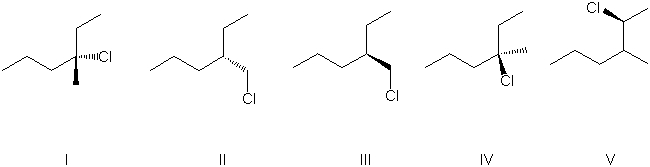
Rank the following radicals in order of decreasing stability (most stable to least stable). 
A) IV > I > II > III
B) III > I > II > IV
C) III > II > I > IV
D) III > IV > II > I
E) II > I > III > IV
A) IV > I > II > III
B) III > I > II > IV
C) III > II > I > IV
D) III > IV > II > I
E) II > I > III > IV

Question
Which term most accurately describes the process shown below? 
A) coupling
B) elimination
C) halogen abstraction
D) hydrogen abstraction
E) homolytic cleavage
A) coupling
B) elimination
C) halogen abstraction
D) hydrogen abstraction
E) homolytic cleavage
Question
Give the arrows to show the mechanism of the following radical process. 
Question
In the molecule shown below, determine which of the highlighted C-H bonds (from a to e) is expected to have the lowest bond dissociation energy. 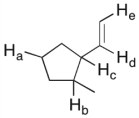
A) C-Ha
B) C-Hb
C) C-Hc
D) C-Hd
E) C-He
A) C-Ha
B) C-Hb
C) C-Hc
D) C-Hd
E) C-He
Question
Give the arrows to show the mechanism of the following radical process. 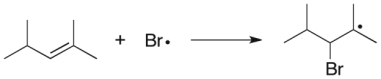
Question
Which of the following is an example of termination? 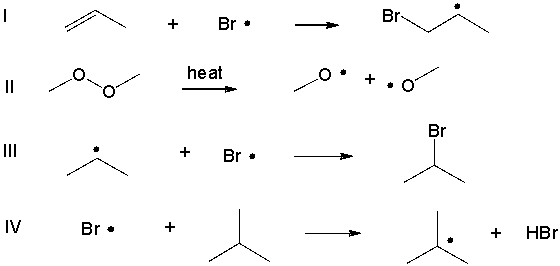
A) I
B) II
C) III
D) IV
E) none of the above
A) I
B) II
C) III
D) IV
E) none of the above
Question
Which term most accurately describes the process shown below? 
A) hydrogen abstraction
B) halogen abstraction
C) homolytic cleavage
D) coupling
E) elimination
A) hydrogen abstraction
B) halogen abstraction
C) homolytic cleavage
D) coupling
E) elimination
Question
Which of the following is the most stable radical? 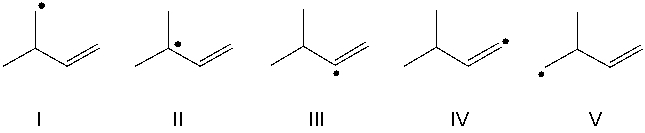
A) I
B) II
C) III
D) IV
E) V
A) I
B) II
C) III
D) IV
E) V
Question
Give the arrows to show the mechanism of the following radical process. 
Question
Give the arrows to show the mechanism of the following radical process. 
Question
Question
Question
Which of the following is an example of initiation? 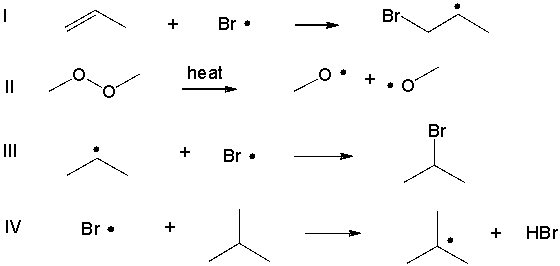
A) I
B) II
C) III
D) IV
E) none of the above
A) I
B) II
C) III
D) IV
E) none of the above
Question
Rank the following radicals in order of decreasing stability (most stable to least stable). 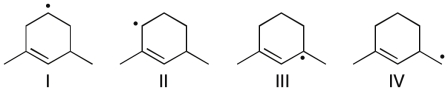
A) IV > I > II > III
B) III > I > II > IV
C) III > II > I > IV
D) III > IV > II > I
E) II > III > I > IV
A) IV > I > II > III
B) III > I > II > IV
C) III > II > I > IV
D) III > IV > II > I
E) II > III > I > IV
Question
Draw all of the reasonable resonance structures for the radical shown below. 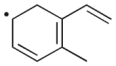
Question
Which term most accurately describes the process shown below? 
A) coupling
B) proton transfer
C) halogen abstraction
D) hydrogen abstraction E homolytic cleavage
A) coupling
B) proton transfer
C) halogen abstraction
D) hydrogen abstraction E homolytic cleavage
Question
Which of the labeled C-H bonds is the weakest? 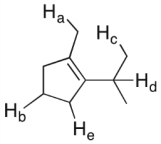
A) C-Ha
B) C-Hb
C) C-Hc
D) C-Hd
E) C-He
A) C-Ha
B) C-Hb
C) C-Hc
D) C-Hd
E) C-He
Question
Which of the following are the products of a homolytic cleavage of a C-C bond of ethane? 
A) I
B) II
C) III
D) IV
A) I
B) II
C) III
D) IV
Question
Draw all of the reasonable resonance structures for the radical shown below. 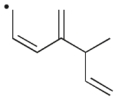
Question
Which term most accurately describes the process shown below? 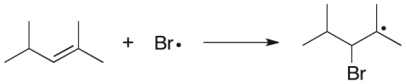
A) coupling
B) hydrogen abstraction
C) halogen abstraction
D) homolytic cleavage
E) addition to a π bond
A) coupling
B) hydrogen abstraction
C) halogen abstraction
D) homolytic cleavage
E) addition to a π bond
Question
Question
Question
Question
Predict the major product of the following reaction. 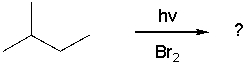
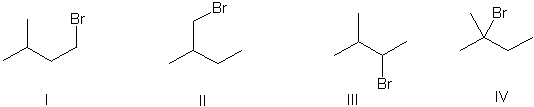
A) I
B) II
C) III
D) IV
A) I
B) II
C) III
D) IV
Question
Which of the following represents a propagation step in the monochlorination of methylene chloride (CH2Cl2)? 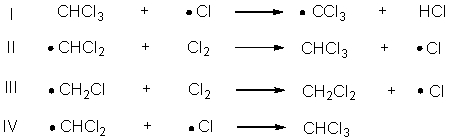
A) I
B) II
C) III
D) IV
A) I
B) II
C) III
D) IV
Question
Question
Question
Which of the following are possible termination steps in the chlorination of methane? 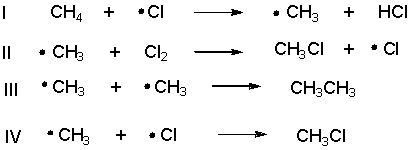
A) I and II
B) III and IV
C) I and III
D) II and IV
A) I and II
B) III and IV
C) I and III
D) II and IV
Question
Which of the following shows the initiation step of monochlorination of methane? 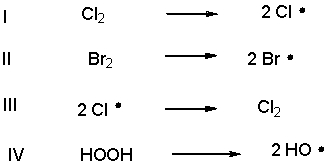
A) I
B) II
C) III
D) IV
E) I and II
A) I
B) II
C) III
D) IV
E) I and II
Question
Question
Question
Question
Predict the major product(s) of the following reaction. 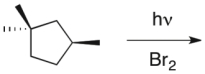
Question
Predict the major product(s) of the following reaction. 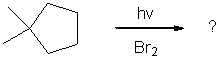

A) I
B) II
C) III
D) IV
E) I and II
A) I
B) II
C) III
D) IV
E) I and II
Question
Question
Question
Question
Question
Which of the following is the rate-determining step in the free-radical bromination of methane? 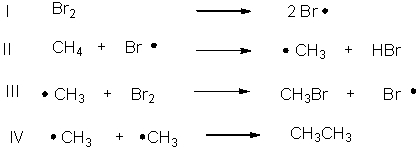
A) I
B) II
C) III
D) IV
A) I
B) II
C) III
D) IV
Question
Which of the following would you expect to function as an initiator at the lowest temperature? 
A) I
B) II
C) III
D) IV
A) I
B) II
C) III
D) IV
Question
Question
Question
Which of the following is the correct name for the major product of the following reaction? 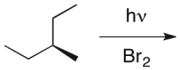
A) (R)-3-bromo-3-ethylbutane
B) (S)-3-bromo-3-ethylbutane
C) (R)-3-bromo-3-methylpentane
D) (S)-3-bromo-3-methylpentane
E) 3-bromo-3-methylpentane
A) (R)-3-bromo-3-ethylbutane
B) (S)-3-bromo-3-ethylbutane
C) (R)-3-bromo-3-methylpentane
D) (S)-3-bromo-3-methylpentane
E) 3-bromo-3-methylpentane
Question
What reagents would best accomplish the following synthesis? 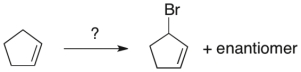
A) Br2
B) PBr3
C) CH3Br
D) NBS, heat
A) Br2
B) PBr3
C) CH3Br
D) NBS, heat
Question
Which of the following are possible product(s) of the reaction shown? 
A) I
B) I, II
C) I, II, IV, V
D) I, III, IV, V
E) I, II, III, IV, IV
A) I
B) I, II
C) I, II, IV, V
D) I, III, IV, V
E) I, II, III, IV, IV
Question
Identify the likely major product(s) of the reaction shown. 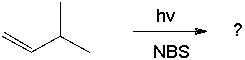

A) I
B) II
C) III
D) I and III
E) I and IV
A) I
B) II
C) III
D) I and III
E) I and IV
Question
Compound A has molecular formula C9H20. Compound A produces exactly three constitutional isomers upon monochlorination, and one major constitutional isomer upon monobromination. Which of the following are possible structures of compound A? 
A) I
B) II
C) III
D) IV
E) V
A) I
B) II
C) III
D) IV
E) V
Question
Predict the major product(s) of the following reaction. 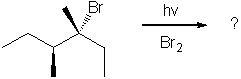
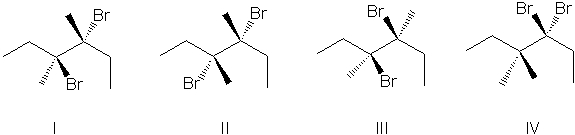
A) I
B) I and II
C) I, II, and III
D) I, II, and IV
E) IV
A) I
B) I and II
C) I, II, and III
D) I, II, and IV
E) IV
Question
Draw the major product(s) of the following reaction. Is the product optically active? Explain. 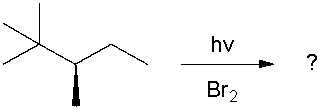
Question
Predict the product(s) of the following reaction. 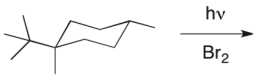
Question
Question
Draw the major product(s) of the following reaction. Is the product optically active? Explain. 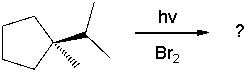
Question
Question
Which of the following are major products of the reaction shown? 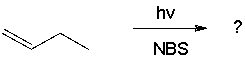

A) I
B) I, II
C) I, IV
D) I, III
E) I, II, III, IV
A) I
B) I, II
C) I, IV
D) I, III
E) I, II, III, IV
Question
Which of the following shows the correct products initially formed when ozone absorbs ultraviolet light? 
A) I
B) II
C) III
D) IV
A) I
B) II
C) III
D) IV
Question
Question
Predict the major product(s) of the following reaction. 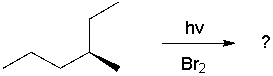

A) I
B) II and IV
C) III and V
D) I and IV
E) V
A) I
B) II and IV
C) III and V
D) I and IV
E) V
Question
Question
Question
Question
Predict the product(s) of the following reaction. 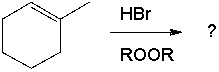
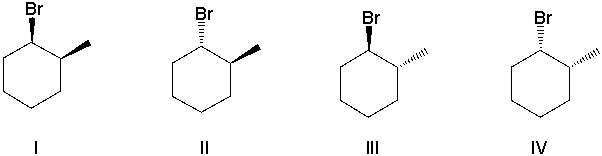
A) I
B) II
C) III
D) I, II
E) I, II, III, IV
A) I
B) II
C) III
D) I, II
E) I, II, III, IV
Question
Question
Predict the major product(s) of the reaction shown below. 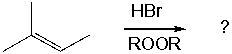
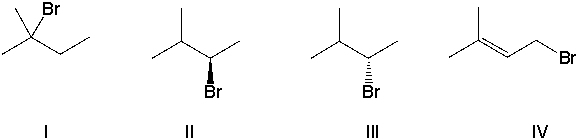
A) I
B) II
C) III
D) IV
E) II and III
A) I
B) II
C) III
D) IV
E) II and III
Question
Which of the following steps is thermodynamically unfavorable at all temperatures? 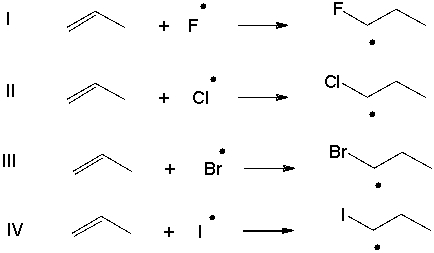
A) I
B) II
C) III
D) IV
A) I
B) II
C) III
D) IV
Question
Predict the major product(s) of the reaction shown below. 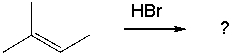
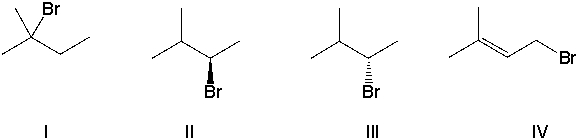
A) I
B) II
C) III
D) IV
E) II and III
A) I
B) II
C) III
D) IV
E) II and III
Question
Identify the intermediate leads to the major product for the reaction of 2-methyl-2-butene with hydrogen bromide in the presence of peroxide. 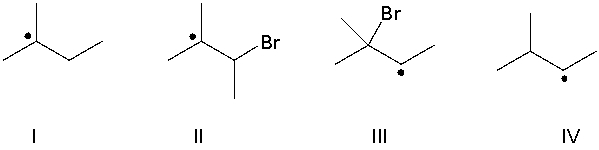
A) I
B) II
C) III
D) IV
A) I
B) II
C) III
D) IV
Question
Of the four choices shown, which is likely to be a major product of the reaction below? 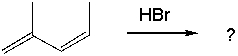
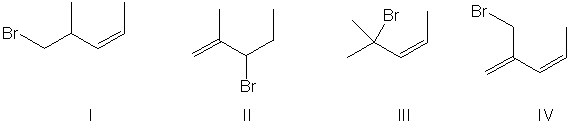
A) I
B) II
C) III
D) IV
A) I
B) II
C) III
D) IV
Question
Which of the following is expected to function as an antioxidant? 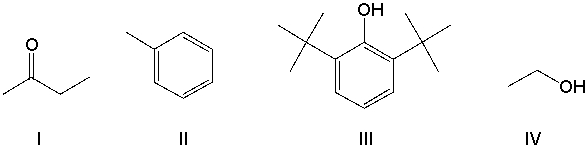
A) I
B) II
C) III
D) IV
E) I, II, III, and IV
A) I
B) II
C) III
D) IV
E) I, II, III, and IV
Question
Which of the following is the repeat unit for the polymer produced in the following reaction? 

A) I
B) II
C) III
D) IV
A) I
B) II
C) III
D) IV
Question
Give the arrows to show the propagation steps for the following reaction. 
Question
Which term best describes the process shown below? 
A) neutralization
B) propagation
C) termination
D) initiation
E) elimination
A) neutralization
B) propagation
C) termination
D) initiation
E) elimination
Question
Of the four choices shown, which is likely to be a major product of the reaction below? 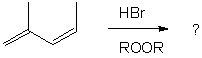
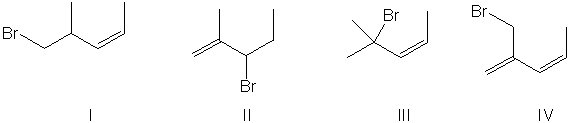
A) I
B) II
C) III
D) IV
A) I
B) II
C) III
D) IV
Question
Predict the product(s) of the following reaction. 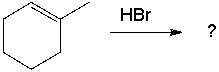
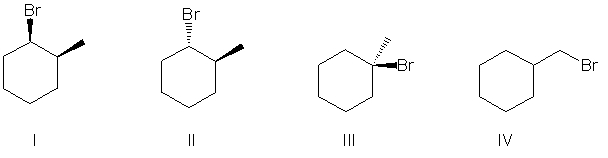
A) I
B) II
C) III
D) I, II
E) I, II, III, IV
A) I
B) II
C) III
D) I, II
E) I, II, III, IV
Question
Which term best describes the process shown below? 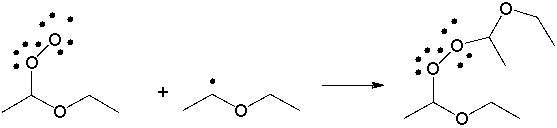
A) neutralization
B) propagation
C) termination
D) initiation
E) elimination
A) neutralization
B) propagation
C) termination
D) initiation
E) elimination
Question
Identify the intermediate leads to the major product for the reaction of 2-methyl-2-butene with hydrogen bromide and hydrogen peroxide. 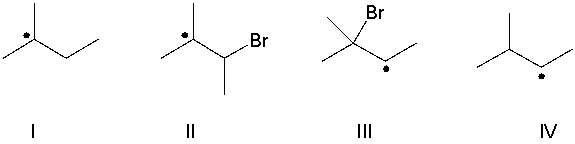
A) I
B) II
C) III
D) IV
A) I
B) II
C) III
D) IV
Question
Determine the repeat unit for the polymer produced in the following reaction. 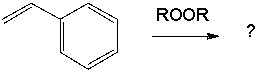
A)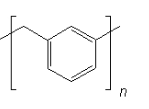
B)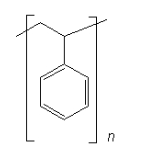
C)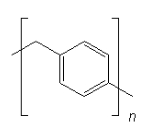
D)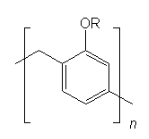
A)
B)
C)
D)
Question
Question
Poly(methyl methacrylate) (PMMA) is a light, shatter-resistant plastic prepared by the free-radical polymerization of methyl methacrylate (shown below). What is the repeat unit of PMMA? 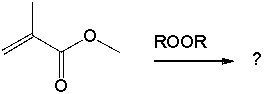
A)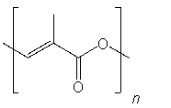
B)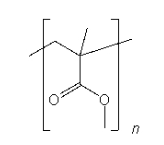
C)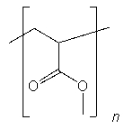
D)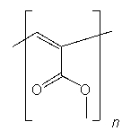
A)
B)
C)
D)
Question
Question
Which of the following is expected to be a major product for the reaction shown below? 
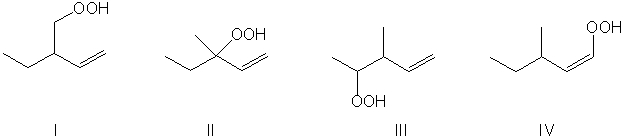
A) I
B) II
C) III
D) IV
A) I
B) II
C) III
D) IV

Unlock Deck
Sign up to unlock the cards in this deck!
Unlock Deck
Unlock Deck
1/102

Play

Full screen (f)
Deck 10: Radical Reactions
1
Rank the following radicals in order of decreasing stability (most stable to least stable).
A) IV > I > II > III
B) III > I > II > IV
C) III > II > I > IV
D) III > IV > II > I
E) II > I > III > IV
A) IV > I > II > III
B) III > I > II > IV
C) III > II > I > IV
D) III > IV > II > I
E) II > I > III > IV
II > I > III > IV
2
Which term most accurately describes the process shown below?
A) coupling
B) elimination
C) halogen abstraction
D) hydrogen abstraction
E) homolytic cleavage
A) coupling
B) elimination
C) halogen abstraction
D) hydrogen abstraction
E) homolytic cleavage
elimination
3
Give the arrows to show the mechanism of the following radical process.

4
In the molecule shown below, determine which of the highlighted C-H bonds (from a to e) is expected to have the lowest bond dissociation energy.
A) C-Ha
B) C-Hb
C) C-Hc
D) C-Hd
E) C-He
A) C-Ha
B) C-Hb
C) C-Hc
D) C-Hd
E) C-He
Unlock Deck
Unlock for access to all 102 flashcards in this deck.
Unlock Deck
k this deck
5
Give the arrows to show the mechanism of the following radical process.
Unlock Deck
Unlock for access to all 102 flashcards in this deck.
Unlock Deck
k this deck
6
Which of the following is an example of termination?
A) I
B) II
C) III
D) IV
E) none of the above
A) I
B) II
C) III
D) IV
E) none of the above
Unlock Deck
Unlock for access to all 102 flashcards in this deck.
Unlock Deck
k this deck
7
Which term most accurately describes the process shown below?
A) hydrogen abstraction
B) halogen abstraction
C) homolytic cleavage
D) coupling
E) elimination
A) hydrogen abstraction
B) halogen abstraction
C) homolytic cleavage
D) coupling
E) elimination
Unlock Deck
Unlock for access to all 102 flashcards in this deck.
Unlock Deck
k this deck
8
Which of the following is the most stable radical?
A) I
B) II
C) III
D) IV
E) V
A) I
B) II
C) III
D) IV
E) V
Unlock Deck
Unlock for access to all 102 flashcards in this deck.
Unlock Deck
k this deck
9
Give the arrows to show the mechanism of the following radical process.
Unlock Deck
Unlock for access to all 102 flashcards in this deck.
Unlock Deck
k this deck
10
Give the arrows to show the mechanism of the following radical process.
Unlock Deck
Unlock for access to all 102 flashcards in this deck.
Unlock Deck
k this deck
11
Identify an example of initiation.
A) homolytic cleavage
B) heterolytic cleavage
C) hydrogen abstraction
D) coupling
E) hydrogen addition
A) homolytic cleavage
B) heterolytic cleavage
C) hydrogen abstraction
D) coupling
E) hydrogen addition
Unlock Deck
Unlock for access to all 102 flashcards in this deck.
Unlock Deck
k this deck
12
Give arrows to show a homolytic bond cleavage of ethane to produce two methyl radicals.
Unlock Deck
Unlock for access to all 102 flashcards in this deck.
Unlock Deck
k this deck
13
Which of the following is an example of initiation?
A) I
B) II
C) III
D) IV
E) none of the above
A) I
B) II
C) III
D) IV
E) none of the above
Unlock Deck
Unlock for access to all 102 flashcards in this deck.
Unlock Deck
k this deck
14
Rank the following radicals in order of decreasing stability (most stable to least stable).
A) IV > I > II > III
B) III > I > II > IV
C) III > II > I > IV
D) III > IV > II > I
E) II > III > I > IV
A) IV > I > II > III
B) III > I > II > IV
C) III > II > I > IV
D) III > IV > II > I
E) II > III > I > IV
Unlock Deck
Unlock for access to all 102 flashcards in this deck.
Unlock Deck
k this deck
15
Draw all of the reasonable resonance structures for the radical shown below.
Unlock Deck
Unlock for access to all 102 flashcards in this deck.
Unlock Deck
k this deck
16
Which term most accurately describes the process shown below?
A) coupling
B) proton transfer
C) halogen abstraction
D) hydrogen abstraction E homolytic cleavage
A) coupling
B) proton transfer
C) halogen abstraction
D) hydrogen abstraction E homolytic cleavage
Unlock Deck
Unlock for access to all 102 flashcards in this deck.
Unlock Deck
k this deck
17
Which of the labeled C-H bonds is the weakest?
A) C-Ha
B) C-Hb
C) C-Hc
D) C-Hd
E) C-He
A) C-Ha
B) C-Hb
C) C-Hc
D) C-Hd
E) C-He
Unlock Deck
Unlock for access to all 102 flashcards in this deck.
Unlock Deck
k this deck
18
Which of the following are the products of a homolytic cleavage of a C-C bond of ethane?
A) I
B) II
C) III
D) IV
A) I
B) II
C) III
D) IV
Unlock Deck
Unlock for access to all 102 flashcards in this deck.
Unlock Deck
k this deck
19
Draw all of the reasonable resonance structures for the radical shown below.
Unlock Deck
Unlock for access to all 102 flashcards in this deck.
Unlock Deck
k this deck
20
Which term most accurately describes the process shown below?
A) coupling
B) hydrogen abstraction
C) halogen abstraction
D) homolytic cleavage
E) addition to a π bond
A) coupling
B) hydrogen abstraction
C) halogen abstraction
D) homolytic cleavage
E) addition to a π bond
Unlock Deck
Unlock for access to all 102 flashcards in this deck.
Unlock Deck
k this deck
21
How many constitutional isomers are possible if propane is dichlorinated? Draw them.
Unlock Deck
Unlock for access to all 102 flashcards in this deck.
Unlock Deck
k this deck
22
A bromine radical can add to the π bond of 2-methylpropene. Give the arrows to show this process and the expected result.
Unlock Deck
Unlock for access to all 102 flashcards in this deck.
Unlock Deck
k this deck
23
Draw the arrows to show the propagation steps in the chlorination of propane to produce 2-chloropropane.
Unlock Deck
Unlock for access to all 102 flashcards in this deck.
Unlock Deck
k this deck
24
Predict the major product of the following reaction.
A) I
B) II
C) III
D) IV
A) I
B) II
C) III
D) IV
Unlock Deck
Unlock for access to all 102 flashcards in this deck.
Unlock Deck
k this deck
25
Which of the following represents a propagation step in the monochlorination of methylene chloride (CH2Cl2)?
A) I
B) II
C) III
D) IV
A) I
B) II
C) III
D) IV
Unlock Deck
Unlock for access to all 102 flashcards in this deck.
Unlock Deck
k this deck
26
Which of the following correctly describes the nature of the transition state of the rate-determining step of the free-radical bromination of methane?
A) the transition state resembles the reactants more than the products
B) the transition state resembles the products more than the reactants
C) the transition state equally resembles products and reactants
A) the transition state resembles the reactants more than the products
B) the transition state resembles the products more than the reactants
C) the transition state equally resembles products and reactants
Unlock Deck
Unlock for access to all 102 flashcards in this deck.
Unlock Deck
k this deck
27
Which of the following processes is responsible for the fact that free radical bromination of methane is slower than free radical chlorination?
A) initiation
B) hydrogen abstraction
C) halogen abstraction
D) termination
E) entropy
A) initiation
B) hydrogen abstraction
C) halogen abstraction
D) termination
E) entropy
Unlock Deck
Unlock for access to all 102 flashcards in this deck.
Unlock Deck
k this deck
28
Which of the following are possible termination steps in the chlorination of methane?
A) I and II
B) III and IV
C) I and III
D) II and IV
A) I and II
B) III and IV
C) I and III
D) II and IV
Unlock Deck
Unlock for access to all 102 flashcards in this deck.
Unlock Deck
k this deck
29
Which of the following shows the initiation step of monochlorination of methane?
A) I
B) II
C) III
D) IV
E) I and II
A) I
B) II
C) III
D) IV
E) I and II
Unlock Deck
Unlock for access to all 102 flashcards in this deck.
Unlock Deck
k this deck
30
Predict the major product obtained upon radical bromination of t-butylcyclohexane.
A) 1-bromo-1-tert-butylcyclohexane
B) 2-bromo-1-tert-butylcyclohexane
C) 3-bromo-1-tert-butylcyclohexane
D) 4-bromo-1-tert-butylcyclohexane
E) 1-bromo-1,1-dimethylethylcyclohexane
A) 1-bromo-1-tert-butylcyclohexane
B) 2-bromo-1-tert-butylcyclohexane
C) 3-bromo-1-tert-butylcyclohexane
D) 4-bromo-1-tert-butylcyclohexane
E) 1-bromo-1,1-dimethylethylcyclohexane
Unlock Deck
Unlock for access to all 102 flashcards in this deck.
Unlock Deck
k this deck
31
Free radical chlorination of ethane can produce higher halogenation products such as dichloroethane, trichloroethane, tetrachloroethane, pentachloroethane, and hexachloroethane. How could the production of higher halogenated products be minimized?
A) use an excess of chlorine
B) use an excess of ethane
C) use equimolar chlorine and ethane
D) it is not possible to minimize the production of higher halogenated products
A) use an excess of chlorine
B) use an excess of ethane
C) use equimolar chlorine and ethane
D) it is not possible to minimize the production of higher halogenated products
Unlock Deck
Unlock for access to all 102 flashcards in this deck.
Unlock Deck
k this deck
32
Identify an example of propagation.
A) homolytic cleavage
B) heterolytic cleavage
C) hydrogen abstraction
D) coupling
E) hydrogen addition
A) homolytic cleavage
B) heterolytic cleavage
C) hydrogen abstraction
D) coupling
E) hydrogen addition
Unlock Deck
Unlock for access to all 102 flashcards in this deck.
Unlock Deck
k this deck
33
Predict the major product(s) of the following reaction.
Unlock Deck
Unlock for access to all 102 flashcards in this deck.
Unlock Deck
k this deck
34
Predict the major product(s) of the following reaction.
A) I
B) II
C) III
D) IV
E) I and II
A) I
B) II
C) III
D) IV
E) I and II
Unlock Deck
Unlock for access to all 102 flashcards in this deck.
Unlock Deck
k this deck
35
Identify an example of termination.
A) homolytic cleavage
B) heterolytic cleavage
C) hydrogen abstraction
D) coupling
E) hydrogen addition
A) homolytic cleavage
B) heterolytic cleavage
C) hydrogen abstraction
D) coupling
E) hydrogen addition
Unlock Deck
Unlock for access to all 102 flashcards in this deck.
Unlock Deck
k this deck
36
Cyclic compound A has molecular formula C5H10 and undergoes monochlorination to yield exactly three different constitutional isomers. Identify compound A and show the monochlorination products.
Unlock Deck
Unlock for access to all 102 flashcards in this deck.
Unlock Deck
k this deck
37
Both compounds A and B have molecular formula C6H14. Monochlorination of compound A results in the formation of two constitutional isomers. Monochlorination of compound B results in the formation of four constitutional isomers. Identify compounds A and B, and show the products of each monochlorination.
Unlock Deck
Unlock for access to all 102 flashcards in this deck.
Unlock Deck
k this deck
38
Which of the following is most reactive towards chlorination?
A) methane
B) chloromethane
C) dichloromethane
D) chloroform
E) ethane
A) methane
B) chloromethane
C) dichloromethane
D) chloroform
E) ethane
Unlock Deck
Unlock for access to all 102 flashcards in this deck.
Unlock Deck
k this deck
39
Which of the following is the rate-determining step in the free-radical bromination of methane?
A) I
B) II
C) III
D) IV
A) I
B) II
C) III
D) IV
Unlock Deck
Unlock for access to all 102 flashcards in this deck.
Unlock Deck
k this deck
40
Which of the following would you expect to function as an initiator at the lowest temperature?
A) I
B) II
C) III
D) IV
A) I
B) II
C) III
D) IV
Unlock Deck
Unlock for access to all 102 flashcards in this deck.
Unlock Deck
k this deck
41
Upon treatment with NBS and irradiation with UV light, 2-methyl-2-butene reacts to produce exactly six monobrominated compounds. Draw the products of this reaction.
Unlock Deck
Unlock for access to all 102 flashcards in this deck.
Unlock Deck
k this deck
42
Upon treatment with NBS and irradiation with UV light, 2-propyl-1-pentene produces exactly four monobrominated compounds (including stereoisomers). Draw and name the products of this reaction.
Unlock Deck
Unlock for access to all 102 flashcards in this deck.
Unlock Deck
k this deck
43
Which of the following is the correct name for the major product of the following reaction?
A) (R)-3-bromo-3-ethylbutane
B) (S)-3-bromo-3-ethylbutane
C) (R)-3-bromo-3-methylpentane
D) (S)-3-bromo-3-methylpentane
E) 3-bromo-3-methylpentane
A) (R)-3-bromo-3-ethylbutane
B) (S)-3-bromo-3-ethylbutane
C) (R)-3-bromo-3-methylpentane
D) (S)-3-bromo-3-methylpentane
E) 3-bromo-3-methylpentane
Unlock Deck
Unlock for access to all 102 flashcards in this deck.
Unlock Deck
k this deck
44
What reagents would best accomplish the following synthesis?
A) Br2
B) PBr3
C) CH3Br
D) NBS, heat
A) Br2
B) PBr3
C) CH3Br
D) NBS, heat
Unlock Deck
Unlock for access to all 102 flashcards in this deck.
Unlock Deck
k this deck
45
Which of the following are possible product(s) of the reaction shown?
A) I
B) I, II
C) I, II, IV, V
D) I, III, IV, V
E) I, II, III, IV, IV
A) I
B) I, II
C) I, II, IV, V
D) I, III, IV, V
E) I, II, III, IV, IV
Unlock Deck
Unlock for access to all 102 flashcards in this deck.
Unlock Deck
k this deck
46
Identify the likely major product(s) of the reaction shown.
A) I
B) II
C) III
D) I and III
E) I and IV
A) I
B) II
C) III
D) I and III
E) I and IV
Unlock Deck
Unlock for access to all 102 flashcards in this deck.
Unlock Deck
k this deck
47
Compound A has molecular formula C9H20. Compound A produces exactly three constitutional isomers upon monochlorination, and one major constitutional isomer upon monobromination. Which of the following are possible structures of compound A?
A) I
B) II
C) III
D) IV
E) V
A) I
B) II
C) III
D) IV
E) V
Unlock Deck
Unlock for access to all 102 flashcards in this deck.
Unlock Deck
k this deck
48
Predict the major product(s) of the following reaction.
A) I
B) I and II
C) I, II, and III
D) I, II, and IV
E) IV
A) I
B) I and II
C) I, II, and III
D) I, II, and IV
E) IV
Unlock Deck
Unlock for access to all 102 flashcards in this deck.
Unlock Deck
k this deck
49
Draw the major product(s) of the following reaction. Is the product optically active? Explain.
Unlock Deck
Unlock for access to all 102 flashcards in this deck.
Unlock Deck
k this deck
50
Predict the product(s) of the following reaction.
Unlock Deck
Unlock for access to all 102 flashcards in this deck.
Unlock Deck
k this deck
51
Upon treatment with NBS and irradiation with UV light, 2-isopropyl-3-methyl-1-butene reacts to produce exactly two monobrominated compounds. Draw the products of this reaction.
Unlock Deck
Unlock for access to all 102 flashcards in this deck.
Unlock Deck
k this deck
52
Draw the major product(s) of the following reaction. Is the product optically active? Explain.
Unlock Deck
Unlock for access to all 102 flashcards in this deck.
Unlock Deck
k this deck
53
Which of the following compounds would be expected to be least destructive to the ozone layer?
A) CCl3F
B) CCl2F2
C) CCl2FCCl2F
D) CF3CH2F
A) CCl3F
B) CCl2F2
C) CCl2FCCl2F
D) CF3CH2F
Unlock Deck
Unlock for access to all 102 flashcards in this deck.
Unlock Deck
k this deck
54
Which of the following are major products of the reaction shown?
A) I
B) I, II
C) I, IV
D) I, III
E) I, II, III, IV
A) I
B) I, II
C) I, IV
D) I, III
E) I, II, III, IV
Unlock Deck
Unlock for access to all 102 flashcards in this deck.
Unlock Deck
k this deck
55
Which of the following shows the correct products initially formed when ozone absorbs ultraviolet light?
A) I
B) II
C) III
D) IV
A) I
B) II
C) III
D) IV
Unlock Deck
Unlock for access to all 102 flashcards in this deck.
Unlock Deck
k this deck
56
Compound A has molecular formula C6H12. Upon treatment with NBS and irradiation with UV light, exactly two compounds (including stereoisomers), are formed. Suggest a possible structure for compoundA.
Unlock Deck
Unlock for access to all 102 flashcards in this deck.
Unlock Deck
k this deck
57
Predict the major product(s) of the following reaction.
A) I
B) II and IV
C) III and V
D) I and IV
E) V
A) I
B) II and IV
C) III and V
D) I and IV
E) V
Unlock Deck
Unlock for access to all 102 flashcards in this deck.
Unlock Deck
k this deck
58
Draw all possible monochlorination products of 3,3-dimethylpentane, including stereoisomers.
Unlock Deck
Unlock for access to all 102 flashcards in this deck.
Unlock Deck
k this deck
59
Upon treatment with NBS and irradiation with UV light, 1-ethyl-4-methylbenzene produces exactly three monobrominated compounds (including stereoisomers). Draw the products of this reaction.
Unlock Deck
Unlock for access to all 102 flashcards in this deck.
Unlock Deck
k this deck
60
Upon treatment of 1-methylcyclopentene with NBS and irradiation with UV light, exactly nine compounds (including stereoisomers) are formed. Draw all nine products.
Unlock Deck
Unlock for access to all 102 flashcards in this deck.
Unlock Deck
k this deck
61
Predict the product(s) of the following reaction.
A) I
B) II
C) III
D) I, II
E) I, II, III, IV
A) I
B) II
C) III
D) I, II
E) I, II, III, IV
Unlock Deck
Unlock for access to all 102 flashcards in this deck.
Unlock Deck
k this deck
62
Give the arrows to show the second propagation step for the reaction of a chlorine radical with ozone.
Unlock Deck
Unlock for access to all 102 flashcards in this deck.
Unlock Deck
k this deck
63
Predict the major product(s) of the reaction shown below.
A) I
B) II
C) III
D) IV
E) II and III
A) I
B) II
C) III
D) IV
E) II and III
Unlock Deck
Unlock for access to all 102 flashcards in this deck.
Unlock Deck
k this deck
64
Which of the following steps is thermodynamically unfavorable at all temperatures?
A) I
B) II
C) III
D) IV
A) I
B) II
C) III
D) IV
Unlock Deck
Unlock for access to all 102 flashcards in this deck.
Unlock Deck
k this deck
65
Predict the major product(s) of the reaction shown below.
A) I
B) II
C) III
D) IV
E) II and III
A) I
B) II
C) III
D) IV
E) II and III
Unlock Deck
Unlock for access to all 102 flashcards in this deck.
Unlock Deck
k this deck
66
Identify the intermediate leads to the major product for the reaction of 2-methyl-2-butene with hydrogen bromide in the presence of peroxide.
A) I
B) II
C) III
D) IV
A) I
B) II
C) III
D) IV
Unlock Deck
Unlock for access to all 102 flashcards in this deck.
Unlock Deck
k this deck
67
Of the four choices shown, which is likely to be a major product of the reaction below?
A) I
B) II
C) III
D) IV
A) I
B) II
C) III
D) IV
Unlock Deck
Unlock for access to all 102 flashcards in this deck.
Unlock Deck
k this deck
68
Which of the following is expected to function as an antioxidant?
A) I
B) II
C) III
D) IV
E) I, II, III, and IV
A) I
B) II
C) III
D) IV
E) I, II, III, and IV
Unlock Deck
Unlock for access to all 102 flashcards in this deck.
Unlock Deck
k this deck
69
Which of the following is the repeat unit for the polymer produced in the following reaction?
A) I
B) II
C) III
D) IV
A) I
B) II
C) III
D) IV
Unlock Deck
Unlock for access to all 102 flashcards in this deck.
Unlock Deck
k this deck
70
Give the arrows to show the propagation steps for the following reaction.
Unlock Deck
Unlock for access to all 102 flashcards in this deck.
Unlock Deck
k this deck
71
Which term best describes the process shown below?
A) neutralization
B) propagation
C) termination
D) initiation
E) elimination
A) neutralization
B) propagation
C) termination
D) initiation
E) elimination
Unlock Deck
Unlock for access to all 102 flashcards in this deck.
Unlock Deck
k this deck
72
Of the four choices shown, which is likely to be a major product of the reaction below?
A) I
B) II
C) III
D) IV
A) I
B) II
C) III
D) IV
Unlock Deck
Unlock for access to all 102 flashcards in this deck.
Unlock Deck
k this deck
73
Predict the product(s) of the following reaction.
A) I
B) II
C) III
D) I, II
E) I, II, III, IV
A) I
B) II
C) III
D) I, II
E) I, II, III, IV
Unlock Deck
Unlock for access to all 102 flashcards in this deck.
Unlock Deck
k this deck
74
Which term best describes the process shown below?
A) neutralization
B) propagation
C) termination
D) initiation
E) elimination
A) neutralization
B) propagation
C) termination
D) initiation
E) elimination
Unlock Deck
Unlock for access to all 102 flashcards in this deck.
Unlock Deck
k this deck
75
Identify the intermediate leads to the major product for the reaction of 2-methyl-2-butene with hydrogen bromide and hydrogen peroxide.
A) I
B) II
C) III
D) IV
A) I
B) II
C) III
D) IV
Unlock Deck
Unlock for access to all 102 flashcards in this deck.
Unlock Deck
k this deck
76
Determine the repeat unit for the polymer produced in the following reaction.
A)
B)
C)
D)
A)
B)
C)
D)
Unlock Deck
Unlock for access to all 102 flashcards in this deck.
Unlock Deck
k this deck
77
Give the arrows to show the propagation steps for the autooxidation of diethyl ether.
Unlock Deck
Unlock for access to all 102 flashcards in this deck.
Unlock Deck
k this deck
78
Poly(methyl methacrylate) (PMMA) is a light, shatter-resistant plastic prepared by the free-radical polymerization of methyl methacrylate (shown below). What is the repeat unit of PMMA?
A)
B)
C)
D)
A)
B)
C)
D)
Unlock Deck
Unlock for access to all 102 flashcards in this deck.
Unlock Deck
k this deck
79
Compound A, C6H12 reacts with HBr/ROOR to give compound B, C6H13Br. Compound C, C6H14, reacts with bromine and light to produce compound B, C6H13Br. Suggest structures for compounds A, B, and
C.
C.
Unlock Deck
Unlock for access to all 102 flashcards in this deck.
Unlock Deck
k this deck
80
Which of the following is expected to be a major product for the reaction shown below?
A) I
B) II
C) III
D) IV
A) I
B) II
C) III
D) IV
Unlock Deck
Unlock for access to all 102 flashcards in this deck.
Unlock Deck
k this deck
Unlock Deck
Unlock for access to all 102 flashcards in this deck.






