







 Chat with AI

Deck 20: Human Evolution Skin Deep
Full screen (f)

Question

Question
Question
Question
Question
Question
Question
Question
Question
Question
Question
Question
Question
Question
Question
Question
Question
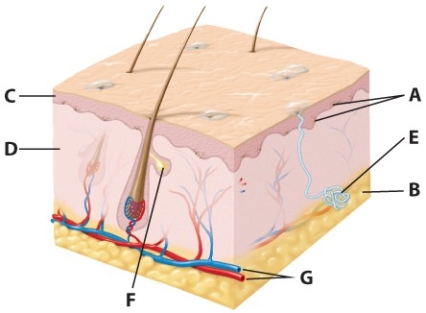
Using the figure below,label the items A-G.
Question
Question
Question
Question
Question
Question
Question
Question
Question
Question
Question
Question
Question
Question
Question
Question
Question
Question
Question
Question
Question
Question
Question
Question
Question
Question
Question
Question
Question
Question
Question
Question
Question
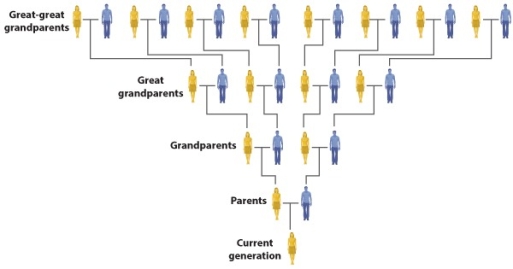
The table illustrates the ancestry of a human female (F Current Generation).The Fs represent female ancestors; the Ms are males.GGM means great-grandmother; GGF means great-grandfather.Individuals in the top row are great-great grandparents.Each set of parents is shown directly above its offspring. Which of the following correctly identifies the number of nuclear DNA and mtDNA ancestors the female has based on this table?
A) She has 8 nuclear DNA ancestors and 8 mtDNA ancestors.
B) She has 1 nuclear DNA ancestor and 1 mtDNA ancestor.
C) She has 16 nuclear DNA ancestors and 8 mtDNA ancestors.
D) She has 16 nuclear DNA ancestors and 1 mtDNA ancestor.
E) She has 1 nuclear DNA ancestor and 8 mtDNA ancestors.
Question
Question
Question
Question
Question
Question
Question
Question
Question
Question
Question
Question
Question
Question
Question
Question
Question
Question
Question
Question
Question
Question
Question
Question
Question
Question
Question
Question
Question
Question

Unlock Deck
Sign up to unlock the cards in this deck!
Unlock Deck
Unlock Deck
1/88

Play

Full screen (f)
Deck 20: Human Evolution Skin Deep
1
Ultraviolet light destroys which vitamin essential for cell division?
A) B2
B) B12
C) B6
D) D
E) B9
A) B2
B) B12
C) B6
D) D
E) B9
B9
2
Humans have been a species for
A) 100,000 years.
B) 200,000 years.
C) 500,000 years.
D) 750,000 years.
E) 1 million years.
A) 100,000 years.
B) 200,000 years.
C) 500,000 years.
D) 750,000 years.
E) 1 million years.
200,000 years.
3
Race,if defined by a person's skin tone,provides information about
A) their ancestry.
B) their financial position.
C) their social status.
D) their religion.
E) None of the above.
A) their ancestry.
B) their financial position.
C) their social status.
D) their religion.
E) None of the above.
None of the above.
4
All of the following statements are true,EXCEPT
A) race is a social, rather than biological, category.
B) all humans, regardless of race, are members of just one species.
C) children whose parents are different races tend to have more health problems than children whose parents are of the same race.
D) groups of people sharing similar physical characteristics likely have more ancestors in common.
E) some people may identify themselves as members of a race based on cultural traditions rather than on physical traits.
A) race is a social, rather than biological, category.
B) all humans, regardless of race, are members of just one species.
C) children whose parents are different races tend to have more health problems than children whose parents are of the same race.
D) groups of people sharing similar physical characteristics likely have more ancestors in common.
E) some people may identify themselves as members of a race based on cultural traditions rather than on physical traits.
Unlock Deck
Unlock for access to all 88 flashcards in this deck.
Unlock Deck
k this deck
5
Many people define a person's race based on that person's physical characteristics,in particular,skin color.List at least three ways other than physical traits that may define a person's race.
Unlock Deck
Unlock for access to all 88 flashcards in this deck.
Unlock Deck
k this deck
6
This molecule protects folate from destruction by damaging ultraviolet light.
A) retinol
B) melanin
C) calcium
D) bilirubin
E) chlorophyll
A) retinol
B) melanin
C) calcium
D) bilirubin
E) chlorophyll
Unlock Deck
Unlock for access to all 88 flashcards in this deck.
Unlock Deck
k this deck
7
In a person of very dark skin tone,it is expected that their melanocytes produce
A) small quantities of melanin pigment.
B) very large quantities of melanin pigment.
C) limited quantities of melanin pigment.
D) some quantities of melanin pigment.
E) average quantities of melanin pigment.
A) small quantities of melanin pigment.
B) very large quantities of melanin pigment.
C) limited quantities of melanin pigment.
D) some quantities of melanin pigment.
E) average quantities of melanin pigment.
Unlock Deck
Unlock for access to all 88 flashcards in this deck.
Unlock Deck
k this deck
8
Ultraviolet light is essential for the formation of this vitamin.
A) K
B) A
C) B6
D) D
E) B9
A) K
B) A
C) B6
D) D
E) B9
Unlock Deck
Unlock for access to all 88 flashcards in this deck.
Unlock Deck
k this deck
9
Skin color is determined by the amount of _______ a person has in their skin.
A) fat
B) folate
C) lignin
D) melanin
E) vitamin D
A) fat
B) folate
C) lignin
D) melanin
E) vitamin D
Unlock Deck
Unlock for access to all 88 flashcards in this deck.
Unlock Deck
k this deck
10
Melanocytes are located in the
A) dermis.
B) epidermis.
C) fat.
D) follicle.
E) subcutaneous layer.
A) dermis.
B) epidermis.
C) fat.
D) follicle.
E) subcutaneous layer.
Unlock Deck
Unlock for access to all 88 flashcards in this deck.
Unlock Deck
k this deck
11
Variations of human skin tone is driven by
A) DNA variation in the population.
B) natural selection.
C) inheritance and survival.
D) adaptations over time.
E) All of the above.
A) DNA variation in the population.
B) natural selection.
C) inheritance and survival.
D) adaptations over time.
E) All of the above.
Unlock Deck
Unlock for access to all 88 flashcards in this deck.
Unlock Deck
k this deck
12
In the absence of melanin production,a person would
A) have dark skin tone.
B) have medium skin tone.
C) have light skin tone.
D) have albinism.
E) have very dark skin tone.
A) have dark skin tone.
B) have medium skin tone.
C) have light skin tone.
D) have albinism.
E) have very dark skin tone.
Unlock Deck
Unlock for access to all 88 flashcards in this deck.
Unlock Deck
k this deck
13
A person's skin color depends on
A) the amount of melanin in the skin; more melanin means darker color.
B) the type of melanin in the skin; one form makes people fair and one form makes people dark.
C) the location of melanocytes in the skin; the deeper the melanocytes, the fairer the skin.
D) where a person lives; people at high elevation have darker skin.
E) A, B, and C
A) the amount of melanin in the skin; more melanin means darker color.
B) the type of melanin in the skin; one form makes people fair and one form makes people dark.
C) the location of melanocytes in the skin; the deeper the melanocytes, the fairer the skin.
D) where a person lives; people at high elevation have darker skin.
E) A, B, and C
Unlock Deck
Unlock for access to all 88 flashcards in this deck.
Unlock Deck
k this deck
14
What may be a problem with racial self-identification for the future of medicine and pharmacogenomics (drugs tailored to suit one's genome)?
A) It may be linked to cultural associations.
B) It may be defined by the possession of extreme physical traits.
C) It may have traditional or historical bias.
D) It may have a religious bias.
E) Incorrect identification of ancestral background because of all of the above.
A) It may be linked to cultural associations.
B) It may be defined by the possession of extreme physical traits.
C) It may have traditional or historical bias.
D) It may have a religious bias.
E) Incorrect identification of ancestral background because of all of the above.
Unlock Deck
Unlock for access to all 88 flashcards in this deck.
Unlock Deck
k this deck
15
Evolution and natural selection can be witnessed in the human population by examining
A) skin-tone variation and sunlight exposure.
B) the sickle-cell trait and malaria.
C) lactase persistence and cattle farming.
D) the CF allele and cholera resistance.
E) All of the above.
A) skin-tone variation and sunlight exposure.
B) the sickle-cell trait and malaria.
C) lactase persistence and cattle farming.
D) the CF allele and cholera resistance.
E) All of the above.
Unlock Deck
Unlock for access to all 88 flashcards in this deck.
Unlock Deck
k this deck
16
If everyone in the world looked similar to one another,such that physical traits could not be used to group people in any meaningful way,do you think people would still define themselves as belonging to different races? Explain your answer.
Unlock Deck
Unlock for access to all 88 flashcards in this deck.
Unlock Deck
k this deck
17
Using the figure below,label the items A-G.
Unlock Deck
Unlock for access to all 88 flashcards in this deck.
Unlock Deck
k this deck
18
Melanocytes are located
A) in the subcutaneous layer.
B) in the basal layer of the dermis.
C) in the basal layer of the epidermis.
D) in the uppermost layer of the dermis.
E) in the uppermost layer of the epidermis.
A) in the subcutaneous layer.
B) in the basal layer of the dermis.
C) in the basal layer of the epidermis.
D) in the uppermost layer of the dermis.
E) in the uppermost layer of the epidermis.
Unlock Deck
Unlock for access to all 88 flashcards in this deck.
Unlock Deck
k this deck
19
Where in the skin are melanocytes located?
A) in the dermis
B) around sweat glands
C) at the base of hair follicles
D) in the epidermis
E) in both the dermis and the epidermis
A) in the dermis
B) around sweat glands
C) at the base of hair follicles
D) in the epidermis
E) in both the dermis and the epidermis
Unlock Deck
Unlock for access to all 88 flashcards in this deck.
Unlock Deck
k this deck
20
Variations in skin tone correlate with a balance between these two vitamins.
A) B2 and B6
B) B12 and B6
C) D and B9
D) D and B6
E) Folic acid and B9
A) B2 and B6
B) B12 and B6
C) D and B9
D) D and B6
E) Folic acid and B9
Unlock Deck
Unlock for access to all 88 flashcards in this deck.
Unlock Deck
k this deck
21
The correlation between vitamin D,folate,sunlight exposure,and the resulting variations of skin tones is an example of
A) a genetic strategy to increase fitness.
B) natural selection.
C) human evolution.
D) descent with modification.
E) All the above.
A) a genetic strategy to increase fitness.
B) natural selection.
C) human evolution.
D) descent with modification.
E) All the above.
Unlock Deck
Unlock for access to all 88 flashcards in this deck.
Unlock Deck
k this deck
22
Put the following countries in order from lightest to darkest skin pigmentation:
A) England→Kenya→Saudi Arabia→Italy
B) England→ Saudi Arabia→Kenya→Italy
C) England→Italy→Saudi Arabia→Kenya
D) Italy→England→Saudi Arabia→Kenya
E) Kenya→Saudi Arabia→Italy→England
A) England→Kenya→Saudi Arabia→Italy
B) England→ Saudi Arabia→Kenya→Italy
C) England→Italy→Saudi Arabia→Kenya
D) Italy→England→Saudi Arabia→Kenya
E) Kenya→Saudi Arabia→Italy→England
Unlock Deck
Unlock for access to all 88 flashcards in this deck.
Unlock Deck
k this deck
23
Most states are cutting physical education classes,so children are not playing outside during school hours.During nonschool hours,children are frequently indoors playing video games or watching TV.Aside from increased obesity,why is this situation a health concern for our children?
Unlock Deck
Unlock for access to all 88 flashcards in this deck.
Unlock Deck
k this deck
24
Which of the following children is MOST LIKELY to develop rickets?
A) a child with dark skin who drinks milk fortified with vitamin D
B) a child with dark skin who does not drink milk fortified with vitamin D
C) a child with light skin who drinks milk fortified with vitamin D
D) a child with light skin who spends a lot of time outside
E) a child with dark skin who spends a lot of time outside
A) a child with dark skin who drinks milk fortified with vitamin D
B) a child with dark skin who does not drink milk fortified with vitamin D
C) a child with light skin who drinks milk fortified with vitamin D
D) a child with light skin who spends a lot of time outside
E) a child with dark skin who spends a lot of time outside
Unlock Deck
Unlock for access to all 88 flashcards in this deck.
Unlock Deck
k this deck
25
It would be expected that a population geographically located where UVB exposure is maximal to have a skin tone that is
A) very light.
B) light.
C) medium.
D) dark.
E) very dark.
A) very light.
B) light.
C) medium.
D) dark.
E) very dark.
Unlock Deck
Unlock for access to all 88 flashcards in this deck.
Unlock Deck
k this deck
26
List at least three consequences of folate deficiency.
Unlock Deck
Unlock for access to all 88 flashcards in this deck.
Unlock Deck
k this deck
27
Discuss the evolution of human skin color.Specifically,relate sunlight,folate,and vitamin D to skin color and geographic distribution.
Unlock Deck
Unlock for access to all 88 flashcards in this deck.
Unlock Deck
k this deck
28
Both vitamin D and folate can be obtained from the food we eat.Which of the following correctly identifies the foods from which each can be obtained?
A) Vitamin D is found in fortified dairy products; folate is found in beans, dark-green, leafy vegetables, and several other foods.
B) Vitamin D is found in whole grains and "orange" vegetables (carrots, squash); folate is found in beans, red meat, and fish.
C) Vitamin D is found in fortified grains (such as breads); folate is found in poultry, pork, and liver.
D) Vitamin D is found in dark-green vegetables and whole grains; folate is found in fortified dairy products and cereals.
E) Both vitamin D and folate are found in dark-green vegetables, fish, and whole grains.
A) Vitamin D is found in fortified dairy products; folate is found in beans, dark-green, leafy vegetables, and several other foods.
B) Vitamin D is found in whole grains and "orange" vegetables (carrots, squash); folate is found in beans, red meat, and fish.
C) Vitamin D is found in fortified grains (such as breads); folate is found in poultry, pork, and liver.
D) Vitamin D is found in dark-green vegetables and whole grains; folate is found in fortified dairy products and cereals.
E) Both vitamin D and folate are found in dark-green vegetables, fish, and whole grains.
Unlock Deck
Unlock for access to all 88 flashcards in this deck.
Unlock Deck
k this deck
29
List at least three health problems associated with a deficiency of vitamin D.
Unlock Deck
Unlock for access to all 88 flashcards in this deck.
Unlock Deck
k this deck
30
Folate (vitamin B9)is important for reproductive health.Why?
A) Folate prevents spinal cord defects in the baby and maintains bone density in pregnant women.
B) Folate prevents abnormal bone formation in babies and maintains bone density in pregnant women.
C) Folate prevents abnormal bone formation in babies and maintains high sperm count in men.
D) Folate prevents spina bifida in babies and maintains high sperm count in men.
E) Folate prevents premature birth and maintains high sperm count in men.
A) Folate prevents spinal cord defects in the baby and maintains bone density in pregnant women.
B) Folate prevents abnormal bone formation in babies and maintains bone density in pregnant women.
C) Folate prevents abnormal bone formation in babies and maintains high sperm count in men.
D) Folate prevents spina bifida in babies and maintains high sperm count in men.
E) Folate prevents premature birth and maintains high sperm count in men.
Unlock Deck
Unlock for access to all 88 flashcards in this deck.
Unlock Deck
k this deck
31
It would be expected that a population geographically located where UVB exposure is minimal to have a skin tone that is
A) very light.
B) light.
C) medium.
D) dark.
E) very dark.
A) very light.
B) light.
C) medium.
D) dark.
E) very dark.
Unlock Deck
Unlock for access to all 88 flashcards in this deck.
Unlock Deck
k this deck
32
Which of the following BEST summarizes the correlation between skin pigmentation and geography?
A) Skin is lightest toward the equator, where UV radiation is strongest.
B) Skin is lightest toward the poles, where UV radiation is strongest.
C) Skin is darkest toward the equator, where UV radiation is strongest.
D) Skin is darkest toward the poles, where UV radiation is strongest.
E) Skin is darkest toward the equator, where UV radiation is weakest.
A) Skin is lightest toward the equator, where UV radiation is strongest.
B) Skin is lightest toward the poles, where UV radiation is strongest.
C) Skin is darkest toward the equator, where UV radiation is strongest.
D) Skin is darkest toward the poles, where UV radiation is strongest.
E) Skin is darkest toward the equator, where UV radiation is weakest.
Unlock Deck
Unlock for access to all 88 flashcards in this deck.
Unlock Deck
k this deck
33
All of the following are TRUE of vitamin D,EXCEPT
A) vitamin D helps the body absorb calcium.
B) vitamin D is important for healthy bone growth.
C) sunlight is important for vitamin D production.
D) pregnant women should reduce vitamin D in their diet to avoid birth defects.
E) the need of the body for vitamin D is one factor in the evolution of skin color.
A) vitamin D helps the body absorb calcium.
B) vitamin D is important for healthy bone growth.
C) sunlight is important for vitamin D production.
D) pregnant women should reduce vitamin D in their diet to avoid birth defects.
E) the need of the body for vitamin D is one factor in the evolution of skin color.
Unlock Deck
Unlock for access to all 88 flashcards in this deck.
Unlock Deck
k this deck
34
Which continent receives the most UVB exposure per land mass?
A) Asia
B) Africa
C) North America
D) South America
E) Australia
A) Asia
B) Africa
C) North America
D) South America
E) Australia
Unlock Deck
Unlock for access to all 88 flashcards in this deck.
Unlock Deck
k this deck
35
All of the following are TRUE of folate,EXCEPT
A) it increases with increased exposure to the sun.
B) it can be found in beans, citrus fruit, and dark-green, leafy vegetables.
C) it helps sperm develop normally.
D) decreased folate levels in the mother are linked to spina bifida in the baby.
E) it is needed for DNA replication and cell division.
A) it increases with increased exposure to the sun.
B) it can be found in beans, citrus fruit, and dark-green, leafy vegetables.
C) it helps sperm develop normally.
D) decreased folate levels in the mother are linked to spina bifida in the baby.
E) it is needed for DNA replication and cell division.
Unlock Deck
Unlock for access to all 88 flashcards in this deck.
Unlock Deck
k this deck
36
What fact was used to determine that mitochondrial Eve is every human's ancestor?
A) Only males pass on mitochondrial genes in the sperm.
B) The sperm and egg's chromosomes undergo meiosis and independent assortment.
C) Only females pass on mitochondrial genes in the egg cell.
D) The sperm contains mitochondria in its flagella, which is passed on to the zygote.
E) Egg cells have no mitochondria to be passed on to the developing zygote.
A) Only males pass on mitochondrial genes in the sperm.
B) The sperm and egg's chromosomes undergo meiosis and independent assortment.
C) Only females pass on mitochondrial genes in the egg cell.
D) The sperm contains mitochondria in its flagella, which is passed on to the zygote.
E) Egg cells have no mitochondria to be passed on to the developing zygote.
Unlock Deck
Unlock for access to all 88 flashcards in this deck.
Unlock Deck
k this deck
37
All of the following are good sources of folate,EXCEPT
A) dark-green, leafy vegetables.
B) whole grains.
C) citrus fruit.
D) shellfish.
E) hamburgers.
A) dark-green, leafy vegetables.
B) whole grains.
C) citrus fruit.
D) shellfish.
E) hamburgers.
Unlock Deck
Unlock for access to all 88 flashcards in this deck.
Unlock Deck
k this deck
38
Both vitamin D and folate levels are affected by UV radiation from sunlight.Which of the following correctly explains the effects of sunlight on these vitamins?
A)Both vitamin D and folate are degraded by UV radiation from sunlight.
B)Sunlight is necessary for both vitamin D and folate formation.
C)Sunlight degrades vitamin D but helps build folate.
D)Sunlight degrades folate but helps build vitamin D.
E)Moderate sunlight is necessary to build both vitamin D and folate,but excess sunlight degrades both.
A)Both vitamin D and folate are degraded by UV radiation from sunlight.
B)Sunlight is necessary for both vitamin D and folate formation.
C)Sunlight degrades vitamin D but helps build folate.
D)Sunlight degrades folate but helps build vitamin D.
E)Moderate sunlight is necessary to build both vitamin D and folate,but excess sunlight degrades both.
Unlock Deck
Unlock for access to all 88 flashcards in this deck.
Unlock Deck
k this deck
39
Who is mitochondrial Eve?
A) an African maternal ancestor of all humanity today
B) a female descendent from Africa
C) the only female that lived in Africa many years ago
D) a female that is our ancestor from Asia
E) the first female to migrate out of Africa
A) an African maternal ancestor of all humanity today
B) a female descendent from Africa
C) the only female that lived in Africa many years ago
D) a female that is our ancestor from Asia
E) the first female to migrate out of Africa
Unlock Deck
Unlock for access to all 88 flashcards in this deck.
Unlock Deck
k this deck
40
Variations in skin tone correlate with
A) exposure to sunlight.
B) folate stores in the body.
C) vitamin D production.
D) melanin expression.
E) All of the above.
A) exposure to sunlight.
B) folate stores in the body.
C) vitamin D production.
D) melanin expression.
E) All of the above.
Unlock Deck
Unlock for access to all 88 flashcards in this deck.
Unlock Deck
k this deck
41
What are at least two reasons scientists have for believing humans evolved in Africa?
Unlock Deck
Unlock for access to all 88 flashcards in this deck.
Unlock Deck
k this deck
42
The oldest know fossils of modern humans found in eastern Africa date to
A) 75-100,00 years ago.
B) 50-75,000 years ago.
C) 160-195,000 years ago.
D) 25-50,000 years ago.
E) 200-300,000 years ago.
A) 75-100,00 years ago.
B) 50-75,000 years ago.
C) 160-195,000 years ago.
D) 25-50,000 years ago.
E) 200-300,000 years ago.
Unlock Deck
Unlock for access to all 88 flashcards in this deck.
Unlock Deck
k this deck
43
Why is mitochondrial DNA inherited only from the mother?
Unlock Deck
Unlock for access to all 88 flashcards in this deck.
Unlock Deck
k this deck
44
A woman has a child but does not know the identity of the father.The mitochondrial DNA sequences are shown below.
Child: CGAATCTG
Man 1: CGAATCTG
Man 2: CGTATCTG
Man 3: CGTATCTA
Based on these data,what do you conclude?
A) Man 1 is the father.
B) Man 2 is the father.
C) Man 3 is the father.
D) None of these men could be the father.
E) The father cannot be determined.
Child: CGAATCTG
Man 1: CGAATCTG
Man 2: CGTATCTG
Man 3: CGTATCTA
Based on these data,what do you conclude?
A) Man 1 is the father.
B) Man 2 is the father.
C) Man 3 is the father.
D) None of these men could be the father.
E) The father cannot be determined.
Unlock Deck
Unlock for access to all 88 flashcards in this deck.
Unlock Deck
k this deck
45
A man and a woman have two sons and three daughters.Each son has three daughters.Each daughter has one son.In how many of her grandchildren are the mother's mitochondria found?
A) 0
B) 3
C) 6
D) 12
E) This can't be answered with the information provided.
A) 0
B) 3
C) 6
D) 12
E) This can't be answered with the information provided.
Unlock Deck
Unlock for access to all 88 flashcards in this deck.
Unlock Deck
k this deck
46
Put in order the timeline of migration of humans from earliest to most recent,across the globe.
A) Africa, Oceania, Asia, Europe, and America
B) Africa, Asia, Oceania, Europe, and America
C) Asia, Africa, Oceania, Europe, and America
D) Africa, Asia, Oceania, America, and Europe
E) Oceania, Africa, Asia, Europe, and America
A) Africa, Oceania, Asia, Europe, and America
B) Africa, Asia, Oceania, Europe, and America
C) Asia, Africa, Oceania, Europe, and America
D) Africa, Asia, Oceania, America, and Europe
E) Oceania, Africa, Asia, Europe, and America
Unlock Deck
Unlock for access to all 88 flashcards in this deck.
Unlock Deck
k this deck
47
Mitochondrial Eve is
A) the only human woman whose children survived and reproduced to ultimately give rise to all humans alive on the planet today.
B) the most recent ancestor from whom all humans today inherited their nuclear DNA.
C) the most recent common ancestor from whom all humans today inherited their mitochondrial DNA.
D) the earliest human female to arise on the planet.
E) All of the above.
A) the only human woman whose children survived and reproduced to ultimately give rise to all humans alive on the planet today.
B) the most recent ancestor from whom all humans today inherited their nuclear DNA.
C) the most recent common ancestor from whom all humans today inherited their mitochondrial DNA.
D) the earliest human female to arise on the planet.
E) All of the above.
Unlock Deck
Unlock for access to all 88 flashcards in this deck.
Unlock Deck
k this deck
48
Mitochondrial DNA can be used to trace matrilineal evolutionary history because
A) the Y chromosome has more mutations.
B) there are fewer mutations than nuclear DNA.
C) there is no recombination between male and female mitochondrial DNA.
D) mitochondrial DNA is passed from both parents.
E) it is impossible to analyze nuclear DNA because of meiosis.
A) the Y chromosome has more mutations.
B) there are fewer mutations than nuclear DNA.
C) there is no recombination between male and female mitochondrial DNA.
D) mitochondrial DNA is passed from both parents.
E) it is impossible to analyze nuclear DNA because of meiosis.
Unlock Deck
Unlock for access to all 88 flashcards in this deck.
Unlock Deck
k this deck
49
Which of the following describes the migration of humans in order from oldest populations to youngest populations?
A) Western Europe→Africa→Eastern Europe→North America→South America
B) Northeast Europe→Western Europe→Africa→South America→North America
C) Africa→Western Europe→South America→North America→Northeast Europe
D) Africa→Northeast Europe→Western Europe→North America→South America
E) Africa→Western Europe→Northeast Europe→North America→South America
A) Western Europe→Africa→Eastern Europe→North America→South America
B) Northeast Europe→Western Europe→Africa→South America→North America
C) Africa→Western Europe→South America→North America→Northeast Europe
D) Africa→Northeast Europe→Western Europe→North America→South America
E) Africa→Western Europe→Northeast Europe→North America→South America
Unlock Deck
Unlock for access to all 88 flashcards in this deck.
Unlock Deck
k this deck
50
The table illustrates the ancestry of a human female (F Current Generation).The Fs represent female ancestors; the Ms are males.GGM means great-grandmother; GGF means great-grandfather.Individuals in the top row are great-great grandparents.Each set of parents is shown directly above its offspring. Which of the following correctly identifies the number of nuclear DNA and mtDNA ancestors the female has based on this table?
A) She has 8 nuclear DNA ancestors and 8 mtDNA ancestors.
B) She has 1 nuclear DNA ancestor and 1 mtDNA ancestor.
C) She has 16 nuclear DNA ancestors and 8 mtDNA ancestors.
D) She has 16 nuclear DNA ancestors and 1 mtDNA ancestor.
E) She has 1 nuclear DNA ancestor and 8 mtDNA ancestors.
Unlock Deck
Unlock for access to all 88 flashcards in this deck.
Unlock Deck
k this deck
51
How do we know mitochondrial Eve is every human's ancestor?
A) because only males pass on mitochondrial genes
B) global comparison of nuclear DNA
C) global comparison of human mitochondrial and nuclear sequences
D) comparison of African mitochondrial DNA from the past
E) from fossil remains found in East Africa around 50,000 years ago
A) because only males pass on mitochondrial genes
B) global comparison of nuclear DNA
C) global comparison of human mitochondrial and nuclear sequences
D) comparison of African mitochondrial DNA from the past
E) from fossil remains found in East Africa around 50,000 years ago
Unlock Deck
Unlock for access to all 88 flashcards in this deck.
Unlock Deck
k this deck
52
How is mitochondrial DNA different from nuclear DNA?
Unlock Deck
Unlock for access to all 88 flashcards in this deck.
Unlock Deck
k this deck
53
Scientists use genetics to trace the evolution and migration of humans.How do scientists know which populations are older than others?
A) Members of older populations have identical mitochondrial genomes.
B) Members of older populations have more genes in their mitochondrial genomes.
C) Members of older populations have more genetic variability.
D) Members of older populations have fewer nuclear genes.
E) Members of older populations have more nuclear genes.
A) Members of older populations have identical mitochondrial genomes.
B) Members of older populations have more genes in their mitochondrial genomes.
C) Members of older populations have more genetic variability.
D) Members of older populations have fewer nuclear genes.
E) Members of older populations have more nuclear genes.
Unlock Deck
Unlock for access to all 88 flashcards in this deck.
Unlock Deck
k this deck
54
Which of the following BEST describes mitochondrial inheritance in humans?
A) Mitochondria are inherited only from the mother. Once the mitochondrion from the sperm enters the egg, it is inactivated. Only maternal mitochondria divide as the fertilized egg divides.
B) Mitochondria are inherited only from the mother. Sperm don't have mitochondria, only eggs do.
C) Mitochondria are inherited only from the mother. Sperm mitochondria aren't contained in the head of the sperm, which is the only part that penetrates the egg.
D) Mitochondria are inherited only from the father. Eggs don't have mitochondria, but sperm do.
E) Mitochondria are inherited from both parents. Both eggs and sperm contain mitochondria, so every cell in a human body includes both paternal and maternal mitochondria.
A) Mitochondria are inherited only from the mother. Once the mitochondrion from the sperm enters the egg, it is inactivated. Only maternal mitochondria divide as the fertilized egg divides.
B) Mitochondria are inherited only from the mother. Sperm don't have mitochondria, only eggs do.
C) Mitochondria are inherited only from the mother. Sperm mitochondria aren't contained in the head of the sperm, which is the only part that penetrates the egg.
D) Mitochondria are inherited only from the father. Eggs don't have mitochondria, but sperm do.
E) Mitochondria are inherited from both parents. Both eggs and sperm contain mitochondria, so every cell in a human body includes both paternal and maternal mitochondria.
Unlock Deck
Unlock for access to all 88 flashcards in this deck.
Unlock Deck
k this deck
55
The ancestral population of humans lived in
A) Africa.
B) Asia.
C) Pangaea.
D) northern Europe.
E) Australia.
A) Africa.
B) Asia.
C) Pangaea.
D) northern Europe.
E) Australia.
Unlock Deck
Unlock for access to all 88 flashcards in this deck.
Unlock Deck
k this deck
56
Mitochondrial Eve can be traced back to
A) Asia, 150-200,000 years ago.
B) southern Africa, 150-200,000 years ago.
C) western Africa, 150-200,000 years ago.
D) eastern Africa, 150-200,000 years ago.
E) northern Australia, 150-200,000 years ago.
A) Asia, 150-200,000 years ago.
B) southern Africa, 150-200,000 years ago.
C) western Africa, 150-200,000 years ago.
D) eastern Africa, 150-200,000 years ago.
E) northern Australia, 150-200,000 years ago.
Unlock Deck
Unlock for access to all 88 flashcards in this deck.
Unlock Deck
k this deck
57
Which is TRUE of mitochondrial DNA?
A) Mitochondrial DNA is found in the sperm's tail.
B) Mitochondrial DNA from the sperm is not found in the fertilized egg.
C) Mitochondrial DNA can be traced for many generations.
D) A son cannot pass his mother's mitochondrial DNA to his progeny.
E) All of the above.
A) Mitochondrial DNA is found in the sperm's tail.
B) Mitochondrial DNA from the sperm is not found in the fertilized egg.
C) Mitochondrial DNA can be traced for many generations.
D) A son cannot pass his mother's mitochondrial DNA to his progeny.
E) All of the above.
Unlock Deck
Unlock for access to all 88 flashcards in this deck.
Unlock Deck
k this deck
58
Which offspring would not inherit their mother's (maternal)mitochondria?
A) daughter
B) son
C) daughters' daughter
D) son's daughter
E) daughter's son
A) daughter
B) son
C) daughters' daughter
D) son's daughter
E) daughter's son
Unlock Deck
Unlock for access to all 88 flashcards in this deck.
Unlock Deck
k this deck
59
Which of the following statements about mitochondrial Eve is TRUE?
A) Mitochondrial Eve lived in western Asia.
B) Mitochondrial Eve lived about 200,000 years ago.
C) Mitochondrial Eve is the ancestor of modern women but not men.
D) Mitochondrial Eve represents a small group of unrelated women.
E) Mitochondrial Eve was traced through analysis of nuclear DNA.
A) Mitochondrial Eve lived in western Asia.
B) Mitochondrial Eve lived about 200,000 years ago.
C) Mitochondrial Eve is the ancestor of modern women but not men.
D) Mitochondrial Eve represents a small group of unrelated women.
E) Mitochondrial Eve was traced through analysis of nuclear DNA.
Unlock Deck
Unlock for access to all 88 flashcards in this deck.
Unlock Deck
k this deck
60
Which of the following statements about human evolutionary history is TRUE?
A) All modern humans can trace their ancestry to one female.
B) All modern humans can trace their ancestry to one male.
C) All modern humans can trace their ancestry to one female and one male
D) All modern humans can trace their ancestry to a small group of females.
E) All modern humans can trace their ancestry to a small group of males.
A) All modern humans can trace their ancestry to one female.
B) All modern humans can trace their ancestry to one male.
C) All modern humans can trace their ancestry to one female and one male
D) All modern humans can trace their ancestry to a small group of females.
E) All modern humans can trace their ancestry to a small group of males.
Unlock Deck
Unlock for access to all 88 flashcards in this deck.
Unlock Deck
k this deck
61
Which of the following statements about natural selection is TRUE?
A) Natural selection is a random process.
B) Natural selection acts on phenotypes that are controlled by genes.
C) Natural selection adapts a species to its environment, but it is not the process by which new species evolve.
D) Natural selection changes the frequency of alleles in an individual.
E) Natural selection operates independently of the environment.
A) Natural selection is a random process.
B) Natural selection acts on phenotypes that are controlled by genes.
C) Natural selection adapts a species to its environment, but it is not the process by which new species evolve.
D) Natural selection changes the frequency of alleles in an individual.
E) Natural selection operates independently of the environment.
Unlock Deck
Unlock for access to all 88 flashcards in this deck.
Unlock Deck
k this deck
62
The most recent common ancestor of modern day humans is the
A) orangutan.
B) monkey.
C) gorilla.
D) great ape.
E) chimpanzee.
A) orangutan.
B) monkey.
C) gorilla.
D) great ape.
E) chimpanzee.
Unlock Deck
Unlock for access to all 88 flashcards in this deck.
Unlock Deck
k this deck
63
Which of the following correctly lists important steps in human evolution in the correct order,from earliest to most recent?
A) big brain, upright walking, tool use, control of fire
B) big brain, upright walking, control of fire, tool use
C) upright walking, big brain, tool use, control of fire
D) upright walking, tool use, control of fire, big brain
E) upright walking, big brain, control of fire, tool use
A) big brain, upright walking, tool use, control of fire
B) big brain, upright walking, control of fire, tool use
C) upright walking, big brain, tool use, control of fire
D) upright walking, tool use, control of fire, big brain
E) upright walking, big brain, control of fire, tool use
Unlock Deck
Unlock for access to all 88 flashcards in this deck.
Unlock Deck
k this deck
64
The family tree that includes humans and chimpanzees is BEST described how?
A) As a simple tree with two branches-one leading to chimps and one leading from early to modern humans. Only one species of early human was present on Earth at a time.
B) As a complex tree with two major branches-one leading to chimps and one leading to modern humans. The "human" tree itself has many branches, and multiple early human species were present at various times during human evolution.
C) As a complex tree with three major branches-one leading to chimps, one leading to Neanderthal Man, and one leading to modern humans. Only one species of early human was present on Earth at a time.
D) As a complex tree with two major braches-one leading to chimps and one leading to modern humans. The "human" tree has many branches, but only one species of early human was present on Earth at a time.
E) As a complex tree with many major branches-one to chimps and one to each of many early human species. A dozen or more early human species were present on Earth before anatomically modern humans arose.
A) As a simple tree with two branches-one leading to chimps and one leading from early to modern humans. Only one species of early human was present on Earth at a time.
B) As a complex tree with two major branches-one leading to chimps and one leading to modern humans. The "human" tree itself has many branches, and multiple early human species were present at various times during human evolution.
C) As a complex tree with three major branches-one leading to chimps, one leading to Neanderthal Man, and one leading to modern humans. Only one species of early human was present on Earth at a time.
D) As a complex tree with two major braches-one leading to chimps and one leading to modern humans. The "human" tree has many branches, but only one species of early human was present on Earth at a time.
E) As a complex tree with many major branches-one to chimps and one to each of many early human species. A dozen or more early human species were present on Earth before anatomically modern humans arose.
Unlock Deck
Unlock for access to all 88 flashcards in this deck.
Unlock Deck
k this deck
65
Positive selection on a population confers
A) heterozygote advantage.
B) increased fitness.
C) decreased reproduction.
D) increased strength and reproductive success.
E) All of the above.
A) heterozygote advantage.
B) increased fitness.
C) decreased reproduction.
D) increased strength and reproductive success.
E) All of the above.
Unlock Deck
Unlock for access to all 88 flashcards in this deck.
Unlock Deck
k this deck
66
The first tool users were members of genus
A) Ardipithecus
B) Australopithecus
C) Homo
D) Paranthropus
E) Pan
A) Ardipithecus
B) Australopithecus
C) Homo
D) Paranthropus
E) Pan
Unlock Deck
Unlock for access to all 88 flashcards in this deck.
Unlock Deck
k this deck
67
What does it mean to say that an allele is "fixed" in a population? What could lead to such a fixed allele?
Unlock Deck
Unlock for access to all 88 flashcards in this deck.
Unlock Deck
k this deck
68
Anatomically modern humans
A) left Africa 150-200,000 years ago and arrived in both western Europe and Australia around 40,000 years ago-before they arrived in North or South America.
B) left Africa 200-500,000 years ago and arrived in both western Europe and Australia around 40,000 years ago-before they arrived in North or South America.
C) left Africa 150-200,000 years ago and arrived in western Europe first, followed by eastern Europe, Asia, and Australia.
D) left Africa 200-500,000 years ago and arrived in western Europe first, followed by Eastern Europe, Asia, and Australia.
E) left Africa around 3.5 million years ago and arrived simultaneously in western Europe, Australia, and Asia, around 1 million years ago.
A) left Africa 150-200,000 years ago and arrived in both western Europe and Australia around 40,000 years ago-before they arrived in North or South America.
B) left Africa 200-500,000 years ago and arrived in both western Europe and Australia around 40,000 years ago-before they arrived in North or South America.
C) left Africa 150-200,000 years ago and arrived in western Europe first, followed by eastern Europe, Asia, and Australia.
D) left Africa 200-500,000 years ago and arrived in western Europe first, followed by Eastern Europe, Asia, and Australia.
E) left Africa around 3.5 million years ago and arrived simultaneously in western Europe, Australia, and Asia, around 1 million years ago.
Unlock Deck
Unlock for access to all 88 flashcards in this deck.
Unlock Deck
k this deck
69
Members of family Hominidae include
A) all monkeys.
B) all monkeys and all baboons.
C) all monkeys and the great apes.
D) all monkeys, all baboons, and the great apes.
E) just the great apes.
A) all monkeys.
B) all monkeys and all baboons.
C) all monkeys and the great apes.
D) all monkeys, all baboons, and the great apes.
E) just the great apes.
Unlock Deck
Unlock for access to all 88 flashcards in this deck.
Unlock Deck
k this deck
70
Mutations are
A) usually detrimental.
B) usually neutral.
C) usually beneficial.
D) necessary for evolution.
E) usually weeded out of a population.
A) usually detrimental.
B) usually neutral.
C) usually beneficial.
D) necessary for evolution.
E) usually weeded out of a population.
Unlock Deck
Unlock for access to all 88 flashcards in this deck.
Unlock Deck
k this deck
71
All of the following are TRUE of natural selection,EXCEPT
A) the environment plays a large role.
B) natural selection acts upon phenotypes that are controlled by genes.
C) individuals with advantageous mutations will leave more offspring than those without the mutation.
D) a mutation that is advantageous to an individual will be advantageous to all individuals in all environments.
E) as a result of natural selection, allele frequencies in a population change.
A) the environment plays a large role.
B) natural selection acts upon phenotypes that are controlled by genes.
C) individuals with advantageous mutations will leave more offspring than those without the mutation.
D) a mutation that is advantageous to an individual will be advantageous to all individuals in all environments.
E) as a result of natural selection, allele frequencies in a population change.
Unlock Deck
Unlock for access to all 88 flashcards in this deck.
Unlock Deck
k this deck
72
Modern humans and present-day apes shared a common ancestor
A) 6 million years ago.
B) 13 million years ago.
C) 50-100,000 years ago.
D) 1 million years ago.
E) 6 million years ago.
A) 6 million years ago.
B) 13 million years ago.
C) 50-100,000 years ago.
D) 1 million years ago.
E) 6 million years ago.
Unlock Deck
Unlock for access to all 88 flashcards in this deck.
Unlock Deck
k this deck
73
Less genetic variation is found outside Africa because of
A) decreased mutation rate.
B) increased mutation rate.
C) loss of alleles.
D) founder effect.
E) genetic drift.
A) decreased mutation rate.
B) increased mutation rate.
C) loss of alleles.
D) founder effect.
E) genetic drift.
Unlock Deck
Unlock for access to all 88 flashcards in this deck.
Unlock Deck
k this deck
74
Place the following evolutionary milestones in order from first to most recent.
A) ability to walk upright→tool use→use of fire→big brain
B) ability to walk upright→use of fire→tool use→big brain
C) ability to walk upright→big brain→tool use→use of fire
D) big brain→ability to walk upright→tool use→use of fire
E) big brain→tool use→ability to walk upright→use of fire
A) ability to walk upright→tool use→use of fire→big brain
B) ability to walk upright→use of fire→tool use→big brain
C) ability to walk upright→big brain→tool use→use of fire
D) big brain→ability to walk upright→tool use→use of fire
E) big brain→tool use→ability to walk upright→use of fire
Unlock Deck
Unlock for access to all 88 flashcards in this deck.
Unlock Deck
k this deck
75
The term "survival of the fittest" refers to
A) heterozygote advantage in an environment.
B) the strongest competing and surviving in an environment.
C) the most reproductively successful in an environment.
D) the strongest surviving and reproducing in an environment.
E) the weakest being unable compete for resources and dying in an environment.
A) heterozygote advantage in an environment.
B) the strongest competing and surviving in an environment.
C) the most reproductively successful in an environment.
D) the strongest surviving and reproducing in an environment.
E) the weakest being unable compete for resources and dying in an environment.
Unlock Deck
Unlock for access to all 88 flashcards in this deck.
Unlock Deck
k this deck
76
List at least three features of Australopithecus that made them different from previous hominids.
Unlock Deck
Unlock for access to all 88 flashcards in this deck.
Unlock Deck
k this deck
77
Why would a harmful allele be maintained in a population?
A) Heterozygotes have increased fitness.
B) Homozygotes survive and reproduce.
C) It would be a dominant phenotype.
D) There is a lack of reproductive partners who are unaffected.
E) There is a lack of genetic diversity in the population.
A) Heterozygotes have increased fitness.
B) Homozygotes survive and reproduce.
C) It would be a dominant phenotype.
D) There is a lack of reproductive partners who are unaffected.
E) There is a lack of genetic diversity in the population.
Unlock Deck
Unlock for access to all 88 flashcards in this deck.
Unlock Deck
k this deck
78
Hominids include
A) living humans, orangutans, chimpanzees, and gorillas,
B) living and extinct great apes, orangutans, chimpanzees, and gorillas.
C) extinct great apes, humans, orangutans, chimpanzees, and gorillas.
D) living great apes, humans, orangutans, chimpanzees, and gorillas.
E) living and extinct great apes, humans, orangutans, chimpanzees, and gorillas.
A) living humans, orangutans, chimpanzees, and gorillas,
B) living and extinct great apes, orangutans, chimpanzees, and gorillas.
C) extinct great apes, humans, orangutans, chimpanzees, and gorillas.
D) living great apes, humans, orangutans, chimpanzees, and gorillas.
E) living and extinct great apes, humans, orangutans, chimpanzees, and gorillas.
Unlock Deck
Unlock for access to all 88 flashcards in this deck.
Unlock Deck
k this deck
79
Chimpanzee and human divergence occurred
A) 6 million years ago.
B) 13 million years ago.
C) 50-100,000 years ago.
D) 1 million years ago.
E) 6 million years ago.
A) 6 million years ago.
B) 13 million years ago.
C) 50-100,000 years ago.
D) 1 million years ago.
E) 6 million years ago.
Unlock Deck
Unlock for access to all 88 flashcards in this deck.
Unlock Deck
k this deck
80
If a population undergoes negative selection,the allele frequency will
A) become fixed.
B) stay the same.
C) increase.
D) decrease.
E) fluctuate.
A) become fixed.
B) stay the same.
C) increase.
D) decrease.
E) fluctuate.
Unlock Deck
Unlock for access to all 88 flashcards in this deck.
Unlock Deck
k this deck
Unlock Deck
Unlock for access to all 88 flashcards in this deck.






