







 Chat with AI

Deck 21: International Tax Environment and Transfer Pricing
Full screen (f)

Question

Question
Question
Question
Question
Question
Question
Question
Question
Question
Question
Question
Question
Question
Question
Question
Question
Question
Question
Question
Question
Question
Question
Question
Question
Assume that a product has the following three stages of production: 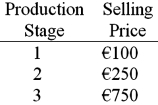 If the value-added tax (VAT) rate is 25%, what would be the VAT over all stages of production?
A)€187.50
B)€120
C)€150
D)€225
If the value-added tax (VAT) rate is 25%, what would be the VAT over all stages of production?A)€187.50
B)€120
C)€150
D)€225
Question
Assume that a product has the following three stages of production: 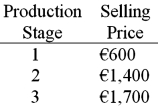 If the value-added tax (VAT) rate is 15%, what would be the VAT over all stages of production?
A)€90
B)€120
C)€465
D)€255
If the value-added tax (VAT) rate is 15%, what would be the VAT over all stages of production?A)€90
B)€120
C)€465
D)€255
Question
Assume that a product has the following three stages of production: 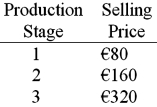 If the value-added tax (VAT) rate is 20%, what would be the VAT over all stages of production?
A)€64
B)€120
C)€465
D)€225
If the value-added tax (VAT) rate is 20%, what would be the VAT over all stages of production?A)€64
B)€120
C)€465
D)€225
Question
Question
Assume that a product has the following three stages of production: 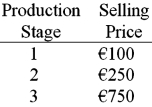 If the value-added tax (VAT) rate is 20%, what would be the VAT over all stages of production?
A)€110
B)€120
C)€150
D)€225
If the value-added tax (VAT) rate is 20%, what would be the VAT over all stages of production?A)€110
B)€120
C)€150
D)€225
Question
Question
Question
Question
Assume that a product has the following three stages of production: 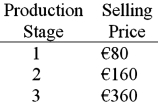 If the value-added tax (VAT) rate is 10%, what would be the VAT over all stages of production?
A)€64
B)€36
C)€465
D)€225
If the value-added tax (VAT) rate is 10%, what would be the VAT over all stages of production?A)€64
B)€36
C)€465
D)€225
Question
Question
Question
Assume that a product has the following three stages of production: 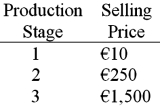 If the value-added tax (VAT) rate is 20%, what would be the VAT over all stages of production?
A)€90
B)€120
C)€300
D)€225
If the value-added tax (VAT) rate is 20%, what would be the VAT over all stages of production?A)€90
B)€120
C)€300
D)€225
Question
Assume that a product has the following three stages of production: 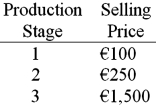 If the value-added tax (VAT) rate is 15%, what would be the VAT over all stages of production?
A)€90
B)€120
C)€465
D)€225
If the value-added tax (VAT) rate is 15%, what would be the VAT over all stages of production?A)€90
B)€120
C)€465
D)€225
Question
Assume that a product has the following three stages of production: 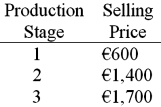 If the value-added tax (VAT) rate is 15%, what is the incremental VAT at Stage 2 of production?
A)€75
B)€120
C)€210
D)€255
If the value-added tax (VAT) rate is 15%, what is the incremental VAT at Stage 2 of production?A)€75
B)€120
C)€210
D)€255
Question
Question
Question
Question
Question
Question
Question
Question
Question
Assume that a product has the following three stages of production: 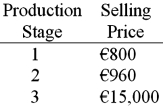 If the value-added tax (VAT) rate is 20%, what would be the VAT over all stages of production?
A)€64
B)€120
C)€2,808
D)€3,000
If the value-added tax (VAT) rate is 20%, what would be the VAT over all stages of production?A)€64
B)€120
C)€2,808
D)€3,000
Question
Question
Assume that a product has the following three stages of production: 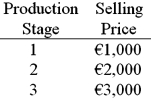 If the value-added tax (VAT) rate is 15%, what would be the VAT over all stages of production?
A)€390
B)€120
C)€465
D)€225
If the value-added tax (VAT) rate is 15%, what would be the VAT over all stages of production?A)€390
B)€120
C)€465
D)€225
Question
Question
Assume that a product has the following three stages of production: 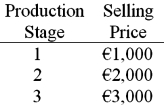 If the value-added tax (VAT) rate is 20%, what would be the VAT over all stages of production?
A)€150
B)€600
C)€350
D)€225
If the value-added tax (VAT) rate is 20%, what would be the VAT over all stages of production?A)€150
B)€600
C)€350
D)€225
Question
Question
Question
Question
Question
Question
Question
Question
Question
Question
Question
Question
Question
Question
Question
Question
Question
Question
Question
Question
Question
When excess tax credits go unused, the foreign tax liability for a branch is greater than the corresponding U.S. tax liability when the foreign income tax rate is greater than the U.S. rate. Calculate the total tax liability for a wholly-owned subsidiary when excess tax credits cannot be used in a country given: 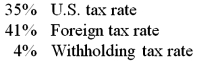
A)35.00%
B)37.00%
C)43.36%
D)42.05%
A)35.00%
B)37.00%
C)43.36%
D)42.05%
Question
Question
Question
Question
Question
Question
Question
Question

Unlock Deck
Sign up to unlock the cards in this deck!
Unlock Deck
Unlock Deck
1/99

Play

Full screen (f)
Deck 21: International Tax Environment and Transfer Pricing
1
The idea that the tax burden a host country imposes on the foreign subsidiary of a MNC should be the same regardless of the country in which the MNC is incorporated and the same as that placed on domestic firms is earned is referred to as
A)capital-export neutrality.
B)capital-import neutrality.
C)National neutrality.
D)none of the above
A)capital-export neutrality.
B)capital-import neutrality.
C)National neutrality.
D)none of the above
B
2
The idea that taxable income is taxed in the same manner by the taxpayer's national tax authority regardless of where in the world it is earned is referred to as
A)capital-export neutrality.
B)capital-import neutrality.
C)national neutrality.
D)none of the above
A)capital-export neutrality.
B)capital-import neutrality.
C)national neutrality.
D)none of the above
C
3
The idea that an ideal tax should be effective in raising revenue for the government but not have any negative effects on the economic decision-making process of the taxpayer is referred to as
A)capital-export neutrality.
B)capital-import neutrality.
C)national neutrality.
D)none of the above
A)capital-export neutrality.
B)capital-import neutrality.
C)national neutrality.
D)none of the above
A
4
The three basic types of taxation are
A)income tax, withholding tax, and value-added tax.
B)income tax, withholding tax, and business tax.
C)withholding tax, value-added tax, and corporate tax.
D)personal tax, corporate tax, and operating tax.
A)income tax, withholding tax, and value-added tax.
B)income tax, withholding tax, and business tax.
C)withholding tax, value-added tax, and corporate tax.
D)personal tax, corporate tax, and operating tax.
Unlock Deck
Unlock for access to all 99 flashcards in this deck.
Unlock Deck
k this deck
5
The underlying principle of tax equity is that
A)all similarly situated taxpayers should participate in the cost of operating the government according to the same rules.
B)all similarly situated taxpayers should participate in the cost of operating the government on an equal basis.
C)none of the above
A)all similarly situated taxpayers should participate in the cost of operating the government according to the same rules.
B)all similarly situated taxpayers should participate in the cost of operating the government on an equal basis.
C)none of the above
Unlock Deck
Unlock for access to all 99 flashcards in this deck.
Unlock Deck
k this deck
6
National neutrality
A)is the criterion that an ideal tax should be effective in raising revenue of the government and not have any negative effects on the economic decision-making process of the taxpayer.
B)requires that taxable income is taxed in the same manner by the taxpayer's national tax authority regardless of where in the world it is earned.
C)implies that the tax burden a host country imposes on the foreign subsidiary of the MNC should be the same regardless of which country the MNC is incorporated and the same as that placed on domestic firms.
D)none of the above
A)is the criterion that an ideal tax should be effective in raising revenue of the government and not have any negative effects on the economic decision-making process of the taxpayer.
B)requires that taxable income is taxed in the same manner by the taxpayer's national tax authority regardless of where in the world it is earned.
C)implies that the tax burden a host country imposes on the foreign subsidiary of the MNC should be the same regardless of which country the MNC is incorporated and the same as that placed on domestic firms.
D)none of the above
Unlock Deck
Unlock for access to all 99 flashcards in this deck.
Unlock Deck
k this deck
7
Capital export neutrality
A)is the criterion that an ideal tax should be effective in raising revenue of the government and not have any negative effects on the economic decision-making process of the taxpayer.
B)requires that taxable income is taxed in the same manner by the taxpayer's national tax authority regardless of where in the world it is earned.
C)implies that the tax burden a host country imposes on the foreign subsidiary of the MNC should be the same regardless of which country the MNC is incorporated and the same as that placed on domestic firms.
D)none of the above
A)is the criterion that an ideal tax should be effective in raising revenue of the government and not have any negative effects on the economic decision-making process of the taxpayer.
B)requires that taxable income is taxed in the same manner by the taxpayer's national tax authority regardless of where in the world it is earned.
C)implies that the tax burden a host country imposes on the foreign subsidiary of the MNC should be the same regardless of which country the MNC is incorporated and the same as that placed on domestic firms.
D)none of the above
Unlock Deck
Unlock for access to all 99 flashcards in this deck.
Unlock Deck
k this deck
8
If a dollar earned by a foreign affiliate is taxed under the same rules as a dollar earned by a domestic affiliate of the MNC, then we have achieved
A)capital-export neutrality.
B)capital-import neutrality.
C)national neutrality.
D)tax equity.
A)capital-export neutrality.
B)capital-import neutrality.
C)national neutrality.
D)tax equity.
Unlock Deck
Unlock for access to all 99 flashcards in this deck.
Unlock Deck
k this deck
9
Tax neutrality
A)has its foundations in the principles of economic efficiency and equity.
B)can be a difficult principle to apply in practice.
C)is determined by three criteria: capital export neutrality, capital import neutrality and national neutrality.
D)all of the above
A)has its foundations in the principles of economic efficiency and equity.
B)can be a difficult principle to apply in practice.
C)is determined by three criteria: capital export neutrality, capital import neutrality and national neutrality.
D)all of the above
Unlock Deck
Unlock for access to all 99 flashcards in this deck.
Unlock Deck
k this deck
10
The criteria of tax neutrality: capital export neutrality, capital import neutrality and national neutrality
A)all consistent with one another.
B)are not always consistent with one another.
A)all consistent with one another.
B)are not always consistent with one another.
Unlock Deck
Unlock for access to all 99 flashcards in this deck.
Unlock Deck
k this deck
11
The two main objectives of taxation are
A)tax neutrality and tax equity.
B)complexity and revenue.
C)social engineering and tax equity.
D)progressive taxation and tax neutrality.
A)tax neutrality and tax equity.
B)complexity and revenue.
C)social engineering and tax equity.
D)progressive taxation and tax neutrality.
Unlock Deck
Unlock for access to all 99 flashcards in this deck.
Unlock Deck
k this deck
12
An income tax is a direct tax.
Unlock Deck
Unlock for access to all 99 flashcards in this deck.
Unlock Deck
k this deck
13
Tax neutrality is determined
A)by one criterion.
B)by two criteria.
C)by three criteria.
D)by four criteria.
A)by one criterion.
B)by two criteria.
C)by three criteria.
D)by four criteria.
Unlock Deck
Unlock for access to all 99 flashcards in this deck.
Unlock Deck
k this deck
14
Tax neutrality is determined by three criteria: which of the following doesn't belong?
A)Capital-export neutrality
B)Capital-import neutrality
C)National neutrality
D)Income neutrality
A)Capital-export neutrality
B)Capital-import neutrality
C)National neutrality
D)Income neutrality
Unlock Deck
Unlock for access to all 99 flashcards in this deck.
Unlock Deck
k this deck
15
Implementing capital import neutrality means that
A)a sovereign government follows the taxation policies of foreign tax authorities on the foreign-source income of its resident MNCs.
B)the tax burden a host country imposes on the foreign subsidiary of a MNC should be the same regardless of the country in which the MNC is incorporated.
C)the tax burden a host country imposes on the foreign subsidiary of a MNC should be the same as that placed on domestic firms.
D)all of the above
A)a sovereign government follows the taxation policies of foreign tax authorities on the foreign-source income of its resident MNCs.
B)the tax burden a host country imposes on the foreign subsidiary of a MNC should be the same regardless of the country in which the MNC is incorporated.
C)the tax burden a host country imposes on the foreign subsidiary of a MNC should be the same as that placed on domestic firms.
D)all of the above
Unlock Deck
Unlock for access to all 99 flashcards in this deck.
Unlock Deck
k this deck
16
The term "capital-import neutrality" refers to
A)the criterion that an ideal tax should be effective in raising revenue for the government and not have any negative effects on the economic decision-making process of the taxpayer.
B)the fact that taxable income is taxed in the same manner by the taxpayer's national tax authority regardless of where in the world it is earned.
C)the criterion that the tax burden a host country imposes on the foreign subsidiary of a MNC should be the same regardless in which country the MNC is incorporated and the same as that placed on domestic firms.
D)underlying principle that all similarly situated taxpayers should participate in the cost of operating the government according to the same rules.
A)the criterion that an ideal tax should be effective in raising revenue for the government and not have any negative effects on the economic decision-making process of the taxpayer.
B)the fact that taxable income is taxed in the same manner by the taxpayer's national tax authority regardless of where in the world it is earned.
C)the criterion that the tax burden a host country imposes on the foreign subsidiary of a MNC should be the same regardless in which country the MNC is incorporated and the same as that placed on domestic firms.
D)underlying principle that all similarly situated taxpayers should participate in the cost of operating the government according to the same rules.
Unlock Deck
Unlock for access to all 99 flashcards in this deck.
Unlock Deck
k this deck
17
Capital import neutrality
A)is the criterion that an ideal tax should be effective in raising revenue of the government and not have any negative effects on the economic decision-making process of the taxpayer.
B)requires that taxable income is taxed in the same manner by the taxpayer's national tax authority regardless of where in the world it is earned.
Implies that the tax burden a host country imposes on the foreign subsidiary of the MNC should be the same regardless of which country the MNC is incorporated and the same as that placed on domestic firms.
D) none of the above
A)is the criterion that an ideal tax should be effective in raising revenue of the government and not have any negative effects on the economic decision-making process of the taxpayer.
B)requires that taxable income is taxed in the same manner by the taxpayer's national tax authority regardless of where in the world it is earned.
Implies that the tax burden a host country imposes on the foreign subsidiary of the MNC should be the same regardless of which country the MNC is incorporated and the same as that placed on domestic firms.
D) none of the above
Unlock Deck
Unlock for access to all 99 flashcards in this deck.
Unlock Deck
k this deck
18
The organizational form of a MNC can affect the timing of a tax liability. This means
A)the principle of tax equity might be violated.
B)as long as regardless of the country in which an affiliate of a MNC earns taxable income, the same tax rates apply, then the tax due date doesn't matter.
C)tax timing will even out over a reporting cycle, so there is no big deal here.
D)none of the above
A)the principle of tax equity might be violated.
B)as long as regardless of the country in which an affiliate of a MNC earns taxable income, the same tax rates apply, then the tax due date doesn't matter.
C)tax timing will even out over a reporting cycle, so there is no big deal here.
D)none of the above
Unlock Deck
Unlock for access to all 99 flashcards in this deck.
Unlock Deck
k this deck
19
Tax equity means that
A)similarly situated taxpayers should participate in the cost of operating the government according to the same rules.
B)regardless of the country in which an affiliate of a MNC earns taxable income, the same tax rate and tax due date apply.
C)a dollar earned by a foreign affiliate is taxed under the same rules as a dollar earned by a domestic affiliate of the MNC.
D)all of the above
A)similarly situated taxpayers should participate in the cost of operating the government according to the same rules.
B)regardless of the country in which an affiliate of a MNC earns taxable income, the same tax rate and tax due date apply.
C)a dollar earned by a foreign affiliate is taxed under the same rules as a dollar earned by a domestic affiliate of the MNC.
D)all of the above
Unlock Deck
Unlock for access to all 99 flashcards in this deck.
Unlock Deck
k this deck
20
Capital export neutrality
A)is a goal based on worldwide economic efficiency.
B)is an example of Mercantilism.
C)is based on host country economic efficiency.
D)is based on MNC home country economic efficiency.
A)is a goal based on worldwide economic efficiency.
B)is an example of Mercantilism.
C)is based on host country economic efficiency.
D)is based on MNC home country economic efficiency.
Unlock Deck
Unlock for access to all 99 flashcards in this deck.
Unlock Deck
k this deck
21
An income tax is defined by your textbook as
A)is a direct tax.
B)is an indirect tax.
C)is collected with a withholding tax.
D)none of the above
A)is a direct tax.
B)is an indirect tax.
C)is collected with a withholding tax.
D)none of the above
Unlock Deck
Unlock for access to all 99 flashcards in this deck.
Unlock Deck
k this deck
22
Which statement is false?
A)Active income is defined as income that results from production by the firm or individual or from services that have been provided.
B)Passive income includes dividends and interest income, and income from royalties, patents, or copyrights paid to the taxpayer.
C)A withholding tax is a tax levied on passive income earned by an individual or corporation of one country within the tax jurisdiction of another country.
D)The current marginal U.S. income tax rate is positioned towards the lower end of the rates assessed by the majority of other countries.
A)Active income is defined as income that results from production by the firm or individual or from services that have been provided.
B)Passive income includes dividends and interest income, and income from royalties, patents, or copyrights paid to the taxpayer.
C)A withholding tax is a tax levied on passive income earned by an individual or corporation of one country within the tax jurisdiction of another country.
D)The current marginal U.S. income tax rate is positioned towards the lower end of the rates assessed by the majority of other countries.
Unlock Deck
Unlock for access to all 99 flashcards in this deck.
Unlock Deck
k this deck
23
There are three basic types of taxation that national governments throughout the world use:
A)income tax, withholding tax, and value-added tax.
B)property tax, wealth tax, and death tax.
C)import quotas, duties, and tariffs.
D)tariffs, ad valorem taxes, and income taxes.
A)income tax, withholding tax, and value-added tax.
B)property tax, wealth tax, and death tax.
C)import quotas, duties, and tariffs.
D)tariffs, ad valorem taxes, and income taxes.
Unlock Deck
Unlock for access to all 99 flashcards in this deck.
Unlock Deck
k this deck
24
Withholding tax rates imposed through tax treaties are
A)bilateral.
B)multilateral.
C)netted.
D)none of the above
A)bilateral.
B)multilateral.
C)netted.
D)none of the above
Unlock Deck
Unlock for access to all 99 flashcards in this deck.
Unlock Deck
k this deck
25
Assume that a product has the following three stages of production: If the value-added tax (VAT) rate is 25%, what would be the VAT over all stages of production?
A)€187.50
B)€120
C)€150
D)€225
If the value-added tax (VAT) rate is 25%, what would be the VAT over all stages of production?A)€187.50
B)€120
C)€150
D)€225
Unlock Deck
Unlock for access to all 99 flashcards in this deck.
Unlock Deck
k this deck
26
Assume that a product has the following three stages of production: If the value-added tax (VAT) rate is 15%, what would be the VAT over all stages of production?
A)€90
B)€120
C)€465
D)€255
If the value-added tax (VAT) rate is 15%, what would be the VAT over all stages of production?A)€90
B)€120
C)€465
D)€255
Unlock Deck
Unlock for access to all 99 flashcards in this deck.
Unlock Deck
k this deck
27
Assume that a product has the following three stages of production: If the value-added tax (VAT) rate is 20%, what would be the VAT over all stages of production?
A)€64
B)€120
C)€465
D)€225
If the value-added tax (VAT) rate is 20%, what would be the VAT over all stages of production?A)€64
B)€120
C)€465
D)€225
Unlock Deck
Unlock for access to all 99 flashcards in this deck.
Unlock Deck
k this deck
28
Many countries have tax treaties with one another. These generally specify
A)the withholding tax rate applied to various types of passive income.
B)that withholding tax rates imposed through tax treaties are bilateral.
C)the two countries agree to impose the same tax rate on the same category of income.
D)all of the above
A)the withholding tax rate applied to various types of passive income.
B)that withholding tax rates imposed through tax treaties are bilateral.
C)the two countries agree to impose the same tax rate on the same category of income.
D)all of the above
Unlock Deck
Unlock for access to all 99 flashcards in this deck.
Unlock Deck
k this deck
29
Assume that a product has the following three stages of production: If the value-added tax (VAT) rate is 20%, what would be the VAT over all stages of production?
A)€110
B)€120
C)€150
D)€225
If the value-added tax (VAT) rate is 20%, what would be the VAT over all stages of production?A)€110
B)€120
C)€150
D)€225
Unlock Deck
Unlock for access to all 99 flashcards in this deck.
Unlock Deck
k this deck
30
The purpose of a withholding tax
A)is to assure the local tax authority that it will receive the tax due on the active income earned within its tax jurisdiction.
B)is to assure the local tax authority that it will receive the tax due on the passive income earned within its tax jurisdiction.
C)is to assure the local tax authority that it will receive the tax due on all income earned within its tax jurisdiction.
D)none of the above
A)is to assure the local tax authority that it will receive the tax due on the active income earned within its tax jurisdiction.
B)is to assure the local tax authority that it will receive the tax due on the passive income earned within its tax jurisdiction.
C)is to assure the local tax authority that it will receive the tax due on all income earned within its tax jurisdiction.
D)none of the above
Unlock Deck
Unlock for access to all 99 flashcards in this deck.
Unlock Deck
k this deck
31
A withholding tax is
A)an indirect tax.
B)a direct tax.
A)an indirect tax.
B)a direct tax.
Unlock Deck
Unlock for access to all 99 flashcards in this deck.
Unlock Deck
k this deck
32
Value-added tax (VAT) is
A)a direct national tax levied on the value added in the production of a good (or service) as it moves through various stages of production.
B)an indirect national tax levied on the value added in the production of a good (or service) as it moves through various stages of production.
C)the equivalent of imposing a national sales tax.
D)both b and c
A)a direct national tax levied on the value added in the production of a good (or service) as it moves through various stages of production.
B)an indirect national tax levied on the value added in the production of a good (or service) as it moves through various stages of production.
C)the equivalent of imposing a national sales tax.
D)both b and c
Unlock Deck
Unlock for access to all 99 flashcards in this deck.
Unlock Deck
k this deck
33
Assume that a product has the following three stages of production: If the value-added tax (VAT) rate is 10%, what would be the VAT over all stages of production?
A)€64
B)€36
C)€465
D)€225
If the value-added tax (VAT) rate is 10%, what would be the VAT over all stages of production?A)€64
B)€36
C)€465
D)€225
Unlock Deck
Unlock for access to all 99 flashcards in this deck.
Unlock Deck
k this deck
34
A withholding tax is defined by your textbook as
A)the money that the government takes for every worker's paycheck.
B)social security taxes.
C)a tax levied on income earned by an individual (or corporation) of one country within the tax jurisdiction of another county.
D)a tax levied on passive income earned by an individual (or corporation) of one country within the tax jurisdiction of another county.
A)the money that the government takes for every worker's paycheck.
B)social security taxes.
C)a tax levied on income earned by an individual (or corporation) of one country within the tax jurisdiction of another county.
D)a tax levied on passive income earned by an individual (or corporation) of one country within the tax jurisdiction of another county.
Unlock Deck
Unlock for access to all 99 flashcards in this deck.
Unlock Deck
k this deck
35
The current marginal U.S. income tax rate is positioned
A)pretty well in the middle of the rates assessed by the majority of other countries.
B)towards the upper end of the rates assessed by the majority of other countries.
C)towards the lower end of the rates assessed by the majority of other countries.
A)pretty well in the middle of the rates assessed by the majority of other countries.
B)towards the upper end of the rates assessed by the majority of other countries.
C)towards the lower end of the rates assessed by the majority of other countries.
Unlock Deck
Unlock for access to all 99 flashcards in this deck.
Unlock Deck
k this deck
36
Assume that a product has the following three stages of production: If the value-added tax (VAT) rate is 20%, what would be the VAT over all stages of production?
A)€90
B)€120
C)€300
D)€225
If the value-added tax (VAT) rate is 20%, what would be the VAT over all stages of production?A)€90
B)€120
C)€300
D)€225
Unlock Deck
Unlock for access to all 99 flashcards in this deck.
Unlock Deck
k this deck
37
Assume that a product has the following three stages of production: If the value-added tax (VAT) rate is 15%, what would be the VAT over all stages of production?
A)€90
B)€120
C)€465
D)€225
If the value-added tax (VAT) rate is 15%, what would be the VAT over all stages of production?A)€90
B)€120
C)€465
D)€225
Unlock Deck
Unlock for access to all 99 flashcards in this deck.
Unlock Deck
k this deck
38
Assume that a product has the following three stages of production: If the value-added tax (VAT) rate is 15%, what is the incremental VAT at Stage 2 of production?
A)€75
B)€120
C)€210
D)€255
If the value-added tax (VAT) rate is 15%, what is the incremental VAT at Stage 2 of production?A)€75
B)€120
C)€210
D)€255
Unlock Deck
Unlock for access to all 99 flashcards in this deck.
Unlock Deck
k this deck
39
A withholding tax
A)is borne by a taxpayer who did not directly generate the income that serves as the source of the passive income.
B)a direct tax on workers.
C)assures the local tax authority that it will receive the tax due on the passive income earned within its tax jurisdiction.
D)both a and c
A)is borne by a taxpayer who did not directly generate the income that serves as the source of the passive income.
B)a direct tax on workers.
C)assures the local tax authority that it will receive the tax due on the passive income earned within its tax jurisdiction.
D)both a and c
Unlock Deck
Unlock for access to all 99 flashcards in this deck.
Unlock Deck
k this deck
40
The United States withholds ___ of passive income from taxpayers that reside in countries with which it does not have withholding tax treaties.
A)10%
B)20%
C)30%
D)40%
E)50%
A)10%
B)20%
C)30%
D)40%
E)50%
Unlock Deck
Unlock for access to all 99 flashcards in this deck.
Unlock Deck
k this deck
41
Fundamentally, there are two types of tax jurisdiction:
A)The worldwide and the territorial.
B)The residential and the visiting.
C)The passive and the active income.
D)The earned and the unearned.
A)The worldwide and the territorial.
B)The residential and the visiting.
C)The passive and the active income.
D)The earned and the unearned.
Unlock Deck
Unlock for access to all 99 flashcards in this deck.
Unlock Deck
k this deck
42
Many economists prefer a VAT to an income tax because
A)these economists are pin heads with no real world experience.
B)an income tax provides a disincentive to work, whereas a VAT is a disincentive to unnecessary consumption.
C)an income tax is an incentive to work, whereas a VAT is a disincentive to consumption.
D)all of the above
A)these economists are pin heads with no real world experience.
B)an income tax provides a disincentive to work, whereas a VAT is a disincentive to unnecessary consumption.
C)an income tax is an incentive to work, whereas a VAT is a disincentive to consumption.
D)all of the above
Unlock Deck
Unlock for access to all 99 flashcards in this deck.
Unlock Deck
k this deck
43
Which of the following are true?
A)A VAT fosters national saving.
B)An income tax is a disincentive to save because the returns from savings are taxed.
C)National tax authorities find that a VAT is easier to collect than an income tax because tax evasion is more difficult.
D)All of the above are true
A)A VAT fosters national saving.
B)An income tax is a disincentive to save because the returns from savings are taxed.
C)National tax authorities find that a VAT is easier to collect than an income tax because tax evasion is more difficult.
D)All of the above are true
Unlock Deck
Unlock for access to all 99 flashcards in this deck.
Unlock Deck
k this deck
44
Tax evasion is more difficult under a VAT because
A)at each stage in the production process producers have an incentive to obtain documentation from the previous stage that the VAT was paid in order to get the greatest tax credit possible.
B)customers can't convince retailers to sell things without a receipt.
C)the cost of record keeping under a VAT system imposes an economic hardship on small businesses.
D)none of the above
A)at each stage in the production process producers have an incentive to obtain documentation from the previous stage that the VAT was paid in order to get the greatest tax credit possible.
B)customers can't convince retailers to sell things without a receipt.
C)the cost of record keeping under a VAT system imposes an economic hardship on small businesses.
D)none of the above
Unlock Deck
Unlock for access to all 99 flashcards in this deck.
Unlock Deck
k this deck
45
A direct foreign tax credit is
A)computed for direct taxes paid on active foreign-source income of a foreign branch of a U.S. MNC.
B)computed on the indirect withholding taxes withheld form passive income distributed by the foreign subsidiary to the U.S. parent.
C)computed for income taxes deemed paid by the subsidiary.
D)both a and b
A)computed for direct taxes paid on active foreign-source income of a foreign branch of a U.S. MNC.
B)computed on the indirect withholding taxes withheld form passive income distributed by the foreign subsidiary to the U.S. parent.
C)computed for income taxes deemed paid by the subsidiary.
D)both a and b
Unlock Deck
Unlock for access to all 99 flashcards in this deck.
Unlock Deck
k this deck
46
The typical approach to avoiding double taxation is
A)for a nation to grant the parent firm credit against its domestic tax liability for taxes paid to foreign tax authorities on foreign-source income.
B)for a nation not to tax foreign-source income of its national residents.
C)for a company to use both worldwide and the territorial methods.
D)none of the above
A)for a nation to grant the parent firm credit against its domestic tax liability for taxes paid to foreign tax authorities on foreign-source income.
B)for a nation not to tax foreign-source income of its national residents.
C)for a company to use both worldwide and the territorial methods.
D)none of the above
Unlock Deck
Unlock for access to all 99 flashcards in this deck.
Unlock Deck
k this deck
47
Assume that a product has the following three stages of production: If the value-added tax (VAT) rate is 20%, what would be the VAT over all stages of production?
A)€64
B)€120
C)€2,808
D)€3,000
If the value-added tax (VAT) rate is 20%, what would be the VAT over all stages of production?A)€64
B)€120
C)€2,808
D)€3,000
Unlock Deck
Unlock for access to all 99 flashcards in this deck.
Unlock Deck
k this deck
48
The territorial method of declaring a national tax jurisdiction is to
A)tax all income earned within the country by any taxpayer, domestic or foreign.
B)tax national residents of the country on their worldwide income no matter in which country it is earned.
C)also known as the residential method.
D)none of the above
A)tax all income earned within the country by any taxpayer, domestic or foreign.
B)tax national residents of the country on their worldwide income no matter in which country it is earned.
C)also known as the residential method.
D)none of the above
Unlock Deck
Unlock for access to all 99 flashcards in this deck.
Unlock Deck
k this deck
49
Assume that a product has the following three stages of production: If the value-added tax (VAT) rate is 15%, what would be the VAT over all stages of production?
A)€390
B)€120
C)€465
D)€225
If the value-added tax (VAT) rate is 15%, what would be the VAT over all stages of production?A)€390
B)€120
C)€465
D)€225
Unlock Deck
Unlock for access to all 99 flashcards in this deck.
Unlock Deck
k this deck
50
The territorial method of declaring a national tax jurisdiction
A)is to tax national residents of the country on their worldwide income no matter in which country it is earned.
B)is to tax all income earned within the country by any taxpayer, domestic or foreign.
C)is to tax foreign residents of the country on their home-country income but not foreign-earned income.
D)none of the above
A)is to tax national residents of the country on their worldwide income no matter in which country it is earned.
B)is to tax all income earned within the country by any taxpayer, domestic or foreign.
C)is to tax foreign residents of the country on their home-country income but not foreign-earned income.
D)none of the above
Unlock Deck
Unlock for access to all 99 flashcards in this deck.
Unlock Deck
k this deck
51
Assume that a product has the following three stages of production: If the value-added tax (VAT) rate is 20%, what would be the VAT over all stages of production?
A)€150
B)€600
C)€350
D)€225
If the value-added tax (VAT) rate is 20%, what would be the VAT over all stages of production?A)€150
B)€600
C)€350
D)€225
Unlock Deck
Unlock for access to all 99 flashcards in this deck.
Unlock Deck
k this deck
52
A value-added tax (VAT) is __________ national tax levied on the value added in the production of a good (or service) as it moves through the various stages of production.
A)a direct
B)an indirect
C)a sales tax
D)none of the above
A)a direct
B)an indirect
C)a sales tax
D)none of the above
Unlock Deck
Unlock for access to all 99 flashcards in this deck.
Unlock Deck
k this deck
53
Under the territorial method of declaring a national tax jurisdiction
A)the possibility of double taxation exists if the parent county of a foreign affiliate also levies a tax on worldwide income.
B)tax is levied on all income earned within the country by any taxpayer, domestic or foreign.
C)tax is levied on foreign residents of the country on their home-country income but not foreign-earned income.
D)none of the above
A)the possibility of double taxation exists if the parent county of a foreign affiliate also levies a tax on worldwide income.
B)tax is levied on all income earned within the country by any taxpayer, domestic or foreign.
C)tax is levied on foreign residents of the country on their home-country income but not foreign-earned income.
D)none of the above
Unlock Deck
Unlock for access to all 99 flashcards in this deck.
Unlock Deck
k this deck
54
The worldwide method of declaring a national tax jurisdiction
A)is to tax national residents of the country on their worldwide income no matter in which country it is earned.
B)is to tax all income earned within the country by any taxpayer, domestic or foreign.
C)is to tax national residents of the country on their domestic income but not foreign-earned income.
D)none of the above
A)is to tax national residents of the country on their worldwide income no matter in which country it is earned.
B)is to tax all income earned within the country by any taxpayer, domestic or foreign.
C)is to tax national residents of the country on their domestic income but not foreign-earned income.
D)none of the above
Unlock Deck
Unlock for access to all 99 flashcards in this deck.
Unlock Deck
k this deck
55
The worldwide or residential method of declaring a national tax jurisdiction is to
A)tax national residents of the country on their worldwide income no matter in which country it is earned.
B)tax all income earned within the country by any taxpayer, domestic or foreign.
C)tax foreign residents of the country on their home-country income but not foreign-earned income.
D)none of the above
A)tax national residents of the country on their worldwide income no matter in which country it is earned.
B)tax all income earned within the country by any taxpayer, domestic or foreign.
C)tax foreign residents of the country on their home-country income but not foreign-earned income.
D)none of the above
Unlock Deck
Unlock for access to all 99 flashcards in this deck.
Unlock Deck
k this deck
56
The worldwide method of declaring a national tax jurisdiction
A)is also known as the residential method.
B)is to tax national residents of the country on their worldwide income no matter in which country it is earned.
C)is different from the territorial method of declaring a national tax jurisdiction.
D)all of the above
A)is also known as the residential method.
B)is to tax national residents of the country on their worldwide income no matter in which country it is earned.
C)is different from the territorial method of declaring a national tax jurisdiction.
D)all of the above
Unlock Deck
Unlock for access to all 99 flashcards in this deck.
Unlock Deck
k this deck
57
In a given year, the U.S. IRS places an overall limitation applied to foreign tax credits.
A)The overall limitation is limited to the amount of tax due on the foreign-source income.
B)The overall limitation is limited to the amount of tax actually paid during the tax year on the foreign-source income.
C)The overall limitation is limited to the amount of tax that would have been due on the foreign-source income if it had been earned in the United States.
D)None of the above
A)The overall limitation is limited to the amount of tax due on the foreign-source income.
B)The overall limitation is limited to the amount of tax actually paid during the tax year on the foreign-source income.
C)The overall limitation is limited to the amount of tax that would have been due on the foreign-source income if it had been earned in the United States.
D)None of the above
Unlock Deck
Unlock for access to all 99 flashcards in this deck.
Unlock Deck
k this deck
58
Affiliates of foreign MNCs are taxed on the income earned in the source country under
A)the territorial method of declaring a national tax jurisdiction.
B)the source method of declaring a tax jurisdiction.
C)all of the above
D)none of the above
A)the territorial method of declaring a national tax jurisdiction.
B)the source method of declaring a tax jurisdiction.
C)all of the above
D)none of the above
Unlock Deck
Unlock for access to all 99 flashcards in this deck.
Unlock Deck
k this deck
59
The foreign tax credit method followed by the United States is
A)to grant the parent firm credit against its U.S. tax liability for taxes paid to foreign tax authorities on foreign-source income.
B)in place for the purpose of avoiding double taxation.
C)both a and b
D)none of the above
A)to grant the parent firm credit against its U.S. tax liability for taxes paid to foreign tax authorities on foreign-source income.
B)in place for the purpose of avoiding double taxation.
C)both a and b
D)none of the above
Unlock Deck
Unlock for access to all 99 flashcards in this deck.
Unlock Deck
k this deck
60
In a growing economy, the VAT would raise prodigious amounts of money
A)in a way almost invisible to tax-paying voters.
B)in a way obvious to tax-paying voters.
C)but would discourage savings.
D)none of the above
A)in a way almost invisible to tax-paying voters.
B)in a way obvious to tax-paying voters.
C)but would discourage savings.
D)none of the above
Unlock Deck
Unlock for access to all 99 flashcards in this deck.
Unlock Deck
k this deck
61
Suppose a U.S.-based MNC makes bicycles with parts from its subsidiary in a low-tax East Asian country. The bicycle frames are made here, the component parts (cranksets, wheels, and so on) are made abroad, the bicycles are assembled in Japan and reimported to the U.S. It can reduce its reported U.S. income-and increase its subsidiary's profits-by
A)overcharging its subsidiaries for the U.S.-made frames.
B)undercharging its subsidiaries for the U.S.-made frames.
C)assembling the bicycles in the U.S.
D)none of the above
A)overcharging its subsidiaries for the U.S.-made frames.
B)undercharging its subsidiaries for the U.S.-made frames.
C)assembling the bicycles in the U.S.
D)none of the above
Unlock Deck
Unlock for access to all 99 flashcards in this deck.
Unlock Deck
k this deck
62
A foreign branch is
A)an extension of the parent and is not an independently incorporated firm separate from the parent.
B)an affiliate organization of the MNC that is independently incorporated in the foreign country, and one in which the U.S. MNC owns at least 10 percent of the voting equity stock.
C)either a minority foreign subsidiary (an uncontrolled foreign corporation) or a controlled foreign corporation.
D)both b and c
A)an extension of the parent and is not an independently incorporated firm separate from the parent.
B)an affiliate organization of the MNC that is independently incorporated in the foreign country, and one in which the U.S. MNC owns at least 10 percent of the voting equity stock.
C)either a minority foreign subsidiary (an uncontrolled foreign corporation) or a controlled foreign corporation.
D)both b and c
Unlock Deck
Unlock for access to all 99 flashcards in this deck.
Unlock Deck
k this deck
63
An uncontrolled foreign corporation is
A)an extension of the parent and is not an independently incorporated firm separate from the parent.
B)an affiliate organization of the MNC that is independently incorporated in the foreign country, and one in which the U.S. MNC owns at least 51 percent of the voting equity stock.
C)an affiliate organization of the MNC that is independently incorporated in the foreign country, and one in which the U.S. MNC owns at least 10 percent but less than 50 percent of the voting equity stock.
D)b and c
A)an extension of the parent and is not an independently incorporated firm separate from the parent.
B)an affiliate organization of the MNC that is independently incorporated in the foreign country, and one in which the U.S. MNC owns at least 51 percent of the voting equity stock.
C)an affiliate organization of the MNC that is independently incorporated in the foreign country, and one in which the U.S. MNC owns at least 10 percent but less than 50 percent of the voting equity stock.
D)b and c
Unlock Deck
Unlock for access to all 99 flashcards in this deck.
Unlock Deck
k this deck
64
A controlled foreign corporation (CFC) is
A)a foreign corporation established as an affiliate of a U.S. corporation for the purpose of "buying" from the U.S. corporation property for resale and use abroad.
B)a foreign subsidiary that has more than 50 percent of its voting equity owned by U.S. shareholders.
C)a separate domestic U.S. corporation actively engaged in business in a U.S. possession (Puerto Rico and the U.S. Virgin Islands).
D)one that has no "overall limitation" as regards to its foreign tax credits.
A)a foreign corporation established as an affiliate of a U.S. corporation for the purpose of "buying" from the U.S. corporation property for resale and use abroad.
B)a foreign subsidiary that has more than 50 percent of its voting equity owned by U.S. shareholders.
C)a separate domestic U.S. corporation actively engaged in business in a U.S. possession (Puerto Rico and the U.S. Virgin Islands).
D)one that has no "overall limitation" as regards to its foreign tax credits.
Unlock Deck
Unlock for access to all 99 flashcards in this deck.
Unlock Deck
k this deck
65
The higher the transfer price
A)the higher the net profit reported by the MNC.
B)the higher the gross profit of the receiving division relative to the transferring division.
C)the higher the gross profit of the transferring division relative to the receiving division.
D)none of the above
A)the higher the net profit reported by the MNC.
B)the higher the gross profit of the receiving division relative to the transferring division.
C)the higher the gross profit of the transferring division relative to the receiving division.
D)none of the above
Unlock Deck
Unlock for access to all 99 flashcards in this deck.
Unlock Deck
k this deck
66
As a rule, payments to and from foreign affiliates,
A)involve the issue of transfer pricing.
B)involve accounting values assigned to goods or services exchanged between foreign affiliates.
C)involve tax credits trading between affiliates.
D)both a and b
A)involve the issue of transfer pricing.
B)involve accounting values assigned to goods or services exchanged between foreign affiliates.
C)involve tax credits trading between affiliates.
D)both a and b
Unlock Deck
Unlock for access to all 99 flashcards in this deck.
Unlock Deck
k this deck
67
An overseas affiliate of a U.S. MNC can be organized
A)as a branch.
B)as a subsidiary.
C)both a and b
D)none of the above
A)as a branch.
B)as a subsidiary.
C)both a and b
D)none of the above
Unlock Deck
Unlock for access to all 99 flashcards in this deck.
Unlock Deck
k this deck
68
A foreign subsidiary is
A)an extension of the parent and is not an independently incorporated firm separate from the parent.
B)an affiliate organization of the MNC that is independently incorporated in the foreign country, and one in which the U.S. MNC owns at least 10 percent of the voting equity stock.
C)either a minority foreign subsidiary (an uncontrolled foreign corporation) or a controlled foreign corporation.
D)both b and c
A)an extension of the parent and is not an independently incorporated firm separate from the parent.
B)an affiliate organization of the MNC that is independently incorporated in the foreign country, and one in which the U.S. MNC owns at least 10 percent of the voting equity stock.
C)either a minority foreign subsidiary (an uncontrolled foreign corporation) or a controlled foreign corporation.
D)both b and c
Unlock Deck
Unlock for access to all 99 flashcards in this deck.
Unlock Deck
k this deck
69
A "tax haven" country is one that has a low, or zero percent, national tax rates. Some of the countries that fall into this category are
A)Bahamas, Bahrain, Bermuda, and the Cayman Islands.
B)Denmark, Norway, Switzerland, and Sweden.
C)Bulgaria, Canada, Saudi Arabia, and South Africa.
D)Congo, Egypt, Kuwait, and Zaire.
A)Bahamas, Bahrain, Bermuda, and the Cayman Islands.
B)Denmark, Norway, Switzerland, and Sweden.
C)Bulgaria, Canada, Saudi Arabia, and South Africa.
D)Congo, Egypt, Kuwait, and Zaire.
Unlock Deck
Unlock for access to all 99 flashcards in this deck.
Unlock Deck
k this deck
70
Countries differ in how they tax foreign-source income of their domestic MNCs.
A)Therefore, different forms of structuring a multinational organization within a country can result in different tax liabilities for the firm.
B)However, due to tax treaties and foreign tax credits, this is not an issue for a U.S.-based MNC.
C)But all countries tax domestic income of their domestic MNCs in the same way.
D)All of the above
A)Therefore, different forms of structuring a multinational organization within a country can result in different tax liabilities for the firm.
B)However, due to tax treaties and foreign tax credits, this is not an issue for a U.S.-based MNC.
C)But all countries tax domestic income of their domestic MNCs in the same way.
D)All of the above
Unlock Deck
Unlock for access to all 99 flashcards in this deck.
Unlock Deck
k this deck
71
The U.S. IRS allows transfer prices to be set using the arms-length price.
A)This is a very straight-forward method to use in practice-just use the eBay price.
B)This method is difficult to apply in practice because many factors enter into the pricing of goods and services. Examples include: differences in the terms of sale, differences in quantity and or quality sold, even differences in location or date of sale.
C)All of the above
D)None of the above
A)This is a very straight-forward method to use in practice-just use the eBay price.
B)This method is difficult to apply in practice because many factors enter into the pricing of goods and services. Examples include: differences in the terms of sale, differences in quantity and or quality sold, even differences in location or date of sale.
C)All of the above
D)None of the above
Unlock Deck
Unlock for access to all 99 flashcards in this deck.
Unlock Deck
k this deck
72
When excess tax credits go unused, the foreign tax liability for a branch is greater than the corresponding U.S. tax liability when the foreign income tax rate is greater than the U.S. rate. Calculate the total tax liability for a wholly-owned subsidiary when excess tax credits cannot be used in a country given:
A)35.00%
B)37.00%
C)43.36%
D)42.05%
A)35.00%
B)37.00%
C)43.36%
D)42.05%
Unlock Deck
Unlock for access to all 99 flashcards in this deck.
Unlock Deck
k this deck
73
When excess tax credits go unused, the foreign tax liability for a branch is greater than the corresponding U.S. tax liability when the foreign income tax rate is greater than the U.S. rate. Calculate the total tax liability for a wholly-owned subsidiary when excess tax credits cannot be used in a country given: U.S. tax rate = 35%
Foreign tax rate = 39%
Withholding tax rate = 5%
A)44.00%
B)35.00%
C)43.36%
D)42.05%
Foreign tax rate = 39%
Withholding tax rate = 5%
A)44.00%
B)35.00%
C)43.36%
D)42.05%
Unlock Deck
Unlock for access to all 99 flashcards in this deck.
Unlock Deck
k this deck
74
In a given year, the U.S. IRS places an overall limitation applied to foreign tax credits.
A)the maximum tax credit is figured on world-wide foreign-source income; losses in one country can offset profits in another.
B)the maximum tax credit is figured on foreign-source income in each country; losses in one country cannot offset profits in another.
C)the overall limitation is limited to the amount of tax that would be due on the foreign-source income if it had been earned in the United States.
D)both a and c
A)the maximum tax credit is figured on world-wide foreign-source income; losses in one country can offset profits in another.
B)the maximum tax credit is figured on foreign-source income in each country; losses in one country cannot offset profits in another.
C)the overall limitation is limited to the amount of tax that would be due on the foreign-source income if it had been earned in the United States.
D)both a and c
Unlock Deck
Unlock for access to all 99 flashcards in this deck.
Unlock Deck
k this deck
75
As a general rule,
A)excess tax credits can be carried back two years.
B)excess tax credits can be carried forward five years.
C)excess tax credits must be used in the year recognized.
D)both a and b
A)excess tax credits can be carried back two years.
B)excess tax credits can be carried forward five years.
C)excess tax credits must be used in the year recognized.
D)both a and b
Unlock Deck
Unlock for access to all 99 flashcards in this deck.
Unlock Deck
k this deck
76
A transfer price
A)is the price that one division of a firm charges to another division of a firm.
B)is an accounting issue, not a finance issue.
C)does not involve actual cash flows, therefore does not impact the share price.
D)none of the above
A)is the price that one division of a firm charges to another division of a firm.
B)is an accounting issue, not a finance issue.
C)does not involve actual cash flows, therefore does not impact the share price.
D)none of the above
Unlock Deck
Unlock for access to all 99 flashcards in this deck.
Unlock Deck
k this deck
77
The lower the transfer price
A)the higher the net profit reported by the MNC.
B)the lower the gross profit of the transferring division relative to the receiving division.
C)the higher the gross profit of the receiving division relative to the transferring division.
D)none of the above
A)the higher the net profit reported by the MNC.
B)the lower the gross profit of the transferring division relative to the receiving division.
C)the higher the gross profit of the receiving division relative to the transferring division.
D)none of the above
Unlock Deck
Unlock for access to all 99 flashcards in this deck.
Unlock Deck
k this deck
78
These days the benefits of "tax haven" subsidiaries have been reduced by
A)the present corporate income tax rate in the United States is not especially high in comparison to most non-tax haven countries.
B)the rules governing controlled foreign corporations have effectively eliminated the ability to defer passive income in a tax haven subsidiary.
C)all of the above
D)none of the above
A)the present corporate income tax rate in the United States is not especially high in comparison to most non-tax haven countries.
B)the rules governing controlled foreign corporations have effectively eliminated the ability to defer passive income in a tax haven subsidiary.
C)all of the above
D)none of the above
Unlock Deck
Unlock for access to all 99 flashcards in this deck.
Unlock Deck
k this deck
79
In a given year, the U.S. IRS places an overall limitation applied to foreign tax credits.
A)The maximum tax credit is figured on world-wide foreign-source income; losses in one country can offset profits in another.
B)Value-added taxes paid cannot be included in determining the amount of the foreign tax credit.
C)The overall limitation is limited to the amount of tax that would be due on the foreign-source income if it had been earned in the United States.
D)All of the above
A)The maximum tax credit is figured on world-wide foreign-source income; losses in one country can offset profits in another.
B)Value-added taxes paid cannot be included in determining the amount of the foreign tax credit.
C)The overall limitation is limited to the amount of tax that would be due on the foreign-source income if it had been earned in the United States.
D)All of the above
Unlock Deck
Unlock for access to all 99 flashcards in this deck.
Unlock Deck
k this deck
80
Affiliate A sells a million units to Affiliate B per year. The marginal income tax rate for Affiliate A is 20 percent and the marginal income tax rate for Affiliate B is 50 percent. The transfer price can be set at any level between $100 and $200. Which transfer price between A and B should the parent select?
A)$200
B)$100
C)$150
D)It does not matter.
A)$200
B)$100
C)$150
D)It does not matter.
Unlock Deck
Unlock for access to all 99 flashcards in this deck.
Unlock Deck
k this deck
Unlock Deck
Unlock for access to all 99 flashcards in this deck.






