







 Chat with AI

Deck 13: Alcohols,phenols,and Thiols: Ethers and Sulfides
Full screen (f)

Question

Question
Instructions: To answer the following question(s),consider the reaction below.

Refer to instructions.Provide the complete IUPAC name for the starting material in this reaction and classify the alcohol as primary,secondary,or tertiary.
Refer to instructions.Provide the complete IUPAC name for the starting material in this reaction and classify the alcohol as primary,secondary,or tertiary.
Question
Instructions: Consider the reaction below to answer the following question.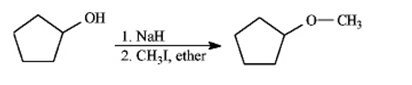
Refer to instructions.Mechanistically,the Williamson ether synthesis outlined above is:
A)an E1 process
B)an SN1 process
C)an E2 process
D)an SN2 process
Refer to instructions.Mechanistically,the Williamson ether synthesis outlined above is:
A)an E1 process
B)an SN1 process
C)an E2 process
D)an SN2 process
Question
What is the IUPAC name of the following compound?
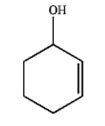
A)cyclohexen-3-ol
B)cyclohexen-2-ol
C)cyclohex-1-en-3-ol
D)cyclohex-2-en-1-ol
A)cyclohexen-3-ol
B)cyclohexen-2-ol
C)cyclohex-1-en-3-ol
D)cyclohex-2-en-1-ol
Question
Instructions: To answer the following question(s),consider the reaction below.
Refer to instructions.The conversion of an alcohol into an alkyl chloride by reaction with SOCl2 is an example of:
A)an E1 process
B)an SN1 process
C)an E2 process
D)an SN2 process
Refer to instructions.The conversion of an alcohol into an alkyl chloride by reaction with SOCl2 is an example of:
A)an E1 process
B)an SN1 process
C)an E2 process
D)an SN2 process
Question
Which of the following are ethers?
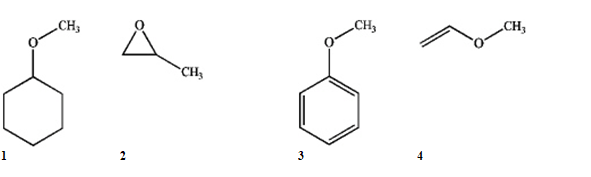
A)only 1 and 2
B)only 1 and 4
C)only 1,2 and 3
D)all of these are ethers
A)only 1 and 2
B)only 1 and 4
C)only 1,2 and 3
D)all of these are ethers
Question
Question
Question
Instructions: Consider the Grignard reaction below to answer the following question(s).
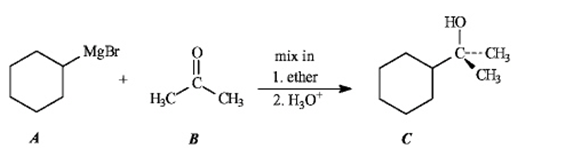
Refer to instructions.If a secondary alcohol were desired as a product of the reaction,B should be replaced with
A)an ester
B)an aldehyde
C)formaldehyde (methanal)
D)a primary alcohol
Refer to instructions.If a secondary alcohol were desired as a product of the reaction,B should be replaced with
A)an ester
B)an aldehyde
C)formaldehyde (methanal)
D)a primary alcohol
Question
Question
The following IR spectrum would most likely be associated with
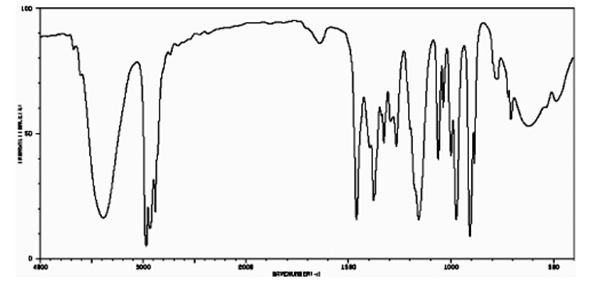
Spectrum obtained from: SDBSWeb : http://riodb01.ibase.aist.go.jp/sdbs/ (National Institute of Advanced Industrial Science and Technology,11-01-08)
A)phenol
B)aromatic alcohol
C)aliphatic alcohol
D)ether
E)cannot determine from the isolated spectrum
Spectrum obtained from: SDBSWeb : http://riodb01.ibase.aist.go.jp/sdbs/ (National Institute of Advanced Industrial Science and Technology,11-01-08)
A)phenol
B)aromatic alcohol
C)aliphatic alcohol
D)ether
E)cannot determine from the isolated spectrum
Question
Instructions: Provide correct IUPAC names for each of the structures below.
Name: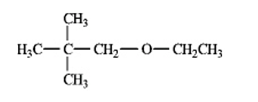
Name:
Question
What is the best choice of reagent to achieve the following transformation?
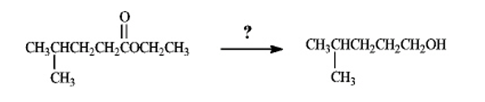
A)CrO3,H3O+,acetone
B)pyridium chlorochromate,CH2Cl2
C)SOCl2,pyridine
D)NaBH4,H3O+
E)LiAlH4,H3O+
A)CrO3,H3O+,acetone
B)pyridium chlorochromate,CH2Cl2
C)SOCl2,pyridine
D)NaBH4,H3O+
E)LiAlH4,H3O+
Question
Instructions: Provide correct IUPAC names for each of the structures below.
Name:
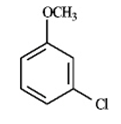
Name:
Question
What is the IUPAC name of the following compound?
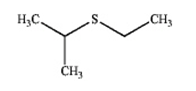
A)ethyl isopropyl thiol
B)2-methylsulfanylpropane
C)ethyl isopropyl disulfide
D)ethyl isopropyl sulfide
A)ethyl isopropyl thiol
B)2-methylsulfanylpropane
C)ethyl isopropyl disulfide
D)ethyl isopropyl sulfide
Question
Question
What is the IUPAC name of the following compound?
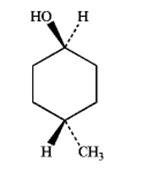
A)cis-4-methylcyclohexanol
B)trans-4-methylcyclohexanol
C)cis-4-hydroxy-1-methylcyclohexane
D)trans-4-hydroxy-1-methylcyclohexane
A)cis-4-methylcyclohexanol
B)trans-4-methylcyclohexanol
C)cis-4-hydroxy-1-methylcyclohexane
D)trans-4-hydroxy-1-methylcyclohexane
Question
Which of the following would not react with either Na2Cr2O7 or pyridinium chlorochromate?
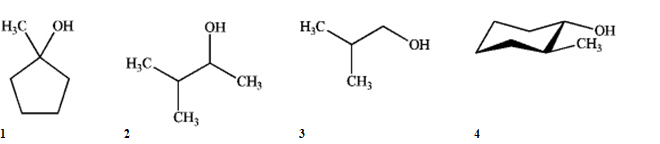
A)only 1
B)only 3
C)only 2 and 4
D)1,2,3 and 4
A)only 1
B)only 3
C)only 2 and 4
D)1,2,3 and 4
Question
Instructions: To answer the following question(s),consider the reaction below.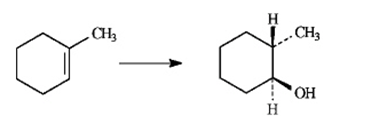
Refer to instructions.Provide the IUPAC name for the product alcohol.
Refer to instructions.Provide the IUPAC name for the product alcohol.

Unlock Deck
Sign up to unlock the cards in this deck!
Unlock Deck
Unlock Deck
1/19

Play

Full screen (f)
Deck 13: Alcohols,phenols,and Thiols: Ethers and Sulfides
1
Which of the following is not a property of a protecting group?
A)change the reactivity of a functional group
B)inert to reaction conditions
C)becomes a permanent part of the product
D)alters the mechanism of the desired reaction
E)all of these are properties of a protecting group
A)change the reactivity of a functional group
B)inert to reaction conditions
C)becomes a permanent part of the product
D)alters the mechanism of the desired reaction
E)all of these are properties of a protecting group
becomes a permanent part of the product
2
Instructions: To answer the following question(s),consider the reaction below.
Refer to instructions.Provide the complete IUPAC name for the starting material in this reaction and classify the alcohol as primary,secondary,or tertiary.
Refer to instructions.Provide the complete IUPAC name for the starting material in this reaction and classify the alcohol as primary,secondary,or tertiary.
(R)-heptan-2-ol,secondary
3
Instructions: Consider the reaction below to answer the following question.
Refer to instructions.Mechanistically,the Williamson ether synthesis outlined above is:
A)an E1 process
B)an SN1 process
C)an E2 process
D)an SN2 process
Refer to instructions.Mechanistically,the Williamson ether synthesis outlined above is:
A)an E1 process
B)an SN1 process
C)an E2 process
D)an SN2 process
an SN2 process
4
What is the IUPAC name of the following compound?
A)cyclohexen-3-ol
B)cyclohexen-2-ol
C)cyclohex-1-en-3-ol
D)cyclohex-2-en-1-ol
A)cyclohexen-3-ol
B)cyclohexen-2-ol
C)cyclohex-1-en-3-ol
D)cyclohex-2-en-1-ol
Unlock Deck
Unlock for access to all 19 flashcards in this deck.
Unlock Deck
k this deck
5
Instructions: To answer the following question(s),consider the reaction below.
Refer to instructions.The conversion of an alcohol into an alkyl chloride by reaction with SOCl2 is an example of:
A)an E1 process
B)an SN1 process
C)an E2 process
D)an SN2 process
Refer to instructions.The conversion of an alcohol into an alkyl chloride by reaction with SOCl2 is an example of:
A)an E1 process
B)an SN1 process
C)an E2 process
D)an SN2 process
Unlock Deck
Unlock for access to all 19 flashcards in this deck.
Unlock Deck
k this deck
6
Which of the following are ethers?
A)only 1 and 2
B)only 1 and 4
C)only 1,2 and 3
D)all of these are ethers
A)only 1 and 2
B)only 1 and 4
C)only 1,2 and 3
D)all of these are ethers
Unlock Deck
Unlock for access to all 19 flashcards in this deck.
Unlock Deck
k this deck
7
Instructions: To answer the following question(s),consider the reaction below.
Refer to instructions.The alcohol product is classified as a:
A)1 alcohol
B)2 alcohol
C)3 alcohol
D)4 alcohol
Refer to instructions.The alcohol product is classified as a:
A)1 alcohol
B)2 alcohol
C)3 alcohol
D)4 alcohol
Unlock Deck
Unlock for access to all 19 flashcards in this deck.
Unlock Deck
k this deck
8
Addition of chlorotrimethylsilane to an alcohol
A)results in an SN1 reaction.
B)requires acidic reaction conditions.
C)is sterically hindered by the three methyl groups.
D)results in the formation of an ether.
E)produces a more reactive species.
A)results in an SN1 reaction.
B)requires acidic reaction conditions.
C)is sterically hindered by the three methyl groups.
D)results in the formation of an ether.
E)produces a more reactive species.
Unlock Deck
Unlock for access to all 19 flashcards in this deck.
Unlock Deck
k this deck
9
Instructions: Consider the Grignard reaction below to answer the following question(s).
Refer to instructions.If a secondary alcohol were desired as a product of the reaction,B should be replaced with
A)an ester
B)an aldehyde
C)formaldehyde (methanal)
D)a primary alcohol
Refer to instructions.If a secondary alcohol were desired as a product of the reaction,B should be replaced with
A)an ester
B)an aldehyde
C)formaldehyde (methanal)
D)a primary alcohol
Unlock Deck
Unlock for access to all 19 flashcards in this deck.
Unlock Deck
k this deck
10
Which of the following is probably the least useful in IR characterization of a compound?
A)phenol: 3500 cm-1
B)alcohol: 3500 cm-1
C)phenol: 1500-1600 cm-1
D)ether: 1050-1150 cm-1
E)all of these are about equally useful
A)phenol: 3500 cm-1
B)alcohol: 3500 cm-1
C)phenol: 1500-1600 cm-1
D)ether: 1050-1150 cm-1
E)all of these are about equally useful
Unlock Deck
Unlock for access to all 19 flashcards in this deck.
Unlock Deck
k this deck
11
The following IR spectrum would most likely be associated with
Spectrum obtained from: SDBSWeb : http://riodb01.ibase.aist.go.jp/sdbs/ (National Institute of Advanced Industrial Science and Technology,11-01-08)
A)phenol
B)aromatic alcohol
C)aliphatic alcohol
D)ether
E)cannot determine from the isolated spectrum
Spectrum obtained from: SDBSWeb : http://riodb01.ibase.aist.go.jp/sdbs/ (National Institute of Advanced Industrial Science and Technology,11-01-08)
A)phenol
B)aromatic alcohol
C)aliphatic alcohol
D)ether
E)cannot determine from the isolated spectrum
Unlock Deck
Unlock for access to all 19 flashcards in this deck.
Unlock Deck
k this deck
12
Instructions: Provide correct IUPAC names for each of the structures below.
Name:
Name:
Unlock Deck
Unlock for access to all 19 flashcards in this deck.
Unlock Deck
k this deck
13
What is the best choice of reagent to achieve the following transformation?
A)CrO3,H3O+,acetone
B)pyridium chlorochromate,CH2Cl2
C)SOCl2,pyridine
D)NaBH4,H3O+
E)LiAlH4,H3O+
A)CrO3,H3O+,acetone
B)pyridium chlorochromate,CH2Cl2
C)SOCl2,pyridine
D)NaBH4,H3O+
E)LiAlH4,H3O+
Unlock Deck
Unlock for access to all 19 flashcards in this deck.
Unlock Deck
k this deck
14
Instructions: Provide correct IUPAC names for each of the structures below.
Name:
Name:
Unlock Deck
Unlock for access to all 19 flashcards in this deck.
Unlock Deck
k this deck
15
What is the IUPAC name of the following compound?
A)ethyl isopropyl thiol
B)2-methylsulfanylpropane
C)ethyl isopropyl disulfide
D)ethyl isopropyl sulfide
A)ethyl isopropyl thiol
B)2-methylsulfanylpropane
C)ethyl isopropyl disulfide
D)ethyl isopropyl sulfide
Unlock Deck
Unlock for access to all 19 flashcards in this deck.
Unlock Deck
k this deck
16
Which of the following ethers cannot be prepared by a Williamson ether synthesis?
A)tert-butyl phenyl ether
B)isopropyl methyl ether
C)anisole
D)tert-butyl methyl ether
A)tert-butyl phenyl ether
B)isopropyl methyl ether
C)anisole
D)tert-butyl methyl ether
Unlock Deck
Unlock for access to all 19 flashcards in this deck.
Unlock Deck
k this deck
17
What is the IUPAC name of the following compound?
A)cis-4-methylcyclohexanol
B)trans-4-methylcyclohexanol
C)cis-4-hydroxy-1-methylcyclohexane
D)trans-4-hydroxy-1-methylcyclohexane
A)cis-4-methylcyclohexanol
B)trans-4-methylcyclohexanol
C)cis-4-hydroxy-1-methylcyclohexane
D)trans-4-hydroxy-1-methylcyclohexane
Unlock Deck
Unlock for access to all 19 flashcards in this deck.
Unlock Deck
k this deck
18
Which of the following would not react with either Na2Cr2O7 or pyridinium chlorochromate?
A)only 1
B)only 3
C)only 2 and 4
D)1,2,3 and 4
A)only 1
B)only 3
C)only 2 and 4
D)1,2,3 and 4
Unlock Deck
Unlock for access to all 19 flashcards in this deck.
Unlock Deck
k this deck
19
Instructions: To answer the following question(s),consider the reaction below.
Refer to instructions.Provide the IUPAC name for the product alcohol.
Refer to instructions.Provide the IUPAC name for the product alcohol.
Unlock Deck
Unlock for access to all 19 flashcards in this deck.
Unlock Deck
k this deck
Unlock Deck
Unlock for access to all 19 flashcards in this deck.






