







 Chat with AI

Deck 28: Nursing Assessment Respiratory System
Full screen (f)

Question

Question
Question
Question
Question
Question
Question
Question
Question
Question
Question
Question
Question
Question
Question
Question
Question
Question
Question
Question
Question
The nurse is performing an assessment of the client's respiratory system. Which of the following parameters is the nurse assessing when using the following illustrated technique? 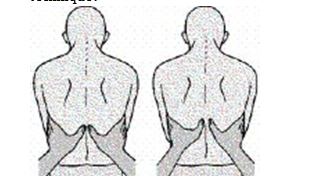
A)Bronchophony
B)Chest expansion
C)Accessory muscle use
D)Diaphragmatic excursion
A)Bronchophony
B)Chest expansion
C)Accessory muscle use
D)Diaphragmatic excursion
Question

Unlock Deck
Sign up to unlock the cards in this deck!
Unlock Deck
Unlock Deck
1/22

Play

Full screen (f)
Deck 28: Nursing Assessment Respiratory System
1
The nurse is admitting a client with acute shortness of breath. Which of the following actions should the nurse take during the initial assessment of the client?
A)Complete a full physical examination to determine the systemic effect of the respiratory distress.
B)Obtain a comprehensive health history to determine the extent of any prior respiratory problems.
C)Delay the physical assessment and ask family members about any history of respiratory problems.
D)Perform a respiratory system assessment and ask specific questions about this episode of respiratory distress.
A)Complete a full physical examination to determine the systemic effect of the respiratory distress.
B)Obtain a comprehensive health history to determine the extent of any prior respiratory problems.
C)Delay the physical assessment and ask family members about any history of respiratory problems.
D)Perform a respiratory system assessment and ask specific questions about this episode of respiratory distress.
Perform a respiratory system assessment and ask specific questions about this episode of respiratory distress.
2
Which of the following actions should the nurse plan to take for a client who is scheduled for pulmonary function testing (PFT)?
A)Explain reasons for NPO status.
B)Administer sedative drug before PFT.
C)Assess pulse and BP after the procedure.
D)Teach deep inhalation and forceful exhalation.
A)Explain reasons for NPO status.
B)Administer sedative drug before PFT.
C)Assess pulse and BP after the procedure.
D)Teach deep inhalation and forceful exhalation.
Teach deep inhalation and forceful exhalation.
3
The nurse is admitting a client to the emergency department who has sudden onset shortness of breath and diagnosed with a possible pulmonary embolus. To confirm the diagnosis, which of the following diagnostic measures should the nurse anticipate?
A)Positron emission tomography (PET) scan
B)Chest x-ray
C)Bronchoscopy
D)Spiral computed tomography (CT) scan
A)Positron emission tomography (PET) scan
B)Chest x-ray
C)Bronchoscopy
D)Spiral computed tomography (CT) scan
Spiral computed tomography (CT) scan
4
The nurse is auscultating a client's chest while the client takes a deep breath and hears loud, high-pitched, "blowing" sounds at both lung bases. Which of the following information should the nurse document?
A)Normal sounds
B)Vesicular sounds
C)Abnormal sounds
D)Adventitious sounds
A)Normal sounds
B)Vesicular sounds
C)Abnormal sounds
D)Adventitious sounds
Unlock Deck
Unlock for access to all 22 flashcards in this deck.
Unlock Deck
k this deck
5
The nurse is caring for a client with respiratory disease and observes that the client's SpO? drops from 92% to 88% while the client is ambulating in the hallway. Which of the following actions should the nurse take next?
A)Notify the health care provider.
B)Document the response to exercise.
C)Administer the PRN supplemental O?.
D)Encourage the client to pace activity.
A)Notify the health care provider.
B)Document the response to exercise.
C)Administer the PRN supplemental O?.
D)Encourage the client to pace activity.
Unlock Deck
Unlock for access to all 22 flashcards in this deck.
Unlock Deck
k this deck
6
The nurse is observing a student who is listening to a client's lungs. Which of the following actions by the student indicates a need to review respiratory assessment skills?
A)The student compares breath sounds from side to side.
B)The student listens only over the posterior part of the chest.
C)The student places the stethoscope over the scapulae and then auscultates.
D)The student starts at the base of the posterior lung and moves to the apices.
A)The student compares breath sounds from side to side.
B)The student listens only over the posterior part of the chest.
C)The student places the stethoscope over the scapulae and then auscultates.
D)The student starts at the base of the posterior lung and moves to the apices.
Unlock Deck
Unlock for access to all 22 flashcards in this deck.
Unlock Deck
k this deck
7
The nurse is analyzing the results of a client's arterial blood gases (ABGs). Which of the following findings require the most immediate action?
A)The arterial oxygen saturation (SaO?) is 92%.
B)The partial pressure of oxygen in arterial blood (PaO?) is 59 mm Hg.
C)The partial pressure of CO? in arterial blood (PaCO?) is 31 mm Hg.
D)The bicarbonate level (HCO?-) is 29 mmol/L.
A)The arterial oxygen saturation (SaO?) is 92%.
B)The partial pressure of oxygen in arterial blood (PaO?) is 59 mm Hg.
C)The partial pressure of CO? in arterial blood (PaCO?) is 31 mm Hg.
D)The bicarbonate level (HCO?-) is 29 mmol/L.
Unlock Deck
Unlock for access to all 22 flashcards in this deck.
Unlock Deck
k this deck
8
The nurse is reviewing a client's laboratory results and identifies which of the following values as a normal tidal volume?
A)100 mL
B)250 mL
C)500 mL
D)1 000 mL
A)100 mL
B)250 mL
C)500 mL
D)1 000 mL
Unlock Deck
Unlock for access to all 22 flashcards in this deck.
Unlock Deck
k this deck
9
The nurse is palpating the posterior chest of a client while the client says "99" and notes that no vibration is felt. Which of the following information should the nurse document?
A)Diminished expansion
B)Dullness to percussion
C)Absent tactile fremitus
D)Decreased breath sounds
A)Diminished expansion
B)Dullness to percussion
C)Absent tactile fremitus
D)Decreased breath sounds
Unlock Deck
Unlock for access to all 22 flashcards in this deck.
Unlock Deck
k this deck
10
The nurse is assessing a client with chronic obstructive pulmonary disease (COPD) with increasing dyspnea over the last 3 days. Which of the following findings is most important to report to the health care provider?
A)Respirations are 36 breaths/minute.
B)Anterior-posterior chest ratio is 1:1.
C)Lung expansion is decreased bilaterally.
D)Hyperresonance to percussion is present.
A)Respirations are 36 breaths/minute.
B)Anterior-posterior chest ratio is 1:1.
C)Lung expansion is decreased bilaterally.
D)Hyperresonance to percussion is present.
Unlock Deck
Unlock for access to all 22 flashcards in this deck.
Unlock Deck
k this deck
11
The nurse is caring for a client with a chronic cough who has had a bronchoscopy. Which of the following actions should the nurse include in the nursing care plan after the procedure?
A)Elevate the head of the bed to 80-90 degrees.
B)Keep the client NPO until the gag reflex returns.
C)Place on bed rest for at least 4 hours postbronchoscopy.
D)Notify the health care provider about blood-tinged mucus.
A)Elevate the head of the bed to 80-90 degrees.
B)Keep the client NPO until the gag reflex returns.
C)Place on bed rest for at least 4 hours postbronchoscopy.
D)Notify the health care provider about blood-tinged mucus.
Unlock Deck
Unlock for access to all 22 flashcards in this deck.
Unlock Deck
k this deck
12
Which of the following lung structures has the most generations?
A)Segmental bronchi
B)Subsegmental bronchi
C)Bronchioles
D)Alveoli
A)Segmental bronchi
B)Subsegmental bronchi
C)Bronchioles
D)Alveoli
Unlock Deck
Unlock for access to all 22 flashcards in this deck.
Unlock Deck
k this deck
13
The nurse is caring for a client with a metabolic acidosis of unknown origin. Which of the following findings should the nurse expect based on this diagnosis?
A)Intercostal retractions
B)Kussmaul's respirations
C)Low oxygen saturation (SpO2)
D)Decrease in venous O2 pressure
A)Intercostal retractions
B)Kussmaul's respirations
C)Low oxygen saturation (SpO2)
D)Decrease in venous O2 pressure
Unlock Deck
Unlock for access to all 22 flashcards in this deck.
Unlock Deck
k this deck
14
The nurse is assessing the respiratory system of an older-adult client. Which of the following findings indicate that the nurse should take immediate action?
A)The chest appears barrel shaped.
B)The client has a weak cough effort.
C)Crackles are heard from the lung bases to the midline.
D)Hyperresonance is present across both sides of the chest.
A)The chest appears barrel shaped.
B)The client has a weak cough effort.
C)Crackles are heard from the lung bases to the midline.
D)Hyperresonance is present across both sides of the chest.
Unlock Deck
Unlock for access to all 22 flashcards in this deck.
Unlock Deck
k this deck
15
After the nurse has received change-of-shift report, which of the following clients should be assessed first?
A)A client with pneumonia who has crackles in the right lung base
B)A client with chronic obstructive pulmonary disease (COPD) and pulmonary function testing (PFT) that indicates low forced vital capacity
C)A client with possible lung cancer who has just returned after bronchoscopy
D)A client with hemoptysis and a 16-mm induration with tuberculin skin testing
A)A client with pneumonia who has crackles in the right lung base
B)A client with chronic obstructive pulmonary disease (COPD) and pulmonary function testing (PFT) that indicates low forced vital capacity
C)A client with possible lung cancer who has just returned after bronchoscopy
D)A client with hemoptysis and a 16-mm induration with tuberculin skin testing
Unlock Deck
Unlock for access to all 22 flashcards in this deck.
Unlock Deck
k this deck
16
The nurse is auscultating a client's lungs and hears short, high-pitched sounds during exhalation in the lower 1/3 of both lungs. Which of the following information should the nurse document?
A)Expiratory crackles at the bases
B)Expiratory wheezes in both lungs
C)Abnormal lung sounds in the bases of both lungs
D)Pleural friction rub in the right and left lower lobes
A)Expiratory crackles at the bases
B)Expiratory wheezes in both lungs
C)Abnormal lung sounds in the bases of both lungs
D)Pleural friction rub in the right and left lower lobes
Unlock Deck
Unlock for access to all 22 flashcards in this deck.
Unlock Deck
k this deck
17
The nurse is admitting a client who is hypothermic with a O2 saturation of 96%. Which of the following actions should the nurse take next?
A)Initiate rewarming of the client.
B)Complete a head-to-toe assessment.
C)Obtain arterial blood gases (ABGs).
D)Place the client on high-flow oxygen.
A)Initiate rewarming of the client.
B)Complete a head-to-toe assessment.
C)Obtain arterial blood gases (ABGs).
D)Place the client on high-flow oxygen.
Unlock Deck
Unlock for access to all 22 flashcards in this deck.
Unlock Deck
k this deck
18
The nurse has just received arterial blood gas (ABG) results on four clients. Which of the following results is considered normal?
A)pH 7.32, PaO? 85 mm Hg, PaCO? 55 mm Hg, and O? saturation 90%
B)pH 7.38, PaO? 75 mm Hg, PaCO? 40 mm Hg, and O? saturation 92%
C)pH 7.42, PaO? 80 mm Hg, PaCO? 33 mm Hg, and O? saturation 98%
D)pH 7.52, PaO? 90 mm Hg, PaCO? 30 mm Hg, and O? saturation 94%
A)pH 7.32, PaO? 85 mm Hg, PaCO? 55 mm Hg, and O? saturation 90%
B)pH 7.38, PaO? 75 mm Hg, PaCO? 40 mm Hg, and O? saturation 92%
C)pH 7.42, PaO? 80 mm Hg, PaCO? 33 mm Hg, and O? saturation 98%
D)pH 7.52, PaO? 90 mm Hg, PaCO? 30 mm Hg, and O? saturation 94%
Unlock Deck
Unlock for access to all 22 flashcards in this deck.
Unlock Deck
k this deck
19
Which of the following pH values is abnormal for a pH when assessing blood results of a mixed venous blood sample?
A)7.31
B) 7.35
C)7.4
D) 7.42
A)7.31
B) 7.35
C)7.4
D) 7.42
Unlock Deck
Unlock for access to all 22 flashcards in this deck.
Unlock Deck
k this deck
20
The nurse is preparing a client with a right-sided pleural effusion for a thoracentesis. Which of the following positions should the nurse position the client?
A)Supine with the head of the bed elevated 45 degrees
B)In the Trendelenburg position with both arms extended
C)On the left side with the right arm extended above the head
D)Sitting upright with the arms supported on an over bed table
A)Supine with the head of the bed elevated 45 degrees
B)In the Trendelenburg position with both arms extended
C)On the left side with the right arm extended above the head
D)Sitting upright with the arms supported on an over bed table
Unlock Deck
Unlock for access to all 22 flashcards in this deck.
Unlock Deck
k this deck
21
The nurse is performing an assessment of the client's respiratory system. Which of the following parameters is the nurse assessing when using the following illustrated technique?
A)Bronchophony
B)Chest expansion
C)Accessory muscle use
D)Diaphragmatic excursion
A)Bronchophony
B)Chest expansion
C)Accessory muscle use
D)Diaphragmatic excursion
Unlock Deck
Unlock for access to all 22 flashcards in this deck.
Unlock Deck
k this deck
22
Which of the following respiratory assessments are not normal? (Select all that apply.)
A)Respirations 23 breaths/minute
B)Outward movement of abdomen during inspiration
C)Increase in vibrations with tactile fremitus
D)Tripod position
E)Symmetrical chest expansion
A)Respirations 23 breaths/minute
B)Outward movement of abdomen during inspiration
C)Increase in vibrations with tactile fremitus
D)Tripod position
E)Symmetrical chest expansion
Unlock Deck
Unlock for access to all 22 flashcards in this deck.
Unlock Deck
k this deck
Unlock Deck
Unlock for access to all 22 flashcards in this deck.






