







 Chat with AI

Deck 21: Childbirth at Risk: Labor-Related Complications
Full screen (f)

Question

Question
Question
Question
Question
The nurse palpates the following when conducting a vaginal assessment on a client in labor:Shape_ 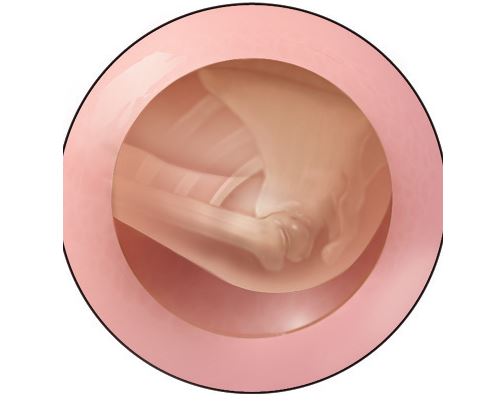 What action should the nurse take to address this finding?
1) Position the client on the left side.
2) Prepare the client for cesarean section.
3) Place a wedge under the client's right hip.
4) Increase intravenous fluids and apply oxygen.
What action should the nurse take to address this finding?1) Position the client on the left side.
2) Prepare the client for cesarean section.
3) Place a wedge under the client's right hip.
4) Increase intravenous fluids and apply oxygen.
Question
A client delivered a fetus with the following head shape:Shape_ 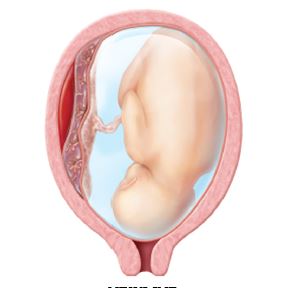 On what should the nurse focus when assessing this newborn? Select all that apply.
1) Airway
2) Amount of bruising
3) Meconium aspiration
4) Degree of facial edema
5) Neck and head movement
On what should the nurse focus when assessing this newborn? Select all that apply.1) Airway
2) Amount of bruising
3) Meconium aspiration
4) Degree of facial edema
5) Neck and head movement
Question
Question
Question
Question
Question
Question
Question
Question
Question
Question
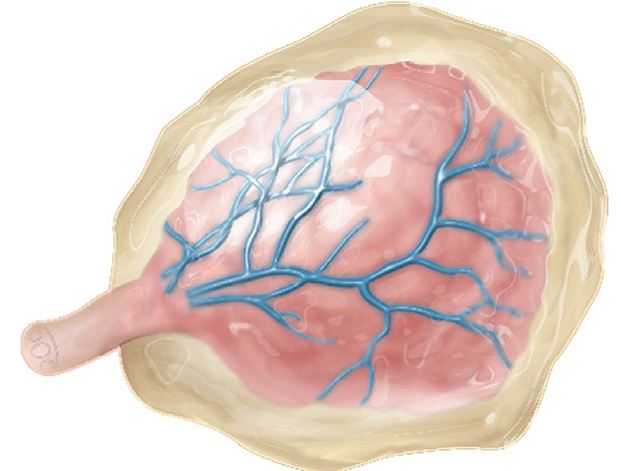
The nurse is preparing instruction on placental and umbilical cord variations. Which diagram should the nurse use to explain succenturiate placenta? 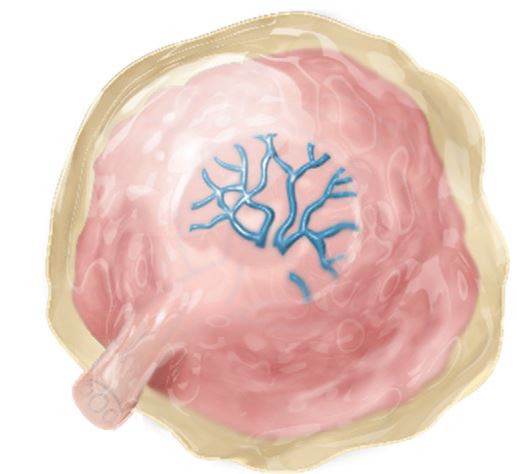
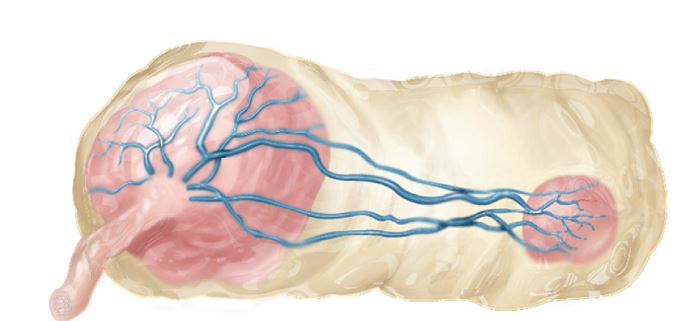
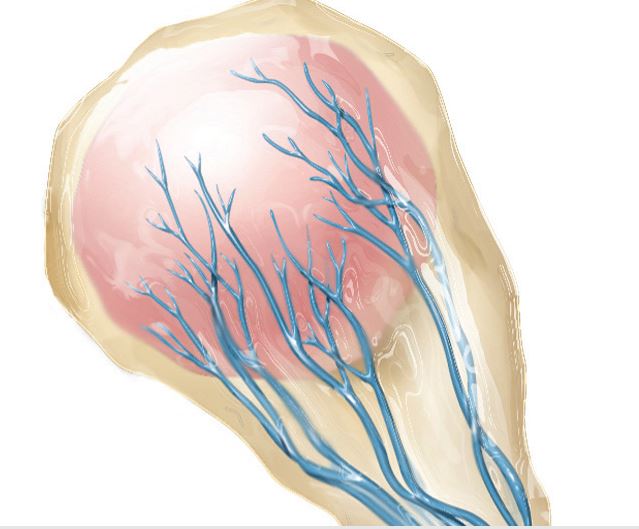
Question
Question
Question
Question
Question

Unlock Deck
Sign up to unlock the cards in this deck!
Unlock Deck
Unlock Deck
1/21

Play

Full screen (f)
Deck 21: Childbirth at Risk: Labor-Related Complications
1
For delivery, a client received a midline episiotomy, which extended into a third-degree laceration. What should the nurse include when explaining the location of the episiotomy to the client?
1) "Up near your urethra."
2) "Into the muscle layer."
3) "Through your rectal mucosa."
4) "Through your rectal sphincter."
1) "Up near your urethra."
2) "Into the muscle layer."
3) "Through your rectal mucosa."
4) "Through your rectal sphincter."
4
2
The multiparous client at 33 weeks has experienced an intrauterine fetal demise. What finding requires immediate intervention?
1) Temperature 99°F
2) Fibrinogen level 50 mg/dL
3) Platelet count 210,000/cmm
4) Family refusing fetal autopsy
1) Temperature 99°F
2) Fibrinogen level 50 mg/dL
3) Platelet count 210,000/cmm
4) Family refusing fetal autopsy
2
3
A client at 39 weeks' gestation was assessed 2 hours ago as being 3 cm dilated, 40% effaced, and +1 station and experienced contractions every 5 minutes with duration 40 seconds and intensity 50 mmHg. Currently, the client is 4 cm dilated, 40% effaced, and +1 station with frequency of contractions every 3 minutes with 40 to 50 seconds' duration with intensity of 40 mmHg. What action should the nurse make a priority at this time?
1) Start oxygen at 8 L/min.
2) Give terbutaline to stop the preterm labor.
3) Have anesthesia provider give the client an epidural.
4) Begin oxytocin after assessing for cephalopelvic disproportion (CPD).
1) Start oxygen at 8 L/min.
2) Give terbutaline to stop the preterm labor.
3) Have anesthesia provider give the client an epidural.
4) Begin oxytocin after assessing for cephalopelvic disproportion (CPD).
4
4
The nurse is caring for a client who is a gravida 5 in active labor. The membranes spontaneously rupture with a large amount of clear amniotic fluid. Which nursing action is most important to take at this time?
1) Perform a Leopold maneuver.
2) Complete a sterile vaginal examination.
3) Obtain an order for pain medication.
4) Assess the odor of the amniotic fluid.
1) Perform a Leopold maneuver.
2) Complete a sterile vaginal examination.
3) Obtain an order for pain medication.
4) Assess the odor of the amniotic fluid.
Unlock Deck
Unlock for access to all 21 flashcards in this deck.
Unlock Deck
k this deck
5
The nurse palpates the following when conducting a vaginal assessment on a client in labor:Shape_ What action should the nurse take to address this finding?
1) Position the client on the left side.
2) Prepare the client for cesarean section.
3) Place a wedge under the client's right hip.
4) Increase intravenous fluids and apply oxygen.
What action should the nurse take to address this finding?1) Position the client on the left side.
2) Prepare the client for cesarean section.
3) Place a wedge under the client's right hip.
4) Increase intravenous fluids and apply oxygen.
Unlock Deck
Unlock for access to all 21 flashcards in this deck.
Unlock Deck
k this deck
6
A client delivered a fetus with the following head shape:Shape_ On what should the nurse focus when assessing this newborn? Select all that apply.
1) Airway
2) Amount of bruising
3) Meconium aspiration
4) Degree of facial edema
5) Neck and head movement
On what should the nurse focus when assessing this newborn? Select all that apply.1) Airway
2) Amount of bruising
3) Meconium aspiration
4) Degree of facial edema
5) Neck and head movement
Unlock Deck
Unlock for access to all 21 flashcards in this deck.
Unlock Deck
k this deck
7
The nurse is assisting in the preparation of a pregnant client in labor for intrauterine resuscitation. For which fetal finding is this intervention indicated? Select all that apply.
1) Prolonged decelerations
2) Persistent late decelerations
3) Last fetal movement 5 minutes ago
4) Fetal heart rate 140 beats per minute
5) Persistent and severe variable decelerations
1) Prolonged decelerations
2) Persistent late decelerations
3) Last fetal movement 5 minutes ago
4) Fetal heart rate 140 beats per minute
5) Persistent and severe variable decelerations
Unlock Deck
Unlock for access to all 21 flashcards in this deck.
Unlock Deck
k this deck
8
A client who delivered 30 minutes ago is being prepared for manual removal of the placenta. What should the nurse complete as a priority?
1) Bottle-feed the infant.
2) Send the placenta to pathology.
3) Start an IV of lactated Ringer solution.
4) Apply antiembolism stockings.
1) Bottle-feed the infant.
2) Send the placenta to pathology.
3) Start an IV of lactated Ringer solution.
4) Apply antiembolism stockings.
Unlock Deck
Unlock for access to all 21 flashcards in this deck.
Unlock Deck
k this deck
9
The charge nurse is reviewing charting completed on clients in the maternal-child triage unit. Which entry requires immediate intervention?
1) Multipara at 32 weeks: "Oligohydramnios per ultrasound secondary to fetal renal agenesis."
2) Primipara at 41 weeks: "Client reports leaking clear fluid from her vagina for 7 hours."
3) Primipara at 24 weeks diagnosed with polyhydramnios: "Client reporting shortness of breath."
4) Multipara at 34 weeks diagnosed with oligohydramnios: "Cervix 6 cm, −2 station, up to walk in hallway."
1) Multipara at 32 weeks: "Oligohydramnios per ultrasound secondary to fetal renal agenesis."
2) Primipara at 41 weeks: "Client reports leaking clear fluid from her vagina for 7 hours."
3) Primipara at 24 weeks diagnosed with polyhydramnios: "Client reporting shortness of breath."
4) Multipara at 34 weeks diagnosed with oligohydramnios: "Cervix 6 cm, −2 station, up to walk in hallway."
Unlock Deck
Unlock for access to all 21 flashcards in this deck.
Unlock Deck
k this deck
10
The nurse is making client assignments for the next shift. Which client is most likely to experience a complicated labor pattern?
1) 34-year-old gravida 6 at 39 weeks' gestation with twins
2) 43-year-old gravida 2 at 37 weeks' gestation with hypertension
3) 22-year-old gravida 1 at 23 weeks' gestation with ruptured membranes
4) 30-year-old gravida 3 at 41 weeks' gestation and estimated fetal weight 7 lb, 8 oz
1) 34-year-old gravida 6 at 39 weeks' gestation with twins
2) 43-year-old gravida 2 at 37 weeks' gestation with hypertension
3) 22-year-old gravida 1 at 23 weeks' gestation with ruptured membranes
4) 30-year-old gravida 3 at 41 weeks' gestation and estimated fetal weight 7 lb, 8 oz
Unlock Deck
Unlock for access to all 21 flashcards in this deck.
Unlock Deck
k this deck
11
What should the nurse anticipate the labor pattern for a fetal occiput posterior position to be?
1) Precipitous
2) Rapid during transition
3) Shorter than average during the latent phase
4) Prolonged with regard to the overall length of labor
1) Precipitous
2) Rapid during transition
3) Shorter than average during the latent phase
4) Prolonged with regard to the overall length of labor
Unlock Deck
Unlock for access to all 21 flashcards in this deck.
Unlock Deck
k this deck
12
A multiparous client at term is in active labor with intact membranes. A Leopold maneuver indicates the fetus is in a transverse lie with a shoulder presentation. What healthcare provider order is most important?
1) Artificially rupture membranes.
2) Apply internal fetal scalp electrode.
3) Alert the surgical team of urgent cesarean.
4) Monitor maternal blood pressure every 15 minutes.
1) Artificially rupture membranes.
2) Apply internal fetal scalp electrode.
3) Alert the surgical team of urgent cesarean.
4) Monitor maternal blood pressure every 15 minutes.
Unlock Deck
Unlock for access to all 21 flashcards in this deck.
Unlock Deck
k this deck
13
A primiparous client is at 42 weeks' gestation. What order should the nurse question?
1) Begin non-stress test now.
2) Return to the clinic in 1 week.
3) Obtain biophysical profile today.
4) Schedule labor induction for tomorrow.
1) Begin non-stress test now.
2) Return to the clinic in 1 week.
3) Obtain biophysical profile today.
4) Schedule labor induction for tomorrow.
Unlock Deck
Unlock for access to all 21 flashcards in this deck.
Unlock Deck
k this deck
14
A client with a suspected small pelvis is dilated at 6 cm. The fetus has an estimated weight of 4200 g (9 lb, 4 oz). What is the most important action for the client at this time?
1) Encourage oral fluids and carbohydrate intake.
2) Assess the cervix for change every 8 hours.
3) Inform the couple that labor might be prolonged.
4) Assist the client to squat during the second stage.
1) Encourage oral fluids and carbohydrate intake.
2) Assess the cervix for change every 8 hours.
3) Inform the couple that labor might be prolonged.
4) Assist the client to squat during the second stage.
Unlock Deck
Unlock for access to all 21 flashcards in this deck.
Unlock Deck
k this deck
15
The membranes of a client in labor have spontaneously ruptured and the fluid is meconium stained. The fetal heart tones are 100 to
105) Which nursing action is most important?
1) Notify the surgical team of an impending cesarean.
2) Change the client's position from Fowler to left lateral.
3) Insert a Foley catheter with the assistance of another nurse.
4) Decrease the IV of lactated Ringer solution to 50 mL/hour.
105) Which nursing action is most important?
1) Notify the surgical team of an impending cesarean.
2) Change the client's position from Fowler to left lateral.
3) Insert a Foley catheter with the assistance of another nurse.
4) Decrease the IV of lactated Ringer solution to 50 mL/hour.
Unlock Deck
Unlock for access to all 21 flashcards in this deck.
Unlock Deck
k this deck
16
The nurse is preparing instruction on placental and umbilical cord variations. Which diagram should the nurse use to explain succenturiate placenta?
Unlock Deck
Unlock for access to all 21 flashcards in this deck.
Unlock Deck
k this deck
17
A client's fetus is estimated to weigh 4500 g (9 lb, 14 oz). Which statement indicates that additional teaching about the size of the baby is needed?
1) "His blood sugars could be high after he is born."
2) "I am at risk for excessive bleeding after delivery."
3) "My perineum could experience trauma during the birth."
4) "His shoulders could get stuck and a collar bone broken."
1) "His blood sugars could be high after he is born."
2) "I am at risk for excessive bleeding after delivery."
3) "My perineum could experience trauma during the birth."
4) "His shoulders could get stuck and a collar bone broken."
Unlock Deck
Unlock for access to all 21 flashcards in this deck.
Unlock Deck
k this deck
18
A client with cephalopelvic disproportion (CPD) develops tachysystolic labor patterns. Which treatment should the nurse anticipate?
1) Amniotomy
2) Cesarean section
3) Nipple stimulation
4) Oxytocin administration
1) Amniotomy
2) Cesarean section
3) Nipple stimulation
4) Oxytocin administration
Unlock Deck
Unlock for access to all 21 flashcards in this deck.
Unlock Deck
k this deck
19
A client who is pregnant with her first child has been laboring for 14 hours with very minimal progress. Cervical dilatation and effacement are slow, and the nurse is unable to verify engagement of the presenting fetal part. What condition should the nurse suspect may be affecting the client's labor?
1) Prolapsed cord
2) Placenta accreta
3) Cephalopelvic disproportion (CPD)
4) Occiput anterior (OA) fetal position
1) Prolapsed cord
2) Placenta accreta
3) Cephalopelvic disproportion (CPD)
4) Occiput anterior (OA) fetal position
Unlock Deck
Unlock for access to all 21 flashcards in this deck.
Unlock Deck
k this deck
20
After a lengthy labor and delivery, a client suddenly complains of chest pain and dyspnea. The client is cyanotic, has tachycardia and blood pressure decreased to 78/36 mmHg. Based on these assessment findings, which health problem is the client experiencing?
1) Infection
2) Placenta accreta
3) Hypertensive crisis
4) Amniotic fluid embolus
1) Infection
2) Placenta accreta
3) Hypertensive crisis
4) Amniotic fluid embolus
Unlock Deck
Unlock for access to all 21 flashcards in this deck.
Unlock Deck
k this deck
21
The nurse is caring for a client who delivered a 38 weeks' gestation stillborn fetus. What should the nurse do to support the client at this time? Select all that apply.
1) Remove the fetus from the room.
2) Clean the fetus and wrap in a blanket.
3) Ask the client if she would like to hold the baby.
4) Instruct on postdelivery care to be completed in the home.
5) Ask if other family members would like to spend time with the baby.
1) Remove the fetus from the room.
2) Clean the fetus and wrap in a blanket.
3) Ask the client if she would like to hold the baby.
4) Instruct on postdelivery care to be completed in the home.
5) Ask if other family members would like to spend time with the baby.
Unlock Deck
Unlock for access to all 21 flashcards in this deck.
Unlock Deck
k this deck
Unlock Deck
Unlock for access to all 21 flashcards in this deck.






