







 Chat with AI

Deck 3: Immunity and Immunologic Oral Lesions
Full screen (f)

Question

Question
Question
Question
Question
Question
Question
Question
Question
Question
Question
Question
Question
Question
Question
Question
Question
Question
Question
Question
Question
The classic appearance of what condition shown below is a pattern of interconnecting slender lines referred to as Wickham striae? 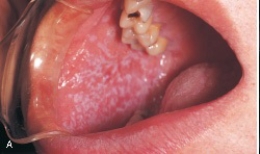
A)Lichen planus
B)Linea alba
C)Erythema multiforme
D)Reiter syndrome
A)Lichen planus
B)Linea alba
C)Erythema multiforme
D)Reiter syndrome
Question
Question
Question
Question
Question
Question
Question
Question
Question
This patient has Sjögren syndrome and severe xerostomia. 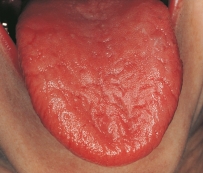 Which clinical feature most appropriately describes the changes on the tongue in this patient?
A)Dryness
B)Candidiasis
C)Loss of filiform and fungiform papillae
D)Fissures
Which clinical feature most appropriately describes the changes on the tongue in this patient?A)Dryness
B)Candidiasis
C)Loss of filiform and fungiform papillae
D)Fissures
Question
Question
Question
Question
Question
The onset of this condition is explosive. It is characterized by skin and mucosal lesions. The skin lesions are referred to as target, iris, or bull's eye lesions. The mucosal lesions affect the buccal mucosa, lips, and tongue and appear as superficial ulcerations. The lip lesions are ulcerated, encrusted, and bloody. 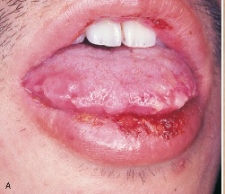 On the basis of this description, you suspect:
A)lichen planus.
B)erythema multiforme.
C)contact dermatitis.
D)SLE.
On the basis of this description, you suspect:A)lichen planus.
B)erythema multiforme.
C)contact dermatitis.
D)SLE.
Question
Question
Question
Question
Question
Question
Question
Question
Question
Question
Question
Question
Question
Question
Question
Question
Question
This patient presents with an intraepithelial bulla from breakdown of the cellular adhesion between epithelial cells. The bulla ruptured, resulting in a painful ulcer with itching. 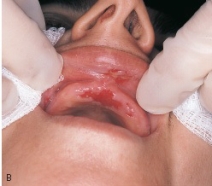 The correct diagnosis for this progressive autoimmune disease is:
A)pemphigus vulgaris.
B)Reiter syndrome.
C)aphthous ulcers.
D)Langerhans cell disease.
The correct diagnosis for this progressive autoimmune disease is:A)pemphigus vulgaris.
B)Reiter syndrome.
C)aphthous ulcers.
D)Langerhans cell disease.
Question
Question
Question
Question
Question
Question
Question
Question

Unlock Deck
Sign up to unlock the cards in this deck!
Unlock Deck
Unlock Deck
1/60

Play

Full screen (f)
Deck 3: Immunity and Immunologic Oral Lesions
1
Wickham striae is a term used to describe the oral mucosal lesions of:
A)linea alba.
B)frictional keratosis.
C)lichen planus.
D)erythema multiforme.
A)linea alba.
B)frictional keratosis.
C)lichen planus.
D)erythema multiforme.
lichen planus.
2
In which type of immune response do B-lymphocytes and antibodies play the predominant role?
A)Cell-mediated immunity
B)Immune complex
C)Humoral immunity
D)Passive immunity
A)Cell-mediated immunity
B)Immune complex
C)Humoral immunity
D)Passive immunity
Humoral immunity
3
The breakdown of cellular adhesion between epithelial cells is called:
A)cell-mediated immunity.
B)acantholysis.
C)Nikolsky sign.
D)anaphylaxis.
A)cell-mediated immunity.
B)acantholysis.
C)Nikolsky sign.
D)anaphylaxis.
acantholysis.
4
Which lymphocyte matures without passing through the thymus and later can develop into a plasma cell that produces antibodies?
A)T-lymphocyte
B)B-lymphocyte
C)Macrophage
D)LE cell
A)T-lymphocyte
B)B-lymphocyte
C)Macrophage
D)LE cell
Unlock Deck
Unlock for access to all 60 flashcards in this deck.
Unlock Deck
k this deck
5
What is the most common precipitating factor in the development of aphthous ulcers?
A)Allergy
B)Trauma
C)Systemic disease
D)Citrus foods
A)Allergy
B)Trauma
C)Systemic disease
D)Citrus foods
Unlock Deck
Unlock for access to all 60 flashcards in this deck.
Unlock Deck
k this deck
6
Which one of the following has not been associated with erythema multiforme?
A)Herpes simplex
B)Histoplasmosis
C)Tuberculosis
D)HLA-B27
A)Herpes simplex
B)Histoplasmosis
C)Tuberculosis
D)HLA-B27
Unlock Deck
Unlock for access to all 60 flashcards in this deck.
Unlock Deck
k this deck
7
Certain recurrent ulcers appear on movable mucosa. They are discrete, round-to-oval ulcers that are 3 to 5 mm in diameter and exhibit a yellowish-white fibrin center surrounded by an erythematous halo. They are called:
A)major aphthous ulcers.
B)Sutton disease.
C)herpetiform aphthous ulcers.
D)minor aphthous ulcers.
A)major aphthous ulcers.
B)Sutton disease.
C)herpetiform aphthous ulcers.
D)minor aphthous ulcers.
Unlock Deck
Unlock for access to all 60 flashcards in this deck.
Unlock Deck
k this deck
8
Which one of the following ulcers may require a biopsy to make the diagnosis?
A)Minor aphthous ulcers
B)Major aphthous ulcers
C)Herpetiform aphthous ulcers
D)Behçet syndrome
A)Minor aphthous ulcers
B)Major aphthous ulcers
C)Herpetiform aphthous ulcers
D)Behçet syndrome
Unlock Deck
Unlock for access to all 60 flashcards in this deck.
Unlock Deck
k this deck
9
An antigenic marker called HLA-B27 is present in most patients with:
A)lichen planus.
B)Reiter syndrome.
C)erythema multiforme.
D)Stevens-Johnson syndrome.
A)lichen planus.
B)Reiter syndrome.
C)erythema multiforme.
D)Stevens-Johnson syndrome.
Unlock Deck
Unlock for access to all 60 flashcards in this deck.
Unlock Deck
k this deck
10
A certain condition, thought to be a hypersensitivity reaction, is characterized by skin and mucous membrane lesions. The skin lesions are referred to as target, iris, or bull's eye lesions. The lip and mucosal lesions are more extensive and painful and often appear bloody and crusted. The intraoral lesions are extensive superficial ulcerations. The onset is explosive. On the basis of these clinical features, you suspect:
A)erythema multiforme.
B)fixed drug reaction.
C)Behçet syndrome.
D)angioedema.
A)erythema multiforme.
B)fixed drug reaction.
C)Behçet syndrome.
D)angioedema.
Unlock Deck
Unlock for access to all 60 flashcards in this deck.
Unlock Deck
k this deck
11
Which one of the following is an example of type I hypersensitivity?
A)Immune complexes formed between microorganisms and antibody in the circulating blood
B)Asthma
C)Autoimmune hemolytic anemia
D)Serum sickness
A)Immune complexes formed between microorganisms and antibody in the circulating blood
B)Asthma
C)Autoimmune hemolytic anemia
D)Serum sickness
Unlock Deck
Unlock for access to all 60 flashcards in this deck.
Unlock Deck
k this deck
12
Antihistaminic drugs are the principal method of treatment for:
A)urticaria.
B)minor aphthous ulcers.
C)herpetiform aphthous ulcers.
D)contact mucositis.
A)urticaria.
B)minor aphthous ulcers.
C)herpetiform aphthous ulcers.
D)contact mucositis.
Unlock Deck
Unlock for access to all 60 flashcards in this deck.
Unlock Deck
k this deck
13
The diagnosis of lichen planus is made on the basis of:
A)clinical and radiographic appearance.
B)clinical and histologic appearance.
C)history of the condition.
D)therapeutic medication.
A)clinical and radiographic appearance.
B)clinical and histologic appearance.
C)history of the condition.
D)therapeutic medication.
Unlock Deck
Unlock for access to all 60 flashcards in this deck.
Unlock Deck
k this deck
14
Which one of the following routes of drug administration can cause the most significant hypersensitivity reaction?
A)Topical
B)Patch
C)Parenteral
D)Oral
A)Topical
B)Patch
C)Parenteral
D)Oral
Unlock Deck
Unlock for access to all 60 flashcards in this deck.
Unlock Deck
k this deck
15
Which of the following is a protein molecule that is produced by plasma cells and is also called an immunoglobulin?
A)An autoimmune disease
B)A natural killer cell
C)Rheumatoid factor
D)An antibody
A)An autoimmune disease
B)A natural killer cell
C)Rheumatoid factor
D)An antibody
Unlock Deck
Unlock for access to all 60 flashcards in this deck.
Unlock Deck
k this deck
16
Which of the following is a condition that involves a deficiency in number, function, or interrelationships of the involved white blood cells and their products?
A)Autoimmune disease
B)Leukocytosis
C)Immunodeficiency
D)Anaphylaxis
A)Autoimmune disease
B)Leukocytosis
C)Immunodeficiency
D)Anaphylaxis
Unlock Deck
Unlock for access to all 60 flashcards in this deck.
Unlock Deck
k this deck
17
An example of natural passive immunity would occur when:
A)antibodies from a mother pass through the placenta to the developing fetus.
B)a microorganism causes a disease.
C)a person receives a vaccination.
D)a person is immunized.
A)antibodies from a mother pass through the placenta to the developing fetus.
B)a microorganism causes a disease.
C)a person receives a vaccination.
D)a person is immunized.
Unlock Deck
Unlock for access to all 60 flashcards in this deck.
Unlock Deck
k this deck
18
A prodromal period begins:
A)one week before the onset of ulcers.
B)one to 2 days before the onset of ulcers.
C)the day the ulcers erupt.
D)seven to 10 days before ulcers erupt.
A)one week before the onset of ulcers.
B)one to 2 days before the onset of ulcers.
C)the day the ulcers erupt.
D)seven to 10 days before ulcers erupt.
Unlock Deck
Unlock for access to all 60 flashcards in this deck.
Unlock Deck
k this deck
19
Which one of the following is not a component of Reiter syndrome?
A)Arthritis
B)Geographic tongue-like lesions
C)Urethritis
D)Wickham striae
A)Arthritis
B)Geographic tongue-like lesions
C)Urethritis
D)Wickham striae
Unlock Deck
Unlock for access to all 60 flashcards in this deck.
Unlock Deck
k this deck
20
Which one of the following is not a specific component of immunity?
A)A humoral response
B)A cell-mediated response
C)Memory
D)Pavementing
A)A humoral response
B)A cell-mediated response
C)Memory
D)Pavementing
Unlock Deck
Unlock for access to all 60 flashcards in this deck.
Unlock Deck
k this deck
21
The classic appearance of what condition shown below is a pattern of interconnecting slender lines referred to as Wickham striae?
A)Lichen planus
B)Linea alba
C)Erythema multiforme
D)Reiter syndrome
A)Lichen planus
B)Linea alba
C)Erythema multiforme
D)Reiter syndrome
Unlock Deck
Unlock for access to all 60 flashcards in this deck.
Unlock Deck
k this deck
22
The classic triad of symptoms seen in 25% of patients with Hand-Schüller-Christian disease includes all of the following except:
A)well-defined or punched-out radiolucent areas in the skull.
B)exophthalmos.
C)cyclic neutropenia.
D)diabetes insipidus.
A)well-defined or punched-out radiolucent areas in the skull.
B)exophthalmos.
C)cyclic neutropenia.
D)diabetes insipidus.
Unlock Deck
Unlock for access to all 60 flashcards in this deck.
Unlock Deck
k this deck
23
Diagnosis of systemic lupus erythematosus (SLE) is made on the basis of:
A)skin lesions.
B)multiorgan involvement and the presence of anti-nuclear antibodies in the serum.
C)arthritis and arthralgia.
D)shortness of breath.
A)skin lesions.
B)multiorgan involvement and the presence of anti-nuclear antibodies in the serum.
C)arthritis and arthralgia.
D)shortness of breath.
Unlock Deck
Unlock for access to all 60 flashcards in this deck.
Unlock Deck
k this deck
24
Which one of the following is not a characteristic feature of pemphigus vulgaris?
A)Epithelial acantholysis
B)Bullae
C)Tzanck cells
D)Occurrence most commonly in females
A)Epithelial acantholysis
B)Bullae
C)Tzanck cells
D)Occurrence most commonly in females
Unlock Deck
Unlock for access to all 60 flashcards in this deck.
Unlock Deck
k this deck
25
The most common oral manifestation of Sjögren syndrome is:
A)xerostomia.
B)xerophthalmia.
C)epimyoepithelial islands.
D)aphthous ulcers.
A)xerostomia.
B)xerophthalmia.
C)epimyoepithelial islands.
D)aphthous ulcers.
Unlock Deck
Unlock for access to all 60 flashcards in this deck.
Unlock Deck
k this deck
26
The diagnosis of Behçet syndrome requires which of the following?
A)Two of the three principal manifestations
B)The presence of all three manifestations
C)A biopsy
D)A history of pemphigus vulgaris
A)Two of the three principal manifestations
B)The presence of all three manifestations
C)A biopsy
D)A history of pemphigus vulgaris
Unlock Deck
Unlock for access to all 60 flashcards in this deck.
Unlock Deck
k this deck
27
The most common oral site for cicatricial pemphigoid is the:
A)floor of the mouth.
B)gingiva.
C)palate.
D)tongue.
A)floor of the mouth.
B)gingiva.
C)palate.
D)tongue.
Unlock Deck
Unlock for access to all 60 flashcards in this deck.
Unlock Deck
k this deck
28
Pemphigus vulgaris differs histologically from cicatricial pemphigoid in that pemphigus vulgaris involves:
A)degeneration of the epithelium.
B)connective tissue fragmentation.
C)significant numbers of inflammatory cells.
D)scarring.
A)degeneration of the epithelium.
B)connective tissue fragmentation.
C)significant numbers of inflammatory cells.
D)scarring.
Unlock Deck
Unlock for access to all 60 flashcards in this deck.
Unlock Deck
k this deck
29
The eye damage that occurs in Sjögren syndrome is called:
A)xerophthalmia.
B)keratoconjunctivitis sicca.
C)conjunctivitis.
D)burning eyes.
A)xerophthalmia.
B)keratoconjunctivitis sicca.
C)conjunctivitis.
D)burning eyes.
Unlock Deck
Unlock for access to all 60 flashcards in this deck.
Unlock Deck
k this deck
30
This patient has Sjögren syndrome and severe xerostomia. Which clinical feature most appropriately describes the changes on the tongue in this patient?
A)Dryness
B)Candidiasis
C)Loss of filiform and fungiform papillae
D)Fissures
Which clinical feature most appropriately describes the changes on the tongue in this patient?A)Dryness
B)Candidiasis
C)Loss of filiform and fungiform papillae
D)Fissures
Unlock Deck
Unlock for access to all 60 flashcards in this deck.
Unlock Deck
k this deck
31
The histologic appearance of lesions in SLE may resemble:
A)an ulcer.
B)lichen planus.
C)pemphigus vulgaris.
D)erythema multiforme.
A)an ulcer.
B)lichen planus.
C)pemphigus vulgaris.
D)erythema multiforme.
Unlock Deck
Unlock for access to all 60 flashcards in this deck.
Unlock Deck
k this deck
32
The diagnosis of cicatricial pemphigoid is made on the basis of:
A)the clinical appearance of the lesions.
B)Nikolsky sign.
C)biopsy and histologic examination.
D)response to corticosteroids.
A)the clinical appearance of the lesions.
B)Nikolsky sign.
C)biopsy and histologic examination.
D)response to corticosteroids.
Unlock Deck
Unlock for access to all 60 flashcards in this deck.
Unlock Deck
k this deck
33
Which form of Langerhans cell disease resembles lymphoma, affects children younger than 3 years, and has a rapidly fatal course?
A)Letterer-Siwe disease
B)Hand-Schüller-Christian disease
C)Eosinophilic granuloma
D)Chronic localized form
A)Letterer-Siwe disease
B)Hand-Schüller-Christian disease
C)Eosinophilic granuloma
D)Chronic localized form
Unlock Deck
Unlock for access to all 60 flashcards in this deck.
Unlock Deck
k this deck
34
The acute disseminated form of Langerhans cell disease is called:
A)eosinophilic granuloma.
B)Hand-Schüller-Christian disease.
C)Letterer-Siwe disease.
D)Reiter syndrome.
A)eosinophilic granuloma.
B)Hand-Schüller-Christian disease.
C)Letterer-Siwe disease.
D)Reiter syndrome.
Unlock Deck
Unlock for access to all 60 flashcards in this deck.
Unlock Deck
k this deck
35
The onset of this condition is explosive. It is characterized by skin and mucosal lesions. The skin lesions are referred to as target, iris, or bull's eye lesions. The mucosal lesions affect the buccal mucosa, lips, and tongue and appear as superficial ulcerations. The lip lesions are ulcerated, encrusted, and bloody. On the basis of this description, you suspect:
A)lichen planus.
B)erythema multiforme.
C)contact dermatitis.
D)SLE.
On the basis of this description, you suspect:A)lichen planus.
B)erythema multiforme.
C)contact dermatitis.
D)SLE.
Unlock Deck
Unlock for access to all 60 flashcards in this deck.
Unlock Deck
k this deck
36
Primary Sjögren syndrome occurs when:
A)another autoimmune disease accompanies salivary and lacrimal gland involvement.
B)there is only salivary and lacrimal gland involvement without the presence of another autoimmune disease.
C)rheumatoid arthritis is present.
D)Raynaud phenomenon is present.
A)another autoimmune disease accompanies salivary and lacrimal gland involvement.
B)there is only salivary and lacrimal gland involvement without the presence of another autoimmune disease.
C)rheumatoid arthritis is present.
D)Raynaud phenomenon is present.
Unlock Deck
Unlock for access to all 60 flashcards in this deck.
Unlock Deck
k this deck
37
Treatment for pemphigus vulgaris involves:
A)high doses of systemic corticosteroids.
B)antihistamines.
C)antibiotics.
D)antiviral drugs.
A)high doses of systemic corticosteroids.
B)antihistamines.
C)antibiotics.
D)antiviral drugs.
Unlock Deck
Unlock for access to all 60 flashcards in this deck.
Unlock Deck
k this deck
38
Sjögren syndrome is a(n):
A)autoimmune disease that affects the salivary and lacrimal glands.
B)allergic reaction.
C)form of aphthous ulcers.
D)type of Langerhans cell disease.
A)autoimmune disease that affects the salivary and lacrimal glands.
B)allergic reaction.
C)form of aphthous ulcers.
D)type of Langerhans cell disease.
Unlock Deck
Unlock for access to all 60 flashcards in this deck.
Unlock Deck
k this deck
39
In which one of the following is the Langerhans cell not the proliferating cell?
A)Lichen planus
B)Letterer-Siwe disease
C)Hand-Schüller-Christian disease
D)Eosinophilic granuloma
A)Lichen planus
B)Letterer-Siwe disease
C)Hand-Schüller-Christian disease
D)Eosinophilic granuloma
Unlock Deck
Unlock for access to all 60 flashcards in this deck.
Unlock Deck
k this deck
40
The most characteristic skin lesion in SLE is described as:
A)a blister.
B)urticaria.
C)a butterfly rash.
D)a bulla.
A)a blister.
B)urticaria.
C)a butterfly rash.
D)a bulla.
Unlock Deck
Unlock for access to all 60 flashcards in this deck.
Unlock Deck
k this deck
41
The major divisions of the immune response are the cell-mediated and humoral responses. Both of these responses originate from what type of cell?
A)Plasma cell
B)Stem cell
C)T-lymphocyte
D)B-lymphocyte
A)Plasma cell
B)Stem cell
C)T-lymphocyte
D)B-lymphocyte
Unlock Deck
Unlock for access to all 60 flashcards in this deck.
Unlock Deck
k this deck
42
Factors such as tuberculosis, histoplasmosis, and herpes simplex virus are sometimes associated with what type of pathology?
A)Arthritis
B)Geographic tongue
C)Urethritis
D)Erythema multiforme
A)Arthritis
B)Geographic tongue
C)Urethritis
D)Erythema multiforme
Unlock Deck
Unlock for access to all 60 flashcards in this deck.
Unlock Deck
k this deck
43
The three main types of lymphocytes active during an immune response include all of the following except one. Which one is the exception?
A)T-cell
B)Natural killer cell
C)B-cell
D)C-cell
A)T-cell
B)Natural killer cell
C)B-cell
D)C-cell
Unlock Deck
Unlock for access to all 60 flashcards in this deck.
Unlock Deck
k this deck
44
Anaphylaxis occurs as a result of what type of hypersensitivity?
A)Type I
B)Type II
C)Type III
D)Type IV
A)Type I
B)Type II
C)Type III
D)Type IV
Unlock Deck
Unlock for access to all 60 flashcards in this deck.
Unlock Deck
k this deck
45
Which of the following is a systemic disease associated with aphthous ulcers?
A)Stafne bone cyst
B)Necrotizing sialometaplasia
C)Behçet syndrome
D)Erythema multiforme
A)Stafne bone cyst
B)Necrotizing sialometaplasia
C)Behçet syndrome
D)Erythema multiforme
Unlock Deck
Unlock for access to all 60 flashcards in this deck.
Unlock Deck
k this deck
46
Each of the following statements about lichen planus is true except one. Which one is false?
A)The tongue is most commonly affected.
B)It is an idiopathic condition.
C)It is a benign condition.
D)It is a chronic condition.
A)The tongue is most commonly affected.
B)It is an idiopathic condition.
C)It is a benign condition.
D)It is a chronic condition.
Unlock Deck
Unlock for access to all 60 flashcards in this deck.
Unlock Deck
k this deck
47
A patient presents with a diffuse swelling of the upper lip caused by permeability of deeper blood vessels. The skin covering the swelling appears normal and not accompanied by itching. This is characteristic of what pathological condition?
A)Minor aphthous ulcer
B)Lichen planus
C)Angioedema
D)Sjögren syndrome
A)Minor aphthous ulcer
B)Lichen planus
C)Angioedema
D)Sjögren syndrome
Unlock Deck
Unlock for access to all 60 flashcards in this deck.
Unlock Deck
k this deck
48
Which of the following is not appropriately paired?
A)Reactive arthritis-Reiter syndrome
B)Aphthous ulcer-canker sore
C)Urticaria-hives
D)Lichen planus-Sjögren syndrome
A)Reactive arthritis-Reiter syndrome
B)Aphthous ulcer-canker sore
C)Urticaria-hives
D)Lichen planus-Sjögren syndrome
Unlock Deck
Unlock for access to all 60 flashcards in this deck.
Unlock Deck
k this deck
49
An example of an immunopathologic condition in which one's own body cells are no longer tolerated is:
A)contact mucositis.
B)angioedema.
C)autoimmune disease.
D)contact dermatitis.
A)contact mucositis.
B)angioedema.
C)autoimmune disease.
D)contact dermatitis.
Unlock Deck
Unlock for access to all 60 flashcards in this deck.
Unlock Deck
k this deck
50
In the mildest form of this autoimmune disease, oral lesions appear as erythematous plaques or erosions. White striae radiating from the center of the lesion are also commonly present. These oral lesions are indicative of what autoimmune disease?
A)Mucous membrane pemphigoid
B)Pemphigus vulgaris
C)Lupus erythematosus
D)Behçet syndrome
A)Mucous membrane pemphigoid
B)Pemphigus vulgaris
C)Lupus erythematosus
D)Behçet syndrome
Unlock Deck
Unlock for access to all 60 flashcards in this deck.
Unlock Deck
k this deck
51
Along with phagocytosis, the macrophage acts to process antigen material and present it on its surface to the T-helper cell. This stimulates both types of lymphocytes to travel from the lymphoid tissue or surrounding blood vessels to the injury site.
A)Both statements are true.
B)Both statements are false.
C)The first statement is true; the second is false.
D)The first statement is false; the second is true.
A)Both statements are true.
B)Both statements are false.
C)The first statement is true; the second is false.
D)The first statement is false; the second is true.
Unlock Deck
Unlock for access to all 60 flashcards in this deck.
Unlock Deck
k this deck
52
This patient presents with an intraepithelial bulla from breakdown of the cellular adhesion between epithelial cells. The bulla ruptured, resulting in a painful ulcer with itching. The correct diagnosis for this progressive autoimmune disease is:
A)pemphigus vulgaris.
B)Reiter syndrome.
C)aphthous ulcers.
D)Langerhans cell disease.
The correct diagnosis for this progressive autoimmune disease is:A)pemphigus vulgaris.
B)Reiter syndrome.
C)aphthous ulcers.
D)Langerhans cell disease.
Unlock Deck
Unlock for access to all 60 flashcards in this deck.
Unlock Deck
k this deck
53
Each of the following is an example of an oral immunologic disorder except one. Which one is the exception?
A)Aphthous ulcers
B)Erythema multiforme
C)Fixed drug eruptions
D)Osteomyelitis
A)Aphthous ulcers
B)Erythema multiforme
C)Fixed drug eruptions
D)Osteomyelitis
Unlock Deck
Unlock for access to all 60 flashcards in this deck.
Unlock Deck
k this deck
54
The diagnosis of the type of aphthous ulcers is made on the basis of their distinctive clinical appearance, the location of the lesion, and a:
A)patient history.
B)therapeutic result.
C)radiographic examination.
D)laboratory test.
A)patient history.
B)therapeutic result.
C)radiographic examination.
D)laboratory test.
Unlock Deck
Unlock for access to all 60 flashcards in this deck.
Unlock Deck
k this deck
55
The immune response differs from the inflammatory response because it has the capacity for memory and responds more quickly to a foreign substance if encountered again.
A)Both the statement and reason are correct and related.
B)Both the statement and reason are correct but not related.
C)The statement is correct but the reason is not.
D)Neither the statement nor the reason is correct.
A)Both the statement and reason are correct and related.
B)Both the statement and reason are correct but not related.
C)The statement is correct but the reason is not.
D)Neither the statement nor the reason is correct.
Unlock Deck
Unlock for access to all 60 flashcards in this deck.
Unlock Deck
k this deck
56
Which form of Langerhans cell disease occurs in children younger than 5 years, is multifocal, and a classic triad is seen in 25% of patients?
A)Letterer-Siwe disease
B)Hand-Schüller-Christian disease
C)Eosinophilic granuloma
D)Chronic localized form
A)Letterer-Siwe disease
B)Hand-Schüller-Christian disease
C)Eosinophilic granuloma
D)Chronic localized form
Unlock Deck
Unlock for access to all 60 flashcards in this deck.
Unlock Deck
k this deck
57
The various types of T-cell lymphocytes include the T-helper cell, the T-suppressor cell, the cytotoxic cell, and what other type of cell?
A)T-enhancement cell
B)Virulence cell
C)Memory cell
D)Oral cell
A)T-enhancement cell
B)Virulence cell
C)Memory cell
D)Oral cell
Unlock Deck
Unlock for access to all 60 flashcards in this deck.
Unlock Deck
k this deck
58
When antibodies pass through the placenta to a developing fetus and protect the newborn infant from disease, this is referred to as _____ immunity.
A)natural active
B)acquired passive
C)acquired active
D)natural passive
A)natural active
B)acquired passive
C)acquired active
D)natural passive
Unlock Deck
Unlock for access to all 60 flashcards in this deck.
Unlock Deck
k this deck
59
A cell product produced by the cells involved in the immune response is a(n):
A)attenuation.
B)cytokine.
C)dendritic cell.
D)Langerhans cell.
A)attenuation.
B)cytokine.
C)dendritic cell.
D)Langerhans cell.
Unlock Deck
Unlock for access to all 60 flashcards in this deck.
Unlock Deck
k this deck
60
Behçet syndrome is an acute, nonrecurring autoimmune disease consisting mainly of oral ulcers, genital ulcers, ocular inflammation, and skin lesions. Systemic and topical corticosteroids, as well as immunosuppressive drugs, are used in the management of Behçet syndrome.
A)Both statements are true.
B)Both statements are false.
C)The first statement is true; the second is false.
D)The first statement is false; the second is true.
A)Both statements are true.
B)Both statements are false.
C)The first statement is true; the second is false.
D)The first statement is false; the second is true.
Unlock Deck
Unlock for access to all 60 flashcards in this deck.
Unlock Deck
k this deck
Unlock Deck
Unlock for access to all 60 flashcards in this deck.






