







 Chat with AI

Deck 15: Glucose Catabolism
Full screen (f)

Question

Question
Question
Question
Question
Question
Question
Question
Question
Question
Question
Question
Question
Question
Question
Question
Question
Question
Question
Question
Question
Question
Question
The reaction below is catalyzed by yeast alcohol dehydrogenase.Which of the following corresponds to X and Y in this reaction? 
A)X = NADH+ Y = NAD + H+
B)X = NAD+ Y = NADH + H+
C)X = NADH + H+ Y = NAD+
D)X = NAD + H+ Y = NADH+
E)X = NADPH + H+ Y = NADP+
A)X = NADH+ Y = NAD + H+
B)X = NAD+ Y = NADH + H+
C)X = NADH + H+ Y = NAD+
D)X = NAD + H+ Y = NADH+
E)X = NADPH + H+ Y = NADP+
Question
Question
Consider the following portion of the glycolytic sequence catalyzed by the enzymes above the arrows.Which products(s)will produce ATP?

A)I,IV
B)II,IV
C)II only
D)III,IV
E)IV only
A)I,IV
B)II,IV
C)II only
D)III,IV
E)IV only
Question
Question
Which of the following compounds contains a "high-energy" bond and is used to produce ATP by substrate-level phosphorylation in glycolysis?
A)
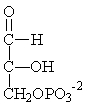
B)
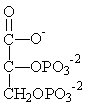
C)

D)

E)
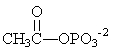
A)
B)
C)
D)
E)
Question
Question
Which enzyme has an intermediate of the form presented below? 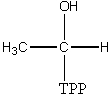
A)phosphofructokinase
B)aldolase
C)pyruvate decarboxylase
D)glyceraldehyde-3-phosphate dehydrogenase
E)triose phosphate isomerase
A)phosphofructokinase
B)aldolase
C)pyruvate decarboxylase
D)glyceraldehyde-3-phosphate dehydrogenase
E)triose phosphate isomerase
Question
Question
Question
Question
Question
Question
Question
Question
Question
Question
Question
Question
Question
Question
Question
Question
Question
Select the enzyme from the list which would catalyze the reaction shown below. 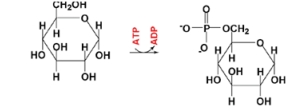
A)hexokinase (HK)
B)pyruvate kinease (PK)
C)enolase
D)phosphoglucomutase (PGM)
E)G3P dehydrogenase (G3PDH)
A)hexokinase (HK)
B)pyruvate kinease (PK)
C)enolase
D)phosphoglucomutase (PGM)
E)G3P dehydrogenase (G3PDH)
Question
Question
Question
Question

Unlock Deck
Sign up to unlock the cards in this deck!
Unlock Deck
Unlock Deck
1/50

Play

Full screen (f)
Deck 15: Glucose Catabolism
1
The enzyme _____forms a Schiff base upon formation of the enzyme-substrate complex allowing aspartate mediated cleavage of the substrate.
A)hexokinase
B)phosphoglucose isomerase
C)glucose-6-phosphatase
D)phosphoglucose mutase
E)aldolase
A)hexokinase
B)phosphoglucose isomerase
C)glucose-6-phosphatase
D)phosphoglucose mutase
E)aldolase
aldolase
2
Matching
Choose the correct answer from the list.Not all the answers will be used.
Vitamin B1 is a component of the coenzyme ______ essential for development of an electron sink necessary for decarboxylation of pyruvate.
A) fructose-1,6-bisphosphatase
B) pentose phosphate
C) pyruvate decarboxylase
D) hypoglycemia
E) phosphofructokinase
F) NADP+
G) thiamine pyrophosphate
H) ATP
I) galactosemia
J) NAD+
K) fluoride ion
L) pyruvate
M) glucogenic
N) FAD
Choose the correct answer from the list.Not all the answers will be used.
Vitamin B1 is a component of the coenzyme ______ essential for development of an electron sink necessary for decarboxylation of pyruvate.
A) fructose-1,6-bisphosphatase
B) pentose phosphate
C) pyruvate decarboxylase
D) hypoglycemia
E) phosphofructokinase
F) NADP+
G) thiamine pyrophosphate
H) ATP
I) galactosemia
J) NAD+
K) fluoride ion
L) pyruvate
M) glucogenic
N) FAD
thiamine pyrophosphate
3
Glycolytic synthesis of ATP occurs via
A)oxidation.
B)reduction.
C)substrate-level phosphorylation.
D)oxidative phosphorylation.
E)photophosphorylation.
A)oxidation.
B)reduction.
C)substrate-level phosphorylation.
D)oxidative phosphorylation.
E)photophosphorylation.
substrate-level phosphorylation.
4
Glucose is converted to ______ in skeletal muscle under anaerobic conditions.
A)lactate
B)acetyaldehyde
C)fructose
D)glycogen
E)acetyl-CoA
A)lactate
B)acetyaldehyde
C)fructose
D)glycogen
E)acetyl-CoA
Unlock Deck
Unlock for access to all 50 flashcards in this deck.
Unlock Deck
k this deck
5
Experimental evidence indicates that glyceraldehyde-3-phosphate dehydrogenase contains a critical ______ residue in its active site,as shown by its inactivation by iodoacetamide.
A)alanine
B)aspartate
C)cysteine
D)methionine
E)lysine
A)alanine
B)aspartate
C)cysteine
D)methionine
E)lysine
Unlock Deck
Unlock for access to all 50 flashcards in this deck.
Unlock Deck
k this deck
6
Matching
Choose the correct answer from the list.Not all the answers will be used.
NADPH used in lipid biosynthesis is produced by the ______ pathway.
A) fructose-1,6-bisphosphatase
B) pentose phosphate
C) pyruvate decarboxylase
D) hypoglycemia
E) phosphofructokinase
F) NADP+
G) thiamine pyrophosphate
H) ATP
I) galactosemia
J) NAD+
K) fluoride ion
L) pyruvate
M) glucogenic
N) FAD
Choose the correct answer from the list.Not all the answers will be used.
NADPH used in lipid biosynthesis is produced by the ______ pathway.
A) fructose-1,6-bisphosphatase
B) pentose phosphate
C) pyruvate decarboxylase
D) hypoglycemia
E) phosphofructokinase
F) NADP+
G) thiamine pyrophosphate
H) ATP
I) galactosemia
J) NAD+
K) fluoride ion
L) pyruvate
M) glucogenic
N) FAD
Unlock Deck
Unlock for access to all 50 flashcards in this deck.
Unlock Deck
k this deck
7
Matching
Choose the correct answer from the list.Not all the answers will be used.
______ is an inhibitor of enolase which was useful in elucidating the glycolytic pathway.
A) fructose-1,6-bisphosphatase
B) pentose phosphate
C) pyruvate decarboxylase
D) hypoglycemia
E) phosphofructokinase
F) NADP+
G) thiamine pyrophosphate
H) ATP
I) galactosemia
J) NAD+
K) fluoride ion
L) pyruvate
M) glucogenic
N) FAD
Choose the correct answer from the list.Not all the answers will be used.
______ is an inhibitor of enolase which was useful in elucidating the glycolytic pathway.
A) fructose-1,6-bisphosphatase
B) pentose phosphate
C) pyruvate decarboxylase
D) hypoglycemia
E) phosphofructokinase
F) NADP+
G) thiamine pyrophosphate
H) ATP
I) galactosemia
J) NAD+
K) fluoride ion
L) pyruvate
M) glucogenic
N) FAD
Unlock Deck
Unlock for access to all 50 flashcards in this deck.
Unlock Deck
k this deck
8
Phosphofructokinase is allosterically _____ by high concentrations of _____.
(I)activated;ATP
(II)inhibited;ATP
(III)inhibited;fructose-2,6-bisphosphate
(IV)activated;fructose -2,6-bisphosphate
A)I,III
B)II,III
C)II,IV
D)I,IV
E)none of the above
(I)activated;ATP
(II)inhibited;ATP
(III)inhibited;fructose-2,6-bisphosphate
(IV)activated;fructose -2,6-bisphosphate
A)I,III
B)II,III
C)II,IV
D)I,IV
E)none of the above
Unlock Deck
Unlock for access to all 50 flashcards in this deck.
Unlock Deck
k this deck
9
Matching
Choose the correct answer from the list.Not all the answers will be used.
The products of glycolysis include: ATP,NADH,and ______.
A) fructose-1,6-bisphosphatase
B) pentose phosphate
C) pyruvate decarboxylase
D) hypoglycemia
E) phosphofructokinase
F) NADP+
G) thiamine pyrophosphate
H) ATP
I) galactosemia
J) NAD+
K) fluoride ion
L) pyruvate
M) glucogenic
N) FAD
Choose the correct answer from the list.Not all the answers will be used.
The products of glycolysis include: ATP,NADH,and ______.
A) fructose-1,6-bisphosphatase
B) pentose phosphate
C) pyruvate decarboxylase
D) hypoglycemia
E) phosphofructokinase
F) NADP+
G) thiamine pyrophosphate
H) ATP
I) galactosemia
J) NAD+
K) fluoride ion
L) pyruvate
M) glucogenic
N) FAD
Unlock Deck
Unlock for access to all 50 flashcards in this deck.
Unlock Deck
k this deck
10
Matching
Choose the correct answer from the list.Not all the answers will be used.
A genetic deficiency of a single transferase enzyme required for sugar group exchange causes the medical condition known as _____ which results in failure to thrive,mental retardation,and potential liver damage.
A) fructose-1,6-bisphosphatase
B) pentose phosphate
C) pyruvate decarboxylase
D) hypoglycemia
E) phosphofructokinase
F) NADP+
G) thiamine pyrophosphate
H) ATP
I) galactosemia
J) NAD+
K) fluoride ion
L) pyruvate
M) glucogenic
N) FAD
Choose the correct answer from the list.Not all the answers will be used.
A genetic deficiency of a single transferase enzyme required for sugar group exchange causes the medical condition known as _____ which results in failure to thrive,mental retardation,and potential liver damage.
A) fructose-1,6-bisphosphatase
B) pentose phosphate
C) pyruvate decarboxylase
D) hypoglycemia
E) phosphofructokinase
F) NADP+
G) thiamine pyrophosphate
H) ATP
I) galactosemia
J) NAD+
K) fluoride ion
L) pyruvate
M) glucogenic
N) FAD
Unlock Deck
Unlock for access to all 50 flashcards in this deck.
Unlock Deck
k this deck
11
Matching
Choose the correct answer from the list.Not all the answers will be used.
The enzyme _____ participates in a regulatory substrate cycle along with phosphofructokinase.
A) fructose-1,6-bisphosphatase
B) pentose phosphate
C) pyruvate decarboxylase
D) hypoglycemia
E) phosphofructokinase
F) NADP+
G) thiamine pyrophosphate
H) ATP
I) galactosemia
J) NAD+
K) fluoride ion
L) pyruvate
M) glucogenic
N) FAD
Choose the correct answer from the list.Not all the answers will be used.
The enzyme _____ participates in a regulatory substrate cycle along with phosphofructokinase.
A) fructose-1,6-bisphosphatase
B) pentose phosphate
C) pyruvate decarboxylase
D) hypoglycemia
E) phosphofructokinase
F) NADP+
G) thiamine pyrophosphate
H) ATP
I) galactosemia
J) NAD+
K) fluoride ion
L) pyruvate
M) glucogenic
N) FAD
Unlock Deck
Unlock for access to all 50 flashcards in this deck.
Unlock Deck
k this deck
12
Matching
Choose the correct answer from the list.Not all the answers will be used.
The coenzyme ______ is the oxidizing agent in both aerobic and anaerobic glycolysis.
A) fructose-1,6-bisphosphatase
B) pentose phosphate
C) pyruvate decarboxylase
D) hypoglycemia
E) phosphofructokinase
F) NADP+
G) thiamine pyrophosphate
H) ATP
I) galactosemia
J) NAD+
K) fluoride ion
L) pyruvate
M) glucogenic
N) FAD
Choose the correct answer from the list.Not all the answers will be used.
The coenzyme ______ is the oxidizing agent in both aerobic and anaerobic glycolysis.
A) fructose-1,6-bisphosphatase
B) pentose phosphate
C) pyruvate decarboxylase
D) hypoglycemia
E) phosphofructokinase
F) NADP+
G) thiamine pyrophosphate
H) ATP
I) galactosemia
J) NAD+
K) fluoride ion
L) pyruvate
M) glucogenic
N) FAD
Unlock Deck
Unlock for access to all 50 flashcards in this deck.
Unlock Deck
k this deck
13
Matching
Choose the correct answer from the list.Not all the answers will be used.
Glycolysis forms ____ under either aerobic or anaerobic conditions.
A) fructose-1,6-bisphosphatase
B) pentose phosphate
C) pyruvate decarboxylase
D) hypoglycemia
E) phosphofructokinase
F) NADP+
G) thiamine pyrophosphate
H) ATP
I) galactosemia
J) NAD+
K) fluoride ion
L) pyruvate
M) glucogenic
N) FAD
Choose the correct answer from the list.Not all the answers will be used.
Glycolysis forms ____ under either aerobic or anaerobic conditions.
A) fructose-1,6-bisphosphatase
B) pentose phosphate
C) pyruvate decarboxylase
D) hypoglycemia
E) phosphofructokinase
F) NADP+
G) thiamine pyrophosphate
H) ATP
I) galactosemia
J) NAD+
K) fluoride ion
L) pyruvate
M) glucogenic
N) FAD
Unlock Deck
Unlock for access to all 50 flashcards in this deck.
Unlock Deck
k this deck
14
Aerobic glycolysis produces a net yield of ______ ATP.
A)1
B)2
C)3
D)4
E)more than 4
A)1
B)2
C)3
D)4
E)more than 4
Unlock Deck
Unlock for access to all 50 flashcards in this deck.
Unlock Deck
k this deck
15
In alcoholic fermentation,acetaldehyde is produced by
A)the decarboxylation of pyruvate.
B)the carboxylation of pyruvate.
C)the decarboxylation of lactate.
D)the carboxylation of lactate.
E)none of the above
A)the decarboxylation of pyruvate.
B)the carboxylation of pyruvate.
C)the decarboxylation of lactate.
D)the carboxylation of lactate.
E)none of the above
Unlock Deck
Unlock for access to all 50 flashcards in this deck.
Unlock Deck
k this deck
16
The metabolism of mannose requires _____ to produce ____ for entry into the glycolytic pathway.
A)hexokinase;glucose-6-phosphate
B)hexokinase;fructose-6-phosphate
C)phosphomannose isomerase;glucose-6-phosphate
D)phosphomannose isomerase;fructose-6-phosphate
E)phosphofructokinase;bisphosphoglycerate
A)hexokinase;glucose-6-phosphate
B)hexokinase;fructose-6-phosphate
C)phosphomannose isomerase;glucose-6-phosphate
D)phosphomannose isomerase;fructose-6-phosphate
E)phosphofructokinase;bisphosphoglycerate
Unlock Deck
Unlock for access to all 50 flashcards in this deck.
Unlock Deck
k this deck
17
Which of the following enzymes catalyzes the transfer of a phosphoryl group from ATP to glucose?
A)hexokinase
B)phosphoglucose isomerase
C)glucose-6-phosphatase
D)phosphoglucose mutase
E)A transfer such as this does not occur in glycolysis.
A)hexokinase
B)phosphoglucose isomerase
C)glucose-6-phosphatase
D)phosphoglucose mutase
E)A transfer such as this does not occur in glycolysis.
Unlock Deck
Unlock for access to all 50 flashcards in this deck.
Unlock Deck
k this deck
18
Matching
Choose the correct answer from the list.Not all the answers will be used.
The enzyme _____ is the major control point for glycolysis in muscle.
A) fructose-1,6-bisphosphatase
B) pentose phosphate
C) pyruvate decarboxylase
D) hypoglycemia
E) phosphofructokinase
F) NADP+
G) thiamine pyrophosphate
H) ATP
I) galactosemia
J) NAD+
K) fluoride ion
L) pyruvate
M) glucogenic
N) FAD
Choose the correct answer from the list.Not all the answers will be used.
The enzyme _____ is the major control point for glycolysis in muscle.
A) fructose-1,6-bisphosphatase
B) pentose phosphate
C) pyruvate decarboxylase
D) hypoglycemia
E) phosphofructokinase
F) NADP+
G) thiamine pyrophosphate
H) ATP
I) galactosemia
J) NAD+
K) fluoride ion
L) pyruvate
M) glucogenic
N) FAD
Unlock Deck
Unlock for access to all 50 flashcards in this deck.
Unlock Deck
k this deck
19
Matching
Choose the correct answer from the list.Not all the answers will be used.
The enzyme ______ ,which catalyzes the formation of acetyaldehyde and CO2 from pyruvate,is not present in animals.
A) fructose-1,6-bisphosphatase
B) pentose phosphate
C) pyruvate decarboxylase
D) hypoglycemia
E) phosphofructokinase
F) NADP+
G) thiamine pyrophosphate
H) ATP
I) galactosemia
J) NAD+
K) fluoride ion
L) pyruvate
M) glucogenic
N) FAD
Choose the correct answer from the list.Not all the answers will be used.
The enzyme ______ ,which catalyzes the formation of acetyaldehyde and CO2 from pyruvate,is not present in animals.
A) fructose-1,6-bisphosphatase
B) pentose phosphate
C) pyruvate decarboxylase
D) hypoglycemia
E) phosphofructokinase
F) NADP+
G) thiamine pyrophosphate
H) ATP
I) galactosemia
J) NAD+
K) fluoride ion
L) pyruvate
M) glucogenic
N) FAD
Unlock Deck
Unlock for access to all 50 flashcards in this deck.
Unlock Deck
k this deck
20
The enzymes that catalyze glycolysis are located in the
A)endoplasmic reticulum.
B)mitochondrial matrix.
C)cytosol.
D)inner mitochondrial membrane.
E)outer mitochondrial membrane.
A)endoplasmic reticulum.
B)mitochondrial matrix.
C)cytosol.
D)inner mitochondrial membrane.
E)outer mitochondrial membrane.
Unlock Deck
Unlock for access to all 50 flashcards in this deck.
Unlock Deck
k this deck
21
Which of the following reactions does not occur in mammals?
A)pyruvate + NADH → lactate + NAD+
B)ribulose-5-phosphoate → ribose-5-phosphate
C)mannose + ATP → mannose-6-phosphate + ADP + Pi
D)6-phophogluconate + NADP+ → ribulose-5-phosphate + NADPH + CO2
E)pyruvate + NADH + H+ → CO2 + ethanol + NAD+
A)pyruvate + NADH → lactate + NAD+
B)ribulose-5-phosphoate → ribose-5-phosphate
C)mannose + ATP → mannose-6-phosphate + ADP + Pi
D)6-phophogluconate + NADP+ → ribulose-5-phosphate + NADPH + CO2
E)pyruvate + NADH + H+ → CO2 + ethanol + NAD+
Unlock Deck
Unlock for access to all 50 flashcards in this deck.
Unlock Deck
k this deck
22
Conversion of galactose to glucose
(I)requires an epimerase.
(II)requires uridine diphosphate.
(III)requires a transferase
(IV)requires an isomerase.
A)I,II,III,IV
B)I,II,III
C)II,III,IV
D)II,III
E)I,III
(I)requires an epimerase.
(II)requires uridine diphosphate.
(III)requires a transferase
(IV)requires an isomerase.
A)I,II,III,IV
B)I,II,III
C)II,III,IV
D)II,III
E)I,III
Unlock Deck
Unlock for access to all 50 flashcards in this deck.
Unlock Deck
k this deck
23
The reaction below is catalyzed by yeast alcohol dehydrogenase.Which of the following corresponds to X and Y in this reaction?
A)X = NADH+ Y = NAD + H+
B)X = NAD+ Y = NADH + H+
C)X = NADH + H+ Y = NAD+
D)X = NAD + H+ Y = NADH+
E)X = NADPH + H+ Y = NADP+
A)X = NADH+ Y = NAD + H+
B)X = NAD+ Y = NADH + H+
C)X = NADH + H+ Y = NAD+
D)X = NAD + H+ Y = NADH+
E)X = NADPH + H+ Y = NADP+
Unlock Deck
Unlock for access to all 50 flashcards in this deck.
Unlock Deck
k this deck
24
Which glycolytic enzyme catalyzes a reaction with an enediolate intermediate?
A)phosphoglucomutase
B)triose phosphate isomerase
C)phosphofructokinase
D)aldolase
E)none of the above
A)phosphoglucomutase
B)triose phosphate isomerase
C)phosphofructokinase
D)aldolase
E)none of the above
Unlock Deck
Unlock for access to all 50 flashcards in this deck.
Unlock Deck
k this deck
25
Consider the following portion of the glycolytic sequence catalyzed by the enzymes above the arrows.Which products(s)will produce ATP?
A)I,IV
B)II,IV
C)II only
D)III,IV
E)IV only
A)I,IV
B)II,IV
C)II only
D)III,IV
E)IV only
Unlock Deck
Unlock for access to all 50 flashcards in this deck.
Unlock Deck
k this deck
26
The reaction catalyzed by the enzyme aldolase has a G˚' ≈ +23 kJ/mol.In muscle cells,the reaction proceeds in this same,forward direction.How can this occur?
A)This G˚' means it is thermodynamically favored.
B)The enzyme changes the ∆G of the reaction in cells to something favorable.
C)The concentration of reactant(s)must be significantly greater than product(s)in cells.
D)The concentration of product(s)must be significantly greater than reactant(s)in cells.
E)none of the above
A)This G˚' means it is thermodynamically favored.
B)The enzyme changes the ∆G of the reaction in cells to something favorable.
C)The concentration of reactant(s)must be significantly greater than product(s)in cells.
D)The concentration of product(s)must be significantly greater than reactant(s)in cells.
E)none of the above
Unlock Deck
Unlock for access to all 50 flashcards in this deck.
Unlock Deck
k this deck
27
Which of the following compounds contains a "high-energy" bond and is used to produce ATP by substrate-level phosphorylation in glycolysis?
A)
B)
C)
D)
E)
A)
B)
C)
D)
E)
Unlock Deck
Unlock for access to all 50 flashcards in this deck.
Unlock Deck
k this deck
28
In which of the following metabolic conversions is ATP required during glycolysis?
(I)fructose-6-phosphate SYMBOL 174 \f "Symbol" fructose-1,6-bisphosphate
(II)glucose SYMBOL 174 \f "Symbol" glucose-6-phosphate
(III)fructose-1,6-bisphosphate SYMBOL 174 \f "Symbol" dihydroxyacetone phosphate + glyceraldehyde-3-phosphate
(IV)glucose-6-phosphate SYMBOL 174 \f "Symbol" fructose-6-phosphate
A)I only
B)II only
C)I,II
D)I,III
E)I,IV
(I)fructose-6-phosphate SYMBOL 174 \f "Symbol" fructose-1,6-bisphosphate
(II)glucose SYMBOL 174 \f "Symbol" glucose-6-phosphate
(III)fructose-1,6-bisphosphate SYMBOL 174 \f "Symbol" dihydroxyacetone phosphate + glyceraldehyde-3-phosphate
(IV)glucose-6-phosphate SYMBOL 174 \f "Symbol" fructose-6-phosphate
A)I only
B)II only
C)I,II
D)I,III
E)I,IV
Unlock Deck
Unlock for access to all 50 flashcards in this deck.
Unlock Deck
k this deck
29
Which enzyme has an intermediate of the form presented below?
A)phosphofructokinase
B)aldolase
C)pyruvate decarboxylase
D)glyceraldehyde-3-phosphate dehydrogenase
E)triose phosphate isomerase
A)phosphofructokinase
B)aldolase
C)pyruvate decarboxylase
D)glyceraldehyde-3-phosphate dehydrogenase
E)triose phosphate isomerase
Unlock Deck
Unlock for access to all 50 flashcards in this deck.
Unlock Deck
k this deck
30
In skeletal muscle cells,oxidation of NADH generated from anaerobic glycolysis occurs during which of the following reactions?
A)acetaldehyde SYMBOL 174 \f "Symbol" ethanol
B)lactate SYMBOL 174 \f "Symbol" pyruvate
C)phosphoenolpyruvate SYMBOL 174 \f "Symbol" pyruvate
D)pyruvate SYMBOL 174 \f "Symbol" lactate
E)glyceraldehyde-3-phosphate SYMBOL 174 \f "Symbol" 1,3-bisphosphoglycerate
A)acetaldehyde SYMBOL 174 \f "Symbol" ethanol
B)lactate SYMBOL 174 \f "Symbol" pyruvate
C)phosphoenolpyruvate SYMBOL 174 \f "Symbol" pyruvate
D)pyruvate SYMBOL 174 \f "Symbol" lactate
E)glyceraldehyde-3-phosphate SYMBOL 174 \f "Symbol" 1,3-bisphosphoglycerate
Unlock Deck
Unlock for access to all 50 flashcards in this deck.
Unlock Deck
k this deck
31
Which of the following best explains why an enzyme hasn't evolved to catalyze the following reaction as the first step of glycolysis?
Glucose + Pi -> glucose-6-phosphate
(I)The use of ATP is required for this step to serve as a regulatory control point.
(II)The use of ATP is important because it helps keep its concentration low.Otherwise the high [ATP] would slow glycolysis too much through feedback inhibition.
(III)The large positive G˚' of this reaction would need to be overcome by an exceedingly high [Pi].
(IV)Inorganic phosphate cannot be specifically placed on the carbon in the 6th position.
A)I,III
B)I,II
C)II,IV
D)I only
E)III only
Glucose + Pi -> glucose-6-phosphate
(I)The use of ATP is required for this step to serve as a regulatory control point.
(II)The use of ATP is important because it helps keep its concentration low.Otherwise the high [ATP] would slow glycolysis too much through feedback inhibition.
(III)The large positive G˚' of this reaction would need to be overcome by an exceedingly high [Pi].
(IV)Inorganic phosphate cannot be specifically placed on the carbon in the 6th position.
A)I,III
B)I,II
C)II,IV
D)I only
E)III only
Unlock Deck
Unlock for access to all 50 flashcards in this deck.
Unlock Deck
k this deck
32
Methanol is highly toxic,not because of its own activity,but because it is converted metabolically into formaldehyde,which is the actual poison.What enzyme catalyzes this conversion?
A)methanol caboxylase
B)methanol transferase
C)alcohol transmutase
D)alcohol carboxylase
E)alcohol dehydrogenase
A)methanol caboxylase
B)methanol transferase
C)alcohol transmutase
D)alcohol carboxylase
E)alcohol dehydrogenase
Unlock Deck
Unlock for access to all 50 flashcards in this deck.
Unlock Deck
k this deck
33
Which enzyme is involved in substrate level phosphorylation in glycolysis?
A)Hexokinase
B)√Pyruvate kinase
C)Glyceraldehyde-3phosphate dehydrogenase
D)Aldolase
E)None of the above.
A)Hexokinase
B)√Pyruvate kinase
C)Glyceraldehyde-3phosphate dehydrogenase
D)Aldolase
E)None of the above.
Unlock Deck
Unlock for access to all 50 flashcards in this deck.
Unlock Deck
k this deck
34
Which of the following best describes the entry of mannose into glycolysis?
A)hydrolyzed into two glucose units,they enter normally
B)phosphorylated at C-1;UMP moiety transferred from UDP-glucose;epimerized at C-2;released from UMP moiety on next transfer as G1P
C)phosphorylated at C-1;UMP moiety transferred from UDP-glucose;epimerized at C-4;released from UMP moiety on next transfer as G1P
D)phosphorylated at C-6;epimerized at C-2 to produce G6P
E)phosphorylated at C-6;isomerized to produce F6P
A)hydrolyzed into two glucose units,they enter normally
B)phosphorylated at C-1;UMP moiety transferred from UDP-glucose;epimerized at C-2;released from UMP moiety on next transfer as G1P
C)phosphorylated at C-1;UMP moiety transferred from UDP-glucose;epimerized at C-4;released from UMP moiety on next transfer as G1P
D)phosphorylated at C-6;epimerized at C-2 to produce G6P
E)phosphorylated at C-6;isomerized to produce F6P
Unlock Deck
Unlock for access to all 50 flashcards in this deck.
Unlock Deck
k this deck
35
Which of the following metabolic conversions is considered to be the major control point of glycolysis?
A)fructose-1,6-bisphosphate dihydroxyacetone phosphate + glyceraldehyde-3-phosphate
B)glucose glucose-6-phosphate
C)2-phosphoglyerate phosphoenolpyruvate
D)fructose-6-phosphate fructose-1,6-bisphosphate
E)phosphoenolpyruvate pyruvate
A)fructose-1,6-bisphosphate dihydroxyacetone phosphate + glyceraldehyde-3-phosphate
B)glucose glucose-6-phosphate
C)2-phosphoglyerate phosphoenolpyruvate
D)fructose-6-phosphate fructose-1,6-bisphosphate
E)phosphoenolpyruvate pyruvate
Unlock Deck
Unlock for access to all 50 flashcards in this deck.
Unlock Deck
k this deck
36
If glucose labeled at the C-1 position with 14C passes through glycolysis,on which carbon of pyruvate will the radiolabel be found?
A)1
B)2
C)3
D)It will be released in CO2 rather than present in pyruvate.
E)Not enough information is given to predict.
A)1
B)2
C)3
D)It will be released in CO2 rather than present in pyruvate.
E)Not enough information is given to predict.
Unlock Deck
Unlock for access to all 50 flashcards in this deck.
Unlock Deck
k this deck
37
Individuals with galactosemia
A)cannot catabolize galactose via glycolysis.
B)lack the enzyme hexokinase which is required for phosphorylation of galactose.
C)lack the enzyme galactokinase which is required for interconversion between glucose-1-phosphate and galactose-1-phosphate.
D)cannot synthesize galactose from glucose.
E)lack adequate uridine diphosphosphate.
A)cannot catabolize galactose via glycolysis.
B)lack the enzyme hexokinase which is required for phosphorylation of galactose.
C)lack the enzyme galactokinase which is required for interconversion between glucose-1-phosphate and galactose-1-phosphate.
D)cannot synthesize galactose from glucose.
E)lack adequate uridine diphosphosphate.
Unlock Deck
Unlock for access to all 50 flashcards in this deck.
Unlock Deck
k this deck
38
Which of the following is true regarding glycolysis?
(I)There is a net oxidation of substrate carbon atoms.
(II)There is no net release of free energy.
(III)Pyruvate is generated only during aerobic glycolysis.
(IV)There is 2 ATP formed for every 2 glucose molecules.
)
A)I only
B)I,IV
C)I,III,IV
D)IV only
E)II,IV
(I)There is a net oxidation of substrate carbon atoms.
(II)There is no net release of free energy.
(III)Pyruvate is generated only during aerobic glycolysis.
(IV)There is 2 ATP formed for every 2 glucose molecules.
)
A)I only
B)I,IV
C)I,III,IV
D)IV only
E)II,IV
Unlock Deck
Unlock for access to all 50 flashcards in this deck.
Unlock Deck
k this deck
39
Which is the net equation for aerobic glycolysis?
A)Glucose + 2 ATP SYMBOL 174 \f "Symbol" 2 lactate + 2 ADP + 2 Pi
B)Glucose + 2 ADP + 2 Pi + 2 NAD+ SYMBOL 174 \f "Symbol" 2 pyruvate + 2 ATP + 2 NADH + + 2 H2O 4 H+
C)Glucose + 2 ADP + 2 Pi SYMBOL 174 \f "Symbol" 2 lactate + 4 ATP + 4 H+
D)Glucose + 2 ATP + 2 NAD+SYMBOL 174 \f "Symbol" 2 pyruvate + 4 ATP + 4 NADH + 4 H+
E)Glucose + 2 ADP + 2 Pi + 2 NAD+SYMBOL 174 \f "Symbol" 2 lactate + 4 ATP + 2 NADH + 4 H+
A)Glucose + 2 ATP SYMBOL 174 \f "Symbol" 2 lactate + 2 ADP + 2 Pi
B)Glucose + 2 ADP + 2 Pi + 2 NAD+ SYMBOL 174 \f "Symbol" 2 pyruvate + 2 ATP + 2 NADH + + 2 H2O 4 H+
C)Glucose + 2 ADP + 2 Pi SYMBOL 174 \f "Symbol" 2 lactate + 4 ATP + 4 H+
D)Glucose + 2 ATP + 2 NAD+SYMBOL 174 \f "Symbol" 2 pyruvate + 4 ATP + 4 NADH + 4 H+
E)Glucose + 2 ADP + 2 Pi + 2 NAD+SYMBOL 174 \f "Symbol" 2 lactate + 4 ATP + 2 NADH + 4 H+
Unlock Deck
Unlock for access to all 50 flashcards in this deck.
Unlock Deck
k this deck
40
During glycolysis,the steps between glucose and formation of the triose phosphates collectively
A)consume two ATP and two NADH molecules.
B)consume two ATP molecules.
C)produce two ADP and two NADH molecules.
D)produce two ATP and two NAD+ molecules.
E)consume two NAD+ molecules.
A)consume two ATP and two NADH molecules.
B)consume two ATP molecules.
C)produce two ADP and two NADH molecules.
D)produce two ATP and two NAD+ molecules.
E)consume two NAD+ molecules.
Unlock Deck
Unlock for access to all 50 flashcards in this deck.
Unlock Deck
k this deck
41
Which reaction above is an oxidation reaction?
A)I,III
B)II,III
C)III only
D)IV only
E)None of the reactions I-V is oxidation reactions.
A)I,III
B)II,III
C)III only
D)IV only
E)None of the reactions I-V is oxidation reactions.
Unlock Deck
Unlock for access to all 50 flashcards in this deck.
Unlock Deck
k this deck
42
Which of the following best describes the control exhibited by phosphofructokinase (PFK)?
A)It is allosterically inhibited by ATP and citrate.
B)It is allosterically activated by F2,6P.
C)It is allosterically activated by ATP and citrate.
D)Both A and B are correct.
E)Both B and C are correct.
A)It is allosterically inhibited by ATP and citrate.
B)It is allosterically activated by F2,6P.
C)It is allosterically activated by ATP and citrate.
D)Both A and B are correct.
E)Both B and C are correct.
Unlock Deck
Unlock for access to all 50 flashcards in this deck.
Unlock Deck
k this deck
43
During reactions utilizing the enzymes shown below,in which case(s)is ATP produced?
(I)phosphofructokinase (PFK)
(II)phosphoglycerate kinase (PGK)
(III)pyruvate kinase (PK)
A)I
B)II
C)III
D)I,II
E)II,III
(I)phosphofructokinase (PFK)
(II)phosphoglycerate kinase (PGK)
(III)pyruvate kinase (PK)
A)I
B)II
C)III
D)I,II
E)II,III
Unlock Deck
Unlock for access to all 50 flashcards in this deck.
Unlock Deck
k this deck
44
In which reaction above is ATP required?
A)I,II
B)II only
C)III only
D)IV,V
E)None of the reactions I-V requires ATP.
A)I,II
B)II only
C)III only
D)IV,V
E)None of the reactions I-V requires ATP.
Unlock Deck
Unlock for access to all 50 flashcards in this deck.
Unlock Deck
k this deck
45
The utilization of fructose in glycolysis in the liver
A)requires UDP-glucose.
B)requires one extra ATP.
C)uses GTP rather than ATP.
D)bypasses phosphofructokinase (PFK)regulation.
E)enters glycolysis as fructose bisphosphate (FBP).
A)requires UDP-glucose.
B)requires one extra ATP.
C)uses GTP rather than ATP.
D)bypasses phosphofructokinase (PFK)regulation.
E)enters glycolysis as fructose bisphosphate (FBP).
Unlock Deck
Unlock for access to all 50 flashcards in this deck.
Unlock Deck
k this deck
46
Select the enzyme from the list which would catalyze the reaction shown below.
A)hexokinase (HK)
B)pyruvate kinease (PK)
C)enolase
D)phosphoglucomutase (PGM)
E)G3P dehydrogenase (G3PDH)
A)hexokinase (HK)
B)pyruvate kinease (PK)
C)enolase
D)phosphoglucomutase (PGM)
E)G3P dehydrogenase (G3PDH)
Unlock Deck
Unlock for access to all 50 flashcards in this deck.
Unlock Deck
k this deck
47
In which reaction above is at least 1 NADH formed?
A)II only
B)III only
C)IV only
D)IV,V
E)None of the reaction I-V form NADH.
A)II only
B)III only
C)IV only
D)IV,V
E)None of the reaction I-V form NADH.
Unlock Deck
Unlock for access to all 50 flashcards in this deck.
Unlock Deck
k this deck
48
ATP
A)inhibits activity of phosphofructokinase (PFK)allosterically.
B)activates activity of phosphofructokinase (PFK)allosterically.
C)inhibits activity of phosphofructokinase (PFK)hormonally.
D)activates activity of phosphofructokinase (PFK)hormonally.
E)does not alter phosphofructokinase (PFK)activity.
A)inhibits activity of phosphofructokinase (PFK)allosterically.
B)activates activity of phosphofructokinase (PFK)allosterically.
C)inhibits activity of phosphofructokinase (PFK)hormonally.
D)activates activity of phosphofructokinase (PFK)hormonally.
E)does not alter phosphofructokinase (PFK)activity.
Unlock Deck
Unlock for access to all 50 flashcards in this deck.
Unlock Deck
k this deck
49
Which of the following is correct regarding the hexose monophosphate shunt?
(I)NADH is generated by the oxidation of glucose-6-phosphate.
(II)Glyceraldehyde-3-phosphate is generated in the reaction.
(III)The pathway requires a transaldolase.
(IV)The pathway generates 3 ATP per 1 glucose-6-phosphate.
A)I,II,III
B)I,II,III,IV
C)II,III,IV
D)II,III
E)III,IV
(I)NADH is generated by the oxidation of glucose-6-phosphate.
(II)Glyceraldehyde-3-phosphate is generated in the reaction.
(III)The pathway requires a transaldolase.
(IV)The pathway generates 3 ATP per 1 glucose-6-phosphate.
A)I,II,III
B)I,II,III,IV
C)II,III,IV
D)II,III
E)III,IV
Unlock Deck
Unlock for access to all 50 flashcards in this deck.
Unlock Deck
k this deck
50
Of the reaction types listed below,which type of reaction is NOT used in glycolysis?
A)oxidation
B)phosphorylation
C)dehydration
D)isomerization
E)All are used in glycolysis.
A)oxidation
B)phosphorylation
C)dehydration
D)isomerization
E)All are used in glycolysis.
Unlock Deck
Unlock for access to all 50 flashcards in this deck.
Unlock Deck
k this deck
Unlock Deck
Unlock for access to all 50 flashcards in this deck.






