







 Chat with AI

Deck 25: Environmental Policy
Full screen (f)

Question

Question
Question
Question
Question
Question
Table 25.1.
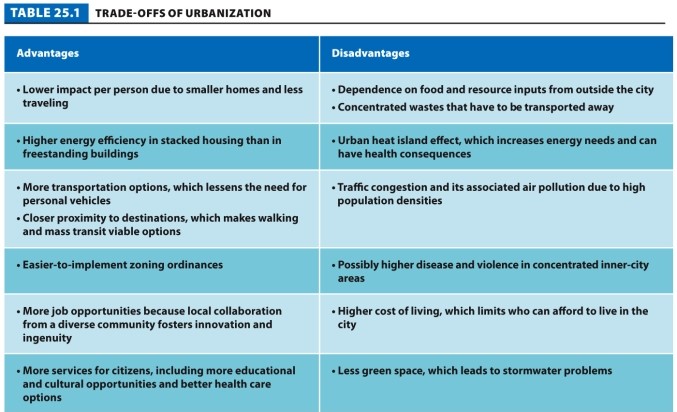
Refer to Table 25.1. Explain the causation of the urban heat island effect and the issues it leads to.
Refer to Table 25.1. Explain the causation of the urban heat island effect and the issues it leads to.
Question
Table 25.1.
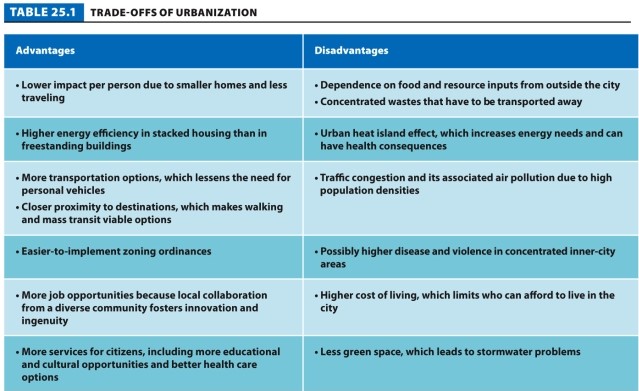
Refer to Table 25.1. Which of the following is NOT one of the advantages of residing in an urban area?
A) more job opportunities
B) better quality of life
C) more educational opportunities
D) better health care options
E) none of these answers
Refer to Table 25.1. Which of the following is NOT one of the advantages of residing in an urban area?
A) more job opportunities
B) better quality of life
C) more educational opportunities
D) better health care options
E) none of these answers
Question
Question
Infographic 25.2.
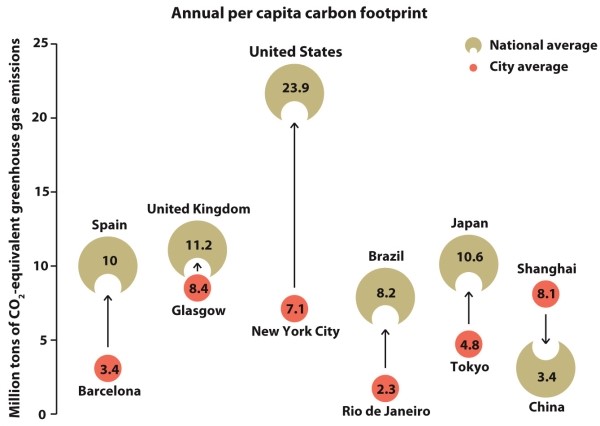
Refer to Infographic 25.2. Discuss at least two of the benefits of urbanization to the environment.
Refer to Infographic 25.2. Discuss at least two of the benefits of urbanization to the environment.
Question
Infographic 25.2.
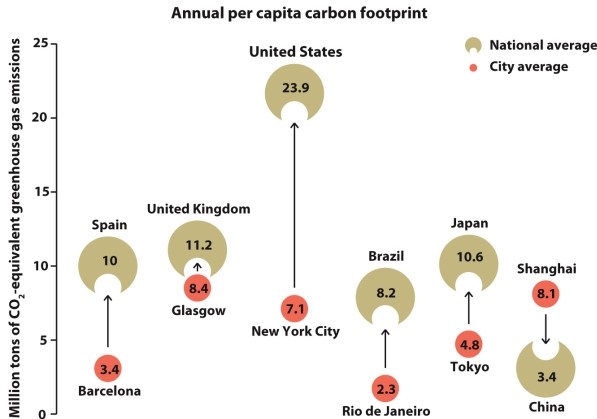
Refer to Infographic 25.2. Which country has the lowest carbon footprint?
A) United States
B) Spain
C) China
D) Japan
E) Brazil
Refer to Infographic 25.2. Which country has the lowest carbon footprint?
A) United States
B) Spain
C) China
D) Japan
E) Brazil
Question
Question
Question
Question
Question
Question
Question
Question
Question
Question
Question
Question
Question
Question
Question
Question
Question
Question
Question
Question
Question
Question
Question
Question
Question
Question
Question
Question
Question
Question
Question
Question
Question
Question
Question
Question
Question
Question
Question
Question
Question
Question
Infographic 25.4.
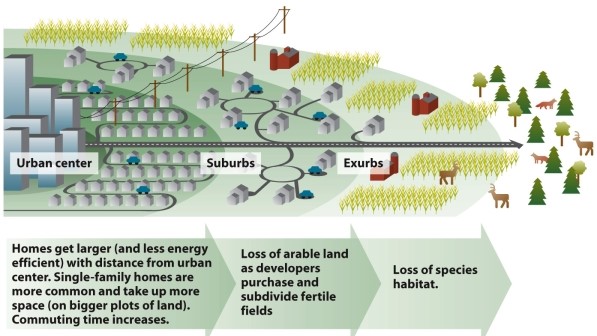
Refer to Infographic 25.4. What are some of the unwanted consequences of suburban sprawl?
Refer to Infographic 25.4. What are some of the unwanted consequences of suburban sprawl?
Question
Question
Question
Infographic 25.6.
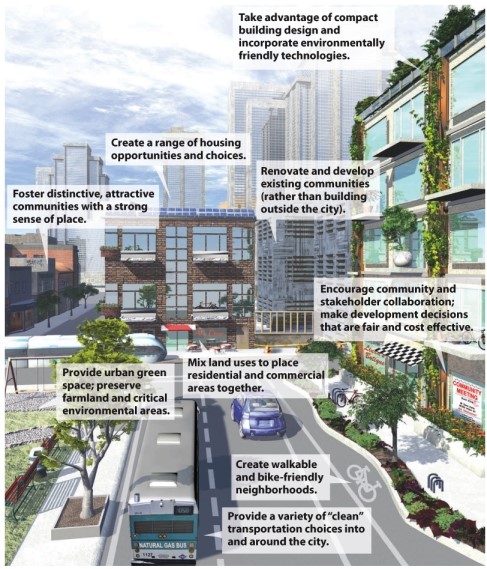
Refer to Infographic 25.6. Explain at least three of the ways to create a sustainable city.
Refer to Infographic 25.6. Explain at least three of the ways to create a sustainable city.
Question

Unlock Deck
Sign up to unlock the cards in this deck!
Unlock Deck
Unlock Deck
1/56

Play

Full screen (f)
Deck 25: Environmental Policy
1
Which of the following factors requires urban areas to use more fossil fuel than rural areas?
A) dependence on food and resource inputs from outside the city
B) concentrated wastes that have to be transported away
C) traffic congestion and the lack of available parking
D) A, B, and C
E) none of these answers
A) dependence on food and resource inputs from outside the city
B) concentrated wastes that have to be transported away
C) traffic congestion and the lack of available parking
D) A, B, and C
E) none of these answers
A, B, and C
2
All of the following statements are true about the movement of the world's population EXCEPT _________________.
A) more people live in urban areas than in rural areas
B) the rate of population growth has increased since the end of the twentieth century
C) urbanization is occurring in developed, developing, and non-developed countries
D) A, B, and C
E) none of these answers
A) more people live in urban areas than in rural areas
B) the rate of population growth has increased since the end of the twentieth century
C) urbanization is occurring in developed, developing, and non-developed countries
D) A, B, and C
E) none of these answers
the rate of population growth has increased since the end of the twentieth century
3
Which continent is expected to have the largest increase in the rate of urbanization in the near future?
A) Asia
B) Africa
C) South America
D) North America
E) Europe
A) Asia
B) Africa
C) South America
D) North America
E) Europe
Asia
4
Densely populated regions that include cities and the suburbs that surround them are known as _________________.
A) urban areas
B) sprawl zones
C) core areas
D) exurbs
E) none of these answers
A) urban areas
B) sprawl zones
C) core areas
D) exurbs
E) none of these answers
Unlock Deck
Unlock for access to all 56 flashcards in this deck.
Unlock Deck
k this deck
5
Advantages of urbanization for a society include ___________________.
A) concentrated wastes that have to be transported away
B) lower energy impact per person due to smaller homes and less traveling
C) the urban heat island effect
D) dependence on food and resource inputs from outside the city
E) higher levels of air pollution
A) concentrated wastes that have to be transported away
B) lower energy impact per person due to smaller homes and less traveling
C) the urban heat island effect
D) dependence on food and resource inputs from outside the city
E) higher levels of air pollution
Unlock Deck
Unlock for access to all 56 flashcards in this deck.
Unlock Deck
k this deck
6
Table 25.1.
Refer to Table 25.1. Explain the causation of the urban heat island effect and the issues it leads to.
Refer to Table 25.1. Explain the causation of the urban heat island effect and the issues it leads to.
Unlock Deck
Unlock for access to all 56 flashcards in this deck.
Unlock Deck
k this deck
7
Table 25.1.
Refer to Table 25.1. Which of the following is NOT one of the advantages of residing in an urban area?
A) more job opportunities
B) better quality of life
C) more educational opportunities
D) better health care options
E) none of these answers
Refer to Table 25.1. Which of the following is NOT one of the advantages of residing in an urban area?
A) more job opportunities
B) better quality of life
C) more educational opportunities
D) better health care options
E) none of these answers
Unlock Deck
Unlock for access to all 56 flashcards in this deck.
Unlock Deck
k this deck
8
_____________________ is the migration of people to large cities.
A) Rural migration
B) Sprawl zones
C) Urbanization
D) Exurbs
E) None of these answers
A) Rural migration
B) Sprawl zones
C) Urbanization
D) Exurbs
E) None of these answers
Unlock Deck
Unlock for access to all 56 flashcards in this deck.
Unlock Deck
k this deck
9
Infographic 25.2.
Refer to Infographic 25.2. Discuss at least two of the benefits of urbanization to the environment.
Refer to Infographic 25.2. Discuss at least two of the benefits of urbanization to the environment.
Unlock Deck
Unlock for access to all 56 flashcards in this deck.
Unlock Deck
k this deck
10
Infographic 25.2.
Refer to Infographic 25.2. Which country has the lowest carbon footprint?
A) United States
B) Spain
C) China
D) Japan
E) Brazil
Refer to Infographic 25.2. Which country has the lowest carbon footprint?
A) United States
B) Spain
C) China
D) Japan
E) Brazil
Unlock Deck
Unlock for access to all 56 flashcards in this deck.
Unlock Deck
k this deck
11
Which of the following countries is projected to have a large increase in the rate of urbanization in the near future?
A) India
B) China
C) United States
D) England
E) both A and B
A) India
B) China
C) United States
D) England
E) both A and B
Unlock Deck
Unlock for access to all 56 flashcards in this deck.
Unlock Deck
k this deck
12
Which of the following statements is true about the world's population?
A) Population growth has reached peak levels.
B) People are moving out of the cities and into rural areas.
C) People are moving out of rural areas and into the cities.
D) Equal amounts of people live in rural areas and cities.
E) None of these answers are correct.
A) Population growth has reached peak levels.
B) People are moving out of the cities and into rural areas.
C) People are moving out of rural areas and into the cities.
D) Equal amounts of people live in rural areas and cities.
E) None of these answers are correct.
Unlock Deck
Unlock for access to all 56 flashcards in this deck.
Unlock Deck
k this deck
13
What is the population size generally considered for classifying a city as a "megacity"?
A) 1 million
B) 5 million
C) 10 million
D) 50 million
E) none of these answers
A) 1 million
B) 5 million
C) 10 million
D) 50 million
E) none of these answers
Unlock Deck
Unlock for access to all 56 flashcards in this deck.
Unlock Deck
k this deck
14
Explain the patterns in the development of megacities from midcentury to 2030.
Unlock Deck
Unlock for access to all 56 flashcards in this deck.
Unlock Deck
k this deck
15
What has happened to the distribution of people (rural and urban) from the 1950s to 2013?
Unlock Deck
Unlock for access to all 56 flashcards in this deck.
Unlock Deck
k this deck
16
All of the following are true about urban areas when compared with rural areas EXCEPT___________________.
A) they have higher population densities
B) there is less personal vehicle travel
C) the homes are smaller
D) they have a lower carbon footprint
E) None of these answers are correct.
A) they have higher population densities
B) there is less personal vehicle travel
C) the homes are smaller
D) they have a lower carbon footprint
E) None of these answers are correct.
Unlock Deck
Unlock for access to all 56 flashcards in this deck.
Unlock Deck
k this deck
17
Which of the following are reasons why urban areas are environmentally unfriendly?
A) importation of food and exportation of waste
B) traffic congestion
C) sewage overflow
D) Both A and B
E) A, B, and C
A) importation of food and exportation of waste
B) traffic congestion
C) sewage overflow
D) Both A and B
E) A, B, and C
Unlock Deck
Unlock for access to all 56 flashcards in this deck.
Unlock Deck
k this deck
18
The disadvantages of urbanization for a society include ___________________.
A) higher energy efficiency in stacked houses
B) more job opportunities
C) a higher rate of disease
D) more transportation options
E) more services for citizens
A) higher energy efficiency in stacked houses
B) more job opportunities
C) a higher rate of disease
D) more transportation options
E) more services for citizens
Unlock Deck
Unlock for access to all 56 flashcards in this deck.
Unlock Deck
k this deck
19
In the New York case study, the South Bronx handled ______ of the entire city's waste.
A) 5%
B) 10%
C) 15%
D) 40%
E) 80%
A) 5%
B) 10%
C) 15%
D) 40%
E) 80%
Unlock Deck
Unlock for access to all 56 flashcards in this deck.
Unlock Deck
k this deck
20
Urban areas are sometimes warmer than the surrounding countryside. This phenomenon is known as ___________________.
A) environmental justice
B) the urban heat island effect
C) global warming
D) the greenhouse effect
E) none of these answers
A) environmental justice
B) the urban heat island effect
C) global warming
D) the greenhouse effect
E) none of these answers
Unlock Deck
Unlock for access to all 56 flashcards in this deck.
Unlock Deck
k this deck
21
A major obstacle in environmental justice projects is often _____________________.
A) that waste sites in the neighborhood are harmful
B) the thought that parks and green space are seen as benefits
C) that green space would attract new investment
D) A, B, and C
E) None of these answers
A) that waste sites in the neighborhood are harmful
B) the thought that parks and green space are seen as benefits
C) that green space would attract new investment
D) A, B, and C
E) None of these answers
Unlock Deck
Unlock for access to all 56 flashcards in this deck.
Unlock Deck
k this deck
22
Why are parking garages considered part of the New Urbanism?
A. They encourage single occupancy car use.
B. They are more compact than parking lots.
C. They are an important part of suburban and exurban development-the growth pattern of the future.
D. A, B, and C are correct.
E. None of these answers are correct.
A. They encourage single occupancy car use.
B. They are more compact than parking lots.
C. They are an important part of suburban and exurban development-the growth pattern of the future.
D. A, B, and C are correct.
E. None of these answers are correct.
Unlock Deck
Unlock for access to all 56 flashcards in this deck.
Unlock Deck
k this deck
23
________________ is defined as a slow conversion of rural areas into suburban and exurban ones.
A) Suburban sprawl
B) Suburban flight
C) Urban sprawl
D) Exurban sprawl
E) None of these answers
A) Suburban sprawl
B) Suburban flight
C) Urban sprawl
D) Exurban sprawl
E) None of these answers
Unlock Deck
Unlock for access to all 56 flashcards in this deck.
Unlock Deck
k this deck
24
Which of the following are impacts of sprawl?
A) Sprawl limits transportation options, forcing people to drive cars.
B) Sprawl reduces pollution, as pollutants get dispersed over a large area.
C) Sprawl promotes physical activity, as people have to walk long distances to get to their cars parked in huge parking lots.
D) The low-density development of sprawl enables more open space to be saved.
E) Sprawl has lower infrastructure costs and a smaller ecological footprint compared with downtown urban centers.
A) Sprawl limits transportation options, forcing people to drive cars.
B) Sprawl reduces pollution, as pollutants get dispersed over a large area.
C) Sprawl promotes physical activity, as people have to walk long distances to get to their cars parked in huge parking lots.
D) The low-density development of sprawl enables more open space to be saved.
E) Sprawl has lower infrastructure costs and a smaller ecological footprint compared with downtown urban centers.
Unlock Deck
Unlock for access to all 56 flashcards in this deck.
Unlock Deck
k this deck
25
Which of the following can we do to help prevent suburban sprawl?
A) maintain open and agricultural land
B) establish urban growth boundaries
C) implement infill
D) build up rather than out
E) all of these answers
A) maintain open and agricultural land
B) establish urban growth boundaries
C) implement infill
D) build up rather than out
E) all of these answers
Unlock Deck
Unlock for access to all 56 flashcards in this deck.
Unlock Deck
k this deck
26
In the 1960s urban flight resulted in many banks ruling certain sections of cities off-limits to any type of investment. What was this practice called?
A) bluelining
B) redlining
C) greenlining
D) urban planning
E) rezoning
A) bluelining
B) redlining
C) greenlining
D) urban planning
E) rezoning
Unlock Deck
Unlock for access to all 56 flashcards in this deck.
Unlock Deck
k this deck
27
A consequence of urban flight was suburban sprawl. Suburban sprawl is the conversion of rural areas into suburbs and ________________,
A) towns
B) communities
C) villages
D) exurbs
E) townships
A) towns
B) communities
C) villages
D) exurbs
E) townships
Unlock Deck
Unlock for access to all 56 flashcards in this deck.
Unlock Deck
k this deck
28
Urban flight was made possible by mass transit and the _________________.
A) automobile
B) Internet
C) telephone
D) cable
E) mail
A) automobile
B) Internet
C) telephone
D) cable
E) mail
Unlock Deck
Unlock for access to all 56 flashcards in this deck.
Unlock Deck
k this deck
29
The process of people leaving the inner city area to live in surrounding areas is called ________.
A) suburban sprawl
B) exurb sprawl
C) urban flight
D) urban migration
E) urban flee
A) suburban sprawl
B) exurb sprawl
C) urban flight
D) urban migration
E) urban flee
Unlock Deck
Unlock for access to all 56 flashcards in this deck.
Unlock Deck
k this deck
30
As more people migrate to the suburbs and exurbs, many cities have passed ______________ to create buffer zones between commercial and residential areas.
A) zoning laws
B) suburbs laws
C) exurbs laws
D) migration laws
E) development rules
A) zoning laws
B) suburbs laws
C) exurbs laws
D) migration laws
E) development rules
Unlock Deck
Unlock for access to all 56 flashcards in this deck.
Unlock Deck
k this deck
31
Why would some consider the Cross Bronx Expressway a contributor to environmental justice problems?
Unlock Deck
Unlock for access to all 56 flashcards in this deck.
Unlock Deck
k this deck
32
Since it is projected that ___________ of future human population growth will occur in large cities, it is important that urban planners design cities that are environmentally friendly.
A) 10%
B) 25%
C) 50%
D) 75%
E) 90%
A) 10%
B) 25%
C) 50%
D) 75%
E) 90%
Unlock Deck
Unlock for access to all 56 flashcards in this deck.
Unlock Deck
k this deck
33
Which of the following is normally a consequence of urban/suburban sprawl?
A) loss of farmland
B) wildlife loss
C) ecosystem disruption
D) large ecological footprint
E) all of these answers
A) loss of farmland
B) wildlife loss
C) ecosystem disruption
D) large ecological footprint
E) all of these answers
Unlock Deck
Unlock for access to all 56 flashcards in this deck.
Unlock Deck
k this deck
34
Among a variety of groups with an interest in a sustainable future, an emerging consensus is that the future lies in ____________________.
A) returning to our rural roots
B) cities and smart urban development
C) suburban and exurban development
D) A, B, and C
E) none of these answers
A) returning to our rural roots
B) cities and smart urban development
C) suburban and exurban development
D) A, B, and C
E) none of these answers
Unlock Deck
Unlock for access to all 56 flashcards in this deck.
Unlock Deck
k this deck
35
Majora Carter's South Bronx Greenway would provide many benefits, including _________________.
A) new waste sites as income generators
B) increased air quality
C) alternative transportation opportunities
D) Both A and B
E) Both B and C
A) new waste sites as income generators
B) increased air quality
C) alternative transportation opportunities
D) Both A and B
E) Both B and C
Unlock Deck
Unlock for access to all 56 flashcards in this deck.
Unlock Deck
k this deck
36
The phenomenon of the spread of low population-density development across the landscape is referred to as________________.
A) urban flight
B) suburban sprawl
C) zoning
D) infill development
E) new urbanism
A) urban flight
B) suburban sprawl
C) zoning
D) infill development
E) new urbanism
Unlock Deck
Unlock for access to all 56 flashcards in this deck.
Unlock Deck
k this deck
37
Homes that are built father away from the urban centers of cities are normally _______________ and _____________ energy efficient than those found in urban centers.
A) smaller; less
B) smaller; more
C) larger, less
D) larger; more
E) They're about the same as homes built in cities.
A) smaller; less
B) smaller; more
C) larger, less
D) larger; more
E) They're about the same as homes built in cities.
Unlock Deck
Unlock for access to all 56 flashcards in this deck.
Unlock Deck
k this deck
38
The Cross Bronx Expressway was built to accommodate urban flight, but it also brought a lot of issues. Which of the following is NOT one of those issues?
A) displacement of thousands of residents
B) unemployment due to factories
C) redlining
D) worsened commuting
E) asthma
A) displacement of thousands of residents
B) unemployment due to factories
C) redlining
D) worsened commuting
E) asthma
Unlock Deck
Unlock for access to all 56 flashcards in this deck.
Unlock Deck
k this deck
39
Environmental justice is becoming more relevant as more people move to and live in cities. This migration has created imbalances among communities concerning their environmental burdens and benefits. Globally, more than ________________ people live in slums near large cities.
A) 500,000
B) 3 million
C) 85 million
D) 1 billion
E) 13 billion
A) 500,000
B) 3 million
C) 85 million
D) 1 billion
E) 13 billion
Unlock Deck
Unlock for access to all 56 flashcards in this deck.
Unlock Deck
k this deck
40
Which of the following is not normally found in the poorer districts of a city?
A) sewage plants
B) landfills
C) power plants
D) recycling facilities
E) top-notch health care facilities
A) sewage plants
B) landfills
C) power plants
D) recycling facilities
E) top-notch health care facilities
Unlock Deck
Unlock for access to all 56 flashcards in this deck.
Unlock Deck
k this deck
41
What is a sustainable city? Explain how strategies such as infill development, urban growth boundaries, and mixed land use enable a city to become sustainable.
Unlock Deck
Unlock for access to all 56 flashcards in this deck.
Unlock Deck
k this deck
42
Which urban planning term is correctly matched to what it represents?
A) green buildings - a strategy that helps create walkable communities with lower ecological footprints
B) infill development - construction and operation designs that promote resource and energy efficiency
C) urban growth boundaries - the development of empty lots within a city
D) brownfields - land that is contaminated with hazardous waste, which requires remediation before it can be developed
E) green roofs - rooftop-installed energy production using such technologies as solar panels or wind turbines to reduce fossil fuel use
A) green buildings - a strategy that helps create walkable communities with lower ecological footprints
B) infill development - construction and operation designs that promote resource and energy efficiency
C) urban growth boundaries - the development of empty lots within a city
D) brownfields - land that is contaminated with hazardous waste, which requires remediation before it can be developed
E) green roofs - rooftop-installed energy production using such technologies as solar panels or wind turbines to reduce fossil fuel use
Unlock Deck
Unlock for access to all 56 flashcards in this deck.
Unlock Deck
k this deck
43
________________ is a strategy that creates walkable communities with lower ecological footprints.
A) Smart growth
B) Infill development
C) New urbanism
D) Sustainable growth
E) Carbon offset
A) Smart growth
B) Infill development
C) New urbanism
D) Sustainable growth
E) Carbon offset
Unlock Deck
Unlock for access to all 56 flashcards in this deck.
Unlock Deck
k this deck
44
What is suburban sprawl, and what environmental problems does it generate? Describe three potential problems, and briefly discuss the implications of these problems for human society.
Unlock Deck
Unlock for access to all 56 flashcards in this deck.
Unlock Deck
k this deck
45
What is the key way to persuade people to support smart growth?
A) show the government how much they would save in health care costs
B) show the benefits of the triple bottom line
C) show the benefits to hiring a new green workforce
D) both A and B
E) A, B, and C
A) show the government how much they would save in health care costs
B) show the benefits of the triple bottom line
C) show the benefits to hiring a new green workforce
D) both A and B
E) A, B, and C
Unlock Deck
Unlock for access to all 56 flashcards in this deck.
Unlock Deck
k this deck
46
Which of the following is considered a component of green building?
A) low-VOC design features
B) the use of sustainable FSC lumber
C) strategically placed windows
D) the use of wind turbines and water-saving devices
E) all of these answers
A) low-VOC design features
B) the use of sustainable FSC lumber
C) strategically placed windows
D) the use of wind turbines and water-saving devices
E) all of these answers
Unlock Deck
Unlock for access to all 56 flashcards in this deck.
Unlock Deck
k this deck
47
What is a green building? Describe three design features that help make a building green, and explain the benefits of such choices.
Unlock Deck
Unlock for access to all 56 flashcards in this deck.
Unlock Deck
k this deck
48
LEED certifies green buildings based on which of the following?
A) cost efficiency
B) sustainable building material use
C) innovative design
D) Both B and C
E) A, B, and C
A) cost efficiency
B) sustainable building material use
C) innovative design
D) Both B and C
E) A, B, and C
Unlock Deck
Unlock for access to all 56 flashcards in this deck.
Unlock Deck
k this deck
49
________________, which promotes the creation of compact, mixed-use communities, with all of the amenities for day-to-day living close by and accessible, can _______________ urban residents.
A) Infill development; improve environmental justice for
B) Green building; increase energy efficiency and thus reduce CO₂ emissions of
C) Environmental justice; ensure affordability, even in the face of increasing property values, for
D) New urbanism; reduce the ecological footprint of
E) Smart growth; reduce traffic congestion and thus improve air quality for
A) Infill development; improve environmental justice for
B) Green building; increase energy efficiency and thus reduce CO₂ emissions of
C) Environmental justice; ensure affordability, even in the face of increasing property values, for
D) New urbanism; reduce the ecological footprint of
E) Smart growth; reduce traffic congestion and thus improve air quality for
Unlock Deck
Unlock for access to all 56 flashcards in this deck.
Unlock Deck
k this deck
50
What is zoning?
A) the classification of areas for different types of development and land use
B) the practice of promoting urbanization in rural areas
C) the professional pursuit of designing efficient cities
D) the establishment of public parks and gardens in urban centers
E) areas that allow animals to travel between islands of protected habitat
A) the classification of areas for different types of development and land use
B) the practice of promoting urbanization in rural areas
C) the professional pursuit of designing efficient cities
D) the establishment of public parks and gardens in urban centers
E) areas that allow animals to travel between islands of protected habitat
Unlock Deck
Unlock for access to all 56 flashcards in this deck.
Unlock Deck
k this deck
51
Why does open space make a difference?
A) Trees and plants can trap pollutants from the air, reducing what infiltrates people's lungs.
B) Parks improve both the physical and psychological health of people who live near them.
C) More green space can mean less crime.
D) Open space provides people a connection to nature, and the built environment in which they live essentially increases community pride.
E) All of these answers are correct.
A) Trees and plants can trap pollutants from the air, reducing what infiltrates people's lungs.
B) Parks improve both the physical and psychological health of people who live near them.
C) More green space can mean less crime.
D) Open space provides people a connection to nature, and the built environment in which they live essentially increases community pride.
E) All of these answers are correct.
Unlock Deck
Unlock for access to all 56 flashcards in this deck.
Unlock Deck
k this deck
52
Infographic 25.4.
Refer to Infographic 25.4. What are some of the unwanted consequences of suburban sprawl?
Refer to Infographic 25.4. What are some of the unwanted consequences of suburban sprawl?
Unlock Deck
Unlock for access to all 56 flashcards in this deck.
Unlock Deck
k this deck
53
The movement to rejuvenate communities, improve the quality of life, and reduce ecological footprints using such strategies as establishing urban boundaries to preserve open space and directing development toward existing communities is referred to as _______________.
A) smart growth
B) urbanization
C) infill development
D) urban flight
E) suburban sprawl
A) smart growth
B) urbanization
C) infill development
D) urban flight
E) suburban sprawl
Unlock Deck
Unlock for access to all 56 flashcards in this deck.
Unlock Deck
k this deck
54
Characteristics of a sustainable city are _______________.
A) sprawl is maximized
B) walkability is minimized
C) local self-sufficiency is increased
D) urban growth boundaries are discouraged
E) zoning laws prohibit mixed-use development
A) sprawl is maximized
B) walkability is minimized
C) local self-sufficiency is increased
D) urban growth boundaries are discouraged
E) zoning laws prohibit mixed-use development
Unlock Deck
Unlock for access to all 56 flashcards in this deck.
Unlock Deck
k this deck
55
Infographic 25.6.
Refer to Infographic 25.6. Explain at least three of the ways to create a sustainable city.
Refer to Infographic 25.6. Explain at least three of the ways to create a sustainable city.
Unlock Deck
Unlock for access to all 56 flashcards in this deck.
Unlock Deck
k this deck
56
In urban design, fossil fuel use can be reduced at many levels. So, while implementing bike lanes and mass transit would be part of a _______________ strategy, installing energy-efficient skylights and rooftop solar panels would be part of a _______________ movement.
A) new urbanism; green roof
B) environmental justice; infill development
C) LEED; sustainable city
D) greenway; zoning
E) smart growth; green building
A) new urbanism; green roof
B) environmental justice; infill development
C) LEED; sustainable city
D) greenway; zoning
E) smart growth; green building
Unlock Deck
Unlock for access to all 56 flashcards in this deck.
Unlock Deck
k this deck
Unlock Deck
Unlock for access to all 56 flashcards in this deck.






