







 Chat with AI

Deck 1: Environmental Literacy and the Goal of Sustainability - on the Road to Collapse: What Lessons Can We Learn From a Vanished Viking Society
Full screen (f)

Question

Question
Question
Question
Question
Question
Question
Question
Question
Question
Question
Question
Question
Infographic 1.3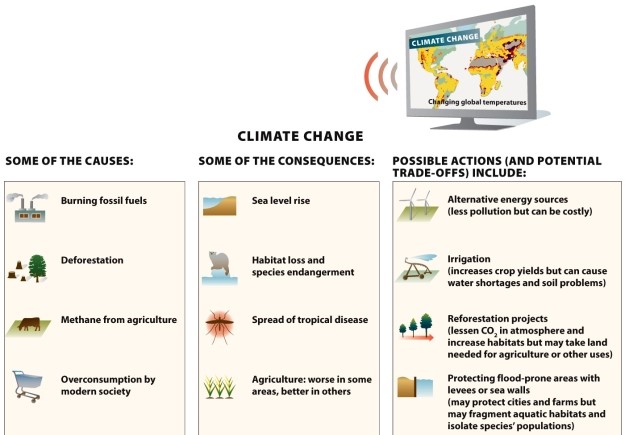
Using Infographic 1.3, what is the triple bottom line of climate change?
Using Infographic 1.3, what is the triple bottom line of climate change?
Question
Question
Question
Question
Question
Infographic 1.3.
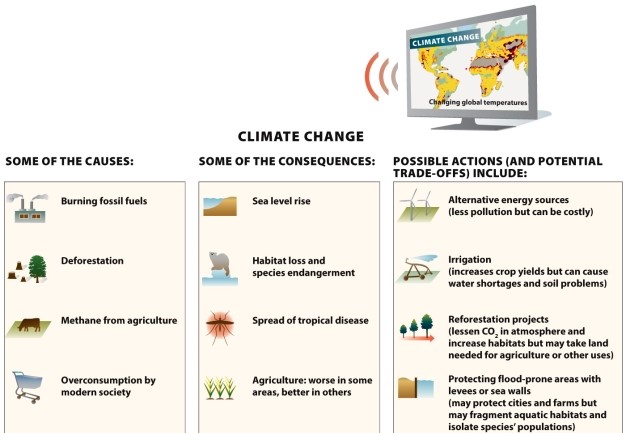
Refer to Infographic 1.3. The Green Revolution brought modern industrialized agricultural techniques to developing countries so they could better feed their growing populations. The idea is to achieve higher yields by taking advantage of better seed types, irrigation, chemical fertilizers, and pesticides. By doing this, less land, such as rainforest, would need to be converted to agriculture. Use the Infographic to describe the pros and cons of the Green Revolution on the environment, thus illustrating why climate change is a wicked problem.
Refer to Infographic 1.3. The Green Revolution brought modern industrialized agricultural techniques to developing countries so they could better feed their growing populations. The idea is to achieve higher yields by taking advantage of better seed types, irrigation, chemical fertilizers, and pesticides. By doing this, less land, such as rainforest, would need to be converted to agriculture. Use the Infographic to describe the pros and cons of the Green Revolution on the environment, thus illustrating why climate change is a wicked problem.
Question
Question
Question
Question
Question
Question
Question
Question
Question
Question
Question
Question
Infographic 1.5
ecosystem.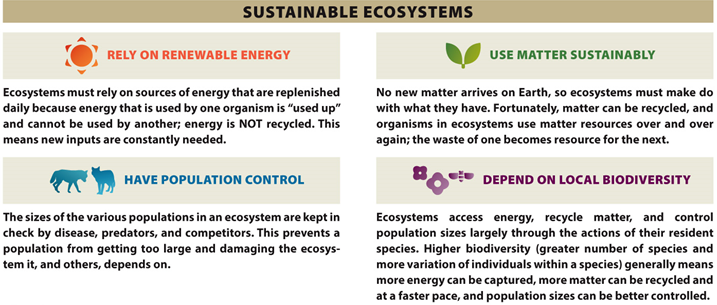
Is our modern society acting sustainably? What are some areas of concern? Use Infographic 1.5 to compare and contrast a sustainable ecosystem to our current human
ecosystem.
Is our modern society acting sustainably? What are some areas of concern? Use Infographic 1.5 to compare and contrast a sustainable ecosystem to our current human
Question
Question
Question
Question
Question
Question
Question
Infographic 1.6.
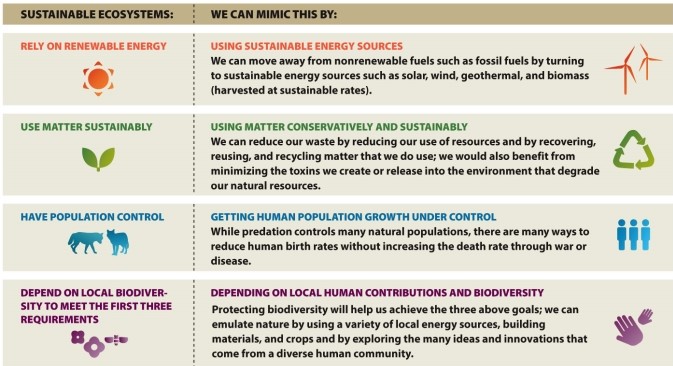
Refer to Infographic 1.6. Use the infographic to describe ways that you could live more sustainably.
Refer to Infographic 1.6. Use the infographic to describe ways that you could live more sustainably.
Question
Question
Question
Question
Question
Infographic 1.7.


Refer to Infographic 1.7. Ethanol is often produced in locations where farmers also grow corn. Underground water reservoirs are used to grow the corn and process the ethanol. These reservoirs are being depleted in some areas of the Midwest. Which of the social traps apply to the water depletion?
Refer to Infographic 1.7. Ethanol is often produced in locations where farmers also grow corn. Underground water reservoirs are used to grow the corn and process the ethanol. These reservoirs are being depleted in some areas of the Midwest. Which of the social traps apply to the water depletion?
Question
Question
Question
Infographic 1.7.


Refer to Infographic 1.7. Antibiotics are routinely given to animals in confinement facilities to avoid the spread of disease through dense populations. The antibiotics get into the surrounding environment (water and soil) and allow antibiotic-resistant strains of bacteria to flourish and become the majority strain in the population. When infected by such a strain, an animal or human will not respond to treatment with the antibiotic. Which social trap is in effect here? What should be done about this?
Refer to Infographic 1.7. Antibiotics are routinely given to animals in confinement facilities to avoid the spread of disease through dense populations. The antibiotics get into the surrounding environment (water and soil) and allow antibiotic-resistant strains of bacteria to flourish and become the majority strain in the population. When infected by such a strain, an animal or human will not respond to treatment with the antibiotic. Which social trap is in effect here? What should be done about this?

Unlock Deck
Sign up to unlock the cards in this deck!
Unlock Deck
Unlock Deck
1/45

Play

Full screen (f)
Deck 1: Environmental Literacy and the Goal of Sustainability - on the Road to Collapse: What Lessons Can We Learn From a Vanished Viking Society
1
What does an environment include?
An environment includes the biological (living) and physical (nonliving) surroundings in which any given living organism exists.
2
Why are nonliving things included in the definition of an environment?
Nonliving things, like rocks, water, and oxygen, are included in the definition of an environment because, although they are not living, they still have a tremendous impact on the organic things that do live in that environment. Imagine an environment that contains several species of fish, some of which suddenly start to die off. Now let's say this die off is caused by the temperature of the water rising in this environment. If we didn't consider water to be part of an environment, we would not know to test the water for the possible cause of the fish dying.
3
Which factors make up the triple bottom line?
A) human, natural, and solar factors
B) international, national, and local factors
C) social, economic, and environmental factors
D) agricultural, financial, and environmental factors
E) solar energy, water, and air factors
A) human, natural, and solar factors
B) international, national, and local factors
C) social, economic, and environmental factors
D) agricultural, financial, and environmental factors
E) solar energy, water, and air factors
social, economic, and environmental factors
4
What does it mean when an environmental issue is a wicked problem?
A) It is created by people who only care about themselves.
B) It is global in nature.
C) It involves trade-offs that not everyone will be happy with.
D) It is a problem that cannot be solved.
E) None of the above describes wicked problems.
A) It is created by people who only care about themselves.
B) It is global in nature.
C) It involves trade-offs that not everyone will be happy with.
D) It is a problem that cannot be solved.
E) None of the above describes wicked problems.
Unlock Deck
Unlock for access to all 45 flashcards in this deck.
Unlock Deck
k this deck
5
Which of the following is an example of an empirical study?
A) developing more efficient photovoltaic cells for electricity production
B) producing models of the impact of various greenhouse gas concentrations on global temperature
C) developing ultrafast passenger trains
D) improving the efficiency of electricity transmission
E) developing pest control methods that do not include pesticides
A) developing more efficient photovoltaic cells for electricity production
B) producing models of the impact of various greenhouse gas concentrations on global temperature
C) developing ultrafast passenger trains
D) improving the efficiency of electricity transmission
E) developing pest control methods that do not include pesticides
Unlock Deck
Unlock for access to all 45 flashcards in this deck.
Unlock Deck
k this deck
6
Due to their complexity, any given response to an environmental problem involves significant __________, and no one response is likely to present the ultimate solution.
A) sliding reinforcers
B) trade-offs
C) wicked problems
D) anthropogenics
E) tragedies
A) sliding reinforcers
B) trade-offs
C) wicked problems
D) anthropogenics
E) tragedies
Unlock Deck
Unlock for access to all 45 flashcards in this deck.
Unlock Deck
k this deck
7
What is environmental literacy? Why is it important for individuals to have a strong understanding of environmental literacy when discussing environmental problems caused by humans?
Unlock Deck
Unlock for access to all 45 flashcards in this deck.
Unlock Deck
k this deck
8
What evidence did scientists use in Greenland to study atmospheric conditions during the Viking settlements?
A) air bubbles trapped in ice cores
B) mud core samples
C) animal bones collected from middens
D) insect fossils
E) the law of superposition
A) air bubbles trapped in ice cores
B) mud core samples
C) animal bones collected from middens
D) insect fossils
E) the law of superposition
Unlock Deck
Unlock for access to all 45 flashcards in this deck.
Unlock Deck
k this deck
9
What is environmental science, and what fields of study does it rely on?
Unlock Deck
Unlock for access to all 45 flashcards in this deck.
Unlock Deck
k this deck
10
The recent changes in global climate driven by human activities have the potential to _______________.
A) alter weather patterns
B) cause crop failures
C) raise sea levels
D) endanger species
E) all of the above
A) alter weather patterns
B) cause crop failures
C) raise sea levels
D) endanger species
E) all of the above
Unlock Deck
Unlock for access to all 45 flashcards in this deck.
Unlock Deck
k this deck
11
Which of the following is NOT an example of self-inflicted environmental damage done by the Greenland Vikings?
A) They overgrazed.
B) They used grassland to insulate their houses.
C) They chopped down forests for fuel and home construction.
D) They grew to a few thousand individuals.
E) The climate cooled.
A) They overgrazed.
B) They used grassland to insulate their houses.
C) They chopped down forests for fuel and home construction.
D) They grew to a few thousand individuals.
E) The climate cooled.
Unlock Deck
Unlock for access to all 45 flashcards in this deck.
Unlock Deck
k this deck
12
Which of the following is a potential trade-off to reforestation efforts?
A) high cost
B) water shortages
C) fragmentation of habitats
D) less land for agriculture
E) all of the above
A) high cost
B) water shortages
C) fragmentation of habitats
D) less land for agriculture
E) all of the above
Unlock Deck
Unlock for access to all 45 flashcards in this deck.
Unlock Deck
k this deck
13
Infographic 1.3
Using Infographic 1.3, what is the triple bottom line of climate change?
Using Infographic 1.3, what is the triple bottom line of climate change?
Unlock Deck
Unlock for access to all 45 flashcards in this deck.
Unlock Deck
k this deck
14
Which of the following describes an environment?
A) fish living in a stream
B) bacteria living in a human's intestinal tract
C) mold growing on a wood stump in a forest
D) a cat living in a house
E) All of the above describe an environment.
A) fish living in a stream
B) bacteria living in a human's intestinal tract
C) mold growing on a wood stump in a forest
D) a cat living in a house
E) All of the above describe an environment.
Unlock Deck
Unlock for access to all 45 flashcards in this deck.
Unlock Deck
k this deck
15
Environmental science relies or draws on which of the following?
A) natural sciences such as ecology
B) applied sciences such as engineering
C) social sciences such as anthropology
D) humanities such as literature
E) all of the above
A) natural sciences such as ecology
B) applied sciences such as engineering
C) social sciences such as anthropology
D) humanities such as literature
E) all of the above
Unlock Deck
Unlock for access to all 45 flashcards in this deck.
Unlock Deck
k this deck
16
Which would likely come first when studying an environmental issue: an applied science study or an empirical science study? Why?
Unlock Deck
Unlock for access to all 45 flashcards in this deck.
Unlock Deck
k this deck
17
An example of applied science would be ____________.
A) designing a solar panel for increased efficiency
B) observing chimpanzee behavior in a rainforest
C) collecting ice core samples to determine carbon dioxide levels 100,000 years ago
D) determining the diet of Greenland Vikings based on analysis of their garbage
E) counting the number of geese on a pond
A) designing a solar panel for increased efficiency
B) observing chimpanzee behavior in a rainforest
C) collecting ice core samples to determine carbon dioxide levels 100,000 years ago
D) determining the diet of Greenland Vikings based on analysis of their garbage
E) counting the number of geese on a pond
Unlock Deck
Unlock for access to all 45 flashcards in this deck.
Unlock Deck
k this deck
18
Infographic 1.3.
Refer to Infographic 1.3. The Green Revolution brought modern industrialized agricultural techniques to developing countries so they could better feed their growing populations. The idea is to achieve higher yields by taking advantage of better seed types, irrigation, chemical fertilizers, and pesticides. By doing this, less land, such as rainforest, would need to be converted to agriculture. Use the Infographic to describe the pros and cons of the Green Revolution on the environment, thus illustrating why climate change is a wicked problem.
Refer to Infographic 1.3. The Green Revolution brought modern industrialized agricultural techniques to developing countries so they could better feed their growing populations. The idea is to achieve higher yields by taking advantage of better seed types, irrigation, chemical fertilizers, and pesticides. By doing this, less land, such as rainforest, would need to be converted to agriculture. Use the Infographic to describe the pros and cons of the Green Revolution on the environment, thus illustrating why climate change is a wicked problem.
Unlock Deck
Unlock for access to all 45 flashcards in this deck.
Unlock Deck
k this deck
19
Many environmental problems can be traced to three underlying causes: the number of humans on this planet, utilization of resources at a very fast rate, and _________.
A) deforestation
B) affluence
C) fossil fuels
D) habitat loss
E) pollution
A) deforestation
B) affluence
C) fossil fuels
D) habitat loss
E) pollution
Unlock Deck
Unlock for access to all 45 flashcards in this deck.
Unlock Deck
k this deck
20
Which phrase best describes the term "environment"?
A) the climate where an organism lives
B) the living surroundings in which an organism exists
C) the living and nonliving surroundings in which an organism exists
D) the nonliving surroundings where an organism lives
E) the domination of nonliving systems by living systems
A) the climate where an organism lives
B) the living surroundings in which an organism exists
C) the living and nonliving surroundings in which an organism exists
D) the nonliving surroundings where an organism lives
E) the domination of nonliving systems by living systems
Unlock Deck
Unlock for access to all 45 flashcards in this deck.
Unlock Deck
k this deck
21
What is carrying capacity?
A) the impact a population has on its environment
B) the resources needed to support a population in its environment
C) the population size that an area can support indefinitely
D) a constant, invariant value that represents the amount of life Earth can support
E) the amount of pollution a natural ecosystem can withstand before it begins to exhibit negative symptoms
A) the impact a population has on its environment
B) the resources needed to support a population in its environment
C) the population size that an area can support indefinitely
D) a constant, invariant value that represents the amount of life Earth can support
E) the amount of pollution a natural ecosystem can withstand before it begins to exhibit negative symptoms
Unlock Deck
Unlock for access to all 45 flashcards in this deck.
Unlock Deck
k this deck
22
Modern fishing techniques use giant nets to harvest large numbers of fish in the short term. This may result in severely reduced populations of fish in the future. Which term best describes the above scenario?
A) time delay
B) tragedy of the commons
C) sliding reinforcer
D) extinction
E) These are all terms to describe what happens in the scenario.
A) time delay
B) tragedy of the commons
C) sliding reinforcer
D) extinction
E) These are all terms to describe what happens in the scenario.
Unlock Deck
Unlock for access to all 45 flashcards in this deck.
Unlock Deck
k this deck
23
Which of the following is NOT a characteristic of a sustainable ecosystem?
A) It uses renewable energy.
B) It eliminates waste by reusing matter.
C) It contains species that all depend on the same limited resource.
D) It recycles matter.
E) Local biodiversity is present to perform essential ecosystem processes.
A) It uses renewable energy.
B) It eliminates waste by reusing matter.
C) It contains species that all depend on the same limited resource.
D) It recycles matter.
E) Local biodiversity is present to perform essential ecosystem processes.
Unlock Deck
Unlock for access to all 45 flashcards in this deck.
Unlock Deck
k this deck
24
How would you go about convincing a company to switch to renewable sources of energy?
Unlock Deck
Unlock for access to all 45 flashcards in this deck.
Unlock Deck
k this deck
25
How does wealth inequality impede sustainable growth?
A) Poorer nations lack natural resources.
B) Underprivileged people sometimes exploit the environment in order to survive.
C) Wealthier nations are very affected by resource availability and must pay high costs to access them.
D) People with the most money and power are the first to succumb to environmental problems.
E) The world's natural resources are controlled by the vast majority of the population.
A) Poorer nations lack natural resources.
B) Underprivileged people sometimes exploit the environment in order to survive.
C) Wealthier nations are very affected by resource availability and must pay high costs to access them.
D) People with the most money and power are the first to succumb to environmental problems.
E) The world's natural resources are controlled by the vast majority of the population.
Unlock Deck
Unlock for access to all 45 flashcards in this deck.
Unlock Deck
k this deck
26
Which statement is FALSE?
A) In a biocentric worldview, all life is valued
B) An ecocentric worldview values the ecosystem as an intact whole.
C) An ecocentric worldview includes all of the organisms and nonliving processes that occur in an ecosystem.
D) In an anthropogenic worldview, human beings have an instrumental value.
E) An anthropogenic worldview places human lives and interests as the most important.
A) In a biocentric worldview, all life is valued
B) An ecocentric worldview values the ecosystem as an intact whole.
C) An ecocentric worldview includes all of the organisms and nonliving processes that occur in an ecosystem.
D) In an anthropogenic worldview, human beings have an instrumental value.
E) An anthropogenic worldview places human lives and interests as the most important.
Unlock Deck
Unlock for access to all 45 flashcards in this deck.
Unlock Deck
k this deck
27
The _________ is the land needed to provide resources and assimilate the waste of a person or population.
A) carrying capacity
B) biomass
C) ecological fingerprint
D) ecological footprint
E) population demand
A) carrying capacity
B) biomass
C) ecological fingerprint
D) ecological footprint
E) population demand
Unlock Deck
Unlock for access to all 45 flashcards in this deck.
Unlock Deck
k this deck
28
Solar, wind, geothermal, and biomass energy sources are examples of _______.
A) nonrenewable energy
B) finite energy
C) renewable energy
D) fossil fuels
E) nonsustainable energy
A) nonrenewable energy
B) finite energy
C) renewable energy
D) fossil fuels
E) nonsustainable energy
Unlock Deck
Unlock for access to all 45 flashcards in this deck.
Unlock Deck
k this deck
29
What is biomimicry?
A) cloning technologies and equipment that allow scientists to recreate photosynthetic bacteria in laboratory settings
B) recreating natural ecosystems in areas where severe deforestation has occurred
C) turning natural ecosystems into scientific experiment sites to help scientists better understand their functioning
D) the process of collecting data from various ecosystems
E) the use of nature as a model for our own systems
A) cloning technologies and equipment that allow scientists to recreate photosynthetic bacteria in laboratory settings
B) recreating natural ecosystems in areas where severe deforestation has occurred
C) turning natural ecosystems into scientific experiment sites to help scientists better understand their functioning
D) the process of collecting data from various ecosystems
E) the use of nature as a model for our own systems
Unlock Deck
Unlock for access to all 45 flashcards in this deck.
Unlock Deck
k this deck
30
Infographic 1.5
ecosystem.
Is our modern society acting sustainably? What are some areas of concern? Use Infographic 1.5 to compare and contrast a sustainable ecosystem to our current human
ecosystem.
Is our modern society acting sustainably? What are some areas of concern? Use Infographic 1.5 to compare and contrast a sustainable ecosystem to our current human
Unlock Deck
Unlock for access to all 45 flashcards in this deck.
Unlock Deck
k this deck
31
Which of the following choices is NOT an example of an anthropocentric worldview?
A) clear-cutting a forest to sell timber
B) testing a nuclear bomb
C) large commercial fishing ships processing tons of fish per day
D) purchasing a rice product stored in a recycled cardboard container instead of one stored in a plastic container
E) clearing land to build shopping malls
A) clear-cutting a forest to sell timber
B) testing a nuclear bomb
C) large commercial fishing ships processing tons of fish per day
D) purchasing a rice product stored in a recycled cardboard container instead of one stored in a plastic container
E) clearing land to build shopping malls
Unlock Deck
Unlock for access to all 45 flashcards in this deck.
Unlock Deck
k this deck
32
Which of the following personal attitudes will lead to the greatest long-term sustainability?
A) The forest is there for us to use.
B) The lake will be able to handle the raw sewage because it always has.
C) It doesn't matter what we do because we don't have the power to change anything.
D) I wonder how using this product will affect the environment; maybe there's a better choice available.
E) Scientists will figure out a way to reduce the effects of pollution.
A) The forest is there for us to use.
B) The lake will be able to handle the raw sewage because it always has.
C) It doesn't matter what we do because we don't have the power to change anything.
D) I wonder how using this product will affect the environment; maybe there's a better choice available.
E) Scientists will figure out a way to reduce the effects of pollution.
Unlock Deck
Unlock for access to all 45 flashcards in this deck.
Unlock Deck
k this deck
33
What does it mean to be sustainable, and what are four characteristics of a sustainable ecosystem?
Unlock Deck
Unlock for access to all 45 flashcards in this deck.
Unlock Deck
k this deck
34
How is anthropogenic climate change different from the climate change experienced by the Greenland Vikings?
A) It involves new chemical compounds.
B) It is caused by human actions.
C) It is a natural cycle Earth goes through.
D) It causes the average atmospheric temperature to decrease.
E) It is caused by increased tectonic activity.
A) It involves new chemical compounds.
B) It is caused by human actions.
C) It is a natural cycle Earth goes through.
D) It causes the average atmospheric temperature to decrease.
E) It is caused by increased tectonic activity.
Unlock Deck
Unlock for access to all 45 flashcards in this deck.
Unlock Deck
k this deck
35
Which situation best describes the tragedy of the commons?
A) A fisherman uses his net to catch a large quantity of fish.
B) Increasing amounts of pesticides need to be used over time to maintain the same effect on pests.
C) An oil pipeline leaks.
D) Sustainable forestry practices are applied to a plot of land in the rainforest.
E) Herders put too many sheep in a public field because they think "If I don't use this available resource, someone else will."
A) A fisherman uses his net to catch a large quantity of fish.
B) Increasing amounts of pesticides need to be used over time to maintain the same effect on pests.
C) An oil pipeline leaks.
D) Sustainable forestry practices are applied to a plot of land in the rainforest.
E) Herders put too many sheep in a public field because they think "If I don't use this available resource, someone else will."
Unlock Deck
Unlock for access to all 45 flashcards in this deck.
Unlock Deck
k this deck
36
Which statement about environmental ethics is TRUE?
A) All people with environmental ethics recycle.
B) Environmental ethics have no control over how people resolve problems in the environment.
C) People with environmental ethics tend to have an anthropogenic worldview rather than a biocentric worldview.
D) Each person has a philosophy surrounding environmental ethics that influences their interactions with the natural environment.
E) Worldviews do not tend to influence people's environmental ethics.
A) All people with environmental ethics recycle.
B) Environmental ethics have no control over how people resolve problems in the environment.
C) People with environmental ethics tend to have an anthropogenic worldview rather than a biocentric worldview.
D) Each person has a philosophy surrounding environmental ethics that influences their interactions with the natural environment.
E) Worldviews do not tend to influence people's environmental ethics.
Unlock Deck
Unlock for access to all 45 flashcards in this deck.
Unlock Deck
k this deck
37
Infographic 1.6.
Refer to Infographic 1.6. Use the infographic to describe ways that you could live more sustainably.
Refer to Infographic 1.6. Use the infographic to describe ways that you could live more sustainably.
Unlock Deck
Unlock for access to all 45 flashcards in this deck.
Unlock Deck
k this deck
38
A good example of sustainability would be ___________.
A) limiting commercial fishing to amounts that allow the fish population to repopulate
B) using solar panels to generate electricity
C) riding a bicycle to work
D) purchasing products in packaging that can be recycled
E) All of the choices listed above are good examples of sustainability.
A) limiting commercial fishing to amounts that allow the fish population to repopulate
B) using solar panels to generate electricity
C) riding a bicycle to work
D) purchasing products in packaging that can be recycled
E) All of the choices listed above are good examples of sustainability.
Unlock Deck
Unlock for access to all 45 flashcards in this deck.
Unlock Deck
k this deck
39
Which of the following is characteristic of a sustainable ecosystem?
A) It makes the most of renewable energy.
B) It uses matter conservatively. (It recycles or reuses so nothing is wasted.)
C) It keeps populations in check.
D) It depends on local biodiversity.
E) All of the above
A) It makes the most of renewable energy.
B) It uses matter conservatively. (It recycles or reuses so nothing is wasted.)
C) It keeps populations in check.
D) It depends on local biodiversity.
E) All of the above
Unlock Deck
Unlock for access to all 45 flashcards in this deck.
Unlock Deck
k this deck
40
Coal, natural gas, and oil are examples of ___________.
A) renewable resources
B) nonrenewable resources
C) alternative forms of energy
D) infinite resources
E) unlimited resources
A) renewable resources
B) nonrenewable resources
C) alternative forms of energy
D) infinite resources
E) unlimited resources
Unlock Deck
Unlock for access to all 45 flashcards in this deck.
Unlock Deck
k this deck
41
How can the tragedy of the commons be applied to anthropogenic climate change?
Unlock Deck
Unlock for access to all 45 flashcards in this deck.
Unlock Deck
k this deck
42
Infographic 1.7.
Refer to Infographic 1.7. Ethanol is often produced in locations where farmers also grow corn. Underground water reservoirs are used to grow the corn and process the ethanol. These reservoirs are being depleted in some areas of the Midwest. Which of the social traps apply to the water depletion?
Refer to Infographic 1.7. Ethanol is often produced in locations where farmers also grow corn. Underground water reservoirs are used to grow the corn and process the ethanol. These reservoirs are being depleted in some areas of the Midwest. Which of the social traps apply to the water depletion?
Unlock Deck
Unlock for access to all 45 flashcards in this deck.
Unlock Deck
k this deck
43
You have been given the task of making the fishing industry more sustainable. How will you accomplish this task?
Unlock Deck
Unlock for access to all 45 flashcards in this deck.
Unlock Deck
k this deck
44
The policy that was NOT effective in preserving the environment was the __________.
A) Homestead Act
B) establishment of the National Forest Service
C) establishment of the National Park Service
D) Clean Air Act
E) Clean Water Act
A) Homestead Act
B) establishment of the National Forest Service
C) establishment of the National Park Service
D) Clean Air Act
E) Clean Water Act
Unlock Deck
Unlock for access to all 45 flashcards in this deck.
Unlock Deck
k this deck
45
Infographic 1.7.
Refer to Infographic 1.7. Antibiotics are routinely given to animals in confinement facilities to avoid the spread of disease through dense populations. The antibiotics get into the surrounding environment (water and soil) and allow antibiotic-resistant strains of bacteria to flourish and become the majority strain in the population. When infected by such a strain, an animal or human will not respond to treatment with the antibiotic. Which social trap is in effect here? What should be done about this?
Refer to Infographic 1.7. Antibiotics are routinely given to animals in confinement facilities to avoid the spread of disease through dense populations. The antibiotics get into the surrounding environment (water and soil) and allow antibiotic-resistant strains of bacteria to flourish and become the majority strain in the population. When infected by such a strain, an animal or human will not respond to treatment with the antibiotic. Which social trap is in effect here? What should be done about this?
Unlock Deck
Unlock for access to all 45 flashcards in this deck.
Unlock Deck
k this deck
Unlock Deck
Unlock for access to all 45 flashcards in this deck.






