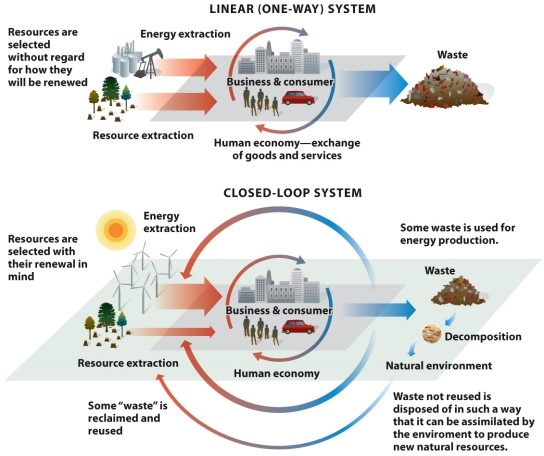
Deck 6: Ecological Economics and Consumption- Wall to Wall, Cradle to Cradle: a Leading Carpet Company Takes a Chance on Going Green

Full screen (f)
exit full mode
Question
Why is the production of some ecosystem services considered priceless?

A) No one can afford to do it.
B) No one knows what it costs.
C) There currently are no substitutes for these services.
D) The technology to do these things is very expensive.
E) They require large amounts of fossil fuels.
Use Space or
up arrow
down arrow
to flip the card.
Question
Which of the following is NOT an important reason to maintain an intact ecosystem?

A) An intact ecosystem provides numerous ecosystem services.
B) An intact ecosystem can renew and recycle resources.
C) If we use more resources and goods than the ecosystem can replenish, we will not be able to receive these goods and services.
D) Our future health and well-being will be threatened.
E) All of the above are important reasons to maintain intact ecosystems.
Question
Discuss how the ecosystem service of pollination benefits humans.
Question
A forest provides a(n) _________ in climate regulation and a(n) _______in plant-based pharmaceutical drugs.

A) ecological footprint; ecolabel
B) natural capital; natural interest
C) external cost; internal cost
D) triple-bottom line; economic system
E) ecosystem service; ecosystem good
Question
A(n) ________ for a country is the amount of land needed to provide its resources and assimilate its waste.

A) closed-loop system
B) external cost
C) ecological footprint
D) ecolabel
E) ecosystem service
Question
An example of natural capital is _________, and an example of a natural interest is ___________.

A) oxygen; new growth in a forest
B) trees; oceans
C) an increased fish population; new growth in a forest
D) wood; forests
E) forests; wetlands
Question
Which of the following would not be considered an ecosystem service?

A) oxygen provided by green plants
B) timber from trees
C) pollination of crops
D) nitrogen cycling in soil
E) water purification
Question
While placing a monetary value on ecosystem services can help us to understand that ecosystems provide us with valuable services, critics say that it is dangerous to put a price on ecosystem services. What are the limitations of such valuation of ecosystems?
Question
Why would nutrient cycling be considered such a valuable ecosystem service to humans?
Question
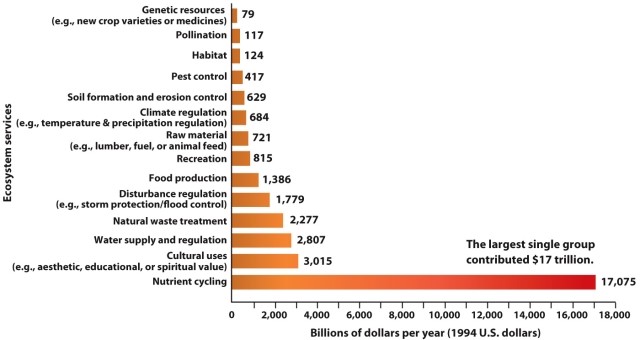
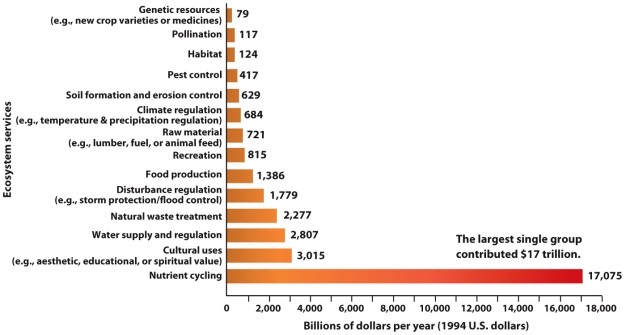
Infographic 6.1.
<strong> Infographic 6.1.   Refer to Infographic 6.1. Which ecosystem service is considered to be the most valuable to us?</strong> A) water supply B) cultural uses C) nutrient cycling D) food production E) waste treatment <div style=padding-top: 35px>
Refer to Infographic 6.1. Which ecosystem service is considered to be the most valuable to us?

A) water supply
B) cultural uses
C) nutrient cycling
D) food production
E) waste treatment
Question
An essential ecological process that makes life on Earth possible is called ______.

A) sustainable development
B) an ecosystem service
C) the closed-loop system
D) an economic system
E) the triple-bottom line
Question
Which of the following is NOT an ecosystem service?

A) water purification
B) crop pollination
C) climate regulation
D) landfilling waste
E) pest control
Question
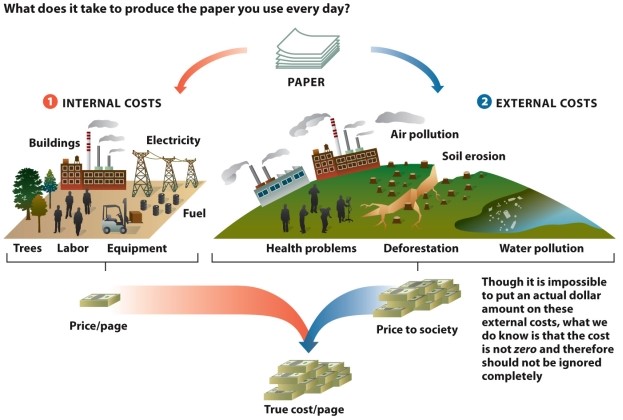
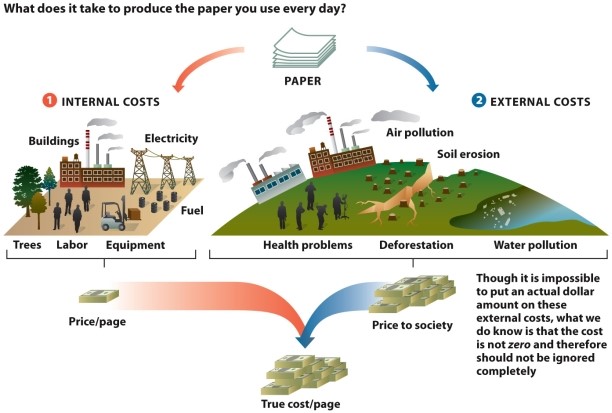
Infographic 6.5.
Infographic 6.5.   Refer to Infographic 6.5. Why is it important to consider the cost to an ecosystem when purchasing a product as well as considering the price of the object or service?<div style=padding-top: 35px>
Refer to Infographic 6.5. Why is it important to consider the cost to an ecosystem when purchasing a product as well as considering the price of the object or service?
Question
Which of the following choices is considered natural capital?

A) oxygen
B) water
C) trees
D) fish
E) All of the choices above are considered natural capital.
Question
Infographic 6.1.
<strong>Infographic 6.1.   Refer to Infographic 6.1. What does the figure show?</strong> A) the cost to restore a degraded ecosystem for particular ecosystem services B) the price of maintaining ecosystems such that they can continue to provide specific ecosystem services without degrading the environment C) the monetary value ascribed to particular ecosystem services D) the ecological footprint value of specific ecosystem services E) the cost differential between natural capital and natural interest <div style=padding-top: 35px>
Refer to Infographic 6.1. What does the figure show?

A) the cost to restore a degraded ecosystem for particular ecosystem services
B) the price of maintaining ecosystems such that they can continue to provide specific ecosystem services without degrading the environment
C) the monetary value ascribed to particular ecosystem services
D) the ecological footprint value of specific ecosystem services
E) the cost differential between natural capital and natural interest
Question
Infographic 6.1.
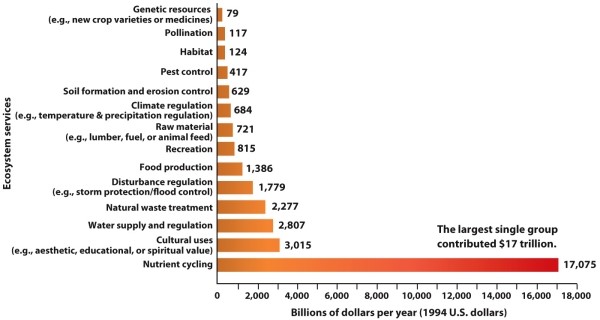
<strong>Infographic 6.1.   Refer to Infographic 6.1. Which of the following might be considered a cultural use of an ecosystem?</strong> A) bees pollinating cherry trees B) an open field and nearby forest used for a Civil War reenactment C) carbon moving from a tree to a caterpillar to a bird to the soil D) water percolating through soil in a wetland E) rocks being weathered by the wind <div style=padding-top: 35px>
Refer to Infographic 6.1. Which of the following might be considered a "cultural use" of an ecosystem?

A) bees pollinating cherry trees
B) an open field and nearby forest used for a Civil War reenactment
C) carbon moving from a tree to a caterpillar to a bird to the soil
D) water percolating through soil in a wetland
E) rocks being weathered by the wind
Question
Infographic 6.1.
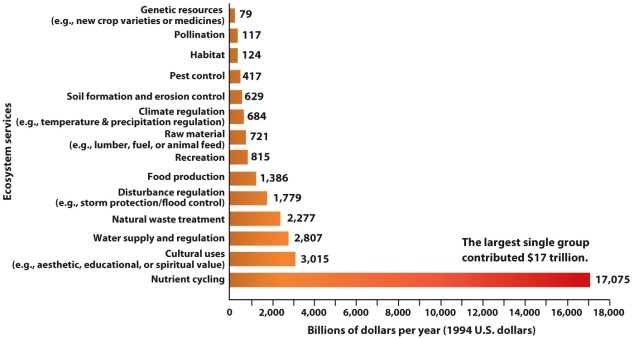
 Infographic 6.1.   Refer to Infographic 6.1. Why is it useful to put a monetary value on ecosystem services?<div style=padding-top: 35px>
Refer to Infographic 6.1. Why is it useful to put a monetary value on ecosystem services?
Question
Infographic 6.1.
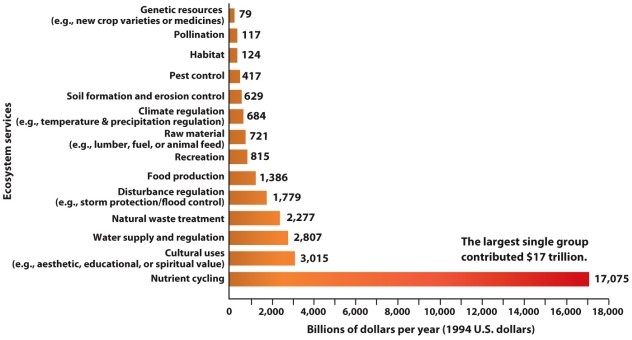
<strong>Infographic 6.1.   Refer to Infographic 6.1. Approximately, what is the value of services that affect our food supply?</strong> A) $79 billion B) $1386 billion C) $417 billion D) $2100 billion E) $2807 billion <div style=padding-top: 35px>
Refer to Infographic 6.1. Approximately, what is the value of services that affect our food supply?

A) $79 billion
B) $1386 billion
C) $417 billion
D) $2100 billion
E) $2807 billion
Question
What is the monetary value attributed to essential ecosystem services? Who calculated this value, and how can it be useful to place a monetary value on ecosystem services?
Question
The government must decide if a section of forest in north Wisconsin can be sold for lumber or if it should be added to the Nicolet National Forest. The social science that deals with how this resource should be allocated is called _______.

A) political science
B) economics
C) ecology
D) sociology
E) None of the choices above represent this concept.
Question
If a car company manufactures an electric car made of recycled and bio-based components and powers the car battery by leasing solar panels to its customers, then which of the following happens?

A) The car would not be considered a sustainable business.
B) The manufacturing system discounts the future value of the car.
C) I = (P x A)/T instead of I = P x A x T.
D) The process exclusively reflects a product-oriented economy.
E) The car cannot be given an ecolabel.
Question
Which of the following is an example of an external cost?

A) a federal tax that is placed on a product sold by a business
B) a fee a company pays to have their product shipped internationally
C) health costs stemming from the hazardous wastes produced during the making of a product
D) the extra money a business pays to make their products or services sustainable
E) labor
Question
_________ include manufacturing costs, labor, taxes, utilities, insurance, and rent.

A) Internal costs
B) External costs
C) Safety costs
D) Potential costs
E) True costs
Question
All of the following actions would threaten the Earth's ability to provide ecosystem goods and services EXCEPT __________.

A) recycling
B) deforestation
C) overfishing
D) soil erosion
E) littering
Question
What three factors are multiplied in the IPAT model to gauge a population's ecological footprint?

A) predisposition, annual income, and taxation
B) population growth, agriculture, and textiles
C) perception, action, and time
D) population, affluence, and technology
E) people, animals, and technology
Question
The true cost of an item produced in a factory includes which of the following factors?

A) social costs
B) environmental costs
C) internal costs
D) external costs
E) It includes all of the factors listed above.
Question
The IPAT equation is used to estimate the size of a population's ecological footprint. Which of the following factors is NOT found in that equation?

A) productivity
B) affluence
C) technology
D) population
E) Choices C and D are not found in the IPAT equation.
Question
Of the next billion people added to Earth, over 99% will be born in less developed, poorer parts of the world. Is it fair to say that the overall impact of humans on the environment is mostly the fault of developing countries? Explain.
Question
Which of the following would be part of an environmental economist's agenda?

A) to consider the long-term impact of our consumption choices on human society and the environment
B) to discount the future value of ecosystem goods and services
C) to price the product of a service such that costs associated with manufacturing, labor, and utilities are accounted for, but costs associated with pollution and resource depletion are not
D) to emphasize a linear, product-oriented economic system
E) to maximize the size of the ecological footprint associated with a product or service
Question
Today, if we were to purchase a good or service at its true cost, how would the price compare to what we are accustomed to paying for the good or service?

A) The price would be lower.
B) The price would be higher.
C) The price would stay the same.
D) The price would decrease exponentially.
E) We cannot predict how the price would change.
Question
Compare and contrast technology as a variable that increases and decreases a population's overall impact.
Question
Your company is in the process of developing an alternative to carpet tile. To make your product more desirable and profitable, what right costs of manufacturing carpet tiles should your designers focus on and why?
Question
What are the internal and external costs associated with producing paper?
Question
Ecosystem services would be discounted in the _________economic system.

A) environmental
B) ecological
C) triple-bottom line
D) mainstream
E) true cost accounting
Question
One of the limitations of mainstream economics is that it does not take into account ___________ costs when a price is assigned to a product or service.

A) safety
B) internal
C) external
D) marginal
E) fringe
Question
An assessment of the cost of a good or service that includes the environmental, social, and economic costs is called the __________.

A) internal analysis
B) external analysis
C) complete valuation
D) triple-bottom line
E) validation cost
Question
Including both internal and external costs when setting a price for a good or service is an example of ______ cost.

A) overall
B) valuation
C) total
D) marginal
E) true
Question
Sustainable use of forests allows us to use the trees to produce goods without depleting them. The amount of net resources produced from the forest or any other form of natural capital is known as ____________.

A) an ecological footprint
B) internal cost
C) raw material
D) natural interest
E) true cost
Question
Infographic 6.5.
Infographic 6.5.   Refer to Infographic 6.5. You can find a double cheeseburger on the dollar menu at many fast-food chains. Use the infographic to describe how the true cost of that food product is not reflected by the sale price.<div style=padding-top: 35px>
Refer to Infographic 6.5. You can find a double cheeseburger on the "dollar menu" at many fast-food chains. Use the infographic to describe how the true cost of that food product is not reflected by the sale price.
Question
By ignoring the ________, economies create a false idea of the _______ of particular choices.

A) internal costs; external cost
B) true costs; external cost
C) external costs; true cost
D) true costs; closed-loop system
E) internal costs; true cost
Question
It is predicted that there will soon be more cell phones in the world than people. Inside each phone is a metal called tantalum. This metal is mined from the Earth and is a nonrenewable resource. How could cell phone manufacturing become more cyclical in a closed-loop system? What can consumers do to help?
Question
Match between columns
Economic and social development that meets present needs without preventing future generations from meeting their needs
IPAT model
Economic and social development that meets present needs without preventing future generations from meeting their needs
external cost
Economic and social development that meets present needs without preventing future generations from meeting their needs
sustainable
Economic and social development that meets present needs without preventing future generations from meeting their needs
natural interest
Economic and social development that meets present needs without preventing future generations from meeting their needs
cradle to cradle
Economic and social development that meets present needs without preventing future generations from meeting their needs
triple-bottom line
Economic and social development that meets present needs without preventing future generations from meeting their needs
internal cost
Economic and social development that meets present needs without preventing future generations from meeting their needs
economics
Economic and social development that meets present needs without preventing future generations from meeting their needs
natural capital
Economic and social development that meets present needs without preventing future generations from meeting their needs
true cost
Economic and social development that meets present needs without preventing future generations from meeting their needs
ecolabeling
Economic and social development that meets present needs without preventing future generations from meeting their needs
service economy
Economic and social development that meets present needs without preventing future generations from meeting their needs
sustainable development
Economic and social development that meets present needs without preventing future generations from meeting their needs
environmental/ecological economics
Economic and social development that meets present needs without preventing future generations from meeting their needs
discount future value
Economic and social development that meets present needs without preventing future generations from meeting their needs
closed-loop system
Economic and social development that meets present needs without preventing future generations from meeting their needs
green business
Economic and social development that meets present needs without preventing future generations from meeting their needs
ecosystem services
Economic and social development that meets present needs without preventing future generations from meeting their needs
ecological footprint
Management of a resource that considers the impact of its use at every stage of the process
IPAT model
Management of a resource that considers the impact of its use at every stage of the process
external cost
Management of a resource that considers the impact of its use at every stage of the process
sustainable
Management of a resource that considers the impact of its use at every stage of the process
natural interest
Management of a resource that considers the impact of its use at every stage of the process
cradle to cradle
Management of a resource that considers the impact of its use at every stage of the process
triple-bottom line
Management of a resource that considers the impact of its use at every stage of the process
internal cost
Management of a resource that considers the impact of its use at every stage of the process
economics
Management of a resource that considers the impact of its use at every stage of the process
natural capital
Management of a resource that considers the impact of its use at every stage of the process
true cost
Management of a resource that considers the impact of its use at every stage of the process
ecolabeling
Management of a resource that considers the impact of its use at every stage of the process
service economy
Management of a resource that considers the impact of its use at every stage of the process
sustainable development
Management of a resource that considers the impact of its use at every stage of the process
environmental/ecological economics
Management of a resource that considers the impact of its use at every stage of the process
discount future value
Management of a resource that considers the impact of its use at every stage of the process
closed-loop system
Management of a resource that considers the impact of its use at every stage of the process
green business
Management of a resource that considers the impact of its use at every stage of the process
ecosystem services
Management of a resource that considers the impact of its use at every stage of the process
ecological footprint
The land needed to provide the resources for and assimilate the waste of a person or population
IPAT model
The land needed to provide the resources for and assimilate the waste of a person or population
external cost
The land needed to provide the resources for and assimilate the waste of a person or population
sustainable
The land needed to provide the resources for and assimilate the waste of a person or population
natural interest
The land needed to provide the resources for and assimilate the waste of a person or population
cradle to cradle
The land needed to provide the resources for and assimilate the waste of a person or population
triple-bottom line
The land needed to provide the resources for and assimilate the waste of a person or population
internal cost
The land needed to provide the resources for and assimilate the waste of a person or population
economics
The land needed to provide the resources for and assimilate the waste of a person or population
natural capital
The land needed to provide the resources for and assimilate the waste of a person or population
true cost
The land needed to provide the resources for and assimilate the waste of a person or population
ecolabeling
The land needed to provide the resources for and assimilate the waste of a person or population
service economy
The land needed to provide the resources for and assimilate the waste of a person or population
sustainable development
The land needed to provide the resources for and assimilate the waste of a person or population
environmental/ecological economics
The land needed to provide the resources for and assimilate the waste of a person or population
discount future value
The land needed to provide the resources for and assimilate the waste of a person or population
closed-loop system
The land needed to provide the resources for and assimilate the waste of a person or population
green business
The land needed to provide the resources for and assimilate the waste of a person or population
ecosystem services
The land needed to provide the resources for and assimilate the waste of a person or population
ecological footprint
Doing business in a way that is good for people and the environment
IPAT model
Doing business in a way that is good for people and the environment
external cost
Doing business in a way that is good for people and the environment
sustainable
Doing business in a way that is good for people and the environment
natural interest
Doing business in a way that is good for people and the environment
cradle to cradle
Doing business in a way that is good for people and the environment
triple-bottom line
Doing business in a way that is good for people and the environment
internal cost
Doing business in a way that is good for people and the environment
economics
Doing business in a way that is good for people and the environment
natural capital
Doing business in a way that is good for people and the environment
true cost
Doing business in a way that is good for people and the environment
ecolabeling
Doing business in a way that is good for people and the environment
service economy
Doing business in a way that is good for people and the environment
sustainable development
Doing business in a way that is good for people and the environment
environmental/ecological economics
Doing business in a way that is good for people and the environment
discount future value
Doing business in a way that is good for people and the environment
closed-loop system
Doing business in a way that is good for people and the environment
green business
Doing business in a way that is good for people and the environment
ecosystem services
Doing business in a way that is good for people and the environment
ecological footprint
Including both internal and external costs when setting a price for a good or service
IPAT model
Including both internal and external costs when setting a price for a good or service
external cost
Including both internal and external costs when setting a price for a good or service
sustainable
Including both internal and external costs when setting a price for a good or service
natural interest
Including both internal and external costs when setting a price for a good or service
cradle to cradle
Including both internal and external costs when setting a price for a good or service
triple-bottom line
Including both internal and external costs when setting a price for a good or service
internal cost
Including both internal and external costs when setting a price for a good or service
economics
Including both internal and external costs when setting a price for a good or service
natural capital
Including both internal and external costs when setting a price for a good or service
true cost
Including both internal and external costs when setting a price for a good or service
ecolabeling
Including both internal and external costs when setting a price for a good or service
service economy
Including both internal and external costs when setting a price for a good or service
sustainable development
Including both internal and external costs when setting a price for a good or service
environmental/ecological economics
Including both internal and external costs when setting a price for a good or service
discount future value
Including both internal and external costs when setting a price for a good or service
closed-loop system
Including both internal and external costs when setting a price for a good or service
green business
Including both internal and external costs when setting a price for a good or service
ecosystem services
Including both internal and external costs when setting a price for a good or service
ecological footprint
A business model whose focus is on leasing and caring for a product in the customer’s possession rather than on selling the product itself
IPAT model
A business model whose focus is on leasing and caring for a product in the customer’s possession rather than on selling the product itself
external cost
A business model whose focus is on leasing and caring for a product in the customer’s possession rather than on selling the product itself
sustainable
A business model whose focus is on leasing and caring for a product in the customer’s possession rather than on selling the product itself
natural interest
A business model whose focus is on leasing and caring for a product in the customer’s possession rather than on selling the product itself
cradle to cradle
A business model whose focus is on leasing and caring for a product in the customer’s possession rather than on selling the product itself
triple-bottom line
A business model whose focus is on leasing and caring for a product in the customer’s possession rather than on selling the product itself
internal cost
A business model whose focus is on leasing and caring for a product in the customer’s possession rather than on selling the product itself
economics
A business model whose focus is on leasing and caring for a product in the customer’s possession rather than on selling the product itself
natural capital
A business model whose focus is on leasing and caring for a product in the customer’s possession rather than on selling the product itself
true cost
A business model whose focus is on leasing and caring for a product in the customer’s possession rather than on selling the product itself
ecolabeling
A business model whose focus is on leasing and caring for a product in the customer’s possession rather than on selling the product itself
service economy
A business model whose focus is on leasing and caring for a product in the customer’s possession rather than on selling the product itself
sustainable development
A business model whose focus is on leasing and caring for a product in the customer’s possession rather than on selling the product itself
environmental/ecological economics
A business model whose focus is on leasing and caring for a product in the customer’s possession rather than on selling the product itself
discount future value
A business model whose focus is on leasing and caring for a product in the customer’s possession rather than on selling the product itself
closed-loop system
A business model whose focus is on leasing and caring for a product in the customer’s possession rather than on selling the product itself
green business
A business model whose focus is on leasing and caring for a product in the customer’s possession rather than on selling the product itself
ecosystem services
A business model whose focus is on leasing and caring for a product in the customer’s possession rather than on selling the product itself
ecological footprint
A production system in which the product is folded back into the resource stream when consumers are finished with it, or it is disposed of in such a way that nature can decompose it
IPAT model
A production system in which the product is folded back into the resource stream when consumers are finished with it, or it is disposed of in such a way that nature can decompose it
external cost
A production system in which the product is folded back into the resource stream when consumers are finished with it, or it is disposed of in such a way that nature can decompose it
sustainable
A production system in which the product is folded back into the resource stream when consumers are finished with it, or it is disposed of in such a way that nature can decompose it
natural interest
A production system in which the product is folded back into the resource stream when consumers are finished with it, or it is disposed of in such a way that nature can decompose it
cradle to cradle
A production system in which the product is folded back into the resource stream when consumers are finished with it, or it is disposed of in such a way that nature can decompose it
triple-bottom line
A production system in which the product is folded back into the resource stream when consumers are finished with it, or it is disposed of in such a way that nature can decompose it
internal cost
A production system in which the product is folded back into the resource stream when consumers are finished with it, or it is disposed of in such a way that nature can decompose it
economics
A production system in which the product is folded back into the resource stream when consumers are finished with it, or it is disposed of in such a way that nature can decompose it
natural capital
A production system in which the product is folded back into the resource stream when consumers are finished with it, or it is disposed of in such a way that nature can decompose it
true cost
A production system in which the product is folded back into the resource stream when consumers are finished with it, or it is disposed of in such a way that nature can decompose it
ecolabeling
A production system in which the product is folded back into the resource stream when consumers are finished with it, or it is disposed of in such a way that nature can decompose it
service economy
A production system in which the product is folded back into the resource stream when consumers are finished with it, or it is disposed of in such a way that nature can decompose it
sustainable development
A production system in which the product is folded back into the resource stream when consumers are finished with it, or it is disposed of in such a way that nature can decompose it
environmental/ecological economics
A production system in which the product is folded back into the resource stream when consumers are finished with it, or it is disposed of in such a way that nature can decompose it
discount future value
A production system in which the product is folded back into the resource stream when consumers are finished with it, or it is disposed of in such a way that nature can decompose it
closed-loop system
A production system in which the product is folded back into the resource stream when consumers are finished with it, or it is disposed of in such a way that nature can decompose it
green business
A production system in which the product is folded back into the resource stream when consumers are finished with it, or it is disposed of in such a way that nature can decompose it
ecosystem services
A production system in which the product is folded back into the resource stream when consumers are finished with it, or it is disposed of in such a way that nature can decompose it
ecological footprint
The amount of readily produced resources that we could use and still leave enough behind to, in time, replace what we took
IPAT model
The amount of readily produced resources that we could use and still leave enough behind to, in time, replace what we took
external cost
The amount of readily produced resources that we could use and still leave enough behind to, in time, replace what we took
sustainable
The amount of readily produced resources that we could use and still leave enough behind to, in time, replace what we took
natural interest
The amount of readily produced resources that we could use and still leave enough behind to, in time, replace what we took
cradle to cradle
The amount of readily produced resources that we could use and still leave enough behind to, in time, replace what we took
triple-bottom line
The amount of readily produced resources that we could use and still leave enough behind to, in time, replace what we took
internal cost
The amount of readily produced resources that we could use and still leave enough behind to, in time, replace what we took
economics
The amount of readily produced resources that we could use and still leave enough behind to, in time, replace what we took
natural capital
The amount of readily produced resources that we could use and still leave enough behind to, in time, replace what we took
true cost
The amount of readily produced resources that we could use and still leave enough behind to, in time, replace what we took
ecolabeling
The amount of readily produced resources that we could use and still leave enough behind to, in time, replace what we took
service economy
The amount of readily produced resources that we could use and still leave enough behind to, in time, replace what we took
sustainable development
The amount of readily produced resources that we could use and still leave enough behind to, in time, replace what we took
environmental/ecological economics
The amount of readily produced resources that we could use and still leave enough behind to, in time, replace what we took
discount future value
The amount of readily produced resources that we could use and still leave enough behind to, in time, replace what we took
closed-loop system
The amount of readily produced resources that we could use and still leave enough behind to, in time, replace what we took
green business
The amount of readily produced resources that we could use and still leave enough behind to, in time, replace what we took
ecosystem services
The amount of readily produced resources that we could use and still leave enough behind to, in time, replace what we took
ecological footprint
New theories of economics that consider the long-term impact of our choices on people and the environment
IPAT model
New theories of economics that consider the long-term impact of our choices on people and the environment
external cost
New theories of economics that consider the long-term impact of our choices on people and the environment
sustainable
New theories of economics that consider the long-term impact of our choices on people and the environment
natural interest
New theories of economics that consider the long-term impact of our choices on people and the environment
cradle to cradle
New theories of economics that consider the long-term impact of our choices on people and the environment
triple-bottom line
New theories of economics that consider the long-term impact of our choices on people and the environment
internal cost
New theories of economics that consider the long-term impact of our choices on people and the environment
economics
New theories of economics that consider the long-term impact of our choices on people and the environment
natural capital
New theories of economics that consider the long-term impact of our choices on people and the environment
true cost
New theories of economics that consider the long-term impact of our choices on people and the environment
ecolabeling
New theories of economics that consider the long-term impact of our choices on people and the environment
service economy
New theories of economics that consider the long-term impact of our choices on people and the environment
sustainable development
New theories of economics that consider the long-term impact of our choices on people and the environment
environmental/ecological economics
New theories of economics that consider the long-term impact of our choices on people and the environment
discount future value
New theories of economics that consider the long-term impact of our choices on people and the environment
closed-loop system
New theories of economics that consider the long-term impact of our choices on people and the environment
green business
New theories of economics that consider the long-term impact of our choices on people and the environment
ecosystem services
New theories of economics that consider the long-term impact of our choices on people and the environment
ecological footprint
The wealth of resources on Earth
IPAT model
The wealth of resources on Earth
external cost
The wealth of resources on Earth
sustainable
The wealth of resources on Earth
natural interest
The wealth of resources on Earth
cradle to cradle
The wealth of resources on Earth
triple-bottom line
The wealth of resources on Earth
internal cost
The wealth of resources on Earth
economics
The wealth of resources on Earth
natural capital
The wealth of resources on Earth
true cost
The wealth of resources on Earth
ecolabeling
The wealth of resources on Earth
service economy
The wealth of resources on Earth
sustainable development
The wealth of resources on Earth
environmental/ecological economics
The wealth of resources on Earth
discount future value
The wealth of resources on Earth
closed-loop system
The wealth of resources on Earth
green business
The wealth of resources on Earth
ecosystem services
The wealth of resources on Earth
ecological footprint
Those costs—such as manufacturing costs, labor, taxes, utilities, insurance, and rent—that are accounted for when a product or service is evaluated for pricing
IPAT model
Those costs—such as manufacturing costs, labor, taxes, utilities, insurance, and rent—that are accounted for when a product or service is evaluated for pricing
external cost
Those costs—such as manufacturing costs, labor, taxes, utilities, insurance, and rent—that are accounted for when a product or service is evaluated for pricing
sustainable
Those costs—such as manufacturing costs, labor, taxes, utilities, insurance, and rent—that are accounted for when a product or service is evaluated for pricing
natural interest
Those costs—such as manufacturing costs, labor, taxes, utilities, insurance, and rent—that are accounted for when a product or service is evaluated for pricing
cradle to cradle
Those costs—such as manufacturing costs, labor, taxes, utilities, insurance, and rent—that are accounted for when a product or service is evaluated for pricing
triple-bottom line
Those costs—such as manufacturing costs, labor, taxes, utilities, insurance, and rent—that are accounted for when a product or service is evaluated for pricing
internal cost
Those costs—such as manufacturing costs, labor, taxes, utilities, insurance, and rent—that are accounted for when a product or service is evaluated for pricing
economics
Those costs—such as manufacturing costs, labor, taxes, utilities, insurance, and rent—that are accounted for when a product or service is evaluated for pricing
natural capital
Those costs—such as manufacturing costs, labor, taxes, utilities, insurance, and rent—that are accounted for when a product or service is evaluated for pricing
true cost
Those costs—such as manufacturing costs, labor, taxes, utilities, insurance, and rent—that are accounted for when a product or service is evaluated for pricing
ecolabeling
Those costs—such as manufacturing costs, labor, taxes, utilities, insurance, and rent—that are accounted for when a product or service is evaluated for pricing
service economy
Those costs—such as manufacturing costs, labor, taxes, utilities, insurance, and rent—that are accounted for when a product or service is evaluated for pricing
sustainable development
Those costs—such as manufacturing costs, labor, taxes, utilities, insurance, and rent—that are accounted for when a product or service is evaluated for pricing
environmental/ecological economics
Those costs—such as manufacturing costs, labor, taxes, utilities, insurance, and rent—that are accounted for when a product or service is evaluated for pricing
discount future value
Those costs—such as manufacturing costs, labor, taxes, utilities, insurance, and rent—that are accounted for when a product or service is evaluated for pricing
closed-loop system
Those costs—such as manufacturing costs, labor, taxes, utilities, insurance, and rent—that are accounted for when a product or service is evaluated for pricing
green business
Those costs—such as manufacturing costs, labor, taxes, utilities, insurance, and rent—that are accounted for when a product or service is evaluated for pricing
ecosystem services
Those costs—such as manufacturing costs, labor, taxes, utilities, insurance, and rent—that are accounted for when a product or service is evaluated for pricing
ecological footprint
Capable of being continued without degrading the environment
IPAT model
Capable of being continued without degrading the environment
external cost
Capable of being continued without degrading the environment
sustainable
Capable of being continued without degrading the environment
natural interest
Capable of being continued without degrading the environment
cradle to cradle
Capable of being continued without degrading the environment
triple-bottom line
Capable of being continued without degrading the environment
internal cost
Capable of being continued without degrading the environment
economics
Capable of being continued without degrading the environment
natural capital
Capable of being continued without degrading the environment
true cost
Capable of being continued without degrading the environment
ecolabeling
Capable of being continued without degrading the environment
service economy
Capable of being continued without degrading the environment
sustainable development
Capable of being continued without degrading the environment
environmental/ecological economics
Capable of being continued without degrading the environment
discount future value
Capable of being continued without degrading the environment
closed-loop system
Capable of being continued without degrading the environment
green business
Capable of being continued without degrading the environment
ecosystem services
Capable of being continued without degrading the environment
ecological footprint
Costs that are not taken into account when a price is assigned to a product or service
IPAT model
Costs that are not taken into account when a price is assigned to a product or service
external cost
Costs that are not taken into account when a price is assigned to a product or service
sustainable
Costs that are not taken into account when a price is assigned to a product or service
natural interest
Costs that are not taken into account when a price is assigned to a product or service
cradle to cradle
Costs that are not taken into account when a price is assigned to a product or service
triple-bottom line
Costs that are not taken into account when a price is assigned to a product or service
internal cost
Costs that are not taken into account when a price is assigned to a product or service
economics
Costs that are not taken into account when a price is assigned to a product or service
natural capital
Costs that are not taken into account when a price is assigned to a product or service
true cost
Costs that are not taken into account when a price is assigned to a product or service
ecolabeling
Costs that are not taken into account when a price is assigned to a product or service
service economy
Costs that are not taken into account when a price is assigned to a product or service
sustainable development
Costs that are not taken into account when a price is assigned to a product or service
environmental/ecological economics
Costs that are not taken into account when a price is assigned to a product or service
discount future value
Costs that are not taken into account when a price is assigned to a product or service
closed-loop system
Costs that are not taken into account when a price is assigned to a product or service
green business
Costs that are not taken into account when a price is assigned to a product or service
ecosystem services
Costs that are not taken into account when a price is assigned to a product or service
ecological footprint
Providing information about how a product is made and where it comes from
IPAT model
Providing information about how a product is made and where it comes from
external cost
Providing information about how a product is made and where it comes from
sustainable
Providing information about how a product is made and where it comes from
natural interest
Providing information about how a product is made and where it comes from
cradle to cradle
Providing information about how a product is made and where it comes from
triple-bottom line
Providing information about how a product is made and where it comes from
internal cost
Providing information about how a product is made and where it comes from
economics
Providing information about how a product is made and where it comes from
natural capital
Providing information about how a product is made and where it comes from
true cost
Providing information about how a product is made and where it comes from
ecolabeling
Providing information about how a product is made and where it comes from
service economy
Providing information about how a product is made and where it comes from
sustainable development
Providing information about how a product is made and where it comes from
environmental/ecological economics
Providing information about how a product is made and where it comes from
discount future value
Providing information about how a product is made and where it comes from
closed-loop system
Providing information about how a product is made and where it comes from
green business
Providing information about how a product is made and where it comes from
ecosystem services
Providing information about how a product is made and where it comes from
ecological footprint
To give more weight to short-term benefits and costs than to long-term ones
IPAT model
To give more weight to short-term benefits and costs than to long-term ones
external cost
To give more weight to short-term benefits and costs than to long-term ones
sustainable
To give more weight to short-term benefits and costs than to long-term ones
natural interest
To give more weight to short-term benefits and costs than to long-term ones
cradle to cradle
To give more weight to short-term benefits and costs than to long-term ones
triple-bottom line
To give more weight to short-term benefits and costs than to long-term ones
internal cost
To give more weight to short-term benefits and costs than to long-term ones
economics
To give more weight to short-term benefits and costs than to long-term ones
natural capital
To give more weight to short-term benefits and costs than to long-term ones
true cost
To give more weight to short-term benefits and costs than to long-term ones
ecolabeling
To give more weight to short-term benefits and costs than to long-term ones
service economy
To give more weight to short-term benefits and costs than to long-term ones
sustainable development
To give more weight to short-term benefits and costs than to long-term ones
environmental/ecological economics
To give more weight to short-term benefits and costs than to long-term ones
discount future value
To give more weight to short-term benefits and costs than to long-term ones
closed-loop system
To give more weight to short-term benefits and costs than to long-term ones
green business
To give more weight to short-term benefits and costs than to long-term ones
ecosystem services
To give more weight to short-term benefits and costs than to long-term ones
ecological footprint
An equation (I = P x A x T) that identifies three factors that increase human impact (I) directly: population size (P), affluence (A), and technology (T)
IPAT model
An equation (I = P x A x T) that identifies three factors that increase human impact (I) directly: population size (P), affluence (A), and technology (T)
external cost
An equation (I = P x A x T) that identifies three factors that increase human impact (I) directly: population size (P), affluence (A), and technology (T)
sustainable
An equation (I = P x A x T) that identifies three factors that increase human impact (I) directly: population size (P), affluence (A), and technology (T)
natural interest
An equation (I = P x A x T) that identifies three factors that increase human impact (I) directly: population size (P), affluence (A), and technology (T)
cradle to cradle
An equation (I = P x A x T) that identifies three factors that increase human impact (I) directly: population size (P), affluence (A), and technology (T)
triple-bottom line
An equation (I = P x A x T) that identifies three factors that increase human impact (I) directly: population size (P), affluence (A), and technology (T)
internal cost
An equation (I = P x A x T) that identifies three factors that increase human impact (I) directly: population size (P), affluence (A), and technology (T)
economics
An equation (I = P x A x T) that identifies three factors that increase human impact (I) directly: population size (P), affluence (A), and technology (T)
natural capital
An equation (I = P x A x T) that identifies three factors that increase human impact (I) directly: population size (P), affluence (A), and technology (T)
true cost
An equation (I = P x A x T) that identifies three factors that increase human impact (I) directly: population size (P), affluence (A), and technology (T)
ecolabeling
An equation (I = P x A x T) that identifies three factors that increase human impact (I) directly: population size (P), affluence (A), and technology (T)
service economy
An equation (I = P x A x T) that identifies three factors that increase human impact (I) directly: population size (P), affluence (A), and technology (T)
sustainable development
An equation (I = P x A x T) that identifies three factors that increase human impact (I) directly: population size (P), affluence (A), and technology (T)
environmental/ecological economics
An equation (I = P x A x T) that identifies three factors that increase human impact (I) directly: population size (P), affluence (A), and technology (T)
discount future value
An equation (I = P x A x T) that identifies three factors that increase human impact (I) directly: population size (P), affluence (A), and technology (T)
closed-loop system
An equation (I = P x A x T) that identifies three factors that increase human impact (I) directly: population size (P), affluence (A), and technology (T)
green business
An equation (I = P x A x T) that identifies three factors that increase human impact (I) directly: population size (P), affluence (A), and technology (T)
ecosystem services
An equation (I = P x A x T) that identifies three factors that increase human impact (I) directly: population size (P), affluence (A), and technology (T)
ecological footprint
Considering the environmental, social, and economic impacts of our choices
IPAT model
Considering the environmental, social, and economic impacts of our choices
external cost
Considering the environmental, social, and economic impacts of our choices
sustainable
Considering the environmental, social, and economic impacts of our choices
natural interest
Considering the environmental, social, and economic impacts of our choices
cradle to cradle
Considering the environmental, social, and economic impacts of our choices
triple-bottom line
Considering the environmental, social, and economic impacts of our choices
internal cost
Considering the environmental, social, and economic impacts of our choices
economics
Considering the environmental, social, and economic impacts of our choices
natural capital
Considering the environmental, social, and economic impacts of our choices
true cost
Considering the environmental, social, and economic impacts of our choices
ecolabeling
Considering the environmental, social, and economic impacts of our choices
service economy
Considering the environmental, social, and economic impacts of our choices
sustainable development
Considering the environmental, social, and economic impacts of our choices
environmental/ecological economics
Considering the environmental, social, and economic impacts of our choices
discount future value
Considering the environmental, social, and economic impacts of our choices
closed-loop system
Considering the environmental, social, and economic impacts of our choices
green business
Considering the environmental, social, and economic impacts of our choices
ecosystem services
Considering the environmental, social, and economic impacts of our choices
ecological footprint
The social science that deals with how we allocate scarce resources
IPAT model
The social science that deals with how we allocate scarce resources
external cost
The social science that deals with how we allocate scarce resources
sustainable
The social science that deals with how we allocate scarce resources
natural interest
The social science that deals with how we allocate scarce resources
cradle to cradle
The social science that deals with how we allocate scarce resources
triple-bottom line
The social science that deals with how we allocate scarce resources
internal cost
The social science that deals with how we allocate scarce resources
economics
The social science that deals with how we allocate scarce resources
natural capital
The social science that deals with how we allocate scarce resources
true cost
The social science that deals with how we allocate scarce resources
ecolabeling
The social science that deals with how we allocate scarce resources
service economy
The social science that deals with how we allocate scarce resources
sustainable development
The social science that deals with how we allocate scarce resources
environmental/ecological economics
The social science that deals with how we allocate scarce resources
discount future value
The social science that deals with how we allocate scarce resources
closed-loop system
The social science that deals with how we allocate scarce resources
green business
The social science that deals with how we allocate scarce resources
ecosystem services
The social science that deals with how we allocate scarce resources
ecological footprint
Essential ecological processes that make life on Earth possible
IPAT model
Essential ecological processes that make life on Earth possible
external cost
Essential ecological processes that make life on Earth possible
sustainable
Essential ecological processes that make life on Earth possible
natural interest
Essential ecological processes that make life on Earth possible
cradle to cradle
Essential ecological processes that make life on Earth possible
triple-bottom line
Essential ecological processes that make life on Earth possible
internal cost
Essential ecological processes that make life on Earth possible
economics
Essential ecological processes that make life on Earth possible
natural capital
Essential ecological processes that make life on Earth possible
true cost
Essential ecological processes that make life on Earth possible
ecolabeling
Essential ecological processes that make life on Earth possible
service economy
Essential ecological processes that make life on Earth possible
sustainable development
Essential ecological processes that make life on Earth possible
environmental/ecological economics
Essential ecological processes that make life on Earth possible
discount future value
Essential ecological processes that make life on Earth possible
closed-loop system
Essential ecological processes that make life on Earth possible
green business
Essential ecological processes that make life on Earth possible
ecosystem services
Essential ecological processes that make life on Earth possible
ecological footprint
Question
Infographic 6.6.
<strong>Infographic 6.6.   Refer to Infographic 6.6. What does each figure represent?</strong> A) a = true cost accounting; b = green business B) a = mainstream economics; b = environmental economics C) a = ecological economics; b = discounting future value D) a = service-oriented economics; b = product-oriented economics E) a = external cost accounting; b = internal cost accounting <div style=padding-top: 35px>
Refer to Infographic 6.6. What does each figure represent?

A) a = true cost accounting; b = green business
B) a = mainstream economics; b = environmental economics
C) a = ecological economics; b = discounting future value
D) a = service-oriented economics; b = product-oriented economics
E) a = external cost accounting; b = internal cost accounting
Question
One area where traditional economics differs from environmental economics is that traditional economics tends to give more weight to _________ benefits and costs than it does to ________ benefits and costs.

A) long-term; short-term
B) short-term; long-term
C) long-term; middle-term
D) short-term; middle-term
E) middle-term; long-term
Question
A computer company leases rather than sells its computers to consumers for a monthly fee. The company maintains the computers and replaces them as needed. The old computers are either refurbished or recycled. What does this business model represent?

A) cradle-to-cradle management
B) a closed-loop system
C) green business
D) a service-oriented economy
E) all of the above
Question
An item most likely to be a part of a closed-loop system would be _________.

A) a computer
B) coal
C) natural gas
D) an aluminum can
E) None of the choices listed above fit the description.
Question
A linear economic model would include which of the following items?

A) recyclable products
B) crude oil as an energy source
C) cow manure
D) reclaimable waste
E) All of the items listed above would fit that description.
Question
Which of the following animals does NOT live sustainably with the environment?

A) sharks
B) ants
C) humans
D) birds
E) rabbits
Question
What are assumptions of mainstream economics that fall short?
Question
One major difference between mainstream and environmental economics is that mainstream economics assumes that waste can be disposed of in a(n) _______ system.

A) closed-loop
B) open-loop
C) two-way
D) linear
E) bilinear
Question
What are the differences and similarities between environmental and ecological economics?
Question
The company you are currently working for follows a linear (one-way) system. Explain why this system will eventually fail.
Question
A product system in which the product is folded back into the resource stream when the consumer is finished with it is a(n) _________.

A) open-loop system
B) closed-loop system
C) linear system
D) one-way system
E) cradle-to-grave system
Question
The two schools of economic thought that consider the environment when making economic decisions are __________ and _____________.

A) deep ecology; Western
B) environmental; ecological
C) Western; environmental
D) deep ecology; environmental
E) Western; ecological
Question
What is a closed-loop system? How could an automatic car wash become more cyclical in a closed-loop system?
Question
In what way does environmental economics differ from ecological economics?

A) Unlike environmental economics, ecological economics focuses on improving technology to increase production efficiency and reduce waste.
B) In contrast to ecological economics, environmental economics promotes a shift away from a dependence on nonrenewable resources.
C) Environmental economics applies the tools of modern economics to solve environmental problems with current economic systems that emphasize unlimited economic growth, while ecological economics operates under the assumption that economic growth does have limits.
D) While ecological economics operates within a closed-loop, service-oriented economic system, environmental economics is a linear, product-oriented economic system.
E) Though environmental economics works on internalizing external costs through true cost accounting, ecological economics discounts future value.
Question
Which statement is correct?

A) Traditional economics discounts short-term benefits and costs more than it does long-term ones.
B) Natural and human resources are infinite.
C) In a closed-loop system, models of production follow a linear sequence.
D) Linear systems are sustainable in business and economic models.
E) Mainstream economics assumes that economic growth will increase forever.
Question
Mainstream economics makes the inaccurate assumption that natural resources are _______ and that substitutes can be found if needed.

A) finite
B) unimportant
C) limited
D) infinite
E) fixed
Unlock Deck
Sign up to unlock the cards in this deck!
Unlock Deck
Unlock Deck
1/58
auto play flashcards
Play
simple tutorial
Full screen (f)
exit full mode
Deck 6: Ecological Economics and Consumption- Wall to Wall, Cradle to Cradle: a Leading Carpet Company Takes a Chance on Going Green
1
Why is the production of some ecosystem services considered priceless?

A) No one can afford to do it.
B) No one knows what it costs.
C) There currently are no substitutes for these services.
D) The technology to do these things is very expensive.
E) They require large amounts of fossil fuels.
There currently are no substitutes for these services.
2
Which of the following is NOT an important reason to maintain an intact ecosystem?

A) An intact ecosystem provides numerous ecosystem services.
B) An intact ecosystem can renew and recycle resources.
C) If we use more resources and goods than the ecosystem can replenish, we will not be able to receive these goods and services.
D) Our future health and well-being will be threatened.
E) All of the above are important reasons to maintain intact ecosystems.
All of the above are important reasons to maintain intact ecosystems.
3
Discuss how the ecosystem service of pollination benefits humans.
Many plants, such as fruit trees, berries, flowers, and some crops, need insects, bats, or other organisms to pollinate them. Without this service, the plants wouldn't bear fruit or seeds, and we wouldn't have them available to eat or enjoy.
4
A forest provides a(n) _________ in climate regulation and a(n) _______in plant-based pharmaceutical drugs.

A) ecological footprint; ecolabel
B) natural capital; natural interest
C) external cost; internal cost
D) triple-bottom line; economic system
E) ecosystem service; ecosystem good
Unlock Deck
Unlock for access to all 58 flashcards in this deck.
Unlock Deck
k this deck
5
A(n) ________ for a country is the amount of land needed to provide its resources and assimilate its waste.

A) closed-loop system
B) external cost
C) ecological footprint
D) ecolabel
E) ecosystem service
Unlock Deck
Unlock for access to all 58 flashcards in this deck.
Unlock Deck
k this deck
6
An example of natural capital is _________, and an example of a natural interest is ___________.

A) oxygen; new growth in a forest
B) trees; oceans
C) an increased fish population; new growth in a forest
D) wood; forests
E) forests; wetlands
Unlock Deck
Unlock for access to all 58 flashcards in this deck.
Unlock Deck
k this deck
7
Which of the following would not be considered an ecosystem service?

A) oxygen provided by green plants
B) timber from trees
C) pollination of crops
D) nitrogen cycling in soil
E) water purification
Unlock Deck
Unlock for access to all 58 flashcards in this deck.

Unlock Deck
k this deck
8
While placing a monetary value on ecosystem services can help us to understand that ecosystems provide us with valuable services, critics say that it is dangerous to put a price on ecosystem services. What are the limitations of such valuation of ecosystems?
Unlock Deck
Unlock for access to all 58 flashcards in this deck.

Unlock Deck
k this deck
9
Why would nutrient cycling be considered such a valuable ecosystem service to humans?
Unlock Deck
Unlock for access to all 58 flashcards in this deck.
Unlock Deck
k this deck
10
Infographic 6.1.
<strong> Infographic 6.1.   Refer to Infographic 6.1. Which ecosystem service is considered to be the most valuable to us?</strong> A) water supply B) cultural uses C) nutrient cycling D) food production E) waste treatment
Refer to Infographic 6.1. Which ecosystem service is considered to be the most valuable to us?

A) water supply
B) cultural uses
C) nutrient cycling
D) food production
E) waste treatment
Unlock Deck
Unlock for access to all 58 flashcards in this deck.
Unlock Deck
k this deck
11
An essential ecological process that makes life on Earth possible is called ______.

A) sustainable development
B) an ecosystem service
C) the closed-loop system
D) an economic system
E) the triple-bottom line
Unlock Deck
Unlock for access to all 58 flashcards in this deck.
Unlock Deck
k this deck
12
Which of the following is NOT an ecosystem service?

A) water purification
B) crop pollination
C) climate regulation
D) landfilling waste
E) pest control
Unlock Deck
Unlock for access to all 58 flashcards in this deck.
Unlock Deck
k this deck
13
Infographic 6.5.
Infographic 6.5.   Refer to Infographic 6.5. Why is it important to consider the cost to an ecosystem when purchasing a product as well as considering the price of the object or service?
Refer to Infographic 6.5. Why is it important to consider the cost to an ecosystem when purchasing a product as well as considering the price of the object or service?
Unlock Deck
Unlock for access to all 58 flashcards in this deck.
Unlock Deck
k this deck
14
Which of the following choices is considered natural capital?

A) oxygen
B) water
C) trees
D) fish
E) All of the choices above are considered natural capital.
Unlock Deck
Unlock for access to all 58 flashcards in this deck.
Unlock Deck
k this deck
15
Infographic 6.1.
<strong>Infographic 6.1.   Refer to Infographic 6.1. What does the figure show?</strong> A) the cost to restore a degraded ecosystem for particular ecosystem services B) the price of maintaining ecosystems such that they can continue to provide specific ecosystem services without degrading the environment C) the monetary value ascribed to particular ecosystem services D) the ecological footprint value of specific ecosystem services E) the cost differential between natural capital and natural interest
Refer to Infographic 6.1. What does the figure show?

A) the cost to restore a degraded ecosystem for particular ecosystem services
B) the price of maintaining ecosystems such that they can continue to provide specific ecosystem services without degrading the environment
C) the monetary value ascribed to particular ecosystem services
D) the ecological footprint value of specific ecosystem services
E) the cost differential between natural capital and natural interest
Unlock Deck
Unlock for access to all 58 flashcards in this deck.
Unlock Deck
k this deck
16
Infographic 6.1.
<strong>Infographic 6.1.   Refer to Infographic 6.1. Which of the following might be considered a cultural use of an ecosystem?</strong> A) bees pollinating cherry trees B) an open field and nearby forest used for a Civil War reenactment C) carbon moving from a tree to a caterpillar to a bird to the soil D) water percolating through soil in a wetland E) rocks being weathered by the wind
Refer to Infographic 6.1. Which of the following might be considered a "cultural use" of an ecosystem?

A) bees pollinating cherry trees
B) an open field and nearby forest used for a Civil War reenactment
C) carbon moving from a tree to a caterpillar to a bird to the soil
D) water percolating through soil in a wetland
E) rocks being weathered by the wind
Unlock Deck
Unlock for access to all 58 flashcards in this deck.
Unlock Deck
k this deck
17
Infographic 6.1.
 Infographic 6.1.   Refer to Infographic 6.1. Why is it useful to put a monetary value on ecosystem services?
Refer to Infographic 6.1. Why is it useful to put a monetary value on ecosystem services?
Unlock Deck
Unlock for access to all 58 flashcards in this deck.
Unlock Deck
k this deck
18
Infographic 6.1.
<strong>Infographic 6.1.   Refer to Infographic 6.1. Approximately, what is the value of services that affect our food supply?</strong> A) $79 billion B) $1386 billion C) $417 billion D) $2100 billion E) $2807 billion
Refer to Infographic 6.1. Approximately, what is the value of services that affect our food supply?

A) $79 billion
B) $1386 billion
C) $417 billion
D) $2100 billion
E) $2807 billion
Unlock Deck
Unlock for access to all 58 flashcards in this deck.
Unlock Deck
k this deck
19
What is the monetary value attributed to essential ecosystem services? Who calculated this value, and how can it be useful to place a monetary value on ecosystem services?
Unlock Deck
Unlock for access to all 58 flashcards in this deck.
Unlock Deck
k this deck
20
The government must decide if a section of forest in north Wisconsin can be sold for lumber or if it should be added to the Nicolet National Forest. The social science that deals with how this resource should be allocated is called _______.

A) political science
B) economics
C) ecology
D) sociology
E) None of the choices above represent this concept.
Unlock Deck
Unlock for access to all 58 flashcards in this deck.
Unlock Deck
k this deck
21
If a car company manufactures an electric car made of recycled and bio-based components and powers the car battery by leasing solar panels to its customers, then which of the following happens?

A) The car would not be considered a sustainable business.
B) The manufacturing system discounts the future value of the car.
C) I = (P x A)/T instead of I = P x A x T.
D) The process exclusively reflects a product-oriented economy.
E) The car cannot be given an ecolabel.
Unlock Deck
Unlock for access to all 58 flashcards in this deck.
Unlock Deck
k this deck
22
Which of the following is an example of an external cost?

A) a federal tax that is placed on a product sold by a business
B) a fee a company pays to have their product shipped internationally
C) health costs stemming from the hazardous wastes produced during the making of a product
D) the extra money a business pays to make their products or services sustainable
E) labor
Unlock Deck
Unlock for access to all 58 flashcards in this deck.
Unlock Deck
k this deck
23
_________ include manufacturing costs, labor, taxes, utilities, insurance, and rent.

A) Internal costs
B) External costs
C) Safety costs
D) Potential costs
E) True costs
Unlock Deck
Unlock for access to all 58 flashcards in this deck.
Unlock Deck
k this deck
24
All of the following actions would threaten the Earth's ability to provide ecosystem goods and services EXCEPT __________.

A) recycling
B) deforestation
C) overfishing
D) soil erosion
E) littering
Unlock Deck
Unlock for access to all 58 flashcards in this deck.
Unlock Deck
k this deck
25
What three factors are multiplied in the IPAT model to gauge a population's ecological footprint?

A) predisposition, annual income, and taxation
B) population growth, agriculture, and textiles
C) perception, action, and time
D) population, affluence, and technology
E) people, animals, and technology
Unlock Deck
Unlock for access to all 58 flashcards in this deck.
Unlock Deck
k this deck
26
The true cost of an item produced in a factory includes which of the following factors?

A) social costs
B) environmental costs
C) internal costs
D) external costs
E) It includes all of the factors listed above.
Unlock Deck
Unlock for access to all 58 flashcards in this deck.
Unlock Deck
k this deck
27
The IPAT equation is used to estimate the size of a population's ecological footprint. Which of the following factors is NOT found in that equation?

A) productivity
B) affluence
C) technology
D) population
E) Choices C and D are not found in the IPAT equation.
Unlock Deck
Unlock for access to all 58 flashcards in this deck.
Unlock Deck
k this deck
28
Of the next billion people added to Earth, over 99% will be born in less developed, poorer parts of the world. Is it fair to say that the overall impact of humans on the environment is mostly the fault of developing countries? Explain.
Unlock Deck
Unlock for access to all 58 flashcards in this deck.
Unlock Deck
k this deck
29
Which of the following would be part of an environmental economist's agenda?

A) to consider the long-term impact of our consumption choices on human society and the environment
B) to discount the future value of ecosystem goods and services
C) to price the product of a service such that costs associated with manufacturing, labor, and utilities are accounted for, but costs associated with pollution and resource depletion are not
D) to emphasize a linear, product-oriented economic system
E) to maximize the size of the ecological footprint associated with a product or service
Unlock Deck
Unlock for access to all 58 flashcards in this deck.
Unlock Deck
k this deck
30
Today, if we were to purchase a good or service at its true cost, how would the price compare to what we are accustomed to paying for the good or service?

A) The price would be lower.
B) The price would be higher.
C) The price would stay the same.
D) The price would decrease exponentially.
E) We cannot predict how the price would change.
Unlock Deck
Unlock for access to all 58 flashcards in this deck.
Unlock Deck
k this deck
31
Compare and contrast technology as a variable that increases and decreases a population's overall impact.
Unlock Deck
Unlock for access to all 58 flashcards in this deck.
Unlock Deck
k this deck
32
Your company is in the process of developing an alternative to carpet tile. To make your product more desirable and profitable, what right costs of manufacturing carpet tiles should your designers focus on and why?
Unlock Deck
Unlock for access to all 58 flashcards in this deck.
Unlock Deck
k this deck
33
What are the internal and external costs associated with producing paper?
Unlock Deck
Unlock for access to all 58 flashcards in this deck.
Unlock Deck
k this deck
34
Ecosystem services would be discounted in the _________economic system.

A) environmental
B) ecological
C) triple-bottom line
D) mainstream
E) true cost accounting
Unlock Deck
Unlock for access to all 58 flashcards in this deck.
Unlock Deck
k this deck
35
One of the limitations of mainstream economics is that it does not take into account ___________ costs when a price is assigned to a product or service.

A) safety
B) internal
C) external
D) marginal
E) fringe
Unlock Deck
Unlock for access to all 58 flashcards in this deck.
Unlock Deck
k this deck
36
An assessment of the cost of a good or service that includes the environmental, social, and economic costs is called the __________.

A) internal analysis
B) external analysis
C) complete valuation
D) triple-bottom line
E) validation cost
Unlock Deck
Unlock for access to all 58 flashcards in this deck.
Unlock Deck
k this deck
37
Including both internal and external costs when setting a price for a good or service is an example of ______ cost.

A) overall
B) valuation
C) total
D) marginal
E) true
Unlock Deck
Unlock for access to all 58 flashcards in this deck.
Unlock Deck
k this deck
38
Sustainable use of forests allows us to use the trees to produce goods without depleting them. The amount of net resources produced from the forest or any other form of natural capital is known as ____________.

A) an ecological footprint
B) internal cost
C) raw material
D) natural interest
E) true cost
Unlock Deck
Unlock for access to all 58 flashcards in this deck.
Unlock Deck
k this deck
39
Infographic 6.5.
Infographic 6.5.   Refer to Infographic 6.5. You can find a double cheeseburger on the dollar menu at many fast-food chains. Use the infographic to describe how the true cost of that food product is not reflected by the sale price.
Refer to Infographic 6.5. You can find a double cheeseburger on the "dollar menu" at many fast-food chains. Use the infographic to describe how the true cost of that food product is not reflected by the sale price.
Unlock Deck
Unlock for access to all 58 flashcards in this deck.
Unlock Deck
k this deck
40
By ignoring the ________, economies create a false idea of the _______ of particular choices.

A) internal costs; external cost
B) true costs; external cost
C) external costs; true cost
D) true costs; closed-loop system
E) internal costs; true cost
Unlock Deck
Unlock for access to all 58 flashcards in this deck.
Unlock Deck
k this deck
41
It is predicted that there will soon be more cell phones in the world than people. Inside each phone is a metal called tantalum. This metal is mined from the Earth and is a nonrenewable resource. How could cell phone manufacturing become more cyclical in a closed-loop system? What can consumers do to help?
Unlock Deck
Unlock for access to all 58 flashcards in this deck.
Unlock Deck
k this deck
42
Match between columns
Economic and social development that meets present needs without preventing future generations from meeting their needs
IPAT model
Economic and social development that meets present needs without preventing future generations from meeting their needs
external cost
Economic and social development that meets present needs without preventing future generations from meeting their needs
sustainable
Economic and social development that meets present needs without preventing future generations from meeting their needs
natural interest
Economic and social development that meets present needs without preventing future generations from meeting their needs
cradle to cradle
Economic and social development that meets present needs without preventing future generations from meeting their needs
triple-bottom line
Economic and social development that meets present needs without preventing future generations from meeting their needs
internal cost
Economic and social development that meets present needs without preventing future generations from meeting their needs
economics
Economic and social development that meets present needs without preventing future generations from meeting their needs
natural capital
Economic and social development that meets present needs without preventing future generations from meeting their needs
true cost
Economic and social development that meets present needs without preventing future generations from meeting their needs
ecolabeling
Economic and social development that meets present needs without preventing future generations from meeting their needs
service economy
Economic and social development that meets present needs without preventing future generations from meeting their needs
sustainable development
Economic and social development that meets present needs without preventing future generations from meeting their needs
environmental/ecological economics
Economic and social development that meets present needs without preventing future generations from meeting their needs
discount future value
Economic and social development that meets present needs without preventing future generations from meeting their needs
closed-loop system
Economic and social development that meets present needs without preventing future generations from meeting their needs
green business
Economic and social development that meets present needs without preventing future generations from meeting their needs
ecosystem services
Economic and social development that meets present needs without preventing future generations from meeting their needs
ecological footprint
Management of a resource that considers the impact of its use at every stage of the process
IPAT model
Management of a resource that considers the impact of its use at every stage of the process
external cost
Management of a resource that considers the impact of its use at every stage of the process
sustainable
Management of a resource that considers the impact of its use at every stage of the process
natural interest
Management of a resource that considers the impact of its use at every stage of the process
cradle to cradle
Management of a resource that considers the impact of its use at every stage of the process
triple-bottom line
Management of a resource that considers the impact of its use at every stage of the process
internal cost
Management of a resource that considers the impact of its use at every stage of the process
economics
Management of a resource that considers the impact of its use at every stage of the process
natural capital
Management of a resource that considers the impact of its use at every stage of the process
true cost
Management of a resource that considers the impact of its use at every stage of the process
ecolabeling
Management of a resource that considers the impact of its use at every stage of the process
service economy
Management of a resource that considers the impact of its use at every stage of the process
sustainable development
Management of a resource that considers the impact of its use at every stage of the process
environmental/ecological economics
Management of a resource that considers the impact of its use at every stage of the process
discount future value
Management of a resource that considers the impact of its use at every stage of the process
closed-loop system
Management of a resource that considers the impact of its use at every stage of the process
green business
Management of a resource that considers the impact of its use at every stage of the process
ecosystem services
Management of a resource that considers the impact of its use at every stage of the process
ecological footprint
The land needed to provide the resources for and assimilate the waste of a person or population
IPAT model
The land needed to provide the resources for and assimilate the waste of a person or population
external cost
The land needed to provide the resources for and assimilate the waste of a person or population
sustainable
The land needed to provide the resources for and assimilate the waste of a person or population
natural interest
The land needed to provide the resources for and assimilate the waste of a person or population
cradle to cradle
The land needed to provide the resources for and assimilate the waste of a person or population
triple-bottom line
The land needed to provide the resources for and assimilate the waste of a person or population
internal cost
The land needed to provide the resources for and assimilate the waste of a person or population
economics
The land needed to provide the resources for and assimilate the waste of a person or population
natural capital
The land needed to provide the resources for and assimilate the waste of a person or population
true cost
The land needed to provide the resources for and assimilate the waste of a person or population
ecolabeling
The land needed to provide the resources for and assimilate the waste of a person or population
service economy
The land needed to provide the resources for and assimilate the waste of a person or population
sustainable development
The land needed to provide the resources for and assimilate the waste of a person or population
environmental/ecological economics
The land needed to provide the resources for and assimilate the waste of a person or population
discount future value
The land needed to provide the resources for and assimilate the waste of a person or population
closed-loop system
The land needed to provide the resources for and assimilate the waste of a person or population
green business
The land needed to provide the resources for and assimilate the waste of a person or population
ecosystem services
The land needed to provide the resources for and assimilate the waste of a person or population
ecological footprint
Doing business in a way that is good for people and the environment
IPAT model
Doing business in a way that is good for people and the environment
external cost
Doing business in a way that is good for people and the environment
sustainable
Doing business in a way that is good for people and the environment
natural interest
Doing business in a way that is good for people and the environment
cradle to cradle
Doing business in a way that is good for people and the environment
triple-bottom line
Doing business in a way that is good for people and the environment
internal cost
Doing business in a way that is good for people and the environment
economics
Doing business in a way that is good for people and the environment
natural capital
Doing business in a way that is good for people and the environment
true cost
Doing business in a way that is good for people and the environment
ecolabeling
Doing business in a way that is good for people and the environment
service economy
Doing business in a way that is good for people and the environment
sustainable development
Doing business in a way that is good for people and the environment
environmental/ecological economics
Doing business in a way that is good for people and the environment
discount future value
Doing business in a way that is good for people and the environment
closed-loop system
Doing business in a way that is good for people and the environment
green business
Doing business in a way that is good for people and the environment
ecosystem services
Doing business in a way that is good for people and the environment
ecological footprint
Including both internal and external costs when setting a price for a good or service
IPAT model
Including both internal and external costs when setting a price for a good or service
external cost
Including both internal and external costs when setting a price for a good or service
sustainable
Including both internal and external costs when setting a price for a good or service
natural interest
Including both internal and external costs when setting a price for a good or service
cradle to cradle
Including both internal and external costs when setting a price for a good or service
triple-bottom line
Including both internal and external costs when setting a price for a good or service
internal cost
Including both internal and external costs when setting a price for a good or service
economics
Including both internal and external costs when setting a price for a good or service
natural capital
Including both internal and external costs when setting a price for a good or service
true cost
Including both internal and external costs when setting a price for a good or service
ecolabeling
Including both internal and external costs when setting a price for a good or service
service economy
Including both internal and external costs when setting a price for a good or service
sustainable development
Including both internal and external costs when setting a price for a good or service
environmental/ecological economics
Including both internal and external costs when setting a price for a good or service
discount future value
Including both internal and external costs when setting a price for a good or service
closed-loop system
Including both internal and external costs when setting a price for a good or service
green business
Including both internal and external costs when setting a price for a good or service
ecosystem services
Including both internal and external costs when setting a price for a good or service
ecological footprint
A business model whose focus is on leasing and caring for a product in the customer’s possession rather than on selling the product itself
IPAT model
A business model whose focus is on leasing and caring for a product in the customer’s possession rather than on selling the product itself
external cost
A business model whose focus is on leasing and caring for a product in the customer’s possession rather than on selling the product itself
sustainable
A business model whose focus is on leasing and caring for a product in the customer’s possession rather than on selling the product itself
natural interest
A business model whose focus is on leasing and caring for a product in the customer’s possession rather than on selling the product itself
cradle to cradle
A business model whose focus is on leasing and caring for a product in the customer’s possession rather than on selling the product itself
triple-bottom line
A business model whose focus is on leasing and caring for a product in the customer’s possession rather than on selling the product itself
internal cost
A business model whose focus is on leasing and caring for a product in the customer’s possession rather than on selling the product itself
economics
A business model whose focus is on leasing and caring for a product in the customer’s possession rather than on selling the product itself
natural capital
A business model whose focus is on leasing and caring for a product in the customer’s possession rather than on selling the product itself
true cost
A business model whose focus is on leasing and caring for a product in the customer’s possession rather than on selling the product itself
ecolabeling
A business model whose focus is on leasing and caring for a product in the customer’s possession rather than on selling the product itself
service economy
A business model whose focus is on leasing and caring for a product in the customer’s possession rather than on selling the product itself
sustainable development
A business model whose focus is on leasing and caring for a product in the customer’s possession rather than on selling the product itself
environmental/ecological economics
A business model whose focus is on leasing and caring for a product in the customer’s possession rather than on selling the product itself
discount future value
A business model whose focus is on leasing and caring for a product in the customer’s possession rather than on selling the product itself
closed-loop system
A business model whose focus is on leasing and caring for a product in the customer’s possession rather than on selling the product itself
green business
A business model whose focus is on leasing and caring for a product in the customer’s possession rather than on selling the product itself
ecosystem services
A business model whose focus is on leasing and caring for a product in the customer’s possession rather than on selling the product itself
ecological footprint
A production system in which the product is folded back into the resource stream when consumers are finished with it, or it is disposed of in such a way that nature can decompose it
IPAT model
A production system in which the product is folded back into the resource stream when consumers are finished with it, or it is disposed of in such a way that nature can decompose it
external cost
A production system in which the product is folded back into the resource stream when consumers are finished with it, or it is disposed of in such a way that nature can decompose it
sustainable
A production system in which the product is folded back into the resource stream when consumers are finished with it, or it is disposed of in such a way that nature can decompose it
natural interest
A production system in which the product is folded back into the resource stream when consumers are finished with it, or it is disposed of in such a way that nature can decompose it
cradle to cradle
A production system in which the product is folded back into the resource stream when consumers are finished with it, or it is disposed of in such a way that nature can decompose it
triple-bottom line
A production system in which the product is folded back into the resource stream when consumers are finished with it, or it is disposed of in such a way that nature can decompose it
internal cost
A production system in which the product is folded back into the resource stream when consumers are finished with it, or it is disposed of in such a way that nature can decompose it
economics
A production system in which the product is folded back into the resource stream when consumers are finished with it, or it is disposed of in such a way that nature can decompose it
natural capital
A production system in which the product is folded back into the resource stream when consumers are finished with it, or it is disposed of in such a way that nature can decompose it
true cost
A production system in which the product is folded back into the resource stream when consumers are finished with it, or it is disposed of in such a way that nature can decompose it
ecolabeling
A production system in which the product is folded back into the resource stream when consumers are finished with it, or it is disposed of in such a way that nature can decompose it
service economy
A production system in which the product is folded back into the resource stream when consumers are finished with it, or it is disposed of in such a way that nature can decompose it
sustainable development
A production system in which the product is folded back into the resource stream when consumers are finished with it, or it is disposed of in such a way that nature can decompose it
environmental/ecological economics
A production system in which the product is folded back into the resource stream when consumers are finished with it, or it is disposed of in such a way that nature can decompose it
discount future value
A production system in which the product is folded back into the resource stream when consumers are finished with it, or it is disposed of in such a way that nature can decompose it
closed-loop system
A production system in which the product is folded back into the resource stream when consumers are finished with it, or it is disposed of in such a way that nature can decompose it
green business
A production system in which the product is folded back into the resource stream when consumers are finished with it, or it is disposed of in such a way that nature can decompose it
ecosystem services
A production system in which the product is folded back into the resource stream when consumers are finished with it, or it is disposed of in such a way that nature can decompose it
ecological footprint
The amount of readily produced resources that we could use and still leave enough behind to, in time, replace what we took
IPAT model
The amount of readily produced resources that we could use and still leave enough behind to, in time, replace what we took
external cost
The amount of readily produced resources that we could use and still leave enough behind to, in time, replace what we took
sustainable
The amount of readily produced resources that we could use and still leave enough behind to, in time, replace what we took
natural interest
The amount of readily produced resources that we could use and still leave enough behind to, in time, replace what we took
cradle to cradle
The amount of readily produced resources that we could use and still leave enough behind to, in time, replace what we took
triple-bottom line
The amount of readily produced resources that we could use and still leave enough behind to, in time, replace what we took
internal cost
The amount of readily produced resources that we could use and still leave enough behind to, in time, replace what we took
economics
The amount of readily produced resources that we could use and still leave enough behind to, in time, replace what we took
natural capital
The amount of readily produced resources that we could use and still leave enough behind to, in time, replace what we took
true cost
The amount of readily produced resources that we could use and still leave enough behind to, in time, replace what we took
ecolabeling
The amount of readily produced resources that we could use and still leave enough behind to, in time, replace what we took
service economy
The amount of readily produced resources that we could use and still leave enough behind to, in time, replace what we took
sustainable development
The amount of readily produced resources that we could use and still leave enough behind to, in time, replace what we took
environmental/ecological economics
The amount of readily produced resources that we could use and still leave enough behind to, in time, replace what we took
discount future value
The amount of readily produced resources that we could use and still leave enough behind to, in time, replace what we took
closed-loop system
The amount of readily produced resources that we could use and still leave enough behind to, in time, replace what we took
green business
The amount of readily produced resources that we could use and still leave enough behind to, in time, replace what we took
ecosystem services
The amount of readily produced resources that we could use and still leave enough behind to, in time, replace what we took
ecological footprint
New theories of economics that consider the long-term impact of our choices on people and the environment
IPAT model
New theories of economics that consider the long-term impact of our choices on people and the environment
external cost
New theories of economics that consider the long-term impact of our choices on people and the environment
sustainable
New theories of economics that consider the long-term impact of our choices on people and the environment
natural interest
New theories of economics that consider the long-term impact of our choices on people and the environment
cradle to cradle
New theories of economics that consider the long-term impact of our choices on people and the environment
triple-bottom line
New theories of economics that consider the long-term impact of our choices on people and the environment
internal cost
New theories of economics that consider the long-term impact of our choices on people and the environment
economics
New theories of economics that consider the long-term impact of our choices on people and the environment
natural capital
New theories of economics that consider the long-term impact of our choices on people and the environment
true cost
New theories of economics that consider the long-term impact of our choices on people and the environment
ecolabeling
New theories of economics that consider the long-term impact of our choices on people and the environment
service economy
New theories of economics that consider the long-term impact of our choices on people and the environment
sustainable development
New theories of economics that consider the long-term impact of our choices on people and the environment
environmental/ecological economics
New theories of economics that consider the long-term impact of our choices on people and the environment
discount future value
New theories of economics that consider the long-term impact of our choices on people and the environment
closed-loop system
New theories of economics that consider the long-term impact of our choices on people and the environment
green business
New theories of economics that consider the long-term impact of our choices on people and the environment
ecosystem services
New theories of economics that consider the long-term impact of our choices on people and the environment
ecological footprint
The wealth of resources on Earth
IPAT model
The wealth of resources on Earth
external cost
The wealth of resources on Earth
sustainable
The wealth of resources on Earth
natural interest
The wealth of resources on Earth
cradle to cradle
The wealth of resources on Earth
triple-bottom line
The wealth of resources on Earth
internal cost
The wealth of resources on Earth
economics
The wealth of resources on Earth
natural capital
The wealth of resources on Earth
true cost
The wealth of resources on Earth
ecolabeling
The wealth of resources on Earth
service economy
The wealth of resources on Earth
sustainable development
The wealth of resources on Earth
environmental/ecological economics
The wealth of resources on Earth
discount future value
The wealth of resources on Earth
closed-loop system
The wealth of resources on Earth
green business
The wealth of resources on Earth
ecosystem services
The wealth of resources on Earth
ecological footprint
Those costs—such as manufacturing costs, labor, taxes, utilities, insurance, and rent—that are accounted for when a product or service is evaluated for pricing
IPAT model
Those costs—such as manufacturing costs, labor, taxes, utilities, insurance, and rent—that are accounted for when a product or service is evaluated for pricing
external cost
Those costs—such as manufacturing costs, labor, taxes, utilities, insurance, and rent—that are accounted for when a product or service is evaluated for pricing
sustainable
Those costs—such as manufacturing costs, labor, taxes, utilities, insurance, and rent—that are accounted for when a product or service is evaluated for pricing
natural interest
Those costs—such as manufacturing costs, labor, taxes, utilities, insurance, and rent—that are accounted for when a product or service is evaluated for pricing
cradle to cradle
Those costs—such as manufacturing costs, labor, taxes, utilities, insurance, and rent—that are accounted for when a product or service is evaluated for pricing
triple-bottom line
Those costs—such as manufacturing costs, labor, taxes, utilities, insurance, and rent—that are accounted for when a product or service is evaluated for pricing
internal cost
Those costs—such as manufacturing costs, labor, taxes, utilities, insurance, and rent—that are accounted for when a product or service is evaluated for pricing
economics
Those costs—such as manufacturing costs, labor, taxes, utilities, insurance, and rent—that are accounted for when a product or service is evaluated for pricing
natural capital
Those costs—such as manufacturing costs, labor, taxes, utilities, insurance, and rent—that are accounted for when a product or service is evaluated for pricing
true cost
Those costs—such as manufacturing costs, labor, taxes, utilities, insurance, and rent—that are accounted for when a product or service is evaluated for pricing
ecolabeling
Those costs—such as manufacturing costs, labor, taxes, utilities, insurance, and rent—that are accounted for when a product or service is evaluated for pricing
service economy
Those costs—such as manufacturing costs, labor, taxes, utilities, insurance, and rent—that are accounted for when a product or service is evaluated for pricing
sustainable development
Those costs—such as manufacturing costs, labor, taxes, utilities, insurance, and rent—that are accounted for when a product or service is evaluated for pricing
environmental/ecological economics
Those costs—such as manufacturing costs, labor, taxes, utilities, insurance, and rent—that are accounted for when a product or service is evaluated for pricing
discount future value
Those costs—such as manufacturing costs, labor, taxes, utilities, insurance, and rent—that are accounted for when a product or service is evaluated for pricing
closed-loop system
Those costs—such as manufacturing costs, labor, taxes, utilities, insurance, and rent—that are accounted for when a product or service is evaluated for pricing
green business
Those costs—such as manufacturing costs, labor, taxes, utilities, insurance, and rent—that are accounted for when a product or service is evaluated for pricing
ecosystem services
Those costs—such as manufacturing costs, labor, taxes, utilities, insurance, and rent—that are accounted for when a product or service is evaluated for pricing
ecological footprint
Capable of being continued without degrading the environment
IPAT model
Capable of being continued without degrading the environment
external cost
Capable of being continued without degrading the environment
sustainable
Capable of being continued without degrading the environment
natural interest
Capable of being continued without degrading the environment
cradle to cradle
Capable of being continued without degrading the environment
triple-bottom line
Capable of being continued without degrading the environment
internal cost
Capable of being continued without degrading the environment
economics
Capable of being continued without degrading the environment
natural capital
Capable of being continued without degrading the environment
true cost
Capable of being continued without degrading the environment
ecolabeling
Capable of being continued without degrading the environment
service economy
Capable of being continued without degrading the environment
sustainable development
Capable of being continued without degrading the environment
environmental/ecological economics
Capable of being continued without degrading the environment
discount future value
Capable of being continued without degrading the environment
closed-loop system
Capable of being continued without degrading the environment
green business
Capable of being continued without degrading the environment
ecosystem services
Capable of being continued without degrading the environment
ecological footprint
Costs that are not taken into account when a price is assigned to a product or service
IPAT model
Costs that are not taken into account when a price is assigned to a product or service
external cost
Costs that are not taken into account when a price is assigned to a product or service
sustainable
Costs that are not taken into account when a price is assigned to a product or service
natural interest
Costs that are not taken into account when a price is assigned to a product or service
cradle to cradle
Costs that are not taken into account when a price is assigned to a product or service
triple-bottom line
Costs that are not taken into account when a price is assigned to a product or service
internal cost
Costs that are not taken into account when a price is assigned to a product or service
economics
Costs that are not taken into account when a price is assigned to a product or service
natural capital
Costs that are not taken into account when a price is assigned to a product or service
true cost
Costs that are not taken into account when a price is assigned to a product or service
ecolabeling
Costs that are not taken into account when a price is assigned to a product or service
service economy
Costs that are not taken into account when a price is assigned to a product or service
sustainable development
Costs that are not taken into account when a price is assigned to a product or service
environmental/ecological economics
Costs that are not taken into account when a price is assigned to a product or service
discount future value
Costs that are not taken into account when a price is assigned to a product or service
closed-loop system
Costs that are not taken into account when a price is assigned to a product or service
green business
Costs that are not taken into account when a price is assigned to a product or service
ecosystem services
Costs that are not taken into account when a price is assigned to a product or service
ecological footprint
Providing information about how a product is made and where it comes from
IPAT model
Providing information about how a product is made and where it comes from
external cost
Providing information about how a product is made and where it comes from
sustainable
Providing information about how a product is made and where it comes from
natural interest
Providing information about how a product is made and where it comes from
cradle to cradle
Providing information about how a product is made and where it comes from
triple-bottom line
Providing information about how a product is made and where it comes from
internal cost
Providing information about how a product is made and where it comes from
economics
Providing information about how a product is made and where it comes from
natural capital
Providing information about how a product is made and where it comes from
true cost
Providing information about how a product is made and where it comes from
ecolabeling
Providing information about how a product is made and where it comes from
service economy
Providing information about how a product is made and where it comes from
sustainable development
Providing information about how a product is made and where it comes from
environmental/ecological economics
Providing information about how a product is made and where it comes from
discount future value
Providing information about how a product is made and where it comes from
closed-loop system
Providing information about how a product is made and where it comes from
green business
Providing information about how a product is made and where it comes from
ecosystem services
Providing information about how a product is made and where it comes from
ecological footprint
To give more weight to short-term benefits and costs than to long-term ones
IPAT model
To give more weight to short-term benefits and costs than to long-term ones
external cost
To give more weight to short-term benefits and costs than to long-term ones
sustainable
To give more weight to short-term benefits and costs than to long-term ones
natural interest
To give more weight to short-term benefits and costs than to long-term ones
cradle to cradle
To give more weight to short-term benefits and costs than to long-term ones
triple-bottom line
To give more weight to short-term benefits and costs than to long-term ones
internal cost
To give more weight to short-term benefits and costs than to long-term ones
economics
To give more weight to short-term benefits and costs than to long-term ones
natural capital
To give more weight to short-term benefits and costs than to long-term ones
true cost
To give more weight to short-term benefits and costs than to long-term ones
ecolabeling
To give more weight to short-term benefits and costs than to long-term ones
service economy
To give more weight to short-term benefits and costs than to long-term ones
sustainable development
To give more weight to short-term benefits and costs than to long-term ones
environmental/ecological economics
To give more weight to short-term benefits and costs than to long-term ones
discount future value
To give more weight to short-term benefits and costs than to long-term ones
closed-loop system
To give more weight to short-term benefits and costs than to long-term ones
green business
To give more weight to short-term benefits and costs than to long-term ones
ecosystem services
To give more weight to short-term benefits and costs than to long-term ones
ecological footprint
An equation (I = P x A x T) that identifies three factors that increase human impact (I) directly: population size (P), affluence (A), and technology (T)
IPAT model
An equation (I = P x A x T) that identifies three factors that increase human impact (I) directly: population size (P), affluence (A), and technology (T)
external cost
An equation (I = P x A x T) that identifies three factors that increase human impact (I) directly: population size (P), affluence (A), and technology (T)
sustainable
An equation (I = P x A x T) that identifies three factors that increase human impact (I) directly: population size (P), affluence (A), and technology (T)
natural interest
An equation (I = P x A x T) that identifies three factors that increase human impact (I) directly: population size (P), affluence (A), and technology (T)
cradle to cradle
An equation (I = P x A x T) that identifies three factors that increase human impact (I) directly: population size (P), affluence (A), and technology (T)
triple-bottom line
An equation (I = P x A x T) that identifies three factors that increase human impact (I) directly: population size (P), affluence (A), and technology (T)
internal cost
An equation (I = P x A x T) that identifies three factors that increase human impact (I) directly: population size (P), affluence (A), and technology (T)
economics
An equation (I = P x A x T) that identifies three factors that increase human impact (I) directly: population size (P), affluence (A), and technology (T)
natural capital
An equation (I = P x A x T) that identifies three factors that increase human impact (I) directly: population size (P), affluence (A), and technology (T)
true cost
An equation (I = P x A x T) that identifies three factors that increase human impact (I) directly: population size (P), affluence (A), and technology (T)
ecolabeling
An equation (I = P x A x T) that identifies three factors that increase human impact (I) directly: population size (P), affluence (A), and technology (T)
service economy
An equation (I = P x A x T) that identifies three factors that increase human impact (I) directly: population size (P), affluence (A), and technology (T)
sustainable development
An equation (I = P x A x T) that identifies three factors that increase human impact (I) directly: population size (P), affluence (A), and technology (T)
environmental/ecological economics
An equation (I = P x A x T) that identifies three factors that increase human impact (I) directly: population size (P), affluence (A), and technology (T)
discount future value
An equation (I = P x A x T) that identifies three factors that increase human impact (I) directly: population size (P), affluence (A), and technology (T)
closed-loop system
An equation (I = P x A x T) that identifies three factors that increase human impact (I) directly: population size (P), affluence (A), and technology (T)
green business
An equation (I = P x A x T) that identifies three factors that increase human impact (I) directly: population size (P), affluence (A), and technology (T)
ecosystem services
An equation (I = P x A x T) that identifies three factors that increase human impact (I) directly: population size (P), affluence (A), and technology (T)
ecological footprint
Considering the environmental, social, and economic impacts of our choices
IPAT model
Considering the environmental, social, and economic impacts of our choices
external cost
Considering the environmental, social, and economic impacts of our choices
sustainable
Considering the environmental, social, and economic impacts of our choices
natural interest
Considering the environmental, social, and economic impacts of our choices
cradle to cradle
Considering the environmental, social, and economic impacts of our choices
triple-bottom line
Considering the environmental, social, and economic impacts of our choices
internal cost
Considering the environmental, social, and economic impacts of our choices
economics
Considering the environmental, social, and economic impacts of our choices
natural capital
Considering the environmental, social, and economic impacts of our choices
true cost
Considering the environmental, social, and economic impacts of our choices
ecolabeling
Considering the environmental, social, and economic impacts of our choices
service economy
Considering the environmental, social, and economic impacts of our choices
sustainable development
Considering the environmental, social, and economic impacts of our choices
environmental/ecological economics
Considering the environmental, social, and economic impacts of our choices
discount future value
Considering the environmental, social, and economic impacts of our choices
closed-loop system
Considering the environmental, social, and economic impacts of our choices
green business
Considering the environmental, social, and economic impacts of our choices
ecosystem services
Considering the environmental, social, and economic impacts of our choices
ecological footprint
The social science that deals with how we allocate scarce resources
IPAT model
The social science that deals with how we allocate scarce resources
external cost
The social science that deals with how we allocate scarce resources
sustainable
The social science that deals with how we allocate scarce resources
natural interest
The social science that deals with how we allocate scarce resources
cradle to cradle
The social science that deals with how we allocate scarce resources
triple-bottom line
The social science that deals with how we allocate scarce resources
internal cost
The social science that deals with how we allocate scarce resources
economics
The social science that deals with how we allocate scarce resources
natural capital
The social science that deals with how we allocate scarce resources
true cost
The social science that deals with how we allocate scarce resources
ecolabeling
The social science that deals with how we allocate scarce resources
service economy
The social science that deals with how we allocate scarce resources
sustainable development
The social science that deals with how we allocate scarce resources
environmental/ecological economics
The social science that deals with how we allocate scarce resources
discount future value
The social science that deals with how we allocate scarce resources
closed-loop system
The social science that deals with how we allocate scarce resources
green business
The social science that deals with how we allocate scarce resources
ecosystem services
The social science that deals with how we allocate scarce resources
ecological footprint
Essential ecological processes that make life on Earth possible
IPAT model
Essential ecological processes that make life on Earth possible
external cost
Essential ecological processes that make life on Earth possible
sustainable
Essential ecological processes that make life on Earth possible
natural interest
Essential ecological processes that make life on Earth possible
cradle to cradle
Essential ecological processes that make life on Earth possible
triple-bottom line
Essential ecological processes that make life on Earth possible
internal cost
Essential ecological processes that make life on Earth possible
economics
Essential ecological processes that make life on Earth possible
natural capital
Essential ecological processes that make life on Earth possible
true cost
Essential ecological processes that make life on Earth possible
ecolabeling
Essential ecological processes that make life on Earth possible
service economy
Essential ecological processes that make life on Earth possible
sustainable development
Essential ecological processes that make life on Earth possible
environmental/ecological economics
Essential ecological processes that make life on Earth possible
discount future value
Essential ecological processes that make life on Earth possible
closed-loop system
Essential ecological processes that make life on Earth possible
green business
Essential ecological processes that make life on Earth possible
ecosystem services
Essential ecological processes that make life on Earth possible
ecological footprint
Unlock Deck
Unlock for access to all 58 flashcards in this deck.
Unlock Deck
k this deck
43
Infographic 6.6.
<strong>Infographic 6.6.   Refer to Infographic 6.6. What does each figure represent?</strong> A) a = true cost accounting; b = green business B) a = mainstream economics; b = environmental economics C) a = ecological economics; b = discounting future value D) a = service-oriented economics; b = product-oriented economics E) a = external cost accounting; b = internal cost accounting
Refer to Infographic 6.6. What does each figure represent?

A) a = true cost accounting; b = green business
B) a = mainstream economics; b = environmental economics
C) a = ecological economics; b = discounting future value
D) a = service-oriented economics; b = product-oriented economics
E) a = external cost accounting; b = internal cost accounting
Unlock Deck
Unlock for access to all 58 flashcards in this deck.
Unlock Deck
k this deck
44
One area where traditional economics differs from environmental economics is that traditional economics tends to give more weight to _________ benefits and costs than it does to ________ benefits and costs.

A) long-term; short-term
B) short-term; long-term
C) long-term; middle-term
D) short-term; middle-term
E) middle-term; long-term
Unlock Deck
Unlock for access to all 58 flashcards in this deck.
Unlock Deck
k this deck
45
A computer company leases rather than sells its computers to consumers for a monthly fee. The company maintains the computers and replaces them as needed. The old computers are either refurbished or recycled. What does this business model represent?

A) cradle-to-cradle management
B) a closed-loop system
C) green business
D) a service-oriented economy
E) all of the above
Unlock Deck
Unlock for access to all 58 flashcards in this deck.
Unlock Deck
k this deck
46
An item most likely to be a part of a closed-loop system would be _________.

A) a computer
B) coal
C) natural gas
D) an aluminum can
E) None of the choices listed above fit the description.
Unlock Deck
Unlock for access to all 58 flashcards in this deck.
Unlock Deck
k this deck
47
A linear economic model would include which of the following items?

A) recyclable products
B) crude oil as an energy source
C) cow manure
D) reclaimable waste
E) All of the items listed above would fit that description.
Unlock Deck
Unlock for access to all 58 flashcards in this deck.
Unlock Deck
k this deck
48
Which of the following animals does NOT live sustainably with the environment?

A) sharks
B) ants
C) humans
D) birds
E) rabbits
Unlock Deck
Unlock for access to all 58 flashcards in this deck.
Unlock Deck
k this deck
49
What are assumptions of mainstream economics that fall short?
Unlock Deck
Unlock for access to all 58 flashcards in this deck.
Unlock Deck
k this deck
50
One major difference between mainstream and environmental economics is that mainstream economics assumes that waste can be disposed of in a(n) _______ system.

A) closed-loop
B) open-loop
C) two-way
D) linear
E) bilinear
Unlock Deck
Unlock for access to all 58 flashcards in this deck.
Unlock Deck
k this deck
51
What are the differences and similarities between environmental and ecological economics?
Unlock Deck
Unlock for access to all 58 flashcards in this deck.
Unlock Deck
k this deck
52
The company you are currently working for follows a linear (one-way) system. Explain why this system will eventually fail.
Unlock Deck
Unlock for access to all 58 flashcards in this deck.
Unlock Deck
k this deck
53
A product system in which the product is folded back into the resource stream when the consumer is finished with it is a(n) _________.

A) open-loop system
B) closed-loop system
C) linear system
D) one-way system
E) cradle-to-grave system
Unlock Deck
Unlock for access to all 58 flashcards in this deck.
Unlock Deck
k this deck
54
The two schools of economic thought that consider the environment when making economic decisions are __________ and _____________.

A) deep ecology; Western
B) environmental; ecological
C) Western; environmental
D) deep ecology; environmental
E) Western; ecological
Unlock Deck
Unlock for access to all 58 flashcards in this deck.
Unlock Deck
k this deck
55
What is a closed-loop system? How could an automatic car wash become more cyclical in a closed-loop system?
Unlock Deck
Unlock for access to all 58 flashcards in this deck.
Unlock Deck
k this deck
56
In what way does environmental economics differ from ecological economics?

A) Unlike environmental economics, ecological economics focuses on improving technology to increase production efficiency and reduce waste.
B) In contrast to ecological economics, environmental economics promotes a shift away from a dependence on nonrenewable resources.
C) Environmental economics applies the tools of modern economics to solve environmental problems with current economic systems that emphasize unlimited economic growth, while ecological economics operates under the assumption that economic growth does have limits.
D) While ecological economics operates within a closed-loop, service-oriented economic system, environmental economics is a linear, product-oriented economic system.
E) Though environmental economics works on internalizing external costs through true cost accounting, ecological economics discounts future value.
Unlock Deck
Unlock for access to all 58 flashcards in this deck.
Unlock Deck
k this deck
57
Which statement is correct?

A) Traditional economics discounts short-term benefits and costs more than it does long-term ones.
B) Natural and human resources are infinite.
C) In a closed-loop system, models of production follow a linear sequence.
D) Linear systems are sustainable in business and economic models.
E) Mainstream economics assumes that economic growth will increase forever.
Unlock Deck
Unlock for access to all 58 flashcards in this deck.
Unlock Deck
k this deck
58
Mainstream economics makes the inaccurate assumption that natural resources are _______ and that substitutes can be found if needed.

A) finite
B) unimportant
C) limited
D) infinite
E) fixed
Unlock Deck
Unlock for access to all 58 flashcards in this deck.
Unlock Deck
k this deck
locked card icon
Unlock Deck
Unlock for access to all 58 flashcards in this deck.