







 Chat with AI

Deck 19: The Cardiovascular System: Blood Vessels
Full screen (f)

Question
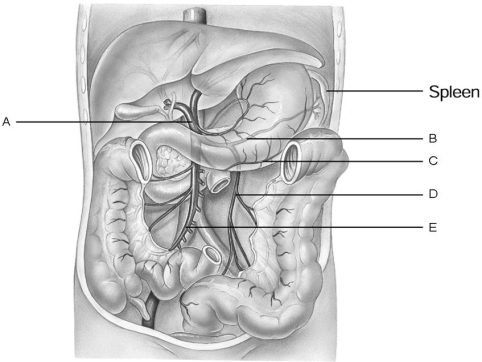 Figure 19.2
Using Figure 19.2, match the following:
A) E
B) B
C) D
D) C
E) A
Hepatic portal vein.

Question
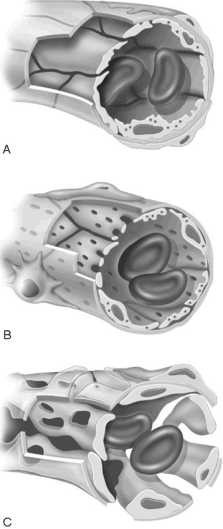
Figure 19.1
Using Figure 19.1, match the following:
A) A
B) B
C) C
Capillary that have a discontinuous,incomplete basement membrane.
Question
Question
Figure 19.1
Using Figure 19.1, match the following:
A) A
B) B
C) C
Capillary found where active capillary absorption of filtrate occurs.
Question
Figure 19.2Using Figure 19.2, match the following:
A) E
B) B
C) D
D) C
E) A
Splenic vein.
Question
Figure 19.1
Using Figure 19.1, match the following:
A) A
B) B
C) C
Sinusoid capillary.
Question
Question
Question
Figure 19.2Using Figure 19.2, match the following:
A) E
B) B
C) D
D) C
E) A
Superior mesenteric vein.
Question
Question
Figure 19.1
Using Figure 19.1, match the following:
A) A
B) B
C) C
Capillary found in endocrine organs that allows hormones to gain rapid entry into the blood.
Question
Question
Figure 19.1
Using Figure 19.1, match the following:
A) A
B) B
C) C
Capillary with intercellular clefts found in the skin and muscles.
Question
Figure 19.2Using Figure 19.2, match the following:
A) E
B) B
C) D
D) C
E) A
Right gastroepiploic vein.
Question
Question
Figure 19.2Using Figure 19.2, match the following:
A) E
B) B
C) D
D) C
E) A
Inferior mesenteric vein.
Question
Question
Question
Question
Question
Question
Question
Question
Question
Question
Question
Question
Question
Question
Question
Question
Question
Question
Question
Question
Question
Question
Question
Question
Question
Question
Question
Question
Question
Question
Question
Question
Question
Question
Question
Question
Question
Question
Question
Question
Question
Question
Question
Question
Question
Question
Question
Question
Question
Question
Question
Question
Question
Question
Question
Question
Question
Question
Question
Question
Question
Question
Question
Question

Unlock Deck
Sign up to unlock the cards in this deck!
Unlock Deck
Unlock Deck
1/133

Play

Full screen (f)
Deck 19: The Cardiovascular System: Blood Vessels
1
Figure 19.2Using Figure 19.2, match the following:
A) E
B) B
C) D
D) C
E) A
Hepatic portal vein.
E
2
Figure 19.1
Using Figure 19.1, match the following:
A) A
B) B
C) C
Capillary that have a discontinuous,incomplete basement membrane.
C
3
Match the following:
A) External iliac artery
B) Internal carotid artery
C) Brachiocephalic trunk
D) Celiac trunk
E) Radial artery
Gives rise to the right common carotid and right subclavian artery.
A) External iliac artery
B) Internal carotid artery
C) Brachiocephalic trunk
D) Celiac trunk
E) Radial artery
Gives rise to the right common carotid and right subclavian artery.
C
4
Figure 19.1
Using Figure 19.1, match the following:
A) A
B) B
C) C
Capillary found where active capillary absorption of filtrate occurs.
Unlock Deck
Unlock for access to all 133 flashcards in this deck.
Unlock Deck
k this deck
5
Figure 19.2Using Figure 19.2, match the following:
A) E
B) B
C) D
D) C
E) A
Splenic vein.
Unlock Deck
Unlock for access to all 133 flashcards in this deck.
Unlock Deck
k this deck
6
Figure 19.1
Using Figure 19.1, match the following:
A) A
B) B
C) C
Sinusoid capillary.
Unlock Deck
Unlock for access to all 133 flashcards in this deck.
Unlock Deck
k this deck
7
Match the following:
A) Inferior mesenteric artery
B) Internal iliac artery
C) Common hepatic artery
D) Renal artery
E) Aorta
Supplies the duodenum and stomach.
A) Inferior mesenteric artery
B) Internal iliac artery
C) Common hepatic artery
D) Renal artery
E) Aorta
Supplies the duodenum and stomach.
Unlock Deck
Unlock for access to all 133 flashcards in this deck.
Unlock Deck
k this deck
8
Match the following:
A) Inferior mesenteric artery
B) Internal iliac artery
C) Common hepatic artery
D) Renal artery
E) Aorta
Supplies the distal areas of the large intestine.
A) Inferior mesenteric artery
B) Internal iliac artery
C) Common hepatic artery
D) Renal artery
E) Aorta
Supplies the distal areas of the large intestine.
Unlock Deck
Unlock for access to all 133 flashcards in this deck.
Unlock Deck
k this deck
9
Figure 19.2Using Figure 19.2, match the following:
A) E
B) B
C) D
D) C
E) A
Superior mesenteric vein.
Unlock Deck
Unlock for access to all 133 flashcards in this deck.
Unlock Deck
k this deck
10
Match the following:
A) External iliac artery
B) Internal carotid artery
C) Brachiocephalic trunk
D) Celiac trunk
E) Radial artery
Supplies a lower limb.
A) External iliac artery
B) Internal carotid artery
C) Brachiocephalic trunk
D) Celiac trunk
E) Radial artery
Supplies a lower limb.
Unlock Deck
Unlock for access to all 133 flashcards in this deck.
Unlock Deck
k this deck
11
Figure 19.1
Using Figure 19.1, match the following:
A) A
B) B
C) C
Capillary found in endocrine organs that allows hormones to gain rapid entry into the blood.
Unlock Deck
Unlock for access to all 133 flashcards in this deck.
Unlock Deck
k this deck
12
Match the following:
A) Inferior mesenteric artery
B) Internal iliac artery
C) Common hepatic artery
D) Renal artery
E) Aorta
Largest artery of the body.
A) Inferior mesenteric artery
B) Internal iliac artery
C) Common hepatic artery
D) Renal artery
E) Aorta
Largest artery of the body.
Unlock Deck
Unlock for access to all 133 flashcards in this deck.
Unlock Deck
k this deck
13
Figure 19.1
Using Figure 19.1, match the following:
A) A
B) B
C) C
Capillary with intercellular clefts found in the skin and muscles.
Unlock Deck
Unlock for access to all 133 flashcards in this deck.
Unlock Deck
k this deck
14
Figure 19.2Using Figure 19.2, match the following:
A) E
B) B
C) D
D) C
E) A
Right gastroepiploic vein.
Unlock Deck
Unlock for access to all 133 flashcards in this deck.
Unlock Deck
k this deck
15
Match the following:
A) Inferior mesenteric artery
B) Internal iliac artery
C) Common hepatic artery
D) Renal artery
E) Aorta
Artery that does not anastomose.
A) Inferior mesenteric artery
B) Internal iliac artery
C) Common hepatic artery
D) Renal artery
E) Aorta
Artery that does not anastomose.
Unlock Deck
Unlock for access to all 133 flashcards in this deck.
Unlock Deck
k this deck
16
Figure 19.2Using Figure 19.2, match the following:
A) E
B) B
C) D
D) C
E) A
Inferior mesenteric vein.
Unlock Deck
Unlock for access to all 133 flashcards in this deck.
Unlock Deck
k this deck
17
Match the following:
A) Inferior mesenteric artery
B) Internal iliac artery
C) Common hepatic artery
D) Renal artery
E) Aorta
Supplies pelvic structures.
A) Inferior mesenteric artery
B) Internal iliac artery
C) Common hepatic artery
D) Renal artery
E) Aorta
Supplies pelvic structures.
Unlock Deck
Unlock for access to all 133 flashcards in this deck.
Unlock Deck
k this deck
18
Match the following:
A) Inferior mesenteric artery
B) Internal iliac artery
C) Common hepatic artery
D) Renal artery
E) Aorta
Supplies the kidney.
A) Inferior mesenteric artery
B) Internal iliac artery
C) Common hepatic artery
D) Renal artery
E) Aorta
Supplies the kidney.
Unlock Deck
Unlock for access to all 133 flashcards in this deck.
Unlock Deck
k this deck
19
Match the following:
A) External iliac artery
B) Internal carotid artery
C) Brachiocephalic trunk
D) Celiac trunk
E) Radial artery
Common site to take the pulse.
A) External iliac artery
B) Internal carotid artery
C) Brachiocephalic trunk
D) Celiac trunk
E) Radial artery
Common site to take the pulse.
Unlock Deck
Unlock for access to all 133 flashcards in this deck.
Unlock Deck
k this deck
20
Match the following:
A) External iliac artery
B) Internal carotid artery
C) Brachiocephalic trunk
D) Celiac trunk
E) Radial artery
Major supply to the cerebral hemispheres.
A) External iliac artery
B) Internal carotid artery
C) Brachiocephalic trunk
D) Celiac trunk
E) Radial artery
Major supply to the cerebral hemispheres.
Unlock Deck
Unlock for access to all 133 flashcards in this deck.
Unlock Deck
k this deck
21
Match the following:
A) Circulatory shock
B) Cardiogenic shock
C) Hypovolemic shock
D) Vascular shock
Results from heart inability to sustain adequate circulation due to myocardial damage.
A) Circulatory shock
B) Cardiogenic shock
C) Hypovolemic shock
D) Vascular shock
Results from heart inability to sustain adequate circulation due to myocardial damage.
Unlock Deck
Unlock for access to all 133 flashcards in this deck.
Unlock Deck
k this deck
22
Match the following:
A) Superior mesenteric artery
B) Brachial artery
C) Pulmonary vein
D) Femoral artery
E) Great saphenous vein
Carries oxygen-rich blood from the lungs.
A) Superior mesenteric artery
B) Brachial artery
C) Pulmonary vein
D) Femoral artery
E) Great saphenous vein
Carries oxygen-rich blood from the lungs.
Unlock Deck
Unlock for access to all 133 flashcards in this deck.
Unlock Deck
k this deck
23
Match the following:
A) Large arteries
B) Large veins
C) Capillaries
D) Large arteries
E) Arterioles
Site where exchanges of food and gases are made.
A) Large arteries
B) Large veins
C) Capillaries
D) Large arteries
E) Arterioles
Site where exchanges of food and gases are made.
Unlock Deck
Unlock for access to all 133 flashcards in this deck.
Unlock Deck
k this deck
24
Match the following:
A) Superior mesenteric artery
B) Brachial artery
C) Pulmonary vein
D) Femoral artery
E) Great saphenous vein
Supplies the small intestine.
A) Superior mesenteric artery
B) Brachial artery
C) Pulmonary vein
D) Femoral artery
E) Great saphenous vein
Supplies the small intestine.
Unlock Deck
Unlock for access to all 133 flashcards in this deck.
Unlock Deck
k this deck
25
Match the following:
A) Large arteries
B) Large veins
C) Capillaries
D) Large arteries
E) Arterioles
Site that is the major determinant of peripheral resistance.
A) Large arteries
B) Large veins
C) Capillaries
D) Large arteries
E) Arterioles
Site that is the major determinant of peripheral resistance.
Unlock Deck
Unlock for access to all 133 flashcards in this deck.
Unlock Deck
k this deck
26
Match the following:
A) Large arteries
B) Large veins
C) Capillaries
D) Large arteries
E) Arterioles
Site where the blood volume is greatest.
A) Large arteries
B) Large veins
C) Capillaries
D) Large arteries
E) Arterioles
Site where the blood volume is greatest.
Unlock Deck
Unlock for access to all 133 flashcards in this deck.
Unlock Deck
k this deck
27
Match the following:
A) Superior mesenteric artery
B) Brachial artery
C) Pulmonary vein
D) Femoral artery
E) Great saphenous vein
Artery usually ausculated to take the blood pressure.
A) Superior mesenteric artery
B) Brachial artery
C) Pulmonary vein
D) Femoral artery
E) Great saphenous vein
Artery usually ausculated to take the blood pressure.
Unlock Deck
Unlock for access to all 133 flashcards in this deck.
Unlock Deck
k this deck
28
Match the following:
A) Large arteries
B) Large veins
C) Capillaries
D) Large arteries
E) Arterioles
Site where the velocity of blood flow is fastest.
A) Large arteries
B) Large veins
C) Capillaries
D) Large arteries
E) Arterioles
Site where the velocity of blood flow is fastest.
Unlock Deck
Unlock for access to all 133 flashcards in this deck.
Unlock Deck
k this deck
29
Match the following:
A) Superior mesenteric artery
B) Brachial artery
C) Pulmonary vein
D) Femoral artery
E) Great saphenous vein
Vessel commonly used as a coronary bypass vessel.
A) Superior mesenteric artery
B) Brachial artery
C) Pulmonary vein
D) Femoral artery
E) Great saphenous vein
Vessel commonly used as a coronary bypass vessel.
Unlock Deck
Unlock for access to all 133 flashcards in this deck.
Unlock Deck
k this deck
30
Match the following:
A) External iliac artery
B) Internal carotid artery
C) Brachiocephalic trunk
D) Celiac trunk
E) Radial artery
Large unpaired branch of the abdominal aorta that supplies the liver,stomach,and spleen.
A) External iliac artery
B) Internal carotid artery
C) Brachiocephalic trunk
D) Celiac trunk
E) Radial artery
Large unpaired branch of the abdominal aorta that supplies the liver,stomach,and spleen.
Unlock Deck
Unlock for access to all 133 flashcards in this deck.
Unlock Deck
k this deck
31
Match the following:
A) External jugular vein
B) Pulmonary trunk
C) Superior vena cava
D) Subclavian vein
E) Axillary artery
Carries oxygen-poor blood to the lungs.
A) External jugular vein
B) Pulmonary trunk
C) Superior vena cava
D) Subclavian vein
E) Axillary artery
Carries oxygen-poor blood to the lungs.
Unlock Deck
Unlock for access to all 133 flashcards in this deck.
Unlock Deck
k this deck
32
Match the following:
A) External jugular vein
B) Pulmonary trunk
C) Superior vena cava
D) Subclavian vein
E) Axillary artery
Drains the scalp.
A) External jugular vein
B) Pulmonary trunk
C) Superior vena cava
D) Subclavian vein
E) Axillary artery
Drains the scalp.
Unlock Deck
Unlock for access to all 133 flashcards in this deck.
Unlock Deck
k this deck
33
Match the following:
A) External jugular vein
B) Pulmonary trunk
C) Superior vena cava
D) Subclavian vein
E) Axillary artery
Drains an upper extremity,a deep vein.
A) External jugular vein
B) Pulmonary trunk
C) Superior vena cava
D) Subclavian vein
E) Axillary artery
Drains an upper extremity,a deep vein.
Unlock Deck
Unlock for access to all 133 flashcards in this deck.
Unlock Deck
k this deck
34
Match the following:
A) Large arteries
B) Large veins
C) Capillaries
D) Large arteries
E) Arterioles
Site where the velocity of blood flow is slowest.
A) Large arteries
B) Large veins
C) Capillaries
D) Large arteries
E) Arterioles
Site where the velocity of blood flow is slowest.
Unlock Deck
Unlock for access to all 133 flashcards in this deck.
Unlock Deck
k this deck
35
Match the following:
A) Large arteries
B) Large veins
C) Capillaries
D) Large arteries
E) Arterioles
Site where resistance to blood flow is greatest.
A) Large arteries
B) Large veins
C) Capillaries
D) Large arteries
E) Arterioles
Site where resistance to blood flow is greatest.
Unlock Deck
Unlock for access to all 133 flashcards in this deck.
Unlock Deck
k this deck
36
Match the following:
A) Large arteries
B) Large veins
C) Capillaries
D) Large arteries
E) Arterioles
Site where blood pressure is lowest.
A) Large arteries
B) Large veins
C) Capillaries
D) Large arteries
E) Arterioles
Site where blood pressure is lowest.
Unlock Deck
Unlock for access to all 133 flashcards in this deck.
Unlock Deck
k this deck
37
Match the following:
A) External jugular vein
B) Pulmonary trunk
C) Superior vena cava
D) Subclavian vein
E) Axillary artery
Runs through the armpit area,giving off branches to the axillae,chest wall,and shoulder girdle.
A) External jugular vein
B) Pulmonary trunk
C) Superior vena cava
D) Subclavian vein
E) Axillary artery
Runs through the armpit area,giving off branches to the axillae,chest wall,and shoulder girdle.
Unlock Deck
Unlock for access to all 133 flashcards in this deck.
Unlock Deck
k this deck
38
Match the following:
A) External jugular vein
B) Pulmonary trunk
C) Superior vena cava
D) Subclavian vein
E) Axillary artery
Receives blood from all areas superior to the diaphragm,except the heart wall.
A) External jugular vein
B) Pulmonary trunk
C) Superior vena cava
D) Subclavian vein
E) Axillary artery
Receives blood from all areas superior to the diaphragm,except the heart wall.
Unlock Deck
Unlock for access to all 133 flashcards in this deck.
Unlock Deck
k this deck
39
Match the following:
A) Large arteries
B) Large veins
C) Capillaries
D) Large arteries
E) Arterioles
Site where the blood pressure is greatest.
A) Large arteries
B) Large veins
C) Capillaries
D) Large arteries
E) Arterioles
Site where the blood pressure is greatest.
Unlock Deck
Unlock for access to all 133 flashcards in this deck.
Unlock Deck
k this deck
40
Match the following:
A) Superior mesenteric artery
B) Brachial artery
C) Pulmonary vein
D) Femoral artery
E) Great saphenous vein
Major artery of the thigh.
A) Superior mesenteric artery
B) Brachial artery
C) Pulmonary vein
D) Femoral artery
E) Great saphenous vein
Major artery of the thigh.
Unlock Deck
Unlock for access to all 133 flashcards in this deck.
Unlock Deck
k this deck
41
During a marathon which of the following hormones is least likely to be released by the runner?
A) epinephrine
B) antidiuretic hormone (ADH)
C) angiotensin II
D) atrial natriuretic peptide (ANP)
A) epinephrine
B) antidiuretic hormone (ADH)
C) angiotensin II
D) atrial natriuretic peptide (ANP)
Unlock Deck
Unlock for access to all 133 flashcards in this deck.
Unlock Deck
k this deck
42
Arteries supplying the same territory are often merged with one another,forming arterial anastomoses.
Unlock Deck
Unlock for access to all 133 flashcards in this deck.
Unlock Deck
k this deck
43
An increase in blood viscosity will cause an increase in peripheral resistance.
Unlock Deck
Unlock for access to all 133 flashcards in this deck.
Unlock Deck
k this deck
44
Match the following:
A) Circulatory shock
B) Cardiogenic shock
C) Hypovolemic shock
D) Vascular shock
Due to large-scale blood loss.
A) Circulatory shock
B) Cardiogenic shock
C) Hypovolemic shock
D) Vascular shock
Due to large-scale blood loss.
Unlock Deck
Unlock for access to all 133 flashcards in this deck.
Unlock Deck
k this deck
45
The pulmonary circulation does not directly serve the metabolic needs of body tissues.
Unlock Deck
Unlock for access to all 133 flashcards in this deck.
Unlock Deck
k this deck
46
If a person stands up suddenly from the prone (lying)position they may feel a sudden dizzy or lightheadedness.Which of the following is the least likely physiological response to this situation?
A) increased sympathetic output to the heart
B) faster heart rate and greater heart contractility
C) increased parasympathetic nerve impulses to the heart
D) increasing peripheral resistance due to vasoconstriction
A) increased sympathetic output to the heart
B) faster heart rate and greater heart contractility
C) increased parasympathetic nerve impulses to the heart
D) increasing peripheral resistance due to vasoconstriction
Unlock Deck
Unlock for access to all 133 flashcards in this deck.
Unlock Deck
k this deck
47
A person suddenly gaining significant amounts of adipose tissue can expect all of the following physiological changes except one.Which of the following is least likely to occur with a sudden and significant gain in adipose tissue?
A) increased angiogenesis and higher peripheral resistance
B) higher peripheral resistance and higher blood pressure
C) increased risk of developing atherosclerosis
D) lower heart rate and reduced blood flow
A) increased angiogenesis and higher peripheral resistance
B) higher peripheral resistance and higher blood pressure
C) increased risk of developing atherosclerosis
D) lower heart rate and reduced blood flow
Unlock Deck
Unlock for access to all 133 flashcards in this deck.
Unlock Deck
k this deck
48
If a person were to have substantial blood loss you would expect to see all of the following physiological events to except one.Select the least likely response to substantial blood loss.
A) increasing vasomotor tone
B) decreased heart rate
C) increases peripheral resistance
D) a weak, thread pulse
A) increasing vasomotor tone
B) decreased heart rate
C) increases peripheral resistance
D) a weak, thread pulse
Unlock Deck
Unlock for access to all 133 flashcards in this deck.
Unlock Deck
k this deck
49
Arterial pressure in the pulmonary circulation is much higher than in the systemic circulation because of its proximity to the heart.
Unlock Deck
Unlock for access to all 133 flashcards in this deck.
Unlock Deck
k this deck
50
Match the following:
A) Circulatory shock
B) Cardiogenic shock
C) Hypovolemic shock
D) Vascular shock
Due to inadequate blood flow to meet tissue needs.
A) Circulatory shock
B) Cardiogenic shock
C) Hypovolemic shock
D) Vascular shock
Due to inadequate blood flow to meet tissue needs.
Unlock Deck
Unlock for access to all 133 flashcards in this deck.
Unlock Deck
k this deck
51
The carotid sinus reflex protects the blood supply to the brain,whereas the aortic reflex is more concerned with maintaining adequate blood pressure in the systemic circuit as a whole.
Unlock Deck
Unlock for access to all 133 flashcards in this deck.
Unlock Deck
k this deck
52
Which of the following would not be expected from taking a diuretic drug?
A) decreased blood pressure
B) greater stress on the heart to provide adequate perfusion
C) increased urine output
D) lower plasma volume
A) decreased blood pressure
B) greater stress on the heart to provide adequate perfusion
C) increased urine output
D) lower plasma volume
Unlock Deck
Unlock for access to all 133 flashcards in this deck.
Unlock Deck
k this deck
53
A drug that restricts the activity of angiotensin converting enzyme (ACE)would like result in all of the following physiologic changes but one.Which of the following is the least likely to result from a drug blocking ACE activity?
A) decreased peripheral resistance due to decreases vasomotor tone
B) lower levels of circulating aldosterone and lowered sodium reabsorption
C) increased thirst and higher blood volume
D) increased urine output due to reduction in circulating antidiuretic hormone (ADH)
A) decreased peripheral resistance due to decreases vasomotor tone
B) lower levels of circulating aldosterone and lowered sodium reabsorption
C) increased thirst and higher blood volume
D) increased urine output due to reduction in circulating antidiuretic hormone (ADH)
Unlock Deck
Unlock for access to all 133 flashcards in this deck.
Unlock Deck
k this deck
54
An obstruction in the superior vena cava would decrease the flow of blood from the head and neck to the heart.
Unlock Deck
Unlock for access to all 133 flashcards in this deck.
Unlock Deck
k this deck
55
Reduction in the concentration of albumin in blood plasma would alter capillary exchange by ________.
A) increasing hydrostatic pressure and blood volume, blood pressure increases
B) decreasing colloid osmotic pressure and edema will occur
C) increasing hydrostatic pressure and edema will occur
D) decreasing colloid osmotic pressure and blood volume, blood pressure increases
A) increasing hydrostatic pressure and blood volume, blood pressure increases
B) decreasing colloid osmotic pressure and edema will occur
C) increasing hydrostatic pressure and edema will occur
D) decreasing colloid osmotic pressure and blood volume, blood pressure increases
Unlock Deck
Unlock for access to all 133 flashcards in this deck.
Unlock Deck
k this deck
56
Match the following:
A) Circulatory shock
B) Cardiogenic shock
C) Hypovolemic shock
D) Vascular shock
Normal blood volume but poor circulation due to extreme vasodilation.
A) Circulatory shock
B) Cardiogenic shock
C) Hypovolemic shock
D) Vascular shock
Normal blood volume but poor circulation due to extreme vasodilation.
Unlock Deck
Unlock for access to all 133 flashcards in this deck.
Unlock Deck
k this deck
57
Whereas diffusion is more important for solute exchange between plasma and interstitial fluid,bulk flow is more important for regulation of the relative volumes of blood and interstitial fluid.
Unlock Deck
Unlock for access to all 133 flashcards in this deck.
Unlock Deck
k this deck
58
The adjustment of blood flow to each tissue in proportion to its requirements at any point in time is termed autoregulation.
Unlock Deck
Unlock for access to all 133 flashcards in this deck.
Unlock Deck
k this deck
59
The cerebral arterial circle (circle of Willis)is an arterial anastomosis.
Unlock Deck
Unlock for access to all 133 flashcards in this deck.
Unlock Deck
k this deck
60
Osmotic pressure is created by the presence in a fluid of small diffusible molecules that easily move through the capillary membrane.
Unlock Deck
Unlock for access to all 133 flashcards in this deck.
Unlock Deck
k this deck
61
Which statement best describes arteries?
A) Only large arteries are lined with endothelium.
B) All contain valves to prevent the backflow of blood.
C) All carry blood away from the heart.
D) All carry oxygenated blood to the heart.
A) Only large arteries are lined with endothelium.
B) All contain valves to prevent the backflow of blood.
C) All carry blood away from the heart.
D) All carry oxygenated blood to the heart.
Unlock Deck
Unlock for access to all 133 flashcards in this deck.
Unlock Deck
k this deck
62
Which of the following signs of hypovolemic shock is a relatively late sign?
A) increased heart rate
B) cold, clammy skin
C) rapidly falling blood pressure
D) rapid, thready pulse
A) increased heart rate
B) cold, clammy skin
C) rapidly falling blood pressure
D) rapid, thready pulse
Unlock Deck
Unlock for access to all 133 flashcards in this deck.
Unlock Deck
k this deck
63
Which of the following is most likely to occur in the arteriovenous shuts present in the blood vessels of the finger tips and toes?
A) Exercise will result in vasoconstriction in the arteriovenous shuts.
B) Warmer temperatures will result in vasoconstriction in the arteriovenous shuts.
C) Colder temperatures will result in vasodilation in the arteriovenous shuts.
D) Colder temperatures will result in vasoconstriction in the arteriovenous shuts.
A) Exercise will result in vasoconstriction in the arteriovenous shuts.
B) Warmer temperatures will result in vasoconstriction in the arteriovenous shuts.
C) Colder temperatures will result in vasodilation in the arteriovenous shuts.
D) Colder temperatures will result in vasoconstriction in the arteriovenous shuts.
Unlock Deck
Unlock for access to all 133 flashcards in this deck.
Unlock Deck
k this deck
64
Which of the following would have the least influence on blood pressure?
A) peripheral resistance
B) cardiac output
C) white blood cell count
D) blood volume
A) peripheral resistance
B) cardiac output
C) white blood cell count
D) blood volume
Unlock Deck
Unlock for access to all 133 flashcards in this deck.
Unlock Deck
k this deck
65
Which of the following would not promote filtration from the arteriole end of the capillary bed?
A) increasing blood pressure
B) reducing hydrostatic pressure within the interstitial fluid
C) increasing plasma protein concentration
D) relaxing precapillary sphincters
A) increasing blood pressure
B) reducing hydrostatic pressure within the interstitial fluid
C) increasing plasma protein concentration
D) relaxing precapillary sphincters
Unlock Deck
Unlock for access to all 133 flashcards in this deck.
Unlock Deck
k this deck
66
The pulse pressure is ________.
A) systolic pressure divided by diastolic pressure
B) systolic pressure plus diastolic pressure
C) diastolic pressure plus 1/3 (systolic pressure plus diastolic pressure)
D) systolic pressure minus diastolic pressure
A) systolic pressure divided by diastolic pressure
B) systolic pressure plus diastolic pressure
C) diastolic pressure plus 1/3 (systolic pressure plus diastolic pressure)
D) systolic pressure minus diastolic pressure
Unlock Deck
Unlock for access to all 133 flashcards in this deck.
Unlock Deck
k this deck
67
Which of the following would not promote reabsorption from the venous end of the capillary bed?
A) increasing solute concentration in the nearby interstitial fluid
B) decreasing hydrostatic pressure of the blood.
C) reducing solute concentration in the nearby interstitial fluid
D) increasing solute concentration in the plasma of the circulating blood
A) increasing solute concentration in the nearby interstitial fluid
B) decreasing hydrostatic pressure of the blood.
C) reducing solute concentration in the nearby interstitial fluid
D) increasing solute concentration in the plasma of the circulating blood
Unlock Deck
Unlock for access to all 133 flashcards in this deck.
Unlock Deck
k this deck
68
The velocity and pressure of blood is slowest and lowest in the capillary beds.Which of the following is not an accurate description of the benefits of slow,low pressure blood in the capillary beds?
A) Lower pressure on the venus end of the capillary bed allows for greater reabsorption of fluid back to the plasma.
B) Slower blood flow through capillaries allows more time for diffusion to take place in the capillary bed.
C) Lower pressure in the capillary bed helps to increase pressure in the venus circulation.
D) Lower pressure reduces the chance of injury to delicate capillary vessels.
A) Lower pressure on the venus end of the capillary bed allows for greater reabsorption of fluid back to the plasma.
B) Slower blood flow through capillaries allows more time for diffusion to take place in the capillary bed.
C) Lower pressure in the capillary bed helps to increase pressure in the venus circulation.
D) Lower pressure reduces the chance of injury to delicate capillary vessels.
Unlock Deck
Unlock for access to all 133 flashcards in this deck.
Unlock Deck
k this deck
69
Which of the following best describes the benefit of the vasomotion process?
A) It provides a balance between adequate perfusion to all of the tissues while maintaining blood's pressure.
B) It allows for rapid increase in blood flow to vital organs during fight or flight response.
C) It decreases hydrostatic pressure while also increasing osmotic pressure to enhance reabsorption.
D) It lowers blood's pressure by reducing the distribution of blood flow to all of the tissues in the capillary bed.
A) It provides a balance between adequate perfusion to all of the tissues while maintaining blood's pressure.
B) It allows for rapid increase in blood flow to vital organs during fight or flight response.
C) It decreases hydrostatic pressure while also increasing osmotic pressure to enhance reabsorption.
D) It lowers blood's pressure by reducing the distribution of blood flow to all of the tissues in the capillary bed.
Unlock Deck
Unlock for access to all 133 flashcards in this deck.
Unlock Deck
k this deck
70
Which of the following statements is not true of the precapillary sphincters?
A) They decrease the osmotic pressure in the thoroughfare channel.
B) They increase or decrease rates of perfusion to the tissues served by the true capillaries.
C) They allow blood to bypass the true capillaries that are fed by the metarteriole.
D) They regulate the flow of blood to tissues served by the true capillaries.
A) They decrease the osmotic pressure in the thoroughfare channel.
B) They increase or decrease rates of perfusion to the tissues served by the true capillaries.
C) They allow blood to bypass the true capillaries that are fed by the metarteriole.
D) They regulate the flow of blood to tissues served by the true capillaries.
Unlock Deck
Unlock for access to all 133 flashcards in this deck.
Unlock Deck
k this deck
71
Each of the following describes the action of aldosterone except one.Which of the following does not describe the activity of aldosterone hormone?
A) It will result in higher sodium levels in the urine.
B) It promotes an increase in blood pressure.
C) It promotes an increase in sodium reabsorption from the kidney to the blood.
D) It will reduce urine output.
A) It will result in higher sodium levels in the urine.
B) It promotes an increase in blood pressure.
C) It promotes an increase in sodium reabsorption from the kidney to the blood.
D) It will reduce urine output.
Unlock Deck
Unlock for access to all 133 flashcards in this deck.
Unlock Deck
k this deck
72
Which of the following chemicals effects blood pressure for both the short and long term?
A) atrial natriuretic peptide
B) angiotensin II
C) nitric acid
D) aldosterone
A) atrial natriuretic peptide
B) angiotensin II
C) nitric acid
D) aldosterone
Unlock Deck
Unlock for access to all 133 flashcards in this deck.
Unlock Deck
k this deck
73
The aorta receives the full force of blood exiting the heart during ventricular systole.Which of the following statements best describes the adaptive anatomy of the aorta?
A) Smooth muscle is relatively thin in the aorta to increase lumen size and systemic blood flow.
B) Elastic fibers are extensive in the tunica media of the aorta and dampen the pulse pressure generated by the heart.
C) The aorta's tunica media is thick with dense regular connective tissue to withstand the blood's pressure.
D) The tunica external of the aorta is nearly absent compared to other vessels.
A) Smooth muscle is relatively thin in the aorta to increase lumen size and systemic blood flow.
B) Elastic fibers are extensive in the tunica media of the aorta and dampen the pulse pressure generated by the heart.
C) The aorta's tunica media is thick with dense regular connective tissue to withstand the blood's pressure.
D) The tunica external of the aorta is nearly absent compared to other vessels.
Unlock Deck
Unlock for access to all 133 flashcards in this deck.
Unlock Deck
k this deck
74
In general it is expected that ________.
A) osmotic pressure will be lower in the arteriole end of the capillary bed compared to the venous end
B) hydrostatic pressure will rise as blood moves away from the arteriole end of the capillary bed
C) hydrostatic pressure will drop as blood moves away from the arteriole end of the capillary bed
D) hydrostatic pressure will remain constant throughout the capillary bed
A) osmotic pressure will be lower in the arteriole end of the capillary bed compared to the venous end
B) hydrostatic pressure will rise as blood moves away from the arteriole end of the capillary bed
C) hydrostatic pressure will drop as blood moves away from the arteriole end of the capillary bed
D) hydrostatic pressure will remain constant throughout the capillary bed
Unlock Deck
Unlock for access to all 133 flashcards in this deck.
Unlock Deck
k this deck
75
In general it is expected that ________.
A) hydrostatic pressure will remain constant throughout the capillary bed
B) osmotic pressure will be higher in the arteriole end of the capillary bed compared to the venous end
C) osmotic pressure will be lower in the arteriole end of the capillary bed compared to the venous end
D) osmotic pressure will remain relatively consistent throughout the capillary bed
A) hydrostatic pressure will remain constant throughout the capillary bed
B) osmotic pressure will be higher in the arteriole end of the capillary bed compared to the venous end
C) osmotic pressure will be lower in the arteriole end of the capillary bed compared to the venous end
D) osmotic pressure will remain relatively consistent throughout the capillary bed
Unlock Deck
Unlock for access to all 133 flashcards in this deck.
Unlock Deck
k this deck
76
Permitting the exchange of nutrients and gases between the blood and tissue cells is the primary function of ________.
A) capillaries
B) arterioles
C) veins
D) arteries
A) capillaries
B) arterioles
C) veins
D) arteries
Unlock Deck
Unlock for access to all 133 flashcards in this deck.
Unlock Deck
k this deck
77
In the brain the fluid that filters out of capillaries is highly regulated.You would expect to see ________ feeding the brain.
A) continuous capillaries, with no intercellular clefts
B) sinusoid capillaries, with incomplete basement membrane
C) fenestrated capillaries, with thin diaphragms made of extracellular glycoproteins
D) metarterioles leading directly to thoroughfare cannels
A) continuous capillaries, with no intercellular clefts
B) sinusoid capillaries, with incomplete basement membrane
C) fenestrated capillaries, with thin diaphragms made of extracellular glycoproteins
D) metarterioles leading directly to thoroughfare cannels
Unlock Deck
Unlock for access to all 133 flashcards in this deck.
Unlock Deck
k this deck
78
Which of the following statements regarding the hepatic portal system is false?
A) Its major vessels are the superior mesenteric, inferior mesenteric, and splenic veins.
B) It consists of a vein connecting two capillary beds together.
C) It carries nutrients, toxins, and microorganisms to the liver for processing.
D) It branches off of the inferior vena cava.
A) Its major vessels are the superior mesenteric, inferior mesenteric, and splenic veins.
B) It consists of a vein connecting two capillary beds together.
C) It carries nutrients, toxins, and microorganisms to the liver for processing.
D) It branches off of the inferior vena cava.
Unlock Deck
Unlock for access to all 133 flashcards in this deck.
Unlock Deck
k this deck
79
The arteries that are also called distributing arteries are the ________.
A) elastic arteries
B) arterioles
C) muscular arteries
D) capillaries
A) elastic arteries
B) arterioles
C) muscular arteries
D) capillaries
Unlock Deck
Unlock for access to all 133 flashcards in this deck.
Unlock Deck
k this deck
80
In red bone marrow newly formed blood cells enter the circulation.You would expect to see many ________ type of capillaries in red bone marrow.
A) metarterioles
B) continuous capillaries
C) sinusoid capillaries
D) fenestrated capillaries
A) metarterioles
B) continuous capillaries
C) sinusoid capillaries
D) fenestrated capillaries
Unlock Deck
Unlock for access to all 133 flashcards in this deck.
Unlock Deck
k this deck
Unlock Deck
Unlock for access to all 133 flashcards in this deck.






