







 Chat with AI

Deck 16: Nutrition: the Basis of Healthy Living
Full screen (f)

Question

Question
Question
Question
Question
Question
Question
Question
Question
Question
Question
Question
Question
Question
Question
Question
Question
Question
Question
Question
Question
Question
Question
Question
Question
Question
Question
Question
Question
Question
Question
Question
Question
Question
Question
Question
Question
Question
Question
Question
Question
Question
Question
Consider the following food label. How many calories from fat would be found in 2 cups of this substance? 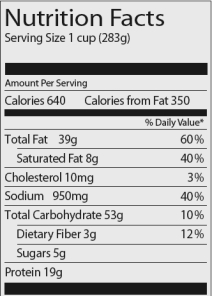
A) 39 cal
B) 350 cal
C) 700 cal
D) 420 cal
A) 39 cal
B) 350 cal
C) 700 cal
D) 420 cal
Question
Examine the structures given in each question. Based on their structure complete the following statements.
The following substance is an antioxidant and is known as _____ .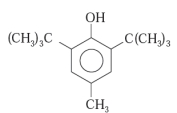
The following substance is an antioxidant and is known as _____ .
Question
Question
Question
Examine the structures given in each question. Based on their structure complete the following statements.
The following substance would be a ____-soluble vitamin.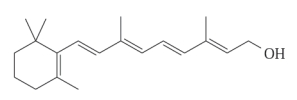
The following substance would be a ____-soluble vitamin.
Question
Question
Question
Consider the following food label. How many servings would be needed to provide 100% of the daily need for sodium? 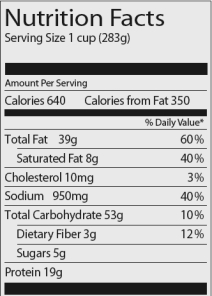
A) 1 serving
B) 1.5 servings
C) 2 servings
D) 2.5 servings
A) 1 serving
B) 1.5 servings
C) 2 servings
D) 2.5 servings
Question
Question
Question
Question
Question
Question
Examine the structures given in each question. Based on their structure complete the following statements.
A segment of cellulose is shown below. This is an example of __________ fiber .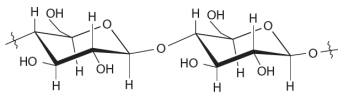
A segment of cellulose is shown below. This is an example of __________ fiber .
Question
Examine the structures given in each question. Based on their structure complete the following statements.
The following substance would be a ____-soluble vitamin.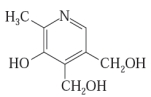
The following substance would be a ____-soluble vitamin.
Question
Question
Examine the structures given in each question. Based on their structure complete the following statements.
In the small intestine the following substance is broken down into __________ .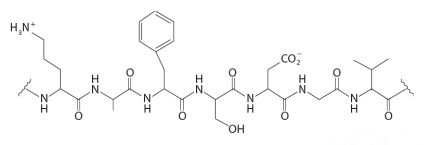
In the small intestine the following substance is broken down into __________ .
Question
Question

Unlock Deck
Sign up to unlock the cards in this deck!
Unlock Deck
Unlock Deck
1/61

Play

Full screen (f)
Deck 16: Nutrition: the Basis of Healthy Living
1
Which factor would not cause an increase in BMR?
A) caffeine
B) low food intake
C) lack of sleep
D) inactive tissue due to obesity
A) caffeine
B) low food intake
C) lack of sleep
D) inactive tissue due to obesity
inactive tissue due to obesity
2
The science that deals with diet and health is called
A) nutrition.
B) digestion.
C) metabolism.
D) basal metabolic rate.
A) nutrition.
B) digestion.
C) metabolism.
D) basal metabolic rate.
nutrition.
3
Which of the following vitamins is produced when ultraviolet light shines on the skin?
A) vitamin A
B) vitamin B
C) vitamin C
D) vitamin D
A) vitamin A
B) vitamin B
C) vitamin C
D) vitamin D
vitamin D
4
Consider a food that yields 300 kcal per serving of which 100 kcal are from fat. Which of the following could be used to calculate the percent from fat?
A) 9 300 100
B) (100 / 300) 100
C) (300 / 100) 100
D) [(300 - 100) / 300] 100
A) 9 300 100
B) (100 / 300) 100
C) (300 / 100) 100
D) [(300 - 100) / 300] 100
Unlock Deck
Unlock for access to all 61 flashcards in this deck.
Unlock Deck
k this deck
5
Which class of food nutrient is not an organic compound?
A) protein
B) mineral
C) vitamin
D) fat
A) protein
B) mineral
C) vitamin
D) fat
Unlock Deck
Unlock for access to all 61 flashcards in this deck.
Unlock Deck
k this deck
6
Which of the following list contains the abbreviation for "good" cholesterol and describes its function?
A) LDL, transports cholesterol to arteries
B) HDL, transports cholesterol to arteries
C) LDL, transports cholesterol to liver for excretion
D) HDL, transports cholesterol to liver for excretion
A) LDL, transports cholesterol to arteries
B) HDL, transports cholesterol to arteries
C) LDL, transports cholesterol to liver for excretion
D) HDL, transports cholesterol to liver for excretion
Unlock Deck
Unlock for access to all 61 flashcards in this deck.
Unlock Deck
k this deck
7
Which of the following is a water-soluble vitamin?
A) vitamin C
B) vitamin A
C) vitamin E
D) vitamin K
A) vitamin C
B) vitamin A
C) vitamin E
D) vitamin K
Unlock Deck
Unlock for access to all 61 flashcards in this deck.
Unlock Deck
k this deck
8
The vitamin also known as ascorbic acid is
A) vitamin E.
B) vitamin B.
C) vitamin C.
D) vitamin D.
A) vitamin E.
B) vitamin B.
C) vitamin C.
D) vitamin D.
Unlock Deck
Unlock for access to all 61 flashcards in this deck.
Unlock Deck
k this deck
9
Digestion converts carbohydrates into
A) amino acids.
B) fatty acids.
C) CO2 and H2O.
D) monosaccharides.
A) amino acids.
B) fatty acids.
C) CO2 and H2O.
D) monosaccharides.
Unlock Deck
Unlock for access to all 61 flashcards in this deck.
Unlock Deck
k this deck
10
It is known that copper or iron will catalyze decomposition of food. Consequently, if these metals are present, the food should contain these additives
A) anticaking agents.
B) flavor enhancers.
C) food colors.
D) sequestrants.
A) anticaking agents.
B) flavor enhancers.
C) food colors.
D) sequestrants.
Unlock Deck
Unlock for access to all 61 flashcards in this deck.
Unlock Deck
k this deck
11
A flavor enhancer is
A) MSG.
B) BHT.
C) an enzyme.
D) beta-carotene.
A) MSG.
B) BHT.
C) an enzyme.
D) beta-carotene.
Unlock Deck
Unlock for access to all 61 flashcards in this deck.
Unlock Deck
k this deck
12
Which of the following minerals is not a micronutrient?
A) iodide ion
B) calcium ion
C) iron
D) zinc
A) iodide ion
B) calcium ion
C) iron
D) zinc
Unlock Deck
Unlock for access to all 61 flashcards in this deck.
Unlock Deck
k this deck
13
Which of the following sets does not include at least one of the classes of nutrients?
A) water, carbohydrates
B) fats, vitamins
C) acids, bases
D) proteins, fats
A) water, carbohydrates
B) fats, vitamins
C) acids, bases
D) proteins, fats
Unlock Deck
Unlock for access to all 61 flashcards in this deck.
Unlock Deck
k this deck
14
Which of the following vitamins is an antioxidant?
A) vitamin A
B) vitamin B
C) vitamin K
D) vitamin E
A) vitamin A
B) vitamin B
C) vitamin K
D) vitamin E
Unlock Deck
Unlock for access to all 61 flashcards in this deck.
Unlock Deck
k this deck
15
Which activity requires the least expenditure of energy?
A) downhill skiing
B) listening to a lecture
C) showering
D) walking down stairs
A) downhill skiing
B) listening to a lecture
C) showering
D) walking down stairs
Unlock Deck
Unlock for access to all 61 flashcards in this deck.
Unlock Deck
k this deck
16
The reverse of photosynthesis is
A) burning glucose.
B) protein synthesis.
C) storing fat.
D) synthesizing ATP.
A) burning glucose.
B) protein synthesis.
C) storing fat.
D) synthesizing ATP.
Unlock Deck
Unlock for access to all 61 flashcards in this deck.
Unlock Deck
k this deck
17
The body's major fuel molecule(s) is(are)
A) sucrose.
B) triglycerides.
C) glucose.
D) amino acids.
A) sucrose.
B) triglycerides.
C) glucose.
D) amino acids.
Unlock Deck
Unlock for access to all 61 flashcards in this deck.
Unlock Deck
k this deck
18
Vitamin K
A) regulates blood clotting.
B) protects cell membranes from oxidation.
C) helps the body utilize calcium.
D) prevents rickets.
A) regulates blood clotting.
B) protects cell membranes from oxidation.
C) helps the body utilize calcium.
D) prevents rickets.
Unlock Deck
Unlock for access to all 61 flashcards in this deck.
Unlock Deck
k this deck
19
Which is an important indigestible carbohydrate in the diet?
A) amylose
B) cellulose
C) glycogen
D) glucose
A) amylose
B) cellulose
C) glycogen
D) glucose
Unlock Deck
Unlock for access to all 61 flashcards in this deck.
Unlock Deck
k this deck
20
A food Calorie is equal to how many small calories?
A) 1000 cal
B) 10 cal
C) 1 cal
D) 0.001 cal
A) 1000 cal
B) 10 cal
C) 1 cal
D) 0.001 cal
Unlock Deck
Unlock for access to all 61 flashcards in this deck.
Unlock Deck
k this deck
21
Identify a body nutrient among the following.
A) water
B) oxygen
C) nucleic acids
D) fatty acids
A) water
B) oxygen
C) nucleic acids
D) fatty acids
Unlock Deck
Unlock for access to all 61 flashcards in this deck.
Unlock Deck
k this deck
22
Which of the following foods produces more energy per gram of food?
A) sugar
B) fat
C) protein
D) starch
A) sugar
B) fat
C) protein
D) starch
Unlock Deck
Unlock for access to all 61 flashcards in this deck.
Unlock Deck
k this deck
23
Beneath the heavy line on nutritional labels there are mandatory listings. Which of the following is one of these substances?
A) vitamin C
B) vitamin A
C) calcium
D) iron
E) All of these substances are mandatory in the listing.
A) vitamin C
B) vitamin A
C) calcium
D) iron
E) All of these substances are mandatory in the listing.
Unlock Deck
Unlock for access to all 61 flashcards in this deck.
Unlock Deck
k this deck
24
Why may a calcium deficiency occur in some women after menopause?
A) They drink less milk.
B) There is less estrogen produced, resulting in bone dissolution and deterioration.
C) They have a lower BMR.
D) The pancreas decreases in function.
A) They drink less milk.
B) There is less estrogen produced, resulting in bone dissolution and deterioration.
C) They have a lower BMR.
D) The pancreas decreases in function.
Unlock Deck
Unlock for access to all 61 flashcards in this deck.
Unlock Deck
k this deck
25
To determine your personal BMR (in kcal per hour), multiply your
A) age by 10.
B) weight by 10.
C) age by your weight by 10.
D) age by 20.
A) age by 10.
B) weight by 10.
C) age by your weight by 10.
D) age by 20.
Unlock Deck
Unlock for access to all 61 flashcards in this deck.
Unlock Deck
k this deck
26
How does an antioxidant such as BHT work in foods?
A) It kills bacteria.
B) It donates a hydrogen atom to free radicals.
C) It surrounds metal ions and deactivates them.
D) It reacts with oxygen and thus prevents oxygen from reacting with fats.
A) It kills bacteria.
B) It donates a hydrogen atom to free radicals.
C) It surrounds metal ions and deactivates them.
D) It reacts with oxygen and thus prevents oxygen from reacting with fats.
Unlock Deck
Unlock for access to all 61 flashcards in this deck.
Unlock Deck
k this deck
27
When two food additives produce greater effects when used together than the sum of their individual effects when used separately, the two substances are said to be
A) catalytic
B) synergistic
C) competitive
D) potentiators
A) catalytic
B) synergistic
C) competitive
D) potentiators
Unlock Deck
Unlock for access to all 61 flashcards in this deck.
Unlock Deck
k this deck
28
Citric acid is a sequestrant in foods. As a sequestrant its principal function is to
A) neutralize bases.
B) complex oxygen.
C) keep foods moist.
D) tie up metal ions and prevent their catalytic effects.
A) neutralize bases.
B) complex oxygen.
C) keep foods moist.
D) tie up metal ions and prevent their catalytic effects.
Unlock Deck
Unlock for access to all 61 flashcards in this deck.
Unlock Deck
k this deck
29
The GRAS list of food additives is
A) a list of the only food additives that are absolutely safe to put into food.
B) a list of those food additives which are generally recognized as satisfactory to put into foods.
C) a safe list of foods originally put together by the World Health Organization.
D) a list of food additives generally recognized as safe by the Food and Drug Administration.
A) a list of the only food additives that are absolutely safe to put into food.
B) a list of those food additives which are generally recognized as satisfactory to put into foods.
C) a safe list of foods originally put together by the World Health Organization.
D) a list of food additives generally recognized as safe by the Food and Drug Administration.
Unlock Deck
Unlock for access to all 61 flashcards in this deck.
Unlock Deck
k this deck
30
Which is an example of a sequestrant?
A) EDTA
B) DTT
C) vitamin C
D) MSG
A) EDTA
B) DTT
C) vitamin C
D) MSG
Unlock Deck
Unlock for access to all 61 flashcards in this deck.
Unlock Deck
k this deck
31
How many Calories are in a sandwich that contains 5 g of fat, 25 g of carbohydrates, 7 g of protein and 3 g of fiber?
A) 173 Cal
B) 185 Cal
C) 148 Cal
D) 333 Cal
A) 173 Cal
B) 185 Cal
C) 148 Cal
D) 333 Cal
Unlock Deck
Unlock for access to all 61 flashcards in this deck.
Unlock Deck
k this deck
32
Bran, fruit pulp, and whole grains
A) provide bulk to move toxins out of the intestines.
B) are a complete diet recommended for fast weight reduction.
C) have nothing in common.
D) contain protein and fat only.
A) provide bulk to move toxins out of the intestines.
B) are a complete diet recommended for fast weight reduction.
C) have nothing in common.
D) contain protein and fat only.
Unlock Deck
Unlock for access to all 61 flashcards in this deck.
Unlock Deck
k this deck
33
What do antioxidants react with in foods?
A) water
B) microorganisms
C) free radicals
D) colors that cause cancer
A) water
B) microorganisms
C) free radicals
D) colors that cause cancer
Unlock Deck
Unlock for access to all 61 flashcards in this deck.
Unlock Deck
k this deck
34
Which mineral is important in bone and teeth health?
A) Na
B) K
C) Ca
D) Fe
A) Na
B) K
C) Ca
D) Fe
Unlock Deck
Unlock for access to all 61 flashcards in this deck.
Unlock Deck
k this deck
35
The basal metabolic rate (BMR) could be given as
A) how fast you can metabolize an ounce of sugar.
B) your basic requirement of energy for maintaining an inactive life.
C) your rate of metabolizing basal herb.
D) about 5000 kcal per hour for most adults.
A) how fast you can metabolize an ounce of sugar.
B) your basic requirement of energy for maintaining an inactive life.
C) your rate of metabolizing basal herb.
D) about 5000 kcal per hour for most adults.
Unlock Deck
Unlock for access to all 61 flashcards in this deck.
Unlock Deck
k this deck
36
Which of the following is a fat-soluble vitamin?
A) vitamin C
B) vitamin A
C) vitamin B
D) All are fat-soluble.
A) vitamin C
B) vitamin A
C) vitamin B
D) All are fat-soluble.
Unlock Deck
Unlock for access to all 61 flashcards in this deck.
Unlock Deck
k this deck
37
The digestion of fats results produces
A) amino acids.
B) fatty acids plus glycerol.
C) CO2 and H2O.
D) monosaccharides.
A) amino acids.
B) fatty acids plus glycerol.
C) CO2 and H2O.
D) monosaccharides.
Unlock Deck
Unlock for access to all 61 flashcards in this deck.
Unlock Deck
k this deck
38
Which activity among the following expends the most energy per hour?
A) slow bicycling
B) walking at a fast rate
C) standing
D) eating
A) slow bicycling
B) walking at a fast rate
C) standing
D) eating
Unlock Deck
Unlock for access to all 61 flashcards in this deck.
Unlock Deck
k this deck
39
Which is not one of the major categories of information required on a nutrition facts label?
A) food group
B) serving size
C) calories from fat
D) percent daily value for macronutrients
A) food group
B) serving size
C) calories from fat
D) percent daily value for macronutrients
Unlock Deck
Unlock for access to all 61 flashcards in this deck.
Unlock Deck
k this deck
40
Which vitamin is most easily destroyed or removed by food processing that involve freezing?
A) vitamin F
B) vitamin E
C) vitamin D
D) vitamin B
A) vitamin F
B) vitamin E
C) vitamin D
D) vitamin B
Unlock Deck
Unlock for access to all 61 flashcards in this deck.
Unlock Deck
k this deck
41
A blood serum cholesterol level of 240. mg/100 mL serum is considered to put a person at a high risk of heart disease. How much cholesterol in milligrams would be carried in the blood serum of a person with blood volume of 11.0 pints? (1 pint = 473 mL)
A) 103 mg
B) 1.25 × 10⁶ mg
C) 5.20 × 10³ mg
D) 12,500 mg
A) 103 mg
B) 1.25 × 10⁶ mg
C) 5.20 × 10³ mg
D) 12,500 mg
Unlock Deck
Unlock for access to all 61 flashcards in this deck.
Unlock Deck
k this deck
42
The following set of substances contains nutrients from three different nutrient groups.
sugars, starches, fats
sugars, starches, fats
Unlock Deck
Unlock for access to all 61 flashcards in this deck.
Unlock Deck
k this deck
43
Consider the following food label. How many calories from fat would be found in 2 cups of this substance?
A) 39 cal
B) 350 cal
C) 700 cal
D) 420 cal
A) 39 cal
B) 350 cal
C) 700 cal
D) 420 cal
Unlock Deck
Unlock for access to all 61 flashcards in this deck.
Unlock Deck
k this deck
44
Examine the structures given in each question. Based on their structure complete the following statements.
The following substance is an antioxidant and is known as _____ .
The following substance is an antioxidant and is known as _____ .
Unlock Deck
Unlock for access to all 61 flashcards in this deck.
Unlock Deck
k this deck
45
Na+, K+, and Cl- are the most important ions regulating the electrolyte balance in body fluids.
Unlock Deck
Unlock for access to all 61 flashcards in this deck.
Unlock Deck
k this deck
46
Organic foods contain no additives.
Unlock Deck
Unlock for access to all 61 flashcards in this deck.
Unlock Deck
k this deck
47
Examine the structures given in each question. Based on their structure complete the following statements.
The following substance would be a ____-soluble vitamin.
The following substance would be a ____-soluble vitamin.
Unlock Deck
Unlock for access to all 61 flashcards in this deck.
Unlock Deck
k this deck
48
The substance below the heavy line on nutritional labels are mandatory because these substances are related to deficiency diseases and cancer risk.
Unlock Deck
Unlock for access to all 61 flashcards in this deck.
Unlock Deck
k this deck
49
MATCHING
The following is a partial listing of food additives. Use these in answering the following questions. Some may be used more than once, others not at all.
What is the classification in which the following substances would be found?
sodium benzoate sodium propionate
A)preservative
B)flavor enhancer
C)sequestrant
D)food flavor
E)food colors
F)pH controllers
G)anticaking
H)stabilizers and thickeners
The following is a partial listing of food additives. Use these in answering the following questions. Some may be used more than once, others not at all.
What is the classification in which the following substances would be found?
sodium benzoate sodium propionate
A)preservative
B)flavor enhancer
C)sequestrant
D)food flavor
E)food colors
F)pH controllers
G)anticaking
H)stabilizers and thickeners
Unlock Deck
Unlock for access to all 61 flashcards in this deck.
Unlock Deck
k this deck
50
Consider the following food label. How many servings would be needed to provide 100% of the daily need for sodium?
A) 1 serving
B) 1.5 servings
C) 2 servings
D) 2.5 servings
A) 1 serving
B) 1.5 servings
C) 2 servings
D) 2.5 servings
Unlock Deck
Unlock for access to all 61 flashcards in this deck.
Unlock Deck
k this deck
51
MATCHING
The following is a partial listing of food additives. Use these in answering the following questions. Some may be used more than once, others not at all.
Compounds which contain many -OH groups and readily form hydrogen bonds would be found in which classification?
A)preservative
B)flavor enhancer
C)sequestrant
D)food flavor
E)food colors
F)pH controllers
G)anticaking
H)stabilizers and thickeners
The following is a partial listing of food additives. Use these in answering the following questions. Some may be used more than once, others not at all.
Compounds which contain many -OH groups and readily form hydrogen bonds would be found in which classification?
A)preservative
B)flavor enhancer
C)sequestrant
D)food flavor
E)food colors
F)pH controllers
G)anticaking
H)stabilizers and thickeners
Unlock Deck
Unlock for access to all 61 flashcards in this deck.
Unlock Deck
k this deck
52
MATCHING
The following is a partial listing of food additives. Use these in answering the following questions. Some may be used more than once, others not at all.
What is the classification in which MSG belongs?
A)preservative
B)flavor enhancer
C)sequestrant
D)food flavor
E)food colors
F)pH controllers
G)anticaking
H)stabilizers and thickeners
The following is a partial listing of food additives. Use these in answering the following questions. Some may be used more than once, others not at all.
What is the classification in which MSG belongs?
A)preservative
B)flavor enhancer
C)sequestrant
D)food flavor
E)food colors
F)pH controllers
G)anticaking
H)stabilizers and thickeners
Unlock Deck
Unlock for access to all 61 flashcards in this deck.
Unlock Deck
k this deck
53
MATCHING
The following is a partial listing of food additives. Use these in answering the following questions. Some may be used more than once, others not at all.
What is the classification in which beta-carotene would be found?
A)preservative
B)flavor enhancer
C)sequestrant
D)food flavor
E)food colors
F)pH controllers
G)anticaking
H)stabilizers and thickeners
The following is a partial listing of food additives. Use these in answering the following questions. Some may be used more than once, others not at all.
What is the classification in which beta-carotene would be found?
A)preservative
B)flavor enhancer
C)sequestrant
D)food flavor
E)food colors
F)pH controllers
G)anticaking
H)stabilizers and thickeners
Unlock Deck
Unlock for access to all 61 flashcards in this deck.
Unlock Deck
k this deck
54
An iron deficient diet is often associated with a condition known as goiter.
Unlock Deck
Unlock for access to all 61 flashcards in this deck.
Unlock Deck
k this deck
55
MATCHING
The following is a partial listing of food additives. Use these in answering the following questions. Some may be used more than once, others not at all.
MgSiO3 found in table salt which is hygroscopic is a member of which group?
A)preservative
B)flavor enhancer
C)sequestrant
D)food flavor
E)food colors
F)pH controllers
G)anticaking
H)stabilizers and thickeners
The following is a partial listing of food additives. Use these in answering the following questions. Some may be used more than once, others not at all.
MgSiO3 found in table salt which is hygroscopic is a member of which group?
A)preservative
B)flavor enhancer
C)sequestrant
D)food flavor
E)food colors
F)pH controllers
G)anticaking
H)stabilizers and thickeners
Unlock Deck
Unlock for access to all 61 flashcards in this deck.
Unlock Deck
k this deck
56
Examine the structures given in each question. Based on their structure complete the following statements.
A segment of cellulose is shown below. This is an example of __________ fiber .
A segment of cellulose is shown below. This is an example of __________ fiber .
Unlock Deck
Unlock for access to all 61 flashcards in this deck.
Unlock Deck
k this deck
57
Examine the structures given in each question. Based on their structure complete the following statements.
The following substance would be a ____-soluble vitamin.
The following substance would be a ____-soluble vitamin.
Unlock Deck
Unlock for access to all 61 flashcards in this deck.
Unlock Deck
k this deck
58
Vegetarians as a group are at greater risk for suffering from zinc deficiency that the population as a whole.
Unlock Deck
Unlock for access to all 61 flashcards in this deck.
Unlock Deck
k this deck
59
Examine the structures given in each question. Based on their structure complete the following statements.
In the small intestine the following substance is broken down into __________ .
In the small intestine the following substance is broken down into __________ .
Unlock Deck
Unlock for access to all 61 flashcards in this deck.
Unlock Deck
k this deck
60
A calcium deficient diet is often associated with a condition known as osteoporosis.
Unlock Deck
Unlock for access to all 61 flashcards in this deck.
Unlock Deck
k this deck
61
MATCHING
The following is a partial listing of food additives. Use these in answering the following questions. Some may be used more than once, others not at all.
Oil of wintergreen should be placed in which classification?
A)preservative
B)flavor enhancer
C)sequestrant
D)food flavor
E)food colors
F)pH controllers
G)anticaking
H)stabilizers and thickeners
The following is a partial listing of food additives. Use these in answering the following questions. Some may be used more than once, others not at all.
Oil of wintergreen should be placed in which classification?
A)preservative
B)flavor enhancer
C)sequestrant
D)food flavor
E)food colors
F)pH controllers
G)anticaking
H)stabilizers and thickeners
Unlock Deck
Unlock for access to all 61 flashcards in this deck.
Unlock Deck
k this deck
Unlock Deck
Unlock for access to all 61 flashcards in this deck.






