







 Chat with AI

Deck 15: The Chemistry of Life
Full screen (f)

Question

Question
Question
Question
For the peptide shown, which number indicates the peptide bond? 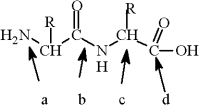
A) a
B) b
C) c
D) d
A) a
B) b
C) c
D) d
Question
Question
Question
Question
Question
Question
Question
Question
Which of the following molecules has a chiral center?
A)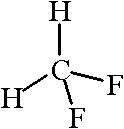
B)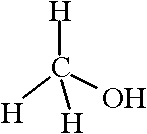
C)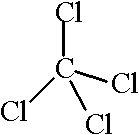
D)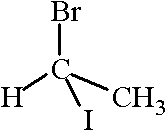
A)
B)
C)
D)
Question
Question
Question
Question
Question
Question
Question
Question
Question
Question
Question
Question
Compounds with the ring structure shown below are 
A) nucleic acids
B) steroids
C) polysaccharides
D) nucleotides
A) nucleic acids
B) steroids
C) polysaccharides
D) nucleotides
Question
Question
Question
Question
Question
Question
Question
Question
Question
Question
Question
Question
Question
Question
Question
Question
Question
Question
Question
Question
Question
Question
Question
Question
Question
Question
Question
Question
For the peptide shown, which is the N-terminal end? 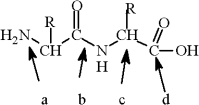
A) a
B) b
C) c
D) d
A) a
B) b
C) c
D) d
Question
Question
Question
Question
Question
Question
Question
Question
Question
Question
Question
Question
Question
For questons 1-7, consider the molecular structure given in each question, then complete the statement with one of the following terms.
carbohydrate
protein
nucleic acid
lipid
The following structure would be classified as a ________________.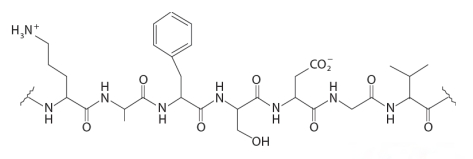
carbohydrate
protein
nucleic acid
lipid
The following structure would be classified as a ________________.
Question
Question
For questons 1-7, consider the molecular structure given in each question, then complete the statement with one of the following terms.
carbohydrate
protein
nucleic acid
lipid
The following structure would be classified as a ________________.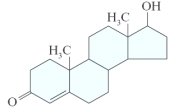
carbohydrate
protein
nucleic acid
lipid
The following structure would be classified as a ________________.
Question
For questons 1-7, consider the molecular structure given in each question, then complete the statement with one of the following terms.
carbohydrate
protein
nucleic acid
lipid
The following structure would be classified as a ________________.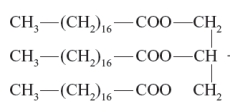
carbohydrate
protein
nucleic acid
lipid
The following structure would be classified as a ________________.
Question
Question
Question
Question
Question
Question
Question
Question
Consider the following substance found in over the counter analgesics. 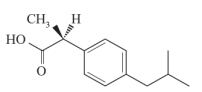 How many chiral centers are in this molecule?
A) 1
B) 2
C) 3
D) 4
E) There are no chiral centers in this molecule.
How many chiral centers are in this molecule?A) 1
B) 2
C) 3
D) 4
E) There are no chiral centers in this molecule.
Question
For questons 1-7, consider the molecular structure given in each question, then complete the statement with one of the following terms.
carbohydrate
protein
nucleic acid
lipid
The following structure would be classified as a ________________.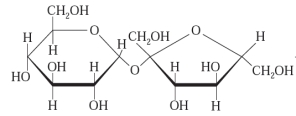
carbohydrate
protein
nucleic acid
lipid
The following structure would be classified as a ________________.
Question
Question
Question

Unlock Deck
Sign up to unlock the cards in this deck!
Unlock Deck
Unlock Deck
1/86

Play

Full screen (f)
Deck 15: The Chemistry of Life
1
Which is NOT an organic functional group characteristic of carbohydrates?
A) -CHO
B) -OH
C) -C-C-
D) -NH2
A) -CHO
B) -OH
C) -C-C-
D) -NH2
-NH2
2
Which oil contains a higher percentage of saturated fatty acid than the others?
A) olive oil
B) coconut oil
C) corn oil
D) All oils contain less saturated fatty acid than unsaturated fatty acid.
A) olive oil
B) coconut oil
C) corn oil
D) All oils contain less saturated fatty acid than unsaturated fatty acid.
coconut oil
3
Which is not true about proteins?
A) polypeptides
B) condensation polymers
C) repeating units are amino acids
D) constituent of genes
A) polypeptides
B) condensation polymers
C) repeating units are amino acids
D) constituent of genes
constituent of genes
4
For the peptide shown, which number indicates the peptide bond?
A) a
B) b
C) c
D) d
A) a
B) b
C) c
D) d
Unlock Deck
Unlock for access to all 86 flashcards in this deck.
Unlock Deck
k this deck
5
The hydrocarbon end of a detergent molecule is
A) hydrophilic.
B) hydrophobic.
C) possibly ionic.
D) likely to contain an oxygen or sulfur atom.
A) hydrophilic.
B) hydrophobic.
C) possibly ionic.
D) likely to contain an oxygen or sulfur atom.
Unlock Deck
Unlock for access to all 86 flashcards in this deck.
Unlock Deck
k this deck
6
If four amino acids are all different, what is the number of peptides possible?
A) 4
B) 8
C) 10
D) 24
A) 4
B) 8
C) 10
D) 24
Unlock Deck
Unlock for access to all 86 flashcards in this deck.
Unlock Deck
k this deck
7
Which is not true about enantiomers?
A) they have "handedness"
B) nonsuperimposable mirror images
C) symmetrical, with superimposable mirror images
D) rotate plane polarized light in opposite directions
A) they have "handedness"
B) nonsuperimposable mirror images
C) symmetrical, with superimposable mirror images
D) rotate plane polarized light in opposite directions
Unlock Deck
Unlock for access to all 86 flashcards in this deck.
Unlock Deck
k this deck
8
The energy reservoir in animals is
A) starch.
B) dextrin.
C) glucose.
D) glycogen.
A) starch.
B) dextrin.
C) glucose.
D) glycogen.
Unlock Deck
Unlock for access to all 86 flashcards in this deck.
Unlock Deck
k this deck
9
Which is not true about carbohydrates?
A) can be broken down into smaller carbohydrate units
B) condensation polymers
C) form an essential part of the energy cycle for living things
D) All these are true.
A) can be broken down into smaller carbohydrate units
B) condensation polymers
C) form an essential part of the energy cycle for living things
D) All these are true.
Unlock Deck
Unlock for access to all 86 flashcards in this deck.
Unlock Deck
k this deck
10
A condition of lactose intolerance means an individual
A) has insufficient lactose in the diet.
B) must have a diet high in milk products.
C) has a stomach pH greater than seven.
D) lacks the enzyme lactase.
A) has insufficient lactose in the diet.
B) must have a diet high in milk products.
C) has a stomach pH greater than seven.
D) lacks the enzyme lactase.
Unlock Deck
Unlock for access to all 86 flashcards in this deck.
Unlock Deck
k this deck
11
Which of the following has a caloric value approximately equal to that of proteins?
A) lactose
B) aspartame
C) saccharin
D) sucrose
A) lactose
B) aspartame
C) saccharin
D) sucrose
Unlock Deck
Unlock for access to all 86 flashcards in this deck.
Unlock Deck
k this deck
12
Which of the following molecules has a chiral center?
A)
B)
C)
D)
A)
B)
C)
D)
Unlock Deck
Unlock for access to all 86 flashcards in this deck.
Unlock Deck
k this deck
13
Which term describes the general function of an enzyme?
A) substrate
B) intermediate
C) catalyst
D) oxidant
A) substrate
B) intermediate
C) catalyst
D) oxidant
Unlock Deck
Unlock for access to all 86 flashcards in this deck.
Unlock Deck
k this deck
14
Which of the following is not a steroid?
A) cholesterol
B) testosterone
C) carnauba wax
D) estrone
A) cholesterol
B) testosterone
C) carnauba wax
D) estrone
Unlock Deck
Unlock for access to all 86 flashcards in this deck.
Unlock Deck
k this deck
15
Insulin, a hormone that is essential to controlling the concentration of glucose in the blood, is a
A) a protein.
B) fat.
C) carbohydrate.
D) lipid.
A) a protein.
B) fat.
C) carbohydrate.
D) lipid.
Unlock Deck
Unlock for access to all 86 flashcards in this deck.
Unlock Deck
k this deck
16
Amino acids that the body cannot synthesize from other molecules are called
A) necessary amino acids.
B) essential amino acids.
C) natural amino acids.
D) prized amino acids.
A) necessary amino acids.
B) essential amino acids.
C) natural amino acids.
D) prized amino acids.
Unlock Deck
Unlock for access to all 86 flashcards in this deck.
Unlock Deck
k this deck
17
Which object/objects are not chiral?
A) your hands
B) helical sea shells
C) spoons
D) golf clubs
A) your hands
B) helical sea shells
C) spoons
D) golf clubs
Unlock Deck
Unlock for access to all 86 flashcards in this deck.
Unlock Deck
k this deck
18
Chemically, fats and oils are
A) esters.
B) amides.
C) alcohols.
D) ketones.
A) esters.
B) amides.
C) alcohols.
D) ketones.
Unlock Deck
Unlock for access to all 86 flashcards in this deck.
Unlock Deck
k this deck
19
Which of the following is not true about sucrose?
A) a disaccharide
B) found in sugar beets
C) made up of only glucose units
D) converted into honey by an enzyme
A) a disaccharide
B) found in sugar beets
C) made up of only glucose units
D) converted into honey by an enzyme
Unlock Deck
Unlock for access to all 86 flashcards in this deck.
Unlock Deck
k this deck
20
The structure of a tripeptide is Ala-Ser-Aly. What are the expected elements present in the tripeptide?
A) C, H, N, O
B) C, H
C) C, H, N
D) C, H, O
A) C, H, N, O
B) C, H
C) C, H, N
D) C, H, O
Unlock Deck
Unlock for access to all 86 flashcards in this deck.
Unlock Deck
k this deck
21
Which of the following is not true about DNA?
A) It is a polymer.
B) Base pairs are formed between A and T and G and C.
C) It is single stranded.
D) Deoxyribose is the sugar in DNA.
A) It is a polymer.
B) Base pairs are formed between A and T and G and C.
C) It is single stranded.
D) Deoxyribose is the sugar in DNA.
Unlock Deck
Unlock for access to all 86 flashcards in this deck.
Unlock Deck
k this deck
22
Which of the following represents the composition and structure of a nucleotide? [P = phosphate group, S = sugar, B = nitrogenous base]
A) P-S-B
B) S-B
C) P-B
D) S-P-B
A) P-S-B
B) S-B
C) P-B
D) S-P-B
Unlock Deck
Unlock for access to all 86 flashcards in this deck.
Unlock Deck
k this deck
23
Lactose is a disaccharide found in
A) sugar beets.
B) sugar cane.
C) starch.
D) milk.
A) sugar beets.
B) sugar cane.
C) starch.
D) milk.
Unlock Deck
Unlock for access to all 86 flashcards in this deck.
Unlock Deck
k this deck
24
Compounds with the ring structure shown below are
A) nucleic acids
B) steroids
C) polysaccharides
D) nucleotides
A) nucleic acids
B) steroids
C) polysaccharides
D) nucleotides
Unlock Deck
Unlock for access to all 86 flashcards in this deck.
Unlock Deck
k this deck
25
The folded structure of polypeptide chains held in place by -S-S- bonds is
A) primary structure.
B) secondary structure.
C) tertiary structure.
D) quaternary structure.
A) primary structure.
B) secondary structure.
C) tertiary structure.
D) quaternary structure.
Unlock Deck
Unlock for access to all 86 flashcards in this deck.
Unlock Deck
k this deck
26
When monosaccharides such as D-glucose are joined to form the polysaccharide starch, at each bond between two monosaccharides,
A) a water molecule hydrogen bonds the two monomers together.
B) there is a peptide bond.
C) there is a hydrated carbon atom.
D) a water molecule is split out.
A) a water molecule hydrogen bonds the two monomers together.
B) there is a peptide bond.
C) there is a hydrated carbon atom.
D) a water molecule is split out.
Unlock Deck
Unlock for access to all 86 flashcards in this deck.
Unlock Deck
k this deck
27
The monomers in proteins are
A) monosaccharides.
B) amino acids.
C) nucleic acids.
D) all optically active.
A) monosaccharides.
B) amino acids.
C) nucleic acids.
D) all optically active.
Unlock Deck
Unlock for access to all 86 flashcards in this deck.
Unlock Deck
k this deck
28
The process in which mRNA is made from DNA is called
A) transcription.
B) translation.
C) replication.
D) recombination.
A) transcription.
B) translation.
C) replication.
D) recombination.
Unlock Deck
Unlock for access to all 86 flashcards in this deck.
Unlock Deck
k this deck
29
Secondary structures of proteins are achieved by
A) strong covalent bonds.
B) ionic bonds.
C) London forces.
D) hydrogen bonds.
A) strong covalent bonds.
B) ionic bonds.
C) London forces.
D) hydrogen bonds.
Unlock Deck
Unlock for access to all 86 flashcards in this deck.
Unlock Deck
k this deck
30
Which base is not common to both DNA and RNA?
A) guanine
B) cytosine
C) thymine
D) adenine
A) guanine
B) cytosine
C) thymine
D) adenine
Unlock Deck
Unlock for access to all 86 flashcards in this deck.
Unlock Deck
k this deck
31
How many natural occurring amino acids are known?
A) 20
B) 70
C) hundreds
D) thousands
A) 20
B) 70
C) hundreds
D) thousands
Unlock Deck
Unlock for access to all 86 flashcards in this deck.
Unlock Deck
k this deck
32
The naturally occurring amino acids found in proteins
A) are all chiral.
B) are a mixture of enantiomers.
C) all optically active.
D) contain an amine and a carboxylic acid group.
A) are all chiral.
B) are a mixture of enantiomers.
C) all optically active.
D) contain an amine and a carboxylic acid group.
Unlock Deck
Unlock for access to all 86 flashcards in this deck.
Unlock Deck
k this deck
33
Collagen found in bones, tendons, teeth, and cartilage is
A) a fibrous protein.
B) a sheetlike protein.
C) 100% glycine.
D) a globular protein.
A) a fibrous protein.
B) a sheetlike protein.
C) 100% glycine.
D) a globular protein.
Unlock Deck
Unlock for access to all 86 flashcards in this deck.
Unlock Deck
k this deck
34
Hydrolysis of sucrose yields
A) "D-glucose only."
B) "D-glucose and D-fructose."
C) " -D-glucose and -D-glucose."
D) "D-galactose and D-glucose."
A) "D-glucose only."
B) "D-glucose and D-fructose."
C) " -D-glucose and -D-glucose."
D) "D-galactose and D-glucose."
Unlock Deck
Unlock for access to all 86 flashcards in this deck.
Unlock Deck
k this deck
35
The general type of chemical process which constitutes digestion is
A) hydration
B) combustion.
C) hydrolysis.
D) oxidation.
A) hydration
B) combustion.
C) hydrolysis.
D) oxidation.
Unlock Deck
Unlock for access to all 86 flashcards in this deck.
Unlock Deck
k this deck
36
The primary structure of proteins is
A) the amino acid sequence of amino acids in the polypeptide chain.
B) the helical structure.
C) the sheetlike structure.
D) the preferred conformation of a given protein.
A) the amino acid sequence of amino acids in the polypeptide chain.
B) the helical structure.
C) the sheetlike structure.
D) the preferred conformation of a given protein.
Unlock Deck
Unlock for access to all 86 flashcards in this deck.
Unlock Deck
k this deck
37
Amino acid monomers are joined to make a polypeptide chain by
A) an acid-base reaction.
B) formation of a peptide bond.
C) splitting out a water molecule.
D) all of the above choices
A) an acid-base reaction.
B) formation of a peptide bond.
C) splitting out a water molecule.
D) all of the above choices
Unlock Deck
Unlock for access to all 86 flashcards in this deck.
Unlock Deck
k this deck
38
Polysaccharides, proteins, and nucleic acids are all
A) C, H, and O compounds only.
B) inorganic compounds.
C) polymers.
D) helical structures.
A) C, H, and O compounds only.
B) inorganic compounds.
C) polymers.
D) helical structures.
Unlock Deck
Unlock for access to all 86 flashcards in this deck.
Unlock Deck
k this deck
39
If a molecule of glycine bonds to a molecule of alanine, how many dipeptides can be made?
A) one
B) two
C) three
D) more than three
A) one
B) two
C) three
D) more than three
Unlock Deck
Unlock for access to all 86 flashcards in this deck.
Unlock Deck
k this deck
40
Plant starches are amylose and amylopectin. Amylose differs from amylopectin in that amylose is
A) a straight chain structure.
B) insoluble in hot water.
C) a sweetener.
D) composed of only galactose.
A) a straight chain structure.
B) insoluble in hot water.
C) a sweetener.
D) composed of only galactose.
Unlock Deck
Unlock for access to all 86 flashcards in this deck.
Unlock Deck
k this deck
41
The role of mRNA in natural protein synthesis is to
A) give the coded message to DNA of what protein to produce.
B) carry the amino acids to the cell's nucleus where protein synthesis occurs.
C) activate the nerve center to the need of a certain protein.
D) serve as a base pairing template for tRNA to assemble amino acids into protein.
A) give the coded message to DNA of what protein to produce.
B) carry the amino acids to the cell's nucleus where protein synthesis occurs.
C) activate the nerve center to the need of a certain protein.
D) serve as a base pairing template for tRNA to assemble amino acids into protein.
Unlock Deck
Unlock for access to all 86 flashcards in this deck.
Unlock Deck
k this deck
42
The purpose of ATP and compounds similar to ATP is to
A) be available to catalyze the combustion of glucose.
B) serve as template for molecular replication.
C) oxidize chlorophyll.
D) store energy in P-O bonds.
A) be available to catalyze the combustion of glucose.
B) serve as template for molecular replication.
C) oxidize chlorophyll.
D) store energy in P-O bonds.
Unlock Deck
Unlock for access to all 86 flashcards in this deck.
Unlock Deck
k this deck
43
The quaternary structure of proteins is
A) the direction of twisting of the helical structure.
B) the shape assumed by all chains in a protein.
C) a four-side protein structure.
D) how amino acids hydrogen bond to every fourth amino acid in a polypeptide chain.
E) structures containing four polypeptide chains.
A) the direction of twisting of the helical structure.
B) the shape assumed by all chains in a protein.
C) a four-side protein structure.
D) how amino acids hydrogen bond to every fourth amino acid in a polypeptide chain.
E) structures containing four polypeptide chains.
Unlock Deck
Unlock for access to all 86 flashcards in this deck.
Unlock Deck
k this deck
44
When one strand of DNA replicates, the strand
A) reproduces itself exactly.
B) produces its complement.
C) produces two strands of polynucleotide.
D) undergoes hydrolysis.
A) reproduces itself exactly.
B) produces its complement.
C) produces two strands of polynucleotide.
D) undergoes hydrolysis.
Unlock Deck
Unlock for access to all 86 flashcards in this deck.
Unlock Deck
k this deck
45
The toughness of both skin and hair in contrast to other protein structures is due to
A) the strength of the carbon-carbon bond.
B) the percentage composition relative to the amino acid content.
C) cross-linkages such as the disulfide bond.
D) the presence of ether linkages between the amino acid units.
A) the strength of the carbon-carbon bond.
B) the percentage composition relative to the amino acid content.
C) cross-linkages such as the disulfide bond.
D) the presence of ether linkages between the amino acid units.
Unlock Deck
Unlock for access to all 86 flashcards in this deck.
Unlock Deck
k this deck
46
Which polysaccharide is the most abundant organic molecule on earth?
A) cellulose
B) starch
C) amylose
D) glycogen
A) cellulose
B) starch
C) amylose
D) glycogen
Unlock Deck
Unlock for access to all 86 flashcards in this deck.
Unlock Deck
k this deck
47
Which is not a characteristic of soaps?
A) contain a long chain hydrophobic group
B) contain a polar group that interacts with water
C) sodium salts are very common
D) work well in either hard or soft water
A) contain a long chain hydrophobic group
B) contain a polar group that interacts with water
C) sodium salts are very common
D) work well in either hard or soft water
Unlock Deck
Unlock for access to all 86 flashcards in this deck.
Unlock Deck
k this deck
48
In recombinant DNA processes,
A) polynucleotides are synthesized from mononucleotides.
B) all of the genes are joined together.
C) genes (DNA) are cut, spliced, and recombined.
D) there is only the likelihood of the betterment of mankind.
A) polynucleotides are synthesized from mononucleotides.
B) all of the genes are joined together.
C) genes (DNA) are cut, spliced, and recombined.
D) there is only the likelihood of the betterment of mankind.
Unlock Deck
Unlock for access to all 86 flashcards in this deck.
Unlock Deck
k this deck
49
Which object/objects can be chiral?
A) proteins
B) an alanine molecule
C) pair of shoes
D) all of the above
A) proteins
B) an alanine molecule
C) pair of shoes
D) all of the above
Unlock Deck
Unlock for access to all 86 flashcards in this deck.
Unlock Deck
k this deck
50
The secondary structure of DNA is
A) similar to that of globular protein.
B) a double helix.
C) a single strand of folded polynucleotide.
D) sheetlike.
A) similar to that of globular protein.
B) a double helix.
C) a single strand of folded polynucleotide.
D) sheetlike.
Unlock Deck
Unlock for access to all 86 flashcards in this deck.
Unlock Deck
k this deck
51
Which oil contains the highest percentage of monounsaturated fatty acids?
A) olive oil
B) coconut oil
C) canola oil
D) lard
A) olive oil
B) coconut oil
C) canola oil
D) lard
Unlock Deck
Unlock for access to all 86 flashcards in this deck.
Unlock Deck
k this deck
52
For the peptide shown, which is the N-terminal end?
A) a
B) b
C) c
D) d
A) a
B) b
C) c
D) d
Unlock Deck
Unlock for access to all 86 flashcards in this deck.
Unlock Deck
k this deck
53
Which is not true about detergents?
A) The positive charged end is cationic.
B) The polar part is oil soluble.
C) The water soluble part is hydrophilic.
D) Work well in hard water.
A) The positive charged end is cationic.
B) The polar part is oil soluble.
C) The water soluble part is hydrophilic.
D) Work well in hard water.
Unlock Deck
Unlock for access to all 86 flashcards in this deck.
Unlock Deck
k this deck
54
Base pairing between the two strands of DNA occurs by means of
A) hydrogen bonding.
B) coordinate covalent bonds.
C) ionic bonds.
D) disufide bonds.
A) hydrogen bonding.
B) coordinate covalent bonds.
C) ionic bonds.
D) disufide bonds.
Unlock Deck
Unlock for access to all 86 flashcards in this deck.
Unlock Deck
k this deck
55
Enzymes combine with a substrate at active sites and thereby
A) lower the energy of activation for a reaction.
B) form a stable molecule between the enzyme and the substrate.
C) consume the substrate.
D) supply energy to a reaction.
A) lower the energy of activation for a reaction.
B) form a stable molecule between the enzyme and the substrate.
C) consume the substrate.
D) supply energy to a reaction.
Unlock Deck
Unlock for access to all 86 flashcards in this deck.
Unlock Deck
k this deck
56
A nucleotide does not contain
A) a 5-carbon sugar
B) a phosphoric acid species.
C) a ringed compound with nitrogen atoms in the rings.
D) an amino acid.
A) a 5-carbon sugar
B) a phosphoric acid species.
C) a ringed compound with nitrogen atoms in the rings.
D) an amino acid.
Unlock Deck
Unlock for access to all 86 flashcards in this deck.
Unlock Deck
k this deck
57
For making permanent hair waves it is necessary to break these bonds
A) ionic bonds.
B) disulfide bonds.
C) hydrogen bonds.
D) the sulfur hydrogen bonds.
A) ionic bonds.
B) disulfide bonds.
C) hydrogen bonds.
D) the sulfur hydrogen bonds.
Unlock Deck
Unlock for access to all 86 flashcards in this deck.
Unlock Deck
k this deck
58
Which is not true about saponification?
A) a hydrolysis
B) soaps are products
C) a reaction of fatty acids
D) a strongly basic solution is required
A) a hydrolysis
B) soaps are products
C) a reaction of fatty acids
D) a strongly basic solution is required
Unlock Deck
Unlock for access to all 86 flashcards in this deck.
Unlock Deck
k this deck
59
Substances with solubility properties similar to those of fats and oils (dissolve in nonpolar solvents) are
A) fatty acids.
B) bile salts.
C) lipids.
D) nucleic acids.
A) fatty acids.
B) bile salts.
C) lipids.
D) nucleic acids.
Unlock Deck
Unlock for access to all 86 flashcards in this deck.
Unlock Deck
k this deck
60
Which mixture is racemic?
A) sand and sugar
B) sugar and protein
C) L-glucose and D-glucose
D) D-glucose and E-glucose
A) sand and sugar
B) sugar and protein
C) L-glucose and D-glucose
D) D-glucose and E-glucose
Unlock Deck
Unlock for access to all 86 flashcards in this deck.
Unlock Deck
k this deck
61
Natural amino acids are L-amino acids and natural sugars are D-sugars.
Unlock Deck
Unlock for access to all 86 flashcards in this deck.
Unlock Deck
k this deck
62
Hydrolysis of lactose yields
A) "D-glucose only."
B) "D-glucose and D-fructose."
C) " -D-glucose and -D-glucose."
D) "D-galactose and D-glucose."
A) "D-glucose only."
B) "D-glucose and D-fructose."
C) " -D-glucose and -D-glucose."
D) "D-galactose and D-glucose."
Unlock Deck
Unlock for access to all 86 flashcards in this deck.
Unlock Deck
k this deck
63
In a hydrolysis reaction, a larger molecule is split into smaller molecules which is essentially the reverse of a condensation reaction.
Unlock Deck
Unlock for access to all 86 flashcards in this deck.
Unlock Deck
k this deck
64
A -pleated sheet is a common tertiary structure of proteins.
Unlock Deck
Unlock for access to all 86 flashcards in this deck.
Unlock Deck
k this deck
65
For questons 1-7, consider the molecular structure given in each question, then complete the statement with one of the following terms.
carbohydrate
protein
nucleic acid
lipid
The following structure would be classified as a ________________.
carbohydrate
protein
nucleic acid
lipid
The following structure would be classified as a ________________.
Unlock Deck
Unlock for access to all 86 flashcards in this deck.
Unlock Deck
k this deck
66
The secondary structure of proteins is
A) the amino acid sequence of amino acids in the polypeptide chain.
B) the helical structure.
C) the sheetlike structure.
D) the preferred conformation of a given protein.
A) the amino acid sequence of amino acids in the polypeptide chain.
B) the helical structure.
C) the sheetlike structure.
D) the preferred conformation of a given protein.
Unlock Deck
Unlock for access to all 86 flashcards in this deck.
Unlock Deck
k this deck
67
For questons 1-7, consider the molecular structure given in each question, then complete the statement with one of the following terms.
carbohydrate
protein
nucleic acid
lipid
The following structure would be classified as a ________________.
carbohydrate
protein
nucleic acid
lipid
The following structure would be classified as a ________________.
Unlock Deck
Unlock for access to all 86 flashcards in this deck.
Unlock Deck
k this deck
68
For questons 1-7, consider the molecular structure given in each question, then complete the statement with one of the following terms.
carbohydrate
protein
nucleic acid
lipid
The following structure would be classified as a ________________.
carbohydrate
protein
nucleic acid
lipid
The following structure would be classified as a ________________.
Unlock Deck
Unlock for access to all 86 flashcards in this deck.
Unlock Deck
k this deck
69
The process in which mRNA is used to synthesize protein
A) transcription.
B) translation.
C) replication.
D) recombination.
A) transcription.
B) translation.
C) replication.
D) recombination.
Unlock Deck
Unlock for access to all 86 flashcards in this deck.
Unlock Deck
k this deck
70
Which is not true about RNA?
A) It is a polymer.
B) Base pairs are formed between A and U and G and C.
C) It is single stranded.
D) Deoxyribose is the sugar in RNA.
A) It is a polymer.
B) Base pairs are formed between A and U and G and C.
C) It is single stranded.
D) Deoxyribose is the sugar in RNA.
Unlock Deck
Unlock for access to all 86 flashcards in this deck.
Unlock Deck
k this deck
71
Emulsifying agents are used to stabilize water-in-oil and oil-in-water mixtures.
Unlock Deck
Unlock for access to all 86 flashcards in this deck.
Unlock Deck
k this deck
72
Which base is common to RNA but not DNA?
A) guanine
B) uracil
C) adenine
D) cytosine
A) guanine
B) uracil
C) adenine
D) cytosine
Unlock Deck
Unlock for access to all 86 flashcards in this deck.
Unlock Deck
k this deck
73
Which of the following is not a lipid?
A) cholesterol
B) testosterone
C) oleic acid
D) hemoglobin
A) cholesterol
B) testosterone
C) oleic acid
D) hemoglobin
Unlock Deck
Unlock for access to all 86 flashcards in this deck.
Unlock Deck
k this deck
74
Which artificial sugar has the highest sweetness rating?
A) sucrose
B) splenda
C) aspartame
D) saccharin
A) sucrose
B) splenda
C) aspartame
D) saccharin
Unlock Deck
Unlock for access to all 86 flashcards in this deck.
Unlock Deck
k this deck
75
Fats tend to be saturated compounds while oil are unsaturated.
Unlock Deck
Unlock for access to all 86 flashcards in this deck.
Unlock Deck
k this deck
76
Consider the following substance found in over the counter analgesics. How many chiral centers are in this molecule?
A) 1
B) 2
C) 3
D) 4
E) There are no chiral centers in this molecule.
How many chiral centers are in this molecule?A) 1
B) 2
C) 3
D) 4
E) There are no chiral centers in this molecule.
Unlock Deck
Unlock for access to all 86 flashcards in this deck.
Unlock Deck
k this deck
77
For questons 1-7, consider the molecular structure given in each question, then complete the statement with one of the following terms.
carbohydrate
protein
nucleic acid
lipid
The following structure would be classified as a ________________.
carbohydrate
protein
nucleic acid
lipid
The following structure would be classified as a ________________.
Unlock Deck
Unlock for access to all 86 flashcards in this deck.
Unlock Deck
k this deck
78
D-glucose is also known as blood sugar.
Unlock Deck
Unlock for access to all 86 flashcards in this deck.
Unlock Deck
k this deck
79
Glucose and sucrose are two of the most common monosaccharides.
Unlock Deck
Unlock for access to all 86 flashcards in this deck.
Unlock Deck
k this deck
80
Lipids are a class of compounds which are not soluble in water and contain a fused four ring structure.
Unlock Deck
Unlock for access to all 86 flashcards in this deck.
Unlock Deck
k this deck
Unlock Deck
Unlock for access to all 86 flashcards in this deck.






