







 Chat with AI

Deck 15: Surveying the Stars
Full screen (f)

Question

Question
Question
Question
Question
Question
Question
Question
Question
Question
Which of the following correctly states the luminosity-distance formula?
A)luminosity =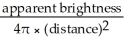
B)apparent brightness =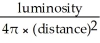
C)apparent brightness = luminosity × 4π × (distance)²
D)distance =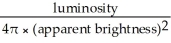
A)luminosity =
B)apparent brightness =
C)apparent brightness = luminosity × 4π × (distance)²
D)distance =
Question
Question
Question
Question
Question
Question
Question
Question
Question
Question
Question
Question
Question
Question
Question
Question
Question
Question
Question
Question
Question
Question
Question
Question
Question
Question
Question
Question
Question
Question
Question
Question
Question
Question
Question
Question
Question
Question
Question
Question
Question
Question
Question
Question
Question
Question
Question
Question
Question
Question
Question
Question
The following questions refer to the sketch of the H-R diagram below.Please choose the best answer in each case,i.e. ,choice (a)refers to the entire main sequence,while (c)and (d)refer to only small parts of the main sequence.If choice (c)or (d)offers a better answer to a particular question than (a),use the best choice.You may use the same choice more than once.
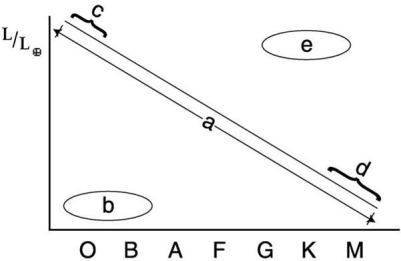
Which group represents stars that are cool and dim?
Which group represents stars that are cool and dim?
Question
Question
Refer to the choices in the table for the following questions.
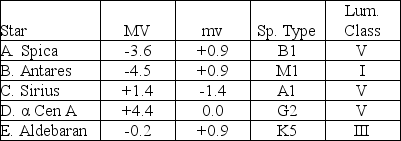
Which star appears brightest in the sky?
Which star appears brightest in the sky?
Question
Question
Refer to the choices in the table for the following questions.
Which star has the largest radius?
Which star has the largest radius?
Question
Question
Refer to the choices in the table for the following questions.
Which star is the most distant?
Which star is the most distant?
Question
Refer to the choices in the table for the following questions.
Which star is most similar to the Sun?
Which star is most similar to the Sun?
Question
Question
Refer to the choices in the table for the following questions.
Which star looks reddest in color?
Which star looks reddest in color?
Question
Refer to the choices in the table for the following questions.
Which star looks bluest in color?
Which star looks bluest in color?
Question
The following questions refer to the sketch of the H-R diagram below.Please choose the best answer in each case,i.e. ,choice (a)refers to the entire main sequence,while (c)and (d)refer to only small parts of the main sequence.If choice (c)or (d)offers a better answer to a particular question than (a),use the best choice.You may use the same choice more than once.
Which group represents the most common type of stars?
Which group represents the most common type of stars?
Question
Refer to the choices in the table for the following questions.
Which star is emitting the most ultraviolet light per unit area?
Which star is emitting the most ultraviolet light per unit area?
Question
Question
Refer to the choices in the table for the following questions.
Which star has the greatest luminosity?
Which star has the greatest luminosity?
Question
Refer to the choices in the table for the following questions.
Which star has the lowest surface temperature?
Which star has the lowest surface temperature?
Question
Question
The following questions refer to the sketch of the H-R diagram below.Please choose the best answer in each case,i.e. ,choice (a)refers to the entire main sequence,while (c)and (d)refer to only small parts of the main sequence.If choice (c)or (d)offers a better answer to a particular question than (a),use the best choice.You may use the same choice more than once.
Which group represents stars that are hot but dim?
Which group represents stars that are hot but dim?
Question
Refer to the choices in the table for the following questions.
Which star has the highest surface temperature?
Which star has the highest surface temperature?

Unlock Deck
Sign up to unlock the cards in this deck!
Unlock Deck
Unlock Deck
1/141

Play

Full screen (f)
Deck 15: Surveying the Stars
1
Which of the following terms is given to a pair of stars that appear to change positions in the sky,indicating that they are orbiting one another?
A)visual binary
B)eclipsing binary
C)spectroscopic binary
D)double star
E)none of the above
A)visual binary
B)eclipsing binary
C)spectroscopic binary
D)double star
E)none of the above
A
2
The most distant stars we can measure stellar parallax for are approximately
A)50 parsecs away.
B)500 parsecs away.
C)5,000 parsecs away.
D)halfway across the Milky Way Galaxy.
E)in the Andromeda Galaxy.
A)50 parsecs away.
B)500 parsecs away.
C)5,000 parsecs away.
D)halfway across the Milky Way Galaxy.
E)in the Andromeda Galaxy.
B
3
Suppose that you measure the parallax angle for a particular star to be 0.5 arcsecond.The distance to this star is
A)0.5 light-year.
B)0.5 parsec.
C)5 light-years.
D)5 parsecs.
E)2 parsecs.
A)0.5 light-year.
B)0.5 parsec.
C)5 light-years.
D)5 parsecs.
E)2 parsecs.
E
4
Approximately,what basic composition are all stars born with?
A)half hydrogen,half helium,no more than 2 percent heavier elements
B)three-quarters hydrogen,one-quarter helium,no more than 2 percent heavier elements
C)90 percent hydrogen,10 percent helium,no more than 1 percent heavier elements
D)one-quarter hydrogen,three-quarters helium,no more than 2 percent heavier elements
E)98 percent hydrogen,2 percent helium
A)half hydrogen,half helium,no more than 2 percent heavier elements
B)three-quarters hydrogen,one-quarter helium,no more than 2 percent heavier elements
C)90 percent hydrogen,10 percent helium,no more than 1 percent heavier elements
D)one-quarter hydrogen,three-quarters helium,no more than 2 percent heavier elements
E)98 percent hydrogen,2 percent helium
Unlock Deck
Unlock for access to all 141 flashcards in this deck.
Unlock Deck
k this deck
5
Which of the following statements about spectral types of stars is true?
A)The spectral type of a star can be used to determine its surface temperature.
B)The spectral type of a star can be used to determine its color.
C)A star with spectral type A is cooler than a star with spectral type B.
D)A star with spectral type F2 is hotter than a star with spectral type F3.
E)All of the above are true.
A)The spectral type of a star can be used to determine its surface temperature.
B)The spectral type of a star can be used to determine its color.
C)A star with spectral type A is cooler than a star with spectral type B.
D)A star with spectral type F2 is hotter than a star with spectral type F3.
E)All of the above are true.
Unlock Deck
Unlock for access to all 141 flashcards in this deck.
Unlock Deck
k this deck
6
Which of the following persons used the ideas of quantum mechanics to describe why the spectral classification scheme is in order of decreasing temperature?
A)Annie Jump Cannon
B)Williamina Fleming
C)Cecilia Payne-Gaposchkin
D)Henry Draper
E)Edward Pickering
A)Annie Jump Cannon
B)Williamina Fleming
C)Cecilia Payne-Gaposchkin
D)Henry Draper
E)Edward Pickering
Unlock Deck
Unlock for access to all 141 flashcards in this deck.
Unlock Deck
k this deck
7
The spectral sequence sorts stars according to
A)mass.
B)surface temperature.
C)luminosity.
D)core temperature.
E)radius.
A)mass.
B)surface temperature.
C)luminosity.
D)core temperature.
E)radius.
Unlock Deck
Unlock for access to all 141 flashcards in this deck.
Unlock Deck
k this deck
8
Which of the following persons reorganized the spectral classification scheme into the one we use today and personally classified over 400,000 stars?
A)Annie Jump Cannon
B)Williamina Fleming
C)Cecilia Payne-Gaposchkin
D)Henry Draper
E)Edward Pickering
A)Annie Jump Cannon
B)Williamina Fleming
C)Cecilia Payne-Gaposchkin
D)Henry Draper
E)Edward Pickering
Unlock Deck
Unlock for access to all 141 flashcards in this deck.
Unlock Deck
k this deck
9
Suppose you measure the parallax angle for a particular star to be 0.1 arcsecond.The distance to this star is
A)10 light-years.
B)10 parsecs.
C)0.1 light-year.
D)0.1 parsec.
E)impossible to determine.
A)10 light-years.
B)10 parsecs.
C)0.1 light-year.
D)0.1 parsec.
E)impossible to determine.
Unlock Deck
Unlock for access to all 141 flashcards in this deck.
Unlock Deck
k this deck
10
Which of the following correctly states the luminosity-distance formula?
A)luminosity =
B)apparent brightness =
C)apparent brightness = luminosity × 4π × (distance)²
D)distance =
A)luminosity =
B)apparent brightness =
C)apparent brightness = luminosity × 4π × (distance)²
D)distance =
Unlock Deck
Unlock for access to all 141 flashcards in this deck.
Unlock Deck
k this deck
11
Why is the spectral sequence of stars not alphabetical?
A)The letters refer to the initials of the original discovers.
B)The original alphabetical labeling did not correspond to surface temperature and thus had to be reordered.
C)They were chosen to fit a mnemonic.
D)Because there is still uncertainty over what generates the energy in stellar cores.
E)Because it refers to stellar masses and these were difficult to measure accurately.
A)The letters refer to the initials of the original discovers.
B)The original alphabetical labeling did not correspond to surface temperature and thus had to be reordered.
C)They were chosen to fit a mnemonic.
D)Because there is still uncertainty over what generates the energy in stellar cores.
E)Because it refers to stellar masses and these were difficult to measure accurately.
Unlock Deck
Unlock for access to all 141 flashcards in this deck.
Unlock Deck
k this deck
12
The spectral sequence in order of decreasing temperature is
A)OFBAGKM.
B)OBAGFKM.
C)OBAFGKM.
D)ABFGKMO.
E)BAGFKMO.
A)OFBAGKM.
B)OBAGFKM.
C)OBAFGKM.
D)ABFGKMO.
E)BAGFKMO.
Unlock Deck
Unlock for access to all 141 flashcards in this deck.
Unlock Deck
k this deck
13
Since all stars begin their lives with the same basic composition,what characteristic most determines how they will differ?
A)location where they are formed
B)time they are formed
C)luminosity they are formed with
D)mass they are formed with
E)color they are formed with
A)location where they are formed
B)time they are formed
C)luminosity they are formed with
D)mass they are formed with
E)color they are formed with
Unlock Deck
Unlock for access to all 141 flashcards in this deck.
Unlock Deck
k this deck
14
Why do astronomers often measure the visible-light apparent brightness instead of the total apparent brightness of a star?
A)All stars put out most of their light in the visible range of the spectrum.
B)In order to measure the total apparent brightness of a star,you must measure its brightness in all wavelengths,and this is difficult to do.The only wavelengths you can measure from the surface of Earth are visible and radio wavelengths.
C)Most stars do not put out light in other ranges of the spectrum.
D)They are identical for most stars.
E)Astronomers are lazy.
A)All stars put out most of their light in the visible range of the spectrum.
B)In order to measure the total apparent brightness of a star,you must measure its brightness in all wavelengths,and this is difficult to do.The only wavelengths you can measure from the surface of Earth are visible and radio wavelengths.
C)Most stars do not put out light in other ranges of the spectrum.
D)They are identical for most stars.
E)Astronomers are lazy.
Unlock Deck
Unlock for access to all 141 flashcards in this deck.
Unlock Deck
k this deck
15
Suppose you see two main-sequence stars of the same spectral type.Star 1 is dimmer in apparent brightness than Star 2 by a factor of 100.What can you conclude? (Neglect any effects that might be caused by interstellar dust and gas. )
A)Without first knowing the distances to these stars,you cannot draw any conclusions about how their true luminosities compare to each other.
B)The luminosity of Star 1 is a factor of 100 less than the luminosity of Star 2.
C)Star 1 is 100 times more distant than Star 2.
D)Star 1 is 100 times nearer than Star 2.
E)Star 1 is 10 times more distant than Star 2.
A)Without first knowing the distances to these stars,you cannot draw any conclusions about how their true luminosities compare to each other.
B)The luminosity of Star 1 is a factor of 100 less than the luminosity of Star 2.
C)Star 1 is 100 times more distant than Star 2.
D)Star 1 is 100 times nearer than Star 2.
E)Star 1 is 10 times more distant than Star 2.
Unlock Deck
Unlock for access to all 141 flashcards in this deck.
Unlock Deck
k this deck
16
A star's luminosity is the
A)apparent brightness of the star in our sky.
B)surface temperature of the star.
C)lifetime of the star.
D)total amount of light that the star will radiate over its entire lifetime.
E)total amount of light that the star radiates each second.
A)apparent brightness of the star in our sky.
B)surface temperature of the star.
C)lifetime of the star.
D)total amount of light that the star will radiate over its entire lifetime.
E)total amount of light that the star radiates each second.
Unlock Deck
Unlock for access to all 141 flashcards in this deck.
Unlock Deck
k this deck
17
Which of the following statements about apparent and absolute magnitudes is true?
A)The magnitude system that we use now is based on a system used by the ancient Greeks over 2,000 years ago that classified stars by how bright they appeared.
B)A star with apparent magnitude 1 is brighter than one with apparent magnitude 2.
C)The absolute magnitude of a star is another measure of its luminosity.
D)A star's absolute magnitude is the apparent magnitude it would have if it were at a distance of 10 parsecs from Earth.
E)All of the above are true.
A)The magnitude system that we use now is based on a system used by the ancient Greeks over 2,000 years ago that classified stars by how bright they appeared.
B)A star with apparent magnitude 1 is brighter than one with apparent magnitude 2.
C)The absolute magnitude of a star is another measure of its luminosity.
D)A star's absolute magnitude is the apparent magnitude it would have if it were at a distance of 10 parsecs from Earth.
E)All of the above are true.
Unlock Deck
Unlock for access to all 141 flashcards in this deck.
Unlock Deck
k this deck
18
What are the standard units for apparent brightness?
A)watts
B)joules
C)Newtons
D)watts per second
E)watts per square meter
A)watts
B)joules
C)Newtons
D)watts per second
E)watts per square meter
Unlock Deck
Unlock for access to all 141 flashcards in this deck.
Unlock Deck
k this deck
19
What are the standard units for luminosity?
A)watts
B)joules
C)Newtons
D)kilograms
E)watts per second
A)watts
B)joules
C)Newtons
D)kilograms
E)watts per second
Unlock Deck
Unlock for access to all 141 flashcards in this deck.
Unlock Deck
k this deck
20
If the distance between us and a star is doubled,with everything else remaining the same,the luminosity
A)is decreased by a factor of four,and the apparent brightness is decreased by a factor of four.
B)is decreased by a factor of two,and the apparent brightness is decreased by a factor of two.
C)remains the same,but the apparent brightness is decreased by a factor of two.
D)remains the same,but the apparent brightness is decreased by a factor of four.
E)is decreased by a factor of four,but the apparent brightness remains the same.
A)is decreased by a factor of four,and the apparent brightness is decreased by a factor of four.
B)is decreased by a factor of two,and the apparent brightness is decreased by a factor of two.
C)remains the same,but the apparent brightness is decreased by a factor of two.
D)remains the same,but the apparent brightness is decreased by a factor of four.
E)is decreased by a factor of four,but the apparent brightness remains the same.
Unlock Deck
Unlock for access to all 141 flashcards in this deck.
Unlock Deck
k this deck
21
On a Hertzsprung-Russell diagram,where would we find stars that are cool and luminous?
A)upper right
B)lower right
C)upper left
D)lower left
A)upper right
B)lower right
C)upper left
D)lower left
Unlock Deck
Unlock for access to all 141 flashcards in this deck.
Unlock Deck
k this deck
22
In a pulsating variable star,which characteristic of the star changes dramatically with time?
A)mass
B)core temperature
C)luminosity
D)energy-generation process
E)rotation rate
A)mass
B)core temperature
C)luminosity
D)energy-generation process
E)rotation rate
Unlock Deck
Unlock for access to all 141 flashcards in this deck.
Unlock Deck
k this deck
23
Why are Cepheid variables so important for measuring distances in astronomy?
A)They all have the same luminosity.
B)They all have the same period.
C)Their luminosity can be inferred from their period.
D)They are close enough to have a detectable parallax.
E)They are circumpolar like Polaris,the North Star.
A)They all have the same luminosity.
B)They all have the same period.
C)Their luminosity can be inferred from their period.
D)They are close enough to have a detectable parallax.
E)They are circumpolar like Polaris,the North Star.
Unlock Deck
Unlock for access to all 141 flashcards in this deck.
Unlock Deck
k this deck
24
On a Hertzsprung-Russell diagram,where would we find stars that have the largest radii?
A)upper right
B)lower right
C)upper left
D)lower left
A)upper right
B)lower right
C)upper left
D)lower left
Unlock Deck
Unlock for access to all 141 flashcards in this deck.
Unlock Deck
k this deck
25
On the main sequence,stars obtain their energy
A)from chemical reactions.
B)from gravitational contraction.
C)by converting hydrogen to helium.
D)by converting helium to carbon,nitrogen,and oxygen.
E)from nuclear fission.
A)from chemical reactions.
B)from gravitational contraction.
C)by converting hydrogen to helium.
D)by converting helium to carbon,nitrogen,and oxygen.
E)from nuclear fission.
Unlock Deck
Unlock for access to all 141 flashcards in this deck.
Unlock Deck
k this deck
26
On a Hertzsprung-Russell diagram,where would we find stars that are cool and dim?
A)upper right
B)lower right
C)upper left
D)lower left
A)upper right
B)lower right
C)upper left
D)lower left
Unlock Deck
Unlock for access to all 141 flashcards in this deck.
Unlock Deck
k this deck
27
Which of the following is true about low-mass stars compared to high-mass stars?
A)Low-mass stars are cooler and less luminous than high-mass stars.
B)Low-mass stars are hotter and more luminous than high-mass stars.
C)Low-mass stars are cooler but more luminous than high-mass stars.
D)Low-mass stars are hotter but less luminous than high-mass stars.
E)Low-mass stars have the same temperature and luminosity as high-mass stars.
A)Low-mass stars are cooler and less luminous than high-mass stars.
B)Low-mass stars are hotter and more luminous than high-mass stars.
C)Low-mass stars are cooler but more luminous than high-mass stars.
D)Low-mass stars are hotter but less luminous than high-mass stars.
E)Low-mass stars have the same temperature and luminosity as high-mass stars.
Unlock Deck
Unlock for access to all 141 flashcards in this deck.
Unlock Deck
k this deck
28
Which of the following characteristics of stars has the greatest range in values?
A)mass
B)radius
C)core temperature
D)surface temperature
E)luminosity
A)mass
B)radius
C)core temperature
D)surface temperature
E)luminosity
Unlock Deck
Unlock for access to all 141 flashcards in this deck.
Unlock Deck
k this deck
29
On a Hertzsprung-Russell diagram,where on the main sequence would we find stars that have the greatest mass?
A)upper right
B)lower right
C)upper left
D)lower left
A)upper right
B)lower right
C)upper left
D)lower left
Unlock Deck
Unlock for access to all 141 flashcards in this deck.
Unlock Deck
k this deck
30
You observe a star in the disk of the Milky Way,and you want to plot the star on an H-R diagram.You will need to determine all of the following,except the
A)spectral type of the star.
B)distance to the star.
C)apparent brightness of the star in our sky.
D)rotation rate of the star.
A)spectral type of the star.
B)distance to the star.
C)apparent brightness of the star in our sky.
D)rotation rate of the star.
Unlock Deck
Unlock for access to all 141 flashcards in this deck.
Unlock Deck
k this deck
31
A star of spectral type G lives approximately how long on the main sequence?
A)1,000 years
B)10,000 years
C)1 million years
D)100 million years
E)10 billion years
A)1,000 years
B)10,000 years
C)1 million years
D)100 million years
E)10 billion years
Unlock Deck
Unlock for access to all 141 flashcards in this deck.
Unlock Deck
k this deck
32
Which of the following luminosity classes refers to stars on the main sequence?
A)I
B)II
C)III
D)IV
E)V
A)I
B)II
C)III
D)IV
E)V
Unlock Deck
Unlock for access to all 141 flashcards in this deck.
Unlock Deck
k this deck
33
Which of the following terms is given to a pair of stars that we can determine are orbiting each other only by measuring their periodic Doppler shifts?
A)visual binary
B)eclipsing binary
C)spectroscopic binary
D)double star
E)none of the above
A)visual binary
B)eclipsing binary
C)spectroscopic binary
D)double star
E)none of the above
Unlock Deck
Unlock for access to all 141 flashcards in this deck.
Unlock Deck
k this deck
34
On a Hertzsprung-Russell diagram,where would we find white dwarfs?
A)upper right
B)lower right
C)upper left
D)lower left
A)upper right
B)lower right
C)upper left
D)lower left
Unlock Deck
Unlock for access to all 141 flashcards in this deck.
Unlock Deck
k this deck
35
On a Hertzsprung-Russell diagram,where would we find red giant stars?
A)upper right
B)lower right
C)upper left
D)lower left
A)upper right
B)lower right
C)upper left
D)lower left
Unlock Deck
Unlock for access to all 141 flashcards in this deck.
Unlock Deck
k this deck
36
The faintest star visible to the naked eye has an apparent visual magnitude of about
A)10.
B)6.
C)1.
D)0.
E)-6.
A)10.
B)6.
C)1.
D)0.
E)-6.
Unlock Deck
Unlock for access to all 141 flashcards in this deck.
Unlock Deck
k this deck
37
Which of the following is the most common type of main-sequence star?
A)an O star
B)an A star
C)an F star
D)an M star
E)a G star
A)an O star
B)an A star
C)an F star
D)an M star
E)a G star
Unlock Deck
Unlock for access to all 141 flashcards in this deck.
Unlock Deck
k this deck
38
Which of the following statements about an open cluster is true?
A)All stars in the cluster are approximately the same color.
B)All stars in the cluster are approximately the same age.
C)All stars in the cluster have approximately the same mass.
D)All stars in the cluster will evolve similarly.
E)There is an approximately equal number of all types of stars in the cluster.
A)All stars in the cluster are approximately the same color.
B)All stars in the cluster are approximately the same age.
C)All stars in the cluster have approximately the same mass.
D)All stars in the cluster will evolve similarly.
E)There is an approximately equal number of all types of stars in the cluster.
Unlock Deck
Unlock for access to all 141 flashcards in this deck.
Unlock Deck
k this deck
39
Which of the following best describes the axes of a Hertzsprung-Russell (H-R)diagram?
A)surface temperature on the horizontal axis and luminosity on the vertical axis
B)mass on the horizontal axis and luminosity on the vertical axis
C)surface temperature on the horizontal axis and radius on the vertical axis
D)mass on the horizontal axis and stellar age on the vertical axis
E)interior temperature on the horizontal axis and mass on the vertical axis
A)surface temperature on the horizontal axis and luminosity on the vertical axis
B)mass on the horizontal axis and luminosity on the vertical axis
C)surface temperature on the horizontal axis and radius on the vertical axis
D)mass on the horizontal axis and stellar age on the vertical axis
E)interior temperature on the horizontal axis and mass on the vertical axis
Unlock Deck
Unlock for access to all 141 flashcards in this deck.
Unlock Deck
k this deck
40
A star of spectral type O lives approximately how long on the main sequence?
A)1,000 years
B)10,000 years
C)10 million years
D)100 million years
E)1 billion years
A)1,000 years
B)10,000 years
C)10 million years
D)100 million years
E)1 billion years
Unlock Deck
Unlock for access to all 141 flashcards in this deck.
Unlock Deck
k this deck
41
Earth is about 150 million km from the Sun,and the apparent brightness of the Sun in our sky is about 1,300 watts per square meter.Determine the apparent brightness we would measure for the Sun if we were located half Earth's distance from the Sun.
Unlock Deck
Unlock for access to all 141 flashcards in this deck.
Unlock Deck
k this deck
42
Most stars on the main sequence fuse hydrogen into helium in their cores,but some do not.
Unlock Deck
Unlock for access to all 141 flashcards in this deck.
Unlock Deck
k this deck
43
The more distant a star,the smaller its parallax.
Unlock Deck
Unlock for access to all 141 flashcards in this deck.
Unlock Deck
k this deck
44
Two stars both lie on the main sequence.Star X is spectral type A,while Star Y is spectral type G.Therefore,Star X is more massive than Star Y.
Unlock Deck
Unlock for access to all 141 flashcards in this deck.
Unlock Deck
k this deck
45
Two stars have the same spectral type.Star X is in luminosity class III,while Star Y is in luminosity class V.Therefore,Star X is larger in radius than Star Y.
Unlock Deck
Unlock for access to all 141 flashcards in this deck.
Unlock Deck
k this deck
46
A 10-solar-mass star is about ten times more luminous than a 1-solar-mass star.
Unlock Deck
Unlock for access to all 141 flashcards in this deck.
Unlock Deck
k this deck
47
Which of the following statements about a globular cluster is true?
A)All stars in the cluster are approximately at the same stage in evolution.
B)Most of the stars in the cluster are younger than 10 billion years old.
C)Most stars in the cluster are yellow or reddish in color.
D)All stars in the cluster have approximately the same mass.
E)There is an approximately equal number of all types of stars in the cluster.
A)All stars in the cluster are approximately at the same stage in evolution.
B)Most of the stars in the cluster are younger than 10 billion years old.
C)Most stars in the cluster are yellow or reddish in color.
D)All stars in the cluster have approximately the same mass.
E)There is an approximately equal number of all types of stars in the cluster.
Unlock Deck
Unlock for access to all 141 flashcards in this deck.
Unlock Deck
k this deck
48
Spectral type,surface temperature,and color all describe the same basic characteristic of a star.
Unlock Deck
Unlock for access to all 141 flashcards in this deck.
Unlock Deck
k this deck
49
Massive,more luminous stars have shorter lives than their smaller,dimmer counterparts.
Unlock Deck
Unlock for access to all 141 flashcards in this deck.
Unlock Deck
k this deck
50
Some stars are cool enough to have molecules in their atmosphere.
Unlock Deck
Unlock for access to all 141 flashcards in this deck.
Unlock Deck
k this deck
51
We can measure stellar parallax for most stars in our galaxy.
Unlock Deck
Unlock for access to all 141 flashcards in this deck.
Unlock Deck
k this deck
52
We can measure the radii of stars in an eclipsing binary system,in addition to the masses.
Unlock Deck
Unlock for access to all 141 flashcards in this deck.
Unlock Deck
k this deck
53
Two stars have the same luminosity.Star X is spectral type F,while Star Y is spectral type K.Therefore,Star X is larger in radius than Star Y.
Unlock Deck
Unlock for access to all 141 flashcards in this deck.
Unlock Deck
k this deck
54
Stars on the upper left of the H-R diagram are longer lived than those on the lower right.
Unlock Deck
Unlock for access to all 141 flashcards in this deck.
Unlock Deck
k this deck
55
All stars spend approximately the same amount of time on the main sequence.
Unlock Deck
Unlock for access to all 141 flashcards in this deck.
Unlock Deck
k this deck
56
Where do we find our star on the H-R diagram?
A)In the middle of the main sequence
B)On the far left of the main sequence
C)With the red giants
D)On the lower left
A)In the middle of the main sequence
B)On the far left of the main sequence
C)With the red giants
D)On the lower left
Unlock Deck
Unlock for access to all 141 flashcards in this deck.
Unlock Deck
k this deck
57
The apparent brightness of a star depends only on its luminosity.
Unlock Deck
Unlock for access to all 141 flashcards in this deck.
Unlock Deck
k this deck
58
If the distance between us and a star is doubled,the apparent brightness is decreased by a factor of four.
Unlock Deck
Unlock for access to all 141 flashcards in this deck.
Unlock Deck
k this deck
59
Cluster ages can be determined from
A)main sequence fitting.
B)main sequence turnoff.
C)pulsating variable stars.
D)spectroscopic binaries.
E)visual binaries.
A)main sequence fitting.
B)main sequence turnoff.
C)pulsating variable stars.
D)spectroscopic binaries.
E)visual binaries.
Unlock Deck
Unlock for access to all 141 flashcards in this deck.
Unlock Deck
k this deck
60
In order to understand star clusters,we need to be able to estimate their ages.What technique do scientists use for this?
A)radioisotope dating
B)counting the planets that have formed around the largest stars
C)finding the main-sequence turnoff point of the stars
D)calculating orbital parameters using Kepler's Laws
E)measuring its parallax
A)radioisotope dating
B)counting the planets that have formed around the largest stars
C)finding the main-sequence turnoff point of the stars
D)calculating orbital parameters using Kepler's Laws
E)measuring its parallax
Unlock Deck
Unlock for access to all 141 flashcards in this deck.
Unlock Deck
k this deck
61
Two stars,Fred and Barney,are of the same size.Fred has spectral type F,while Barney has spectral type B.Which one is more luminous?
Unlock Deck
Unlock for access to all 141 flashcards in this deck.
Unlock Deck
k this deck
62
The following questions refer to the sketch of the H-R diagram below.Please choose the best answer in each case,i.e. ,choice (a)refers to the entire main sequence,while (c)and (d)refer to only small parts of the main sequence.If choice (c)or (d)offers a better answer to a particular question than (a),use the best choice.You may use the same choice more than once.
Which group represents stars that are cool and dim?
Which group represents stars that are cool and dim?
Unlock Deck
Unlock for access to all 141 flashcards in this deck.
Unlock Deck
k this deck
63
Which is brighter in our sky,a star with apparent magnitude 2 or a star with apparent magnitude 7? By how much is the star brighter?
Unlock Deck
Unlock for access to all 141 flashcards in this deck.
Unlock Deck
k this deck
64
Refer to the choices in the table for the following questions.
Which star appears brightest in the sky?
Which star appears brightest in the sky?
Unlock Deck
Unlock for access to all 141 flashcards in this deck.
Unlock Deck
k this deck
65
Two stars,Betty and Wilma,are both on the main sequence.Betty is more luminous than Wilma.Which one has a hotter surface temperature? Which one is more massive? Which one is bigger? If they both formed at the same time,which one will evolve off the main sequence first?
Unlock Deck
Unlock for access to all 141 flashcards in this deck.
Unlock Deck
k this deck
66
Refer to the choices in the table for the following questions.
Which star has the largest radius?
Which star has the largest radius?
Unlock Deck
Unlock for access to all 141 flashcards in this deck.
Unlock Deck
k this deck
67
Earth is about 150 million km from the Sun,and the apparent brightness of the Sun in our sky is about 1,300 watts per square meter.Determine the apparent brightness we would measure for the Sun if we were located five times Earth's distance from the Sun.
Unlock Deck
Unlock for access to all 141 flashcards in this deck.
Unlock Deck
k this deck
68
Refer to the choices in the table for the following questions.
Which star is the most distant?
Which star is the most distant?
Unlock Deck
Unlock for access to all 141 flashcards in this deck.
Unlock Deck
k this deck
69
Refer to the choices in the table for the following questions.
Which star is most similar to the Sun?
Which star is most similar to the Sun?
Unlock Deck
Unlock for access to all 141 flashcards in this deck.
Unlock Deck
k this deck
70
Earth is about 150 million km from the Sun,and the apparent brightness of the Sun in our sky is about 1,300 watts per square meter.Determine the apparent brightness we would measure for the Sun if we were located one-third of Earth's distance from the Sun.
Unlock Deck
Unlock for access to all 141 flashcards in this deck.
Unlock Deck
k this deck
71
Refer to the choices in the table for the following questions.
Which star looks reddest in color?
Which star looks reddest in color?
Unlock Deck
Unlock for access to all 141 flashcards in this deck.
Unlock Deck
k this deck
72
Refer to the choices in the table for the following questions.
Which star looks bluest in color?
Which star looks bluest in color?
Unlock Deck
Unlock for access to all 141 flashcards in this deck.
Unlock Deck
k this deck
73
The following questions refer to the sketch of the H-R diagram below.Please choose the best answer in each case,i.e. ,choice (a)refers to the entire main sequence,while (c)and (d)refer to only small parts of the main sequence.If choice (c)or (d)offers a better answer to a particular question than (a),use the best choice.You may use the same choice more than once.
Which group represents the most common type of stars?
Which group represents the most common type of stars?
Unlock Deck
Unlock for access to all 141 flashcards in this deck.
Unlock Deck
k this deck
74
Refer to the choices in the table for the following questions.
Which star is emitting the most ultraviolet light per unit area?
Which star is emitting the most ultraviolet light per unit area?
Unlock Deck
Unlock for access to all 141 flashcards in this deck.
Unlock Deck
k this deck
75
Two stars,Tom and Jerry,have the same spectral type.Tom is luminosity class V and Jerry is luminosity class I.Which star is bigger? Which star is more luminous? Which star has a hotter surface temperature? Explain your answers.
Unlock Deck
Unlock for access to all 141 flashcards in this deck.
Unlock Deck
k this deck
76
Refer to the choices in the table for the following questions.
Which star has the greatest luminosity?
Which star has the greatest luminosity?
Unlock Deck
Unlock for access to all 141 flashcards in this deck.
Unlock Deck
k this deck
77
Refer to the choices in the table for the following questions.
Which star has the lowest surface temperature?
Which star has the lowest surface temperature?
Unlock Deck
Unlock for access to all 141 flashcards in this deck.
Unlock Deck
k this deck
78
Which has a greater luminosity,a star with absolute magnitude +4 or a star with absolute magnitude -6? By how much is it brighter?
Unlock Deck
Unlock for access to all 141 flashcards in this deck.
Unlock Deck
k this deck
79
The following questions refer to the sketch of the H-R diagram below.Please choose the best answer in each case,i.e. ,choice (a)refers to the entire main sequence,while (c)and (d)refer to only small parts of the main sequence.If choice (c)or (d)offers a better answer to a particular question than (a),use the best choice.You may use the same choice more than once.
Which group represents stars that are hot but dim?
Which group represents stars that are hot but dim?
Unlock Deck
Unlock for access to all 141 flashcards in this deck.
Unlock Deck
k this deck
80
Refer to the choices in the table for the following questions.
Which star has the highest surface temperature?
Which star has the highest surface temperature?
Unlock Deck
Unlock for access to all 141 flashcards in this deck.
Unlock Deck
k this deck
Unlock Deck
Unlock for access to all 141 flashcards in this deck.






