







 Chat with AI

Deck 28: Nursing Assessment: Respiratory System
Full screen (f)

Question

Question
Question
Question
Question
Question
Question
Question
Question
Question
Question
Question
Question
Question
Question
Question
Question
Question
Question
Question
Question
Question
Question
Question
When performing an assessment of the patient's respiratory system,the nurse uses the following illustrated technique to evaluate which of the following respiratory functions? 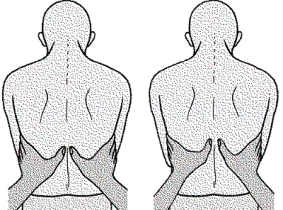
A) Chest expansion
B) Tactile fremitus
C) Accessory muscle use
D) Diaphragmatic excursion
A) Chest expansion
B) Tactile fremitus
C) Accessory muscle use
D) Diaphragmatic excursion

Unlock Deck
Sign up to unlock the cards in this deck!
Unlock Deck
Unlock Deck
1/24

Play

Full screen (f)
Deck 28: Nursing Assessment: Respiratory System
1
On auscultation of a patient's lungs,the nurse hears short,high-pitched sounds just before the end of inspiration in the right and left lower lobes.How should the nurse document this finding?
A) Inspiratory wheezes in both lungs
B) Crackles in the right and left lower lobes
C) Abnormal lung sounds in the bases of both lungs
D) Pleural friction rub in the right and left lower lobes
A) Inspiratory wheezes in both lungs
B) Crackles in the right and left lower lobes
C) Abnormal lung sounds in the bases of both lungs
D) Pleural friction rub in the right and left lower lobes
Inspiratory wheezes in both lungs
2
While caring for a patient with respiratory disease,the nurse observes that the patient's SpO2 drops from 94% to 85% when the patient ambulates in the hall.What does the nurse determine from this response?
A) Supplemental oxygen should be used when the patient exercises.
B) Arterial blood gas determinations should be done to verify the SpO2.
C) This finding is a normal response to activity,and the patient should continue to be monitored.
D) The oximetry probe should be moved from the finger to the earlobe for an accurate SpO2 during activity.
A) Supplemental oxygen should be used when the patient exercises.
B) Arterial blood gas determinations should be done to verify the SpO2.
C) This finding is a normal response to activity,and the patient should continue to be monitored.
D) The oximetry probe should be moved from the finger to the earlobe for an accurate SpO2 during activity.
Supplemental oxygen should be used when the patient exercises.
3
A patient with a chronic cough with blood-tinged sputum undergoes a bronchoscopy.Following the bronchoscopy,what should the nurse do?
A) Keep the patient on bed rest for 8 hours.
B) Keep the patient on nothing by mouth (NPO)status until the gag reflex returns.
C) Check vital signs every 15 minutes for 2 hours.
D) Encourage fluid intake to promote elimination of the contrast media.
A) Keep the patient on bed rest for 8 hours.
B) Keep the patient on nothing by mouth (NPO)status until the gag reflex returns.
C) Check vital signs every 15 minutes for 2 hours.
D) Encourage fluid intake to promote elimination of the contrast media.
Keep the patient on nothing by mouth (NPO)status until the gag reflex returns.
4
On auscultation of a patient's lungs,the nurse hears short,low-pitched,'bubbling' sounds in the right and left lower lung areas.How should the nurse document this finding?
A) Inspiratory wheezes in both lungs
B) Crackles in the right and left lower lobes
C) Abnormal lung sounds in the bases of both lungs
D) Pleural friction rub in the right and left lower lobes
A) Inspiratory wheezes in both lungs
B) Crackles in the right and left lower lobes
C) Abnormal lung sounds in the bases of both lungs
D) Pleural friction rub in the right and left lower lobes
Unlock Deck
Unlock for access to all 24 flashcards in this deck.
Unlock Deck
k this deck
5
An 80-year-old patient breathing room air has an arterial blood gas analysis.Which of the following results does the nurse interpret as normal?
A) pH 7.32,PaO2 85 mm Hg,PaCO2 55 mm Hg,and O2 saturation 90%
B) pH 7.38,PaO2 75 mm Hg,PaCO2 40 mm Hg,and O2 saturation 92%
C) pH 7.42,PaO2 80 mm Hg,PaCO2 33 mm Hg,and O2 saturation 98%
D) pH 7.52,PaO2 90 mm Hg,PaCO2 30 mm Hg,and O2 saturation 94%
A) pH 7.32,PaO2 85 mm Hg,PaCO2 55 mm Hg,and O2 saturation 90%
B) pH 7.38,PaO2 75 mm Hg,PaCO2 40 mm Hg,and O2 saturation 92%
C) pH 7.42,PaO2 80 mm Hg,PaCO2 33 mm Hg,and O2 saturation 98%
D) pH 7.52,PaO2 90 mm Hg,PaCO2 30 mm Hg,and O2 saturation 94%
Unlock Deck
Unlock for access to all 24 flashcards in this deck.
Unlock Deck
k this deck
6
While caring for a patient who has a 30-pack-year history of smoking,the nurse recognizes that the patient most likely has decreased respiratory defences due to which of the following conditions?
A) Impaired cough reflex
B) Impaired mucociliary clearance
C) Impaired reflex bronchoconstriction
D) Impaired ability to filter particles from the air
A) Impaired cough reflex
B) Impaired mucociliary clearance
C) Impaired reflex bronchoconstriction
D) Impaired ability to filter particles from the air
Unlock Deck
Unlock for access to all 24 flashcards in this deck.
Unlock Deck
k this deck
7
A patient with amyotrophic lateral sclerosis (ALS)is admitted to the hospital with dyspnea.During palpation of the patient's thorax,what would the nurse expect to find?
A) Diminished expansion
B) Asymmetrical expansion
C) Normal expansion of 2.5 cm
D) Unequal,diminished expansion
A) Diminished expansion
B) Asymmetrical expansion
C) Normal expansion of 2.5 cm
D) Unequal,diminished expansion
Unlock Deck
Unlock for access to all 24 flashcards in this deck.
Unlock Deck
k this deck
8
A patient with chronic obstructive pulmonary disease (COPD)has a barrel chest.What would the nurse expect the results of a chest X-ray to reveal?
A) Fluid in the alveoli
B) Air in the pleural space
C) Overinflation of the alveoli with air
D) Consolidation of lung tissue with mucus and exudates
A) Fluid in the alveoli
B) Air in the pleural space
C) Overinflation of the alveoli with air
D) Consolidation of lung tissue with mucus and exudates
Unlock Deck
Unlock for access to all 24 flashcards in this deck.
Unlock Deck
k this deck
9
When assessing the respiratory system of a 78-year-old patient,which of these findings indicates that the nurse should take immediate action?
A) Barrel-shaped chest
B) Weak cough effort
C) Audible crackles in the lower two thirds of the posterior chest
D) Hyperresonance across both sides of the chest
A) Barrel-shaped chest
B) Weak cough effort
C) Audible crackles in the lower two thirds of the posterior chest
D) Hyperresonance across both sides of the chest
Unlock Deck
Unlock for access to all 24 flashcards in this deck.
Unlock Deck
k this deck
10
In analyzing the results of a patient's blood gas analysis,the nurse will be most concerned about which of the following?
A) Arterial oxygen tension (PaO2)of 60 mm Hg
B) Arterial oxygen saturation (SaO2)of 91%
C) Arterial carbon dioxide (PaCO2)of 47 mm Hg
D) Arterial bicarbonate level (HCO3-)of 27 mmol/L
A) Arterial oxygen tension (PaO2)of 60 mm Hg
B) Arterial oxygen saturation (SaO2)of 91%
C) Arterial carbon dioxide (PaCO2)of 47 mm Hg
D) Arterial bicarbonate level (HCO3-)of 27 mmol/L
Unlock Deck
Unlock for access to all 24 flashcards in this deck.
Unlock Deck
k this deck
11
A patient is admitted with a metabolic acidosis of unknown origin.Based on this diagnosis,the nurse would expect the patient to have which one of the following?
A) Kussmaul's respirations
B) Slow,shallow respirations
C) A low oxygen saturation (SpO2)
D) A decrease in PVO2
A) Kussmaul's respirations
B) Slow,shallow respirations
C) A low oxygen saturation (SpO2)
D) A decrease in PVO2
Unlock Deck
Unlock for access to all 24 flashcards in this deck.
Unlock Deck
k this deck
12
Which of the following is a normal partial pressure of oxygen value at sea level?
A) 60 mm Hg
B) 75 mm Hg
C) 90 mm Hg
D) 105 mm Hg
A) 60 mm Hg
B) 75 mm Hg
C) 90 mm Hg
D) 105 mm Hg
Unlock Deck
Unlock for access to all 24 flashcards in this deck.
Unlock Deck
k this deck
13
A hypothermic patient is admitted to the emergency department,and pulse oximetry (SpO2)indicates that the O2 saturation is 95%.Which action should the nurse take next?
A) Complete a head-to-toe assessment.
B) Place the patient on high-flow oxygen.
C) Start rewarming the patient.
D) Obtain arterial blood gases.
A) Complete a head-to-toe assessment.
B) Place the patient on high-flow oxygen.
C) Start rewarming the patient.
D) Obtain arterial blood gases.
Unlock Deck
Unlock for access to all 24 flashcards in this deck.
Unlock Deck
k this deck
14
The nurse is observing a student who is auscultating a patient's lungs.Which action by the student indicates that the nurse should intervene?
A) The student compares breath sounds from side to side.
B) The student starts at the base of the posterior lung and moves to the apices.
C) The student places the stethoscope over the scapulae and then auscultates.
D) The student listens only over the posterior part of the chest.
A) The student compares breath sounds from side to side.
B) The student starts at the base of the posterior lung and moves to the apices.
C) The student places the stethoscope over the scapulae and then auscultates.
D) The student listens only over the posterior part of the chest.
Unlock Deck
Unlock for access to all 24 flashcards in this deck.
Unlock Deck
k this deck
15
While assessing a patient with respiratory problems,what should the nurse specifically ask about?
A) Smoking habits
B) Alterations in sexual activity
C) The course of the patient's illness
D) Occupational exposure to heavy lifting
A) Smoking habits
B) Alterations in sexual activity
C) The course of the patient's illness
D) Occupational exposure to heavy lifting
Unlock Deck
Unlock for access to all 24 flashcards in this deck.
Unlock Deck
k this deck
16
When admitting a patient who has a pleural effusion,which technique will the nurse use to assess for tactile fremitus?
A) Percuss over the entire posterior chest.
B) Use the fingertips to assess for vibration.
C) Place the palms of the hands on the chest wall.
D) Auscultate while the patient says "ninety-nine."
A) Percuss over the entire posterior chest.
B) Use the fingertips to assess for vibration.
C) Place the palms of the hands on the chest wall.
D) Auscultate while the patient says "ninety-nine."
Unlock Deck
Unlock for access to all 24 flashcards in this deck.
Unlock Deck
k this deck
17
Which of the following is an age-related change in the respiratory system?
A) Increased elastic recoil of the lungs
B) Increase in chest wall compliance
C) Increase in anteroposterior diameter
D) Increase in functional alveoli
A) Increased elastic recoil of the lungs
B) Increase in chest wall compliance
C) Increase in anteroposterior diameter
D) Increase in functional alveoli
Unlock Deck
Unlock for access to all 24 flashcards in this deck.
Unlock Deck
k this deck
18
A patient in severe respiratory distress is admitted to the medical unit at the hospital.During the admission assessment of the patient,what should the nurse do?
A) Perform a comprehensive health history with the patient to determine the extent of prior respiratory problems.
B) Complete a full physical examination to determine the effect of the respiratory distress on other body functions.
C) Delay any physical assessment of the patient,and ask family members about the patient's history of respiratory problems.
D) Perform a physical assessment of the respiratory system,and ask specific questions related to this episode of respiratory distress.
A) Perform a comprehensive health history with the patient to determine the extent of prior respiratory problems.
B) Complete a full physical examination to determine the effect of the respiratory distress on other body functions.
C) Delay any physical assessment of the patient,and ask family members about the patient's history of respiratory problems.
D) Perform a physical assessment of the respiratory system,and ask specific questions related to this episode of respiratory distress.
Unlock Deck
Unlock for access to all 24 flashcards in this deck.
Unlock Deck
k this deck
19
The physician performs a thoracentesis on a patient with a right pleural effusion.In preparing the patient for the procedure,how should the nurse position the patient?
A) Supine with the head of the bed elevated 45 degrees
B) On his left side with his right arm extended above his head
C) Sitting upright with his arms supported on an overbed table
D) On his left side in the Trendelenburg's position with both arms extended
A) Supine with the head of the bed elevated 45 degrees
B) On his left side with his right arm extended above his head
C) Sitting upright with his arms supported on an overbed table
D) On his left side in the Trendelenburg's position with both arms extended
Unlock Deck
Unlock for access to all 24 flashcards in this deck.
Unlock Deck
k this deck
20
While auscultating a patient's chest as the patient takes a deep breath,the nurse hears loud,high-pitched,"blowing" sounds at both lung bases.How will the nurse document these sounds?
A) Adventitious sounds
B) Abnormal sounds
C) Vesicular sounds
D) Normal sounds
A) Adventitious sounds
B) Abnormal sounds
C) Vesicular sounds
D) Normal sounds
Unlock Deck
Unlock for access to all 24 flashcards in this deck.
Unlock Deck
k this deck
21
Which of the following is an early symptom of inadequate oxygenation?
A) Dyspnea at rest
B) Hypotension
C) Tachypnea
D) Cyanosis
A) Dyspnea at rest
B) Hypotension
C) Tachypnea
D) Cyanosis
Unlock Deck
Unlock for access to all 24 flashcards in this deck.
Unlock Deck
k this deck
22
A patient is admitted to the emergency department complaining of sudden-onset shortness of breath and is diagnosed with a possible pulmonary embolus.To confirm the diagnosis,the nurse will anticipate preparing the patient for which of the following?
A) Chest X-ray
B) Ventilation-perfusion scan
C) Bronchoscopy
D) Positron emission tomography scan
A) Chest X-ray
B) Ventilation-perfusion scan
C) Bronchoscopy
D) Positron emission tomography scan
Unlock Deck
Unlock for access to all 24 flashcards in this deck.
Unlock Deck
k this deck
23
Which of the following is a measure of the elasticity of the lung?
A) Inspiration
B) Compliance
C) Elastic recoil
D) Oxygen-hemoglobin dissociation curve
A) Inspiration
B) Compliance
C) Elastic recoil
D) Oxygen-hemoglobin dissociation curve
Unlock Deck
Unlock for access to all 24 flashcards in this deck.
Unlock Deck
k this deck
24
When performing an assessment of the patient's respiratory system,the nurse uses the following illustrated technique to evaluate which of the following respiratory functions?
A) Chest expansion
B) Tactile fremitus
C) Accessory muscle use
D) Diaphragmatic excursion
A) Chest expansion
B) Tactile fremitus
C) Accessory muscle use
D) Diaphragmatic excursion
Unlock Deck
Unlock for access to all 24 flashcards in this deck.
Unlock Deck
k this deck
Unlock Deck
Unlock for access to all 24 flashcards in this deck.






