







 Chat with AI

Deck 44: Nursing Care of Patients with Neurologic Disorders
Full screen (f)

Question

Question
Question
Question
Question
Question
Question
Question
Question
Question
Question
Question
Question
Question
Question
Question
Question
Question
Question
Question
Question
Question
Question
Question
Question
Question
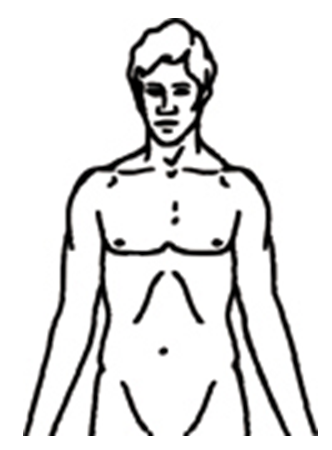
Place an X on the following diagram that indicates the area of the body affected by trigeminal neuralgia.
Question
Question
Question
Question
Question
Question
Question
Question
Question
Question
Question
Question
Question
Question
Question
Question
Question
Question

Unlock Deck
Sign up to unlock the cards in this deck!
Unlock Deck
Unlock Deck
1/44

Play

Full screen (f)
Deck 44: Nursing Care of Patients with Neurologic Disorders
1
The nurse understands that tetanus is completely preventable by
A)active immunization.
B)debriding the bite wound.
C)passive immunization.
D)administering antibiotics immediately after a bite.
A)active immunization.
B)debriding the bite wound.
C)passive immunization.
D)administering antibiotics immediately after a bite.
active immunization.
2
A 30-year-old nurse who works on a busy medical-surgical unit has been diagnosed with multiple sclerosis (MS). The priority for this patient is to do which of the following?
A)Negotiate a regular schedule of working 8-hour dayshifts and consider applying for nursing positions that are less stressful and demanding.
B)Work as hard as possible now because later, it may not be possible.
C)Continue to work as scheduled without making changes.
D)Leave employment as a nurse due to the need for complete bed rest.
A)Negotiate a regular schedule of working 8-hour dayshifts and consider applying for nursing positions that are less stressful and demanding.
B)Work as hard as possible now because later, it may not be possible.
C)Continue to work as scheduled without making changes.
D)Leave employment as a nurse due to the need for complete bed rest.
Negotiate a regular schedule of working 8-hour dayshifts and consider applying for nursing positions that are less stressful and demanding.
3
The nurse is having a conversation with an older adult with Parkinson's disease. Which of the following would this patient most likely exhibit during conversation with the nurse? Select all that apply.
A)a low-pitched monotone voice
B)bubbly, spirited discussion
C)jumbled words that do not make sense
D)angry, loud talk
E)slurring and poor articulation of words
A)a low-pitched monotone voice
B)bubbly, spirited discussion
C)jumbled words that do not make sense
D)angry, loud talk
E)slurring and poor articulation of words
a low-pitched monotone voice
slurring and poor articulation of words
slurring and poor articulation of words
4
The nurse anticipates which of the following medication administration for a patient with multiple sclerosis (MS)?
A)adrenocorticotropic hormone (ACTH).
B)meperidine (Demerol).
C)monoamine oxidase (MAO) inhibitors.
D)rivastigmine tartrate (Exelon).
A)adrenocorticotropic hormone (ACTH).
B)meperidine (Demerol).
C)monoamine oxidase (MAO) inhibitors.
D)rivastigmine tartrate (Exelon).
Unlock Deck
Unlock for access to all 44 flashcards in this deck.
Unlock Deck
k this deck
5
A test that is used to diagnose myasthenia gravis (MG) is ordered by the physician. Because the test involves an injection of a drug that makes muscle strength improve for about five minutes, the nurse realizes that this test likely is
A)a Tensilon test.
B)a computed tomography (CT) scan of the legs.
C)a nerve stimulation study.
D)analysis of antiacetylcholine receptor antibodies.
A)a Tensilon test.
B)a computed tomography (CT) scan of the legs.
C)a nerve stimulation study.
D)analysis of antiacetylcholine receptor antibodies.
Unlock Deck
Unlock for access to all 44 flashcards in this deck.
Unlock Deck
k this deck
6
A patient who was diagnosed with Parkinson's disease is demonstrating bradykinesia. The nurse will likely observe which of the following actions in this patient?
A)a loss of spontaneous movement
B)an increase in spontaneous movements that occur more slowly
C)active exercise and high energy as required to perform activities of daily living
D)very slow talk
A)a loss of spontaneous movement
B)an increase in spontaneous movements that occur more slowly
C)active exercise and high energy as required to perform activities of daily living
D)very slow talk
Unlock Deck
Unlock for access to all 44 flashcards in this deck.
Unlock Deck
k this deck
7
In order to care for adults with Alzheimer's disease (AD), the nurse recognizes which of the following as a common sign? Select all that apply.
A)poor or decreased judgment
B)declining job skills
C)inability to be comfortable in social situations
D)obsession with organization
E)focused on abstract thoughts
A)poor or decreased judgment
B)declining job skills
C)inability to be comfortable in social situations
D)obsession with organization
E)focused on abstract thoughts
Unlock Deck
Unlock for access to all 44 flashcards in this deck.
Unlock Deck
k this deck
8
The nurse is assessing a patient who was just admitted with the diagnosis Guillain-Barré syndrome. The nurse anticipates that the patient will exhibit which of the following? Select all that apply.
A)increased muscular weakness
B)increased leg pain
C)increased confusion
D)increased intolerance to light
E)decreased deep tendon reflexes
A)increased muscular weakness
B)increased leg pain
C)increased confusion
D)increased intolerance to light
E)decreased deep tendon reflexes
Unlock Deck
Unlock for access to all 44 flashcards in this deck.
Unlock Deck
k this deck
9
A patient is admitted to the hospital with a suspected case of botulism. The nurse realizes that the botulism infection was likely caused by which of the following scenarios?
A)The patient ate food contaminated with the toxin.
B)The patient ate infected dirt.
C)The patient was injected with the poison.
D)The patient had a dirty wound that developed this toxin.
A)The patient ate food contaminated with the toxin.
B)The patient ate infected dirt.
C)The patient was injected with the poison.
D)The patient had a dirty wound that developed this toxin.
Unlock Deck
Unlock for access to all 44 flashcards in this deck.
Unlock Deck
k this deck
10
A patient comes to the clinic complaining of repetitive episodes of sudden severe pain on the right side of the face. The nurse expects that the diagnosis will be which of the following?
A)trigeminal neuralgia
B)Parkinson's disease
C)Bell's palsy
D)myasthenia gravis
A)trigeminal neuralgia
B)Parkinson's disease
C)Bell's palsy
D)myasthenia gravis
Unlock Deck
Unlock for access to all 44 flashcards in this deck.
Unlock Deck
k this deck
11
The nurse is assessing a patient with myasthenia gravis. Which of the following is characteristic of this disease? Select all that apply.
A)Visual problems may be an early symptom.
B)Routine exercise provides an improvement in muscle strength.
C)There may be difficulty swallowing.
D)Great improvement occurs in muscle strength with physical therapy.
E)There may be poor articulation in speaking.
A)Visual problems may be an early symptom.
B)Routine exercise provides an improvement in muscle strength.
C)There may be difficulty swallowing.
D)Great improvement occurs in muscle strength with physical therapy.
E)There may be poor articulation in speaking.
Unlock Deck
Unlock for access to all 44 flashcards in this deck.
Unlock Deck
k this deck
12
The medication expected in the care of an Alzheimer's patient is
A)rivastigmine tartrate (Exelon).
B)adrenocorticotropic hormone (ACTH).
C)meperidine (Demerol).
D)acetaminophen (Tylenol).
A)rivastigmine tartrate (Exelon).
B)adrenocorticotropic hormone (ACTH).
C)meperidine (Demerol).
D)acetaminophen (Tylenol).
Unlock Deck
Unlock for access to all 44 flashcards in this deck.
Unlock Deck
k this deck
13
Postpoliomyelitis syndrome is seen in about 50% of patients who had the poliomyelitis virus many years ago. While the pathophysiology is not understood, the nurse anticipates
A)caring for patients with cold intolerance, dizziness, headaches, urinary incontinence, and sleep disorders.
B)a new outbreak of polio with the need for a new immunization program.
C)caring for patients with respiratory complications who must be quarantined.
D)working with patients who have polio again.
A)caring for patients with cold intolerance, dizziness, headaches, urinary incontinence, and sleep disorders.
B)a new outbreak of polio with the need for a new immunization program.
C)caring for patients with respiratory complications who must be quarantined.
D)working with patients who have polio again.
Unlock Deck
Unlock for access to all 44 flashcards in this deck.
Unlock Deck
k this deck
14
A patient who is newly diagnosed with Huntington's disease asks the nurse whether this disorder can be passed on to future children. The nurse's best response is which of the following? Select all that apply.
A)"There may be genetic concerns that should be discussed with the physician."
B)"Children will not be affected by the disease."
C)"The disease is passed on genetically in 75% of offspring."
D)"Each child will have a 50% chance of inheriting the gene."
E)"Genetic testing is can predict with 95% accuracy which offspring have teh disease."
A)"There may be genetic concerns that should be discussed with the physician."
B)"Children will not be affected by the disease."
C)"The disease is passed on genetically in 75% of offspring."
D)"Each child will have a 50% chance of inheriting the gene."
E)"Genetic testing is can predict with 95% accuracy which offspring have teh disease."
Unlock Deck
Unlock for access to all 44 flashcards in this deck.
Unlock Deck
k this deck
15
Medication does not stop all symptoms with Parkinson's disease. The nurse notes tremors and muscle rigidity in an older adult patient. Expected medication to combat these symptoms includes which of the following?
A)propranolol (Inderal)
B)acetaminophen (Tylenol)
C)meperidine (Demerol)
D)nitroglycerin (Nitro-bid)
E)antidepressants
A)propranolol (Inderal)
B)acetaminophen (Tylenol)
C)meperidine (Demerol)
D)nitroglycerin (Nitro-bid)
E)antidepressants
Unlock Deck
Unlock for access to all 44 flashcards in this deck.
Unlock Deck
k this deck
16
An adult patient has been diagnosed with Bell's palsy. The patient asks if the facial paralysis and distortion will go away. The nurse should answer with which of the following responses?
A)"About 80% of people recover completely within a few weeks to a few months, but there can be lasting effects."
B)"Everyone recovers from Bell's palsy in three to five weeks."
C)"Most people have permanent facial paralysis on both sides of the face."
D)"Most people have permanent facial paralysis on one side of the face."
A)"About 80% of people recover completely within a few weeks to a few months, but there can be lasting effects."
B)"Everyone recovers from Bell's palsy in three to five weeks."
C)"Most people have permanent facial paralysis on both sides of the face."
D)"Most people have permanent facial paralysis on one side of the face."
Unlock Deck
Unlock for access to all 44 flashcards in this deck.
Unlock Deck
k this deck
17
A patient with Guillain-Barré syndrome asks if her or she will get better. The nurse's best response is which of the following?
A)"Recovery will be slow but your chance of getting better is good."
B)"Only time and prayer will tell."
C)"Do not worry about that right now."
D)"Recovery is not likely."
A)"Recovery will be slow but your chance of getting better is good."
B)"Only time and prayer will tell."
C)"Do not worry about that right now."
D)"Recovery is not likely."
Unlock Deck
Unlock for access to all 44 flashcards in this deck.
Unlock Deck
k this deck
18
The nurse is caring for a patient with amyotrophic lateral sclerosis (ALS). The nurse realizes that the prognosis is
A)poor.The disease rapidly progresses and is fatal.
B)good.The disease will progress over many years but the quality of life will be good.
C)good.The disease progresses rapidly but can be halted by drug therapy.
D)excellent.The disease will progress slowly and can be controlled by medication.
A)poor.The disease rapidly progresses and is fatal.
B)good.The disease will progress over many years but the quality of life will be good.
C)good.The disease progresses rapidly but can be halted by drug therapy.
D)excellent.The disease will progress slowly and can be controlled by medication.
Unlock Deck
Unlock for access to all 44 flashcards in this deck.
Unlock Deck
k this deck
19
Once amyotrophic lateral sclerosis (ALS) is diagnosed, the priority nursing activity is to do which of the following?
A)Support the patient and family to meet physical and psychosocial needs.
B)Monitor for infection.
C)Assist the patient to avoid complications.
D)Assist the patient to adapt to the disease.
A)Support the patient and family to meet physical and psychosocial needs.
B)Monitor for infection.
C)Assist the patient to avoid complications.
D)Assist the patient to adapt to the disease.
Unlock Deck
Unlock for access to all 44 flashcards in this deck.
Unlock Deck
k this deck
20
A patient comes to the clinic with complaints of blurred vision and muscle spasms that come and go, which have been occurring over the past several months. The patient is scheduled for an MRI and lumbar puncture with examination of the CSF. Which important patient history is important for the nurse to note?
A)The patient is a 22-year-old woman from Canada.
B)The patient is Caucasian and lives in the United States
C)The patient has a family history of epilepsy.
D)The patient has been depressed.
E)The patient's father had Parkinson's disease.
A)The patient is a 22-year-old woman from Canada.
B)The patient is Caucasian and lives in the United States
C)The patient has a family history of epilepsy.
D)The patient has been depressed.
E)The patient's father had Parkinson's disease.
Unlock Deck
Unlock for access to all 44 flashcards in this deck.
Unlock Deck
k this deck
21
The nurse is caring for a patient with amyotrophic lateral sclerosis (ALS). The primary focus of care will be
A)respiratory support as the muscles of breathing fail, and managing secretions due to the inability to swallow and communication.
B)providing gastrostomy feedings as soon as possible so as to build up muscle mass when motor functions return.
C)pain management and active range-of-motion (ROM) exercises.
D)giving immunosuppressants.
A)respiratory support as the muscles of breathing fail, and managing secretions due to the inability to swallow and communication.
B)providing gastrostomy feedings as soon as possible so as to build up muscle mass when motor functions return.
C)pain management and active range-of-motion (ROM) exercises.
D)giving immunosuppressants.
Unlock Deck
Unlock for access to all 44 flashcards in this deck.
Unlock Deck
k this deck
22
A patient is hospitalized with Guillain-Barré syndrome and the nursing diagnosis Spontaneous Ventilation, Impaired has been identified. In planning care for this patient, the nurse will prioritize the following interventions. Rank the interventions, with the first being the most critical and the last the least critical. Click and drag the options below to move them up or down.
A)careful airway suctioning to prevent infection
B)monitor arterial blood gases to identify changes
C)maintain hydration and caloric intake
D)patient education regarding residual problems
A)careful airway suctioning to prevent infection
B)monitor arterial blood gases to identify changes
C)maintain hydration and caloric intake
D)patient education regarding residual problems
Unlock Deck
Unlock for access to all 44 flashcards in this deck.
Unlock Deck
k this deck
23
A home health nurse visits a patient with stage 2 Alzheimer's disease who lives at home with a spouse. In order to meet the needs of the spouse, the nurse suggests
A)finding respite care to come into the home several days a week.
B)making arrangements for the patient to visit the local senior citizens' center in the afternoon.
C)providing the patient a list of daily activities to complete.
D)finding placement in a long-term care facility.
A)finding respite care to come into the home several days a week.
B)making arrangements for the patient to visit the local senior citizens' center in the afternoon.
C)providing the patient a list of daily activities to complete.
D)finding placement in a long-term care facility.
Unlock Deck
Unlock for access to all 44 flashcards in this deck.
Unlock Deck
k this deck
24
A nurse working in a fertility clinic reviews the health history of a patient whose father had Huntington's disease. What statement by the nurse would best address this patient's risk factors?
A)"What do you know about testing for this disease?"
B)"Have you ever been tested for this disease?"
C)"Are you sure you want to have children?"
D)"Your child has a 50% chance of getting this disease."
A)"What do you know about testing for this disease?"
B)"Have you ever been tested for this disease?"
C)"Are you sure you want to have children?"
D)"Your child has a 50% chance of getting this disease."
Unlock Deck
Unlock for access to all 44 flashcards in this deck.
Unlock Deck
k this deck
25
A patient complains of periods of confusion and forgetfulness at times, and reports clear thought process at most times of the day. The symptoms have been gradually worsening. The best response by the nurse is which of the following?
A)"Have you started any new medications since the symptoms began?"
B)"You probably have nothing to worry about; it's most likely stress-related."
C)"Everybody has a few problems with memory as they get older."
D)"You should probably have an MRI of your brain."
A)"Have you started any new medications since the symptoms began?"
B)"You probably have nothing to worry about; it's most likely stress-related."
C)"Everybody has a few problems with memory as they get older."
D)"You should probably have an MRI of your brain."
Unlock Deck
Unlock for access to all 44 flashcards in this deck.
Unlock Deck
k this deck
26
Place an X on the following diagram that indicates the area of the body affected by trigeminal neuralgia.
Unlock Deck
Unlock for access to all 44 flashcards in this deck.
Unlock Deck
k this deck
27
A patient with stage 2 Alzheimer's disease becomes very agitated in the evenings. Appropriate nursing interventions would include
A)playing soft music in the patient's room.
B)use of anti-anxiety medications or tranquilizers.
C)moving the patient to an area of activity to provide distraction.
D)recommending the patient be moved to a more secure environment.
A)playing soft music in the patient's room.
B)use of anti-anxiety medications or tranquilizers.
C)moving the patient to an area of activity to provide distraction.
D)recommending the patient be moved to a more secure environment.
Unlock Deck
Unlock for access to all 44 flashcards in this deck.
Unlock Deck
k this deck
28
The husband of a patient with Alzheimer's disease (AD) asks the nurse to explain sundowning. The nurse's best response would be which of the following?
A)"Your wife can become more agitated, disoriented to time, and wander during the afternoon, evening hours, and overcast days."
B)"Her eyes will appear more downcast and the lids will droop."
C)"Repetition of words or phrases occurs more frequently."
D)"The ability to perform simple tasks is lost."
A)"Your wife can become more agitated, disoriented to time, and wander during the afternoon, evening hours, and overcast days."
B)"Her eyes will appear more downcast and the lids will droop."
C)"Repetition of words or phrases occurs more frequently."
D)"The ability to perform simple tasks is lost."
Unlock Deck
Unlock for access to all 44 flashcards in this deck.
Unlock Deck
k this deck
29
A nurse is giving a lecture at a health fair when a member of the audience asks: "Why do people say you shouldn't eat foods that come from cans that appear to bulge, as if the seal has been broken?" How should the nurse respond?
A)"It may be a sign that botulism toxins are present in foods that have been improperly processed and sealed."
B)"Arboviruses may be found in canned foods that appear damaged."
C)"Clostridium tetani occurs in poorly processed foods or damaged cans."
D)"Open the can, and if no bubbles, bad odor, or change in color is present, you can eat the contents."
A)"It may be a sign that botulism toxins are present in foods that have been improperly processed and sealed."
B)"Arboviruses may be found in canned foods that appear damaged."
C)"Clostridium tetani occurs in poorly processed foods or damaged cans."
D)"Open the can, and if no bubbles, bad odor, or change in color is present, you can eat the contents."
Unlock Deck
Unlock for access to all 44 flashcards in this deck.
Unlock Deck
k this deck
30
A patient states "My doctor said sometimes I would have an on/off problem with this medication what does that mean?" The best response by the nurse is which of the following?
A)"The on times will be when your symptoms are under control; the off times are when you will have increased problems with symptom management."
B)"There will be times when you are depressed (off) and when you are happy (on)."
C)"You will have to take breaks from this medicine by stopping (off) and starting it (on) again, so you don't build up a tolerance to it."
D)"I'm not a pharmacist, so I shouldn't be answering this question."
A)"The on times will be when your symptoms are under control; the off times are when you will have increased problems with symptom management."
B)"There will be times when you are depressed (off) and when you are happy (on)."
C)"You will have to take breaks from this medicine by stopping (off) and starting it (on) again, so you don't build up a tolerance to it."
D)"I'm not a pharmacist, so I shouldn't be answering this question."
Unlock Deck
Unlock for access to all 44 flashcards in this deck.
Unlock Deck
k this deck
31
A patient's spouse states "I've noticed that my spouse doesn't sleep well anymore and sometimes can't find the right words when we're visiting." Which is the most appropriate response by the nurse?
A)"How long have you noticed these changes?"
B)"Does anyone in your family have Alzheimer's disease?"
C)"These are common changes associated with age."
D)"Do you think your spouse is depressed?"
A)"How long have you noticed these changes?"
B)"Does anyone in your family have Alzheimer's disease?"
C)"These are common changes associated with age."
D)"Do you think your spouse is depressed?"
Unlock Deck
Unlock for access to all 44 flashcards in this deck.
Unlock Deck
k this deck
32
A nurse working with postpoliomyelitis patients knows that most of her patients
A)had their initial case which was severe, 10 to 40 years ago.
B)have muscle involvement in only muscle groups that were affected initially.
C)have few symptoms other than mild muscle and joint weakness and pain.
D)had a recurrence due to receiving an oral polio vaccine booster.
A)had their initial case which was severe, 10 to 40 years ago.
B)have muscle involvement in only muscle groups that were affected initially.
C)have few symptoms other than mild muscle and joint weakness and pain.
D)had a recurrence due to receiving an oral polio vaccine booster.
Unlock Deck
Unlock for access to all 44 flashcards in this deck.
Unlock Deck
k this deck
33
Place the following interventions in order of priority related to nursing care of the patient undergoing plasmapheresis. Click and drag the options below to move them up or down.
A)Check with physician about holding medications.
B)Assess vital signs and weight.
C)Verify blood type and crossmatch for replacement blood products.
D)Assess for dizziness or hypotension.
E)Assess intravenous port for bruising.
F)Reevaluate laboratory data, especially CBC, platelet count, and clotting times.
A)Check with physician about holding medications.
B)Assess vital signs and weight.
C)Verify blood type and crossmatch for replacement blood products.
D)Assess for dizziness or hypotension.
E)Assess intravenous port for bruising.
F)Reevaluate laboratory data, especially CBC, platelet count, and clotting times.
Unlock Deck
Unlock for access to all 44 flashcards in this deck.
Unlock Deck
k this deck
34
In order to care for Parkinson's disease (PD) patients, the nurse recognizes which of the following as an early sign of this neurologic disease? Select all that apply.
A)"pill-rolling" motions
B)cogwheel rigidity
C)being "frozen"
D)bilateral involvement
E)Fatigue and a slight a rhythmic hand tremor
A)"pill-rolling" motions
B)cogwheel rigidity
C)being "frozen"
D)bilateral involvement
E)Fatigue and a slight a rhythmic hand tremor
Unlock Deck
Unlock for access to all 44 flashcards in this deck.
Unlock Deck
k this deck
35
A patient with myasthenia gravis is taking pyridostigmine (Mestinon). Teaching about this medication should include immediately reporting which of the following? Select all that apply.
A)increased weakness.
B)problems with increased drooling.
C)orthostatic hypotension.
D)headache.
E)increased difficulty swallowing
A)increased weakness.
B)problems with increased drooling.
C)orthostatic hypotension.
D)headache.
E)increased difficulty swallowing
Unlock Deck
Unlock for access to all 44 flashcards in this deck.
Unlock Deck
k this deck
36
A mother takes her young child to an urgent care clinic requesting "the shot you get to prevent rabies" as her son was playing with a wild raccoon and was bitten. What is the appropriate response by the nurse?
A)"Care of a bite victim includes a series of immunizations on the day of exposure and on days 3, 7, 14, and 28 after being bitten."
B)"The animal needs to be quarantined first, to determine if it has rabies, before immunizations are started."
C)"Penicillin is needed since the wound can easily become infected."
D)"Wait a week to see if your child develops any symptoms, then the immunization will be given."
A)"Care of a bite victim includes a series of immunizations on the day of exposure and on days 3, 7, 14, and 28 after being bitten."
B)"The animal needs to be quarantined first, to determine if it has rabies, before immunizations are started."
C)"Penicillin is needed since the wound can easily become infected."
D)"Wait a week to see if your child develops any symptoms, then the immunization will be given."
Unlock Deck
Unlock for access to all 44 flashcards in this deck.
Unlock Deck
k this deck
37
The nurse is completing teaching to a patient with a new diagnosis of Bell's palsy. A priority focus of this teaching should be which of the following?
A)eye care
B)promoting effective swallowing
C)pain management
D)improving muscle strength in the upper extremity
A)eye care
B)promoting effective swallowing
C)pain management
D)improving muscle strength in the upper extremity
Unlock Deck
Unlock for access to all 44 flashcards in this deck.
Unlock Deck
k this deck
38
The nurse caring for a patient with trigeminal neuralgia knows that the treatment focus will be
A)drugs such as tricyclic anticonvulsants or surgically severing the nerve root (rhizotomy).
B)antiviral drugs such as acyclovir and physical therapy.
C)respiratory support and NSAIDs.
D)physical therapy and warm, moist packs to the affected area.
A)drugs such as tricyclic anticonvulsants or surgically severing the nerve root (rhizotomy).
B)antiviral drugs such as acyclovir and physical therapy.
C)respiratory support and NSAIDs.
D)physical therapy and warm, moist packs to the affected area.
Unlock Deck
Unlock for access to all 44 flashcards in this deck.
Unlock Deck
k this deck
39
The nurse is completing discharge teaching to a patient with a new diagnosis of multiple sclerosis (MS). The nurse explains that the diet should
A)focus on maintaining a weight as close as possible to what is recommended for the patient's height and weight.
B)have increased fats.
C)include foods that are easy to swallow since dysphagia is a problem seen in the early stages of the disease.
D)basically remain the same as there are no nutritional changes in the MS patient.
A)focus on maintaining a weight as close as possible to what is recommended for the patient's height and weight.
B)have increased fats.
C)include foods that are easy to swallow since dysphagia is a problem seen in the early stages of the disease.
D)basically remain the same as there are no nutritional changes in the MS patient.
Unlock Deck
Unlock for access to all 44 flashcards in this deck.
Unlock Deck
k this deck
40
A patient with stage 2 Alzheimer's disease has lost five pounds over the past month. The best nursing intervention would be which of the following?
A)Provide quick snacks throughout the day.
B)Recommend referral to a nutritionist.
C)Make sure the patient is put on a mechanical soft diet.
D)Give the patient food choices he or she can select.
A)Provide quick snacks throughout the day.
B)Recommend referral to a nutritionist.
C)Make sure the patient is put on a mechanical soft diet.
D)Give the patient food choices he or she can select.
Unlock Deck
Unlock for access to all 44 flashcards in this deck.
Unlock Deck
k this deck
41
Which of the following assessments of cranial nerve function should be performed by the nurse when caring for the patient after percutaneous rhizotomy of the facial nerve?
A)Ask the patient to blow out the cheeks, wrinkle the forehead, frown, wink and close both eyes tightly.
B)Have the patient touch the index finger to the nose with eyes open, and then repeat the movement with eyes closed.
C)Ask the patient to shrug the shoulders, and then repeat the movement when resistance is applied.
D)Have the patient turn the head to the left, then the right, and touch the ear to the shoulder on the left and right sides.
A)Ask the patient to blow out the cheeks, wrinkle the forehead, frown, wink and close both eyes tightly.
B)Have the patient touch the index finger to the nose with eyes open, and then repeat the movement with eyes closed.
C)Ask the patient to shrug the shoulders, and then repeat the movement when resistance is applied.
D)Have the patient turn the head to the left, then the right, and touch the ear to the shoulder on the left and right sides.
Unlock Deck
Unlock for access to all 44 flashcards in this deck.
Unlock Deck
k this deck
42
The nurse recognizes this laboratory report as being consistent with a patient who has which of the following?
A)myasthenia gravis
B)Parkinson's disease
C)amyotrophic lateral sclerosis (ALS)
D)Guillain-Barrå? syndrome (GBS)
A)myasthenia gravis
B)Parkinson's disease
C)amyotrophic lateral sclerosis (ALS)
D)Guillain-Barrå? syndrome (GBS)
Unlock Deck
Unlock for access to all 44 flashcards in this deck.
Unlock Deck
k this deck
43
The nurse caring for the patient with Guillain-Barré syndrome will be expecting to administer which of the following medications? Select all that apply.
A)antibiotics for urinary tract or respiratory infections
B)morphine for muscle pain
C)anticoagulants to prevent DVTs and pulmonary emboli
D)anticonvulsants to prevent seizures
E)anticholinesterase inhibitors to improve muscle strength
A)antibiotics for urinary tract or respiratory infections
B)morphine for muscle pain
C)anticoagulants to prevent DVTs and pulmonary emboli
D)anticonvulsants to prevent seizures
E)anticholinesterase inhibitors to improve muscle strength
Unlock Deck
Unlock for access to all 44 flashcards in this deck.
Unlock Deck
k this deck
44
Review the following computerized charting record and identify the stage of Alzheimer's disease (AD) of the patient described.
A)stage II
B)stage I
C)stage III
D)stage IV
A)stage II
B)stage I
C)stage III
D)stage IV
Unlock Deck
Unlock for access to all 44 flashcards in this deck.
Unlock Deck
k this deck
Unlock Deck
Unlock for access to all 44 flashcards in this deck.






