







 Chat with AI

Deck 39: Nursing Care of Patients with Musculoskeletal Trauma
Full screen (f)

Question

Question
Question
Question
Question
Question
Question
Question
Question
Question
Question
Question
Question
Question
Question
Question
Question
Question
Question
Question
Question
The patient is having his stump dressing changed by the nurse. The nurse understands that proper technique must be used for the above the knee amputation. The technique used is called which of the following? 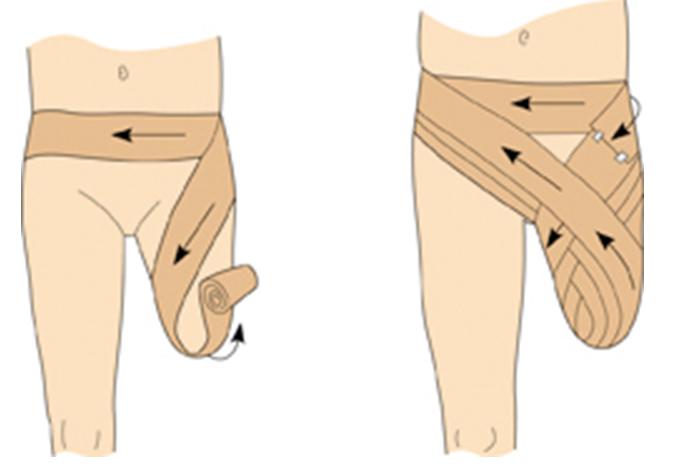
A)figure-eight bandage
B)compression bandaging technique
C)splinting
D)bi-valving
A)figure-eight bandage
B)compression bandaging technique
C)splinting
D)bi-valving
Question
Question
Question
Question
Question
The patient has a right tibia and fibula fracture. The orthopedic surgeon decides to surgically correct the fractures with this type of device. Refer to figure. What type of device is being used? 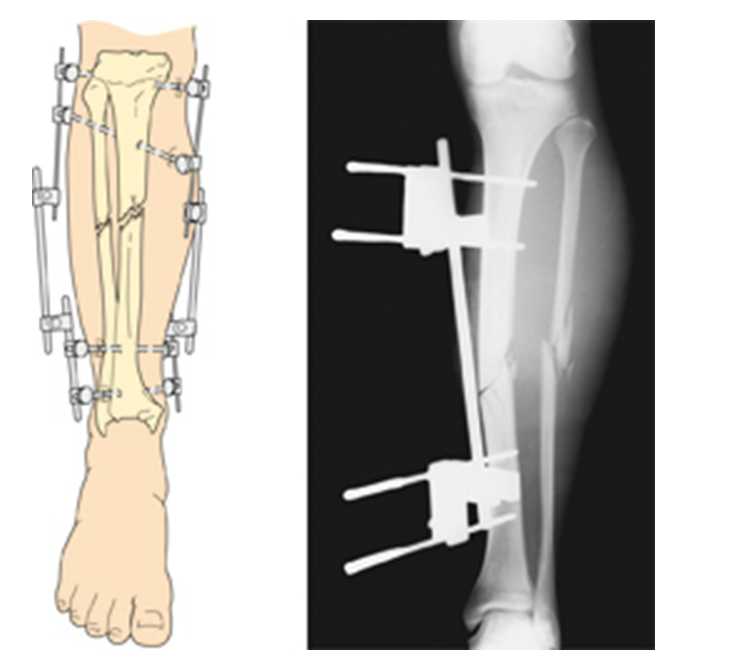
A)internal fixation device
B)external fixation device
C)Buck's traction
D)wiring
A)internal fixation device
B)external fixation device
C)Buck's traction
D)wiring
Question
Kyle, a 70-year-old male patient has a fracture of his right hip from a motor vehicle accident. The orthopedic surgeon decides to perform surgery to correct the fracture to prevent complications and to allow early rehabilitation. The type of surgery and stabilization he will use is which of the following? Refer to the figure. 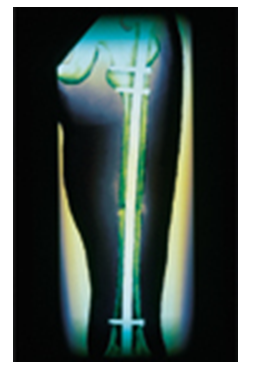
A)external fixation
B)open reduction with internal fixation
C)total right hip arthroplasty
D)hip arthroscopy
A)external fixation
B)open reduction with internal fixation
C)total right hip arthroplasty
D)hip arthroscopy
Question
Question
Question
Question
Question
Question
Question
Question
Question
Question
Question
Question
Question
Question
Question
Question
Question
Question
Question
Question

Unlock Deck
Sign up to unlock the cards in this deck!
Unlock Deck
Unlock Deck
1/47

Play

Full screen (f)
Deck 39: Nursing Care of Patients with Musculoskeletal Trauma
1
A patient is diagnosed with epicondylitis. The nurse realizes that which of the following are treatments for this health problem? Select all that apply.
A)ibuprofen 600 mg twice daily
B)morphine Sulfate 4 mg IV
C)arm splint to be used while awake
D)ice followed by heat
E)surgical repair
A)ibuprofen 600 mg twice daily
B)morphine Sulfate 4 mg IV
C)arm splint to be used while awake
D)ice followed by heat
E)surgical repair
ibuprofen 600 mg twice daily
arm splint to be used while awake
ice followed by heat
arm splint to be used while awake
ice followed by heat
2
An elderly patient lives at home alone. Which of the following assessment data would indicate modifiable risk factors for a hip fracture? Select all that apply.
A)complains of lower extremity weakness
B)problems with balance
C)medications: atenolol 50 mg daily, lisinopril 10 mg daily, Xanax 0.25 mg daily, Seroquel 50 mg daily
D)sleeps with two pillows
E)complains of nonproductive dry cough
A)complains of lower extremity weakness
B)problems with balance
C)medications: atenolol 50 mg daily, lisinopril 10 mg daily, Xanax 0.25 mg daily, Seroquel 50 mg daily
D)sleeps with two pillows
E)complains of nonproductive dry cough
complains of lower extremity weakness
problems with balance
medications: atenolol 50 mg daily, lisinopril 10 mg daily, Xanax 0.25 mg daily, Seroquel 50 mg daily
problems with balance
medications: atenolol 50 mg daily, lisinopril 10 mg daily, Xanax 0.25 mg daily, Seroquel 50 mg daily
3
A patient sustained facial and chest injuries from a motor vehicle accident. The nurse auscultates rhonchi in the upper airways. Which of the following would be a priority nursing diagnosis for this patient?
A)Ineffective Airway Clearance
B)Risk for Aspiration
C)Impaired Oral Mucous Membrane
D)Risk for Injury
A)Ineffective Airway Clearance
B)Risk for Aspiration
C)Impaired Oral Mucous Membrane
D)Risk for Injury
Ineffective Airway Clearance
4
The nurse should assess a patient with a long leg cast for signs that indicate compromised circulation to include which of the following? Select all that apply Select all that apply.
A)swelling of the toes
B)drainage on the cast
C)increased temperature
D)foul odor
E)a tight cast
A)swelling of the toes
B)drainage on the cast
C)increased temperature
D)foul odor
E)a tight cast
Unlock Deck
Unlock for access to all 47 flashcards in this deck.
Unlock Deck
k this deck
5
The patient is diagnosed with an oblique fracture of the left femur. The nurse understands that the process of bone healing occurs in phases. Place in order the phases of the bone healing process: Click and drag the options below to move them up or down.
A)reparative phase
B)initial injury (fracture)
C)inflammatory phase
D)remodeling phase
A)reparative phase
B)initial injury (fracture)
C)inflammatory phase
D)remodeling phase
Unlock Deck
Unlock for access to all 47 flashcards in this deck.
Unlock Deck
k this deck
6
The nurse is planning care for a patient recovering from an above-the-knee amputation. Which of the following positions should the nurse include in this patient's plan of care?
A)Sims' position as tolerated
B)prone for one hour, several times a day
C)high Fowler's position
D)sitting in a chair while awake
A)Sims' position as tolerated
B)prone for one hour, several times a day
C)high Fowler's position
D)sitting in a chair while awake
Unlock Deck
Unlock for access to all 47 flashcards in this deck.
Unlock Deck
k this deck
7
Which of the following statements made by an adolescent patient recovering from a sprain would indicate the need for further instruction by the nurse regarding care at home?
A)"I should put a heating pad on my leg as soon as I get home."
B)"I should avoid weight bearing on this leg for a couple days."
C)"I should make sure to keep the ace bandage on my leg."
D)"I should prop this leg up when I'm sitting in a chair."
A)"I should put a heating pad on my leg as soon as I get home."
B)"I should avoid weight bearing on this leg for a couple days."
C)"I should make sure to keep the ace bandage on my leg."
D)"I should prop this leg up when I'm sitting in a chair."
Unlock Deck
Unlock for access to all 47 flashcards in this deck.
Unlock Deck
k this deck
8
The nurse cannot palpate a patient's pedal pulse following an ORIF procedure for a fractured tibia. Which action is the priority?
A)Notify the surgeon of the problem.
B)Check the lower extremity for pallor.
C)Use a Doppler to find the pedal pulse.
D)Assess the patient's pain rating.
A)Notify the surgeon of the problem.
B)Check the lower extremity for pallor.
C)Use a Doppler to find the pedal pulse.
D)Assess the patient's pain rating.
Unlock Deck
Unlock for access to all 47 flashcards in this deck.
Unlock Deck
k this deck
9
The patient diagnosed with bursitis asks the nurse, "Why do you keep asking what my pain level is? Don't you believe me?" The most therapeutic response by the nurse would be which of the following?
A)"It is important to know what your pain level is so that the best medication can be provided."
B)"If you don't want the medication, you don't have to take it."
C)"I can't give you the medication unless I know what your pain level is."
D)"I don't understand why you are concerned about the questions.Would you clarify?"
A)"It is important to know what your pain level is so that the best medication can be provided."
B)"If you don't want the medication, you don't have to take it."
C)"I can't give you the medication unless I know what your pain level is."
D)"I don't understand why you are concerned about the questions.Would you clarify?"
Unlock Deck
Unlock for access to all 47 flashcards in this deck.
Unlock Deck
k this deck
10
A 52-year-old male patient presents to the clinic complaining of limited range of motion in the left arm with a pain level of 8 on a scale of 0-10. His blood pressure is 152/86; heart rate 106; and respiratory rate is 22. What would be the priority nursing diagnosis for this patient?
A)Acute Pain
B)Altered Tissue Perfusion
C)Limited Range-of-Motion
D)Impaired Gas Exchange
A)Acute Pain
B)Altered Tissue Perfusion
C)Limited Range-of-Motion
D)Impaired Gas Exchange
Unlock Deck
Unlock for access to all 47 flashcards in this deck.
Unlock Deck
k this deck
11
After sustaining a fracture, a patient was treated by applying ice and a cast. After several weeks, the case is removed and the patient is able to ambulate without difficulty. Which positive local factors influenced this patient's bone healing? Select all that apply.
A)immobilization
B)timely correction of displacement
C)applying of ice
D)delay in correction of displacement
E)malnutrition
A)immobilization
B)timely correction of displacement
C)applying of ice
D)delay in correction of displacement
E)malnutrition
Unlock Deck
Unlock for access to all 47 flashcards in this deck.
Unlock Deck
k this deck
12
A patient with a long leg cast is demonstrating signs of compartment syndrome. Which of the following supplies or equipment should the nurse prepare to aid in the treatment of the patient?
A)extra pillows to elevate the casted extremity above the heart
B)a Doppler to assess the strength of peripheral pulses
C)Ace bandages to wrap around the bi-valved cast
D)a percussion hammer to assess reflexes for damage
A)extra pillows to elevate the casted extremity above the heart
B)a Doppler to assess the strength of peripheral pulses
C)Ace bandages to wrap around the bi-valved cast
D)a percussion hammer to assess reflexes for damage
Unlock Deck
Unlock for access to all 47 flashcards in this deck.
Unlock Deck
k this deck
13
An elderly patient with a history of diabetes is experiencing poor healing of a fractured ankle. The nurse realizes that which of the following factors contribute to this patient's delay in bone healing? Select all that apply.
A)immobilization
B)advanced age
C)diabetes
D)moderate activity level prior to injury
E)presence of foreign body at the fracture site
A)immobilization
B)advanced age
C)diabetes
D)moderate activity level prior to injury
E)presence of foreign body at the fracture site
Unlock Deck
Unlock for access to all 47 flashcards in this deck.
Unlock Deck
k this deck
14
A patient is diagnosed with a sprained right ankle. The nurse instructs the patient on the treatment of the sprain to include which of the following?
A)applying of a long leg cast
B)pain medication
C)heat, rest, compression, and elevation
D)rest, ice, compression, and elevation
A)applying of a long leg cast
B)pain medication
C)heat, rest, compression, and elevation
D)rest, ice, compression, and elevation
Unlock Deck
Unlock for access to all 47 flashcards in this deck.
Unlock Deck
k this deck
15
While providing care to a patient recovering from a fractured hip, the nurse plans interventions to prevent the development of which of the following common types of contractures?
A)internal rotation with abduction
B)external rotation with abduction
C)flexion and adduction of the hip with flexion of the knee
D)hyperextension of the knee joint with foot drop deformity
A)internal rotation with abduction
B)external rotation with abduction
C)flexion and adduction of the hip with flexion of the knee
D)hyperextension of the knee joint with foot drop deformity
Unlock Deck
Unlock for access to all 47 flashcards in this deck.
Unlock Deck
k this deck
16
A patient is diagnosed with a compound fracture and is scheduled for immediate surgery. Which of the following nursing diagnoses would be most appropriate in the immediate postoperative period?
A)Impaired Transfer Ability
B)Risk for Post-Trauma Syndrome
C)Risk for Infection
D)Risk for Falls
A)Impaired Transfer Ability
B)Risk for Post-Trauma Syndrome
C)Risk for Infection
D)Risk for Falls
Unlock Deck
Unlock for access to all 47 flashcards in this deck.
Unlock Deck
k this deck
17
A patient is recovering from endoscopic carpal tunnel surgery. The nurse knows that the surgery has been effective when the patient states which of the following?
A)"I only feel numbness when I have been on the computer for more than 15 minutes."
B)"I guess in a couple of months the numbness will go away."
C)"I will always have some tingling in my fingers after I have been on the computer"
D)"I am not having tingling or numbness in my thumb or index finger any longer."
A)"I only feel numbness when I have been on the computer for more than 15 minutes."
B)"I guess in a couple of months the numbness will go away."
C)"I will always have some tingling in my fingers after I have been on the computer"
D)"I am not having tingling or numbness in my thumb or index finger any longer."
Unlock Deck
Unlock for access to all 47 flashcards in this deck.
Unlock Deck
k this deck
18
A patient is placed in Buck's traction after a hip fracture. Which of the following should be included in this patient's plan of care?
A)providing pin site care every shift as prescribed
B)placing an abduction pillow between the legs for alignment
C)having another person hold the weights when pulling up in bed
D)turning to the unaffected side every two hours
A)providing pin site care every shift as prescribed
B)placing an abduction pillow between the legs for alignment
C)having another person hold the weights when pulling up in bed
D)turning to the unaffected side every two hours
Unlock Deck
Unlock for access to all 47 flashcards in this deck.
Unlock Deck
k this deck
19
The nurse is aware that which of the following occupations could put a patient at risk for carpal tunnel syndrome? Select all that apply.
A)farmer
B)police officer
C)barber
D)computer technician
E)carpet installer
A)farmer
B)police officer
C)barber
D)computer technician
E)carpet installer
Unlock Deck
Unlock for access to all 47 flashcards in this deck.
Unlock Deck
k this deck
20
A patient is diagnosed with a humeral fracture. Which of the following would the nurse identify as a priority treatment goal for the patient?
A)immediate surgical correction
B)immobilizing the fractured bone in normal anatomic position
C)applying ice and compression to the injured arm
D)applying ace wrap and elevate
A)immediate surgical correction
B)immobilizing the fractured bone in normal anatomic position
C)applying ice and compression to the injured arm
D)applying ace wrap and elevate
Unlock Deck
Unlock for access to all 47 flashcards in this deck.
Unlock Deck
k this deck
21
The patient is having his stump dressing changed by the nurse. The nurse understands that proper technique must be used for the above the knee amputation. The technique used is called which of the following?
A)figure-eight bandage
B)compression bandaging technique
C)splinting
D)bi-valving
A)figure-eight bandage
B)compression bandaging technique
C)splinting
D)bi-valving
Unlock Deck
Unlock for access to all 47 flashcards in this deck.
Unlock Deck
k this deck
22
The nurse is explaining to a patient the procedure to alleviate pressure on a casted extremity. Which of the following should the nurse explain to this patient?
A)"This procedure is called bi-valving.The doctor will use a cast saw to split the cast down both sides in order to prevent pressure on your leg."
B)"This procedure is called an external fixation device and will help the bone heal."
C)"This procedure is called an open reduction with internal fixation to help the bone fuse together."
D)"This procedure will help heal your leg faster so that the cast can come off sooner."
A)"This procedure is called bi-valving.The doctor will use a cast saw to split the cast down both sides in order to prevent pressure on your leg."
B)"This procedure is called an external fixation device and will help the bone heal."
C)"This procedure is called an open reduction with internal fixation to help the bone fuse together."
D)"This procedure will help heal your leg faster so that the cast can come off sooner."
Unlock Deck
Unlock for access to all 47 flashcards in this deck.
Unlock Deck
k this deck
23
The nurse should assess for signs and symptoms of possible compartment syndrome after which of the following? Select all that apply.
A)fasciotomy
B)cast applying to a limb
C)crush injury to a limb
D)fat embolism
E)burn injury
A)fasciotomy
B)cast applying to a limb
C)crush injury to a limb
D)fat embolism
E)burn injury
Unlock Deck
Unlock for access to all 47 flashcards in this deck.
Unlock Deck
k this deck
24
A patient experienced an open fracture of the left femur that punctured the skin. The patient was dragged for approximately two hours before arriving to the hospital. The nurse would identify which of the nursing diagnoses as a priority for this patient?
A)Malnutrition
B)Risk for Infection
C)Hypothermia
D)Anxiety
A)Malnutrition
B)Risk for Infection
C)Hypothermia
D)Anxiety
Unlock Deck
Unlock for access to all 47 flashcards in this deck.
Unlock Deck
k this deck
25
The nurse has identified the diagnosis of Acute Pain for a patient recovering from an above the knee amputation. Which of the following nursing interventions would be beneficial for this patient? Select all that apply.
A)Administer analgesics before pain reaches higher level.
B)Splint and support the injured area.
C)Elevate the stump on three pillows.
D)Encourage deep breathing and relaxation exercise.
E)Reposition the patient every eight hours.
A)Administer analgesics before pain reaches higher level.
B)Splint and support the injured area.
C)Elevate the stump on three pillows.
D)Encourage deep breathing and relaxation exercise.
E)Reposition the patient every eight hours.
Unlock Deck
Unlock for access to all 47 flashcards in this deck.
Unlock Deck
k this deck
26
The patient has a right tibia and fibula fracture. The orthopedic surgeon decides to surgically correct the fractures with this type of device. Refer to figure. What type of device is being used?
A)internal fixation device
B)external fixation device
C)Buck's traction
D)wiring
A)internal fixation device
B)external fixation device
C)Buck's traction
D)wiring
Unlock Deck
Unlock for access to all 47 flashcards in this deck.
Unlock Deck
k this deck
27
Kyle, a 70-year-old male patient has a fracture of his right hip from a motor vehicle accident. The orthopedic surgeon decides to perform surgery to correct the fracture to prevent complications and to allow early rehabilitation. The type of surgery and stabilization he will use is which of the following? Refer to the figure.
A)external fixation
B)open reduction with internal fixation
C)total right hip arthroplasty
D)hip arthroscopy
A)external fixation
B)open reduction with internal fixation
C)total right hip arthroplasty
D)hip arthroscopy
Unlock Deck
Unlock for access to all 47 flashcards in this deck.
Unlock Deck
k this deck
28
The nurse is teaching older adults about risks for musculoskeletal trauma. Which of the following strategies should the nurse include?
A)Avoid falls at home by not using throw rugs.
B)Avoid injury in motor vehicle accidents by not driving.
C)Avoid fire by not cooking in the kitchen when alone.
D)Avoid injury by not using assistive devices at home.
A)Avoid falls at home by not using throw rugs.
B)Avoid injury in motor vehicle accidents by not driving.
C)Avoid fire by not cooking in the kitchen when alone.
D)Avoid injury by not using assistive devices at home.
Unlock Deck
Unlock for access to all 47 flashcards in this deck.
Unlock Deck
k this deck
29
A patient recovering from a fractured hip is at risk for developing deep vein thrombosis. The nurse realizes that which of the following treatments would be indicated for the patient at this time?
A)heparin
B)prevention
C)vena cava filter
D)massaging the affected extremity
A)heparin
B)prevention
C)vena cava filter
D)massaging the affected extremity
Unlock Deck
Unlock for access to all 47 flashcards in this deck.
Unlock Deck
k this deck
30
A patient, diagnosed with a fractured left femur, begins complaining of chest pain, shortness of breath, and a rash on his chest. What complication should the nurse suspect at this time?
A)fat embolism syndrome
B)deep vein thrombosis
C)compartment syndrome
D)disseminated intravascular coagulation
A)fat embolism syndrome
B)deep vein thrombosis
C)compartment syndrome
D)disseminated intravascular coagulation
Unlock Deck
Unlock for access to all 47 flashcards in this deck.
Unlock Deck
k this deck
31
A patient has a cast applied to the right lower leg. Following the application of the cast, the nurse is monitoring for complications. Which assessment data leads the nurse to be concerned about a serious complication?
A)The right foot toes are pink, warm, and sensation is intact.
B)The patients complains of numbness in the right foot and toes.
C)There is itching under the cast.
D)There is general discomfort in the lower-right leg.
A)The right foot toes are pink, warm, and sensation is intact.
B)The patients complains of numbness in the right foot and toes.
C)There is itching under the cast.
D)There is general discomfort in the lower-right leg.
Unlock Deck
Unlock for access to all 47 flashcards in this deck.
Unlock Deck
k this deck
32
A patient is experiencing nonunion of a fractured tibia after eight weeks in a long leg cast. Which of the following interventions may be necessary at this time to encourage bone healing?
A)removing old cast and reapplying another
B)placing patient in Buck's traction
C)surgical intervention with open reduction and internal fixation
D)bone debridement
A)removing old cast and reapplying another
B)placing patient in Buck's traction
C)surgical intervention with open reduction and internal fixation
D)bone debridement
Unlock Deck
Unlock for access to all 47 flashcards in this deck.
Unlock Deck
k this deck
33
A patient with a history of peripheral vascular disease secondary to diabetes mellitus is recovering from an above the knee amputation. Which of the following laboratory results could contribute to poor wound healing for this patient? Select all that apply.
A)hemoglobin 14.2
B)albumin level 2.6 g/dL
C)total protein level 5.4
D)potassium level 4.3 mg/dL
E)glucose 326 mg/dL
A)hemoglobin 14.2
B)albumin level 2.6 g/dL
C)total protein level 5.4
D)potassium level 4.3 mg/dL
E)glucose 326 mg/dL
Unlock Deck
Unlock for access to all 47 flashcards in this deck.
Unlock Deck
k this deck
34
A patient is recovering from a below the knee amputation. For which of the following complications should the nurse assess in this patient? Select all that apply.
A)diabetes mellitus
B)phantom pain
C)infection
D)chronic stump pain
E)contractures
A)diabetes mellitus
B)phantom pain
C)infection
D)chronic stump pain
E)contractures
Unlock Deck
Unlock for access to all 47 flashcards in this deck.
Unlock Deck
k this deck
35
A patient refuses physical therapy. The nurse's initial action is which of the following?
A)Determine why the patient is refusing and then help the patient process his choices.
B)Explain that the patient must cooperate or the physician will be called.
C)Write a nursing note on the chart stating that the patient refused.
D)Tell the patient he is allowed to refuse one time only and from now on they must go.
A)Determine why the patient is refusing and then help the patient process his choices.
B)Explain that the patient must cooperate or the physician will be called.
C)Write a nursing note on the chart stating that the patient refused.
D)Tell the patient he is allowed to refuse one time only and from now on they must go.
Unlock Deck
Unlock for access to all 47 flashcards in this deck.
Unlock Deck
k this deck
36
In caring for a patient with an external fixator device, the nurse will do which of the following?
A)Cleanse pin sites per orders to reduce the chance of infection.
B)Adjust the tension on the pins whenever the patient experiences pain.
C)Explain that bathing in a tub can be resumed after three days.
D)Encourage the patient to keep the limb with the external fixator very still.
A)Cleanse pin sites per orders to reduce the chance of infection.
B)Adjust the tension on the pins whenever the patient experiences pain.
C)Explain that bathing in a tub can be resumed after three days.
D)Encourage the patient to keep the limb with the external fixator very still.
Unlock Deck
Unlock for access to all 47 flashcards in this deck.
Unlock Deck
k this deck
37
An elderly patient was found at home on the floor. When trying to move, the patient reported severe pain in the right hip. The admitting diagnosis is right hip fracture. Orders include Buck's traction and the nurse is about to initiate the order. Place each activity the nurse should perform in order. Click and drag the options below to move them up or down.
A)Set up the traction at the foot of the bed.
B)While the assistant holds straight traction, carefully attach the weight to hang at the foot of the bed.
C)Have an assistant stand at the foot of the bed holding traction in a straight line.
D)Secure the Buck's boot to the skin on the leg.
E)Place the Buck's boot around the lower leg.
A)Set up the traction at the foot of the bed.
B)While the assistant holds straight traction, carefully attach the weight to hang at the foot of the bed.
C)Have an assistant stand at the foot of the bed holding traction in a straight line.
D)Secure the Buck's boot to the skin on the leg.
E)Place the Buck's boot around the lower leg.
Unlock Deck
Unlock for access to all 47 flashcards in this deck.
Unlock Deck
k this deck
38
After trauma to the musculoskeletal or nervous system, reflex sympathetic dystrophy can occur. The nurse would recognize this complication when which of the following occurs?
A)The patient complains of persistent pain, swelling, and decreased motion.
B)The patient's cone has not healed by the usual time expected.
C)The patient complains of leg swelling, pain, tenderness, and cramping.
D)The patient complains of numbness beyond a cast and toes are pale with delayed capillary refill.
A)The patient complains of persistent pain, swelling, and decreased motion.
B)The patient's cone has not healed by the usual time expected.
C)The patient complains of leg swelling, pain, tenderness, and cramping.
D)The patient complains of numbness beyond a cast and toes are pale with delayed capillary refill.
Unlock Deck
Unlock for access to all 47 flashcards in this deck.
Unlock Deck
k this deck
39
A patient is scheduled to have skeletal traction. The nurse realizes which of the following?
A)Weighted skin traction will be applied.
B)A surgical pin will be inserted into a bone and the traction will be applied to the pin.
C)A cast will be applied to the area and a traction device will be connected to the cast.
D)Manual traction will be applied.
A)Weighted skin traction will be applied.
B)A surgical pin will be inserted into a bone and the traction will be applied to the pin.
C)A cast will be applied to the area and a traction device will be connected to the cast.
D)Manual traction will be applied.
Unlock Deck
Unlock for access to all 47 flashcards in this deck.
Unlock Deck
k this deck
40
Which of the following assessment data would indicate to the nurse the presence of fat embolism syndrome in a patient? Select all that apply.
A)pulse oximetry 88%
B)petechiae observed on the chest and upper arms
C)complains of shortness of breath and chest pain
D)respiratory rate 32
E)skin warm and dry
A)pulse oximetry 88%
B)petechiae observed on the chest and upper arms
C)complains of shortness of breath and chest pain
D)respiratory rate 32
E)skin warm and dry
Unlock Deck
Unlock for access to all 47 flashcards in this deck.
Unlock Deck
k this deck
41
When moving a patient with a fracture of the leg, the nurse should do which of the following?
A)Make sure that the extremity is supported distal to the fracture.
B)Disconnect the weights from the balanced traction setup.
C)Support the extremity above and below the fracture.
D)Support the leg directly under the fracture.
A)Make sure that the extremity is supported distal to the fracture.
B)Disconnect the weights from the balanced traction setup.
C)Support the extremity above and below the fracture.
D)Support the leg directly under the fracture.
Unlock Deck
Unlock for access to all 47 flashcards in this deck.
Unlock Deck
k this deck
42
The main nursing responsibility before and after applying traction to the leg is which of the following?
A)Check the distal pulse.
B)Check for pallor.
C)Assess for pain.
D)Assess for paresthesia.
A)Check the distal pulse.
B)Check for pallor.
C)Assess for pain.
D)Assess for paresthesia.
Unlock Deck
Unlock for access to all 47 flashcards in this deck.
Unlock Deck
k this deck
43
When caring for a patient after an orthopedic leg surgery, the method that should be used for urinary elimination is which of the following?
A)bedside commode
B)fracture bedpan
C)regular bedpan
D)walk to bathroom with help
A)bedside commode
B)fracture bedpan
C)regular bedpan
D)walk to bathroom with help
Unlock Deck
Unlock for access to all 47 flashcards in this deck.
Unlock Deck
k this deck
44
In the RICE therapy plan, what do the abbreviations mean?
A)rest, ice, compression, and elevation
B)rest, ice, CT scan, and elimination of pain
C)rest, immobilization, CT scan, and elimination of pain
D)rest, immobilization, compression, and elevation
A)rest, ice, compression, and elevation
B)rest, ice, CT scan, and elimination of pain
C)rest, immobilization, CT scan, and elimination of pain
D)rest, immobilization, compression, and elevation
Unlock Deck
Unlock for access to all 47 flashcards in this deck.
Unlock Deck
k this deck
45
The nurse is caring for a patient who was admitted following a fight. The patient had several direct blows to the face. The assessment reveals normal blood pressure (BP), elevated pulse (P-108), elevated respiratory rate (RR-24), and obvious deformity to the right side of the face. The most important priority for patient care is which of the following?
A)Frequently assess the blood pressure for signs of shock and initiate IV fluids.
B)Monitor the elevated respiratory rate and maintain the airway.
C)Monitor the elevated pulse rate and look for signs of pallor.
D)Frequently assess for facial pain and administer pain medication p.r.n.
A)Frequently assess the blood pressure for signs of shock and initiate IV fluids.
B)Monitor the elevated respiratory rate and maintain the airway.
C)Monitor the elevated pulse rate and look for signs of pallor.
D)Frequently assess for facial pain and administer pain medication p.r.n.
Unlock Deck
Unlock for access to all 47 flashcards in this deck.
Unlock Deck
k this deck
46
A priority nursing diagnosis to consider for every patient who has undergone an above the knee amputation is which of the following?
A)Risk for Infection
B)Altered Nutrition
C)Altered Body Image
D)Chronic Pain
A)Risk for Infection
B)Altered Nutrition
C)Altered Body Image
D)Chronic Pain
Unlock Deck
Unlock for access to all 47 flashcards in this deck.
Unlock Deck
k this deck
47
A patient has been very slow to recover from a fracture. The physician has ordered a treatment that will increase the migration of osteoblasts and osteoclasts to the fracture site. The nurse realizes that this treatment is which of the following?
A)open reduction and manipulation
B)open visualization and debridement
C)electrical bone stimulation
D)fracture assimilation
A)open reduction and manipulation
B)open visualization and debridement
C)electrical bone stimulation
D)fracture assimilation
Unlock Deck
Unlock for access to all 47 flashcards in this deck.
Unlock Deck
k this deck
Unlock Deck
Unlock for access to all 47 flashcards in this deck.






