







 Chat with AI

Deck 26: Assessing the Renal System
Full screen (f)

Question

Question
Question
Question
Question
Question
Question
Question
Question
Question
Question
Question
Question
Question
Question
Question
Question
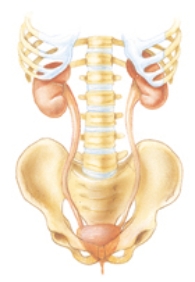
The nurse is teaching a patient with a kidney stone in the left ureter. The nurse knows teaching is effective when the patient identifies which area as being the left ureter on the graphic?
Question
Question
Question
Question
Question
Question
Question
Question
Question
Question
Question
Question
Question
Question
Question
Question
Question
Question
Question
Question
Question
Question
Question
Question
Question
Question
Question
Question
Question
Question
Question
Question
Question

Unlock Deck
Sign up to unlock the cards in this deck!
Unlock Deck
Unlock Deck
1/50

Play

Full screen (f)
Deck 26: Assessing the Renal System
1
The nurse is reviewing risk factors for bladder infections with a female patient. Which patient statement indicates that teaching has been effective?
A) The urinary meatus in females is closer to the bladder than in most males.
B) The urinary meatus in females is farther from the anus than most males.
C) The pH of the female urethra is more conducive to infection.
D) Females urinate more frequently than males, increasing risk.
A) The urinary meatus in females is closer to the bladder than in most males.
B) The urinary meatus in females is farther from the anus than most males.
C) The pH of the female urethra is more conducive to infection.
D) Females urinate more frequently than males, increasing risk.
The urinary meatus in females is closer to the bladder than in most males.
2
The nurse suspects a patient is experiencing a distended bladder. Which patient statement did the nurse use to make this determination?
A) "I am in pain, and it is worse when I press on my abdomen."
B) "My back is killing me."
C) "It feels like someone is stabbing me in the abdomen with a knife."
D) "It hurts constantly with spasms once in a while."
A) "I am in pain, and it is worse when I press on my abdomen."
B) "My back is killing me."
C) "It feels like someone is stabbing me in the abdomen with a knife."
D) "It hurts constantly with spasms once in a while."
"I am in pain, and it is worse when I press on my abdomen."
3
The nurse is teaching a patient about a voiding cystogram. Which patient statements indicate that teaching has been effective?
A) "A urinary catheter will be placed in my bladder."
B) "My bladder will be filled with fluid."
C) "I will tell you when my bladder feels full."
D) "A peripheral IV will be inserted in my arm."
E) "I will be sedated for the procedure."
A) "A urinary catheter will be placed in my bladder."
B) "My bladder will be filled with fluid."
C) "I will tell you when my bladder feels full."
D) "A peripheral IV will be inserted in my arm."
E) "I will be sedated for the procedure."
"A urinary catheter will be placed in my bladder."
"My bladder will be filled with fluid."
"I will tell you when my bladder feels full."
"My bladder will be filled with fluid."
"I will tell you when my bladder feels full."
4
The nurse is reviewing laboratory data for a patient who had a voiding cystogram that revealed an urge to void at 100 mL. For which potential problem should the nurse plan care for this patient?
A) urinary incontinence
B) alteration in integumentary status
C) inability to provide self-care
D) urinary retention
A) urinary incontinence
B) alteration in integumentary status
C) inability to provide self-care
D) urinary retention
Unlock Deck
Unlock for access to all 50 flashcards in this deck.
Unlock Deck
k this deck
5
The nurse is reviewing the serum creatinine laboratory results for a group of patients. The nurse identifies which patients as being at risk for having falsely altered serum creatinine levels?
A) patient with rhinovirus taking 10,000 mg of vitamin C daily
B) patient with Parkinson disease and a prescription for methyldopa
C) patient with bipolar disorder and a prescription for lithium carbonate
D) patient with acne vulgaris and a prescription for tetracycline
E) patient with insomnia taking over-the-counter melatonin
A) patient with rhinovirus taking 10,000 mg of vitamin C daily
B) patient with Parkinson disease and a prescription for methyldopa
C) patient with bipolar disorder and a prescription for lithium carbonate
D) patient with acne vulgaris and a prescription for tetracycline
E) patient with insomnia taking over-the-counter melatonin
Unlock Deck
Unlock for access to all 50 flashcards in this deck.
Unlock Deck
k this deck
6
The nurse is caring for a patient who has been diagnosed with an altered myogenic mechanism of the renal blood vessels. The patient asks, "Why is it so important that I treat my hypertension and keep my blood pressure within normal limits?" How should the nurse respond to the patient?
A) "Your kidneys may have difficulty protecting themselves from high blood pressure."
B) "Your blood pressure medication is toxic to your kidneys in high doses."
C) "If not controlled, the condition will require an indwelling urinary catheter."
D) "High blood pressure increases your risk for kidney stones."
A) "Your kidneys may have difficulty protecting themselves from high blood pressure."
B) "Your blood pressure medication is toxic to your kidneys in high doses."
C) "If not controlled, the condition will require an indwelling urinary catheter."
D) "High blood pressure increases your risk for kidney stones."
Unlock Deck
Unlock for access to all 50 flashcards in this deck.
Unlock Deck
k this deck
7
The nurse is assessing a patient scheduled for a CT scan of the kidneys. Which finding should the nurse report to the primary healthcare provider?
A) allergy to iodine and seafood
B) urinary output of 1,200 mL in 24 hours
C) last bowel movement one day ago
D) height 5'8" and weight 160 pounds
A) allergy to iodine and seafood
B) urinary output of 1,200 mL in 24 hours
C) last bowel movement one day ago
D) height 5'8" and weight 160 pounds
Unlock Deck
Unlock for access to all 50 flashcards in this deck.
Unlock Deck
k this deck
8
A patient being treated for peritonitis from a ruptured appendix is concerned about developing a kidney infection. How should the nurse respond to this patient?
A) "Your kidneys are located outside the peritoneum, the sack that encloses the appendix."
B) "Good thinking. Infections in the abdomen can spread to other organs."
C) "You need to speak with your primary healthcare provider about your concern."
D) "We can check your urine daily to make sure the infection is not spreading."
A) "Your kidneys are located outside the peritoneum, the sack that encloses the appendix."
B) "Good thinking. Infections in the abdomen can spread to other organs."
C) "You need to speak with your primary healthcare provider about your concern."
D) "We can check your urine daily to make sure the infection is not spreading."
Unlock Deck
Unlock for access to all 50 flashcards in this deck.
Unlock Deck
k this deck
9
The nurse is concerned that an abdominal assessment completed by a nursing student includes inaccurate information. The student inspected, palpated, and then auscultated the patient's abdomen during the assessment. What should the nurse explain as the reason for the student's inaccurate information?
A) palpated prior to auscultating
B) inspected prior to palpating
C) inspected prior to auscultating
D) auscultated after inspecting
A) palpated prior to auscultating
B) inspected prior to palpating
C) inspected prior to auscultating
D) auscultated after inspecting
Unlock Deck
Unlock for access to all 50 flashcards in this deck.
Unlock Deck
k this deck
10
Because of normal changes due to aging, the nurse anticipates that a 75-year-old patient's serum creatinine level might be what amount?
A) 0.3 mg/dL
B) 2.4 mg/dL
C) 4.8 mg/dL
D) 6.4 mg/dL
A) 0.3 mg/dL
B) 2.4 mg/dL
C) 4.8 mg/dL
D) 6.4 mg/dL
Unlock Deck
Unlock for access to all 50 flashcards in this deck.
Unlock Deck
k this deck
11
A patient injured in the home and unable to receive help or healthcare for 48 hours has a blood urea nitrogen level of 50 mg/dL and serum creatinine level of 1.0 mg/dL. For which problem should the nurse plan care for first for this patient?
A) dehydration
B) anxiety
C) pain
D) poor nutrition
A) dehydration
B) anxiety
C) pain
D) poor nutrition
Unlock Deck
Unlock for access to all 50 flashcards in this deck.
Unlock Deck
k this deck
12
When preparing a patient for an intravenous pyelogram (IVP), the nurse reviews diagnostic data. Which finding should the nurse report to the healthcare provider before sending the patient for the test?
A) blood urea nitrogen (BUN) 55 mg/dL
B) serum creatinine 1.3 mg/dL
C) urine culture <10,000 organisms/mL
D) residual urine of 80 mL
A) blood urea nitrogen (BUN) 55 mg/dL
B) serum creatinine 1.3 mg/dL
C) urine culture <10,000 organisms/mL
D) residual urine of 80 mL
Unlock Deck
Unlock for access to all 50 flashcards in this deck.
Unlock Deck
k this deck
13
A patient who is healthcare provider at another facility states the need to micturate. How should the nurse respond to this patient?
A) "There is a restroom at the end of the hallway."
B) "Have you been taking your medication on a daily basis?"
C) "Do you have a supply of sterile catheters?"
D) "Do you have someone who can drive you home?"
A) "There is a restroom at the end of the hallway."
B) "Have you been taking your medication on a daily basis?"
C) "Do you have a supply of sterile catheters?"
D) "Do you have someone who can drive you home?"
Unlock Deck
Unlock for access to all 50 flashcards in this deck.
Unlock Deck
k this deck
14
A patient recovering from surgery is prescribed a postvoiding residual urine test. What supplies should the nurse gather to complete this test?
A) a urine collecting device and a straight urinary catheter
B) a urine collecting device and a voiding diary
C) an indwelling urinary catheter and an insertion kit
D) a peripheral IV insertion kit and a urine collecting device
A) a urine collecting device and a straight urinary catheter
B) a urine collecting device and a voiding diary
C) an indwelling urinary catheter and an insertion kit
D) a peripheral IV insertion kit and a urine collecting device
Unlock Deck
Unlock for access to all 50 flashcards in this deck.
Unlock Deck
k this deck
15
A 68-year-old female patient is experiencing episodes of urinary incontinence. What should this indicate to the nurse?
A) an abnormal finding requiring further testing
B) the presence of a urinary infection
C) a normal outcome of the aging process
D) the result of having several children
A) an abnormal finding requiring further testing
B) the presence of a urinary infection
C) a normal outcome of the aging process
D) the result of having several children
Unlock Deck
Unlock for access to all 50 flashcards in this deck.
Unlock Deck
k this deck
16
The nurse is reviewing the reabsorption of glucose and amino acids with a patient newly diagnosed with kidney disease. Which patient comment indicates that teaching has been effective?
A) "The nutrients move from blood to filtrate to blood, then back to the blood."
B) "The nutrients move from filtrate to blood, then back to the filtrate."
C) "The nutrients remain in the kidneys at all times."
D) "The nutrients are large molecules and remain in the blood at all times."
A) "The nutrients move from blood to filtrate to blood, then back to the blood."
B) "The nutrients move from filtrate to blood, then back to the filtrate."
C) "The nutrients remain in the kidneys at all times."
D) "The nutrients are large molecules and remain in the blood at all times."
Unlock Deck
Unlock for access to all 50 flashcards in this deck.
Unlock Deck
k this deck
17
The nurse is teaching a patient with a kidney stone in the left ureter. The nurse knows teaching is effective when the patient identifies which area as being the left ureter on the graphic?
Unlock Deck
Unlock for access to all 50 flashcards in this deck.
Unlock Deck
k this deck
18
A patient with type I diabetes mellitus has urine that is cloudy and foul-smelling. Which diagnostic test should the nurse anticipate being prescribed for this patient?
A) urine culture
B) blood urea nitrogen (BUN)
C) creatinine clearance
D) residual urine
A) urine culture
B) blood urea nitrogen (BUN)
C) creatinine clearance
D) residual urine
Unlock Deck
Unlock for access to all 50 flashcards in this deck.
Unlock Deck
k this deck
19
The parent of a child with a urinary tract infection is concerned that the child may develop a genetic kidney problem in the future. What information provided by the parent should the nurse use to determine the child's risk for a genetic kidney disorder?
A) "My mother had lots of cysts on her kidneys."
B) "I have a bladder infection at least once a year."
C) "The child's father has Parkinson disease."
D) "My father had kidney cancer."
A) "My mother had lots of cysts on her kidneys."
B) "I have a bladder infection at least once a year."
C) "The child's father has Parkinson disease."
D) "My father had kidney cancer."
Unlock Deck
Unlock for access to all 50 flashcards in this deck.
Unlock Deck
k this deck
20
A nurse is teaching a nursing student about the effects of a sustained drop in systemic blood pressure on the juxtaglomerular cells of the distal tubules in the kidneys. The nurse knows teaching has been effective when the student identifies which type of medication as one that controls systemic blood pressure?
A) angiotensin converting enzyme (ACE) inhibitor
B) cardiac glycoside
C) thiazide diuretic
D) beta blocker
A) angiotensin converting enzyme (ACE) inhibitor
B) cardiac glycoside
C) thiazide diuretic
D) beta blocker
Unlock Deck
Unlock for access to all 50 flashcards in this deck.
Unlock Deck
k this deck
21
The nurse is reviewing the results of a patient's urinalysis. Which finding indicates that a pathological process might be occurring with this patient?
A) Appearance: cloudy
B) Odor: aromatic
C) pH: 5.2
D) Glucose: negative
A) Appearance: cloudy
B) Odor: aromatic
C) pH: 5.2
D) Glucose: negative
Unlock Deck
Unlock for access to all 50 flashcards in this deck.
Unlock Deck
k this deck
22
The nurse is reviewing teaching with a patient who is scheduled for an intravenous pyelogram. The nurse recognizes that further teaching is needed when the patient states, "I will
A) not drink any fluids for at least 12 hours before the procedure."
B) start the bowel prep with a suppository the night before the procedure."
C) take the prescribed laxative the morning of the procedure."
D) not eat solid food for at least 8 hours before the procedure."
A) not drink any fluids for at least 12 hours before the procedure."
B) start the bowel prep with a suppository the night before the procedure."
C) take the prescribed laxative the morning of the procedure."
D) not eat solid food for at least 8 hours before the procedure."
Unlock Deck
Unlock for access to all 50 flashcards in this deck.
Unlock Deck
k this deck
23
In formulating the teaching plan for a patient who is taking the oral hypoglycemic agent metformin (Glucophage), the nurse should include which priority instruction? "Notify your healthcare provider if
A) you need a diagnostic test that uses iodinated contrast."
B) your urine becomes orange or red-tinted."
C) your urine becomes more concentrated."
D) you need an intermittent or indwelling urinary catheterization."
A) you need a diagnostic test that uses iodinated contrast."
B) your urine becomes orange or red-tinted."
C) your urine becomes more concentrated."
D) you need an intermittent or indwelling urinary catheterization."
Unlock Deck
Unlock for access to all 50 flashcards in this deck.
Unlock Deck
k this deck
24
A patient is scheduled for a cystogram. What information in the patient's history should the nurse bring to the healthcare provider's attention as potentially causing a problem with the patient?
A) cystitis
B) prostatitis
C) hypersensitivity to anesthetics
D) right-sided hemiplegia
E) chronic pain
A) cystitis
B) prostatitis
C) hypersensitivity to anesthetics
D) right-sided hemiplegia
E) chronic pain
Unlock Deck
Unlock for access to all 50 flashcards in this deck.
Unlock Deck
k this deck
25
Which outcome should the nurse establish for a patient who has just voided and is scheduled for a portable ultrasonic bladder scan? A normal scan will indicate:
A) less than 100 mL of urine in the bladder.
B) between 100 and 150 mL of urine in the bladder.
C) between 150 and 200 mL of urine in the bladder.
D) more than 200 mL of urine in the bladder.
A) less than 100 mL of urine in the bladder.
B) between 100 and 150 mL of urine in the bladder.
C) between 150 and 200 mL of urine in the bladder.
D) more than 200 mL of urine in the bladder.
Unlock Deck
Unlock for access to all 50 flashcards in this deck.
Unlock Deck
k this deck
26
A patient is experiencing burning with urination and urgency. Which laboratory test result should the nurse monitor for this patient's manifestations?
A) serum creatinine
B) urine osmolality
C) BUN
D) urine culture
A) serum creatinine
B) urine osmolality
C) BUN
D) urine culture
Unlock Deck
Unlock for access to all 50 flashcards in this deck.
Unlock Deck
k this deck
27
During a home visit the nurse asks the patient for a specimen for a urinalysis. Which patient statement indicates that the nurse needs to provide additional teaching about the specimen?
A) "I will get the specimen the next time I void."
B) "I won't touch the inside of the cup or lid."
C) "I will refrigerate the specimen until it is picked up tomorrow."
D) "I will give the laboratory a list of the medications I am taking."
A) "I will get the specimen the next time I void."
B) "I won't touch the inside of the cup or lid."
C) "I will refrigerate the specimen until it is picked up tomorrow."
D) "I will give the laboratory a list of the medications I am taking."
Unlock Deck
Unlock for access to all 50 flashcards in this deck.
Unlock Deck
k this deck
28
A nurse is performing discharge teaching with a patient who had a cystogram. What should the nurse include in this teaching?
A) Take a sitz bath.
B) Increase oral fluid intake.
C) Take acetaminophen for minor pain.
D) Apply heat to the lower back.
E) Drink one ounce of brandy or rum with warm water.
A) Take a sitz bath.
B) Increase oral fluid intake.
C) Take acetaminophen for minor pain.
D) Apply heat to the lower back.
E) Drink one ounce of brandy or rum with warm water.
Unlock Deck
Unlock for access to all 50 flashcards in this deck.
Unlock Deck
k this deck
29
The nurse is providing preoperative teaching for a patient recovering from a cystogram. The nurse realizes that additional teaching is necessary when the patient states: "After the procedure, I need to contact my primary healthcare provider if I experience
A) any bloody urine."
B) low urine output."
C) abdominal pain."
D) chills or fever."
A) any bloody urine."
B) low urine output."
C) abdominal pain."
D) chills or fever."
Unlock Deck
Unlock for access to all 50 flashcards in this deck.
Unlock Deck
k this deck
30
The charge nurse is observing a new graduate care for a patient recovering from a renal biopsy. For which action should the charge nurse intervene?
A) The graduate nurse applies pressure to site for 15 minutes after procedure.
B) The graduate nurse instructs patient to avoid eating for 8 to 12 hours.
C) The graduate nurse teaches patient to increase oral fluid intake.
D) The graduate nurse directs patient to report decreased urination.
A) The graduate nurse applies pressure to site for 15 minutes after procedure.
B) The graduate nurse instructs patient to avoid eating for 8 to 12 hours.
C) The graduate nurse teaches patient to increase oral fluid intake.
D) The graduate nurse directs patient to report decreased urination.
Unlock Deck
Unlock for access to all 50 flashcards in this deck.
Unlock Deck
k this deck
31
The nurse instructs a patient about adult polycystic kidney disease (APKD). Which patient statement indicates that teaching has been effective?
A) "This disorder can be cured if I take my medication carefully."
B) "APKD is inherited from parent to child."
C) "The problem that causes this disease is in the cell chromosomes."
D) "Many fluid-filled sacs are found in the kidneys."
E) "This disorder can cause my kidneys to work poorly."
A) "This disorder can be cured if I take my medication carefully."
B) "APKD is inherited from parent to child."
C) "The problem that causes this disease is in the cell chromosomes."
D) "Many fluid-filled sacs are found in the kidneys."
E) "This disorder can cause my kidneys to work poorly."
Unlock Deck
Unlock for access to all 50 flashcards in this deck.
Unlock Deck
k this deck
32
What staff member should the nurse on the postoperative unit assign to do a follow-up assessment for a patient who has returned home after having an intravenous pyelogram 24 hours ago?
A) RN floating from the immunology unit
B) LPN floating from the nephrology unit
C) LPN floating from the pulmonology unit
D) RN floating from the orthopedic unit
A) RN floating from the immunology unit
B) LPN floating from the nephrology unit
C) LPN floating from the pulmonology unit
D) RN floating from the orthopedic unit
Unlock Deck
Unlock for access to all 50 flashcards in this deck.
Unlock Deck
k this deck
33
A patient with an allergy to iodine is scheduled to have diagnostic tests. For which test should the nurse notify the healthcare provider?
A) renal angiogram
B) renal scan
C) voiding cystogram
D) portable ultrasonic bladder scan
A) renal angiogram
B) renal scan
C) voiding cystogram
D) portable ultrasonic bladder scan
Unlock Deck
Unlock for access to all 50 flashcards in this deck.
Unlock Deck
k this deck
34
The charge nurse overhears a graduate nurse completing an assessment with a patient scheduled to have an MRI of the kidneys. What question would require the charge nurse to intervene?
A) "When did you last have anything to eat or drink?"
B) "Have you ever been treated for chest pain?"
C) "Do you have any tattoos?"
D) "Is there any possibility you could be pregnant?"
A) "When did you last have anything to eat or drink?"
B) "Have you ever been treated for chest pain?"
C) "Do you have any tattoos?"
D) "Is there any possibility you could be pregnant?"
Unlock Deck
Unlock for access to all 50 flashcards in this deck.
Unlock Deck
k this deck
35
The nurse is reviewing the laboratory results for a patient who has a prescription for an estimated glomerular filtration rate (EGFR). Which information should the nurse identify as being used to determine the estimated glomerular filtration rate?
A) serum creatinine
B) patient's age
C) patient's gender
D) patient's racial origin
E) serum blood urea nitrogen
A) serum creatinine
B) patient's age
C) patient's gender
D) patient's racial origin
E) serum blood urea nitrogen
Unlock Deck
Unlock for access to all 50 flashcards in this deck.
Unlock Deck
k this deck
36
The nurse is reviewing teaching materials created by a student nurse outlining the procedure to obtain midstream clean catch urine for culture. Which information within this plan needs to be corrected by the nurse?
A) Males patients should retract the foreskin and cleanse the glans with three cotton sponges saturated with cleansing solution, using a circular motion.
B) Female patients should separate the labia with one hand and clean the labia with the other, using sterile cotton swabs saturated with a cleansing solution, wiping back to front.
C) After cleansing, patients should start voiding and then begin to collect the specimen.
D) Patients should start taking prescribed antibiotics only after the specimen is collected.
A) Males patients should retract the foreskin and cleanse the glans with three cotton sponges saturated with cleansing solution, using a circular motion.
B) Female patients should separate the labia with one hand and clean the labia with the other, using sterile cotton swabs saturated with a cleansing solution, wiping back to front.
C) After cleansing, patients should start voiding and then begin to collect the specimen.
D) Patients should start taking prescribed antibiotics only after the specimen is collected.
Unlock Deck
Unlock for access to all 50 flashcards in this deck.
Unlock Deck
k this deck
37
A patient who has prescriptions for both an intravenous pyelogram and a barium enema tells the nurse, "I will schedule the intravenous pyelogram to be done before the barium enema." Which of these responses by the nurse is most appropriate?
A) "Please make your appointments as you have indicated."
B) "Please clarify with your primary healthcare provider which should be completed first."
C) "Please reverse the order of your planned appointments."
D) "The order of the tests is irrelevant. You may change the order to meet your needs."
A) "Please make your appointments as you have indicated."
B) "Please clarify with your primary healthcare provider which should be completed first."
C) "Please reverse the order of your planned appointments."
D) "The order of the tests is irrelevant. You may change the order to meet your needs."
Unlock Deck
Unlock for access to all 50 flashcards in this deck.
Unlock Deck
k this deck
38
A patient who is scheduled to have a renal angiogram asks why the nurse is checking the pulses in the feet. What should the nurse respond to this patient?
A) "I feel your pulses there. I can check that the blood is flowing properly to your legs and feet."
B) "Why do you ask?"
C) "It is a nursing thing."
D) "A needle is inserted in your femoral artery so the circulation to your extremity could be compromised during this test."
A) "I feel your pulses there. I can check that the blood is flowing properly to your legs and feet."
B) "Why do you ask?"
C) "It is a nursing thing."
D) "A needle is inserted in your femoral artery so the circulation to your extremity could be compromised during this test."
Unlock Deck
Unlock for access to all 50 flashcards in this deck.
Unlock Deck
k this deck
39
The nurse is reviewing laboratory data for a patient scheduled for an intravenous pyelogram. Which result should the nurse report to the primary healthcare provider immediately?
A) serum osmolality of 1500 mOsm/kg/H2O
B) serum creatinine of 1.30 mg/dL
C) blood urea nitrogen of 20 mg/dL
D) hourly urine output of 45 mL/hour
A) serum osmolality of 1500 mOsm/kg/H2O
B) serum creatinine of 1.30 mg/dL
C) blood urea nitrogen of 20 mg/dL
D) hourly urine output of 45 mL/hour
Unlock Deck
Unlock for access to all 50 flashcards in this deck.
Unlock Deck
k this deck
40
A patient scheduled for a renal ultrasound asks if the procedure is going to be painful. What should the nurse do to help the patient prepare for this diagnostic test?
A) Describe the typical experience of a patient having a renal ultrasound.
B) Discuss feelings associated with painful experiences.
C) Explain pain medications available during this procedure.
D) Describe the typical experience of a patient using conscious sedation.
A) Describe the typical experience of a patient having a renal ultrasound.
B) Discuss feelings associated with painful experiences.
C) Explain pain medications available during this procedure.
D) Describe the typical experience of a patient using conscious sedation.
Unlock Deck
Unlock for access to all 50 flashcards in this deck.
Unlock Deck
k this deck
41
A patient is concerned because the urine has changed to red-brown in color since starting a new medication. Which medication should the nurse suspect is causing this patient's change in urine color?
A) phenytoin (Dilantin)
B) amitriptyline (Elavil)
C) injectable iron
D) phenazopyridine (Pyridium)
A) phenytoin (Dilantin)
B) amitriptyline (Elavil)
C) injectable iron
D) phenazopyridine (Pyridium)
Unlock Deck
Unlock for access to all 50 flashcards in this deck.
Unlock Deck
k this deck
42
While conducting a physical assessment, the nurse suspects that a male patient has a urinary tract or sexually transmitted infection. What did the nurse assess to make this clinical decision?
A) redness of the urinary meatus
B) swelling from the urinary meatus
C) discharge from the urinary meatus
D) urinary meatus on the dorsal surface
E) urinary meatus on the ventral surface
A) redness of the urinary meatus
B) swelling from the urinary meatus
C) discharge from the urinary meatus
D) urinary meatus on the dorsal surface
E) urinary meatus on the ventral surface
Unlock Deck
Unlock for access to all 50 flashcards in this deck.
Unlock Deck
k this deck
43
A patient is prescribed diagnostic tests to determine renal functioning. What test should the nurse review to determine the patient's glomerular filtration rate (GFR)?
A) creatinine clearance
B) blood urea nitrogen (BUN)
C) intravenous pyelogram (IVP)
D) renal ultrasound
A) creatinine clearance
B) blood urea nitrogen (BUN)
C) intravenous pyelogram (IVP)
D) renal ultrasound
Unlock Deck
Unlock for access to all 50 flashcards in this deck.
Unlock Deck
k this deck
44
While reviewing the results of a patient's urinalysis, the nurse suspects that a patient has kidney disease. Which findings caused the nurse to come to this conclusion?
A) pH 6.2
B) +3 ketones
C) colorless urine
D) protein 7 mg/dL
E) specific gravity 1.001
A) pH 6.2
B) +3 ketones
C) colorless urine
D) protein 7 mg/dL
E) specific gravity 1.001
Unlock Deck
Unlock for access to all 50 flashcards in this deck.
Unlock Deck
k this deck
45
During a health history the nurse learns that a newly married female patient has a family history of both type 1 and type 2 diabetes mellitus. Which type of referral should the nurse consider for this patient?
A) a genetic counselor
B) a home health nurse
C) an obstetrician
D) a physical therapist
A) a genetic counselor
B) a home health nurse
C) an obstetrician
D) a physical therapist
Unlock Deck
Unlock for access to all 50 flashcards in this deck.
Unlock Deck
k this deck
46
During a health history the nurse is concerned that a male patient is at risk for developing bladder cancer. Which information from the history caused the nurse to have this concern?
A) Plays tennis twice a week.
B) Smokes 1 ppd of cigarettes.
C) Sleeps 7 to 8 hours each night.
D) Eats a salad several times a week.
E) Works in a steel manufacturing plant.
A) Plays tennis twice a week.
B) Smokes 1 ppd of cigarettes.
C) Sleeps 7 to 8 hours each night.
D) Eats a salad several times a week.
E) Works in a steel manufacturing plant.
Unlock Deck
Unlock for access to all 50 flashcards in this deck.
Unlock Deck
k this deck
47
The nurse completes an assessment of renal and urinary function with an 86-year-old male patient. Which finding should the nurse report to the healthcare provider?
A) urinary incontinence
B) urinary frequency
C) urinary urgency
D) nocturia
A) urinary incontinence
B) urinary frequency
C) urinary urgency
D) nocturia
Unlock Deck
Unlock for access to all 50 flashcards in this deck.
Unlock Deck
k this deck
48
A male patient is admitted for renal colic. When conducting this patient's physical assessment, on which areas should the nurse focus to determine the type and amount of pain?
A) flank
B) testes
C) urethra
D) bladder
E) umbilicus
A) flank
B) testes
C) urethra
D) bladder
E) umbilicus
Unlock Deck
Unlock for access to all 50 flashcards in this deck.
Unlock Deck
k this deck
49
An 80-year-old patient has decreased renal cortexes, atherosclerosis of the renal arteries, and hypo-osmolality of urine. What should the nurse consider first as an explanation for this patient's renal status?
A) These are typical changes associated with aging.
B) These are signs of chronic renal failure.
C) These are signs of acute renal failure.
D) These are signs of a genetic renal disorder.
A) These are typical changes associated with aging.
B) These are signs of chronic renal failure.
C) These are signs of acute renal failure.
D) These are signs of a genetic renal disorder.
Unlock Deck
Unlock for access to all 50 flashcards in this deck.
Unlock Deck
k this deck
50
The nurse is preparing to indirectly percuss a patient's kidneys. In which order should the nurse perform this assessment?
A) Stand behind the patient.
B) Curl the dominant hand into a fist.
C) Assist the patient to a sitting position.
D) Place nondominant hand over the costovertebral angle.
E) Strike the back of the nondominant hand with the dominant hand.
G) non of the above.
A) Stand behind the patient.
B) Curl the dominant hand into a fist.
C) Assist the patient to a sitting position.
D) Place nondominant hand over the costovertebral angle.
E) Strike the back of the nondominant hand with the dominant hand.
G) non of the above.
Unlock Deck
Unlock for access to all 50 flashcards in this deck.
Unlock Deck
k this deck
Unlock Deck
Unlock for access to all 50 flashcards in this deck.






