







 Chat with AI

Deck 48: Nursing Care of Men With Reproductive System and Breast Disorders
Full screen (f)

Question

Question
Question
Question
Question
Question
Question
Question
Question
Question
Question
Question
Question
Question
Question
Question
Question
Question
Question
Question
Question
Question
Question
Question
Question
Question
Question
The nurse is teaching a community education class on prostate cancer. Which menu should the nurse use to reflect a diet consistent with lowering the risk of prostate cancer?
A)
B)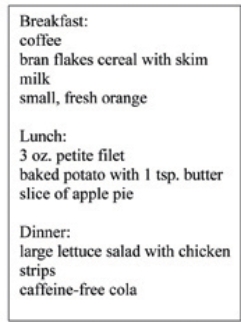
C)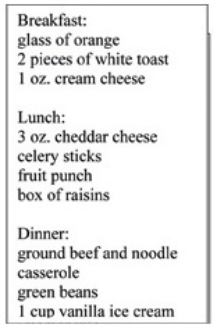
D)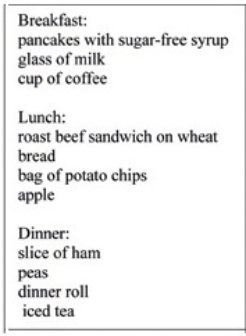
A)
B)
C)
D)
Question
Question
Question
Question
Question
Question
Question
Question
Question
Question
Question
The nurse is caring for a patient with a hydrocele. Which diagram should the nurse use to explain this disorder to the patient? Mark an "X" on the appropriate image.
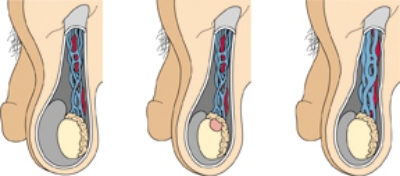
Question
Question
Question
Question
Question
Question
Question
Question
Question

Unlock Deck
Sign up to unlock the cards in this deck!
Unlock Deck
Unlock Deck
1/47

Play

Full screen (f)
Deck 48: Nursing Care of Men With Reproductive System and Breast Disorders
1
A patient comes into the emergency department with complaints of an erection that has lasted for more than four hours. What should the nurse include in the patient's assessment?
A) prescribed medications
B) substance abuse
C) blood pressure
D) number of sexual partners
A) prescribed medications
B) substance abuse
C) blood pressure
D) number of sexual partners
prescribed medications
2
A male patient is concerned about ongoing premature ejaculation. What should the nurse do to assist this patient?
A) Suggest that the patient wear a condom with sexual activity.
B) Suggest that the patient talk with the physician about changing prescribed medications.
C) Tell the patient that the condition is temporary and will disappear in time.
D) Review any newly prescribed medications, and check for side effects.
A) Suggest that the patient wear a condom with sexual activity.
B) Suggest that the patient talk with the physician about changing prescribed medications.
C) Tell the patient that the condition is temporary and will disappear in time.
D) Review any newly prescribed medications, and check for side effects.
Suggest that the patient wear a condom with sexual activity.
3
A male patient is diagnosed with stage 1 testicular cancer. The nurse realizes that the first step in the treatment for this patient would be:
A) surgical removal of the testicle.
B) aspiration of the enlarged testicle.
C) chemotherapy.
D) radiation.
A) surgical removal of the testicle.
B) aspiration of the enlarged testicle.
C) chemotherapy.
D) radiation.
surgical removal of the testicle.
4
A patient is diagnosed with benign prostatic hypertrophy. The nurse realizes that this patient's blood pressure should be closely measured to determine what?
A) whether the patient can tolerate doxazosin mesylate (Cardura)
B) whether surgery is indicated
C) the volume of urine being retained in the bladder
D) the dose of finasteride (Proscar)
A) whether the patient can tolerate doxazosin mesylate (Cardura)
B) whether surgery is indicated
C) the volume of urine being retained in the bladder
D) the dose of finasteride (Proscar)
Unlock Deck
Unlock for access to all 47 flashcards in this deck.
Unlock Deck
k this deck
5
A patient is planning to have surgery for the treatment of benign prostatic hypertrophy. Which procedure should the nurse explain has the fewest postoperative complications?
A) transurethral needle ablation (TUNA)
B) transurethral incision of the prostate (TURP)
C) perineal prostatectomy
D) suprapubic prostatectomy
A) transurethral needle ablation (TUNA)
B) transurethral incision of the prostate (TURP)
C) perineal prostatectomy
D) suprapubic prostatectomy
Unlock Deck
Unlock for access to all 47 flashcards in this deck.
Unlock Deck
k this deck
6
A patient who is complaining of heaviness in his scrotum has learned that his serum lactic acid dehydrogenase level is normal. This information should indicate to the nurse that the patient:
A) needs more diagnostic tests for testicular cancer.
B) has testicular cancer.
C) does not have testicular cancer.
D) has a spermatocele.
A) needs more diagnostic tests for testicular cancer.
B) has testicular cancer.
C) does not have testicular cancer.
D) has a spermatocele.
Unlock Deck
Unlock for access to all 47 flashcards in this deck.
Unlock Deck
k this deck
7
A patient who is being treated for epididymitis stops taking his antibiotics. The nurse realizes that this patient is at risk for developing which health problem?
A) orchitis
B) priapism
C) hydrocele
D) spermatocele
A) orchitis
B) priapism
C) hydrocele
D) spermatocele
Unlock Deck
Unlock for access to all 47 flashcards in this deck.
Unlock Deck
k this deck
8
A female patient asks the nurse for help because her husband has not been able to attain an erection in several months. What can the nurse do to help this patient?
A) Assess for the most recent sexual practices.
B) Suggest that she seek psychiatric counseling.
C) Suggest that they both see a marriage counselor.
D) Provide a prescription for tadalafil (Cialis).
A) Assess for the most recent sexual practices.
B) Suggest that she seek psychiatric counseling.
C) Suggest that they both see a marriage counselor.
D) Provide a prescription for tadalafil (Cialis).
Unlock Deck
Unlock for access to all 47 flashcards in this deck.
Unlock Deck
k this deck
9
A patient is recovering from a penile implant procedure. What should be included in the care of and teaching about the implant?
A) Encourage the patient to practice inflating and deflating the device during the recovery period.
B) Suggest wearing snug-fitting underwear and loose-fitting trousers to conceal the semi-erection.
C) Encourage the patient to resume sexual activity within three weeks.
D) Remind the patient to not inflate or deflate the device for at least four weeks.
E) Suggest wearing loose-fitting underwear and trousers.
A) Encourage the patient to practice inflating and deflating the device during the recovery period.
B) Suggest wearing snug-fitting underwear and loose-fitting trousers to conceal the semi-erection.
C) Encourage the patient to resume sexual activity within three weeks.
D) Remind the patient to not inflate or deflate the device for at least four weeks.
E) Suggest wearing loose-fitting underwear and trousers.
Unlock Deck
Unlock for access to all 47 flashcards in this deck.
Unlock Deck
k this deck
10
A male patient complains of frequently "not being able to hold urine," especially when the bladder is very full or when lifting objects. What should the nurse do to help this patient?
A) Instruct the patient how to do Kegel exercises.
B) Suggest that the patient ask the physician for medications to control this incontinence.
C) Suggest that the patient restrict fluids.
D) Suggest the patient wear a Texas catheter.
E) Suggest the patient wear adult absorbent briefs.
A) Instruct the patient how to do Kegel exercises.
B) Suggest that the patient ask the physician for medications to control this incontinence.
C) Suggest that the patient restrict fluids.
D) Suggest the patient wear a Texas catheter.
E) Suggest the patient wear adult absorbent briefs.
Unlock Deck
Unlock for access to all 47 flashcards in this deck.
Unlock Deck
k this deck
11
A male patient with type I diabetes mellitus and coronary artery disease is able to achieve an erection but cannot maintain it. What could be done to assist this patient?
A) Suggest an O ring.
B) Provide tadalafil (Cialis) teaching material.
C) Provide sildenafil (Viagra) teaching material.
D) Discuss penile implant surgery.
A) Suggest an O ring.
B) Provide tadalafil (Cialis) teaching material.
C) Provide sildenafil (Viagra) teaching material.
D) Discuss penile implant surgery.
Unlock Deck
Unlock for access to all 47 flashcards in this deck.
Unlock Deck
k this deck
12
A patient is diagnosed with asymptomatic inflammatory prostatitis. The nurse realizes that this diagnosis was made:
A) after examining tissue from the prostate.
B) by testing the serum PSA (prostate-specific antigen) level.
C) according to the patient's symptoms.
D) after palpating the patient's prostate gland.
A) after examining tissue from the prostate.
B) by testing the serum PSA (prostate-specific antigen) level.
C) according to the patient's symptoms.
D) after palpating the patient's prostate gland.
Unlock Deck
Unlock for access to all 47 flashcards in this deck.
Unlock Deck
k this deck
13
A patient experiencing a "swollen" scrotum is found to have fluid within the scrotum. Which health problem should the nurse suspect this patient will need to have treated?
A) a hydrocele
B) a spermatocele
C) a variocele
D) scrotal cancer
A) a hydrocele
B) a spermatocele
C) a variocele
D) scrotal cancer
Unlock Deck
Unlock for access to all 47 flashcards in this deck.
Unlock Deck
k this deck
14
A 35-year-old male is concerned about his inability to sustain an erection. What topic should the nurse question the patient about when assessing this health problem?
A) substance use or abuse
B) marital status
C) employment history
D) education level
A) substance use or abuse
B) marital status
C) employment history
D) education level
Unlock Deck
Unlock for access to all 47 flashcards in this deck.
Unlock Deck
k this deck
15
A 40-year-old male is diagnosed with epididymitis. What should the nurse consider as being the potential causes for this disorder?
A) urinary tract infection
B) prostatitis
C) unprotected anal intercourse
D) gonorrhea
E) undiagnosed congenital disorder
A) urinary tract infection
B) prostatitis
C) unprotected anal intercourse
D) gonorrhea
E) undiagnosed congenital disorder
Unlock Deck
Unlock for access to all 47 flashcards in this deck.
Unlock Deck
k this deck
16
A 55-year-old male patient has an abnormal digital rectal examination (DRE) with a PSA (prostate-specific antigen) level of 18 ng/mL. The nurse realizes that this patient might be scheduled for which diagnostic test?
A) transrectal ultrasonography (TRUS)
B) bone scan
C) MRI
D) CT scan of the spine
A) transrectal ultrasonography (TRUS)
B) bone scan
C) MRI
D) CT scan of the spine
Unlock Deck
Unlock for access to all 47 flashcards in this deck.
Unlock Deck
k this deck
17
The nurse is instructing a patient with benign prostatic hypertrophy about techniques to reduce urinary retention. What should these instructions include?
A) Avoid alcoholic beverages.
B) Encourage ingesting large amounts of fluids at one time.
C) Urinate until all of the urine is drained from the bladder.
D) Over-the-counter cold remedies are permitted with other medications.
A) Avoid alcoholic beverages.
B) Encourage ingesting large amounts of fluids at one time.
C) Urinate until all of the urine is drained from the bladder.
D) Over-the-counter cold remedies are permitted with other medications.
Unlock Deck
Unlock for access to all 47 flashcards in this deck.
Unlock Deck
k this deck
18
A 55-year-old patient who takes nitroglycerin for angina asks for a prescription to aid with erectile dysfunction. What should the nurse do in response to this patient's request?
A) Explain why the erectile dysfunction medication is not a good idea with the heart medication.
B) Provide education about the medication once the prescription is provided.
C) Remind the patient to stop taking the heart medication when planning to take the erectile dysfunction medication.
D) Suggest a behavioral health consult to analyze the reason for the erectile dysfunction.
A) Explain why the erectile dysfunction medication is not a good idea with the heart medication.
B) Provide education about the medication once the prescription is provided.
C) Remind the patient to stop taking the heart medication when planning to take the erectile dysfunction medication.
D) Suggest a behavioral health consult to analyze the reason for the erectile dysfunction.
Unlock Deck
Unlock for access to all 47 flashcards in this deck.
Unlock Deck
k this deck
19
A 65-year-old male patient complains of problems emptying his bladder, especially at night. The nurse realizes that the patient is demonstrating symptoms of which health problem?
A) benign prostatic hypertrophy
B) urinary tract infection
C) bladder cancer
D) testicular cancer
A) benign prostatic hypertrophy
B) urinary tract infection
C) bladder cancer
D) testicular cancer
Unlock Deck
Unlock for access to all 47 flashcards in this deck.
Unlock Deck
k this deck
20
The nurse is planning instructions for a patient diagnosed with prostatitis. What should be included in these instructions?
A) Increase fluid intake up to 3 liters per day.
B) Adhere to a daily bowel movement regime.
C) Remind the patient that the condition is not contagious.
D) Only take antibiotics when symptoms are present.
E) Withhold voiding for as long as possible.
A) Increase fluid intake up to 3 liters per day.
B) Adhere to a daily bowel movement regime.
C) Remind the patient that the condition is not contagious.
D) Only take antibiotics when symptoms are present.
E) Withhold voiding for as long as possible.
Unlock Deck
Unlock for access to all 47 flashcards in this deck.
Unlock Deck
k this deck
21
The nurse is caring for a patient who had a prostatectomy and is now having bladder spasms. What actions should the nurse take?
A) Administer belladonna and opium (B&O) suppositories as prescribed.
B) Check to see if the urinary catheter is draining.
C) Ask the patient if he feels the need to have a bowel movement.
D) Increase the rate of flow of urinary catheter irrigation solution.
E) Assess the patient's temperature.
A) Administer belladonna and opium (B&O) suppositories as prescribed.
B) Check to see if the urinary catheter is draining.
C) Ask the patient if he feels the need to have a bowel movement.
D) Increase the rate of flow of urinary catheter irrigation solution.
E) Assess the patient's temperature.
Unlock Deck
Unlock for access to all 47 flashcards in this deck.
Unlock Deck
k this deck
22
A patient who was recently diagnosed with hypertension and placed on propranolol (Inderal) is seen in the clinic for an unrelated issue. When the nurse notes that his blood pressure is elevated, she asks if the patient has been taking his medication and he says he quit because "I didn't like how I felt when I took it." Based on this statement, what would be an appropriate response?
A) "Many male patients experience side effects of this drug, which include altered libido and impotence. This is common. Tell me how you felt when you took the drug."
B) "You shouldn't stop taking the drug without first talking to the doctor!"
C) Write a note in the patient's record but say nothing to the patient.
D) "I'm going to give you some information about this medication for you to take home and read. At your next visit, I'll have the doctor talk to you about it."
A) "Many male patients experience side effects of this drug, which include altered libido and impotence. This is common. Tell me how you felt when you took the drug."
B) "You shouldn't stop taking the drug without first talking to the doctor!"
C) Write a note in the patient's record but say nothing to the patient.
D) "I'm going to give you some information about this medication for you to take home and read. At your next visit, I'll have the doctor talk to you about it."
Unlock Deck
Unlock for access to all 47 flashcards in this deck.
Unlock Deck
k this deck
23
The nurse is completing the health history of a patient with documented androgen deficiency and erectile dysfunction (ED). Which patient response would be a contraindication for this patient's use of hormone replacement therapy to treat his ED?
A) "I am being treated for prostate cancer."
B) "I hate the idea of having an injection directly in my penis."
C) "I am currently taking antibiotics."
D) "Yes, I have a lot of hair on my chest and probably can't wear a patch."
A) "I am being treated for prostate cancer."
B) "I hate the idea of having an injection directly in my penis."
C) "I am currently taking antibiotics."
D) "Yes, I have a lot of hair on my chest and probably can't wear a patch."
Unlock Deck
Unlock for access to all 47 flashcards in this deck.
Unlock Deck
k this deck
24
A male patient with breast cancer is being seen at the cancer center, and one of the nurses says, "I'm not sure what to do for this patient. He doesn't have the same issues as a woman!" What is the most appropriate response?
A) "Caring for the man with breast cancer is essentially the same as for the woman with breast cancer."
B) "Most issues are the same for men and women, but he probably won't die because of his disease."
C) "There are different types of cancers in men than women, and that needs to be reviewed."
D) "Treatments are different, so you will need to explain these."
A) "Caring for the man with breast cancer is essentially the same as for the woman with breast cancer."
B) "Most issues are the same for men and women, but he probably won't die because of his disease."
C) "There are different types of cancers in men than women, and that needs to be reviewed."
D) "Treatments are different, so you will need to explain these."
Unlock Deck
Unlock for access to all 47 flashcards in this deck.
Unlock Deck
k this deck
25
The patient undergoing brachytherapy for prostate cancer is being given instructions for home care. Which patient statement indicates a need for clarification?
A) "It will be nice to sleep in the same bed as my partner."
B) "Guess I'll have to go buy a box of condoms."
C) "I'll be disappointed about not seeing my grandkids."
D) "I'll make an appointment for my next PSA exam."
A) "It will be nice to sleep in the same bed as my partner."
B) "Guess I'll have to go buy a box of condoms."
C) "I'll be disappointed about not seeing my grandkids."
D) "I'll make an appointment for my next PSA exam."
Unlock Deck
Unlock for access to all 47 flashcards in this deck.
Unlock Deck
k this deck
26
The nurse is reviewing the contents of a patient's medical record. Based upon this information, what health problem should the nurse suspect is the cause of the patient's symptoms?
A) mumps
B) scarlet fever
C) pneumonia
D) orchitis
A) mumps
B) scarlet fever
C) pneumonia
D) orchitis
Unlock Deck
Unlock for access to all 47 flashcards in this deck.
Unlock Deck
k this deck
27
The nurse is teaching a community education class on prostate cancer. Which menu should the nurse use to reflect a diet consistent with lowering the risk of prostate cancer?
A)
B)
C)
D)
A)
B)
C)
D)
Unlock Deck
Unlock for access to all 47 flashcards in this deck.
Unlock Deck
k this deck
28
The nurse is reviewing a patient's medical record. Which manifestation should the nurse use to confirm a diagnosis of prostatodynia?
A) negative urine culture
B) denies history of STIs
C) patient experiencing lower back pain
D) fever is absent
A) negative urine culture
B) denies history of STIs
C) patient experiencing lower back pain
D) fever is absent
Unlock Deck
Unlock for access to all 47 flashcards in this deck.
Unlock Deck
k this deck
29
The nurse is reviewing the contents of a patient's medical record. Which condition should the nurse suspect is occurring in this patient?
A) testicular torsion
B) varicocele
C) orchitis
D) indirect inguinal hernia
A) testicular torsion
B) varicocele
C) orchitis
D) indirect inguinal hernia
Unlock Deck
Unlock for access to all 47 flashcards in this deck.
Unlock Deck
k this deck
30
During a health history interview the nurse learns that a patient is experiencing recent-onset impotence. Which question is most appropriate for the nurse to ask to identify a potential cause of the manifestation?
A) "For what disorders have you been treated in the past?
B) "Does this occur often?"
C) "How does your partner feel about this problem?"
D) "Are you on any medications?
A) "For what disorders have you been treated in the past?
B) "Does this occur often?"
C) "How does your partner feel about this problem?"
D) "Are you on any medications?
Unlock Deck
Unlock for access to all 47 flashcards in this deck.
Unlock Deck
k this deck
31
After prostate surgery a patient is being discharged with an indwelling urinary catheter in place. What teaching should the nurse provide to this patient?
A) Use the larger urinary drainage bag at night.
B) Keep the larger urinary drainage bag at a level that permits gravity drainage.
C) Do not strap the leg bag too tightly.
D) Place a soft cloth between the leg bag and the skin.
E) Empty the leg bag at least twice a day.
A) Use the larger urinary drainage bag at night.
B) Keep the larger urinary drainage bag at a level that permits gravity drainage.
C) Do not strap the leg bag too tightly.
D) Place a soft cloth between the leg bag and the skin.
E) Empty the leg bag at least twice a day.
Unlock Deck
Unlock for access to all 47 flashcards in this deck.
Unlock Deck
k this deck
32
A male patient is concerned about a recent increase in breast tissue. What should the nurse do to assist this patient?
A) Review the patient's health history.
B) Tell him that it is self-limiting and will go away in time.
C) Suggest that the patient have a mammogram to ensure he does not have breast cancer.
D) Recommend a breast biopsy to find out the reason for the increase in breast tissue.
A) Review the patient's health history.
B) Tell him that it is self-limiting and will go away in time.
C) Suggest that the patient have a mammogram to ensure he does not have breast cancer.
D) Recommend a breast biopsy to find out the reason for the increase in breast tissue.
Unlock Deck
Unlock for access to all 47 flashcards in this deck.
Unlock Deck
k this deck
33
The nurse is placing an indwelling urinary catheter in an uncircumcised male patient and replaces the foreskin after insertion. What is the rationale for this nursing action?
A) Paraphimosis may occur as a result of long-term retraction of the foreskin causing ischemia of the glans.
B) Phimosis may occur due to chronic infections and adhesions under the foreskin which results in constriction of the foreskin.
C) Priapism may occur as a result of impaired blood flow in the penis.
D) Replacement of the foreskin prevents malignant changes of the penis.
A) Paraphimosis may occur as a result of long-term retraction of the foreskin causing ischemia of the glans.
B) Phimosis may occur due to chronic infections and adhesions under the foreskin which results in constriction of the foreskin.
C) Priapism may occur as a result of impaired blood flow in the penis.
D) Replacement of the foreskin prevents malignant changes of the penis.
Unlock Deck
Unlock for access to all 47 flashcards in this deck.
Unlock Deck
k this deck
34
The wife of a patient who is scheduled for a radical prostatectomy calls the clinic to ask the nurse if this impending surgery is going to affect "their sex life." What is the nurse's most appropriate response?
A) "The incidence of sexual dysfunction varies considerably among patients having this surgery. Why don't you and your husband make an appointment so we can discuss this together?"
B) "No, it shouldn't, but you need to talk to the surgeon. You should come to the office when you can."
C) "I can't answer any of your questions without first talking to your husband. Have him call me so I can get his permission."
D) "Don't worry; the hospital staff will review everything with you the morning of your husband's surgery."
A) "The incidence of sexual dysfunction varies considerably among patients having this surgery. Why don't you and your husband make an appointment so we can discuss this together?"
B) "No, it shouldn't, but you need to talk to the surgeon. You should come to the office when you can."
C) "I can't answer any of your questions without first talking to your husband. Have him call me so I can get his permission."
D) "Don't worry; the hospital staff will review everything with you the morning of your husband's surgery."
Unlock Deck
Unlock for access to all 47 flashcards in this deck.
Unlock Deck
k this deck
35
A patient recovering from prostate surgery is being discharged. What should the nurse include in this patient's instructions?
A) Do not drive for two weeks.
B) Sexual intercourse should not occur for six weeks.
C) Call the physician if the scrotum becomes swollen and tender.
D) Take aspirin or NSAIDs for discomfort.
E) You may return to work in two weeks.
A) Do not drive for two weeks.
B) Sexual intercourse should not occur for six weeks.
C) Call the physician if the scrotum becomes swollen and tender.
D) Take aspirin or NSAIDs for discomfort.
E) You may return to work in two weeks.
Unlock Deck
Unlock for access to all 47 flashcards in this deck.
Unlock Deck
k this deck
36
The nurse is caring for a patient recovering from prostate surgery. Which actions should the nurse take if the patient's urine in the urinary irrigation drainage bag is very dark red?
A) Check for catheter occlusion.
B) Increase the flow rate of irrigant solution.
C) Check vital signs.
D) Ask the patient to drink more oral fluids.
E) Assess the patient for hyponatremia.
A) Check for catheter occlusion.
B) Increase the flow rate of irrigant solution.
C) Check vital signs.
D) Ask the patient to drink more oral fluids.
E) Assess the patient for hyponatremia.
Unlock Deck
Unlock for access to all 47 flashcards in this deck.
Unlock Deck
k this deck
37
The nurse is concerned that a patient is at risk for developing cancer of the penis. What did the nurse assess to make this clinical determination?
A) phimosis
B) human papilloma virus (HPV)
C) HIV infection
D) excessive ultraviolet light exposure
E) being Jewish or Muslim
A) phimosis
B) human papilloma virus (HPV)
C) HIV infection
D) excessive ultraviolet light exposure
E) being Jewish or Muslim
Unlock Deck
Unlock for access to all 47 flashcards in this deck.
Unlock Deck
k this deck
38
The nurse is caring for a patient with a hydrocele. Which diagram should the nurse use to explain this disorder to the patient? Mark an "X" on the appropriate image.
Unlock Deck
Unlock for access to all 47 flashcards in this deck.
Unlock Deck
k this deck
39
The nurse is instructing a patient on testicular self-examination. What information should the nurse include in this teaching?
A) Any painful lump should be reported immediately.
B) Tenderness of the scrotal sac contents should be reported.
C) Most men have one testicle that is significantly larger than the other.
D) It is best to do the examination upon arising on the designated day.
A) Any painful lump should be reported immediately.
B) Tenderness of the scrotal sac contents should be reported.
C) Most men have one testicle that is significantly larger than the other.
D) It is best to do the examination upon arising on the designated day.
Unlock Deck
Unlock for access to all 47 flashcards in this deck.
Unlock Deck
k this deck
40
A patient who was recently diagnosed with prostate cancer comes to the clinic with his wife. She says, "My husband said he has a stage I tumor. Can you explain what this means?" What is the most appropriate response by the nurse?
A) "Stage I means the cancer involves only the prostate, and surgery and radiation treatments are usually needed."
B) "Staging involves a definition of the type of tumor and the treatment plan."
C) "Did your husband tell you he had a stage I tumor?"
D) "Let's wait until the doctor comes, and you can talk with him."
A) "Stage I means the cancer involves only the prostate, and surgery and radiation treatments are usually needed."
B) "Staging involves a definition of the type of tumor and the treatment plan."
C) "Did your husband tell you he had a stage I tumor?"
D) "Let's wait until the doctor comes, and you can talk with him."
Unlock Deck
Unlock for access to all 47 flashcards in this deck.
Unlock Deck
k this deck
41
During a health interview a male patient expresses the desire to avoid developing prostate cancer with aging. What should the nurse recommend to reduce this patient's risk factors for the health problem?
A) avoiding vasectomy
B) reducing the intake of animal fat
C) increasing the intake of vitamin C
D) restricting exposure to spermicides
E) taking vitamin A supplements
A) avoiding vasectomy
B) reducing the intake of animal fat
C) increasing the intake of vitamin C
D) restricting exposure to spermicides
E) taking vitamin A supplements
Unlock Deck
Unlock for access to all 47 flashcards in this deck.
Unlock Deck
k this deck
42
While reviewing data collected during a health fair, the nurse determines that a male community member should be evaluated for testicular cancer. What risk factors did the patient identify that caused the nurse to make this recommendation?
A) 30 years old
B) testicular cancer in father
C) cryptorchidism at birth
D) hypertension treatment
E) two beers daily
A) 30 years old
B) testicular cancer in father
C) cryptorchidism at birth
D) hypertension treatment
E) two beers daily
Unlock Deck
Unlock for access to all 47 flashcards in this deck.
Unlock Deck
k this deck
43
The nurse is completing a health history with a male patient and decides to include an assessment of the patient's sexual history for potential erectile dysfunction. What information in the history caused the nurse to make this decision?
A) brother treated for testicular cancer
B) hip replacement surgery 6 months ago
C) aortic aneurysm repair 2 years ago
D) acetaminophen (Tylenol) for arthritis pain
E) coronary artery bypass surgery 10 years ago
A) brother treated for testicular cancer
B) hip replacement surgery 6 months ago
C) aortic aneurysm repair 2 years ago
D) acetaminophen (Tylenol) for arthritis pain
E) coronary artery bypass surgery 10 years ago
Unlock Deck
Unlock for access to all 47 flashcards in this deck.
Unlock Deck
k this deck
44
A male patient is concerned about the inability to ejaculate during sexual intercourse. What information in the patient's medical record should the nurse use to help determine the cause for the patient's health problem?
A) medication for hypertension
B) medication for anxiety
C) treatment for bipolar disorder
D) topical steroid for psoriasis
E) narcotic for chronic back pain
A) medication for hypertension
B) medication for anxiety
C) treatment for bipolar disorder
D) topical steroid for psoriasis
E) narcotic for chronic back pain
Unlock Deck
Unlock for access to all 47 flashcards in this deck.
Unlock Deck
k this deck
45
A patient is prescribed pain medication to assist in the treatment of bacterial prostatitis. What additional nonpharmacological interventions should the nurse suggest to the patient to help control the pain of this health problem?
A) warm bath
B) avoiding sitting
C) taking a walk
D) stress-reduction activities
E) applying ice to the rectal area
A) warm bath
B) avoiding sitting
C) taking a walk
D) stress-reduction activities
E) applying ice to the rectal area
Unlock Deck
Unlock for access to all 47 flashcards in this deck.
Unlock Deck
k this deck
46
A patient comes to the clinic with repeated bouts of epididymitis and is adamant that he always takes the medication he is given. What additional questions should the nurse ask to determine possible causes of epididymitis?
A) "Are you sexually active?"
B) "Do you use condoms?"
C) "Do you practice unprotected anal intercourse?"
D) "Do you do any heavy lifting?"
E) "Do you use any drugs or alcohol?"
A) "Are you sexually active?"
B) "Do you use condoms?"
C) "Do you practice unprotected anal intercourse?"
D) "Do you do any heavy lifting?"
E) "Do you use any drugs or alcohol?"
Unlock Deck
Unlock for access to all 47 flashcards in this deck.
Unlock Deck
k this deck
47
A patient seen in the emergency department for priapism is sent to the medical unit. The admitting nurse should anticipate which actions as part of the nursing care plan?
A) Assess the penis to include color changes and degree of erection.
B) Palpate the penis for firmness and rigidity.
C) Administer analgesic as prescribed for pain.
D) Administer iced saline enemas as prescribed.
E) Push oral fluids.
A) Assess the penis to include color changes and degree of erection.
B) Palpate the penis for firmness and rigidity.
C) Administer analgesic as prescribed for pain.
D) Administer iced saline enemas as prescribed.
E) Push oral fluids.
Unlock Deck
Unlock for access to all 47 flashcards in this deck.
Unlock Deck
k this deck
Unlock Deck
Unlock for access to all 47 flashcards in this deck.






