







 Chat with AI

Deck 42: Nursing Care of Patients With Intracranial Disorders
Full screen (f)

Question

Question
Question
Question
Question
Question
In a patient diagnosed with a frontal lobe tumor, what should the nurse identify as being an appropriate expected outcome? See the accompanying box for the manifestations of a frontal lobe tumor. 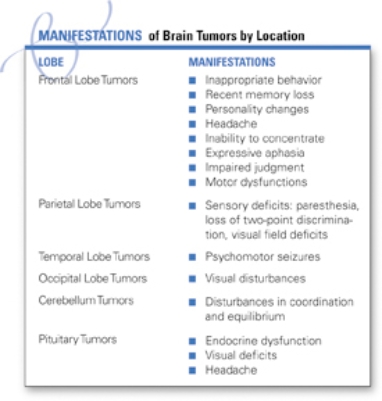
A) uses alternative techniques for communication
B) can fully verbalize plans for rehabilitation
C) regains ability to comprehend verbal and written language
D) expresses understanding that aphasia is permanent
A) uses alternative techniques for communication
B) can fully verbalize plans for rehabilitation
C) regains ability to comprehend verbal and written language
D) expresses understanding that aphasia is permanent
Question
Question
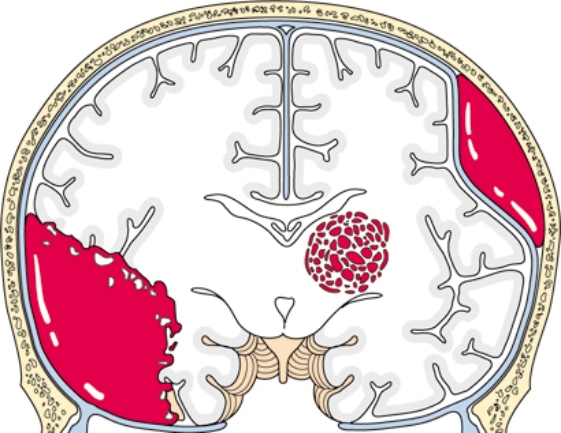
A patient has suffered a closed head injury due to a car accident. Place an "X" over the area that suggests the presence of a subdural hematoma.
Question
Question
Question
Question
Question
Question
Question
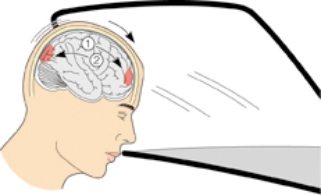
During a motor vehicle accident, a patient suffered multiple injuries of the brain. Place an X over the area where the countercoup injury would occur.
Question
Question
Question
Question
Question
Question
Question
Question
Question
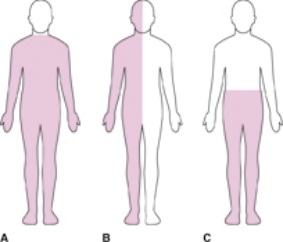
The nurse is caring for a patient with hemiplegia after experiencing a stroke. Which body areas should the nurse expect to be affected by the stroke? Mark an "X" on the body diagram below that depicts hemiplegia.
Question
Question
Question
The nurse is caring for a patient who is experiencing a tonic‒clonic seizure. Which diagram depicts the tonic phase of this seizure disorder?
A)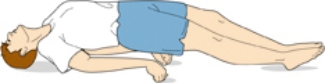
B)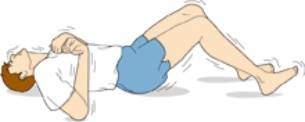
C)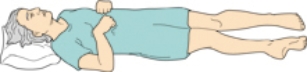
D)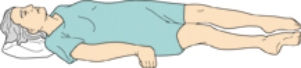
A)
B)
C)
D)
Question
Question
Question
Question
Question
Question
Question
Question
Question
Question
Question
Question
Question
Question

Unlock Deck
Sign up to unlock the cards in this deck!
Unlock Deck
Unlock Deck
1/41

Play

Full screen (f)
Deck 42: Nursing Care of Patients With Intracranial Disorders
1
The patient was riding in a car that hit a tree. The head hit the windshield (coup) and then the brain rebounded within the skull toward the opposite side (contrecoup). For which type of traumatic brain injury should the nurse plan care for this patient?
A) acceleration-deceleration
B) rotational
C) contact
D) stationary
A) acceleration-deceleration
B) rotational
C) contact
D) stationary
acceleration-deceleration
2
The nurse notes that a patient with damage to the diencephalon region of the cerebrum is demonstrating a breathing pattern where regular periods of deep, rapid breathing are followed by periods of apnea. How should the nurse document this breathing pattern?
A) Cheyne-Stokes respirations
B) apneustic respirations
C) neurogenic hyperventilation
D) ataxic respirations
A) Cheyne-Stokes respirations
B) apneustic respirations
C) neurogenic hyperventilation
D) ataxic respirations
Cheyne-Stokes respirations
3
The nurse is caring for a patient recovering from a craniotomy. How should the nurse position this patient?
A) low Fowler's (head of bed up 30 degrees)
B) flat
C) high
D) high Fowler's (head of bed up 45 degrees)
A) low Fowler's (head of bed up 30 degrees)
B) flat
C) high
D) high Fowler's (head of bed up 45 degrees)
low Fowler's (head of bed up 30 degrees)
4
Following a fall, a patient is brought to the emergency department. There was a brief loss of consciousness. The patient complains of headache, has vomited twice, has a dilated pupil on the same side as a hematoma over the temporal area, and is currently having a seizure. What should the nurse anticipate regarding the care of this patient?
A) This is an emergency situation that is likely due to an epidural hematoma and requires surgery.
B) This is a controlled situation once the seizure stops.
C) This is a serious situation in which a subdural hematoma is developing and requires surgery.
D) This is a typical situation seen with most patients who fall and will subside with observation.
A) This is an emergency situation that is likely due to an epidural hematoma and requires surgery.
B) This is a controlled situation once the seizure stops.
C) This is a serious situation in which a subdural hematoma is developing and requires surgery.
D) This is a typical situation seen with most patients who fall and will subside with observation.
Unlock Deck
Unlock for access to all 41 flashcards in this deck.
Unlock Deck
k this deck
5
Decerebrate posturing is present in an unconscious patient following a motor vehicle accident. The nurse expects to see which position in this patient?
A) The arms and legs are hyperextended and arms are hyperpronated.
B) The arms are folded over the chest and spasms are rhythmic.
C) The arms are pulled inward and the head is turned to the side.
D) The arms and legs have tonic‒clonic seizure activity.
A) The arms and legs are hyperextended and arms are hyperpronated.
B) The arms are folded over the chest and spasms are rhythmic.
C) The arms are pulled inward and the head is turned to the side.
D) The arms and legs have tonic‒clonic seizure activity.
Unlock Deck
Unlock for access to all 41 flashcards in this deck.
Unlock Deck
k this deck
6
In a patient diagnosed with a frontal lobe tumor, what should the nurse identify as being an appropriate expected outcome? See the accompanying box for the manifestations of a frontal lobe tumor.
A) uses alternative techniques for communication
B) can fully verbalize plans for rehabilitation
C) regains ability to comprehend verbal and written language
D) expresses understanding that aphasia is permanent
A) uses alternative techniques for communication
B) can fully verbalize plans for rehabilitation
C) regains ability to comprehend verbal and written language
D) expresses understanding that aphasia is permanent
Unlock Deck
Unlock for access to all 41 flashcards in this deck.
Unlock Deck
k this deck
7
A patient is experiencing status epilepticus. Which medication should the nurse expect to be prescribed for this patient?
A) lorazepam (Ativan) IV
B) oral glucose
C) phenytoin (Dilantin) orally
D) gabapentin (Neurontin) and lamotrigine (Lamictal)
A) lorazepam (Ativan) IV
B) oral glucose
C) phenytoin (Dilantin) orally
D) gabapentin (Neurontin) and lamotrigine (Lamictal)
Unlock Deck
Unlock for access to all 41 flashcards in this deck.
Unlock Deck
k this deck
8
A patient has suffered a closed head injury due to a car accident. Place an "X" over the area that suggests the presence of a subdural hematoma.
Unlock Deck
Unlock for access to all 41 flashcards in this deck.
Unlock Deck
k this deck
9
The nurse is caring for an unconscious patient. What should the nurse expect to be prescribed for this patient when the cough reflex disappears?
A) continuous pulse oximetry instead of intubation
B) frequent suctioning with a tonsil-tip suction device
C) close observation as the patient is fed
D) intubation and mechanical ventilation
A) continuous pulse oximetry instead of intubation
B) frequent suctioning with a tonsil-tip suction device
C) close observation as the patient is fed
D) intubation and mechanical ventilation
Unlock Deck
Unlock for access to all 41 flashcards in this deck.
Unlock Deck
k this deck
10
A patient without a history of previous seizures experiences two tonic‒clonic seizures in succession while the nurse is in the patient's room. List in priority order, the actions the nurse should take.
A) Turn the patient on his or her side.
B) Protect patient from environmental harm.
C) Start oxygen via face mask.
D) Reorientation of the patient to time, person, and place.
E) none of the above
A) Turn the patient on his or her side.
B) Protect patient from environmental harm.
C) Start oxygen via face mask.
D) Reorientation of the patient to time, person, and place.
E) none of the above
Unlock Deck
Unlock for access to all 41 flashcards in this deck.
Unlock Deck
k this deck
11
A patient is having a tonic‒clonic seizure. During the seizure, the priority for nursing care is to
A) protect the patient from injury.
B) insert a bite block to prevent the patient from swallowing his or her tongue.
C) ask the staff to hold the patient tightly.
D) obtain vital signs.
A) protect the patient from injury.
B) insert a bite block to prevent the patient from swallowing his or her tongue.
C) ask the staff to hold the patient tightly.
D) obtain vital signs.
Unlock Deck
Unlock for access to all 41 flashcards in this deck.
Unlock Deck
k this deck
12
The nurse is caring for a patient who will be evaluated for brain death. What should the nurse expect to be evaluated in this patient?
A) absent motor and reflex movements
B) flat electroencephalogram (EEG) on successive EEGs
C) no spontaneous respiration
D) pupils are equal and responsive to light
E) criteria present for at least 15 minutes
A) absent motor and reflex movements
B) flat electroencephalogram (EEG) on successive EEGs
C) no spontaneous respiration
D) pupils are equal and responsive to light
E) criteria present for at least 15 minutes
Unlock Deck
Unlock for access to all 41 flashcards in this deck.
Unlock Deck
k this deck
13
Reviewing the patient's report of laboratory test results as provided, the nurse realizes that which results are critical for the patient with a decreased level of consciousness?
A) glucose and serum osmolality
B) sodium and potassium levels
C) sodium and white blood cell count
D) glucose and white blood cell count
A) glucose and serum osmolality
B) sodium and potassium levels
C) sodium and white blood cell count
D) glucose and white blood cell count
Unlock Deck
Unlock for access to all 41 flashcards in this deck.
Unlock Deck
k this deck
14
A patient is in the emergency department following a head injury. What should the nurse realize as being the most accurate sign of developing increased intracranial pressure (IICP)?
A) decreasing level of consciousness
B) elevated diastolic blood pressure
C) decreasing respiratory rate
D) pupils are equal
A) decreasing level of consciousness
B) elevated diastolic blood pressure
C) decreasing respiratory rate
D) pupils are equal
Unlock Deck
Unlock for access to all 41 flashcards in this deck.
Unlock Deck
k this deck
15
During a motor vehicle accident, a patient suffered multiple injuries of the brain. Place an X over the area where the countercoup injury would occur.
Unlock Deck
Unlock for access to all 41 flashcards in this deck.
Unlock Deck
k this deck
16
A patient has a head injury caused by a swinging bat. For which type of injury should the nurse plan care for this patient?
A) contact
B) a deceleration
C) an acceleration-deceleration injury
D) rotational
A) contact
B) a deceleration
C) an acceleration-deceleration injury
D) rotational
Unlock Deck
Unlock for access to all 41 flashcards in this deck.
Unlock Deck
k this deck
17
When assessing an adult after a fall, the nurse notes a dilated pupil on the right and a hematoma in the right temporal area. The nurse realizes that this likely means that
A) the process affecting the pupil is occurring locally on the right side (ipsilateral pupil dilation).
B) the process affecting the pupil is occurring on the opposite side and is unrelated to the right temporal hematoma.
C) the process affecting the right pupil is temporary and soon both pupils will be equal in size.
D) the process causing the right pupil to dilate is a result of a metabolic process.
A) the process affecting the pupil is occurring locally on the right side (ipsilateral pupil dilation).
B) the process affecting the pupil is occurring on the opposite side and is unrelated to the right temporal hematoma.
C) the process affecting the right pupil is temporary and soon both pupils will be equal in size.
D) the process causing the right pupil to dilate is a result of a metabolic process.
Unlock Deck
Unlock for access to all 41 flashcards in this deck.
Unlock Deck
k this deck
18
The nurse is identifying problems for a patient with a seizure disorder. Which problem should the nurse identify as being this patient's greatest psychosocial need?
A) Anxiety
B) Self-Care Deficit
C) Altered Activity: Exercise
D) Altered Body Image
A) Anxiety
B) Self-Care Deficit
C) Altered Activity: Exercise
D) Altered Body Image
Unlock Deck
Unlock for access to all 41 flashcards in this deck.
Unlock Deck
k this deck
19
The nurse is caring for a patient with an altered level of consciousness (LOC). Which intravenous fluid should the nurse expect to be prescribed for this patient?
A) isotonic or hypertonic
B) 0.45% normal saline
C) dextrose 5% in water
D) dextrose 5% in 0.45 % normal saline
A) isotonic or hypertonic
B) 0.45% normal saline
C) dextrose 5% in water
D) dextrose 5% in 0.45 % normal saline
Unlock Deck
Unlock for access to all 41 flashcards in this deck.
Unlock Deck
k this deck
20
The nurse is observing a patient who is having a seizure that involves a blank stare, unresponsiveness to questions, and smacking of the lips. The seizure lasts less than a minute. How should the nurse categorize this seizure?
A) absence
B) partial
C) tonic‒clonic
D) status epilepticus
A) absence
B) partial
C) tonic‒clonic
D) status epilepticus
Unlock Deck
Unlock for access to all 41 flashcards in this deck.
Unlock Deck
k this deck
21
The nurse instructs a patient on actions to help reduce the onset of migraine headaches. Which patient statement indicates that additional teaching is required?
A) "I will switch to red wine rather than continuing to drink white wine."
B) "Reading food labels is important since I have to avoid tyramine."
C) "I will need to drink caffeine-free soft drinks and coffee from now on."
D) "Stress management classes will be a good approach to take."
A) "I will switch to red wine rather than continuing to drink white wine."
B) "Reading food labels is important since I have to avoid tyramine."
C) "I will need to drink caffeine-free soft drinks and coffee from now on."
D) "Stress management classes will be a good approach to take."
Unlock Deck
Unlock for access to all 41 flashcards in this deck.
Unlock Deck
k this deck
22
The nurse is instructing a patient with a brain tumor about a scheduled craniotomy. What should the nurse include in this teaching?
A) The tumor is excised.
B) The bone is cut between the burr holes.
C) The bone flap is returned to the opening.
D) A series of burr holes is made in the skull.
E) Plastic material is placed over the opening.
A) The tumor is excised.
B) The bone is cut between the burr holes.
C) The bone flap is returned to the opening.
D) A series of burr holes is made in the skull.
E) Plastic material is placed over the opening.
Unlock Deck
Unlock for access to all 41 flashcards in this deck.
Unlock Deck
k this deck
23
The nurse is caring for a patient with migraine headaches. Which medication should the nurse expect to be prescribed prophylactically for this patient?
A) propranolol hydrochloride (Inderal)
B) acetaminophen (Tylenol)
C) zolmitriptan (Zomig)
D) sumatriptan (Imitrex)
A) propranolol hydrochloride (Inderal)
B) acetaminophen (Tylenol)
C) zolmitriptan (Zomig)
D) sumatriptan (Imitrex)
Unlock Deck
Unlock for access to all 41 flashcards in this deck.
Unlock Deck
k this deck
24
The nurse is caring for a patient with hemiplegia after experiencing a stroke. Which body areas should the nurse expect to be affected by the stroke? Mark an "X" on the body diagram below that depicts hemiplegia.
Unlock Deck
Unlock for access to all 41 flashcards in this deck.
Unlock Deck
k this deck
25
The nurse is planning a seminar about headaches for a local civic group. What type of headache should the nurse describe as having a strong familial connection, affects females three to one over males, and results in lost productivity?
A) migraine
B) cluster
C) stress
D) sinus
A) migraine
B) cluster
C) stress
D) sinus
Unlock Deck
Unlock for access to all 41 flashcards in this deck.
Unlock Deck
k this deck
26
A patient is diagnosed with doll's-eye movements. What should the nurse expect to assess in this patient?
A) The eyes remain fixed as the head is turned.
B) The eyes appear to move in the direction opposite to the motion of the head, when the head is gently rotated.
C) The eyes open and close when the neck is flexed and extended.
D) The pupils remain fixed and dilated.
A) The eyes remain fixed as the head is turned.
B) The eyes appear to move in the direction opposite to the motion of the head, when the head is gently rotated.
C) The eyes open and close when the neck is flexed and extended.
D) The pupils remain fixed and dilated.
Unlock Deck
Unlock for access to all 41 flashcards in this deck.
Unlock Deck
k this deck
27
The nurse is caring for a patient who is experiencing a tonic‒clonic seizure. Which diagram depicts the tonic phase of this seizure disorder?
A)
B)
C)
D)
A)
B)
C)
D)
Unlock Deck
Unlock for access to all 41 flashcards in this deck.
Unlock Deck
k this deck
28
A patient with increased intracranial pressure is prescribed mannitol (Osmitrol). What should the nurse do when providing this medication?
A) Use an in-line filter for IV administration.
B) Do not administer the medication if crystals are noted in the solution.
C) Monitor central venous pressure (CVP) and pulmonary artery pressures (PAP) before and every hour throughout administration.
D) Assess patient for signs of fluid retention.
E) Discontinue the drug immediately if the patient complains of a headache.
A) Use an in-line filter for IV administration.
B) Do not administer the medication if crystals are noted in the solution.
C) Monitor central venous pressure (CVP) and pulmonary artery pressures (PAP) before and every hour throughout administration.
D) Assess patient for signs of fluid retention.
E) Discontinue the drug immediately if the patient complains of a headache.
Unlock Deck
Unlock for access to all 41 flashcards in this deck.
Unlock Deck
k this deck
29
A patient recovering from a stroke has agnosia. What should the nurse do when caring for this patient?
A) Frequently repeat the names of familiar persons and objects in the patient's room when providing care.
B) Help the patient move hands and arms through the motions of combing hair and getting dressed.
C) Speak with a normal tone of voice near the ear on the unaffected side.
D) Talk normally to the patient but allow adequate time for the patient's short responses.
A) Frequently repeat the names of familiar persons and objects in the patient's room when providing care.
B) Help the patient move hands and arms through the motions of combing hair and getting dressed.
C) Speak with a normal tone of voice near the ear on the unaffected side.
D) Talk normally to the patient but allow adequate time for the patient's short responses.
Unlock Deck
Unlock for access to all 41 flashcards in this deck.
Unlock Deck
k this deck
30
The nurse is caring for a patient with transient ischemic attack (TIA). Which medication should the nurse expect to be prescribed for this patient?
A) antiplatelet agents
B) fibrinolytic therapy
C) anticoagulant therapy
D) corticosteroids
A) antiplatelet agents
B) fibrinolytic therapy
C) anticoagulant therapy
D) corticosteroids
Unlock Deck
Unlock for access to all 41 flashcards in this deck.
Unlock Deck
k this deck
31
The nurse is caring for a patient in the postoperative unit following carotid endarterectomy. How should the nurse position the patient?
A) On the unoperated side, either in a flat position or with the head of the bed elevated 30 degrees.
B) On the operated side with the head of the bed in semi-Fowler's position.
C) On the unoperated side with a small towel placed directly against the operative site.
D) On the operated side with a pressure dressing over the operative site.
A) On the unoperated side, either in a flat position or with the head of the bed elevated 30 degrees.
B) On the operated side with the head of the bed in semi-Fowler's position.
C) On the unoperated side with a small towel placed directly against the operative site.
D) On the operated side with a pressure dressing over the operative site.
Unlock Deck
Unlock for access to all 41 flashcards in this deck.
Unlock Deck
k this deck
32
The nurse notes on the surgical schedule that a patient is scheduled for cranial burr holes. For which health problems does the nurse realize this type of surgical approach is indicated?
A) Ischemic stroke
B) Migraine headache
C) Epidural hematoma
D) Hemorrhagic stroke
E) Acute subdural hematoma
A) Ischemic stroke
B) Migraine headache
C) Epidural hematoma
D) Hemorrhagic stroke
E) Acute subdural hematoma
Unlock Deck
Unlock for access to all 41 flashcards in this deck.
Unlock Deck
k this deck
33
The nurse is caring for a patient with a seizure disorder who is scheduled for surgery to remove the epileptogenic focus within the cerebral cortex. The nurse realizes that this patient must have met which criteria to have this type of surgery planned?
A) The patient desires to have a family.
B) There is one focal point located within the patient's brain.
C) The patient cannot afford antiseizure medication prescribed.
D) Medications have not been successful to control seizure activity.
E) The patient is unable to hold a full-time job because of seizure activity.
A) The patient desires to have a family.
B) There is one focal point located within the patient's brain.
C) The patient cannot afford antiseizure medication prescribed.
D) Medications have not been successful to control seizure activity.
E) The patient is unable to hold a full-time job because of seizure activity.
Unlock Deck
Unlock for access to all 41 flashcards in this deck.
Unlock Deck
k this deck
34
The nurse is teaching a community education class on warning signs of stroke and transient ischemic attacks (TIAs). What should be included in this presentation?
A) sudden weakness or numbness of the face, arm, or leg, especially on one side of the body
B) sudden confusion, difficulty speaking, or difficulty understanding speech
C) sudden trouble walking, dizziness, or loss of coordination
D) arrival time at the hospital should be within three hours of onset for drugs to be effective
E) African Americans are a high-risk group for strokes
A) sudden weakness or numbness of the face, arm, or leg, especially on one side of the body
B) sudden confusion, difficulty speaking, or difficulty understanding speech
C) sudden trouble walking, dizziness, or loss of coordination
D) arrival time at the hospital should be within three hours of onset for drugs to be effective
E) African Americans are a high-risk group for strokes
Unlock Deck
Unlock for access to all 41 flashcards in this deck.
Unlock Deck
k this deck
35
A patient with a brain tumor is scheduled for a chest x-ray and says "I don't understand why I'm having a chest x-ray when my problem is in my head!" What is the nurse's most appropriate response?
A) "The physician may be trying to determine if this is a metastatic brain tumor, as the most common source of these tumors is cancer of the lung."
B) "This is just a precautionary measure. The physician often prescribes chest x-rays."
C) "Don't get so upset about this! It's routine. The doctor will talk to you later."
D) "The escort is here to take you to radiology, so we'll discuss this when you return."
A) "The physician may be trying to determine if this is a metastatic brain tumor, as the most common source of these tumors is cancer of the lung."
B) "This is just a precautionary measure. The physician often prescribes chest x-rays."
C) "Don't get so upset about this! It's routine. The doctor will talk to you later."
D) "The escort is here to take you to radiology, so we'll discuss this when you return."
Unlock Deck
Unlock for access to all 41 flashcards in this deck.
Unlock Deck
k this deck
36
The nurse is caring for a patient with a head injury involving cerebral edema and increased intracranial pressure (IICP). To prevent further transient increases from occurring, the nurse should implement what intervention?
A) Implement measures to help the patient avoid coughing and straining.
B) Position the patient in the supine position with the head of the bed at 30 degrees.
C) Initiate oxygen administration.
D) Initiate and monitor an IV with normal saline.
A) Implement measures to help the patient avoid coughing and straining.
B) Position the patient in the supine position with the head of the bed at 30 degrees.
C) Initiate oxygen administration.
D) Initiate and monitor an IV with normal saline.
Unlock Deck
Unlock for access to all 41 flashcards in this deck.
Unlock Deck
k this deck
37
The nurse is completing discharge teaching to a patient following hospitalization for a seizure disorder who is being prescribed phenytoin (Dilantin). What should the nurse include in these instructions?
A) "Maintain good oral hygiene, use a soft toothbrush, massage the gums, and floss daily."
B) "Carry identification indicating the type of seizures for which you are being treated."
C) "You will need to have your sodium level monitored."
D) "If you skip a dose, make sure you double the dose the next day."
A) "Maintain good oral hygiene, use a soft toothbrush, massage the gums, and floss daily."
B) "Carry identification indicating the type of seizures for which you are being treated."
C) "You will need to have your sodium level monitored."
D) "If you skip a dose, make sure you double the dose the next day."
Unlock Deck
Unlock for access to all 41 flashcards in this deck.
Unlock Deck
k this deck
38
The nurse is caring for a patient with an intracranial pressure monitoring device. For which priority problem should the nurse plan care for this patient?
A) possible infection
B) confusion
C) changes in skin integrity
D) changes in mobility status
A) possible infection
B) confusion
C) changes in skin integrity
D) changes in mobility status
Unlock Deck
Unlock for access to all 41 flashcards in this deck.
Unlock Deck
k this deck
39
The nurse completes an assessment of a patient on the neurology unit. After reviewing the results listed in the table, what coma state does the nurse realize this patient is experiencing?
A) persistent vegetative
B) stupor
C) locked-in syndrome
D) minimally conscious
A) persistent vegetative
B) stupor
C) locked-in syndrome
D) minimally conscious
Unlock Deck
Unlock for access to all 41 flashcards in this deck.
Unlock Deck
k this deck
40
The nurse is caring for a patient who had a craniotomy for a brain tumor and has developed postoperative leakage of cerebrospinal fluid (CSF) from the nose. What are appropriate nursing interventions for this patient?
A) Keep patient turned on side of leakage and keep the head of the bed elevated 20 degrees.
B) Assess the patient for constant swallowing.
C) Observe for thick, yellow, odorous drainage.
D) Insert sterile packing into the area.
E) Encourage the patient to blow his or her nose frequently.
A) Keep patient turned on side of leakage and keep the head of the bed elevated 20 degrees.
B) Assess the patient for constant swallowing.
C) Observe for thick, yellow, odorous drainage.
D) Insert sterile packing into the area.
E) Encourage the patient to blow his or her nose frequently.
Unlock Deck
Unlock for access to all 41 flashcards in this deck.
Unlock Deck
k this deck
41
While reviewing newly prescribed orders, the nurse begins to prepare a patient to receive plasminogen activator alteplase (tPA). What should the nurse realize about this patient's health problem?
A) The patient had an ischemic stroke.
B) The patient had a hemorrhagic stroke.
C) The patient has uncontrollable seizure activity.
D) The patient had a stroke less than 3 hours ago.
E) The patient's systolic blood pressure is greater than 200 mmHg.
A) The patient had an ischemic stroke.
B) The patient had a hemorrhagic stroke.
C) The patient has uncontrollable seizure activity.
D) The patient had a stroke less than 3 hours ago.
E) The patient's systolic blood pressure is greater than 200 mmHg.
Unlock Deck
Unlock for access to all 41 flashcards in this deck.
Unlock Deck
k this deck
Unlock Deck
Unlock for access to all 41 flashcards in this deck.






