







 Chat with AI

Deck 39: Nursing Care of Patients With Musculoskeletal Trauma
Full screen (f)

Question

Question
Question
Question
Question
Question
Question
Question
Question
Question
Question
Question
Question
Question
Question
Question
Question
Question
Question
Question
Question
Question
Question
The nurse is changing a patient's stump dressing. The nurse understands that proper technique must be used for the above-the-knee amputation. Which technique should the nurse use for this dressing change? 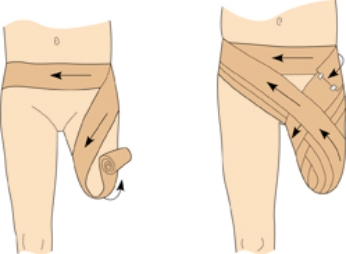
A) figure-eight bandage
B) compression bandaging technique
C) splinting
D) bivalving
A) figure-eight bandage
B) compression bandaging technique
C) splinting
D) bivalving
Question
Question
Question
A 70-year-old male patient has a fracture of the right hip from a motor vehicle accident. The orthopedic surgeon decides to perform surgery to correct the fracture to prevent complications and allow early rehabilitation. Which type of surgery and stabilization will be performed on this patient? Refer to the figure. 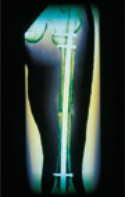
A) external fixation
B) open reduction and internal fixation
C) total right hip arthroplasty
D) hip arthroscopy
A) external fixation
B) open reduction and internal fixation
C) total right hip arthroplasty
D) hip arthroscopy
Question
Question
The patient has a fracture of the right tibia and fibula. The orthopedic surgeon decides to surgically correct the fractures with the device in the figure. What type of device is being used? 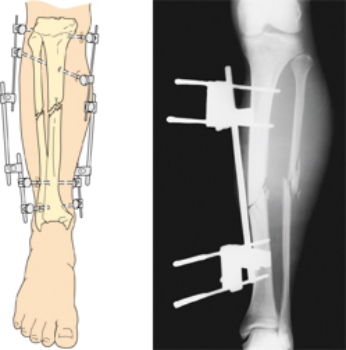
A) internal fixation device
B) external fixation device
C) Buck's traction
D) wiring
A) internal fixation device
B) external fixation device
C) Buck's traction
D) wiring
Question
Question
Question
Question
Question
Question
Question
Question
Question
Question
Question
Question
Question
Question
Question
Question

Unlock Deck
Sign up to unlock the cards in this deck!
Unlock Deck
Unlock Deck
1/44

Play

Full screen (f)
Deck 39: Nursing Care of Patients With Musculoskeletal Trauma
1
The nurse is caring for a patient with a long leg cast. What should the nurse include when assessing this patient for indications of compromised circulation?
A) swelling of the toes
B) drainage on the cast
C) increased temperature
D) foul odor
E) a tight cast
A) swelling of the toes
B) drainage on the cast
C) increased temperature
D) foul odor
E) a tight cast
swelling of the toes
a tight cast
a tight cast
2
The nurse is planning care for a patient recovering from an above-the-knee amputation. Which position should the nurse include in this patient's plan of care?
A) Sims' position as tolerated
B) prone for 1 hour, several times a day
C) high Fowler's position
D) sitting in a chair while awake
A) Sims' position as tolerated
B) prone for 1 hour, several times a day
C) high Fowler's position
D) sitting in a chair while awake
prone for 1 hour, several times a day
3
A patient diagnosed with bursitis asks the nurse, "Why do you keep asking what my pain level is? Don't you believe me?" How should the nurse respond?
A) "It is important to know your pain level so that we can provide you with the best medication."
B) "If you don't want the medication, you don't have to take it."
C) "I can't give you the medication unless I know what your pain level is."
D) "I don't understand why you are concerned about my questions. Would you clarify?"
A) "It is important to know your pain level so that we can provide you with the best medication."
B) "If you don't want the medication, you don't have to take it."
C) "I can't give you the medication unless I know what your pain level is."
D) "I don't understand why you are concerned about my questions. Would you clarify?"
"It is important to know your pain level so that we can provide you with the best medication."
4
A patient is placed in Buck's traction after a hip fracture. What should be included in this patient's plan of care?
A) providing pin site care every shift as prescribed
B) placing an abduction pillow between the legs for alignment
C) having another person hold the weights when pulling the patient up in bed
D) turning the patient to the unaffected side every 2 hours
A) providing pin site care every shift as prescribed
B) placing an abduction pillow between the legs for alignment
C) having another person hold the weights when pulling the patient up in bed
D) turning the patient to the unaffected side every 2 hours
Unlock Deck
Unlock for access to all 44 flashcards in this deck.
Unlock Deck
k this deck
5
An older patient with a history of diabetes is experiencing poor healing of a fractured ankle. The nurse recognizes that which factors contribute to the delay in bone healing?
A) immobilization
B) advanced age
C) diabetes
D) moderate activity level prior to injury
E) presence of foreign body at the fracture site
A) immobilization
B) advanced age
C) diabetes
D) moderate activity level prior to injury
E) presence of foreign body at the fracture site
Unlock Deck
Unlock for access to all 44 flashcards in this deck.
Unlock Deck
k this deck
6
A patient is recovering from endoscopic carpal tunnel surgery. The nurse knows that the surgery has been effective based on which patient statement?
A) "I only feel numbness when I've been on the computer for more than 15 minutes."
B) "I guess in a couple of months the numbness will go away."
C) "I will always have some tingling in my fingers after I've been on the computer."
D) "I'm not feeling tingling or numbness in my thumb or index finger any longer."
A) "I only feel numbness when I've been on the computer for more than 15 minutes."
B) "I guess in a couple of months the numbness will go away."
C) "I will always have some tingling in my fingers after I've been on the computer."
D) "I'm not feeling tingling or numbness in my thumb or index finger any longer."
Unlock Deck
Unlock for access to all 44 flashcards in this deck.
Unlock Deck
k this deck
7
A patient is diagnosed with a sprained right ankle. The nurse should instruct the patient about which treatment for the sprain?
A) applying of a long leg cast
B) pain medication
C) heat, rest, compression, and elevation
D) rest, ice, compression, and elevation
A) applying of a long leg cast
B) pain medication
C) heat, rest, compression, and elevation
D) rest, ice, compression, and elevation
Unlock Deck
Unlock for access to all 44 flashcards in this deck.
Unlock Deck
k this deck
8
A patient is diagnosed with an open compound fracture and is scheduled for immediate surgery. On which problems should the nurse focus during the patient's immediate postoperative period?
A) difficulty with mobility
B) anxiety related to the surgical procedure
C) potential for infection
D) possibility of falling
A) difficulty with mobility
B) anxiety related to the surgical procedure
C) potential for infection
D) possibility of falling
Unlock Deck
Unlock for access to all 44 flashcards in this deck.
Unlock Deck
k this deck
9
A patient is diagnosed with a humeral fracture. What should the nurse identify as a priority treatment goal for the patient?
A) immediate surgical correction
B) immobilizing the fractured bone in normal anatomic position
C) applying ice and compression to the injured arm
D) applying elastic bandage wrap and elevating the arm
A) immediate surgical correction
B) immobilizing the fractured bone in normal anatomic position
C) applying ice and compression to the injured arm
D) applying elastic bandage wrap and elevating the arm
Unlock Deck
Unlock for access to all 44 flashcards in this deck.
Unlock Deck
k this deck
10
A patient is diagnosed with an oblique fracture of the left femur. In which order should the nurse explain the steps of healing? Standard Text: Click and drag the options below to move them up or down.
A) bony callus formation
B) fibrocartilaginous callus formation
C) hematoma formation
D) remodeling
E) none of the above
A) bony callus formation
B) fibrocartilaginous callus formation
C) hematoma formation
D) remodeling
E) none of the above
Unlock Deck
Unlock for access to all 44 flashcards in this deck.
Unlock Deck
k this deck
11
An older patient lives at home alone. Which assessment data would indicate modifiable risk factors for a hip fracture?
A) complaints of lower extremity weakness
B) problems with balance
C) medications: atenolol 50 mg daily, lisinopril 10 mg daily, Xanax 0.25 mg daily, Seroquel 50 mg daily
D) report of sleeping with two pillows
E) complaints of nonproductive dry cough
A) complaints of lower extremity weakness
B) problems with balance
C) medications: atenolol 50 mg daily, lisinopril 10 mg daily, Xanax 0.25 mg daily, Seroquel 50 mg daily
D) report of sleeping with two pillows
E) complaints of nonproductive dry cough
Unlock Deck
Unlock for access to all 44 flashcards in this deck.
Unlock Deck
k this deck
12
Nonunion of a fractured tibia is seen in a patient after 8 weeks in a long leg cast. Which intervention may be necessary to encourage bone healing?
A) removing the old cast and reapplying another
B) placing the patient in Buck's traction
C) surgical intervention with open reduction and internal fixation
D) bone debridement
A) removing the old cast and reapplying another
B) placing the patient in Buck's traction
C) surgical intervention with open reduction and internal fixation
D) bone debridement
Unlock Deck
Unlock for access to all 44 flashcards in this deck.
Unlock Deck
k this deck
13
A patient with facial and chest injuries from a motor vehicle accident has rhonchi in the upper airways. For which problem should the nurse plan care?
A) inability to clear the airway
B) problem with swallowing
C) changes in oral mucous membrane integrity
D) potential for additional injury
A) inability to clear the airway
B) problem with swallowing
C) changes in oral mucous membrane integrity
D) potential for additional injury
Unlock Deck
Unlock for access to all 44 flashcards in this deck.
Unlock Deck
k this deck
14
The nurse is concerned that a patient is at risk for developing carpal tunnel syndrome. Which occupation would increase this patient's risk?
A) farmer
B) police officer
C) barber
D) computer technician
E) carpet installer
A) farmer
B) police officer
C) barber
D) computer technician
E) carpet installer
Unlock Deck
Unlock for access to all 44 flashcards in this deck.
Unlock Deck
k this deck
15
After sustaining a fracture, a patient was treated by applying ice and a cast. After several weeks, the cast is removed and the patient is able to ambulate without difficulty. Which positive local factors influenced this patient's bone healing?
A) immobilization
B) timely correction of displacement
C) application of ice
D) delay in correction of displacement
E) malnutrition
A) immobilization
B) timely correction of displacement
C) application of ice
D) delay in correction of displacement
E) malnutrition
Unlock Deck
Unlock for access to all 44 flashcards in this deck.
Unlock Deck
k this deck
16
The nurse suspects that a patient is experiencing fat embolism syndrome (FES). Which assessment data support the nurse's clinical decision?
A) pulse oximetry 88%
B) petechiae observed on the chest and upper arms
C) complaints of shortness of breath
D) respiratory rate 32
E) skin warm and dry
A) pulse oximetry 88%
B) petechiae observed on the chest and upper arms
C) complaints of shortness of breath
D) respiratory rate 32
E) skin warm and dry
Unlock Deck
Unlock for access to all 44 flashcards in this deck.
Unlock Deck
k this deck
17
A patient with a long leg cast is exhibiting signs of compartment syndrome. What should the nurse prepare to aid in the treatment of the patient?
A) extra pillows to elevate the casted extremity above the heart
B) Doppler to assess the strength of peripheral pulses
C) straps to wrap around the bivalved cast
D) percussion hammer to assess reflexes for damage
A) extra pillows to elevate the casted extremity above the heart
B) Doppler to assess the strength of peripheral pulses
C) straps to wrap around the bivalved cast
D) percussion hammer to assess reflexes for damage
Unlock Deck
Unlock for access to all 44 flashcards in this deck.
Unlock Deck
k this deck
18
A patient is diagnosed with epicondylitis. The nurse recognizes that which treatment might be indicated for this condition?
A) ibuprofen 600 mg twice daily
B) morphine sulfate 4 mg IV
C) arm splint to be used while awake
D) ice followed by heat
E) surgical repair
A) ibuprofen 600 mg twice daily
B) morphine sulfate 4 mg IV
C) arm splint to be used while awake
D) ice followed by heat
E) surgical repair
Unlock Deck
Unlock for access to all 44 flashcards in this deck.
Unlock Deck
k this deck
19
A patient diagnosed with a fractured left femur complains of chest pain, shortness of breath, and a rash on the chest. What complication should the nurse suspect?
A) fat embolism syndrome
B) deep vein thrombosis
C) compartment syndrome
D) disseminated intravascular coagulation (DIC)
A) fat embolism syndrome
B) deep vein thrombosis
C) compartment syndrome
D) disseminated intravascular coagulation (DIC)
Unlock Deck
Unlock for access to all 44 flashcards in this deck.
Unlock Deck
k this deck
20
The nurse instructs an adolescent patient on the care of a sprain at home. Which patient statement indicates the need for further instruction?
A) "I should put a heating pad on my leg as soon as I get home."
B) "I should avoid weight bearing on this leg for a couple of days."
C) "I should make sure to keep the ace bandage on my leg."
D) "I should prop this leg up when I'm sitting in a chair."
A) "I should put a heating pad on my leg as soon as I get home."
B) "I should avoid weight bearing on this leg for a couple of days."
C) "I should make sure to keep the ace bandage on my leg."
D) "I should prop this leg up when I'm sitting in a chair."
Unlock Deck
Unlock for access to all 44 flashcards in this deck.
Unlock Deck
k this deck
21
A patient is prescribed RICE therapy. How should the nurse describe the components of this therapy?
A) rest, ice, compression, and elevation
B) rest, ice, CT scan, and elimination of pain
C) rest, immobilization, CT scan, and elimination of pain
D) rest, immobilization, compression, and elevation
A) rest, ice, compression, and elevation
B) rest, ice, CT scan, and elimination of pain
C) rest, immobilization, CT scan, and elimination of pain
D) rest, immobilization, compression, and elevation
Unlock Deck
Unlock for access to all 44 flashcards in this deck.
Unlock Deck
k this deck
22
The nurse is explaining to a patient the procedure to alleviate pressure on a casted extremity. How should the nurse explain the procedure?
A) "This procedure is called bivalving. The doctor will use a cast saw to split the cast down both sides to relieve pressure on your leg."
B) "This procedure is called an external fixation and will help the bone heal."
C) "This procedure is called an open reduction with internal fixation to help the bone fuse together."
D) "This procedure will help heal your leg faster so that the cast can come off sooner."
A) "This procedure is called bivalving. The doctor will use a cast saw to split the cast down both sides to relieve pressure on your leg."
B) "This procedure is called an external fixation and will help the bone heal."
C) "This procedure is called an open reduction with internal fixation to help the bone fuse together."
D) "This procedure will help heal your leg faster so that the cast can come off sooner."
Unlock Deck
Unlock for access to all 44 flashcards in this deck.
Unlock Deck
k this deck
23
The nurse is changing a patient's stump dressing. The nurse understands that proper technique must be used for the above-the-knee amputation. Which technique should the nurse use for this dressing change?
A) figure-eight bandage
B) compression bandaging technique
C) splinting
D) bivalving
A) figure-eight bandage
B) compression bandaging technique
C) splinting
D) bivalving
Unlock Deck
Unlock for access to all 44 flashcards in this deck.
Unlock Deck
k this deck
24
The nurse needs to reposition a patient with a fractured leg. Which action should the nurse take when moving this patient?
A) making sure the extremity is supported distal to the fracture
B) disconnecting the weights from the balanced traction setup
C) supporting the extremity above and below the fracture
D) supporting the leg directly under the fracture
A) making sure the extremity is supported distal to the fracture
B) disconnecting the weights from the balanced traction setup
C) supporting the extremity above and below the fracture
D) supporting the leg directly under the fracture
Unlock Deck
Unlock for access to all 44 flashcards in this deck.
Unlock Deck
k this deck
25
The nurse is concerned that patients on an orthopedic care area are at risk for compartment syndrome. In which circumstances should the nurse assess for manifestations of compartment syndrome?
A) fasciotomy
B) cast applied to a limb
C) crush injury to a limb
D) fat embolism
E) total hip replacement surgery
A) fasciotomy
B) cast applied to a limb
C) crush injury to a limb
D) fat embolism
E) total hip replacement surgery
Unlock Deck
Unlock for access to all 44 flashcards in this deck.
Unlock Deck
k this deck
26
A 70-year-old male patient has a fracture of the right hip from a motor vehicle accident. The orthopedic surgeon decides to perform surgery to correct the fracture to prevent complications and allow early rehabilitation. Which type of surgery and stabilization will be performed on this patient? Refer to the figure.
A) external fixation
B) open reduction and internal fixation
C) total right hip arthroplasty
D) hip arthroscopy
A) external fixation
B) open reduction and internal fixation
C) total right hip arthroplasty
D) hip arthroscopy
Unlock Deck
Unlock for access to all 44 flashcards in this deck.
Unlock Deck
k this deck
27
A patient who was in a fight sustained several direct blows to the face. The nurse assesses an elevated pulse (P 108), elevated respiratory rate (RR 24), and obvious deformity to the right side of the face. What should the nurse identify as the priority of care for this patient?
A) frequently assessing the blood pressure for signs of shock and initiating IV fluids
B) monitoring the elevated respiratory rate and maintaining the airway
C) monitoring the elevated pulse rate and looking for signs of pallor
D) frequently assessing for facial pain and administering pain medication p.r.n.
A) frequently assessing the blood pressure for signs of shock and initiating IV fluids
B) monitoring the elevated respiratory rate and maintaining the airway
C) monitoring the elevated pulse rate and looking for signs of pallor
D) frequently assessing for facial pain and administering pain medication p.r.n.
Unlock Deck
Unlock for access to all 44 flashcards in this deck.
Unlock Deck
k this deck
28
The patient has a fracture of the right tibia and fibula. The orthopedic surgeon decides to surgically correct the fractures with the device in the figure. What type of device is being used?
A) internal fixation device
B) external fixation device
C) Buck's traction
D) wiring
A) internal fixation device
B) external fixation device
C) Buck's traction
D) wiring
Unlock Deck
Unlock for access to all 44 flashcards in this deck.
Unlock Deck
k this deck
29
A patient recovering from an amputation refuses to look at the stump or participate in care. For what problem should the nurse plan interventions to help this patient?
A) infection
B) insufficient nutrition
C) problems with body image
D) risk for chronic pain
A) infection
B) insufficient nutrition
C) problems with body image
D) risk for chronic pain
Unlock Deck
Unlock for access to all 44 flashcards in this deck.
Unlock Deck
k this deck
30
The nurse is caring for a patient with an external fixator device. What care should the nurse provide to this patient?
A) cleansing pin sites per orders to reduce the chance of infection
B) adjusting the tension on the pins whenever the patient experiences pain
C) explaining that bathing in a tub can be resumed after 3 days
D) encouraging the patient to keep the limb with the external fixator very still.
A) cleansing pin sites per orders to reduce the chance of infection
B) adjusting the tension on the pins whenever the patient experiences pain
C) explaining that bathing in a tub can be resumed after 3 days
D) encouraging the patient to keep the limb with the external fixator very still.
Unlock Deck
Unlock for access to all 44 flashcards in this deck.
Unlock Deck
k this deck
31
Following the application of a cast to a patient's right lower leg, the nurse is monitoring for complications. Which assessment data leads the nurse to be concerned about a serious complication?
A) The toes on the right foot are pink and warm, and sensation is intact.
B) The patient complains of numbness in the right foot and toes.
C) The patient reports itching under the cast.
D) The patient complains of general discomfort in the lower-right leg.
A) The toes on the right foot are pink and warm, and sensation is intact.
B) The patient complains of numbness in the right foot and toes.
C) The patient reports itching under the cast.
D) The patient complains of general discomfort in the lower-right leg.
Unlock Deck
Unlock for access to all 44 flashcards in this deck.
Unlock Deck
k this deck
32
A patient with an open fracture of the left femur that punctured the skin waited 2 hours before getting to the hospital. What would be the priority problem to address when caring for this patient?
A) insufficient nutrition
B) high potential for infection
C) low body temperature
D) fear and anxiety
A) insufficient nutrition
B) high potential for infection
C) low body temperature
D) fear and anxiety
Unlock Deck
Unlock for access to all 44 flashcards in this deck.
Unlock Deck
k this deck
33
A patient recovering from a fractured hip is at risk for developing deep vein thrombosis (DVT). The nurse anticipates that which treatment would be indicated for the patient at this time?
A) heparin
B) prevention
C) vena cava filter
D) massaging the affected extremity
A) heparin
B) prevention
C) vena cava filter
D) massaging the affected extremity
Unlock Deck
Unlock for access to all 44 flashcards in this deck.
Unlock Deck
k this deck
34
A patient is scheduled to have skeletal traction. What should the nurse recognize about this type of traction?
A) Weighted skin traction will be applied.
B) A surgical pin will be inserted into a bone and the traction will be applied to the pin.
C) A cast will be applied to the area and a traction device will be connected to the cast.
D) Manual traction will be applied.
A) Weighted skin traction will be applied.
B) A surgical pin will be inserted into a bone and the traction will be applied to the pin.
C) A cast will be applied to the area and a traction device will be connected to the cast.
D) Manual traction will be applied.
Unlock Deck
Unlock for access to all 44 flashcards in this deck.
Unlock Deck
k this deck
35
Following trauma to the musculoskeletal or nervous system, complex regional pain syndrome may develop. The nurse would recognize this complication when what is assessed?
A) The patient complains of persistent pain, swelling, and decreased motion.
B) The patient's bone has not healed within the expected time period.
C) The patient complains of leg swelling, pain, tenderness, and cramping.
D) The patient complains of numbness beyond a cast, and toes are pale, with delayed capillary refill.
A) The patient complains of persistent pain, swelling, and decreased motion.
B) The patient's bone has not healed within the expected time period.
C) The patient complains of leg swelling, pain, tenderness, and cramping.
D) The patient complains of numbness beyond a cast, and toes are pale, with delayed capillary refill.
Unlock Deck
Unlock for access to all 44 flashcards in this deck.
Unlock Deck
k this deck
36
A patient is recovering from a below-the-knee amputation. For which complications should the nurse assess this patient?
A) diabetes mellitus
B) phantom pain
C) infection
D) chronic stump pain
E) contractures
A) diabetes mellitus
B) phantom pain
C) infection
D) chronic stump pain
E) contractures
Unlock Deck
Unlock for access to all 44 flashcards in this deck.
Unlock Deck
k this deck
37
A patient is diagnosed with a rotator cuff tear. Which interventions should the nurse expect to be prescribed for this patient?
A) joint rest
B) NSAIDs
C) moist heat
D) physical therapy
E) immediate surgery
A) joint rest
B) NSAIDs
C) moist heat
D) physical therapy
E) immediate surgery
Unlock Deck
Unlock for access to all 44 flashcards in this deck.
Unlock Deck
k this deck
38
The nurse has identified that a patient recovering from an above-the-knee amputation has a problem with pain control. Which nursing interventions would be beneficial for this patient?
A) administering analgesics before pain reaches a higher level
B) splinting and supporting the injured area
C) elevating the stump on three pillows
D) encouraging deep breathing and relaxation exercises
E) repositioning the patient every 8 hours
A) administering analgesics before pain reaches a higher level
B) splinting and supporting the injured area
C) elevating the stump on three pillows
D) encouraging deep breathing and relaxation exercises
E) repositioning the patient every 8 hours
Unlock Deck
Unlock for access to all 44 flashcards in this deck.
Unlock Deck
k this deck
39
The nurse is teaching older adults about lowering the risk for musculoskeletal trauma. Which strategy should the nurse include?
A) Avoid falls at home by not using throw rugs.
B) Avoid injury in motor vehicle accidents by not driving.
C) Avoid fire by not cooking in the kitchen when alone.
D) Avoid injury by not using assistive devices at home.
A) Avoid falls at home by not using throw rugs.
B) Avoid injury in motor vehicle accidents by not driving.
C) Avoid fire by not cooking in the kitchen when alone.
D) Avoid injury by not using assistive devices at home.
Unlock Deck
Unlock for access to all 44 flashcards in this deck.
Unlock Deck
k this deck
40
A patient whose recovery from a fracture has been very slow is prescribed a treatment that will increase the migration of osteoblasts and osteoclasts to the fracture site. For which treatment should the nurse instruct this patient?
A) open reduction and manipulation
B) open visualization and debridement
C) electrical bone stimulation
D) fracture assimilation
A) open reduction and manipulation
B) open visualization and debridement
C) electrical bone stimulation
D) fracture assimilation
Unlock Deck
Unlock for access to all 44 flashcards in this deck.
Unlock Deck
k this deck
41
The healthcare provider is pleased that an adolescent's broken arm has healed within 4 weeks. What factors in the patient's health history facilitated the healing of this fracture?
A) The patient is 17 years old.
B) There are no active disease processes in the health history.
C) The patient waited 4 hours to get the fracture treated.
D) The patient bicycles and plays tennis nearly every day.
E) The patient drinks four 8-ounce glasses of milk a day.
A) The patient is 17 years old.
B) There are no active disease processes in the health history.
C) The patient waited 4 hours to get the fracture treated.
D) The patient bicycles and plays tennis nearly every day.
E) The patient drinks four 8-ounce glasses of milk a day.
Unlock Deck
Unlock for access to all 44 flashcards in this deck.
Unlock Deck
k this deck
42
The nurse is concerned that a patient with a below-the-knee amputation is at risk for delayed healing. What information from the patient's medical history led the nurse to make this clinical decision?
A) body mass index 15
B) history of hypokalemia
C) smokes 2 ppd of cigarettes
D) takes vitamin supplements
E) treated for right heart failure
A) body mass index 15
B) history of hypokalemia
C) smokes 2 ppd of cigarettes
D) takes vitamin supplements
E) treated for right heart failure
Unlock Deck
Unlock for access to all 44 flashcards in this deck.
Unlock Deck
k this deck
43
The nurse is providing discharge instructions to a patient recovering from an above-the-knee amputation. What should the nurse include in this teaching?
A) techniques for wrapping the stump
B) installation of grab bars in the bathroom
C) type and frequency of stump exercises
D) the importance of resting with the stump elevated on pillows
E) resuming activities of daily living as soon as possible
A) techniques for wrapping the stump
B) installation of grab bars in the bathroom
C) type and frequency of stump exercises
D) the importance of resting with the stump elevated on pillows
E) resuming activities of daily living as soon as possible
Unlock Deck
Unlock for access to all 44 flashcards in this deck.
Unlock Deck
k this deck
44
The nurse is evaluating the effectiveness of instruction provided to a patient with a newly applied arm cast. Which statements indicate that additional teaching is required?
A) "I can wrap the cast in plastic wrap to protect it."
B) "I can use a blow dryer to make the cast dry faster."
C) "I will call the doctor if the arm starts to hurt more."
D) "I can use a sling to distribute the weight of the cast."
E) "I can use a coat hanger to scratch itchy skin under the cast."
A) "I can wrap the cast in plastic wrap to protect it."
B) "I can use a blow dryer to make the cast dry faster."
C) "I will call the doctor if the arm starts to hurt more."
D) "I can use a sling to distribute the weight of the cast."
E) "I can use a coat hanger to scratch itchy skin under the cast."
Unlock Deck
Unlock for access to all 44 flashcards in this deck.
Unlock Deck
k this deck
Unlock Deck
Unlock for access to all 44 flashcards in this deck.






