







 Chat with AI

Deck 40: Nursing Care of Patients With Musculoskeletal Disorders
Full screen (f)

Question

Question
Question
Question
Question
Question
During an assessment the nurse notes that a patient has contracture deformities of the hand and complains of severe pain. What musculoskeletal disorder should the nurse suspect this patient is experiencing? 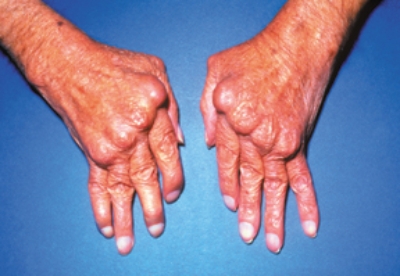
A) rheumatoid arthritis
B) osteomyelitis
C) osteoporosis
D) ankylosing spondylitis
A) rheumatoid arthritis
B) osteomyelitis
C) osteoporosis
D) ankylosing spondylitis
Question
Question
Question
Question
Question
Question
Question
The nurse assesses a butterfly rash on a newly admitted patient. What inflammatory connective tissue disease should the nurse associate with the assessment finding? 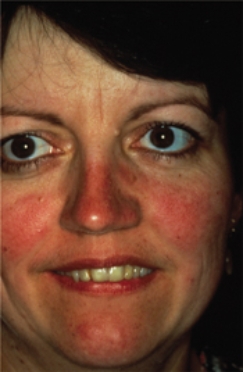
A) rheumatoid arthritis
B) systemic lupus erythematosis
C) Paget disease
D) gout
A) rheumatoid arthritis
B) systemic lupus erythematosis
C) Paget disease
D) gout
Question
Question
Question
Question
Question
Question
Question
Question
Question
Question
Question
Question
Question
Question
Question
Question
Question
Question
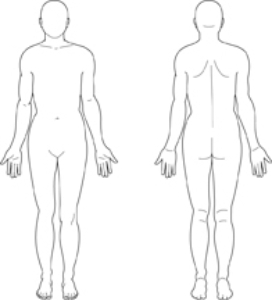
The nurse is assessing a patient with early signs of ankylosing spondylitis. Place the "X" over the area in which the patient most likely will experience pain.
Question
Question
Question
Question
Question
Question
Question
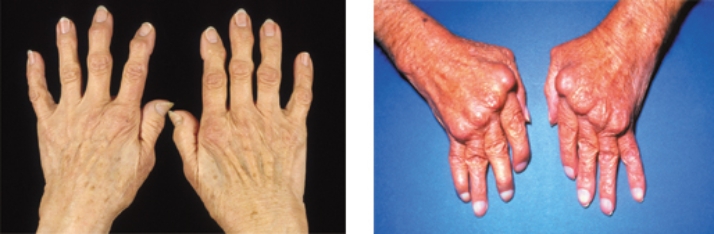
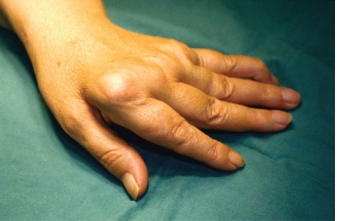
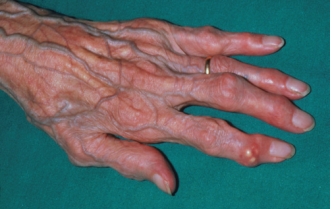
The nurse is assessing a patient with osteoarthritis. Which photograph demonstrates the most likely presentation of the patient's hands?
Question
Question

Unlock Deck
Sign up to unlock the cards in this deck!
Unlock Deck
Unlock Deck
1/40

Play

Full screen (f)
Deck 40: Nursing Care of Patients With Musculoskeletal Disorders
1
A patient with osteoporosis is prescribed alendronate (Fosamax). What should the nurse include when instructing the patient about this medication?
A) Report new or worsening heartburn, and difficult or painful swallowing.
B) Take the medication with orange juice one hour after food.
C) Do not lie down for 30 minutes after taking medication.
D) Take vitamin C supplements as instructed for bone mineralization.
E) This medication has a gradual response and continues for months after the drug is stopped.
A) Report new or worsening heartburn, and difficult or painful swallowing.
B) Take the medication with orange juice one hour after food.
C) Do not lie down for 30 minutes after taking medication.
D) Take vitamin C supplements as instructed for bone mineralization.
E) This medication has a gradual response and continues for months after the drug is stopped.
Report new or worsening heartburn, and difficult or painful swallowing.
Do not lie down for 30 minutes after taking medication.
This medication has a gradual response and continues for months after the drug is stopped.
Do not lie down for 30 minutes after taking medication.
This medication has a gradual response and continues for months after the drug is stopped.
2
A 30-year-old female patient diagnosed with early onset of osteoporosis asks the nurse how she could be at risk for this disease, since she is so active. Which response by the nurse is most correct?
A) "You might have placed underlying stress on your skeleton from your frequent exercise."
B) "You are at an age when your estrogen levels have begun to decline drastically, thus increasing your risk for the development of osteoporosis."
C) "Do your bones feel weak or painful?"
D) "Your dietary practices might be partially responsible."
A) "You might have placed underlying stress on your skeleton from your frequent exercise."
B) "You are at an age when your estrogen levels have begun to decline drastically, thus increasing your risk for the development of osteoporosis."
C) "Do your bones feel weak or painful?"
D) "Your dietary practices might be partially responsible."
"Your dietary practices might be partially responsible."
3
The nurse is reviewing the health histories for a group of assigned patients. Which patients should the nurse identify as being at the greatest risk for the development of osteoporosis?
A) a Caucasian female
B) a postmenopausal female
C) a large-boned African American female
D) a patient taking corticosteroid therapy
E) a 32-year-old male
A) a Caucasian female
B) a postmenopausal female
C) a large-boned African American female
D) a patient taking corticosteroid therapy
E) a 32-year-old male
a Caucasian female
a postmenopausal female
a patient taking corticosteroid therapy
a postmenopausal female
a patient taking corticosteroid therapy
4
A patient diagnosed with systemic lupus erythematosus has laboratory values indicative of an exacerbation. Which values should the nurse report to the physician?
A) positive antinuclear antibody
B) ESR 120 mm/h
C) trace blood in urine
D) Hgb 14.2
E) sodium 138
A) positive antinuclear antibody
B) ESR 120 mm/h
C) trace blood in urine
D) Hgb 14.2
E) sodium 138
Unlock Deck
Unlock for access to all 40 flashcards in this deck.
Unlock Deck
k this deck
5
A patient with osteoporosis taking calcitonin is experiencing nausea and vomiting. What should the nurse do about the patient's complaint?
A) Alternate nares when administering the medication.
B) Hold the next dose of calcitonin and notify the physician.
C) Monitor and record the frequency and amount of emesis.
D) Increase the amount of vitamin D in the diet.
A) Alternate nares when administering the medication.
B) Hold the next dose of calcitonin and notify the physician.
C) Monitor and record the frequency and amount of emesis.
D) Increase the amount of vitamin D in the diet.
Unlock Deck
Unlock for access to all 40 flashcards in this deck.
Unlock Deck
k this deck
6
During an assessment the nurse notes that a patient has contracture deformities of the hand and complains of severe pain. What musculoskeletal disorder should the nurse suspect this patient is experiencing?
A) rheumatoid arthritis
B) osteomyelitis
C) osteoporosis
D) ankylosing spondylitis
A) rheumatoid arthritis
B) osteomyelitis
C) osteoporosis
D) ankylosing spondylitis
Unlock Deck
Unlock for access to all 40 flashcards in this deck.
Unlock Deck
k this deck
7
The patient diagnosed with osteoarthritis reports achieving pain relief when using an over-the-counter ointment on the affected areas. When reviewing safe administration practices, which principle should the nurse include in the teaching?
A) Apply heat to the affected area after applying ointment.
B) Alternate heat and cold after ointment application.
C) Limit the use of ointment to 3‒4 times per day.
D) Initial skin irritation is common and will subside within a few weeks of initiating treatment.
A) Apply heat to the affected area after applying ointment.
B) Alternate heat and cold after ointment application.
C) Limit the use of ointment to 3‒4 times per day.
D) Initial skin irritation is common and will subside within a few weeks of initiating treatment.
Unlock Deck
Unlock for access to all 40 flashcards in this deck.
Unlock Deck
k this deck
8
The nurse is providing discharge instructions to a patient recovering from a total hip replacement. What should the nurse include in these instructions?
A) use and weight bearing of affected limb
B) not to do exercises if experiencing discomfort
C) possible complications such as infection or dislocation
D) continuing pain medications for only two days after discharge
E) full recovery in up to six months
A) use and weight bearing of affected limb
B) not to do exercises if experiencing discomfort
C) possible complications such as infection or dislocation
D) continuing pain medications for only two days after discharge
E) full recovery in up to six months
Unlock Deck
Unlock for access to all 40 flashcards in this deck.
Unlock Deck
k this deck
9
The nurse is reviewing modifiable and nonmodifiable risk factors of osteoporosis with a patient. What should the nurse include as modifiable risk factors?
A) calcium deficiency
B) high-protein diet
C) female
D) decrease in estrogen levels
E) diabetes mellitus
A) calcium deficiency
B) high-protein diet
C) female
D) decrease in estrogen levels
E) diabetes mellitus
Unlock Deck
Unlock for access to all 40 flashcards in this deck.
Unlock Deck
k this deck
10
A patient with gout is prescribed colchicine. For which laboratory value should the nurse question administering this medication to the patient?
A) WBC 20,000
B) uric acid level 7.8
C) BUN 68
D) Hgb 14.2
A) WBC 20,000
B) uric acid level 7.8
C) BUN 68
D) Hgb 14.2
Unlock Deck
Unlock for access to all 40 flashcards in this deck.
Unlock Deck
k this deck
11
A patient diagnosed with gout is concerned that the small "lumps" on his ear and big toe will become lodged in his blood, resulting in a blood clot. What explanation by the nurse is the most accurate response to this patient?
A) "Clots will not develop if you take your anti-gout medicine."
B) "Unfortunately, this is a common complication associated with gout."
C) "You will need to talk with the physician during your next visit."
D) "These 'lumps' do not cause clot development."
A) "Clots will not develop if you take your anti-gout medicine."
B) "Unfortunately, this is a common complication associated with gout."
C) "You will need to talk with the physician during your next visit."
D) "These 'lumps' do not cause clot development."
Unlock Deck
Unlock for access to all 40 flashcards in this deck.
Unlock Deck
k this deck
12
The nurse is instructing a patient about foods high in calcium. The nurse knows the teaching was effective when the patient chooses which foods for a meal?
A) chicken
B) collard greens
C) bananas
D) sardines
E) whole milk
A) chicken
B) collard greens
C) bananas
D) sardines
E) whole milk
Unlock Deck
Unlock for access to all 40 flashcards in this deck.
Unlock Deck
k this deck
13
The nurse assesses a butterfly rash on a newly admitted patient. What inflammatory connective tissue disease should the nurse associate with the assessment finding?
A) rheumatoid arthritis
B) systemic lupus erythematosis
C) Paget disease
D) gout
A) rheumatoid arthritis
B) systemic lupus erythematosis
C) Paget disease
D) gout
Unlock Deck
Unlock for access to all 40 flashcards in this deck.
Unlock Deck
k this deck
14
A patient is prescribed etidronate (Didronel). Which interventions would be appropriate when administering the medication to the patient?
A) Administer the medication in the morning with water.
B) Administer the medication with milk.
C) Administer the medication after meals.
D) Assessment of fluoride levels annually.
E) Avoid intake for 30 minutes after use.
A) Administer the medication in the morning with water.
B) Administer the medication with milk.
C) Administer the medication after meals.
D) Assessment of fluoride levels annually.
E) Avoid intake for 30 minutes after use.
Unlock Deck
Unlock for access to all 40 flashcards in this deck.
Unlock Deck
k this deck
15
A patient with gout is experiencing foot pain. Which intervention will aid in promoting comfort in this patient?
A) Wrap the extremity in an elastic bandage.
B) Encourage liberal fluid intake.
C) Encourage active range-of-motion exercises to promote flexibility.
D) Elevate the extremity and use a foot a cradle.
A) Wrap the extremity in an elastic bandage.
B) Encourage liberal fluid intake.
C) Encourage active range-of-motion exercises to promote flexibility.
D) Elevate the extremity and use a foot a cradle.
Unlock Deck
Unlock for access to all 40 flashcards in this deck.
Unlock Deck
k this deck
16
A patient with a history of osteoarthritis reports discomfort unrelieved by the prescribed medications. Which nonpharmacological interventions might assist the patient in managing the discomfort?
A) Suggest the use of ice to the painful joints.
B) Encourage rest of the painful joints.
C) Discuss the use of relaxation techniques.
D) Encourage distraction techniques.
E) Advise the patient to avoid water-based exercises.
A) Suggest the use of ice to the painful joints.
B) Encourage rest of the painful joints.
C) Discuss the use of relaxation techniques.
D) Encourage distraction techniques.
E) Advise the patient to avoid water-based exercises.
Unlock Deck
Unlock for access to all 40 flashcards in this deck.
Unlock Deck
k this deck
17
A patient diagnosed with systemic lupus erythematosis is experiencing a facial rash. What should the nurse instruct the patient regarding skin care?
A) Avoid being out of doors during hours of greatest sun intensity.
B) Use sunscreen with an SPF of 15 or higher.
C) Apply hydrocortisone cream 1% to the rash 4‒6 times/day.
D) Reapply sunscreen after swimming, exercising, or bathing.
E) Wear a wide-brimmed hat when outside.
A) Avoid being out of doors during hours of greatest sun intensity.
B) Use sunscreen with an SPF of 15 or higher.
C) Apply hydrocortisone cream 1% to the rash 4‒6 times/day.
D) Reapply sunscreen after swimming, exercising, or bathing.
E) Wear a wide-brimmed hat when outside.
Unlock Deck
Unlock for access to all 40 flashcards in this deck.
Unlock Deck
k this deck
18
An older patient with osteoporosis has a history of falls and dementia. What intervention will best aid in the prevention of injuries?
A) using of wrist restraints
B) using furniture as obstacles to keep the patient in the bed
C) keeping the bed in a low position
D) keeping a nightlight on in the room
A) using of wrist restraints
B) using furniture as obstacles to keep the patient in the bed
C) keeping the bed in a low position
D) keeping a nightlight on in the room
Unlock Deck
Unlock for access to all 40 flashcards in this deck.
Unlock Deck
k this deck
19
A patient is diagnosed with Paget disease. What should the nurse expect to assess in this patient?
A) pain and aching in the spine at night that is aggravated by pressure
B) flushing of the skin over the spine
C) previous pathologic fractures to the vertebra
D) elevated phosphorus levels
E) scoliosis
A) pain and aching in the spine at night that is aggravated by pressure
B) flushing of the skin over the spine
C) previous pathologic fractures to the vertebra
D) elevated phosphorus levels
E) scoliosis
Unlock Deck
Unlock for access to all 40 flashcards in this deck.
Unlock Deck
k this deck
20
Prior to signing informed consent for a total hip replacement, the patient asks the nurse if she should be concerned about complications. How should the nurse respond?
A) "Complications are rare with this type of surgery."
B) "Do you know someone who had complications after this type of surgery?"
C) "Your surgeon has a low complication rate."
D) "What complications did your surgeon mention in the explanation of your surgery?"
A) "Complications are rare with this type of surgery."
B) "Do you know someone who had complications after this type of surgery?"
C) "Your surgeon has a low complication rate."
D) "What complications did your surgeon mention in the explanation of your surgery?"
Unlock Deck
Unlock for access to all 40 flashcards in this deck.
Unlock Deck
k this deck
21
The healthcare provider suggests that a patient with scoliosis participate in conservative treatment. What should the nurse instruct the patient about this treatment approach?
A) Reduce body weight.
B) Use braces for support.
C) Perform active and passive exercises.
D) Consume 2 to 3 liters of fluid each day.
E) Schedule routine injections with corticosteroids.
A) Reduce body weight.
B) Use braces for support.
C) Perform active and passive exercises.
D) Consume 2 to 3 liters of fluid each day.
E) Schedule routine injections with corticosteroids.
Unlock Deck
Unlock for access to all 40 flashcards in this deck.
Unlock Deck
k this deck
22
The nurse is assessing a patient being treated for osteomalacia. Which findings does the nurse recognize as indications that the patient is experiencing hypervitaminosis D?
A) bruising
B) anorexia
C) constipation
D) muscle weakness
E) frequent urination
A) bruising
B) anorexia
C) constipation
D) muscle weakness
E) frequent urination
Unlock Deck
Unlock for access to all 40 flashcards in this deck.
Unlock Deck
k this deck
23
A patient with Paget disease asks why a dose of zoledronic acid (Reclast) is being provided before having total hip replacement surgery. How should the nurse respond to this patient?
A) "It is to treat your osteoporosis."
B) "It prevents a postoperative infection."
C) "It speeds healing of the surgical wound."
D) "It slows the progression of the Paget disease."
E) "It reduces the amount of bleeding from surgery."
A) "It is to treat your osteoporosis."
B) "It prevents a postoperative infection."
C) "It speeds healing of the surgical wound."
D) "It slows the progression of the Paget disease."
E) "It reduces the amount of bleeding from surgery."
Unlock Deck
Unlock for access to all 40 flashcards in this deck.
Unlock Deck
k this deck
24
A patient with a history of gout asks if there are any alternative approaches to help with the manifestations of the disease. What should the nurse suggest to this patient?
A) yoga
B) selenium
C) vitamin E
D) blackberries
E) acupuncture
A) yoga
B) selenium
C) vitamin E
D) blackberries
E) acupuncture
Unlock Deck
Unlock for access to all 40 flashcards in this deck.
Unlock Deck
k this deck
25
During an assessment the nurse suspects that a patient is experiencing manifestations of rheumatoid arthritis. What findings did the nurse observe to make this clinical decision?
A) weight loss
B) hot red swollen joints
C) hip and knee affected
D) cool and bony hard joints
E) pain and stiffness in the morning
A) weight loss
B) hot red swollen joints
C) hip and knee affected
D) cool and bony hard joints
E) pain and stiffness in the morning
Unlock Deck
Unlock for access to all 40 flashcards in this deck.
Unlock Deck
k this deck
26
A 36-year-old patient with rheumatoid arthritis is prescribed methotrexate. What should the nurse include when teaching the patient about this medication?
A) Avoid alcohol.
B) Avoid exposure to sunlight.
C) Use effective contraception.
D) Expect the skin to turn orange.
E) Have routine eye examinations.
A) Avoid alcohol.
B) Avoid exposure to sunlight.
C) Use effective contraception.
D) Expect the skin to turn orange.
E) Have routine eye examinations.
Unlock Deck
Unlock for access to all 40 flashcards in this deck.
Unlock Deck
k this deck
27
A patient diagnosed with Paget disease has been prescribed pamidronate 90 mg over 3 days. Medication instructions state to mix 30 mg of the drug in 500 mL NS and administer over 4 hours. This administration should be repeated for 3 days for a total of 90 mg of drug. At what IV rate, in mL/hr, should the nurse run this infusion?
Unlock Deck
Unlock for access to all 40 flashcards in this deck.
Unlock Deck
k this deck
28
The nurse is reviewing the laboratory results for a 35-year-old woman who has been diagnosed with gout. Based upon the above results, what should be the nurse's greatest concern?
A) The patient's gout is confirmed by the lab results.
B) The patient has an infection.
C) The patient has inflammation present.
D) The patient's kidney function is decreased.
A) The patient's gout is confirmed by the lab results.
B) The patient has an infection.
C) The patient has inflammation present.
D) The patient's kidney function is decreased.
Unlock Deck
Unlock for access to all 40 flashcards in this deck.
Unlock Deck
k this deck
29
The nurse is providing teaching about topical medications for a group of patients who have been diagnosed with osteoarthritis. Which medication should the nurse review as being a topical preparation?
A) ketoprofen
B) naproxen
C) capsaicin
D) celecoxib
A) ketoprofen
B) naproxen
C) capsaicin
D) celecoxib
Unlock Deck
Unlock for access to all 40 flashcards in this deck.
Unlock Deck
k this deck
30
The parents of a 15-year-old patient are informed that diagnostic tests are needed to determine if musculoskeletal changes are being caused by muscular dystrophy. For which type of muscular dystrophy should the nurse expect these tests to be prescribed?
A) Becker
B) Myotonic
C) Duchenne
D) Limb-girdle
E) Facioscapulohumeral
A) Becker
B) Myotonic
C) Duchenne
D) Limb-girdle
E) Facioscapulohumeral
Unlock Deck
Unlock for access to all 40 flashcards in this deck.
Unlock Deck
k this deck
31
The nurse is assessing a patient with early signs of ankylosing spondylitis. Place the "X" over the area in which the patient most likely will experience pain.
Unlock Deck
Unlock for access to all 40 flashcards in this deck.
Unlock Deck
k this deck
32
A patient is diagnosed with Lyme disease. Which medications should the nurse expect to be prescribed for managing the manifestations of this health problem?
A) aspirin
B) ibuprofen
C) erythromycin
D) warfarin sodium
E) amoxicillin (Amoxil)
A) aspirin
B) ibuprofen
C) erythromycin
D) warfarin sodium
E) amoxicillin (Amoxil)
Unlock Deck
Unlock for access to all 40 flashcards in this deck.
Unlock Deck
k this deck
33
The nurse instructs a patient with Sjögren syndrome on self-care techniques. Which patient statements indicate that teaching has been effective?
A) "I will take aspirin every morning."
B) "I will use artificial tears as needed."
C) "I will make sure I drink water with each meal."
D) "I will be sure to drink fluids throughout the day."
E) "I will brush my teeth before and after every meal."
A) "I will take aspirin every morning."
B) "I will use artificial tears as needed."
C) "I will make sure I drink water with each meal."
D) "I will be sure to drink fluids throughout the day."
E) "I will brush my teeth before and after every meal."
Unlock Deck
Unlock for access to all 40 flashcards in this deck.
Unlock Deck
k this deck
34
The nurse is reviewing the x-ray report for a patient experiencing spinal and major joint discomfort. Which findings suggest to the nurse that the patient will be treated for Paget disease?
A) linear fractures
B) radiolucent bands
C) increased bone thickness
D) mosaic pattern of bone matrix
E) punched out appearance of bone
A) linear fractures
B) radiolucent bands
C) increased bone thickness
D) mosaic pattern of bone matrix
E) punched out appearance of bone
Unlock Deck
Unlock for access to all 40 flashcards in this deck.
Unlock Deck
k this deck
35
While completing a health history the nurse suspects that the patient is experiencing manifestations of scleroderma. What did the nurse assess to make this clinical decision?
A) dysphagia
B) hypotension
C) telangectasias
D) exertional dyspnea
E) pursed-lip appearance
A) dysphagia
B) hypotension
C) telangectasias
D) exertional dyspnea
E) pursed-lip appearance
Unlock Deck
Unlock for access to all 40 flashcards in this deck.
Unlock Deck
k this deck
36
A patient diagnosed with osteomyelitis has a fever of 101.2°F, a white blood cell count of 22,000, and is complaining of severe leg pain. The physician prescribes the measures in the table. What is the first order the nurse should implement?
A) Start IV D51/2 NS at 125 mL/hr
B) Blood cultures ×2 at different sites
C) Rocephin 1 gram IV twice a day
D) Acetaminophen 650 mg by mouth for temperature above 100°F
A) Start IV D51/2 NS at 125 mL/hr
B) Blood cultures ×2 at different sites
C) Rocephin 1 gram IV twice a day
D) Acetaminophen 650 mg by mouth for temperature above 100°F
Unlock Deck
Unlock for access to all 40 flashcards in this deck.
Unlock Deck
k this deck
37
The healthcare provider suggests that a 65-year-old female patient take 1200 mg of calcium supplements every day. Before the patient leaves the clinic, what suggestions should the nurse make when instructing the patient about this supplement?
A) Take 600 mg of calcium with lunch.
B) Take 600 mg of calcium with breakfast.
C) Take 400 mg of calcium with breakfast, lunch, and dinner.
D) Take 600 mg of calcium with breakfast and 600 mg at bedtime.
E) Take the full dose of 1200 mg of calcium in the morning on an empty stomach.
A) Take 600 mg of calcium with lunch.
B) Take 600 mg of calcium with breakfast.
C) Take 400 mg of calcium with breakfast, lunch, and dinner.
D) Take 600 mg of calcium with breakfast and 600 mg at bedtime.
E) Take the full dose of 1200 mg of calcium in the morning on an empty stomach.
Unlock Deck
Unlock for access to all 40 flashcards in this deck.
Unlock Deck
k this deck
38
The nurse is assessing a patient with osteoarthritis. Which photograph demonstrates the most likely presentation of the patient's hands?
Unlock Deck
Unlock for access to all 40 flashcards in this deck.
Unlock Deck
k this deck
39
A patient recovering from a total hip replacement has vital signs assessed by unlicensed assistive personnel. Which vital sign value should cause the most concern for the nurse?
A) blood pressure 110/76
B) heart rate 82
C) respiratory rate 18
D) temperature 102° F
A) blood pressure 110/76
B) heart rate 82
C) respiratory rate 18
D) temperature 102° F
Unlock Deck
Unlock for access to all 40 flashcards in this deck.
Unlock Deck
k this deck
40
The patient who weighs 70kg is to receive 750 mg of abatacept (Orencia) by IV infusion for the treatment of rheumatoid arthritis. When reconstituted, the medication has dosage strength of 25 mg/mL. How many mL of the medication should be prepared for this dosage?
Unlock Deck
Unlock for access to all 40 flashcards in this deck.
Unlock Deck
k this deck
Unlock Deck
Unlock for access to all 40 flashcards in this deck.






