







 Chat with AI

Deck 38: Assessing the Musculoskeletal System
Full screen (f)

Question

Question
Question
Question
The nurse wants to determine if a patient is experiencing carpel tunnel syndrome. Which test should the nurse use to make this assessment? 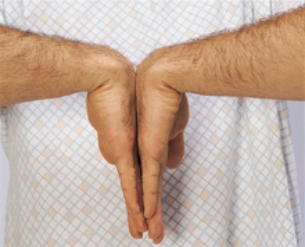
A) bulge sign
B) ballottement
C) Phalen's test
D) Thomas test
A) bulge sign
B) ballottement
C) Phalen's test
D) Thomas test
Question
Question
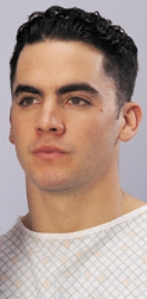
A patient complains of pain in the jaw, swelling, and the inability to open the mouth without pain. Where should the nurse palpate when assessing this patient?
Question
Question
Question
Question
Question
Question
Question
Question
Question
Question
Question
Question
Question
Question
Question
Type: HOTSPOT
The patient complains of pain and clicking in the right knee. The nurse will use what test to assess the patient? Mark an "X" on the correct figure.
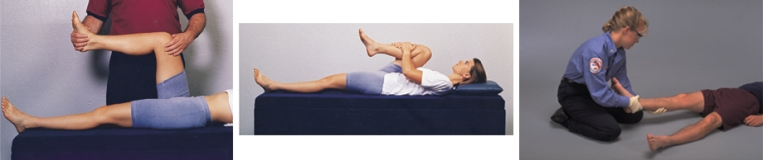 Standard Text: Click on the correct area on the image.
The patient complains of pain and clicking in the right knee. The nurse will use what test to assess the patient? Mark an "X" on the correct figure.
Standard Text: Click on the correct area on the image. Question
Question
Question
Question
Question
Question
Question
Question
Question
Question
Question
Question
Question
Question
Question
Question
Question
Question
Question

Unlock Deck
Sign up to unlock the cards in this deck!
Unlock Deck
Unlock Deck
1/40

Play

Full screen (f)
Deck 38: Assessing the Musculoskeletal System
1
A health-conscious young adult female asks the nurse what diagnostic test might help predict the likelihood for developing osteoporosis. With which diagnostic test should respond?
A) arthroscopy
B) an electromyogram (EMG)
C) somatosensory evoked potential (SSEP)
D) dual energy x-ray absorptiometry (DEXA)
A) arthroscopy
B) an electromyogram (EMG)
C) somatosensory evoked potential (SSEP)
D) dual energy x-ray absorptiometry (DEXA)
dual energy x-ray absorptiometry (DEXA)
2
The nurse is planning to determine whether a patient has fluid in the knee. What should the nurse use to make this assessment?
A) ballottement
B) bulge sign
C) Phalen's test
D) Thomas test
E) McMurray test
A) ballottement
B) bulge sign
C) Phalen's test
D) Thomas test
E) McMurray test
ballottement
bulge sign
bulge sign
3
The nurse is assessing an older patient's musculoskeletal status. What should the nurse consider as normal findings for this patient?
A) decreased bone mass and minerals
B) increased calcium reabsorption
C) atrophied muscle fibers
D) elongated vertebrae
E) decreased range of motion
A) decreased bone mass and minerals
B) increased calcium reabsorption
C) atrophied muscle fibers
D) elongated vertebrae
E) decreased range of motion
decreased bone mass and minerals
atrophied muscle fibers
decreased range of motion
atrophied muscle fibers
decreased range of motion
4
The nurse wants to determine if a patient is experiencing carpel tunnel syndrome. Which test should the nurse use to make this assessment?
A) bulge sign
B) ballottement
C) Phalen's test
D) Thomas test
A) bulge sign
B) ballottement
C) Phalen's test
D) Thomas test
Unlock Deck
Unlock for access to all 40 flashcards in this deck.
Unlock Deck
k this deck
5
The patient's right femur was fractured and repaired at the diaphysis. When discussing the repair, the patient asks the nurse to explain the diaphysis. How should the nurse respond?
A) "Short bones like the femur are cuboid, spongy bone that in medical terms are called the diaphysis."
B) "Irregular bones like the femur are plates of compact bone that are also called the diaphysis."
C) "Flat bones like the femur are disc-shaped and, in medical terms, are called the diaphysis."
D) "Long bones like the femur have a mid-portion or shaft that is called the diaphysis."
A) "Short bones like the femur are cuboid, spongy bone that in medical terms are called the diaphysis."
B) "Irregular bones like the femur are plates of compact bone that are also called the diaphysis."
C) "Flat bones like the femur are disc-shaped and, in medical terms, are called the diaphysis."
D) "Long bones like the femur have a mid-portion or shaft that is called the diaphysis."
Unlock Deck
Unlock for access to all 40 flashcards in this deck.
Unlock Deck
k this deck
6
A patient complains of pain in the jaw, swelling, and the inability to open the mouth without pain. Where should the nurse palpate when assessing this patient?
Unlock Deck
Unlock for access to all 40 flashcards in this deck.
Unlock Deck
k this deck
7
While conducting range of motion with an older patient, the patient begins to cry and states, "My knee hurts when you do that!" Which interventions should be implemented at this time?
A) Continue with the assessment.
B) Stop ROM immediately in that extremity.
C) Massage the knee for 20 minutes.
D) Call the physician.
E) Have the patient complete the assessment alone.
A) Continue with the assessment.
B) Stop ROM immediately in that extremity.
C) Massage the knee for 20 minutes.
D) Call the physician.
E) Have the patient complete the assessment alone.
Unlock Deck
Unlock for access to all 40 flashcards in this deck.
Unlock Deck
k this deck
8
The nurse would document "unable to assess" for which patient in relation to performing Phalen's test?
A) a patient with a long leg cast
B) a patient with an above-the-elbow amputation
C) a patient wearing compression stockings
D) a patient with osteoarthritis of the hips
A) a patient with a long leg cast
B) a patient with an above-the-elbow amputation
C) a patient wearing compression stockings
D) a patient with osteoarthritis of the hips
Unlock Deck
Unlock for access to all 40 flashcards in this deck.
Unlock Deck
k this deck
9
The nurse is reviewing data collected during the assessment of an older female. What should the nurse identify as being a normal age-related change?
A) height decreased 0.5 inch in 2 years
B) complains of frequent cramping of lower extremities
C) 1 cm nodule palpated in right foot
D) decreased range of motion in right and left hips
E) lateral curvature of the spine
A) height decreased 0.5 inch in 2 years
B) complains of frequent cramping of lower extremities
C) 1 cm nodule palpated in right foot
D) decreased range of motion in right and left hips
E) lateral curvature of the spine
Unlock Deck
Unlock for access to all 40 flashcards in this deck.
Unlock Deck
k this deck
10
The nurse is preparing to assess a patient's musculoskeletal status. In which order should the nurse perform the techniques of this examination?
A) Assess joints for swelling, pain, redness, warmth, crepitus, and range of motion (ROM).
B) Inspect and palpate the bones for any obvious deformity or changes in size, shape, or a painful response.
C) Measure the extremities for length and circumference, and compare limbs bilaterally.
D) Assess gait and posture.
A) Assess joints for swelling, pain, redness, warmth, crepitus, and range of motion (ROM).
B) Inspect and palpate the bones for any obvious deformity or changes in size, shape, or a painful response.
C) Measure the extremities for length and circumference, and compare limbs bilaterally.
D) Assess gait and posture.
Unlock Deck
Unlock for access to all 40 flashcards in this deck.
Unlock Deck
k this deck
11
In which order should the nurse assess a patient complaining of pain in both knees? Place in order of priority.
A) measurement of muscle mass
B) range of motion
C) inspection
D) palpation
E) non of the above
A) measurement of muscle mass
B) range of motion
C) inspection
D) palpation
E) non of the above
Unlock Deck
Unlock for access to all 40 flashcards in this deck.
Unlock Deck
k this deck
12
A patient is recovering from orthopedic surgery on a fractured arm. The nurse realizes that for musculoskeletal function, what type of muscle is needed?
A) cardiac
B) smooth
C) skeletal
D) a combination of skeletal and smooth
A) cardiac
B) smooth
C) skeletal
D) a combination of skeletal and smooth
Unlock Deck
Unlock for access to all 40 flashcards in this deck.
Unlock Deck
k this deck
13
The nurse is reviewing assigned patients who are scheduled for an MRI. Which patient should the nurse identify as being able to safely undergo an MRI diagnostic test?
A) a patient with a pacemaker for three years
B) a patient with shrapnel from a military assault
C) a patient with an open abdominal wound
D) a patient with external hardware following a fracture repair
A) a patient with a pacemaker for three years
B) a patient with shrapnel from a military assault
C) a patient with an open abdominal wound
D) a patient with external hardware following a fracture repair
Unlock Deck
Unlock for access to all 40 flashcards in this deck.
Unlock Deck
k this deck
14
A patient is scheduled for an electromyelogram (EMG). What should the nurse instruct the patient about this diagnostic test?
A) Do not smoke for 3 hours before the test.
B) Do not take any medication prior to this test without physician approval.
C) The test measures nerve conduction along pathways.
D) The test measures electrical activity of skeletal muscles at rest.
E) Fluids containing caffeine are permitted prior to the test.
A) Do not smoke for 3 hours before the test.
B) Do not take any medication prior to this test without physician approval.
C) The test measures nerve conduction along pathways.
D) The test measures electrical activity of skeletal muscles at rest.
E) Fluids containing caffeine are permitted prior to the test.
Unlock Deck
Unlock for access to all 40 flashcards in this deck.
Unlock Deck
k this deck
15
The nurse assessing a 68-year-old female patient notes an exaggerated curvature of the thoracic spine when the patient bends at the waist. With which alteration does the nurse recognize this finding to be consistent?
A) kyphosis, which is a common curvature in older patients
B) kyphosis, which the patient will have to have surgically corrected
C) scoliosis, which is a normal curvature in the elderly
D) lordosis, which is common in elderly patients
A) kyphosis, which is a common curvature in older patients
B) kyphosis, which the patient will have to have surgically corrected
C) scoliosis, which is a normal curvature in the elderly
D) lordosis, which is common in elderly patients
Unlock Deck
Unlock for access to all 40 flashcards in this deck.
Unlock Deck
k this deck
16
The patient is ordered to be on bed rest for two months. The nurse realizes that the patient's bones will
A) not be affected by the bed rest.
B) undergo increased osteoclast activity and bone resorption.
C) increase their osteoblastic activity to promote ossification.
D) be affected positively by the rest and be stronger as a result.
A) not be affected by the bed rest.
B) undergo increased osteoclast activity and bone resorption.
C) increase their osteoblastic activity to promote ossification.
D) be affected positively by the rest and be stronger as a result.
Unlock Deck
Unlock for access to all 40 flashcards in this deck.
Unlock Deck
k this deck
17
The nurse is instructing a patient about preparations needed for an electromyogram. Which patient statement indicates that further teaching is required?
A) "I will not smoke any cigarettes up to three hours before the test."
B) "It will be all right to have a glass of water before the test."
C) "I can take my Flexaril before having my test so that my back won't hurt."
D) "I can take my lisinopril the night before my test for my blood pressure."
A) "I will not smoke any cigarettes up to three hours before the test."
B) "It will be all right to have a glass of water before the test."
C) "I can take my Flexaril before having my test so that my back won't hurt."
D) "I can take my lisinopril the night before my test for my blood pressure."
Unlock Deck
Unlock for access to all 40 flashcards in this deck.
Unlock Deck
k this deck
18
The height of a female patient has decreased 1 inch over the last year. The patient is concerned and asks the nurse, "What is happening to me?" How should the nurse respond to the patient?
A) "Everybody gets shorter as they get older."
B) "There is no need to worry; you only lost 1 inch since last year. You probably won't lose much more than that."
C) "There can be several causes for the loss of height, but as we age, bone mass decreases and the spinal column shortens."
D) "There could be something wrong, so you should discuss it with your physician."
A) "Everybody gets shorter as they get older."
B) "There is no need to worry; you only lost 1 inch since last year. You probably won't lose much more than that."
C) "There can be several causes for the loss of height, but as we age, bone mass decreases and the spinal column shortens."
D) "There could be something wrong, so you should discuss it with your physician."
Unlock Deck
Unlock for access to all 40 flashcards in this deck.
Unlock Deck
k this deck
19
A patient recovering from a total hip replacement develops a fever and redness at the surgical site. What should the nurse consider first when assessing this patient?
A) development of osteomyelitis
B) subacute osteoporosis
C) pathological fracture
D) undiagnosed osteitis deformans
A) development of osteomyelitis
B) subacute osteoporosis
C) pathological fracture
D) undiagnosed osteitis deformans
Unlock Deck
Unlock for access to all 40 flashcards in this deck.
Unlock Deck
k this deck
20
A patient is seen in the clinic for chronic low blood calcium. What effect will this have on bone health?
A) Bone resorption will be triggered in order to increase serum calcium levels.
B) Bone production will occur in order to help increase the blood calcium.
C) Bones will not be affected because the calcium is low in the blood.
D) Bones will pull the needed calcium from other body structures.
A) Bone resorption will be triggered in order to increase serum calcium levels.
B) Bone production will occur in order to help increase the blood calcium.
C) Bones will not be affected because the calcium is low in the blood.
D) Bones will pull the needed calcium from other body structures.
Unlock Deck
Unlock for access to all 40 flashcards in this deck.
Unlock Deck
k this deck
21
Type: HOTSPOT
The patient complains of pain and clicking in the right knee. The nurse will use what test to assess the patient? Mark an "X" on the correct figure.
Standard Text: Click on the correct area on the image.
The patient complains of pain and clicking in the right knee. The nurse will use what test to assess the patient? Mark an "X" on the correct figure.
Standard Text: Click on the correct area on the image. Unlock Deck
Unlock for access to all 40 flashcards in this deck.
Unlock Deck
k this deck
22
The nurse is caring for a patient with a musculoskeletal disorder. For which reason does the nurse suspect the patient's alkaline phosphatase (ALP) is being assessed?
A) to establish true calcium levels
B) to evaluate the presence of bone diseases
C) to determine phosphorus levels
D) to diagnose muscle trauma
A) to establish true calcium levels
B) to evaluate the presence of bone diseases
C) to determine phosphorus levels
D) to diagnose muscle trauma
Unlock Deck
Unlock for access to all 40 flashcards in this deck.
Unlock Deck
k this deck
23
The nurse determines that a patient's gait is normal. What did the nurse assess to make this clinical decision?
A) The patient does not stumble, run into objects, or fall.
B) The gait is smooth and steady without limping.
C) The gait is slow and deliberate as if the patient is gingerly pulling one side up to meet the other.
D) The gait is jerky and quick, which indicates the patient has excellent motor control.
E) The posture is upright and straight.
A) The patient does not stumble, run into objects, or fall.
B) The gait is smooth and steady without limping.
C) The gait is slow and deliberate as if the patient is gingerly pulling one side up to meet the other.
D) The gait is jerky and quick, which indicates the patient has excellent motor control.
E) The posture is upright and straight.
Unlock Deck
Unlock for access to all 40 flashcards in this deck.
Unlock Deck
k this deck
24
A patient needs an x-ray of the arm. What should the nurse do to prepare the patient for this diagnostic test?
A) Initiate a peripheral IV in the opposite arm.
B) Find out the patient's allergies.
C) Do no special preparation.
D) Cleanse the arm with antibacterial cleanser.
A) Initiate a peripheral IV in the opposite arm.
B) Find out the patient's allergies.
C) Do no special preparation.
D) Cleanse the arm with antibacterial cleanser.
Unlock Deck
Unlock for access to all 40 flashcards in this deck.
Unlock Deck
k this deck
25
A 62-year-old female patient is scheduled to have a DEXA exam. What should the nurse consider as most likely the reason the test has been ordered for this patient?
A) to check for fractures
B) to check the degree of osteoporosis
C) to screen for osteomyelitis
D) to evaluate bone cancer
A) to check for fractures
B) to check the degree of osteoporosis
C) to screen for osteomyelitis
D) to evaluate bone cancer
Unlock Deck
Unlock for access to all 40 flashcards in this deck.
Unlock Deck
k this deck
26
The nurse is completing a health history with a patient. When assessing for a family or genetic history of musculoskeletal disorders, what should the nurse include?
A) gout
B) fibromyalgia
C) osteoarthritis
D) lupus erythematosis
E) ankylosing spondylitis
A) gout
B) fibromyalgia
C) osteoarthritis
D) lupus erythematosis
E) ankylosing spondylitis
Unlock Deck
Unlock for access to all 40 flashcards in this deck.
Unlock Deck
k this deck
27
The nurse completes a physical assessment on a patient recovering from a stroke. The patient has no muscle function of the left leg and passive range of motion of the left arm. The right leg and arm have full range of motion against full resistance. How should the nurse document the muscle grading of these assessment findings?
A) 0 left leg
B) 2 left arm
C) 3 left arm
D) 5 right leg
E) 5 right arm
A) 0 left leg
B) 2 left arm
C) 3 left arm
D) 5 right leg
E) 5 right arm
Unlock Deck
Unlock for access to all 40 flashcards in this deck.
Unlock Deck
k this deck
28
The nurse is caring for an older patient. What should the nurse realize is an expected age-related change in this patient's musculoskeletal system?
A) difficulty with dexterity after age 50
B) vertebrae lengthening and thinning, which leads to increased bone production
C) decreased bone mass and calcium absorption, which increase risk for fractures
D) pain when ambulating due to increased bone mass and minerals
A) difficulty with dexterity after age 50
B) vertebrae lengthening and thinning, which leads to increased bone production
C) decreased bone mass and calcium absorption, which increase risk for fractures
D) pain when ambulating due to increased bone mass and minerals
Unlock Deck
Unlock for access to all 40 flashcards in this deck.
Unlock Deck
k this deck
29
The nurse notes that a patient is prescribed to have a human leukocyte antigen (HLA) test drawn. For which health problems should the nurse potentially plan care for this patient?
A) osteoporosis
B) Paget disease
C) rheumatoid arthritis
D) ankylosing spondylitis
E) juvenile rheumatoid arthritis
A) osteoporosis
B) Paget disease
C) rheumatoid arthritis
D) ankylosing spondylitis
E) juvenile rheumatoid arthritis
Unlock Deck
Unlock for access to all 40 flashcards in this deck.
Unlock Deck
k this deck
30
The patient is about to have a magnetic resonance imaging (MRI) to diagnose a soft tissue abnormality of the lower leg. About which finding should the nurse immediately notify the physician?
A) The patient has a concern about what will be found on the MRI.
B) The patient has a pacemaker.
C) The patient has a history of hypertension.
D) The patient did not eat breakfast due to earlier nausea.
A) The patient has a concern about what will be found on the MRI.
B) The patient has a pacemaker.
C) The patient has a history of hypertension.
D) The patient did not eat breakfast due to earlier nausea.
Unlock Deck
Unlock for access to all 40 flashcards in this deck.
Unlock Deck
k this deck
31
A patient is scheduled for a bone scan. For which health problem should the nurse suspect this test is being used to diagnose?
A) bone cancer
B) a muscle mass near the bone
C) new onset pain in the area of the bone
D) normal calcium level
A) bone cancer
B) a muscle mass near the bone
C) new onset pain in the area of the bone
D) normal calcium level
Unlock Deck
Unlock for access to all 40 flashcards in this deck.
Unlock Deck
k this deck
32
A patient is experiencing numbness and tingling of the left foot. When assessing this patient's limb, which movements should the nurse use to determine motor function of the patient's left ankle?
A) 120-degree flexion
B) 50-degree adduction
C) 20-degree dorsiflexion
D) 45-degree plantar flexion
E) 30-degree hyperextension
A) 120-degree flexion
B) 50-degree adduction
C) 20-degree dorsiflexion
D) 45-degree plantar flexion
E) 30-degree hyperextension
Unlock Deck
Unlock for access to all 40 flashcards in this deck.
Unlock Deck
k this deck
33
A patient is diagnosed with a disease that affects fibrous tissue. In which musculoskeletal areas should the nurse expect the patient to experience health problems?
A) hips
B) teeth
C) shoulders
D) skull bones
E) distal tibia and fibula
A) hips
B) teeth
C) shoulders
D) skull bones
E) distal tibia and fibula
Unlock Deck
Unlock for access to all 40 flashcards in this deck.
Unlock Deck
k this deck
34
A patient comes to the emergency department complaining of right knee pain after being knocked down while playing basketball. The exam reveals the patient experiences difficulty when stepping down on the right leg due to acute pain around the knee and slight swelling of the right knee. What should the nurse expect to be prescribed for this patient?
A) The patient will be sent home with instructions to use ice for one week.
B) The patient will be admitted to the hospital and seen by an orthopedic specialist.
C) The patient will be scheduled to see an orthopedic physician and a tentative appointment for a magnetic resonance imaging (MRI) scan.
D) The patient will be admitted to the hospital and scheduled for exploratory surgery.
A) The patient will be sent home with instructions to use ice for one week.
B) The patient will be admitted to the hospital and seen by an orthopedic specialist.
C) The patient will be scheduled to see an orthopedic physician and a tentative appointment for a magnetic resonance imaging (MRI) scan.
D) The patient will be admitted to the hospital and scheduled for exploratory surgery.
Unlock Deck
Unlock for access to all 40 flashcards in this deck.
Unlock Deck
k this deck
35
The nurse is teaching a patient about an endoscopic examination of the interior surfaces of a joint during which surgery and diagnosis can also be accomplished. About which technique is the nurse instructing the patient?
A) arthrocentesis
B) arthroscopy
C) atherogenesis
D) arthrodesis
A) arthrocentesis
B) arthroscopy
C) atherogenesis
D) arthrodesis
Unlock Deck
Unlock for access to all 40 flashcards in this deck.
Unlock Deck
k this deck
36
The nurse is preparing to assess a patient with myotonic dystrophy. For what health problems should the nurse assess this patient?
A) hair loss
B) cataracts
C) long extremities
D) spinal deformities
E) significant muscle wasting
A) hair loss
B) cataracts
C) long extremities
D) spinal deformities
E) significant muscle wasting
Unlock Deck
Unlock for access to all 40 flashcards in this deck.
Unlock Deck
k this deck
37
A patient is seen in the physician's office following several tests. The test results include elevated blood calcium, elevated alkaline phosphatase, elevated phosphorus, normal creatine kinase, and increased uptake of the radioisotope on bone scan. The nurse realizes that the patient most likely is experiencing which health problem?
A) bone spurs
B) rheumatoid arthritis
C) osteoporosis
D) bone cancer
A) bone spurs
B) rheumatoid arthritis
C) osteoporosis
D) bone cancer
Unlock Deck
Unlock for access to all 40 flashcards in this deck.
Unlock Deck
k this deck
38
The nurse is assessing a patient with carpal tunnel syndrome. What assessment techniques should the nurse use to determine this patient's finger function?
A) making a fist
B) shaking hands
C) spreading the fingers
D) straightening the arm
E) bending the hand forward and backward
A) making a fist
B) shaking hands
C) spreading the fingers
D) straightening the arm
E) bending the hand forward and backward
Unlock Deck
Unlock for access to all 40 flashcards in this deck.
Unlock Deck
k this deck
39
A patient is having a creatine kinase (CK) level drawn. For which health problem would the nurse expect this level to be elevated?
A) juvenile rheumatoid arthritis
B) gout
C) muscle disease
D) bone tumors
A) juvenile rheumatoid arthritis
B) gout
C) muscle disease
D) bone tumors
Unlock Deck
Unlock for access to all 40 flashcards in this deck.
Unlock Deck
k this deck
40
A patient is seen in the clinic complaining of pain in the left wrist. There is no deformity of the wrist, the left radial pulse is strong, and there is no history of a fall or injury. What does the nurse expect to see ordered?
A) an x-ray of both arms to ensure there is no injury present
B) rest and comfort measures for several days unless pain worsens
C) lab work to assess calcium and phosphorus levels
D) a computerized tomography (CT) scan of the wrist to check for soft tissue injury
A) an x-ray of both arms to ensure there is no injury present
B) rest and comfort measures for several days unless pain worsens
C) lab work to assess calcium and phosphorus levels
D) a computerized tomography (CT) scan of the wrist to check for soft tissue injury
Unlock Deck
Unlock for access to all 40 flashcards in this deck.
Unlock Deck
k this deck
Unlock Deck
Unlock for access to all 40 flashcards in this deck.






