







 Chat with AI

Deck 36: Nursing Care of Patients With Ventilation Disorders
Full screen (f)

Question

Question
Question
Question
Question
Question
Question
Question
Question
Question
Question
Question
Question
Question
Question
Question
Question
Question
Question
Question
Question
Question
Question
Question
Question
Question
Question
Question
Question
Question
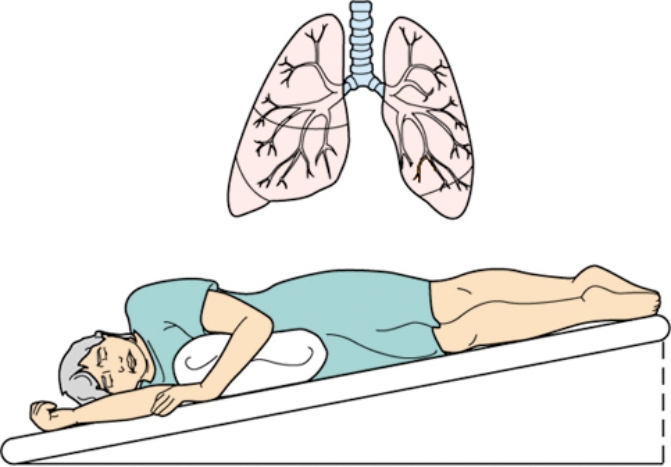
The nurse places a patient in the position illustrated. Which lung area is the nurse focusing for postural drainage? Indicate with an "X" on the diagram.
Question
Question
Question
Question
Question
Question
Question
Question
Question
Question
Question
Question
Question

Unlock Deck
Sign up to unlock the cards in this deck!
Unlock Deck
Unlock Deck
1/43

Play

Full screen (f)
Deck 36: Nursing Care of Patients With Ventilation Disorders
1
A patient who had a Mantoux test for tuberculosis two days ago has a 2 mm area of erythema at the site of the test. The nurse concludes that this patient's response
A) is negative.
B) is positive for tuberculosis.
C) should be followed up with a tine test.
D) is unable to determine the presence of tuberculosis.
A) is negative.
B) is positive for tuberculosis.
C) should be followed up with a tine test.
D) is unable to determine the presence of tuberculosis.
is negative.
2
The nurse is caring for a patient diagnosed with severe acute respiratory syndrome (SARS). For what conditions should the nurse assess in this patient?
A) nasal flaring
B) restlessness
C) anxiety
D) decreased level of consciousness
E) sputum production
A) nasal flaring
B) restlessness
C) anxiety
D) decreased level of consciousness
E) sputum production
nasal flaring
restlessness
anxiety
decreased level of consciousness
restlessness
anxiety
decreased level of consciousness
3
The nurse is teaching a patient prescribed isoniazid (INH). Select the patient statement that indicates a need for further medication instruction.
A) "I will take the INH immediately after eating breakfast."
B) "I will make sure I tell all my healthcare providers that I am taking INH."
C) "Although I love beer, I will give it up while taking this medication."
D) "I will make sure I get my laboratory tests drawn to monitor my liver function."
A) "I will take the INH immediately after eating breakfast."
B) "I will make sure I tell all my healthcare providers that I am taking INH."
C) "Although I love beer, I will give it up while taking this medication."
D) "I will make sure I get my laboratory tests drawn to monitor my liver function."
"I will take the INH immediately after eating breakfast."
4
A patient diagnosed with tuberculosis is prescribed ethambutol (EMB). Prior to initiating this medication, what should the nurse instruct the patient?
A) Avoid this medication if allergic to eggs.
B) Have a baseline visual exam.
C) Have an influenza (flu) vaccination.
D) Have a baseline ECG (electrocardiogram).
A) Avoid this medication if allergic to eggs.
B) Have a baseline visual exam.
C) Have an influenza (flu) vaccination.
D) Have a baseline ECG (electrocardiogram).
Unlock Deck
Unlock for access to all 43 flashcards in this deck.
Unlock Deck
k this deck
5
A patient has a chest tube inserted for a pneumothorax. What should the nurse expect when assessing the drainage system?
A) periodic bubbling in the water seal chamber immediately after insertion
B) no evidence of tidaling
C) vigorous bubbling in the suction control chamber
D) large amount of bloody drainage in the drainage collection chamber
A) periodic bubbling in the water seal chamber immediately after insertion
B) no evidence of tidaling
C) vigorous bubbling in the suction control chamber
D) large amount of bloody drainage in the drainage collection chamber
Unlock Deck
Unlock for access to all 43 flashcards in this deck.
Unlock Deck
k this deck
6
The nurse is caring for a patient on mechanical ventilation with positive end expiratory pressure (PEEP). When assessing the patient, which finding would indicate the possibility of tension pneumothorax?
A) new onset of absent breath sounds over the right lung
B) blood pressure of 170/80
C) pulse oximetry readings ranging from 94% to 96%
D) crackles and wheezing heard in both lungs
A) new onset of absent breath sounds over the right lung
B) blood pressure of 170/80
C) pulse oximetry readings ranging from 94% to 96%
D) crackles and wheezing heard in both lungs
Unlock Deck
Unlock for access to all 43 flashcards in this deck.
Unlock Deck
k this deck
7
A patient with a lung abscess is being discharged from the hospital. What should be included in this patient's discharge instructions?
A) Complete the entire prescription of antibiotics.
B) Expect symptoms to become worse.
C) Return to routine activities of daily living.
D) Lung abscesses rarely cause other problems once treatment is started.
A) Complete the entire prescription of antibiotics.
B) Expect symptoms to become worse.
C) Return to routine activities of daily living.
D) Lung abscesses rarely cause other problems once treatment is started.
Unlock Deck
Unlock for access to all 43 flashcards in this deck.
Unlock Deck
k this deck
8
A patient who is on isoniazid (INH) for pulmonary tuberculosis tells the nurse he doesn't like taking the medication because it makes his "fingers burn." The nurse concludes that the patient is experiencing which effect?
A) a common side effect of isoniazid (INH) that will go away after completing the medication
B) a common side effect of isoniazid (INH) that can be treated with pyridoxine
C) a long-term complication of isoniazid (INH) that has no treatment
D) a common complication of isoniazid (INH) that can be treated with vitamin B12 injections
A) a common side effect of isoniazid (INH) that will go away after completing the medication
B) a common side effect of isoniazid (INH) that can be treated with pyridoxine
C) a long-term complication of isoniazid (INH) that has no treatment
D) a common complication of isoniazid (INH) that can be treated with vitamin B12 injections
Unlock Deck
Unlock for access to all 43 flashcards in this deck.
Unlock Deck
k this deck
9
A patient diagnosed with active tuberculosis is in a negative pressure room for respiratory airborne isolation. How long should the nurse maintain the patient in this type of isolation?
A) until sputum specimens for acid-fast bacilli are negative
B) until the Mantoux test (PPD) converts from positive to negative
C) until the patient has orders for discharge
D) until the chest x-ray is normal
A) until sputum specimens for acid-fast bacilli are negative
B) until the Mantoux test (PPD) converts from positive to negative
C) until the patient has orders for discharge
D) until the chest x-ray is normal
Unlock Deck
Unlock for access to all 43 flashcards in this deck.
Unlock Deck
k this deck
10
A patient who was admitted with symptoms of hypoxia is changed from a face mask to a nasal cannula for oxygen delivery. The nurse realizes that this patient's condition is
A) deteriorating.
B) improving.
C) stabilizing.
D) compounded with another health issue.
A) deteriorating.
B) improving.
C) stabilizing.
D) compounded with another health issue.
Unlock Deck
Unlock for access to all 43 flashcards in this deck.
Unlock Deck
k this deck
11
A clinic is being conducted to provide influenza (flu) and pneumonia vaccines for adults. Prior to administration of a flu vaccine, for what should the nurse assess the patients?
A) current antibiotic therapy
B) pulse oximeter saturation level
C) allergy to mercury
D) allergy to eggs
A) current antibiotic therapy
B) pulse oximeter saturation level
C) allergy to mercury
D) allergy to eggs
Unlock Deck
Unlock for access to all 43 flashcards in this deck.
Unlock Deck
k this deck
12
A hospitalied patient is diagnosed with sudden acute respiratory syndrome (SARS). What action should the nurse implement immediately?
A) standard precautions
B) standard precautions and droplet precautions
C) standard precautions and contact precautions
D) standard, contact, and airborne precautions
A) standard precautions
B) standard precautions and droplet precautions
C) standard precautions and contact precautions
D) standard, contact, and airborne precautions
Unlock Deck
Unlock for access to all 43 flashcards in this deck.
Unlock Deck
k this deck
13
A patient with pneumonia is having difficulty maintaining a clear airway. Which actions should the nurse take to ensure this patient is adequately ventilated?
A) Assess skin color at least every four hours.
B) Assess breath sounds at least every four hours.
C) Assess oxygen saturation level at least every four hours.
D) Assess vital signs daily.
E) Assess respiratory rates every shift.
A) Assess skin color at least every four hours.
B) Assess breath sounds at least every four hours.
C) Assess oxygen saturation level at least every four hours.
D) Assess vital signs daily.
E) Assess respiratory rates every shift.
Unlock Deck
Unlock for access to all 43 flashcards in this deck.
Unlock Deck
k this deck
14
The nurse is caring for a patient with bacterial pneumonia. Which classifications of medications should the nurse expect to be prescribed for this patient?
A) antibiotics
B) steroids
C) bronchodilators
D) antiemetics
E) antihistamines
A) antibiotics
B) steroids
C) bronchodilators
D) antiemetics
E) antihistamines
Unlock Deck
Unlock for access to all 43 flashcards in this deck.
Unlock Deck
k this deck
15
A patient states, "I've been sick for days, and all the doctor does is take a chest x-ray, hand me prescriptions, and tell me I have bronchitis." The nurse realizes that this patient's treatment
A) is appropriate for the diagnosis.
B) should include more diagnostic tests.
C) is inadequate for the diagnosis of bronchitis.
D) should include hospitalization.
A) is appropriate for the diagnosis.
B) should include more diagnostic tests.
C) is inadequate for the diagnosis of bronchitis.
D) should include hospitalization.
Unlock Deck
Unlock for access to all 43 flashcards in this deck.
Unlock Deck
k this deck
16
A patient who is diagnosed with primary atypical pneumonia tells the nurse that he "doesn't feel too sick." What would be the nurse's best response?
A) "Give it a few days and you will."
B) "You're lucky."
C) "You must be recovering from the illness."
D) "This type of pneumonia is usually mild in its effects."
A) "Give it a few days and you will."
B) "You're lucky."
C) "You must be recovering from the illness."
D) "This type of pneumonia is usually mild in its effects."
Unlock Deck
Unlock for access to all 43 flashcards in this deck.
Unlock Deck
k this deck
17
The nurse is assessing a patient recovering from a motor vehicle crash. Which assessment finding indicates that the patient is experiencing a pneumothorax?
A) hyperresonance to percussion at the apex of the left lung
B) dullness to percussion at the base of the left lung
C) crackles throughout the left lung
D) shallow breathing
A) hyperresonance to percussion at the apex of the left lung
B) dullness to percussion at the base of the left lung
C) crackles throughout the left lung
D) shallow breathing
Unlock Deck
Unlock for access to all 43 flashcards in this deck.
Unlock Deck
k this deck
18
A patient tells the nurse he had the bacilli Calmette-Guérin (BCG) vaccination as a child because his mother had tuberculosis. How should the nurse expect this patient to be screened for tuberculosis?
A) tine test
B) Mantoux test
C) tine and Mantoux tests
D) chest x-ray
A) tine test
B) Mantoux test
C) tine and Mantoux tests
D) chest x-ray
Unlock Deck
Unlock for access to all 43 flashcards in this deck.
Unlock Deck
k this deck
19
A patient is prescribed isoniazid (INH) and rifampin for treatment of tuberculosis. Which adverse effects should the nurse instruct the patient to report to the healthcare provider?
A) fever
B) yellow tint to the skin
C) episodic pain in the upper-left quadrant
D) diarrhea
E) change in stool color
A) fever
B) yellow tint to the skin
C) episodic pain in the upper-left quadrant
D) diarrhea
E) change in stool color
Unlock Deck
Unlock for access to all 43 flashcards in this deck.
Unlock Deck
k this deck
20
The nurse caring for a patient diagnosed with lung cancer determines that the patient might be experiencing superior vena cava syndrome. What did the nurse assess to make this clinical decision?
A) face and neck swelling
B) hourly urine outputs 250 to 500 mL
C) calcium level of 14.0 mg/dL
D) flat jugular veins
A) face and neck swelling
B) hourly urine outputs 250 to 500 mL
C) calcium level of 14.0 mg/dL
D) flat jugular veins
Unlock Deck
Unlock for access to all 43 flashcards in this deck.
Unlock Deck
k this deck
21
A patient with lung cancer is demonstrating signs of complete tumor response after two courses of chemotherapy. What should the nurse conclude that this response indicates?
A) a long-term survival from the disease
B) an indication that radiation therapy is needed
C) an indication that surgery can be performed
D) a contraindication for further chemotherapy
A) a long-term survival from the disease
B) an indication that radiation therapy is needed
C) an indication that surgery can be performed
D) a contraindication for further chemotherapy
Unlock Deck
Unlock for access to all 43 flashcards in this deck.
Unlock Deck
k this deck
22
During the assessment of a patient's respiratory status, the nurse notes paradoxical lung movements. This finding is consistent with what health problem?
A) flail chest
B) pleurisy
C) pneumothorax
D) pneumonia
A) flail chest
B) pleurisy
C) pneumothorax
D) pneumonia
Unlock Deck
Unlock for access to all 43 flashcards in this deck.
Unlock Deck
k this deck
23
A patient is diagnosed with histoplasmosis. What element of this patient's history would help explain the reason for the disease?
A) lives in a city with chemical plants
B) drives a vehicle that uses diesel fuel
C) is an electrical engineer
D) works on a chicken farm
A) lives in a city with chemical plants
B) drives a vehicle that uses diesel fuel
C) is an electrical engineer
D) works on a chicken farm
Unlock Deck
Unlock for access to all 43 flashcards in this deck.
Unlock Deck
k this deck
24
The nurse is reviewing the results of the patient's diagnostic tests. Using the information provided as a reference, determine which physician order the nurse should
A) fluid restriction of 1500 mL per 24 hours
B) administer acetylcysteine (Mucomyst)
C) perform endotracheal suctioning as needed
D) administer azithromycin
A) fluid restriction of 1500 mL per 24 hours
B) administer acetylcysteine (Mucomyst)
C) perform endotracheal suctioning as needed
D) administer azithromycin
Unlock Deck
Unlock for access to all 43 flashcards in this deck.
Unlock Deck
k this deck
25
After an assessment the nurse is concerned that an older patient is at risk for developing pneumonia. What age-related changes did the nurse assess to make this clinical decision?
A) Weak cough
B) Poor skin turgor
C) Smoked a ppd for 30 years
D) Body mass index 22.6
E) Diagnosed with right-sided heart failure
A) Weak cough
B) Poor skin turgor
C) Smoked a ppd for 30 years
D) Body mass index 22.6
E) Diagnosed with right-sided heart failure
Unlock Deck
Unlock for access to all 43 flashcards in this deck.
Unlock Deck
k this deck
26
A young child diagnosed with pneumonia has been prescribed erythromycin, 45 mg per day for every 1 kilogram of body weight. The patient weighs 46 pounds. The physician asks that the patient receive the medication in three equal doses throughout the day. Calculate how much medication the patient should receive per each dose ____ mg
Unlock Deck
Unlock for access to all 43 flashcards in this deck.
Unlock Deck
k this deck
27
A patient is diagnosed with pleurisy. What should the nurse suggest to the patient to alleviate the associated chest pain from this disorder?
A) instructing the patient to take the prescribed analgesic only when the pain is severe
B) teaching the patient how to splint the affected area when coughing
C) advising the patient to maintain bed rest
D) warning the patient to expect a fever to develop
A) instructing the patient to take the prescribed analgesic only when the pain is severe
B) teaching the patient how to splint the affected area when coughing
C) advising the patient to maintain bed rest
D) warning the patient to expect a fever to develop
Unlock Deck
Unlock for access to all 43 flashcards in this deck.
Unlock Deck
k this deck
28
A patient is diagnosed with a tension pneumothorax. What should the nurse expect to assess in this patient?
A) hypertension
B) distended neck veins
C) bradycardia
D) absent breath sounds on the affected side
E) tracheal deviation toward unaffected side
A) hypertension
B) distended neck veins
C) bradycardia
D) absent breath sounds on the affected side
E) tracheal deviation toward unaffected side
Unlock Deck
Unlock for access to all 43 flashcards in this deck.
Unlock Deck
k this deck
29
A patient has developed pulmonary tuberculosis. Rank the findings in order of occurrence based on the normal progression of this disease.
A) The patient begins to feel better.
B) The patient is admitted to the hospital for treatment of pulmonary tuberculosis.
C) The patient does not complain of any symptoms associated with pulmonary tuberculosis.
D) The patient visits the physician's office with complaints of fatigue, night sweats, and has lost 10 pounds over the last 3 months.
E) The patient's purified protein derivative test is positive. The patient develops a cough with blood-tinged sputum. A chest x-ray indicates the presence of a cavitary lesion.
F) none of the above
A) The patient begins to feel better.
B) The patient is admitted to the hospital for treatment of pulmonary tuberculosis.
C) The patient does not complain of any symptoms associated with pulmonary tuberculosis.
D) The patient visits the physician's office with complaints of fatigue, night sweats, and has lost 10 pounds over the last 3 months.
E) The patient's purified protein derivative test is positive. The patient develops a cough with blood-tinged sputum. A chest x-ray indicates the presence of a cavitary lesion.
F) none of the above
Unlock Deck
Unlock for access to all 43 flashcards in this deck.
Unlock Deck
k this deck
30
The nurse places a patient in the position illustrated. Which lung area is the nurse focusing for postural drainage? Indicate with an "X" on the diagram.
Unlock Deck
Unlock for access to all 43 flashcards in this deck.
Unlock Deck
k this deck
31
The nurse observes air bubbles in a patient's chest tube water seal chamber. How should the nurse interpret this finding?
A) normal
B) an emergency
C) an indication that the pneumothorax is worsening
D) an indication to remove the chest tube
A) normal
B) an emergency
C) an indication that the pneumothorax is worsening
D) an indication to remove the chest tube
Unlock Deck
Unlock for access to all 43 flashcards in this deck.
Unlock Deck
k this deck
32
The nurse is caring for victims of bioterrorism who were exposed to inhalation anthrax. After assessment, it is determined that 350 people were exposed to the potentially deadly spore. Knowing that this disease has a 45% mortality rate, how many patients should the nurse expect to recover from this illness?
Unlock Deck
Unlock for access to all 43 flashcards in this deck.
Unlock Deck
k this deck
33
The nurse is reviewing the diagnostic test results from the time of admission with the patient. Which statement indicates that the patient requires further education about the health problem, judging from the information provided?
A) "I have to be in isolation so that I won't infect anyone else."
B) "I'm surprised that the hospital has to report this to the health department."
C) "Adults have a worse time with the disease than kids do."
D) "Just go ahead and give me an antibiotic so that I can get on with my life."
A) "I have to be in isolation so that I won't infect anyone else."
B) "I'm surprised that the hospital has to report this to the health department."
C) "Adults have a worse time with the disease than kids do."
D) "Just go ahead and give me an antibiotic so that I can get on with my life."
Unlock Deck
Unlock for access to all 43 flashcards in this deck.
Unlock Deck
k this deck
34
The student nurse is learning how to care for patients who had thoracic surgery following a diagnosis of lung cancer. The intensive care unit nurse is assessing the student's understanding. Which statements by the student indicate the need for further education?
A) "I should assess the patient's respiratory system at least every four hours."
B) "I really shouldn't even offer narcotic pain medications to this patient because it will result in severe respiratory depression."
C) "If there are items that the patient needs frequently, I should keep them across the hospital room. This will ensure that the patient will get better faster."
D) "The patient's head of bed should be maintained between 15 and 30 degrees."
E) "The area between the visceral and parietal pleura must be filled with positive pressure to work appropriately, and this can be accomplished with a functioning chest tube."
A) "I should assess the patient's respiratory system at least every four hours."
B) "I really shouldn't even offer narcotic pain medications to this patient because it will result in severe respiratory depression."
C) "If there are items that the patient needs frequently, I should keep them across the hospital room. This will ensure that the patient will get better faster."
D) "The patient's head of bed should be maintained between 15 and 30 degrees."
E) "The area between the visceral and parietal pleura must be filled with positive pressure to work appropriately, and this can be accomplished with a functioning chest tube."
Unlock Deck
Unlock for access to all 43 flashcards in this deck.
Unlock Deck
k this deck
35
The nurse is providing care to a patient with pulmonary tuberculosis. What should the nurse do to ensure personal protection while caring for this patient?
A) Wear a gown and eye goggles.
B) Wear a gown and surgical mask.
C) Wear a gown and HEPA mask.
D) Wear a gown and sterile gloves.
A) Wear a gown and eye goggles.
B) Wear a gown and surgical mask.
C) Wear a gown and HEPA mask.
D) Wear a gown and sterile gloves.
Unlock Deck
Unlock for access to all 43 flashcards in this deck.
Unlock Deck
k this deck
36
A patient who is receiving radiation therapy for lung cancer complains of ongoing fatigue. What should be included in the teaching for this patient?
A) This is a complication of radiation therapy and will continue for years.
B) There is nothing that can help the fatigue.
C) Frequent rest periods and good nutrition can help with the fatigue.
D) Restricting caloric intake often helps with the fatigue.
A) This is a complication of radiation therapy and will continue for years.
B) There is nothing that can help the fatigue.
C) Frequent rest periods and good nutrition can help with the fatigue.
D) Restricting caloric intake often helps with the fatigue.
Unlock Deck
Unlock for access to all 43 flashcards in this deck.
Unlock Deck
k this deck
37
A patient who is taking rifampin (Rifadin) as part of his treatment for tuberculosis asks about making an appointment for a urologist because his urine is "bright orange." What should the nurse realize this patient is experiencing?
A) a secondary urinary tract infection
B) a common side effect of rifampin therapy
C) the onset of a kidney stone
D) early renal failure
A) a secondary urinary tract infection
B) a common side effect of rifampin therapy
C) the onset of a kidney stone
D) early renal failure
Unlock Deck
Unlock for access to all 43 flashcards in this deck.
Unlock Deck
k this deck
38
The nurse is providing care to a patient with a differential diagnosis of carbon monoxide poisoning. Which assessment findings would be consistent with this diagnosis?
A) cherry-red mucous membranes
B) circumoral pallor
C) diarrhea
D) nausea
E) dizziness
A) cherry-red mucous membranes
B) circumoral pallor
C) diarrhea
D) nausea
E) dizziness
Unlock Deck
Unlock for access to all 43 flashcards in this deck.
Unlock Deck
k this deck
39
After reviewing the medical history, the nurse suspects that a 68-year-old patient would benefit from another dose of the pneumococcus vaccination. What information did the nurse use to make this clinical decision?
A) Initial vaccination at age 55
B) Taking medications for hypertension
C) Ongoing treatment for prostate cancer
D) History of two hip replacement surgeries
E) Beginning dialysis for chronic renal failure
A) Initial vaccination at age 55
B) Taking medications for hypertension
C) Ongoing treatment for prostate cancer
D) History of two hip replacement surgeries
E) Beginning dialysis for chronic renal failure
Unlock Deck
Unlock for access to all 43 flashcards in this deck.
Unlock Deck
k this deck
40
A 20-year-old patient who is asking questions about smoking cessation tells the nurse about an upcoming class on scuba diving. The nurse recognizes that this patient might be at risk for developing what health problem?
A) pleural effusion
B) pleurisy
C) pneumothorax
D) hemothorax
A) pleural effusion
B) pleurisy
C) pneumothorax
D) hemothorax
Unlock Deck
Unlock for access to all 43 flashcards in this deck.
Unlock Deck
k this deck
41
The nurse is preparing a patient for a thoracentesis to drain an empyema. What should the nurse instruct the patient about this procedure?
A) You will have a chest x-ray after the procedure.
B) You will lie on the unaffected side for 1 hour after the procedure.
C) You will have general anesthesia for pain control during the procedure.
D) You will be seated, learning forward with arms and head supported with an overbed table.
E) You will be permitted to resume normal activities after 1 hour if no evidence of adverse effects occurs.
A) You will have a chest x-ray after the procedure.
B) You will lie on the unaffected side for 1 hour after the procedure.
C) You will have general anesthesia for pain control during the procedure.
D) You will be seated, learning forward with arms and head supported with an overbed table.
E) You will be permitted to resume normal activities after 1 hour if no evidence of adverse effects occurs.
Unlock Deck
Unlock for access to all 43 flashcards in this deck.
Unlock Deck
k this deck
42
The nurse is reviewing orders written for a patient being treated for Legionella pneumophila. Which antibiotics should the nurse expect to be prescribed for this patient?
A) rifampin
B) macrolide
C) prednisone
D) erythromycin
E) fluoroquinolone
A) rifampin
B) macrolide
C) prednisone
D) erythromycin
E) fluoroquinolone
Unlock Deck
Unlock for access to all 43 flashcards in this deck.
Unlock Deck
k this deck
43
The nurse is preparing to assess a patient admitted for treatment of bilateral pleural effusions. On what should the nurse focus when assessing this patient?
A) Urine output
B) Cardiac rate and rhythm
C) Joint function and mobility
D) Muscle tone and movement
E) Peripheral pulses and edema
A) Urine output
B) Cardiac rate and rhythm
C) Joint function and mobility
D) Muscle tone and movement
E) Peripheral pulses and edema
Unlock Deck
Unlock for access to all 43 flashcards in this deck.
Unlock Deck
k this deck
Unlock Deck
Unlock for access to all 43 flashcards in this deck.






