







 Chat with AI

Deck 33: Nursing Care of Patients With Hematologic Disorders
Full screen (f)

Question

Question
Question
Question
Question
Question
Question
Question
Question
Question
Question
Question
Question
Question
Question
Question
Question
Question
Question
Question
Question
Question
Question
Question
Question
Question
Question
Question
Question
Question
Question
Question
Question
Question
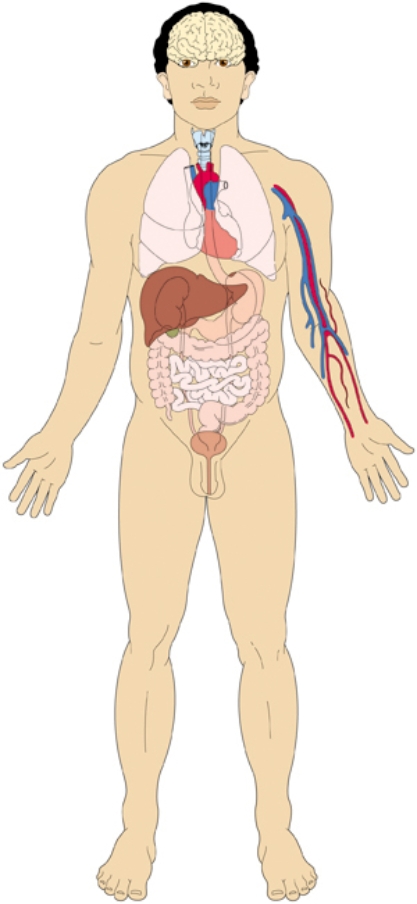
The patient has been experiencing manifestations of pernicious anemia related to an inability to make an adequate amount of intrinsic factor. Click on the location of the organ that is malfunctioning.
Question
Question
Question
Question
A patient is experiencing acute blood loss after a motor vehicle accident and has been taken to the emergency department. Click on the location of the organ in the patient's body that will constrict to allow for increased blood volume.

Question
Question

Unlock Deck
Sign up to unlock the cards in this deck!
Unlock Deck
Unlock Deck
1/40

Play

Full screen (f)
Deck 33: Nursing Care of Patients With Hematologic Disorders
1
The nurse is planning to instruct a patient with secondary polycythemia about ways to prevent blood stasis. What should be included in these instructions?
A) Leg pain is normal.
B) Elevate feet and legs when sitting.
C) Restrict fluids.
D) Black stools are to be expected.
A) Leg pain is normal.
B) Elevate feet and legs when sitting.
C) Restrict fluids.
D) Black stools are to be expected.
Elevate feet and legs when sitting.
2
A patient recently diagnosed with chronic myeloid leukemia (CML) says he does not want to leave his wife alone with all the household finances. Which response should the nurse refrain from making at this time?
A) "I would encourage you to discuss your feelings with your wife so that she can be a part of the decision making process."
B) "I would like to make a referral for you and your wife to a support group that may be helpful with some of the issues you are having."
C) "It must be very difficult for you to think of your wife having to be alone with the household decisions."
D) "You had better get your affairs in order now before it is too late."
A) "I would encourage you to discuss your feelings with your wife so that she can be a part of the decision making process."
B) "I would like to make a referral for you and your wife to a support group that may be helpful with some of the issues you are having."
C) "It must be very difficult for you to think of your wife having to be alone with the household decisions."
D) "You had better get your affairs in order now before it is too late."
"You had better get your affairs in order now before it is too late."
3
The nurse is providing dietary instructions to a vegetarian patient with iron deficiency anemia. What should be included in these instructions?
A) Consider adding animal sources of iron and protein to the diet.
B) Ensure an adequate intake of vitamin C when consuming non-animal-based proteins.
C) Drink at least 12 glasses of water every day.
D) Avoid exercise at least 30 minutes after completing a meal or snack.
A) Consider adding animal sources of iron and protein to the diet.
B) Ensure an adequate intake of vitamin C when consuming non-animal-based proteins.
C) Drink at least 12 glasses of water every day.
D) Avoid exercise at least 30 minutes after completing a meal or snack.
Ensure an adequate intake of vitamin C when consuming non-animal-based proteins.
4
Upon analysis, a patient's red blood cells (RBCs) appear microcytic and hypochromic. The nurse recognizes that the patient likely has which condition?
A) iron deficiency anemia
B) acute blood loss anemia
C) chronic blood loss anemia
D) vitamin B12 deficiency anemia
A) iron deficiency anemia
B) acute blood loss anemia
C) chronic blood loss anemia
D) vitamin B12 deficiency anemia
Unlock Deck
Unlock for access to all 40 flashcards in this deck.
Unlock Deck
k this deck
5
After several doses of chemotherapy, a patient complains of fatigue, pallor, progressive weakness, exertional dyspnea, headache, and tachycardia. Which problem should the nurse identify as a priority for this patient?
A) change in nutritional status
B) difficulty with activity
C) feeling unable to control the disease process
D) psychosocial issues dealing with the disease process
A) change in nutritional status
B) difficulty with activity
C) feeling unable to control the disease process
D) psychosocial issues dealing with the disease process
Unlock Deck
Unlock for access to all 40 flashcards in this deck.
Unlock Deck
k this deck
6
A patient is admitted with the diagnosis of sickle-cell crisis. What should the nurse do first based on these clinical findings: temperature 102°F, O2 saturation 89%, and complaints of severe abdominal pain?
A) give Tylenol (acetaminophen) grains X (650 mg)
B) administer oxygen as prescribed
C) administer morphine sulfate grain IM
D) assess and document peripheral pulses
A) give Tylenol (acetaminophen) grains X (650 mg)
B) administer oxygen as prescribed
C) administer morphine sulfate grain IM
D) assess and document peripheral pulses
Unlock Deck
Unlock for access to all 40 flashcards in this deck.
Unlock Deck
k this deck
7
The nurse is caring for a young female patient whose laboratory values indicate the presence of microcytic and hypochromic red blood cells. What should the nurse do to help this patient?
A) Enforce "nothing by mouth" in anticipation of emergency surgery.
B) Insert an intravenous access line for fluids.
C) Consult with the dietitian for a diet high in iron.
D) Assess the past history for risks of bleeding or menstrual changes.
A) Enforce "nothing by mouth" in anticipation of emergency surgery.
B) Insert an intravenous access line for fluids.
C) Consult with the dietitian for a diet high in iron.
D) Assess the past history for risks of bleeding or menstrual changes.
Unlock Deck
Unlock for access to all 40 flashcards in this deck.
Unlock Deck
k this deck
8
A patient in sickle cell crisis has edema in the hands and feet. The nurse recognizes that this edema is caused by which condition?
A) fluid overload
B) poor venous return
C) small vessel infarction
D) dehydration
A) fluid overload
B) poor venous return
C) small vessel infarction
D) dehydration
Unlock Deck
Unlock for access to all 40 flashcards in this deck.
Unlock Deck
k this deck
9
At the completion of a physical examination the nurse suspects that a patient is experiencing thalassemia. What did the nurse assess to make this clinical decision?
A) confusion
B) muscle cramps
C) slight splenomegaly
D) bronze skin coloring
E) spontaneous fractures
A) confusion
B) muscle cramps
C) slight splenomegaly
D) bronze skin coloring
E) spontaneous fractures
Unlock Deck
Unlock for access to all 40 flashcards in this deck.
Unlock Deck
k this deck
10
The nurse instructs a patient on the dietary management of iron deficiency anemia. Which patient statement indicates a need for additional teaching?
A) "I will eat more fruits and vegetables, especially green leafy ones, to get more B12 in my diet."
B) "I will take vitamins with extra iron in addition to eating a balanced diet with meat to correct my anemia."
C) "I will add food high in vitamin C to improve my absorption of iron in both my vitamins."
D) "I will need to include more protein foods in my diet such as meats, dried beans, and whole-grain bread."
A) "I will eat more fruits and vegetables, especially green leafy ones, to get more B12 in my diet."
B) "I will take vitamins with extra iron in addition to eating a balanced diet with meat to correct my anemia."
C) "I will add food high in vitamin C to improve my absorption of iron in both my vitamins."
D) "I will need to include more protein foods in my diet such as meats, dried beans, and whole-grain bread."
Unlock Deck
Unlock for access to all 40 flashcards in this deck.
Unlock Deck
k this deck
11
A patient who is undergoing treatment for leukemia is scheduled for a bone marrow transplant. The nurse determines that this patient is in which phase of treatment for the disorder?
A) induction
B) maintenance
C) rehabilitative
D) postremission
A) induction
B) maintenance
C) rehabilitative
D) postremission
Unlock Deck
Unlock for access to all 40 flashcards in this deck.
Unlock Deck
k this deck
12
A patient is being treated for acquired hemolytic anemia. Which assessment finding suggests that the condition is severe?
A) misshapen limbs due to pathological fractures
B) enlarged spleen
C) jaundice
D) bradycardia
A) misshapen limbs due to pathological fractures
B) enlarged spleen
C) jaundice
D) bradycardia
Unlock Deck
Unlock for access to all 40 flashcards in this deck.
Unlock Deck
k this deck
13
A patient diagnosed with acute myeloid leukemia (AML) has an absolute neutrophil count of 200. What action by the nurse would minimize the risk of complications from neutropenia?
A) using strict aseptic technique when performing all procedures
B) spacing frequent meals throughout the day to increase caloric intake
C) restricting fluids and salts to reduce edema
D) regulating the thermostat for a cooler environment
A) using strict aseptic technique when performing all procedures
B) spacing frequent meals throughout the day to increase caloric intake
C) restricting fluids and salts to reduce edema
D) regulating the thermostat for a cooler environment
Unlock Deck
Unlock for access to all 40 flashcards in this deck.
Unlock Deck
k this deck
14
A patient diagnosed with leukemia says, "If I have too many white blood cells, and white blood cells fight infections, why do I have to be careful not to be exposed to germs?" What would be an appropriate response for the nurse?
A) "With leukemia, you have the wrong kind of white blood cells."
B) "That's not what leukemia is."
C) "The white blood cells with leukemia aren't effective at fighting infections."
D) "Your bone marrow can become infected."
A) "With leukemia, you have the wrong kind of white blood cells."
B) "That's not what leukemia is."
C) "The white blood cells with leukemia aren't effective at fighting infections."
D) "Your bone marrow can become infected."
Unlock Deck
Unlock for access to all 40 flashcards in this deck.
Unlock Deck
k this deck
15
A family member is identified as a donor for a patient's stem cell transplant. What should the family member learn about this procedure?
A) Peripheral blood is removed.
B) Blood is removed from a central catheter.
C) White blood cells are added to the donor's blood.
D) A strict diet of low protein and fat must be consumed.
E) Hematopoietic growth factors will be administered for 4 to 5 days before the harvesting.
A) Peripheral blood is removed.
B) Blood is removed from a central catheter.
C) White blood cells are added to the donor's blood.
D) A strict diet of low protein and fat must be consumed.
E) Hematopoietic growth factors will be administered for 4 to 5 days before the harvesting.
Unlock Deck
Unlock for access to all 40 flashcards in this deck.
Unlock Deck
k this deck
16
A patient is prescribed an oral iron preparation. What should the nurse instruct this patient about this medication?
A) Take the medication with orange juice.
B) Nausea is expected with this medication.
C) Take the medication with an antacid.
D) Take the medication 2 hours before a scheduled tetracycline dose.
E) Take the medication with a vitamin E supplement.
A) Take the medication with orange juice.
B) Nausea is expected with this medication.
C) Take the medication with an antacid.
D) Take the medication 2 hours before a scheduled tetracycline dose.
E) Take the medication with a vitamin E supplement.
Unlock Deck
Unlock for access to all 40 flashcards in this deck.
Unlock Deck
k this deck
17
A 17-year-old patient with edematous lymph nodes and headaches is diagnosed with leukemia. The nurse suspects that this patient likely has which health problem?
A) acute lymphocytic leukemia (ALL)
B) chronic lymphocytic leukemia (CLL)
C) acute myeloid leukemia (AML)
D) chronic myeloid leukemia (CML)
A) acute lymphocytic leukemia (ALL)
B) chronic lymphocytic leukemia (CLL)
C) acute myeloid leukemia (AML)
D) chronic myeloid leukemia (CML)
Unlock Deck
Unlock for access to all 40 flashcards in this deck.
Unlock Deck
k this deck
18
A middle-aged female is experiencing numbness and tingling in her lower extremities as well as difficulty ambulating. The patient's recent complete blood count indicates large, oval-shaped, macrocytic red blood cells with thin membranes. Which therapy would the nurse anticipate including in the discharge plan?
A) a diet high in green leafy vegetables, broccoli, wheat germ, and asparagus
B) a daily multivitamin with extra iron
C) instructions about subcutaneous injections of erythropoietin for a few weeks
D) instructions about intramuscular parenteral injections of vitamin B12 for the rest of her life
A) a diet high in green leafy vegetables, broccoli, wheat germ, and asparagus
B) a daily multivitamin with extra iron
C) instructions about subcutaneous injections of erythropoietin for a few weeks
D) instructions about intramuscular parenteral injections of vitamin B12 for the rest of her life
Unlock Deck
Unlock for access to all 40 flashcards in this deck.
Unlock Deck
k this deck
19
The nurse determines that a patient with heparin-induced thrombocytopenia is at risk for bleeding. Which intervention should the nurse include in this patient's plan of care?
A) Avoid invasive procedures, such as rectal temperatures, urinary catheterizations, and parenteral injections.
B) Apply pressure to puncture sites for 3-5 minutes for arterial blood gases aspiration.
C) Give enemas to help the patient avoid straining during bowel movements.
D) Encourage the patient to brush the teeth thoroughly and rinse with alcohol-based mouthwash after each meal.
A) Avoid invasive procedures, such as rectal temperatures, urinary catheterizations, and parenteral injections.
B) Apply pressure to puncture sites for 3-5 minutes for arterial blood gases aspiration.
C) Give enemas to help the patient avoid straining during bowel movements.
D) Encourage the patient to brush the teeth thoroughly and rinse with alcohol-based mouthwash after each meal.
Unlock Deck
Unlock for access to all 40 flashcards in this deck.
Unlock Deck
k this deck
20
A patient with chronic gastritis is experiencing tingling in the hands. The nurse recognizes that this patient might be exhibiting signs of which condition?
A) iron deficiency anemia
B) acute blood loss anemia
C) folic acid deficiency anemia
D) vitamin B12 deficiency anemia
A) iron deficiency anemia
B) acute blood loss anemia
C) folic acid deficiency anemia
D) vitamin B12 deficiency anemia
Unlock Deck
Unlock for access to all 40 flashcards in this deck.
Unlock Deck
k this deck
21
After completing a medication history, the nurse is concerned that a patient is at risk for secondary thrombocytopenia. Which medications did the nurse learn that the patient takes that increase this risk?
A) digoxin
B) warfarin
C) penicillin
D) cimetidine
E) furosemide
A) digoxin
B) warfarin
C) penicillin
D) cimetidine
E) furosemide
Unlock Deck
Unlock for access to all 40 flashcards in this deck.
Unlock Deck
k this deck
22
A patient is diagnosed with stage II Hodgkin lymphoma. How should the nurse interpret the extent of this patient's illness?
A) a single lymph node with systemic symptoms
B) two or more lymph nodes on the same side of the diaphragm
C) upper abdominal lymph nodes without systemic symptoms
D) an extranodal site involvement with systemic symptoms
A) a single lymph node with systemic symptoms
B) two or more lymph nodes on the same side of the diaphragm
C) upper abdominal lymph nodes without systemic symptoms
D) an extranodal site involvement with systemic symptoms
Unlock Deck
Unlock for access to all 40 flashcards in this deck.
Unlock Deck
k this deck
23
After reviewing laboratory results the nurse is concerned that a patient being treated for leukemia is developing tumor lysis syndrome. What did the nurse assess to make this clinical decision?
A) hyperkalemia
B) hyponatremia
C) hypocalcemia
D) hypermagnesemia
E) hyperphosphatemia
A) hyperkalemia
B) hyponatremia
C) hypocalcemia
D) hypermagnesemia
E) hyperphosphatemia
Unlock Deck
Unlock for access to all 40 flashcards in this deck.
Unlock Deck
k this deck
24
A college-age patient who is in the hospital for treatment for Hodgkin disease is visited by friends who bring a pizza and cola. What should the nurse do to ensure the patient's comfort?
A) ask the visitors to leave
B) ask the visitors to eat the pizza in the lounge
C) encourage the patient to eat as much pizza as possible
D) provide the patient with an antiemetic and suggest something else for the patient to eat with the visitors
A) ask the visitors to leave
B) ask the visitors to eat the pizza in the lounge
C) encourage the patient to eat as much pizza as possible
D) provide the patient with an antiemetic and suggest something else for the patient to eat with the visitors
Unlock Deck
Unlock for access to all 40 flashcards in this deck.
Unlock Deck
k this deck
25
A patient was recently diagnosed with Hodgkin disease. The nurse provided education for the patient and the patient's spouse. Which patient statements indicate the need for further education?
A) "The physician is ordering radiation therapy for me."
B) "My white blood cell count was low and my red blood cell count was high, and that helped the physician diagnose me."
C) "The doctor has classified my Hodgkin disease as stage III because I have involved lymph nodes in my liver and in my spleen."
D) "One out of every four patients without symptoms of Hodgkin disease dies of this disease."
E) "Because I had a heart attack in the past, the physician will probably prescribe rituximab for me."
A) "The physician is ordering radiation therapy for me."
B) "My white blood cell count was low and my red blood cell count was high, and that helped the physician diagnose me."
C) "The doctor has classified my Hodgkin disease as stage III because I have involved lymph nodes in my liver and in my spleen."
D) "One out of every four patients without symptoms of Hodgkin disease dies of this disease."
E) "Because I had a heart attack in the past, the physician will probably prescribe rituximab for me."
Unlock Deck
Unlock for access to all 40 flashcards in this deck.
Unlock Deck
k this deck
26
A patient with acute lymphocytic leukemia will be starting chemotherapy. The nurse should instruct the patient about which medications?
A) prednisone
B) cytarabine (Cytoxan)
C) vincristine (Oncovin)
D) asparaginase (Elspar)
E) daunorubicin (Cerubidine)
A) prednisone
B) cytarabine (Cytoxan)
C) vincristine (Oncovin)
D) asparaginase (Elspar)
E) daunorubicin (Cerubidine)
Unlock Deck
Unlock for access to all 40 flashcards in this deck.
Unlock Deck
k this deck
27
While reviewing preoperative orders, the nurse notes that a patient is prescribed desmopressin acetate (DDAVP). For which health problems should the nurse plan care?
A) hemophilia A
B) mononucleosis
C) iron deficiency anemia
D) von Willibrand disease
E) heparin-induced thrombocytopenia
A) hemophilia A
B) mononucleosis
C) iron deficiency anemia
D) von Willibrand disease
E) heparin-induced thrombocytopenia
Unlock Deck
Unlock for access to all 40 flashcards in this deck.
Unlock Deck
k this deck
28
A patient with polycythemia vera is admitted for treatment. What should the nurse expect to be prescribed for this patient?
A) aspirin
B) antibiotics
C) phlebotomy
D) hydroxyurea
E) antihistamines
A) aspirin
B) antibiotics
C) phlebotomy
D) hydroxyurea
E) antihistamines
Unlock Deck
Unlock for access to all 40 flashcards in this deck.
Unlock Deck
k this deck
29
A patient has developed multiple ecchymoses and there is occult blood in the patient's stool. The patient's factor assays are assessed, and factor VIII is found to be decreased. Based on the nurse's understanding of hematologic disorders, what is commonly associated with this patient's condition?
A) The patient's platelet count is normal.
B) The patient's prothrombin time is elevated.
C) The patient is diagnosed with hemophilia B.
D) The nurse administers fresh-frozen plasma to the patient per physician's orders.
E) The patient's bleeding time is within normal limits.
A) The patient's platelet count is normal.
B) The patient's prothrombin time is elevated.
C) The patient is diagnosed with hemophilia B.
D) The nurse administers fresh-frozen plasma to the patient per physician's orders.
E) The patient's bleeding time is within normal limits.
Unlock Deck
Unlock for access to all 40 flashcards in this deck.
Unlock Deck
k this deck
30
The nurse is preparing an analgesic for a patient with leukemia. Which route is preferred for this patient?
A) intramuscular
B) intravenous
C) oral
D) subcutaneous
A) intramuscular
B) intravenous
C) oral
D) subcutaneous
Unlock Deck
Unlock for access to all 40 flashcards in this deck.
Unlock Deck
k this deck
31
A patient with idiopathic thrombocytopenia purpura continues to experience symptoms of the disease after completing several courses of prednisone therapy. The nurse anticipates that which treatment will most likely be recommended for this patient?
A) lifelong prednisone therapy
B) splenectomy
C) aspirin therapy
D) weekly platelet transfusions
A) lifelong prednisone therapy
B) splenectomy
C) aspirin therapy
D) weekly platelet transfusions
Unlock Deck
Unlock for access to all 40 flashcards in this deck.
Unlock Deck
k this deck
32
A patient with hemophilia is admitted with acute bleeding. Until the cause of the bleeding is determined, the nurse should be prepared to perform which intervention?
A) infusing packed red blood cells
B) infusing normal saline
C) infusing heparin
D) infusing fresh-frozen plasma
A) infusing packed red blood cells
B) infusing normal saline
C) infusing heparin
D) infusing fresh-frozen plasma
Unlock Deck
Unlock for access to all 40 flashcards in this deck.
Unlock Deck
k this deck
33
A patient who is undergoing chemotherapy for lymphoma says, "I thought I was ugly before this all started. Now I know for sure I'm disgusting to look at." What is this patient most at risk for developing related to these comments?
A) changed body image perception
B) reduced sexual response
C) altered taste sensation
D) inability to cope with the diagnosis and treatment
A) changed body image perception
B) reduced sexual response
C) altered taste sensation
D) inability to cope with the diagnosis and treatment
Unlock Deck
Unlock for access to all 40 flashcards in this deck.
Unlock Deck
k this deck
34
The patient has been experiencing manifestations of pernicious anemia related to an inability to make an adequate amount of intrinsic factor. Click on the location of the organ that is malfunctioning.
Unlock Deck
Unlock for access to all 40 flashcards in this deck.
Unlock Deck
k this deck
35
A patient has developed folic acid deficiency anemia. The nurse notes that the patient weighed 52.72 kilograms 1 year ago and weighs 44.23 kilograms today. Calculate the patient's weight loss in pounds. ________ lbs
Unlock Deck
Unlock for access to all 40 flashcards in this deck.
Unlock Deck
k this deck
36
The nurse suspects that a patient being treated with deferoxamine (Desferal) is experiencing adverse effects of the medication. What did the nurse assess to come to this conclusion?
A) urticaria
B) ecchymosis
C) upper body rash
D) pink urine
E) blood in the stool
A) urticaria
B) ecchymosis
C) upper body rash
D) pink urine
E) blood in the stool
Unlock Deck
Unlock for access to all 40 flashcards in this deck.
Unlock Deck
k this deck
37
A patient who is being treated for malignant lymphoma is experiencing pruritus. What interventions would be appropriate for this patient?
A) bathing with cool water
B) vigorously rubbing the skin after bathing
C) applying lavender-scented body lotion
D) keeping the room temperature above normal
E) cleansing bedding and clothing in mild detergent with a second rinse cycle
A) bathing with cool water
B) vigorously rubbing the skin after bathing
C) applying lavender-scented body lotion
D) keeping the room temperature above normal
E) cleansing bedding and clothing in mild detergent with a second rinse cycle
Unlock Deck
Unlock for access to all 40 flashcards in this deck.
Unlock Deck
k this deck
38
A patient is experiencing acute blood loss after a motor vehicle accident and has been taken to the emergency department. Click on the location of the organ in the patient's body that will constrict to allow for increased blood volume.
Unlock Deck
Unlock for access to all 40 flashcards in this deck.
Unlock Deck
k this deck
39
The nurse is reviewing a patient's results from recent diagnostic tests and an assessment. Based on the information in the chart, what should the nurse conclude about this patient?
A) The patient was just transported from the scene of a high-speed motorcycle accident.
B) The patient was recently diagnosed with a chronic gastrointestinal bleed.
C) The patient had a gastrectomy performed 22 years ago as a result of stomach cancer.
D) The patient is an alcoholic.
A) The patient was just transported from the scene of a high-speed motorcycle accident.
B) The patient was recently diagnosed with a chronic gastrointestinal bleed.
C) The patient had a gastrectomy performed 22 years ago as a result of stomach cancer.
D) The patient is an alcoholic.
Unlock Deck
Unlock for access to all 40 flashcards in this deck.
Unlock Deck
k this deck
40
A patient with disseminated intravascular coagulation (DIC) is not responding to infusions of fresh-frozen plasma and platelets. Which interventions might be indicated for this patient?
A) beginning heparin injections
B) beginning heparin infusion
C) administering factor VIII infusion
D) beginning normal saline infusion
E) preparing for a bone marrow biopsy
A) beginning heparin injections
B) beginning heparin infusion
C) administering factor VIII infusion
D) beginning normal saline infusion
E) preparing for a bone marrow biopsy
Unlock Deck
Unlock for access to all 40 flashcards in this deck.
Unlock Deck
k this deck
Unlock Deck
Unlock for access to all 40 flashcards in this deck.






