







 Chat with AI

Deck 31: Nursing Care of Patients With Cardiac Disorders
Full screen (f)

Question

Question
Question
Question
Question
Question
Question
Question
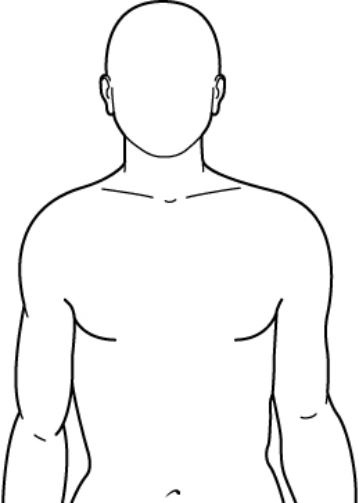
A patient in the critical care area has an invasive hemodynamic pressure monitoring line. This position should be marked on the chest wall as a consistent reference point for calibrating and leveling. Indicate on the diagram where the chest should be marked by placing an "X" at the appropriate reference point.
Question
Question
Question
Question
Question
Question
Question
Question
Question
Question
Question
Question
Question
Question
Question
Question
Question
Question
Question
Question
Question
Question
Question
Question
Question
Question
Question
Question
Question
Question
Question

Unlock Deck
Sign up to unlock the cards in this deck!
Unlock Deck
Unlock Deck
1/39

Play

Full screen (f)
Deck 31: Nursing Care of Patients With Cardiac Disorders
1
The nurse is caring for a patient who has invasive hemodynamic monitoring. What would be the highest priority of care for this patient?
A) preventing infection at the catheter site by changing the dressing as prescribed
B) setting alarm limits and turning monitor alarms on
C) explaining to family members why the monitoring is in use
D) coiling IV tubing on the bed
A) preventing infection at the catheter site by changing the dressing as prescribed
B) setting alarm limits and turning monitor alarms on
C) explaining to family members why the monitoring is in use
D) coiling IV tubing on the bed
setting alarm limits and turning monitor alarms on
2
A patient is diagnosed with cardiac tamponade. What treatment should the nurse expect to be prescribed for this patient?
A) antidysrhythmic drugs and oxygen
B) oxygen and rest
C) pericardiocentesis
D) antibiotics
A) antidysrhythmic drugs and oxygen
B) oxygen and rest
C) pericardiocentesis
D) antibiotics
pericardiocentesis
3
The nurse is caring for a patient with possible endocarditis. What is important for the nurse to consider when caring for this patient?
A) Endocarditis does not pose a high risk of damage to affected heart valves.
B) Patients with this disorder can be treated with open heart surgery to clean the heart valves.
C) The condition is unrelated to fever, so patients can be medicated with the prescribed antipyretic and observed.
D) Endocarditis can be prevented in patients at risk by administering antibiotics prior to procedures.
A) Endocarditis does not pose a high risk of damage to affected heart valves.
B) Patients with this disorder can be treated with open heart surgery to clean the heart valves.
C) The condition is unrelated to fever, so patients can be medicated with the prescribed antipyretic and observed.
D) Endocarditis can be prevented in patients at risk by administering antibiotics prior to procedures.
Endocarditis can be prevented in patients at risk by administering antibiotics prior to procedures.
4
Blood tests are ordered for a patient with suspected heart failure (HF). Which test result should the nurse review to support this medical diagnosis?
A) liver function
B) urinalysis and blood urea nitrogen (BUN)
C) brain natriuretic peptide (BNF)
D) serum electrolytes
A) liver function
B) urinalysis and blood urea nitrogen (BUN)
C) brain natriuretic peptide (BNF)
D) serum electrolytes
Unlock Deck
Unlock for access to all 39 flashcards in this deck.
Unlock Deck
k this deck
5
The nurse is assessing a patient with chronic heart failure. Which abnormal chest sound should the nurse expect to auscultate?
A) expiratory wheezes
B) friction rub
C) harsh vesicular sounds
D) crackles
A) expiratory wheezes
B) friction rub
C) harsh vesicular sounds
D) crackles
Unlock Deck
Unlock for access to all 39 flashcards in this deck.
Unlock Deck
k this deck
6
An older patient was recently discharged to home after treatment for chronic heart failure. The patient experiences an increase in pulse rate from 80 beats per minute (bpm) to 102 bpm when walking from the kitchen to the utility room to do laundry. What should the home care nurse encourage the patient to do?
A) complete tasks such as laundry early in the morning before fatigue is an issue
B) ignore the pulse rate and become more active to build stamina
C) rest for 30 minutes between loads of laundry
D) rest on a chair in the utility room, and sit and rest when the patient feels the pulse rate increase
A) complete tasks such as laundry early in the morning before fatigue is an issue
B) ignore the pulse rate and become more active to build stamina
C) rest for 30 minutes between loads of laundry
D) rest on a chair in the utility room, and sit and rest when the patient feels the pulse rate increase
Unlock Deck
Unlock for access to all 39 flashcards in this deck.
Unlock Deck
k this deck
7
The nurse is caring for a patient in the critical care area whose fluid volume status needs to be closely assessed. Which type of monitoring should the nurse expect for this patient?
A) arterial pressure monitoring
B) pulmonary artery pressure monitoring
C) central venous pressure (CVP) monitoring
D) intra-aortic balloon pump monitoring
A) arterial pressure monitoring
B) pulmonary artery pressure monitoring
C) central venous pressure (CVP) monitoring
D) intra-aortic balloon pump monitoring
Unlock Deck
Unlock for access to all 39 flashcards in this deck.
Unlock Deck
k this deck
8
A patient in the critical care area has an invasive hemodynamic pressure monitoring line. This position should be marked on the chest wall as a consistent reference point for calibrating and leveling. Indicate on the diagram where the chest should be marked by placing an "X" at the appropriate reference point.
Unlock Deck
Unlock for access to all 39 flashcards in this deck.
Unlock Deck
k this deck
9
The nurse suspects that a patient is experiencing paroxysmal nocturnal dyspnea (PND). What did the nurse assess to make this clinical decision?
A) symptoms occurring at night
B) pulmonary congestion
C) improving cardiac reserve
D) voiding more than one time per night
E) daytime peripheral edema
A) symptoms occurring at night
B) pulmonary congestion
C) improving cardiac reserve
D) voiding more than one time per night
E) daytime peripheral edema
Unlock Deck
Unlock for access to all 39 flashcards in this deck.
Unlock Deck
k this deck
10
The nurse should recognize which finding as a sign of decreased cardiac output and tissue perfusion in a patient with heart failure?
A) reduced mental alertness
B) increased urine output
C) abdominal distention
D) strong peripheral pulses
A) reduced mental alertness
B) increased urine output
C) abdominal distention
D) strong peripheral pulses
Unlock Deck
Unlock for access to all 39 flashcards in this deck.
Unlock Deck
k this deck
11
The nurse caring for a patient with coronary artery disease hears a murmur during auscultation of the heart. What should the nurse suspect is occurring in this patient?
A) valvular heart disease
B) pericarditis
C) cardiac tamponade
D) heart failure
A) valvular heart disease
B) pericarditis
C) cardiac tamponade
D) heart failure
Unlock Deck
Unlock for access to all 39 flashcards in this deck.
Unlock Deck
k this deck
12
The nurse suspects that a patient has pericarditis. What did the nurse assess to make this clinical decision?
A) pericardial friction rub
B) abdominal discomfort and nausea
C) chest pain
D) bradycardia
E) distended neck veins
A) pericardial friction rub
B) abdominal discomfort and nausea
C) chest pain
D) bradycardia
E) distended neck veins
Unlock Deck
Unlock for access to all 39 flashcards in this deck.
Unlock Deck
k this deck
13
The nurse is caring for a chronic heart failure patient with left-sided failure. Which documentation should the nurse expect to see in the medical record after this patient has a cardiac catheterization?
A) "Pressures in the left ventricle and atrium are increased."
B) "Pressures in the left ventricle and atrium are decreased."
C) "Pressures in the right ventricle and atrium match the ventricle pressures."
D) "Pressures in the right ventricle reflect functioning of all heart chambers."
A) "Pressures in the left ventricle and atrium are increased."
B) "Pressures in the left ventricle and atrium are decreased."
C) "Pressures in the right ventricle and atrium match the ventricle pressures."
D) "Pressures in the right ventricle reflect functioning of all heart chambers."
Unlock Deck
Unlock for access to all 39 flashcards in this deck.
Unlock Deck
k this deck
14
The nurse is obtaining the health history of a patient who is being assessed for possible heart failure (HF). Which patient statement should the nurse identify as being associated with this condition?
A) "I break out in a cold sweat when I eat a large meal."
B) "I am sleepy after I eat lunch every day."
C) "I have to prop myself up on three pillows to sleep at night. Otherwise I can't breathe."
D) "I feel better with my legs down when I sit in my favorite chair."
A) "I break out in a cold sweat when I eat a large meal."
B) "I am sleepy after I eat lunch every day."
C) "I have to prop myself up on three pillows to sleep at night. Otherwise I can't breathe."
D) "I feel better with my legs down when I sit in my favorite chair."
Unlock Deck
Unlock for access to all 39 flashcards in this deck.
Unlock Deck
k this deck
15
A patient is diagnosed with pulmonary edema. What is a priority for this patient?
A) inserting a peripheral intravenous catheter
B) requesting a prescription to medicate the patient for comfort
C) monitoring the blood glucose level
D) placing a pulse oximeter and administering oxygen
A) inserting a peripheral intravenous catheter
B) requesting a prescription to medicate the patient for comfort
C) monitoring the blood glucose level
D) placing a pulse oximeter and administering oxygen
Unlock Deck
Unlock for access to all 39 flashcards in this deck.
Unlock Deck
k this deck
16
A patient is prescribed digoxin (Lanoxin). What is the nurse's priority instruction to the patient about this medication?
A) how to manage itchy skin
B) foods that should be eaten while taking this drug
C) the importance of not taking the medication if the pulse is under 60 beats per minute
D) the need to check the pulse once a week and record the result on a notepad
A) how to manage itchy skin
B) foods that should be eaten while taking this drug
C) the importance of not taking the medication if the pulse is under 60 beats per minute
D) the need to check the pulse once a week and record the result on a notepad
Unlock Deck
Unlock for access to all 39 flashcards in this deck.
Unlock Deck
k this deck
17
The nurse is caring for a patient with heart failure. What should the nurse expect when assessing this patient?
A) S1, S2, and flat neck veins
B) S3 and distended neck veins
C) S2 heard the loudest and followed by S1
D) S4 and flat neck veins
A) S1, S2, and flat neck veins
B) S3 and distended neck veins
C) S2 heard the loudest and followed by S1
D) S4 and flat neck veins
Unlock Deck
Unlock for access to all 39 flashcards in this deck.
Unlock Deck
k this deck
18
A patient has a pulmonary artery (PA) catheter placed. What should the nurse recognize as the purpose of this catheter?
A) The patient cannot tolerate hemodynamic monitoring.
B) The patient requires a peripheral intravenous catheter for medication administration.
C) The patient would benefit from having the right ventricle pressures measured each shift.
D) The patient requires evaluation of left ventricular pressures each shift.
A) The patient cannot tolerate hemodynamic monitoring.
B) The patient requires a peripheral intravenous catheter for medication administration.
C) The patient would benefit from having the right ventricle pressures measured each shift.
D) The patient requires evaluation of left ventricular pressures each shift.
Unlock Deck
Unlock for access to all 39 flashcards in this deck.
Unlock Deck
k this deck
19
A patient is admitted with acute heart failure. The nurse recognizes that this condition is associated with an abrupt onset of which health problems?
A) cardiomyopathy
B) heart valve disease
C) coronary heart disease (CHD)
D) massive infarction (MI)
E) myocardial injury
A) cardiomyopathy
B) heart valve disease
C) coronary heart disease (CHD)
D) massive infarction (MI)
E) myocardial injury
Unlock Deck
Unlock for access to all 39 flashcards in this deck.
Unlock Deck
k this deck
20
A patient is exhibiting dyspnea, orthopnea, cyanosis, clammy skin, crackles, and a productive cough with pink, frothy sputum. Which health problem should the nurse suspect is occurring in this patient?
A) chronic heart failure
B) pulmonary edema
C) endocarditis
D) angina
A) chronic heart failure
B) pulmonary edema
C) endocarditis
D) angina
Unlock Deck
Unlock for access to all 39 flashcards in this deck.
Unlock Deck
k this deck
21
A male patient of African-American descent is prescribed hydralazine and isosorbide (BiDil) as treatment for heart failure. What should the nurse instruct the patient about this medication?
A) "Change positions slowly."
B) "Dizziness and fainting are expected adverse effects of this medication."
C) "You may have a headache when starting this medication, but it will subside."
D) "Notify the healthcare provider if you have chest pain while taking this medication."
E) "Do not take medications to treat erectile dysfunction while taking this medication."
A) "Change positions slowly."
B) "Dizziness and fainting are expected adverse effects of this medication."
C) "You may have a headache when starting this medication, but it will subside."
D) "Notify the healthcare provider if you have chest pain while taking this medication."
E) "Do not take medications to treat erectile dysfunction while taking this medication."
Unlock Deck
Unlock for access to all 39 flashcards in this deck.
Unlock Deck
k this deck
22
The nurse auscultates a heart murmur that is continuous and rumbling and increases in sound toward the end. Which conditions should the nurse suspect this patient might be experiencing?
A) mitral stenosis
B) tricuspid stenosis
C) mitral regurgitation
D) aortic regurgitation
E) tricuspid regurgitation
A) mitral stenosis
B) tricuspid stenosis
C) mitral regurgitation
D) aortic regurgitation
E) tricuspid regurgitation
Unlock Deck
Unlock for access to all 39 flashcards in this deck.
Unlock Deck
k this deck
23
A patient is admitted with acute pericarditis. When auscultating heart sounds, the nurse should ask the patient to perform which action?
A) sit and lean forward while the nurse auscultates at the left lower sternal border
B) lie supine and breathe quietly while the nurse auscultates for expiratory wheezes
C) sit upright while the nurse auscultates the outer aspects of the upper lobes for vesicular breath sounds
D) sit and lean forward while the nurse auscultates at the second right intercostal space, near the sternal border
A) sit and lean forward while the nurse auscultates at the left lower sternal border
B) lie supine and breathe quietly while the nurse auscultates for expiratory wheezes
C) sit upright while the nurse auscultates the outer aspects of the upper lobes for vesicular breath sounds
D) sit and lean forward while the nurse auscultates at the second right intercostal space, near the sternal border
Unlock Deck
Unlock for access to all 39 flashcards in this deck.
Unlock Deck
k this deck
24
The nurse is caring for patients on a cardiac unit. Which patient should the nurse assess first?
A) patient with hypertrophic cardiomyopathy who is reporting dyspnea
B) patient who had a cardiac catheterization and will be ambulating for the first time
C) patient receiving antibiotics for bacterial endocarditis who is reporting anxiety and chest pain
D) patient recovering from coronary artery bypass grafting (CABG) surgery with a temperature of 101°F.
A) patient with hypertrophic cardiomyopathy who is reporting dyspnea
B) patient who had a cardiac catheterization and will be ambulating for the first time
C) patient receiving antibiotics for bacterial endocarditis who is reporting anxiety and chest pain
D) patient recovering from coronary artery bypass grafting (CABG) surgery with a temperature of 101°F.
Unlock Deck
Unlock for access to all 39 flashcards in this deck.
Unlock Deck
k this deck
25
A patient with rheumatic heart disease is being discharged. What should the nurse include in the patient's discharge instructions?
A) "Perform dental hygiene several times a day."
B) "Complete the full course of prescribed antibiotics."
C) "Take antibiotics as prescribed before dental work."
D) "Restrict fluids and limit activity while taking medication."
E) "Notify the physician if you develop a sore throat or other infection."
A) "Perform dental hygiene several times a day."
B) "Complete the full course of prescribed antibiotics."
C) "Take antibiotics as prescribed before dental work."
D) "Restrict fluids and limit activity while taking medication."
E) "Notify the physician if you develop a sore throat or other infection."
Unlock Deck
Unlock for access to all 39 flashcards in this deck.
Unlock Deck
k this deck
26
Home care teaching is being completed by the nurse for a patient recovering from rheumatic fever. Which patient statement indicates that the teaching has been effective?
A) "I will be sure to tell my dentist that I had rheumatic fever."
B) "I will try to focus on eating less protein and more fat so I will have more energy."
C) "I will avoid brushing my teeth so often and quit using mouth rinse because I have gingivitis."
D) "If my joints start to hurt again, I need to slow down, but I won't have to worry because I'm immune to rheumatic fever now."
A) "I will be sure to tell my dentist that I had rheumatic fever."
B) "I will try to focus on eating less protein and more fat so I will have more energy."
C) "I will avoid brushing my teeth so often and quit using mouth rinse because I have gingivitis."
D) "If my joints start to hurt again, I need to slow down, but I won't have to worry because I'm immune to rheumatic fever now."
Unlock Deck
Unlock for access to all 39 flashcards in this deck.
Unlock Deck
k this deck
27
A patient newly diagnosed with heart failure is prescribed 40 mg of furosemide (Lasix) to be given IV push. Knowing that the patient is also prescribed digoxin (Lanoxin), the nurse should review which laboratory result?
A) sodium level
B) digoxin level
C) creatinine level
D) potassium level
A) sodium level
B) digoxin level
C) creatinine level
D) potassium level
Unlock Deck
Unlock for access to all 39 flashcards in this deck.
Unlock Deck
k this deck
28
The nurse suspects that a patient is experiencing a neuroendocrine response from low cardiac output in heart failure. What manifestations did the nurse assess to make this clinical decision?
A) irregular heart rhythm
B) gastrointestinal bleeding
C) blood pressure 188/94 mmHg
D) nausea, vomiting, and diarrhea
E) heart rate 112 beats per minute
A) irregular heart rhythm
B) gastrointestinal bleeding
C) blood pressure 188/94 mmHg
D) nausea, vomiting, and diarrhea
E) heart rate 112 beats per minute
Unlock Deck
Unlock for access to all 39 flashcards in this deck.
Unlock Deck
k this deck
29
A patient is undergoing diagnostic tests for aortic regurgitation. Which findings should the nurse expect to assess in this patient?
A) dizziness
B) head bobbing
C) peripheral edema
D) throbbing neck pulse
E) palpitations in the supine position
A) dizziness
B) head bobbing
C) peripheral edema
D) throbbing neck pulse
E) palpitations in the supine position
Unlock Deck
Unlock for access to all 39 flashcards in this deck.
Unlock Deck
k this deck
30
The nurse is reviewing information received in report for a group of patients. Which patient should the nurse assess first?
A) patient with occasional chest pain who has recently been diagnosed with gallbladder disease
B) older patient with heart failure who was admitted with increasing edema of the lower extremities
C) newly admitted patient complaining of substernal chest pain and whose father died recently from heart disease
D) patient complaining of chest pain and hyperventilating after a family member leaves the room following an argument
A) patient with occasional chest pain who has recently been diagnosed with gallbladder disease
B) older patient with heart failure who was admitted with increasing edema of the lower extremities
C) newly admitted patient complaining of substernal chest pain and whose father died recently from heart disease
D) patient complaining of chest pain and hyperventilating after a family member leaves the room following an argument
Unlock Deck
Unlock for access to all 39 flashcards in this deck.
Unlock Deck
k this deck
31
The nurse is caring for an older patient. The nurse recognizes that which factors place older adults at higher risk for development of heart failure?
A) impaired diastolic filling
B) increased cardiac reserve
C) increased maximal heart rate
D) reduced ventricular compliance
E) high responsiveness to sympathetic nervous system stimulation
A) impaired diastolic filling
B) increased cardiac reserve
C) increased maximal heart rate
D) reduced ventricular compliance
E) high responsiveness to sympathetic nervous system stimulation
Unlock Deck
Unlock for access to all 39 flashcards in this deck.
Unlock Deck
k this deck
32
A patient is being discharged from the healthcare facility following surgical replacement of a mitral valve with a mechanical valve. The patient asks the nurse how much longer he will need to take warfarin (Coumadin). What is the nurse's best response?
A) "You will be on it for the rest of your life because you have a mechanical valve."
B) "That will depend on your surgeon. Ask her when you go to your office visit."
C) "You will be on it for the rest of your life because you have a biologic tissue valve."
D) "You will be told when to stop, usually when your mechanical prosthetic valve is healed and there is a minimal risk of clots."
A) "You will be on it for the rest of your life because you have a mechanical valve."
B) "That will depend on your surgeon. Ask her when you go to your office visit."
C) "You will be on it for the rest of your life because you have a biologic tissue valve."
D) "You will be told when to stop, usually when your mechanical prosthetic valve is healed and there is a minimal risk of clots."
Unlock Deck
Unlock for access to all 39 flashcards in this deck.
Unlock Deck
k this deck
33
The nurse is reviewing medication orders for a patient with myocarditis caused by diphtheria. Which medications should the nurse question before administering them to the patient?
A) antibiotic
B) anticoagulant
C) cardiac glycoside
D) proton pump inhibitor
E) antidysrhythmic agent
A) antibiotic
B) anticoagulant
C) cardiac glycoside
D) proton pump inhibitor
E) antidysrhythmic agent
Unlock Deck
Unlock for access to all 39 flashcards in this deck.
Unlock Deck
k this deck
34
A patient with endocarditis develops sudden leg pain with pallor, tingling, and loss of peripheral pulses. What should the nurse do first?
A) notify the physician about these findings
B) elevate the leg above the level of the heart
C) wrap the extremity in a loose, warm blanket and apply a foot cradle
D) perform passive range of motion (PROM) exercises to stimulate circulation
A) notify the physician about these findings
B) elevate the leg above the level of the heart
C) wrap the extremity in a loose, warm blanket and apply a foot cradle
D) perform passive range of motion (PROM) exercises to stimulate circulation
Unlock Deck
Unlock for access to all 39 flashcards in this deck.
Unlock Deck
k this deck
35
The nurse is completing an assessment of a patient with hypertrophic cardiomyopathy. What interventions should the nurse identify to help this patient with feelings of fatigue?
A) organizing care to allow for rest periods
B) restricting fluids and measuring abdominal girth
C) reviewing dietary restrictions for sodium intake
D) assisting with activities of daily living as needed
E) consulting with physical therapy for an activity plan
A) organizing care to allow for rest periods
B) restricting fluids and measuring abdominal girth
C) reviewing dietary restrictions for sodium intake
D) assisting with activities of daily living as needed
E) consulting with physical therapy for an activity plan
Unlock Deck
Unlock for access to all 39 flashcards in this deck.
Unlock Deck
k this deck
36
An older patient with a history of heart failure is experiencing dyspnea, weight gain, chest pain, and increasing edema of the lower extremities. The patient's blood pressure is elevated. What should the nurse ask to help determine why the patient is currently having health problems?
A) "Are you married?"
B) "Have you been out of the country lately?"
C) "Do you have grandchildren that you babysit?"
D) "Have you attended any recent family or social gatherings?"
A) "Are you married?"
B) "Have you been out of the country lately?"
C) "Do you have grandchildren that you babysit?"
D) "Have you attended any recent family or social gatherings?"
Unlock Deck
Unlock for access to all 39 flashcards in this deck.
Unlock Deck
k this deck
37
The nurse is reviewing data collected on a group of patients. Which patient should the nurse realize is at risk for high-output heart failure?
A) a patient with chronic anemia
B) a person with untreated hypertension
C) an individual with untreated hypothyroidism
D) someone who abuses sedatives and analgesics
A) a patient with chronic anemia
B) a person with untreated hypertension
C) an individual with untreated hypothyroidism
D) someone who abuses sedatives and analgesics
Unlock Deck
Unlock for access to all 39 flashcards in this deck.
Unlock Deck
k this deck
38
During a home visit the nurse suspects that a patient with heart failure needs additional teaching. What did the nurse observe to make this decision?
A) The patient lifted an 18-month-old child off the floor.
B) The patient's lunch was a small salad and half a sandwich.
C) The patient drank from a pitcher of water on the coffee table.
D) The patient documented the frequency and amount of walking completed.
E) Working in the kitchen, the patient was obviously sweating and short of breath.
A) The patient lifted an 18-month-old child off the floor.
B) The patient's lunch was a small salad and half a sandwich.
C) The patient drank from a pitcher of water on the coffee table.
D) The patient documented the frequency and amount of walking completed.
E) Working in the kitchen, the patient was obviously sweating and short of breath.
Unlock Deck
Unlock for access to all 39 flashcards in this deck.
Unlock Deck
k this deck
39
A patient is scheduled for surgery to replace the mitral valve with a biologic heterograft valve. What should the nurse include when instructing the patient about this surgery?
A) There will be an audible click with this valve.
B) The valve will not need to be replaced.
C) Long-term anticoagulation therapy is not necessary.
D) The valve will likely need to be replaced in 15 years.
E) Long-term antibiotic therapy is needed after the surgery.
A) There will be an audible click with this valve.
B) The valve will not need to be replaced.
C) Long-term anticoagulation therapy is not necessary.
D) The valve will likely need to be replaced in 15 years.
E) Long-term antibiotic therapy is needed after the surgery.
Unlock Deck
Unlock for access to all 39 flashcards in this deck.
Unlock Deck
k this deck
Unlock Deck
Unlock for access to all 39 flashcards in this deck.






