







 Chat with AI

Deck 19: Revolutions in Politics 1775-1815
Full screen (f)

Question

Question
Question
Question
Question
Question
Question
Question
Question
Question
Question
Question
Question
Question
Question
Question
Question
Question
Question
Question
Question
Question
Question
Question
Question
Question
Question
Question
Question
Question
Question
Question
Question
Question
Question
Question
Question
Question
Question
Question
Question
Question
Question
Question
Question
Question
Question
Question
Question
List the countries allied with Napoleon found on Map 19.2: Napoleonic Europe in 1812. 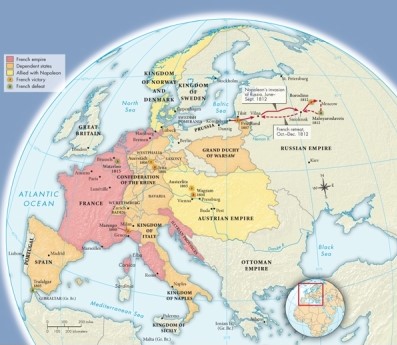
A)The Confederation of the Rhine, the Kingdom of Italy, and the Kingdom of Naples
B)The Austrian Empire and the Kingdom of Norway and Denmark
C)The Kingdom of Sweden, Prussia, and the Ottoman Empire
D)Portugal, Spain, and the Kingdom of Sicily
A)The Confederation of the Rhine, the Kingdom of Italy, and the Kingdom of Naples
B)The Austrian Empire and the Kingdom of Norway and Denmark
C)The Kingdom of Sweden, Prussia, and the Ottoman Empire
D)Portugal, Spain, and the Kingdom of Sicily
Question
Question
Question
Question
Question
List the French satellite states found on Map 19.2: Napoleonic Europe in 1812. 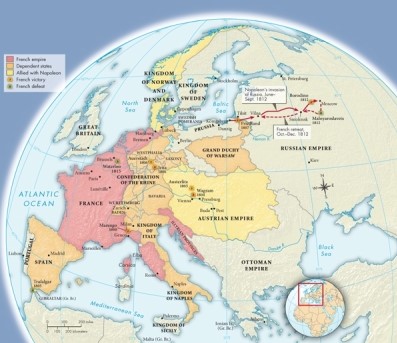
A)The Austrian Empire and the Kingdom of Norway and Denmark
B)Prussia, the Kingdom of Sweden, and Great Britain
C)The Confederation of the Rhine, the Kingdom of Italy, and the Kingdom of Naples
D)Spain, the Kingdom of Naples, the Kingdom of Italy, the Grand Duchy of Warsaw, and the Confederation of the Rhine
A)The Austrian Empire and the Kingdom of Norway and Denmark
B)Prussia, the Kingdom of Sweden, and Great Britain
C)The Confederation of the Rhine, the Kingdom of Italy, and the Kingdom of Naples
D)Spain, the Kingdom of Naples, the Kingdom of Italy, the Grand Duchy of Warsaw, and the Confederation of the Rhine
Question
Question
Question
Question
On Map 19.2: Napoleonic Europe in 1812, which states are not allied with Napoleon? 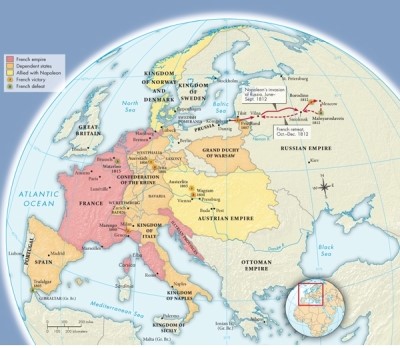
A)Great Britain, Portugal, the Kingdom of Italy, and Russia
B)The Austrian Empire and the Kingdom of Norway and Denmark
C)Great Britain, Portugal, the Kingdom of Sicily, the Ottoman Empire, and Russia
D)Great Britain, the Confederation of the Rhine, Prussia, and Russia
A)Great Britain, Portugal, the Kingdom of Italy, and Russia
B)The Austrian Empire and the Kingdom of Norway and Denmark
C)Great Britain, Portugal, the Kingdom of Sicily, the Ottoman Empire, and Russia
D)Great Britain, the Confederation of the Rhine, Prussia, and Russia
Question
On Map 19.3: The War of Haitian Independence, 1791-1804, where is the first phase of the slave insurrection in 1791 located? 
A)Near what would become the capital of Haiti, the city of Port-au-Prince
B)In the area controlled by the forces of André Rigaud from 1794 to 1800
C)In the area of the capital of Saint-Domingue, Le Cap
D)In the area invaded by the British in 1793
A)Near what would become the capital of Haiti, the city of Port-au-Prince
B)In the area controlled by the forces of André Rigaud from 1794 to 1800
C)In the area of the capital of Saint-Domingue, Le Cap
D)In the area invaded by the British in 1793
Question
Question
Question
Question
Question
Question
Question
Question
Question
Question
Question
Question
Question
Question
Question
Question
Question
Question
Question
Question
Question

Unlock Deck
Sign up to unlock the cards in this deck!
Unlock Deck
Unlock Deck
1/81

Play

Full screen (f)
Deck 19: Revolutions in Politics 1775-1815
1
In the 1780s, over 50 percent of France's annual budget was expended on
A)the military.
B)the royal court.
C)interest payments on debt.
D)bread subsidies for the poor.
A)the military.
B)the royal court.
C)interest payments on debt.
D)bread subsidies for the poor.
interest payments on debt.
2
What occurred during the Hundred Days in France?
A)The sans-culottes committed the September Massacres.
B)Napoleon was driven from Russia.
C)Napoleon returned from exile to rule France briefly.
D)The Reign of Terror executed 30,000 people.
A)The sans-culottes committed the September Massacres.
B)Napoleon was driven from Russia.
C)Napoleon returned from exile to rule France briefly.
D)The Reign of Terror executed 30,000 people.
Napoleon returned from exile to rule France briefly.
3
The Declaration of the Rights of Man and of the Citizen guaranteed
A)the abolition of monopolies, guilds, and workers' associations.
B)religious toleration to French Jews and Protestants.
C)elimination of all barriers to trade within France.
D)equality before the law.
A)the abolition of monopolies, guilds, and workers' associations.
B)religious toleration to French Jews and Protestants.
C)elimination of all barriers to trade within France.
D)equality before the law.
equality before the law.
4
Who wrote A Vindication of the Rights of Man (1790) and A Vindication of the Rights of Woman (1792), the latter a founding text of the feminist movement?
A)Olympe de Gouges
B)Mary Wollstonecraft
C)Abigail Adams
D)Émilie du Châtelet
A)Olympe de Gouges
B)Mary Wollstonecraft
C)Abigail Adams
D)Émilie du Châtelet
Unlock Deck
Unlock for access to all 81 flashcards in this deck.
Unlock Deck
k this deck
5
Louis XV damaged the sense of his sacred authority by
A)allowing his common-born mistress to exercise tremendous influence culturally and politically.
B)attempting to remove his rightful son as his successor and name one of his illegitimate children as heir to the throne.
C)refusing to take Holy Communion because the Catholic Church claimed that he had illegally seized church property.
D)granting freedom of worship to Protestants and Jews, in violation of Roman Catholic law.
A)allowing his common-born mistress to exercise tremendous influence culturally and politically.
B)attempting to remove his rightful son as his successor and name one of his illegitimate children as heir to the throne.
C)refusing to take Holy Communion because the Catholic Church claimed that he had illegally seized church property.
D)granting freedom of worship to Protestants and Jews, in violation of Roman Catholic law.
Unlock Deck
Unlock for access to all 81 flashcards in this deck.
Unlock Deck
k this deck
6
Why did the Directory continue French wars of conquest begun by early revolutionary governments?
A)The Directory had an ideological commitment to liberate all of Europe from aristocratic domination.
B)The Directory feared that without French intervention, Russia would dominate the continent.
C)The Directory understood that big, victorious armies kept men employed.
D)The Directory gave in to demands of the nationalistic populace.
A)The Directory had an ideological commitment to liberate all of Europe from aristocratic domination.
B)The Directory feared that without French intervention, Russia would dominate the continent.
C)The Directory understood that big, victorious armies kept men employed.
D)The Directory gave in to demands of the nationalistic populace.
Unlock Deck
Unlock for access to all 81 flashcards in this deck.
Unlock Deck
k this deck
7
Why was France unable to manage its debt in the eighteenth century, even though that debt was much smaller, relative to its population, than the debt of either Great Britain or Holland?
A)France lacked trained and experienced financial officers, supported by accounting and bookkeeping staffs, who could direct state credit systems.
B)France's economic and political elites lacked a large pool of available capital from which the government could borrow.
C)France lacked a central bank and paper currency.
D)France failed to adopt the use of bonds to arrange for long-term debt, believing that such financial instruments demonstrated government weakness.
A)France lacked trained and experienced financial officers, supported by accounting and bookkeeping staffs, who could direct state credit systems.
B)France's economic and political elites lacked a large pool of available capital from which the government could borrow.
C)France lacked a central bank and paper currency.
D)France failed to adopt the use of bonds to arrange for long-term debt, believing that such financial instruments demonstrated government weakness.
Unlock Deck
Unlock for access to all 81 flashcards in this deck.
Unlock Deck
k this deck
8
The legal definition of the composition of the prerevolutionary third estate included
A)everyone who was not a noble or member of the clergy.
B)members of the clergy.
C)all commoners.
D)members of the nobility.
A)everyone who was not a noble or member of the clergy.
B)members of the clergy.
C)all commoners.
D)members of the nobility.
Unlock Deck
Unlock for access to all 81 flashcards in this deck.
Unlock Deck
k this deck
9
Why did Great Britain seek to raise taxes on its American colonies in the 1760s?
A)The rising cost of increasingly elaborate court ceremonies forced the government to seek tax increases on all its territories.
B)After doubling its national debt in the Seven Years' War, Great Britain sought to tax the American colonies to fund the further defense of the colonies.
C)British merchant shipping to the colonies was under increased attack from pirates and hostile forces, requiring the British to provide expensive naval convoys.
D)Great Britain sought to prepare the colonies for eventual independence by establishing local governments with existing systems of taxation.
A)The rising cost of increasingly elaborate court ceremonies forced the government to seek tax increases on all its territories.
B)After doubling its national debt in the Seven Years' War, Great Britain sought to tax the American colonies to fund the further defense of the colonies.
C)British merchant shipping to the colonies was under increased attack from pirates and hostile forces, requiring the British to provide expensive naval convoys.
D)Great Britain sought to prepare the colonies for eventual independence by establishing local governments with existing systems of taxation.
Unlock Deck
Unlock for access to all 81 flashcards in this deck.
Unlock Deck
k this deck
10
The attack on the Bastille had what political effect?
A)The king's plans to reassert his authority were forestalled, permitting the National Assembly to continue its work.
B)The National Assembly dissolved the monarchy and arrested the king for treason against the nation.
C)The peasantry revolted in the Great Fear and attacked noble manors across France.
D)The Parlement dissolved the National Assembly until the people of Paris returned the Bastille to royal control.
A)The king's plans to reassert his authority were forestalled, permitting the National Assembly to continue its work.
B)The National Assembly dissolved the monarchy and arrested the king for treason against the nation.
C)The peasantry revolted in the Great Fear and attacked noble manors across France.
D)The Parlement dissolved the National Assembly until the people of Paris returned the Bastille to royal control.
Unlock Deck
Unlock for access to all 81 flashcards in this deck.
Unlock Deck
k this deck
11
The abbé Sieyès considered the third estate
A)a bunch of rabble-rousers.
B)the true strength of the French nation.
C)those who adhered to liberalism.
D)the business and professional elite.
A)a bunch of rabble-rousers.
B)the true strength of the French nation.
C)those who adhered to liberalism.
D)the business and professional elite.
Unlock Deck
Unlock for access to all 81 flashcards in this deck.
Unlock Deck
k this deck
12
How did the delegates to the Legislative Assembly that convened in October 1791 differ from the delegates to the Estates General/National Assembly?
A)They were more experienced politicians with a strong commitment to reforming the nation.
B)They were younger and less cautious; many joined political clubs.
C)They were more sympathetic to the monarchy.
D)They were drawn mostly from the provinces and rural countryside.
A)They were more experienced politicians with a strong commitment to reforming the nation.
B)They were younger and less cautious; many joined political clubs.
C)They were more sympathetic to the monarchy.
D)They were drawn mostly from the provinces and rural countryside.
Unlock Deck
Unlock for access to all 81 flashcards in this deck.
Unlock Deck
k this deck
13
In the eighteenth century, many liberal thinkers believed that representative institutions could defend the liberty and interests of the people. What did this mean in terms of political practice?
A)Voting for representatives would be restricted to men of property.
B)All adult males would be eligible to vote for representatives.
C)Only members of the hereditary nobility would be eligible to vote for representatives.
D)The clergy would not be eligible to vote.
A)Voting for representatives would be restricted to men of property.
B)All adult males would be eligible to vote for representatives.
C)Only members of the hereditary nobility would be eligible to vote for representatives.
D)The clergy would not be eligible to vote.
Unlock Deck
Unlock for access to all 81 flashcards in this deck.
Unlock Deck
k this deck
14
Who forced the king and the royal family to abandon Versailles and return to Paris?
A)The peasants involved in the Great Fear
B)Several thousand Parisian women
C)The rioters of the Bastille
D)The National Assembly
A)The peasants involved in the Great Fear
B)Several thousand Parisian women
C)The rioters of the Bastille
D)The National Assembly
Unlock Deck
Unlock for access to all 81 flashcards in this deck.
Unlock Deck
k this deck
15
How did America's Constitutional Convention of 1787 deal with the discord between pro- and anti-slavery delegates?
A)It took no action because many delegates believed slavery would end in the near future as it became less and less profitable.
B)It compromised by stipulating that an enslaved person would count as three-fifths of a person for purposes of taxation and proportional representation in the House of Representatives.
C)It decided that slavery would not be permitted in new states formed after the Constitution's ratification.
D)It decided that a new state would make the decision whether to permit slavery itself before seeking admission to the Union.
A)It took no action because many delegates believed slavery would end in the near future as it became less and less profitable.
B)It compromised by stipulating that an enslaved person would count as three-fifths of a person for purposes of taxation and proportional representation in the House of Representatives.
C)It decided that slavery would not be permitted in new states formed after the Constitution's ratification.
D)It decided that a new state would make the decision whether to permit slavery itself before seeking admission to the Union.
Unlock Deck
Unlock for access to all 81 flashcards in this deck.
Unlock Deck
k this deck
16
The National Assembly that ruled France from 1789 to 1791 passed laws that
A)eliminated women's right to hold property.
B)made divorce more difficult.
C)broadened women's rights to seek divorce and inherit property.
D)declared all men and women to be equal.
A)eliminated women's right to hold property.
B)made divorce more difficult.
C)broadened women's rights to seek divorce and inherit property.
D)declared all men and women to be equal.
Unlock Deck
Unlock for access to all 81 flashcards in this deck.
Unlock Deck
k this deck
17
How did the reaction of kings and nobles in continental Europe toward the French Revolution change over the revolution's first two years?
A)Initially pleased by the revolution's weakening of France, they came to feel threatened by its increasingly radical message.
B)Initially confused by the claims of the revolutionaries, they came to embrace most of their ideas as representing solid Enlightenment thought.
C)Initially fearful of the revolution's chaos, they came to support the effort to implement needed reforms in France.
D)Initially pleased by the revolution's embrace of Enlightenment ideas, they came to fear the idea of nationalism spread by the revolution.
A)Initially pleased by the revolution's weakening of France, they came to feel threatened by its increasingly radical message.
B)Initially confused by the claims of the revolutionaries, they came to embrace most of their ideas as representing solid Enlightenment thought.
C)Initially fearful of the revolution's chaos, they came to support the effort to implement needed reforms in France.
D)Initially pleased by the revolution's embrace of Enlightenment ideas, they came to fear the idea of nationalism spread by the revolution.
Unlock Deck
Unlock for access to all 81 flashcards in this deck.
Unlock Deck
k this deck
18
How did French armies during the French Revolution offer a mixed message to the people they conquered?
A)They presented themselves as liberators to the peasants and middle class but seemed more like foreign invaders as they requisitioned food and supplies and plundered local treasure.
B)They promised to retain local tradition and institutions but removed all of the older nobility and eliminated the power of the Catholic Church.
C)They spoke of peace and prosperity but instituted harsh purges of all political opponents and high new taxes to pay for the army.
D)They chose not to seize territory permanently for France but began to appoint French military commanders as new nobles in conquered lands.
A)They presented themselves as liberators to the peasants and middle class but seemed more like foreign invaders as they requisitioned food and supplies and plundered local treasure.
B)They promised to retain local tradition and institutions but removed all of the older nobility and eliminated the power of the Catholic Church.
C)They spoke of peace and prosperity but instituted harsh purges of all political opponents and high new taxes to pay for the army.
D)They chose not to seize territory permanently for France but began to appoint French military commanders as new nobles in conquered lands.
Unlock Deck
Unlock for access to all 81 flashcards in this deck.
Unlock Deck
k this deck
19
In the wake of the Great Fear in the summer of 1789, the National Assembly restored order by
A)calling up army and militia units to suppress the rebellious peasants.
B)promising to reestablish the control on bread prices.
C)reducing taxes on agricultural products.
D)abolishing all of the old noble and church privileges.
A)calling up army and militia units to suppress the rebellious peasants.
B)promising to reestablish the control on bread prices.
C)reducing taxes on agricultural products.
D)abolishing all of the old noble and church privileges.
Unlock Deck
Unlock for access to all 81 flashcards in this deck.
Unlock Deck
k this deck
20
What was the goal of the Committee of Public Safety?
A)To build a coalition of provincial leaders in order to suppress rebellions in France
B)To establish a secret police force in order to institute the Reign of Terror
C)To use dictatorial powers to respond to threats to France from without and within
D)To investigate the army in order to weed out disloyal officers and ensure its obedience to the Legislative Assembly
A)To build a coalition of provincial leaders in order to suppress rebellions in France
B)To establish a secret police force in order to institute the Reign of Terror
C)To use dictatorial powers to respond to threats to France from without and within
D)To investigate the army in order to weed out disloyal officers and ensure its obedience to the Legislative Assembly
Unlock Deck
Unlock for access to all 81 flashcards in this deck.
Unlock Deck
k this deck
21
As the Jacobins gained power, what was their reaction to women's political activity?
A)They banned all women's political activity, which they believed to be disorderly and a distraction from women's proper domestic duties.
B)They permitted women to participate as passive citizens, without the right to vote but allowed to participate in public debate and gatherings.
C)They granted women who agreed with Jacobin principles the right to full participation in political life.
D)They welcomed women as full political actors in their own right and with full civil liberties.
A)They banned all women's political activity, which they believed to be disorderly and a distraction from women's proper domestic duties.
B)They permitted women to participate as passive citizens, without the right to vote but allowed to participate in public debate and gatherings.
C)They granted women who agreed with Jacobin principles the right to full participation in political life.
D)They welcomed women as full political actors in their own right and with full civil liberties.
Unlock Deck
Unlock for access to all 81 flashcards in this deck.
Unlock Deck
k this deck
22
How did Napoleon consolidate his rule?
A)He appealed both to disillusioned revolutionaries and members of the old nobility and offered them high posts in the expanding centralized state.
B)He imposed harsh martial law that permitted no expression of dissent.
C)He presented himself as a true Son of the Revolution in contrast to the corruption of the Directory.
D)He expanded certain civil rights, such as freedom of speech and freedom of the press.
A)He appealed both to disillusioned revolutionaries and members of the old nobility and offered them high posts in the expanding centralized state.
B)He imposed harsh martial law that permitted no expression of dissent.
C)He presented himself as a true Son of the Revolution in contrast to the corruption of the Directory.
D)He expanded certain civil rights, such as freedom of speech and freedom of the press.
Unlock Deck
Unlock for access to all 81 flashcards in this deck.
Unlock Deck
k this deck
23
Why was the Declaration of Independence so important to the American Revolution?
A)It emphasized the unyielding response of the British government to American protests.
B)It universalized the traditional rights of English people and made them the rights of all mankind.
C)It was a stirring indictment of the Loyalists and their failure to support the revolution.
D)It was a brilliant summation of the ideas in Thomas Paine's Common Sense.
A)It emphasized the unyielding response of the British government to American protests.
B)It universalized the traditional rights of English people and made them the rights of all mankind.
C)It was a stirring indictment of the Loyalists and their failure to support the revolution.
D)It was a brilliant summation of the ideas in Thomas Paine's Common Sense.
Unlock Deck
Unlock for access to all 81 flashcards in this deck.
Unlock Deck
k this deck
24
Which of the following was true of Napoleon Bonaparte?
A)He came from an impoverished Sardinian family.
B)He trained as a lawyer before joining the military.
C)He won brilliant victories in Italy in 1796 and 1797.
D)His campaign in Egypt was a great military success.
A)He came from an impoverished Sardinian family.
B)He trained as a lawyer before joining the military.
C)He won brilliant victories in Italy in 1796 and 1797.
D)His campaign in Egypt was a great military success.
Unlock Deck
Unlock for access to all 81 flashcards in this deck.
Unlock Deck
k this deck
25
Why did the French commissioners in Saint-Domingue abolish slavery in 1793?
A)They were required by the Committee of Public Safety to apply the principles of liberty and equality to all French lands.
B)The British and Spanish had already outlawed slavery; the French commissionaires feared a rebellion if they did not do likewise.
C)They were captured by slave armies and forced to issue the edict abolishing slavery.
D)They were desperate to rally the rebel slaves to the French cause against the Spanish and English forces on the island.
A)They were required by the Committee of Public Safety to apply the principles of liberty and equality to all French lands.
B)The British and Spanish had already outlawed slavery; the French commissionaires feared a rebellion if they did not do likewise.
C)They were captured by slave armies and forced to issue the edict abolishing slavery.
D)They were desperate to rally the rebel slaves to the French cause against the Spanish and English forces on the island.
Unlock Deck
Unlock for access to all 81 flashcards in this deck.
Unlock Deck
k this deck
26
Why did the Antifederalists oppose the new American constitution proposed by the Constitutional Convention?
A)They feared for the individual freedoms for which they had fought.
B)They worried that the individual states were too strong and the federal government too weak.
C)They were disappointed that the constitution did not call for the abolition of slavery.
D)They believed it was a mistake not to extend the vote to women.
A)They feared for the individual freedoms for which they had fought.
B)They worried that the individual states were too strong and the federal government too weak.
C)They were disappointed that the constitution did not call for the abolition of slavery.
D)They believed it was a mistake not to extend the vote to women.
Unlock Deck
Unlock for access to all 81 flashcards in this deck.
Unlock Deck
k this deck
27
How did the National Assembly respond to the hopes and expectations of Saint-Domingue's different social groups?
A)It granted free people of color political enfranchisement and equal status with whites.
B)It granted the Creole elite a representative form of government that offered them the chance to gain control of their affairs.
C)It responded to the wishes of the 90 percent of the population who were enslaved by abolishing slavery.
D)It frustrated the hopes of all the different social groups.
A)It granted free people of color political enfranchisement and equal status with whites.
B)It granted the Creole elite a representative form of government that offered them the chance to gain control of their affairs.
C)It responded to the wishes of the 90 percent of the population who were enslaved by abolishing slavery.
D)It frustrated the hopes of all the different social groups.
Unlock Deck
Unlock for access to all 81 flashcards in this deck.
Unlock Deck
k this deck
28
In the summer of 1789, the National Assembly was driven toward more radical action by
A)Maximilien Robespierre's brilliant rhetoric.
B)King Louis XVI's attempted flight from France.
C)revolutionary actions of French peasants and the common people of Paris.
D)the completion of the American Constitution.
A)Maximilien Robespierre's brilliant rhetoric.
B)King Louis XVI's attempted flight from France.
C)revolutionary actions of French peasants and the common people of Paris.
D)the completion of the American Constitution.
Unlock Deck
Unlock for access to all 81 flashcards in this deck.
Unlock Deck
k this deck
29
Why did members of the National Convention turn against Robespierre on the Ninth of Thermidor?
A)They believed that Robespierre was soon to proclaim himself the new king of France.
B)They believed that Robespierre intended to extend the ideals of the Revolution so that slaves would be freed and Jews accepted as full citizens.
C)They believed that Robespierre might soon have them arrested and executed.
D)They believed that Robespierre had betrayed the revolution by accepting bribes from Great Britain.
A)They believed that Robespierre was soon to proclaim himself the new king of France.
B)They believed that Robespierre intended to extend the ideals of the Revolution so that slaves would be freed and Jews accepted as full citizens.
C)They believed that Robespierre might soon have them arrested and executed.
D)They believed that Robespierre had betrayed the revolution by accepting bribes from Great Britain.
Unlock Deck
Unlock for access to all 81 flashcards in this deck.
Unlock Deck
k this deck
30
How did the Concordat resolve the crisis over Catholicism in France in the Napoleonic era?
A)The Catholic Church was again recognized as the state religion, which all citizens had to embrace or face prosecution under the law.
B)The Catholic Church reclaimed full authority over the appointment of church officials, while the French state gained the right to oversee church finances.
C)The Catholic Church gained the right to practice religion freely, while the French state gained greater control over the nomination of church officers and church activities.
D)The Catholic Church promised to promote French nationalism, while the French state agreed to abandon efforts to control church doctrine.
A)The Catholic Church was again recognized as the state religion, which all citizens had to embrace or face prosecution under the law.
B)The Catholic Church reclaimed full authority over the appointment of church officials, while the French state gained the right to oversee church finances.
C)The Catholic Church gained the right to practice religion freely, while the French state gained greater control over the nomination of church officers and church activities.
D)The Catholic Church promised to promote French nationalism, while the French state agreed to abandon efforts to control church doctrine.
Unlock Deck
Unlock for access to all 81 flashcards in this deck.
Unlock Deck
k this deck
31
The Loyalist faction in the American Revolution
A)were concentrated in New England and Virginia.
B)tended to be wealthy and politically moderate.
C)were mostly slave owners.
D)were mainly poor and uneducated.
A)were concentrated in New England and Virginia.
B)tended to be wealthy and politically moderate.
C)were mostly slave owners.
D)were mainly poor and uneducated.
Unlock Deck
Unlock for access to all 81 flashcards in this deck.
Unlock Deck
k this deck
32
According to Olympe de Gouges,
A)women should enjoy special rights and privileges.
B)men and women should be equal in the eyes of the law.
C)monarchy was the most oppressive form of government.
D)it was natural to exclude women from the political process.
A)women should enjoy special rights and privileges.
B)men and women should be equal in the eyes of the law.
C)monarchy was the most oppressive form of government.
D)it was natural to exclude women from the political process.
Unlock Deck
Unlock for access to all 81 flashcards in this deck.
Unlock Deck
k this deck
33
By July 1794, how had the central government in Paris managed to reassert control over the provinces and gain momentum against the First Coalition?
A)It used its control over bread supplies to starve the provinces into obedience.
B)It bribed local officials by placing them into high government offices.
C)It harnessed the explosive forces of a planned economy, revolutionary terror, and modern nationalism into a total war effort.
D)It negotiated peace arrangements with all of the provinces, offering them control over conquered foreign territories.
A)It used its control over bread supplies to starve the provinces into obedience.
B)It bribed local officials by placing them into high government offices.
C)It harnessed the explosive forces of a planned economy, revolutionary terror, and modern nationalism into a total war effort.
D)It negotiated peace arrangements with all of the provinces, offering them control over conquered foreign territories.
Unlock Deck
Unlock for access to all 81 flashcards in this deck.
Unlock Deck
k this deck
34
What two fundamental principles of the French Revolution were incorporated into the Napoleonic Code?
A)The ideal of nationalism and the guarantee of civil rights to all people
B)The rejection of monarchy and the adoption of republicanism
C)The equality of all male citizens before the law and the absolute security of wealth and private property
D)The abolition of slavery and the recognition of freedom of religion
A)The ideal of nationalism and the guarantee of civil rights to all people
B)The rejection of monarchy and the adoption of republicanism
C)The equality of all male citizens before the law and the absolute security of wealth and private property
D)The abolition of slavery and the recognition of freedom of religion
Unlock Deck
Unlock for access to all 81 flashcards in this deck.
Unlock Deck
k this deck
35
The string of French military victories after the winter of 1793-94 was largely due to
A)superior generalship.
B)patriotism and the superior numbers supplied by the draft.
C)superior French technology and tactics.
D)French control of the seas.
A)superior generalship.
B)patriotism and the superior numbers supplied by the draft.
C)superior French technology and tactics.
D)French control of the seas.
Unlock Deck
Unlock for access to all 81 flashcards in this deck.
Unlock Deck
k this deck
36
What was the economic effect of Napoleon's Continental System?
A)British merchants prospered, for the French merchants were now barred from British colonies.
B)British merchants and craftsmen lost their major market, deeply harming the British economy and the British tax base for its wars against France.
C)French merchants and manufacturers profited from the monopoly they now held on continental trade.
D)French artisans and the middle class suffered, for they were economically damaged by the blockade of Great Britain.
A)British merchants prospered, for the French merchants were now barred from British colonies.
B)British merchants and craftsmen lost their major market, deeply harming the British economy and the British tax base for its wars against France.
C)French merchants and manufacturers profited from the monopoly they now held on continental trade.
D)French artisans and the middle class suffered, for they were economically damaged by the blockade of Great Britain.
Unlock Deck
Unlock for access to all 81 flashcards in this deck.
Unlock Deck
k this deck
37
Who predicted in Reflections on the Revolution in France (1790) that reform like that occurring in France would lead only to chaos and tyranny?
A)Mary Wollstonecraft
B)Thomas Paine
C)Edmund Burke
D)Abbé de Sieyès
A)Mary Wollstonecraft
B)Thomas Paine
C)Edmund Burke
D)Abbé de Sieyès
Unlock Deck
Unlock for access to all 81 flashcards in this deck.
Unlock Deck
k this deck
38
What caused the life-and-death political struggle between the Girondists and the Mountain?
A)The Girondists' rejection of war
B)The Girondists' radical economic and social policies
C)The Girondists' more moderate policies
D)Religious differences
A)The Girondists' rejection of war
B)The Girondists' radical economic and social policies
C)The Girondists' more moderate policies
D)Religious differences
Unlock Deck
Unlock for access to all 81 flashcards in this deck.
Unlock Deck
k this deck
39
The men elected to represent the third estate at the Estates General were primarily
A)provincial nobles.
B)businessmen.
C)lawyers and government officials.
D)wealthy peasants.
A)provincial nobles.
B)businessmen.
C)lawyers and government officials.
D)wealthy peasants.
Unlock Deck
Unlock for access to all 81 flashcards in this deck.
Unlock Deck
k this deck
40
After the arrest and deportation of Toussaint L'Ouverture, how was the war of Haitian Independence resolved?
A)A rival to L'Ouverture, André Rigaud, defeated the French forces and declared Haitian independence.
B)The Spanish invaded from their colony of Santo Domingo, defeated the French, and allowed the formation of the sovereign nation of Haiti.
C)Jean-Jacques Dessalines, L'Ouverture's lieutenant, led the resistance to a crushing victory over the French and later declared Haitian independence.
D)The British invaded Saint-Domingue and, after defeating the French, allowed the Haitians to form the sovereign nation of Haiti.
A)A rival to L'Ouverture, André Rigaud, defeated the French forces and declared Haitian independence.
B)The Spanish invaded from their colony of Santo Domingo, defeated the French, and allowed the formation of the sovereign nation of Haiti.
C)Jean-Jacques Dessalines, L'Ouverture's lieutenant, led the resistance to a crushing victory over the French and later declared Haitian independence.
D)The British invaded Saint-Domingue and, after defeating the French, allowed the Haitians to form the sovereign nation of Haiti.
Unlock Deck
Unlock for access to all 81 flashcards in this deck.
Unlock Deck
k this deck
41
What was the Thermidorian reaction?
Unlock Deck
Unlock for access to all 81 flashcards in this deck.
Unlock Deck
k this deck
42
How did British policy toward the American colonies change after the conclusion of the Seven Years' War?
Unlock Deck
Unlock for access to all 81 flashcards in this deck.
Unlock Deck
k this deck
43
What was the significance of the Napoleonic Code of 1804?
Unlock Deck
Unlock for access to all 81 flashcards in this deck.
Unlock Deck
k this deck
44
The following is an excerpt from a letter written by Abigail Adams to her husband John Adams (Evaluating the Evidence 19.1). The letter was written in March 1776 while John Adams was serving in the Continental Congress. "I long to hear that you have declared an independency-and by the way in the new Code of Laws which I suppose it will be necessary for you to make I desire you would Remember the Ladies, and be more generous and favorable to them than your ancestors. Do not put such unlimited power in the hands of the Husbands. Remember all men would be tyrants if they could. If particular care and attention is not paid to the Ladies we are determined to foment a Rebellion, and will not hold ourselves bound by any Laws in which we have no voice, or Representation."
Why did Abigail Adams believe that it was important for her husband to "Remember the Ladies"?
A)Because women had played such an important role in the independence movement
B)Because that was the polite thing to do
C)To avoid creating a tyranny of men over women
D)To avoid undermining the gains of the independence movement up to that point
Why did Abigail Adams believe that it was important for her husband to "Remember the Ladies"?
A)Because women had played such an important role in the independence movement
B)Because that was the polite thing to do
C)To avoid creating a tyranny of men over women
D)To avoid undermining the gains of the independence movement up to that point
Unlock Deck
Unlock for access to all 81 flashcards in this deck.
Unlock Deck
k this deck
45
In the following passage from a 1789 letter, Maximilien Robespierre denounced the decision to limit political participation to those with a certain amount of wealth (Thinking Like a Historian): "No doubt you know that a specific sum of money is being demanded of citizens for them to exercise the rights of citizens; that they must pay a tax equivalent to three days' work in order to participate in the primary assemblies; ten days' to be a member of the secondary assemblies which are called departments; finally 54 livres tax and possession of landed property to be eligible for the national assembly. These provisions are the work of the aristocratic party in the Assembly which has not even permitted the others to defend the rights of the people and has constantly shouted them down; so that the most important of all our deliberations was taken without discussion, carried off in tumult. . . ."
According to Robespierre, how did supporters of property qualifications for political participation secure victory?
A)By threatening their opponents with violence
B)By shouting down their opponents
C)By bribing the opposition
D)By confusing the people with misleading arguments
According to Robespierre, how did supporters of property qualifications for political participation secure victory?
A)By threatening their opponents with violence
B)By shouting down their opponents
C)By bribing the opposition
D)By confusing the people with misleading arguments
Unlock Deck
Unlock for access to all 81 flashcards in this deck.
Unlock Deck
k this deck
46
Why did Napoleon Bonaparte invade Russia in 1812?
Unlock Deck
Unlock for access to all 81 flashcards in this deck.
Unlock Deck
k this deck
47
The following is an excerpt from "What Is the Third Estate?" by the abbé Sieyès (Evaluating the Evidence 19.2): "It is impossible to say what place the two privileged orders [the clergy and the nobility] ought to occupy in the social order: this is the equivalent of asking what place one wishes to assign to a malignant tumor that torments and undermines the strength of the body of a sick person. It must be neutralized. We must re-establish the health and working of all organs so thoroughly that they are no longer susceptible to these fatal schemes that are capable of sapping the most essential principles of vitality."
What did Sieyès imply in this passage?
A)That the First and Second Estates were France's natural leaders
B)That it was too early to tell what place First and Second Estates would have in the new France
C)That social divisions based on privilege had no place in the new France
D)That all members of the First and Second Estates should be killed
What did Sieyès imply in this passage?
A)That the First and Second Estates were France's natural leaders
B)That it was too early to tell what place First and Second Estates would have in the new France
C)That social divisions based on privilege had no place in the new France
D)That all members of the First and Second Estates should be killed
Unlock Deck
Unlock for access to all 81 flashcards in this deck.
Unlock Deck
k this deck
48
In the following passage from a 1789 letter, Maximilien Robespierre denounced the decision to limit political participation to those with a certain amount of wealth (Thinking Like a Historian): "[I]t seems to me that a representation founded on the bases I have just indicated [a system with property qualifications for political participation] could easily raise up an aristocracy of riches on the ruins of the feudal aristocracy; and I do not see that the people which should be the aim of every political institution will gain much from this kind of arrangement. Moreover I fail to see how representatives who derive their power from their constituents, that is to say from all the citizens without distinction of wealth, have the right to despoil the major part of these constituents of the power which they have confided to them."
What did Robespierre argue might result from a political system in which only those with money and property were allowed to participate?
A)The emergence of a new aristocracy based on wealth instead of birth
B)The resurgence of the traditional aristocracy
C)A new and more violent revolution
D)The victory of France's foreign enemies over the people
What did Robespierre argue might result from a political system in which only those with money and property were allowed to participate?
A)The emergence of a new aristocracy based on wealth instead of birth
B)The resurgence of the traditional aristocracy
C)A new and more violent revolution
D)The victory of France's foreign enemies over the people
Unlock Deck
Unlock for access to all 81 flashcards in this deck.
Unlock Deck
k this deck
49
List the countries allied with Napoleon found on Map 19.2: Napoleonic Europe in 1812.
A)The Confederation of the Rhine, the Kingdom of Italy, and the Kingdom of Naples
B)The Austrian Empire and the Kingdom of Norway and Denmark
C)The Kingdom of Sweden, Prussia, and the Ottoman Empire
D)Portugal, Spain, and the Kingdom of Sicily
A)The Confederation of the Rhine, the Kingdom of Italy, and the Kingdom of Naples
B)The Austrian Empire and the Kingdom of Norway and Denmark
C)The Kingdom of Sweden, Prussia, and the Ottoman Empire
D)Portugal, Spain, and the Kingdom of Sicily
Unlock Deck
Unlock for access to all 81 flashcards in this deck.
Unlock Deck
k this deck
50
Explain how the Girondists and the Mountain could share some political beliefs while also entering into a fierce struggle with each other.
Unlock Deck
Unlock for access to all 81 flashcards in this deck.
Unlock Deck
k this deck
51
How did the American Revolution affect developing political tensions in France?
Unlock Deck
Unlock for access to all 81 flashcards in this deck.
Unlock Deck
k this deck
52
How did the National Assembly alienate nearly all parties in Saint-Domingue in the years before the slave revolt?
Unlock Deck
Unlock for access to all 81 flashcards in this deck.
Unlock Deck
k this deck
53
How did Europe's traditional social groups change in the eighteenth century?
Unlock Deck
Unlock for access to all 81 flashcards in this deck.
Unlock Deck
k this deck
54
List the French satellite states found on Map 19.2: Napoleonic Europe in 1812.
A)The Austrian Empire and the Kingdom of Norway and Denmark
B)Prussia, the Kingdom of Sweden, and Great Britain
C)The Confederation of the Rhine, the Kingdom of Italy, and the Kingdom of Naples
D)Spain, the Kingdom of Naples, the Kingdom of Italy, the Grand Duchy of Warsaw, and the Confederation of the Rhine
A)The Austrian Empire and the Kingdom of Norway and Denmark
B)Prussia, the Kingdom of Sweden, and Great Britain
C)The Confederation of the Rhine, the Kingdom of Italy, and the Kingdom of Naples
D)Spain, the Kingdom of Naples, the Kingdom of Italy, the Grand Duchy of Warsaw, and the Confederation of the Rhine
Unlock Deck
Unlock for access to all 81 flashcards in this deck.
Unlock Deck
k this deck
55
What was Napoleon's Grand Empire?
A)An enlarged France and several satellite kingdoms, on the thrones of which Napoleon placed members of his family
B)An enlarged France and the independent but allied states of Austria, Prussia, and Russia
C)An enlarged France, a number of satellite kingdoms, and the independent but allied states of Austria, Prussia, and Russia
D)An enlarged France, parts of northern Italy, and German territories on the east bank of the Rhine
A)An enlarged France and several satellite kingdoms, on the thrones of which Napoleon placed members of his family
B)An enlarged France and the independent but allied states of Austria, Prussia, and Russia
C)An enlarged France, a number of satellite kingdoms, and the independent but allied states of Austria, Prussia, and Russia
D)An enlarged France, parts of northern Italy, and German territories on the east bank of the Rhine
Unlock Deck
Unlock for access to all 81 flashcards in this deck.
Unlock Deck
k this deck
56
Describe the basic structure of eighteenth-century European society.
Unlock Deck
Unlock for access to all 81 flashcards in this deck.
Unlock Deck
k this deck
57
What role did the Declaration of Independence play in the American Revolution?
Unlock Deck
Unlock for access to all 81 flashcards in this deck.
Unlock Deck
k this deck
58
On Map 19.2: Napoleonic Europe in 1812, which states are not allied with Napoleon?
A)Great Britain, Portugal, the Kingdom of Italy, and Russia
B)The Austrian Empire and the Kingdom of Norway and Denmark
C)Great Britain, Portugal, the Kingdom of Sicily, the Ottoman Empire, and Russia
D)Great Britain, the Confederation of the Rhine, Prussia, and Russia
A)Great Britain, Portugal, the Kingdom of Italy, and Russia
B)The Austrian Empire and the Kingdom of Norway and Denmark
C)Great Britain, Portugal, the Kingdom of Sicily, the Ottoman Empire, and Russia
D)Great Britain, the Confederation of the Rhine, Prussia, and Russia
Unlock Deck
Unlock for access to all 81 flashcards in this deck.
Unlock Deck
k this deck
59
On Map 19.3: The War of Haitian Independence, 1791-1804, where is the first phase of the slave insurrection in 1791 located?
A)Near what would become the capital of Haiti, the city of Port-au-Prince
B)In the area controlled by the forces of André Rigaud from 1794 to 1800
C)In the area of the capital of Saint-Domingue, Le Cap
D)In the area invaded by the British in 1793
A)Near what would become the capital of Haiti, the city of Port-au-Prince
B)In the area controlled by the forces of André Rigaud from 1794 to 1800
C)In the area of the capital of Saint-Domingue, Le Cap
D)In the area invaded by the British in 1793
Unlock Deck
Unlock for access to all 81 flashcards in this deck.
Unlock Deck
k this deck
60
The following is an excerpt from "What Is the Third Estate?" by the abbé Sieyès (Evaluating the Evidence 19.2): "By Third Estate is meant the collectivity of citizens who belong to the common order. Anybody who holds a legal privilege of any kind leaves that common order, stands as an exception to the common law, and in consequence does not belong to the Third Estate. . . . It is certain that the moment a citizen acquires privileges contrary to common law, he no longer belongs to the common order. His new interest is opposed to the general interest; he has no right to vote in the name of the people. . . ."
According to Sieyès, once one acquires a legal privilege, one
A)becomes a member of the common order.
B)loses the right to vote in the name of the people.
C)begins to acquire an exaggerated sense of importance.
D)becomes something less than human.
According to Sieyès, once one acquires a legal privilege, one
A)becomes a member of the common order.
B)loses the right to vote in the name of the people.
C)begins to acquire an exaggerated sense of importance.
D)becomes something less than human.
Unlock Deck
Unlock for access to all 81 flashcards in this deck.
Unlock Deck
k this deck
61
The French Revolution and the Napoleonic era produced profound changes in Europe. What were the gains and losses of the various social groups-nobility, bourgeoisie, workers, peasants, women-in this era? Who gained the most? Who benefited the least?
Unlock Deck
Unlock for access to all 81 flashcards in this deck.
Unlock Deck
k this deck
62
Answer the following questions:
the Mountain
A)A blockade imposed by Napoleon to halt all trade between continental Europe and Britain, thereby weakening the British economy and military.
B)A legislative body in prerevolutionary France made up of representatives of each of the three classes, or estates; it was called into session in 1789 for the first time since 1614.
C)The first French revolutionary legislature, made up primarily of representatives of the third estate and a few from the nobility and clergy, in session from 1789 to 1791.
D)The fear of noble reprisals against peasant uprisings that seized the French countryside and led to further revolt.
E)A political club in revolutionary France whose members were well-educated radical republicans.
F)The period from 1793 to 1794 during which Robespierre's Committee of Public Safety tried and executed thousands suspected of treason and a new revolutionary culture was imposed.
G)From 1792 to 1795, the second phase of the French Revolution, during which the fall of the French monarchy introduced a rapid radicalization of politics.
H)A moderate group that fought for control of the French National Convention in 1793.
I)The laboring poor of Paris, so called because the men wore trousers instead of the knee breeches of the aristocracy and middle class; the word came to refer to the militant radicals of the city.
J)A reaction to the violence of the Reign of Terror in 1794, resulting in the execution of Robespierre and the loosening of economic controls.
K)The empire over which Napoleon and his allies ruled, encompassing virtually all of Europe except Great Britain and Russia.
L)French civil code promulgated in 1804 that reasserted the 1789 principles of the equality of all male citizens before the law and the absolute security of wealth and private property, as well as the restriction of rights accorded to women by previous revolutionary laws.
M)The three legal categories, or orders, of France's inhabitants: the clergy, the nobility, and everyone else.
N)Led by Robespierre, the French National Convention's radical faction, which seized legislative power in 1793.
the Mountain
A)A blockade imposed by Napoleon to halt all trade between continental Europe and Britain, thereby weakening the British economy and military.
B)A legislative body in prerevolutionary France made up of representatives of each of the three classes, or estates; it was called into session in 1789 for the first time since 1614.
C)The first French revolutionary legislature, made up primarily of representatives of the third estate and a few from the nobility and clergy, in session from 1789 to 1791.
D)The fear of noble reprisals against peasant uprisings that seized the French countryside and led to further revolt.
E)A political club in revolutionary France whose members were well-educated radical republicans.
F)The period from 1793 to 1794 during which Robespierre's Committee of Public Safety tried and executed thousands suspected of treason and a new revolutionary culture was imposed.
G)From 1792 to 1795, the second phase of the French Revolution, during which the fall of the French monarchy introduced a rapid radicalization of politics.
H)A moderate group that fought for control of the French National Convention in 1793.
I)The laboring poor of Paris, so called because the men wore trousers instead of the knee breeches of the aristocracy and middle class; the word came to refer to the militant radicals of the city.
J)A reaction to the violence of the Reign of Terror in 1794, resulting in the execution of Robespierre and the loosening of economic controls.
K)The empire over which Napoleon and his allies ruled, encompassing virtually all of Europe except Great Britain and Russia.
L)French civil code promulgated in 1804 that reasserted the 1789 principles of the equality of all male citizens before the law and the absolute security of wealth and private property, as well as the restriction of rights accorded to women by previous revolutionary laws.
M)The three legal categories, or orders, of France's inhabitants: the clergy, the nobility, and everyone else.
N)Led by Robespierre, the French National Convention's radical faction, which seized legislative power in 1793.
Unlock Deck
Unlock for access to all 81 flashcards in this deck.
Unlock Deck
k this deck
63
Answer the following questions:
Thermidorean reaction
A)A blockade imposed by Napoleon to halt all trade between continental Europe and Britain, thereby weakening the British economy and military.
B)A legislative body in prerevolutionary France made up of representatives of each of the three classes, or estates; it was called into session in 1789 for the first time since 1614.
C)The first French revolutionary legislature, made up primarily of representatives of the third estate and a few from the nobility and clergy, in session from 1789 to 1791.
D)The fear of noble reprisals against peasant uprisings that seized the French countryside and led to further revolt.
E)A political club in revolutionary France whose members were well-educated radical republicans.
F)The period from 1793 to 1794 during which Robespierre's Committee of Public Safety tried and executed thousands suspected of treason and a new revolutionary culture was imposed.
G)From 1792 to 1795, the second phase of the French Revolution, during which the fall of the French monarchy introduced a rapid radicalization of politics.
H)A moderate group that fought for control of the French National Convention in 1793.
I)The laboring poor of Paris, so called because the men wore trousers instead of the knee breeches of the aristocracy and middle class; the word came to refer to the militant radicals of the city.
J)A reaction to the violence of the Reign of Terror in 1794, resulting in the execution of Robespierre and the loosening of economic controls.
K)The empire over which Napoleon and his allies ruled, encompassing virtually all of Europe except Great Britain and Russia.
L)French civil code promulgated in 1804 that reasserted the 1789 principles of the equality of all male citizens before the law and the absolute security of wealth and private property, as well as the restriction of rights accorded to women by previous revolutionary laws.
M)The three legal categories, or orders, of France's inhabitants: the clergy, the nobility, and everyone else.
N)Led by Robespierre, the French National Convention's radical faction, which seized legislative power in 1793.
Thermidorean reaction
A)A blockade imposed by Napoleon to halt all trade between continental Europe and Britain, thereby weakening the British economy and military.
B)A legislative body in prerevolutionary France made up of representatives of each of the three classes, or estates; it was called into session in 1789 for the first time since 1614.
C)The first French revolutionary legislature, made up primarily of representatives of the third estate and a few from the nobility and clergy, in session from 1789 to 1791.
D)The fear of noble reprisals against peasant uprisings that seized the French countryside and led to further revolt.
E)A political club in revolutionary France whose members were well-educated radical republicans.
F)The period from 1793 to 1794 during which Robespierre's Committee of Public Safety tried and executed thousands suspected of treason and a new revolutionary culture was imposed.
G)From 1792 to 1795, the second phase of the French Revolution, during which the fall of the French monarchy introduced a rapid radicalization of politics.
H)A moderate group that fought for control of the French National Convention in 1793.
I)The laboring poor of Paris, so called because the men wore trousers instead of the knee breeches of the aristocracy and middle class; the word came to refer to the militant radicals of the city.
J)A reaction to the violence of the Reign of Terror in 1794, resulting in the execution of Robespierre and the loosening of economic controls.
K)The empire over which Napoleon and his allies ruled, encompassing virtually all of Europe except Great Britain and Russia.
L)French civil code promulgated in 1804 that reasserted the 1789 principles of the equality of all male citizens before the law and the absolute security of wealth and private property, as well as the restriction of rights accorded to women by previous revolutionary laws.
M)The three legal categories, or orders, of France's inhabitants: the clergy, the nobility, and everyone else.
N)Led by Robespierre, the French National Convention's radical faction, which seized legislative power in 1793.
Unlock Deck
Unlock for access to all 81 flashcards in this deck.
Unlock Deck
k this deck
64
In 1799, when Napoleon seized power, France had been in political turmoil for a decade, with mass violence, coups d'état, and multiple constitutions. How did Napoleon stabilize French politics?
Unlock Deck
Unlock for access to all 81 flashcards in this deck.
Unlock Deck
k this deck
65
Answer the following questions:
Estates General
A)A blockade imposed by Napoleon to halt all trade between continental Europe and Britain, thereby weakening the British economy and military.
B)A legislative body in prerevolutionary France made up of representatives of each of the three classes, or estates; it was called into session in 1789 for the first time since 1614.
C)The first French revolutionary legislature, made up primarily of representatives of the third estate and a few from the nobility and clergy, in session from 1789 to 1791.
D)The fear of noble reprisals against peasant uprisings that seized the French countryside and led to further revolt.
E)A political club in revolutionary France whose members were well-educated radical republicans.
F)The period from 1793 to 1794 during which Robespierre's Committee of Public Safety tried and executed thousands suspected of treason and a new revolutionary culture was imposed.
G)From 1792 to 1795, the second phase of the French Revolution, during which the fall of the French monarchy introduced a rapid radicalization of politics.
H)A moderate group that fought for control of the French National Convention in 1793.
I)The laboring poor of Paris, so called because the men wore trousers instead of the knee breeches of the aristocracy and middle class; the word came to refer to the militant radicals of the city.
J)A reaction to the violence of the Reign of Terror in 1794, resulting in the execution of Robespierre and the loosening of economic controls.
K)The empire over which Napoleon and his allies ruled, encompassing virtually all of Europe except Great Britain and Russia.
L)French civil code promulgated in 1804 that reasserted the 1789 principles of the equality of all male citizens before the law and the absolute security of wealth and private property, as well as the restriction of rights accorded to women by previous revolutionary laws.
M)The three legal categories, or orders, of France's inhabitants: the clergy, the nobility, and everyone else.
N)Led by Robespierre, the French National Convention's radical faction, which seized legislative power in 1793.
Estates General
A)A blockade imposed by Napoleon to halt all trade between continental Europe and Britain, thereby weakening the British economy and military.
B)A legislative body in prerevolutionary France made up of representatives of each of the three classes, or estates; it was called into session in 1789 for the first time since 1614.
C)The first French revolutionary legislature, made up primarily of representatives of the third estate and a few from the nobility and clergy, in session from 1789 to 1791.
D)The fear of noble reprisals against peasant uprisings that seized the French countryside and led to further revolt.
E)A political club in revolutionary France whose members were well-educated radical republicans.
F)The period from 1793 to 1794 during which Robespierre's Committee of Public Safety tried and executed thousands suspected of treason and a new revolutionary culture was imposed.
G)From 1792 to 1795, the second phase of the French Revolution, during which the fall of the French monarchy introduced a rapid radicalization of politics.
H)A moderate group that fought for control of the French National Convention in 1793.
I)The laboring poor of Paris, so called because the men wore trousers instead of the knee breeches of the aristocracy and middle class; the word came to refer to the militant radicals of the city.
J)A reaction to the violence of the Reign of Terror in 1794, resulting in the execution of Robespierre and the loosening of economic controls.
K)The empire over which Napoleon and his allies ruled, encompassing virtually all of Europe except Great Britain and Russia.
L)French civil code promulgated in 1804 that reasserted the 1789 principles of the equality of all male citizens before the law and the absolute security of wealth and private property, as well as the restriction of rights accorded to women by previous revolutionary laws.
M)The three legal categories, or orders, of France's inhabitants: the clergy, the nobility, and everyone else.
N)Led by Robespierre, the French National Convention's radical faction, which seized legislative power in 1793.
Unlock Deck
Unlock for access to all 81 flashcards in this deck.
Unlock Deck
k this deck
66
In 1792, the revolutionary government of France executed the former king, Louis XVI. Upon Napoleon's abdication in April 1814, another Bourbon monarch, Louis XVIII, took the French throne. Did the French Revolution affect long-term changes in French politics and society? If so, what were they?
Unlock Deck
Unlock for access to all 81 flashcards in this deck.
Unlock Deck
k this deck
67
Answer the following questions:
Reign of Terror
A)A blockade imposed by Napoleon to halt all trade between continental Europe and Britain, thereby weakening the British economy and military.
B)A legislative body in prerevolutionary France made up of representatives of each of the three classes, or estates; it was called into session in 1789 for the first time since 1614.
C)The first French revolutionary legislature, made up primarily of representatives of the third estate and a few from the nobility and clergy, in session from 1789 to 1791.
D)The fear of noble reprisals against peasant uprisings that seized the French countryside and led to further revolt.
E)A political club in revolutionary France whose members were well-educated radical republicans.
F)The period from 1793 to 1794 during which Robespierre's Committee of Public Safety tried and executed thousands suspected of treason and a new revolutionary culture was imposed.
G)From 1792 to 1795, the second phase of the French Revolution, during which the fall of the French monarchy introduced a rapid radicalization of politics.
H)A moderate group that fought for control of the French National Convention in 1793.
I)The laboring poor of Paris, so called because the men wore trousers instead of the knee breeches of the aristocracy and middle class; the word came to refer to the militant radicals of the city.
J)A reaction to the violence of the Reign of Terror in 1794, resulting in the execution of Robespierre and the loosening of economic controls.
K)The empire over which Napoleon and his allies ruled, encompassing virtually all of Europe except Great Britain and Russia.
L)French civil code promulgated in 1804 that reasserted the 1789 principles of the equality of all male citizens before the law and the absolute security of wealth and private property, as well as the restriction of rights accorded to women by previous revolutionary laws.
M)The three legal categories, or orders, of France's inhabitants: the clergy, the nobility, and everyone else.
N)Led by Robespierre, the French National Convention's radical faction, which seized legislative power in 1793.
Reign of Terror
A)A blockade imposed by Napoleon to halt all trade between continental Europe and Britain, thereby weakening the British economy and military.
B)A legislative body in prerevolutionary France made up of representatives of each of the three classes, or estates; it was called into session in 1789 for the first time since 1614.
C)The first French revolutionary legislature, made up primarily of representatives of the third estate and a few from the nobility and clergy, in session from 1789 to 1791.
D)The fear of noble reprisals against peasant uprisings that seized the French countryside and led to further revolt.
E)A political club in revolutionary France whose members were well-educated radical republicans.
F)The period from 1793 to 1794 during which Robespierre's Committee of Public Safety tried and executed thousands suspected of treason and a new revolutionary culture was imposed.
G)From 1792 to 1795, the second phase of the French Revolution, during which the fall of the French monarchy introduced a rapid radicalization of politics.
H)A moderate group that fought for control of the French National Convention in 1793.
I)The laboring poor of Paris, so called because the men wore trousers instead of the knee breeches of the aristocracy and middle class; the word came to refer to the militant radicals of the city.
J)A reaction to the violence of the Reign of Terror in 1794, resulting in the execution of Robespierre and the loosening of economic controls.
K)The empire over which Napoleon and his allies ruled, encompassing virtually all of Europe except Great Britain and Russia.
L)French civil code promulgated in 1804 that reasserted the 1789 principles of the equality of all male citizens before the law and the absolute security of wealth and private property, as well as the restriction of rights accorded to women by previous revolutionary laws.
M)The three legal categories, or orders, of France's inhabitants: the clergy, the nobility, and everyone else.
N)Led by Robespierre, the French National Convention's radical faction, which seized legislative power in 1793.
Unlock Deck
Unlock for access to all 81 flashcards in this deck.
Unlock Deck
k this deck
68
Answer the following questions:
sans-culottes
A)A blockade imposed by Napoleon to halt all trade between continental Europe and Britain, thereby weakening the British economy and military.
B)A legislative body in prerevolutionary France made up of representatives of each of the three classes, or estates; it was called into session in 1789 for the first time since 1614.
C)The first French revolutionary legislature, made up primarily of representatives of the third estate and a few from the nobility and clergy, in session from 1789 to 1791.
D)The fear of noble reprisals against peasant uprisings that seized the French countryside and led to further revolt.
E)A political club in revolutionary France whose members were well-educated radical republicans.
F)The period from 1793 to 1794 during which Robespierre's Committee of Public Safety tried and executed thousands suspected of treason and a new revolutionary culture was imposed.
G)From 1792 to 1795, the second phase of the French Revolution, during which the fall of the French monarchy introduced a rapid radicalization of politics.
H)A moderate group that fought for control of the French National Convention in 1793.
I)The laboring poor of Paris, so called because the men wore trousers instead of the knee breeches of the aristocracy and middle class; the word came to refer to the militant radicals of the city.
J)A reaction to the violence of the Reign of Terror in 1794, resulting in the execution of Robespierre and the loosening of economic controls.
K)The empire over which Napoleon and his allies ruled, encompassing virtually all of Europe except Great Britain and Russia.
L)French civil code promulgated in 1804 that reasserted the 1789 principles of the equality of all male citizens before the law and the absolute security of wealth and private property, as well as the restriction of rights accorded to women by previous revolutionary laws.
M)The three legal categories, or orders, of France's inhabitants: the clergy, the nobility, and everyone else.
N)Led by Robespierre, the French National Convention's radical faction, which seized legislative power in 1793.
sans-culottes
A)A blockade imposed by Napoleon to halt all trade between continental Europe and Britain, thereby weakening the British economy and military.
B)A legislative body in prerevolutionary France made up of representatives of each of the three classes, or estates; it was called into session in 1789 for the first time since 1614.
C)The first French revolutionary legislature, made up primarily of representatives of the third estate and a few from the nobility and clergy, in session from 1789 to 1791.
D)The fear of noble reprisals against peasant uprisings that seized the French countryside and led to further revolt.
E)A political club in revolutionary France whose members were well-educated radical republicans.
F)The period from 1793 to 1794 during which Robespierre's Committee of Public Safety tried and executed thousands suspected of treason and a new revolutionary culture was imposed.
G)From 1792 to 1795, the second phase of the French Revolution, during which the fall of the French monarchy introduced a rapid radicalization of politics.
H)A moderate group that fought for control of the French National Convention in 1793.
I)The laboring poor of Paris, so called because the men wore trousers instead of the knee breeches of the aristocracy and middle class; the word came to refer to the militant radicals of the city.
J)A reaction to the violence of the Reign of Terror in 1794, resulting in the execution of Robespierre and the loosening of economic controls.
K)The empire over which Napoleon and his allies ruled, encompassing virtually all of Europe except Great Britain and Russia.
L)French civil code promulgated in 1804 that reasserted the 1789 principles of the equality of all male citizens before the law and the absolute security of wealth and private property, as well as the restriction of rights accorded to women by previous revolutionary laws.
M)The three legal categories, or orders, of France's inhabitants: the clergy, the nobility, and everyone else.
N)Led by Robespierre, the French National Convention's radical faction, which seized legislative power in 1793.
Unlock Deck
Unlock for access to all 81 flashcards in this deck.
Unlock Deck
k this deck
69
The era of the French Revolution also witnessed the birth of the modern feminist movement. Who were the leaders in this movement, and what did they believe? What role did ordinary women play? Finally, how did male participants in the Revolution react to these women?
Unlock Deck
Unlock for access to all 81 flashcards in this deck.
Unlock Deck
k this deck
70
Answer the following questions:
Jacobin Club
A)A blockade imposed by Napoleon to halt all trade between continental Europe and Britain, thereby weakening the British economy and military.
B)A legislative body in prerevolutionary France made up of representatives of each of the three classes, or estates; it was called into session in 1789 for the first time since 1614.
C)The first French revolutionary legislature, made up primarily of representatives of the third estate and a few from the nobility and clergy, in session from 1789 to 1791.
D)The fear of noble reprisals against peasant uprisings that seized the French countryside and led to further revolt.
E)A political club in revolutionary France whose members were well-educated radical republicans.
F)The period from 1793 to 1794 during which Robespierre's Committee of Public Safety tried and executed thousands suspected of treason and a new revolutionary culture was imposed.
G)From 1792 to 1795, the second phase of the French Revolution, during which the fall of the French monarchy introduced a rapid radicalization of politics.
H)A moderate group that fought for control of the French National Convention in 1793.
I)The laboring poor of Paris, so called because the men wore trousers instead of the knee breeches of the aristocracy and middle class; the word came to refer to the militant radicals of the city.
J)A reaction to the violence of the Reign of Terror in 1794, resulting in the execution of Robespierre and the loosening of economic controls.
K)The empire over which Napoleon and his allies ruled, encompassing virtually all of Europe except Great Britain and Russia.
L)French civil code promulgated in 1804 that reasserted the 1789 principles of the equality of all male citizens before the law and the absolute security of wealth and private property, as well as the restriction of rights accorded to women by previous revolutionary laws.
M)The three legal categories, or orders, of France's inhabitants: the clergy, the nobility, and everyone else.
N)Led by Robespierre, the French National Convention's radical faction, which seized legislative power in 1793.
Jacobin Club
A)A blockade imposed by Napoleon to halt all trade between continental Europe and Britain, thereby weakening the British economy and military.
B)A legislative body in prerevolutionary France made up of representatives of each of the three classes, or estates; it was called into session in 1789 for the first time since 1614.
C)The first French revolutionary legislature, made up primarily of representatives of the third estate and a few from the nobility and clergy, in session from 1789 to 1791.
D)The fear of noble reprisals against peasant uprisings that seized the French countryside and led to further revolt.
E)A political club in revolutionary France whose members were well-educated radical republicans.
F)The period from 1793 to 1794 during which Robespierre's Committee of Public Safety tried and executed thousands suspected of treason and a new revolutionary culture was imposed.
G)From 1792 to 1795, the second phase of the French Revolution, during which the fall of the French monarchy introduced a rapid radicalization of politics.
H)A moderate group that fought for control of the French National Convention in 1793.
I)The laboring poor of Paris, so called because the men wore trousers instead of the knee breeches of the aristocracy and middle class; the word came to refer to the militant radicals of the city.
J)A reaction to the violence of the Reign of Terror in 1794, resulting in the execution of Robespierre and the loosening of economic controls.
K)The empire over which Napoleon and his allies ruled, encompassing virtually all of Europe except Great Britain and Russia.
L)French civil code promulgated in 1804 that reasserted the 1789 principles of the equality of all male citizens before the law and the absolute security of wealth and private property, as well as the restriction of rights accorded to women by previous revolutionary laws.
M)The three legal categories, or orders, of France's inhabitants: the clergy, the nobility, and everyone else.
N)Led by Robespierre, the French National Convention's radical faction, which seized legislative power in 1793.
Unlock Deck
Unlock for access to all 81 flashcards in this deck.
Unlock Deck
k this deck
71
Answer the following questions:
National Assembly
A)A blockade imposed by Napoleon to halt all trade between continental Europe and Britain, thereby weakening the British economy and military.
B)A legislative body in prerevolutionary France made up of representatives of each of the three classes, or estates; it was called into session in 1789 for the first time since 1614.
C)The first French revolutionary legislature, made up primarily of representatives of the third estate and a few from the nobility and clergy, in session from 1789 to 1791.
D)The fear of noble reprisals against peasant uprisings that seized the French countryside and led to further revolt.
E)A political club in revolutionary France whose members were well-educated radical republicans.
F)The period from 1793 to 1794 during which Robespierre's Committee of Public Safety tried and executed thousands suspected of treason and a new revolutionary culture was imposed.
G)From 1792 to 1795, the second phase of the French Revolution, during which the fall of the French monarchy introduced a rapid radicalization of politics.
H)A moderate group that fought for control of the French National Convention in 1793.
I)The laboring poor of Paris, so called because the men wore trousers instead of the knee breeches of the aristocracy and middle class; the word came to refer to the militant radicals of the city.
J)A reaction to the violence of the Reign of Terror in 1794, resulting in the execution of Robespierre and the loosening of economic controls.
K)The empire over which Napoleon and his allies ruled, encompassing virtually all of Europe except Great Britain and Russia.
L)French civil code promulgated in 1804 that reasserted the 1789 principles of the equality of all male citizens before the law and the absolute security of wealth and private property, as well as the restriction of rights accorded to women by previous revolutionary laws.
M)The three legal categories, or orders, of France's inhabitants: the clergy, the nobility, and everyone else.
N)Led by Robespierre, the French National Convention's radical faction, which seized legislative power in 1793.
National Assembly
A)A blockade imposed by Napoleon to halt all trade between continental Europe and Britain, thereby weakening the British economy and military.
B)A legislative body in prerevolutionary France made up of representatives of each of the three classes, or estates; it was called into session in 1789 for the first time since 1614.
C)The first French revolutionary legislature, made up primarily of representatives of the third estate and a few from the nobility and clergy, in session from 1789 to 1791.
D)The fear of noble reprisals against peasant uprisings that seized the French countryside and led to further revolt.
E)A political club in revolutionary France whose members were well-educated radical republicans.
F)The period from 1793 to 1794 during which Robespierre's Committee of Public Safety tried and executed thousands suspected of treason and a new revolutionary culture was imposed.
G)From 1792 to 1795, the second phase of the French Revolution, during which the fall of the French monarchy introduced a rapid radicalization of politics.
H)A moderate group that fought for control of the French National Convention in 1793.
I)The laboring poor of Paris, so called because the men wore trousers instead of the knee breeches of the aristocracy and middle class; the word came to refer to the militant radicals of the city.
J)A reaction to the violence of the Reign of Terror in 1794, resulting in the execution of Robespierre and the loosening of economic controls.
K)The empire over which Napoleon and his allies ruled, encompassing virtually all of Europe except Great Britain and Russia.
L)French civil code promulgated in 1804 that reasserted the 1789 principles of the equality of all male citizens before the law and the absolute security of wealth and private property, as well as the restriction of rights accorded to women by previous revolutionary laws.
M)The three legal categories, or orders, of France's inhabitants: the clergy, the nobility, and everyone else.
N)Led by Robespierre, the French National Convention's radical faction, which seized legislative power in 1793.
Unlock Deck
Unlock for access to all 81 flashcards in this deck.
Unlock Deck
k this deck
72
Describe the social and racial makeup of Saint-Domingue on the eve of the French Revolution. What did slaves, free colored people, and white elites each hope to gain from the Revolution?
Unlock Deck
Unlock for access to all 81 flashcards in this deck.
Unlock Deck
k this deck
73
It has been argued that the financial problems of the royal government were a major cause of the French Revolution. What were these problems? How did Louis XVI's government attempt to deal with the financial crisis? How did these problems precipitate the Revolution?
Unlock Deck
Unlock for access to all 81 flashcards in this deck.
Unlock Deck
k this deck
74
Answer the following questions:
Great Fear
A)A blockade imposed by Napoleon to halt all trade between continental Europe and Britain, thereby weakening the British economy and military.
B)A legislative body in prerevolutionary France made up of representatives of each of the three classes, or estates; it was called into session in 1789 for the first time since 1614.
C)The first French revolutionary legislature, made up primarily of representatives of the third estate and a few from the nobility and clergy, in session from 1789 to 1791.
D)The fear of noble reprisals against peasant uprisings that seized the French countryside and led to further revolt.
E)A political club in revolutionary France whose members were well-educated radical republicans.
F)The period from 1793 to 1794 during which Robespierre's Committee of Public Safety tried and executed thousands suspected of treason and a new revolutionary culture was imposed.
G)From 1792 to 1795, the second phase of the French Revolution, during which the fall of the French monarchy introduced a rapid radicalization of politics.
H)A moderate group that fought for control of the French National Convention in 1793.
I)The laboring poor of Paris, so called because the men wore trousers instead of the knee breeches of the aristocracy and middle class; the word came to refer to the militant radicals of the city.
J)A reaction to the violence of the Reign of Terror in 1794, resulting in the execution of Robespierre and the loosening of economic controls.
K)The empire over which Napoleon and his allies ruled, encompassing virtually all of Europe except Great Britain and Russia.
L)French civil code promulgated in 1804 that reasserted the 1789 principles of the equality of all male citizens before the law and the absolute security of wealth and private property, as well as the restriction of rights accorded to women by previous revolutionary laws.
M)The three legal categories, or orders, of France's inhabitants: the clergy, the nobility, and everyone else.
N)Led by Robespierre, the French National Convention's radical faction, which seized legislative power in 1793.
Great Fear
A)A blockade imposed by Napoleon to halt all trade between continental Europe and Britain, thereby weakening the British economy and military.
B)A legislative body in prerevolutionary France made up of representatives of each of the three classes, or estates; it was called into session in 1789 for the first time since 1614.
C)The first French revolutionary legislature, made up primarily of representatives of the third estate and a few from the nobility and clergy, in session from 1789 to 1791.
D)The fear of noble reprisals against peasant uprisings that seized the French countryside and led to further revolt.
E)A political club in revolutionary France whose members were well-educated radical republicans.
F)The period from 1793 to 1794 during which Robespierre's Committee of Public Safety tried and executed thousands suspected of treason and a new revolutionary culture was imposed.
G)From 1792 to 1795, the second phase of the French Revolution, during which the fall of the French monarchy introduced a rapid radicalization of politics.
H)A moderate group that fought for control of the French National Convention in 1793.
I)The laboring poor of Paris, so called because the men wore trousers instead of the knee breeches of the aristocracy and middle class; the word came to refer to the militant radicals of the city.
J)A reaction to the violence of the Reign of Terror in 1794, resulting in the execution of Robespierre and the loosening of economic controls.
K)The empire over which Napoleon and his allies ruled, encompassing virtually all of Europe except Great Britain and Russia.
L)French civil code promulgated in 1804 that reasserted the 1789 principles of the equality of all male citizens before the law and the absolute security of wealth and private property, as well as the restriction of rights accorded to women by previous revolutionary laws.
M)The three legal categories, or orders, of France's inhabitants: the clergy, the nobility, and everyone else.
N)Led by Robespierre, the French National Convention's radical faction, which seized legislative power in 1793.
Unlock Deck
Unlock for access to all 81 flashcards in this deck.
Unlock Deck
k this deck
75
Answer the following questions:
estates
A)A blockade imposed by Napoleon to halt all trade between continental Europe and Britain, thereby weakening the British economy and military.
B)A legislative body in prerevolutionary France made up of representatives of each of the three classes, or estates; it was called into session in 1789 for the first time since 1614.
C)The first French revolutionary legislature, made up primarily of representatives of the third estate and a few from the nobility and clergy, in session from 1789 to 1791.
D)The fear of noble reprisals against peasant uprisings that seized the French countryside and led to further revolt.
E)A political club in revolutionary France whose members were well-educated radical republicans.
F)The period from 1793 to 1794 during which Robespierre's Committee of Public Safety tried and executed thousands suspected of treason and a new revolutionary culture was imposed.
G)From 1792 to 1795, the second phase of the French Revolution, during which the fall of the French monarchy introduced a rapid radicalization of politics.
H)A moderate group that fought for control of the French National Convention in 1793.
I)The laboring poor of Paris, so called because the men wore trousers instead of the knee breeches of the aristocracy and middle class; the word came to refer to the militant radicals of the city.
J)A reaction to the violence of the Reign of Terror in 1794, resulting in the execution of Robespierre and the loosening of economic controls.
K)The empire over which Napoleon and his allies ruled, encompassing virtually all of Europe except Great Britain and Russia.
L)French civil code promulgated in 1804 that reasserted the 1789 principles of the equality of all male citizens before the law and the absolute security of wealth and private property, as well as the restriction of rights accorded to women by previous revolutionary laws.
M)The three legal categories, or orders, of France's inhabitants: the clergy, the nobility, and everyone else.
N)Led by Robespierre, the French National Convention's radical faction, which seized legislative power in 1793.
estates
A)A blockade imposed by Napoleon to halt all trade between continental Europe and Britain, thereby weakening the British economy and military.
B)A legislative body in prerevolutionary France made up of representatives of each of the three classes, or estates; it was called into session in 1789 for the first time since 1614.
C)The first French revolutionary legislature, made up primarily of representatives of the third estate and a few from the nobility and clergy, in session from 1789 to 1791.
D)The fear of noble reprisals against peasant uprisings that seized the French countryside and led to further revolt.
E)A political club in revolutionary France whose members were well-educated radical republicans.
F)The period from 1793 to 1794 during which Robespierre's Committee of Public Safety tried and executed thousands suspected of treason and a new revolutionary culture was imposed.
G)From 1792 to 1795, the second phase of the French Revolution, during which the fall of the French monarchy introduced a rapid radicalization of politics.
H)A moderate group that fought for control of the French National Convention in 1793.
I)The laboring poor of Paris, so called because the men wore trousers instead of the knee breeches of the aristocracy and middle class; the word came to refer to the militant radicals of the city.
J)A reaction to the violence of the Reign of Terror in 1794, resulting in the execution of Robespierre and the loosening of economic controls.
K)The empire over which Napoleon and his allies ruled, encompassing virtually all of Europe except Great Britain and Russia.
L)French civil code promulgated in 1804 that reasserted the 1789 principles of the equality of all male citizens before the law and the absolute security of wealth and private property, as well as the restriction of rights accorded to women by previous revolutionary laws.
M)The three legal categories, or orders, of France's inhabitants: the clergy, the nobility, and everyone else.
N)Led by Robespierre, the French National Convention's radical faction, which seized legislative power in 1793.
Unlock Deck
Unlock for access to all 81 flashcards in this deck.
Unlock Deck
k this deck
76
Answer the following questions:
Girondists
A)A blockade imposed by Napoleon to halt all trade between continental Europe and Britain, thereby weakening the British economy and military.
B)A legislative body in prerevolutionary France made up of representatives of each of the three classes, or estates; it was called into session in 1789 for the first time since 1614.
C)The first French revolutionary legislature, made up primarily of representatives of the third estate and a few from the nobility and clergy, in session from 1789 to 1791.
D)The fear of noble reprisals against peasant uprisings that seized the French countryside and led to further revolt.
E)A political club in revolutionary France whose members were well-educated radical republicans.
F)The period from 1793 to 1794 during which Robespierre's Committee of Public Safety tried and executed thousands suspected of treason and a new revolutionary culture was imposed.
G)From 1792 to 1795, the second phase of the French Revolution, during which the fall of the French monarchy introduced a rapid radicalization of politics.
H)A moderate group that fought for control of the French National Convention in 1793.
I)The laboring poor of Paris, so called because the men wore trousers instead of the knee breeches of the aristocracy and middle class; the word came to refer to the militant radicals of the city.
J)A reaction to the violence of the Reign of Terror in 1794, resulting in the execution of Robespierre and the loosening of economic controls.
K)The empire over which Napoleon and his allies ruled, encompassing virtually all of Europe except Great Britain and Russia.
L)French civil code promulgated in 1804 that reasserted the 1789 principles of the equality of all male citizens before the law and the absolute security of wealth and private property, as well as the restriction of rights accorded to women by previous revolutionary laws.
M)The three legal categories, or orders, of France's inhabitants: the clergy, the nobility, and everyone else.
N)Led by Robespierre, the French National Convention's radical faction, which seized legislative power in 1793.
Girondists
A)A blockade imposed by Napoleon to halt all trade between continental Europe and Britain, thereby weakening the British economy and military.
B)A legislative body in prerevolutionary France made up of representatives of each of the three classes, or estates; it was called into session in 1789 for the first time since 1614.
C)The first French revolutionary legislature, made up primarily of representatives of the third estate and a few from the nobility and clergy, in session from 1789 to 1791.
D)The fear of noble reprisals against peasant uprisings that seized the French countryside and led to further revolt.
E)A political club in revolutionary France whose members were well-educated radical republicans.
F)The period from 1793 to 1794 during which Robespierre's Committee of Public Safety tried and executed thousands suspected of treason and a new revolutionary culture was imposed.
G)From 1792 to 1795, the second phase of the French Revolution, during which the fall of the French monarchy introduced a rapid radicalization of politics.
H)A moderate group that fought for control of the French National Convention in 1793.
I)The laboring poor of Paris, so called because the men wore trousers instead of the knee breeches of the aristocracy and middle class; the word came to refer to the militant radicals of the city.
J)A reaction to the violence of the Reign of Terror in 1794, resulting in the execution of Robespierre and the loosening of economic controls.
K)The empire over which Napoleon and his allies ruled, encompassing virtually all of Europe except Great Britain and Russia.
L)French civil code promulgated in 1804 that reasserted the 1789 principles of the equality of all male citizens before the law and the absolute security of wealth and private property, as well as the restriction of rights accorded to women by previous revolutionary laws.
M)The three legal categories, or orders, of France's inhabitants: the clergy, the nobility, and everyone else.
N)Led by Robespierre, the French National Convention's radical faction, which seized legislative power in 1793.
Unlock Deck
Unlock for access to all 81 flashcards in this deck.
Unlock Deck
k this deck
77
Answer the following questions:
Napoleonic Code
A)A blockade imposed by Napoleon to halt all trade between continental Europe and Britain, thereby weakening the British economy and military.
B)A legislative body in prerevolutionary France made up of representatives of each of the three classes, or estates; it was called into session in 1789 for the first time since 1614.
C)The first French revolutionary legislature, made up primarily of representatives of the third estate and a few from the nobility and clergy, in session from 1789 to 1791.
D)The fear of noble reprisals against peasant uprisings that seized the French countryside and led to further revolt.
E)A political club in revolutionary France whose members were well-educated radical republicans.
F)The period from 1793 to 1794 during which Robespierre's Committee of Public Safety tried and executed thousands suspected of treason and a new revolutionary culture was imposed.
G)From 1792 to 1795, the second phase of the French Revolution, during which the fall of the French monarchy introduced a rapid radicalization of politics.
H)A moderate group that fought for control of the French National Convention in 1793.
I)The laboring poor of Paris, so called because the men wore trousers instead of the knee breeches of the aristocracy and middle class; the word came to refer to the militant radicals of the city.
J)A reaction to the violence of the Reign of Terror in 1794, resulting in the execution of Robespierre and the loosening of economic controls.
K)The empire over which Napoleon and his allies ruled, encompassing virtually all of Europe except Great Britain and Russia.
L)French civil code promulgated in 1804 that reasserted the 1789 principles of the equality of all male citizens before the law and the absolute security of wealth and private property, as well as the restriction of rights accorded to women by previous revolutionary laws.
M)The three legal categories, or orders, of France's inhabitants: the clergy, the nobility, and everyone else.
N)Led by Robespierre, the French National Convention's radical faction, which seized legislative power in 1793.
Napoleonic Code
A)A blockade imposed by Napoleon to halt all trade between continental Europe and Britain, thereby weakening the British economy and military.
B)A legislative body in prerevolutionary France made up of representatives of each of the three classes, or estates; it was called into session in 1789 for the first time since 1614.
C)The first French revolutionary legislature, made up primarily of representatives of the third estate and a few from the nobility and clergy, in session from 1789 to 1791.
D)The fear of noble reprisals against peasant uprisings that seized the French countryside and led to further revolt.
E)A political club in revolutionary France whose members were well-educated radical republicans.
F)The period from 1793 to 1794 during which Robespierre's Committee of Public Safety tried and executed thousands suspected of treason and a new revolutionary culture was imposed.
G)From 1792 to 1795, the second phase of the French Revolution, during which the fall of the French monarchy introduced a rapid radicalization of politics.
H)A moderate group that fought for control of the French National Convention in 1793.
I)The laboring poor of Paris, so called because the men wore trousers instead of the knee breeches of the aristocracy and middle class; the word came to refer to the militant radicals of the city.
J)A reaction to the violence of the Reign of Terror in 1794, resulting in the execution of Robespierre and the loosening of economic controls.
K)The empire over which Napoleon and his allies ruled, encompassing virtually all of Europe except Great Britain and Russia.
L)French civil code promulgated in 1804 that reasserted the 1789 principles of the equality of all male citizens before the law and the absolute security of wealth and private property, as well as the restriction of rights accorded to women by previous revolutionary laws.
M)The three legal categories, or orders, of France's inhabitants: the clergy, the nobility, and everyone else.
N)Led by Robespierre, the French National Convention's radical faction, which seized legislative power in 1793.
Unlock Deck
Unlock for access to all 81 flashcards in this deck.
Unlock Deck
k this deck
78
What seems to have been the greatest effects of the French Revolution on the lives of ordinary people all over Europe?
Unlock Deck
Unlock for access to all 81 flashcards in this deck.
Unlock Deck
k this deck
79
Answer the following questions:
continental system
A)A blockade imposed by Napoleon to halt all trade between continental Europe and Britain, thereby weakening the British economy and military.
B)A legislative body in prerevolutionary France made up of representatives of each of the three classes, or estates; it was called into session in 1789 for the first time since 1614.
C)The first French revolutionary legislature, made up primarily of representatives of the third estate and a few from the nobility and clergy, in session from 1789 to 1791.
D)The fear of noble reprisals against peasant uprisings that seized the French countryside and led to further revolt.
E)A political club in revolutionary France whose members were well-educated radical republicans.
F)The period from 1793 to 1794 during which Robespierre's Committee of Public Safety tried and executed thousands suspected of treason and a new revolutionary culture was imposed.
G)From 1792 to 1795, the second phase of the French Revolution, during which the fall of the French monarchy introduced a rapid radicalization of politics.
H)A moderate group that fought for control of the French National Convention in 1793.
I)The laboring poor of Paris, so called because the men wore trousers instead of the knee breeches of the aristocracy and middle class; the word came to refer to the militant radicals of the city.
J)A reaction to the violence of the Reign of Terror in 1794, resulting in the execution of Robespierre and the loosening of economic controls.
K)The empire over which Napoleon and his allies ruled, encompassing virtually all of Europe except Great Britain and Russia.
L)French civil code promulgated in 1804 that reasserted the 1789 principles of the equality of all male citizens before the law and the absolute security of wealth and private property, as well as the restriction of rights accorded to women by previous revolutionary laws.
M)The three legal categories, or orders, of France's inhabitants: the clergy, the nobility, and everyone else.
N)Led by Robespierre, the French National Convention's radical faction, which seized legislative power in 1793.
continental system
A)A blockade imposed by Napoleon to halt all trade between continental Europe and Britain, thereby weakening the British economy and military.
B)A legislative body in prerevolutionary France made up of representatives of each of the three classes, or estates; it was called into session in 1789 for the first time since 1614.
C)The first French revolutionary legislature, made up primarily of representatives of the third estate and a few from the nobility and clergy, in session from 1789 to 1791.
D)The fear of noble reprisals against peasant uprisings that seized the French countryside and led to further revolt.
E)A political club in revolutionary France whose members were well-educated radical republicans.
F)The period from 1793 to 1794 during which Robespierre's Committee of Public Safety tried and executed thousands suspected of treason and a new revolutionary culture was imposed.
G)From 1792 to 1795, the second phase of the French Revolution, during which the fall of the French monarchy introduced a rapid radicalization of politics.
H)A moderate group that fought for control of the French National Convention in 1793.
I)The laboring poor of Paris, so called because the men wore trousers instead of the knee breeches of the aristocracy and middle class; the word came to refer to the militant radicals of the city.
J)A reaction to the violence of the Reign of Terror in 1794, resulting in the execution of Robespierre and the loosening of economic controls.
K)The empire over which Napoleon and his allies ruled, encompassing virtually all of Europe except Great Britain and Russia.
L)French civil code promulgated in 1804 that reasserted the 1789 principles of the equality of all male citizens before the law and the absolute security of wealth and private property, as well as the restriction of rights accorded to women by previous revolutionary laws.
M)The three legal categories, or orders, of France's inhabitants: the clergy, the nobility, and everyone else.
N)Led by Robespierre, the French National Convention's radical faction, which seized legislative power in 1793.
Unlock Deck
Unlock for access to all 81 flashcards in this deck.
Unlock Deck
k this deck
80
Answer the following questions:
second revolution
A)A blockade imposed by Napoleon to halt all trade between continental Europe and Britain, thereby weakening the British economy and military.
B)A legislative body in prerevolutionary France made up of representatives of each of the three classes, or estates; it was called into session in 1789 for the first time since 1614.
C)The first French revolutionary legislature, made up primarily of representatives of the third estate and a few from the nobility and clergy, in session from 1789 to 1791.
D)The fear of noble reprisals against peasant uprisings that seized the French countryside and led to further revolt.
E)A political club in revolutionary France whose members were well-educated radical republicans.
F)The period from 1793 to 1794 during which Robespierre's Committee of Public Safety tried and executed thousands suspected of treason and a new revolutionary culture was imposed.
G)From 1792 to 1795, the second phase of the French Revolution, during which the fall of the French monarchy introduced a rapid radicalization of politics.
H)A moderate group that fought for control of the French National Convention in 1793.
I)The laboring poor of Paris, so called because the men wore trousers instead of the knee breeches of the aristocracy and middle class; the word came to refer to the militant radicals of the city.
J)A reaction to the violence of the Reign of Terror in 1794, resulting in the execution of Robespierre and the loosening of economic controls.
K)The empire over which Napoleon and his allies ruled, encompassing virtually all of Europe except Great Britain and Russia.
L)French civil code promulgated in 1804 that reasserted the 1789 principles of the equality of all male citizens before the law and the absolute security of wealth and private property, as well as the restriction of rights accorded to women by previous revolutionary laws.
M)The three legal categories, or orders, of France's inhabitants: the clergy, the nobility, and everyone else.
N)Led by Robespierre, the French National Convention's radical faction, which seized legislative power in 1793.
second revolution
A)A blockade imposed by Napoleon to halt all trade between continental Europe and Britain, thereby weakening the British economy and military.
B)A legislative body in prerevolutionary France made up of representatives of each of the three classes, or estates; it was called into session in 1789 for the first time since 1614.
C)The first French revolutionary legislature, made up primarily of representatives of the third estate and a few from the nobility and clergy, in session from 1789 to 1791.
D)The fear of noble reprisals against peasant uprisings that seized the French countryside and led to further revolt.
E)A political club in revolutionary France whose members were well-educated radical republicans.
F)The period from 1793 to 1794 during which Robespierre's Committee of Public Safety tried and executed thousands suspected of treason and a new revolutionary culture was imposed.
G)From 1792 to 1795, the second phase of the French Revolution, during which the fall of the French monarchy introduced a rapid radicalization of politics.
H)A moderate group that fought for control of the French National Convention in 1793.
I)The laboring poor of Paris, so called because the men wore trousers instead of the knee breeches of the aristocracy and middle class; the word came to refer to the militant radicals of the city.
J)A reaction to the violence of the Reign of Terror in 1794, resulting in the execution of Robespierre and the loosening of economic controls.
K)The empire over which Napoleon and his allies ruled, encompassing virtually all of Europe except Great Britain and Russia.
L)French civil code promulgated in 1804 that reasserted the 1789 principles of the equality of all male citizens before the law and the absolute security of wealth and private property, as well as the restriction of rights accorded to women by previous revolutionary laws.
M)The three legal categories, or orders, of France's inhabitants: the clergy, the nobility, and everyone else.
N)Led by Robespierre, the French National Convention's radical faction, which seized legislative power in 1793.
Unlock Deck
Unlock for access to all 81 flashcards in this deck.
Unlock Deck
k this deck
Unlock Deck
Unlock for access to all 81 flashcards in this deck.






