







 Chat with AI

Deck 27: Dictatorships and the Second World War 1919-1945
Full screen (f)

Question

Question
Question
Question
Question
Question
Question
Question
Question
Question
Question
Question
Question
Question
Question
Question
Question
Question
Question
Question
Question
Question
Question
Question
Question
Question
Question
Question
Question
Question
Question
Question
Question
Question
Question
Question
Question
Question
Question
Question
Question
Question
Question
According to Map 27.2: The Growth of Nazi Germany, 1933-1939, by the end of 1938, Nazi diplomatic activities had changed the status of or added to Germany which of the following areas? 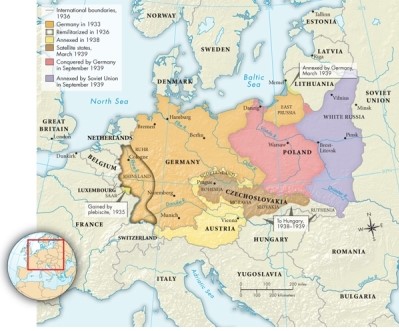
A)Poland and Czechoslovakia
B)Austria, the Sudetenland, and Hungary
C)The Rhineland, the Sudetenland, and Austria
D)The Rhineland, Czechoslovakia, and Poland
A)Poland and Czechoslovakia
B)Austria, the Sudetenland, and Hungary
C)The Rhineland, the Sudetenland, and Austria
D)The Rhineland, Czechoslovakia, and Poland
Question
Question
Question
Question
On Map 27.4: The Holocaust, 1941-1945, which of the following groups of camps are only extermination camps (as opposed to concentration camps)? 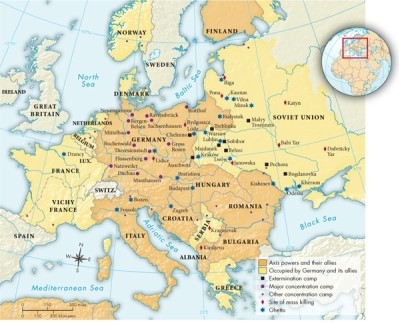
A)Dachau, Mauthausen, Buchenwald, and Treblinka
B)Ravensbrück, Sachsenhausen, Auschwitz, and Chelmno
C)Auschwitz, Chelmno, Belzec, and Majdandek
D)Dachau, Sachsenhausen, Buchenwald, and Mauthausen
A)Dachau, Mauthausen, Buchenwald, and Treblinka
B)Ravensbrück, Sachsenhausen, Auschwitz, and Chelmno
C)Auschwitz, Chelmno, Belzec, and Majdandek
D)Dachau, Sachsenhausen, Buchenwald, and Mauthausen
Question
Question
Question
Question
Question
Question
Question
Question
Map 27.3: World War II in Europe and Africa, 1939-1945 shows important sieges in which three cities? 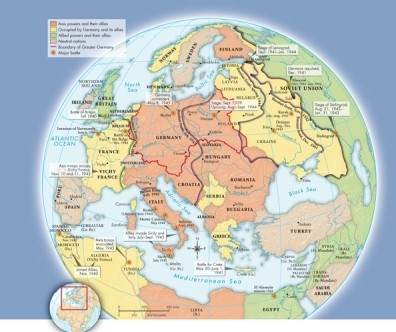
A)London, Berlin, and Warsaw
B)Warsaw, Leningrad, and Stalingrad
C)Rome, Paris, and Berlin
D)Leningrad, Stalingrad, and Moscow
A)London, Berlin, and Warsaw
B)Warsaw, Leningrad, and Stalingrad
C)Rome, Paris, and Berlin
D)Leningrad, Stalingrad, and Moscow
Question
Question
Question
Question
Question
Question
Question
Question
Question
Question
Question
Question
Question
Question
Question
Question
Question
Question
Question
Question
Question
Question
Question
Question
Question

Unlock Deck
Sign up to unlock the cards in this deck!
Unlock Deck
Unlock Deck
1/80

Play

Full screen (f)
Deck 27: Dictatorships and the Second World War 1919-1945
1
The "cult of the Duce" (leader) promoted the image of Mussolini as
A)a powerful strongman embodying the best qualities of the Italian people.
B)a defender of Catholic values.
C)an intellectual and scholar.
D)a strong supporter of democracy.
A)a powerful strongman embodying the best qualities of the Italian people.
B)a defender of Catholic values.
C)an intellectual and scholar.
D)a strong supporter of democracy.
a powerful strongman embodying the best qualities of the Italian people.
2
As practiced in the 1930s, appeasement was
A)a French policy that avoided any controversial foreign policy actions that might provoke a civil war in between Republicans and Fascists.
B)an American policy that favored isolation from European quarrels.
C)a British policy that aimed to give Hitler whatever he wanted in order to avoid war.
D)a Soviet policy that emphasized the need to concentrate on internal matters like the five-year plan and ignore European issues.
A)a French policy that avoided any controversial foreign policy actions that might provoke a civil war in between Republicans and Fascists.
B)an American policy that favored isolation from European quarrels.
C)a British policy that aimed to give Hitler whatever he wanted in order to avoid war.
D)a Soviet policy that emphasized the need to concentrate on internal matters like the five-year plan and ignore European issues.
a British policy that aimed to give Hitler whatever he wanted in order to avoid war.
3
In the late 1920s, how did Adolf Hitler shape the Nazi Party's message to appeal to middle-class voters?
A)He deemphasized the anticapitalist elements of National Socialism and vowed to fight communism.
B)He adopted a liberal, republican political agenda that guaranteed civil liberties and property rights.
C)He promoted the Christian foundations of Nazism.
D)He emphasized the economic advantages to the middle class of the implementation of anti-Semitic laws.
A)He deemphasized the anticapitalist elements of National Socialism and vowed to fight communism.
B)He adopted a liberal, republican political agenda that guaranteed civil liberties and property rights.
C)He promoted the Christian foundations of Nazism.
D)He emphasized the economic advantages to the middle class of the implementation of anti-Semitic laws.
He deemphasized the anticapitalist elements of National Socialism and vowed to fight communism.
4
Which battle was the decisive turning point in the clash between the Soviet Union and Germany?
A)Stalingrad
B)Leningrad
C)Moscow
D)Kiev
A)Stalingrad
B)Leningrad
C)Moscow
D)Kiev
Unlock Deck
Unlock for access to all 80 flashcards in this deck.
Unlock Deck
k this deck
5
Why did Stalin call for the mass murder of the kulaks?
A)The kulaks had sided with the counter-revolutionary White forces during the civil war.
B)He believed that as landowners they would eventually embrace conservative capitalism and become great enemies of socialist progress.
C)As the kulaks sought to defend their homeland in eastern Siberia, Stalin feared that they would side with the Japanese over disputed land claims.
D)He believed that the religious faith of the kulaks would prevent them from adopting communism.
A)The kulaks had sided with the counter-revolutionary White forces during the civil war.
B)He believed that as landowners they would eventually embrace conservative capitalism and become great enemies of socialist progress.
C)As the kulaks sought to defend their homeland in eastern Siberia, Stalin feared that they would side with the Japanese over disputed land claims.
D)He believed that the religious faith of the kulaks would prevent them from adopting communism.
Unlock Deck
Unlock for access to all 80 flashcards in this deck.
Unlock Deck
k this deck
6
How did Stalin use the murder of Sergei Kirov to his own advantage?
A)He blamed the murder on capitalist conspirators and cut off all diplomatic relations with the United States and Great Britain.
B)He argued that the public press reports on the murder demonstrated the dangers of a free press and instituted strong press censorship.
C)He claimed that the murder demonstrated that elements of the military were planning a coup to unseat him and launched a purge of the military high command.
D)He blamed the murder on "fascist agents" within the Communist Party and launched a purge of the party itself that solidified his own control.
A)He blamed the murder on capitalist conspirators and cut off all diplomatic relations with the United States and Great Britain.
B)He argued that the public press reports on the murder demonstrated the dangers of a free press and instituted strong press censorship.
C)He claimed that the murder demonstrated that elements of the military were planning a coup to unseat him and launched a purge of the military high command.
D)He blamed the murder on "fascist agents" within the Communist Party and launched a purge of the party itself that solidified his own control.
Unlock Deck
Unlock for access to all 80 flashcards in this deck.
Unlock Deck
k this deck
7
Lenin's New Economic Policy was a political compromise with
A)urban workers.
B)Russian peasants.
C)White counter-revolutionaries.
D)foreign capitalists.
A)urban workers.
B)Russian peasants.
C)White counter-revolutionaries.
D)foreign capitalists.
Unlock Deck
Unlock for access to all 80 flashcards in this deck.
Unlock Deck
k this deck
8
What characteristics did Communist and Fascist dictatorships share?
A)Both engaged in state-controlled social engineering projects meant to replace individualism with a unified "people."
B)Both wanted to build a new national community grounded in racial homogeneity.
C)Both viewed the Jewish people as the chief danger to historical progress for humanity.
D)Both based their ideologies on the writings of Karl Marx.
A)Both engaged in state-controlled social engineering projects meant to replace individualism with a unified "people."
B)Both wanted to build a new national community grounded in racial homogeneity.
C)Both viewed the Jewish people as the chief danger to historical progress for humanity.
D)Both based their ideologies on the writings of Karl Marx.
Unlock Deck
Unlock for access to all 80 flashcards in this deck.
Unlock Deck
k this deck
9
Why was Mussolini expelled from the Italian Socialist Party?
A)He plotted to assassinate its leader.
B)He denied the necessity of violent revolution to establish a worker dictatorship.
C)He was working as a secret government informer.
D)He urged Italian entry into World War I.
A)He plotted to assassinate its leader.
B)He denied the necessity of violent revolution to establish a worker dictatorship.
C)He was working as a secret government informer.
D)He urged Italian entry into World War I.
Unlock Deck
Unlock for access to all 80 flashcards in this deck.
Unlock Deck
k this deck
10
Why did Stalin and his supporters sponsor the first five-year plan?
A)They feared a gradual restoration of capitalism and, more importantly, wanted to catch up with the West and overcome traditional Russian "backwardness."
B)They believed that an organized cooperation with capitalism was essential and that the NEP lacked direction and purpose.
C)They modeled the five-year plan on the Meiji Restoration in Japan, combining industrialization with, in this case, the preservation of core Russian traditions.
D)They used the five-year plan, which Stalin knew would create a certain level of hardship and chaos, to create the ideal conditions for a wide-ranging purge of party and government officials.
A)They feared a gradual restoration of capitalism and, more importantly, wanted to catch up with the West and overcome traditional Russian "backwardness."
B)They believed that an organized cooperation with capitalism was essential and that the NEP lacked direction and purpose.
C)They modeled the five-year plan on the Meiji Restoration in Japan, combining industrialization with, in this case, the preservation of core Russian traditions.
D)They used the five-year plan, which Stalin knew would create a certain level of hardship and chaos, to create the ideal conditions for a wide-ranging purge of party and government officials.
Unlock Deck
Unlock for access to all 80 flashcards in this deck.
Unlock Deck
k this deck
11
What was the effect of Lenin's 1921 New Economic Policy (NEP)?
A)It encouraged peasants to sell their surpluses in free markets and allowed private traders and small manufacturers to do business again.
B)It permitted heavy industry, banks, and railroads to reappear under private ownership.
C)It established five-year plans under which the state would direct the capitalist economy.
D)It emphasized an agricultural revolution that would feature a mechanization of the production process.
A)It encouraged peasants to sell their surpluses in free markets and allowed private traders and small manufacturers to do business again.
B)It permitted heavy industry, banks, and railroads to reappear under private ownership.
C)It established five-year plans under which the state would direct the capitalist economy.
D)It emphasized an agricultural revolution that would feature a mechanization of the production process.
Unlock Deck
Unlock for access to all 80 flashcards in this deck.
Unlock Deck
k this deck
12
How did German chancellor Heinrich Brüning try to cope with the Great Depression in the early 1930s?
A)By spending large amounts on public works projects
B)By cutting government spending and squeezing wages and prices
C)By enacting new welfare measures
D)By instituting free-trade policies to attract foreign investment
A)By spending large amounts on public works projects
B)By cutting government spending and squeezing wages and prices
C)By enacting new welfare measures
D)By instituting free-trade policies to attract foreign investment
Unlock Deck
Unlock for access to all 80 flashcards in this deck.
Unlock Deck
k this deck
13
Which of the following social groups was part of the new elite class in the Stalinist state?
A)Former officials of the tsarist empire
B)Kulaks
C)Highly regarded artists
D)Financiers with access to needed capital
A)Former officials of the tsarist empire
B)Kulaks
C)Highly regarded artists
D)Financiers with access to needed capital
Unlock Deck
Unlock for access to all 80 flashcards in this deck.
Unlock Deck
k this deck
14
What was the Nazi Party policy of "coordination"?
A)It linked the work of the traditional military with the work of the SA and the SS.
B)It integrated German manufacturing of commercial goods with its production of munitions in order to hide the effort to rebuild the German military.
C)It forced existing German social institutions to conform to National Socialist ideology.
D)It combined the German public school system with Nazi propaganda programs.
A)It linked the work of the traditional military with the work of the SA and the SS.
B)It integrated German manufacturing of commercial goods with its production of munitions in order to hide the effort to rebuild the German military.
C)It forced existing German social institutions to conform to National Socialist ideology.
D)It combined the German public school system with Nazi propaganda programs.
Unlock Deck
Unlock for access to all 80 flashcards in this deck.
Unlock Deck
k this deck
15
In Stalin's Soviet Union, women
A)were relegated to agricultural and domestic labor.
B)shared family duties equally with men.
C)could enter the ranks of specialists in industry and science.
D)lost the right to vote.
A)were relegated to agricultural and domestic labor.
B)shared family duties equally with men.
C)could enter the ranks of specialists in industry and science.
D)lost the right to vote.
Unlock Deck
Unlock for access to all 80 flashcards in this deck.
Unlock Deck
k this deck
16
In the Lateran Agreement, how did Mussolini resolve the status of the Catholic Church in Italy?
A)The Vatican was recognized as a protectorate under the League of Nations.
B)The Catholic Church abandoned all of its political claims within Italy in return for a permanent church tax collected by the state.
C)The Vatican was recognized as an independent state that received heavy support from the Italian state.
D)The Catholic Church obtained tax and legal exemptions for Vatican City in exchange for recognizing Italy's claim over the city itself.
A)The Vatican was recognized as a protectorate under the League of Nations.
B)The Catholic Church abandoned all of its political claims within Italy in return for a permanent church tax collected by the state.
C)The Vatican was recognized as an independent state that received heavy support from the Italian state.
D)The Catholic Church obtained tax and legal exemptions for Vatican City in exchange for recognizing Italy's claim over the city itself.
Unlock Deck
Unlock for access to all 80 flashcards in this deck.
Unlock Deck
k this deck
17
How did real wages for workers and peasants in the Soviet Union in 1937 compare with those in the Russian Empire in 1913?
A)They were far higher.
B)They were marginally higher.
C)They were lower.
D)They were approximately the same.
A)They were far higher.
B)They were marginally higher.
C)They were lower.
D)They were approximately the same.
Unlock Deck
Unlock for access to all 80 flashcards in this deck.
Unlock Deck
k this deck
18
How did Mussolini build support from big business in Italy?
A)He instituted the liberal political reforms that they demanded.
B)He gave huge military contracts to a few key business leaders.
C)He established a new chamber of commerce with substantial power over commercial law.
D)He left big business to regulate itself and never purged it members.
A)He instituted the liberal political reforms that they demanded.
B)He gave huge military contracts to a few key business leaders.
C)He established a new chamber of commerce with substantial power over commercial law.
D)He left big business to regulate itself and never purged it members.
Unlock Deck
Unlock for access to all 80 flashcards in this deck.
Unlock Deck
k this deck
19
What was the purpose of the Enabling Act in 1933?
A)It required all Jews to wear identifying badges.
B)It outlawed all socialist and Communist political parties.
C)It mandated a new civil requirement that forbade Jews from holding public office.
D)It gave Hitler dictatorial powers for four years.
A)It required all Jews to wear identifying badges.
B)It outlawed all socialist and Communist political parties.
C)It mandated a new civil requirement that forbade Jews from holding public office.
D)It gave Hitler dictatorial powers for four years.
Unlock Deck
Unlock for access to all 80 flashcards in this deck.
Unlock Deck
k this deck
20
Why did Hitler have the leadership of the SA storm troopers, roughly one hundred individuals, killed in 1934?
A)He wanted to win the support of the traditional military, but the SA leaders had expected appointment to top positions in the army.
B)The SA leadership had threatened Hitler's leadership of the Nazi Party when the party unexpectedly lost seats in the 1934 elections.
C)The SA leadership had abandoned the Nazi Party's anticapitalist position and sought to protect the property of military munitions makers.
D)He believed that the SA was filled with Communist sympathizers who were awaiting an opportunity to undermine the Nazi Party.
A)He wanted to win the support of the traditional military, but the SA leaders had expected appointment to top positions in the army.
B)The SA leadership had threatened Hitler's leadership of the Nazi Party when the party unexpectedly lost seats in the 1934 elections.
C)The SA leadership had abandoned the Nazi Party's anticapitalist position and sought to protect the property of military munitions makers.
D)He believed that the SA was filled with Communist sympathizers who were awaiting an opportunity to undermine the Nazi Party.
Unlock Deck
Unlock for access to all 80 flashcards in this deck.
Unlock Deck
k this deck
21
Who were the kulaks in Stalin's Soviet Union?
A)Shop owners and small manufacturers who wanted the New Economic Policy to continue
B)Former tsarist government officials who were singled out as traitors in the first five-year plan
C)Veterans of the Red Army from the civil war period
D)Better-off peasants who were stripped of land and livestock and usually not allowed to join collective farms
A)Shop owners and small manufacturers who wanted the New Economic Policy to continue
B)Former tsarist government officials who were singled out as traitors in the first five-year plan
C)Veterans of the Red Army from the civil war period
D)Better-off peasants who were stripped of land and livestock and usually not allowed to join collective farms
Unlock Deck
Unlock for access to all 80 flashcards in this deck.
Unlock Deck
k this deck
22
What was Germany's goal in the Battle of Britain?
A)To destroy British naval ports so that Great Britain could not invade German-controlled land
B)To undermine Britain's ability to draw on the resources of its colonies for support
C)To provide a warning to the United States against entering the war
D)To gain air supremacy in anticipation of an invasion of Great Britain
A)To destroy British naval ports so that Great Britain could not invade German-controlled land
B)To undermine Britain's ability to draw on the resources of its colonies for support
C)To provide a warning to the United States against entering the war
D)To gain air supremacy in anticipation of an invasion of Great Britain
Unlock Deck
Unlock for access to all 80 flashcards in this deck.
Unlock Deck
k this deck
23
What was the primary goal of the opponents of the Nazis in the Protestant and Catholic churches?
A)To ally the churches with liberal, democratic politics
B)To preserve religious life in Germany
C)To overthrow Hitler
D)To voice dissent at Hitler's racial policies
A)To ally the churches with liberal, democratic politics
B)To preserve religious life in Germany
C)To overthrow Hitler
D)To voice dissent at Hitler's racial policies
Unlock Deck
Unlock for access to all 80 flashcards in this deck.
Unlock Deck
k this deck
24
According to Hitler's New Order, which European race was considered subhuman along with the Jews?
A)The Latin race
B)The Slavic race
C)The Nordic race
D)The Anglo-Saxon race
A)The Latin race
B)The Slavic race
C)The Nordic race
D)The Anglo-Saxon race
Unlock Deck
Unlock for access to all 80 flashcards in this deck.
Unlock Deck
k this deck
25
Where did Nazi administrators initially gain experience in mass murder?
A)The murder of Poles during the invasion of Poland
B)The murder of gypsies in Germany prior to the war
C)The murder of Communists following the burning of the German Reichstag (Parliament)
D)The murder of Germans with physical and mental disabilities prior to the war
A)The murder of Poles during the invasion of Poland
B)The murder of gypsies in Germany prior to the war
C)The murder of Communists following the burning of the German Reichstag (Parliament)
D)The murder of Germans with physical and mental disabilities prior to the war
Unlock Deck
Unlock for access to all 80 flashcards in this deck.
Unlock Deck
k this deck
26
What were the duties of the German Einsatzgruppen (Special Task Forces)?
A)They followed the German army into Central Europe, systematically murdering "undesirables" as they moved from town to town.
B)They requisitioned supplies for the Germany army so that the blitzkrieg (or lightening war)would not be slowed by the need to secure supply lines.
C)They served as Hitler's personal guard who protected him from a coup by the military and who oversaw the work of the SS.
D)They were Hitler's representatives to Mussolini, ensuring that the Italian leader pursued policies to support the war.
A)They followed the German army into Central Europe, systematically murdering "undesirables" as they moved from town to town.
B)They requisitioned supplies for the Germany army so that the blitzkrieg (or lightening war)would not be slowed by the need to secure supply lines.
C)They served as Hitler's personal guard who protected him from a coup by the military and who oversaw the work of the SS.
D)They were Hitler's representatives to Mussolini, ensuring that the Italian leader pursued policies to support the war.
Unlock Deck
Unlock for access to all 80 flashcards in this deck.
Unlock Deck
k this deck
27
What was the "Europe First" policy adopted by the Allied Powers during World War II?
A)Allied forces in Europe would be supplied with American military arms before such arms were made available to forces fighting in Asia.
B)Atomic weapons would be used first in Europe if they were ready before the war ended.
C)Hitler would be defeated before the Allies mounted an all-out assault on Japan.
D)All colonies were expected to support the European governments before defending themselves.
A)Allied forces in Europe would be supplied with American military arms before such arms were made available to forces fighting in Asia.
B)Atomic weapons would be used first in Europe if they were ready before the war ended.
C)Hitler would be defeated before the Allies mounted an all-out assault on Japan.
D)All colonies were expected to support the European governments before defending themselves.
Unlock Deck
Unlock for access to all 80 flashcards in this deck.
Unlock Deck
k this deck
28
How did the Nazis seek to legitimize their racial policies?
A)They undertook massive genealogical research in order to demonstrate that different races derived from different ancestors.
B)They established research institutes and academies that measured and defined racial differences in order to present prejudice in the guise of enlightened science.
C)They sponsored studies of cultures in order to prove that certain cultures were intellectually superior to others and that German culture was superior to all.
D)They provided vast funding to both Catholic and Protestant churches in order for those churches to promote a racialized understanding of Christianity.
A)They undertook massive genealogical research in order to demonstrate that different races derived from different ancestors.
B)They established research institutes and academies that measured and defined racial differences in order to present prejudice in the guise of enlightened science.
C)They sponsored studies of cultures in order to prove that certain cultures were intellectually superior to others and that German culture was superior to all.
D)They provided vast funding to both Catholic and Protestant churches in order for those churches to promote a racialized understanding of Christianity.
Unlock Deck
Unlock for access to all 80 flashcards in this deck.
Unlock Deck
k this deck
29
Stalin's theory of socialism in one country
A)revised an original theory by Leon Trotsky.
B)argued that the Soviet Union could build socialism on its own.
C)maintained that the success of socialism depended on world revolution.
D)proposed that the Soviet Union should give up trying to catalyze the world proletarian revolution.
A)revised an original theory by Leon Trotsky.
B)argued that the Soviet Union could build socialism on its own.
C)maintained that the success of socialism depended on world revolution.
D)proposed that the Soviet Union should give up trying to catalyze the world proletarian revolution.
Unlock Deck
Unlock for access to all 80 flashcards in this deck.
Unlock Deck
k this deck
30
Britain and France finally confronted Hitler with the threat of war when he
A)remilitarized the Rhineland.
B)occupied Austria.
C)took the Sudetenland from Czechoslovakia.
D)used the pretext of German minorities in Danzig to threaten Poland.
A)remilitarized the Rhineland.
B)occupied Austria.
C)took the Sudetenland from Czechoslovakia.
D)used the pretext of German minorities in Danzig to threaten Poland.
Unlock Deck
Unlock for access to all 80 flashcards in this deck.
Unlock Deck
k this deck
31
What was the Holocaust?
A)A scorched-earth policy adopted by the German army as it retreated from the Soviet Union after the defeat at Stalingrad
B)The German policy of deliberately starving Soviet prisoners of war
C)The systematic effort of the Nazi state to exterminate all European Jews during the Second World War
D)The firebombing of German cities by American and British bombers
A)A scorched-earth policy adopted by the German army as it retreated from the Soviet Union after the defeat at Stalingrad
B)The German policy of deliberately starving Soviet prisoners of war
C)The systematic effort of the Nazi state to exterminate all European Jews during the Second World War
D)The firebombing of German cities by American and British bombers
Unlock Deck
Unlock for access to all 80 flashcards in this deck.
Unlock Deck
k this deck
32
Why did the Soviet army stop its advance on Warsaw in August 1944?
A)So that it would not violate the agreements among the allies as to how far each nation would advance
B)So that supplies and troops could be shifted to the Asian theater of operations to counter recent Japanese gains
C)So that the German army could destroy a Polish insurgence that intended to resist the Soviet army as well
D)So they could offer Germany the opportunity to surrender and avoid a bloody conquest
A)So that it would not violate the agreements among the allies as to how far each nation would advance
B)So that supplies and troops could be shifted to the Asian theater of operations to counter recent Japanese gains
C)So that the German army could destroy a Polish insurgence that intended to resist the Soviet army as well
D)So they could offer Germany the opportunity to surrender and avoid a bloody conquest
Unlock Deck
Unlock for access to all 80 flashcards in this deck.
Unlock Deck
k this deck
33
What problem was faced by most of the underground resistance groups who opposed the Nazis?
A)They had little ability to organize in the face of constant pressure from the German secret police.
B)They were not well unified, for they had differing political goals.
C)They were not supported by the local populations, which feared reprisals from the German military.
D)They had no ability to establish contact with Germany's enemies in order to coordinate their activities.
A)They had little ability to organize in the face of constant pressure from the German secret police.
B)They were not well unified, for they had differing political goals.
C)They were not supported by the local populations, which feared reprisals from the German military.
D)They had no ability to establish contact with Germany's enemies in order to coordinate their activities.
Unlock Deck
Unlock for access to all 80 flashcards in this deck.
Unlock Deck
k this deck
34
How did the Nazi Party seek to promote the idea of the Volksgemeinschaft?
A)They argued that the German people needed more room to expand in eastern Europe.
B)They established colonies in regions of Africa and Asia in order to establish German authority across the globe.
C)They created mass organizations such as the Hitler Youth and held mass rallies to spread Nazi ideology and enlist volunteers.
D)They took control of German industry in order to provide employment for the poor.
A)They argued that the German people needed more room to expand in eastern Europe.
B)They established colonies in regions of Africa and Asia in order to establish German authority across the globe.
C)They created mass organizations such as the Hitler Youth and held mass rallies to spread Nazi ideology and enlist volunteers.
D)They took control of German industry in order to provide employment for the poor.
Unlock Deck
Unlock for access to all 80 flashcards in this deck.
Unlock Deck
k this deck
35
How did the Nazis manage the northern European states that they conquered?
A)They established puppet governments with collaborators willing to rule the states in accord with German needs.
B)They allowed independent governments to rule the conquered regions as long as they remained allied with Germany.
C)They placed German governors over the lands with full authority to manage local populations.
D)They created a German bureaucracy staffed by professional diplomats to rule over the conquered peoples.
A)They established puppet governments with collaborators willing to rule the states in accord with German needs.
B)They allowed independent governments to rule the conquered regions as long as they remained allied with Germany.
C)They placed German governors over the lands with full authority to manage local populations.
D)They created a German bureaucracy staffed by professional diplomats to rule over the conquered peoples.
Unlock Deck
Unlock for access to all 80 flashcards in this deck.
Unlock Deck
k this deck
36
What was the effect of the 1935 Nuremberg Laws?
A)It allowed marriage between a Jew and a person defined as a German.
B)It defined as Jewish anyone having three or more Jewish grandparents.
C)It permitted Jews to have some rights of citizenship.
D)It banned most Jewish lawyers, doctors, and professors from their professions.
A)It allowed marriage between a Jew and a person defined as a German.
B)It defined as Jewish anyone having three or more Jewish grandparents.
C)It permitted Jews to have some rights of citizenship.
D)It banned most Jewish lawyers, doctors, and professors from their professions.
Unlock Deck
Unlock for access to all 80 flashcards in this deck.
Unlock Deck
k this deck
37
The target of the first of two atomic bombs dropped on Japan in 1945 was
A)Tokyo.
B)Kyoto.
C)Hiroshima.
D)Osaka.
A)Tokyo.
B)Kyoto.
C)Hiroshima.
D)Osaka.
Unlock Deck
Unlock for access to all 80 flashcards in this deck.
Unlock Deck
k this deck
38
Why did Britain adopt a policy of appeasement in its relationship with Hitler?
A)It was more concerned about the activities of the Japanese in the Pacific than about German activities in Europe.
B)It believed that the United States would step in if Hitler became too aggressive.
C)The French government demanded that Britain adopt appeasement in its relationship with Hitler.
D)British conservative leaders underestimated Hitler.
A)It was more concerned about the activities of the Japanese in the Pacific than about German activities in Europe.
B)It believed that the United States would step in if Hitler became too aggressive.
C)The French government demanded that Britain adopt appeasement in its relationship with Hitler.
D)British conservative leaders underestimated Hitler.
Unlock Deck
Unlock for access to all 80 flashcards in this deck.
Unlock Deck
k this deck
39
Which countries in August 1939 signed a nonaggression pact that led directly to war?
A)Germany and Italy
B)Britain and Germany
C)Germany and the Soviet Union
D)Poland and the Soviet Union
A)Germany and Italy
B)Britain and Germany
C)Germany and the Soviet Union
D)Poland and the Soviet Union
Unlock Deck
Unlock for access to all 80 flashcards in this deck.
Unlock Deck
k this deck
40
The parliamentary government in Italy was breaking down at the time of the Fascist march on Rome in October 1922, largely because of
A)the violence perpetrated by Mussolini's own black-shirted militants.
B)mass unemployment.
C)mutinies in the Italian fleet.
D)the general strike against the government declared by the Catholic Church.
A)the violence perpetrated by Mussolini's own black-shirted militants.
B)mass unemployment.
C)mutinies in the Italian fleet.
D)the general strike against the government declared by the Catholic Church.
Unlock Deck
Unlock for access to all 80 flashcards in this deck.
Unlock Deck
k this deck
41
Why did the Soviet state order the collectivization of agriculture in 1929?
Unlock Deck
Unlock for access to all 80 flashcards in this deck.
Unlock Deck
k this deck
42
What was the New Economic Policy (NEP)? How successful was it?
Unlock Deck
Unlock for access to all 80 flashcards in this deck.
Unlock Deck
k this deck
43
According to Map 27.2: The Growth of Nazi Germany, 1933-1939, by the end of 1938, Nazi diplomatic activities had changed the status of or added to Germany which of the following areas?
A)Poland and Czechoslovakia
B)Austria, the Sudetenland, and Hungary
C)The Rhineland, the Sudetenland, and Austria
D)The Rhineland, Czechoslovakia, and Poland
A)Poland and Czechoslovakia
B)Austria, the Sudetenland, and Hungary
C)The Rhineland, the Sudetenland, and Austria
D)The Rhineland, Czechoslovakia, and Poland
Unlock Deck
Unlock for access to all 80 flashcards in this deck.
Unlock Deck
k this deck
44
The following is an excerpt from Fedor Belov's account of life on a collective farm in the Soviet Ukraine in the early 1930s (Evaluating the Evidence 27.2): "By late 1932 more than 80 per cent of the peasant households in the raion [district] had been collectivized. . . . That year the peasants harvested a good crop and had hopes that the calculations would work out to their advantage and would help strengthen them economically. These hopes were in vain. The kolkhoz workers received only 200 grams of flour per labor day for the first half of the year; the remaining grain, including the seed fund, was taken by the government. The peasants were told that industrialization of the country, then in full swing, demanded grain and sacrifices from them."
According to Belov, how did the government justify taking almost all of the peasants' harvest?
A)The peasants had far more food than they needed.
B)The grain was needed to help keep up the pace of industrialization.
C)The peasants had cheated the government in previous years.
D)The grain was needed to help strengthen the army.
According to Belov, how did the government justify taking almost all of the peasants' harvest?
A)The peasants had far more food than they needed.
B)The grain was needed to help keep up the pace of industrialization.
C)The peasants had cheated the government in previous years.
D)The grain was needed to help strengthen the army.
Unlock Deck
Unlock for access to all 80 flashcards in this deck.
Unlock Deck
k this deck
45
The following is an excerpt from Joseph Stalin's address to the First Conference of Soviet Industrial Managers (Evaluating the Evidence 27.1): "In the past we had no fatherland, nor could we have had one. But now that we have overthrown capitalism and power is in our hands, in the hands of the people, we have a fatherland, and we will uphold its independence. Do you want our socialist fatherland to be beaten and to lose its independence?
If you do not want this, you must put an end to its backwardness in the shortest possible time and develop a genuine Bolshevik tempo in building up its socialist economy. There is no other way. That is why Lenin said on the eve of the October Revolution: 'Either perish, or overtake and outstrip the advanced capitalist countries.'"
In Stalin's view, if the people of the Soviet Union wanted to maintain their independence, they needed to
A)turn away from industrialization and toward collectivization.
B)protect individual civil rights and eliminate racial prejudice.
C)catch up with and surpass the West in terms of technology and industry as quickly as possible.
D)return to traditional agricultural practices.
If you do not want this, you must put an end to its backwardness in the shortest possible time and develop a genuine Bolshevik tempo in building up its socialist economy. There is no other way. That is why Lenin said on the eve of the October Revolution: 'Either perish, or overtake and outstrip the advanced capitalist countries.'"
In Stalin's view, if the people of the Soviet Union wanted to maintain their independence, they needed to
A)turn away from industrialization and toward collectivization.
B)protect individual civil rights and eliminate racial prejudice.
C)catch up with and surpass the West in terms of technology and industry as quickly as possible.
D)return to traditional agricultural practices.
Unlock Deck
Unlock for access to all 80 flashcards in this deck.
Unlock Deck
k this deck
46
The Allies adopted the principle of the unconditional surrender of Germany and Japan in order to
A)eliminate the need for a peace conference after the end of the war.
B)further encourage mutual trust among the Allies.
C)encourage the home front in each Allied country.
D)make Germany and Japan aware that they would be severely punished after the war's conclusion.
A)eliminate the need for a peace conference after the end of the war.
B)further encourage mutual trust among the Allies.
C)encourage the home front in each Allied country.
D)make Germany and Japan aware that they would be severely punished after the war's conclusion.
Unlock Deck
Unlock for access to all 80 flashcards in this deck.
Unlock Deck
k this deck
47
On Map 27.4: The Holocaust, 1941-1945, which of the following groups of camps are only extermination camps (as opposed to concentration camps)?
A)Dachau, Mauthausen, Buchenwald, and Treblinka
B)Ravensbrück, Sachsenhausen, Auschwitz, and Chelmno
C)Auschwitz, Chelmno, Belzec, and Majdandek
D)Dachau, Sachsenhausen, Buchenwald, and Mauthausen
A)Dachau, Mauthausen, Buchenwald, and Treblinka
B)Ravensbrück, Sachsenhausen, Auschwitz, and Chelmno
C)Auschwitz, Chelmno, Belzec, and Majdandek
D)Dachau, Sachsenhausen, Buchenwald, and Mauthausen
Unlock Deck
Unlock for access to all 80 flashcards in this deck.
Unlock Deck
k this deck
48
The following is an excerpt from Joseph Stalin's address to the First Conference of Soviet Industrial Managers (Evaluating the Evidence 27.1): "We are fifty or a hundred years behind the advanced countries. We must make good this distance in ten years. Either we do it, or we shall go under. That is what our obligations to the workers and peasants of the U.S.S.R. dictate to us. But we have yet other, more serious and more important, obligations. They are our obligations to the world proletariat. . . . We achieved victory not solely through the efforts of the working class of the U.S.S.R., but also thanks to the support of the working class of the world. Without this support we would have been torn to pieces long ago. . . ."
In Stalin's view, how far behind the advanced countries was the Soviet Union in the early 1930s?
A)50 to 100 years
B)100 to 200 years
C)5 to 10 years
D)1 to 2 years
In Stalin's view, how far behind the advanced countries was the Soviet Union in the early 1930s?
A)50 to 100 years
B)100 to 200 years
C)5 to 10 years
D)1 to 2 years
Unlock Deck
Unlock for access to all 80 flashcards in this deck.
Unlock Deck
k this deck
49
By ______________, Hitler ruled practically all of continental Europe.
A)December 1941
B)February 1942
C)July 1940
D)September 1939
A)December 1941
B)February 1942
C)July 1940
D)September 1939
Unlock Deck
Unlock for access to all 80 flashcards in this deck.
Unlock Deck
k this deck
50
What was Kristallnacht in November 1938?
Unlock Deck
Unlock for access to all 80 flashcards in this deck.
Unlock Deck
k this deck
51
Describe the traditional form of antidemocratic government in Europe prior to the twentieth century.
Unlock Deck
Unlock for access to all 80 flashcards in this deck.
Unlock Deck
k this deck
52
What did Germany hope to accomplish in what is now known as the Battle of Britain?
Unlock Deck
Unlock for access to all 80 flashcards in this deck.
Unlock Deck
k this deck
53
The following is an excerpt from Fedor Belov's account of life on a collective farm in the Soviet Ukraine in the early 1930s (Evaluating the Evidence 27.2): "In these kolkhozes the great bulk of the land was held and worked communally, but each peasant household owned a house of some sort, a small plot of ground and perhaps some livestock. All the members of the kolkhoz were required to work on the kolkhoz a certain number of days each month; the rest of the time they were allowed to work on their own holdings. They derived their income partly from what they grew on their garden strips and partly from their work in the kolkhoz. . . ."
Which of the following most accurately describes peasant life on a kolkhoz?
A)Most of the land was owned by the state, but each peasant family had a small amount of land of their own.
B)All of the land was owned by the state, and each peasant family was given a share of the harvest.
C)All of the land was owned by individual peasant families, and each family gave a portion of their harvest to the state.
D)Most of the land was owned by the state, and the rest was under the collective control of the community.
Which of the following most accurately describes peasant life on a kolkhoz?
A)Most of the land was owned by the state, but each peasant family had a small amount of land of their own.
B)All of the land was owned by the state, and each peasant family was given a share of the harvest.
C)All of the land was owned by individual peasant families, and each family gave a portion of their harvest to the state.
D)Most of the land was owned by the state, and the rest was under the collective control of the community.
Unlock Deck
Unlock for access to all 80 flashcards in this deck.
Unlock Deck
k this deck
54
How did Hitler and the Nazis establish control over Germany after the Enabling Act was passed in 1933?
Unlock Deck
Unlock for access to all 80 flashcards in this deck.
Unlock Deck
k this deck
55
Map 27.3: World War II in Europe and Africa, 1939-1945 shows important sieges in which three cities?
A)London, Berlin, and Warsaw
B)Warsaw, Leningrad, and Stalingrad
C)Rome, Paris, and Berlin
D)Leningrad, Stalingrad, and Moscow
A)London, Berlin, and Warsaw
B)Warsaw, Leningrad, and Stalingrad
C)Rome, Paris, and Berlin
D)Leningrad, Stalingrad, and Moscow
Unlock Deck
Unlock for access to all 80 flashcards in this deck.
Unlock Deck
k this deck
56
What led to the Holocaust?
Unlock Deck
Unlock for access to all 80 flashcards in this deck.
Unlock Deck
k this deck
57
What was Adolf Hitler's idea of Lebensraum?
Unlock Deck
Unlock for access to all 80 flashcards in this deck.
Unlock Deck
k this deck
58
The following is an excerpt from Fedor Belov's account of life on a collective farm in the Soviet Ukraine in the early 1930s (Evaluating the Evidence 27.2): "There was no one to gather the bumper crop of 1933, since the people who remained alive were too weak and exhausted. More than a hundred persons-office and factory workers from Leningrad-were sent to assist on the kolkhoz; two representatives of the Party arrived to help organize the harvesting. . . . That summer (1933) the entire administration of the kolkhoz-the bookkeeper, the warehouseman, the manager of the flour mill, and even the chairman himself-were put on trial on charges of plundering the kolkhoz property and produce. All the accused were sentenced to terms of seven to ten years, and a new administration was elected. . . . After 1934 a gradual improvement began in the economic life of the kolkhoz and its members. . . . In general, from the mid-1930s until 1941, the majority of kolkhoz members in the Ukraine lived relatively well."
Which of the following best characterizes the events of 1933 to 1941?
A)After a series of natural disasters, things returned to normal in the Ukraine.
B)After the entire population of the Ukraine was wiped out by the Soviet-induced famine, Russian peasants came in to take their place.
C)After the Soviet-induced famine, the entire leadership of the kolkhoz was purged and conditions were allowed to gradually improve.
D)After the Soviet-induced famine, conditions were allowed to slowly deteriorate until rural life in the Ukraine was no longer possible.
Which of the following best characterizes the events of 1933 to 1941?
A)After a series of natural disasters, things returned to normal in the Ukraine.
B)After the entire population of the Ukraine was wiped out by the Soviet-induced famine, Russian peasants came in to take their place.
C)After the Soviet-induced famine, the entire leadership of the kolkhoz was purged and conditions were allowed to gradually improve.
D)After the Soviet-induced famine, conditions were allowed to slowly deteriorate until rural life in the Ukraine was no longer possible.
Unlock Deck
Unlock for access to all 80 flashcards in this deck.
Unlock Deck
k this deck
59
How have historians explained Joseph Stalin's Great Purge of the Communist Party?
Unlock Deck
Unlock for access to all 80 flashcards in this deck.
Unlock Deck
k this deck
60
How did the First World War weaken the Italian government in the years before Benito Mussolini came to power?
Unlock Deck
Unlock for access to all 80 flashcards in this deck.
Unlock Deck
k this deck
61
Answer the following questions:
five-year plan
A)A radical dictatorship that exercises "total claims" over the beliefs and behavior of its citizens by taking control of the economic, social, intellectual, and cultural aspects of society.
B)A movement characterized by extreme, often expansionist nationalism, antisocialism, a dynamic and violent leader, and glorification of war and the military.
C)Vladimir Lenin's 1921 policy to reestablish limited economic freedom in an attempt to rebuild agriculture and industry in the face of economic disintegration.
D)The forcible consolidation of individual peasant farms into large, state-controlled enterprises in the Soviet Union under Stalin.
E)A pseudoscientific doctrine that maintains that the selective breeding of human beings can improve the general characteristics of a national population, which helped inspire Nazi ideas about "race and space" and ultimately contributed to the Holocaust.
F)A 1929 agreement that recognized the Vatican as an independent state, with Benito Mussolini agreeing to give the church heavy financial support in return for public support from the pope.
G)The British policy toward Germany prior to the Second World War that aimed at granting Hitler whatever he wanted, including western Czechoslovakia, in order to avoid war.
H)Mussolini's private militia that destroyed socialist newspapers, union halls, and Socialist Party headquarters, eventually pushing Socialists out of the city governments of northern Italy.
I)A plan launched by Joseph Stalin in 1928 and termed the "revolution from above," aimed at modernizing the Soviet Union and creating a new Communist society with new attitudes, new loyalties, and a new socialist humanity.
J)The better-off peasants who were stripped of land and livestock under Stalin and were generally not permitted to join collective farms; many starved or were deported to forced-labor camps for "reeducation."
K)A movement and political party driven by extreme nationalism and racism and led by Adolf Hitler; its adherents ruled Germany from 1933 to 1945 and forced Europe into the Second World War.
L)An act pushed through the Reichstag by the Nazis that gave Hitler absolute dictatorial power for four years.
M)Hitler's program, based on racial imperialism, giving preferential treatment to the Nordic peoples; the French, an "inferior" Latin people, occupied a middle position, and Slavs and Jews were treated harshly as "subhumans."
N)The systematic effort of the Nazi state to exterminate all European Jews and other groups deemed racially inferior during the Second World War.
five-year plan
A)A radical dictatorship that exercises "total claims" over the beliefs and behavior of its citizens by taking control of the economic, social, intellectual, and cultural aspects of society.
B)A movement characterized by extreme, often expansionist nationalism, antisocialism, a dynamic and violent leader, and glorification of war and the military.
C)Vladimir Lenin's 1921 policy to reestablish limited economic freedom in an attempt to rebuild agriculture and industry in the face of economic disintegration.
D)The forcible consolidation of individual peasant farms into large, state-controlled enterprises in the Soviet Union under Stalin.
E)A pseudoscientific doctrine that maintains that the selective breeding of human beings can improve the general characteristics of a national population, which helped inspire Nazi ideas about "race and space" and ultimately contributed to the Holocaust.
F)A 1929 agreement that recognized the Vatican as an independent state, with Benito Mussolini agreeing to give the church heavy financial support in return for public support from the pope.
G)The British policy toward Germany prior to the Second World War that aimed at granting Hitler whatever he wanted, including western Czechoslovakia, in order to avoid war.
H)Mussolini's private militia that destroyed socialist newspapers, union halls, and Socialist Party headquarters, eventually pushing Socialists out of the city governments of northern Italy.
I)A plan launched by Joseph Stalin in 1928 and termed the "revolution from above," aimed at modernizing the Soviet Union and creating a new Communist society with new attitudes, new loyalties, and a new socialist humanity.
J)The better-off peasants who were stripped of land and livestock under Stalin and were generally not permitted to join collective farms; many starved or were deported to forced-labor camps for "reeducation."
K)A movement and political party driven by extreme nationalism and racism and led by Adolf Hitler; its adherents ruled Germany from 1933 to 1945 and forced Europe into the Second World War.
L)An act pushed through the Reichstag by the Nazis that gave Hitler absolute dictatorial power for four years.
M)Hitler's program, based on racial imperialism, giving preferential treatment to the Nordic peoples; the French, an "inferior" Latin people, occupied a middle position, and Slavs and Jews were treated harshly as "subhumans."
N)The systematic effort of the Nazi state to exterminate all European Jews and other groups deemed racially inferior during the Second World War.
Unlock Deck
Unlock for access to all 80 flashcards in this deck.
Unlock Deck
k this deck
62
Answer the following questions:
kulaks
A)A radical dictatorship that exercises "total claims" over the beliefs and behavior of its citizens by taking control of the economic, social, intellectual, and cultural aspects of society.
B)A movement characterized by extreme, often expansionist nationalism, antisocialism, a dynamic and violent leader, and glorification of war and the military.
C)Vladimir Lenin's 1921 policy to reestablish limited economic freedom in an attempt to rebuild agriculture and industry in the face of economic disintegration.
D)The forcible consolidation of individual peasant farms into large, state-controlled enterprises in the Soviet Union under Stalin.
E)A pseudoscientific doctrine that maintains that the selective breeding of human beings can improve the general characteristics of a national population, which helped inspire Nazi ideas about "race and space" and ultimately contributed to the Holocaust.
F)A 1929 agreement that recognized the Vatican as an independent state, with Benito Mussolini agreeing to give the church heavy financial support in return for public support from the pope.
G)The British policy toward Germany prior to the Second World War that aimed at granting Hitler whatever he wanted, including western Czechoslovakia, in order to avoid war.
H)Mussolini's private militia that destroyed socialist newspapers, union halls, and Socialist Party headquarters, eventually pushing Socialists out of the city governments of northern Italy.
I)A plan launched by Joseph Stalin in 1928 and termed the "revolution from above," aimed at modernizing the Soviet Union and creating a new Communist society with new attitudes, new loyalties, and a new socialist humanity.
J)The better-off peasants who were stripped of land and livestock under Stalin and were generally not permitted to join collective farms; many starved or were deported to forced-labor camps for "reeducation."
K)A movement and political party driven by extreme nationalism and racism and led by Adolf Hitler; its adherents ruled Germany from 1933 to 1945 and forced Europe into the Second World War.
L)An act pushed through the Reichstag by the Nazis that gave Hitler absolute dictatorial power for four years.
M)Hitler's program, based on racial imperialism, giving preferential treatment to the Nordic peoples; the French, an "inferior" Latin people, occupied a middle position, and Slavs and Jews were treated harshly as "subhumans."
N)The systematic effort of the Nazi state to exterminate all European Jews and other groups deemed racially inferior during the Second World War.
kulaks
A)A radical dictatorship that exercises "total claims" over the beliefs and behavior of its citizens by taking control of the economic, social, intellectual, and cultural aspects of society.
B)A movement characterized by extreme, often expansionist nationalism, antisocialism, a dynamic and violent leader, and glorification of war and the military.
C)Vladimir Lenin's 1921 policy to reestablish limited economic freedom in an attempt to rebuild agriculture and industry in the face of economic disintegration.
D)The forcible consolidation of individual peasant farms into large, state-controlled enterprises in the Soviet Union under Stalin.
E)A pseudoscientific doctrine that maintains that the selective breeding of human beings can improve the general characteristics of a national population, which helped inspire Nazi ideas about "race and space" and ultimately contributed to the Holocaust.
F)A 1929 agreement that recognized the Vatican as an independent state, with Benito Mussolini agreeing to give the church heavy financial support in return for public support from the pope.
G)The British policy toward Germany prior to the Second World War that aimed at granting Hitler whatever he wanted, including western Czechoslovakia, in order to avoid war.
H)Mussolini's private militia that destroyed socialist newspapers, union halls, and Socialist Party headquarters, eventually pushing Socialists out of the city governments of northern Italy.
I)A plan launched by Joseph Stalin in 1928 and termed the "revolution from above," aimed at modernizing the Soviet Union and creating a new Communist society with new attitudes, new loyalties, and a new socialist humanity.
J)The better-off peasants who were stripped of land and livestock under Stalin and were generally not permitted to join collective farms; many starved or were deported to forced-labor camps for "reeducation."
K)A movement and political party driven by extreme nationalism and racism and led by Adolf Hitler; its adherents ruled Germany from 1933 to 1945 and forced Europe into the Second World War.
L)An act pushed through the Reichstag by the Nazis that gave Hitler absolute dictatorial power for four years.
M)Hitler's program, based on racial imperialism, giving preferential treatment to the Nordic peoples; the French, an "inferior" Latin people, occupied a middle position, and Slavs and Jews were treated harshly as "subhumans."
N)The systematic effort of the Nazi state to exterminate all European Jews and other groups deemed racially inferior during the Second World War.
Unlock Deck
Unlock for access to all 80 flashcards in this deck.
Unlock Deck
k this deck
63
Answer the following questions:
Lateran Agreement
A)A radical dictatorship that exercises "total claims" over the beliefs and behavior of its citizens by taking control of the economic, social, intellectual, and cultural aspects of society.
B)A movement characterized by extreme, often expansionist nationalism, antisocialism, a dynamic and violent leader, and glorification of war and the military.
C)Vladimir Lenin's 1921 policy to reestablish limited economic freedom in an attempt to rebuild agriculture and industry in the face of economic disintegration.
D)The forcible consolidation of individual peasant farms into large, state-controlled enterprises in the Soviet Union under Stalin.
E)A pseudoscientific doctrine that maintains that the selective breeding of human beings can improve the general characteristics of a national population, which helped inspire Nazi ideas about "race and space" and ultimately contributed to the Holocaust.
F)A 1929 agreement that recognized the Vatican as an independent state, with Benito Mussolini agreeing to give the church heavy financial support in return for public support from the pope.
G)The British policy toward Germany prior to the Second World War that aimed at granting Hitler whatever he wanted, including western Czechoslovakia, in order to avoid war.
H)Mussolini's private militia that destroyed socialist newspapers, union halls, and Socialist Party headquarters, eventually pushing Socialists out of the city governments of northern Italy.
I)A plan launched by Joseph Stalin in 1928 and termed the "revolution from above," aimed at modernizing the Soviet Union and creating a new Communist society with new attitudes, new loyalties, and a new socialist humanity.
J)The better-off peasants who were stripped of land and livestock under Stalin and were generally not permitted to join collective farms; many starved or were deported to forced-labor camps for "reeducation."
K)A movement and political party driven by extreme nationalism and racism and led by Adolf Hitler; its adherents ruled Germany from 1933 to 1945 and forced Europe into the Second World War.
L)An act pushed through the Reichstag by the Nazis that gave Hitler absolute dictatorial power for four years.
M)Hitler's program, based on racial imperialism, giving preferential treatment to the Nordic peoples; the French, an "inferior" Latin people, occupied a middle position, and Slavs and Jews were treated harshly as "subhumans."
N)The systematic effort of the Nazi state to exterminate all European Jews and other groups deemed racially inferior during the Second World War.
Lateran Agreement
A)A radical dictatorship that exercises "total claims" over the beliefs and behavior of its citizens by taking control of the economic, social, intellectual, and cultural aspects of society.
B)A movement characterized by extreme, often expansionist nationalism, antisocialism, a dynamic and violent leader, and glorification of war and the military.
C)Vladimir Lenin's 1921 policy to reestablish limited economic freedom in an attempt to rebuild agriculture and industry in the face of economic disintegration.
D)The forcible consolidation of individual peasant farms into large, state-controlled enterprises in the Soviet Union under Stalin.
E)A pseudoscientific doctrine that maintains that the selective breeding of human beings can improve the general characteristics of a national population, which helped inspire Nazi ideas about "race and space" and ultimately contributed to the Holocaust.
F)A 1929 agreement that recognized the Vatican as an independent state, with Benito Mussolini agreeing to give the church heavy financial support in return for public support from the pope.
G)The British policy toward Germany prior to the Second World War that aimed at granting Hitler whatever he wanted, including western Czechoslovakia, in order to avoid war.
H)Mussolini's private militia that destroyed socialist newspapers, union halls, and Socialist Party headquarters, eventually pushing Socialists out of the city governments of northern Italy.
I)A plan launched by Joseph Stalin in 1928 and termed the "revolution from above," aimed at modernizing the Soviet Union and creating a new Communist society with new attitudes, new loyalties, and a new socialist humanity.
J)The better-off peasants who were stripped of land and livestock under Stalin and were generally not permitted to join collective farms; many starved or were deported to forced-labor camps for "reeducation."
K)A movement and political party driven by extreme nationalism and racism and led by Adolf Hitler; its adherents ruled Germany from 1933 to 1945 and forced Europe into the Second World War.
L)An act pushed through the Reichstag by the Nazis that gave Hitler absolute dictatorial power for four years.
M)Hitler's program, based on racial imperialism, giving preferential treatment to the Nordic peoples; the French, an "inferior" Latin people, occupied a middle position, and Slavs and Jews were treated harshly as "subhumans."
N)The systematic effort of the Nazi state to exterminate all European Jews and other groups deemed racially inferior during the Second World War.
Unlock Deck
Unlock for access to all 80 flashcards in this deck.
Unlock Deck
k this deck
64
Answer the following questions:
National Socialism
A)A radical dictatorship that exercises "total claims" over the beliefs and behavior of its citizens by taking control of the economic, social, intellectual, and cultural aspects of society.
B)A movement characterized by extreme, often expansionist nationalism, antisocialism, a dynamic and violent leader, and glorification of war and the military.
C)Vladimir Lenin's 1921 policy to reestablish limited economic freedom in an attempt to rebuild agriculture and industry in the face of economic disintegration.
D)The forcible consolidation of individual peasant farms into large, state-controlled enterprises in the Soviet Union under Stalin.
E)A pseudoscientific doctrine that maintains that the selective breeding of human beings can improve the general characteristics of a national population, which helped inspire Nazi ideas about "race and space" and ultimately contributed to the Holocaust.
F)A 1929 agreement that recognized the Vatican as an independent state, with Benito Mussolini agreeing to give the church heavy financial support in return for public support from the pope.
G)The British policy toward Germany prior to the Second World War that aimed at granting Hitler whatever he wanted, including western Czechoslovakia, in order to avoid war.
H)Mussolini's private militia that destroyed socialist newspapers, union halls, and Socialist Party headquarters, eventually pushing Socialists out of the city governments of northern Italy.
I)A plan launched by Joseph Stalin in 1928 and termed the "revolution from above," aimed at modernizing the Soviet Union and creating a new Communist society with new attitudes, new loyalties, and a new socialist humanity.
J)The better-off peasants who were stripped of land and livestock under Stalin and were generally not permitted to join collective farms; many starved or were deported to forced-labor camps for "reeducation."
K)A movement and political party driven by extreme nationalism and racism and led by Adolf Hitler; its adherents ruled Germany from 1933 to 1945 and forced Europe into the Second World War.
L)An act pushed through the Reichstag by the Nazis that gave Hitler absolute dictatorial power for four years.
M)Hitler's program, based on racial imperialism, giving preferential treatment to the Nordic peoples; the French, an "inferior" Latin people, occupied a middle position, and Slavs and Jews were treated harshly as "subhumans."
N)The systematic effort of the Nazi state to exterminate all European Jews and other groups deemed racially inferior during the Second World War.
National Socialism
A)A radical dictatorship that exercises "total claims" over the beliefs and behavior of its citizens by taking control of the economic, social, intellectual, and cultural aspects of society.
B)A movement characterized by extreme, often expansionist nationalism, antisocialism, a dynamic and violent leader, and glorification of war and the military.
C)Vladimir Lenin's 1921 policy to reestablish limited economic freedom in an attempt to rebuild agriculture and industry in the face of economic disintegration.
D)The forcible consolidation of individual peasant farms into large, state-controlled enterprises in the Soviet Union under Stalin.
E)A pseudoscientific doctrine that maintains that the selective breeding of human beings can improve the general characteristics of a national population, which helped inspire Nazi ideas about "race and space" and ultimately contributed to the Holocaust.
F)A 1929 agreement that recognized the Vatican as an independent state, with Benito Mussolini agreeing to give the church heavy financial support in return for public support from the pope.
G)The British policy toward Germany prior to the Second World War that aimed at granting Hitler whatever he wanted, including western Czechoslovakia, in order to avoid war.
H)Mussolini's private militia that destroyed socialist newspapers, union halls, and Socialist Party headquarters, eventually pushing Socialists out of the city governments of northern Italy.
I)A plan launched by Joseph Stalin in 1928 and termed the "revolution from above," aimed at modernizing the Soviet Union and creating a new Communist society with new attitudes, new loyalties, and a new socialist humanity.
J)The better-off peasants who were stripped of land and livestock under Stalin and were generally not permitted to join collective farms; many starved or were deported to forced-labor camps for "reeducation."
K)A movement and political party driven by extreme nationalism and racism and led by Adolf Hitler; its adherents ruled Germany from 1933 to 1945 and forced Europe into the Second World War.
L)An act pushed through the Reichstag by the Nazis that gave Hitler absolute dictatorial power for four years.
M)Hitler's program, based on racial imperialism, giving preferential treatment to the Nordic peoples; the French, an "inferior" Latin people, occupied a middle position, and Slavs and Jews were treated harshly as "subhumans."
N)The systematic effort of the Nazi state to exterminate all European Jews and other groups deemed racially inferior during the Second World War.
Unlock Deck
Unlock for access to all 80 flashcards in this deck.
Unlock Deck
k this deck
65
Answer the following questions:
Black Shirts
A)A radical dictatorship that exercises "total claims" over the beliefs and behavior of its citizens by taking control of the economic, social, intellectual, and cultural aspects of society.
B)A movement characterized by extreme, often expansionist nationalism, antisocialism, a dynamic and violent leader, and glorification of war and the military.
C)Vladimir Lenin's 1921 policy to reestablish limited economic freedom in an attempt to rebuild agriculture and industry in the face of economic disintegration.
D)The forcible consolidation of individual peasant farms into large, state-controlled enterprises in the Soviet Union under Stalin.
E)A pseudoscientific doctrine that maintains that the selective breeding of human beings can improve the general characteristics of a national population, which helped inspire Nazi ideas about "race and space" and ultimately contributed to the Holocaust.
F)A 1929 agreement that recognized the Vatican as an independent state, with Benito Mussolini agreeing to give the church heavy financial support in return for public support from the pope.
G)The British policy toward Germany prior to the Second World War that aimed at granting Hitler whatever he wanted, including western Czechoslovakia, in order to avoid war.
H)Mussolini's private militia that destroyed socialist newspapers, union halls, and Socialist Party headquarters, eventually pushing Socialists out of the city governments of northern Italy.
I)A plan launched by Joseph Stalin in 1928 and termed the "revolution from above," aimed at modernizing the Soviet Union and creating a new Communist society with new attitudes, new loyalties, and a new socialist humanity.
J)The better-off peasants who were stripped of land and livestock under Stalin and were generally not permitted to join collective farms; many starved or were deported to forced-labor camps for "reeducation."
K)A movement and political party driven by extreme nationalism and racism and led by Adolf Hitler; its adherents ruled Germany from 1933 to 1945 and forced Europe into the Second World War.
L)An act pushed through the Reichstag by the Nazis that gave Hitler absolute dictatorial power for four years.
M)Hitler's program, based on racial imperialism, giving preferential treatment to the Nordic peoples; the French, an "inferior" Latin people, occupied a middle position, and Slavs and Jews were treated harshly as "subhumans."
N)The systematic effort of the Nazi state to exterminate all European Jews and other groups deemed racially inferior during the Second World War.
Black Shirts
A)A radical dictatorship that exercises "total claims" over the beliefs and behavior of its citizens by taking control of the economic, social, intellectual, and cultural aspects of society.
B)A movement characterized by extreme, often expansionist nationalism, antisocialism, a dynamic and violent leader, and glorification of war and the military.
C)Vladimir Lenin's 1921 policy to reestablish limited economic freedom in an attempt to rebuild agriculture and industry in the face of economic disintegration.
D)The forcible consolidation of individual peasant farms into large, state-controlled enterprises in the Soviet Union under Stalin.
E)A pseudoscientific doctrine that maintains that the selective breeding of human beings can improve the general characteristics of a national population, which helped inspire Nazi ideas about "race and space" and ultimately contributed to the Holocaust.
F)A 1929 agreement that recognized the Vatican as an independent state, with Benito Mussolini agreeing to give the church heavy financial support in return for public support from the pope.
G)The British policy toward Germany prior to the Second World War that aimed at granting Hitler whatever he wanted, including western Czechoslovakia, in order to avoid war.
H)Mussolini's private militia that destroyed socialist newspapers, union halls, and Socialist Party headquarters, eventually pushing Socialists out of the city governments of northern Italy.
I)A plan launched by Joseph Stalin in 1928 and termed the "revolution from above," aimed at modernizing the Soviet Union and creating a new Communist society with new attitudes, new loyalties, and a new socialist humanity.
J)The better-off peasants who were stripped of land and livestock under Stalin and were generally not permitted to join collective farms; many starved or were deported to forced-labor camps for "reeducation."
K)A movement and political party driven by extreme nationalism and racism and led by Adolf Hitler; its adherents ruled Germany from 1933 to 1945 and forced Europe into the Second World War.
L)An act pushed through the Reichstag by the Nazis that gave Hitler absolute dictatorial power for four years.
M)Hitler's program, based on racial imperialism, giving preferential treatment to the Nordic peoples; the French, an "inferior" Latin people, occupied a middle position, and Slavs and Jews were treated harshly as "subhumans."
N)The systematic effort of the Nazi state to exterminate all European Jews and other groups deemed racially inferior during the Second World War.
Unlock Deck
Unlock for access to all 80 flashcards in this deck.
Unlock Deck
k this deck
66
The Grand Alliance was a great military success. What factors contributed to this success? What were the turning points in the Allies' march to victory?
Unlock Deck
Unlock for access to all 80 flashcards in this deck.
Unlock Deck
k this deck
67
Answer the following questions:
Enabling Act
A)A radical dictatorship that exercises "total claims" over the beliefs and behavior of its citizens by taking control of the economic, social, intellectual, and cultural aspects of society.
B)A movement characterized by extreme, often expansionist nationalism, antisocialism, a dynamic and violent leader, and glorification of war and the military.
C)Vladimir Lenin's 1921 policy to reestablish limited economic freedom in an attempt to rebuild agriculture and industry in the face of economic disintegration.
D)The forcible consolidation of individual peasant farms into large, state-controlled enterprises in the Soviet Union under Stalin.
E)A pseudoscientific doctrine that maintains that the selective breeding of human beings can improve the general characteristics of a national population, which helped inspire Nazi ideas about "race and space" and ultimately contributed to the Holocaust.
F)A 1929 agreement that recognized the Vatican as an independent state, with Benito Mussolini agreeing to give the church heavy financial support in return for public support from the pope.
G)The British policy toward Germany prior to the Second World War that aimed at granting Hitler whatever he wanted, including western Czechoslovakia, in order to avoid war.
H)Mussolini's private militia that destroyed socialist newspapers, union halls, and Socialist Party headquarters, eventually pushing Socialists out of the city governments of northern Italy.
I)A plan launched by Joseph Stalin in 1928 and termed the "revolution from above," aimed at modernizing the Soviet Union and creating a new Communist society with new attitudes, new loyalties, and a new socialist humanity.
J)The better-off peasants who were stripped of land and livestock under Stalin and were generally not permitted to join collective farms; many starved or were deported to forced-labor camps for "reeducation."
K)A movement and political party driven by extreme nationalism and racism and led by Adolf Hitler; its adherents ruled Germany from 1933 to 1945 and forced Europe into the Second World War.
L)An act pushed through the Reichstag by the Nazis that gave Hitler absolute dictatorial power for four years.
M)Hitler's program, based on racial imperialism, giving preferential treatment to the Nordic peoples; the French, an "inferior" Latin people, occupied a middle position, and Slavs and Jews were treated harshly as "subhumans."
N)The systematic effort of the Nazi state to exterminate all European Jews and other groups deemed racially inferior during the Second World War.
Enabling Act
A)A radical dictatorship that exercises "total claims" over the beliefs and behavior of its citizens by taking control of the economic, social, intellectual, and cultural aspects of society.
B)A movement characterized by extreme, often expansionist nationalism, antisocialism, a dynamic and violent leader, and glorification of war and the military.
C)Vladimir Lenin's 1921 policy to reestablish limited economic freedom in an attempt to rebuild agriculture and industry in the face of economic disintegration.
D)The forcible consolidation of individual peasant farms into large, state-controlled enterprises in the Soviet Union under Stalin.
E)A pseudoscientific doctrine that maintains that the selective breeding of human beings can improve the general characteristics of a national population, which helped inspire Nazi ideas about "race and space" and ultimately contributed to the Holocaust.
F)A 1929 agreement that recognized the Vatican as an independent state, with Benito Mussolini agreeing to give the church heavy financial support in return for public support from the pope.
G)The British policy toward Germany prior to the Second World War that aimed at granting Hitler whatever he wanted, including western Czechoslovakia, in order to avoid war.
H)Mussolini's private militia that destroyed socialist newspapers, union halls, and Socialist Party headquarters, eventually pushing Socialists out of the city governments of northern Italy.
I)A plan launched by Joseph Stalin in 1928 and termed the "revolution from above," aimed at modernizing the Soviet Union and creating a new Communist society with new attitudes, new loyalties, and a new socialist humanity.
J)The better-off peasants who were stripped of land and livestock under Stalin and were generally not permitted to join collective farms; many starved or were deported to forced-labor camps for "reeducation."
K)A movement and political party driven by extreme nationalism and racism and led by Adolf Hitler; its adherents ruled Germany from 1933 to 1945 and forced Europe into the Second World War.
L)An act pushed through the Reichstag by the Nazis that gave Hitler absolute dictatorial power for four years.
M)Hitler's program, based on racial imperialism, giving preferential treatment to the Nordic peoples; the French, an "inferior" Latin people, occupied a middle position, and Slavs and Jews were treated harshly as "subhumans."
N)The systematic effort of the Nazi state to exterminate all European Jews and other groups deemed racially inferior during the Second World War.
Unlock Deck
Unlock for access to all 80 flashcards in this deck.
Unlock Deck
k this deck
68
Answer the following questions:
eugenics
A)A radical dictatorship that exercises "total claims" over the beliefs and behavior of its citizens by taking control of the economic, social, intellectual, and cultural aspects of society.
B)A movement characterized by extreme, often expansionist nationalism, antisocialism, a dynamic and violent leader, and glorification of war and the military.
C)Vladimir Lenin's 1921 policy to reestablish limited economic freedom in an attempt to rebuild agriculture and industry in the face of economic disintegration.
D)The forcible consolidation of individual peasant farms into large, state-controlled enterprises in the Soviet Union under Stalin.
E)A pseudoscientific doctrine that maintains that the selective breeding of human beings can improve the general characteristics of a national population, which helped inspire Nazi ideas about "race and space" and ultimately contributed to the Holocaust.
F)A 1929 agreement that recognized the Vatican as an independent state, with Benito Mussolini agreeing to give the church heavy financial support in return for public support from the pope.
G)The British policy toward Germany prior to the Second World War that aimed at granting Hitler whatever he wanted, including western Czechoslovakia, in order to avoid war.
H)Mussolini's private militia that destroyed socialist newspapers, union halls, and Socialist Party headquarters, eventually pushing Socialists out of the city governments of northern Italy.
I)A plan launched by Joseph Stalin in 1928 and termed the "revolution from above," aimed at modernizing the Soviet Union and creating a new Communist society with new attitudes, new loyalties, and a new socialist humanity.
J)The better-off peasants who were stripped of land and livestock under Stalin and were generally not permitted to join collective farms; many starved or were deported to forced-labor camps for "reeducation."
K)A movement and political party driven by extreme nationalism and racism and led by Adolf Hitler; its adherents ruled Germany from 1933 to 1945 and forced Europe into the Second World War.
L)An act pushed through the Reichstag by the Nazis that gave Hitler absolute dictatorial power for four years.
M)Hitler's program, based on racial imperialism, giving preferential treatment to the Nordic peoples; the French, an "inferior" Latin people, occupied a middle position, and Slavs and Jews were treated harshly as "subhumans."
N)The systematic effort of the Nazi state to exterminate all European Jews and other groups deemed racially inferior during the Second World War.
eugenics
A)A radical dictatorship that exercises "total claims" over the beliefs and behavior of its citizens by taking control of the economic, social, intellectual, and cultural aspects of society.
B)A movement characterized by extreme, often expansionist nationalism, antisocialism, a dynamic and violent leader, and glorification of war and the military.
C)Vladimir Lenin's 1921 policy to reestablish limited economic freedom in an attempt to rebuild agriculture and industry in the face of economic disintegration.
D)The forcible consolidation of individual peasant farms into large, state-controlled enterprises in the Soviet Union under Stalin.
E)A pseudoscientific doctrine that maintains that the selective breeding of human beings can improve the general characteristics of a national population, which helped inspire Nazi ideas about "race and space" and ultimately contributed to the Holocaust.
F)A 1929 agreement that recognized the Vatican as an independent state, with Benito Mussolini agreeing to give the church heavy financial support in return for public support from the pope.
G)The British policy toward Germany prior to the Second World War that aimed at granting Hitler whatever he wanted, including western Czechoslovakia, in order to avoid war.
H)Mussolini's private militia that destroyed socialist newspapers, union halls, and Socialist Party headquarters, eventually pushing Socialists out of the city governments of northern Italy.
I)A plan launched by Joseph Stalin in 1928 and termed the "revolution from above," aimed at modernizing the Soviet Union and creating a new Communist society with new attitudes, new loyalties, and a new socialist humanity.
J)The better-off peasants who were stripped of land and livestock under Stalin and were generally not permitted to join collective farms; many starved or were deported to forced-labor camps for "reeducation."
K)A movement and political party driven by extreme nationalism and racism and led by Adolf Hitler; its adherents ruled Germany from 1933 to 1945 and forced Europe into the Second World War.
L)An act pushed through the Reichstag by the Nazis that gave Hitler absolute dictatorial power for four years.
M)Hitler's program, based on racial imperialism, giving preferential treatment to the Nordic peoples; the French, an "inferior" Latin people, occupied a middle position, and Slavs and Jews were treated harshly as "subhumans."
N)The systematic effort of the Nazi state to exterminate all European Jews and other groups deemed racially inferior during the Second World War.
Unlock Deck
Unlock for access to all 80 flashcards in this deck.
Unlock Deck
k this deck
69
Describe Stalin's revolution from above. What factors prompted his actions? What were his goals, and to what extent was he successful in achieving them?
Unlock Deck
Unlock for access to all 80 flashcards in this deck.
Unlock Deck
k this deck
70
How did the Japanese justify their expansion in Asia? Why were some Asians initially receptive to their arguments? Why did support for Japan wane over the course of the Second World War?
Unlock Deck
Unlock for access to all 80 flashcards in this deck.
Unlock Deck
k this deck
71
Answer the following questions:
appeasement
A)A radical dictatorship that exercises "total claims" over the beliefs and behavior of its citizens by taking control of the economic, social, intellectual, and cultural aspects of society.
B)A movement characterized by extreme, often expansionist nationalism, antisocialism, a dynamic and violent leader, and glorification of war and the military.
C)Vladimir Lenin's 1921 policy to reestablish limited economic freedom in an attempt to rebuild agriculture and industry in the face of economic disintegration.
D)The forcible consolidation of individual peasant farms into large, state-controlled enterprises in the Soviet Union under Stalin.
E)A pseudoscientific doctrine that maintains that the selective breeding of human beings can improve the general characteristics of a national population, which helped inspire Nazi ideas about "race and space" and ultimately contributed to the Holocaust.
F)A 1929 agreement that recognized the Vatican as an independent state, with Benito Mussolini agreeing to give the church heavy financial support in return for public support from the pope.
G)The British policy toward Germany prior to the Second World War that aimed at granting Hitler whatever he wanted, including western Czechoslovakia, in order to avoid war.
H)Mussolini's private militia that destroyed socialist newspapers, union halls, and Socialist Party headquarters, eventually pushing Socialists out of the city governments of northern Italy.
I)A plan launched by Joseph Stalin in 1928 and termed the "revolution from above," aimed at modernizing the Soviet Union and creating a new Communist society with new attitudes, new loyalties, and a new socialist humanity.
J)The better-off peasants who were stripped of land and livestock under Stalin and were generally not permitted to join collective farms; many starved or were deported to forced-labor camps for "reeducation."
K)A movement and political party driven by extreme nationalism and racism and led by Adolf Hitler; its adherents ruled Germany from 1933 to 1945 and forced Europe into the Second World War.
L)An act pushed through the Reichstag by the Nazis that gave Hitler absolute dictatorial power for four years.
M)Hitler's program, based on racial imperialism, giving preferential treatment to the Nordic peoples; the French, an "inferior" Latin people, occupied a middle position, and Slavs and Jews were treated harshly as "subhumans."
N)The systematic effort of the Nazi state to exterminate all European Jews and other groups deemed racially inferior during the Second World War.
appeasement
A)A radical dictatorship that exercises "total claims" over the beliefs and behavior of its citizens by taking control of the economic, social, intellectual, and cultural aspects of society.
B)A movement characterized by extreme, often expansionist nationalism, antisocialism, a dynamic and violent leader, and glorification of war and the military.
C)Vladimir Lenin's 1921 policy to reestablish limited economic freedom in an attempt to rebuild agriculture and industry in the face of economic disintegration.
D)The forcible consolidation of individual peasant farms into large, state-controlled enterprises in the Soviet Union under Stalin.
E)A pseudoscientific doctrine that maintains that the selective breeding of human beings can improve the general characteristics of a national population, which helped inspire Nazi ideas about "race and space" and ultimately contributed to the Holocaust.
F)A 1929 agreement that recognized the Vatican as an independent state, with Benito Mussolini agreeing to give the church heavy financial support in return for public support from the pope.
G)The British policy toward Germany prior to the Second World War that aimed at granting Hitler whatever he wanted, including western Czechoslovakia, in order to avoid war.
H)Mussolini's private militia that destroyed socialist newspapers, union halls, and Socialist Party headquarters, eventually pushing Socialists out of the city governments of northern Italy.
I)A plan launched by Joseph Stalin in 1928 and termed the "revolution from above," aimed at modernizing the Soviet Union and creating a new Communist society with new attitudes, new loyalties, and a new socialist humanity.
J)The better-off peasants who were stripped of land and livestock under Stalin and were generally not permitted to join collective farms; many starved or were deported to forced-labor camps for "reeducation."
K)A movement and political party driven by extreme nationalism and racism and led by Adolf Hitler; its adherents ruled Germany from 1933 to 1945 and forced Europe into the Second World War.
L)An act pushed through the Reichstag by the Nazis that gave Hitler absolute dictatorial power for four years.
M)Hitler's program, based on racial imperialism, giving preferential treatment to the Nordic peoples; the French, an "inferior" Latin people, occupied a middle position, and Slavs and Jews were treated harshly as "subhumans."
N)The systematic effort of the Nazi state to exterminate all European Jews and other groups deemed racially inferior during the Second World War.
Unlock Deck
Unlock for access to all 80 flashcards in this deck.
Unlock Deck
k this deck
72
Answer the following questions:
New Economic Policy (NEP)
A)A radical dictatorship that exercises "total claims" over the beliefs and behavior of its citizens by taking control of the economic, social, intellectual, and cultural aspects of society.
B)A movement characterized by extreme, often expansionist nationalism, antisocialism, a dynamic and violent leader, and glorification of war and the military.
C)Vladimir Lenin's 1921 policy to reestablish limited economic freedom in an attempt to rebuild agriculture and industry in the face of economic disintegration.
D)The forcible consolidation of individual peasant farms into large, state-controlled enterprises in the Soviet Union under Stalin.
E)A pseudoscientific doctrine that maintains that the selective breeding of human beings can improve the general characteristics of a national population, which helped inspire Nazi ideas about "race and space" and ultimately contributed to the Holocaust.
F)A 1929 agreement that recognized the Vatican as an independent state, with Benito Mussolini agreeing to give the church heavy financial support in return for public support from the pope.
G)The British policy toward Germany prior to the Second World War that aimed at granting Hitler whatever he wanted, including western Czechoslovakia, in order to avoid war.
H)Mussolini's private militia that destroyed socialist newspapers, union halls, and Socialist Party headquarters, eventually pushing Socialists out of the city governments of northern Italy.
I)A plan launched by Joseph Stalin in 1928 and termed the "revolution from above," aimed at modernizing the Soviet Union and creating a new Communist society with new attitudes, new loyalties, and a new socialist humanity.
J)The better-off peasants who were stripped of land and livestock under Stalin and were generally not permitted to join collective farms; many starved or were deported to forced-labor camps for "reeducation."
K)A movement and political party driven by extreme nationalism and racism and led by Adolf Hitler; its adherents ruled Germany from 1933 to 1945 and forced Europe into the Second World War.
L)An act pushed through the Reichstag by the Nazis that gave Hitler absolute dictatorial power for four years.
M)Hitler's program, based on racial imperialism, giving preferential treatment to the Nordic peoples; the French, an "inferior" Latin people, occupied a middle position, and Slavs and Jews were treated harshly as "subhumans."
N)The systematic effort of the Nazi state to exterminate all European Jews and other groups deemed racially inferior during the Second World War.
New Economic Policy (NEP)
A)A radical dictatorship that exercises "total claims" over the beliefs and behavior of its citizens by taking control of the economic, social, intellectual, and cultural aspects of society.
B)A movement characterized by extreme, often expansionist nationalism, antisocialism, a dynamic and violent leader, and glorification of war and the military.
C)Vladimir Lenin's 1921 policy to reestablish limited economic freedom in an attempt to rebuild agriculture and industry in the face of economic disintegration.
D)The forcible consolidation of individual peasant farms into large, state-controlled enterprises in the Soviet Union under Stalin.
E)A pseudoscientific doctrine that maintains that the selective breeding of human beings can improve the general characteristics of a national population, which helped inspire Nazi ideas about "race and space" and ultimately contributed to the Holocaust.
F)A 1929 agreement that recognized the Vatican as an independent state, with Benito Mussolini agreeing to give the church heavy financial support in return for public support from the pope.
G)The British policy toward Germany prior to the Second World War that aimed at granting Hitler whatever he wanted, including western Czechoslovakia, in order to avoid war.
H)Mussolini's private militia that destroyed socialist newspapers, union halls, and Socialist Party headquarters, eventually pushing Socialists out of the city governments of northern Italy.
I)A plan launched by Joseph Stalin in 1928 and termed the "revolution from above," aimed at modernizing the Soviet Union and creating a new Communist society with new attitudes, new loyalties, and a new socialist humanity.
J)The better-off peasants who were stripped of land and livestock under Stalin and were generally not permitted to join collective farms; many starved or were deported to forced-labor camps for "reeducation."
K)A movement and political party driven by extreme nationalism and racism and led by Adolf Hitler; its adherents ruled Germany from 1933 to 1945 and forced Europe into the Second World War.
L)An act pushed through the Reichstag by the Nazis that gave Hitler absolute dictatorial power for four years.
M)Hitler's program, based on racial imperialism, giving preferential treatment to the Nordic peoples; the French, an "inferior" Latin people, occupied a middle position, and Slavs and Jews were treated harshly as "subhumans."
N)The systematic effort of the Nazi state to exterminate all European Jews and other groups deemed racially inferior during the Second World War.
Unlock Deck
Unlock for access to all 80 flashcards in this deck.
Unlock Deck
k this deck
73
Answer the following questions:
fascism
A)A radical dictatorship that exercises "total claims" over the beliefs and behavior of its citizens by taking control of the economic, social, intellectual, and cultural aspects of society.
B)A movement characterized by extreme, often expansionist nationalism, antisocialism, a dynamic and violent leader, and glorification of war and the military.
C)Vladimir Lenin's 1921 policy to reestablish limited economic freedom in an attempt to rebuild agriculture and industry in the face of economic disintegration.
D)The forcible consolidation of individual peasant farms into large, state-controlled enterprises in the Soviet Union under Stalin.
E)A pseudoscientific doctrine that maintains that the selective breeding of human beings can improve the general characteristics of a national population, which helped inspire Nazi ideas about "race and space" and ultimately contributed to the Holocaust.
F)A 1929 agreement that recognized the Vatican as an independent state, with Benito Mussolini agreeing to give the church heavy financial support in return for public support from the pope.
G)The British policy toward Germany prior to the Second World War that aimed at granting Hitler whatever he wanted, including western Czechoslovakia, in order to avoid war.
H)Mussolini's private militia that destroyed socialist newspapers, union halls, and Socialist Party headquarters, eventually pushing Socialists out of the city governments of northern Italy.
I)A plan launched by Joseph Stalin in 1928 and termed the "revolution from above," aimed at modernizing the Soviet Union and creating a new Communist society with new attitudes, new loyalties, and a new socialist humanity.
J)The better-off peasants who were stripped of land and livestock under Stalin and were generally not permitted to join collective farms; many starved or were deported to forced-labor camps for "reeducation."
K)A movement and political party driven by extreme nationalism and racism and led by Adolf Hitler; its adherents ruled Germany from 1933 to 1945 and forced Europe into the Second World War.
L)An act pushed through the Reichstag by the Nazis that gave Hitler absolute dictatorial power for four years.
M)Hitler's program, based on racial imperialism, giving preferential treatment to the Nordic peoples; the French, an "inferior" Latin people, occupied a middle position, and Slavs and Jews were treated harshly as "subhumans."
N)The systematic effort of the Nazi state to exterminate all European Jews and other groups deemed racially inferior during the Second World War.
fascism
A)A radical dictatorship that exercises "total claims" over the beliefs and behavior of its citizens by taking control of the economic, social, intellectual, and cultural aspects of society.
B)A movement characterized by extreme, often expansionist nationalism, antisocialism, a dynamic and violent leader, and glorification of war and the military.
C)Vladimir Lenin's 1921 policy to reestablish limited economic freedom in an attempt to rebuild agriculture and industry in the face of economic disintegration.
D)The forcible consolidation of individual peasant farms into large, state-controlled enterprises in the Soviet Union under Stalin.
E)A pseudoscientific doctrine that maintains that the selective breeding of human beings can improve the general characteristics of a national population, which helped inspire Nazi ideas about "race and space" and ultimately contributed to the Holocaust.
F)A 1929 agreement that recognized the Vatican as an independent state, with Benito Mussolini agreeing to give the church heavy financial support in return for public support from the pope.
G)The British policy toward Germany prior to the Second World War that aimed at granting Hitler whatever he wanted, including western Czechoslovakia, in order to avoid war.
H)Mussolini's private militia that destroyed socialist newspapers, union halls, and Socialist Party headquarters, eventually pushing Socialists out of the city governments of northern Italy.
I)A plan launched by Joseph Stalin in 1928 and termed the "revolution from above," aimed at modernizing the Soviet Union and creating a new Communist society with new attitudes, new loyalties, and a new socialist humanity.
J)The better-off peasants who were stripped of land and livestock under Stalin and were generally not permitted to join collective farms; many starved or were deported to forced-labor camps for "reeducation."
K)A movement and political party driven by extreme nationalism and racism and led by Adolf Hitler; its adherents ruled Germany from 1933 to 1945 and forced Europe into the Second World War.
L)An act pushed through the Reichstag by the Nazis that gave Hitler absolute dictatorial power for four years.
M)Hitler's program, based on racial imperialism, giving preferential treatment to the Nordic peoples; the French, an "inferior" Latin people, occupied a middle position, and Slavs and Jews were treated harshly as "subhumans."
N)The systematic effort of the Nazi state to exterminate all European Jews and other groups deemed racially inferior during the Second World War.
Unlock Deck
Unlock for access to all 80 flashcards in this deck.
Unlock Deck
k this deck
74
Some have argued that strong actions by Great Britain and France in the mid-1930s would have prevented the Second World War and that appeasement merely whetted Hitler's appetite. How accurate is this statement?
Unlock Deck
Unlock for access to all 80 flashcards in this deck.
Unlock Deck
k this deck
75
Answer the following questions:
Holocaust
A)A radical dictatorship that exercises "total claims" over the beliefs and behavior of its citizens by taking control of the economic, social, intellectual, and cultural aspects of society.
B)A movement characterized by extreme, often expansionist nationalism, antisocialism, a dynamic and violent leader, and glorification of war and the military.
C)Vladimir Lenin's 1921 policy to reestablish limited economic freedom in an attempt to rebuild agriculture and industry in the face of economic disintegration.
D)The forcible consolidation of individual peasant farms into large, state-controlled enterprises in the Soviet Union under Stalin.
E)A pseudoscientific doctrine that maintains that the selective breeding of human beings can improve the general characteristics of a national population, which helped inspire Nazi ideas about "race and space" and ultimately contributed to the Holocaust.
F)A 1929 agreement that recognized the Vatican as an independent state, with Benito Mussolini agreeing to give the church heavy financial support in return for public support from the pope.
G)The British policy toward Germany prior to the Second World War that aimed at granting Hitler whatever he wanted, including western Czechoslovakia, in order to avoid war.
H)Mussolini's private militia that destroyed socialist newspapers, union halls, and Socialist Party headquarters, eventually pushing Socialists out of the city governments of northern Italy.
I)A plan launched by Joseph Stalin in 1928 and termed the "revolution from above," aimed at modernizing the Soviet Union and creating a new Communist society with new attitudes, new loyalties, and a new socialist humanity.
J)The better-off peasants who were stripped of land and livestock under Stalin and were generally not permitted to join collective farms; many starved or were deported to forced-labor camps for "reeducation."
K)A movement and political party driven by extreme nationalism and racism and led by Adolf Hitler; its adherents ruled Germany from 1933 to 1945 and forced Europe into the Second World War.
L)An act pushed through the Reichstag by the Nazis that gave Hitler absolute dictatorial power for four years.
M)Hitler's program, based on racial imperialism, giving preferential treatment to the Nordic peoples; the French, an "inferior" Latin people, occupied a middle position, and Slavs and Jews were treated harshly as "subhumans."
N)The systematic effort of the Nazi state to exterminate all European Jews and other groups deemed racially inferior during the Second World War.
Holocaust
A)A radical dictatorship that exercises "total claims" over the beliefs and behavior of its citizens by taking control of the economic, social, intellectual, and cultural aspects of society.
B)A movement characterized by extreme, often expansionist nationalism, antisocialism, a dynamic and violent leader, and glorification of war and the military.
C)Vladimir Lenin's 1921 policy to reestablish limited economic freedom in an attempt to rebuild agriculture and industry in the face of economic disintegration.
D)The forcible consolidation of individual peasant farms into large, state-controlled enterprises in the Soviet Union under Stalin.
E)A pseudoscientific doctrine that maintains that the selective breeding of human beings can improve the general characteristics of a national population, which helped inspire Nazi ideas about "race and space" and ultimately contributed to the Holocaust.
F)A 1929 agreement that recognized the Vatican as an independent state, with Benito Mussolini agreeing to give the church heavy financial support in return for public support from the pope.
G)The British policy toward Germany prior to the Second World War that aimed at granting Hitler whatever he wanted, including western Czechoslovakia, in order to avoid war.
H)Mussolini's private militia that destroyed socialist newspapers, union halls, and Socialist Party headquarters, eventually pushing Socialists out of the city governments of northern Italy.
I)A plan launched by Joseph Stalin in 1928 and termed the "revolution from above," aimed at modernizing the Soviet Union and creating a new Communist society with new attitudes, new loyalties, and a new socialist humanity.
J)The better-off peasants who were stripped of land and livestock under Stalin and were generally not permitted to join collective farms; many starved or were deported to forced-labor camps for "reeducation."
K)A movement and political party driven by extreme nationalism and racism and led by Adolf Hitler; its adherents ruled Germany from 1933 to 1945 and forced Europe into the Second World War.
L)An act pushed through the Reichstag by the Nazis that gave Hitler absolute dictatorial power for four years.
M)Hitler's program, based on racial imperialism, giving preferential treatment to the Nordic peoples; the French, an "inferior" Latin people, occupied a middle position, and Slavs and Jews were treated harshly as "subhumans."
N)The systematic effort of the Nazi state to exterminate all European Jews and other groups deemed racially inferior during the Second World War.
Unlock Deck
Unlock for access to all 80 flashcards in this deck.
Unlock Deck
k this deck
76
Answer the following questions:
New Order
A)A radical dictatorship that exercises "total claims" over the beliefs and behavior of its citizens by taking control of the economic, social, intellectual, and cultural aspects of society.
B)A movement characterized by extreme, often expansionist nationalism, antisocialism, a dynamic and violent leader, and glorification of war and the military.
C)Vladimir Lenin's 1921 policy to reestablish limited economic freedom in an attempt to rebuild agriculture and industry in the face of economic disintegration.
D)The forcible consolidation of individual peasant farms into large, state-controlled enterprises in the Soviet Union under Stalin.
E)A pseudoscientific doctrine that maintains that the selective breeding of human beings can improve the general characteristics of a national population, which helped inspire Nazi ideas about "race and space" and ultimately contributed to the Holocaust.
F)A 1929 agreement that recognized the Vatican as an independent state, with Benito Mussolini agreeing to give the church heavy financial support in return for public support from the pope.
G)The British policy toward Germany prior to the Second World War that aimed at granting Hitler whatever he wanted, including western Czechoslovakia, in order to avoid war.
H)Mussolini's private militia that destroyed socialist newspapers, union halls, and Socialist Party headquarters, eventually pushing Socialists out of the city governments of northern Italy.
I)A plan launched by Joseph Stalin in 1928 and termed the "revolution from above," aimed at modernizing the Soviet Union and creating a new Communist society with new attitudes, new loyalties, and a new socialist humanity.
J)The better-off peasants who were stripped of land and livestock under Stalin and were generally not permitted to join collective farms; many starved or were deported to forced-labor camps for "reeducation."
K)A movement and political party driven by extreme nationalism and racism and led by Adolf Hitler; its adherents ruled Germany from 1933 to 1945 and forced Europe into the Second World War.
L)An act pushed through the Reichstag by the Nazis that gave Hitler absolute dictatorial power for four years.
M)Hitler's program, based on racial imperialism, giving preferential treatment to the Nordic peoples; the French, an "inferior" Latin people, occupied a middle position, and Slavs and Jews were treated harshly as "subhumans."
N)The systematic effort of the Nazi state to exterminate all European Jews and other groups deemed racially inferior during the Second World War.
New Order
A)A radical dictatorship that exercises "total claims" over the beliefs and behavior of its citizens by taking control of the economic, social, intellectual, and cultural aspects of society.
B)A movement characterized by extreme, often expansionist nationalism, antisocialism, a dynamic and violent leader, and glorification of war and the military.
C)Vladimir Lenin's 1921 policy to reestablish limited economic freedom in an attempt to rebuild agriculture and industry in the face of economic disintegration.
D)The forcible consolidation of individual peasant farms into large, state-controlled enterprises in the Soviet Union under Stalin.
E)A pseudoscientific doctrine that maintains that the selective breeding of human beings can improve the general characteristics of a national population, which helped inspire Nazi ideas about "race and space" and ultimately contributed to the Holocaust.
F)A 1929 agreement that recognized the Vatican as an independent state, with Benito Mussolini agreeing to give the church heavy financial support in return for public support from the pope.
G)The British policy toward Germany prior to the Second World War that aimed at granting Hitler whatever he wanted, including western Czechoslovakia, in order to avoid war.
H)Mussolini's private militia that destroyed socialist newspapers, union halls, and Socialist Party headquarters, eventually pushing Socialists out of the city governments of northern Italy.
I)A plan launched by Joseph Stalin in 1928 and termed the "revolution from above," aimed at modernizing the Soviet Union and creating a new Communist society with new attitudes, new loyalties, and a new socialist humanity.
J)The better-off peasants who were stripped of land and livestock under Stalin and were generally not permitted to join collective farms; many starved or were deported to forced-labor camps for "reeducation."
K)A movement and political party driven by extreme nationalism and racism and led by Adolf Hitler; its adherents ruled Germany from 1933 to 1945 and forced Europe into the Second World War.
L)An act pushed through the Reichstag by the Nazis that gave Hitler absolute dictatorial power for four years.
M)Hitler's program, based on racial imperialism, giving preferential treatment to the Nordic peoples; the French, an "inferior" Latin people, occupied a middle position, and Slavs and Jews were treated harshly as "subhumans."
N)The systematic effort of the Nazi state to exterminate all European Jews and other groups deemed racially inferior during the Second World War.
Unlock Deck
Unlock for access to all 80 flashcards in this deck.
Unlock Deck
k this deck
77
Answer the following questions:
collectivization of agriculture
A)A radical dictatorship that exercises "total claims" over the beliefs and behavior of its citizens by taking control of the economic, social, intellectual, and cultural aspects of society.
B)A movement characterized by extreme, often expansionist nationalism, antisocialism, a dynamic and violent leader, and glorification of war and the military.
C)Vladimir Lenin's 1921 policy to reestablish limited economic freedom in an attempt to rebuild agriculture and industry in the face of economic disintegration.
D)The forcible consolidation of individual peasant farms into large, state-controlled enterprises in the Soviet Union under Stalin.
E)A pseudoscientific doctrine that maintains that the selective breeding of human beings can improve the general characteristics of a national population, which helped inspire Nazi ideas about "race and space" and ultimately contributed to the Holocaust.
F)A 1929 agreement that recognized the Vatican as an independent state, with Benito Mussolini agreeing to give the church heavy financial support in return for public support from the pope.
G)The British policy toward Germany prior to the Second World War that aimed at granting Hitler whatever he wanted, including western Czechoslovakia, in order to avoid war.
H)Mussolini's private militia that destroyed socialist newspapers, union halls, and Socialist Party headquarters, eventually pushing Socialists out of the city governments of northern Italy.
I)A plan launched by Joseph Stalin in 1928 and termed the "revolution from above," aimed at modernizing the Soviet Union and creating a new Communist society with new attitudes, new loyalties, and a new socialist humanity.
J)The better-off peasants who were stripped of land and livestock under Stalin and were generally not permitted to join collective farms; many starved or were deported to forced-labor camps for "reeducation."
K)A movement and political party driven by extreme nationalism and racism and led by Adolf Hitler; its adherents ruled Germany from 1933 to 1945 and forced Europe into the Second World War.
L)An act pushed through the Reichstag by the Nazis that gave Hitler absolute dictatorial power for four years.
M)Hitler's program, based on racial imperialism, giving preferential treatment to the Nordic peoples; the French, an "inferior" Latin people, occupied a middle position, and Slavs and Jews were treated harshly as "subhumans."
N)The systematic effort of the Nazi state to exterminate all European Jews and other groups deemed racially inferior during the Second World War.
collectivization of agriculture
A)A radical dictatorship that exercises "total claims" over the beliefs and behavior of its citizens by taking control of the economic, social, intellectual, and cultural aspects of society.
B)A movement characterized by extreme, often expansionist nationalism, antisocialism, a dynamic and violent leader, and glorification of war and the military.
C)Vladimir Lenin's 1921 policy to reestablish limited economic freedom in an attempt to rebuild agriculture and industry in the face of economic disintegration.
D)The forcible consolidation of individual peasant farms into large, state-controlled enterprises in the Soviet Union under Stalin.
E)A pseudoscientific doctrine that maintains that the selective breeding of human beings can improve the general characteristics of a national population, which helped inspire Nazi ideas about "race and space" and ultimately contributed to the Holocaust.
F)A 1929 agreement that recognized the Vatican as an independent state, with Benito Mussolini agreeing to give the church heavy financial support in return for public support from the pope.
G)The British policy toward Germany prior to the Second World War that aimed at granting Hitler whatever he wanted, including western Czechoslovakia, in order to avoid war.
H)Mussolini's private militia that destroyed socialist newspapers, union halls, and Socialist Party headquarters, eventually pushing Socialists out of the city governments of northern Italy.
I)A plan launched by Joseph Stalin in 1928 and termed the "revolution from above," aimed at modernizing the Soviet Union and creating a new Communist society with new attitudes, new loyalties, and a new socialist humanity.
J)The better-off peasants who were stripped of land and livestock under Stalin and were generally not permitted to join collective farms; many starved or were deported to forced-labor camps for "reeducation."
K)A movement and political party driven by extreme nationalism and racism and led by Adolf Hitler; its adherents ruled Germany from 1933 to 1945 and forced Europe into the Second World War.
L)An act pushed through the Reichstag by the Nazis that gave Hitler absolute dictatorial power for four years.
M)Hitler's program, based on racial imperialism, giving preferential treatment to the Nordic peoples; the French, an "inferior" Latin people, occupied a middle position, and Slavs and Jews were treated harshly as "subhumans."
N)The systematic effort of the Nazi state to exterminate all European Jews and other groups deemed racially inferior during the Second World War.
Unlock Deck
Unlock for access to all 80 flashcards in this deck.
Unlock Deck
k this deck
78
"Hitler's diplomatic and military actions-rather than being just irrational acts-seemed to complement the domestic aspects of Nazi totalitarianism." Analyze this assessment by examining Hitler's diplomatic and military actions and motivations. What was the connection between domestic and foreign/military policy? What clues to this connection can be discovered in Mein Kampf?
Unlock Deck
Unlock for access to all 80 flashcards in this deck.
Unlock Deck
k this deck
79
Compare collectivization in the Soviet Union and the Final Solution in Nazi-occupied Europe. What were the goals of each operation, and what do these goals reveal about the larger differences between the Nazi and Soviet regimes?
Unlock Deck
Unlock for access to all 80 flashcards in this deck.
Unlock Deck
k this deck
80
Answer the following questions:
totalitarianism
A)A radical dictatorship that exercises "total claims" over the beliefs and behavior of its citizens by taking control of the economic, social, intellectual, and cultural aspects of society.
B)A movement characterized by extreme, often expansionist nationalism, antisocialism, a dynamic and violent leader, and glorification of war and the military.
C)Vladimir Lenin's 1921 policy to reestablish limited economic freedom in an attempt to rebuild agriculture and industry in the face of economic disintegration.
D)The forcible consolidation of individual peasant farms into large, state-controlled enterprises in the Soviet Union under Stalin.
E)A pseudoscientific doctrine that maintains that the selective breeding of human beings can improve the general characteristics of a national population, which helped inspire Nazi ideas about "race and space" and ultimately contributed to the Holocaust.
F)A 1929 agreement that recognized the Vatican as an independent state, with Benito Mussolini agreeing to give the church heavy financial support in return for public support from the pope.
G)The British policy toward Germany prior to the Second World War that aimed at granting Hitler whatever he wanted, including western Czechoslovakia, in order to avoid war.
H)Mussolini's private militia that destroyed socialist newspapers, union halls, and Socialist Party headquarters, eventually pushing Socialists out of the city governments of northern Italy.
I)A plan launched by Joseph Stalin in 1928 and termed the "revolution from above," aimed at modernizing the Soviet Union and creating a new Communist society with new attitudes, new loyalties, and a new socialist humanity.
J)The better-off peasants who were stripped of land and livestock under Stalin and were generally not permitted to join collective farms; many starved or were deported to forced-labor camps for "reeducation."
K)A movement and political party driven by extreme nationalism and racism and led by Adolf Hitler; its adherents ruled Germany from 1933 to 1945 and forced Europe into the Second World War.
L)An act pushed through the Reichstag by the Nazis that gave Hitler absolute dictatorial power for four years.
M)Hitler's program, based on racial imperialism, giving preferential treatment to the Nordic peoples; the French, an "inferior" Latin people, occupied a middle position, and Slavs and Jews were treated harshly as "subhumans."
N)The systematic effort of the Nazi state to exterminate all European Jews and other groups deemed racially inferior during the Second World War.
totalitarianism
A)A radical dictatorship that exercises "total claims" over the beliefs and behavior of its citizens by taking control of the economic, social, intellectual, and cultural aspects of society.
B)A movement characterized by extreme, often expansionist nationalism, antisocialism, a dynamic and violent leader, and glorification of war and the military.
C)Vladimir Lenin's 1921 policy to reestablish limited economic freedom in an attempt to rebuild agriculture and industry in the face of economic disintegration.
D)The forcible consolidation of individual peasant farms into large, state-controlled enterprises in the Soviet Union under Stalin.
E)A pseudoscientific doctrine that maintains that the selective breeding of human beings can improve the general characteristics of a national population, which helped inspire Nazi ideas about "race and space" and ultimately contributed to the Holocaust.
F)A 1929 agreement that recognized the Vatican as an independent state, with Benito Mussolini agreeing to give the church heavy financial support in return for public support from the pope.
G)The British policy toward Germany prior to the Second World War that aimed at granting Hitler whatever he wanted, including western Czechoslovakia, in order to avoid war.
H)Mussolini's private militia that destroyed socialist newspapers, union halls, and Socialist Party headquarters, eventually pushing Socialists out of the city governments of northern Italy.
I)A plan launched by Joseph Stalin in 1928 and termed the "revolution from above," aimed at modernizing the Soviet Union and creating a new Communist society with new attitudes, new loyalties, and a new socialist humanity.
J)The better-off peasants who were stripped of land and livestock under Stalin and were generally not permitted to join collective farms; many starved or were deported to forced-labor camps for "reeducation."
K)A movement and political party driven by extreme nationalism and racism and led by Adolf Hitler; its adherents ruled Germany from 1933 to 1945 and forced Europe into the Second World War.
L)An act pushed through the Reichstag by the Nazis that gave Hitler absolute dictatorial power for four years.
M)Hitler's program, based on racial imperialism, giving preferential treatment to the Nordic peoples; the French, an "inferior" Latin people, occupied a middle position, and Slavs and Jews were treated harshly as "subhumans."
N)The systematic effort of the Nazi state to exterminate all European Jews and other groups deemed racially inferior during the Second World War.
Unlock Deck
Unlock for access to all 80 flashcards in this deck.
Unlock Deck
k this deck
Unlock Deck
Unlock for access to all 80 flashcards in this deck.






