







 Chat with AI

Deck 23: Carbohydrate Metabolism
Full screen (f)

Question

Question
Question
Question
Question
Question
Question
Question
Question
Question
Question
Question
Question
Question
Question
Question
Question
Question
Question
Question
Question
Question
Question
Question
Question
Question
Question
Question
Question
Question
Question
Question
Question
Question
Question
Question
Question
Question
Question
Question
Question
Which of the following reactions represents a step in the metabolism of pyruvate that occurs under aerobic conditions?
A)
B)
C)
D)
A)
B)
C)
D)
Question
Consider the figure below.What process is depicted? 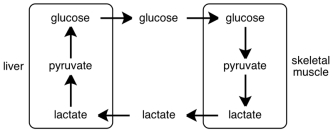
A)Cori cycle
B)glycolysis
C)fermentation
D)glucogenolysis
A)Cori cycle
B)glycolysis
C)fermentation
D)glucogenolysis
Question
Question
Question
Glucose-6-phosphate is best represented by which of the following? (Note: the wavy bond indicates that the -OH could either be up or down.)
A)
B)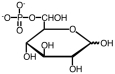
C)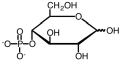
D)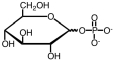
A)
B)
C)
D)
Question
Question
Question
Question
Question
Question
Question
Consider the diagram of the mitochondrion shown below.During electron transport,protons (H+)are pumped into what area of the mitochondrion? 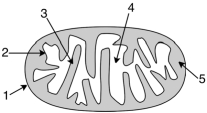
A)2
B)3
C)4
D)5
A)2
B)3
C)4
D)5
Question
In the diagram of the citric acid cycle shown,what do the two points indicated by an asterisk have in common? 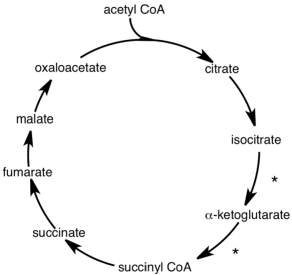
A)CO2 is produced.
B)NAD+ is reduced.
C)ATP is produced.
D)All will occur.
A)CO2 is produced.
B)NAD+ is reduced.
C)ATP is produced.
D)All will occur.
Question
Question
Question
Consider the diagram below.That is the step that is labeled 1 called? 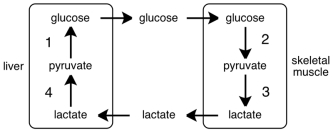
A)fermentation
B)gluconeogenesis
C)glycolysis
D)glycogenolysis
A)fermentation
B)gluconeogenesis
C)glycolysis
D)glycogenolysis
Question
Control points of the citric acid cycle are shown by the numbers in the following diagram.Which of the following correctly describes control of the cycle> 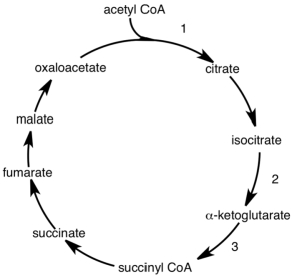
A)Point 1 is inhibited by NADH and activated by ADP.
B)Point 2 is inhibited by NADH and activated by ATP.
C)Point 3 is inhibited by both NADH and ADP.
D)All of the above are control points..
A)Point 1 is inhibited by NADH and activated by ADP.
B)Point 2 is inhibited by NADH and activated by ATP.
C)Point 3 is inhibited by both NADH and ADP.
D)All of the above are control points..
Question
Question
Question
Question
Consider the figure shown below where four different pathways are labeled 1 - 4.Which of those pathway is a fermentation process? 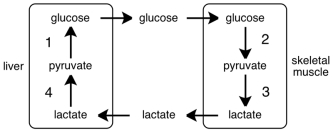
A)1
B)2
C)3
D)4
A)1
B)2
C)3
D)4
Question
Question
Question
Question
Question
Question
Question
Question
Question
Question
Question
Question
Question
Question
Question
Question
Question
Question
Question

Unlock Deck
Sign up to unlock the cards in this deck!
Unlock Deck
Unlock Deck
1/90

Play

Full screen (f)
Deck 23: Carbohydrate Metabolism
1
The major products of carbohydrate digestion are _____ .
A)monosaccharides
B)monosaccharides & disaccharides
C)acetyl CoA
D)pyruvic acid
A)monosaccharides
B)monosaccharides & disaccharides
C)acetyl CoA
D)pyruvic acid
monosaccharides
2
All pyruvate has a similar fate,in that it eventually produces _____ .
A)CO2
B)acetyl CoA
C)NAD+
D)FAD
A)CO2
B)acetyl CoA
C)NAD+
D)FAD
NAD+
3
Phosphofructokinase,one of the enzymes which regulates the glycolysis pathway,is activated by _____ .
A)glucose
B)citrate
C)ADP
D)ATP
A)glucose
B)citrate
C)ADP
D)ATP
ADP
4
A condition in which glucose appears in the urine is called _____ .
A)hypoglycemia
B)hyperglycemia
C)glucosuria
D)galactosemia
A)hypoglycemia
B)hyperglycemia
C)glucosuria
D)galactosemia
Unlock Deck
Unlock for access to all 90 flashcards in this deck.
Unlock Deck
k this deck
5
Blood sugar
A)is a term that normally refers to the concentration of glucose and fructose in the blood.
B)should be in the range of 70-90 mg/mL or the renal threshold is exceeded.
C)is regulated by the liver which removes glucose from the blood in response to an increase after a meal.
D)testing can be inferred by the glucosuria test of the perspiration.
A)is a term that normally refers to the concentration of glucose and fructose in the blood.
B)should be in the range of 70-90 mg/mL or the renal threshold is exceeded.
C)is regulated by the liver which removes glucose from the blood in response to an increase after a meal.
D)testing can be inferred by the glucosuria test of the perspiration.
Unlock Deck
Unlock for access to all 90 flashcards in this deck.
Unlock Deck
k this deck
6
The normal blood sugar level,for an adult,measured after a fast of 8-12 hours is
A)90-110 mg/100 mL.
B)40-80 mg/100 mL.
C)50-70 mg/100mL.
D)70-110 mg/100mL.
A)90-110 mg/100 mL.
B)40-80 mg/100 mL.
C)50-70 mg/100mL.
D)70-110 mg/100mL.
Unlock Deck
Unlock for access to all 90 flashcards in this deck.
Unlock Deck
k this deck
7
Under anaerobic conditions in the body,pyruvate is converted to _____ .
A)ethanol
B)CO2 & H2O
C)acetyl CoA
D)lactate
A)ethanol
B)CO2 & H2O
C)acetyl CoA
D)lactate
Unlock Deck
Unlock for access to all 90 flashcards in this deck.
Unlock Deck
k this deck
8
Which of the following is an allosteric enzyme which serves as a control point in the citric acid cycle?
A)malate dehydrogenase
B)fumarase
C)citrate synthetase
D)succinate dehydrogenase
A)malate dehydrogenase
B)fumarase
C)citrate synthetase
D)succinate dehydrogenase
Unlock Deck
Unlock for access to all 90 flashcards in this deck.
Unlock Deck
k this deck
9
The pain and cramps which accompany physical exhaustion are associated with the accumulation of excess _____ .
A)lactate
B)pyruvate
C)acetyl CoA
D)acetaldehyde
A)lactate
B)pyruvate
C)acetyl CoA
D)acetaldehyde
Unlock Deck
Unlock for access to all 90 flashcards in this deck.
Unlock Deck
k this deck
10
Which of the following is a product of glycolysis?
A)pyruvate
B)CO2 + H2O
C)lactate
D)acetyl CoA
A)pyruvate
B)CO2 + H2O
C)lactate
D)acetyl CoA
Unlock Deck
Unlock for access to all 90 flashcards in this deck.
Unlock Deck
k this deck
11
Under aerobic conditions in the body,pyruvate is converted to _____ .
A)lactate
B)acetyl CoA
C)ethanol
D)acetaldehyde
A)lactate
B)acetyl CoA
C)ethanol
D)acetaldehyde
Unlock Deck
Unlock for access to all 90 flashcards in this deck.
Unlock Deck
k this deck
12
In the electron transport chain,FADH2 delivers hydrogen ions and electrons to which of the following?
A)coenzyme Q
B)NAD+
C)flavoprotein
D)cytochrome b
A)coenzyme Q
B)NAD+
C)flavoprotein
D)cytochrome b
Unlock Deck
Unlock for access to all 90 flashcards in this deck.
Unlock Deck
k this deck
13
A key organ in regulating blood glucose levels is the _____ .
A)heart
B)liver
C)adrenal cortex
D)thyroid
A)heart
B)liver
C)adrenal cortex
D)thyroid
Unlock Deck
Unlock for access to all 90 flashcards in this deck.
Unlock Deck
k this deck
14
Glycolysis occurs within the _____ .
A)mitochondria
B)nucleus
C)vacuoles
D)cytoplasm
A)mitochondria
B)nucleus
C)vacuoles
D)cytoplasm
Unlock Deck
Unlock for access to all 90 flashcards in this deck.
Unlock Deck
k this deck
15
Which of the following can be used to fuel the glycolysis pathway?
A)glucose
B)glucose and fructose
C)fructose and galactose
D)glucose,fructose and galactose
A)glucose
B)glucose and fructose
C)fructose and galactose
D)glucose,fructose and galactose
Unlock Deck
Unlock for access to all 90 flashcards in this deck.
Unlock Deck
k this deck
16
The discomfort associate with excess alcohol consumption is due to the buildup of _____ .
A)acetyl CoA
B)acetaldehyde
C)lactate
D)pyruvate
A)acetyl CoA
B)acetaldehyde
C)lactate
D)pyruvate
Unlock Deck
Unlock for access to all 90 flashcards in this deck.
Unlock Deck
k this deck
17
Glycolysis
A)costs two ATP molecules at the beginning of the process.
B)produces four ATP molecules.
C)has a resultant molecule that enters the next step of the process,the citric acid cycle.
D)More than one response is correct.
A)costs two ATP molecules at the beginning of the process.
B)produces four ATP molecules.
C)has a resultant molecule that enters the next step of the process,the citric acid cycle.
D)More than one response is correct.
Unlock Deck
Unlock for access to all 90 flashcards in this deck.
Unlock Deck
k this deck
18
The direct fuel of the citric acid cycle is _____ .
A)glucose
B)glycogen
C)fatty acids
D)acetyl CoA
A)glucose
B)glycogen
C)fatty acids
D)acetyl CoA
Unlock Deck
Unlock for access to all 90 flashcards in this deck.
Unlock Deck
k this deck
19
A blood sugar level that is lower than normal is referred to as _____ .
A)hypoglycemia
B)hyperglycemia
C)glucosuria
D)diabetes mellitus
A)hypoglycemia
B)hyperglycemia
C)glucosuria
D)diabetes mellitus
Unlock Deck
Unlock for access to all 90 flashcards in this deck.
Unlock Deck
k this deck
20
Each turn of the citric acid cycle produces ____ molecules of CO2.
A)2
B)3
C)4
D)5
A)2
B)3
C)4
D)5
Unlock Deck
Unlock for access to all 90 flashcards in this deck.
Unlock Deck
k this deck
21
Approximately ____ percent of the energy available in glucose catabolism is trapped in the formation of ATP.
A)20
B)40
C)60
D)80
A)20
B)40
C)60
D)80
Unlock Deck
Unlock for access to all 90 flashcards in this deck.
Unlock Deck
k this deck
22
The majority of ATP produced during the catabolism of glucose is formed during _____ .
A)oxidative phosphorylation
B)glycolysis
C)the citric acid cycle
D)the formation of acetyl CoA
A)oxidative phosphorylation
B)glycolysis
C)the citric acid cycle
D)the formation of acetyl CoA
Unlock Deck
Unlock for access to all 90 flashcards in this deck.
Unlock Deck
k this deck
23
Which of the following foods is most likely to cause problems to those individuals that are lactose intolerant?
A)Swiss cheese
B)skim milk
C)cheddar cheese
D)margarine
A)Swiss cheese
B)skim milk
C)cheddar cheese
D)margarine
Unlock Deck
Unlock for access to all 90 flashcards in this deck.
Unlock Deck
k this deck
24
Which of the following hormones acts to raise the blood glucose level?
A)glucagon
B)insulin
C)epinephrine
D)More than one response is correct.
A)glucagon
B)insulin
C)epinephrine
D)More than one response is correct.
Unlock Deck
Unlock for access to all 90 flashcards in this deck.
Unlock Deck
k this deck
25
Glycogen is stored primarily in the liver and the _____ .
A)heart
B)pancreas
C)muscles
D)fat deposits
A)heart
B)pancreas
C)muscles
D)fat deposits
Unlock Deck
Unlock for access to all 90 flashcards in this deck.
Unlock Deck
k this deck
26
Contrast complete glucose oxidation,lactate fermentation,and alcoholic fermentation.
A)Glucose oxidation produces approximately the same amount of ATP as lactate and alcoholic fermentation together.
B)Lactate fermentation is the most important process of the three for the production of energy in muscles that are performing extended periods of work.
C)Lactate fermentation produces less ATP than does glucose oxidation,but approximately the same amount of ATP as alcoholic fermentation.
D)The complete oxidation of glucose produces fructose; that of lactate fermentation produces lactic acid; and that of alcoholic fermentation produces ethanol.
A)Glucose oxidation produces approximately the same amount of ATP as lactate and alcoholic fermentation together.
B)Lactate fermentation is the most important process of the three for the production of energy in muscles that are performing extended periods of work.
C)Lactate fermentation produces less ATP than does glucose oxidation,but approximately the same amount of ATP as alcoholic fermentation.
D)The complete oxidation of glucose produces fructose; that of lactate fermentation produces lactic acid; and that of alcoholic fermentation produces ethanol.
Unlock Deck
Unlock for access to all 90 flashcards in this deck.
Unlock Deck
k this deck
27
What ions present in the cytochrome aid in passing electrons along the electron transport chain?
A)Fe2+ and Fe3+
B)Cu+ and Cu2+
C)Zn+ and Zn2+
D)Mg2+ and Na+
A)Fe2+ and Fe3+
B)Cu+ and Cu2+
C)Zn+ and Zn2+
D)Mg2+ and Na+
Unlock Deck
Unlock for access to all 90 flashcards in this deck.
Unlock Deck
k this deck
28
The net yield of ATP molecules from the complete catabolism of one molecule of glucose is _____ .
A)18
B)24
C)32
D)42
A)18
B)24
C)32
D)42
Unlock Deck
Unlock for access to all 90 flashcards in this deck.
Unlock Deck
k this deck
29
Lactose intolerance
A)can only be controlled by eliminating dairy products.
B)produces symptoms including bloating and diarrhea.
C)is due to a missing enzyme by approximately 20% of adults in the USA.
D)All of these responses are correct.
A)can only be controlled by eliminating dairy products.
B)produces symptoms including bloating and diarrhea.
C)is due to a missing enzyme by approximately 20% of adults in the USA.
D)All of these responses are correct.
Unlock Deck
Unlock for access to all 90 flashcards in this deck.
Unlock Deck
k this deck
30
During gluconeogenesis,pyruvate is formed from glycerol,certain amino acids and _____ .
A)acetyl CoA
B)glucose
C)lactate
D)glycogen
A)acetyl CoA
B)glucose
C)lactate
D)glycogen
Unlock Deck
Unlock for access to all 90 flashcards in this deck.
Unlock Deck
k this deck
31
The bulk of the energy utilized by marathon runners is provided by _____ .
A)blood glucose
B)glycogen
C)protein
D)fatty acids
A)blood glucose
B)glycogen
C)protein
D)fatty acids
Unlock Deck
Unlock for access to all 90 flashcards in this deck.
Unlock Deck
k this deck
32
Glycogenolysis can be correctly represented by which of the following _____ .
A)glucose glycogen
B)glycogen glucose
C)pyruvate glycogen
D)glycogen pyruvate
A)glucose glycogen
B)glycogen glucose
C)pyruvate glycogen
D)glycogen pyruvate
Unlock Deck
Unlock for access to all 90 flashcards in this deck.
Unlock Deck
k this deck
33
What is the final acceptor of electrons during electron transport?
A)NAD+
B)NADH
C)FAD
D)O2
A)NAD+
B)NADH
C)FAD
D)O2
Unlock Deck
Unlock for access to all 90 flashcards in this deck.
Unlock Deck
k this deck
34
Glycogenolysis does not occur in muscle tissue because of the absence of the enzyme _____ .
A)glucose 6-phosphatase
B)glycogen phosphorylase
C)phosphoglucomutase
D)pyruvate kinase
A)glucose 6-phosphatase
B)glycogen phosphorylase
C)phosphoglucomutase
D)pyruvate kinase
Unlock Deck
Unlock for access to all 90 flashcards in this deck.
Unlock Deck
k this deck
35
The main source of energy for the brain is _____ .
A)glucose
B)fatty acids
C)glycogen
D)glycerol
A)glucose
B)fatty acids
C)glycogen
D)glycerol
Unlock Deck
Unlock for access to all 90 flashcards in this deck.
Unlock Deck
k this deck
36
Synthesis of glucose from pyruvate during the Cori cycle occurs primarily in the _____ .
A)muscles
B)liver
C)bloodstream
D)heart tissue
A)muscles
B)liver
C)bloodstream
D)heart tissue
Unlock Deck
Unlock for access to all 90 flashcards in this deck.
Unlock Deck
k this deck
37
Insulin causes
A)liver to release glycogen.
B)glucose to enters cells.
C)glucose conversion to fat.
D)HDL production.
A)liver to release glycogen.
B)glucose to enters cells.
C)glucose conversion to fat.
D)HDL production.
Unlock Deck
Unlock for access to all 90 flashcards in this deck.
Unlock Deck
k this deck
38
Which of the following hormones acts to lower the blood glucose level?
A)glucagon
B)insulin
C)epinephrine
D)More than one response is correct.
A)glucagon
B)insulin
C)epinephrine
D)More than one response is correct.
Unlock Deck
Unlock for access to all 90 flashcards in this deck.
Unlock Deck
k this deck
39
If a glucose tolerance test shows an abnormally high level of glucose in the blood after several hours,the person is possibly _____ .
A)hypoglycemic
B)diabetic
C)anemic
D)overweight
A)hypoglycemic
B)diabetic
C)anemic
D)overweight
Unlock Deck
Unlock for access to all 90 flashcards in this deck.
Unlock Deck
k this deck
40
The high-energy compound involved in the conversion of glucose to glycogen is _____ .
A)GTP
B)ATP
C)ADP
D)UTP
A)GTP
B)ATP
C)ADP
D)UTP
Unlock Deck
Unlock for access to all 90 flashcards in this deck.
Unlock Deck
k this deck
41
Which of the following reactions represents a step in the metabolism of pyruvate that occurs under aerobic conditions?
A)
B)
C)
D)
A)
B)
C)
D)
Unlock Deck
Unlock for access to all 90 flashcards in this deck.
Unlock Deck
k this deck
42
Consider the figure below.What process is depicted?
A)Cori cycle
B)glycolysis
C)fermentation
D)glucogenolysis
A)Cori cycle
B)glycolysis
C)fermentation
D)glucogenolysis
Unlock Deck
Unlock for access to all 90 flashcards in this deck.
Unlock Deck
k this deck
43
How many molecules of CO2 are produced per molecule of glucose as a result of the pyruvate dehydrogenase complex?
A)0
B)1
C)2
D)3
A)0
B)1
C)2
D)3
Unlock Deck
Unlock for access to all 90 flashcards in this deck.
Unlock Deck
k this deck
44
Lactate,produced in the muscles,is sent to the liver for processing.This is one step of ____.
A)the citric acid cycle
B)the Cori cycle
C)glycolysis
D)oxidative phosphorylation
A)the citric acid cycle
B)the Cori cycle
C)glycolysis
D)oxidative phosphorylation
Unlock Deck
Unlock for access to all 90 flashcards in this deck.
Unlock Deck
k this deck
45
Glucose-6-phosphate is best represented by which of the following? (Note: the wavy bond indicates that the -OH could either be up or down.)
A)
B)
C)
D)
A)
B)
C)
D)
Unlock Deck
Unlock for access to all 90 flashcards in this deck.
Unlock Deck
k this deck
46
During the first step of the citric acid cycle,citrate is produced from an acetyl group and ____?
A)oxaloacetate
B)malate
C)pyruvate
D)fumerate
A)oxaloacetate
B)malate
C)pyruvate
D)fumerate
Unlock Deck
Unlock for access to all 90 flashcards in this deck.
Unlock Deck
k this deck
47
The reaction of NAD+ to produce NADH is an example of what type of reaction?
A)oxidation
B)reduction
C)hydrolysis
D)hydration
A)oxidation
B)reduction
C)hydrolysis
D)hydration
Unlock Deck
Unlock for access to all 90 flashcards in this deck.
Unlock Deck
k this deck
48
The free energy change for the complete oxidation of one mole of glucose is -686 kcal and G°' for the hydrolysis of ATP is -7.3 kcal/mol.How many moles of ATP could be synthesized if the entire oxidation process were 100% efficient in converting this energy to the production of ATP?
A)0.0106 mol ATP
B)94.0 mol ATP
C)5.01* 103 mol ATP
D)32.0 mol ATP
A)0.0106 mol ATP
B)94.0 mol ATP
C)5.01* 103 mol ATP
D)32.0 mol ATP
Unlock Deck
Unlock for access to all 90 flashcards in this deck.
Unlock Deck
k this deck
49
Chemiosmotic hypothesis is the postulate that a(n)____ flow across the inner mitochondrial membrane during operation of the electron transport chain provides energy for ATP production.
A)electron
B)proton
C)neutron
D)electrical
A)electron
B)proton
C)neutron
D)electrical
Unlock Deck
Unlock for access to all 90 flashcards in this deck.
Unlock Deck
k this deck
50
Under anaerobic conditions in humans,what is pyruvate converted to?
A)ethanol
B)lactate
C)CO2
D)none of these
A)ethanol
B)lactate
C)CO2
D)none of these
Unlock Deck
Unlock for access to all 90 flashcards in this deck.
Unlock Deck
k this deck
51
Low carbohydrate intake during heavy exercise followed by high carbohydrate intake with light exercise is an example of ____ loading.
A)carbohydrate
B)ATP
C)energy
D)glucose
A)carbohydrate
B)ATP
C)energy
D)glucose
Unlock Deck
Unlock for access to all 90 flashcards in this deck.
Unlock Deck
k this deck
52
Consider the diagram of the mitochondrion shown below.During electron transport,protons (H+)are pumped into what area of the mitochondrion?
A)2
B)3
C)4
D)5
A)2
B)3
C)4
D)5
Unlock Deck
Unlock for access to all 90 flashcards in this deck.
Unlock Deck
k this deck
53
In the diagram of the citric acid cycle shown,what do the two points indicated by an asterisk have in common?
A)CO2 is produced.
B)NAD+ is reduced.
C)ATP is produced.
D)All will occur.
A)CO2 is produced.
B)NAD+ is reduced.
C)ATP is produced.
D)All will occur.
Unlock Deck
Unlock for access to all 90 flashcards in this deck.
Unlock Deck
k this deck
54
Which of the following is not an energy source used in metabolism?
A)UTP
B)ATP
C)GTP
D)UTC
A)UTP
B)ATP
C)GTP
D)UTC
Unlock Deck
Unlock for access to all 90 flashcards in this deck.
Unlock Deck
k this deck
55
The process where ADP is converted to ATP while coupled to the electron transport chain is
A)citric acid cycle.
B)alcohol fermentation.
C)oxidative phosphorylation.
D)the Cori cycle.
A)citric acid cycle.
B)alcohol fermentation.
C)oxidative phosphorylation.
D)the Cori cycle.
Unlock Deck
Unlock for access to all 90 flashcards in this deck.
Unlock Deck
k this deck
56
Consider the diagram below.That is the step that is labeled 1 called?
A)fermentation
B)gluconeogenesis
C)glycolysis
D)glycogenolysis
A)fermentation
B)gluconeogenesis
C)glycolysis
D)glycogenolysis
Unlock Deck
Unlock for access to all 90 flashcards in this deck.
Unlock Deck
k this deck
57
Control points of the citric acid cycle are shown by the numbers in the following diagram.Which of the following correctly describes control of the cycle>
A)Point 1 is inhibited by NADH and activated by ADP.
B)Point 2 is inhibited by NADH and activated by ATP.
C)Point 3 is inhibited by both NADH and ADP.
D)All of the above are control points..
A)Point 1 is inhibited by NADH and activated by ADP.
B)Point 2 is inhibited by NADH and activated by ATP.
C)Point 3 is inhibited by both NADH and ADP.
D)All of the above are control points..
Unlock Deck
Unlock for access to all 90 flashcards in this deck.
Unlock Deck
k this deck
58
Each turn of the citric acid cycle produces ____ NADH coenzyme(s).
A)0
B)1
C)2
D)3
A)0
B)1
C)2
D)3
Unlock Deck
Unlock for access to all 90 flashcards in this deck.
Unlock Deck
k this deck
59
Under aerobic conditions in humans,what is pyruvate converted to?
A)ethanol
B)lactate
C)CO2
D)none of these
A)ethanol
B)lactate
C)CO2
D)none of these
Unlock Deck
Unlock for access to all 90 flashcards in this deck.
Unlock Deck
k this deck
60
Which of the following occurs in the citric acid cycle?
A)oxidation of carbon
B)generation of ATP
C)'pumping' of hydrogen ions
D)more than one answer is correct
A)oxidation of carbon
B)generation of ATP
C)'pumping' of hydrogen ions
D)more than one answer is correct
Unlock Deck
Unlock for access to all 90 flashcards in this deck.
Unlock Deck
k this deck
61
Consider the figure shown below where four different pathways are labeled 1 - 4.Which of those pathway is a fermentation process?
A)1
B)2
C)3
D)4
A)1
B)2
C)3
D)4
Unlock Deck
Unlock for access to all 90 flashcards in this deck.
Unlock Deck
k this deck
62
Epinephrine stimulates glycolysis.
Unlock Deck
Unlock for access to all 90 flashcards in this deck.
Unlock Deck
k this deck
63
The first step in the processes of glycolysis is a phosphorolation.
Unlock Deck
Unlock for access to all 90 flashcards in this deck.
Unlock Deck
k this deck
64
Both glucagon and insulin are produced by the pancreas.
Unlock Deck
Unlock for access to all 90 flashcards in this deck.
Unlock Deck
k this deck
65
Glycolysis and the TCA are so efficient that over 90% of the chemical energy is stored in the form of ATP for the use of the cell.
Unlock Deck
Unlock for access to all 90 flashcards in this deck.
Unlock Deck
k this deck
66
All of the members of the citric acid cycle are acids.
Unlock Deck
Unlock for access to all 90 flashcards in this deck.
Unlock Deck
k this deck
67
Which of the following is not considered a component of the electron transport chain?
A)cytochrome c (cyt c)
B)coenzyme Q (CoQ)
C)Fe-S protein (Fe-S)
D)adenosine diphosphate (ADP)
A)cytochrome c (cyt c)
B)coenzyme Q (CoQ)
C)Fe-S protein (Fe-S)
D)adenosine diphosphate (ADP)
Unlock Deck
Unlock for access to all 90 flashcards in this deck.
Unlock Deck
k this deck
68
The electron transport chain exists for the purpose of removing excess electrons from the cell.
Unlock Deck
Unlock for access to all 90 flashcards in this deck.
Unlock Deck
k this deck
69
The processes of producing both lactate and ethanol are anaerobic processes.
Unlock Deck
Unlock for access to all 90 flashcards in this deck.
Unlock Deck
k this deck
70
The function of glycolysis is to extract energy from the glucose molecule.
Unlock Deck
Unlock for access to all 90 flashcards in this deck.
Unlock Deck
k this deck
71
Epinephrine is a peptide hormone.
Unlock Deck
Unlock for access to all 90 flashcards in this deck.
Unlock Deck
k this deck
72
Insulin decreases the rate of synthesis of glycogen and fatty acids.
Unlock Deck
Unlock for access to all 90 flashcards in this deck.
Unlock Deck
k this deck
73
Glycolysis is a metabolic pathway that is self-regulating.
Unlock Deck
Unlock for access to all 90 flashcards in this deck.
Unlock Deck
k this deck
74
Glucose is the only sugar used by the human body.
Unlock Deck
Unlock for access to all 90 flashcards in this deck.
Unlock Deck
k this deck
75
The citric acid cycle (CAC)is also called the tricarboxylic acid (TCA)cycle and the Krebs cycle.
Unlock Deck
Unlock for access to all 90 flashcards in this deck.
Unlock Deck
k this deck
76
Insulin is a regulatory enzyme.
Unlock Deck
Unlock for access to all 90 flashcards in this deck.
Unlock Deck
k this deck
77
The catabolism of one molecule of glucose in the muscle cells produces 32 ATP molecules.
Unlock Deck
Unlock for access to all 90 flashcards in this deck.
Unlock Deck
k this deck
78
As a molecule of glucose passes through the glycolysis pathway,three molecules of pyruvate are formed.
Unlock Deck
Unlock for access to all 90 flashcards in this deck.
Unlock Deck
k this deck
79
Glucagon can counteract the effect of insulin.
Unlock Deck
Unlock for access to all 90 flashcards in this deck.
Unlock Deck
k this deck
80
How can a person avoid an "energy crash" one to three hours after a meal?
A)Consume foods with elevated levels of caffeine.
B)Increase the time between eating meals.
C)Eat meals with a high overall glycemic index.
D)Eat meals with a low overall glycemic index.
A)Consume foods with elevated levels of caffeine.
B)Increase the time between eating meals.
C)Eat meals with a high overall glycemic index.
D)Eat meals with a low overall glycemic index.
Unlock Deck
Unlock for access to all 90 flashcards in this deck.
Unlock Deck
k this deck
Unlock Deck
Unlock for access to all 90 flashcards in this deck.






