







 Chat with AI

Deck 6: Intermolecular Forces-Attractions Between Particles
Full screen (f)

Question
The relative energies (strengths)of the intermolecular forces between five different substances are shown in the figure below.Which substance has the lowest boiling point? 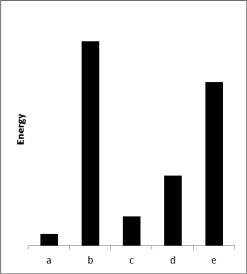
A)a
B)b
C)c
D)d
E)e
A)a
B)b
C)c
D)d
E)e

Question
The relative energies (strengths)of the intermolecular forces present in each of four different pure substances are shown in the figure below.Which substance is most likely to be a solid at room temperature? 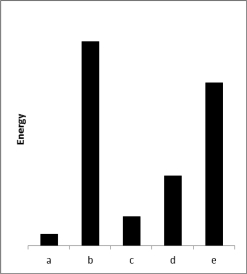
A)a
B)b
C)c
D)d
E)e
A)a
B)b
C)c
D)d
E)e
Question
The relative energies (strengths)of the intermolecular forces present in each of five different pure substances are shown in the figure below.Which substance has the lowest melting point? 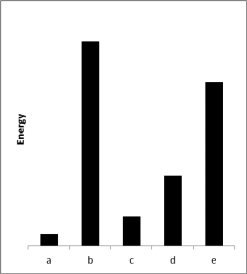
A)a
B)b
C)c
D)d
E)e
A)a
B)b
C)c
D)d
E)e
Question
Question
Which of the following representations best shows the formation of an instantaneous dipole moment between two nonpolar molecules?
A)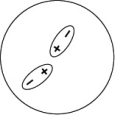
B)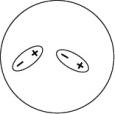
C)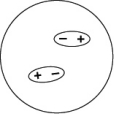
D)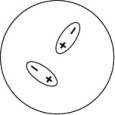
E)none of these
A)
B)
C)
D)
E)none of these
Question
Question
Question
Indicate which of the following molecules exhibits the greatest dispersion forces.
A)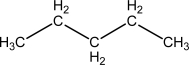
B)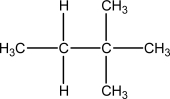
C)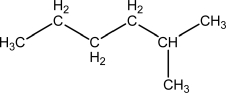
D)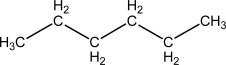
E)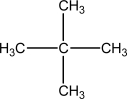
A)
B)
C)
D)
E)
Question
The relative energies (strengths)of the intermolecular forces present in each of five different pure substances are shown in the figure below.Which substance has the highest melting point? 
A)a
B)b
C)c
D)d
E)e
A)a
B)b
C)c
D)d
E)e
Question
Question
Question
Question
Question
Question
Question
Question
The relative energies (strengths)of the intermolecular forces between five different substances are shown in the figure below.Which substance has the highest boiling point? 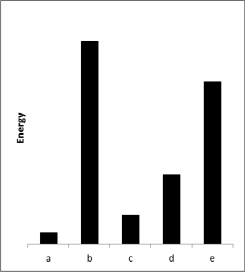
A)a
B)b
C)c
D)d
E)e
A)a
B)b
C)c
D)d
E)e
Question
Question
Which of the substances a-e in the following figure has the weakest intermolecular forces? 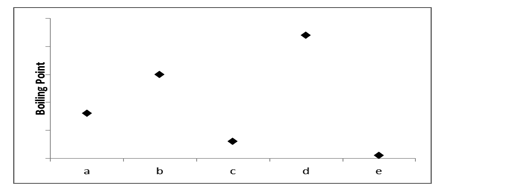
A)a
B)b
C)c
D)d
E)e
A)a
B)b
C)c
D)d
E)e
Question
Question
Question
Question
Question
Question
Question
Question
Question
Question
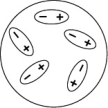
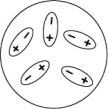
Which of the following diagrams best shows a set of polar molecules interacting through dipole-dipole interactions?
A)
B)
C)
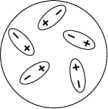
D)
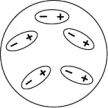
E)all of these
A)
B)
C)
D)
E)all of these
Question
Question
Question
Question
Question
Question
Question
Question
Question
Question
Question
Question
Question
Question
Question
Question
Question
Question
Question
Question
Question
Question
Which of the following compounds is likely to have the highest boiling point?
A)
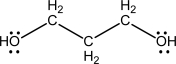
B)
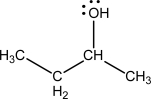
C)
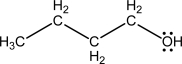
D)
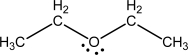
E)
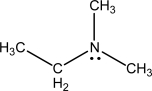
A)
B)
C)
D)
E)
Question
Question
Question
Question
Which one of the following substances would you predict to most readily enter the gas phase from the liquid phase?
A)
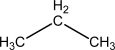
B)
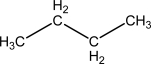
C)
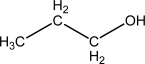
D)
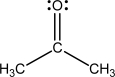
E)
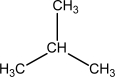
A)
B)
C)
D)
E)
Question
Question
Which one of the following substances would you predict to have the highest boiling point?
A)
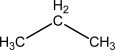
B)
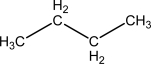
C)
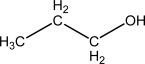
D)
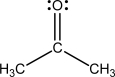
E)
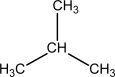
A)
B)
C)
D)
E)
Question
Question
Question
Question
Question
Question
Question
Question
Point c in the phase diagram below is the __________ 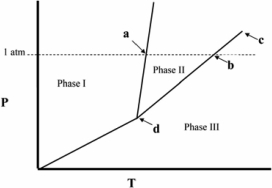
A)critical point.
B)triple point.
C)transition point.
D)normal freezing point.
E)normal boiling point.
A)critical point.
B)triple point.
C)transition point.
D)normal freezing point.
E)normal boiling point.
Question
The temperature at point a in the phase diagram below is the __________ 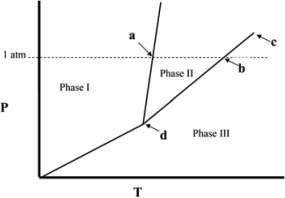
A)critical point.
B)triple point.
C)transition point.
D)normal freezing point.
E)normal boiling point.
A)critical point.
B)triple point.
C)transition point.
D)normal freezing point.
E)normal boiling point.
Question
Question
Question
At the point marked with a dot on the phase diagram,the solid will __________
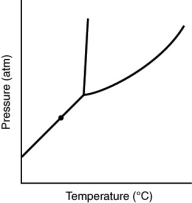
A)be indistinguishable from the gas.
B)boil.
C)melt.
D)sublime.
E)liquify.
A)be indistinguishable from the gas.
B)boil.
C)melt.
D)sublime.
E)liquify.
Question
Which statement about the phase diagram below is NOT correct? 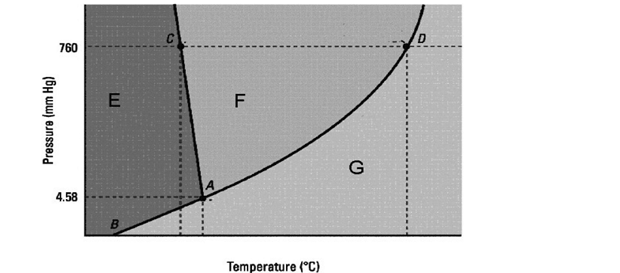
A)The critical point is shown.
B)D is the normal boiling point.
C)The melting point increases as pressure increases.
D)The normal melting point is at a lower temperature than the triple point.
E)E,F,and G label in that order the solid,liquid,and gas phases.
A)The critical point is shown.
B)D is the normal boiling point.
C)The melting point increases as pressure increases.
D)The normal melting point is at a lower temperature than the triple point.
E)E,F,and G label in that order the solid,liquid,and gas phases.
Question
Question
The temperature at point b in the phase diagram below is the __________ 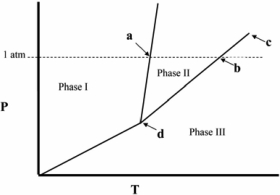
A)critical point.
B)triple point.
C)transition point.
D)normal freezing point.
E)normal boiling point.
A)critical point.
B)triple point.
C)transition point.
D)normal freezing point.
E)normal boiling point.
Question
What does the line indicated in the following phase diagram represent? (s = solid;  = liquid; g = gas)
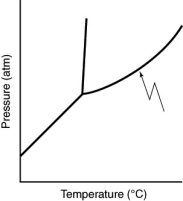
A)s- boundary
B)s-g boundary
C) -g boundary
D)triple point
E)s-s boundary
= liquid; g = gas) A)s-
boundaryB)s-g boundary
C)
-g boundaryD)triple point
E)s-s boundary
Question
Point d in the phase diagram below is the __________ 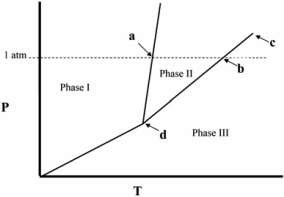
A)critical point.
B)triple point.
C)transition point.
D)normal freezing point.
E)normal boiling point.
A)critical point.
B)triple point.
C)transition point.
D)normal freezing point.
E)normal boiling point.
Question
Question
Question
Question
Consider the phase diagram for a substance shown here.The solid phase is ________ than the liquid phase. 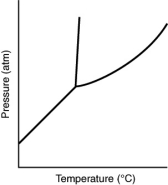
A)more dense
B)less dense
C)more massive
D)less massive
E)hotter
A)more dense
B)less dense
C)more massive
D)less massive
E)hotter
Question
Question

Unlock Deck
Sign up to unlock the cards in this deck!
Unlock Deck
Unlock Deck
1/104

Play

Full screen (f)
Deck 6: Intermolecular Forces-Attractions Between Particles
1
The relative energies (strengths)of the intermolecular forces between five different substances are shown in the figure below.Which substance has the lowest boiling point?
A)a
B)b
C)c
D)d
E)e
A)a
B)b
C)c
D)d
E)e
a
2
The relative energies (strengths)of the intermolecular forces present in each of four different pure substances are shown in the figure below.Which substance is most likely to be a solid at room temperature?
A)a
B)b
C)c
D)d
E)e
A)a
B)b
C)c
D)d
E)e
b
3
The relative energies (strengths)of the intermolecular forces present in each of five different pure substances are shown in the figure below.Which substance has the lowest melting point?
A)a
B)b
C)c
D)d
E)e
A)a
B)b
C)c
D)d
E)e
a
4
Which of the following statements regarding dispersion forces is false?
A)Electrons in one molecule can experience attractions to nuclei in a neighboring nonbonded molecule.
B)Temporary dipoles can arise when electrons are temporarily asymmetrically redistributed around the nucleus of an atom or within a bond.
C)As electron cloud size increases,the strength of dispersion forces increases.
D)The dipole moments associated with dispersion forces are long-lasting.
E)Temporary dipoles can induce dipoles in other particles.
A)Electrons in one molecule can experience attractions to nuclei in a neighboring nonbonded molecule.
B)Temporary dipoles can arise when electrons are temporarily asymmetrically redistributed around the nucleus of an atom or within a bond.
C)As electron cloud size increases,the strength of dispersion forces increases.
D)The dipole moments associated with dispersion forces are long-lasting.
E)Temporary dipoles can induce dipoles in other particles.
Unlock Deck
Unlock for access to all 104 flashcards in this deck.
Unlock Deck
k this deck
5
Which of the following representations best shows the formation of an instantaneous dipole moment between two nonpolar molecules?
A)
B)
C)
D)
E)none of these
A)
B)
C)
D)
E)none of these
Unlock Deck
Unlock for access to all 104 flashcards in this deck.
Unlock Deck
k this deck
6
Indicate which of the following molecules exhibits the weakest dispersion forces.
A)N2
B)S8
C)Cl2
D)I2
E)Xe
A)N2
B)S8
C)Cl2
D)I2
E)Xe
Unlock Deck
Unlock for access to all 104 flashcards in this deck.
Unlock Deck
k this deck
7
Arrange the following compounds in order of increasing dispersion interactions: CCl4,CH4,CF4.
A)CH4 < CF4< CCl4
B)CCl4 < CH4 < CF4
C)CF4 < CH4 < CCl4
D)CCl4 < CF4 < CH4
E)CH4 < CCl4 < CF4
A)CH4 < CF4< CCl4
B)CCl4 < CH4 < CF4
C)CF4 < CH4 < CCl4
D)CCl4 < CF4 < CH4
E)CH4 < CCl4 < CF4
Unlock Deck
Unlock for access to all 104 flashcards in this deck.
Unlock Deck
k this deck
8
Indicate which of the following molecules exhibits the greatest dispersion forces.
A)
B)
C)
D)
E)
A)
B)
C)
D)
E)
Unlock Deck
Unlock for access to all 104 flashcards in this deck.
Unlock Deck
k this deck
9
The relative energies (strengths)of the intermolecular forces present in each of five different pure substances are shown in the figure below.Which substance has the highest melting point?
A)a
B)b
C)c
D)d
E)e
A)a
B)b
C)c
D)d
E)e
Unlock Deck
Unlock for access to all 104 flashcards in this deck.
Unlock Deck
k this deck
10
Which type of intermolecular interaction exists for all compounds?
A)ion-ion
B)dipole-dipole
C)dispersion
D)hydrogen bonding
E)dipole-induced dipole
A)ion-ion
B)dipole-dipole
C)dispersion
D)hydrogen bonding
E)dipole-induced dipole
Unlock Deck
Unlock for access to all 104 flashcards in this deck.
Unlock Deck
k this deck
11
Which of the following molecules will have the highest boiling point?
A)CO2
B)C6H6 (benzene)
C)C6F6 (hexafluorobenzene)
D)C2H2
E)CF4
A)CO2
B)C6H6 (benzene)
C)C6F6 (hexafluorobenzene)
D)C2H2
E)CF4
Unlock Deck
Unlock for access to all 104 flashcards in this deck.
Unlock Deck
k this deck
12
Dispersion forces are due to __________
A)permanent dipoles.
B)temporary dipoles.
C)hydrogen bonding.
D)ionic interactions.
E)protons.
A)permanent dipoles.
B)temporary dipoles.
C)hydrogen bonding.
D)ionic interactions.
E)protons.
Unlock Deck
Unlock for access to all 104 flashcards in this deck.
Unlock Deck
k this deck
13
Which of the following statements is incorrect?
A)The more electrons in an atom,the more likely it is that they will be asymmetrically distributed.
B)The more electrons in an atom,the stronger the dispersion forces it can experience.
C)Larger atoms may experience larger temporary dipoles.
D)Atoms lower in the periodic table probably experience larger dispersion forces.
E)As the strength of temporary dipoles decreases within a substance,the boiling point increases.
A)The more electrons in an atom,the more likely it is that they will be asymmetrically distributed.
B)The more electrons in an atom,the stronger the dispersion forces it can experience.
C)Larger atoms may experience larger temporary dipoles.
D)Atoms lower in the periodic table probably experience larger dispersion forces.
E)As the strength of temporary dipoles decreases within a substance,the boiling point increases.
Unlock Deck
Unlock for access to all 104 flashcards in this deck.
Unlock Deck
k this deck
14
Indicate which of the following compounds will have the lowest boiling point.
A)CCl4
B)CI4
C)CF4
D)CH4
E)CBr4
A)CCl4
B)CI4
C)CF4
D)CH4
E)CBr4
Unlock Deck
Unlock for access to all 104 flashcards in this deck.
Unlock Deck
k this deck
15
Which of the following would you predict has the highest polarizability?
A)CO2
B)CBr4
C)Cl2
D)CH4
E)CCl4
A)CO2
B)CBr4
C)Cl2
D)CH4
E)CCl4
Unlock Deck
Unlock for access to all 104 flashcards in this deck.
Unlock Deck
k this deck
16
Identify the compound that is most likely to be a solid at room temperature and atmospheric pressure.
A)C2H4
B)C2H6
C)CH3CH2CH2CH3
D)C10H8
E)C6H6
A)C2H4
B)C2H6
C)CH3CH2CH2CH3
D)C10H8
E)C6H6
Unlock Deck
Unlock for access to all 104 flashcards in this deck.
Unlock Deck
k this deck
17
The relative energies (strengths)of the intermolecular forces between five different substances are shown in the figure below.Which substance has the highest boiling point?
A)a
B)b
C)c
D)d
E)e
A)a
B)b
C)c
D)d
E)e
Unlock Deck
Unlock for access to all 104 flashcards in this deck.
Unlock Deck
k this deck
18
Indicate which of the following molecules exhibits the greatest dispersion forces.
A)CH3CH3
B)CH3CH2CH3
C)C2H2
D)CH4
E)CH3CH2CH2CH3
A)CH3CH3
B)CH3CH2CH3
C)C2H2
D)CH4
E)CH3CH2CH2CH3
Unlock Deck
Unlock for access to all 104 flashcards in this deck.
Unlock Deck
k this deck
19
Which of the substances a-e in the following figure has the weakest intermolecular forces?
A)a
B)b
C)c
D)d
E)e
A)a
B)b
C)c
D)d
E)e
Unlock Deck
Unlock for access to all 104 flashcards in this deck.
Unlock Deck
k this deck
20
Polarizability refers to __________
A)the ease with which the electron cloud of an atom or molecule can be distorted.
B)the magnitude of the dipole moment of a molecule.
C)the ease with which a hydrogen bond can form.
D)the perturbation in electron density because of hydrogen bonding.
E)the ability to transmit polarized light.
A)the ease with which the electron cloud of an atom or molecule can be distorted.
B)the magnitude of the dipole moment of a molecule.
C)the ease with which a hydrogen bond can form.
D)the perturbation in electron density because of hydrogen bonding.
E)the ability to transmit polarized light.
Unlock Deck
Unlock for access to all 104 flashcards in this deck.
Unlock Deck
k this deck
21
Which of the following compounds will have the strongest dipole-dipole interactions between its molecules?
A)CF4
B)CH4
C)CH3F
D)CH2F2
E)CH3Cl
A)CF4
B)CH4
C)CH3F
D)CH2F2
E)CH3Cl
Unlock Deck
Unlock for access to all 104 flashcards in this deck.
Unlock Deck
k this deck
22
For a molecule to exhibit dipole-dipole interactions,it must __________
A)have a temporary dipole moment.
B)have a hydrogen bound to an oxygen,nitrogen,or fluorine.
C)have a permanent dipole moment.
D)be an ion.
E)have three or more atoms.
A)have a temporary dipole moment.
B)have a hydrogen bound to an oxygen,nitrogen,or fluorine.
C)have a permanent dipole moment.
D)be an ion.
E)have three or more atoms.
Unlock Deck
Unlock for access to all 104 flashcards in this deck.
Unlock Deck
k this deck
23
A hydration sphere forms around an ion in aqueous solution due to __________
A)ion-dipole interactions.
B)ion-hydrogen-bonding interactions.
C)dispersion forces.
D)dipole-dipole interactions.
E)ion-induced dipole interactions.
A)ion-dipole interactions.
B)ion-hydrogen-bonding interactions.
C)dispersion forces.
D)dipole-dipole interactions.
E)ion-induced dipole interactions.
Unlock Deck
Unlock for access to all 104 flashcards in this deck.
Unlock Deck
k this deck
24
Which of the following compounds is capable of dipole-dipole interactions?
A)CH4
B)CO2
C)H2CO
D)SF6
E)NH4+
A)CH4
B)CO2
C)H2CO
D)SF6
E)NH4+
Unlock Deck
Unlock for access to all 104 flashcards in this deck.
Unlock Deck
k this deck
25
The dipole moments of HCl and of HBr are 1.08 D and 0.82 D,respectively.The boiling point of HBr is higher than that of HCl.This is probably because HBr has __________
A)fewer electrons.
B)larger dispersion interactions.
C)hydrogen bonding.
D)larger dipole-dipole interactions.
E)more ionic character.
A)fewer electrons.
B)larger dispersion interactions.
C)hydrogen bonding.
D)larger dipole-dipole interactions.
E)more ionic character.
Unlock Deck
Unlock for access to all 104 flashcards in this deck.
Unlock Deck
k this deck
26
Which of the following statements is false?
A)When an ionic compound dissolves in water,the ions interact with the permanent dipoles of the water molecules.
B)Water molecules orient such that their oxygen atoms point toward an anion in solution.
C)Liquid ammonia,NH3,like water,could experience ion-dipole interactions with dissolved ions.
D)Water molecules in the inner sphere of hydration of an ion are involved in ion-dipole interactions.
E)Hydrated ions are stabilized by the surrounding water molecules.
A)When an ionic compound dissolves in water,the ions interact with the permanent dipoles of the water molecules.
B)Water molecules orient such that their oxygen atoms point toward an anion in solution.
C)Liquid ammonia,NH3,like water,could experience ion-dipole interactions with dissolved ions.
D)Water molecules in the inner sphere of hydration of an ion are involved in ion-dipole interactions.
E)Hydrated ions are stabilized by the surrounding water molecules.
Unlock Deck
Unlock for access to all 104 flashcards in this deck.
Unlock Deck
k this deck
27
For molecules or atoms with the same mass,which of the following is the weakest intermolecular interaction?
A)ion-dipole
B)hydrogen bonding
C)dipole-dipole
D)dispersion
E)ion-induced dipole
A)ion-dipole
B)hydrogen bonding
C)dipole-dipole
D)dispersion
E)ion-induced dipole
Unlock Deck
Unlock for access to all 104 flashcards in this deck.
Unlock Deck
k this deck
28
Which of the following solvents could involve ion-dipole interactions with Na+?
A)benzene (C6H6)
B)carbon tetrachloride (CCl4)
C)chloroform (CHCl3)
D)cyclohexane (C6H12)
E)pentane (C5H12)
A)benzene (C6H6)
B)carbon tetrachloride (CCl4)
C)chloroform (CHCl3)
D)cyclohexane (C6H12)
E)pentane (C5H12)
Unlock Deck
Unlock for access to all 104 flashcards in this deck.
Unlock Deck
k this deck
29
Which of the following diagrams best shows a set of polar molecules interacting through dipole-dipole interactions?
A)
B)
C)
D)
E)all of these
A)
B)
C)
D)
E)all of these
Unlock Deck
Unlock for access to all 104 flashcards in this deck.
Unlock Deck
k this deck
30
Dipole-dipole interactions typically are not as strong as ion-dipole interactions because __________
A)ion-dipole interactions involve partial charges caused by the equal sharing of electrons by atoms forming a bond.
B)dipole-dipole interactions involve the complete transfer of charge between atoms.
C)ion-dipole interactions involve only the partial transfer of charge between atoms.
D)ion-dipole interactions always involve water.
E)dipole-dipole interactions involve only partial charges caused by unequal sharing of electrons by atoms forming a bond.
A)ion-dipole interactions involve partial charges caused by the equal sharing of electrons by atoms forming a bond.
B)dipole-dipole interactions involve the complete transfer of charge between atoms.
C)ion-dipole interactions involve only the partial transfer of charge between atoms.
D)ion-dipole interactions always involve water.
E)dipole-dipole interactions involve only partial charges caused by unequal sharing of electrons by atoms forming a bond.
Unlock Deck
Unlock for access to all 104 flashcards in this deck.
Unlock Deck
k this deck
31
You are interested in determining the solubility of ionic compounds in solvents other than water,and you decide to try liquid ammonia,NH3.Which of the following statements regarding your experiment is probably true?
A)The hydrogen ions in ammonia have partial negative charges and can stabilize Na+ in solution.
B)The molecular dipole moment is too small to effectively interact with ions.
C)The hydrogen atoms in ammonia would orient toward both ions equally.
D)The lone pair of electrons on ammonia can act in a similar way as the lone pairs on oxygen in water.
E)Ion-dipole interactions exist only in water.
A)The hydrogen ions in ammonia have partial negative charges and can stabilize Na+ in solution.
B)The molecular dipole moment is too small to effectively interact with ions.
C)The hydrogen atoms in ammonia would orient toward both ions equally.
D)The lone pair of electrons on ammonia can act in a similar way as the lone pairs on oxygen in water.
E)Ion-dipole interactions exist only in water.
Unlock Deck
Unlock for access to all 104 flashcards in this deck.
Unlock Deck
k this deck
32
When sodium chloride dissolves in water,how do the water molecules orient around the ions?
A)Water molecules are randomly oriented around the ions.
B)The hydrogen atoms point toward both the sodium and the chloride.
C)The oxygen atoms point toward both the sodium and the chloride.
D)Around sodium the hydrogen atoms point toward the sodium,and around chloride the oxygen atoms point toward the chloride.
E)Around sodium the oxygen atoms point toward the sodium,and around chloride the hydrogen atoms point toward the chloride.
A)Water molecules are randomly oriented around the ions.
B)The hydrogen atoms point toward both the sodium and the chloride.
C)The oxygen atoms point toward both the sodium and the chloride.
D)Around sodium the hydrogen atoms point toward the sodium,and around chloride the oxygen atoms point toward the chloride.
E)Around sodium the oxygen atoms point toward the sodium,and around chloride the hydrogen atoms point toward the chloride.
Unlock Deck
Unlock for access to all 104 flashcards in this deck.
Unlock Deck
k this deck
33
Viscosity is a measure of a substance's __________
A)ability to resist changes in its surface area.
B)resistance to flow.
C)surface tension.
D)compressibility.
E)color.
A)ability to resist changes in its surface area.
B)resistance to flow.
C)surface tension.
D)compressibility.
E)color.
Unlock Deck
Unlock for access to all 104 flashcards in this deck.
Unlock Deck
k this deck
34
When an ion is dissolved in water,which of the following intermolecular forces are in effect: ion-dipole forces,dipole-dipole forces,and/or dispersion forces?
A)dispersion forces
B)dipole-dipole forces
C)ion-dipole forces
D)ion-dipole forces and dispersion forces
E)all of these
A)dispersion forces
B)dipole-dipole forces
C)ion-dipole forces
D)ion-dipole forces and dispersion forces
E)all of these
Unlock Deck
Unlock for access to all 104 flashcards in this deck.
Unlock Deck
k this deck
35
Which of the following pairs of compounds lists the molecule with the stronger dipole-dipole forces first?
A)CH2Br2 and CH2Cl2
B)C3H8 and CH3CN
C)(CH3)3N and (CH3)3P
D)(CH3)2S and (CH3)2O
E)CH3F and CHF3
A)CH2Br2 and CH2Cl2
B)C3H8 and CH3CN
C)(CH3)3N and (CH3)3P
D)(CH3)2S and (CH3)2O
E)CH3F and CHF3
Unlock Deck
Unlock for access to all 104 flashcards in this deck.
Unlock Deck
k this deck
36
Ion-dipole forces always require
A)an ion and a water molecule.
B)a cation and a water molecule.
C)an anion and a polar molecule.
D)an ion and a polar molecule.
E)a polar and a nonpolar molecule.
A)an ion and a water molecule.
B)a cation and a water molecule.
C)an anion and a polar molecule.
D)an ion and a polar molecule.
E)a polar and a nonpolar molecule.
Unlock Deck
Unlock for access to all 104 flashcards in this deck.
Unlock Deck
k this deck
37
Which of the following compounds is capable of hydrogen bonding?
A)CH3OCH3
B)CH3COCH3
C)CH3CH2OH
D)H2CO
E)CH3F
A)CH3OCH3
B)CH3COCH3
C)CH3CH2OH
D)H2CO
E)CH3F
Unlock Deck
Unlock for access to all 104 flashcards in this deck.
Unlock Deck
k this deck
38
Which of the following straight chain alkanes would you predict is the most viscous? All are liquids exhibiting the general bonding pattern,CH3-(CH2)n-CH3.
A)C12H26
B)C10H22
C)C5H12
D)C6H14
E)C9H20
A)C12H26
B)C10H22
C)C5H12
D)C6H14
E)C9H20
Unlock Deck
Unlock for access to all 104 flashcards in this deck.
Unlock Deck
k this deck
39
Based on their boiling points,which of the following compounds has the largest dipole-dipole interaction?
A)propane (231 K)
B)dimethyl ether (248 K)
C)acetonitrile (355 K)
D)methyl chloride (249 K)
E)butane (135 K)
A)propane (231 K)
B)dimethyl ether (248 K)
C)acetonitrile (355 K)
D)methyl chloride (249 K)
E)butane (135 K)
Unlock Deck
Unlock for access to all 104 flashcards in this deck.
Unlock Deck
k this deck
40
Which of the following compounds would you predict can experience only dispersion forces?
A)ICl5
B)CH3Cl
C)PCl5
D)CH3OCH3
E)(CH3)3N
A)ICl5
B)CH3Cl
C)PCl5
D)CH3OCH3
E)(CH3)3N
Unlock Deck
Unlock for access to all 104 flashcards in this deck.
Unlock Deck
k this deck
41
The solubility of a compound may depend on many factors,including __________
A)solute-solvent interactions.
B)solute-solute interactions.
C)solvent-solvent interactions.
D)physical parameters such as temperature.
E)all of the items listed.
A)solute-solvent interactions.
B)solute-solute interactions.
C)solvent-solvent interactions.
D)physical parameters such as temperature.
E)all of the items listed.
Unlock Deck
Unlock for access to all 104 flashcards in this deck.
Unlock Deck
k this deck
42
Which of the following compounds would be most soluble in carbon tetrachloride,CCl4?
A)H2O
B)CH3OH
C)NH3
D)C6H6
E)HCl
A)H2O
B)CH3OH
C)NH3
D)C6H6
E)HCl
Unlock Deck
Unlock for access to all 104 flashcards in this deck.
Unlock Deck
k this deck
43
Which of the following statements regarding hydrogen bonding is incorrect?
A)Hydrogen bonds can form between like or unlike molecules.
B)Hydrogen bonds are intermediate in strength between covalent bonds and dipole-dipole forces.
C)Hydrogen bonding is irreversible.
D)Hydrogen must be directly bonded to F,N,or O to participate in hydrogen bonding.
E)Hydrogen bonding plays a key role in the shapes of molecules.
A)Hydrogen bonds can form between like or unlike molecules.
B)Hydrogen bonds are intermediate in strength between covalent bonds and dipole-dipole forces.
C)Hydrogen bonding is irreversible.
D)Hydrogen must be directly bonded to F,N,or O to participate in hydrogen bonding.
E)Hydrogen bonding plays a key role in the shapes of molecules.
Unlock Deck
Unlock for access to all 104 flashcards in this deck.
Unlock Deck
k this deck
44
Indicate which of the following pairs of compounds is most likely to be miscible.
A)CCl4 and Br2
B)Br2 and HCl
C)HF and CCl4
D)H2O and CH3CH2CH2CH3
E)CCl4 and NH3
A)CCl4 and Br2
B)Br2 and HCl
C)HF and CCl4
D)H2O and CH3CH2CH2CH3
E)CCl4 and NH3
Unlock Deck
Unlock for access to all 104 flashcards in this deck.
Unlock Deck
k this deck
45
Molecular nitrogen (N2)interacts with water and is sparingly soluble in water due to _________
A)dispersion forces.
B)dipole-induced dipole forces.
C)ion-dipole forces.
D)hydrogen bonding.
E)dipole-dipole forces.
A)dispersion forces.
B)dipole-induced dipole forces.
C)ion-dipole forces.
D)hydrogen bonding.
E)dipole-dipole forces.
Unlock Deck
Unlock for access to all 104 flashcards in this deck.
Unlock Deck
k this deck
46
Which of the following compounds is capable of hydrogen bonding?
A)CH4
B)H2CO
C)HCN
D)HCl
E)HNO2
A)CH4
B)H2CO
C)HCN
D)HCl
E)HNO2
Unlock Deck
Unlock for access to all 104 flashcards in this deck.
Unlock Deck
k this deck
47
Suppose a solution that is 70% isopropyl alcohol and 30% water by mass has a density of 0.785 g/mL.Which of the following statements regarding this solution is correct? Isopropyl alcohol has a condensed formula of (CH3)2CHOH and has a molar mass of 60.09 g/mol.
A)Isopropyl alcohol is the solvent.
B)Isopropyl alcohol can hydrogen bond with water and with itself.
C)100 mL of this solution would have a mass of 785 grams.
D)The number of moles of isopropyl alcohol is greater than the number of moles of water present.
E)The solution will separate over time because the intermolecular forces between water molecules are so strong.
A)Isopropyl alcohol is the solvent.
B)Isopropyl alcohol can hydrogen bond with water and with itself.
C)100 mL of this solution would have a mass of 785 grams.
D)The number of moles of isopropyl alcohol is greater than the number of moles of water present.
E)The solution will separate over time because the intermolecular forces between water molecules are so strong.
Unlock Deck
Unlock for access to all 104 flashcards in this deck.
Unlock Deck
k this deck
48
Which of the following polar compounds is likely to have the highest boiling point?
A)CH3CH2CH3
B)CH3CH2OH
C)(CH3)2CO
D)H2CO
E)CO
A)CH3CH2CH3
B)CH3CH2OH
C)(CH3)2CO
D)H2CO
E)CO
Unlock Deck
Unlock for access to all 104 flashcards in this deck.
Unlock Deck
k this deck
49
Which alcohol should be most soluble in a nonpolar solvent such as hexane,C6H14?
A)CH3OH
B)CH3CH2OH
C)CH3CH2CH2OH
D)CH3CH2CH2CH2OH
E)CH3CH2CH2CH2CH2OH
A)CH3OH
B)CH3CH2OH
C)CH3CH2CH2OH
D)CH3CH2CH2CH2OH
E)CH3CH2CH2CH2CH2OH
Unlock Deck
Unlock for access to all 104 flashcards in this deck.
Unlock Deck
k this deck
50
You decide to experiment with carbon disulfide (CS2)as a solvent.Which of the following statements is probably true? Carbon disulfide is a colorless liquid with a density of 1.261 g/mL and a molar mass of 76.14 g/mol.
A)CS2 is probably a good solvent for alkanes (carbon-hydrogen molecules containing only single bonds).
B)Water is probably miscible with CS2.
C)For a substance to dissolve in CS2,dipole-dipole interactions between CS2 molecules would have to be broken.
D)Solutes that experience hydrogen bonding should dissolve readily in CS2.
E)Nonpolar gases such as N2 and O2 are probably completely insoluble in CS2.
A)CS2 is probably a good solvent for alkanes (carbon-hydrogen molecules containing only single bonds).
B)Water is probably miscible with CS2.
C)For a substance to dissolve in CS2,dipole-dipole interactions between CS2 molecules would have to be broken.
D)Solutes that experience hydrogen bonding should dissolve readily in CS2.
E)Nonpolar gases such as N2 and O2 are probably completely insoluble in CS2.
Unlock Deck
Unlock for access to all 104 flashcards in this deck.
Unlock Deck
k this deck
51
Which of the following compounds is likely to have the highest boiling point?
A)
B)
C)
D)
E)
A)
B)
C)
D)
E)
Unlock Deck
Unlock for access to all 104 flashcards in this deck.
Unlock Deck
k this deck
52
Hydrophilic substances __________
A)are immiscible in water.
B)are insoluble in water.
C)are soluble in water.
D)are soluble in nonpolar solvents.
E)generally do not hydrogen bond.
A)are immiscible in water.
B)are insoluble in water.
C)are soluble in water.
D)are soluble in nonpolar solvents.
E)generally do not hydrogen bond.
Unlock Deck
Unlock for access to all 104 flashcards in this deck.
Unlock Deck
k this deck
53
Which of the following gases is likely to condense at the highest temperature (gas liquid)?
A)NH3
B)HCl
C)CH4
D)PH3
E)SiH4
A)NH3
B)HCl
C)CH4
D)PH3
E)SiH4
Unlock Deck
Unlock for access to all 104 flashcards in this deck.
Unlock Deck
k this deck
54
Which of the following is true?
A)Nonpolar molecules can dissolve in polar solvents.
B)Gases are soluble only in nonpolar solvents.
C)Ionic compounds cannot dissolve in any solvent other than water.
D)Polar molecules cannot dissolve in nonpolar solvents.
E)Solubility depends only slightly on the strength of solute-solute attractive forces.
A)Nonpolar molecules can dissolve in polar solvents.
B)Gases are soluble only in nonpolar solvents.
C)Ionic compounds cannot dissolve in any solvent other than water.
D)Polar molecules cannot dissolve in nonpolar solvents.
E)Solubility depends only slightly on the strength of solute-solute attractive forces.
Unlock Deck
Unlock for access to all 104 flashcards in this deck.
Unlock Deck
k this deck
55
Which one of the following substances would you predict to most readily enter the gas phase from the liquid phase?
A)
B)
C)
D)
E)
A)
B)
C)
D)
E)
Unlock Deck
Unlock for access to all 104 flashcards in this deck.
Unlock Deck
k this deck
56
When two liquids mix completely in all proportions,they are __________
A)soluble.
B)miscible.
C)insoluble.
D)solvated.
E)ubiquitous.
A)soluble.
B)miscible.
C)insoluble.
D)solvated.
E)ubiquitous.
Unlock Deck
Unlock for access to all 104 flashcards in this deck.
Unlock Deck
k this deck
57
Which one of the following substances would you predict to have the highest boiling point?
A)
B)
C)
D)
E)
A)
B)
C)
D)
E)
Unlock Deck
Unlock for access to all 104 flashcards in this deck.
Unlock Deck
k this deck
58
A substance that is __________ will be insoluble in water,but a substance that is __________ will be soluble in water.
A)hydrophobic; immiscible
B)immiscible; hydrophobic
C)hydrophilic; miscible
D)hydrophobic; hydrophilic
E)miscible; immiscible
A)hydrophobic; immiscible
B)immiscible; hydrophobic
C)hydrophilic; miscible
D)hydrophobic; hydrophilic
E)miscible; immiscible
Unlock Deck
Unlock for access to all 104 flashcards in this deck.
Unlock Deck
k this deck
59
Which of the following compounds do you expect to be most soluble in water?
A)CO2
B)CCl4
C)O2
D)SiO2
E)NH3
A)CO2
B)CCl4
C)O2
D)SiO2
E)NH3
Unlock Deck
Unlock for access to all 104 flashcards in this deck.
Unlock Deck
k this deck
60
Which of the following pairs of compounds is most likely to be immiscible?
A)Br2 and C6H6
B)H2O and CH3CH2OH
C)CCl4 and H2CO
D)CH3OH and CH3CH2OH
E)H2O and NH3
A)Br2 and C6H6
B)H2O and CH3CH2OH
C)CCl4 and H2CO
D)CH3OH and CH3CH2OH
E)H2O and NH3
Unlock Deck
Unlock for access to all 104 flashcards in this deck.
Unlock Deck
k this deck
61
At the critical point,__________
A)all the liquid has evaporated.
B)the densities of the solid and liquid are the same.
C)the densities of the solid and the gas are the same.
D)the densities of the gas and the liquid are the same.
E)a critical mass has been reached.
A)all the liquid has evaporated.
B)the densities of the solid and liquid are the same.
C)the densities of the solid and the gas are the same.
D)the densities of the gas and the liquid are the same.
E)a critical mass has been reached.
Unlock Deck
Unlock for access to all 104 flashcards in this deck.
Unlock Deck
k this deck
62
A phase diagram shows the states of a substance as a function of __________ and __________.
A)pressure; volume
B)volume; temperature
C)pressure; temperature
D)concentration; temperature
E)density; pressure
A)pressure; volume
B)volume; temperature
C)pressure; temperature
D)concentration; temperature
E)density; pressure
Unlock Deck
Unlock for access to all 104 flashcards in this deck.
Unlock Deck
k this deck
63
Which of the following statements regarding the physical state of a substance is true?
A)All substances expand as they melt or boil.
B)The physical state observed is largely independent of attractive forces between the substance's constituent particles.
C)The physical state observed depends only on temperature.
D)The solid and liquid phases are unaffected by changes in pressure.
E)Changes in temperature cause changes in the energies of the substance's constituent particles.
A)All substances expand as they melt or boil.
B)The physical state observed is largely independent of attractive forces between the substance's constituent particles.
C)The physical state observed depends only on temperature.
D)The solid and liquid phases are unaffected by changes in pressure.
E)Changes in temperature cause changes in the energies of the substance's constituent particles.
Unlock Deck
Unlock for access to all 104 flashcards in this deck.
Unlock Deck
k this deck
64
The density of water decreases as it is cooled from 4.0°C to freezing because __________
A)water molecules decrease in size as they cool because energy is released.
B)a regular,repeating network of hydrogen bonds between water molecules is formed.
C)water molecules become more rigid as they cool.
D)hydrogen bonds in liquid water are longer than they are in ice.
E)all substances contract just before freezing.
A)water molecules decrease in size as they cool because energy is released.
B)a regular,repeating network of hydrogen bonds between water molecules is formed.
C)water molecules become more rigid as they cool.
D)hydrogen bonds in liquid water are longer than they are in ice.
E)all substances contract just before freezing.
Unlock Deck
Unlock for access to all 104 flashcards in this deck.
Unlock Deck
k this deck
65
Point c in the phase diagram below is the __________
A)critical point.
B)triple point.
C)transition point.
D)normal freezing point.
E)normal boiling point.
A)critical point.
B)triple point.
C)transition point.
D)normal freezing point.
E)normal boiling point.
Unlock Deck
Unlock for access to all 104 flashcards in this deck.
Unlock Deck
k this deck
66
The temperature at point a in the phase diagram below is the __________
A)critical point.
B)triple point.
C)transition point.
D)normal freezing point.
E)normal boiling point.
A)critical point.
B)triple point.
C)transition point.
D)normal freezing point.
E)normal boiling point.
Unlock Deck
Unlock for access to all 104 flashcards in this deck.
Unlock Deck
k this deck
67
Stearic acid,a fatty acid commonly found in animal fat,has a condensed chemical formula of CH3(CH2)16COOH.It is a common component of soaps and detergents.Which of the following statements is false?
A)The -COOH group would experience hydrogen bonding with water.
B)The long alkane "tail," CH3(CH2)16-,is hydrophobic.
C)Stearic acid and water are probably miscible.
D)Stearic acid would probably dissolve in nonpolar solvents such as hexane,C6H14.
E)Stearic acid contains hydrophilic and hydrophobic regions.
A)The -COOH group would experience hydrogen bonding with water.
B)The long alkane "tail," CH3(CH2)16-,is hydrophobic.
C)Stearic acid and water are probably miscible.
D)Stearic acid would probably dissolve in nonpolar solvents such as hexane,C6H14.
E)Stearic acid contains hydrophilic and hydrophobic regions.
Unlock Deck
Unlock for access to all 104 flashcards in this deck.
Unlock Deck
k this deck
68
The resistance of a liquid to an increase in its surface area is __________
A)surface tension.
B)viscosity.
C)capillary action.
D)a meniscus.
E)impossible.
A)surface tension.
B)viscosity.
C)capillary action.
D)a meniscus.
E)impossible.
Unlock Deck
Unlock for access to all 104 flashcards in this deck.
Unlock Deck
k this deck
69
At the point marked with a dot on the phase diagram,the solid will __________
A)be indistinguishable from the gas.
B)boil.
C)melt.
D)sublime.
E)liquify.
A)be indistinguishable from the gas.
B)boil.
C)melt.
D)sublime.
E)liquify.
Unlock Deck
Unlock for access to all 104 flashcards in this deck.
Unlock Deck
k this deck
70
Which statement about the phase diagram below is NOT correct?
A)The critical point is shown.
B)D is the normal boiling point.
C)The melting point increases as pressure increases.
D)The normal melting point is at a lower temperature than the triple point.
E)E,F,and G label in that order the solid,liquid,and gas phases.
A)The critical point is shown.
B)D is the normal boiling point.
C)The melting point increases as pressure increases.
D)The normal melting point is at a lower temperature than the triple point.
E)E,F,and G label in that order the solid,liquid,and gas phases.
Unlock Deck
Unlock for access to all 104 flashcards in this deck.
Unlock Deck
k this deck
71
Which of the following is not equal to a standard atmosphere (atm)?
A)1013 mb
B)105 Pa
C)101.3 kPa
D)1.013 105 N/m2
E)the average pressure at sea level
A)1013 mb
B)105 Pa
C)101.3 kPa
D)1.013 105 N/m2
E)the average pressure at sea level
Unlock Deck
Unlock for access to all 104 flashcards in this deck.
Unlock Deck
k this deck
72
The temperature at point b in the phase diagram below is the __________
A)critical point.
B)triple point.
C)transition point.
D)normal freezing point.
E)normal boiling point.
A)critical point.
B)triple point.
C)transition point.
D)normal freezing point.
E)normal boiling point.
Unlock Deck
Unlock for access to all 104 flashcards in this deck.
Unlock Deck
k this deck
73
What does the line indicated in the following phase diagram represent? (s = solid; = liquid; g = gas)
A)s- boundary
B)s-g boundary
C) -g boundary
D)triple point
E)s-s boundary
= liquid; g = gas) A)s-
boundaryB)s-g boundary
C)
-g boundaryD)triple point
E)s-s boundary
Unlock Deck
Unlock for access to all 104 flashcards in this deck.
Unlock Deck
k this deck
74
Point d in the phase diagram below is the __________
A)critical point.
B)triple point.
C)transition point.
D)normal freezing point.
E)normal boiling point.
A)critical point.
B)triple point.
C)transition point.
D)normal freezing point.
E)normal boiling point.
Unlock Deck
Unlock for access to all 104 flashcards in this deck.
Unlock Deck
k this deck
75
Which of the following compounds would you most appropriately call hydrophobic?
A)CH4
B)H2CO
C)CO
D)HCl
E)NaCl
A)CH4
B)H2CO
C)CO
D)HCl
E)NaCl
Unlock Deck
Unlock for access to all 104 flashcards in this deck.
Unlock Deck
k this deck
76
Water forms a concave meniscus in a glass tube because __________
A)the cohesive forces between water molecules are larger than the adhesive forces between water molecules and the glass wall.
B)the adhesive forces between water molecules and the glass wall are larger than the cohesive forces between water molecules.
C)water molecules form hydrogen bonds with each other.
D)water molecules repel each other.
E)the glass wall is wet.
A)the cohesive forces between water molecules are larger than the adhesive forces between water molecules and the glass wall.
B)the adhesive forces between water molecules and the glass wall are larger than the cohesive forces between water molecules.
C)water molecules form hydrogen bonds with each other.
D)water molecules repel each other.
E)the glass wall is wet.
Unlock Deck
Unlock for access to all 104 flashcards in this deck.
Unlock Deck
k this deck
77
Which of the following liquids will have the highest surface tension?
A)dimethylamine,(CH3)2NH
B)dimethylsulfide,(CH3)2S
C)water,H2O
D)1-propanol,CH3CH2CH2OH
E)ethylene glycol,HOCH2CH2OH
A)dimethylamine,(CH3)2NH
B)dimethylsulfide,(CH3)2S
C)water,H2O
D)1-propanol,CH3CH2CH2OH
E)ethylene glycol,HOCH2CH2OH
Unlock Deck
Unlock for access to all 104 flashcards in this deck.
Unlock Deck
k this deck
78
Consider the phase diagram for a substance shown here.The solid phase is ________ than the liquid phase.
A)more dense
B)less dense
C)more massive
D)less massive
E)hotter
A)more dense
B)less dense
C)more massive
D)less massive
E)hotter
Unlock Deck
Unlock for access to all 104 flashcards in this deck.
Unlock Deck
k this deck
79
At the triple point of a substance,__________
A)three phases are present in equilibrium.
B)the solid completely sublimes.
C)the gas completely condenses to a liquid.
D)only the solid and liquid are in equilibrium.
E)only one phase appears to be present.
A)three phases are present in equilibrium.
B)the solid completely sublimes.
C)the gas completely condenses to a liquid.
D)only the solid and liquid are in equilibrium.
E)only one phase appears to be present.
Unlock Deck
Unlock for access to all 104 flashcards in this deck.
Unlock Deck
k this deck
80
Which of the following statements is false regarding capillary action?
A)Capillary action refers to the rise of a liquid in a narrow tube.
B)The molecules can move in opposition to gravity.
C)The molecules in the liquid are attracted to each other.
D)An external force is required to cause the movement of the liquid.
E)The phenomenon is caused by both adhesive and cohesive forces.
A)Capillary action refers to the rise of a liquid in a narrow tube.
B)The molecules can move in opposition to gravity.
C)The molecules in the liquid are attracted to each other.
D)An external force is required to cause the movement of the liquid.
E)The phenomenon is caused by both adhesive and cohesive forces.
Unlock Deck
Unlock for access to all 104 flashcards in this deck.
Unlock Deck
k this deck
Unlock Deck
Unlock for access to all 104 flashcards in this deck.






