







 Chat with AI

Deck 19: Organic Chemistry-Fuels, pharmaceuticals, and Modern Materials
Full screen (f)

Question
What is the degree of unsaturation of the following molecule? 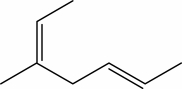
A)1
B)2
C)3
D)4
E)5
A)1
B)2
C)3
D)4
E)5

Question
Question
Question
What is the degree of unsaturation of the following molecule? 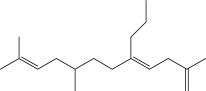
A)1
B)2
C)3
D)4
E)5
A)1
B)2
C)3
D)4
E)5
Question
Which of the following has the highest degree of unsaturation?
A)
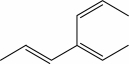
B)
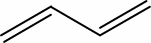
C)
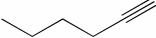
D)
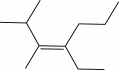
E)

A)
B)
C)
D)
E)
Question
Question
Iso-octane has the following structure.In this structure,how many carbon atoms are bonded to three other carbon atoms? 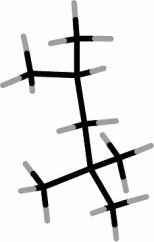
A)0
B)1
C)2
D)3
E)4
A)0
B)1
C)2
D)3
E)4
Question
Which of the following structures is an unsaturated hydrocarbon?
A)
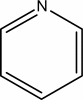
B)

C)
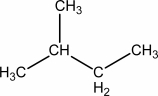
D)

E)
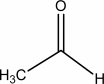
A)
B)
C)
D)
E)
Question
Question
Question
Which of the following are true regarding cyclohexane,whose carbon skeleton is shown? 
I.The molecule is flat.
II.Each carbon is bonded to four other atoms.
III.Each carbon is sp3 hybridized.
A)I only
B)II only
C)III only
D)II and III only
E)I,II,and III are all true.
I.The molecule is flat.
II.Each carbon is bonded to four other atoms.
III.Each carbon is sp3 hybridized.
A)I only
B)II only
C)III only
D)II and III only
E)I,II,and III are all true.
Question
Question
Question
Question
Question
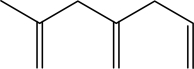
What is the degree of unsaturation of CH2  CH - C
  CH?
CH?
A)1
B)2
C)3
D)4
E)5
CH - C CH?A)1
B)2
C)3
D)4
E)5
Question
Question
Question
Question
Question
What is the systematic name of the molecule shown? 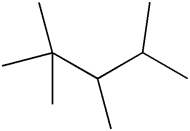
A)2,2,3,4-tetramethylpentane
B)2,3,4,4-tetramethylpentane
C)1,2,3,4,4-pentamethylbutane
D)1,1,1,2,3,3-hexamethylpropane
E)2-tert-butyl-3-methylbutane
A)2,2,3,4-tetramethylpentane
B)2,3,4,4-tetramethylpentane
C)1,2,3,4,4-pentamethylbutane
D)1,1,1,2,3,3-hexamethylpropane
E)2-tert-butyl-3-methylbutane
Question
Which one of the following is not a structural isomer of octane?
A)
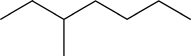
B)
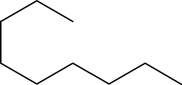
C)
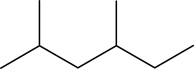
D)
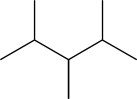
E)
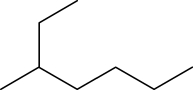
A)
B)
C)
D)
E)
Question
Question
Question
What is NOT a correct formula for the compound illustrated below? 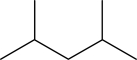
A)CH3(CH2)5CH3
B)(CH3)2CHCH2CH(CH3)2
C)CH3CH(CH3)CH2CH(CH3)CH3
D)C7H16
E)
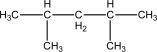
A)CH3(CH2)5CH3
B)(CH3)2CHCH2CH(CH3)2
C)CH3CH(CH3)CH2CH(CH3)CH3
D)C7H16
E)
Question
What is the systematic name of the molecule shown? 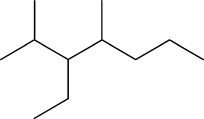
A)4-methyl-5-isopropylheptane
B)3-propyl-4-methylheptane
C)2-methyl-3,4-diethylpentane
D)2,4-dimethyl-3-ethylheptane
E)3-ethyl-2,4-dimethylheptane
A)4-methyl-5-isopropylheptane
B)3-propyl-4-methylheptane
C)2-methyl-3,4-diethylpentane
D)2,4-dimethyl-3-ethylheptane
E)3-ethyl-2,4-dimethylheptane
Question
Question
Question
Question
What is the systematic name of the molecule shown? 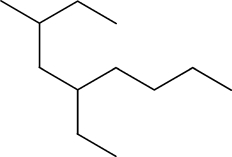
A)3-methyl-5-butylheptane
B)2,4-diethyloctane
C)2-methyl-4-ethylhexane
D)3-methyl-5-ethylnonane
E)4-ethyl-7-methylnonane
A)3-methyl-5-butylheptane
B)2,4-diethyloctane
C)2-methyl-4-ethylhexane
D)3-methyl-5-ethylnonane
E)4-ethyl-7-methylnonane
Question
Question
Question
Question
Determine the number of carbons in the longest chain for the following molecule. 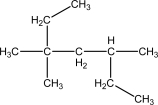
A)5
B)6
C)7
D)8
E)10
A)5
B)6
C)7
D)8
E)10
Question
What is the molecular formula for the compound illustrated below? 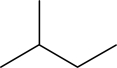
A)C5H8
B)C5H9
C)C5H10
D)C5H11
E)C5H12
A)C5H8
B)C5H9
C)C5H10
D)C5H11
E)C5H12
Question
Which pair shows two different molecules?
A)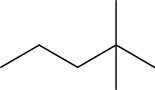 CH3(CH2)2C(CH3)3
B)
C)
D)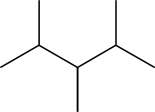 (CH3)2CHCH(CH3)CH(CH3)2
E)
A)
CH3(CH2)2C(CH3)3B)
C)
D)
(CH3)2CHCH(CH3)CH(CH3)2E)
Question
Question
Question
Determine the number of carbons in the longest chain for the following molecule . 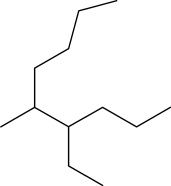
A)6
B)7
C)8
D)9
E)10
A)6
B)7
C)8
D)9
E)10
Question
Which of the following pairs of molecules are NOT members of a homologous series?
A)
B)
C)
D)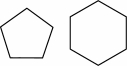
E)
A)
B)
C)
D)
E)
Question
For each of the numbered bonds in the figure below,identify whether the bond is cis,trans,or neither cis nor trans. 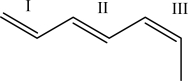
A)I-cis; II-trans; III-cis
B)I-trans; II-cis; III-trans
C)I-neither; II-trans; III-cis
D)I-neither; II-cis; III-trans
E)I-neither; II-cis; III-cis
A)I-cis; II-trans; III-cis
B)I-trans; II-cis; III-trans
C)I-neither; II-trans; III-cis
D)I-neither; II-cis; III-trans
E)I-neither; II-cis; III-cis
Question
Where is the carbon-carbon double bond in the hydrocarbon shown? 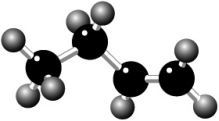
A)on the left
B)in the middle
C)on the right
D)on each bond
E)spread over all three bonds because of resonance
A)on the left
B)in the middle
C)on the right
D)on each bond
E)spread over all three bonds because of resonance
Question
Question
Which of the following statements regarding alkenes and alkynes is NOT correct?
A)Alkenes and alkynes are typically present in large amounts in crude oil.
B)Alkenes are commonly derived from plant sources.
C)Alkynes are not common in nature due to the reactivity of the C C bond.
D)Alkanes can be dehydrogenated to give alkenes and alkynes.
E)Hydrocarbon reactivity increases in the order alkanes < alkenes < alkynes.
A)Alkenes and alkynes are typically present in large amounts in crude oil.
B)Alkenes are commonly derived from plant sources.
C)Alkynes are not common in nature due to the reactivity of the C
C bond.D)Alkanes can be dehydrogenated to give alkenes and alkynes.
E)Hydrocarbon reactivity increases in the order alkanes < alkenes < alkynes.
Question
Question
What is the molecular formula for the compound illustrated below? 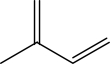
A)C5H7
B)C5H8
C)C5H9
D)C5H10
E)C5H23
A)C5H7
B)C5H8
C)C5H9
D)C5H10
E)C5H23
Question
A molecule with the formula C7H14 was found to have carbons that were all identical in terms of structure.That is,each carbon atom was bonded to exactly the same kinds of atoms as all the rest.What is a reasonable structure for this molecule?
A)CH3(CH2)5CH3
B)
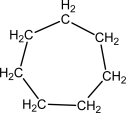
C)CH2(CH2)5CH2
D)(CH3)2CCH2C(CH3)2
E)

A)CH3(CH2)5CH3
B)
C)CH2(CH2)5CH2
D)(CH3)2CCH2C(CH3)2
E)
Question
Question
Name this molecule. 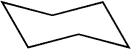
A)dodecane
B)trans-cyclohexane
C)puckerane
D)cyclohexane (chair conformation)
E)cyclohexane (boat conformation)
A)dodecane
B)trans-cyclohexane
C)puckerane
D)cyclohexane (chair conformation)
E)cyclohexane (boat conformation)
Question
Question
Question
Question
What is the degree of unsaturation of the following molecule? 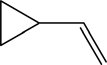
A)1
B)2
C)3
D)4
E)5
A)1
B)2
C)3
D)4
E)5
Question
Question
Which of the following pairs show constitutional isomers?
I.
II.
III.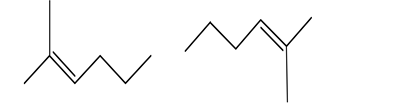
IV.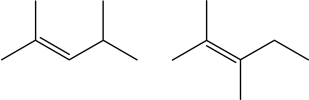
A)I
B)II
C)I and III
D)II and III
E)IV
I.
II.
III.
IV.
A)I
B)II
C)I and III
D)II and III
E)IV
Question
What is the molecular formula for the following compound? 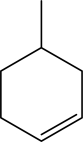
A)C6H11
B)C6H12
C)C7H11
D)C7H12
E)C7H14
A)C6H11
B)C6H12
C)C7H11
D)C7H12
E)C7H14
Question
Does this molecule have both cis and trans isomers? 
A)Yes,this is the cis isomer.
B)Yes,this is the trans isomer.
C)No,it has only the cis isomer.
D)No,it has only the trans isomer.
E)No,this molecule does not have cis-trans isomerism.
A)Yes,this is the cis isomer.
B)Yes,this is the trans isomer.
C)No,it has only the cis isomer.
D)No,it has only the trans isomer.
E)No,this molecule does not have cis-trans isomerism.
Question
Which of the following has the lowest ring strain?
A)

B)

C)

D)

E)

A)
B)
C)
D)
E)
Question
Name this molecule. 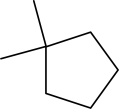
A)1,2-methylcyclopentane
B)2-cyclopentylpropane
C)1,1-dimethylcyclopentane
D)2-cyclopentyl-3-methylethane
E)1,2-cyclomethylpentane
A)1,2-methylcyclopentane
B)2-cyclopentylpropane
C)1,1-dimethylcyclopentane
D)2-cyclopentyl-3-methylethane
E)1,2-cyclomethylpentane
Question
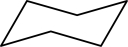
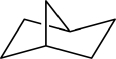
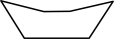
Which of the following molecular structures is probably the most stable?
A)
B)

C)
D)
E)

A)
B)
C)
D)
E)
Question
Question
Which of the following structures represents cyclohexene?
A)

B)

C)

D)

E)

A)
B)
C)
D)
E)
Question
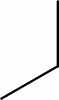
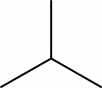
Which of the following monomers is used in making the polymer illustrated below? 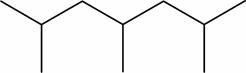
A)
B)
C)
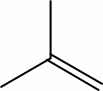
D)

E)
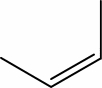
A)
B)
C)
D)
E)
Question
Name the compound. 
A)cis-3-octene
B)trans-3-octene
C)cis-5-octene
D)trans-5-octene
E)1-ethyl-2-butyl ethylene
A)cis-3-octene
B)trans-3-octene
C)cis-5-octene
D)trans-5-octene
E)1-ethyl-2-butyl ethylene
Question
Question
Question
Question
Name the compound. 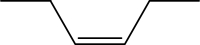
A)trans-3-hexene
B)cis-3-hexene
C)trans-4-hexene
D)cis-4-hexene
E)1,2-diethylethylene
A)trans-3-hexene
B)cis-3-hexene
C)trans-4-hexene
D)cis-4-hexene
E)1,2-diethylethylene
Question
Name the compound. 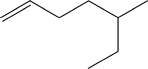
A)3-methyl-6-heptene
B)5-ethyl-1-hexene
C)5-methyl-1-heptene
D)2-ethyl-5-hexene
E)3-methylpentylethylene
A)3-methyl-6-heptene
B)5-ethyl-1-hexene
C)5-methyl-1-heptene
D)2-ethyl-5-hexene
E)3-methylpentylethylene
Question
Question
Question
Which of the following shows a small section of polyethylene?
A)

B)

C)

D)

E)
A)
B)
C)
D)
E)
Question
Question
Name the compound. 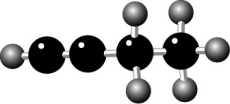
A)1-butene
B)1-butyne
C)2-butene
D)2-butyne
E)butane
A)1-butene
B)1-butyne
C)2-butene
D)2-butyne
E)butane
Question
Question
Question
Question
Which of the following is NOT a vinyl-based polymer?
A)
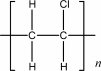
B)
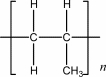
C)
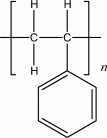
D)
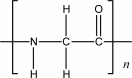
E)
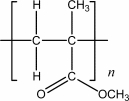
A)
B)
C)
D)
E)
Question
Question
Is cyclooctatetraene considered aromatic? The most stable structure at room temperature is shown. 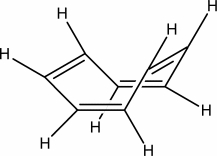
A)Yes,because there are alternating single and double carbon-carbon bonds.
B)Yes,because the electrons in the bonds are delocalized over the ring structure.
C)Yes,there is an even number of electrons involved in bonding.
D)No,the electrons in the bonds are not delocalized over the ring structure.
E)No,the carbons are not sp2 hybridized.
A)Yes,because there are alternating single and double carbon-carbon bonds.
B)Yes,because the electrons in the bonds are delocalized over the ring structure.
C)Yes,there is an even number of electrons involved in bonding.
D)No,the electrons in the bonds are not delocalized over the ring structure.
E)No,the carbons are not sp2 hybridized.

Unlock Deck
Sign up to unlock the cards in this deck!
Unlock Deck
Unlock Deck
1/178

Play

Full screen (f)
Deck 19: Organic Chemistry-Fuels, pharmaceuticals, and Modern Materials
1
What is the degree of unsaturation of the following molecule?
A)1
B)2
C)3
D)4
E)5
A)1
B)2
C)3
D)4
E)5
2
2
Organic chemistry encompasses the chemistry of all ________
A)hydrocarbons.
B)functional groups.
C)monomers,oligomers,and polymers.
D)naturally occurring compounds.
E)carbon compounds.
A)hydrocarbons.
B)functional groups.
C)monomers,oligomers,and polymers.
D)naturally occurring compounds.
E)carbon compounds.
carbon compounds.
3
A hydrocarbon is a compound that contains ________
A)carbon with hydrogen and oxygen in the ratio 2:1.
B)carbon with hydrogen and oxygen in any ratio.
C)only carbon and hydrogen.
D)carbon,hydrogen,and any functional groups.
E)carbon and any other elements.
A)carbon with hydrogen and oxygen in the ratio 2:1.
B)carbon with hydrogen and oxygen in any ratio.
C)only carbon and hydrogen.
D)carbon,hydrogen,and any functional groups.
E)carbon and any other elements.
only carbon and hydrogen.
4
What is the degree of unsaturation of the following molecule?
A)1
B)2
C)3
D)4
E)5
A)1
B)2
C)3
D)4
E)5
Unlock Deck
Unlock for access to all 178 flashcards in this deck.
Unlock Deck
k this deck
5
Which of the following has the highest degree of unsaturation?
A)
B)
C)
D)
E)
A)
B)
C)
D)
E)
Unlock Deck
Unlock for access to all 178 flashcards in this deck.
Unlock Deck
k this deck
6
Which of the following statements regarding hydrocarbons is NOT correct?
A)Alkanes contain carbons that are sp hybridized.
B)Alkynes contain at least one carbon-carbon triple bond.
C)The carbons in the functional group characterizing an alkene are sp2 hybridized.
D)The general chemical formula for alkanes is CnH2n+2.
E)The general formula for cycloalkanes is CnH2n.
A)Alkanes contain carbons that are sp hybridized.
B)Alkynes contain at least one carbon-carbon triple bond.
C)The carbons in the functional group characterizing an alkene are sp2 hybridized.
D)The general chemical formula for alkanes is CnH2n+2.
E)The general formula for cycloalkanes is CnH2n.
Unlock Deck
Unlock for access to all 178 flashcards in this deck.
Unlock Deck
k this deck
7
Iso-octane has the following structure.In this structure,how many carbon atoms are bonded to three other carbon atoms?
A)0
B)1
C)2
D)3
E)4
A)0
B)1
C)2
D)3
E)4
Unlock Deck
Unlock for access to all 178 flashcards in this deck.
Unlock Deck
k this deck
8
Which of the following structures is an unsaturated hydrocarbon?
A)
B)
C)
D)
E)
A)
B)
C)
D)
E)
Unlock Deck
Unlock for access to all 178 flashcards in this deck.
Unlock Deck
k this deck
9
Of an unknown compound containing only carbon and hydrogen,0.123 moles was found to stoichiometrically react with 0.123 moles of hydrogen gas.Based on these data,we know that the unknown compound must be ________
A)an alkane.
B)an alkene.
C)an alkyne.
D)either an alkane or an alkene.
E)either an alkene or an alkyne.
A)an alkane.
B)an alkene.
C)an alkyne.
D)either an alkane or an alkene.
E)either an alkene or an alkyne.
Unlock Deck
Unlock for access to all 178 flashcards in this deck.
Unlock Deck
k this deck
10
The C - C - C bond angles in octane (CH3CH2CH2CH2CH2CH2CH2CH3)are ________
A)180 .
B)120 .
C)90 .
D)109.5 .
E)60 .
A)180 .
B)120 .
C)90 .
D)109.5 .
E)60 .
Unlock Deck
Unlock for access to all 178 flashcards in this deck.
Unlock Deck
k this deck
11
Which of the following are true regarding cyclohexane,whose carbon skeleton is shown?
I.The molecule is flat.
II.Each carbon is bonded to four other atoms.
III.Each carbon is sp3 hybridized.
A)I only
B)II only
C)III only
D)II and III only
E)I,II,and III are all true.
I.The molecule is flat.
II.Each carbon is bonded to four other atoms.
III.Each carbon is sp3 hybridized.
A)I only
B)II only
C)III only
D)II and III only
E)I,II,and III are all true.
Unlock Deck
Unlock for access to all 178 flashcards in this deck.
Unlock Deck
k this deck
12
Which of the following tends to be true of polymers but not small molecules?
I.Variable instead of constant composition
II.A poorly defined melting point
III.Solid state regions that are disordered
A)I
B)II
C)III
D)I,II,and III
E)None of these,as polymers are molecules just like small molecules,only bigger.
I.Variable instead of constant composition
II.A poorly defined melting point
III.Solid state regions that are disordered
A)I
B)II
C)III
D)I,II,and III
E)None of these,as polymers are molecules just like small molecules,only bigger.
Unlock Deck
Unlock for access to all 178 flashcards in this deck.
Unlock Deck
k this deck
13
When 1 mol of an alkene with one degree of unsaturation is hydrogenated,how many moles of hydrogen gas react?
A)0 mol
B)1.5 mol
C)0.5 mol
D)1.0 mol
E)2.0 mol
A)0 mol
B)1.5 mol
C)0.5 mol
D)1.0 mol
E)2.0 mol
Unlock Deck
Unlock for access to all 178 flashcards in this deck.
Unlock Deck
k this deck
14
A compound composed solely of carbon and hydrogen that is unsaturated could be ________.Choose the best answer.
A)an alkane
B)an alkene
C)an alkyne
D)either an alkane or an alkene
E)either an alkene or an alkyne
A)an alkane
B)an alkene
C)an alkyne
D)either an alkane or an alkene
E)either an alkene or an alkyne
Unlock Deck
Unlock for access to all 178 flashcards in this deck.
Unlock Deck
k this deck
15
A subunit of an organic compound that confers particular chemical and physical properties is termed ________
A)a monomer.
B)an oligomer.
C)a functional group.
D)a synthetic unit.
E)an isomer.
A)a monomer.
B)an oligomer.
C)a functional group.
D)a synthetic unit.
E)an isomer.
Unlock Deck
Unlock for access to all 178 flashcards in this deck.
Unlock Deck
k this deck
16
What is the degree of unsaturation of CH2 CH - C CH?
A)1
B)2
C)3
D)4
E)5
CH - C CH?A)1
B)2
C)3
D)4
E)5
Unlock Deck
Unlock for access to all 178 flashcards in this deck.
Unlock Deck
k this deck
17
Which of the following molecules is NOT considered "organic"?
A)CaC2
B)CH3NH2
C)(CH3)2O
D)NaCH3(CH2)4COO
E)(NH2)2CO
A)CaC2
B)CH3NH2
C)(CH3)2O
D)NaCH3(CH2)4COO
E)(NH2)2CO
Unlock Deck
Unlock for access to all 178 flashcards in this deck.
Unlock Deck
k this deck
18
Of an unknown compound containing only carbon and hydrogen,0.123 moles was found to stoichiometrically react with 0.246 moles of hydrogen gas.Based on these data,we know that the unknown compound must be ________
A)an alkane.
B)an alkene.
C)an alkyne.
D)either an alkane or an alkene.
E)either an alkene or an alkyne.
A)an alkane.
B)an alkene.
C)an alkyne.
D)either an alkane or an alkene.
E)either an alkene or an alkyne.
Unlock Deck
Unlock for access to all 178 flashcards in this deck.
Unlock Deck
k this deck
19
A saturated compound composed solely of carbon and hydrogen must be ________
A)an alkane.
B)an alkene.
C)an alkyne.
D)either an alkane or an alkene.
E)either an alkene or an alkyne.
A)an alkane.
B)an alkene.
C)an alkyne.
D)either an alkane or an alkene.
E)either an alkene or an alkyne.
Unlock Deck
Unlock for access to all 178 flashcards in this deck.
Unlock Deck
k this deck
20
The basic building block of a polymer is called ________
A)a functional group.
B)a monomer.
C)a monotone.
D)an oligomer.
E)an addition.
A)a functional group.
B)a monomer.
C)a monotone.
D)an oligomer.
E)an addition.
Unlock Deck
Unlock for access to all 178 flashcards in this deck.
Unlock Deck
k this deck
21
What is the systematic name of the molecule shown?
A)2,2,3,4-tetramethylpentane
B)2,3,4,4-tetramethylpentane
C)1,2,3,4,4-pentamethylbutane
D)1,1,1,2,3,3-hexamethylpropane
E)2-tert-butyl-3-methylbutane
A)2,2,3,4-tetramethylpentane
B)2,3,4,4-tetramethylpentane
C)1,2,3,4,4-pentamethylbutane
D)1,1,1,2,3,3-hexamethylpropane
E)2-tert-butyl-3-methylbutane
Unlock Deck
Unlock for access to all 178 flashcards in this deck.
Unlock Deck
k this deck
22
Which one of the following is not a structural isomer of octane?
A)
B)
C)
D)
E)
A)
B)
C)
D)
E)
Unlock Deck
Unlock for access to all 178 flashcards in this deck.
Unlock Deck
k this deck
23
Without working out all the structures,which has the larger number of structural isomers,C14H30 or C15H32?
A)C14H30
B)C15H32
C)They have the same number of isomers.
D)There is no way to tell without working out all the structures.
E)It depends on the number of multiple bonds in the molecule.
A)C14H30
B)C15H32
C)They have the same number of isomers.
D)There is no way to tell without working out all the structures.
E)It depends on the number of multiple bonds in the molecule.
Unlock Deck
Unlock for access to all 178 flashcards in this deck.
Unlock Deck
k this deck
24
Name the compound with the structural formula CH3(CH2)16CH3.
A)n-octane
B)n-hexadecane
C)n-octadecane
D)n-decane
E)1,16-dimethylhexadecane
A)n-octane
B)n-hexadecane
C)n-octadecane
D)n-decane
E)1,16-dimethylhexadecane
Unlock Deck
Unlock for access to all 178 flashcards in this deck.
Unlock Deck
k this deck
25
What is NOT a correct formula for the compound illustrated below?
A)CH3(CH2)5CH3
B)(CH3)2CHCH2CH(CH3)2
C)CH3CH(CH3)CH2CH(CH3)CH3
D)C7H16
E)
A)CH3(CH2)5CH3
B)(CH3)2CHCH2CH(CH3)2
C)CH3CH(CH3)CH2CH(CH3)CH3
D)C7H16
E)
Unlock Deck
Unlock for access to all 178 flashcards in this deck.
Unlock Deck
k this deck
26
What is the systematic name of the molecule shown?
A)4-methyl-5-isopropylheptane
B)3-propyl-4-methylheptane
C)2-methyl-3,4-diethylpentane
D)2,4-dimethyl-3-ethylheptane
E)3-ethyl-2,4-dimethylheptane
A)4-methyl-5-isopropylheptane
B)3-propyl-4-methylheptane
C)2-methyl-3,4-diethylpentane
D)2,4-dimethyl-3-ethylheptane
E)3-ethyl-2,4-dimethylheptane
Unlock Deck
Unlock for access to all 178 flashcards in this deck.
Unlock Deck
k this deck
27
What is the formula for n-nonane?
A)CH3(CH2)9CH3
B)CH3(CH2)7CH3
C)CH3(CH2)17CH3
D)CH3(CH2)5CH3
E)CH3(CH2)8CH3
A)CH3(CH2)9CH3
B)CH3(CH2)7CH3
C)CH3(CH2)17CH3
D)CH3(CH2)5CH3
E)CH3(CH2)8CH3
Unlock Deck
Unlock for access to all 178 flashcards in this deck.
Unlock Deck
k this deck
28
The -CH2- unit is known as ________
A)a methyl group.
B)a methylene group.
C)an acetylene group.
D)an alkyne group.
E)an alkene group.
A)a methyl group.
B)a methylene group.
C)an acetylene group.
D)an alkyne group.
E)an alkene group.
Unlock Deck
Unlock for access to all 178 flashcards in this deck.
Unlock Deck
k this deck
29
Which of the following is a methyl group?
A)"-CH2"
B)"=CH2"
C)"-CH2-"
D)"=CH="
E)"-CH3"
A)"-CH2"
B)"=CH2"
C)"-CH2-"
D)"=CH="
E)"-CH3"
Unlock Deck
Unlock for access to all 178 flashcards in this deck.
Unlock Deck
k this deck
30
What is the systematic name of the molecule shown?
A)3-methyl-5-butylheptane
B)2,4-diethyloctane
C)2-methyl-4-ethylhexane
D)3-methyl-5-ethylnonane
E)4-ethyl-7-methylnonane
A)3-methyl-5-butylheptane
B)2,4-diethyloctane
C)2-methyl-4-ethylhexane
D)3-methyl-5-ethylnonane
E)4-ethyl-7-methylnonane
Unlock Deck
Unlock for access to all 178 flashcards in this deck.
Unlock Deck
k this deck
31
Most simple ionic compounds that are soluble in water are not soluble in organic solvents.However,replacing a common cation such as Na+ with an alkyl ammonium ion with four alkyl groups greatly enhances solubility of the ionic compound in many organic solvents.Which formula represents the tetrabutylammonium ion that is found in tetrabutylammonium bromide?
A)[(CH3)4N]+
B)[(CH3CH2)4N]+
C)[(CH3(CH2)2)4N]+
D)[(CH3(CH2)3)4N]+
E)[C(CH3)3NH2]+
A)[(CH3)4N]+
B)[(CH3CH2)4N]+
C)[(CH3(CH2)2)4N]+
D)[(CH3(CH2)3)4N]+
E)[C(CH3)3NH2]+
Unlock Deck
Unlock for access to all 178 flashcards in this deck.
Unlock Deck
k this deck
32
Which is NOT true about n-alkanes?
A)Their formulas are all CnH2n+2.
B)All the carbon atoms are centers of tetrahedral geometry.
C)Their melting points increase with the number of carbon atoms.
D)Their vapor pressures increase with the number of carbon atoms.
E)All of the carbons are sp3 hybridized.
A)Their formulas are all CnH2n+2.
B)All the carbon atoms are centers of tetrahedral geometry.
C)Their melting points increase with the number of carbon atoms.
D)Their vapor pressures increase with the number of carbon atoms.
E)All of the carbons are sp3 hybridized.
Unlock Deck
Unlock for access to all 178 flashcards in this deck.
Unlock Deck
k this deck
33
Which of the following is true about normal alkanes?
A)They all exhibit strong hydrogen bonding with one another and with water.
B)They all contain carbon,hydrogen,and oxygen in consistent ratios.
C)Some are gases,some are liquids,and some are solids at room temperature.
D)Some are linear,some are branched,and some are cyclic at room temperature.
E)They have the formula CnH2n+2 if they are linear or branched or CnH2n if they are cyclic.
A)They all exhibit strong hydrogen bonding with one another and with water.
B)They all contain carbon,hydrogen,and oxygen in consistent ratios.
C)Some are gases,some are liquids,and some are solids at room temperature.
D)Some are linear,some are branched,and some are cyclic at room temperature.
E)They have the formula CnH2n+2 if they are linear or branched or CnH2n if they are cyclic.
Unlock Deck
Unlock for access to all 178 flashcards in this deck.
Unlock Deck
k this deck
34
Determine the number of carbons in the longest chain for the following molecule.
A)5
B)6
C)7
D)8
E)10
A)5
B)6
C)7
D)8
E)10
Unlock Deck
Unlock for access to all 178 flashcards in this deck.
Unlock Deck
k this deck
35
What is the molecular formula for the compound illustrated below?
A)C5H8
B)C5H9
C)C5H10
D)C5H11
E)C5H12
A)C5H8
B)C5H9
C)C5H10
D)C5H11
E)C5H12
Unlock Deck
Unlock for access to all 178 flashcards in this deck.
Unlock Deck
k this deck
36
Which pair shows two different molecules?
A) CH3(CH2)2C(CH3)3
B)
C)
D) (CH3)2CHCH(CH3)CH(CH3)2
E)
A)
CH3(CH2)2C(CH3)3B)
C)
D)
(CH3)2CHCH(CH3)CH(CH3)2E)
Unlock Deck
Unlock for access to all 178 flashcards in this deck.
Unlock Deck
k this deck
37
A primary difference between branched chain alkanes and normal alkanes is ________
A)the ratio of hydrogen to carbon.
B)the number of hydrogen atoms bonded to non-terminal carbon atoms.
C)the orbital hybridization of the carbon atoms.
D)the bond angles around each carbon atom.
E)the degree to which electrons are delocalized.
A)the ratio of hydrogen to carbon.
B)the number of hydrogen atoms bonded to non-terminal carbon atoms.
C)the orbital hybridization of the carbon atoms.
D)the bond angles around each carbon atom.
E)the degree to which electrons are delocalized.
Unlock Deck
Unlock for access to all 178 flashcards in this deck.
Unlock Deck
k this deck
38
In a hydrogenation experiment,50.00 grams of a straight-chain hydrocarbon containing 8 carbon atoms reacts with 1.829 grams of hydrogen gas.The hydrocarbon probably has the chemical formula ________
A)C8H18
B)C8H16
C)C8H14
D)C8H10
E)Insufficient information is provided.
A)C8H18
B)C8H16
C)C8H14
D)C8H10
E)Insufficient information is provided.
Unlock Deck
Unlock for access to all 178 flashcards in this deck.
Unlock Deck
k this deck
39
Determine the number of carbons in the longest chain for the following molecule .
A)6
B)7
C)8
D)9
E)10
A)6
B)7
C)8
D)9
E)10
Unlock Deck
Unlock for access to all 178 flashcards in this deck.
Unlock Deck
k this deck
40
Which of the following pairs of molecules are NOT members of a homologous series?
A)
B)
C)
D)
E)
A)
B)
C)
D)
E)
Unlock Deck
Unlock for access to all 178 flashcards in this deck.
Unlock Deck
k this deck
41
For each of the numbered bonds in the figure below,identify whether the bond is cis,trans,or neither cis nor trans.
A)I-cis; II-trans; III-cis
B)I-trans; II-cis; III-trans
C)I-neither; II-trans; III-cis
D)I-neither; II-cis; III-trans
E)I-neither; II-cis; III-cis
A)I-cis; II-trans; III-cis
B)I-trans; II-cis; III-trans
C)I-neither; II-trans; III-cis
D)I-neither; II-cis; III-trans
E)I-neither; II-cis; III-cis
Unlock Deck
Unlock for access to all 178 flashcards in this deck.
Unlock Deck
k this deck
42
Where is the carbon-carbon double bond in the hydrocarbon shown?
A)on the left
B)in the middle
C)on the right
D)on each bond
E)spread over all three bonds because of resonance
A)on the left
B)in the middle
C)on the right
D)on each bond
E)spread over all three bonds because of resonance
Unlock Deck
Unlock for access to all 178 flashcards in this deck.
Unlock Deck
k this deck
43
Which of the following statements regarding the reactions of alkanes,alkenes,and alkynes is NOT correct?
A)The electrons in the bonds of alkenes and alkynes are more accessible to reactants than electrons in the bonds in alkanes.
B)Alkenes and alkynes readily undergo addition reactions with molecules such as HCl,HBr,and HI.
C)An example of an addition reaction is H2C=CH2 + HCl H3C-CH2Cl.
D)Alkenes and alkynes are important intermediates in the syntheses of other organic molecules.
E)Alkanes readily undergo addition reactions with highly reactive molecules such as F2.
A)The electrons in the bonds of alkenes and alkynes are more accessible to reactants than electrons in the bonds in alkanes.
B)Alkenes and alkynes readily undergo addition reactions with molecules such as HCl,HBr,and HI.
C)An example of an addition reaction is H2C=CH2 + HCl H3C-CH2Cl.
D)Alkenes and alkynes are important intermediates in the syntheses of other organic molecules.
E)Alkanes readily undergo addition reactions with highly reactive molecules such as F2.
Unlock Deck
Unlock for access to all 178 flashcards in this deck.
Unlock Deck
k this deck
44
Which of the following statements regarding alkenes and alkynes is NOT correct?
A)Alkenes and alkynes are typically present in large amounts in crude oil.
B)Alkenes are commonly derived from plant sources.
C)Alkynes are not common in nature due to the reactivity of the C C bond.
D)Alkanes can be dehydrogenated to give alkenes and alkynes.
E)Hydrocarbon reactivity increases in the order alkanes < alkenes < alkynes.
A)Alkenes and alkynes are typically present in large amounts in crude oil.
B)Alkenes are commonly derived from plant sources.
C)Alkynes are not common in nature due to the reactivity of the C
C bond.D)Alkanes can be dehydrogenated to give alkenes and alkynes.
E)Hydrocarbon reactivity increases in the order alkanes < alkenes < alkynes.
Unlock Deck
Unlock for access to all 178 flashcards in this deck.
Unlock Deck
k this deck
45
How many structural (constitutional)isomers are there for propylene,and why?
A)two,because of resonance
B)two,because of geometrical isomerism
C)two,because the double bond can be in either one of two locations
D)none,because the two skeletal structures can be superimposed
E)none,because double bonds always occur on the right in alkenes
A)two,because of resonance
B)two,because of geometrical isomerism
C)two,because the double bond can be in either one of two locations
D)none,because the two skeletal structures can be superimposed
E)none,because double bonds always occur on the right in alkenes
Unlock Deck
Unlock for access to all 178 flashcards in this deck.
Unlock Deck
k this deck
46
What is the molecular formula for the compound illustrated below?
A)C5H7
B)C5H8
C)C5H9
D)C5H10
E)C5H23
A)C5H7
B)C5H8
C)C5H9
D)C5H10
E)C5H23
Unlock Deck
Unlock for access to all 178 flashcards in this deck.
Unlock Deck
k this deck
47
A molecule with the formula C7H14 was found to have carbons that were all identical in terms of structure.That is,each carbon atom was bonded to exactly the same kinds of atoms as all the rest.What is a reasonable structure for this molecule?
A)CH3(CH2)5CH3
B)
C)CH2(CH2)5CH2
D)(CH3)2CCH2C(CH3)2
E)
A)CH3(CH2)5CH3
B)
C)CH2(CH2)5CH2
D)(CH3)2CCH2C(CH3)2
E)
Unlock Deck
Unlock for access to all 178 flashcards in this deck.
Unlock Deck
k this deck
48
Crude oil is composed mostly of ________
A)liquefied carbon.
B)liquefied rock and soil.
C)compounds composed of carbon and hydrogen.
D)decomposed anaerobic bacteria.
E)compounds composed of carbon,hydrogen,oxygen,and nitrogen.
A)liquefied carbon.
B)liquefied rock and soil.
C)compounds composed of carbon and hydrogen.
D)decomposed anaerobic bacteria.
E)compounds composed of carbon,hydrogen,oxygen,and nitrogen.
Unlock Deck
Unlock for access to all 178 flashcards in this deck.
Unlock Deck
k this deck
49
Name this molecule.
A)dodecane
B)trans-cyclohexane
C)puckerane
D)cyclohexane (chair conformation)
E)cyclohexane (boat conformation)
A)dodecane
B)trans-cyclohexane
C)puckerane
D)cyclohexane (chair conformation)
E)cyclohexane (boat conformation)
Unlock Deck
Unlock for access to all 178 flashcards in this deck.
Unlock Deck
k this deck
50
Cyclic alkanes differ from normal alkanes in ________
A)the ratio of hydrogen to carbon.
B)their utility as a combustible fuel.
C)the orbital hybridization on the carbon atoms.
D)the number of hydrogens bonded to non-terminal carbon atoms.
E)the degree to which electrons are delocalized.
A)the ratio of hydrogen to carbon.
B)their utility as a combustible fuel.
C)the orbital hybridization on the carbon atoms.
D)the number of hydrogens bonded to non-terminal carbon atoms.
E)the degree to which electrons are delocalized.
Unlock Deck
Unlock for access to all 178 flashcards in this deck.
Unlock Deck
k this deck
51
Consider the 1,2-dichloro derivative of ethylene in which one of the hydrogen atoms on each of the carbon atoms in ethylene is substituted with a chlorine atom,giving the structural formula CHClCHCl.Which of the following is true?
A)The trans isomer is more polar.
B)The cis isomer is more polar.
C)Neither cis nor trans isomers are polar.
D)Both cis and trans isomers are equally polar.
E)There are no isomers for this molecule.
A)The trans isomer is more polar.
B)The cis isomer is more polar.
C)Neither cis nor trans isomers are polar.
D)Both cis and trans isomers are equally polar.
E)There are no isomers for this molecule.
Unlock Deck
Unlock for access to all 178 flashcards in this deck.
Unlock Deck
k this deck
52
Which of the following pairs has the same molecular formula?
A)hexene and cyclohexane
B)octane and cyclooctane
C)hexane and benzene
D)hexane and cyclohexene
E)methyl and methylene
A)hexene and cyclohexane
B)octane and cyclooctane
C)hexane and benzene
D)hexane and cyclohexene
E)methyl and methylene
Unlock Deck
Unlock for access to all 178 flashcards in this deck.
Unlock Deck
k this deck
53
What is the degree of unsaturation of the following molecule?
A)1
B)2
C)3
D)4
E)5
A)1
B)2
C)3
D)4
E)5
Unlock Deck
Unlock for access to all 178 flashcards in this deck.
Unlock Deck
k this deck
54
Which of the following is NOT likely to be a component of a natural gas deposit?
A)CH4
B)C3H8
C)C4H8
D)C4H10
E)C8H18
A)CH4
B)C3H8
C)C4H8
D)C4H10
E)C8H18
Unlock Deck
Unlock for access to all 178 flashcards in this deck.
Unlock Deck
k this deck
55
Which of the following pairs show constitutional isomers?
I.
II.
III.
IV.
A)I
B)II
C)I and III
D)II and III
E)IV
I.
II.
III.
IV.
A)I
B)II
C)I and III
D)II and III
E)IV
Unlock Deck
Unlock for access to all 178 flashcards in this deck.
Unlock Deck
k this deck
56
What is the molecular formula for the following compound?
A)C6H11
B)C6H12
C)C7H11
D)C7H12
E)C7H14
A)C6H11
B)C6H12
C)C7H11
D)C7H12
E)C7H14
Unlock Deck
Unlock for access to all 178 flashcards in this deck.
Unlock Deck
k this deck
57
Does this molecule have both cis and trans isomers?
A)Yes,this is the cis isomer.
B)Yes,this is the trans isomer.
C)No,it has only the cis isomer.
D)No,it has only the trans isomer.
E)No,this molecule does not have cis-trans isomerism.
A)Yes,this is the cis isomer.
B)Yes,this is the trans isomer.
C)No,it has only the cis isomer.
D)No,it has only the trans isomer.
E)No,this molecule does not have cis-trans isomerism.
Unlock Deck
Unlock for access to all 178 flashcards in this deck.
Unlock Deck
k this deck
58
Which of the following has the lowest ring strain?
A)
B)
C)
D)
E)
A)
B)
C)
D)
E)
Unlock Deck
Unlock for access to all 178 flashcards in this deck.
Unlock Deck
k this deck
59
Name this molecule.
A)1,2-methylcyclopentane
B)2-cyclopentylpropane
C)1,1-dimethylcyclopentane
D)2-cyclopentyl-3-methylethane
E)1,2-cyclomethylpentane
A)1,2-methylcyclopentane
B)2-cyclopentylpropane
C)1,1-dimethylcyclopentane
D)2-cyclopentyl-3-methylethane
E)1,2-cyclomethylpentane
Unlock Deck
Unlock for access to all 178 flashcards in this deck.
Unlock Deck
k this deck
60
Which of the following molecular structures is probably the most stable?
A)
B)
C)
D)
E)
A)
B)
C)
D)
E)
Unlock Deck
Unlock for access to all 178 flashcards in this deck.
Unlock Deck
k this deck
61
A homopolymer is a polymer in which ________
A)each polymer has the same mass.
B)each polymer has the same mass and structure.
C)the monomers are distributed uniformly throughout the polymer.
D)the polymers are distributed uniformly throughout the solution.
E)there is only one type of monomer unit.
A)each polymer has the same mass.
B)each polymer has the same mass and structure.
C)the monomers are distributed uniformly throughout the polymer.
D)the polymers are distributed uniformly throughout the solution.
E)there is only one type of monomer unit.
Unlock Deck
Unlock for access to all 178 flashcards in this deck.
Unlock Deck
k this deck
62
Which of the following structures represents cyclohexene?
A)
B)
C)
D)
E)
A)
B)
C)
D)
E)
Unlock Deck
Unlock for access to all 178 flashcards in this deck.
Unlock Deck
k this deck
63
Which of the following monomers is used in making the polymer illustrated below?
A)
B)
C)
D)
E)
A)
B)
C)
D)
E)
Unlock Deck
Unlock for access to all 178 flashcards in this deck.
Unlock Deck
k this deck
64
Name the compound.
A)cis-3-octene
B)trans-3-octene
C)cis-5-octene
D)trans-5-octene
E)1-ethyl-2-butyl ethylene
A)cis-3-octene
B)trans-3-octene
C)cis-5-octene
D)trans-5-octene
E)1-ethyl-2-butyl ethylene
Unlock Deck
Unlock for access to all 178 flashcards in this deck.
Unlock Deck
k this deck
65
Do carbon atoms in aromatic hydrocarbon molecules (not ions)obey the octet rule?
A)No,each carbon is bonded to only three atoms,and there are no lone pairs.
B)No,each carbon has one single bond and one double bond for a total of only six electrons.
C)Yes,each carbon obeys the octet rule.
D)Yes,but only because the double bond is counted twice owing to the resonance structures.
E)Yes,but only when one or the other resonance form dominates,not when the structure is an average of the two.
A)No,each carbon is bonded to only three atoms,and there are no lone pairs.
B)No,each carbon has one single bond and one double bond for a total of only six electrons.
C)Yes,each carbon obeys the octet rule.
D)Yes,but only because the double bond is counted twice owing to the resonance structures.
E)Yes,but only when one or the other resonance form dominates,not when the structure is an average of the two.
Unlock Deck
Unlock for access to all 178 flashcards in this deck.
Unlock Deck
k this deck
66
Naphthalene,a polyaromatic hydrocarbon,is used for mothballs.Its molecular formula is C10H8.How many fused aromatic rings does naphthalene have in its molecular structure?
A)1
B)2
C)3
D)4
E)5
A)1
B)2
C)3
D)4
E)5
Unlock Deck
Unlock for access to all 178 flashcards in this deck.
Unlock Deck
k this deck
67
How many structural isomers does toluene,C6H5CH3,have?
A)None-i.e.,there is only 1 molecule
B)2
C)3
D)4
E)5
A)None-i.e.,there is only 1 molecule
B)2
C)3
D)4
E)5
Unlock Deck
Unlock for access to all 178 flashcards in this deck.
Unlock Deck
k this deck
68
Name the compound.
A)trans-3-hexene
B)cis-3-hexene
C)trans-4-hexene
D)cis-4-hexene
E)1,2-diethylethylene
A)trans-3-hexene
B)cis-3-hexene
C)trans-4-hexene
D)cis-4-hexene
E)1,2-diethylethylene
Unlock Deck
Unlock for access to all 178 flashcards in this deck.
Unlock Deck
k this deck
69
Name the compound.
A)3-methyl-6-heptene
B)5-ethyl-1-hexene
C)5-methyl-1-heptene
D)2-ethyl-5-hexene
E)3-methylpentylethylene
A)3-methyl-6-heptene
B)5-ethyl-1-hexene
C)5-methyl-1-heptene
D)2-ethyl-5-hexene
E)3-methylpentylethylene
Unlock Deck
Unlock for access to all 178 flashcards in this deck.
Unlock Deck
k this deck
70
Consider the 1,2-dichloro derivative of ethylene in which one of the hydrogen atoms on each of the carbon atoms in ethylene is substituted with a chlorine atom,giving the structural formula CHClCHCl.Does this molecule have cis-trans isomers? Remember that ethylene does NOT.
A)yes,because the chlorines can be placed on the same or opposite sides of the double bond
B)yes,because the chlorines can be placed on either one or both of the carbons
C)no,because both the formula and bonds are the same in all skeletal structures
D)no,because the two structures can interconvert through bond rotation
E)no,because there are less than four atoms bound to each carbon
A)yes,because the chlorines can be placed on the same or opposite sides of the double bond
B)yes,because the chlorines can be placed on either one or both of the carbons
C)no,because both the formula and bonds are the same in all skeletal structures
D)no,because the two structures can interconvert through bond rotation
E)no,because there are less than four atoms bound to each carbon
Unlock Deck
Unlock for access to all 178 flashcards in this deck.
Unlock Deck
k this deck
71
Which of the following is/are true regarding aromatic hydrocarbons?
I.They are particularly stable because of delocalized bonding.
II.They are particularly stable because of their covalent network bonding.
III.They are particularly unstable,as evidenced by their tendency to evaporate.
A)I only
B)II only
C)III only
D)I and II only
E)I and III only
I.They are particularly stable because of delocalized bonding.
II.They are particularly stable because of their covalent network bonding.
III.They are particularly unstable,as evidenced by their tendency to evaporate.
A)I only
B)II only
C)III only
D)I and II only
E)I and III only
Unlock Deck
Unlock for access to all 178 flashcards in this deck.
Unlock Deck
k this deck
72
Which of the following shows a small section of polyethylene?
A)
B)
C)
D)
E)
A)
B)
C)
D)
E)
Unlock Deck
Unlock for access to all 178 flashcards in this deck.
Unlock Deck
k this deck
73
Are the methyl groups in xylene,C6H4(CH3)2,included in the aromatic part of the molecular structure?
A)Yes,the aromatic bonding extends throughout the molecule.
B)Yes,but only when the resonance form with double bonds to the methyl groups exists.
C)No,only the carbons in the ring are involved in the aromatic system.
D)No,only the hydrogens in the ring are involved in the aromatic bonding.
E)No,only the carbon atoms in xylene are involved in aromatic bonding,not the hydrogens.
A)Yes,the aromatic bonding extends throughout the molecule.
B)Yes,but only when the resonance form with double bonds to the methyl groups exists.
C)No,only the carbons in the ring are involved in the aromatic system.
D)No,only the hydrogens in the ring are involved in the aromatic bonding.
E)No,only the carbon atoms in xylene are involved in aromatic bonding,not the hydrogens.
Unlock Deck
Unlock for access to all 178 flashcards in this deck.
Unlock Deck
k this deck
74
Name the compound.
A)1-butene
B)1-butyne
C)2-butene
D)2-butyne
E)butane
A)1-butene
B)1-butyne
C)2-butene
D)2-butyne
E)butane
Unlock Deck
Unlock for access to all 178 flashcards in this deck.
Unlock Deck
k this deck
75
Which of the following statements regarding addition polymers is NOT correct?
A)Polymers often do not have a sharp melting point.
B)Polymers cannot contain double bonds because they are too reactive.
C)Branched-chain polymers tend to be more flexible than straight-chain polymers.
D)Straight-chain polymers tend to have higher densities than branched-chain polymers.
E)Heteroatoms in polymers can drastically change the properties of a hydrocarbon polymer.
A)Polymers often do not have a sharp melting point.
B)Polymers cannot contain double bonds because they are too reactive.
C)Branched-chain polymers tend to be more flexible than straight-chain polymers.
D)Straight-chain polymers tend to have higher densities than branched-chain polymers.
E)Heteroatoms in polymers can drastically change the properties of a hydrocarbon polymer.
Unlock Deck
Unlock for access to all 178 flashcards in this deck.
Unlock Deck
k this deck
76
Delocalized bonding in aromatic hydrocarbons is possible because of ________
A)the fact that electrons can move very quickly from one resonance form to another.
B)adjacent 2pz orbitals each having one electron.
C)Wade's rules.
D)double-headed arrows.
E)Cooper pairs.
A)the fact that electrons can move very quickly from one resonance form to another.
B)adjacent 2pz orbitals each having one electron.
C)Wade's rules.
D)double-headed arrows.
E)Cooper pairs.
Unlock Deck
Unlock for access to all 178 flashcards in this deck.
Unlock Deck
k this deck
77
Which of the following is NOT a difference between cyclohexane and benzene?
A)Cyclohexane is puckered,but benzene is planar.
B)Cyclohexane carbons are sp3 hybridized,but benzene carbons are sp2 hybridized.
C)Cyclohexane is not aromatic,but benzene is.
D)Cyclohexane has 12 hydrogen atoms in its structure,but benzene has 6 hydrogen atoms in its structure.
E)Cyclohexane is a combustible hydrocarbon,but benzene has such a stable aromatic structure that it does not burn.
A)Cyclohexane is puckered,but benzene is planar.
B)Cyclohexane carbons are sp3 hybridized,but benzene carbons are sp2 hybridized.
C)Cyclohexane is not aromatic,but benzene is.
D)Cyclohexane has 12 hydrogen atoms in its structure,but benzene has 6 hydrogen atoms in its structure.
E)Cyclohexane is a combustible hydrocarbon,but benzene has such a stable aromatic structure that it does not burn.
Unlock Deck
Unlock for access to all 178 flashcards in this deck.
Unlock Deck
k this deck
78
Which of the following is NOT a vinyl-based polymer?
A)
B)
C)
D)
E)
A)
B)
C)
D)
E)
Unlock Deck
Unlock for access to all 178 flashcards in this deck.
Unlock Deck
k this deck
79
What is another name for methylbenzene?
A)toluene
B)xylene
C)naphthalene
D)benzoyl methane
E)1-methyl-2,4,6-cyclohexene
A)toluene
B)xylene
C)naphthalene
D)benzoyl methane
E)1-methyl-2,4,6-cyclohexene
Unlock Deck
Unlock for access to all 178 flashcards in this deck.
Unlock Deck
k this deck
80
Is cyclooctatetraene considered aromatic? The most stable structure at room temperature is shown.
A)Yes,because there are alternating single and double carbon-carbon bonds.
B)Yes,because the electrons in the bonds are delocalized over the ring structure.
C)Yes,there is an even number of electrons involved in bonding.
D)No,the electrons in the bonds are not delocalized over the ring structure.
E)No,the carbons are not sp2 hybridized.
A)Yes,because there are alternating single and double carbon-carbon bonds.
B)Yes,because the electrons in the bonds are delocalized over the ring structure.
C)Yes,there is an even number of electrons involved in bonding.
D)No,the electrons in the bonds are not delocalized over the ring structure.
E)No,the carbons are not sp2 hybridized.
Unlock Deck
Unlock for access to all 178 flashcards in this deck.
Unlock Deck
k this deck
Unlock Deck
Unlock for access to all 178 flashcards in this deck.






